Introduction to TPEE Soft Masterbatch
Thermoplastic polyester elastomers (TPEE) represent a class of high-performance engineering thermoplastic elastomers that combine the flexibility of rubber with the processability of thermoplastics. TPEE soft masterbatches are concentrated formulations that incorporate TPEE polymers with various additives, pigments, and processing aids to facilitate the production of final products with enhanced properties. The production of TPEE soft masterbatches requires specialized equipment capable of handling the unique processing characteristics of these elastomeric materials while ensuring uniform dispersion of additives and consistent product quality. Compact twin screw extruders have emerged as the preferred equipment for TPEE soft masterbatch production due to their superior mixing capabilities, precise temperature control, and space-efficient design.
The TPEE masterbatch market continues to expand as manufacturers seek to enhance product properties and processing characteristics across diverse applications including automotive components, consumer goods, industrial products, and specialty applications. Compact twin screw extrusion technology enables efficient production of high-quality TPEE masterbatches with excellent dispersion characteristics and consistent color properties. This comprehensive guide explores the production processes, equipment requirements, formulation considerations, and operational parameters essential for successful TPEE soft masterbatch manufacturing using compact twin screw extrusion technology.
Understanding TPEE Materials and Characteristics
TPEE materials are block copolymers consisting of hard polyester segments and soft polyether or polyester segments. This unique molecular structure provides TPEE with a combination of properties including excellent elasticity, good chemical resistance, wide temperature tolerance, and outstanding mechanical properties. The soft segments provide flexibility while the hard segments provide structural integrity and thermoplastic processability. Understanding the material characteristics of TPEE is essential for optimizing masterbatch production processes.
TPEE materials typically exhibit melting temperatures ranging from 180 to 220 degrees Celsius depending on the specific grade and formulation. The materials demonstrate good thermal stability but require careful temperature control to prevent degradation of the soft segments during processing. TPEE has relatively low melt viscosity compared to many other engineering polymers, which facilitates processing but requires appropriate screw design to achieve adequate mixing and dispersion. The materials also exhibit sensitivity to moisture, necessitating proper drying before processing to prevent hydrolytic degradation.
Material Variations and Grades
TPEE materials are available in various grades differentiated by hardness, chemical composition, and processing characteristics. Hardness grades typically range from 30 Shore A for very soft formulations to 72 Shore D for harder materials. The hardness directly influences the processing parameters and additive selection for masterbatch formulations. Soft TPEE grades require careful temperature control to prevent excessive softening while harder grades may require higher processing temperatures.
Chemical composition variations include differences in the polyester hard segment type and the soft segment chemistry. Common hard segments include polybutylene terephthalate (PBT) and polyethylene terephthalate (PET), while soft segments may include polyethylene glycol, polypropylene glycol, or polycaprolactone. These chemical variations influence compatibility with various additives and pigments, affecting formulation strategies for masterbatch production. Understanding specific TPEE grade characteristics enables optimized formulation selection and processing parameter determination.
Formulation Ratios for TPEE Soft Masterbatches
Effective TPEE soft masterbatch formulations require careful balance of polymer matrix, carrier resins, additives, pigments, and processing aids. Formulation ratios vary based on final product requirements, processing conditions, and desired masterbatch concentration levels. Typical TPEE masterbatch concentration levels range from 20% to 50% active ingredient loading, with most applications utilizing 25% to 35% formulations for optimal balance of performance and processability.
Polymer Matrix and Carrier Resins
The polymer matrix typically constitutes 50% to 70% of the masterbatch formulation, serving as the carrier for active ingredients and providing the primary material properties. For TPEE soft masterbatches, the base TPEE polymer typically represents 40% to 60% of the formulation depending on masterbatch concentration. Additional carrier resins may be added to improve processability, modify properties, or reduce formulation costs. Compatible carrier resins include TPU, TPO, and various thermoplastic elastomers that demonstrate good compatibility with TPEE.
Carrier resin selection requires careful consideration of compatibility with both the TPEE base and the additives being incorporated. Incompatible carrier resins can lead to poor dispersion, reduced performance, and processing difficulties. The ratio of TPEE to carrier resins significantly influences final product properties, with higher TPEE content providing better performance characteristics but potentially increasing formulation costs. Most commercial TPEE soft masterbatches utilize TPEE content between 40% and 55% of the total formulation.
Additive and Pigment Loading
Additive loading varies based on the specific functional requirements and performance objectives. Functional additives including UV stabilizers, flame retardants, antioxidants, and processing aids typically constitute 5% to 15% of the formulation. Pigment loading depends on color requirements, with typical pigment concentrations ranging from 10% to 30% for standard colors and up to 50% for masterbatches designed for very light-colored final products.
High pigment loading formulations require special attention to dispersion quality and process optimization. Pigment particle size distribution significantly affects dispersion characteristics and color strength. Optimal pigment particle size for TPEE masterbatches typically ranges from 0.1 to 5 micrometers, with finer particles providing better dispersion but potentially increasing processing difficulty. The ratio of additives to pigments influences both processing characteristics and final product performance, requiring optimization based on application requirements.
Processing Aids and Stabilizers
Processing aids including lubricants, dispersants, and coupling agents typically constitute 2% to 8% of the total formulation. These additives improve processing characteristics, enhance dispersion quality, and promote compatibility between formulation components. Processing lubricants reduce torque requirements and improve output, while dispersants promote uniform distribution of pigments and additives throughout the polymer matrix.
Stabilizers including thermal stabilizers and antioxidants are essential for maintaining material properties during processing and throughout product service life. TPEE materials are susceptible to thermal degradation at elevated temperatures, making thermal stabilizers critical for production processes. Antioxidants protect against oxidative degradation during processing and end-use. Stabilizer loading typically ranges from 0.5% to 3% depending on processing severity and application requirements.
Production Process for TPEE Soft Masterbatches
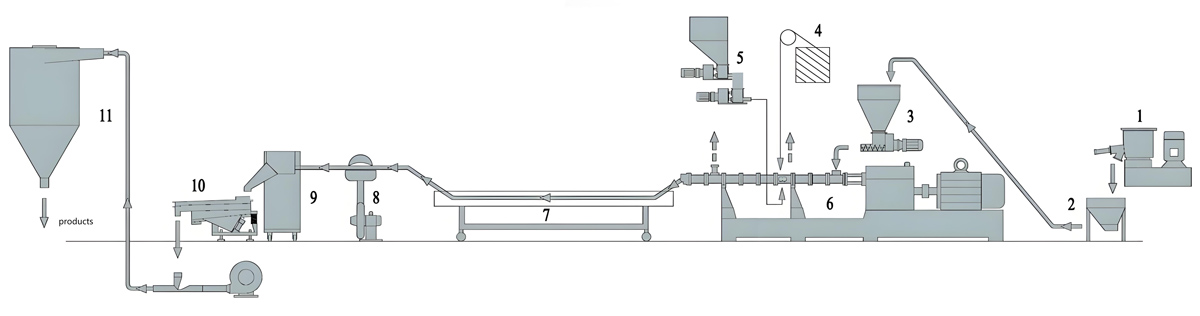
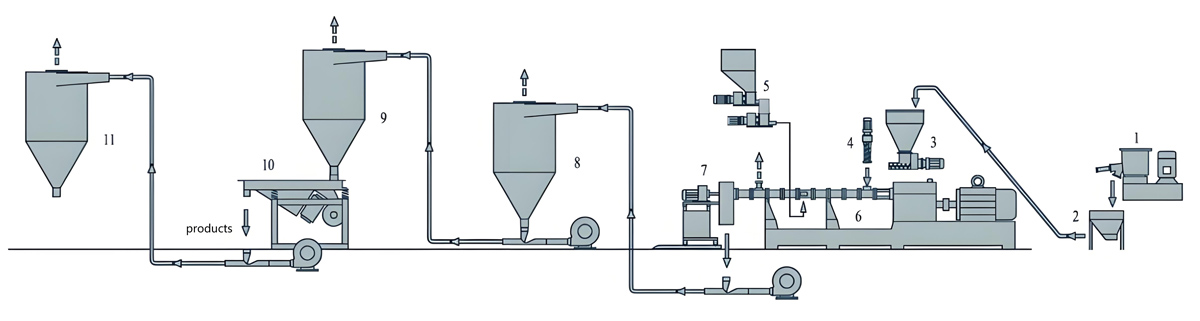
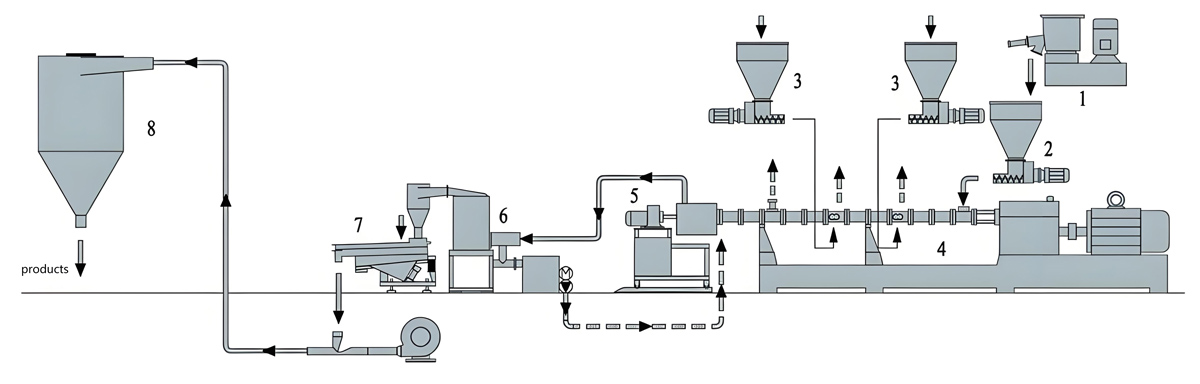
The production of TPEE soft masterbatches using compact twin screw extruders involves multiple sequential stages including material preparation, feeding, melting, mixing, dispersion, and pelletization. Each stage requires careful control of parameters and equipment configuration to achieve optimal product quality. The compact twin screw extrusion process provides excellent mixing capabilities and temperature control essential for TPEE masterbatch production.
Material Preparation and Drying
TPEE materials require thorough drying before processing to remove absorbed moisture that can cause hydrolytic degradation and surface defects. Typical drying conditions for TPEE range from 80 to 100 degrees Celsius for 2 to 4 hours depending on material grade and initial moisture content. Proper drying reduces moisture content to below 0.02% to prevent processing problems including bubbles, surface defects, and reduced mechanical properties.
Pigments and additives may also require pre-drying depending on their hygroscopic characteristics. Many pigment powders absorb moisture during storage and transport, necessitating drying before introduction to the extrusion process. Pre-mixing of dry components using high-speed mixers can improve feeding uniformity and reduce residence time variations. Material preparation protocols must be consistently followed to ensure batch-to-batch consistency in masterbatch quality.
Feeding System Configuration
Compact twin screw extruders for TPEE masterbatch production typically utilize multiple feeding points to optimize process flexibility and product quality. Main feeding systems often include gravimetric or volumetric feeders for precise control of polymer and carrier resin introduction. Side feeding systems enable introduction of heat-sensitive additives at downstream locations where temperatures are lower, preventing thermal degradation.
Feeding accuracy significantly impacts formulation consistency and final product quality. Gravimetric feeding systems provide superior accuracy compared to volumetric systems, particularly for high-value components including specialized additives and pigments. Typical feeding accuracy requirements range from 0.5% to 1% for major components and 1% to 2% for additives and pigments. Feeder calibration and regular maintenance ensure consistent feeding performance over extended production runs.
Melting and Plasticization
The melting and plasticization zone of the extruder represents the first critical stage in the TPEE masterbatch production process. This zone typically extends from the feed throat to approximately one-third of the screw length. Temperature profiles in this zone must be carefully controlled to achieve complete melting without thermal degradation. Typical temperature settings for TPEE melting range from 180 to 200 degrees Celsius for the first barrel zones.
Screw design significantly influences melting efficiency and energy consumption. conveying elements in the initial zones promote material transport while kneading blocks provide distributive and dispersive mixing. The transition from solid feeding to molten state must be gradual to prevent sudden pressure increases that can cause surging or instability. Proper melting establishes the foundation for subsequent mixing and dispersion stages, making this zone critical to overall process success.
Mixing and Dispersion
Mixing and dispersion represent the core functions of compact twin screw extruders for TPEE masterbatch production. The mixing zone typically occupies the middle section of the screw and incorporates various screw elements designed to achieve distributive and dispersive mixing. Distributive mixing ensures uniform spatial distribution of components throughout the polymer matrix, while dispersive mixing breaks down agglomerates and ensures complete wetting of pigment and additive particles.
Kneading block configuration determines mixing intensity and residence time distribution. Forward-conveying kneading blocks provide intensive mixing while maintaining forward transport. Reverse-conveying kneading blocks increase residence time and mixing intensity by creating local back-mixing zones. Neutral kneading blocks provide high shear for dispersive mixing of agglomerated pigments and additives. Optimal mixing zone configuration for TPEE masterbatches typically combines forward-conveying, reverse-conveying, and neutral elements in specific ratios based on formulation requirements.
Compact Twin Screw Extruder Equipment
Compact twin screw extruders designed for TPEE masterbatch production incorporate specific features optimized for the processing characteristics of elastomeric materials. Nanjing Kerke Extrusion Equipment Company offers KTE Series twin screw extruders with configurations particularly suited for TPEE compounding applications. These machines provide the necessary mixing capabilities, temperature control, and process flexibility required for high-quality masterbatch production.
Screw Design and Configuration
TPEE masterbatch production requires specialized screw configurations that address the unique processing characteristics of elastomeric materials. Screw diameter typically ranges from 25mm to 75mm for compact systems, with length-to-diameter ratios (L/D) between 28:1 and 40:1 providing adequate residence time for mixing and dispersion. Longer L/D ratios improve mixing quality but increase residence time, potentially affecting thermal degradation sensitivity for some formulations.
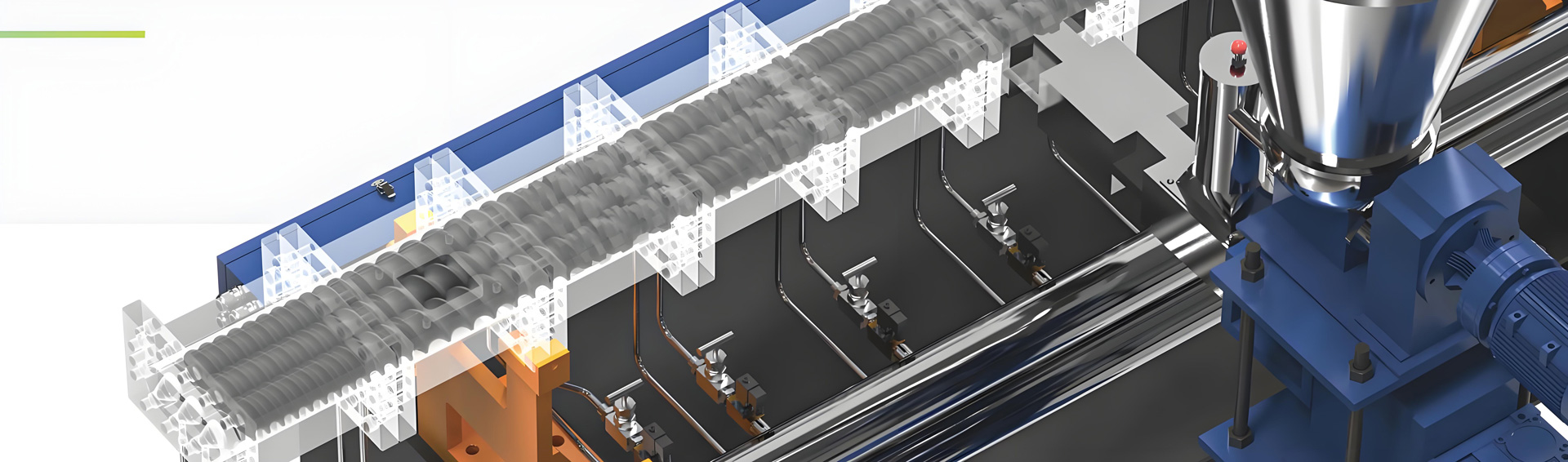
Kerke KTE Series extruders offer modular screw designs that enable customized configuration based on specific application requirements. Screws feature replaceable elements including conveying sections, kneading blocks, and mixing elements. This modular approach allows process optimization for different TPEE grades and formulations without complete screw replacement. The ability to adjust screw configuration provides flexibility for diverse product portfolios and changing production requirements.
Barrel and Temperature Control
Barrel construction and temperature control systems significantly influence TPEE masterbatch quality and consistency. Barrel sections typically incorporate electric heaters with independent temperature control for each zone. Bimetallic barrel linings provide enhanced wear resistance for formulations containing abrasive pigments or fillers. The number of temperature zones typically ranges from 8 to 12 for compact extruders, with additional zones providing more precise temperature profile control.
Temperature control precision within 1 degree Celsius is essential for TPEE processing to maintain consistent melt properties and prevent degradation. Advanced temperature control systems utilizing PID algorithms provide superior temperature stability compared to on-off control systems. Cooling capacity must be sufficient to handle exothermic reactions from certain additives and to enable rapid temperature changes during product transitions. Proper temperature control ensures consistent processing conditions and product quality across production batches.
Drive System and Power
Drive system selection impacts both processing capabilities and energy consumption. AC vector drives provide superior speed control and torque characteristics compared to DC drives, particularly for TPEE processing where viscosity variations require precise speed and torque management. Drive power requirements depend on screw size, L/D ratio, and processing conditions, with typical power requirements ranging from 15kW to 150kW for compact extruders.
Kerke KTE Series extruders feature robust drive systems designed to handle the demanding requirements of elastomer compounding. High torque capacity ensures consistent processing despite viscosity variations encountered during formulation changes or raw material variations. Variable speed control enables optimization of processing conditions for different formulations and facilitates smooth start-up and shutdown procedures. Reliable drive systems minimize downtime and ensure consistent production output.
Parameter Settings for TPEE Masterbatch Production
Optimal parameter settings vary based on specific formulations, equipment characteristics, and production objectives. However, general guidelines provide starting points for process development and optimization. Temperature profiles, screw speed, throughput, and vacuum conditions all influence product quality and process efficiency.
Temperature Profile Configuration
Temperature profile configuration requires careful consideration of material properties, formulation components, and processing objectives. Typical temperature profiles for TPEE soft masterbatch production start at 180-190 degrees Celsius in feed zones, gradually increasing to 200-215 degrees Celsius in mixing zones, and often decreasing slightly to 195-205 degrees Celsius in die zones. This profile ensures complete melting without overheating sensitive components.
Formulation components with lower thermal stability may require temperature profile modifications. Heat-sensitive pigments or additives may necessitate lower barrel temperatures or side feeding at downstream locations where melt temperatures are lower. Vacuum venting zones typically maintain temperatures 10-20 degrees Celsius above adjacent zones to prevent material accumulation while minimizing thermal degradation. Temperature profile optimization should be conducted through systematic experiments measuring product quality at various profile configurations.
Screw Speed and Throughput
Screw speed and throughput must be balanced to achieve optimal mixing quality and production efficiency. Typical screw speeds for TPEE masterbatch production range from 150 to 300 rpm depending on screw size and formulation requirements. Higher screw speeds increase shear rates and mixing intensity but reduce residence time, potentially compromising dispersion quality.
Throughput rates vary based on machine size and formulation, with typical rates ranging from 50 to 500 kg/hr for compact extruders. The ratio of throughput to screw speed (feed rate) significantly influences mixing quality, residence time, and melt temperature. Lower feed rates increase residence time and mixing quality but reduce production efficiency. Optimal feed rates for TPEE masterbatches typically fall between 5 and 15 kg/hr per cm of screw diameter, though specific values depend on formulation complexity and quality requirements.
Vacuum and Venting
Vacuum venting removes volatile components, moisture, and entrapped air that can cause defects in TPEE masterbatches. Vacuum zones typically apply 50-100 mbar absolute pressure to effectively remove volatiles without causing excessive material loss. Vent port location and design influence venting efficiency, with positions after mixing zones providing optimal removal of volatiles released during compounding.
Some formulations may require multiple venting zones for complete removal of volatiles. Moisture-sensitive formulations benefit from venting after initial melting to remove residual moisture despite pre-drying. Volatile additives or monomers in formulations may require venting after mixing zones to prevent foaming or defects. Vacuum system maintenance including regular cleaning and filter replacement ensures consistent venting performance and product quality.
Equipment Price Considerations
Investment in compact twin screw extruders for TPEE masterbatch production represents significant capital expenditure requiring careful consideration of cost-benefit relationships. Equipment pricing varies based on machine size, configuration, automation level, and manufacturer specifications. Understanding cost structure enables informed investment decisions.
Machine Cost Analysis
Compact twin screw extruders for TPEE masterbatch production typically range in price from 45,000 to 180,000 US dollars depending on size and configuration. Smaller machines with 25-35mm screw diameters suitable for laboratory or pilot scale production typically cost 45,000 to 75,000 US dollars. Medium-sized machines with 45-55mm screw diameters for production operations typically cost 75,000 to 130,000 US dollars. Larger compact machines with 65-75mm screw diameters for higher throughput applications typically cost 130,000 to 180,000 US dollars.
Configuration options significantly influence pricing. Fully electric machines cost 20-30% more than hydraulic systems but offer energy savings of 40-60% over equipment life. Advanced automation including gravimetric feeding, automatic pelletizing, and integrated control systems adds 15-25% to base machine cost. Bimetallic barrels for wear resistance add 8-15% to machine cost but significantly extend barrel life when processing abrasive formulations.
Operating Cost Considerations
Operating costs include energy consumption, labor, maintenance, and raw materials. Energy consumption for compact extruders typically ranges from 0.08 to 0.15 kWh per kg of product depending on machine size and formulation. Electric machines demonstrate lower energy consumption but higher initial cost. Labor requirements vary based on automation level, with fully automated systems requiring minimal operator intervention beyond setup and quality monitoring.
Maintenance costs typically represent 2-4% of initial machine investment annually when proper preventive maintenance is followed. Raw material costs represent the largest operating expense, making material efficiency critical for economic operation. Equipment selection should consider total cost of ownership including energy consumption, maintenance requirements, and expected equipment life rather than initial purchase price alone.
Production Problems and Solutions
Production of TPEE soft masterbatches can encounter various problems affecting product quality and process efficiency. Understanding common problems, their causes, and appropriate solutions enables rapid resolution and prevention of recurrence.
Poor Pigment Dispersion
Problem: Poor pigment dispersion manifests as color streaks, inconsistent color strength, or visible pigment particles in the final product. This defect significantly affects product appearance and performance.
Cause Analysis: Poor dispersion can result from inadequate mixing intensity, improper screw configuration, excessive throughput rates, or pigment characteristics including large particle size or poor compatibility. Insufficient residence time in mixing zones may prevent complete deagglomeration. High feed rates reduce shear rate and mixing effectiveness. Pigment particle size distribution significantly affects dispersion requirements, with larger agglomerates requiring higher shear for breakdown.
Solution and Prevention: Optimize screw configuration by increasing kneading block intensity or adding additional mixing elements. Reduce throughput rates to increase residence time and shear rate. Pre-mix pigments with polymer carrier to improve initial distribution. Use dispersant additives to promote pigment wetting and deagglomeration. Ensure pigments have appropriate particle size distribution for processing conditions. Regular screw maintenance ensures consistent mixing performance over equipment life.
Thermal Degradation
Problem: Thermal degradation manifests as discoloration, gel formation, reduced mechanical properties, or burning odors. Degraded TPEE loses elasticity and performance characteristics critical for masterbatch function.
Cause Analysis: Excessive barrel temperatures, prolonged residence time at high temperatures, hot spots in the barrel, or inadequate thermal stabilization can cause degradation. High screw speeds can generate excessive shear heating. Blocked vent ports can trap volatiles and create localized overheating. Degraded materials or contaminants can catalyze degradation reactions.
Solution and Prevention: Reduce barrel temperatures, particularly in downstream zones. Decrease screw speed to reduce shear heating. Ensure adequate thermal stabilizers are included in the formulation. Clean vent ports regularly to prevent blockage. Inspect and clean barrel and screw to remove deposits causing hot spots. Implement temperature monitoring with alarms to detect overheating conditions. Use fresh, properly stored materials to prevent degradation from contaminated feedstock.
Voids and Bubbles
Problem: Voids and bubbles appear as internal or surface defects in pellets or molded products, significantly affecting appearance and potentially mechanical properties.
Cause Analysis: Insufficient material drying is the most common cause, with residual moisture vaporizing during processing. Inadequate vacuum venting fails to remove entrapped air or volatiles. High throughput rates can trap air during feeding. Decompression zones in the screw can cause air entrainment. Formulation components releasing gases at processing temperatures create bubbles.
Solution and Prevention: Implement thorough material drying protocols with moisture content verification before processing. Increase vacuum intensity or add additional venting zones. Reduce throughput rates to minimize air entrainment. Optimize screw configuration to avoid sudden pressure drops that cause air release. Select formulation components with minimal volatile content. Maintain vent port integrity and cleanliness to ensure effective venting performance.
Surging and Output Instability
Problem: Surging manifests as periodic variations in output rate and melt pressure, causing inconsistent pellet size and quality variations. Unstable output affects process control and product uniformity.
Cause Analysis: Inconsistent feeding due to feeder problems or poor material flow characteristics causes input variations. Bridging or ratholing in feed hoppers disrupts material flow. Screw design mismatches with material characteristics creates conveying problems. Slip-stick behavior between polymer and metal surfaces causes output fluctuations. Temperature variations affecting melt viscosity contribute to instability.
Solution and Prevention: Install or maintain gravimetric feeders for consistent material input. Install agitators or flow aids in feed hoppers to prevent bridging. Optimize screw configuration for material characteristics including use of barrier screws or special conveying elements. Ensure adequate feed throat cooling to prevent material sticking. Implement tight temperature control to minimize viscosity variations. Regular feeder calibration ensures consistent feeding accuracy.
Maintenance and Preventive Care
Regular maintenance ensures consistent equipment performance and extends equipment life. Preventive maintenance programs for compact twin screw extruders should address screw and barrel, drive system, feeding systems, temperature control, and auxiliary equipment.
Screw and Barrel Maintenance
Screw and barrel maintenance includes regular inspection for wear, cleaning to remove material deposits, and replacement of worn components. TPEE formulations with abrasive pigments or fillers accelerate wear, particularly in high-shear zones. Inspection should focus on kneading blocks, flight edges, and barrel surface condition.
Cleaning protocols should be performed during product changeovers or when color changes occur. Regular cleaning prevents cross-contamination and buildup that can affect product quality. Worn screws should be reconditioned or replaced to maintain processing consistency. Barrel wear liners may require replacement after extended use with abrasive formulations. Proper maintenance extends equipment life by 30-50% and maintains product quality consistency.
Drive and Motor Maintenance
Drive system maintenance includes regular inspection of belts or couplings, motor bearing lubrication, and electrical system checks. Monitor drive temperature and current draw to identify developing problems. Lubrication schedules must be followed for gearboxes and motor bearings.
Belt tension inspection and adjustment ensures efficient power transmission and prevents premature belt wear. Coupling inspection detects wear or misalignment that can cause vibration and component damage. Motor current monitoring identifies bearing problems or overload conditions before catastrophic failure. Regular maintenance prevents unexpected downtime and extends drive system life.
Feeding System Maintenance
Feeding systems require regular calibration, cleaning, and inspection of wear components. Gravimetric feeders should be calibrated weekly to maintain feeding accuracy within specified tolerances. Volumetric feeders require more frequent calibration due to higher susceptibility to drift.
Clean feeding hoppers and screw feeders regularly to prevent material buildup and bridge formation. Inspect feed screws for wear that affects feeding consistency. Check load cells or other weighing mechanisms for proper function. Well-maintained feeding systems ensure consistent formulation ratios and product quality.
Frequently Asked Questions
This section addresses common questions regarding TPEE soft masterbatch production using compact twin screw extruders.
What is the typical masterbatch concentration for TPEE applications?
Masterbatch concentrations typically range from 20% to 50% active ingredient loading, with most applications utilizing 25% to 35% formulations. The optimal concentration balances performance requirements with processing economics. Higher concentrations require more intensive mixing but reduce dosing rates in final applications. Lower concentrations process more easily but require higher dosing rates in final production.
How long should TPEE materials be dried before processing?
TPEE materials typically require drying for 2 to 4 hours at temperatures between 80 and 100 degrees Celsius. Drying time depends on initial moisture content and material grade. Proper drying reduces moisture content below 0.02% to prevent processing problems. Desiccant dryers provide superior drying compared to hot air dryers, particularly for formulations requiring very low moisture content.
What is the typical energy consumption for TPEE masterbatch production?
Energy consumption typically ranges from 0.08 to 0.15 kWh per kilogram of product, depending on machine size, formulation complexity, and operating parameters. Electric machines demonstrate lower energy consumption compared to hydraulic systems. Energy optimization can be achieved through process parameter optimization, screw configuration, and proper machine sizing for production requirements.
How often should preventive maintenance be performed?
Daily maintenance should include visual inspection, temperature and pressure monitoring, and basic cleaning. Weekly maintenance should include feeder calibration, drive system inspection, and detailed cleaning. Monthly maintenance should include lubrication, alignment checks, and detailed inspection of wear components. Quarterly maintenance should include detailed inspection of all major systems and replacement of components approaching end of service life.
What factors influence product quality consistency?
Product quality consistency depends on multiple factors including raw material quality and consistency, feeding accuracy, temperature control stability, screw and barrel condition, and process parameter adherence. Implementing statistical process control, regular calibration, and preventive maintenance programs significantly improves consistency. Well-documented procedures and operator training also contribute to consistent product quality.
Conclusion
Production of TPEE soft masterbatches using compact twin screw extruders requires careful attention to material characteristics, formulation design, process parameters, and equipment maintenance. Nanjing Kerke Extrusion Equipment Company KTE Series twin screw extruders provide the capabilities necessary for high-quality TPEE masterbatch production through advanced mixing technology, precise temperature control, and modular screw configurations. Success in TPEE masterbatch manufacturing depends on understanding the unique processing characteristics of elastomeric materials and implementing appropriate processing strategies.
Optimizing formulations, processes, and maintenance practices enables consistent production of high-quality TPEE masterbatches meeting demanding application requirements. As TPEE applications continue to expand across diverse industries, the importance of reliable compounding equipment and optimized production processes will continue to grow. By implementing the principles and practices outlined in this guide, manufacturers can achieve success in TPEE soft masterbatch production and capture opportunities in this growing market segment.