1. Introduction
The Conical Twin Screw Extruder is a specialized piece of equipment designed specifically for HDPE (High-Density Polyethylene) masterbatch production. Manufactured by Nanjing Kerke Extrusion Equipment Co., Ltd., this extruder is engineered to meet the high demands of modern plastic processing industries. Masterbatch production requires precise control over temperature, pressure, and mixing to ensure uniform dispersion of additives within the polymer matrix, and this extruder delivers exceptional performance in these critical areas.
The KTE Series from Nanjing Kerke represents the latest advancement in extrusion technology, integrating advanced mechanical design with intelligent control systems. It is suitable for both small-scale laboratory production and large-scale industrial manufacturing, providing flexibility for various production needs. The equipment is designed to handle the specific characteristics of HDPE (High-Density Polyethylene), including its melting point, viscosity, and thermal stability.
2. Advantages Analysis
1. Excellent mixing performance: The twin screw design provides strong shear and kneading effects, ensuring uniform dispersion of pigments, fillers, and additives in the HDPE (High-Density Polyethylene) matrix, resulting in high-quality masterbatch with consistent color and properties.
2. High production efficiency: With a production capacity of 150-600 kg/h, this extruder enables large-scale production while maintaining product quality, significantly improving production efficiency compared to single screw extruders.
3. Energy saving design: The optimized screw geometry and efficient heating system reduce energy consumption by 15-25% compared to conventional extruders, lowering production costs and environmental impact.
4. Precise temperature control: The multi-zone temperature control system with advanced PID controllers ensures accurate temperature regulation throughout the extrusion process, critical for processing HDPE (High-Density Polyethylene) which has specific temperature requirements (160-200°C).
5. Easy operation and maintenance: The user-friendly PLC control system with touch screen interface simplifies operation, while the modular design facilitates easy maintenance and component replacement.
6. Wide applicability: Although specifically designed for HDPE (High-Density Polyethylene) masterbatch production, the extruder can also be adapted to process other thermoplastics with minimal modifications, increasing equipment versatility.
7. Durable construction: High-quality materials, including hardened steel for screws and barrels, ensure long service life even under continuous operation, reducing equipment replacement costs.
3. Formulation Ratios (Different Types of Formulations)
3.1 Standard Color Masterbatch Formulation
– HDPE (High-Density Polyethylene) resin: 60-70% (serves as the carrier resin, providing the basic matrix for the masterbatch)
– Pigment: 20-30% (provides the desired color; type depends on application requirements, such as organic pigments for bright colors or inorganic pigments for high weather resistance)
– Dispersant: 3-5% (improves pigment dispersion, typically polyethylene wax, stearic acid, or specialized dispersing agents)
– Stabilizer: 0.5-2% (prevents thermal degradation during processing; for HDPE (High-Density Polyethylene), appropriate antioxidants and UV stabilizers are selected based on end application)
– Other additives: 0-2% (may include antistatic agents, flame retardants, or nucleating agents depending on specific requirements)
3.2 Filler Masterbatch Formulation
– HDPE (High-Density Polyethylene) resin: 30-40% (carrier resin to ensure compatibility with the base resin during subsequent processing)
– Filler: 50-60% (main functional component, such as calcium carbonate, talc, kaolin, or glass fiber, to improve mechanical properties or reduce costs)
– Coupling agent: 1-3% (improves adhesion between filler and polymer matrix, typically silane coupling agents or titanate coupling agents)
– Dispersant: 2-4% (ensures uniform dispersion of filler particles, preventing agglomeration)
– Processing aid: 1-2% (improves melt flow and processing performance, reducing friction between the melt and screw/barrel)
3.3 Functional Masterbatch Formulation
– HDPE (High-Density Polyethylene) resin: 50-60% (carrier resin)
– Functional additive: 15-30% (provides specific functionality, such as flame retardants, antistatic agents, antimicrobial agents, or UV absorbers)
– Compatibilizer: 5-10% (improves compatibility between functional additives and HDPE (High-Density Polyethylene) matrix)
– Stabilizer: 1-3% (protects both the polymer and functional additives from thermal and oxidative degradation)
– Processing aid: 1-2% (ensures smooth processing and uniform distribution of functional additives)
4. Production Process (Detailed Requirements)
4.1 Raw Material Preparation and Pretreatment
1. Raw material inspection: Check the quality of HDPE (High-Density Polyethylene) resin, pigments, fillers, and additives to ensure they meet the specified requirements, including particle size, moisture content, and purity.
2. Drying: HDPE (High-Density Polyethylene) resin and certain additives may require drying to remove moisture, which can cause defects such as bubbles in the final product. The drying temperature is typically 80-120°C, with a drying time of 2-4 hours, depending on the moisture content.
3. Weighing and mixing: According to the selected formulation, accurately weigh each component using precision scales. The weighing accuracy should be within ±0.1% to ensure formulation consistency.
4. Premixing: Combine the weighed components in a high-speed mixer or ribbon mixer. The premixing process typically takes 5-15 minutes at a speed of 500-1500 rpm, ensuring initial dispersion of additives in the resin matrix.
4.2 Extrusion Process
1. Equipment startup and preheating: Start the extruder control system and begin preheating the barrel zones. The temperature settings follow a gradient profile, starting from the feed zone (typically 50-100°C below the melting point) up to the die zone (at or slightly above the melting point, 160-200°C).
2. Screw pre-rotation: Once the barrel reaches the set temperatures and stabilizes (usually after 30-60 minutes of preheating), start the screw rotation at a low speed (10-30 rpm) to prevent material degradation from local overheating.
3. Feeding: Gradually introduce the premixed material into the extruder through the hopper. The feeding rate is adjusted to match the screw speed and ensure stable material flow, typically using a volumetric or gravimetric feeder for precise control.
4. Melting and mixing: As the material moves through the extruder barrel, it is melted by the combination of shear heat from the screws and conductive heat from the barrel heaters. The twin screws provide intensive mixing, kneading, and shearing to ensure complete melting and uniform dispersion of additives.
5. Pressure control: Monitor and control the melt pressure at the die using a pressure sensor. The optimal pressure range for HDPE (High-Density Polyethylene) masterbatch extrusion is typically 10-30 MPa, depending on the formulation and screw speed.
6. Die extrusion: The molten masterbatch is forced through a die with multiple holes (typically 2-6 mm in diameter) to form strands. The die design ensures uniform flow and consistent strand diameter.
4.3 Post-Extrusion Processing
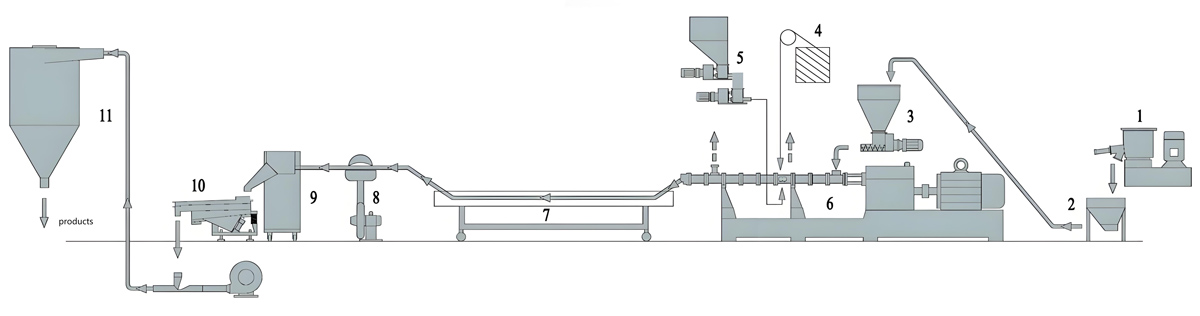
1. Strand cooling: Immediately after exiting the die, the strands are cooled in a water bath or air cooling system. The cooling water temperature is typically 20-40°C, with a cooling length of 1-3 meters, ensuring complete solidification of the strands.
2. Strand drying: After cooling, the strands pass through a air blower or vacuum dryer to remove surface moisture. Proper drying prevents moisture absorption and ensures good pellet quality.
3. Pelletizing: The dried strands are fed into a pelletizer, which cuts them into uniform pellets with a length-to-diameter ratio of 1:1 to 2:1. The pelletizer speed is synchronized with the extruder output to ensure consistent pellet size.
4. Screening: The pellets are passed through a vibrating screen to remove oversized or undersized particles and any strand fragments. The screen mesh size is typically 10-20 mesh, depending on the pellet size.
4.4 Quality Control and Packaging
1. Quality inspection: Conduct regular inspections of the masterbatch pellets, including visual inspection (color uniformity, surface quality), dimensional measurement (pellet size), and performance testing (melting index, dispersion quality).
2. Packaging: Once the masterbatch passes quality inspection, it is packaged in moisture-proof bags or containers. The packaging size typically ranges from 25 kg bags for small orders to 1000 kg bulk bags for large-scale deliveries.
3. Storage: Store the packaged masterbatch in a cool, dry, well-ventilated warehouse at a temperature of 5-30°C, away from direct sunlight and heat sources, with a recommended storage period of 6-12 months.
5. Production Equipment Introduction
5.1 Twin Screw Extruder (Nanjing Kerke Extrusion Equipment Co., Ltd.)
The core equipment for HDPE (High-Density Polyethylene) masterbatch production is the KTE Series twin screw extruder from Nanjing Kerke Extrusion Equipment Co., Ltd. This extruder is specifically designed for high-performance masterbatch manufacturing and features the following specifications:
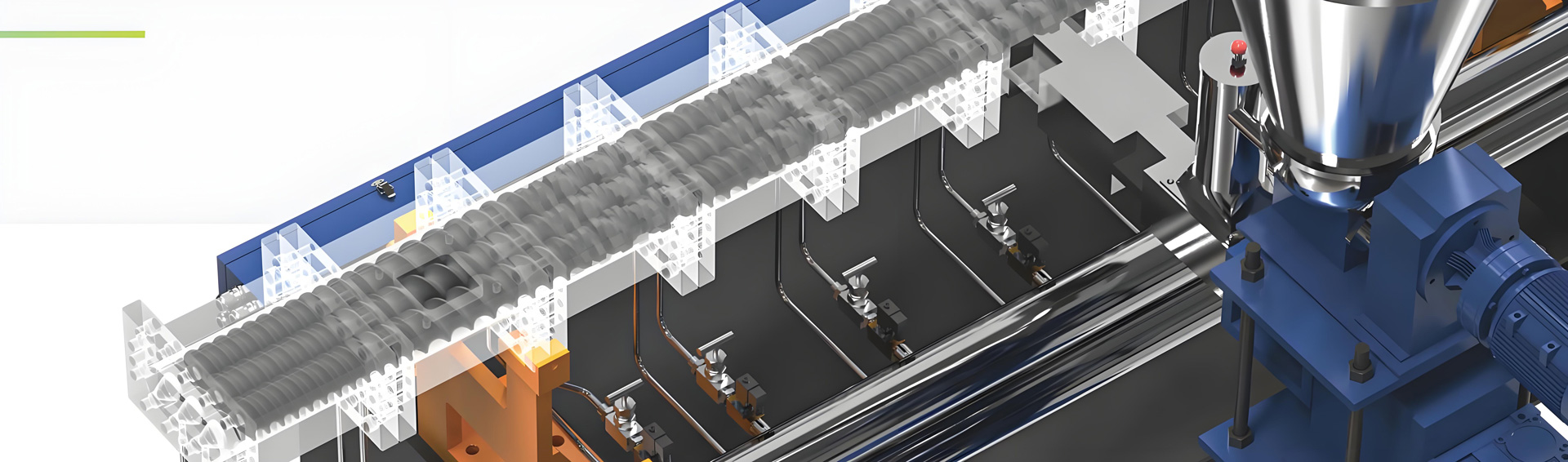
– Screw type: Conical twin screws with intermeshing design
– Screw diameter: 35-95 mm (depending on specific model)
– L/D ratio (Length/Diameter): 36:1 to 48:1, ensuring sufficient residence time for complete melting and mixing
– Production capacity: 150-600 kg/h (depending on material and formulation)
– Drive system: High-torque AC motor with frequency inverter for stepless speed regulation
– Barrel zones: 5-10 heating/cooling zones with independent temperature control
– Temperature control range: 50-350°C, suitable for processing HDPE (High-Density Polyethylene) and other thermoplastics
– Control system: PLC control with 7-inch to 10-inch touch screen interface, providing real-time monitoring and control of all process parameters
– Safety features: Emergency stop buttons, overload protection, temperature over-limit alarm, and safety guards for moving parts
– Special design features: According to the specific model, features may include forced feeding systems, vacuum venting for moisture and volatile removal, and quick-change screw and barrel systems for easy cleaning and material changeover.
5.2 Auxiliary Equipment
1. High-speed mixer: Used for premixing raw materials, featuring variable speed control (500-3000 rpm) and heating/cooling jackets. The mixing chamber volume typically ranges from 50L to 500L, depending on production scale.
2. Drying equipment: Hot air circulation dryer or dehumidifying dryer with temperature control (50-180°C) and adjustable air flow, ensuring effective moisture removal from HDPE (High-Density Polyethylene) resin and additives.
3. Feeding system: Volumetric or gravimetric feeder with adjustable feeding rate, ensuring stable and precise material supply to the extruder.
4. Cooling system: Water bath or air cooling conveyor with adjustable cooling length (1-5 meters) and temperature control, ensuring proper solidification of extruded strands.
5. Pelletizer: Strand pelletizer with adjustable cutting speed (50-500 rpm) and sharp, wear-resistant blades, producing uniform pellets with consistent size.
6. Screening equipment: Vibrating screen with multiple mesh layers (typically 10-40 mesh) for separating qualified pellets from oversized particles and fines.
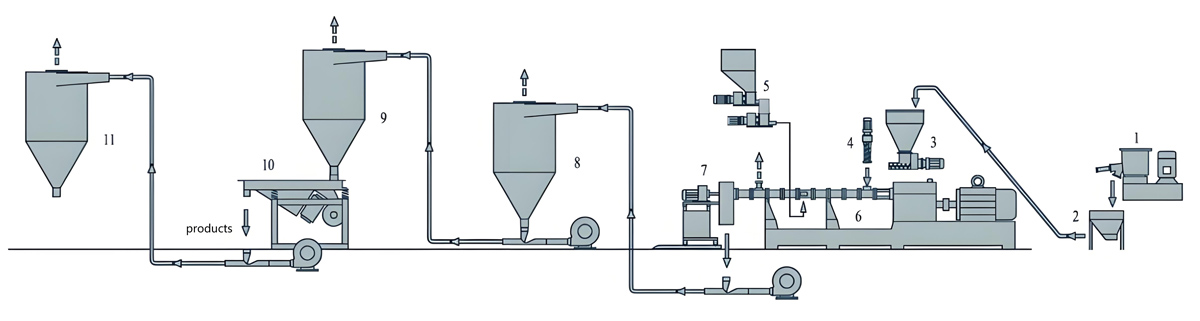
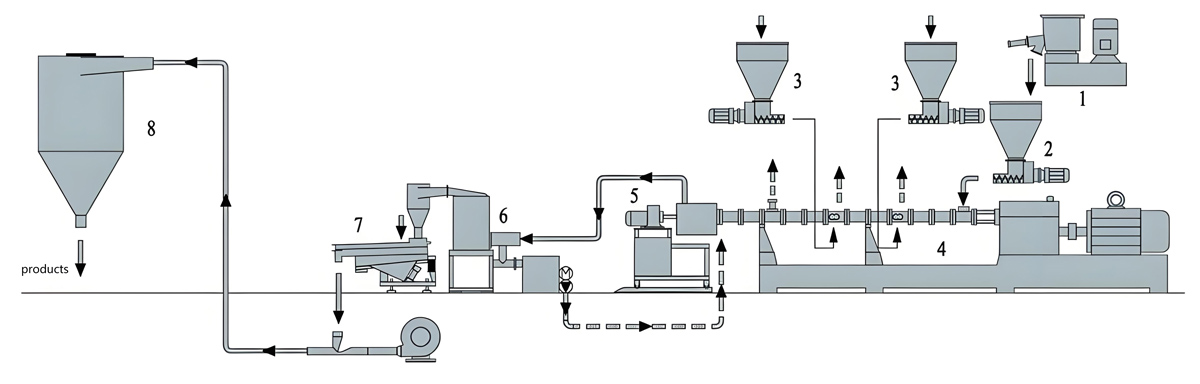
7. Conveying system: Pneumatic or mechanical conveying system for transferring materials between different equipment, reducing manual handling and ensuring production continuity.
8. Packaging equipment: Automatic weighing and packaging machine with bagging or container filling capabilities, ensuring accurate weight control and efficient packaging.
6. Requirements for Machinery
6.1 Performance Requirements
1. Temperature control accuracy: The extruder barrel temperature control should have an accuracy of ±1°C to ensure consistent processing conditions and prevent HDPE (High-Density Polyethylene) degradation or incomplete melting.
2. Screw speed stability: The screw speed variation should be within ±1% to maintain consistent shear rate and residence time, ensuring uniform masterbatch quality.
3. Pressure control capability: The extruder should be able to maintain stable melt pressure within the range of 10-30 MPa, with pressure fluctuation less than ±0.5 MPa.
4. Mixing efficiency: The twin screw design should provide sufficient shear and kneading to achieve a dispersion degree of 90% or higher for pigments and additives in the HDPE (High-Density Polyethylene) matrix.
5. Production stability: The equipment should be capable of continuous operation for 24 hours with minimal downtime, and the production capacity variation should be within ±5%.
6.2 Material Requirements
1. Screw and barrel material: High-quality alloy steel (such as 38CrMoAlA) with nitriding treatment (surface hardness ≥ HV900) to ensure wear resistance and corrosion resistance, especially when processing filled masterbatches.
2. Die material: Heat-resistant and wear-resistant steel with precise machining to ensure uniform flow and consistent strand formation.
3. Contact parts: All parts in contact with the molten material should be made of materials compatible with HDPE (High-Density Polyethylene) and additives, preventing material contamination.
6.3 Safety and Environmental Requirements
1. Safety standards: The equipment should comply with international safety standards (such as CE, UL) and be equipped with necessary safety devices to prevent accidents.
2. Noise level: The operating noise should be less than 85 dB(A) to provide a comfortable working environment.
3. Emission control: For processes involving volatile materials, the equipment should be equipped with appropriate exhaust and treatment systems to meet environmental protection requirements.
6.4 Operational Requirements
1. User-friendliness: The control system should be intuitive and easy to operate, with clear parameter displays and simple adjustment procedures.
2. Maintainability: The equipment should have a modular design with easy access to key components, facilitating maintenance and repair.
3. Scalability: The equipment should allow for easy capacity expansion or function upgrades to adapt to changing production needs.
7. Parameter Settings
7.1 Extruder Temperature Settings (°C)
The temperature settings are critical for processing HDPE (High-Density Polyethylene) masterbatch and should be adjusted based on the specific formulation and equipment model. The following is a typical temperature profile for the KTE Series extruder:
– Feed zone: 110 – 140 (prevents material bridging and ensures smooth feeding)
– Compression zone 1: 140 – 160 (initiates melting of the HDPE (High-Density Polyethylene) resin)
– Compression zone 2: 160 – 180 (completes melting and begins intensive mixing)
– Metering zone 1: 180 – 200 (ensures complete mixing and uniform melt temperature)
– Metering zone 2: 200 – 210 (maintains melt temperature and prepares for extrusion)
– Die zone: 190 – 210 (ensures proper flow through the die and strand formation)
7.2 Screw Speed Settings
The optimal screw speed depends on the HDPE (High-Density Polyethylene) characteristics, formulation, and desired production capacity. Typical settings are:
– Startup speed: 10-30 rpm (low speed to prevent material degradation during initial startup)
– Normal operating speed: 50-150 rpm (adjusted to achieve the desired production capacity while maintaining good mixing quality)
– Maximum speed: 200 rpm (depending on the specific model and motor capacity)
The screw speed should be set to ensure a residence time of 30-90 seconds, which is sufficient for complete melting and mixing without causing thermal degradation of HDPE (High-Density Polyethylene).
7.3 Feeding Rate Settings
The feeding rate is closely linked to the screw speed and should be adjusted to maintain a stable material flow and optimal fill level in the extruder barrel. Typical settings are:
– Initial feeding rate: 20-30% of the maximum capacity (gradually increased to avoid overloading the extruder)
– Normal feeding rate: Adjusted to match the screw speed, typically resulting in a production capacity of 150-600 kg/h
– Feed rate control: For gravimetric feeders, the feeding rate is set by weight (kg/h), while for volumetric feeders, it is set by volume (L/h) or feeder speed (rpm).
7.4 Other Key Parameters
1. Melt pressure: 10-30 MPa (monitored and controlled to ensure proper flow and prevent die blockage)
2. Vacuum degree (for vented extruders): -0.06 to -0.09 MPa (to effectively remove moisture and volatile components from the melt)
3. Cooling water temperature: 20-40°C (for barrel cooling and strand cooling, adjusted to maintain optimal processing temperature and strand quality)
4. Pelletizer speed: Synchronized with the extruder output to produce pellets with a length of 2-4 mm (typically 100-300 rpm, depending on strand speed)
8. Equipment Price
8.1 Twin Screw Extruder Price (Nanjing Kerke Extrusion Equipment Co., Ltd.)
The price of the KTE Series twin screw extruder from Nanjing Kerke Extrusion Equipment Co., Ltd. varies depending on the specific model, configuration, and additional options. The following is the price range in US dollars:
– Basic model (standard configuration): $55,000 – $84,000
– Advanced model (with additional features such as gravimetric feeder, vacuum venting, and PLC control): $44,000 – $120,000
The price includes the main extruder unit, basic control system, and standard accessories. Additional costs may apply for:
– Customized screw and barrel designs: $5,000 – $15,000
– Advanced control systems with additional monitoring functions: $3,000 – $8,000
– Installation and commissioning services: $2,000 – $5,000 (depending on location)
– Training services for operators and maintenance personnel: $1,000 – $3,000
– Spare parts package (including screws, barrels, and wear parts): $5,000 – $12,000
8.2 Auxiliary Equipment Prices
The following are the approximate price ranges for auxiliary equipment (in US dollars), excluding specific brand information:
1. High-speed mixer (50L-500L capacity): $8,000 – $25,000
2. Drying equipment (50kg/h-500kg/h capacity): $5,000 – $18,000
3. Feeding system:
– Volumetric feeder: $2,000 – $5,000
– Gravimetric feeder: $8,000 – $15,000
4. Cooling system (water bath and air cooling conveyor): $3,000 – $8,000
5. Pelletizer (strand type): $6,000 – $15,000
6. Screening equipment (vibrating screen): $2,000 – $6,000
7. Conveying system (pneumatic or mechanical): $4,000 – $12,000
8. Packaging equipment (automatic weighing and bagging): $10,000 – $30,000
8.3 Total Production Line Cost
The total cost of a complete HDPE (High-Density Polyethylene) masterbatch production line, including the twin screw extruder and necessary auxiliary equipment, ranges from:
– Small-scale production line (capacity: 100-300 kg/h): $80,000 – $150,000
– Medium-scale production line (capacity: 300-800 kg/h): $150,000 – $300,000
– Large-scale production line (capacity: 800-1500 kg/h): $300,000 – $600,000
These prices are approximate and may vary based on equipment configuration, production capacity, supplier, and market conditions. It is recommended to obtain detailed quotations from equipment suppliers based on specific production requirements.
9. Possible Problems in Production Process, Solutions and Prevention Methods
9.1 Problem 1: Poor Dispersion of Pigments/Additives
Cause Analysis:
1. Insufficient mixing time or shear force during extrusion, resulting in incomplete dispersion of pigments or additives in the HDPE (High-Density Polyethylene) matrix.
2. Inadequate premixing of raw materials, leading to uneven distribution of additives before entering the extruder.
3. Incorrect temperature settings, causing either insufficient melting of the HDPE (High-Density Polyethylene) resin (resulting in poor wetting of additives) or overheating (causing additive degradation).
4. Improper screw speed, either too low (insufficient shear) or too high (insufficient residence time).
5. Poor quality or inappropriate type of dispersant, failing to promote the dispersion of pigments or additives.
Solutions:
1. Adjust the extruder temperature settings to ensure complete melting of HDPE (High-Density Polyethylene) while avoiding overheating. Increase the temperature in the mixing zones if necessary.
2. Optimize the screw speed to balance shear force and residence time. Typically, increasing the screw speed within a reasonable range can improve mixing efficiency.
3. Improve the premixing process by extending the mixing time, increasing the mixing speed, or using a more efficient mixer.
4. Increase the amount of dispersant or replace it with a more suitable type that is compatible with both HDPE (High-Density Polyethylene) and the specific pigments/additives.
5. If using a vented extruder, check and optimize the vacuum settings to remove any volatile components that may interfere with dispersion.
6. For severe dispersion issues, consider modifying the screw configuration to include additional mixing elements (such as kneading blocks) to enhance shear and mixing.
Prevention Methods:
1. Establish a standardized premixing procedure with specified mixing time, speed, and temperature to ensure consistent initial dispersion.
2. Conduct regular testing of raw materials, including pigment particle size and dispersant effectiveness, to ensure they meet quality requirements.
3. Set up a monitoring system to regularly check the dispersion quality of the masterbatch, such as visual inspection or microscopic analysis.
4. Train operators to recognize signs of poor dispersion and make appropriate adjustments to processing parameters.
5. Maintain the extruder in good condition, including regular inspection and replacement of worn screw elements that may reduce mixing efficiency.
9.2 Problem 2: Melt Fracture or Surface Defects on Strands/Pellets
Cause Analysis:
1. Excessively high shear rate due to incorrect screw speed or die design, causing instability in the melt flow.
2. Improper temperature settings, either too low (resulting in insufficient melting and high melt viscosity) or too high (causing HDPE (High-Density Polyethylene) degradation and melt instability).
3. Contamination of raw materials, including foreign particles or incompatible materials that disrupt the melt flow.
4. Die blockage or partial obstruction, causing uneven flow through the die orifices.
5. Inadequate pressure control, leading to fluctuations in melt pressure that affect the flow stability.
6. Moisture in the raw materials, causing vaporization during extrusion and creating bubbles or surface defects.
Solutions:
1. Adjust the screw speed to reduce the shear rate. Typically, decreasing the screw speed can reduce melt fracture while maintaining acceptable production capacity.
2. Optimize the temperature profile. If the temperature is too low, gradually increase the temperature in the metering and die zones. If overheating is suspected, reduce the temperature in the rear zones.
3. Stop the extrusion process, clean the extruder barrel, screw, and die thoroughly to remove any contamination or degraded material.
4. Disassemble and clean the die to remove any blockages. Check for worn or damaged die components and replace them if necessary.
5. Adjust the feeding rate to stabilize the melt pressure. If the pressure is too high, reduce the feeding rate; if too low, increase it gradually.
6. Increase the drying time or temperature for the HDPE (High-Density Polyethylene) resin and additives to ensure complete moisture removal before extrusion.
Prevention Methods:
1. Implement strict raw material inspection and storage procedures to prevent contamination and moisture absorption.
2. Establish a regular cleaning schedule for the extruder, including barrel, screw, and die, especially when changing materials or colors.
3. Monitor and record melt pressure and temperature continuously to detect and address any deviations promptly.
4. Use appropriate drying equipment and procedures for HDPE (High-Density Polyethylene) and other moisture-sensitive materials, with regular checks of moisture content.
5. Select the correct die design and size for the specific HDPE (High-Density Polyethylene) and masterbatch formulation to ensure stable flow.
6. Train operators to recognize the early signs of melt fracture and take preventive action before defects occur.
9.3 Problem 3: Variations in Pellet Size or Irregular Pellet Shape
Cause Analysis:
1. Unsynchronized operation between the extruder output and pelletizer speed, resulting in either too long or too short pellets.
2. Uneven cooling of extruded strands, causing variations in strand diameter or hardness before pelletizing.
3. Worn or damaged pelletizer blades, resulting in uneven cutting or tearing of strands rather than clean cuts.
4. Uneven flow through the die orifices, causing variations in strand diameter from different holes.
5. Instability in the extruder operation, such as fluctuations in screw speed, feeding rate, or melt pressure, leading to inconsistent strand formation.
6. Improper alignment of the pelletizer with the strand cooling system, causing strands to be pulled unevenly into the pelletizer.
Solutions:
1. Adjust the pelletizer speed to synchronize with the extruder output. Most modern pelletizers have a speed control system that can be linked to the extruder speed for automatic synchronization.
2. Optimize the cooling system by adjusting the water temperature, water flow rate, or cooling length to ensure uniform cooling of all strands.
3. Inspect the pelletizer blades for wear or damage. Replace worn blades or sharpen them if necessary to ensure clean cutting.
4. Clean the die thoroughly to remove any deposits that may be causing uneven flow. Check the die orifices for wear or damage and replace the die if necessary.
5. Stabilize the extruder operation by adjusting the feeding rate, screw speed, and temperature settings to minimize fluctuations. Check for any mechanical issues that may be causing instability.
6. Realign the pelletizer with the cooling system to ensure that strands enter the pelletizer straight and at a consistent angle, preventing uneven cutting.
Prevention Methods:
1. Install a synchronization system between the extruder and pelletizer to maintain a constant strand speed-to-cutting speed ratio.
2. Conduct regular inspections of the pelletizer blades and replace them according to a scheduled maintenance plan, rather than waiting for them to become excessively worn.
3. Implement a regular die cleaning schedule, especially when changing materials or formulations that are prone to deposit formation.
4. Monitor the strand diameter continuously during production and make adjustments to processing parameters as needed to maintain consistency.
5. Train operators to recognize variations in pellet size and shape and take corrective action promptly to prevent the production of large quantities of off-spec product.
6. Maintain the cooling system in good condition, including regular cleaning of water baths and checking of water circulation systems to ensure uniform cooling.
9.4 Problem 4: Thermal Degradation of HDPE (High-Density Polyethylene) or Additives
Cause Analysis:
1. Excessively high temperature settings in the extruder barrel or die, exceeding the thermal stability limit of HDPE (High-Density Polyethylene) or the additives.
2. Excessively long residence time in the extruder, causing prolonged exposure of the material to high temperatures.
3. Poor temperature control, resulting in hot spots in the barrel or screw that cause local overheating.
4. Inadequate or inappropriate stabilizers in the formulation, failing to protect HDPE (High-Density Polyethylene) and additives from thermal degradation.
5. Contamination of raw materials with substances that act as catalysts for thermal degradation.
6. Insufficient cooling of the barrel or screw, leading to increased heat generation from friction.
Solutions:
1. Immediately reduce the temperature settings in the affected zones, especially in the metering and die zones. Establish a new temperature profile that is within the thermal stability range of HDPE (High-Density Polyethylene).
2. Increase the screw speed to reduce the residence time of the material in the extruder, minimizing exposure to high temperatures.
3. Check the temperature control system for malfunctions, including faulty thermocouples or heaters. Replace any defective components and recalibrate the temperature controllers.
4. Add additional stabilizers to the formulation or replace the existing stabilizers with more effective ones that are suitable for HDPE (High-Density Polyethylene) and the processing temperature range.
5. Stop the extrusion process, thoroughly clean the extruder barrel, screw, and die to remove degraded material, and inspect the raw materials for contamination before restarting.
6. Check and improve the barrel cooling system, ensuring that the cooling water flow is sufficient and the cooling zones are functioning properly to prevent overheating.
Prevention Methods:
1. Establish temperature limits based on the thermal stability characteristics of HDPE (High-Density Polyethylene) and the specific additives used, and program these limits into the extruder control system with alarm functions for over-temperature conditions.
2. Optimize the screw speed and feeding rate to ensure that the residence time is sufficient for complete melting and mixing but not excessive enough to cause degradation.
3. Conduct regular maintenance and calibration of the temperature control system, including checking thermocouples, heaters, and cooling systems, to ensure accurate temperature control.
4. Select appropriate stabilizers based on the processing temperature and the specific requirements of HDPE (High-Density Polyethylene) and the end application, and ensure that they are properly incorporated into the formulation.
5. Implement strict raw material quality control procedures to prevent contamination with substances that may promote thermal degradation.
6. Train operators to recognize the signs of thermal degradation (such as discoloration, off-gassing, or changes in melt viscosity) and take immediate action to adjust processing parameters or stop the process if necessary.
10. Maintenance and Servicing
10.1 Daily Maintenance
1. Equipment inspection: Before starting the extruder each day, conduct a visual inspection of all components, including the screw, barrel, die, feed system, and cooling system. Check for any signs of damage, leakage, or abnormal wear.
2. Lubrication: Check the lubrication levels of all moving parts, including the screw drive system, gearbox, and pelletizer bearings. Add lubricating oil or grease as needed according to the manufacturer’s recommendations.
3. Temperature control system: Verify that all temperature controllers, thermocouples, and heaters are functioning properly. Check the cooling water supply and ensure that the cooling system is operating normally.
4. Safety devices: Test all safety devices, including emergency stop buttons, safety guards, and alarm systems, to ensure they are functioning correctly.
5. Cleanliness: Clean the extruder hopper, feed throat, and die area to remove any residual material from the previous production run. Ensure that the work area around the equipment is clean and free of debris.
6. Parameter recording: Record the initial processing parameters (temperature, screw speed, feeding rate, melt pressure) at the start of production and monitor them throughout the day, noting any significant changes.
10.2 Weekly Maintenance
1. Screw and barrel inspection: After shutting down the extruder, carefully inspect the screw and barrel for signs of wear, corrosion, or damage. Check the screw elements for tightness and any signs of deformation.
2. Gearbox inspection: Check the gearbox oil level and oil quality. If the oil appears dirty or has a burnt smell, it should be replaced. Inspect the gearbox for any signs of leakage or abnormal noise during operation.
3. Feeder maintenance: Clean the feeder hopper and screw, and check for any signs of wear or blockage. Calibrate the feeder if necessary to ensure accurate feeding rates.
4. Cooling system maintenance: Clean the water filters in the cooling system to ensure proper water flow. Check for any leaks in the water lines and repair them as needed.
5. Pelletizer maintenance: Inspect the pelletizer blades for wear and sharpen or replace them if necessary. Clean the pelletizer housing and check the alignment of the cutting mechanism.
6. Electrical system inspection: Check all electrical connections for tightness and signs of overheating. Inspect the control panel for any error messages or warning lights and address any issues.
10.3 Monthly Maintenance
1. Screw and barrel maintenance: If significant wear is detected, remove the screw from the barrel and clean both thoroughly. Inspect the barrel liner for wear and measure the screw diameter to check for wear. Apply a thin layer of anti-seize compound to the screw before reinstallation.
2. Heater and thermocouple maintenance: Check each heater zone for proper operation and uniform heating. Replace any faulty heaters or thermocouples. Recalibrate the temperature controllers to ensure accurate temperature measurement.
3. Drive system maintenance: Inspect the drive motor, belts, and pulleys for wear and proper alignment. Tighten any loose belts and replace any worn components. Check the motor current during operation to ensure it is within the normal range.
4. Vacuum system maintenance (for vented extruders): Clean the vacuum pump and filters. Check the vacuum hoses for cracks or leaks and replace them if necessary. Test the vacuum pressure to ensure it meets the required specifications.
5. Auxiliary equipment maintenance: Conduct a comprehensive inspection of all auxiliary equipment, including mixers, dryers, and conveyors. Clean all equipment thoroughly and lubricate moving parts as recommended by the manufacturer.
6. Safety system inspection: Conduct a detailed inspection of all safety systems, including emergency stop circuits, interlocks, and pressure relief valves. Test each system to ensure it functions correctly and provides adequate protection.
10.4 Annual Maintenance
1. Major equipment overhaul: Schedule a complete overhaul of the extruder, including disassembly of the screw and barrel, inspection of all internal components, and replacement of worn parts such as bearings, seals, and gaskets.
2. Gearbox service: Drain and replace the gearbox oil. Inspect the gears, bearings, and shafts for wear and damage. Adjust the gear backlash if necessary and reassemble the gearbox with new seals.
3. Electrical system overhaul: Inspect all electrical components, including the control panel, wiring, and motor windings. Clean the control panel and replace any outdated or malfunctioning components. Conduct a comprehensive electrical safety test.
4. Calibration of measuring instruments: Calibrate all measuring instruments, including temperature sensors, pressure sensors, and weighing scales, to ensure they meet the required accuracy standards. Keep detailed records of all calibrations.
5. Structural inspection: Inspect the equipment frame and support structures for signs of corrosion, deformation, or damage. Repair or reinforce any weak areas to ensure the equipment remains stable and safe.
6. Performance testing: After completing all maintenance work, conduct a comprehensive performance test of the entire production line. Run the extruder with a standard formulation and check the production capacity, product quality, and energy consumption to ensure the equipment is operating at optimal performance.
10.5 Maintenance Records and Documentation
1. Maintain a detailed maintenance log recording all maintenance activities, including the date, type of maintenance, components inspected or replaced, and any issues identified.
2. Keep records of all calibration activities, including the date, equipment calibrated, calibration standards used, and results.
3. Store manufacturer’s manuals, maintenance guides, and parts lists in a readily accessible location for reference by maintenance personnel.
4. Develop a preventive maintenance schedule based on the manufacturer’s recommendations and the equipment’s operating conditions, and update it regularly based on maintenance findings.
5. Train maintenance personnel on proper maintenance procedures and ensure they have access to the necessary tools and equipment to perform their tasks effectively.
11. FAQ (Frequently Asked Questions)
Q1: What is the recommended processing temperature range for HDPE (High-Density Polyethylene) masterbatch production using the KTE Series extruder?
A1: The recommended processing temperature range is typically 160-200°C, with a gradient temperature profile from the feed zone to the die zone. The exact temperatures should be adjusted based on the specific HDPE (High-Density Polyethylene) grade, formulation, and desired product characteristics. It is important to avoid temperatures that are too low (causing poor melting) or too high (causing degradation of HDPE (High-Density Polyethylene) or additives).
Q2: How can I improve the production capacity of the KTE Series extruder for HDPE (High-Density Polyethylene) masterbatch?
A2: Several measures can be taken to improve production capacity: 1) Optimize the screw speed within the recommended range to balance shear force and residence time; 2) Adjust the feeding rate to match the screw speed and ensure maximum fill of the screw channels; 3) Optimize the temperature profile to reduce melt viscosity and improve material flow; 4) Use a forced feeding system to ensure consistent material supply; 5) For filled masterbatches, ensure proper dispersion to avoid increased melt viscosity that can reduce capacity. It is important to monitor the melt pressure and temperature when increasing capacity to prevent equipment overload or product quality issues.
Q3: What type of screw configuration is most suitable for HDPE (High-Density Polyethylene) masterbatch production?
A3: For HDPE (High-Density Polyethylene) masterbatch production, a screw configuration with a combination of conveying elements, mixing elements, and kneading blocks is recommended. The specific configuration depends on the type of masterbatch (color, filler, or functional): 1) For color masterbatches, a configuration with strong mixing elements (such as kneading blocks with narrow widths) is recommended to ensure good pigment dispersion; 2) For filler masterbatches, a configuration with moderate shear and longer mixing sections is suitable to ensure uniform filler dispersion without excessive wear; 3) For functional masterbatches, the configuration should be tailored to the specific functional additive, with sufficient mixing to ensure uniform distribution while protecting sensitive additives from degradation. Nanjing Kerke can provide customized screw configurations based on specific production requirements.
Q4: How often should the screw and barrel of the KTE Series extruder be replaced?
A4: The replacement frequency of the screw and barrel depends on several factors, including: 1) The type of masterbatch produced (filled masterbatches cause more wear than color masterbatches); 2) The operating conditions (temperature, speed, pressure); 3) The material of the screw and barrel (nitrided steel, bimetallic barrels have longer service life); 4) Maintenance practices. Under normal operating conditions with proper maintenance: 1) For color masterbatches, the screw and barrel can typically last 2-4 years; 2) For filler masterbatches with high filler content (over 50%), the service life may be reduced to 1-2 years. Regular inspection is recommended, and replacement should be considered when: 1) The screw diameter is reduced by more than 0.5 mm due to wear; 2) The barrel inner diameter shows significant wear (measured by a barrel gauge); 3) Product quality issues (such as poor dispersion) cannot be resolved by adjusting processing parameters; 4) Excessive energy consumption due to increased melt viscosity from worn screw/barrel.
Q5: What are the common causes of black spots or foreign particles in the masterbatch, and how can they be prevented?
A5: Common causes of black spots or foreign particles include: 1) Degraded material accumulation in the extruder barrel, screw, or die; 2) Contamination of raw materials with foreign particles; 3) Wear of screw or barrel components, producing metal particles; 4) Improper cleaning when changing colors or materials; 5) Damaged or worn screens in the extruder or auxiliary equipment. Prevention methods include: 1) Implementing a strict cleaning procedure when changing materials or colors, including purging with a cleaning compound if necessary; 2) Using screens with appropriate mesh size (typically 60-120 mesh) in the extruder or before the die to filter out foreign particles; 3) Conducting thorough inspection of raw materials before use and using a magnet separator if metal contamination is a concern; 4) Regular maintenance of the extruder to prevent excessive wear of components; 5) Keeping the production environment clean and using closed material handling systems to prevent contamination during processing.
Q6: How can I reduce the energy consumption of the KTE Series extruder during HDPE (High-Density Polyethylene) masterbatch production?
A6: Several measures can be taken to reduce energy consumption: 1) Use the KTE Series energy-saving series, which incorporates advanced motor technology and heat insulation to reduce energy loss; 2) Optimize the temperature profile to minimize the temperature difference between zones and avoid overheating; 3) Use the minimum necessary screw speed to achieve the required mixing quality; 4) Ensure proper insulation of the barrel to reduce heat loss (Nanjing Kerke provides optional barrel insulation); 5) Use a heat recovery system to reuse waste heat from the barrel cooling; 6) Maintain the extruder in good condition, including proper lubrication of moving parts to reduce friction; 7) Optimize the formulation to reduce melt viscosity, which can lower the torque required for extrusion. These measures can typically reduce energy consumption by 10-25% compared to conventional operation.
Q7: What safety precautions should be taken when operating the KTE Series extruder?
A7: When operating the KTE Series extruder, the following safety precautions should be observed: 1) Ensure all safety guards are in place before starting the equipment, especially around the screw, die, and pelletizer; 2) Never reach into the extruder hopper or near moving parts during operation; 3) Use appropriate personal protective equipment, including heat-resistant gloves, safety glasses, and hearing protection if necessary; 4) Familiarize yourself with the emergency stop procedures and location of emergency stop buttons; 5) Do not operate the equipment if any safety devices are malfunctioning; 6) When cleaning the die or performing maintenance, ensure the equipment is completely shut down and locked out/tagged out; 7) Be cautious of hot surfaces (barrel, die) to prevent burns; 8) Ensure proper ventilation in the production area, especially when processing materials that may release volatile components; 9) Follow the manufacturer’s recommended operating procedures and attend regular safety training.
Q8: What after-sales services does Nanjing Kerke provide for the KTE Series extruder?
A8: Nanjing Kerke provides comprehensive after-sales services for the KTE Series extruder, including: 1) Installation and commissioning services by experienced technicians to ensure proper setup and optimal performance; 2) Operator and maintenance training to ensure safe and efficient operation; 3) A spare parts supply system with quick delivery of genuine parts to minimize downtime; 4) Technical support via phone, email, or video conference to address operational issues; 5) Regular maintenance services to keep the equipment in good condition; 6) Equipment upgrade services to enhance performance or add new functions; 7) Warranty service covering manufacturing defects for a specified period (typically 12 months for the main machine, 6 months for wearing parts). Nanjing Kerke is committed to providing timely and effective after-sales support to ensure customer satisfaction and maximum equipment uptime.
12. Conclusion
The KTE Series Conical Twin Screw Extruder from Nanjing Kerke Extrusion Equipment Co., Ltd. represents a advanced solution for HDPE (High-Density Polyethylene) masterbatch production. This equipment combines advanced technology, reliable performance, and user-friendly operation to meet the diverse needs of the plastic processing industry.
Through detailed analysis of its advantages, including excellent mixing performance, high production efficiency, energy-saving design, and precise control, it is clear that this extruder offers significant benefits for masterbatch manufacturers. The comprehensive production process outlined, from raw material preparation to final packaging, provides a practical guide for establishing an efficient and high-quality production line.
The equipment introduction and parameter settings sections provide valuable technical information for both equipment selection and operation, while the detailed maintenance procedures ensure long-term reliable operation and maximum return on investment. The thorough analysis of potential production problems and their solutions equips operators with the knowledge to address issues promptly and maintain consistent product quality.
When considering the total cost of ownership, including the initial equipment investment, operational costs, and maintenance requirements, the KTE Series extruder offers excellent value for money. The flexibility to handle different types of masterbatches and the support provided by Nanjing Kerke’s after-sales service further enhance its appeal.
In conclusion, the KTE Series Conical Twin Screw Extruder is a highly suitable choice for manufacturers looking to produce high-quality HDPE (High-Density Polyethylene) masterbatch efficiently and cost-effectively. By following the recommended procedures for operation, maintenance, and quality control, manufacturers can maximize the performance of this equipment and achieve consistent, high-quality masterbatch production.