Introduction
PC/ABS alloy masterbatch is widely used in various industries due to its excellent combination of properties, including high impact strength, good heat resistance, and excellent processability. The production of PC/ABS alloy masterbatch requires a robust and efficient extruder that can handle the high viscosity and processing requirements of this material. The heavy-duty twin screw extruder from Nanjing Kerke Extrusion Equipment Co., Ltd., specifically the KTE Series, is designed to meet these challenges and provide reliable performance for PC/ABS alloy masterbatch granulation. This article will explore all aspects of using this extruder for PC/ABS alloy masterbatch production, from formulation to maintenance.
Formulation Ratios (Different Types)
The formulation of PC/ABS alloy masterbatch can vary depending on the specific application and performance requirements. Here are some common types and their typical formulation ratios:
Flame Retardant Masterbatch: PC/ABS alloy carrier resin 60-70%, flame retardant additive 25-35%, synergist 2-5%, processing aid 1-3%.
Impact Modification Masterbatch: PC/ABS alloy carrier resin 65-75%, impact modifier 20-30%, compatibilizer 2-5%, stabilizer 1-3%.
UV Stabilization Masterbatch: PC/ABS alloy carrier resin 70-80%, UV stabilizer 15-25%, antioxidant 2-5%, light stabilizer 1-3%.
Production Process
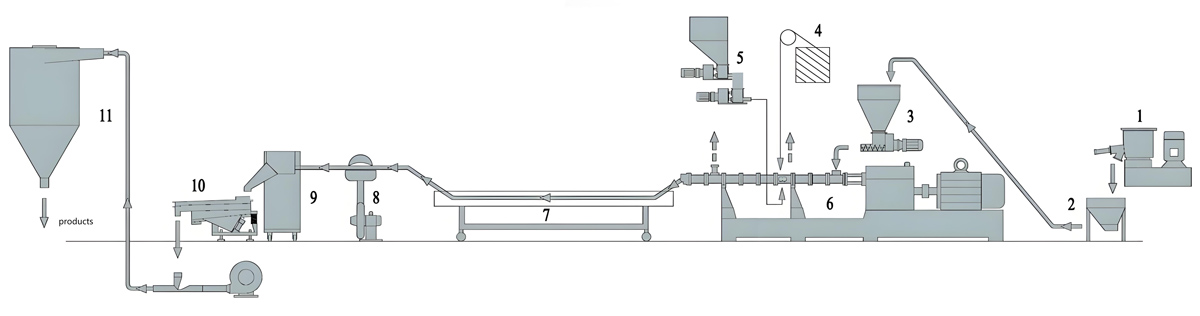
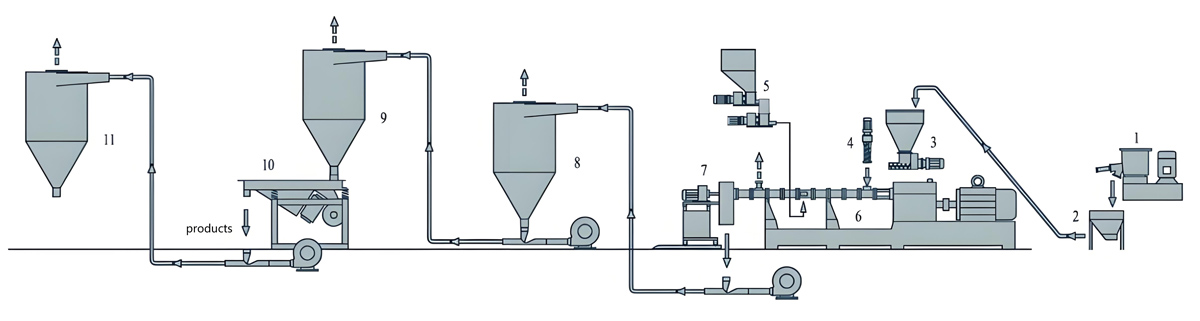
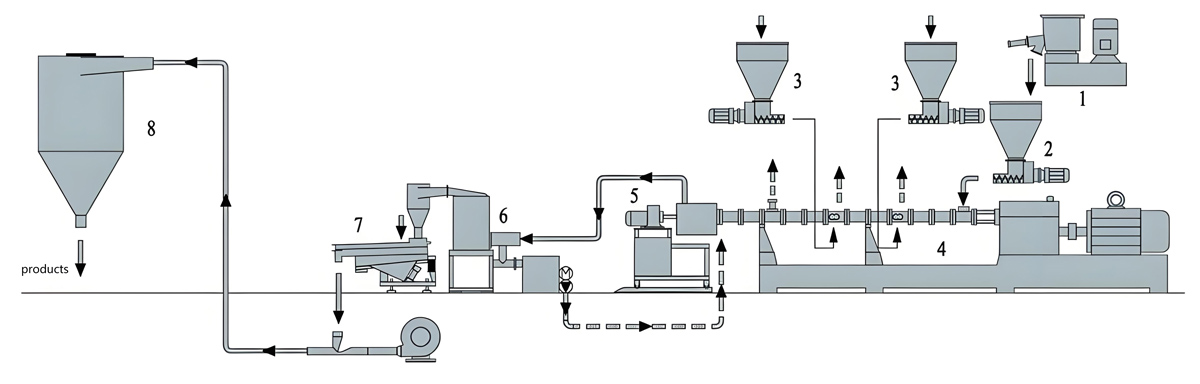
The production process of PC/ABS alloy masterbatch using the heavy-duty twin screw extruder involves several key steps:
1. Raw Material Preparation: Accurately weigh the PC/ABS alloy carrier resin, additives, and other components according to the formulated ratio. Ensure that all materials are dry and free from contaminants to avoid affecting the quality of the masterbatch.
2. Pre-mixing: Use a high-intensity mixer to blend the raw materials thoroughly. This helps to ensure that the additives are evenly distributed in the carrier resin before extrusion.
3. Extrusion: Feed the pre-mixed materials into the KTE Series heavy-duty twin screw extruder. The twin screws of the extruder rotate in a co-rotating or counter-rotating manner, depending on the specific model, to convey, melt, and mix the materials under controlled temperature and pressure.
4. Pelletizing: After extrusion, the molten material is passed through a die to form strands. These strands are then cooled in a water bath and cut into pellets using a pelletizer. The size and shape of the pellets can be adjusted by changing the die opening and the pelletizer speed.
5. Drying: The newly formed masterbatch pellets may contain some moisture, so they need to be dried in a drying oven to remove any residual moisture and improve their storage stability. The drying temperature and time should be carefully controlled to avoid degradation of the PC/ABS alloy resin.
6. Packaging: Once dried, the masterbatch pellets are packaged in suitable containers, such as plastic bags or drums, for storage and transportation. The packaging should be sealed properly to prevent moisture absorption and contamination.
Introduction to Production Equipment
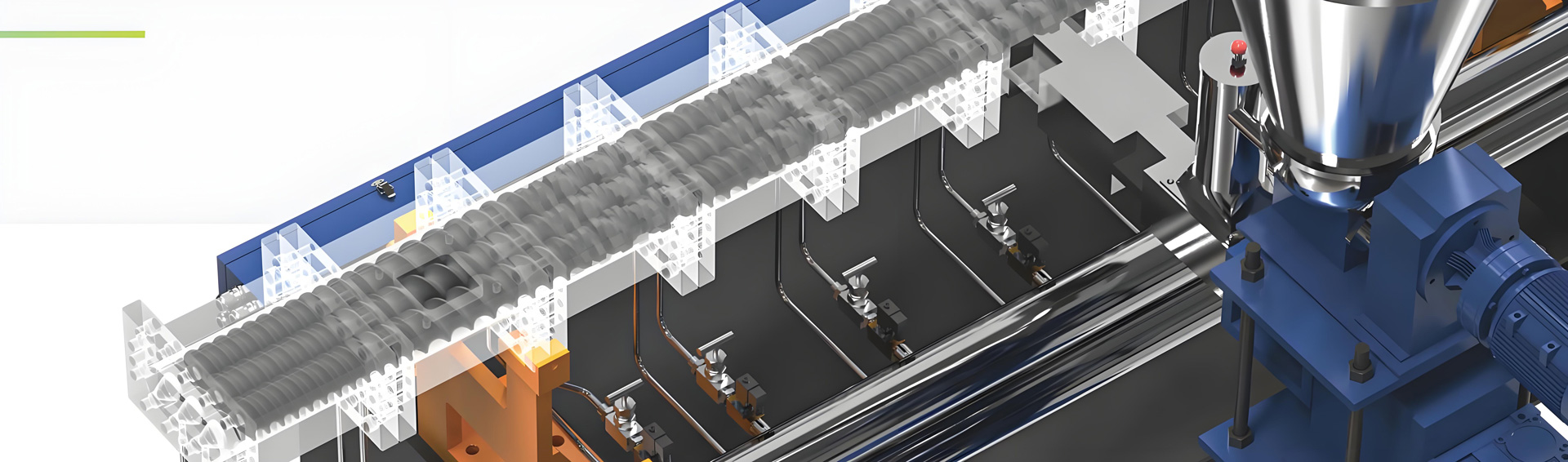
The KTE Series heavy-duty twin screw extruder from Nanjing Kerke Extrusion Equipment Co., Ltd. is specifically designed for the production of PC/ABS alloy masterbatch. It features a robust construction that can withstand the high torque and pressure required for processing PC/ABS alloy materials. The extruder consists of several main components, including the twin screw barrel, feeding system, heating and cooling system, and control panel.
The twin screw barrel is made of high-quality alloy steel, which offers excellent wear resistance and corrosion resistance. The screws are designed with a specific geometry to ensure efficient mixing and conveying of the PC/ABS alloy materials. The feeding system ensures a stable and uniform supply of raw materials into the extruder, preventing fluctuations in the production process.
The heating and cooling system is used to control the temperature of the extruder barrel. It consists of electric heaters and water cooling channels, which can quickly adjust the temperature to meet the processing requirements of PC/ABS alloy masterbatch. The control panel is equipped with an advanced digital control system that allows for precise adjustment of various parameters, such as screw speed, temperature, and feeding rate, ensuring consistent product quality.
Parameter Setting
Proper parameter setting is crucial for the successful production of PC/ABS alloy masterbatch using the heavy-duty twin screw extruder. Here are some key parameters and their typical settings:
Screw Speed: 150-300 rpm. The screw speed affects the mixing efficiency and residence time of the materials in the extruder. A higher screw speed can improve the mixing effect but may also increase the shear stress on the PC/ABS alloy resin, which could potentially cause degradation. It is important to find the optimal screw speed that balances mixing efficiency and resin integrity.
Temperature Profile: The temperature of the extruder barrel is typically set in a gradient from the feeding zone to the die zone. For PC/ABS alloy masterbatch, the temperature profile may range from 220-240°C in the feeding zone to 240-260°C in the die zone. This gradual temperature increase helps to ensure proper melting and mixing of the materials without causing thermal degradation.
Feeding Rate: 80-200 kg/h. The feeding rate should be adjusted according to the screw speed and the capacity of the extruder. It is important to maintain a stable feeding rate to avoid fluctuations in the production process and ensure consistent product quality.
Vacuum Degree: 0.07-0.09 MPa. Applying a vacuum in the extruder can help to remove volatile components and moisture from the materials, improving the quality of the masterbatch. The vacuum degree should be set based on the specific requirements of the PC/ABS alloy masterbatch formulation.
Equipment Price
The price of the KTE Series heavy-duty twin screw extruder for PC/ABS alloy masterbatch granulation varies depending on the specific model and configuration. Generally, the price ranges from $70,000 to $180,000. Factors that can affect the price include the screw diameter, length-to-diameter ratio, and additional features such as advanced control systems and automation equipment. It is recommended to contact Nanjing Kerke Extrusion Equipment Co., Ltd. directly for a detailed quote based on your specific production requirements.
Problems That May Occur During Production and Their Solutions and Prevention
Problem: Poor Compatibility Between PC and ABS
Cause Analysis: PC and ABS have different chemical structures and properties, which can lead to poor compatibility if not properly handled. This may result in reduced mechanical properties and poor appearance of the masterbatch.
Solution: Add a compatibilizer that can improve the compatibility between PC and ABS. The compatibilizer should be selected based on the specific types of PC and ABS used in the formulation. Adjust the processing parameters, such as temperature and screw speed, to promote better mixing and compatibility.
Prevention Method: Conduct compatibility tests before large-scale production to determine the optimal compatibilizer and formulation ratio. Ensure that the compatibilizer is added in the correct proportion and is well mixed with the other components. Regularly check and maintain the extruder to ensure its optimal performance for mixing and processing.
Problem: Thermal Degradation of PC/ABS Alloy Resin
Cause Analysis: High processing temperature, long residence time, or presence of impurities can cause thermal degradation of PC/ABS alloy resin. Degraded resin may result in reduced mechanical strength, discoloration, and poor processability of the masterbatch.
Solution: Lower the processing temperature within the suitable range for PC/ABS alloy resin. Reduce the residence time by adjusting the screw speed or optimizing the extruder configuration. Remove any impurities from the raw materials before feeding them into the extruder.
Prevention Method: Monitor the processing temperature closely and avoid overheating. Use a drying oven to dry the PC/ABS alloy resin and other raw materials before production to remove any moisture. Regularly inspect the extruder for any leaks or malfunctions that may cause prolonged residence time of the materials.
Problem: Uneven Pellet Size and Shape
Cause Analysis: This may be due to inconsistent feeding rate, improper die design, or malfunction of the pelletizer. Uneven pellet size and shape can affect the flowability and processing performance of the masterbatch.
Solution: Adjust the feeding rate to ensure a stable and uniform supply of materials into the extruder. Check and optimize the die design to ensure uniform flow of the molten material. Inspect and maintain the pelletizer to ensure its proper operation.
Prevention Method: Use a precise feeding system to control the feeding rate accurately. Regularly clean and maintain the die to prevent clogging. Calibrate the pelletizer regularly to ensure consistent pellet size and shape.
Maintenance and Care
Proper maintenance and care of the heavy-duty twin screw extruder are essential to ensure its long-term performance and reliability. Here are some maintenance tips:
1. Regular Cleaning: After each production run, clean the extruder barrel and screws to remove any residual materials. Use a suitable cleaning agent that is compatible with PC/ABS alloy resin to avoid contamination. Pay special attention to the screw elements and the die area, as these are prone to material buildup.
2. Lubrication: Lubricate the moving parts of the extruder, such as the screw bearings and gearbox, regularly to reduce friction and wear. Use the recommended lubricant and follow the manufacturer’s guidelines for lubrication intervals. Over-lubrication should be avoided as it can cause contamination of the materials.
3. Inspection: Conduct regular inspections of the extruder to check for any signs of wear, damage, or leakage. Pay close attention to the screw barrel, heating elements, and control system. Replace any worn or damaged parts promptly to prevent further damage to the equipment. Check the electrical connections and sensors to ensure their proper functioning.
4. Calibration: Calibrate the temperature sensors, pressure sensors, and other measuring devices regularly to ensure accurate parameter control. This helps to maintain consistent product quality and prevent production errors. Use standard calibration tools and follow the manufacturer’s calibration procedures.
5. Storage: If the extruder is not in use for an extended period, store it in a dry and clean environment. Cover the equipment to protect it from dust and moisture. Before restarting the production, conduct a thorough inspection and maintenance to ensure its proper operation. Check the lubrication levels and replace any expired lubricants.
FAQ
Q: Can the KTE Series heavy-duty twin screw extruder be used for other types of alloy masterbatch production?
A: Yes, the KTE Series extruder is versatile and can be adapted for the production of various types of alloy masterbatch, such as PC/PBT and ABS/PA alloy masterbatch, with some adjustments to the processing parameters and screw configuration.
Q: What is the expected lifespan of the KTE Series extruder under normal operating conditions?
A: With proper maintenance and care, the KTE Series extruder can have a lifespan of 10-15 years or more. The actual lifespan may vary depending on the operating conditions, production volume, and maintenance practices.
Q: Are there any safety precautions that need to be taken when operating the KTE Series extruder?
A: Yes, several safety precautions should be followed. Operators should wear appropriate personal protective equipment, such as safety glasses and gloves. The extruder should be operated in a well-ventilated area to avoid the accumulation of harmful fumes. Emergency stop buttons should be easily accessible and tested regularly. Operators should receive proper training on the safe operation of the equipment.
Q: Can the KTE Series extruder be integrated with an automated production line?
A: Yes, the KTE Series extruder can be integrated with an automated production line. It can be connected to various automated systems, such as material handling systems, packaging systems, and quality control systems, to improve production efficiency and reduce labor costs.
Summary
The KTE Series heavy-duty twin screw extruder from Nanjing Kerke Extrusion Equipment Co., Ltd. is a reliable and efficient solution for PC/ABS alloy masterbatch granulation. By following the proper formulation ratios, production process, and parameter settings, and implementing effective maintenance and problem-solving strategies, manufacturers can produce high-quality PC/ABS alloy masterbatch with consistent performance. The heavy-duty construction and advanced digital control technology of the extruder ensure stable operation and precise control over the production process. With its excellent features and capabilities, the KTE Series extruder is a valuable investment for companies engaged in PC/ABS alloy masterbatch production, helping them to meet the growing demand for high-performance PC/ABS alloy materials in various industries.