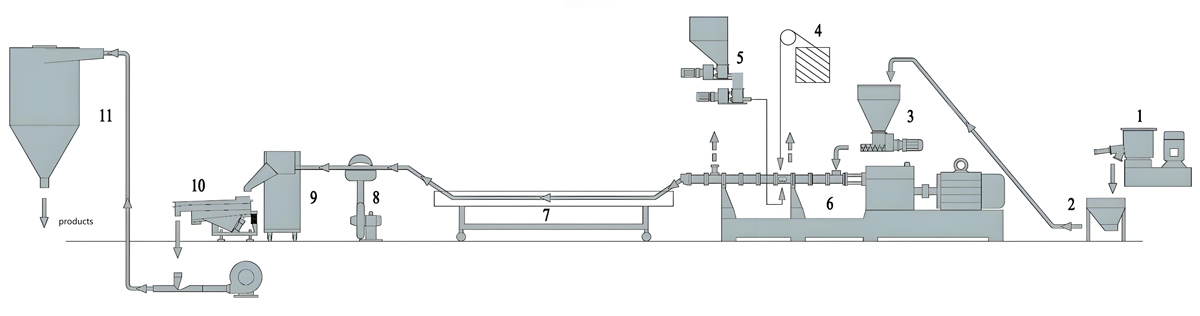
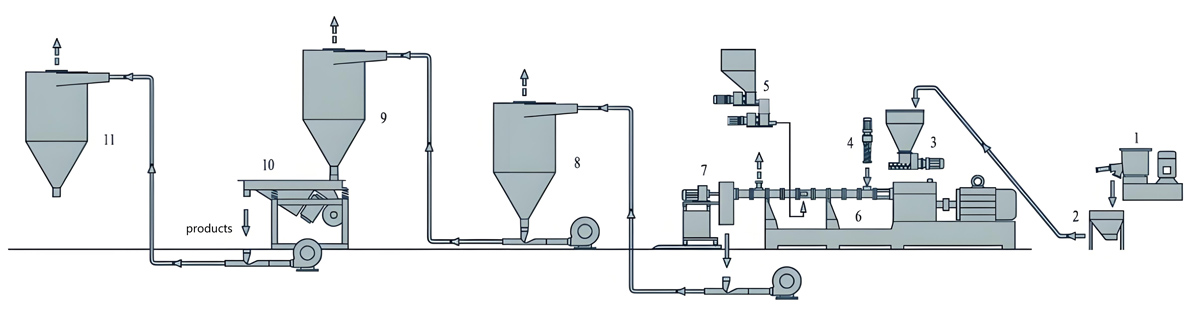
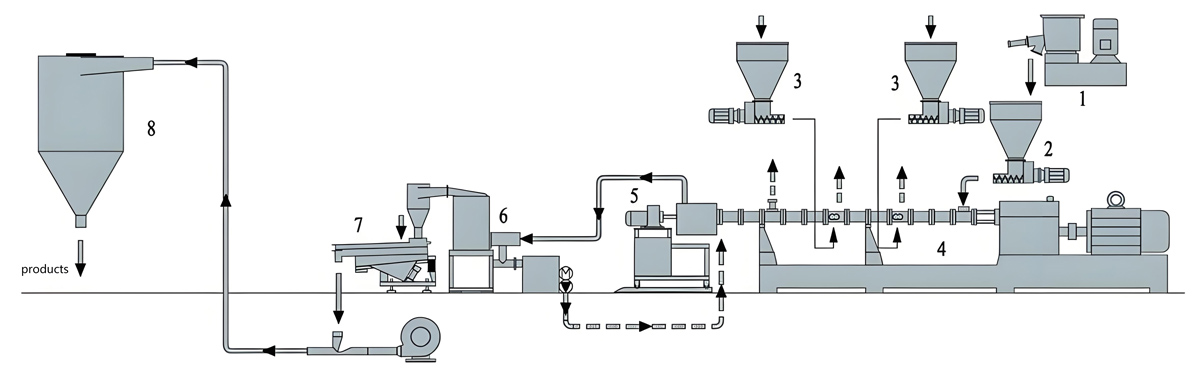
This comprehensive technical guide addresses the specialized requirements for manufacturing flexibility masterbatch using industrial grade twin screw extrusion equipment. Flexibility masterbatch represents a critical product category within the plastic additives industry, enabling manufacturers to produce polymer compounds with enhanced elastic recovery, improved impact resistance, and superior flexibility characteristics for demanding applications across multiple market sectors. The production of consistent, high-quality flexibility masterbatch requires deep understanding of elastomeric additive technology, processing equipment capabilities, and the intricate relationships between formulation chemistry and extrusion process parameters.
Industrial manufacturing operations increasingly specify flexible polymer materials for applications ranging from automotive interior components to medical devices, consumer products, and industrial equipment where material resilience and elastic behavior determine product performance and longevity. Flexibility masterbatch provides the concentrated additive technology that enables processors to achieve target flexibility characteristics efficiently and economically, with formulation flexibility allowing precise matching of compound properties to specific application requirements. Nanjing Kerke Extrusion Equipment Company’s industrial grade twin screw extruders deliver the processing performance, temperature control precision, and mixing efficiency that premium flexibility masterbatch production demands.
Understanding Flexibility Masterbatch and Its Industrial Applications
Flexibility masterbatch consists of concentrated formulations containing elastomeric modifiers, impact strength improvers, and flexible polymer additives dispersed within a carrier resin matrix at elevated concentration levels typically ranging from 40% to 70% by weight. Unlike conventional filler-based masterbatches that primarily modify stiffness and hardness characteristics, flexibility masterbatch formulations incorporate specialized elastomeric components that introduce rubber-like elasticity and impact energy absorption capabilities into rigid polymer substrates. The resulting modified compounds exhibit improved impact resistance, enhanced elongation at break, superior elastic recovery following deformation, and reduced brittleness compared to unmodified base polymers.
Automotive industry applications represent a significant market segment for flexibility masterbatch technology, with vehicle interior and exterior components requiring specific flexibility characteristics for aesthetic appearance, tactile quality, and functional performance. Instrument panels, door trim panels, and console components benefit from flexible polymer formulations that resist cracking under impact while maintaining surface appearance throughout vehicle service life. Under-hood applications utilize flexibility masterbatch technology to produce components that withstand thermal cycling and mechanical vibration while maintaining dimensional stability and functional integrity.
Consumer products manufacturing relies extensively on flexibility masterbatch for items requiring specific tactile characteristics and impact resistance including sporting goods, recreational equipment, children’s toys, and household items. The packaging industry employs flexible polymers for closure systems, seals, and gaskets that require elastic recovery behavior to maintain sealing performance throughout repeated use cycles. Medical device manufacturers utilize flexibility masterbatch technology for components requiring specific flexibility characteristics combined with biocompatibility and regulatory compliance for healthcare applications.
Industrial equipment applications include flexible tubing, hose systems, conveyor components, and vibration isolation elements that benefit from enhanced elastic behavior and impact resistance. Electrical and electronic applications utilize flexible polymers for cable jackets, connector housings, and protective enclosures where flexibility combined with durability ensures reliable performance in challenging service environments. The construction industry employs flexible polymer formulations for sealants, waterproofing membranes, and flexible piping systems that accommodate movement and thermal expansion while maintaining functional integrity.
Formulation Composition and Proportioning for Flexibility Masterbatch
Thermoplastic Elastomer Based Formulations
Thermoplastic elastomer based flexibility masterbatch formulations utilize commercial TPR and TPE compounds as the primary flexible component, dispersed within compatible carrier resin systems at concentrations ranging from 30% to 50% depending on target flexibility enhancement levels. Common TPE materials include styrenic block copolymers such as SBS and SEBS, thermoplastic polyolefin elastomers, thermoplastic polyurethane elastomers, and copolyester elastomers, each offering distinct property profiles that influence final masterbatch characteristics and performance in end-use applications.
A typical TPE-based flexibility masterbatch formulation might comprise the following weight percentages within the concentrate composition. The thermoplastic elastomer component typically constitutes 30% to 45% of the total formulation, with the specific concentration determined by target flexibility enhancement requirements and compatibility with intended end-use polymer substrates. The carrier resin system, selected for compatibility with both the TPE component and target end-use polymers, typically comprises 35% to 50% of the formulation. Polyethylene and polypropylene based carriers offer broad compatibility and excellent processing characteristics, while specialized carriers may be employed for specific application requirements.
Impact modifier and processing aid components contribute an additional 5% to 15% of formulation weight, with acrylic core-shell impact modifiers, ethylene-propylene impact copolymers, and specialized elastomeric modifiers providing enhanced impact resistance and flexibility characteristics. Processing aids including waxes, fatty acid derivatives, and proprietary lubricant systems optimize melt flow characteristics and facilitate dispersion of elastomeric components throughout the carrier matrix. Antioxidant and stabilization systems comprising 0.5% to 2.0% of the formulation protect both the elastomeric components and carrier resin from thermal oxidation during processing and subsequent service exposure.
EPR and EPDM Rubber Modified Formulations
Ethylene-propylene rubber and EPDM modified flexibility masterbatch formulations provide cost-effective flexibility enhancement suitable for demanding industrial applications where long-term thermal and oxidative stability are critical requirements. These formulations typically employ masterbatch carrier-concentrated grades of EPR or EPDM rubber with Mooney viscosities selected for processing compatibility, with loading concentrations ranging from 35% to 55% depending on formulation objectives and processing constraints.
EPR and EPDM modified formulations require careful attention to carrier system selection to achieve adequate compatibility and dispersion quality. Maleic anhydride grafted polymers serve as effective compatibilizers in these systems, providing chemical linkage between non-polar rubber components and polar carrier resins. Silane-based coupling agents offer alternative compatibility enhancement mechanisms for formulations requiring specific performance characteristics. Formulation proportions for typical EPDM-based flexibility masterbatch include EPDM rubber at 35% to 50%, carrier resin at 30% to 45%, compatibilizer at 5% to 10%, and processing additives at 2% to 5%.
Specialized Flexibility Enhancement Systems
Advanced flexibility masterbatch formulations may incorporate multiple elastomeric components or specialized additive systems to achieve specific performance objectives that exceed capabilities of single-component approaches. Hybrid formulations combining thermoplastic elastomers with rubber modifiers can optimize the balance between processing characteristics, flexibility enhancement, and cost effectiveness for specific application requirements. Nano-scale elastomeric additives provide exceptional flexibility enhancement at relatively low concentrations due to the high surface area of nanoscale particles, though processing requirements for these advanced systems are correspondingly more demanding.
Bio-based and sustainable flexibility masterbatch formulations represent an emerging market segment responding to environmental sustainability requirements. These formulations incorporate bio-derived elastomeric components, recycled polymer materials, and biodegradable flexibility modifiers to achieve target performance characteristics while reducing environmental impact. Nanjing Kerke’s industrial grade twin screw extruders effectively process these emerging formulation types, with flexible screw configurations and precise temperature control enabling optimal dispersion of bio-based and recycled components.
Production Process Technology for Flexibility Masterbatch
Raw Material Preparation and Pre-Formulation Processing
Successful flexibility masterbatch production begins with proper material preparation and handling procedures that ensure consistent formulation characteristics and optimal processing performance. Thermoplastic elastomer and rubber components arrive in various physical forms including bales, cubes, pellets, and powders depending on supplier specifications and material type. Initial material assessment verifies physical form, particle size distribution for powder materials, and visual inspection for contamination or degradation indicators.
Pre-blending operations combine formulation components in precise proportions before extrusion processing, with particular attention to thorough incorporation of elastomeric components that may exhibit poor flow characteristics compared to conventional polymer pellets. High-intensity mixing equipment with sigma blade, cam, or comparable mixing geometries provides adequate shear and distribution to achieve homogeneous pre-blends. The mixing sequence typically begins with carrier resin introduction, followed by incremental addition of elastomeric modifiers while maintaining continuous mixing action to ensure uniform distribution.
Masterbatch concentrates prepared at elevated temperatures can improve incorporation of elastomeric components by reducing viscosity differences between formulation constituents. Pre-heating of elastomeric materials in ovens or heated hoppers reduces initial mixing resistance and accelerates incorporation into the carrier matrix. However, temperature exposure must be carefully controlled to prevent premature softening or degradation of heat-sensitive additives and modifiers.
Extrusion Compounding Process Optimization
The extrusion compounding stage transforms pre-blended flexibility masterbatch formulations into homogeneous concentrate products through controlled melting, mixing, and conveyance within the twin screw extruder barrel assembly. Nanjing Kerke’s industrial grade twin screw extruders provide the processing capability required for demanding flexibility masterbatch formulations, with robust mechanical construction, precise temperature control, and flexible screw configuration options that enable optimization for specific formulation characteristics.
The compounding process requires careful attention to melt temperature management throughout the barrel assembly, as flexibility masterbatch formulations typically exhibit higher viscosity and greater temperature sensitivity than conventional filled systems. The feed zone operates at temperatures between 150 and 170 degrees Celsius, providing sufficient heat input for initial polymer softening while preventing material sticking in the feed throat area. Forward compression ratios of 2.0 to 2.5 ensure adequate material intake and compression without excessive pressure development that might cause feeding difficulties.
The transition and mixing zones employ temperatures between 170 and 210 degrees Celsius depending on formulation composition and elastomer type, where external heating and viscous dissipation achieve complete melting and intensive mixing of formulation components. Elastomeric components require particular attention during mixing to ensure complete incorporation without excessive degradation from extended thermal exposure. The KTE Series extruder’s modular screw configuration enables precise placement of mixing elements at locations where elastomer incorporation can be optimized while minimizing residence time in high-temperature zones.
Devolatilization zones remove volatile components including residual monomers, processing solvents, and moisture that may be present in elastomeric components or introduced during pre-blending operations. Proper devolatilization prevents void formation, surface defects, and quality variations in finished flexibility masterbatch products. Vacuum systems operating at pressures below 50 millibar effectively remove volatiles without causing excessive material carryover or pressure instabilities that might affect process stability.
Pelletizing and Cooling Systems
Underwater pelletizing systems transform molten flexibility masterbatch into pellet forms suitable for storage and subsequent processing, with pellet quality parameters significantly influencing handling characteristics and dispersion performance in downstream applications. Strand pelletizing offers an alternative approach for flexibility masterbatch with particular processing characteristics, though underwater pelletizing remains the preferred method for most production applications due to superior size consistency and reduced dust generation.
Pellet size selection for flexibility masterbatch typically targets 2.5 to 3.5 millimeter diameter pellets that provide adequate surface area for rapid heating during let-down operations while maintaining handling convenience appropriate for industrial manufacturing environments. Smaller pellet sizes improve dispersion rates in end-use applications but may create dust generation concerns and complicate handling and metering operations. The KTE Series extruder’s precise melt temperature control and consistent throughput contribute to excellent pellet quality with minimal size variation.
Cooling system design for flexibility masterbatch must account for the thermal characteristics of elastomeric components that may exhibit different cooling curves compared to conventional thermoplastic polymers. Water temperatures in the pelletizing system must be carefully controlled to achieve complete solidification without thermal shock that might cause pellet cracking or surface defects. Extended cooling water residence and moderate water temperatures typically provide the best balance between production rate and pellet quality for flexibility masterbatch applications.
Industrial Grade Twin Screw Extruder Equipment Overview
KTE-52 Industrial Grade Twin Screw Extruder Specifications
The KTE-52 industrial grade twin screw extruder provides an effective processing platform for medium-scale flexibility masterbatch production, featuring 52 millimeter screw diameter and approximately 45 liters effective barrel volume. This model achieves throughput rates ranging from 150 to 400 kilograms per hour depending on formulation characteristics and operating parameters, making it suitable for dedicated flexibility masterbatch production operations and specialized manufacturing facilities serving targeted market segments. The 52 millimeter screw diameter provides adequate processing intensity for elastomeric formulation requirements while maintaining cost-effective operation at production volumes appropriate for regional market presence.
The KTE-52 features configurable barrel sections with standard length-to-diameter ratios ranging from 40:1 to 52:1, enabling optimization of processing intensity and residence time for specific formulation requirements. Modular barrel construction allows addition of specialized processing zones including devolatilization sections, side-feeder access ports, and pressure control zones as required for specific formulations. Bimetallic barrel liners with nitrided or carburized surface treatments provide wear resistance appropriate for processing of elastomeric materials that may contain abrasive additives or reinforcement fillers.
Screw element configurations for the KTE-52 can be precisely optimized for flexibility masterbatch processing requirements through selection from Nanjing Kerke’s comprehensive element library. Standard configurations for elastomeric formulations employ forward transport elements in feed and compression zones, with kneading block elements strategically positioned to incorporate elastomeric components without excessive shear that might cause degradation. Special mixing elements optimized for elastomer processing provide distributive mixing that achieves uniform component distribution while minimizing mechanical energy input that could elevate melt temperatures excessively.
KTE-75 and KTE-100 Production Scale Industrial Extruders
The KTE-75 industrial grade twin screw extruder provides enhanced capacity for higher-volume flexibility masterbatch production, with 75 millimeter screw diameter and effective barrel volume exceeding 90 liters. Throughput rates ranging from 400 to 800 kilograms per hour enable efficient production at volumes that support expanded market presence and dedicated customer supply arrangements. This model maintains the processing flexibility and quality capability of smaller KTE Series configurations while providing substantially increased production capacity.
The KTE-100 represents the largest industrial grade option in the KTE Series lineup, incorporating 100 millimeter screw diameter and approximately 160 liters effective barrel volume. Throughput rates exceeding 1500 kilograms per hour make this model suitable for large-scale flexibility masterbatch production serving national or international markets, captive production within major plastic manufacturing operations, and dedicated supply arrangements with large-volume customers. Base pricing for KTE-100 systems typically ranges from $520,000 to $620,000, with complete installed systems including auxiliary equipment ranging from $800,000 to $1,100,000.
Drive and Control System Capabilities
Industrial grade KTE Series extruders incorporate robust drive systems capable of delivering the torque and power required for demanding flexibility masterbatch formulations. AC vector drive motors with power ratings ranging from 90 kilowatts for KTE-52 systems to 400 kilowatts for KTE-100 configurations provide responsive speed control and consistent torque delivery throughout the operating speed range. Gearbox designs featuring hardened gears and precision bearings ensure reliable power transmission with minimal maintenance requirements throughout extended production campaigns.
Advanced process control systems provide comprehensive monitoring and control capabilities that enable optimization of processing parameters for flexibility masterbatch production. The Siemens-based control platform offers intuitive operator interface through high-resolution color touchscreens, with comprehensive process visualization that displays critical parameters including temperatures, pressures, speeds, and power consumption in readily interpretable formats. Recipe management functions store validated operating parameters for multiple formulations, enabling quick changeover between products while maintaining validated quality specifications for each formulation.
Process data logging and trending capabilities support quality management and continuous improvement initiatives by recording all process parameters throughout production operations. Statistical process control functions calculate capability indices and control chart parameters that enable proactive quality management and rapid identification of developing process variations. Network connectivity options enable integration with plant-level manufacturing execution systems for comprehensive production management and documentation.
Process Parameter Configuration for Flexibility Masterbatch
Temperature Profile Optimization
Temperature profile configuration significantly influences flexibility masterbatch quality by affecting melt viscosity, elastomer incorporation, thermal degradation susceptibility, and overall process stability. The interrelationships between temperature settings, screw speed, and throughput require systematic optimization approaches that consider formulation-specific characteristics and quality requirements. Flexibility masterbatch formulations generally benefit from moderate temperature profiles that achieve adequate melting and mixing while minimizing thermal exposure that could degrade elastomeric components.
A typical temperature profile for TPE-based flexibility masterbatch employs the following zone configurations. The feed zone operates between 150 and 170 degrees Celsius, providing sufficient heating for initial polymer softening while preventing feed throat sticking that could interrupt material intake. The compression zone, comprising approximately 25% of total barrel length, employs temperatures between 170 and 190 degrees Celsius where progressive heating achieves complete melting and initial elastomer incorporation. Mixing zones operate between 190 and 210 degrees Celsius, where elevated temperatures reduce melt viscosity and facilitate intensive mixing required for elastomer dispersion. Die zone temperatures typically range from 200 to 220 degrees Celsius, maintained slightly higher than mixing zones to ensure smooth flow through die openings without temperature-related pressure variations.
EPR and EPDM modified formulations may require different temperature profiles due to the different thermal characteristics of rubber components. These formulations typically employ lower temperatures in initial processing zones, with peak temperatures in mixing sections limited to values between 180 and 200 degrees Celsius to minimize rubber degradation. Extended devolatilization zones operating at reduced pressures effectively remove volatile components without requiring elevated temperatures that would accelerate thermal degradation.
Screw Speed and Residence Time Management
Screw speed selection for flexibility masterbatch production balances mixing intensity requirements against shear heating concerns and residence time considerations. Industrial grade KTE Series extruders operate at maximum speeds ranging from 300 to 500 RPM depending on model size, with typical operating speeds for flexibility masterbatch ranging from 150 to 300 RPM. Lower operating speeds relative to maximum capability reflect the priority of thermal management and controlled residence time for elastomeric formulation processing.
Residence time distribution significantly influences flexibility masterbatch quality by determining the duration of thermal and mechanical treatment experienced by formulation components. Mean residence times typically range from 45 to 90 seconds depending on screw configuration, operating speed, and throughput rate. Longer mean residence times provide additional mixing opportunity but increase thermal exposure that may degrade heat-sensitive elastomeric components. Narrow residence time distributions minimize quality variations by ensuring consistent treatment of all material through the processing zone.
Screw configuration optimization enables balancing of mixing intensity and residence time requirements through selection of element types and arrangement sequences that achieve target mixing performance within acceptable residence time limits. Feed zone elements with forward transport geometry minimize back-mixing that would broaden residence time distribution. Mixing zone configurations employing combinations of kneading blocks and neutral elements achieve intensive mixing while maintaining forward material flow. Restrictive elements positioned strategically prevent backflow that would extend residence time for portions of the material batch.
Throughput and Production Rate Optimization
Throughput optimization for flexibility masterbatch production considers the interdependencies between production rate, quality characteristics, and operating efficiency. Specific throughput values, calculated as throughput rate divided by screw speed, provide normalized measures of equipment utilization that enable comparison across different operating conditions. Typical specific throughput values for flexibility masterbatch range from 1.0 to 2.5 kilograms per hour per RPM depending on formulation density and processing characteristics.
Maximum sustainable throughput rates depend on formulation characteristics, equipment configuration, and process parameter settings. Formulations with higher elastomer content typically process at lower throughput rates due to increased viscosity and reduced heat transfer characteristics. Equipment configurations with extended mixing zones may require reduced throughput to maintain adequate residence time for complete component incorporation. Quality validation testing throughout throughput optimization ensures that production rate increases do not compromise product characteristics.
Equipment Investment and Economic Considerations
KTE-52 System Investment Requirements
The KTE-52 industrial grade twin screw extruder system provides an accessible entry point for manufacturers entering the flexibility masterbatch market or expanding existing production capabilities. Base system pricing typically ranges from $140,000 to $180,000 for the complete extrusion and pelletizing system including standard control features and basic accessories. This investment provides throughput capability suitable for dedicated regional market service and specialized product applications requiring moderate production volumes.
Total installed system costs for complete flexibility masterbatch production capability based on KTE-52 equipment typically range from $280,000 to $420,000 depending on auxiliary equipment specifications and installation complexity. Auxiliary equipment investments include material handling systems for raw material preparation and finished product storage, drying and dehumidification equipment for moisture-sensitive formulation components, extrusion tooling and die plate options for various pellet specifications, and material conveying systems for continuous production operations.
Return on investment analysis for KTE-52 systems considers market flexibility masterbatch pricing typically ranging from $2.50 to $6.00 per kilogram depending on formulation complexity and market positioning, against production costs including raw materials, energy, labor, and allocated overhead. At typical production rates of 200 to 300 kilograms per hour and operating schedules of 6,000 to 8,000 hours annually, annual production volumes of 1,200 to 2,400 metric tons support attractive return on investment timelines for well-positioned market participants.
KTE-75 and KTE-100 Investment Analysis
The KTE-75 industrial grade twin screw extruder provides enhanced production capacity with base pricing typically ranging from $280,000 to $350,000 for the complete extrusion system. This investment supports annual production volumes of 2,500 to 5,000 metric tons depending on formulation characteristics and operating schedule, enabling service to larger market territories and higher-volume customer relationships. Total installed system costs for complete KTE-75 production lines typically range from $500,000 to $750,000.
The KTE-100 represents the highest capacity option for flexibility masterbatch production, with base pricing typically ranging from $520,000 to $620,000 for complete extrusion and pelletizing systems. This investment supports annual production volumes exceeding 8,000 metric tons for dedicated high-volume operations, enabling competitive supply to major industrial customers and extended market territories. Total installed costs for comprehensive KTE-100 production facilities typically range from $800,000 to $1,100,000.
Production Problems, Solutions, and Prevention Strategies
Problem: Elastomer Incorporation Failure and Gel Formation
Problem Analysis
Elastomer incorporation failure manifests as incomplete incorporation of elastomeric components into the carrier matrix, producing visible gel particles, non-uniform flexibility characteristics, and inconsistent product quality throughout production batches. Gel formation occurs when elastomeric materials fail to disperse adequately within the thermoplastic matrix, creating localized concentrations of elastomer that resist blending with surrounding polymer material. These defects compromise product quality and may cause processing difficulties in downstream applications where customers expect uniform flexibility enhancement.
The consequences of elastomer incorporation failure extend beyond immediate quality defects to include customer complaints, product rejection, and reputation damage that affects future business development. Non-uniform flexibility masterbatch produces variable results when let down into end-use polymer compounds, potentially causing product performance that falls below specification requirements. Processing problems including filter fouling, surface defects, and equipment damage may result from the presence of undispersed elastomeric material that accumulates in processing equipment.
Root Cause Analysis
Inadequate shear stress during mixing represents the primary cause of elastomer incorporation failure, occurring when screw configurations lack sufficient mixing intensity or operating parameters provide insufficient energy input to incorporate elastomeric components effectively. Elastomeric materials with high viscosity require more intensive mixing treatment than conventional thermoplastics to achieve uniform dispersion within carrier matrices.
Temperature profile misconfigurations can cause incorporation problems through effects on melt viscosity and elastomer softening behavior. Insufficient temperatures result in inadequate melting of carrier resin components and insufficient softening of elastomeric modifiers, preventing proper incorporation due to excessive viscosity differences between components. Excessive temperatures may cause premature degradation of elastomeric components or carrier resin oxidation that interferes with incorporation processes.
Formulation-related causes include incompatible carrier resin and elastomer combinations that lack sufficient thermodynamic affinity for adequate mixing, insufficient compatibilizer concentrations for challenging material combinations, and excessive elastomer concentrations that exceed incorporation capacity of the selected processing conditions. Material quality problems including contaminated elastomer materials, degraded components, or materials with improper physical form specifications can interfere with incorporation regardless of processing conditions.
Solution Implementation
Addressing elastomer incorporation failure requires systematic diagnosis to identify specific causes and appropriate corrections. Screw configuration review assesses mixing element density, element selection, and arrangement sequence relative to incorporation requirements for the specific formulation. Increased kneading block density in incorporation zones provides additional dispersive mixing that improves elastomer incorporation without excessive shear heating that might cause degradation.
Temperature profile optimization adjusts zone temperatures to achieve appropriate melt viscosity for incorporation while avoiding excessive thermal exposure that could degrade elastomeric components. Process validation testing at various temperature combinations identifies optimal settings for specific formulations. Operating parameter adjustments including increased screw speed and modified throughput rate can improve incorporation through increased energy input while maintaining thermal balance within acceptable limits.
Formulation modifications address compatibility issues through carrier resin reselection, increased compatibilizer concentration, or addition of coupling agents that improve interfacial interactions between elastomeric components and carrier matrices. Temporary concentration reduction during troubleshooting identifies whether formulation loading exceeds processing capability, with gradual loading increases following successful incorporation at lower concentrations.
Prevention Strategies
Preventing elastomer incorporation failure requires comprehensive quality management practices throughout the production operation. Formulation qualification procedures should verify incorporation capability for all new formulations before production commitment, with pilot-scale testing identifying potential incorporation challenges before full-scale production. Material qualification specifications should address elastomer physical form, viscosity characteristics, and supplier consistency to ensure predictable processing behavior.
Process validation for each formulation establishes validated operating parameter ranges including temperature profiles, screw speeds, and throughput rates that reliably produce quality products. Statistical process control monitoring of key parameters throughout production runs identifies variations that might affect incorporation quality. Regular equipment maintenance including screw element inspection and replacement of worn components ensures consistent mixing capability throughout production campaigns.
Problem: Color Variation and Thermal Degradation
Problem Analysis
Color variation in flexibility masterbatch manifests as differences in coloration between production batches, within-batch variations that indicate process instability, or gradual color drift over extended production periods. These variations indicate underlying process inconsistencies that may affect product performance beyond cosmetic appearance. Thermal degradation of elastomeric components produces discoloration, odor generation, and property deterioration that compromise product quality and may cause customer complaints about processing odors or visible defects in finished products.
The consequences of color variation and thermal degradation include customer rejection, processing problems in downstream applications, and potential health and safety concerns from degraded material handling. Color inconsistencies make it difficult for customers to achieve consistent product appearance in their end-use applications, potentially requiring additional blending or color correction steps that increase processing costs and complexity. Thermal degradation products may cause equipment contamination, processing difficulties, and environmental concerns related to volatile emissions.
Root Cause Analysis
Thermal degradation originates from excessive temperatures, extended residence times, or combinations of temperature and time that exceed thermal stability limits of elastomeric components or carrier resins. Inadequate temperature control causes localized overtemperature conditions in barrel zones or die areas that accelerate degradation reactions. Screw configuration problems including dead spots or areas of material stagnation create locations where residence time exceeds normal values, causing localized degradation that manifests as color variations.
Color variation sources include inconsistent additive dispersion, batch-to-batch formulation variations, raw material color differences between lots, and process parameter variations that affect incorporation and distribution of colored components. Antioxidant and stabilizer system inadequacies fail to protect formulation components from oxidation that produces discoloration over time. Contamination from previous production batches or auxiliary equipment can introduce color bodies that cause visible defects in finished products.
Solution Implementation
Addressing thermal degradation begins with temperature profile verification using calibrated temperature measurement equipment to identify actual versus indicated temperatures throughout the processing system. Temperature controller calibration and thermocouple verification ensure accurate temperature indication and control. Barrel zone temperature adjustments reduce temperatures in zones where degradation indicators suggest overtemperature conditions.
Screw configuration review identifies potential dead spots or material stagnation areas that might create extended residence time regions. Modified screw element arrangements eliminate problematic configurations while maintaining processing capability for target formulations. Residence time distribution measurement using tracer techniques quantifies actual residence characteristics and identifies locations where material experiences excessive thermal exposure.
Color variation troubleshooting addresses formulation consistency through verification of pre-blending procedures and raw material lot consistency. Antioxidant system optimization may involve increased concentration or alternative antioxidant selection for improved thermal stability. Production scheduling practices that minimize changeover delays and equipment contamination reduce sources of color variation from cross-contamination between batches.
Prevention Strategies
Preventing color variation and thermal degradation requires comprehensive process control and quality management practices. Temperature monitoring with automated alarming identifies temperature excursions before significant degradation occurs. Antioxidant and stabilizer system qualification ensures adequate protection for specific formulation components under prevailing processing conditions. Equipment cleaning procedures between production runs prevent contamination that could cause color variations.
Statistical process control charts on color measurement data from production samples enable trend identification that predicts developing problems before they cause significant quality impacts. Raw material specifications should address color consistency requirements for elastomer and carrier resin components. Production scheduling that groups similar formulations consecutively minimizes changeover-related quality variations.
Problem: Pellet Cohesion and Handling Difficulties
Problem Analysis
Pellet cohesion problems in flexibility masterbatch manifest as pellets that stick together during cooling, storage, or transport, forming clumps and agglomerates that complicate subsequent handling, metering, and let-down processing. These cohesion issues originate from residual surface tackiness from elastomeric components that remain slightly sticky even after cooling, inadequate cooling that leaves pellets warm enough to stick, and storage conditions that elevate pellet temperatures or introduce moisture that promotes cohesion.
The consequences of pellet cohesion include customer complaints about handling difficulties, processing problems in automated feeding systems that cannot meter cohesive pellets reliably, and potential product rejection when clumped material causes visible defects in finished products. Cohesion-related quality issues often develop gradually as storage conditions change seasonally or as production volumes accumulate in storage facilities, making root cause identification challenging due to the time delay between production and complaint receipt.
Root Cause Analysis
Formulation composition influences pellet cohesion through elastomer characteristics including surface energy, tackiness, and tendency to soften at elevated temperatures. Higher elastomer content formulations typically exhibit greater cohesion tendencies due to increased surface area of elastomeric components. Certain elastomer types including certain TPU grades exhibit inherent tackiness that persists even at room temperature conditions.
Processing conditions that leave pellets warmer than ideal storage temperatures create conditions favorable for cohesion development. Insufficient cooling water flow, elevated water temperatures, or inadequate drying time before packaging can all contribute to elevated pellet temperatures that promote cohesion. Storage conditions including high ambient humidity, elevated storage temperatures, and prolonged storage periods exacerbate cohesion problems.
Solution Implementation
Addressing pellet cohesion requires formulation and processing modifications that reduce tackiness and improve handling characteristics. Anti-blocking agent addition at concentrations of 0.1% to 0.5% provides surface treatment that reduces pellet-to-pellet adhesion. Carrier system modification may reduce cohesion by adjusting elastomer concentration or selecting elastomer grades with lower inherent tackiness. Processing parameter optimization including reduced die temperatures and extended cooling may produce pellets with improved handling characteristics.
Post-production treatment options include surface coating with anti-cohesion agents, extended cooling periods before packaging, and refrigerated storage for sensitive formulations. Conveying system modifications that prevent excessive handling and contact between pellets reduce cohesion development. Packaging modifications including reduced fill weights, permeable packaging materials, and moisture barriers address storage-related cohesion factors.
Prevention Strategies
Preventing pellet cohesion requires comprehensive understanding of formulation-specific handling characteristics and appropriate mitigation strategies. Customer communication regarding proper storage conditions and handling procedures prevents user-induced cohesion problems. Product qualification testing should include extended storage simulation that predicts long-term cohesion behavior before commercial distribution. Storage condition recommendations provided to customers address site-specific factors that influence product stability.
Maintenance Procedures and Best Practices
Operational Maintenance Requirements
Effective maintenance for flexibility masterbatch production equipment addresses the specific challenges associated with elastomeric component processing including material tackiness, potential for material buildup, and thermal stability requirements. Daily inspection activities include verification of feeding system function and material flow characteristics, monitoring of melt temperature and pressure stability, observation of pellet quality including cohesion tendency, and inspection for material leakage or contamination at seal points.
Shift-based maintenance includes cleaning of die plate and pelletizing chamber to remove accumulated material, inspection of knife blade condition and adjustment for strand cutting systems, verification of cooling system function and water quality, and inspection of material handling equipment for residue buildup or contamination. Documentation of maintenance activities enables tracking of equipment condition and identification of developing maintenance requirements that planned interventions can address before failures occur.
Periodic Maintenance and Overhaul Scheduling
Weekly maintenance activities encompass cooling system inspection and cleaning, electrical system verification including terminal inspection and heater element continuity testing, and inspection of bearings and seals for temperature and noise indicators. Monthly maintenance includes detailed barrel inspection using borescopic techniques to assess liner condition, screw element inspection and verification of tightness on drive shafts, gearbox oil analysis and replacement as indicated by contamination or degradation indicators, and comprehensive control system verification including sensor calibration.
Major overhaul intervals for flexibility masterbatch production equipment typically range from 10,000 to 18,000 operating hours depending on formulation characteristics and operating severity. Overhaul procedures include complete barrel disassembly and inspection, liner condition assessment and replacement of worn components, comprehensive screw element inspection and replacement as indicated by wear patterns, gearbox and bearing replacement, and drive motor inspection including insulation testing. Professional overhaul services ensure proper assembly and optimization of equipment following major maintenance procedures.
Frequently Asked Questions
What elastomer types can be processed in KTE Series industrial grade extruders for flexibility masterbatch?
KTE Series industrial grade twin screw extruders can process a comprehensive range of elastomer types for flexibility masterbatch applications including styrenic block copolymers such as SBS and SEBS, thermoplastic polyolefin elastomers, thermoplastic polyurethane elastomers, copolyester and polyamide elastomers, ethylene-propylene rubbers and EPDM grades, nitrile rubber compounds, and butyl rubber formulations. The specific processing parameters require optimization for each elastomer type based on viscosity characteristics, thermal stability, and mechanical sensitivity. Nanjing Kerke’s application engineering support provides guidance for new elastomer types to ensure successful processing and quality results.
What is the typical flexibility enhancement achievable with flexibility masterbatch let-down into polypropylene?
Flexibility masterbatch let-down into polypropylene typically achieves impact strength improvements ranging from 2 to 10 times baseline values depending on base polymer impact resistance, masterbatch loading level, and specific elastomer system employed. At typical let-down ratios of 5% to 20%, flexible masterbatch can improve impact resistance from 20 to 25 kilojoules per square meter for unmodified polypropylene to 50 to 100 kilojoules per square meter for modified compounds. Elongation at break improvements typically range from 50% to 400% depending on modification level and specific formulation characteristics.
What storage requirements apply to flexibility masterbatch products?
Flexibility masterbatch storage requirements depend on formulation composition but typically include protection from direct sunlight and elevated temperatures, prevention of moisture absorption by moisture-sensitive formulations, prevention of contamination from other materials, and rotation of inventory on first-in-first-out basis to ensure product freshness. Most flexibility masterbatch products maintain optimal quality for 6 to 12 months when stored under recommended conditions. Temperature-controlled storage facilities may be required for certain formulations with sensitivity to thermal exposure or humidity exposure.
Can flexibility masterbatch be combined with other additive masterbatches in polymer processing?
Flexibility masterbatch can generally be combined with most other masterbatch types including color masterbatches, filler masterbatches, and additive masterbatches in polymer processing operations. However, total additive loading must be managed to prevent exceeding processing limits or compromising final product properties. Compatibilities between different masterbatch systems should be verified through testing before commercial production. Combined masterbatch systems may require let-down ratio adjustments to account for additive contributions from multiple concentrate sources. Pre-blending of multiple masterbatch types before processing can improve distribution consistency compared to separate addition methods.
What quality testing is recommended for flexibility masterbatch product qualification?
Recommended quality testing for flexibility masterbatch includes melt flow rate determination at standardized conditions, impact resistance testing using Charpy or Izod methods on specimens prepared at validated let-down ratios, tensile testing including elongation at break determination, Shore hardness measurement, thermal analysis including DSC for melting behavior and thermal stability assessment, and color measurement for formulations containing colored components. Regular quality verification testing ensures production consistency and enables identification of quality variations that might affect customer processing or final product performance.
What temperature ranges are appropriate for processing flexibility masterbatch in end-use applications?
Processing temperature ranges for flexibility masterbatch depend on carrier resin type and elastomer composition, with typical processing temperatures ranging from 180 to 260 degrees Celsius depending on specific formulation. Polyethylene-based flexibility masterbatch typically processes between 180 and 230 degrees Celsius. Polypropylene-based formulations generally require 200 to 250 degrees Celsius. Higher processing temperatures within recommended ranges improve flow characteristics but may increase degradation risk for sensitive elastomer components. Processing equipment should be preheated thoroughly before production runs to ensure stable melt temperatures throughout processing.
What regulatory considerations apply to flexibility masterbatch for food contact or medical applications?
Flexibility masterbatch for food contact or medical applications requires formulation components that comply with relevant regulatory frameworks including FDA regulations for food contact in the United States, EU regulations including REACH and food contact materials directives, and specific medical device regulations including ISO 10993 biocompatibility requirements. Product formulations intended for regulated applications must use only regulatory-compliant components with appropriate documentation including food contact statements, biocompatibility test reports, and traceability documentation. Manufacturers should obtain specific regulatory compliance documentation from masterbatch suppliers and verify compliance for intended applications before commercial use.
What typical lead times apply to KTE Series industrial grade extruder procurement and installation?
Typical lead times for KTE Series industrial grade twin screw extruders range from 4 to 8 weeks for standard configurations from order confirmation to shipment, with 8 to 16 additional weeks for complete installation,调试, and commissioning activities depending on installation complexity and auxiliary equipment requirements. Custom configurations or specialized accessories may extend lead times proportionally. Nanjing Kerke’s project management team coordinates delivery, installation, and commissioning activities to minimize total project timeline while ensuring proper equipment installation and operational qualification.
Conclusion
Flexibility masterbatch manufacturing using industrial grade twin screw extrusion technology enables plastic processors to achieve enhanced material performance characteristics that expand application possibilities and improve end-product quality. Nanjing Kerke’s KTE Series industrial grade extruders provide the processing capability, precision control, and reliability that demanding flexibility masterbatch production requires, supporting manufacturers in meeting market demands for high-performance flexible polymer compounds.
The comprehensive understanding of flexibility masterbatch technology covered in this guide enables manufacturers to approach production operations with confidence in their ability to deliver consistent, high-quality products. Success requires attention to formulation optimization, process parameter control, quality verification, and maintenance practices that collectively ensure reliable production and customer satisfaction.
Continued development of elastomer technology, processing equipment, and application requirements ensures that flexibility masterbatch remains a dynamic product category requiring ongoing learning and adaptation. Manufacturers who invest in comprehensive technical understanding and production capability development position themselves to capture growth opportunities in expanding application markets for flexible polymer materials.