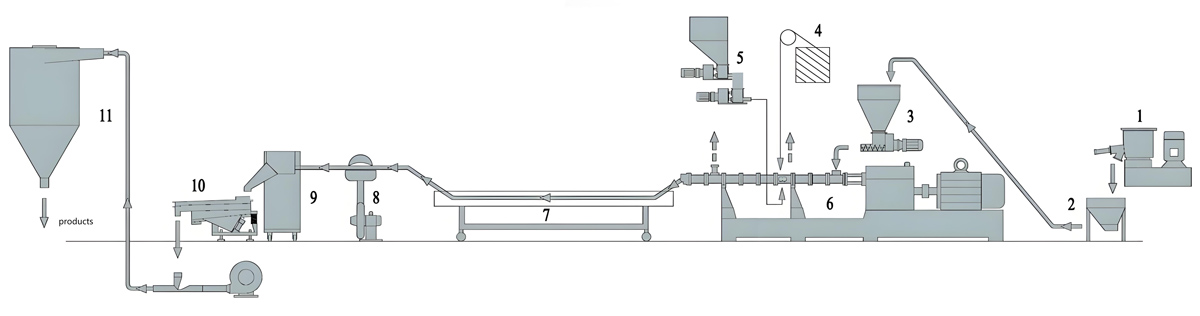
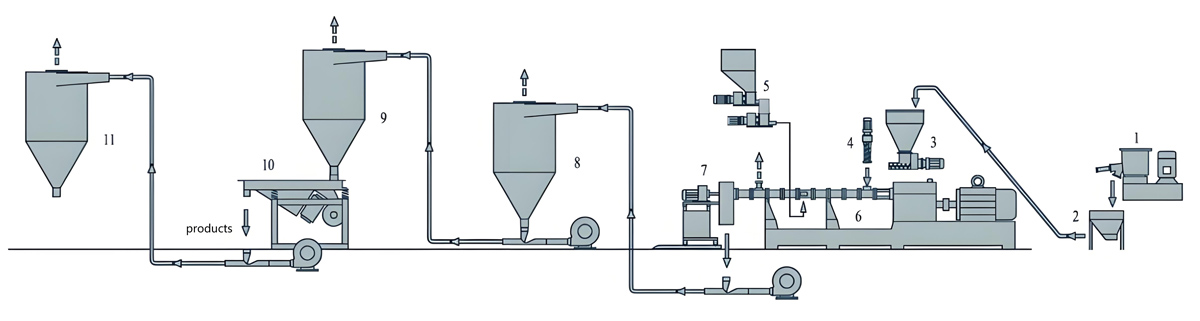
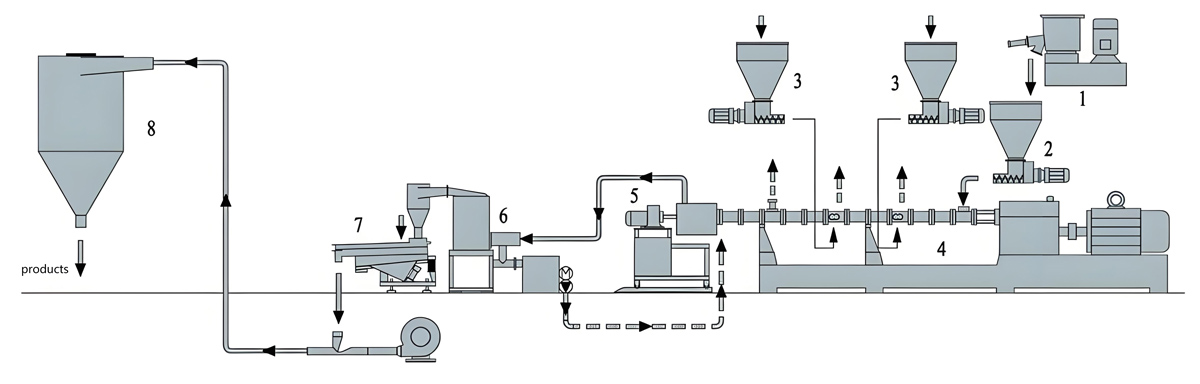
Long-Fiber-Reinforced Thermoplastic (LFT) is a reinforced thermoplastic composite material with fiber lengths of 10-50mm. Its core function is to enhance the mechanical properties of thermoplastic resins using long fibers. It combines the plasticity of resin with the high strength of long fibers.

Composition
The core composition of Long-Fiber-Reinforced Thermoplastic (LFT) consists of three components: matrix resin, reinforcing fibers, and functional additives. The proportions and properties of these three components directly determine the mechanical properties, processability, and applications of LFT.
Core Component 1: Matrix Resin (“Carrier”, accounting for 50%-90%)
The matrix resin is the continuous phase of LFT, responsible for encapsulating the reinforcing fibers, transferring stress, and imparting thermoplasticity (recyclability) to the material. Main types and characteristics are as follows:
1. Polypropylene (PP)
Percentage: The most widely used in LFT (approximately 40%), while the matrix typically accounts for 70%-80%. Characteristics: Low density (0.9-0.91 g/cm³), low cost, good processing fluidity, resistant to acid and alkali corrosion, but moderate temperature resistance (continuous use temperature 60-100℃).
Suitable scenarios: General applications such as automotive interior frames, appliance housings, and logistics pallets.
2. Polyamide (PA, commonly known as “Nylon”)
Main types: PA6, PA66, matrix content 60%-75%.
Characteristics: Excellent temperature resistance (PA6 continuous use 120-130℃, PA66 up to 140-150℃), high mechanical strength, creep resistance, but PA6 has slightly higher moisture absorption.
Suitable scenarios: “High temperature + stress” scenarios such as automotive engine peripheral parts and new energy battery pack brackets.
3. Polyethylene (PE)
Main type: High-density polyethylene (HDPE), matrix content 70%-85%.
Features: Low-temperature resistant (remains tough even at -40℃), extremely resistant to chemical corrosion (resistant to concentrated hydrochloric acid and seawater), environmentally friendly and recyclable, but with relatively low rigidity.
Suitable Applications: Outdoor pipelines, chemical storage tank linings, agricultural irrigation components.
4. Polyterephthalate (PBT/PET) Matrix content 65%-80%.
Features: Strong weather resistance (strength retention rate >85% after 1000h UV aging), good electrical insulation (volume resistivity >10¹⁴Ω·cm), high dimensional stability.
Suitable Applications: Photovoltaic inverter housings, outdoor electrical components, electronic device brackets.
5. High-Performance Resins (Niche but Crucial)
Types: Polyetheretherketone (PEEK), Polyphenylene Sulfide (PPS), matrix content 50%-70%.
Features: High upper temperature limit (PEEK can be used continuously at 250℃), radiation resistant, strong corrosion resistant, but high cost (10-20 times that of PP).
Suitable Applications: Aerospace components, nuclear power equipment parts, high-end medical devices.
Core Component 2: Reinforcing Fibers (“Skeleton”, accounting for 10%-50%)
Reinforcing fibers are the core source of LFT’s mechanical properties, enhancing material strength and rigidity by “bearing stress.” Fiber length is typically 10-50mm (5-25mm retained after molding). Mainstream types are as follows:
1. Glass Fiber (accounting for over 80% of LFT fiber usage)
Mainstream models: E-glass fiber (general-purpose), S-glass fiber (high-strength).
Characteristics: Diameter 10-17μm, tensile strength 3000-3500MPa, low cost (approximately 15,000 RMB/ton), highest cost-effectiveness; S-glass fiber has 30% higher strength than E-glass fiber, but costs 20% more.
Function: Increases LFT tensile strength by 2-3 times and flexural modulus by 3-5 times compared to pure resin, making it the preferred fiber for mass-produced LFT.
2. Carbon Fiber (Carbon Fiber, High-End Lightweight Applications)
Main Models: T300 (General Purpose), T700 (High Strength), T800 (Ultra-High Strength).
Characteristics: Diameter 5-7μm, tensile strength 3500-7000MPa, density only 1.7-1.8g/cm³ (1/4 that of steel), specific strength 3 times that of aluminum alloy, but costly (T300 approximately 150,000 RMB/ton).
Applications: Achieves extreme lightweighting, reducing the weight of LFT components by 30%-50%, suitable for applications with “weight reduction requirements” such as new energy vehicles and drones.
3. Basalt Fiber (Temperature Resistant + Environmentally Friendly)
Characteristics: Made from melted and drawn natural basalt, diameter 13-20μm, tensile strength 3000-3800MPa, temperature resistance upper limit 600℃ (short-term), 300℃ (long-term), no alkali, no pollutant release.
Applications: Balancing temperature resistance and environmental friendliness, it replaces fiberglass in high-temperature, harsh outdoor environments (such as fireproof building materials and power plant exhaust pipes).
4. Aramid Fiber (Impact Resistant + Fatigue Resistant)
Characteristics: Commonly known as “Kevlar,” diameter 12-15μm, tensile strength 2800-3200MPa, impact strength 5 times that of fiberglass, excellent fatigue resistance (10⁶ cycle impact strength retention rate >80%).
Applications: Improves the impact resistance of LFT, used in automotive crash beam liners and high-end protective equipment (such as helmet shells).
5. Hybrid Fibers (Balancing Performance and Cost)
Common combinations: Fiberglass + Carbon Fiber (carbon fiber accounts for 10%-20%, reducing cost while maintaining lightweight), Fiberglass + Aramid (improving impact resistance).
Applications: Avoids the shortcomings of single fibers; for example, “fiberglass + carbon fiber LFT” is 40% cheaper than pure carbon fiber LFT and 20% lighter than pure fiberglass LFT.
Core Component 3: Functional Additives (“Regulators”, accounting for 0.5%-5%)
Although additives constitute a small percentage, they address issues such as “matrix-fiber compatibility,” “processing defects,” and “functional deficiencies,” making them indispensable components for achieving LFT performance standards. The main types are as follows:
1. Interface Modifiers (Core Additives)
Types: Silane coupling agents (such as KH550, KH560), titanate coupling agents.
Function: Improves the interfacial bonding between resin and fiber (fiber surfaces are typically hydrophilic, resins are hydrophobic; coupling agents can “bridge”), preventing fiber-resin separation under stress, thus increasing LFT impact strength by 20%-50%.
2. Processing Aids
Lubricants: Such as calcium stearate, ethylene bis-stearamide (EBS), reducing friction between resin and equipment, and between fiber and resin, improving flowability, and preventing fiber breakage during molding. Antioxidants: Such as hindered phenols (1010) and phosphites (168), to prevent resin oxidation and aging during processing and use, extending the lifespan of LFTs (e.g., extending the lifespan of outdoor components from 5 years to 10 years).
3. Functional Modifying Agents
Flame retardants: Such as bromine-based (decabromodiphenyl ether) and halogen-free flame retardants (magnesium hydroxide, red phosphorus), enabling LFTs to achieve UL94 V-0 fire resistance, suitable for new energy battery packs, electronic devices, and other applications.
UV stabilizers: Such as benzotriazoles (UV-327), to improve the weather resistance of LFTs and prevent fading and embrittlement during outdoor use (e.g., photovoltaic brackets retain >90% strength after 2000h UV aging).
Antistatic agents: Such as quaternary ammonium salts, to reduce the surface resistance of LFTs (from 10¹⁴Ω to below 10⁸Ω), used in electronic components to prevent static electricity from attracting dust.
Synergistic Relationship of Components
The performance of LFT is not a simple additive result of its components, but rather a synergistic effect of the matrix-fiber-auxiliaries:
1. The matrix resin encapsulates the fiber, uniformly transferring external loads to the fiber (the fiber is the primary load-bearing carrier);
2. Interface modifiers ensure a tight bond between the resin and fiber, preventing fiber debonding and performance failure;
3. Processing aids ensure that the fiber is not excessively sheared during molding (retaining a length of 5-25mm), while functional additives supplement properties lacking in the matrix or fiber (such as flame retardancy and UV resistance).
For example, PA6-LFT for automotive battery packs requires a PA6 matrix (temperature resistance 120℃+), 30%-50% glass fiber (to improve strength), a silane coupling agent (to enhance interfacial bonding), and a halogen-free flame retardant (V-0 fire rating). These four components work synergistically to meet the requirements of “high temperature resistance, high strength, and fire resistance.”
Features
The core features of Long-Fiber-Reinforced Thermoplastic (LFT) are its excellent mechanical properties, flexible processing, and adaptability to various scenarios, which can be summarized in four dimensions:
Outstanding Mechanical Properties, Far Exceeding Short Fiber Materials
1. High Strength: Tensile/flexural strength is 30%-50% higher than short fiber reinforced thermoplastic (SFT), and fiber lengths of 10-50mm can more effectively transfer stress.
2. Strong Impact Resistance: Excellent low-temperature impact toughness, suitable for structural components subjected to dynamic loads, such as automotive chassis parts.
3. Creep Resistance: Low deformation rate under long-term stress, stable for long-term service applications such as load-bearing components in home appliances and photovoltaic brackets.
Flexible Processing Performance, Adaptable to Industrial Production
1. Recyclable Processing: Retains the characteristics of thermoplastic resin, and scraps can be recycled and reused, reducing material waste.
2. Diverse Molding Methods: Compatible with mainstream processes such as injection molding, extrusion, and compression molding, capable of producing complex structural components (such as battery pack casings) as well as profiles (such as pipes). 3. High Molding Efficiency: Compared to thermoset composites, the molding cycle is shortened by more than 50%, making it suitable for mass production.
Performance Adaptability to Multiple Applications
1. Lightweight: Density is only 1/4 to 1/2 that of metals, and specific strength is close to that of aluminum alloys, making it a core choice for lightweight applications in the automotive and new energy sectors.
2. Weather and Chemical Resistance: Depending on the matrix resin (e.g., PA, PE), it can withstand temperatures from -40 to 150℃ and resist acid and alkali corrosion, making it suitable for outdoor and chemical environments.
3. Dimensional Stability: Fiber constrains resin shrinkage, resulting in minimal warping and deformation of molded parts, and easy precision control.
High Overall Cost-Effectiveness and Significant Environmental Attributes
1. Controllable Cost: The raw material cost of glass fiber LFT is lower than that of carbon fiber composites, balancing performance and economy.
2. Environmentally Friendly: No volatile organic compound (VOC) releases, and it is recyclable, aligning with the trend of green manufacturing.
Types and Corresponding Applications
Long-Fiber-Reinforced Thermoplastic (LFT) types can be subdivided according to three core dimensions: matrix resin, reinforcing fiber, and processing method. Each dimension requires supplementary technical details, performance data, and sub-types to cover selection needs in practical applications:
Classification by Matrix Resin (The most crucial selection dimension, determining basic performance and cost)
The matrix resin directly affects the temperature resistance, chemical resistance, processing fluidity, and cost of LFT. Mainstream types and sub-types are as follows:
1. PP-LFT (Polypropylene-based LFT)
Sub-types: Homopolymer PP-LFT (low cost, good fluidity), Copolymer PP-LFT (excellent impact resistance, strong low-temperature toughness)
Key Performance: Density 0.9-1.1 g/cm³ (significant lightweight advantage), continuous use temperature 60-100℃, tensile strength 30-50 MPa, flexural modulus 1500-3000 MPa
Core Advantages: Excellent processing fluidity, capable of molding complex structural parts (such as ribbed brackets); Resistant to acids and alkalis (dilute hydrochloric acid, sodium hydroxide solution), and organic solvents (ethanol, acetone), with a cost only 60%-70% of PA-LFT; Scrap material recycling rate exceeds 80%, with no significant performance degradation.
Typical applications:
Automotive: Door panel frames, seat brackets, spare tire compartments in luggage compartments (such as Volkswagen ID series models);
Home appliances: Washing machine drums (Haier front-loading washing machines), air conditioner outdoor unit bases;
Industrial: Logistics pallets (1200×1000mm standard pallets), warehouse rack shelves.
2. PA-LFT (Polyamide-based LFT, commonly known as “Nylon LFT”)
Subtypes:
PA6-LFT: Moderate temperature resistance (continuous use temperature 120-130℃), good toughness, and lower cost;
PA66-LFT: Higher temperature resistance (140-150℃), tensile strength 15%-20% higher than PA6-LFT, but slightly more hygroscopic;
Reinforced PA-LFT (with glass fiber/carbon fiber): Doubled mechanical properties, such as PA66+50% glass fiber LFT, flexural modulus can reach 8000MPa.
Key properties: Density 1.1-1.4g/cm³, excellent creep resistance (long-term stress deformation rate <5% at 120℃), resistant to grease and fuel.
Core advantages: Maintains mechanical stability even at high temperatures, suitable for “high temperature + stress” scenarios such as automotive engine components and new energy battery packs.
Typical Applications:
Automotive: Engine compartment brackets, oil pan protectors, battery pack underbody protectors (Tesla Model 3);
Industrial: Heavy machinery gear covers, hydraulic system components;
New Energy: Energy storage battery cabinet beams, photovoltaic inverter heat dissipation brackets.
3. PE-LFT (Polyethylene LFT)
Subtypes:
HDPE-LFT (High-Density Polyethylene): High rigidity, impact resistance, tensile strength 25-40MPa;
LDPE-LFT (Low-Density Polyethylene): Good flexibility, outstanding low-temperature toughness (does not crack at -60℃), but lower strength.
Key Performance: Density 0.92-1.05g/cm³, extremely strong chemical corrosion resistance (resistant to concentrated hydrochloric acid, sulfuric acid, and seawater corrosion), continuous operating temperature -40-80℃.
Core Advantages: Non-polar molecular structure, does not react with most chemical media, and is environmentally friendly and biodegradable (some modified PE-LFT is compostable). Typical Applications:
Municipal: Outdoor HDPE sewage pipes (diameter ≤ 1.2m), rainwater collection well covers;
Chemical: Tank linings, acid and alkali transport pipelines;
Agriculture: Large irrigation pipes (diameter 300-800mm), agricultural machinery shells.
4. PBT/PET-LFT (Polyterephthalate-based LFT)
Subtypes:
PBT-LFT: Excellent temperature resistance (continuous use temperature 120-140℃), good electrical insulation (volume resistivity > 10¹⁴Ω·cm);
PET-LFT: 20% lower cost than PBT-LFT, strong weather resistance (strength retention rate > 85% after 1000h UV aging test), but slightly poorer processing fluidity.
Key Performance: Density 1.2-1.4g/cm³, high dimensional stability (warpage after molding < 0.5mm/m), resistant to damp heat (no significant hydrolysis at 85℃/85%RH).
Core Advantages: Balancing electrical insulation, weather resistance, and dimensional accuracy, suitable for outdoor electrical and electronic component applications.
Typical Applications:
Electronics: Photovoltaic module frames, inverter housings (Huawei Sungrow inverters);
Outdoors: Streetlight pole supports, charging pile housings;
Home Appliances: Microwave oven internal supports, printer chassis frames.
Classification by Reinforcing Fiber (Determines the upper limit of mechanical properties, affecting cost and lightweight effect)
Reinforcing fibers are the core of LFT’s “strength improvement.” Different fibers vary greatly in modulus, temperature resistance, and cost. The mainstream types are as follows:
1. Glass Fiber LFT (Glass fiber reinforced LFT, accounting for over 80% of usage)
Subtypes:
E-Glass Fiber LFT: Most common, low cost (glass fiber unit price approximately 15,000 RMB/ton), tensile strength 2-3 times higher than pure resin;
S-Glass Fiber LFT: High-strength type, tensile modulus 30% higher than E-glass fiber, suitable for high-stress scenarios (such as automotive chassis);
Alkali-Free Glass Fiber LFT: Excellent corrosion resistance, suitable for chemical and marine applications (avoiding alkali corrosion).
Fiber Parameters: Fiber diameter 10-17μm, length 10-30mm (5-15mm length retained after molding), filler content 10%-50% (higher filler content results in greater strength). Core Advantages: Highest cost-performance ratio, mature technology, compatible with all matrix resins, making it the first choice for mass production.
Typical Applications: Automotive lower control arms, home appliance load-bearing components, logistics pallets (PP-LFT with 30% glass fiber filler).
2. Carbon Fiber LFT (Carbon fiber reinforced LFT, the first choice for lightweight high-end applications)
Subtypes:
T300 grade carbon fiber LFT: General-purpose, tensile modulus 230GPa, cost approximately 150,000 RMB/ton;
T700 grade carbon fiber LFT: High-strength type, tensile strength 20% higher than T300, suitable for applications with extremely high strength requirements (such as drone fuselages);
Chopted carbon fiber LFT (fiber length 5-15mm): Good processing fluidity, suitable for complex small parts;
Long carbon fiber LFT (20-50mm): Excellent mechanical properties, suitable for large structural components.
Fiber parameters: Density 1.7-1.8 g/cm³ (only 1/4 that of steel), specific strength 3 times that of aluminum alloy, continuous operating temperature 200-250℃.
Core advantages: Extremely lightweight + high strength, reducing component weight by 30%-50%, suitable for “weight reduction essential” scenarios such as new energy vehicles and aerospace.
Typical applications: New energy vehicle body structural components (rear floor of NIO ET5), drone frames, high-end sports equipment (bicycle frames).
3. Basalt Fiber LFT (Temperature-resistant + Environmentally friendly LFT)
Fiber characteristics: Made from melted and drawn natural basalt, alkali-free, no pollutant release, temperature resistance upper limit 600℃ (short-term), 300℃ (long-term), tensile strength comparable to E-glass fiber, but with superior aging resistance (strength retention rate >90% after 2000h UV aging).
Core advantages: Balances temperature resistance, environmental friendliness, and cost (unit price approximately 30,000 RMB/ton, lower than carbon fiber), suitable for high-temperature and harsh outdoor environments. Typical Applications: Fireproof building materials (fireproof door core panels), high-temperature pipelines (lined ducts for power plant exhaust systems), and nuclear power auxiliary components (such as cable protection pipes).
4. Aramid Fiber LFT (Impact-Resistant + Fatigue-Resistant LFT)
Fiber Characteristics: Commonly known as “Kevlar fiber,” its impact strength is 5 times that of glass fiber, with excellent fatigue resistance (strength retention rate >80% after 10⁶ cycles of impact), but moderate temperature resistance (continuous use temperature 180℃), and it is difficult to process (fibers are prone to agglomeration).
Core Advantages: Impact-resistant and wear-resistant, suitable for scenarios requiring “collision resistance.”
Typical Applications: Automotive crash beam liners, high-end protective equipment (such as helmet shells), and aerospace cushioning components.
5. Hybrid Fiber LFT (Multi-fiber blend, balancing performance and cost)
Common Combinations: Glass fiber + carbon fiber LFT (carbon fiber content 10%-20%, reducing costs while retaining lightweight advantages), Glass fiber + aramid fiber LFT (improved impact resistance).
Typical applications: Automotive airbag brackets (glass fiber + aramid LFT, balancing strength and impact resistance), high-end home appliance components (glass fiber + carbon fiber LFT, weight reduction and cost control).
Classification by processing method (affecting fiber retention rate, production efficiency, and component shape)
The processing method determines the final shape and performance of LFT. Different processes are suitable for components of different sizes and complexities:
1. LFT-G (Granulate, granular LFT, secondary molding process)
Process flow: Long fibers (10-50mm) are first mixed with resin to form “fiber bundles encapsulating resin” granules (5-10mm in length), which are then subjected to secondary molding such as injection molding and extrusion.
Key parameters: Fiber retention length after molding is 3-8mm (fibers may break due to shearing during secondary processing), high production efficiency (injection molding cycle 20-60s/piece), capable of mass-producing complex structural parts (such as parts with holes or ribs).
Core advantages: Flexible process, suitable for small-batch, multi-variety production, strong equipment compatibility (can be used with ordinary injection molding machines). Typical Applications: Automotive dashboard frames, battery pack end plates, complex small parts in home appliances (such as printer gearboxes).
2. LFT-D (Direct Forming, LFT, one-step molding process)
Process Flow: Fibers (filaments or chopped strands) are mixed with resin online (the resin is directly impregnated with the fiber after melting), without granulation, and directly molded by compression molding and extrusion.
Key Parameters: Fiber retention length 8-25mm (no secondary shearing, longer fibers), mechanical properties 15%-30% higher than LFT-G; short production cycle (molding time 30-120s/piece), cost 10%-15% lower than LFT-G (eliminating the granulation step).
Core Advantages: High fiber retention rate, low cost, suitable for large-size, high-stress simple structural components.
Typical Applications: Automotive chassis crossbeams (length 1-2m), photovoltaic brackets (6-12m long profiles), container flooring (2.4m×12m).
3. LFT-IM (Injection Molding)
Process Optimization: Improved screw structure (low-shear screw, reducing fiber breakage) and mold design (large gate, reducing flow resistance) tailored to injection molding characteristics, achieving fiber retention lengths of 5-12mm, suitable for complex precision parts.
Typical Applications: Battery pack connectors for new energy vehicles, precision brackets for electronic devices.
4. LFT-EX (Extrusion)
Process Optimization: Employs a twin-screw extruder to improve fiber dispersion uniformity; equipped with a shaping mold to control profile dimensional accuracy (error ±0.1mm), suitable for long, strip-shaped, and tubular components.
Typical Applications: Municipal pipelines (HDPE-LFT sewage pipes), door and window profiles (PVC-LFT profiles).

Comparison
The core difference between long fiber reinforced thermoplastics (LFT) and short fiber reinforced thermoplastics (SFT) lies in the systematic impact of fiber length on material properties, processing technology, and application scenarios. The following is an in-depth comparison across six dimensions:
Fiber Morphology and Performance Basis
LFT
Fiber Length: After molding, the fiber length is typically 5-25mm. Some advanced processes (such as LFT-D online molding) can retain an intact fiber structure of 8-25mm.
Reinforcement Mechanism: Long fibers form a three-dimensional network structure in the matrix, increasing stress transfer efficiency by 3-5 times, significantly enhancing the material’s strength, rigidity, and impact resistance. For example, PA6-LFT (30% glass fiber) can achieve a tensile strength exceeding 200MPa and a flexural modulus exceeding 10GPa, far surpassing short fiber reinforced nylon (tensile strength approximately 80MPa).
Key Performance Advantages:
Fatigue Resistance: Cyclic load life is 3-5 times longer than SFT, suitable for long-term vibration environments (such as automotive suspension components). Creep Resistance: Under high temperatures (e.g., 120℃) and sustained stress, the deformation rate of LFT is more than 60% lower than that of SFT.
Temperature Resistance: Some high-performance LFTs (such as PPS-LFT) can be used continuously at temperatures up to 220℃, while SFTs are typically below 150℃.
SFT
SFT Fiber Length: After molding, the average fiber length is less than 1mm, serving only as a filler to improve rigidity, with limited contribution to tensile strength and impact resistance.
Performance Shortcomings:
Strength Limitations: The tensile strength of PP-SFT (30% glass fiber) is approximately 30-50MPa, only 1/4-1/3 of that of LFT.
Insufficient Dynamic Performance: Impact strength (unnotched) is typically below 30kJ/m², while LFT can reach over 50kJ/m².
Poor Dimensional Stability:** The coefficient of thermal expansion is 20%-30% higher than LFT, easily leading to component deformation under high-temperature environments.
Processing Technology and Molding Characteristics
LFT
Process Types:
LFT-D (Direct Molding): Online mixing and molding are completed simultaneously, resulting in high fiber retention (8-25mm), short production cycle (30-120 seconds/piece), and 10%-15% lower cost than LFT-G.
LFT-G (Grit Injection Molding): Requires pre-forming 5-10mm granules; fibers may break to 3-8mm during injection molding, but offers high process flexibility and is suitable for complex structural parts.
Equipment Requirements: Requires dedicated low-shear screws, large-gate molds, and fiber guiding systems. Initial investment is 20%-30% higher than SFT injection molding, but long-term energy consumption is reduced by 30%.
Molding Limitations: Fiber orientation significantly affects product performance; fiber distribution needs to be optimized through mold flow analysis (e.g., fiber orientation reinforcement in automotive battery casings).
SFT
Process Advantages: Can be used directly with ordinary injection molding machines; low mold cost (40%-60% cheaper than LFT molds); suitable for small batches of complex-shaped products (e.g., appliance casings). Process Limitations:
Severe Fiber Breakage: Screw shearing and flow channel friction cause fiber length reduction exceeding 90%, resulting in final product performance only 30%-50% of the theoretical value.
High Risk of Molding Defects: Glass fiber agglomeration easily leads to surface fiber floating and uneven mechanical properties, requiring the addition of lubricants to improve flowability.
Cost Structure and Economics
LFT
Initial Costs: Raw material prices (e.g., long glass fiber PA6) are 15%-20% higher than short glass fiber PA6, and equipment investment increases by 20%-30%.
Long-Term Cost Advantages:
Lightweight Benefits: Replacing metal can reduce weight by 30%-50%, reducing fuel consumption in gasoline vehicles or battery costs in electric vehicles (e.g., new energy vehicle battery casings reduce weight by 12kg, increasing range by 6%).
Recycling Value: Scrap material recycling rate reaches over 80%, and the performance degradation of recycled materials is less than 10%, while SFT recycling rate is only 30%-50%. – Economies of scale: For annual production exceeding 100,000 units, the LFT-D process offers a 15%-20% lower unit cost compared to LFT-G.
SFT
Cost advantages: Lower raw material prices (short fiberglass PP is 10%-15% cheaper than long fiberglass PP), highly versatile equipment, suitable for small to medium batch production (e.g., daily necessities).
Hidden costs:
Performance compromises: To achieve the same strength as LFT, the fiberglass filler content needs to be increased (e.g., from 30% to 50%), which actually increases material costs by 10%-15%.
Maintenance costs: Prone to failure under high temperature or high stress environments, maintenance costs are 2-3 times higher than LFT.
Application scenarios and design freedom
LFT Core application areas:
Automotive structural components: Front-end modules (30% weight reduction), battery pack housings (fire resistance up to 1000℃/5 minutes), chassis crossbeams (replacing steel, 40% weight reduction). Industrial Equipment: Wind turbine blade root connectors (fatigue life exceeding 20 years), chemical storage tank linings (resistant to strong acids and alkalis).
High-end Consumer Products: Drone frames (carbon fiber LFT reduces weight by 50%), high-end bicycle frames (30% lighter than aluminum alloy).
Design Advantages: “One-piece molding” can be achieved through molding or injection molding, reducing the number of parts (e.g., integrating 20 metal parts into one LFT component for a car seat frame), lowering assembly costs by 30%.
SFT Typical Application Areas:
Home Appliance Components: Washing machine drums (PP-SFT), air conditioner vents (ABS-SFT), cost-sensitive with low performance requirements.
Electronic Housings: Mobile phone mid-frames (PC/ABS-SFT), router housings (flame-retardant PA6-SFT), requiring a balance between appearance and basic mechanical properties.
Daily Necessities: Trash cans (HDPE-SFT), toy car shells (PP-SFT), low lightweight requirements but need to meet drop resistance. Design Limitations: Due to fiber breakage and performance limitations, it is difficult to handle high-load, complex stress structures (such as automotive engine brackets).
Sustainability and Environmental Performance
LFT
Recycling Advantages: The thermoplastic matrix can be recycled indefinitely, and scraps from the LFT-D process can be directly reused online, reducing carbon emissions by more than 30%.
Environmentally Friendly Material Innovation: Using regenerated cellulose fibers (such as Polyplastics Plastron RA627P) instead of glass fiber reduces the carbon footprint by 30%, and has a density 10% lower than glass fiber PP, making it suitable for environmentally friendly products.
Regulatory Compliance: Complies with EU ELV (End-of-Life Vehicle Directive) requirements, with a recycling rate of up to 55% (such as dashboard brackets in Audi models).
SFT
Recycling Limitations: After multiple recycling cycles, the fibers are severely broken, and the performance of the products significantly declines, usually only allowing for downgraded use (such as being converted from structural components to fillers).
Environmental Impact: Energy consumption during production is 15%-20% higher than LFT, and short fibers are prone to shedding, causing microplastic pollution.
Technological Development Trends
LFT (Laminated Fiber Reinforced Plastic)
High Performance: Developing high-temperature resistant matrices such as PEEK and PEKK to suit aerospace (e.g., satellite supports) and nuclear energy (radiation-resistant components).
Integrated Processes: Combining LFT with continuous fiber reinforced thermoplastic composites (CFRTP), such as the BMW i series using “CFRTP skeleton + LFT injection molding overlay” technology, balancing high strength with complex detail molding.
Intelligent Manufacturing: Real-time monitoring of fiber distribution and molding defects through in-mold sensors improves product consistency (e.g., increasing the yield rate of new energy vehicle battery casings from 85% to 98%).
SFT (Small Fiber Reinforced Plastic)
Functional Modification: Adding nanofillers (e.g., graphene) to improve conductivity (reducing volume resistivity to 10⁴Ω·cm), expanding into electromagnetic shielding applications (e.g., 5G base station casings).
Microfoaming Technology: Reducing density through microporous structures (e.g., PP-SFT density reduced to 0.85g/cm³) while maintaining rigidity, for lightweight packaging.
Typical Case Comparison
Automotive Battery Casing: LFT (PA6 + 50% Fiberglass) vs SFT (PA6 + 30% Fiberglass)
LFT Solution: Weight 25kg → 13kg (48% weight reduction), UL94 V-0 fire rating, 20% increase in cost but 12% increase in range.
SFT Solution: Weight 28kg → 22kg (21% weight reduction), V-2 fire rating only, 15% lower cost but cannot meet the requirements of high-end models.
Industrial Fan Blades: LFT (PP + 40% Fiberglass) vs SFT (PP + 30% Fiberglass)
LFT Solution: Fatigue life exceeding 100,000 hours, can operate continuously at 120℃, maintenance cycle extended by 50%.
SFT Solution: Lifespan only 30,000 hours, prone to deformation above 80℃, requires annual replacement, overall cost is higher.
LFT, with its structural reinforcement advantages from long fibers, occupies an irreplaceable position in high-performance, highly environmentally adaptable, and large-scale production scenarios, especially in areas such as automotive lightweighting and high-end industrial applications, where it continues to make breakthroughs. SFT, on the other hand, maintains its competitiveness in markets with low-cost, short-cycle, and low-performance requirements, creating a complementary relationship between the two. As LFT process costs decrease (e.g., LFT-D technology reduces unit costs by 30%) and recycling technologies mature, its application boundaries will further penetrate the traditional SFT field, propelling the “plastic-for-steel” revolution into a new stage.
Composition and formula ratio of LFT
I. LFT basic composition framework
LFT (Long Fiber Reinforced Thermoplastics) is a general term for long fiber reinforced thermoplastic composite materials, mainly composed of three core components:
| Component | Proportion range | Main functions |
| Resin matrix | 30%-80% | Provide formability, toughness, and chemical stability. |
| Reinforced fiber | 10%-70% | Endow with high strength, high stiffness, and heat resistance. |
| Functional additives | Total<10% | Improve interface integration, processing performance, and special features. |
Fiber characteristics: The fiber length in LFT is greater than 5mm (usually 8-20mm), which is significantly different from short fiber reinforced plastics (SFT,<6mm). It forms a three-dimensional network structure in the matrix, providing higher mechanical properties (increasing tensile strength by 60% -120%).
II. Composition and proportion of resin matrix
1. Mainstream resin matrix (accounting for over 90% of the LFT market)
Polypropylene (PP) series (most widely used, accounting for>50%):
Homopolymer PP (HPP): 40% -80%, high rigidity, low cost
Co polymerized PP (CPP): 40% -70%, improves toughness and heat resistance
Polyamide (PA) series (second largest application):
PA6:40%-70%, High toughness and chemical resistance
PA66:40%-70%, Higher strength and heat resistance
PA12/PA612:50%-70%, Excellent low temperature and oil resistance
2. Engineering resin matrix (special applications)
PBT/PET:40%-80%, High heat resistance and dimensional stability
PPS:50%-80%, Excellent heat resistance (>200 ℃) and flame retardancy
TPU:40%-80%, Excellent elasticity and wear resistance
PEEK:60%-80%, Ultra high heat resistance and chemical stability (aerospace specific)
PLA:50%-80%, Biodegradable and environmentally friendly applications
III. Composition and proportion of reinforcing fibers
1. Glass fiber (accounting for over 90% of LFT reinforcement material)
E-type glass fiber: 20% -70%, balanced comprehensive performance, moderate cost
S-type glass fiber: 20% -50%, higher strength, used for high-performance requirements
Typical product example:
LFT-G ® PP-GF40: 40% fiberglass+60% PP
LFT-G ® PA6-GF50:50 fiberglass+50% PA6
2. High end fibers (special applications)
Carbon fiber (CF): 10% -50%, ultra-high strength, lightweight (specific strength is 5 times that of steel)
Aramid fiber: 10% -40%, excellent impact and fatigue resistance
Basalt fiber: 20% -50%, good heat and alkali resistance
Natural fibers (flax, hemp, etc.): 10% -30%, environmentally friendly, low-density (such as PP+30% cellulose fibers)
IV. Composition and proportion of functional additives
1. Interface compatibility class (improving fiber resin bonding)
Compatibility agent (PP-g-MAH, etc.): 2% -10%, improves the bonding between resin and fiber interface
Silane coupling agent: 0.3% -3%, enhances chemical bonding between fiber surface and resin
2. Processing performance improvement category
Lubricant: 0.2% -0.5%, reduces melt viscosity, improves flow
Nucleating agent: 0.1% -0.3%, improves crystallization rate and uniformity
Release agent: 0.1% -0.5%, easy to demold products and improve production efficiency
3. Durability enhancement category
Antioxidant: 0.1% -0.5%, prevents high temperature degradation and aging (commonly used 1010, 168 compound)
Light stabilizer: 0.2% -1%, improves weather resistance and prevents UV aging
4. Special functional additives
Flame retardant: 2% -18% (according to flame retardant grade), endowed with flame retardant properties
Antibacterial agents: 5% -15%, used in medical and food contact fields
Toughening agent: 3% -10%, improves impact toughness
Thermal/conductive filler: 5% -30%, used for thermal/conductive functional materials
V. Differences in composition between LFT-G and LFT-D
LFT is mainly divided into two major process routes, with slight differences in composition:
| Component | LFT-G (granular material) | LFT-D (direct molding) |
| Resin matrix | PP: 30%-70% | PP: 50%-80% |
| PA: 40%-70% | PA: 30%-60% | |
| Reinforced fiber | Fiberglass: 20% -50% | Fiberglass: 20% -40% |
| Carbon fiber: 10% -40% | (Continuous long fibers) | |
| Fiber length | Particle length: 12mm (injection molding) | Fiber length: 10-25mm |
| Or 25mm (molded) | (Same length as the product) | |
| Additive | Compatibility agent: 3% -8% | Compatibility agent: 0.5% -5% |
| Other:<5% | Other:<5% |
VI. Typical product formula example
1. General Motors structural components (PP based LFT)
PP resin: 50% -70%
Long glass fiber: 30% -50%
Compatibility agent: 4% -6%
Silane coupling agent: 1% -3%
Antioxidant: 0.2% -0.4%
Lubricant: 0.2% -0.4%
Features: High rigidity, good impact strength, high cost-effectiveness
2. High performance mechanical parts (PA6 based LFT)
PA6 resin: 50% -70%
Long glass fiber: 30% -50%
Compatibility agent: 3% -5%
Toughening agent: 3% -5%
Antioxidant: 0.3% -0.5%
Lubricant: 0.3% -0.5%
Features: High strength, high heat resistance (150 ℃+), fatigue resistance
3. Electronic/Aerospace Special Parts (PPS based LFT)
PPS resin: 60% -80%
Long carbon fiber: 20% -40%
Compatibility agent: 2% -4%
Coupling agent: 0.5% -1.5%
Lubricant: 0.2% -0.4%
Features: Ultra high strength, lightweight, heat-resistant (>200 ℃), flame retardant
VII. Composition and Performance Relationship
1. The influence of fiber content on performance
For every 10% increase in fiberglass, the tensile strength increases by about 15-20%, but the flowability decreases by about 10-15%
When the fiber content is greater than 50%, the rigidity of the material is significantly improved, but the difficulty of molding increases, and the injection pressure needs to be increased
2. Key considerations for resin selection
PP based: Low cost (about $1.2-1.8/kg), moderate rigidity, suitable for general structural components
PA based: High strength (80-120MPa), good heat resistance (150 ℃+), suitable for high load parts
Special resins: PPS (heat-resistant>200 ℃), PEEK (heat-resistant>250 ℃) for extreme environments
VIII. Flexible adjustment
LFT is a multi-component composite material system, whose composition ratio can be flexibly adjusted according to the application scenario:
Structural components: high fiber content (30% -70%), improving strength and stiffness
Thin walled products: high resin content (60% -80%), improving formability
Special functional components: add corresponding functional additives (<10%) to achieve flame retardant, conductive and other characteristics
Core proportion rule: The ratio of fiber to resin is usually 3:7 to 7:3, and the total amount of additives is less than 10%. LFT has achieved material advantages of “lightweight, high strength, flexible molding, and diverse functions” through this precise ratio, and has become a key material in the fields of automotive lightweighting, electronic equipment, and aerospace.
Note: The specific product formula may be adjusted due to manufacturer and application requirements, and the above ratios are within the industry wide range.
Production Process
The core of the Long-Fiber-Reinforced Thermoplastic (LFT) production process is “uniform impregnation of fibers and resin” + “retaining fiber length (10-50mm)”. The mainstream processes can be divided into two main categories: granulation preparation process (LFT-G) and direct molding process (LFT-D). There are also derivative processes adapted to specific scenarios, as detailed below:
Mainstream Process 1: Granulation Production Process (LFT-G)
LFT-G first produces granules containing long fibers, and then performs secondary molding through injection molding, extrusion, etc. Its core advantage is its flexibility and adaptability to complex structural parts, making it one of the most widely used processes currently.
Process Principle and Core Steps
The core process is “fiber cutting → resin melting → impregnation and coating → cooling and granulation,” ensuring that the fibers retain a length of 10-20mm after granulation.
1. Fiber Pretreatment: Continuous fibers (glass fiber, carbon fiber, etc.) are cut into short fibers of 10-50mm using a cutting machine to remove surface impurities (such as residual sizing agent from glass fiber).
2. Resin Melting: The matrix resin (PP, PA, etc.) is added to a single-screw/twin-screw extruder and melted into a fluid at 180-260℃ (adjusted according to the resin, e.g., PP 180-220℃, PA6 230-260℃).
3. Impregnation and Coating (Critical Step): The molten resin and short fibers are mixed in an “impregnation mold.” Through screw shearing and the mold’s internal guide groove design, the resin evenly coats the fibers, preventing fiber agglomeration or exposure (this step determines the impregnation quality and directly affects the final performance).
4. Cooling and Shaping: The impregnated “fiber-resin composite” is rapidly cooled in a cooling water tank (water temperature 20-40℃) to prevent fiber degradation due to heat.
5. Pelletizing and Screening: The cooled composite is pelletized into 5-10mm cylindrical particles using a pelletizer. Particles with uneven lengths and surface defects are screened out to ensure particle consistency.
Key Equipment
Core Equipment: Twin-screw extruder (ensuring uniform mixing), impregnation die (with special flow guiding structure), precision pelletizer (error ±0.5mm).
Auxiliary Equipment: Fiber cutter (length accuracy ±1mm), cooling water tank, particle screening machine.
Core Advantages and Applicable Scenarios
Advantages: The pellets are easy to store and transport, compatible with ordinary injection molding machines/extruders, and can produce complex parts with ribs and holes (such as automotive dashboard frames).
Disadvantages: Secondary molding (granulation → injection molding) can cause fiber breakage, reducing the fiber retention length in the final product to 3-8mm, resulting in slightly lower performance than LFT-D.
Applicable Scenarios: Small to medium batch production of complex parts (such as load-bearing components for home appliances, end plates for new energy battery packs), and multi-variety switching production.
Mainstream Process 2: Direct Forming (LFT-D)
LFT-D involves “online mixing of fiber and resin → direct forming,” eliminating the need for granulation. Its core advantages are high fiber retention and low cost, making it suitable for large-size, high-stress profiles.
Process Principle and Core Steps
The core process is “online feeding → simultaneous impregnation → direct molding/extrusion,” achieving a fiber retention rate of over 80% (final length 8-25mm).
1. Online Fiber Feeding: Continuous fiber rolls are evenly unwound via a “fiber tension controller” to prevent fiber stretching and breakage, then fed into the impregnation unit via guide rollers.
2. Online Resin Melting: The matrix resin is directly added to the twin-screw extruder via a side feeder, melted, and then conveyed to the “impregnation die head,” eliminating the need for pre-granulation.
3. Continuous Impregnation: Continuous fibers contact the molten resin within the impregnation die head. “Pressure impregnation” (die head pressure 0.5-1.5MPa) allows the resin to fully penetrate the fiber bundle, forming a continuous “LFT composite material belt.” 4. Direct Molding:
Compression Molding: The composite material strip is cut to the corresponding size, placed in a compression molding machine (temperature 180-240℃, pressure 10-30MPa), pressed for 30-120 seconds, and then demolded to produce large-size parts (such as automotive chassis beams).
Extrusion Molding: The composite material strip is directly fed into an extrusion die, pulled out by a traction machine, and cooled to form profiles (such as photovoltaic brackets and municipal pipelines).
Key Equipment
Core Equipment: Twin-screw extruder (with side feed), continuous impregnation die head (pressure controllable), large compression molding machine/extrusion die, fiber tension control system.
Auxiliary Equipment: Cooling and shaping device (cooler for compression molding, shaping sleeve for extrusion), traction machine.
Core Advantages and Applicable Scenarios
Advantages: No granulation step, cost is 10%-15% lower than LFT-G; less fiber breakage, mechanical properties are 15%-30% higher than LFT-G; suitable for large-scale continuous production.
Disadvantages: High equipment investment (requires a dedicated continuous impregnation line), difficult to produce complex structural parts, only suitable for simple shapes (sheet metal, profiles, large-size flat parts).
Applicable Scenarios: High-volume production of large-size parts (e.g., automotive front-end modules, container flooring, wind turbine blade accessories), high-stress structural parts (e.g., chassis control arms).
Other Important Processes (Derivative and Specialized)
In addition to mainstream processes, there are derivative processes adapted to specific needs, covering niche scenarios:
Injection Molding Specialized Process (LFT-IM)
Principle: Based on LFT-G granules, optimize injection molding equipment (using a “low-shear screw” to reduce fiber breakage) and molds (large gate, short runner design) to ensure that the fiber length retained during injection molding is ≥5mm.
Key: Optimize gate position through mold flow analysis to avoid fiber accumulation at corners and ensure uniform mechanical properties of the product.
Applicable Scenarios: Complex and precision structural parts (e.g., new energy vehicle battery pack connectors, electronic device brackets).
Dedicated Extrusion Process (LFT-EX, Extrusion)
Principle: Based on LFT-G or LFT-D composite material strips, this process uses a twin-screw extruder and a shaping die to produce tubular and profile products (such as HDPE-LFT sewage pipes and PVC-LFT door and window profiles).
Key: The shaping sleeve (vacuum adsorption + cooling) controls the dimensional accuracy of the profiles (error ±0.1mm), avoiding uneven wall thickness.
Applicable Scenarios: Long and narrow profiles (such as photovoltaic brackets and agricultural irrigation pipes).
Emerging Process: LFT-Online Compounding
Principle: This process mixes, impregnates, and molds continuous fibers, resin, and functional additives (such as flame retardants) on the same production line, eliminating intermediate steps and further reducing costs and improving efficiency.
Advantages: Fiber content (10%-50%) and additive ratios can be adjusted in real time, allowing for rapid response to customized needs (such as LFT parts with special flame retardant ratings).
Applicable Scenarios: High-end customized products (such as aerospace components, radiation-resistant LFT parts for nuclear power).
Key Process Control Points:
1. Fiber Length Control: Avoid excessive shearing (e.g., control the pelletizing speed during LFT-G granulation, adjust the screw speed during LFT-D granulation), ensuring a final retained length ≥ 5mm (below this length, mechanical properties decrease significantly).
2. Impregnation Quality Control: Adjust the resin melting temperature (avoiding insufficient impregnation due to excessively low temperature, and resin degradation due to excessively high temperature) and die head pressure (0.5-1.5MPa) to ensure no exposed fibers and no agglomeration.
3. Cooling Rate Control: Excessive cooling can lead to internal stress in the product (e.g., slow cooling to below 80℃ after LFT-D molding), while excessive cooling affects production efficiency. Adjustments must be made according to the resin type (e.g., PA requires slow cooling, PP can be cooled quickly).
Production Equipment
Long-Fiber-Reinforced Thermoplastic (LFT) production equipment can be categorized into core equipment, auxiliary equipment, and intelligent control systems based on process type (LFT-G, LFT-D, etc.).

The following is a detailed analysis of the key equipment:
Core Production Equipment (by Process)
1. Granular Process (LFT-G) Core Equipment
Twin-Screw Extruder
Function: Melts resin, mixes fibers and additives; it is the “heart” of the LFT-G process.
Key Parameters:
Screw Diameter: 27-93mm (e.g., Yuesheng U+ series U2 Lab is 27mm, U9 is 93mm);
Specific Torque: 15 Nm/cm³ (high torque design improves mixing efficiency);
Speed: Maximum 1000-1200r/min (balancing plasticization and fiber protection).
Technological Innovations:
Utilizing a modular screw component assembly allows for flexible adjustment of mixing intensity;
Nitrided steel/bimetallic barrel lining increases wear resistance and lifespan by 50%.
Impregnation Die
Function: Ensures full contact between fibers and molten resin, preventing fiber exposure or agglomeration.
Design Considerations:
Optimized guide channel structure (e.g., corrugated channels) improves impregnation uniformity;
Pressure Control: 0.5-1.5MPa (adjusted according to resin viscosity).
Precision Pelletizer
Function: Cuts the impregnated composite material strip into 5-10mm pellets with an error of ±0.5mm.
Technical Features:
Variable frequency speed control for cutting speed;
Water-cooled cutter head prevents fiber overheating and degradation (e.g., PA6-LFT pelletizing temperature must be <80℃).
2. Core Equipment for Direct Forming Process (LFT-D)
Fiber Tension Control System
Function: Maintains stable unwinding tension of continuous fibers, preventing fiber breakage.
Key Parameters:
Static Tension Accuracy: ±1.6-1.8N (within the range of 4.4-44N);
Dynamic Tension Fluctuation: ±4N (suitable for high-speed production).
Equipment Configuration:
Magnetic powder clutch/brake adjusts tension;
Encoder monitors roll diameter changes in real time and automatically corrects parameters.
Online Impregnation Die Head
Function: Completes continuous online impregnation of fibers with molten resin.
Technological Innovation:
Combining pressure impregnation (0.5-1.5MPa) with vacuum degassing improves impregnation quality;
Simultaneous feeding of multiple fiber bundles (e.g., simultaneous impregnation of 16-32 fiber bundles).
Large Molding Press/Extrusion Mold
Molding Press:
Pressure: 10-30MPa, Temperature: 180-240℃;
Suitable for large-size flat parts (e.g., automotive chassis crossbeams).
Extrusion Die:
Shaping sleeve design (vacuum adsorption + cooling), controlling profile dimensional accuracy to ±0.1mm;
Typical Applications: Photovoltaic brackets, municipal pipelines.
3. Core Equipment for Injection Molding Dedicated Process (LFT-IM)
Low-Shear Injection Screw
Function: Reduces fiber breakage during injection molding, maintaining a length ≥5mm.
Design Innovation:
Non-compression ratio screw (compression ratio 1.7-2.5), isochoric screw channel design avoids sudden pressure changes;
Wave-shaped screw channels promote fiber dispersion while reducing shear heat.

Key Auxiliary Equipment
1. Fiber Pretreatment Equipment
Fiber Cutting Machine: Cuts continuous fibers into 10-50mm short fibers with an accuracy of ±1mm.
Sizing Agent Treatment System: Removes residual sizing agent from the glass fiber surface, improving compatibility with resin (e.g., plasma treatment technology).
2. Cooling and Traction System
Cooling Water Tank: Water temperature 20-40℃, rapidly curing LFT granules (e.g., LFT-G process).
Traction Machine:
Used for LFT-D extrusion molding, linear speed 5-20m/min;
Variable frequency control ensures stable profile traction tension.
3. Functional Additive Additive System
Loss-in-weight feeder: Precisely adds flame retardants, antioxidants, etc. (accuracy ±0.5%).
Side feeder: Adds fibers or high-viscosity additives online (e.g., side feeding of glass fiber in the LFT-D process).
4. Environmental Protection Equipment
Waste Gas Treatment Device:
UV photolysis + activated carbon adsorption, removes VOCs (non-methane total hydrocarbon emissions ≤10mg/m³) during extrusion/molding;
Dust Treatment: Bag filter (particulate matter emissions ≤12mg/m³).
Intelligent Control System
1. PLC Central Control System
Functions:
Real-time monitoring of parameters such as temperature, pressure, and fiber tension;
Automatic adjustment of screw speed and cooling rate to ensure process stability.
2. Remote Operation and Maintenance System
Functions:
Supports remote access via mobile phone/computer; fault warning and diagnosis;
Process data storage and analysis (e.g., production efficiency, energy consumption statistics).
3. Mold Flow Analysis Software
Purpose: Optimizes mold design and injection molding parameters, reducing product defects (e.g., uneven fiber orientation).
Key Considerations for Equipment Selection
1. Material Compatibility
General-purpose resins such as PP/PA can be processed using conventional twin-screw extruders;
High-temperature resistant resins such as PEEK/PPS require customized silicon nitride-coated screws.
2. Production Scale
Small to medium batch (<500kg/h): LFT-G process, lower equipment investment;
Large-scale (>1000kg/h): LFT-D process, high continuous production efficiency.
3. Fiber Retention Rate
LFT-D process achieves a fiber retention rate of over 80%, suitable for high-stress structural parts;
LFT-G reduces fiber length to 3-8mm after secondary molding, suitable for complex parts.
4. Environmental Compliance: Must meet the “Emission Standard of Pollutants for Synthetic Resin Industry” (GB31572-2015).
Equipment Upgrade Trends
1. Energy Saving Technology
Permanent magnet synchronous motor (energy efficiency rating IE5) reduces energy consumption by 30%;
Waste heat recovery system (e.g., screw cooling hot water used for resin preheating).
2. Intelligent Upgrade
AI visual inspection (real-time identification of fiber agglomeration and surface defects);
5G + edge computing enables collaborative optimization of equipment clusters.
3. Circular Economy
Waste recycling line integration (closed-loop crushing-washing-regranulation).
Kerke Screw Extruder and Auxiliary Equipment
Kerke’s screw extruder can be used to produce different masterbatch. Our extruder has multiple models to choose from, which can meet different production requirements.
-

Laboratory Twin Screw Extruder
When will you need a lab twin screw extruder? If you want to make trials and tests of…
-
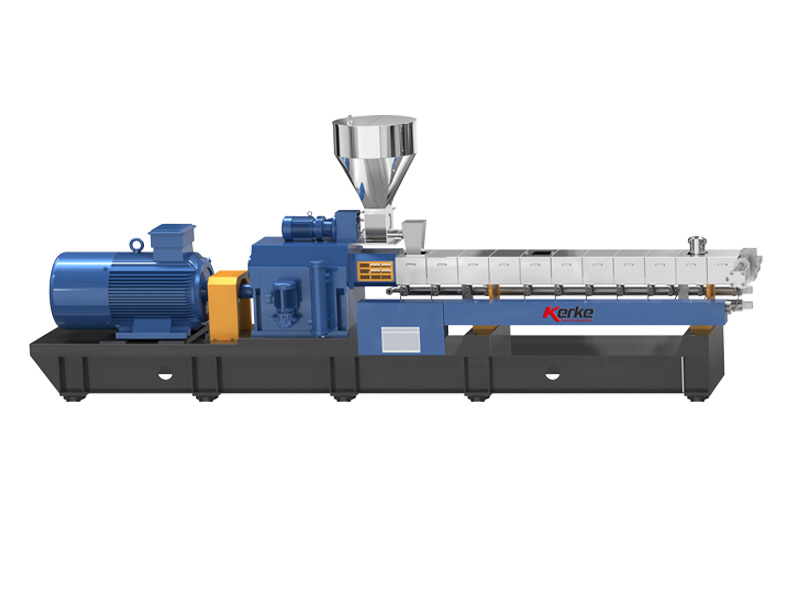
Twin Screw Extruder
Our Parallel Co-rotating twin screw extruder is designed for compounding and masterbatch making with an output capacity from…
-
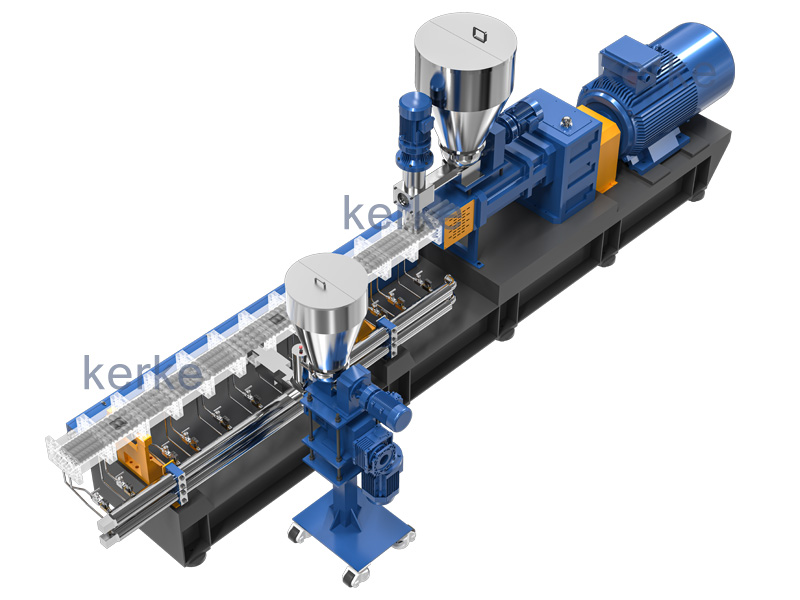
Triple (3 screws) Extruder
3 Screws extruder is a new technology that has many advantages. The triple screw extruder is mainly used…
-
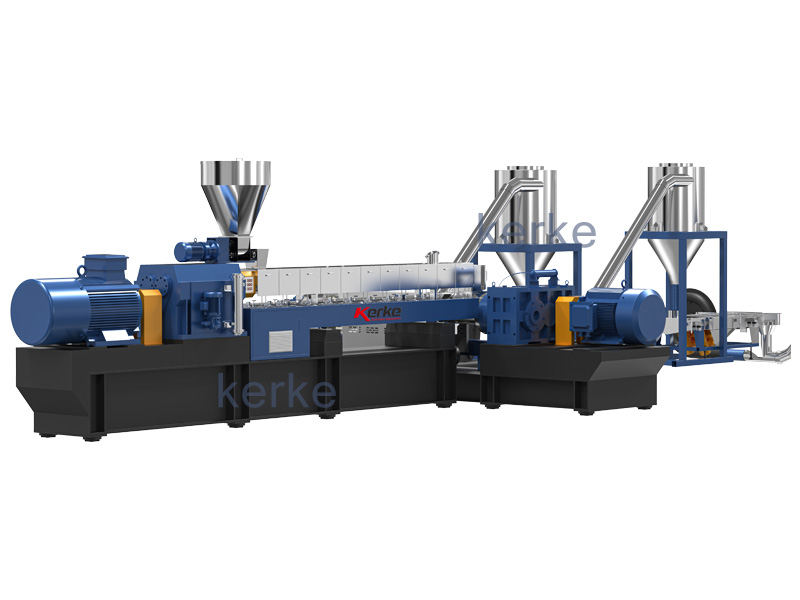
Double-Stage Extrusion System
Mother-baby extrusion system is designed for special materials which can not process on one stage extruder, the first…
-
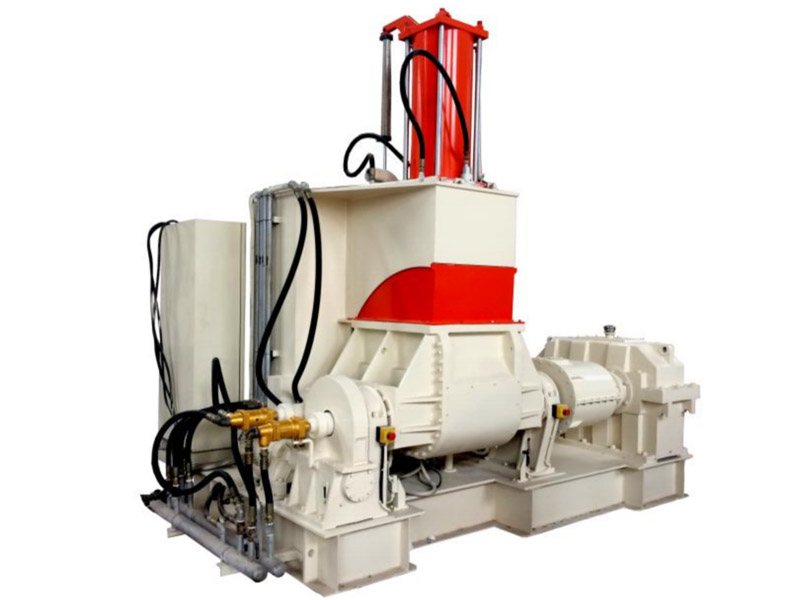
Banbury Kneader Compounding Line
Our kneader + extruder is designed for making special applications with an output capacity from 30kg/h to 1000kg/h.…
-
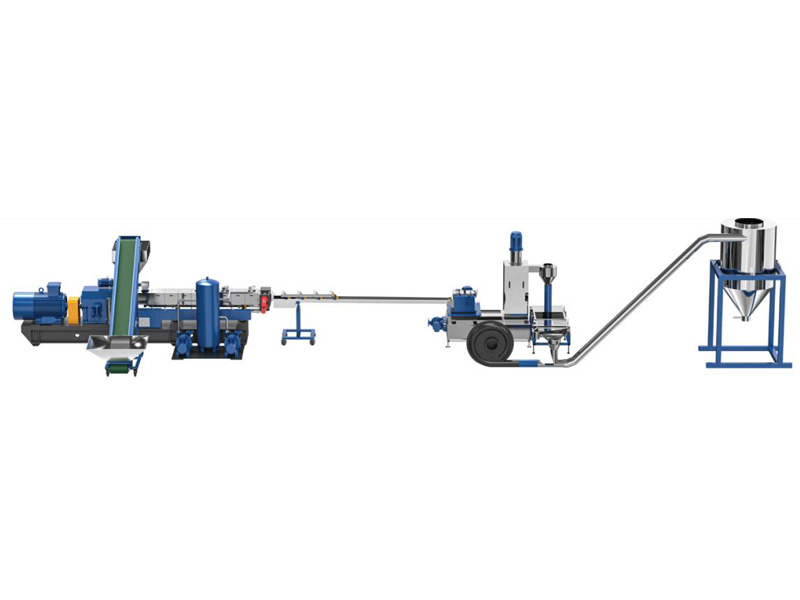
Cutting System / Pelletizing System
Different material needs different cutting system, Kerke provides all kinds of cutting system, here is the explanation of…
LFT-G Extruder Line
Our long glass fiber reinforced thermoplastic composite (LFT-G) production line adopts a direct production process, with a short production process and a high fiber length retention rate. It can directly convert continuous fibers into pellets, with high production efficiency. The production line uses a special fiber feeding device and a strong mixing screw.