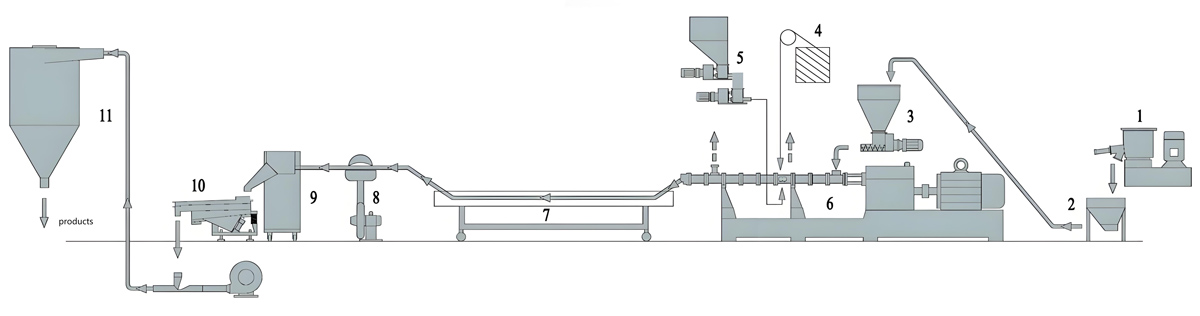
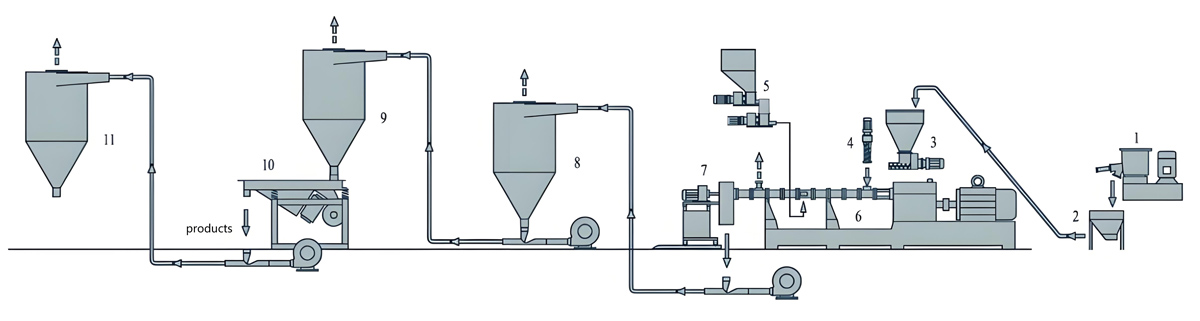
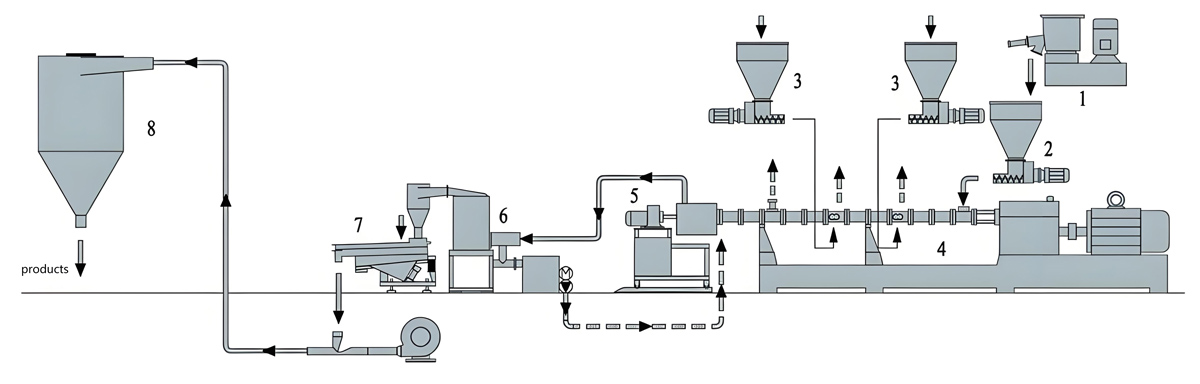
Polyethylene (PE) modified masterbatch refers to a polymer material with special properties prepared by adding a certain amount of modifiers (such as antibacterial agents, anti adhesive agents, flame retardants, etc.) and other additives to polyethylene resin through specific processing techniques (such as mixing, melting, extrusion, etc.). According to the different types of modifiers added, polyethylene modified masterbatch can be divided into various types, such as antibacterial PE masterbatch, anti adhesive PE masterbatch, flame-retardant PE masterbatch, etc.
Features
PE modified masterbatch is a type of concentrated particle that uses polyethylene (PE) as a carrier, concentrates high proportion modifiers, reinforcing fillers or functional additives, and is used to accurately improve the mechanical properties, heat resistance, wear resistance and other core indicators of PE substrates. Its core characteristics revolve around “targeted reinforcement, compatibility and convenience, stability and efficiency”.
1. Targeted modification: Accurately filling the gaps in PE substrate
PE itself has natural shortcomings such as insufficient rigidity, low temperature brittleness, poor heat resistance, and limited wear resistance. Modified masterbatch can solve specific problems through “single function focusing” or “multifunctional composite”, and the performance improvement is clear:
Toughening modification: Adding POE/EVA elastomer to increase the low-temperature (-20 ℃~-40 ℃) impact strength of PE products by 50%~100%, solving the problem of brittle cracking in winter pipes and outdoor accessories;
Enhanced Modification: Introducing fiberglass, carbon fiber, or talc powder to increase tensile strength by 30%~80% and rigidity by 40%~120%, suitable for high-strength requirements such as engineering accessories and mechanical casings;
Heat resistant modification: By compounding nucleating agents and high-temperature resistant fillers, the thermal deformation temperature of PE is increased from 60 ℃ to 80-95 ℃, meeting the requirements of scenarios such as hot water pipes and high-temperature environment packaging;
Wear resistant modification: Adding wear-resistant agents such as PTFE and graphite reduces the surface friction coefficient by 30% to 50%, extending the service life of PE gears, sliders, and pipe interfaces.
2. Carrier compatibility: seamlessly compatible with PE substrate, without damaging the original performance
The carrier resin is strictly matched with the target PE type (LDPE/HDPE/LLDPE), with excellent compatibility. After mixing, it does not affect the molding flowability of PE (such as extrusion, injection molding, blow molding), avoiding product delamination and cracking;
The modifier is pre dispersed and forms a stable system with the PE carrier, which does not interfere with the toughness and chemical stability of the PE itself (such as acid and alkali resistance, weather resistance), and only enhances the targeted performance.
3. Convenient processing: Simplify the production process and lower the operating threshold
The granular form is easy to measure and mix, without the need for additional grinding or modification treatment (compared to directly adding modifier powder). After mixing with pure PE raw materials in proportion (5%~30%), it can directly enter the original production line without adjusting process parameters;
Suitable for all PE processing techniques such as extrusion, injection molding, blown film, blow molding, etc., without the need to replace equipment or molds, significantly reducing production cycles and improving processing efficiency.
4. Stable performance: Strong batch consistency, controllable finished product quality
The formula is precise and controllable (with strict standardization of modifier content and dispersant ratio), and the performance indicators (such as impact strength and rigidity) of the same batch of masterbatch fluctuate by ≤ 5%, ensuring uniform performance of PE products produced in bulk;
The modifier is wrapped in a carrier to reduce contact with air and moisture, making it less prone to oxidation and failure during storage and use. Its performance deteriorates slowly (such as the toughening masterbatch being able to maintain stable effects even after being stored for more than 1 year).
5. Cost optimization: High concentration design, lower overall cost
High concentration concentration concentration of modifiers (such as 30%~50% of elastomers in toughening masterbatch and 20%~40% of glass fibers in reinforcing masterbatch) requires only 5%~30% addition during use, which reduces costs by 10%~30% compared to directly purchasing modified PE raw materials;
To avoid uneven dispersion and waste caused by direct addition of modifier powder (such as glass fiber powder being prone to agglomeration with a loss rate of over 10%), the utilization rate of raw materials can be increased to over 95%, and the overall long-term production cost is better.
6. Functional Composite: Supports multi performance integration and adapts to complex requirements
Multiple modification functions can be integrated into composite masterbatch according to scene requirements, reducing the types of masterbatch added and simplifying the production process
For example, the “toughening+anti-aging” composite master batch (elastomer+antioxidant+light stabilizer) is suitable for PE pipes in outdoor low-temperature environment, while solving the problems of brittle cracking and aging;
Example: “Reinforced+Wear resistant” composite masterbatch (fiberglass+PTFE), used for PE mechanical parts, balancing high strength and wear resistance requirements.
7. Wide adaptability: covering all PE application scenarios, flexible customization
Compatible with all types of PE, including LDPE (film, daily necessities), HDPE (pipe, injection molded parts), LLDPE (packaging film, pipe), etc;
Application scenarios: covering the core application areas of PE materials, from automotive interiors (toughened/reinforced PE parts), building materials (heat-resistant/wear-resistant pipes), household appliances (high rigidity shells), to packaging (puncture resistant films), machinery (wear-resistant gears);
Customization: The proportion of modifiers can be adjusted according to customer needs (such as increasing the glass fiber content to 40% for high rigidity requirements and increasing the proportion of elastomers to 50% for low-temperature toughening), suitable for special scenarios.
8. Environmental compliance: in line with the trend of green production
The selection of modifiers complies with environmental standards (such as halogen-free flame retardant modification, environmentally friendly elastomer toughening), has no heavy metals, no toxic volatiles, and can meet compliance requirements for food contact (FDA, GB 4806), medical packaging, etc;
Support the use of PE recycled materials in combination, without affecting the processing performance of recycled materials, and promoting a circular economy; Some modified masterbatch can use biodegradable PE carrier, which is in line with environmental policies.
The core value of PE modified masterbatch is to achieve performance upgrades of PE substrates in a convenient and low-cost manner. Its characteristics can be summarized as: targeted reinforcement to compensate for shortcomings, compatibility and adaptation without interference, convenient and efficient processing, stable performance and excellent cost. It is a key material for upgrading PE products from “general grade” to “engineering grade”, widely used in fields such as automobiles, building materials, home appliances, machinery, etc. that require higher PE performance.
Types
The classification core of PE modified masterbatch revolves around “targeted improvement of PE substrate performance”, divided by “modification function priority+application scenario”, covering three directions: core mechanical performance optimization, special environment adaptation, and multifunctional composite. Each type has clear key components, application scenarios, and usage points, facilitating precise selection.
I. Core mechanical performance modified type (the most mainstream, solving the natural shortcomings of PE)
1. Toughened modified masterbatch (impact resistance/anti brittle fracture)
Core function: Improve the low-temperature toughness of PE products and solve the problem of brittle cracking at room temperature/low temperature (PE has poor natural low-temperature impact resistance)
Key components: carrier (LDPE/HDPE/LLDPE, matching substrate)+elastomer (POE/EVA/SBS, 30% -50%)+compatibilizer (PE-g-MAH, 3% -8%)+antioxidant (0.5% -1%)
Performance improvement: Low temperature impact strength increased by 50% -100% from -20 ℃ to -40 ℃, and elongation at break increased by 30% -60%
Typical applications: PE pipes for winter use, outdoor accessories, injection molded parts for low-temperature environments (such as refrigerator accessories), films (puncture resistant packaging films)
Recommended addition ratio: 5% -15% (can be increased to 20% in extreme low-temperature scenarios)
Adaptation process: extrusion, injection molding, blown film, blow molding
2. Enhance modified masterbatch (improve rigidity/high strength)
Core function: Improve the tensile strength and bending modulus of PE, and solve the problem of insufficient rigidity
Key components: carrier (HDPE/LLDPE as the main component, 30% -60%)+reinforcing filler (glass fiber 20% -40%/carbon fiber 10% -30%/talc powder 30% -50%)+coupling agent (silane/titanate, 1% -3%)+dispersant (PE wax, 3% -8%)
Performance improvement: tensile strength increased by 30% -80%, bending modulus increased by 40% -120%, dimensional stability increased by 20% -40%
Subdivision type:
Fiberglass reinforced type: high strength, excellent heat resistance, used for engineering accessories;
Carbon fiber reinforced type: lightweight, conductive and heat-conducting, used for high-end mechanical components;
Talc powder enhanced type: low cost, mild rigidity improvement, used for household appliance shells.
Typical applications: Automotive interior structural components, mechanical casings, high-strength PE pipes, household appliance bases
Recommended addition ratio: 10% -30% (glass fiber/carbon fiber type 10% -20%, talc powder type 20% -30%)
Adaptation process: extrusion, injection molding (blown film requires controlling filler content ≤ 15%)
3. Wear resistant modified masterbatch (reducing friction/anti-wear)
Core function: Reduce the friction coefficient of PE surface, improve wear resistance and scratch resistance performance
Key components: Carrier (mainly HDPE, 40% -60%)+Wear resistant agent (PTFE/graphite/MoS ₂, 15% -30%)+Lubricant (oleic acid amide, 1% -3%)
Performance improvement: Surface friction coefficient reduced by 30% -50%, wear life extended by 2-5 times
Typical applications: PE gears, sliders, pipe interfaces, conveying pipelines (wear-resistant lining), mechanical moving parts
Recommended addition ratio: 5% -10% (can be increased to 15% for high wear resistance requirements)
Adaptation process: injection molding, extrusion
4. Heat resistant modified masterbatch (temperature grade/deformation resistance)
Core function: Improve the thermal deformation temperature of PE, solve softening and deformation problems in high temperature environments (the natural thermal deformation temperature of PE is only about 60 ℃)
Key components: carrier (HDPE/LLDPE, 40% -60%)+nucleating agent (sodium benzoate/talc powder, 0.5% -2%)+high temperature resistant filler (fiberglass/mica powder, 10% -20%)+antioxidant (1% -2%)
Performance improvement: The hot deformation temperature has been increased from 60 ℃ to 80-95 ℃, and the short-term heat resistance can reach 100-110 ℃
Typical applications: hot water pipes, high-temperature environment packaging (such as microwave heating related accessories), heat-resistant components for household appliances, PE parts around automotive engines
Recommended addition ratio: 3% -8% (high heat resistance requirements can be increased to 10%)
Adaptation process: extrusion, injection molding
II. Special function modified type (suitable for extreme environments/specific needs)
1. Flame retardant modified masterbatch (anti combustion/risk reduction)
Core function: endowing PE with flame retardant properties, meeting the requirements of flame retardant grade
Key components: carrier (PE, 20% -40%)+flame retardant (halogen-free: magnesium hydroxide/aluminum 40% -60%; bromine based: bromine based flame retardant 10% -20%+antimony based synergist 5% -10%)+dispersant (PE wax, 3% -8%)
Performance indicators: halogen-free type can reach UL94 V2 level, bromine type can reach UL94 V0 level
Typical applications: Building PE pipes, electrical enclosures, flame-retardant packaging materials, industrial flame-retardant accessories
Recommended addition ratio: halogen-free type 15% -30%, brominated type 5% -12%
Adaptation process: extrusion, injection molding (flame retardant content should be controlled to be ≤ 20% for blown film)
Attention: halogen-free and environmentally friendly, suitable for food/medical peripherals; Bromine based flame retardant has high efficiency and avoids direct contact with food
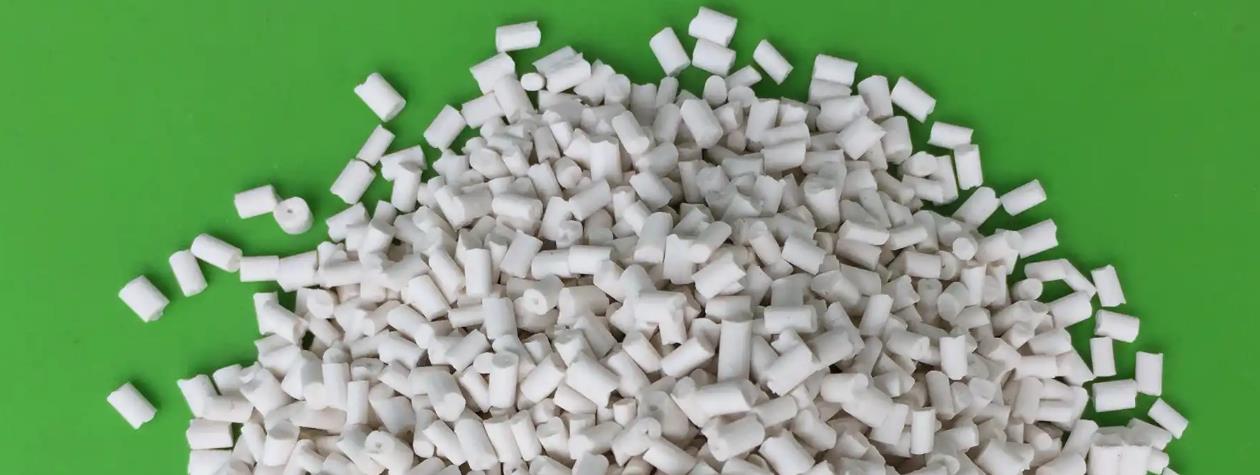
2. Anti static modified masterbatch (anti-static/anti adsorption)
Core function: Eliminate static electricity on the surface of PE products, prevent dust adsorption and electrostatic discharge from damaging electronic components
Key components: Carrier (PE, 40% -60%)+Antistatic agent (cationic/non-ionic, 5% -15%)+Dispersant (2% -5%)
Performance indicators: Surface resistance reduced to 10 ⁶ -10 ¹⁰ Ω, effective time ≤ 24 hours, lasting for 6-12 months
Typical applications: Electronic component packaging film, PE tray, anti-static pipe, food packaging film (anti dust adsorption)
Recommended addition ratio: 2% -5%
Adaptation process: blown film, injection molding, extrusion
3. Compatible modified masterbatch (improves blending compatibility)
Core function: Enhance the interfacial bonding strength between PE and other materials (such as PA, PP, fillers) to avoid delamination and cracking
Key components: carrier (PE, 60% -80%)+compatibilizer (PE-g-MAH/PP-g-MAH, 10% -20%)+coupling agent (1% -3%)
Typical applications: PE/PA blend products, PE+fiberglass/carbon fiber composite systems, PE recycled materials recycling processing (improving the performance of recycled materials)
Recommended addition ratio: 3% -10%
Adaptation process: blending extrusion, injection molding
4. Weather resistant modified masterbatch (UV resistant/anti-aging)
Core function: Improve the outdoor service life of PE, resist aging and brittleness caused by ultraviolet radiation and high temperature oxidation
Key ingredients: carrier (PE, 40% -60%)+light stabilizer (UV531/UV327, 1% -5%)+antioxidant (1010/168 compound, 0.5% -2%)+anti-aging filler (carbon black/rutile titanium dioxide, 10% -20%)
Performance improvement: outdoor service life extended from 1-2 years to 5-8 years
Typical applications: Outdoor PE pipes, greenhouse films, outdoor decorative parts, PE containers for outdoor use
Recommended addition ratio: 1% -3% (3% for long-term outdoor use, 1% -2% for indoor use)
Adaptation process: extrusion, blown film, injection molding
5. Biodegradable modified masterbatch (environmentally friendly and biodegradable)
Core function: endowing ordinary PE products with biodegradability, in line with environmental policies
Key components: carrier (biodegradable PE/PLA, 50% -70%)+degradation promoter (starch/polycaprolactone, 20% -30%)+compatibilizer (3% -8%)
Performance indicators: Compliant with GB/T 20197-2006 biodegradability standard, fully degraded within 6-12 months under composting conditions
Typical applications: Disposable PE shopping bags, agricultural film, food packaging (biodegradable tableware)
Recommended addition ratio: 10% -30%
Adaptation process: blown film, extrusion, injection molding
III. Composite functional modified type (multi performance integration, simplified production)
1. Toughened and weather resistant composite masterbatch
Core function: Simultaneously solve the problems of low-temperature brittleness and outdoor aging of PE
Key components: elastomer (POE, 30% -40%)+light stabilizer (1% -3%)+antioxidant (0.5% -1%)+PE carrier (40% -50%)
Typical applications: PE pipes for outdoor low-temperature environments, injection molded parts for outdoor use (such as outdoor furniture accessories)
Recommended addition ratio: 5% -10%
2. Reinforced and wear-resistant composite masterbatch
Core function: Balancing high strength and high wear resistance of PE
Key components: fiberglass/carbon fiber (20% -30%)+PTFE/graphite (10% -15%)+PE carrier (40% -50%)+coupling agent (1% -2%)
Typical applications: PE mechanical gears, high-strength wear-resistant accessories, conveying pipelines (pressure bearing+wear-resistant)
Recommended addition ratio: 10% -20%
3. Toughened+flame retardant composite masterbatch
Core function: Enhance the toughness of PE while endowing it with flame retardant properties
Key components: elastomer (POE, 20% -30%)+halogen-free flame retardant (magnesium hydroxide/aluminum, 30% -40%)+PE carrier (20% -30%)+synergist (5% -10%)
Typical applications: Building flame-retardant pipes, electrical enclosures (requiring impact resistance and flame retardancy)
Recommended addition ratio: 15% -25%
4. Anti static+anti-aging composite master batch
Core function: Eliminate static electricity while extending outdoor service life
Key components: antistatic agent (5% -10%)+light stabilizer (1% -3%)+antioxidant (0.5% -1%)+PE carrier (50% -60%)
Typical applications: Outdoor electronic component packaging film, anti-static PE tray for outdoor use
Recommended addition ratio: 3% -8%
IV. Classification core logic and selection suggestions
| Selection dimension | Corresponding modification type | Key Decision Points |
| Addressing the shortcomings of PE | Toughening/strengthening/heat resistance/wear resistance | Prioritize clarifying core performance requirements (such as choosing toughening for “low temperature non brittleness” and strengthening for “load-bearing non deformation”) |
| Extreme environment adaptation | Weather resistant/flame retardant/anti-static/biodegradable | Select the corresponding function according to the scenario (outdoor/high temperature/electronic/environmental protection) |
| Simplify the production process | Composite functional type | When two or more properties are required, composite masterbatch should be preferred (reducing the number of added types) |
| Substrate matching | All types | The carrier should be consistent with the PE type of the product (corresponding to LDPE/HDPE/LLDPE) |
| Process adaptation | Choose low filler type for blown film (≤ 15%); Injection molding/extrusion optional high filler type (≤ 30%) | Avoid excessive filler affecting fluidity |
The type design of PE modified masterbatch revolves around “accurately solving the pain points of PE performance”, and the core can be summarized into three categories: mechanical optimization (toughening/strengthening/wear resistance/heat resistance), special functions (flame retardant/anti-static/degradation), and composite integration. When selecting, it is necessary to follow the logic of “clarifying performance requirements first → matching substrates and processes → controlling the addition ratio” to ensure that the masterbatch can fill the PE shortcomings without affecting processing stability and finished product quality.
In special scenarios such as high-end engineering parts and extreme environments, the composition ratio can be customized and adjusted (such as increasing the glass fiber content to 40% for high rigidity requirements and increasing the proportion of elastomers to 50% for low-temperature toughening) to achieve a balance between performance and cost.
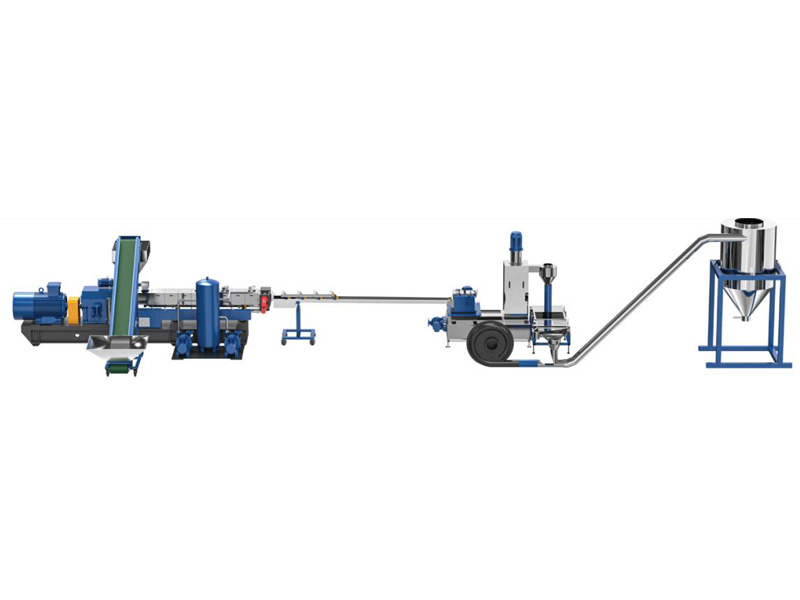
Polyethylene modified masterbatch extruder
Kerke’s masterbatch extruder can be used to produce polyethylene modified masterbatch. Our masterbatch extruder has multiple models to choose from, which can meet different production requirements.
-

Laboratory Twin Screw Extruder
When will you need a lab twin screw extruder? If you want to make trials and tests of…
-
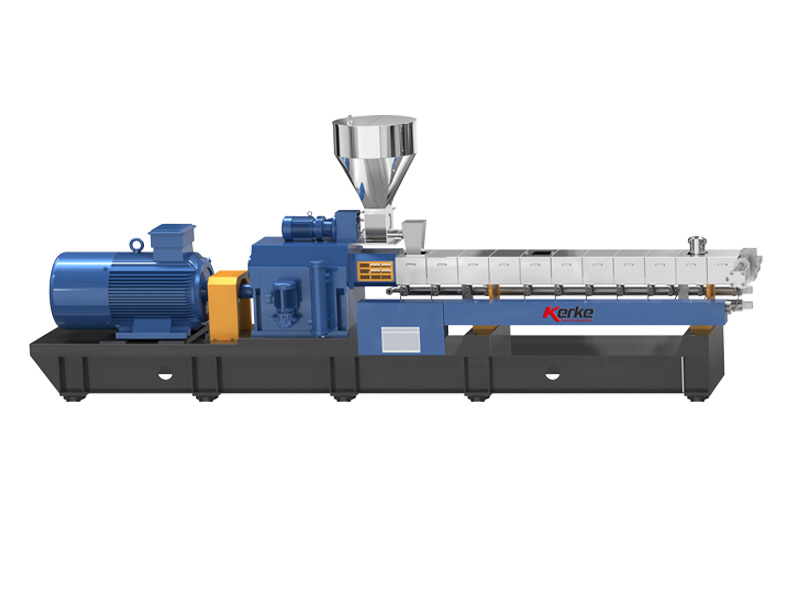
Twin Screw Extruder
Our Parallel Co-rotating twin screw extruder is designed for compounding and masterbatch making with an output capacity from…
-
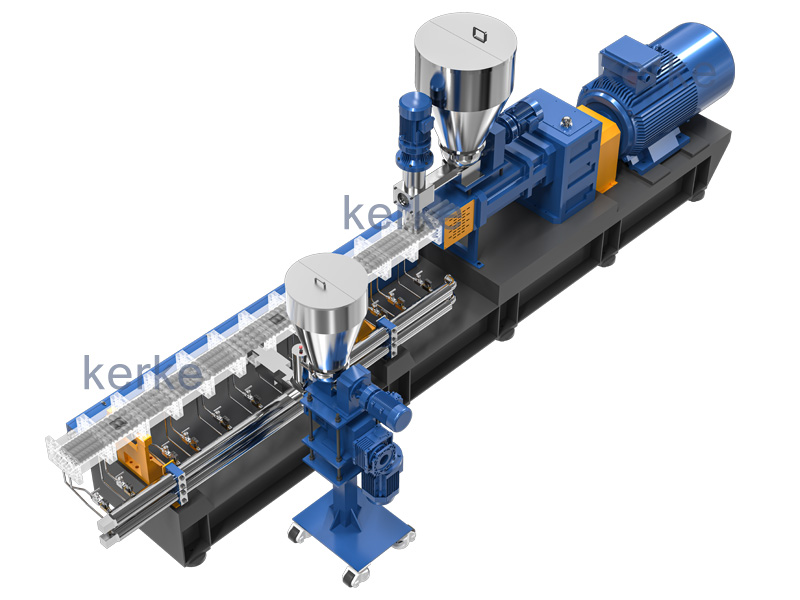
Triple (3 screws) Extruder
3 Screws extruder is a new technology that has many advantages. The triple screw extruder is mainly used…
-
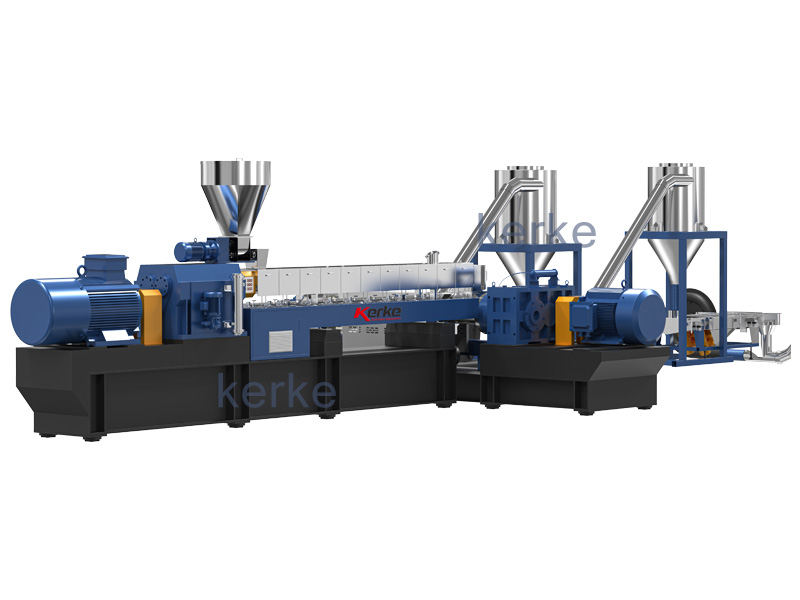
Double-Stage Extrusion System
Mother-baby extrusion system is designed for special materials which can not process on one stage extruder, the first…
-
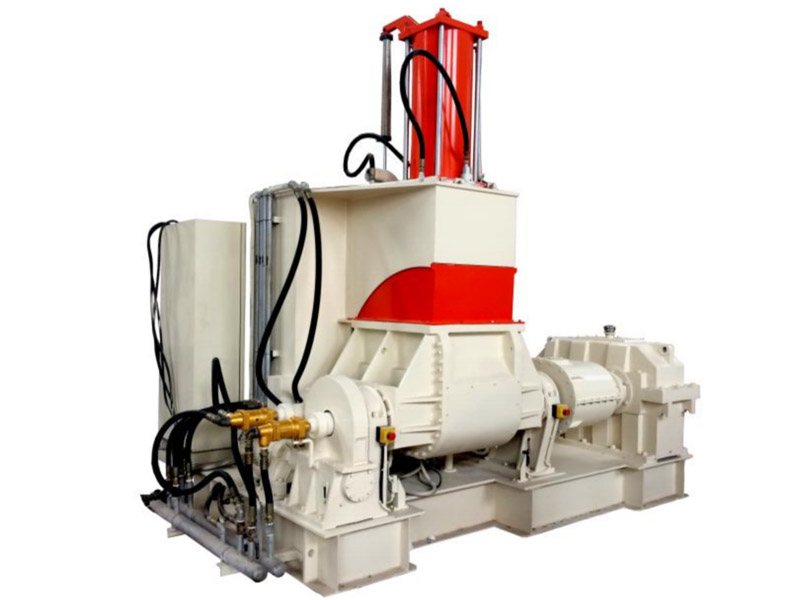
Banbury Kneader Compounding Line
Our kneader + extruder is designed for making special applications with an output capacity from 30kg/h to 1000kg/h.…
-
Cutting System / Pelletizing System
Different material needs different cutting system, Kerke provides all kinds of cutting system, here is the explanation of…
Production process
The production of polyethylene modified masterbatch is a relatively complex process, usually including multiple steps such as raw material preparation, mixing, extrusion, granulation, etc. The following is its detailed production process:
1. Raw material preparation
Basic resin: Polyethylene (PE) resin is generally used as the basic raw material. Depending on the product performance requirements, different types of polyethylene such as low-density polyethylene (LDPE), linear low-density polyethylene (LLDPE), and high-density polyethylene (HDPE) can be selected. For example, LDPE has good flexibility and transparency, making it suitable for producing modified masterbatch with high requirements for softness and transparency; HDPE has high strength and rigidity, making it suitable for applications that require high mechanical properties.
Modifier: Various modifiers are added according to different modification purposes. Common modifiers include toughening agents, reinforcing agents, flame retardants, antistatic agents, lubricants, color masterbatch, etc. For example, in order to improve the toughness of polyethylene, elastic toughening agents can be added; To endow polyethylene with flame retardant properties, halogenated or halogen-free flame retardants can be added.
Other additives: Additional additives such as antioxidants and light stabilizers may also be added to improve the stability and weather resistance of modified masterbatch, preventing aging and degradation during processing and use.
2. Mixing
Add the prepared base resin, modifier, and other additives to the high-speed mixer according to a certain formula ratio for mixing. During the mixing process, the high-speed rotating stirring blades ensure that the materials are fully dispersed and evenly mixed. The usual mixing time is 5-15 minutes, depending on the characteristics of the material and the mixing effect. To ensure uniform mixing, batch addition or multiple mixing can be used.
3. Extrusion
Twin screw extruder: The mixed material is fed into the twin screw extruder for melt extrusion. The twin-screw extruder has good conveying capacity, shear mixing capacity, and dispersion capacity, which can fully plasticize and mix materials in the barrel. The temperature setting of an extruder is usually divided into multiple sections, from the hopper end to the head direction, with the temperature gradually increasing. Generally, the temperature of the front section of the barrel is between 160-180 ℃, the temperature of the middle section is between 180-200 ℃, and the temperature of the head is between 200-220 ℃. The screw speed is generally between 100-300 revolutions per minute and can be adjusted according to the fluidity of the material and product quality requirements.
Filtration: During the extrusion process, a melt filter is usually installed at the head of the extruder to remove impurities and undissolved particles from the material. The filtering accuracy can be selected according to product requirements, generally between 20-100 mesh.
4. Granulation
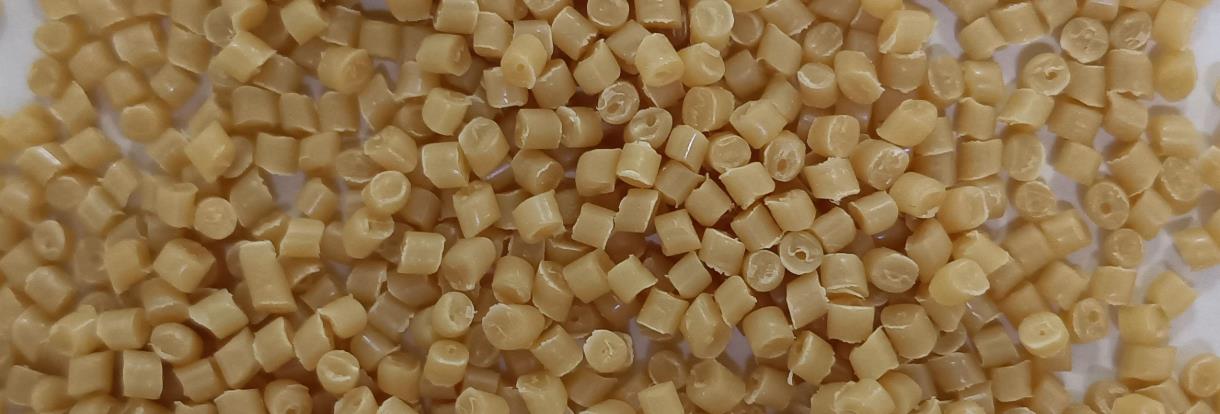
Air cooled pellet cutting: The molten material extruded by the extruder is extruded into strips through the die, and then enters the air cooled pellet cutting machine. In the air-cooled granulator, the high-speed rotating cutter cuts the strip into particles, while the particles are cooled by the air-cooled system to quickly solidify and shape. Air cooled pellet cutting is suitable for producing modified masterbatch with high requirements for particle appearance and small particle size.
Water cooled granulation: For some occasions that require high production efficiency, water cooled granulation technology can be used. The molten material is extruded from the die and directly enters the water tank for cooling, and then cut into particles by a granulator. The particles after water-cooled granulation need to undergo dehydration treatment, such as using a centrifugal dehydrator or a vibrating fluidized bed dryer to remove surface moisture.
5. Packaging
The modified masterbatch after granulation undergoes quality testing, and products that meet the requirements are packaged using an automatic packaging machine. The packaging specifications can be selected according to customer needs, generally including 25kg/bag, 50kg/bag, etc. The packaged products are stored in the warehouse, waiting for transportation and sale.
In the production process, it is necessary to strictly control the process parameters of each link to ensure the stability and consistency of product quality. At the same time, according to different product requirements and application fields, the formula and production process are continuously optimized to develop polyethylene modified masterbatch products with high performance and special functions.
Production equipment requirements
The production equipment for polyethylene modified masterbatch needs to meet the requirements of uniform mixing, good plasticization, and precise control. The following are specific equipment requirements:
Mixing equipment
High speed mixer: It should have high-strength mixing capacity and be able to mix polyethylene resin, modifiers, additives and other materials thoroughly and uniformly in a short period of time. The material of the mixer needs to be wear-resistant and corrosion-resistant stainless steel to adapt to the characteristics of various materials, ensure mixing quality and equipment life.
Ingredient system: High precision measuring devices such as electronic scales are required to accurately control the amount of various raw materials added, ensuring the accuracy of the formula and ensuring the stability of product quality.
Extrusion equipment
Twin screw extruder: This is one of the core equipment, requiring the screw to have good self-cleaning and conveying capabilities, and be able to adapt to materials of different viscosities. The aspect ratio is generally between 30-40 to provide sufficient residence time and shear force to fully plasticize and mix the material. The barrel is usually made of nitride steel or bimetallic alloy steel, which has good wear resistance and corrosion resistance.
Heating and cooling system: The heating method of the extruder is often electric heating or thermal oil heating, and the heating power should meet the plasticization requirements of the material in different temperature ranges, and the temperature control accuracy should be within ± 1 ℃. The cooling system generally adopts circulating water cooling, which can quickly and effectively control the temperature of the barrel and screw, preventing material overheating and decomposition.
Feeding device: High precision weight loss feeder or volumetric feeder is used, which can accurately and uniformly feed the mixed materials into the extruder barrel according to the screw speed and production requirements of the extruder, ensuring the stability of material supply.
Granulation equipment
Granulator: The cutting blade of the air-cooled granulator should be made of high-quality hard alloy or high-speed steel material, with sharp edges and good wear resistance, capable of cutting the extruded strip into uniform particles. In addition to the requirements for the cutting blade, the water-cooled granulator also needs to be equipped with an efficient dehydration device, such as a centrifugal dehydrator or a vibrating fluidized bed dryer, to ensure that the moisture on the surface of the particles can be quickly removed.
Cooling system: For air-cooled pellet cutting, an air-cooled system with sufficient air volume and speed is required to cool and solidify the pellets in a short period of time. Generally, forced air cooling is used, equipped with multiple fans for multi angle blowing. The cooling water tank for water-cooled pellet cutting should ensure stable water temperature and uniform water flow to ensure consistent cooling effect of the pellets.
Test equipment
Melt flow rate meter: used to detect the melt flow rate of polyethylene modified masterbatch to evaluate its processing performance, requiring high measurement accuracy and good repeatability.
Mechanical performance testing equipment: including tensile testing machines, impact testing machines, etc., used to test the mechanical properties such as tensile strength, elongation at break, and impact strength of products made from masterbatch. The equipment should have accurate loading and measurement systems.
Particle size analyzer: used to analyze the particle size distribution of particles to ensure that the particle size of the product meets the requirements. Advanced equipment such as laser particle size analyzer can be used, with a wide measurement range and high accuracy.
Other Auxiliary Equipment
Drying equipment: used for pre drying raw materials, removing moisture and volatile substances, and preventing problems such as bubbles or degradation during extrusion. Common drying equipment includes hot air circulation drying oven, dehumidification dryer, etc. The drying temperature and time can be adjusted according to the characteristics of the raw materials.
Packaging equipment: Automatic packaging machines are used to automate packaging processes such as measurement, filling, and sealing, improving packaging efficiency and quality. The measuring accuracy of the packaging machine should be high, and the sealing should be firm to ensure the sealing of the product during storage and transportation.
Formula ratio
The ratio of polyethylene modified masterbatch may vary due to factors such as modification purpose, performance requirements, and raw material characteristics. The following are some common examples of ratios:
High surface tension polyethylene filling masterbatch: modified polyethylene resin 8% -10%, ultrafine heavy calcium 85% -88%, surfactant 0.5% -1.5%, coupling agent 1% -2%, compatibilizer 0.8% -1.0%.
High density polyethylene toughening modified masterbatch: carrier (such as high-density polyethylene) 10% -30%, talc powder 50% -70%, compatibilizer (such as maleic anhydride grafted polyethylene) 10% -25%, coupling agent 1% -3%, dispersant 0.5% -2%, antioxidant 0.1% -1%.
Polyethylene modified asphalt masterbatch: 50-85 parts of polymer (polyethylene or its mixture with polyolefin elastomer), 10-35 parts of asphalt, 0.5-3.0 parts of graft modifier, 0.1-1.0 parts of chemical initiator, 1.0-3.0 parts of crosslinking agent, 1.0-4.0 parts of compatibilizer, 0.1-8.0 parts of additives (light stabilizer, antioxidant, anti stripping agent, etc.).
Blown film black masterbatch: Polyethylene resin 80% -90%, carbon black 5% -15%, antioxidant 0.5% -1%, plasticizer 1% -2%, dispersant 0.5% -1%.
Anti aging polyethylene modified master batch
Proportion: 80-90 parts of polyethylene resin (such as low-density polyethylene LDPE or linear low-density polyethylene LLDPE), 2-5 parts of light stabilizer (such as hindered amine light stabilizer HALS), 1-3 parts of antioxidant (such as hindered phenolic antioxidant), 2-5 parts of ultraviolet absorber (such as benzotriazole), and 0.5-1 part of dispersant (such as zinc stearate).
Description: Light stabilizers, antioxidants and ultraviolet absorbers work together to improve the anti-aging performance of polyethylene. Dispersants help these additives disperse evenly in polyethylene resin.
Highly transparent polyethylene modified masterbatch
Proportion: 85-95 parts of transparent polyethylene resin (such as metallocene polyethylene mPE), 0.5-2 parts of nucleating agent (such as dibenzylidene sorbitol DBS), 0.5-1 part of lubricant (such as ethylene bis (stearamide) EBS), 1-3 parts of plasticizer (such as dioctyl phthalate DOP, added as needed).
Explanation: Nucleating agents can refine the crystalline structure of polyethylene and improve transparency; Lubricants improve processing performance and prevent adhesion; Plasticizers can be added in appropriate amounts according to the requirements for softness and transparency to adjust the performance of the product.
Antibacterial polyethylene modified masterbatch
Proportion: 80-90 parts of polyethylene resin (such as high-density polyethylene HDPE), 2-5 parts of antibacterial agent (such as silver ion antibacterial agent or organic antibacterial agent), 1-3 parts of dispersant (such as silicone masterbatch), and 2-5 parts of compatibilizer (such as maleic anhydride grafted polyethylene).
Explanation: Antibacterial agents endow polyethylene with antibacterial function, dispersants evenly disperse antibacterial agents in the polyethylene matrix, compatibilizers improve the compatibility between antibacterial agents and polyethylene resin, ensuring the stability and long-term effectiveness of antibacterial performance.
Antistatic polyethylene modified masterbatch
Proportion: 70-80 parts of polyethylene resin (such as LDPE), 10-20 parts of antistatic agent (such as quaternary ammonium salt or polyether antistatic agent), 5-10 parts of carrier resin (such as EVA, ethylene vinyl acetate copolymer), 0.5-1 part of dispersant (such as stearic acid).
Explanation: Antistatic agent is a key component that reduces the surface resistance of polyethylene and prevents the accumulation of static electricity; The carrier resin helps to better disperse and exert anti-static agents in polyethylene, and the dispersant further improves the dispersion effect.
Flame retardant polyethylene modified masterbatch
Proportion: 60-75 parts of polyethylene resin (such as HDPE or LLDPE), 20-30 parts of flame retardant (such as inorganic flame retardants such as aluminum hydroxide and magnesium hydroxide, or organic flame retardants such as bromine and phosphorus), 2-5 parts of synergist (such as antimony trioxide, used in combination with bromine flame retardants), 1-2 parts of lubricant (such as paraffin), and 0.5-1 part of antioxidant.
Explanation: Flame retardants are the key to achieving flame retardancy, and synergists work together with flame retardants to improve flame retardancy; Lubricants improve processing performance, while antioxidants prevent polyethylene from being affected by thermal oxidation during processing and use.
These ratios are for reference only, and in actual production, they need to be optimized and adjusted based on specific modification requirements, raw material characteristics, processing technology, and cost factors. At the same time, strict performance testing and quality control are required to ensure that the modified masterbatch achieves the expected performance indicators.
Common problems and solutions
The core production process of PE modified masterbatch is the same as that of ordinary PE masterbatch (raw material pretreatment → mixing → melt extrusion → granulation → cooling and drying → screening and packaging), but due to the addition of a high proportion of modifiers (glass fiber, elastomers, flame retardants, etc.), its production issues focus more on “modifier dispersibility, raw material compatibility, and functional component stability”. The following is classified and sorted according to the production process, covering the three core pain points of appearance, processing stability, and functional effectiveness, taking into account both general and modification specific issues:
I. Raw materials and mixing process: hidden dangers at the source of functional failure in modification
1. Agglomeration of modifiers (exclusive core issue)
Performance: The presence of hard blocks of modifier in the masterbatch (such as glass fiber bundles, elastomer agglomerates, and flame retardant agglomerates), uneven distribution of modifier in subsequent products (such as glass fiber exposure in the reinforcing masterbatch and elastomer particles in the toughening masterbatch), fragmented functional effects (high local rigidity/good toughness, overall performance fluctuations);
Cause: ① The modifier has not undergone surface treatment (such as glass fiber not coated with coupling agent, carbon fiber not oxidized modified), resulting in poor compatibility with the PE carrier; ② The modifier becomes damp (such as magnesium hydroxide and calcium carbonate with a moisture content greater than 0.1%), leading to the formation of hydrogen bonds and agglomeration between particles; ③ Insufficient dosage of dispersant (less than 10% of the modifier mass), unable to encapsulate the modifier particles; ④ The modifier is not pre dispersed during mixing (such as directly adding fiberglass bundles to the resin);
Solution: ① Modification agent pretreatment: Silane/titanate coupling agent (1% -3%) is used for surface modification of fiberglass/carbon fiber, and the elastomer/flame retardant is dried in advance (dried at 80-120 ℃ for 2-4 hours, with a moisture content of ≤ 0.05%); ② Dispersant optimization: Match according to the type of modifier (PE wax+calcium stearate for glass fibers, EVA wax for elastomers), increase the dosage to 15% -25% of the modifier (ultrafine/high proportion modifier can be increased to 30%); ③ Mixing process: First, pre mix the modifier with the dispersant for 10-15 minutes (at a speed of 600-800r/min), then add the carrier resin and mix for 15-20 minutes to ensure complete depolymerization of the modifier.
2. Poor compatibility of raw materials (exclusive high-frequency issue)
Performance: After mixing, the material clumps/delaminates, and during extrusion, the melt fractures and the masterbatch is prone to brittle cracking. Subsequently, when mixed with PE substrate, “delamination and cracking” occur (such as the toughening masterbatch peeling off from the PE substrate, and compatible masterbatch cannot improve the blending effect);
Cause: ① Mismatch between carrier resin and modifier (such as HDPE carrier combined with low melting point POE elastomer, elastomer decomposition at high temperature); ② Conflicts between modifiers (such as some anti-static agents reacting with halogen-free flame retardants to form hard blocks); ③ Incorrect selection of compatibilizers (such as mixing PE/PA with PP-g-MAH compatibilizer instead of PE-g-MAH);
Solution: ① Carrier modifier matching: Select according to the modification type (HDPE carrier for reinforcing masterbatch, LLDPE/LDPE carrier for toughening masterbatch, HDPE/LDPE blend carrier for flame retardant masterbatch); ② Small batch compatibility testing: Mix modifiers, carriers, and additives in proportion, observe for clumping/discoloration, and adjust the type of additives if necessary; ③ Accurate addition of compatibilizers: Silane coupling agent is used for PE and fiberglass/carbon fiber, PE-g-MAH compatibilizer (3% -8%) is mixed with PE and PA/PP, and EVA compatibilizer (2% -5%) is used for PE and elastomer.
3. Uneven mixing (universal but affecting the modification effect)
Performance: Performance fluctuations between batches of masterbatch (such as impact strength of 15kJ/m ² for batch A and only 8kJ/m ² for batch B), high local concentration of modifier (such as local aggregation of flame retardant masterbatch, resulting in melt stickiness) or low concentration (such as insufficient local elastomer and brittle fracture for toughening masterbatch);
Cause: ① Insufficient mixing time (less than 15 minutes); ② Mixing sequence error (adding resin first and then modifying agent, resulting in uneven wrapping of the modifying agent); ③ Insufficient shear force of the mixer (speed<500r/min);
Solution: ① Optimize the mixing sequence: dispersant+lubricant → modifier (pre dispersed for 10 minutes) → carrier resin (mixed for 15-20 minutes) → compatibilizer/antioxidant (mixed for the last 5 minutes); ② Increase the speed of the mixer to 600-800r/min to ensure shear dispersion; ③ After mixing, take samples for testing (such as color, density, hardness), and only enter the extrusion process after uniformity.
II. Melt extrusion process: the core issue of modified masterbatch forming and function
1. Insufficient plasticization (more prominent due to modifier)
Performance: The surface of the masterbatch is rough and has a granular feel, with visible unmelted resin particles or undissolved modifiers (such as fiberglass bundles and small elastic particles) on the cross section. During subsequent processing, it is easy to block the mold head, and there are pockmarks on the surface of the product;
Cause: ① The extrusion temperature is too low (lower than the melting point of PE+the melting temperature of the modifier, such as the masterbatch containing POE elastomer not reaching 130 ℃); ② The length to diameter ratio of the screw is too small (<28), the plasticizing stroke is insufficient, and the modifier (such as fiberglass, carbon fiber) cannot be fully wrapped; ③ If the content of modifier is too high (such as glass fiber>40%, flame retardant>60%), the resin cannot be completely coated; ④ Insufficient shear force of the screw (ordinary screws cannot disperse hard modifier particles);
Solution: ① Targeted heating: Adjust the temperature according to the modifier (including POE toughening masterbatch 130-150 ℃, glass fiber reinforced masterbatch 140-160 ℃, flame retardant masterbatch 120-140 ℃), and the mold head temperature should be 5-10 ℃ higher than the end of the barrel; ② Optimize screw parameters: Select screws with a length to diameter ratio of ≥ 32, or screws with strong shear elements (such as barrier type or meshing type screws), to enhance shear heat generation; ③ Control the content of modifier: glass fiber/carbon fiber ≤ 40%, flame retardant ≤ 60%, excessive amount needs to increase the proportion of carrier resin; ④ Add 0.5% -1% plasticizers (such as white oil, paraffin) to assist in plasticization.
2. Resin/modifier degradation (exclusive risk point)
Performance: The color of the masterbatch turns yellow/black, with a pungent odor (such as gas produced by the decomposition of flame retardants or the thermal oxidation odor of elastomers), and the mechanical properties decrease (the toughening masterbatch becomes brittle, and the rigidity of the reinforcing masterbatch is insufficient);
Cause: ① Excessive extrusion temperature (such as masterbatch containing PPS modifier exceeding 280 ℃, POE elastomer exceeding 160 ℃); ② The screw speed is too fast (>200r/min), resulting in excessive heat generation during shearing, leading to the decomposition of the modifier (such as high-temperature dehydration of halogen-free flame retardant magnesium hydroxide); ③ Insufficient dosage of antioxidant/heat stabilizer (modifier decomposition accelerates resin aging); ④ Unclean carbon deposits inside the barrel and contaminated materials;
Solution: ① Precise temperature control: Set the temperature according to the heat resistance of the modifier (POE ≤ 160 ℃, fiberglass ≤ 160 ℃, halogen-free flame retardant ≤ 140 ℃), and check if the temperature sensor is malfunctioning; ② Reduce the screw speed to 120-180r/min to balance plasticization and degradation; ③ Targeted additives: Toughening masterbatch with antioxidant 1010/168 compound (0.8% -1.5%), flame retardant masterbatch with heating stabilizer (such as calcium stearate 1% -2%), glass fiber masterbatch with antioxidant+UV absorber; ④ Regularly clean the barrel and screws (rinse with PE wax and cleaning material every 8 hours).
3. Melt fracture (caused by increased friction due to modifier)
Performance: The surface of the extruded material strip is uneven, wavy, and even broken, making it difficult to cut smoothly (such as fiberglass reinforced masterbatch strips that are prone to breakage, and flame-retardant masterbatch strips with stripes on the surface);
Cause: ① The modifier increases the viscosity of the melt, and the low temperature of the mold head leads to poor fluidity; ② The gap between the mold mouth is too small (<2mm), resulting in high resistance at the melt outlet; ③ Insufficient dispersant/lubricant, excessive friction coefficient between modifier and barrel, mold head; ④ Fluctuations in melt pressure (uneven dispersion of modifiers leading to local viscosity differences);
Solution: ① Increase the mold head temperature by 5-10 ℃ to ensure smooth flow of the melt; ② Adjust the gap between the mold mouth to 2-3mm and match the diameter of the material strip; ③ Increase the amount of lubricant (such as 0.5% -1% stearic acid amide, 1% -2% PE wax) to reduce melt friction; ④ Check the screw drive system, eliminate speed fluctuations, and ensure stable melt pressure.
4. Decomposition/loss of modifier (exclusive serious problem)
Performance: The functionality of the masterbatch is significantly reduced (such as the flame retardant grade of the flame-retardant masterbatch being reduced from V0 to V2, and the surface resistance of the anti-static masterbatch being greater than 10 ¹² Ω), resulting in a large amount of smoke and odor during extrusion;
Cause: ① Poor heat resistance of modifiers (such as some organic flame retardants and antistatic agents, whose thermal decomposition temperature is lower than the extrusion temperature); ② The vacuum degree of the extruder is insufficient, and the gas generated by the decomposition of the modifier cannot be discharged, resulting in the loss of functional components; ③ The compatibility between the modifier and the resin is poor, and it is washed away by the melt during extrusion;
Solution: ① Replace the high-temperature resistant modifier (such as choosing magnesium hydroxide/aluminum as the halogen-free flame retardant and permanent anti-static agent as the anti-static agent); ② Turn on the vacuum exhaust system of the extruder (vacuum degree ≤ 5Pa) to exhaust the decomposed gas; ③ Increase the dosage of compatibilizer, enhance the interfacial bonding between modifier and resin, and reduce loss.
5. Mold blockage (more frequent due to agglomeration/decomposition of modifier)
Performance: The extruded material strip suddenly becomes thinner and breaks, and there is a buildup of burnt material at the mold mouth (such as carbonized material decomposed by modifiers and aggregated fiberglass bundles);
Cause: ① Impurities (metal shavings, agglomerated particles of modifiers) mixed in the raw materials; ② The carbonized material generated by the decomposition of the modifier adheres to the mold mouth; ③ Insufficient plasticization and undissolved modifier particles blocking the mold holes;
Solution: ① Raw material screening: Filter the carrier resin and modifier through a 40 mesh sieve to remove impurities and large particle aggregates; ② Regularly clean the mold head: stop and wipe every 2-4 hours, or install an automatic mold cleaning device; ③ Optimize the mixing and plasticizing process to ensure complete dispersion of the modifier and avoid local thermal decomposition.
III. Granulation and cooling process: appearance and molding stability issues
1. Irregular granulation (due to changes in strip characteristics caused by modifiers)
Performance: uneven length of masterbatch (deviation>1mm), burrs at both ends, or multiple particles sticking together into blocks (such as toughened masterbatch strips becoming soft and sticky, and reinforced masterbatch strips becoming hard and prone to edge breakage);
Cause: ① The speed of the granulator does not match the traction speed of the material strip; ② Insufficient cooling of the material strip (if the water temperature of the toughening masterbatch is too high>30 ℃, the material strip will become soft; if the water temperature of the reinforcing masterbatch is too low<10 ℃, the material strip will be too brittle); ③ Uneven discharge from the mold mouth and uneven thickness of the material strip (due to uneven dispersion of the modifier causing fluctuations in melt viscosity); ④ The wear of the cutting blade becomes dull (the wear accelerates after cutting hard modifiers such as fiberglass and carbon fiber);
Solution: ① Synchronize the traction speed (1-3m/min) and the cutting machine speed (500-800r/min) to ensure uniform length of the masterbatchs (2-3mm); ② Targeted control of cooling water temperature: Toughened masterbatch 15-25 ℃, reinforced masterbatch 20-30 ℃, extended cooling water tank length (cooling time ≥ 30s); ③ Adjust the gap between the mold heads to ensure consistent thickness of the material strips; ④ Replace the hard alloy cutter (cutting fiberglass/carbon fiber masterbatch) and adjust the distance between the cutter and the mold mouth (<0.5mm).
2. Hollow masterbatch/bubbles (due to moisture absorption/decomposition gas production by modifier)
Performance: The cross-section of the masterbatch has hollow holes or tiny bubbles, which are prone to rupture during subsequent processing, affecting the density of the product (such as enhancing the masterbatch bubbles leading to a decrease in product strength, and flame retardant masterbatch bubbles leading to uneven flame retardant effects);
Cause: ① Modifiers absorb moisture (such as magnesium hydroxide, calcium carbonate, and fiberglass with a moisture content greater than 0.1%), causing water to vaporize and produce bubbles at high temperatures; ② Decomposition of modifiers to produce gas (such as high-temperature dehydration of flame retardants and thermal oxidation of elastomers to produce gas); ③ Involved in air during mixing, not expelled during extrusion;
Solution: ① Thoroughly dry the raw materials: the modifier (especially the moisture absorbing type) is dried at 120 ℃ for 4 hours, and the resin is dried at 80 ℃ for 2 hours to ensure a moisture content of ≤ 0.05%; ② Optimize extrusion process: Turn on vacuum exhaust (vacuum degree ≤ 5Pa), increase die pressure (reduce die gap), and promote bubble discharge; ③ Install exhaust ports on the mixer and seal the hopper to prevent air from being drawn in.
3. Brittle cracking/insufficient toughness of masterbatch (exclusive performance issue)
Performance: It is prone to breakage after cutting or during transportation (such as brittle cracking of reinforced masterbatch, and brittle toughening masterbatch instead), with a flat cross-section and no toughness;
Cause: ① Degradation of resin/modifier (molecular chain breakage); ② Excessive content of reinforcing/filling modifiers (such as glass fiber>40%, calcium carbonate>70%), insufficient proportion of resin matrix, and inability to provide toughness; ③ Insufficient elastomer content (<30%) or poor compatibility in toughening masterbatch; ④ The cooling rate is too fast and the internal stress has not been released;
Solution: ① Optimize extrusion temperature to avoid degradation; ② Reduce the ratio of reinforcement/filler and increase the amount of carrier resin (such as reducing the glass fiber content to 30% -40%); ③ Toughened masterbatch increases the content of elastomers (30% -50%), and PE-g-MAH compatibilizer is added (3% -8%); ④ Adopt gradual cooling (first 25 ℃ and then 15 ℃) to release internal stress.
4. Surface precipitation of masterbatch (due to excessive modifier/additive)
Performance: The surface of the masterbatch is sticky and frosty (such as the precipitation of elastic materials for toughening masterbatch and lubricants for flame-retardant masterbatch), prone to clumping after storage, and pollutes equipment during subsequent processing;
Cause: ① Excessive lubricant/dispersant (>5%), exceeding the resin’s load-bearing capacity; ② The compatibility between the modifier and the carrier is poor, making it difficult to disperse stably and gradually precipitate on the surface; ③ Excessive extrusion temperature accelerates the migration and precipitation of additives/modifiers;
Solution: ① Reduce the amount of lubricant/dispersant used (controlled at 1% -3%); ② Increase the dosage of compatibilizers to enhance the interfacial adhesion between the modifier and the carrier; ③ Reduce the extrusion temperature to avoid accelerated migration.
IV. Performance and subsequent usage issues: key pain points of modified functionality failure
1. The functional effect does not meet the standard (core failure issue)
Performance: ① Toughened masterbatch: Low temperature (-20 ℃) impact strength increased by<30%, but the product remained brittle and cracked; ② Enhanced masterbatch: tensile strength increased by<20%, insufficient rigidity; ③ Flame retardant masterbatch: did not meet the target flame retardant level (as expected V0, actual V2); ④ Anti static masterbatch: surface resistance>10 ¹⁰ Ω, poor anti-static effect;
Cause: ① Insufficient content of modifier (such as toughening masterbatch POE<30%, flame retardant masterbatch magnesium hydroxide<50%); ② The modifier is unevenly dispersed and the local concentration is insufficient; ③ Incorrect selection of modifiers (such as using ordinary fiberglass for reinforcement instead of high-strength fiberglass; using short acting anti-static agents for long-term requirements); ④ Improper processing technology (such as decomposition of modifiers due to high temperature);
Solution: ① Increase the concentration of modifier (toughening masterbatch POE ≥ 30%, reinforcing masterbatch fiberglass ≥ 30%, halogen-free flame retardant ≥ 50%); ② Optimize dispersion process (increase dispersant, extend mixing time, select strong shear screw); ③ Correct selection (choose permanent anti-static agent for long-term anti-static, choose S-type fiberglass for high-end reinforcement); ④ Strictly control the processing temperature to avoid the decomposition of modifiers.
2. Poor compatibility with PE substrate (compatibility issue)
Performance: After processing the mixture of masterbatch and pure PE, the product may experience delamination, cracking (such as delamination of reinforced masterbatch and PE), surface pitting, or a sharp decrease in processing fluidity (such as a surge in melt viscosity, making it difficult to extrude smoothly);
Cause: ① Inconsistent carrier resin and product PE type (such as LDPE carrier reinforced masterbatch for HDPE pipes); ② Excessive content of modifier leads to mismatch between melt viscosity and PE substrate; ③ No compatibilizer added, weak bonding between modifier and PE interface;
Solution: ① Strictly match the carrier and product PE (LDPE carrier for LDPE products, HDPE carrier for HDPE products); ② Control the proportion of masterbatch addition (toughening 5% -15%, strengthening 10% -30%) to avoid excessive use of modifiers; ③ Add compatibilizers (such as PE-g-MAH 3% -5%) to enhance interfacial adhesion.
3. Masterbatchs absorb moisture/clump (performance decreases after storage)
Performance: After storage for 1-3 months, the surface of the masterbatch becomes damp and clumped, and bubbles are generated during subsequent processing, resulting in a decline in functional effectiveness (such as the anti-static effect disappearing after the anti-static masterbatch absorbs moisture);
Cause: ① Insufficient drying after cooling (moisture content>0.1%); ② The packaging is not tightly sealed, and moisture absorbing modifiers such as magnesium hydroxide, calcium carbonate, and fiberglass absorb moisture from the air; ③ The additives (such as lubricants) precipitated on the surface of the masterbatch absorb moisture;
Solution: ① Secondary drying after cooling (drying at 60-80 ℃ for 1-2 hours, reducing the moisture content to below 0.05%); ② Sealed packaging with aluminum foil bag and desiccant, and stored separately for moisture absorbing modified masterbatch; ③ Reduce the amount of lubricant used to avoid surface precipitation and moisture absorption.
V. Exclusive issues and targeted solutions for different types of modified masterbatch
| Modified masterbatch type | Common problem | Targeted solutions |
| Fiberglass/carbon fiber reinforced masterbatch | Glass fiber exposed, material strip prone to breakage, equipment wear and tear | 1. Pre treatment of fiberglass with silane coupling agent; 2. Choose wear-resistant screws/barrels; 3. Add PE wax dispersant (5% -8%); 4. Control the glass fiber content to ≤ 40% |
| POE/EVA toughening masterbatch | Masterbatchs become sticky, precipitate, and peel off from PE | 1. The elastomer content should be controlled between 30% and 50%; 2. Add PE-g-MAH compatibilizer (3% -8%); 3. Reduce lubricant usage (≤ 1%); 4. Cooling water temperature 15-25 ℃ |
| Halogen-free flame retardant masterbatch | Low flame retardant efficiency, sticky melt, and high gas production | 1. Flame retardant content ≥ 50%, combined with zinc borate synergist (5% -10%); 2. Turn on vacuum exhaust; 3. Add PE wax dispersant (3% -6%); 4. Temperature control at 120-140 ℃ |
| Biodegradable masterbatch | Degradation performance does not meet the standard, and the masterbatch is brittle and cracked | 1. Degradation promoter content ≥ 20%; 2. Use PLA/PE blend carrier; 3. Add toughening agent (5% -10%); 4. Low temperature extrusion (110-130 ℃) |
VI. Key troubleshooting logic in the production process (quick identification of problems)
First check the raw materials: check the moisture content of the modifier, surface treatment status, compatibility with the carrier, and eliminate potential hazards at the source;
Recheck the process: prioritize checking the temperature (matching the heat resistance of the modifier), screw speed (balancing plasticization and degradation), and mixing time (ensuring dispersion), these three parameters are the core that affect the modification effect;
Rear view equipment: Check for screw/barrel wear (especially for reinforcing masterbatch), blade sharpness, and stability of vacuum exhaust system. Equipment failure can easily lead to batch problems;
Small trial verification: After encountering problems, first make small batch formula adjustments (such as adding compatibilizers and adjusting temperatures), and then mass produce to avoid waste.
The core contradiction in the production of PE modified masterbatch is “the dispersion uniformity of the modifier+thermal stability+compatibility with the carrier”. Most problems can be solved through “raw material pretreatment (drying+surface modification), formula matching (carrier+compatibilizer+dispersant), and process parameter optimization (temperature+speed+vacuum)”. The key lies in: ① controlling the moisture content of raw materials to be less than 0.05%; ② Adaptation of modifier to dispersant ratio (modifier: dispersant=5:1~10:1); ③ The extrusion temperature matches the heat resistance of the modifier to avoid under plasticization or degradation; ④ Adjust the process according to the type of modification (such as enhancing the shear strength of the masterbatch and increasing the compatibility of the toughening masterbatch).
For mass production, it is recommended to establish a “raw material process finished product performance” testing ledger to record the parameters and finished product performance (such as impact strength and flame retardant grade) of each production, in order to facilitate quick traceability and troubleshooting of repetitive issues.
Applications
Polyethylene modified masterbatch endows polyethylene with new properties and characteristics by adding various modifiers to polyethylene resin, and is widely used in various fields such as packaging, agriculture, construction, healthcare, and automobiles. The following is a specific introduction:
Packaging field
Improving film performance: Adding anti puncture modified masterbatch in plastic film production can enhance the anti puncture strength of polyethylene film, making it less likely to be punctured when packaging sharp objects and protecting the contents. Adding smooth modified masterbatch can reduce the friction coefficient of the film surface, making it easier to unfold and operate during processing and use, while also preventing adhesion between films.
Improving barrier performance: By adding barrier modified masterbatch, such as masterbatch containing nanoclay or silicon oxide, the barrier performance of polyethylene film against oxygen, water vapor, etc. can be improved, extending the shelf life of packaged food, drugs, etc.
Agriculture
Production of multifunctional agricultural film: Adding anti-aging modified masterbatch can improve the weather resistance of polyethylene agricultural film, making it less prone to aging and cracking during long-term outdoor use, and extending the service life of agricultural film. Adding insulation modified masterbatch can make agricultural film have good insulation performance, which helps maintain the temperature environment required for crop growth.
Manufacturing drip irrigation tape: In the production of polyethylene drip irrigation tape, adding anti clogging modified masterbatch can make the inner wall of the drip irrigation tape smoother, reduce the adhesion of impurities and minerals in the water, prevent droplet head clogging, and ensure the stable operation of the drip irrigation system.
Construction field
Enhancing pipe performance: Adding reinforced modified masterbatch, such as glass fiber reinforced masterbatch, to polyethylene pipes can improve their strength and rigidity, enabling them to withstand greater pressure and external forces, making them suitable for fields such as building water supply and drainage, and gas transportation. Adding heat-resistant modified masterbatch can improve the heat resistance of polyethylene pipes, enabling them to be used stably at higher temperatures.
For waterproofing membranes: Adding modified masterbatch with high elasticity and weather resistance to polyethylene waterproofing membranes can improve their flexibility, tear resistance, and aging resistance, making them better suited for waterproofing requirements in different parts of buildings such as roofs and underground engineering.
Medical field
Manufacturing medical packaging materials: Adding antibacterial modified masterbatch to polyethylene medical packaging materials can give the packaging materials antibacterial function, effectively inhibit bacterial growth, and protect medical devices and drugs from microbial contamination. Adding transparent modified masterbatch can improve the transparency of polyethylene packaging materials, making it easier to observe the contents.
Production of medical tubing: When producing medical polyethylene tubing, adding biocompatible modified masterbatch can make the tubing have good compatibility with human tissues, reduce irritation and adverse reactions to the human body, and is suitable for manufacturing medical tubing such as urinary catheters and infusion tubes.
Automotive field
Interior application: Adding anti-static modified masterbatch to polyethylene automotive interior can effectively eliminate static electricity on the interior surface, prevent dust adsorption, and improve the cleanliness and aesthetics of the interior. Adding soft modified masterbatch can provide better hand feel and comfort to polyethylene interior parts.
Application of exterior parts: Adding weather resistant and chemical corrosion resistant modified masterbatch to polyethylene automotive exterior parts can improve their aging resistance and chemical corrosion resistance in outdoor environments, maintaining their good appearance and performance.