Freeze resistant masterbatch represents a critical additive in plastic manufacturing industries where products must maintain structural integrity and performance under extremely cold temperatures. This specialized concentrate enables plastic manufacturers to produce items that can withstand freezing conditions without becoming brittle, cracking, or losing mechanical properties. The production of high-quality freeze resistant masterbatch requires precise formulation techniques, advanced processing equipment, and careful control of various parameters throughout the manufacturing process. Counter rotating twin screw extruders have emerged as the preferred equipment choice for producing freeze resistant masterbatch due to their superior mixing capabilities, precise temperature control, and consistent output quality.
The counter rotating twin screw extruder operates by moving two intermeshing screws in opposite directions, creating a positive pumping action that ensures uniform mixing of additives, carriers, and processing aids. This configuration generates excellent distributive and dispersive mixing, which is essential for achieving the uniform distribution of freeze resistant additives throughout the polymer matrix. When manufacturing freeze resistant masterbatch, the quality of mixing directly impacts the final product performance, making equipment selection and process optimization critical success factors.
Understanding Freeze Resistant Masterbatch Technology
Freeze resistant masterbatch works by incorporating specialized additives that modify the polymer chain structure to maintain flexibility at extremely low temperatures. These additives typically include custom formulated cryogenic stabilizers, impact modifiers, and specialized plasticizers that prevent the glass transition temperature from dropping below acceptable levels. The masterbatch concentrate is then blended with the base polymer at predetermined ratios to achieve the desired freeze resistance properties in the final plastic product.
The science behind freeze resistance in plastics involves understanding how polymer chains behave under thermal stress. When standard plastics are exposed to freezing temperatures, the molecular chains become rigid and lose their ability to flex, leading to brittleness and potential failure. Freeze resistant masterbatch additives work by introducing flexible chain segments or internal lubricants that keep the polymer matrix supple even at temperatures reaching minus forty degrees Celsius or lower. This technology has become essential for manufacturers producing products for cold storage applications, outdoor winter use, and arctic climate deployment.
Key Components of Freeze Resistant Formulation
The formulation of freeze resistant masterbatch requires careful selection and balancing of multiple components to achieve optimal performance. The carrier resin typically comprises a flexible polymer with inherent low temperature resistance, such as certain grades of polyethylene or polypropylene that have been specifically modified for cryogenic applications. The concentration of active freeze resistant additives usually ranges between fifteen and forty percent depending on the target application and required performance specifications.
Impact modifiers play a crucial role in the formulation by absorbing energy from mechanical stress that occurs when plastics are frozen and potentially subjected to impact loading. These modifiers create microphase separated domains within the polymer matrix that act as stress concentrators, distributing impact energy throughout the material rather than allowing crack propagation. Common impact modifiers include various elastomeric compounds and specialized modifier resins that maintain their effectiveness at extremely low temperatures.
Performance Requirements and Testing Standards
Freeze resistant masterbatch must meet rigorous performance standards to ensure reliable product performance in end use applications. Testing protocols typically include cold flexural modulus measurements, impact resistance testing at various subzero temperatures, and long-term exposure studies to verify that freeze resistance properties are maintained over the product lifetime. Manufacturers must ensure their masterbatch formulations pass these tests consistently to establish reputation and market acceptance.
The industry standards for freeze resistant plastics often reference specific temperature thresholds such as minus twenty degrees Celsius, minus thirty degrees Celsius, or in extreme applications, minus sixty degrees Celsius. Each threshold requires different additive concentrations and formulation approaches. Professional masterbatch manufacturers conduct extensive testing across the expected temperature range to validate formulation performance and provide technical documentation to customers specifying requirements for their applications.
Formulation Ratios for Freeze Resistant Masterbatch
The formulation of freeze resistant masterbatch varies significantly based on the target application, base polymer system, and required performance characteristics. Understanding the optimal ratios of components ensures consistent product quality while maintaining cost effectiveness in production. Different application sectors require specific formulation approaches to meet their unique performance requirements.
Standard Grade Freeze Resistant Formulation
The standard grade freeze resistant masterbatch formulation typically contains between twenty and thirty percent active freeze resistant additives by weight. This concentration provides adequate protection for general purpose applications where temperatures may drop to minus twenty degrees Celsius. The carrier resin comprises approximately sixty to seventy percent of the formulation, with the remaining percentage allocated to processing aids and performance enhancers.
For standard applications, the recommended loading rate of masterbatch into the base polymer ranges from two to five percent depending on the severity of the anticipated cold exposure. Products manufactured with this formulation level can reliably withstand standard freezer temperatures and typical cold climate outdoor conditions. The formulation cost remains moderate, making this grade suitable for high volume production of consumer goods, packaging materials, and general industrial components.
Premium Grade Freeze Resistant Formulation
Premium grade freeze resistant masterbatch formulations contain higher concentrations of specialized additives, typically ranging from thirty to forty-five percent active ingredients. This elevated concentration provides enhanced freeze resistance for demanding applications requiring protection at temperatures reaching minus forty degrees Celsius or below. The carrier system uses specialized low temperature flexible resins selected for their compatibility with the enhanced additive package.
Premium formulations are designed for critical applications including refrigeration equipment components, cold storage infrastructure, aerospace components, and polar region equipment. The loading rate for premium grade masterbatch typically ranges from three to seven percent depending on the base polymer and required performance level. While the cost per kilogram is higher, the improved performance characteristics justify the investment for applications where failure is not acceptable.
Application Specific Formulation Variations
Certain specialized applications require customized formulation approaches beyond the standard and premium grades. Medical device packaging requiring freeze resistant properties must meet additional regulatory requirements and often use food contact approved formulations. Automotive components for cold climate operation may require specific impact resistance characteristics in addition to freeze resistance. Industrial equipment operating in refrigerated environments needs formulations that resist both thermal stress and mechanical loading.
Each application specific formulation requires careful consideration of compatibility with the base polymer, processing requirements, and end use performance expectations. Masterbatch manufacturers work closely with customers to develop custom formulations that precisely meet their technical requirements while optimizing cost performance ratios. Documentation of formulation details, testing results, and quality certifications accompanies each custom formulation to ensure regulatory compliance and quality assurance.
Production Process for Freeze Resistant Masterbatch
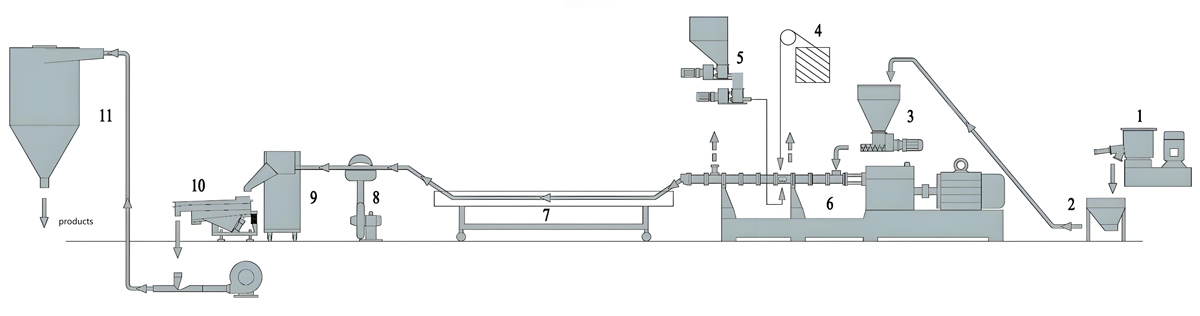
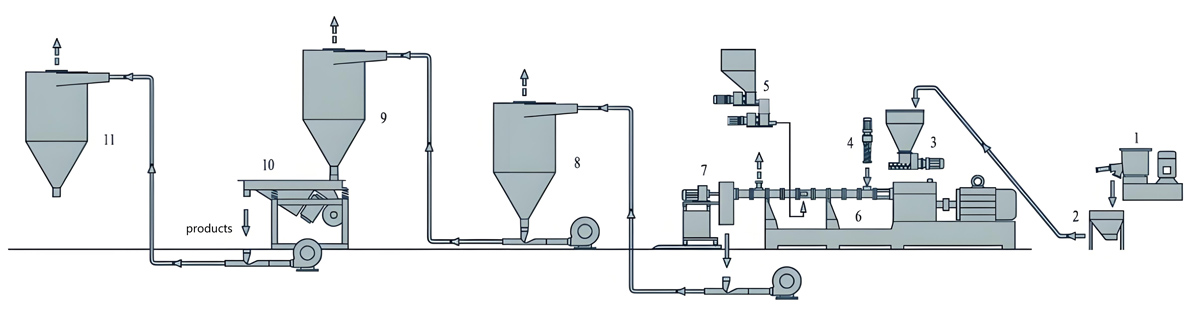
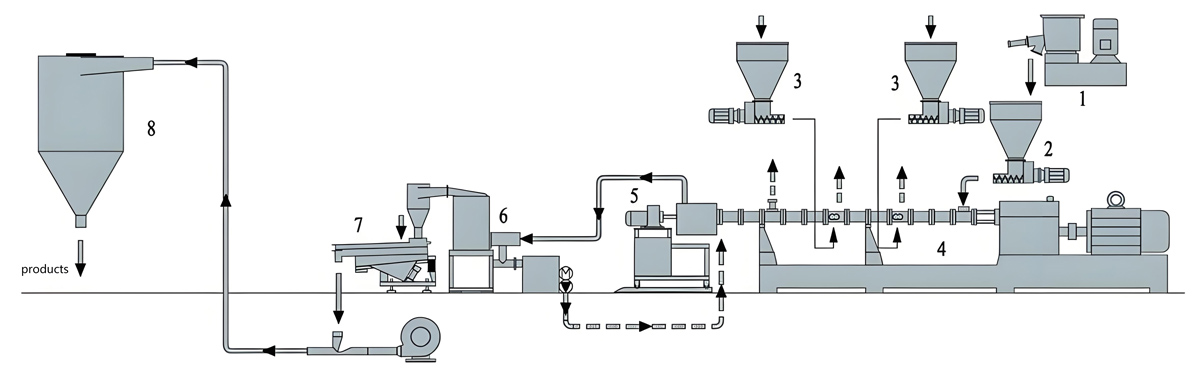
The production of freeze resistant masterbatch using counter rotating twin screw extrusion technology follows a carefully controlled process that transforms raw materials into a uniform, high performance concentrate. The process begins with material preparation and weighing according to predetermined formulation ratios, followed by feeding into the extruder where intense mixing and thermal processing occur under tightly controlled conditions.
Material Preparation and Preblending
Proper material preparation forms the foundation for consistent masterbatch quality. All raw materials including carrier resin, additives, and processing aids must be properly dried to remove moisture that could cause degradation during processing or create voids in the final product. Most carrier resins require drying at temperatures between eighty and one hundred degrees Celsius for four to six hours to achieve moisture levels below zero point two percent.
The preblending stage combines all formulation components in a predetermined sequence to ensure uniform distribution before extruder feeding. Typically, carrier resin and powdered additives are first combined in a high intensity mixer for three to five minutes before adding liquid processing aids. The preblended mixture should exhibit visual uniformity with no visible streaks or color variations. Improper preblending can lead to feeding inconsistencies and quality variations in the final masterbatch.
Extrusion and Compounding
The extrusion process in a counter rotating twin screw extruder subjects the preblended mixture to intense mechanical shearing and thermal energy that accomplishes two critical objectives. First, the additives must be uniformly distributed throughout the carrier resin, requiring excellent distributive mixing capability. Second, the additives must be adequately dispersed at the particle level, requiring sufficient dispersive mixing energy to break down agglomerates and achieve uniform incorporation.
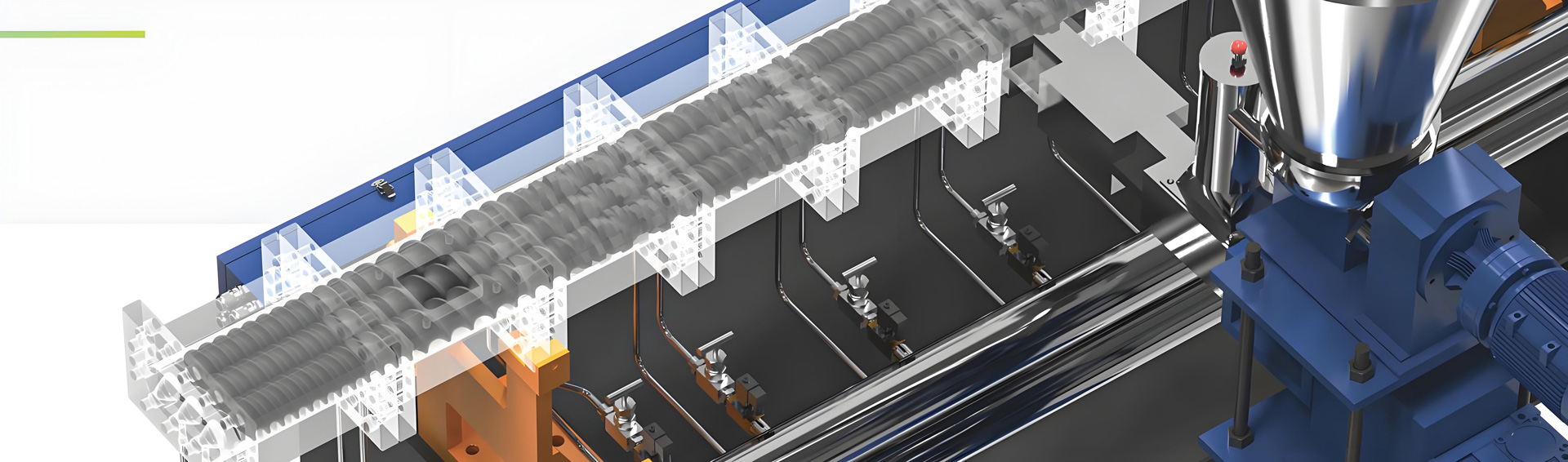
The counter rotating screw configuration provides self wiping action between the screw elements that prevents material buildup and ensures consistent feeding throughout the production run. The intermeshing zone creates high pressure buildup that forces material through narrow gaps, enhancing dispersion while the opposite rotation creates excellent top to bottom turnover for uniform distribution. Temperature zones along the extruder barrel are precisely controlled to maintain optimal viscosity for mixing while preventing thermal degradation of sensitive additives.
Granulation and Quality Control
Following extrusion, the molten compound passes through a die plate and is immediately cut into pellets by a rotating knife system. The underwater pelletizer or strand pelletizer system depends on the specific equipment configuration, but both methods produce uniformly sized pellets that cool rapidly in water or air. Proper pellet geometry ensures consistent bulk density and facilitates easy handling during subsequent blending with base polymers.
Quality control testing occurs throughout the production process with final product testing including melt flow index measurement, additive concentration verification, and performance testing on sample plaques. Color consistency, pellet size distribution, and moisture content are monitored as part of the quality assurance program. Masterbatch that fails to meet specifications is rejected and reprocessed or reformulated to meet quality requirements.
Production Equipment Introduction
The selection of appropriate production equipment significantly impacts the quality, consistency, and cost effectiveness of freeze resistant masterbatch manufacturing. Counter rotating twin screw extruders from Kerke represent industry leading equipment choices for this application, offering superior mixing performance, precise process control, and reliable long term operation. Understanding the key features and capabilities of production equipment helps manufacturers make informed equipment purchasing decisions.
Kerke KTE Series Counter Rotating Twin Screw Extruder
Kerke has established itself as a premier manufacturer of counter rotating twin screw extrusion equipment, with the KTE Series specifically designed for masterbatch and compound production applications. The KTE Series features modular barrel construction that allows flexible configuration of mixing elements, feeding zones, and venting sections to optimize performance for specific formulation requirements. Screw diameters range from twenty millimeters to one hundred millimeters, with length to diameter ratios typically ranging from thirty six to forty eight to one for optimal mixing residence time.
The KTE Series incorporates advanced drive systems with high efficiency gearboxes that deliver consistent torque throughout the operating speed range. Precise temperature control is achieved through independent zone heating and cooling systems that maintain temperature profiles within plus or minus one degree Celsius of set points. The control system features intuitive touchscreen interfaces with data logging capabilities that support quality documentation and process optimization efforts.
Key Features for Freeze Resistant Masterbatch Production
Production of freeze resistant masterbatch requires equipment features that optimize mixing efficiency while protecting heat sensitive additives. The counter rotating screw configuration provides inherent advantages including excellent distributive mixing, controlled residence time distribution, and gentle handling of shear sensitive ingredients. These characteristics make the KTE Series particularly suitable for processing the specialized additives used in freeze resistant formulations.
The modular screw element design allows customization of screw configurations to match specific formulation requirements. High shear kneading blocks can be positioned for maximum dispersion where needed, while conveying elements provide controlled feeding and pressure buildup. This flexibility enables optimization of processing conditions for different freeze resistant formulations without requiring equipment modifications or downtime for reconfiguration.
Supporting Equipment Requirements
Efficient freeze resistant masterbatch production requires supporting equipment including material handling systems, drying equipment, and downstream processing machinery. Gravimetric feeding systems provide precise ingredient addition rates that ensure consistent formulation compliance throughout production runs. Vacuum drying systems remove moisture from hygroscopic raw materials to prevent hydrolysis during processing and maintain product quality.
Downstream equipment including strand pelletizers or underwater pelletizers, centrifugal dryers, and screening systems complete the production line. Material handling systems including conveyors, silos, and packaging equipment enable efficient production flow and finished product handling. Integration of these supporting systems with the main extruder control system enables coordinated operation and automated production management.
Parameter Settings for Optimal Production
Proper parameter optimization ensures consistent quality and maximum production efficiency when manufacturing freeze resistant masterbatch. The primary parameters requiring attention include temperature profiles, screw speed, feed rates, and residence time distribution. Each parameter influences product quality characteristics and must be optimized for the specific formulation being processed.
Temperature Profile Configuration
The barrel temperature profile controls melt viscosity, mixing efficiency, and additive preservation during processing. For freeze resistant masterbatch formulations, temperatures should be maintained low enough to prevent thermal degradation of sensitive cryogenic additives while high enough to ensure complete melting and uniform mixing of the carrier resin. Typical temperature profiles start at relatively low temperatures in the feeding zone, typically one hundred sixty to one hundred eighty degrees Celsius, and increase to processing temperatures of one hundred ninety to two hundred twenty degrees Celsius in the mixing zones.
The die temperature must be carefully controlled to maintain optimal flow characteristics while preventing thermal degradation. Die temperatures typically range from one hundred eighty to two hundred ten degrees Celsius depending on the specific formulation and equipment configuration. Zoned heating allows fine tuning of the temperature profile to match formulation requirements and achieve optimal product quality.
Screw Speed and Throughput Optimization
Screw speed influences shear rate, mixing intensity, and residence time in the extrusion system. For freeze resistant masterbatch, screw speeds typically range from two hundred to four hundred rotations per minute depending on screw diameter and configuration. Higher screw speeds increase shear forces that enhance dispersion but may also increase mechanical stress on shear sensitive additives. The optimal speed balances mixing requirements against additive preservation.
Throughput rates must be synchronized with screw speed to maintain proper fill level in the screw channels and optimize mixing efficiency. Underfilled screws produce poor mixing while overfilled screws cause excessive pressure buildup and potential equipment damage. Typical throughput rates for counter rotating twin screw extruders range from five to fifty kilograms per hour for laboratory scale equipment up to several thousand kilograms per hour for production scale machines, with specific rates depending on screw diameter and configuration.
Residence Time and Mixing Parameters
Residence time distribution significantly impacts product quality in masterbatch production. Narrow residence time distribution ensures consistent processing history for all material particles, resulting in uniform product quality. The counter rotating twin screw configuration provides inherently narrow residence time distribution compared to other extruder types, making it ideal for sensitive masterbatch formulations.
Mixing parameters including specific energy input and mechanical intensity index help characterize the mixing performance. Specific energy input, measured in kilowatt hours per kilogram, indicates the mechanical energy delivered to the material during processing. For freeze resistant masterbatch, specific energy values typically range from zero point fifteen to zero point thirty kilowatt hours per kilogram depending on formulation complexity and required mixing intensity.
Equipment Price
Investment in counter rotating twin screw extrusion equipment represents a significant capital commitment for masterbatch manufacturers. Understanding pricing structures and value considerations helps manufacturers make informed equipment selection decisions that balance initial investment against long term production economics and product quality capabilities.
Kerke KTE Series Pricing Overview
Kerke KTE Series counter rotating twin screw extruders are available in various sizes to accommodate different production volume requirements. Laboratory scale equipment with twenty to thirty millimeter screw diameters typically ranges from fifteen thousand to forty thousand dollars depending on configuration and included features. Pilot production equipment with forty to sixty millimeter screw diameters generally ranges from fifty thousand to one hundred twenty thousand dollars.
Production scale KTE Series extruders with seventy to one hundred millimeter screw diameters typically range from one hundred fifty thousand to four hundred thousand dollars depending on capacity, drive power, and control system sophistication. Complete turnkey production lines including material handling, drying systems, pelletizing equipment, and quality control instrumentation add additional investment requirements. However, the superior mixing performance, reliability, and technical support from Kerke justify the investment for serious masterbatch producers.
Value Considerations Beyond Purchase Price
While equipment purchase price represents an important consideration, total cost of ownership analysis should include operating costs, maintenance requirements, production capacity, and product quality capabilities. Higher quality equipment from established manufacturers like Kerke typically offers superior energy efficiency, reduced maintenance requirements, and extended service life that lower long term operating costs. Additionally, consistent product quality reduces waste and improves customer satisfaction.
Technical support availability, spare parts accessibility, and equipment upgrade options represent important value considerations when selecting equipment suppliers. Kerke provides comprehensive technical documentation, operator training, and responsive customer support that helps manufacturers maximize equipment utilization and product quality. These support services contribute significantly to the overall value proposition beyond the initial equipment purchase price.
Production Problems Causes Solutions and Prevention
Manufacturing freeze resistant masterbatch presents specific challenges that can impact product quality and production efficiency. Understanding common problems, their root causes, and appropriate solutions enables manufacturers to maintain consistent quality and optimize production performance. Proactive prevention strategies reduce problem occurrence and improve overall production economics.
Color Variation and Inconsistency Issues
Problem description involves the masterbatch exhibiting uneven color or appearance compared to established standards or between different production batches. This variation manifests as visible streaks, inconsistent pigmentation, or noticeable differences in shade intensity across the production output.
Root cause analysis typically reveals feeding inconsistencies where ingredient addition rates fluctuate during production. Preblending deficiencies can result in non uniform distribution of pigments and additives before entering the extruder. Inadequate mixing due to worn screw elements, incorrect screw configuration, or improper temperature profiles prevents uniform distribution during processing. Material moisture can cause localized color changes due to hydrolysis or steam generation during extrusion.
Solution implementation requires addressing the specific root cause identified through systematic troubleshooting. Gravimetric feeding systems should be calibrated and verified to ensure accurate ingredient addition rates. Preblending procedures should be reviewed and optimized to achieve proper component distribution. Screw elements should be inspected for wear and replaced as needed to restore mixing performance. Temperature profiles should be adjusted to ensure proper melting and viscosity for optimal mixing.
Prevention strategies include implementing statistical process control monitoring to detect trends before they cause quality problems. Regular calibration of feeding equipment, scheduled screw element inspection, and documented standard operating procedures reduce problem occurrence. Quality control sampling during production runs enables early detection of emerging variations. Operator training ensures consistent execution of established procedures.
Additive Degradation and Performance Loss
Problem description manifests as freeze resistant masterbatch that fails to provide adequate cold temperature protection in finished products. Testing reveals that performance characteristics fall below specification requirements despite proper formulation and loading procedures.
Root cause analysis points to thermal degradation of freeze resistant additives during extrusion processing. Excessive temperatures, extended residence times, or high shear forces can break down sensitive additive molecules and reduce their effectiveness. Contamination from previous production runs or residual materials in the equipment can interfere with additive function. Incompatible formulation components can cause chemical reactions that degrade additive performance.
Solution implementation focuses on reducing thermal and mechanical stress on sensitive additives during processing. Temperature profiles should be reduced to minimum acceptable levels while maintaining proper melt conditions. Screw speed reduction decreases shear stress and residence time. Modified screw configurations with less aggressive mixing elements protect shear sensitive additives. Equipment cleaning procedures should be enhanced to prevent contamination from previous production runs.
Prevention strategies involve careful selection of processing conditions optimized for additive preservation. New formulations should undergo small scale testing to establish acceptable processing windows before production scale runs. Equipment dedicated to specific masterbatch types prevents cross contamination issues. Temperature monitoring throughout the process enables early detection of potentially damaging conditions. Documentation of successful processing parameters provides reference for future production runs.
Pellet Quality and Handling Problems
Problem description involves physical characteristics of the finished pellets that cause difficulties in handling, storage, or subsequent processing by customers. Issues include irregular pellet size, excessive dust generation, pellet agglomeration, or moisture retention in the finished product.
Root cause analysis identifies equipment settings and environmental conditions as primary causes. Knife blade wear or improper knife pressure causes irregular pellet cutting and size variation. Inadequate drying or cooling results in moisture retention and potential agglomeration during storage. Dust generation results from brittleness due to excessive processing temperatures or from worn equipment components generating fines.
Solution implementation requires equipment adjustment and environmental control. Pelletizer knife blades should be inspected regularly and replaced when wear exceeds specifications. Cooling water temperature and flow rates should be adjusted to achieve proper pellet cooling without thermal shock. Drying conditions should be verified to ensure moisture removal below specified levels. Material handling equipment should be inspected for worn components that generate dust or cause pellet damage.
Prevention strategies include establishing regular maintenance schedules for downstream equipment. Environmental conditions in production areas should be controlled to prevent moisture reabsorption after drying. Quality control specifications for pellet size distribution and dust content should be established and monitored. Customer feedback on handling performance should be collected and analyzed to identify emerging issues.
Maintenance and Care
Regular maintenance of counter rotating twin screw extrusion equipment ensures consistent product quality, maximum equipment uptime, and extended service life. A comprehensive maintenance program addresses both scheduled preventive maintenance and condition based maintenance responding to equipment monitoring data. Proper care of the extrusion system and supporting equipment protects the significant capital investment while maintaining production capability.
Daily and Weekly Maintenance Procedures
Daily maintenance activities focus on equipment condition verification and cleaning procedures. Production operators should inspect feeding systems for proper operation, verify temperature controller accuracy, and check for unusual sounds or vibrations indicating potential problems. Screen changers and die plates should be cleaned between production runs to prevent material buildup and ensure consistent flow.
Weekly maintenance includes more thorough inspection and cleaning activities. Barrel temperature uniformity should be verified using calibrated instruments. Screw clearance should be checked and recorded for trend analysis. Gearbox oil levels and condition should be inspected with oil analysis performed periodically. Cooling systems should be cleaned and flow rates verified. Documentation of all maintenance activities supports quality assurance requirements and equipment lifecycle management.
Monthly and Quarterly Maintenance Schedule
Monthly maintenance activities address components requiring less frequent attention while ensuring equipment reliability. Screw element torque transmit bearings should be inspected for wear and replaced if clearance exceeds specifications. Barrel liner wear should be measured and recorded to project service life and plan replacements. Drive system components including couplings, belts, and motors should be inspected for proper operation and alignment.
Quarterly maintenance includes comprehensive system evaluation and calibration. Temperature controllers should be calibrated against traceable standards to ensure accuracy. Motor current draw should be measured and compared to baseline values to detect developing problems. Hydraulic systems if present should have oil changed and filters replaced. Complete equipment cleaning including interior barrel surfaces removes accumulated deposits that could affect heat transfer and product quality.
Annual and Long Term Maintenance Planning
Annual maintenance encompasses comprehensive equipment evaluation and major component service. Extruder barrel and screw elements should be removed for complete inspection and measurement. Worn components should be replaced based on measured clearances and condition assessment. Gearbox oil should be completely changed with new oil analysis performed to establish new baseline values.
Long term maintenance planning addresses major refurbishment and upgrade requirements. Equipment lifecycle analysis based on operating history supports capital planning for replacement or major overhaul. Technological upgrades to control systems, monitoring capabilities, or process optimization features may be identified during long term planning reviews. Spare parts inventory should be reviewed based on equipment condition trends and lead times for critical components.
FAQ
What temperature range can freeze resistant masterbatch protect against?
Freeze resistant masterbatch formulations vary in their protection capabilities depending on formulation concentration and specific additive package. Standard formulations typically provide reliable protection to minus twenty degrees Celsius, premium formulations extend protection to minus forty degrees Celsius, and specialized formulations can achieve protection to minus sixty degrees Celsius or lower depending on application requirements.
How much freeze resistant masterbatch should be added to the base polymer?
Typical loading rates range from two to seven percent by weight depending on the formulation grade, base polymer compatibility, and required performance level. Specific loading recommendations should be obtained from the masterbatch supplier based on your exact formulation and application requirements. Testing with actual production materials is recommended to verify performance before full scale production.
Can freeze resistant masterbatch be combined with other additive masterbatches?
Many applications require multiple additive systems that can be combined in the base polymer. Compatibility between different masterbatch systems must be verified through testing as some additive combinations may interact negatively. Concentration levels of combined masterbatches should be managed to ensure total additive loading remains within acceptable limits for the base polymer system.
What storage conditions are recommended for freeze resistant masterbatch?
Freeze resistant masterbatch should be stored in a clean, dry environment with temperature maintained between fifteen and thirty degrees Celsius. Exposure to direct sunlight, moisture, or contamination should be avoided. Most formulations remain stable for twelve to twenty four months when properly stored, though extended storage should be verified through testing. Original packaging should remain sealed until the material is used in production.
How does screw configuration affect freeze resistant masterbatch quality?
Screw configuration determines mixing intensity, residence time, and shear stress experienced by the formulation during processing. Optimized configurations balance adequate dispersion of additives against preservation of heat sensitive cryogenic additives. The specific optimal configuration depends on formulation composition and should be determined through testing and process optimization.
What quality tests should be performed on freeze resistant masterbatch?
Standard quality testing includes melt flow index measurement, color consistency evaluation, additive concentration verification, and moisture content determination. Performance testing should include actual freeze resistance testing on sample plaques or parts manufactured with the masterbatch. Regular sampling and testing throughout production runs ensures consistent quality delivery to customers.
Conclusion
Freeze resistant masterbatch production using counter rotating twin screw extrusion technology enables manufacturers to create high performance additives that protect plastic products from cold temperature damage. The superior mixing capabilities of counter rotating twin screw equipment, exemplified by the Kerke KTE Series, provide the processing precision required to incorporate sensitive cryogenic additives into uniform, effective masterbatch concentrates. Success in this specialized market segment requires attention to formulation optimization, process parameter control, quality assurance, and ongoing equipment maintenance.
The formulation approaches outlined in this comprehensive guide provide starting points for developing freeze resistant masterbatch products serving various application requirements. Standard and premium grade formulations address most market needs while application specific formulations extend capabilities for specialized requirements. Process parameter optimization ensures consistent quality while protecting sensitive additive systems from thermal and mechanical degradation during processing.
Investment in quality equipment such as Kerke KTE Series extruders provides the foundation for reliable, efficient production of freeze resistant masterbatch meeting demanding performance specifications. Combined with proper maintenance practices and responsive technical support, this equipment investment delivers long term value through consistent product quality and optimized production economics. Manufacturers committed to excellence in freeze resistant masterbatch production will find counter rotating twin screw extrusion technology provides the capabilities needed to serve demanding customers in cold climate applications worldwide.