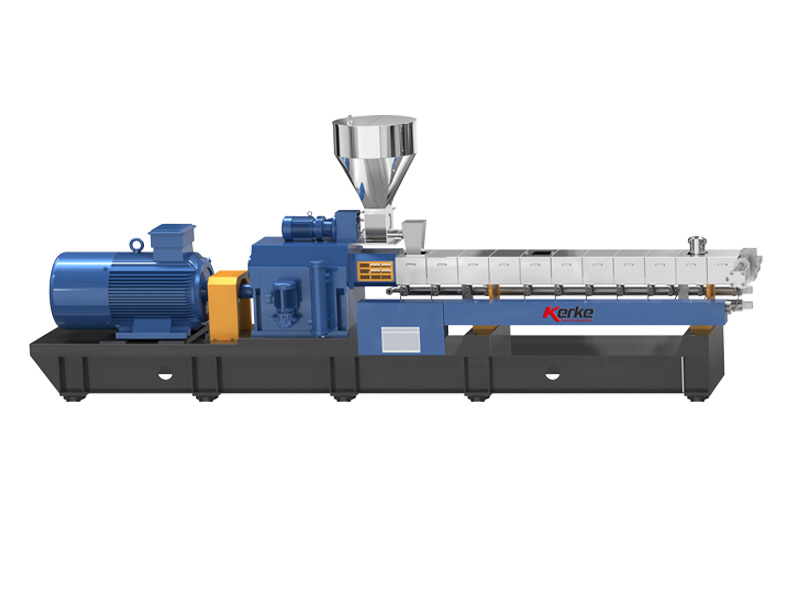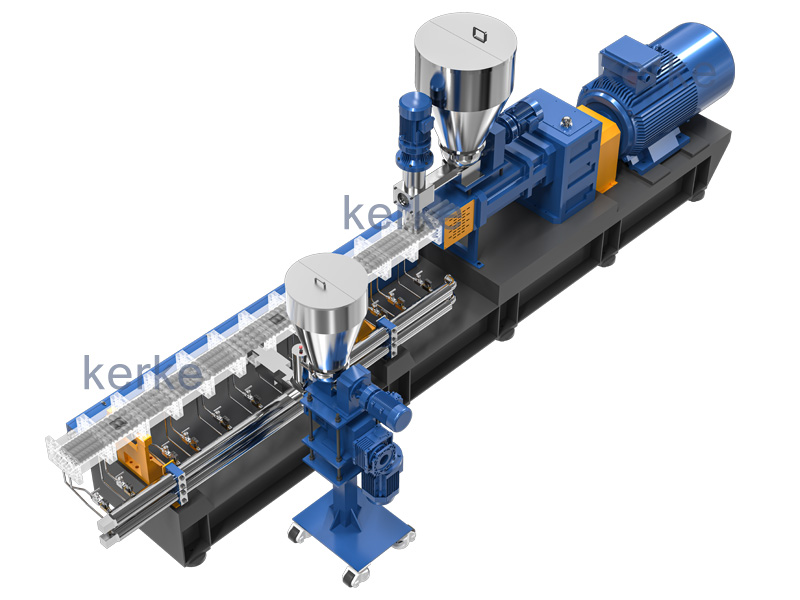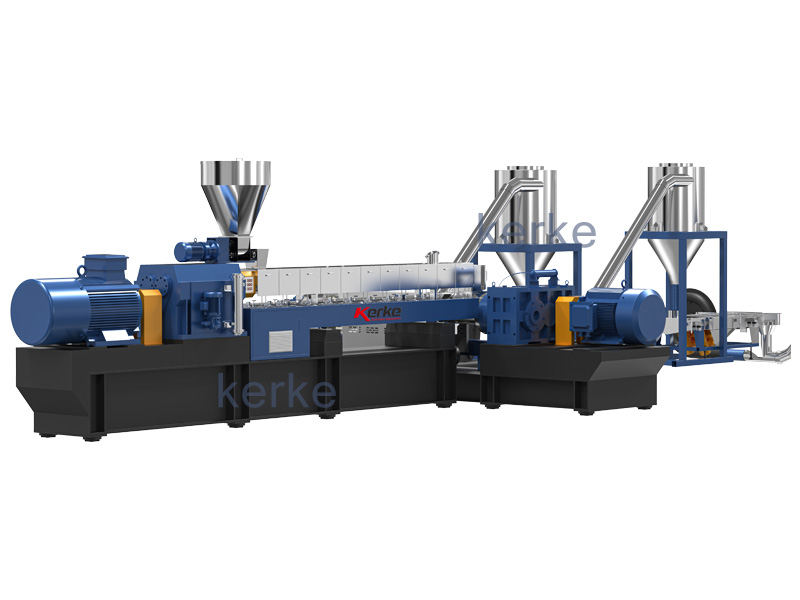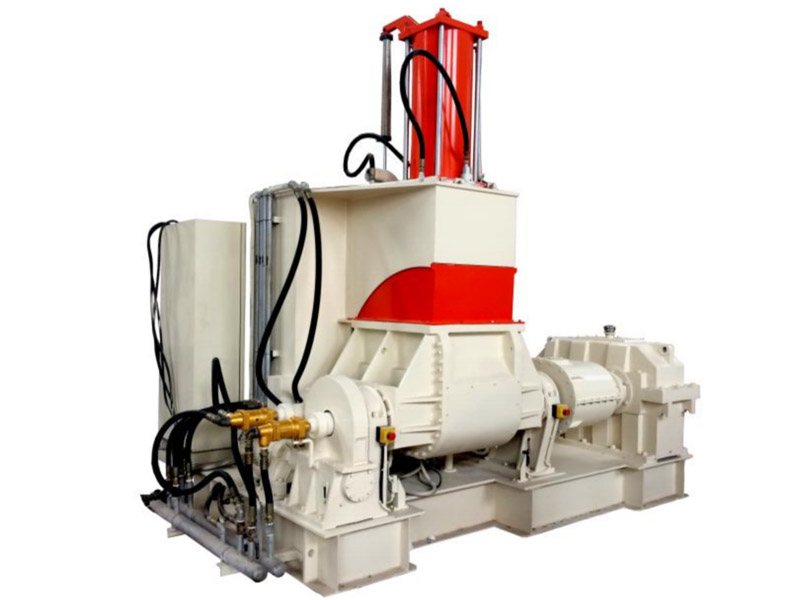
Introduction to Co-Rotating Twin Screw Extruder Technology
Co-rotating twin screw extruders represent the pinnacle of plastic compounding technology, offering unparalleled advantages over single screw and counter-rotating designs for demanding polymer processing applications. These advanced machines feature two screws rotating in the same direction, creating intensive mixing zones and exceptional material transport capabilities that make them ideal for compounding, masterbatch production, and polymer modification processes. The co-rotating design has revolutionized the plastics industry by enabling consistent high-quality output across diverse material formulations while maintaining operational efficiency and product reliability.
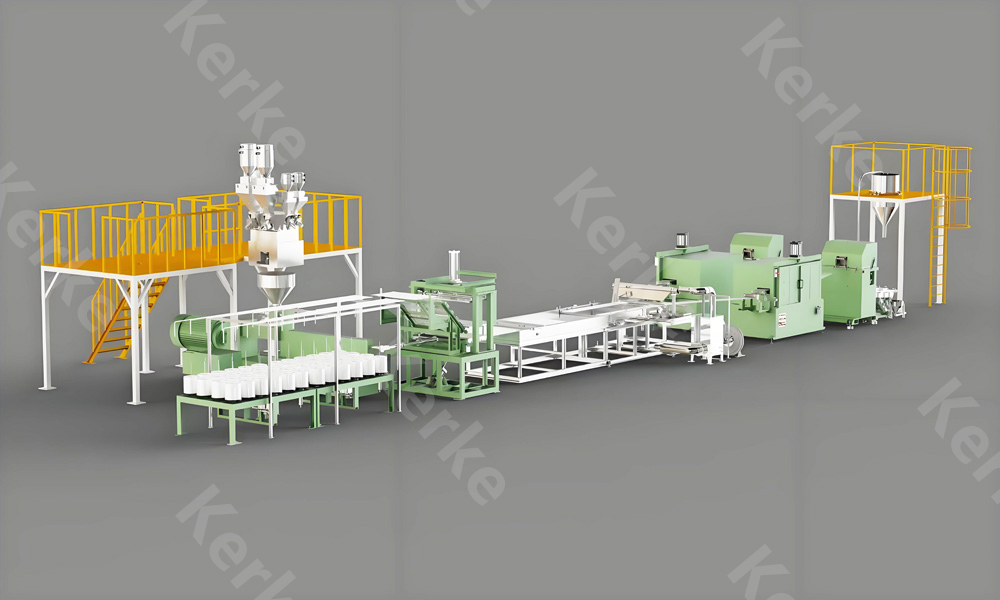
Nanjing Kerke Extrusion Equipment Co., Ltd has established itself as a leading manufacturer specializing in modular co-rotating parallel twin screw pelletizing lines and their key components. With over 13 years of dedicated focus on parallel co-rotating compounding extruder technology, Kerke has developed the KTE series of twin screw extruders that embody the most advanced features and capabilities available in the market. The company commitment to innovation and quality has resulted in equipment that serves customers in over 100 countries, demonstrating global acceptance of Kerke co-rotating extruder performance and reliability.
Superior Mixing Capability
The most significant advantage of co-rotating twin screw extruders lies in their exceptional mixing performance, which far exceeds single screw alternatives. The intermeshing screw design creates multiple high-intensity mixing zones where material experiences distributive and dispersive mixing simultaneously. This dual-action mixing ensures uniform distribution of additives, fillers, pigments, and other components throughout the polymer matrix, achieving homogeneity levels unattainable with simpler extruder designs.
Distributive Mixing Excellence
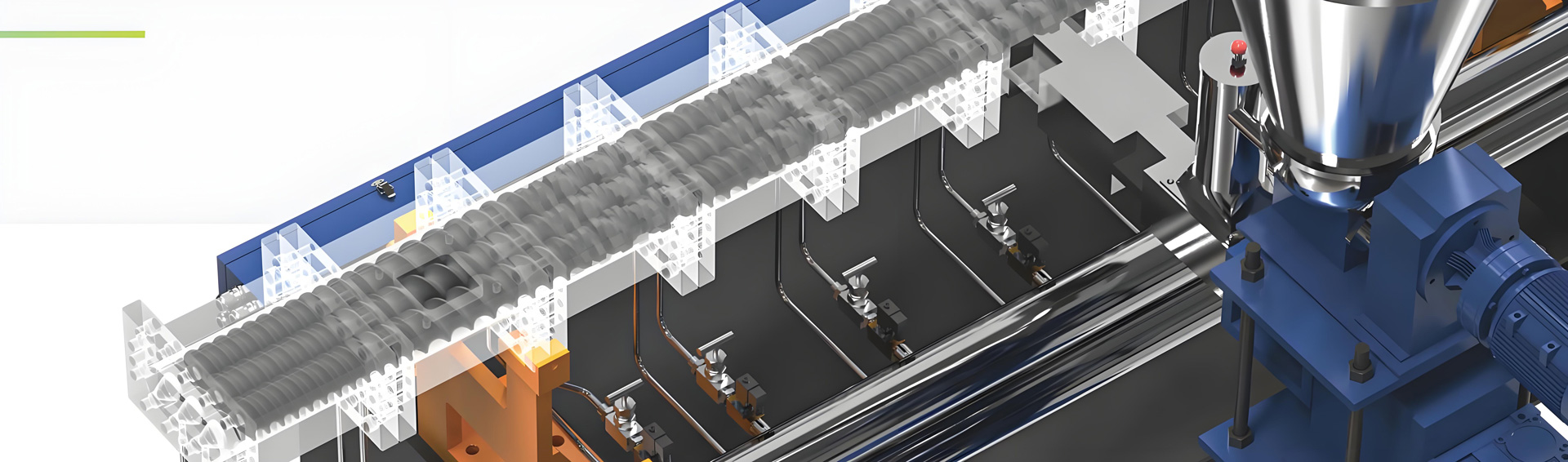
Distributive mixing in co-rotating twin screw extruders occurs through complex material flow patterns created by the screw geometry and rotation. As material progresses through the barrel, it experiences multiple divisions, recombinations, and reorientations that systematically distribute components throughout the melt. The computer-aided designed screw assembly, featuring kneading blocks with excellent self-cleaning function and good interchangeability, enables precise control over distributive mixing intensity. Kerke KTE series screw configurations can be optimized through appropriate and reasonable combination of elements to achieve specific distributive mixing requirements for different formulations.
Dispersive Mixing Superiority
Dispersive mixing in co-rotating twin screw extruders addresses one of the most challenging aspects of compounding: breaking down agglomerates of fillers, pigments, and additives into individual particles. The intermeshing screw design creates localized high-shear zones that apply sufficient energy to break apart particle agglomerates while the positive displacement action prevents particle damage from excessive shear. This balance between sufficient dispersion energy and gentle particle handling enables production of masterbatches with exceptional color strength, filler dispersion, and additive performance.
Self-Cleaning Properties
The self-wiping characteristic of co-rotating twin screw extruders represents a significant advantage for compounding operations requiring frequent product changes. As the intermeshing screws rotate, each screw continuously cleans the mating screw surface, preventing material buildup and stagnation that could lead to degradation or contamination. This self-cleaning action enables fast and efficient color changes, reduces cleaning time between product changes, and minimizes cross-contamination risks. The excellent self-cleaning function of Kerke KTE series screw assemblies significantly reduces downtime during product transitions, improving overall production efficiency.
Enhanced Production Efficiency
Production efficiency represents a critical factor in successful compounding operations, and co-rotating twin screw extruders offer multiple advantages that directly impact productivity, throughput, and operational costs. The design characteristics of these extruders enable higher production rates, faster changeovers, and more consistent operation compared to alternative technologies.
Higher Throughput Capabilities
Co-rotating twin screw extruders achieve significantly higher throughput rates than single screw designs of equivalent size, with typical productivity improvements of 30-50% for many applications. The positive displacement action of co-rotating screws provides superior material transport efficiency, while the enhanced mixing capability enables faster processing without compromising quality. Kerke KTE series twin screw extruders demonstrate this advantage through their comprehensive output range, with models from KTE-20 laboratory units producing 2-15 kg/h up to KTE-95D production machines achieving 1000-2000 kg/h output. The high-speed D series models, capable of 800 rpm maximum speed, provide additional productivity benefits for applications requiring maximum throughput.
Faster Color and Grade Changes
The self-cleaning characteristics and modular design of co-rotating twin screw extruders dramatically reduce product changeover times. Unlike single screw extruders that may require extensive cleaning and purging between different formulations, co-rotating designs can often achieve color changes in 10-30 minutes depending on formulation similarity. This reduction in changeover time directly translates to increased production availability and reduced material waste during transitions. Kerke KTE series extruders incorporate modular barrel and screw designs that facilitate rapid configuration changes, further supporting efficient production transitions between different products.
Continuous Operation Reliability
Co-rotating twin screw extruders demonstrate exceptional operational reliability for continuous 24-hour production schedules. The positive displacement action provides consistent material transport without the risk of bridging or stalling common in single screw designs processing filled or viscous materials. The modular screw configuration enables stable pressure development and consistent output quality over extended production runs. Kerke twin screw extruders are designed to ensure stable production 24-hour operation, with robust construction and quality components supporting continuous duty cycles without compromising performance or product quality.
Superior Material Processing Flexibility
Material versatility represents a key advantage of co-rotating twin screw extruders, enabling manufacturers to process a wide range of polymers and formulations with minimal equipment modification. This flexibility reduces capital investment requirements and enables production of diverse product portfolios on the same equipment platform.
Broad Material Compatibility
Co-rotating twin screw extruders successfully process virtually all thermoplastic materials, from commodity polymers including polyethylene, polypropylene, and polystyrene to engineering plastics such as polycarbonate, nylon, and polyamide. The ability to process such diverse materials stems from the adjustable processing parameters including screw speed, temperature profile, and screw configuration. Kerke KTE series extruders demonstrate exceptional material versatility, with applications spanning color masterbatch, filler masterbatch, engineering plastics, food industry, and pharmaceutical industry requirements.
High Filler Loading Capability
The enhanced mixing capability of co-rotating twin screw extruders enables processing of formulations with very high filler loadings that would challenge single screw designs. Applications including calcium carbonate filler masterbatch with 60-80% filler content, glass fiber reinforced compounds with 30-50% fiber loading, and mineral filled formulations with high solid content are successfully processed with excellent dispersion and consistent quality. The intensive mixing zones and shear control provided by co-rotating designs enable wetting and dispersion of high filler concentrations without agglomeration or poor dispersion issues.
Heat-Sensitive Material Processing
While co-rotating twin screw extruders generate considerable shear energy, the modular barrel design with multiple heating zones and cooling capability enables precise temperature control essential for processing heat-sensitive materials. The ability to establish appropriate temperature profiles, combined with adjustable screw speed and configuration, allows successful processing of temperature-sensitive polymers and additives. Kerke KTE series extruders feature temperature control systems with multiple zones enabling precise management of thermal profiles for sensitive materials while maintaining the mixing advantages of co-rotating design.
Cost Efficiency and Return on Investment
Economic considerations drive equipment selection decisions, and co-rotating twin screw extruders offer compelling cost advantages through higher productivity, reduced waste, and lower operational costs. While initial investment may be higher than single screw alternatives, the total cost of ownership often proves lower when considering production efficiency and quality benefits.
Production Cost Reduction
The higher throughput capabilities of co-rotating twin screw extruders directly reduce production costs per kilogram of output. For example, a KTE-75D twin screw extruder with 500-1000 kg/h capacity can replace multiple smaller single screw units, reducing labor, energy, and facility costs per unit of production. The energy efficiency of Kerke twin screw extruders, combined with higher output, typically achieves 20-30% lower energy consumption per kilogram compared to single screw alternatives. Price analysis shows that while a KTE-75D extruder may represent an investment of $280,000-320,000, the production cost savings justify the investment through reduced operating costs and increased productivity.
Material Waste Reduction
The superior mixing and consistent processing characteristics of co-rotating twin screw extruders reduce material waste during production startup, grade changes, and operation. Fast changeover times minimize purge material requirements, while consistent quality reduces off-spec production. Typical waste reduction of 2-5% compared to single screw designs represents significant cost savings for materials including pigments, additives, and engineering polymers. Kerke KTE series extruders demonstrate these waste reduction benefits through efficient processing and quick changeover capabilities, directly impacting production economics.
Quality-Related Cost Savings
The superior dispersion and mixing quality achieved with co-rotating twin screw extruders reduce costs associated with quality issues and customer complaints. Consistent color masterbatch quality eliminates shade variation problems that can result in product returns and reprocessing expenses. Uniform filler dispersion prevents property variations that could compromise final product performance. Kerke twin screw extruders produce masterbatches with consistent quality that reduces downstream quality-related costs and customer support requirements, providing additional economic benefits beyond direct production savings.
Kerke KTE Series Technical Advantages
Kerke KTE series twin screw extruders incorporate advanced design features and technological innovations that enhance the inherent advantages of co-rotating twin screw technology. These technical improvements provide additional benefits in mixing quality, operational efficiency, and equipment reliability.
Modular Building Block Design
The Kerke KTE series barrel and screw system is designed and manufactured based on the building block principle, enabling modular configuration optimized for specific processing requirements. According to processing material system and process formula requirements, the length diameter ratio, barrel structure, screw arrangement, exhaust quantity and position, feeding mode, and electrical control mode can all be optimized and reasonably configured. This modular design realizes multifunction and multi-purpose processing capabilities to adapt to various polymer materials. The building block concept provides exceptional flexibility, enabling equipment reconfiguration as production requirements change without complete equipment replacement.
High Torque and Speed Capabilities
Kerke KTE series includes multiple design series optimized for different application requirements. The A series provides general purpose performance with maximum speeds up to 500 rpm and torque levels suitable for standard applications. The B series represents high torque configuration with speeds up to 600 rpm and increased torque capacity for demanding applications. The D series combines high torque capability with high-speed operation up to 800 rpm for applications requiring maximum throughput. For example, KTE-36D offers torque of 2X352 Nm at 800 rpm, while KTE-75D provides 2X2100 Nm torque capacity. This range of options enables selection of appropriate performance characteristics for specific processing requirements.
Advanced Control System Integration
The operating system of Kerke KTE series adopts PLC touch screen operating systems that provide plug and play functionality, easy operation, and improved system reliability and stability. Siemens PLC systems, widely used in industrial automation fields, provide proven reliability and advanced control capabilities. The control systems enable precise management of temperature profiles, screw speeds, feeding systems, and auxiliary equipment integration. Recipe storage and parameter management facilitate rapid product changes while maintaining process consistency. The advanced control capabilities enhance the mixing and quality advantages of co-rotating screw design through precise parameter management.
Application-Specific Advantages
Different compounding applications derive specific benefits from co-rotating twin screw extruder technology. Understanding these application-specific advantages helps manufacturers select appropriate equipment configurations and optimize processing parameters for their specific requirements.
Color Masterbatch Production Advantages
Color masterbatch production demands exceptional pigment dispersion, color consistency, and efficient color changeover capabilities. Co-rotating twin screw extruders excel in all these requirements, providing intense distributive and dispersive mixing that achieves uniform pigment distribution throughout the carrier resin. The self-cleaning screw design enables fast color changes without cross-contamination, supporting production of multiple color masterbatches on the same equipment. Kerke twin screw extruders are particularly suited for color masterbatch production, with models including KTE-36B producing 20-100 kg/h, KTE-50B with 80-200 kg/h capacity, and KTE-65B delivering 200-450 kg/h output. Price analysis shows investment in appropriate KTE series equipment typically ranges from $180,000 for smaller models to $350,000 for larger units, providing excellent value for color masterbatch production.
Filler Masterbatch Production Benefits
Filler masterbatch production, particularly with high loadings of calcium carbonate, talc, or other mineral fillers, requires powerful mixing capability to achieve uniform dispersion while maintaining appropriate carrier wetting. Co-rotating twin screw extruders provide the combination of intensive mixing and positive displacement necessary for successful high-filler masterbatch production. The modular screw configuration enables optimization for specific filler types and loading levels, while the robust drive systems handle the increased viscosity typical of filled compounds. Kerke KTE series extruders demonstrate exceptional performance in filler masterbatch applications, with specific screw configurations available for processing formulations with filler content up to 80% by weight. Investment in KTE-75D or KTE-95D models, priced between $280,000-450,000, provides the mixing power and throughput capacity required for efficient filler masterbatch production.
Engineering Plastic Compounding Advantages
Engineering plastic compounding applications including glass fiber reinforced materials, flame retardant compounds, and performance polymer blends require precise control over mixing intensity and thermal history. Co-rotating twin screw extruders provide the necessary control through adjustable screw configuration, multiple temperature zones, and variable speed capability. The ability to optimize mixing intensity prevents fiber damage in reinforced compounds, while precise temperature management prevents degradation of heat-sensitive engineering polymers. Kerke KTE series extruders are widely used for engineering plastic compounding, with models such as KTE-52D producing 100-400 kg/h and KTE-75B delivering 300-800 kg/h providing appropriate performance for these demanding applications. Investment in KTE series equipment for engineering plastic compounding typically ranges from $220,000 to $380,000 depending on size and configuration.
Quality and Consistency Advantages
Product quality and consistency represent critical success factors in compounding operations, and co-rotating twin screw extruders provide multiple advantages that ensure superior and consistent output quality. These quality advantages translate directly to customer satisfaction, reduced quality issues, and enhanced market competitiveness.
Exceptional Dispersion Quality
The primary quality advantage of co-rotating twin screw extruders is their ability to achieve superior dispersion of fillers, pigments, and additives throughout the polymer matrix. The combination of distributive mixing ensuring uniform component distribution and dispersive mixing breaking down agglomerates creates masterbatches and compounds with exceptional homogeneity. Kerke KTE series screw configurations can be optimized for specific dispersion requirements, with different kneading block arrangements and shear zone designs available to address particular material characteristics. The resulting dispersion quality enables production of masterbatches with maximum color strength, optimal filler dispersion, and consistent additive performance.
Batch-to-Batch Consistency
Consistent product quality across production batches represents a critical requirement for customer satisfaction and downstream processing reliability. Co-rotating twin screw extruders achieve exceptional batch-to-batch consistency through stable material transport, consistent thermal profiles, and precise mixing energy input. The modular control systems with recipe storage and automatic parameter management ensure consistent processing conditions from batch to batch. Kerke KTE series extruders with PLC control systems demonstrate this consistency advantage, maintaining product specifications within tight tolerances across extended production runs. Price analysis shows that investment in quality equipment with consistency capabilities provides returns through reduced quality complaints and enhanced customer loyalty.
Color and Appearance Uniformity
Color masterbatch production demands exceptional color uniformity and consistency, and co-rotating twin screw extruders excel in achieving these requirements. The intensive mixing ensures uniform pigment distribution, while the self-cleaning design prevents color carryover between batches. The result is masterbatch with consistent color strength, shade accuracy, and appearance quality. Kerke twin screw extruders are particularly effective for color masterbatch production, with models optimized for color applications demonstrating exceptional color consistency and fast changeover capabilities. Investment in KTE series equipment for color masterbatch typically ranges from $180,000 to $320,000 depending on production capacity and configuration.
Operational and Maintenance Advantages
Operational efficiency and maintenance considerations significantly impact overall equipment value, and co-rotating twin screw extruders offer advantages in both areas. These advantages contribute to reduced operational complexity, lower maintenance requirements, and extended equipment service life.
Reduced Operational Complexity
The self-cleaning characteristics and stable material transport of co-rotating twin screw extruders reduce operational complexity compared to single screw designs. The positive displacement action eliminates material bridging and feeding problems common in single screw extruders processing filled or high-viscosity materials. This reduced operational complexity simplifies operator training requirements and reduces the need for constant monitoring and intervention during operation. Kerke KTE series extruders with advanced control systems and user-friendly interfaces further reduce operational complexity, enabling efficient operation with minimal specialized training. Price analysis shows that operational complexity reduction provides significant labor cost savings over equipment lifetime.
Extended Component Life
The self-wiping screw design of co-rotating twin screw extruders provides reduced wear and extended component life compared to single screw designs where material can accumulate and cause localized wear. The continuous cleaning action reduces abrasive material buildup and distributes wear evenly across screw and barrel surfaces. Kerke KTE series extruders feature high-quality materials and construction that further enhance component life, with screws and barrels manufactured from wear-resistant alloys for extended service in demanding applications. Investment in quality KTE series equipment typically provides 15-20 year service life with proper maintenance, providing excellent return on investment.
Maintenance Advantages
Co-rotating twin screw extruders offer maintenance advantages through modular component design and accessibility. The building block principle enables replacement of individual barrel sections or screw elements rather than complete assemblies, reducing maintenance costs and downtime. The robust construction and quality components of Kerke KTE series extruders further reduce maintenance requirements, with proven reliability in continuous operation applications. Preventive maintenance programs for KTE series equipment typically require 40-60 hours annually, representing manageable maintenance requirements for high-output equipment. Price analysis shows that while KTE series equipment requires appropriate investment, the reduced maintenance requirements and extended service life provide favorable total cost of ownership compared to lower-quality alternatives.
Environmental and Sustainability Benefits
Environmental considerations and sustainability objectives increasingly influence equipment selection decisions. Co-rotating twin screw extruders offer multiple environmental advantages through energy efficiency, material waste reduction, and compatibility with recycled materials.
Energy Efficiency Advantages
The higher throughput and efficient processing characteristics of co-rotating twin screw extruders contribute to reduced energy consumption per unit of production. The optimized screw geometry and efficient material transport reduce energy requirements compared to less efficient designs. Kerke KTE series extruders incorporate energy-efficient motor and drive systems, with variable frequency drives enabling speed optimization based on processing requirements. Energy consumption analysis shows that KTE series twin screw extruders typically consume 15-25% less energy per kilogram of output compared to single screw alternatives. Price analysis incorporating energy cost savings over equipment lifetime demonstrates significant economic benefits from energy efficiency advantages.
Reduced Material Waste
The processing advantages of co-rotating twin screw extruders reduce material waste generation during production. Fast changeover capabilities minimize purge material requirements between products. Consistent quality reduces off-spec production requiring reprocessing or disposal. Efficient material transport eliminates material stagnation and degradation that could result in waste generation. Kerke KTE series extruders demonstrate these waste reduction benefits, with typical material waste levels below 2% of total input for well-optimized processes. Reduced material waste provides both economic and environmental benefits, lowering raw material costs while supporting sustainability objectives.
Recycled Material Processing Capability
Co-rotating twin screw extruders excel at processing recycled materials, supporting circular economy initiatives and sustainability goals. The intense mixing capability enables proper dispersion of recycled polymer blends, while the robust construction handles potential contaminants and variable material characteristics. Kerke offers specific SE/KTE series double stage compounding systems designed for plastic recycling applications, combining single and twin screw technologies for optimal processing of recycled materials. Investment in Kerke recycling equipment typically ranges from $180,000 to $450,000 depending on capacity and configuration, providing effective solutions for recycled material processing.
Investment and Return on Investment Analysis
Investment decisions for compounding equipment require comprehensive analysis of initial costs, operating costs, productivity improvements, and quality benefits. Co-rotating twin screw extruders typically require higher initial investment than single screw alternatives but provide compelling returns through multiple benefit areas.
Equipment Cost Comparison
Kerke KTE series twin screw extruder pricing reflects the advanced technology and performance capabilities provided by co-rotating design. Laboratory and small-scale models including KTE-20 range from $18,000-25,000, providing cost-effective entry for research and small-scale production. Mid-range production models including KTE-36B at $180,000-220,000 and KTE-50B at $220,000-280,000 provide appropriate capacity for growing production requirements. Large production models including KTE-75D at $280,000-320,000 and KTE-95D at $350,000-450,000 deliver maximum throughput and performance. While these prices exceed single screw alternatives, the performance advantages and productivity benefits provide justification through improved total cost of ownership.
Operating Cost Savings
Operating cost analysis demonstrates significant savings from co-rotating twin screw extruder advantages. Energy cost savings of 15-25% per kilogram of production directly impact operating economics. Material waste reduction of 2-5% represents additional savings, particularly for expensive materials including engineering polymers and high-quality pigments. Labor cost savings through reduced operational complexity and faster changeovers further contribute to operating cost reduction. Kerke KTE series equipment typically achieves total operating cost reduction of 20-30% compared to single screw alternatives, providing significant economic benefits over equipment lifetime.
Return on Investment Calculation
Return on investment analysis for co-rotating twin screw extruders demonstrates compelling payback periods and long-term economic benefits. For example, a KTE-50B extruder investment of $220,000 replacing two single screw units with combined throughput of 120 kg/h provides immediate productivity improvement of 60-80%. Operating cost savings of approximately $0.05 per kilogram from energy efficiency and waste reduction provide annual savings of $35,000-40,000 at 600 kg/h annual production. Based on these benefits, payback period typically ranges from 2-3 years, after which the equipment provides ongoing economic advantages throughout its 15-20 year service life. Long-term ROI analysis shows total cost savings exceeding $500,000 over equipment lifetime, demonstrating excellent investment value.
Conclusion and Strategic Recommendations
Co-rotating twin screw extruders provide compelling advantages for compounding applications across multiple dimensions including mixing capability, production efficiency, material flexibility, cost efficiency, and product quality. Kerke KTE series twin screw extruders embody these advantages through advanced design features, modular construction, and proven reliability in demanding applications worldwide.
Manufacturers considering investment in compounding equipment should carefully evaluate the total cost of ownership and return on investment rather than focusing solely on initial equipment price. The productivity improvements, quality benefits, and operating cost savings provided by co-rotating twin screw technology typically justify the higher initial investment through compelling economic returns over equipment lifetime.
Kerke comprehensive product range from laboratory KTE-20 units to high-capacity KTE-95D production machines enables selection of appropriate equipment for specific application requirements and production scale. The company 13-year focus on co-rotating twin screw technology, combined with global experience serving over 100 countries, provides confidence in equipment reliability and performance.
Strategic investment in Kerke KTE series co-rotating twin screw extruders provides competitive advantages through superior product quality, increased productivity, reduced operating costs, and production flexibility. These advantages position manufacturers for success in demanding compounding markets while supporting sustainability objectives and operational efficiency goals.