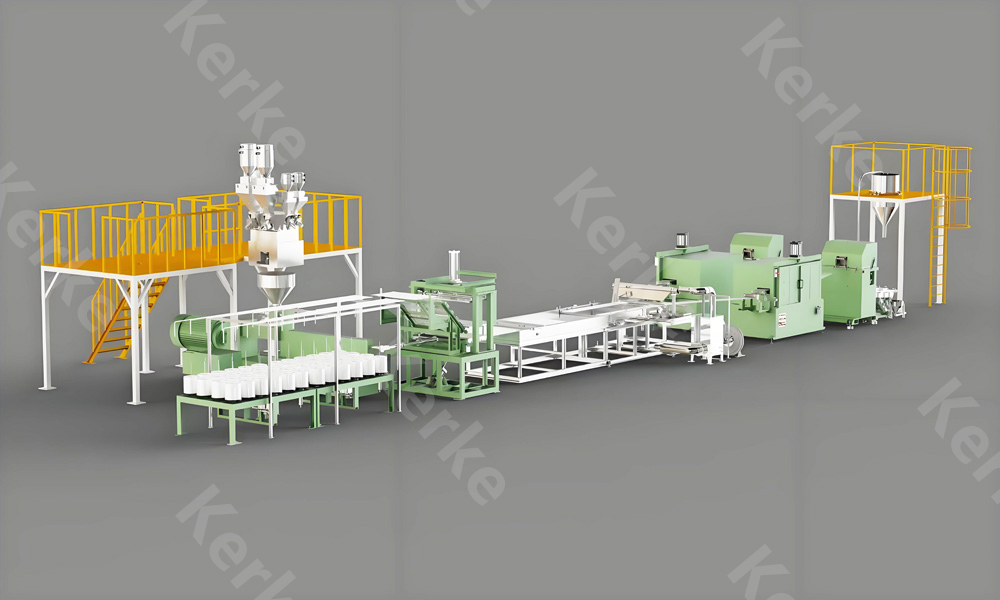
Introduction to Material Versatility in Masterbatch Production
Masterbatch extruders must demonstrate exceptional versatility to process diverse plastic raw materials with varying characteristics, processing requirements, and performance expectations. Different polymer families including polyolefins, engineering plastics, styrenics, and specialty materials each present unique processing challenges that demand equipment adaptability and precise control. The ability of twin screw extruders to accommodate these diverse materials represents a critical advantage for manufacturers serving multiple market segments with varying material requirements. Modern masterbatch extruders incorporate modular designs, adjustable processing parameters, and specialized configurations that enable successful processing across the complete spectrum of plastic materials.
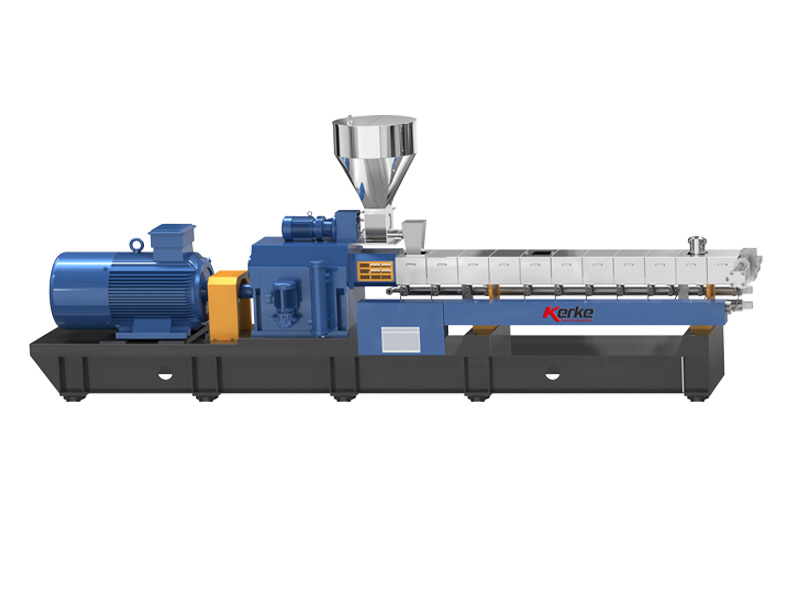
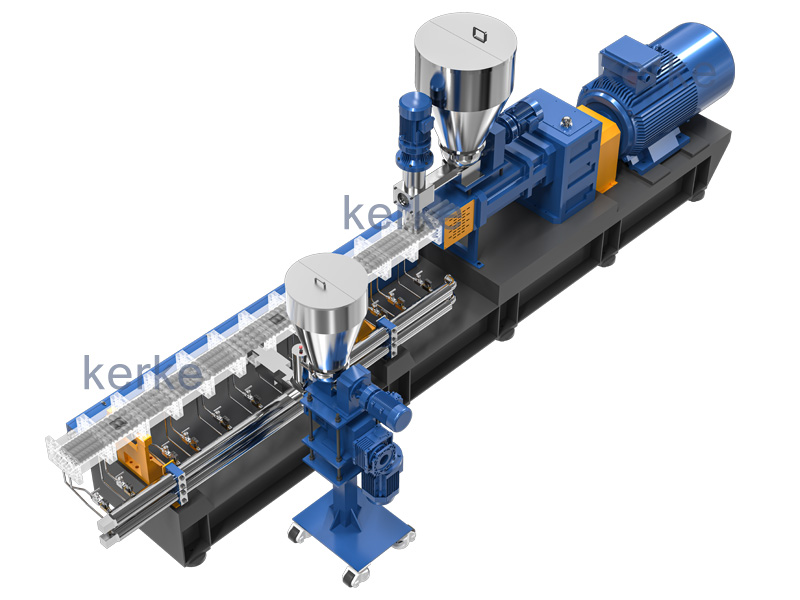
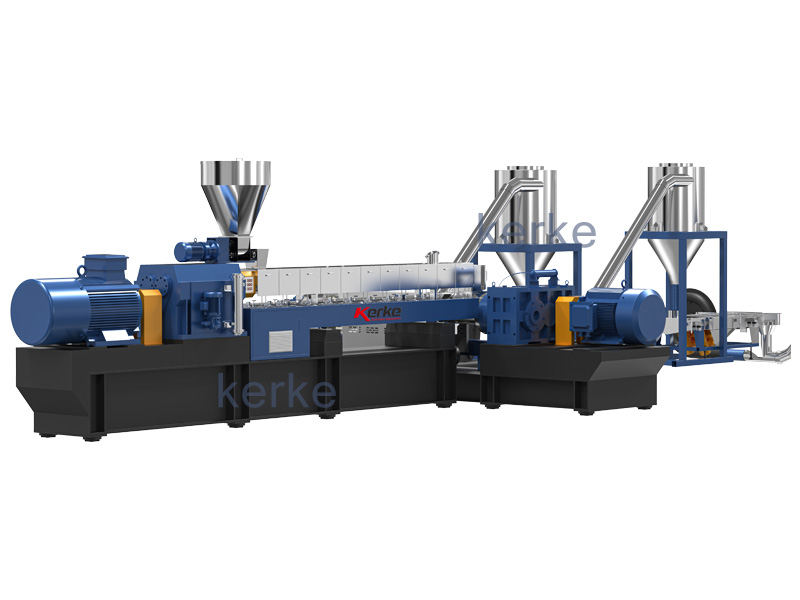
Nanjing Kerke Extrusion Equipment Co., Ltd has established itself as a leading manufacturer of versatile masterbatch extruders designed to process the complete range of plastic materials. With over 13 years of experience in polymer processing technology, Kerke has developed the KTE series of twin screw extruders that embody exceptional adaptability for diverse material applications. The company equipment serves manufacturers processing over 50 different polymer types across more than 100 countries, demonstrating global versatility and proven performance across international markets with varying material specifications and processing requirements. The comprehensive understanding of polymer processing characteristics enables Kerke to provide expert guidance for material-specific challenges and optimal equipment configuration.
Understanding Material Characteristics and Processing Requirements
Effective material adaptation requires comprehensive understanding of how different plastic materials behave during processing and what specific requirements they impose on extruder design and operation. Each polymer family exhibits unique characteristics that influence screw configuration, temperature profiles, processing parameters, and overall equipment design.
Polyolefin Processing Characteristics
Polyolefins including polyethylene (PE), polypropylene (PP), and their copolymers represent the most commonly processed polymers in masterbatch production due to their widespread use and relatively straightforward processing characteristics. These materials exhibit relatively low melting temperatures typically ranging from 120-180°C for polyethylene and 160-180°C for polypropylene. Polyolefins demonstrate good thermal stability enabling relatively wide processing windows without significant degradation. The materials show relatively low melt viscosity, enabling efficient mixing and dispersion at moderate shear rates. However, polyolefin masterbatches often require high filler loadings including calcium carbonate, talc, or titanium dioxide, creating processing challenges related to viscosity increase and abrasive wear. Twin screw extruders processing polyolefins typically employ screw configurations with moderate shear intensity to achieve adequate dispersion while maintaining appropriate residence time for complete mixing.
Engineering Plastic Processing Requirements
Engineering plastics including polycarbonate (PC), nylon (PA), acrylonitrile butadiene styrene (ABS), and polybutylene terephthalate (PBT) present more demanding processing requirements due to their higher melting temperatures, sensitivity to thermal degradation, and often higher melt viscosities. These materials typically process at temperatures ranging from 240-320°C depending on specific polymer and grade. Engineering plastics demonstrate greater sensitivity to thermal history, requiring precise temperature control and appropriate residence time management to prevent molecular weight reduction and property loss. The materials often exhibit higher melt viscosities than polyolefins, requiring increased torque capacity from drive systems and optimized screw configurations that provide adequate mixing energy without excessive shear heating. Engineering plastic masterbatches frequently incorporate performance additives including flame retardants, impact modifiers, and reinforcing fibers that further increase processing complexity.
Styrenics Processing Considerations
Styrenic polymers including polystyrene (PS) and styrene-based copolymers present unique processing challenges due to their specific thermal characteristics and sensitivity to processing conditions. These materials typically process at temperatures ranging from 180-240°C depending on specific formulation and molecular weight. Styrenics demonstrate particular sensitivity to thermal degradation at elevated temperatures, making precise temperature control critical for maintaining material properties. The materials exhibit relatively good flow characteristics but can become brittle if processed with excessive thermal history. Styrenic masterbatches often incorporate colorants and additives that must be uniformly dispersed without compromising material clarity or color properties. Twin screw extruders processing styrenics require careful temperature profile optimization to achieve complete melting and mixing while minimizing thermal exposure that could cause yellowing or property degradation.
Specialty Material Processing Challenges
Specialty materials including biodegradable polymers (PLA, PBAT), thermoplastic elastomers (TPE, TPU), and high-performance polymers (PEEK, PPS) present unique processing challenges requiring specialized equipment and processing expertise. Biodegradable polymers often exhibit narrow processing windows and sensitivity to moisture, requiring strict drying procedures and precise temperature control. Thermoplastic elastomers combine rubber-like elasticity with thermoplastic processability, requiring screw configurations that provide adequate mixing without destroying elastomeric structure. High-performance polymers process at extremely high temperatures (300-400°C) and require equipment capable of maintaining precise temperature control at elevated operating conditions. These materials often command premium pricing, making processing efficiency and yield critical economic factors.
Screw Configuration Adaptation for Different Materials
Screw configuration represents the most critical factor enabling twin screw extruders to adapt to different plastic materials. The modular building block design of Kerke KTE series extruders enables precise customization of screw geometry to match specific material characteristics and processing requirements.
Polyolefin Screw Configurations
Polyolefin processing typically employs screw configurations emphasizing efficient melting and intensive mixing for filler or pigment dispersion. Feeding zones for polyolefins feature aggressive screw elements with deep flights to handle free-flowing resin powders or pellets. Melting sections employ compression elements that gradually reduce flight depth, promoting melting through shear and conductive heating. For filled polyolefins including calcium carbonate masterbatches, mixing sections incorporate multiple kneading block arrangements with alternating stagger angles (30, 60, and 90 degrees) that provide intensive distributive and dispersive mixing. Vent zones positioned after mixing sections remove entrapped air and moisture from fillers. Kerke screw configurations for polyolefins typically use L/D ratios of 36:1-40:1 providing adequate mixing length for complete filler wetting and dispersion. The screw design balances mixing intensity with appropriate residence time to achieve optimal dispersion without excessive thermal history that could affect polymer properties.
Engineering Plastic Screw Designs
Engineering plastic screw configurations emphasize gentle melting to prevent thermal degradation while providing sufficient mixing for additive dispersion. Feeding zones employ moderate compression to promote gradual melting and prevent thermal shock. Melting sections use lower shear compression elements compared to polyolefins, reducing shear heating that could cause thermal degradation. Mixing sections incorporate carefully designed kneading block arrangements that provide adequate mixing energy for additive dispersion while minimizing residence time. For reinforced engineering plastics containing glass fibers, mixing configurations include special elements that promote fiber wetting without excessive fiber breakage. Vent zones remove moisture and volatile components critical for maintaining engineering plastic properties. Kerke screw configurations for engineering plastics typically use L/D ratios of 40:1-48:1 providing additional mixing length for complete additive dispersion at lower shear rates. The screw designs prioritize gentle processing conditions and precise thermal management to maintain material properties.
Styrenics-Specific Screw Arrangements
Styrenic screw configurations focus on achieving complete melting and mixing while minimizing thermal exposure to prevent yellowing and degradation. Feeding zones employ moderate compression to promote gradual melting. Melting sections use low-shear compression elements combined with enhanced conductive heating from barrel zones to reduce reliance on shear heating. Mixing sections incorporate moderate-intensity kneading blocks that provide adequate mixing for colorant and additive dispersion without excessive shear heating. For transparent styrenics requiring high clarity, mixing configurations prioritize distributive mixing over high shear dispersive mixing that could create haze. Kerke screw configurations for styrenics typically use L/D ratios of 32:1-36:1 providing adequate mixing length while minimizing residence time. Temperature profile optimization works in conjunction with screw design to achieve complete processing with minimal thermal history that could cause color development issues.
Specialty Material Screw Customization
Specialty material screw configurations require highly customized approaches tailored to specific material characteristics. For biodegradable polymers, screw configurations emphasize gentle processing with minimal shear to prevent molecular weight reduction. Moisture-sensitive biodegradable materials require vent zones positioned early in processing to remove residual moisture after pre-drying. Thermoplastic elastomer screw configurations incorporate mixing elements that provide additive dispersion without destroying elastomeric network structure. High-performance polymer screw designs feature materials and construction capable of operating at extreme temperatures while maintaining dimensional stability. Kerke offers specialized screw configurations developed through extensive experience with diverse specialty materials. These custom configurations often require L/D ratios of 40:1-48:1 providing adequate processing length for challenging materials. The screw designs balance processing requirements with material-specific constraints to achieve optimal performance.
Temperature Control System Adaptation
Temperature control systems represent another critical aspect enabling masterbatch extruders to adapt to different plastic materials. The modular barrel design with multiple independent heating zones provides flexibility for establishing appropriate thermal profiles across diverse material requirements.
Polyolefin Temperature Profile Optimization
Polyolefin processing typically employs gradually increasing temperature profiles through feeding and melting zones to ensure complete melting, followed by controlled temperatures through mixing and pumping zones. Polyethylene typically processes with barrel temperatures ranging from 160-220°C depending on density and molecular weight. Polypropylene typically requires slightly higher temperatures of 180-240°C. The temperature profile maintains melt temperatures high enough for efficient mixing and additive dispersion but below temperatures that could cause degradation. Kerke KTE series extruders with multiple independent heating zones enable precise establishment of these temperature profiles. For filled polyolefin masterbatches, temperature profiles may be adjusted slightly higher to maintain adequate melt flow despite viscosity increases from fillers. The precise temperature control with accuracy of plus or minus 1 degree Celsius ensures consistent processing conditions despite varying filler loadings.
Engineering Plastic Thermal Management
Engineering plastic temperature control requires precise thermal profiles that achieve complete melting while minimizing thermal degradation that could compromise material properties. Temperature profiles typically establish relatively high temperatures in melting zones (250-320°C depending on material) to ensure complete melting, followed by carefully controlled temperatures in mixing zones (230-290°C) to provide adequate mixing while limiting thermal exposure. For moisture-sensitive engineering plastics including nylons, vent zones may be maintained at slightly elevated temperatures (200-240°C) to enhance moisture removal. Kerke barrel designs with multiple heating zones and precise temperature control enable establishment of these complex profiles. The ability to independently control heating zones allows tailoring of thermal profiles to specific engineering plastic requirements and formulations. Precise temperature control accuracy ensures consistent processing conditions critical for maintaining engineering plastic properties.
Styrenics Temperature Control
Styrenic temperature control emphasizes achieving complete melting and mixing while minimizing thermal exposure that could cause yellowing or property degradation. Temperature profiles typically establish moderate temperatures in melting zones (180-220°C) sufficient for melting while limiting shear heating. Mixing zones maintain temperatures at similar or slightly reduced levels (180-210°C) to provide adequate mixing while minimizing thermal history. Kerke barrel systems with precise temperature control enable these carefully managed thermal profiles. The temperature control accuracy of plus or minus 1 degree Celsius is particularly critical for styrenics where small temperature variations can significantly affect color development and material properties. For transparent styrenics requiring high clarity, temperature profiles may be optimized to minimize thermal stress that could create haze or color formation.
Specialty Material Temperature Requirements
Specialty material temperature control presents unique challenges requiring specialized approaches. Biodegradable polymers including PLA require temperature profiles carefully tuned to narrow processing windows (170-210°C) to achieve complete melting without thermal degradation. Moisture-sensitive biodegradable materials require vent zones maintained at appropriate temperatures to enhance moisture removal while avoiding material degradation. Thermoplastic elastomers require temperature profiles that achieve processing without destroying elastomeric structure. High-performance polymers require temperature profiles reaching extreme temperatures (300-400°C) with exceptional precision to maintain material properties. Kerke barrel designs capable of operating at these elevated temperatures while maintaining precise control enable processing of these demanding materials. The advanced temperature control systems with multiple zones and high accuracy provide the flexibility needed for diverse specialty material processing requirements.
Drive System Adaptation and Torque Requirements
Drive system capacity and torque characteristics significantly influence material adaptation capabilities. Different plastic materials create varying load requirements on drive systems based on melt viscosity, processing temperatures, and formulation characteristics.
Torque Capacity for Polyolefins
Polyolefins typically present moderate torque requirements due to relatively low melt viscosities and favorable processing temperatures. Standard torque capacity extruders typically provide adequate performance for unfilled or lightly filled polyolefin masterbatches. However, high filler loading polyolefins containing 60-80% mineral fillers create significantly increased viscosity requiring enhanced torque capacity. Kerke KTE series offers multiple torque options including standard A series torque, increased B series torque, and high torque D series configurations. For typical polyolefin masterbatch with 30-50% filler loading, standard torque A series provides adequate performance. For high filler loading 60-80% applications, increased torque B or D series configurations provide necessary torque reserve to handle increased viscosity. Motor power requirements scale with extruder size and torque demands, with KTE-50B requiring 45-75 kW for polyolefin processing and KTE-65B requiring 90-110 kW for larger production capacity.
Engineering Plastic Drive Requirements
Engineering plastics typically require higher torque capacity than polyolefins due to higher melt viscosities and processing temperatures. The increased viscosity at processing temperatures creates greater resistance to screw rotation requiring enhanced drive system capacity. Kerke KTE series B and D series configurations provide appropriate torque capacity for engineering plastic processing. For unfilled engineering plastics, increased torque B series typically provides adequate performance. For reinforced engineering plastics containing 20-40% glass fiber or high filler loadings, high torque D series configurations provide necessary torque reserve to handle increased viscosity and reinforcement challenges. Motor power requirements for engineering plastics typically exceed polyolefin requirements by 20-30% due to increased viscosity. For example, KTE-65D processing engineering plastics may require 132-160 kW compared to 90-110 kW for comparable polyolefin applications.
Styrenics Drive System Considerations
Styrenics typically present moderate torque requirements similar to or slightly higher than polyolefins depending on specific formulation and molecular weight. Standard or increased torque configurations typically provide adequate performance for most styrenic applications. However, highly filled styrenic masterbatches or those containing high viscosity additives may require increased torque capacity. Kerke KTE series provides appropriate torque options through A, B, and D series configurations enabling selection based on specific styrenic formulation requirements. The drive systems also provide speed control capabilities enabling optimization for specific styrenic processing requirements. Precise speed control helps maintain appropriate residence time and shear intensity to achieve optimal processing without excessive thermal history.
Specialty Material Drive Adaptations
Specialty materials present diverse drive system requirements based on their unique characteristics. Biodegradable polymers typically require careful torque management to avoid excessive shear that could degrade molecular structure. Thermoplastic elastomers require drive systems capable of processing materials with variable viscosity characteristics and elastic recovery. High-performance polymers at extreme temperatures require drive systems with specialized components capable of operating under severe thermal stress. Kerke offers drive system customization to address these diverse requirements. The company experience with diverse specialty materials enables selection of appropriate motor power, gearbox capacity, and speed control capabilities for specific applications. Drive system adaptation represents critical aspect of successfully processing challenging specialty materials.
Feeding System Adaptation for Material Characteristics
Feeding systems must adapt to different material characteristics including bulk density, flow properties, moisture content, and abrasiveness. Modern feeding systems with gravimetric control and multiple feeder configurations enable precise handling of diverse plastic materials and formulations.
Polyolefin Feeding Requirements
Polyolefins typically present favorable feeding characteristics with good flow properties and consistent bulk density. Granular polyethylene and polypropylene flow reliably through standard feed hoppers and feeding systems. However, highly filled polyolefin masterbatches containing 60-80% mineral fillers present significant feeding challenges due to reduced flowability, increased bulk density, and abrasiveness. Kerke feeding systems incorporate specialized components for these applications including abrasion-resistant feed screws, reinforced wear surfaces, and flow aids to maintain reliable feeding. Gravimetric feeding systems with plus or minus 0.5% accuracy ensure precise filler content control critical for final masterbatch quality. Multi-feeder configurations enable separate feeding of resin and fillers for optimal dispersion control and processing efficiency.
Engineering Plastic Feeding Challenges
Engineering plastics present diverse feeding challenges depending on specific material and form. Granular engineering plastics generally feed reliably but may have higher bulk density than polyolefins requiring appropriate feeder sizing. Powder forms of some engineering plastics present flowability challenges requiring specialized feeding equipment including vibration systems and flow aids. Moisture-sensitive engineering plastics including nylons require dry feeding systems that prevent moisture pickup before processing. Kerke feeding systems incorporate appropriate handling equipment for these diverse requirements including hopper dryers, sealed feeding systems, and flow aids. The gravimetric feeding accuracy ensures precise control over engineering plastic formulations often containing multiple components with tight tolerances for additive content.
Styrenics Feeding Considerations
Styrenics typically present good feeding characteristics similar to polyolefins with reliable flow properties and consistent bulk density. Granular polystyrene and styrenic copolymers feed reliably through standard feeding systems. For transparent styrenics requiring high clarity, feeding systems must prevent contamination and material degradation before processing. Kerke feeding systems for styrenics emphasize cleanliness and contamination prevention with polished interior surfaces and sealed designs preventing dust ingress. The feeding accuracy of plus or minus 0.5% ensures precise colorant and additive control critical for color masterbatch applications requiring consistent shade accuracy.
Specialty Material Feeding Adaptations
Specialty materials present unique feeding challenges requiring specialized approaches. Biodegradable polymers often require moisture-controlled feeding systems to prevent moisture pickup after pre-drying. Some biodegradable materials have poor flow characteristics requiring vibration systems and specialized feeder designs. Thermoplastic elastomers may exhibit bridging or flow inconsistencies requiring specialized feeding approaches. High-performance polymers at elevated temperatures may require heated feeding systems to prevent premature solidification. Kerke offers feeding system customization for these diverse requirements. The company experience with specialty materials enables selection of appropriate feeding equipment and configurations to handle material-specific challenges while maintaining feeding accuracy and reliability.
Processing Parameter Optimization for Different Materials
Optimization of processing parameters including screw speed, feed rate, and throughput represents essential aspect of adapting masterbatch extruders to different plastic materials. Each material family requires specific parameter combinations to achieve optimal processing and quality.
Polyolefin Processing Parameters
Polyolefin processing typically employs screw speeds ranging from 200-400 rpm depending on extruder size and formulation. The screw speed must balance mixing intensity with appropriate residence time for complete filler or pigment dispersion. Higher screw speeds increase shear energy and dispersion but reduce residence time requiring optimization for specific applications. Feed rates are typically set to maintain 70-85% torque utilization for unfilled or lightly filled polyolefins, and 80-95% torque utilization for highly filled formulations. Throughput varies widely based on extruder size and formulation, with KTE-50B typically producing 80-200 kg/h for polyolefins and KTE-65B producing 200-450 kg/h. The specific parameters are optimized based on formulation requirements and quality objectives. Kerke PLC control systems enable precise parameter control and recipe storage for consistent polyolefin processing.
Engineering Plastic Processing Optimization
Engineering plastic processing typically employs lower screw speeds than polyolefins, typically 150-300 rpm depending on extruder size and specific material. The reduced screw speed minimizes shear heating and thermal exposure critical for maintaining engineering plastic properties. Feed rates are set to maintain 60-75% torque utilization for unfilled engineering plastics, and 75-85% for reinforced formulations. The lower torque utilization provides reserve capacity to handle viscosity variations while avoiding excessive thermal history. Throughput for engineering plastics typically 20-30% lower than comparable polyolefin capacity due to higher viscosities and more gentle processing requirements. KTE-50B typically produces 60-150 kg/h for engineering plastics and KTE-65B produces 150-350 kg/h. Kerke control systems enable precise parameter management for engineering plastic processing with recipe storage ensuring consistent processing conditions.
Styrenics Processing Parameters
Styrenic processing typically employs screw speeds similar to polyolefins, 200-350 rpm depending on extruder size and specific material. The screw speed must achieve adequate mixing while minimizing residence time and thermal exposure. Feed rates are typically set to maintain 65-80% torque utilization depending on specific formulation and quality requirements. Throughput for styrenics typically 10-20% lower than polyolefins due to slightly higher viscosities and more stringent processing requirements. KTE-50B typically produces 70-170 kg/h for styrenics and KTE-65B produces 180-400 kg/h. Kerke control systems enable precise parameter optimization for styrenics with particular attention to temperature profile management to prevent yellowing and degradation.
Specialty Material Parameter Customization
Specialty material processing parameters require customized approaches based on specific material characteristics. Biodegradable polymers typically employ lower screw speeds (100-250 rpm) to minimize shear degradation while maintaining adequate mixing. Feed rates are carefully controlled to maintain appropriate residence time without excessive thermal history. Thermoplastic elastomers require parameter optimization that balances mixing intensity with preservation of elastomeric structure. High-performance polymers at elevated temperatures require parameter adaptation for severe thermal conditions. Kerke control systems provide the flexibility to optimize parameters for these diverse materials. The company experience with specialty materials enables parameter selection that achieves optimal processing while maintaining material properties and quality requirements.
Cost Analysis and Investment Considerations for Material Versatility
Material versatility represents valuable capability for masterbatch manufacturers serving diverse markets and applications. Understanding the economic considerations of equipment versatility enables informed investment decisions and business strategy development.
Equipment Investment for Versatility
Equipment investment for material versatility varies based on the range of materials to be processed and quality requirements. Kerke KTE series extruders provide baseline versatility for processing common polymer families including polyolefins, styrenics, and many engineering plastics. Standard configurations with appropriate torque capacity and temperature range enable processing across this material spectrum. Investment levels for versatile medium capacity equipment (KTE-50B) range from $220,000-280,000 providing capability for multiple material families. For processing more challenging materials including high-performance polymers and specialty materials, enhanced capabilities including higher temperature ranges, increased torque capacity, and specialized screw configurations may be required, increasing investment to $280,000-350,000 for KTE-50D configuration. The additional investment for enhanced versatility typically ranges from 20-30% above baseline equipment but provides access to higher-value specialty material markets with premium pricing potential.
Changeover Costs and Efficiency
Changeover efficiency represents significant cost consideration for versatile equipment processing multiple materials. Efficient changeovers minimize production downtime and material waste between material changes. Kerke KTE series extruders with self-cleaning screw design enable relatively rapid changeovers, typically requiring 30-60 minutes for material changeovers between similar polymers and 1-2 hours for changeovers between more dissimilar materials requiring screw configuration changes. The changeover costs include labor, purge material, and lost production time. At typical hourly production value of $2,000-5,000 depending on capacity and product value, changeover costs can reach $2,000-10,000 per changeover. Optimizing changeover procedures and scheduling material families to minimize dissimilar changes significantly reduces these costs. Kerke modular screw design enables relatively fast screw reconfiguration when required, reducing changeover time compared to non-modular designs.
Business Value of Versatility
Material versatility provides significant business value through market diversification and risk reduction. Versatile equipment enables participation in multiple market segments including packaging, automotive, electronics, medical, and consumer products, reducing dependence on any single market. This diversification reduces business risk during market downturns in specific segments. Versatility also enables manufacturers to pursue emerging opportunities in specialty materials and high-value applications without requiring additional equipment investment. Premium pricing for engineering plastic and specialty material masterbatches typically exceeds commodity polyolefin pricing by 20-50%, providing enhanced gross margins for versatile manufacturers. Access to multiple markets also enables better capacity utilization and reduced equipment downtime through production flexibility.
Return on Versatility Investment
Return on versatility investment analysis demonstrates compelling economic justification for equipment capable of processing diverse materials. A versatile KTE-50D extruder investment of $280,000-350,000 providing capability for multiple material families enables access to diverse markets with premium pricing potential. Assuming product mix 40% polyolefins at $0.15/kg margin, 40% engineering plastics at $0.20/kg margin, and 20% specialty materials at $0.25/kg margin, average gross margin of approximately $0.18/kg across 400 kg/h average production capacity generates approximately $518,000 annual gross profit at 80% utilization. This represents margin enhancement of 20% compared to equipment limited to commodity polyolefins at $0.15/kg margin generating $432,000 annual gross profit. The additional $86,000 annual margin from versatility provides payback of enhanced equipment investment within 2-3 years while providing ongoing competitive advantages through market diversification and risk reduction.
Case Studies of Material Adaptation
Real-world application examples demonstrate successful material adaptation across diverse plastic materials. Kerke equipment versatility enables manufacturers to serve multiple markets and capitalize on emerging opportunities.
Polyolefin to Engineering Plastic Conversion
A masterbatch manufacturer initially focused on commodity polyolefin color masterbatches utilizing Kerke KTE-50B extruders. Seeking to expand into higher-value engineering plastic applications, the company leveraged equipment versatility by reconfiguring screw elements and adjusting processing parameters to process polycarbonate and ABS color masterbatches. The conversion required investment of approximately $30,000 for additional screw elements and configuration changes. The expansion enabled entry into automotive and electronics markets with premium pricing 35% above polyolefin products. Production of engineering plastic masterbatches now represents 30% of total output, generating additional annual gross profit of approximately $120,000. The versatility investment achieved payback in 6 months while providing ongoing competitive advantages and market diversification.
Specialty Material Development Capabilities
A materials development company utilizes Kerke KTE-36D extruders for research and development of specialty polymer compounds and masterbatches. The equipment versatility enables processing of diverse materials including biodegradable polymers, high-performance thermoplastics, and novel polymer blends. The R&D capabilities have supported development of proprietary materials with patent protection providing competitive advantages. The versatility enables rapid evaluation of new material concepts without requiring multiple specialized machines. Investment in versatile development equipment of $180,000 has supported development of multiple commercialized materials generating licensing revenue and premium product positioning. The R&D capabilities have enabled the company to position itself as technology leader in specialty materials rather than commodity producer.
Multi-Market Production Flexibility
A full-service masterbatch producer operates multiple Kerke KTE-65B and KTE-75D extruders providing versatility across complete material spectrum. The company serves packaging, automotive, medical, electronics, and consumer product markets with appropriate material-specific formulations. Production scheduling optimizes equipment utilization by running compatible material families on specific lines to minimize changeover requirements. The versatility enables the company to rapidly respond to market demands and emerging opportunities without equipment limitations. During economic downturns affecting automotive markets, the company maintained capacity utilization by increasing production for packaging and consumer goods markets. This business flexibility has reduced revenue volatility by 40-50% compared to competitors focused on single market segments. The investment in versatile equipment provides strategic business advantages beyond direct production cost considerations.
Future Trends in Material Versatility Requirements
Future trends in polymer materials and applications will increasingly demand equipment versatility and adaptability. Understanding these trends enables strategic equipment investment and business development planning.
Sustainable Materials Growth
Sustainable and biodegradable materials represent rapidly growing market segments requiring specialized processing capabilities. Biodegradable polymers including PLA, PHA, and starch-based materials are finding increased use in packaging and consumer applications. These materials often have narrow processing windows and sensitivity to moisture requiring specialized equipment capabilities. Masterbatch manufacturers with equipment capable of processing these materials will be well-positioned to capture growing sustainable materials markets. Kerke KTE series extruders with appropriate temperature ranges, screw configurations, and moisture handling capabilities can process many sustainable materials with appropriate adaptations. Investment in sustainable material processing capabilities provides market access to high-growth segments while supporting sustainability objectives.
Performance Materials Development
Advanced performance materials including high-temperature polymers, conductive polymers, and specialty elastomers are finding increased use in demanding applications including automotive, aerospace, and electronics. These materials present significant processing challenges requiring specialized equipment with enhanced temperature capabilities, torque capacity, and corrosion resistance. Masterbatch manufacturers developing capability in performance materials gain access to premium markets with limited competition and high margins. Kerke offers enhanced equipment options including D series high-temperature configurations and specialized materials for processing these demanding applications. Investment in performance material capabilities provides strategic positioning for future market growth.
Recycled Content Integration
Increasing recycled content requirements in many applications create demand for masterbatches specifically designed for compatibility with recycled materials. Processing recycled materials and recycled-content masterbatches presents challenges including variable material characteristics, contamination concerns, and odor issues. Extruders with enhanced cleaning capabilities, vent systems, and processing flexibility provide advantages for recycled material applications. Kerke KTE series extruders with self-cleaning design and multiple vent zones provide appropriate capabilities for recycled material processing. Developing expertise in recycled material compatibility positions manufacturers for growing regulatory and consumer demand for recycled content.
Smart Material Requirements
Emerging smart materials including shape memory polymers, self-healing materials, and stimuli-responsive polymers present new processing challenges. These materials often require precise control over processing conditions and may have unusual rheological characteristics. Equipment with advanced process control capabilities, precise temperature management, and processing parameter optimization provides advantages for smart material processing. Kerke KTE series with advanced PLC control systems and modular design provides flexibility for adapting to emerging smart material requirements. Investment in advanced processing capabilities positions manufacturers for future opportunities in high-value smart material applications.
Conclusion and Strategic Recommendations
Material versatility represents critical capability for masterbatch manufacturers seeking to serve diverse markets, reduce business risk, and capitalize on emerging opportunities. Twin screw extruders with modular design, adjustable processing parameters, and specialized configurations provide the foundation for processing diverse plastic materials from commodity polyolefins to specialty engineering polymers.
Kerke KTE series twin screw extruders embody exceptional material versatility through modular screw configurations, precise temperature control, appropriate drive systems, and advanced feeding capabilities. The comprehensive understanding of polymer processing characteristics enables successful adaptation to diverse materials while maintaining quality and processing efficiency. The equipment serves manufacturers across over 100 countries processing more than 50 different polymer types, demonstrating global versatility and proven performance.
Investment in versatile equipment provides compelling economic returns through market diversification, premium pricing opportunities, and business risk reduction. The enhanced gross margins from engineering plastics and specialty materials combined with capacity utilization improvements typically provide return on versatility investment within 2-3 years while providing ongoing competitive advantages.
Strategic investment in material versatility should be considered as business development investment rather than production equipment cost. The access to multiple markets, ability to pursue emerging opportunities, and business flexibility provided by versatile equipment creates strategic value exceeding direct production economics. Future material trends including sustainable materials, performance polymers, recycled content, and smart materials will increasingly demand equipment versatility for competitive success.