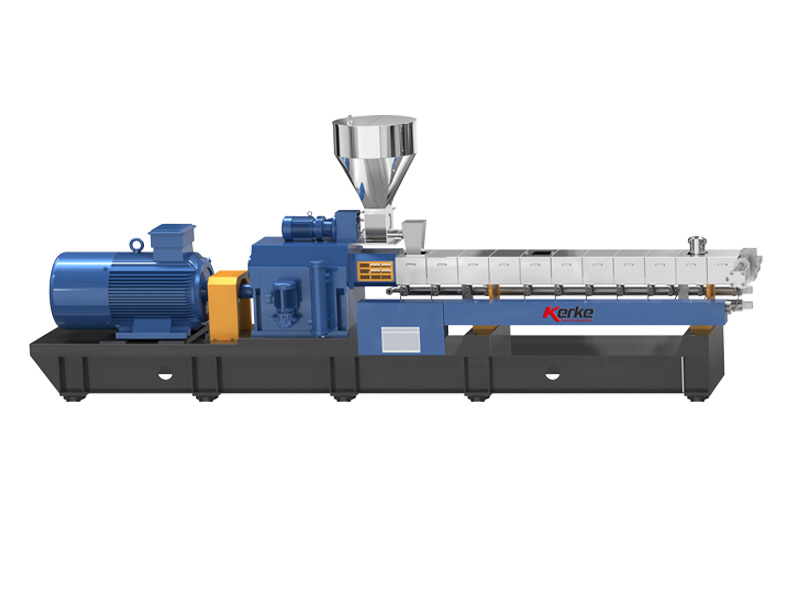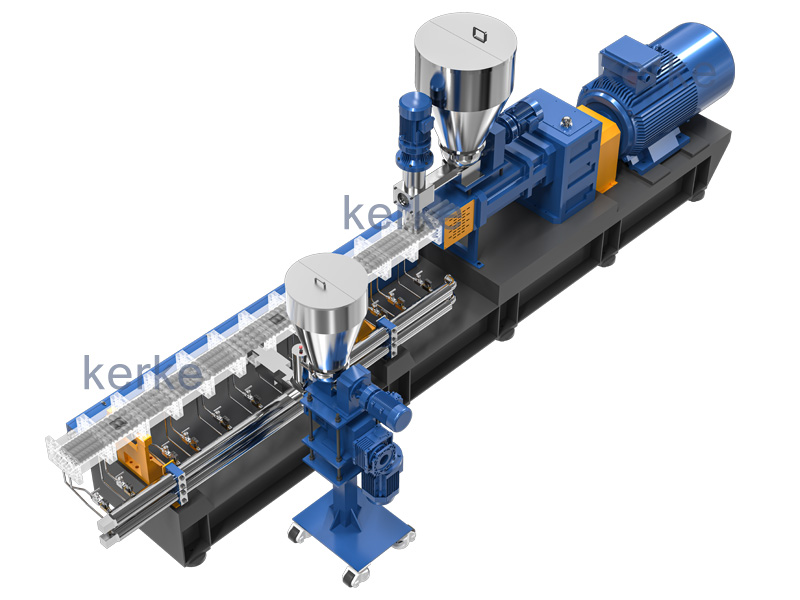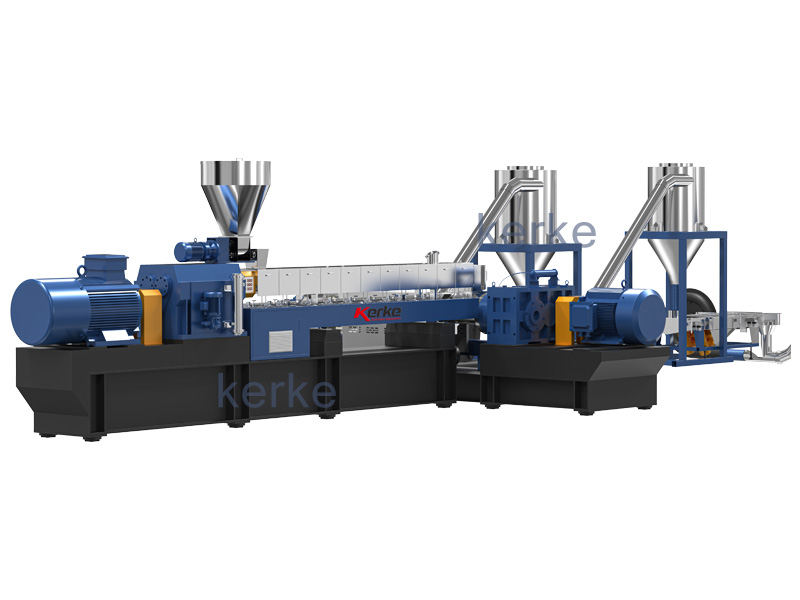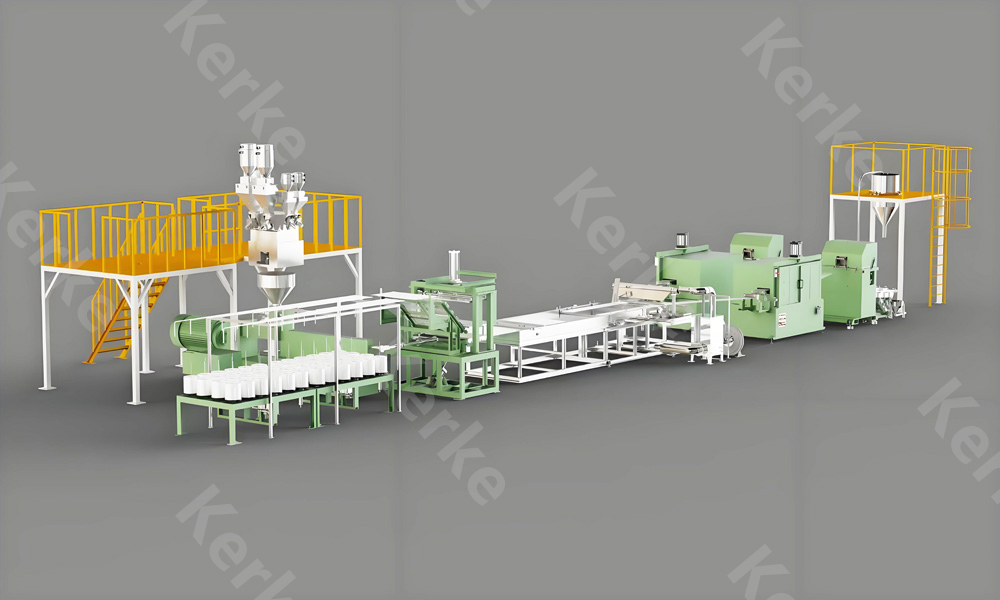
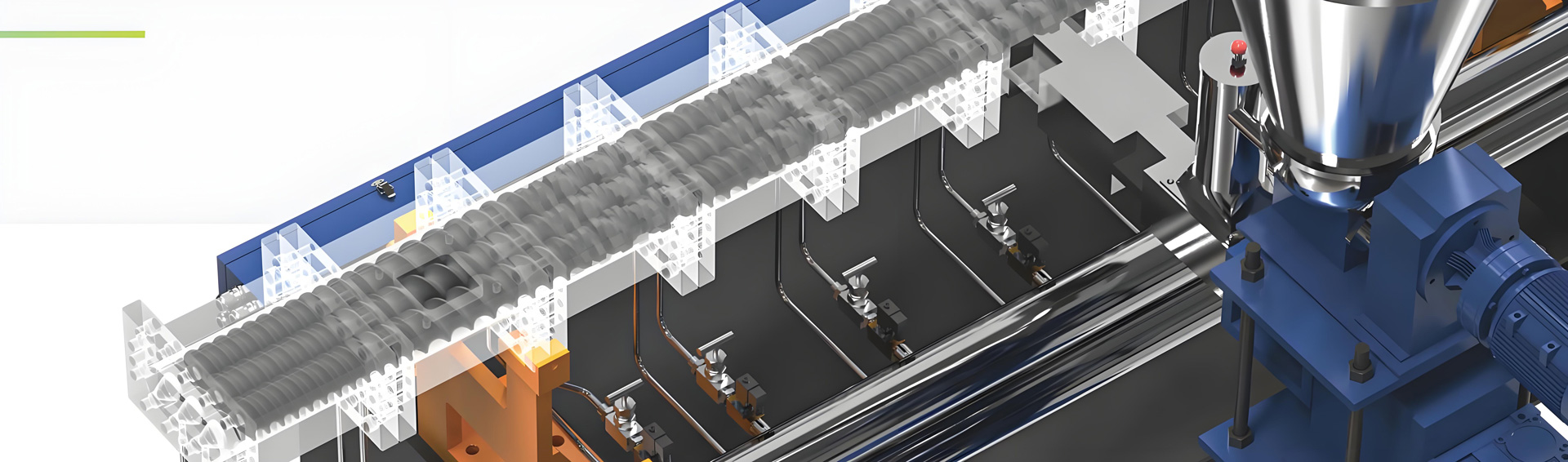
In the rapidly evolving landscape of plastic compounding, the demand for high-quality products, consistent performance, and efficient production processes has never been higher. Modern compounding extruders are at the heart of this industry, and their performance is significantly enhanced by advanced control systems. The Programmable Logic Controller (PLC) has emerged as a critical component in modern compounding extruders, offering a wide range of benefits that improve operational efficiency, product quality, and overall productivity. In this article, we will explore the key benefits of using a PLC control system in modern compounding extruders, with a focus on the Kerke extruder, a leading provider of state-of-the-art extrusion equipment.
Understanding PLC Control Systems
A Programmable Logic Controller (PLC) is a specialized industrial computer designed to control manufacturing processes, such as those in plastic compounding. Unlike traditional relay-based control systems, PLCs are highly flexible, programmable, and capable of handling complex control tasks with precision. The PLC receives input from various sensors and devices, processes the data based on pre-programmed logic, and sends output signals to control actuators, motors, and other equipment. This allows for real-time monitoring and adjustment of the compounding process, ensuring consistent and reliable operation.
Modern PLCs are equipped with advanced features such as high-speed processing, large memory capacity, and user-friendly interfaces. They can be programmed using a variety of programming languages, including ladder logic, function block diagram (FBD), and structured text, making them suitable for a wide range of applications. In compounding extruders, the PLC is used to control parameters such as screw speed, temperature, pressure, feed rate, and motor torque, among others.
Key Benefits of PLC Control System in Modern Compounding Extruder
Enhanced Process Control and Precision
One of the primary benefits of using a PLC control system in a compounding extruder is the ability to achieve precise and consistent control over the compounding process. The PLC can monitor and adjust multiple process parameters in real-time, ensuring that the extrusion process operates within the desired specifications. For example, the PLC can control the screw speed to maintain a consistent melt temperature, adjust the feed rate to ensure uniform material distribution, and regulate the pressure within the barrel to prevent overloading or underloading.
Kerke compounding extruders are equipped with a PLC control system that offers precise control over all critical process parameters. The system uses advanced sensors to monitor temperature, pressure, and other variables, and adjusts the operation of the extruder accordingly. This ensures that the compounding process is stable and consistent, resulting in high-quality output with uniform properties.
Improved Operational Efficiency
PLC control systems can significantly improve the operational efficiency of modern compounding extruders by reducing downtime, minimizing waste, and optimizing production throughput. The PLC can detect and diagnose potential issues in real-time, allowing operators to take corrective action before a problem escalates. For example, if a sensor detects a temperature deviation, the PLC can adjust the heating or cooling system to maintain the desired temperature, preventing material degradation or quality defects.
Additionally, the PLC can automate various tasks such as material feeding, product changeover, and cleaning, reducing the need for manual intervention and increasing overall productivity. Kerke extruders feature an automated feeding system that is controlled by the PLC, ensuring accurate and consistent material delivery. This not only improves efficiency but also reduces the risk of human error, which can lead to production delays and quality issues.
Data Collection and Analysis
Modern PLC control systems are capable of collecting and storing large amounts of data related to the compounding process. This data can be used for process optimization, quality control, and predictive maintenance. The PLC can record parameters such as temperature, pressure, screw speed, and production rate over time, providing valuable insights into the performance of the extruder.
Kerke extruders are equipped with a data logging feature that allows operators to track and analyze process data. The system can generate reports and visualizations that help identify trends, patterns, and areas for improvement. For example, by analyzing temperature data, operators can identify potential hot spots in the barrel and adjust the heating system to ensure uniform temperature distribution. This data-driven approach to process management can lead to significant improvements in product quality and operational efficiency.
Flexibility and Customization
PLC control systems offer a high degree of flexibility and customization, allowing manufacturers to adapt the compounding process to meet specific production requirements. The PLC can be programmed to handle different types of materials, process recipes, and production volumes, making it suitable for a wide range of applications. For example, the same extruder can be used to produce different types of compounded materials simply by changing the process parameters in the PLC program.
Kerke extruders are designed with modularity in mind, allowing for easy customization and reconfiguration. The PLC control system can be programmed to accommodate different screw configurations, barrel designs, and auxiliary equipment, ensuring that the extruder meets the unique needs of each customer. This flexibility not only improves the versatility of the extruder but also reduces the cost and time associated with equipment modification.
Remote Monitoring and Control
Many modern PLC control systems support remote monitoring and control capabilities, allowing operators to access and manage the extruder from a distance. This is particularly beneficial for manufacturers with multiple production facilities or for those who need to monitor production processes after hours. Operators can use a computer, tablet, or smartphone to view real-time data, adjust process parameters, and receive alerts in case of an issue.
Kerke extruders are equipped with a remote monitoring system that is integrated with the PLC control system. This allows operators to monitor the extruder’s performance from anywhere in the world, providing peace of mind and ensuring that production processes are running smoothly. The remote control feature also enables manufacturers to quickly respond to changes in production demand or to address any issues that may arise, minimizing downtime and maximizing productivity.
Enhanced Safety and Compliance
PLC control systems can help improve the safety of the compounding process by automating safety procedures and monitoring critical parameters. The PLC can detect and respond to abnormal conditions such as overheating, overpressure, or equipment failure, triggering safety alarms and initiating emergency shutdown procedures. This helps to prevent accidents and protect operators and equipment from damage.
In addition to safety, PLC control systems can also help manufacturers comply with industry regulations and standards. The system can track and document process data, providing a complete audit trail of the compounding process. This is essential for industries such as automotive, aerospace, and medical, where strict quality control and compliance requirements must be met.
Kerke extruders are designed to meet the highest safety standards, with features such as emergency stop buttons, safety interlocks, and protective guards. The PLC control system plays a key role in ensuring that these safety measures are effective, by continuously monitoring the operation of the extruder and responding to any potential hazards.
Case Study: PLC Control System in Kerke Compounding Extruder
To illustrate the benefits of using a PLC control system in a modern compounding extruder, let’s consider a case study of a manufacturer using a Kerke extruder for the production of engineering plastic compounds. The manufacturer was facing challenges with inconsistent product quality, high production downtime, and difficulty in meeting tight production deadlines.
After implementing a Kerke compounding extruder with a PLC control system, the manufacturer experienced significant improvements in production efficiency and product quality. The PLC control system allowed for precise control over the process parameters, resulting in a more stable and consistent compounding process. The automated data logging and analysis feature helped the manufacturer identify areas for improvement, such as optimizing the screw configuration and adjusting the feed rate, which led to a 20% increase in production throughput.
Additionally, the remote monitoring capability enabled the manufacturer to monitor the extruder’s performance from their office, reducing the need for on-site supervision and allowing operators to focus on other tasks. The safety features of the PLC control system also helped to reduce the risk of accidents and ensure compliance with industry regulations.
Conclusion
The PLC control system is a critical component of modern compounding extruders, offering a wide range of benefits that improve operational efficiency, product quality, and overall productivity. With features such as enhanced process control, data collection and analysis, flexibility, remote monitoring, and enhanced safety, the PLC control system enables manufacturers to optimize their compounding processes and meet the increasing demands of the plastic industry. Kerke extruders are at the forefront of this technology, providing advanced PLC control systems that deliver reliable performance, precise control, and exceptional value. By choosing a Kerke extruder with a PLC control system, manufacturers can enhance their production capabilities, reduce costs, and achieve long-term success in the competitive plastic compounding market.