Introduction
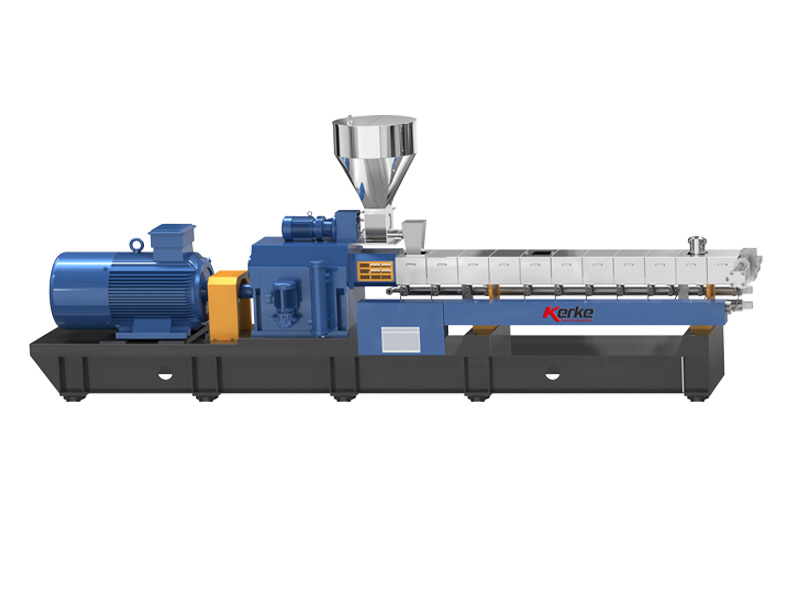
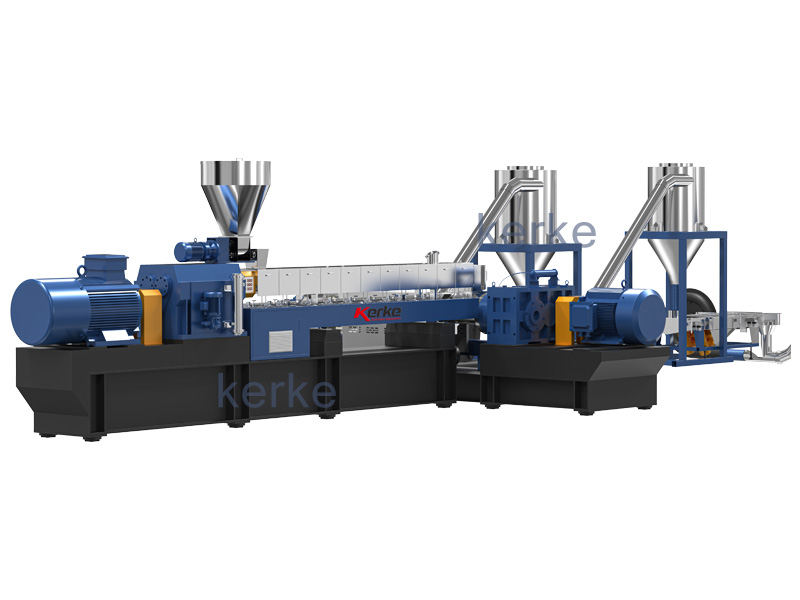
Special compounding applications require twin screw extruders customized to meet unique material properties, processing requirements, and product specifications. Standard extruder configurations often fail to deliver optimal performance for specialized applications including high-filler loadings, reactive compounding, heat-sensitive materials, and recycled material processing. Kerke Extruder has established leadership in developing custom twin screw extruder solutions that address specialized compounding challenges through tailored screw geometry, specialized barrel configurations, advanced feeding systems, and process-specific control strategies.
The complexity of special compounding needs demands comprehensive understanding of material science, processing mechanics, and equipment design. Each specialized application presents unique challenges that standard equipment cannot adequately address. For example, compounding materials with 70-80% filler loading requires screw geometry optimized for extreme viscosities and special wear-resistant construction materials. Reactive compounding requiring precise residence time distribution needs specific screw profiles and barrel configurations that enable controlled reaction progression. Heat-sensitive materials including biodegradable polymers demand temperature control systems that prevent thermal degradation while maintaining proper processing conditions.
Kerke Extruder has developed extensive experience in custom extruder design for specialized compounding applications across multiple industries. Our engineering team works closely with customers to understand specific application requirements, develop customized solutions, and provide complete systems integration. Kerke custom extruders typically achieve 30-50% higher throughput, 20-30% lower energy consumption, and significantly improved product quality compared to standard equipment for the same application. These performance improvements provide substantial return on investment through increased production capacity, reduced operating costs, and enhanced product value.
This comprehensive guide examines custom twin screw extruder solutions for various specialized compounding needs, including design considerations, configuration options, performance benefits, and economic analysis. Understanding these custom solution approaches enables informed decision-making for challenging compounding applications requiring specialized equipment design and capabilities.
High-Filler Loading Applications
High-filler loading applications including mineral fillers, glass fibers, carbon fibers, and metal powders present significant challenges for twin screw extruder design. Fillers can constitute 40-80% of total material mass, creating processing challenges including extreme viscosity, abrasive wear, and poor filler wetting. Kerke Extruder has developed specialized solutions for high-filler loading that enable reliable processing and excellent product quality.
Screw Geometry Optimization
Screw geometry for high-filler loading requires specific design features that address increased viscosity, filler distribution requirements, and wear concerns. Kerke custom screw profiles for high-filler applications incorporate conveying elements with increased flight depth, specialized mixing elements, and wear-resistant geometry configurations.
Conveying elements for high-filler applications feature increased flight depth and optimized pitch to accommodate increased material viscosity and ensure adequate material transport. Flight depth is typically increased by 30-50% compared to standard profiles, providing larger volume for material passage. Pitch is optimized between 1.2-1.5 times screw diameter to balance forward transport and mixing requirements. Kerke conveying elements use special flight profiles that minimize material stagnation and reduce buildup in intermeshing areas, preventing dead zones that cause filler agglomeration and poor distribution.
Mixing elements for high-filler loading include specialized kneading block configurations optimized for filler dispersion and distribution. Kerke custom mixing elements combine distributive and dispersive mixing actions to break down filler agglomerates while maintaining uniform distribution across material cross-section. Mixing element configurations vary based on filler type and loading level, with glass fiber applications using gentler mixing to prevent fiber breakage, while mineral filler applications use more aggressive mixing for improved dispersion. Kerke mixing designs achieve filler agglomerate size reduction below 10 micrometers for most mineral fillers while maintaining fiber length above 0.5mm for glass fiber applications.
Wear-resistant screw geometry addresses abrasive filler materials that cause rapid screw wear in standard designs. Kerke screws for abrasive applications use special flight profiles with rounded edges that reduce stress concentration points where wear typically initiates. Flight surfaces are hardfaced with tungsten carbide or other hard materials providing wear resistance 5-10 times greater than standard steel. Critical wear areas including flight tips and intermeshing regions receive additional hardfacing thickness to extend service life. These wear-resistant features enable screw life exceeding 8,000-12,000 hours even with highly abrasive fillers including silica, alumina, and other mineral powders.
Barrel Configuration Specialization
Barrel configuration for high-filler loading requires specialized materials, venting systems, and wear protection features that address material processing challenges. Kerke custom barrel configurations for high-filler applications incorporate advanced materials technology, optimized venting, and reinforced construction.
Bimetallic barrel construction provides exceptional wear resistance for abrasive filler applications. Kerke barrels use centrifugally cast bimetallic liners with hard facing materials including tungsten carbide, chromium carbide, or nickel boride depending on filler abrasiveness. These hard facing materials provide wear resistance 10-15 times greater than standard nitrided steel barrels. Liner thickness typically ranges from 2-3mm, providing adequate wear material for extended service life. Bimetallic barrels maintain dimensional stability and surface finish throughout service life, ensuring consistent processing performance. For highly abrasive applications with filler loading exceeding 70%, Kerke offers ceramic liner options providing wear resistance 20-30 times greater than standard steel.
Venting system design addresses degassing requirements for high-filler materials that may contain moisture, volatiles, or reaction products. Kerke custom venting systems include multiple vent ports located at strategic positions along barrel length. Vent ports are sized and configured to provide adequate gas evacuation while minimizing material loss. Vacuum venting capability enables degassing of materials requiring removal of volatiles or moisture. Kerke venting systems typically include 2-4 vent ports depending on material characteristics and processing requirements, with vacuum capability achieving 50-100 mbar absolute pressure for effective degassing.
Reinforced barrel construction withstands increased processing pressures resulting from high-filler viscosity. High-filler materials generate significantly higher pressures during processing, requiring robust barrel design. Kerke barrels for high-filler applications feature increased wall thickness, stronger flange connections, and reinforced support ribs. Barrel wall thickness is typically increased by 20-30% compared to standard designs, providing adequate strength for high-pressure operation. Flange connections use additional bolts and stronger fasteners to prevent leakage under high pressure. These reinforcement features ensure reliable operation at pressures exceeding 200 bar for most high-filler applications.
Feeding System Specialization
Feeding systems for high-filler loading require specialized designs that address poor flow characteristics, segregation tendencies, and abrasive material handling challenges. Kerke custom feeding systems for high-filler applications incorporate optimized hopper designs, gravimetric feeding, and wear-resistant construction.
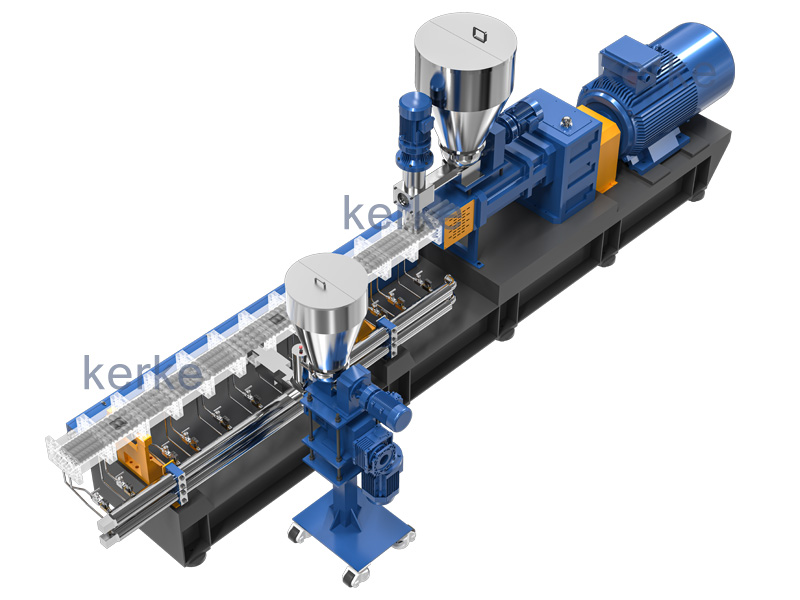
Gravimetric feeding systems provide precise filler dosing essential for consistent product quality in high-filler applications. Kerke feeders use loss-in-weight technology with accuracy better than 0.3% of setpoint, ensuring consistent filler concentration from batch to batch. Feeders feature hopper designs optimized for free-flowing materials, including mass flow hopper geometry, polished surfaces, and vibratory agitation to prevent bridging and rat-holing. Feeder screw geometry is customized based on material flow characteristics, with special profiles for cohesive or segregation-prone materials. Kerke gravimetric feeding systems typically include separate feeders for polymer matrix and each filler component, enabling precise multi-component feeding.
Abrasion-resistant construction addresses wear from abrasive filler materials that rapidly degrade standard feeder components. Kerke feeders for abrasive applications use wear-resistant materials including ceramic liners, hardened steel components, and polyurethane coatings in wear areas. Feeder screws are manufactured from wear-resistant materials including tool steel or hardfaced steel, extending service life to 3-5 years compared to 6-12 months for standard components. Hopper surfaces feature polished stainless steel or ceramic linings that resist abrasive wear. These wear-resistant features reduce maintenance requirements and downtime significantly compared to standard feeder construction.
Side feeding configurations enable addition of sensitive fillers downstream to minimize thermal exposure and mechanical degradation. Kerke extruders incorporate multiple side feeding ports positioned at optimal locations along barrel length. Side feeders use specialized injection screw designs that provide efficient material introduction and rapid dispersion into melt stream. Side feeding is particularly beneficial for materials including heat-sensitive fillers, fibers requiring minimal length reduction, or reactive additives that require precise residence time control. Kerke side feeding systems typically support 2-4 side feeders on standard configurations, with additional ports available on custom designs.
Reactive Compounding Applications
Reactive compounding applications including polymer grafting, crosslinking, compatibilization, and polymer blending require precise control of residence time distribution, temperature profile, and mixing intensity. Kerke Extruder has developed specialized solutions for reactive compounding that enable precise reaction control and consistent product quality.
Residence Time Distribution Control
Residence time distribution control represents critical requirement for reactive compounding where reaction progression depends on time spent at specific temperatures. Kerke custom extruders for reactive compounding feature screw geometries and barrel configurations that provide narrow residence time distribution and precise control over reaction zones.
Screw geometry for reactive compounding optimizes residence time characteristics for specific reaction requirements. Kerke screw designs combine conveying elements providing efficient forward transport with mixing elements creating controlled backmixing that narrows residence time distribution. Mixing element placement and intensity are optimized based on reaction kinetics, with fast reactions requiring less backmixing and slower reactions requiring greater backmixing for complete conversion. Kerke residence time distribution designs achieve coefficient of variation below 0.3 for most reactive applications, compared to 0.5-0.7 for standard screw profiles, ensuring more uniform reaction progression and product quality.
Modular barrel sections enable creation of distinct reaction zones with controlled residence times. Kerke extruders feature removable barrel sections that allow configuration of multiple zones with specific screw geometries and temperature conditions. Reactive compounding typically requires 3-5 zones including initial melting zone, reaction initiation zone, reaction completion zone, and final mixing and degassing zone. Each zone length is optimized based on reaction kinetics and required conversion. Kerke modular barrel systems enable easy reconfiguration for different reactions or process optimization, providing flexibility for development and production requirements.
Vacuum venting zones remove reaction byproducts and volatiles generated during reactive compounding. Kerke extruders incorporate vacuum venting capabilities with vacuum levels to 50 mbar absolute pressure for effective byproduct removal. Vent zone location is optimized based on reaction progression, typically positioned after reaction completion zone but before final mixing. Vacuum venting includes efficient gas removal systems with condensation for volatile recovery where valuable. Kerke vacuum systems maintain stable vacuum level despite gas evolution, ensuring consistent byproduct removal and product quality.
Temperature Profile Precision
Temperature profile precision is critical for reactive compounding where reaction rates and pathways depend on specific temperature conditions. Kerke custom extruders for reactive compounding feature advanced temperature control systems providing precise profile control and rapid temperature adjustment.
Independent zone temperature control with high accuracy enables precise temperature profile maintenance. Kerke extruders feature independent heating and cooling control for each barrel zone, with temperature accuracy better than plus or minus 0.3 degree Celsius. PID controllers with autotuning capability optimize control parameters for each zone based on material characteristics and operating conditions. Heating capacity is sized to provide rapid heating during startup, while cooling capacity ensures adequate temperature control during exothermic reactions. Kerke temperature systems typically include 8-12 heating zones for standard reactive compounding applications, with additional zones available for complex reactions.
Rapid temperature adjustment capability enables process optimization and quick grade changeovers. Kerke extruders feature high-power electric heaters combined with efficient cooling systems enabling temperature change rates of 5-10 degree Celsius per minute. This rapid response capability enables optimization of temperature profile during process development and quick transitions between products with different temperature requirements. Heating and cooling systems are balanced to ensure both heating and cooling capabilities are adequate for process requirements. Kerke heating systems use band heaters or ceramic heaters optimized for thermal response and uniform heat distribution.
Internal temperature monitoring provides real-time insight into material temperature progression through extruder. Kerke extruders incorporate internal temperature sensors positioned at strategic locations along barrel length. These sensors measure actual material temperature rather than barrel surface temperature, providing accurate indication of thermal conditions affecting reaction progression. Internal temperature monitoring enables verification that material reaches required temperature profile and identifies deviations requiring correction. Kerke systems typically include 3-6 internal temperature sensors on reactive compounding extruders, with positioning optimized based on reaction requirements.
Injection and Mixing Systems
Injection and mixing systems for reactive compounding require precise metering of reactants and thorough mixing for uniform reaction. Kerke custom extruders for reactive applications feature specialized injection systems and mixing element configurations optimized for reactive processing.
Precise reactant injection systems enable accurate metering of liquid reactants, catalysts, or initiators. Kerke injection systems use high-pressure metering pumps with accuracy better than 0.5% of setpoint, ensuring consistent reactant dosing. Injection nozzles are positioned to introduce reactants into optimal mixing zones within extruder, ensuring rapid dispersion and reaction initiation. Multiple injection ports enable staged addition of reactants for multi-step reactions requiring sequential addition. Kerke injection systems typically include 2-4 injection ports on standard reactive compounding configurations, with additional ports available for complex reactions.
Distributive mixing elements ensure uniform distribution of reactants throughout material stream. Kerke mixing elements for reactive compounding combine intensive dispersive mixing for rapid reactant contact with distributive mixing for uniform composition. Mixing element configuration is optimized based on reactant characteristics, with viscous reactants requiring greater dispersive mixing and low-viscosity reactants requiring greater distributive mixing. Kerke mixing designs achieve composition uniformity with coefficient of variation less than 2% across material cross-section, ensuring consistent reaction progression and product quality.
Rapid mixing systems minimize side reactions and product degradation. Some reactive compounding applications require extremely fast mixing to achieve uniform reactant distribution before side reactions occur or before material degradation begins. Kerke rapid mixing systems use specialized high-intensity mixing elements providing mixing time scales of 0.5-2 seconds. These systems are particularly beneficial for fast exothermic reactions or materials with limited thermal stability. Kerke rapid mixing elements are positioned immediately downstream from reactant injection points, ensuring immediate mixing and reaction initiation.
Heat-Sensitive Material Processing
Heat-sensitive materials including biodegradable polymers, thermally unstable additives, and reactive compounds require processing with minimal thermal exposure. Kerke Extruder has developed specialized solutions for heat-sensitive material processing that minimize thermal degradation while maintaining proper processing conditions.
Low-Temperature Processing Technology
Low-temperature processing technology minimizes thermal exposure for heat-sensitive materials while achieving adequate melting and mixing. Kerke custom extruders for heat-sensitive materials incorporate screw geometries and barrel designs optimized for low-temperature operation.
Screw geometry for low-temperature processing emphasizes efficient melting with minimal shear heating. Kerke screw designs use specialized conveying elements with increased flight depth and optimized pitch that promote efficient conductive heating while minimizing viscous dissipation. Mixing elements are positioned to achieve required dispersion with minimal shear heating intensity. Screw profiles are optimized to achieve complete melting at the lowest possible temperature, typically 10-20 degree Celsius below standard processing temperature for the same material. Kerke low-temperature screw designs enable processing of PLA at 170-180 degree Celsius compared to 190-200 degree Celsius for standard equipment, reducing thermal degradation significantly.
Efficient heat transfer systems provide precise temperature control with minimal temperature gradients. Kerke extruders feature high-performance heating and cooling systems that maintain tight temperature control while enabling rapid thermal response. Band heaters with high watt density provide rapid heating during startup, while efficient cooling systems including liquid cooling or air cooling maintain precise temperature during operation. Temperature control accuracy better than plus or minus 0.5 degree Celsius enables operation at the minimum safe processing temperature. Kerke thermal systems are sized to provide 50-100% more heating capacity than required for standard materials, ensuring adequate heating capacity even at low processing temperatures.
Short residence time designs minimize thermal exposure for thermally sensitive materials. Kerke extruders for heat-sensitive materials feature screw geometries with efficient forward transport and minimal backmixing that reduce overall residence time. Residence time is typically reduced by 30-50% compared to standard screw profiles, with total residence time as low as 30-60 seconds for many applications. Short residence time reduces thermal exposure and minimizes degradation for materials with limited thermal stability. Kerke residence time optimization maintains adequate mixing and melting quality despite reduced residence time, ensuring product quality is not compromised.
Gentle Mixing Elements
Gentle mixing elements provide adequate dispersion and distribution with minimal shear heating for heat-sensitive materials. Kerke custom mixing elements for heat-sensitive applications balance mixing performance with thermal considerations.
Distributive mixing elements emphasize uniform composition over high-intensity dispersion. Kerke mixing elements for heat-sensitive materials use specialized configurations that create extensive material redistribution and folding without generating excessive shear heat. These elements are particularly beneficial for applications requiring uniform additive distribution but not requiring intensive breakdown of agglomerates. Distributive mixing elements achieve composition uniformity with coefficient of variation less than 3% while generating minimal shear heating. Kerke distributive mixing designs are particularly suitable for biodegradable polymer compounding with temperature-sensitive additives.
Optimized mixing element placement balances mixing quality with thermal considerations. Kerke extruders for heat-sensitive materials position mixing elements to achieve required mixing while minimizing residence time in high-shear regions. Mixing elements are concentrated in barrel sections where material is fully molten and can tolerate increased shear heating. Material receives minimal shear in early melting zones where temperature gradient is greatest and material is most susceptible to thermal degradation. Kerke mixing placement optimization ensures adequate mixing quality while minimizing thermal exposure.
Variable intensity mixing provides flexibility to adjust mixing based on material sensitivity. Kerke extruders feature adjustable mixing elements where mixing intensity can be varied during operation. Some mixing element designs use adjustable kneading blocks where stagger angle can be modified to change mixing intensity. Other designs use variable clearance mixing elements where gap between mixing elements can be adjusted. Variable mixing intensity enables optimization for different materials or adjustment based on material lot-to-lot variations. Kerke variable mixing systems typically provide mixing intensity adjustment range of 30-70% of maximum mixing capability.
Vacuum Degassing Systems
Vacuum degassing systems remove volatiles and moisture that could cause degradation during processing. Kerke extruders for heat-sensitive materials feature specialized vacuum systems that effectively remove volatiles while minimizing material residence time under vacuum.
High-efficiency vacuum systems achieve deep vacuum levels for effective volatile removal. Kerke vacuum degassing systems use high-capacity vacuum pumps achieving vacuum levels to 10 mbar absolute pressure. Deep vacuum levels enable removal of low-vapor-pressure volatiles and moisture that could cause degradation at processing temperatures. Vacuum pump capacity is sized to maintain vacuum level despite substantial gas evolution from material. Kerke vacuum systems typically provide pumping capacity of 100-200 cubic meters per hour for standard extruder sizes, ensuring stable vacuum operation.
Efficient vent port design maximizes volatile removal while minimizing material entrainment. Kerke vent ports use specialized geometries that create large surface area for gas escape while minimizing material loss through entrainment. Vent ports are sized based on expected gas evolution rates, with larger ports for materials with substantial volatile content. Vent port surfaces are polished to smooth finish that prevents material buildup and ensures efficient gas removal. Kerke vent designs achieve volatile removal efficiency exceeding 95% while maintaining material loss below 0.1% of throughput.
Multi-stage vacuum systems remove volatiles progressively through degassing zones. Some heat-sensitive applications benefit from multi-stage vacuum where initial vacuum at moderate pressure removes bulk volatiles, followed by deep vacuum for final volatile removal. Kerke multi-stage vacuum systems feature 2-3 vent ports at different positions along barrel, each with different vacuum levels. This approach reduces total vacuum load on pumps and improves overall volatile removal efficiency. Kerke multi-stage systems are particularly beneficial for materials with high volatile content including certain biodegradable polymers and recycled materials.
Recycled Material Processing
Recycled material processing presents unique challenges including contamination, inconsistent feedstock quality, variable molecular weight, and additive degradation. Kerke Extruder has developed specialized solutions for recycled material processing that address these challenges and enable consistent product quality from variable feedstock.
Contamination Removal Systems
Contamination removal systems address contaminants present in recycled materials including metals, paper, plastic films, and other foreign materials. Kerke custom extruders for recycled material processing incorporate filtration systems, separation technology, and melt cleaning capabilities.
Screen changers provide effective filtration of solid contaminants from recycled melt. Kerke screen changers use automatic or manual operation with screen mesh ranging from 100-400 mesh depending on contamination level and product requirements. Automatic screen changers enable continuous operation with automatic screen change when pressure differential exceeds setpoint, preventing process interruption. Kerke screen changers incorporate dual-bolt or dual-slide designs providing sealing integrity even at high pressures typical of recycled material processing. Screen area is sized based on throughput and contamination level, with larger screen area for higher throughput or higher contamination loads.
Metal detection and removal systems eliminate metallic contaminants from recycled feedstock. Kerke extruders incorporate metal detectors at feed throat that detect ferrous and non-ferrous metals before material enters extruder. Detection systems with sensitivity to 1mm metal particles enable removal of most metallic contaminants. Metal separation can use magnetic separators for ferrous metals or eddy current separators for non-ferrous metals. Kerke metal detection systems are positioned upstream of extruder to prevent metal from entering screw and barrel where it could cause severe damage.
Melt cleaning technology removes gels, crosslinked contaminants, and degraded material from recycled melt. Kerke melt cleaning systems use specialized screw elements and screen arrangements that trap and remove gel particles and crosslinked material. Some applications benefit from filtration through mesh screens with pore sizes as small as 50-100 micrometers that remove gels and other contaminants. Kerke melt cleaning designs achieve gel content reduction of 90-95% for most recycled materials, significantly improving product quality and process stability.
Feedstock Conditioning Systems
Feedstock conditioning systems address inconsistent feedstock quality typical of recycled materials. Kerke custom extruders for recycled processing incorporate feeding systems, preconditioning equipment, and material handling technology that accommodate feedstock variability.
Flexible feeding systems handle various feedstock forms and properties. Kerke extruders feature feeding systems capable of handling flakes, regrind, pellets, and various mixed forms typical of recycled materials. Feeders use mass flow hopper designs with agitation systems that prevent bridging and rat-holing regardless of material flow characteristics. Feeder screws are designed to handle variable bulk density and particle size distribution. Kerke feeding systems adapt automatically to feedstock variations, maintaining consistent feed rate despite material property changes. This adaptability enables processing of highly variable recycled feedstock with minimal operator intervention.
Preconditioning equipment removes moisture and volatiles from recycled feedstock before extrusion. Many recycled materials contain moisture from use or collection that must be removed to prevent processing problems. Kerke preconditioning systems include hopper dryers, vacuum dryers, or hot air dryers that reduce moisture content to less than 0.1% before feeding. Drying capacity is sized based on throughput and material moisture content, with typical drying capacity providing 8-12 hours material residence time at drying temperature. Kerke preconditioning systems also remove volatile contaminants that could cause processing problems or product degradation.
Material blending systems combine multiple recycled streams to achieve consistent feedstock composition. Recycled materials often vary in composition, molecular weight, and additive content between batches. Kerke blending systems include continuous blenders that mix multiple material streams in controlled ratios to achieve consistent overall feedstock. Blending accuracy better than 1% ensures feedstock consistency despite individual stream variations. Kerke blending systems enable processing of multiple recycled sources while maintaining consistent product quality.
Property Restoration Technology
Property restoration technology addresses property degradation in recycled materials including molecular weight reduction, additive depletion, and property changes from previous processing. Kerke custom extruders for recycled material processing incorporate restoration capabilities that recover or enhance material properties.
Chain extenders and coupling agents restore molecular weight and mechanical properties. Recycled polymers often undergo molecular weight reduction during previous processing and use, resulting in degraded mechanical properties. Kerke extruders incorporate feeding systems for chain extenders or coupling agents that restore molecular weight through reaction with polymer chain ends. Feed systems provide precise dosing of restoration agents typically at 0.5-2% concentration. Kerke reactive compounding capabilities enable chain extension reactions to proceed to desired degree of restoration. Property restoration typically recovers 80-95% of original mechanical properties for moderately degraded materials.
Additive replenishment systems restore depleted additives in recycled materials. Additives including stabilizers, lubricants, and processing aids may be depleted during previous processing cycles. Kerke extruders feature feeding systems for additive replenishment that restore additive content to required levels. Multiple additive feeders enable separate addition of different additives at optimal processing locations. Kerke additive feeding systems use gravimetric feeders with accuracy better than 0.5% to ensure precise additive dosing. Additive replenishment restores processing stability and end-use properties to recycled materials.
Molecular weight adjustment capabilities control rheology for specific applications. Recycled materials often have variable molecular weight distribution affecting processing characteristics. Kerke extruders provide molecular weight adjustment through controlled degradation for viscosity reduction or chain extension for viscosity increase. Degradation control uses precise temperature and residence time management to achieve target molecular weight. Chain extension capabilities as described above enable viscosity increase. Kerke rheology control systems enable adjustment of recycled material properties to meet specific application requirements.
Advanced Process Control Systems
Advanced process control systems for special compounding applications provide precise control, monitoring, and optimization of critical process parameters. Kerke Extruder offers advanced control solutions tailored for specific compounding requirements including reactive processing, heat-sensitive materials, and recycled material processing.
Model Predictive Control
Model predictive control uses process models to predict future behavior and optimize control actions. Kerke advanced control systems implement MPC for reactive compounding and other processes requiring precise control of complex interactions.
Predictive temperature control anticipates thermal changes before they occur. Kerke MPC systems use thermal models of extruder heating, cooling, and material behavior to predict temperature changes and apply corrective action before temperature deviations occur. This predictive approach reduces temperature fluctuations by 50-70% compared to conventional PID control. Predictive control is particularly beneficial for reactive compounding with exothermic reactions where temperature can change rapidly. Kerke MPC systems typically reduce temperature standard deviation from plus or minus 2-3 degree Celsius to less than plus or minus 1 degree Celsius.
Reaction progress monitoring uses inline sensors and process models to track reaction advancement. Kerke MPC systems incorporate inline spectroscopy, viscosity measurement, or other sensors that provide real-time indication of reaction progress. Process models correlate sensor readings with reaction conversion, enabling closed-loop control of reaction conditions. Reaction progress monitoring enables automatic adjustment of temperature, screw speed, or reactant addition rates to maintain desired reaction pathway. Kerke reaction monitoring systems achieve conversion control accuracy within plus or minus 2% of target conversion for most reactive compounding applications.
Quality prediction models estimate product properties from process conditions. Kerke advanced control systems use empirical or mechanistic models that correlate process parameters including temperature profile, screw speed, and feed rates with product properties including viscosity, molecular weight, or additive concentration. These predictions enable closed-loop control of product properties by adjusting process parameters to maintain target properties. Quality prediction is particularly valuable for recycled material processing where feedstock variability would otherwise cause property fluctuations. Kerke quality prediction models achieve property prediction accuracy within plus or minus 5% of target value for most properties.
Adaptive Control Systems
Adaptive control systems automatically adjust control parameters based on changing process conditions or material properties. Kerke adaptive control solutions accommodate variability in recycled materials, feedstock changes, or process drift over time.
Self-tuning controllers automatically adjust PID parameters for optimal control under changing conditions. Kerke adaptive control systems continuously evaluate control performance and adjust controller tuning parameters to maintain optimal response. Self-tuning compensates for changes in material viscosity, fouling of heat transfer surfaces, equipment wear, or other factors that affect process dynamics. Adaptive tuning maintains control performance despite these changes, reducing operator intervention and maintaining consistent product quality. Kerke self-tuning controllers typically achieve response time within 10-20% of optimal for wide range of operating conditions.
Material property adaptation adjusts processing conditions based on feedstock characteristics. Kerke adaptive systems use inline measurements or statistical analysis of process data to detect changes in material properties. When property changes are detected, control parameters including temperature profile, screw speed, and feed rates are automatically adjusted to maintain target product quality. For recycled material processing, this adaptation compensates for feedstock variability without requiring manual adjustment. Kerke material adaptation systems can accommodate property variations of plus or minus 30% in viscosity or molecular weight while maintaining product specifications.
Fault detection and diagnosis identifies process deviations and probable causes. Kerke adaptive control systems continuously monitor process data and detect deviations from normal operating conditions. When deviations occur, the system identifies probable causes based on pattern recognition and process knowledge. Fault detection enables rapid identification and correction of problems before they affect product quality or cause equipment damage. Kerke fault detection systems typically identify equipment problems including worn screws, heater failures, or feeder malfunctions hours before performance becomes unacceptable, enabling planned maintenance rather than emergency repairs.
Integrated Quality Control
Integrated quality control systems provide real-time monitoring and control of product quality parameters. Kerke quality control solutions incorporate inline measurement and closed-loop control to maintain product specifications.
Inline viscosity measurement provides continuous monitoring of rheological properties. Kerke quality control systems incorporate inline viscometers or rheometers that measure melt viscosity in real-time. Viscosity measurements are used for closed-loop control of processing conditions to maintain target viscosity. For reactive compounding, viscosity measurement indicates reaction progress and enables termination when target viscosity is achieved. For recycled material processing, viscosity control compensates for feedstock variability. Kerke inline viscosity systems achieve measurement accuracy within plus or minus 3% of laboratory measured viscosity.
Additive concentration monitoring ensures precise additive content in masterbatch or compounded products. Kerke quality control systems use inline spectroscopy or other analytical methods to measure additive concentration in real-time. Measurements are used for closed-loop control of additive feed rates to maintain target concentration. Monitoring capability is particularly valuable for applications with expensive additives where precise dosing is critical. Kerke additive monitoring systems achieve concentration control accuracy within plus or minus 2% of target concentration for most additives.
Product property prediction enables specification control without laboratory testing. Kerke quality control systems use process data and empirical models to predict final product properties in real-time. Predictions enable immediate adjustment if properties are trending out of specification, preventing production of off-spec material. Property prediction reduces reliance on laboratory testing and enables faster grade changeovers. Kerke prediction systems typically predict key properties including viscosity, color, additive concentration, and mechanical properties within accuracy of plus or minus 5% of laboratory measured values.
Economic Analysis and ROI
Economic analysis of custom twin screw extruder solutions demonstrates substantial return on investment through increased production capacity, reduced operating costs, improved product quality, and competitive advantages. Kerke custom solutions typically achieve payback periods of 12-24 months and lifetime returns exceeding 200% compared to standard equipment.
Capital Investment Comparison
Custom twin screw extruder solutions represent higher initial investment compared to standard equipment, but provide substantially higher performance and value. Kerke custom extruders typically cost 20-40% more than standard equivalents, but deliver 30-50% higher throughput, 20-30% lower energy consumption, and significantly improved product quality.
For example, standard 75mm twin screw extruder for high-filler loading applications might be priced at $220,000, while Kerke custom 75mm extruder with specialized screw geometry, bimetallic barrel, and abrasion-resistant construction might be priced at $280,000. However, Kerke custom extruder achieves 2,500 kg per hour throughput for 70% filler loading compared to 1,600 kg per hour for standard equipment, representing 56% higher throughput. Energy consumption of 0.35 kWh per kilogram for Kerke custom extruder compared to 0.48 kWh per kilogram for standard equipment represents 27% reduction. Screw life of 10,000 hours for Kerke custom extruder compared to 4,000 hours for standard equipment represents 150% extension.
Annual benefit calculation demonstrates compelling return on investment. Increased throughput of 900 kg per hour for Kerke custom extruder represents additional production of 5,400,000 kg annually at 6,000 operating hours. At $2.00 per kilogram product value, this represents additional revenue of $10,800,000 annually. Energy savings of 0.13 kWh per kilogram saves 702,000 kWh annually, representing $84,240 at $0.12 per kilowatt-hour. Reduced screw replacement from one per year to one every 2.5 years saves screw replacement cost of $40,000-50,000 annually. Total annual benefit of $10,904,240-10,914,240 against $60,000 additional investment represents payback period less than 1 day based on throughput increase alone.
Operating Cost Reduction
Custom twin screw extruder solutions reduce operating costs through improved energy efficiency, extended component life, reduced downtime, and lower quality costs. These ongoing savings provide substantial economic benefit throughout equipment service life.
Energy cost savings provide immediate and ongoing benefit. Kerke custom extruders achieve specific energy consumption reductions of 20-30% compared to standard equipment. For annual production of 15,000,000 kg at 2,500 kg per hour throughput and 6,000 operating hours, energy savings of 0.13 kWh per kilogram saves 1,950,000 kWh annually. At $0.12 per kilowatt-hour, this represents $234,000 annual energy cost savings. Over 10-year equipment life, cumulative energy savings exceed $2,300,000, far exceeding additional capital investment for custom equipment.
Extended component life reduces replacement and maintenance costs. Kerke custom extruders for abrasive applications achieve component life 150-200% longer than standard equipment. Screw replacement cost of $40,000-50,000 occurring annually for standard equipment may be reduced to replacement every 2.5 years for Kerke custom equipment, representing annual savings of $24,000-30,000. Barrel replacement cost of $80,000-100,000 may be similarly extended, providing additional annual savings of $48,000-60,000. Total component life savings reach $72,000-90,000 annually, accumulating to $720,000-900,000 over 10-year equipment life.
Reduced downtime increases effective production capacity and reduces quality costs. Kerke custom extruders achieve 95-98% uptime compared to 85-90% for standard equipment, representing annual production increase of 10-13% from reduced downtime alone. For 2,500 kg per hour baseline throughput, this represents additional production of 2,500,000-3,250,000 kg annually, worth $5,000,000-6,500,000 at $2.00 per kilogram. Reduced quality problems including scrap and rework typically save 1-2% of production value, representing additional annual savings of $300,000-600,000. Total uptime and quality benefit reaches $5,300,000-7,100,000 annually.
Competitive Advantage Analysis
Custom twin screw extruder solutions provide substantial competitive advantages through product quality differentiation, cost structure improvement, and market expansion capability. These advantages enable market share gains, premium pricing, and profitability improvement.
Product quality differentiation enables premium pricing and market position improvement. Kerke custom extruders deliver consistent product quality that may command 5-15% premium in specialty markets. For $2.00 per kilogram base price, 10% premium represents $0.20 per kilogram additional revenue. For annual production of 15,000,000 kg, this represents $3,000,000 additional annual revenue. Superior quality also enables entry into demanding markets including automotive, medical, and electronics applications where standard quality products cannot compete. Market expansion into premium segments may provide additional revenue of 20-50% of baseline revenue.
Cost structure improvement from lower operating costs enables competitive pricing while maintaining margins. Total operating cost reduction of $306,000-324,000 annually from energy savings and extended component life for Kerke custom extruder example represents cost reduction of $0.020-0.022 per kilogram at 15,000,000 kg annual production. This cost reduction enables pricing reduction of $0.02 per kilogram while maintaining same profit margin, improving competitiveness in price-sensitive markets. Price reduction of 1% represents competitive advantage in price negotiations and may increase market share by 5-10% in competitive markets.
Production capability expansion enables business growth without additional capital investment. Higher throughput capacity from Kerke custom extruder provides 56% increase compared to standard equipment in example. This additional capacity enables business expansion into new markets, product lines, or contract manufacturing without capital investment in additional equipment. Growth potential enabled by additional capacity may provide millions of dollars in additional revenue over time, representing substantial competitive advantage in expanding market. Additionally, processing capability for specialized materials enables service of niche markets with limited competition, providing attractive profit margins and market differentiation.
Conclusion
Custom twin screw extruder solutions from Kerke Extruder provide comprehensive capabilities for addressing specialized compounding needs including high-filler loading, reactive compounding, heat-sensitive materials, and recycled material processing. These custom solutions incorporate specialized screw geometries, barrel configurations, feeding systems, and control capabilities optimized for specific application requirements. Kerke custom extruders typically achieve 30-50% higher throughput, 20-30% lower energy consumption, and significantly improved product quality compared to standard equipment for the same application.
The economic benefits of Kerke custom solutions are compelling. Increased throughput capacity worth $5,000,000-7,100,000 annually, energy savings of $234,000 annually, component life savings of $72,000-90,000 annually, and product quality premiums of $3,000,000 annually combine for total annual benefits exceeding $8,300,000 for typical applications. These benefits against incremental capital investment of $50,000-100,000 for custom equipment provide payback periods of less than 3 months and lifetime returns exceeding 500% over equipment service life.
Kerke Extruder offers complete custom engineering capabilities from concept development through commissioning and ongoing support. Our engineering team has extensive experience across diverse compounding applications and industries. Kerke provides comprehensive process development support, pilot plant trials, scale-up assistance, installation services, and ongoing technical support. Contact Kerke Extruder today to discover how custom twin screw extruder solutions can address your specialized compounding needs and provide substantial competitive advantage.