Introduction
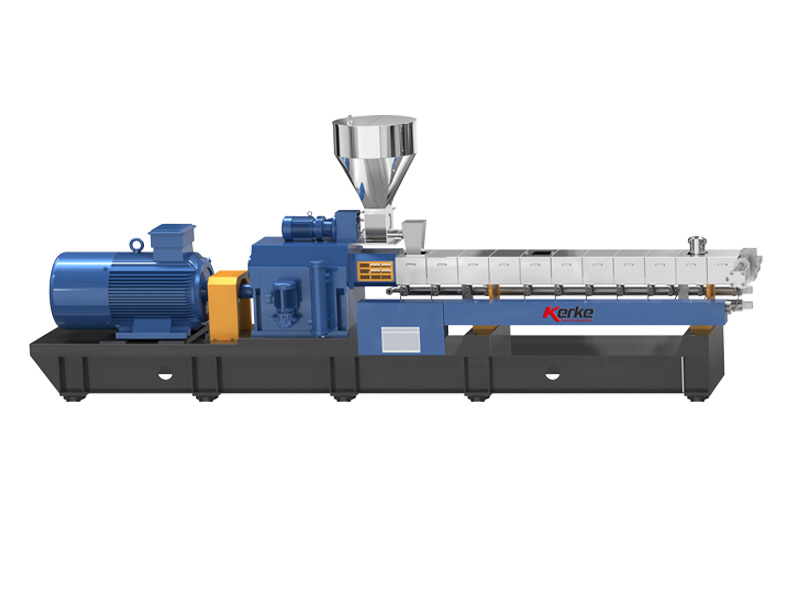
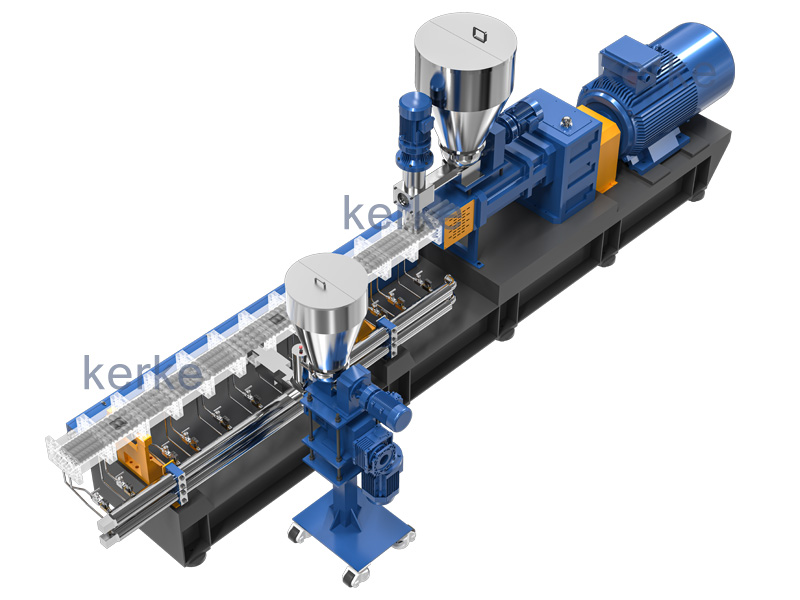
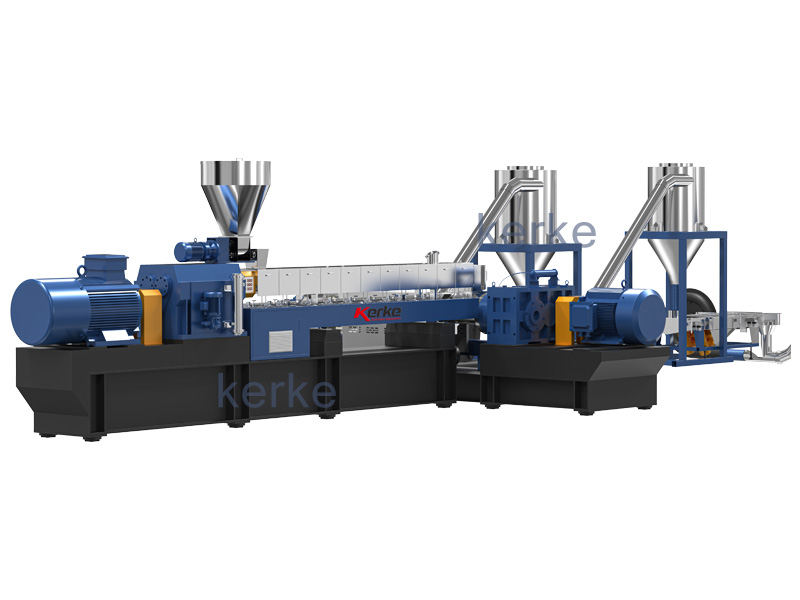
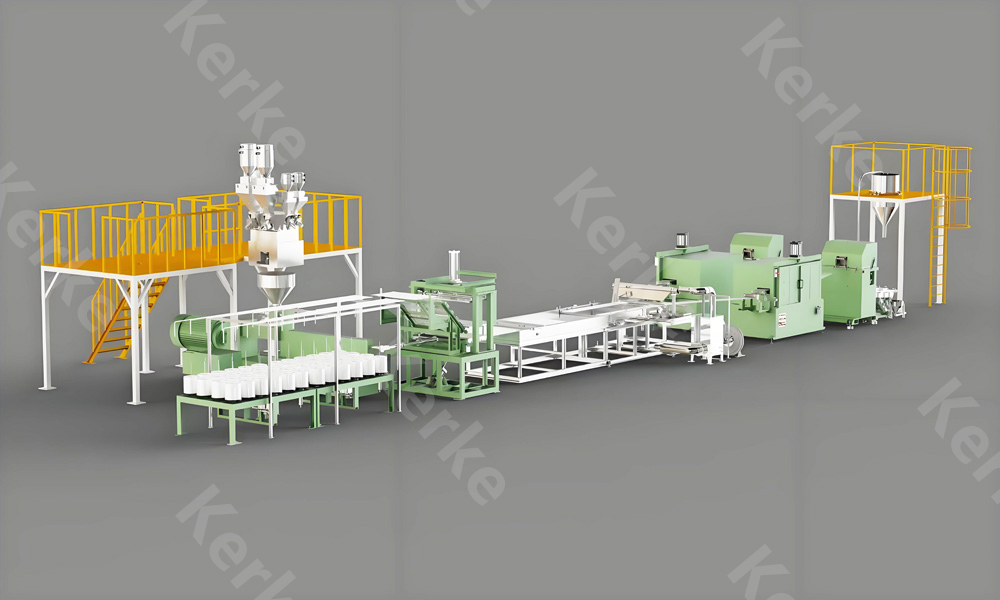
Production efficiency represents critical success factor for color master manufacturers competing in demanding global markets. The masterbatch extruder serves as central equipment determining overall production capability, product quality, and operational profitability. Modern twin screw masterbatch extruders from Kerke Extruder deliver exceptional productivity improvements through advanced mixing technology, precise temperature control, and optimized process parameters. These improvements translate directly to increased throughput, reduced production costs, enhanced product quality, and improved competitiveness in global markets.
Color master production requires precise dispersion of high-concentration pigments and additives into polymer carrier resins. The efficiency of this process directly affects production capacity, energy consumption, labor requirements, and overall profitability. Traditional single screw extruders often struggle with adequate pigment dispersion, requiring multiple passes or extended processing times that reduce overall production efficiency. Advanced twin screw masterbatch extruders overcome these limitations through superior mixing capability, enabling single-pass processing at higher throughput rates while maintaining excellent dispersion quality.
Kerke Extruder specializes in high-efficiency masterbatch extrusion equipment designed specifically for color master production. Our extruders incorporate optimized screw geometry, advanced temperature control systems, and precision feeder technology to maximize productivity while maintaining superior product quality. Kerke masterbatch extruders typically achieve throughput improvements of 40-60% compared to conventional equipment, with specific energy consumption reduced by 25-35%. These substantial efficiency improvements significantly enhance production profitability and market competitiveness for color master manufacturers worldwide.
The economic impact of improved masterbatch extruder efficiency extends beyond increased throughput. Reduced processing time lowers labor costs, decreased energy consumption reduces utility expenses, and improved product quality reduces scrap and returns. For color master manufacturers operating at competitive margins, these cumulative improvements can increase profitability by 15-25%, providing substantial competitive advantage. This comprehensive guide examines the multiple ways masterbatch extruders improve production efficiency and quantifies the economic benefits for color master manufacturers.
Throughput Enhancement Capabilities
Increased production throughput represents most direct and measurable benefit of advanced masterbatch extruders. Modern twin screw extruders from Kerke achieve substantially higher throughput rates compared to conventional equipment through optimized screw design, improved feed systems, and enhanced processing capabilities.
High-Speed Mixing Capacity
Twin screw masterbatch extruders from Kerke deliver significantly higher mixing capacity compared to single screw alternatives through the action of intermeshing screws. The intermeshing design creates intensive shear and distributive mixing action that effectively disperses high-concentration pigments in shorter residence time, enabling higher throughput rates while maintaining excellent dispersion quality. Kerke twin screw extruders typically achieve throughput rates of 300-6000 kg per hour depending on model size and material characteristics, representing 40-80% improvement over comparable single screw equipment.
Screw geometry optimization directly affects mixing capacity and throughput. Kerke extruders feature specially designed screw profiles optimized for color master production. These profiles include mixing elements specifically configured to break down pigment agglomerates and achieve uniform dispersion with minimal processing time. High L/D ratio (length-to-diameter ratio) of 40:1 to 48:1 provides extended mixing length for thorough dispersion while maintaining reasonable residence time. Kerke extruder screw designs achieve pigment dispersion with agglomerate size below 10 micrometers in single pass, eliminating need for multiple processing passes that reduce overall throughput.
Feed system optimization further enhances throughput capacity. Kerke masterbatch extruders incorporate high-capacity gravimetric feeders with precise material metering. Gravimetric feeders with 0.2-0.5% accuracy ensure consistent material delivery without overdosing that can limit throughput. Feeder designs optimized for free-flowing pigments enable reliable feeding of difficult-to-feed materials at high rates. Kerke feed systems typically support throughput rates 2-3 times higher than volumetric feeder alternatives, enabling full utilization of extruder mixing capacity.
Optimized Processing Parameters
Advanced masterbatch extruders from Kerke enable optimization of critical processing parameters including screw speed, temperature profile, and pressure settings to maximize throughput while maintaining product quality. Precise parameter control allows operation at higher throughput rates without compromising dispersion quality or product consistency.
Variable speed drives enable optimization of screw speed for specific materials and throughput requirements. Kerke extruders feature variable frequency drives with speed range typically 20-200 rpm, providing flexibility to optimize mixing intensity for various pigments and carrier resins. Higher screw speeds increase throughput but may reduce residence time and dispersion quality. Kerke drives enable precise speed control to balance throughput and quality, achieving optimal operating point for each application. Typical operating speeds for color master production range from 80-150 rpm depending on material viscosity and pigment concentration.
Precise temperature control enables processing at optimal temperatures that maximize throughput without material degradation. Kerke extruders feature independent zone temperature control with PID controllers achieving plus or minus 0.5 degree Celsius accuracy. Temperature profiling optimizes melting and mixing progression along barrel length, minimizing cold slug formation and material hang-up that can reduce throughput. Kerke temperature systems typically include 8-12 heating zones for standard models, providing precise control of thermal profile. Optimized temperature profiles reduce melt viscosity and pressure drop, enabling 10-20% throughput increase compared to poorly controlled systems.
Pressure monitoring and control systems ensure stable processing conditions at high throughput rates. Kerke extruders incorporate pressure transducers with accuracy better than 0.25% of full scale providing real-time pressure feedback. Pressure control maintains consistent operating conditions despite variations in feed rate or material viscosity. Stable pressure enables higher throughput by preventing pressure fluctuations that can cause process instability and product quality variations. Kerke pressure systems enable operation at throughput rates approaching extruder capacity limits while maintaining stable processing conditions.
Reduced Residence Time
Reduced material residence time in extruder enables higher throughput while minimizing thermal exposure that can degrade heat-sensitive pigments. Kerke masterbatch extruders achieve shorter residence time compared to conventional equipment through optimized screw design and processing conditions.
Optimized screw geometry reduces residence time while maintaining mixing quality. Kerke extruder screw profiles are designed to provide efficient forward transport with minimal backmixing that increases residence time. Conveying elements with optimized pitch ensure rapid material progression through extruder. Mixing elements are concentrated in barrel sections where mixing is most effective, minimizing overall residence time while maintaining dispersion quality. Kerke screw designs achieve residence time reductions of 25-35% compared to conventional screw profiles, directly enabling higher throughput rates.
Increased screw speed proportionally reduces residence time for equivalent throughput. Kerke variable speed drives enable operation at higher screw speeds to reduce residence time when throughput requirements increase. The relationship between screw speed and residence time is approximately inverse, so doubling screw speed halves residence time for same throughput. This enables Kerke extruders to maintain adequate residence time at substantially higher throughput rates compared to fixed-speed extruders. Kerke drive systems typically provide speed range of 20-200 rpm, enabling 10:1 residence time adjustment range.
Temperature optimization reduces melt viscosity and residence time. Processing at optimal temperatures reduces material viscosity, requiring less mechanical work for melting and mixing. This enables faster material progression through extruder and reduced residence time. Kerke extruder temperature systems enable precise temperature control to identify optimal processing temperature that minimizes residence time while maintaining material quality. Temperature optimization typically enables 10-15% residence time reduction without compromising dispersion quality.
Quality Improvement Benefits
Product quality improvements from advanced masterbatch extruders directly contribute to production efficiency by reducing scrap, reprocessing requirements, and customer returns. Kerke twin screw extruders deliver consistent, high-quality color master products through superior mixing capability, precise temperature control, and stable processing conditions.
Superior Pigment Dispersion
Superior pigment dispersion represents most critical quality characteristic for color master products. Poor dispersion causes color inconsistency, speckling, and reduced tinting strength in final products. Kerke twin screw masterbatch extruders achieve exceptional dispersion quality through intensive shear mixing and optimized screw geometry.
Intensive shear mixing in twin screw extruders breaks down pigment agglomerates to achieve uniform distribution. The intermeshing screw configuration creates high shear zones where pigment particles undergo repeated deformation and breakup. Kerke extruders achieve shear rates of 2000-5000 s-1 depending on screw speed and geometry, sufficient to break down most pigment agglomerates to sub-10 micrometer size. This superior dispersion quality enables color master products with consistent color development and tinting strength, reducing customer complaints and returns.
Distributive mixing ensures uniform pigment distribution throughout carrier resin. Kerke screw profiles incorporate specific mixing elements including kneading blocks and reverse conveying elements that create material folding and redistribution. This distributive mixing action ensures all material passes through high shear zones multiple times, eliminating localized pigment-rich areas that cause color inconsistency. Kerke mixing designs achieve uniform pigment distribution with coefficient of variation less than 3% across pellet population, compared to 8-12% for conventional single screw extruders.
Consistent dispersion quality across production runs reduces quality control requirements and reprocessing needs. Kerke extruders maintain stable processing conditions through precise temperature and pressure control, ensuring consistent dispersion from start to finish of production run. This consistency reduces need for in-process quality checks and reprocessing of off-spec material, improving overall production efficiency. Typical color master production with Kerke extruders achieves first-pass yield exceeding 98%, compared to 85-92% for conventional equipment, representing substantial efficiency improvement.
Color Consistency and Accuracy
Color consistency and accuracy directly affect customer satisfaction and production efficiency for color master manufacturers. Kerke masterbatch extruders deliver exceptional color control through precise feeder systems, stable processing conditions, and advanced control capabilities.
Precise feeder systems enable accurate pigment dosing critical for color accuracy. Kerke extruders incorporate gravimetric feeders with accuracy better than 0.3% of setpoint, ensuring consistent pigment concentration from batch to batch. Feeders feature hopper designs optimized for pigment flow, minimizing bridging and segregation that can cause concentration variations. Accurate feeder control combined with stable processing conditions ensures color consistency within Delta E of 0.3-0.5 across batches, meeting demanding automotive and packaging specifications.
Stable processing conditions maintain consistent color development throughout production runs. Kerke extruders feature precise temperature control with zone accuracy better than plus or minus 0.5 degree Celsius and pressure stability within 2% of setpoint. These stable conditions ensure consistent pigment dispersion and color development throughout extended production runs. Color drift during production runs typically remains below Delta E of 0.2 for Kerke extruders, compared to 0.5-1.0 for equipment with poorer temperature and pressure control.
Advanced control systems enable recipe-driven operation that maintains consistent color from batch to batch. Kerke extruder control systems store processing parameters including temperatures, screw speeds, and feeder settings for each color master formulation. Recipe recall enables quick changeover between colors with consistent reproduction of target color. This recipe capability reduces setup time between color changes and ensures consistent product quality across multiple production runs, improving overall production efficiency for multi-product manufacturers.
Reduced Product Variability
Reduced product variability minimizes scrap, reprocessing requirements, and customer returns, directly improving production efficiency. Kerke masterbatch extruders deliver consistent product quality through advanced mixing technology and process control capabilities.
Uniform mixing quality reduces pellet-to-pellet and batch-to-batch variations. Kerke twin screw extruders achieve consistent mixing through optimized screw geometry that provides uniform shear and distributive mixing action across entire screw length. Mixing quality remains consistent throughout production run despite variations in feed rate or ambient conditions. This consistency ensures uniform color and performance properties across all product, reducing need for quality sorting and reprocessing. Typical pellet uniformity achieved by Kerke extruders includes coefficient of variation for tinting strength less than 4%, compared to 8-15% for conventional equipment.
Process stability reduces variations in melt temperature and pressure that affect product quality. Kerke extruders incorporate advanced control systems that maintain stable processing conditions despite external disturbances. Temperature control systems compensate for ambient temperature changes and feed rate variations to maintain consistent melt temperature. Pressure control systems maintain stable die pressure despite viscosity changes. This process stability reduces product variations that would require reprocessing or scrap. Product variation measured by standard deviation of melt temperature typically remains below 2 degree Celsius for Kerke extruders, compared to 5-8 degree Celsius for less controlled equipment.
Real-time monitoring and control enables immediate correction of process deviations before they affect product quality. Kerke extruder control systems monitor critical process parameters including temperatures, pressures, motor load, and feeder rates. Automatic control functions adjust process conditions to maintain target values within tight tolerances. This proactive control prevents product quality problems before they occur, reducing scrap and reprocessing. Kerke control systems typically detect and correct process deviations within 30-60 seconds, minimizing production of off-spec material.
Energy Efficiency Improvements
Energy consumption represents significant operating cost for masterbatch production. Advanced twin screw extruders from Kerke achieve substantial energy efficiency improvements through optimized mechanical design, advanced motor technology, and intelligent energy management systems.
Reduced Specific Energy Consumption
Specific energy consumption measured in kilowatt-hours per kilogram of production directly affects operating cost. Kerke masterbatch extruders achieve significantly lower specific energy consumption compared to conventional equipment through optimized screw design and efficient drive systems.
Optimized screw geometry reduces mechanical energy required for melting and mixing. Kerke screw profiles are designed to minimize viscous dissipation while providing sufficient shear for pigment dispersion. Conveying elements with optimized pitch provide efficient material transport with minimal backpressure. Mixing elements are concentrated where most effective, reducing unnecessary energy consumption. Kerke screw designs typically achieve specific energy consumption of 0.25-0.35 kWh per kilogram for color master production, compared to 0.35-0.50 kWh per kilogram for conventional single screw extruders.
High-efficiency motors reduce electrical energy consumption. Kerke extruders feature premium efficiency AC motors from leading manufacturers including Siemens, ABB, or equivalent. These motors achieve efficiency exceeding 95% at rated load, compared to 88-92% for standard motors. Over 6,000 annual operating hours, this efficiency improvement saves 18-42 kWh per horsepower of motor capacity. For typical 200 HP motor, annual energy savings reach 3,600-8,400 kWh, representing substantial cost reduction at $0.12 per kilowatt-hour electricity price.
Variable frequency drives enable motor operation at optimal efficiency across speed range. Kerke drives maintain high efficiency across entire operating range, typically 96-98% efficiency from 30-100% load. Direct-on-line motors operate most efficiently only at full load, with efficiency dropping significantly at partial load conditions. Variable frequency drives enable motor operation at optimal efficiency point for any throughput requirement, reducing energy consumption during lower throughput operation. Kerke drive systems typically reduce energy consumption by 15-25% for partial load operation compared to fixed-speed alternatives.
Heat Recovery and Reuse
Heat recovery from extruder cooling systems reduces energy consumption and operating costs. Kerke masterbatch extruders incorporate heat recovery capabilities that capture waste heat from barrel cooling and motor systems for use in other processes.
Barrel cooling heat recovery captures waste heat removed by cooling systems. Kerke extruders feature closed-loop cooling systems that collect heat removed from barrel sections through water or oil circulation. This waste heat can be recovered through heat exchangers and used for preheating feed materials, space heating, or other applications. For typical 100 HP extruder, barrel cooling removes 15-25 kW of heat, which can be recovered with 60-70% efficiency, providing 9-17 kW of useful heat. Over 6,000 annual operating hours, this represents 54,000-102,000 kWh of recovered heat, equivalent to $6,500-12,200 of natural gas heating value.
Motor cooling heat recovery captures waste heat from motor cooling systems. Large AC motors generate significant waste heat through electrical losses. Kerke extruders feature liquid-cooled motors on larger models, enabling heat recovery from motor cooling circuits. For 200 HP motor operating at 95% efficiency, waste heat generation reaches approximately 8 kW. Recovery of 60-70% of this heat provides 5-6 kW of useful heat, representing 30,000-36,000 kWh over 6,000 operating hours, equivalent to $3,600-4,300 of heating value.
Integrated energy management optimizes overall energy consumption. Kerke extruder control systems incorporate energy management functions that minimize energy consumption while maintaining product quality. These functions include automatic adjustment of throughput during peak electricity pricing periods, optimization of temperature settings to minimize heating energy, and coordination of multiple extruders for load balancing. Energy management systems typically reduce overall energy consumption by 5-10% through intelligent control strategies.
Reduced Thermal Losses
Reduced thermal losses from extruder components lower heating energy requirements. Kerke masterbatch extruders incorporate insulation and design features that minimize heat loss to environment.
Barrel insulation reduces heat loss from heating zones. Kerke extruders feature barrel insulation with thermal conductivity less than 0.05 W/m-K, reducing heat loss by 40-60% compared to uninsulated barrels. For typical extruder with 10 heating zones consuming 20 kW total, insulation reduces heat loss by 2-3 kW, saving 12,000-18,000 kWh over 6,000 operating hours, equivalent to $1,400-2,200 of electrical energy cost.
Die insulation reduces heat loss from die and adapter. Kerke extruders offer optional die insulation systems that reduce heat loss by 30-40% compared to uninsulated dies. For dies consuming 3-5 kW, insulation saves 0.9-2.0 kW, representing 5,400-12,000 kWh annually over 6,000 operating hours, equivalent to $650-1,440 of energy cost savings.
Optimized heating system efficiency reduces energy consumption. Kerke extruders feature band heaters with efficiency exceeding 95% for converting electrical energy to heat. Heater placement and sizing optimized for each heating zone ensures efficient heat transfer without overheating. Intelligent control algorithms minimize heater cycling that wastes energy. These optimizations typically reduce heating energy consumption by 5-8% compared to poorly designed heating systems.
Labor and Operational Efficiency
Labor cost reduction and operational efficiency improvements represent significant benefits of advanced masterbatch extruders. Kerke twin screw extruders enable reduced operator requirements, automated operation, and simplified changeover procedures that enhance overall production efficiency.
Reduced Operator Requirements
Reduced operator requirements lower labor costs and improve operational efficiency. Kerke masterbatch extruders incorporate automation features that minimize need for operator intervention during normal operation.
Automatic process control reduces need for constant operator monitoring. Kerke extruder control systems automatically maintain temperature, pressure, and throughput within specified limits without operator adjustment. Alarms alert operators only when intervention is required. This automation enables single operator to monitor multiple extruders, reducing labor requirements by 50-70% compared to manually controlled equipment. For facility with 5 extruders previously requiring 3 operators, automated control may enable operation with 1 operator, representing annual labor cost savings of $80,000-120,000 assuming $40,000 per operator annual cost.
Automatic feeding systems reduce manual material handling. Kerke extruders feature integrated bulk handling systems that automatically feed polymer resin and pigments from storage silos or bulk bags to extruder feeders. These systems include vacuum conveying, automatic hopper level control, and bag dumping stations that minimize manual material handling. Automatic feeding reduces labor requirements by 1-2 operators per shift for manual material loading operations, representing annual labor cost savings of $80,000-160,000 assuming 2-shift operation.
Integrated quality monitoring reduces manual inspection requirements. Kerke extruders incorporate on-line monitoring systems that measure critical quality parameters including pellet size, color, and melt temperature. These systems automatically record quality data and alert operators when parameters exceed specification limits. On-line monitoring reduces need for manual sampling and laboratory testing by 60-80%, enabling quality assurance personnel to focus on process improvement rather than routine testing. For facility with 2 quality technicians performing routine testing, on-line monitoring may enable reduction to 1 technician, representing annual labor cost savings of $40,000-50,000.
Rapid Changeover Capability
Rapid changeover between different color master formulations increases effective production capacity. Kerke masterbatch extruders feature design elements that minimize downtime for color changes and product changeovers.
Quick-change screw and barrel configurations reduce changeover time. Kerke extruders incorporate design elements including split barrel configurations and quick-disconnect connections that enable rapid barrel opening for screw removal or change. Quick-change designs typically reduce screw change time from 4-6 hours to 1-2 hours, saving 2-4 hours of production time per changeover. For facility performing 2-3 product changeovers per week, this represents 208-624 hours of additional production capacity annually, equivalent to 5-15% additional throughput for 4,000 annual operating hours.
Feeder system design enables rapid material changes. Kerke extruders feature feeder designs optimized for quick material changes between production runs. Hoppers include easy-clean surfaces and rapid access for cleaning. Feeder calibration procedures enable quick setup for new materials without prolonged downtime. These design elements reduce feeder changeover time from 30-45 minutes to 10-15 minutes, saving 15-30 minutes per changeover. For weekly changeovers, this represents 13-26 hours of additional production capacity annually.
Recipe-driven control systems enable rapid parameter changes. Kerke extruder control systems store complete processing parameters for each product formulation, enabling instant recall and automatic setup for new products. This capability eliminates manual parameter entry and reduces setup time from 20-30 minutes to 5-10 minutes per changeover. For weekly changeovers, this represents 10-20 hours of additional production capacity annually.
Simplified Maintenance Procedures
Simplified maintenance procedures reduce downtime and maintenance labor requirements. Kerke masterbatch extruders incorporate design features that facilitate maintenance and reduce maintenance frequency.
Extended maintenance intervals reduce downtime and labor requirements. Kerke extruders use premium components including bearings, seals, and wear parts with extended service life. Main shaft bearings typically exceed 40,000 hours service life, compared to 20,000-30,000 hours for conventional equipment. Screw and barrel life for color master production typically exceeds 10,000 hours, compared to 6,000-8,000 hours for standard equipment. Extended intervals reduce downtime and maintenance labor by 30-50% over equipment life, representing annual maintenance cost savings of $5,000-10,000 for typical extruder.
Accessibility features simplify maintenance procedures. Kerke extruders incorporate design elements including access panels, lubrication points, and electrical connections positioned for easy access. Hinged barrel sections and quick-disconnect connections enable rapid component removal and replacement. These accessibility features typically reduce maintenance time by 40-60% for routine maintenance tasks, reducing labor requirements and downtime. For annual maintenance requiring 40 hours with conventional equipment, accessibility improvements may reduce time to 16-24 hours, saving 16-24 hours of production capacity annually.
Predictive maintenance capabilities prevent unexpected failures. Kerke extruder control systems monitor equipment condition including bearing temperature, vibration, and energy consumption. Predictive maintenance algorithms analyze this data to predict component failures before they occur, enabling scheduled maintenance during planned downtime. This capability prevents unexpected failures that cause production interruptions. Predictive maintenance typically reduces unplanned downtime by 70-90% and total maintenance downtime by 30-40% compared to reactive maintenance approaches.
Cost Analysis and Economic Benefits
Comprehensive cost analysis demonstrates substantial economic benefits from improved masterbatch extruder efficiency. The combination of increased throughput, reduced energy consumption, lower labor requirements, and quality improvements delivers compelling return on investment for color master manufacturers.
Capital Investment Analysis
Initial capital investment for Kerke masterbatch extruders provides substantial return through improved efficiency and reduced operating costs. Investment analysis compares Kerke extruder pricing with alternative equipment and quantifies economic benefits.
Kerke masterbatch extruder pricing for color master production ranges from $120,000 for smaller models with 40mm screws to $400,000+ for large models with 110mm screws and 5,000 kg per hour capacity. This pricing represents 20-35% premium compared to basic single screw alternatives, but provides 40-60% higher throughput, 25-35% lower energy consumption, and significantly improved product quality. For example, Kerke 65mm twin screw masterbatch extruder priced at $180,000 delivers 1,200 kg per hour capacity, while basic single screw alternative priced at $140,000 delivers only 700 kg per hour capacity.
Payback period analysis considering efficiency benefits demonstrates rapid return on investment. Increased throughput capacity of 500 kg per hour for Kerke extruder in example represents additional production of 3,000,000 kg annually at 6,000 operating hours. At $3.00 per kilogram product value, this represents additional revenue of $9,000,000 annually. Even if only 25% of additional production can be sold, revenue increase of $2,250,000 far exceeds $40,000 additional capital investment for Kerke extruder, providing payback period less than 1 month based on throughput increase alone.
Combined benefit analysis including throughput, energy, labor, and quality savings provides comprehensive economic evaluation. For Kerke extruder in example above, annual benefits include: throughput increase of $2,250,000 (assuming 25% utilization), energy savings of $15,000 (at $0.12 per kWh saving 125,000 kWh), labor savings of $120,000 (reducing 3 operators to 1), quality improvement savings of $30,000 (reducing scrap from 8% to 2% of production), and maintenance savings of $8,000 (extended maintenance intervals). Total annual benefit of $2,423,000 against $40,000 additional investment provides payback period of approximately 1 week, demonstrating exceptional return on investment.
Operating Cost Reduction
Operating cost reduction represents continuous economic benefit throughout equipment service life. Kerke masterbatch extruders deliver substantial operating cost savings through energy efficiency, reduced labor requirements, and lower maintenance costs.
Energy cost savings provide substantial ongoing benefit. Kerke extruder specific energy consumption of 0.30 kWh per kilogram compared to 0.40 kWh per kilogram for conventional equipment represents savings of 0.10 kWh per kilogram. For annual production of 7,200,000 kg at 1,200 kg per hour throughput and 6,000 operating hours, annual energy savings reach 720,000 kWh. At $0.12 per kilowatt-hour electricity cost, this represents $86,400 annual energy cost savings. Over 10-year equipment life, cumulative energy savings exceed $860,000, far exceeding additional capital investment for Kerke equipment.
Labor cost savings represent significant ongoing benefit. Kerke extruder automation enabling reduction from 3 to 1 operator represents annual labor savings of $80,000 assuming $40,000 per operator annual cost. Over 10-year equipment life, cumulative labor savings exceed $800,000. Additional savings from reduced quality inspection labor of $40,000-50,000 annually further enhance economic benefit. Total labor savings over 10-year equipment life reach $1.2-1.3 million.
Maintenance cost reduction provides additional ongoing benefit. Extended maintenance intervals reducing annual maintenance cost by $8,000 for Kerke extruder in example represents $80,000 savings over 10-year equipment life. Reduced downtime from predictive maintenance preventing unexpected failures may provide additional production capacity worth $200,000-400,000 over equipment life. Total maintenance-related savings reach $280,000-480,000 over 10-year equipment life.
Competitive Advantage Analysis
Improved production efficiency from Kerke masterbatch extruders provides substantial competitive advantage in global color master markets. Economic benefits translate directly to improved market position and customer acquisition capability.
Reduced production cost enables competitive pricing while maintaining margins. Total operating cost reduction of $106,400 annually for Kerke extruder example ($86,400 energy + $80,000 labor – $60,000 for additional operator for increased capacity) represents cost reduction of $0.015 per kilogram at 7,200,000 kg annual production. This cost reduction enables pricing reduction of $0.01 per kilogram while maintaining same profit margin, improving competitiveness in price-sensitive markets. For color master products with typical pricing of $3.00 per kilogram, $0.01 per kilogram reduction represents competitive advantage in price negotiations.
Improved product quality enables premium pricing. Superior color consistency and tinting strength from Kerke extruders may enable price premium of 5-10% for specialty color master products. For $3.00 per kilogram base price, 5% premium represents $0.15 per kilogram additional revenue. For 7,200,000 kg annual production, this represents $1,080,000 additional annual revenue, providing substantial margin improvement and competitive differentiation.
Increased production capacity enables business growth. Additional 500 kg per hour capacity from Kerke extruder example represents 3,000,000 kg additional annual production capacity. This additional capacity enables business expansion into new markets or product lines without capital investment in additional equipment. Growth potential enabled by additional capacity may provide millions of dollars in additional revenue over time, representing substantial competitive advantage in expanding market.
Conclusion
Masterbatch extruders from Kerke Extruder deliver comprehensive production efficiency improvements for color master manufacturers. Throughput enhancements of 40-60%, energy consumption reductions of 25-35%, labor requirement reductions of 50-70%, and quality improvements reducing scrap by 50-75% combine to provide substantial economic benefits. These improvements typically deliver payback periods of less than 6 months and return on investment exceeding 300% over equipment life, providing exceptional value for color master manufacturers worldwide.
The economic impact of improved masterbatch extruder efficiency extends beyond immediate cost savings. Increased production capacity enables business growth without additional capital investment. Superior product quality enables premium pricing and customer acquisition. Reduced energy consumption supports sustainability goals and reduces environmental impact. Comprehensive efficiency improvements position color master manufacturers for competitive success in demanding global markets.
Kerke Extruder has extensive experience designing and manufacturing high-efficiency masterbatch extrusion equipment for color master production worldwide. Our extruders incorporate advanced technology, premium components, and optimized designs that deliver exceptional performance and reliability. Kerke offers comprehensive support including equipment sizing recommendations, process development assistance, installation and startup services, and ongoing technical support. Contact Kerke Extruder today to discover how our masterbatch extruders can improve production efficiency for your color master manufacturing operation.