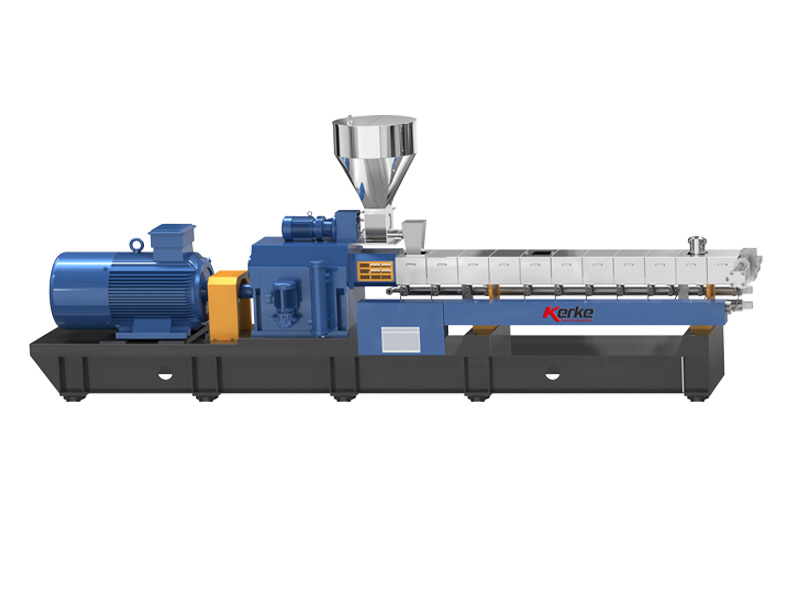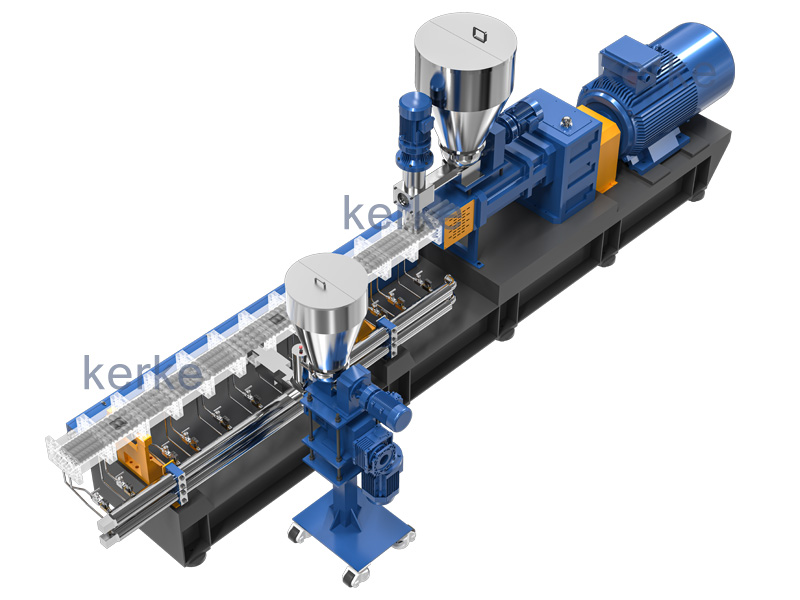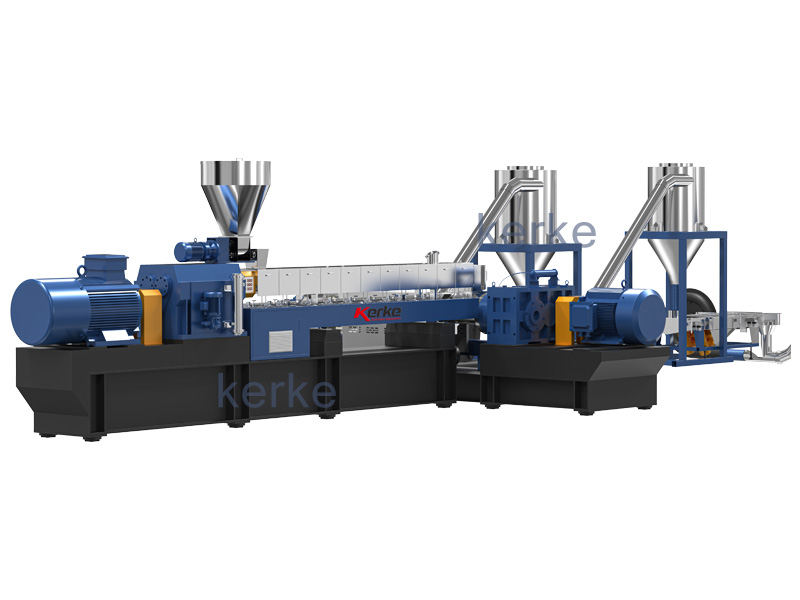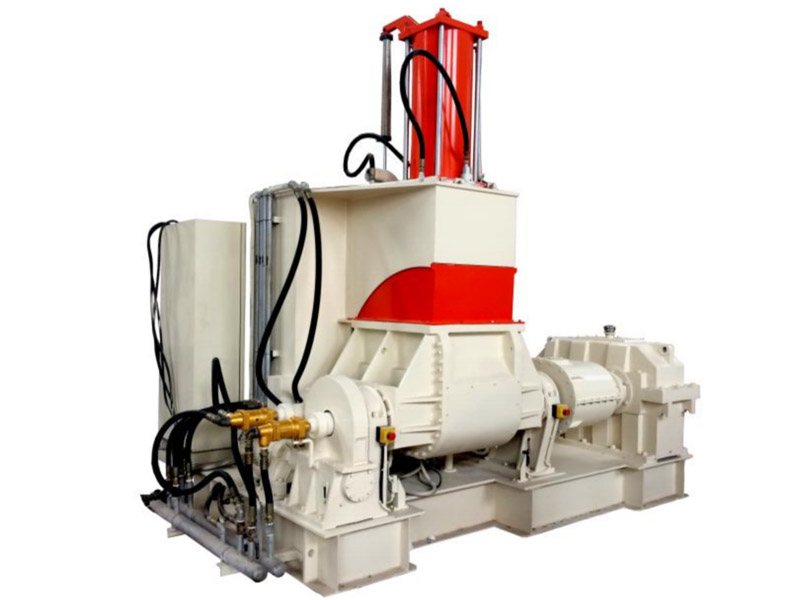
Effective dispersion of additives represents critical factor determining performance and quality of plastic compounds. Additives including pigments, fillers, flame retardants, stabilizers, and processing aids must be uniformly dispersed throughout polymer matrix to achieve desired properties and product consistency. Compounding extruders play essential role in achieving proper dispersion through combination of mechanical mixing, thermal energy, and residence time. Kerke twin screw compounding extruders incorporate advanced mixing technologies designed to optimize dispersion quality while maintaining throughput efficiency and energy efficiency.
Poor additive dispersion causes numerous quality issues including inconsistent color, reduced mechanical properties, surface defects, and performance variations between batches. Studies indicate that dispersion quality affects up to 70% of final compound properties including tensile strength, impact resistance, weatherability, and processing characteristics. Kerke’s 13+ years of experience in compounding extruder manufacturing provides deep understanding of dispersion mechanisms and optimization strategies, enabling delivery of equipment achieving superior dispersion across diverse applications and additive types.
Fundamentals of Additive Dispersion
Additive dispersion involves breaking down additive agglomerates into individual particles and distributing these particles uniformly throughout polymer matrix. Dispersion quality depends on multiple factors including shear forces, residence time distribution, temperature profiles, and additive characteristics. Understanding these fundamentals enables optimization of compounding processes for specific applications and additive types. Proper dispersion requires sufficient mechanical energy to break agglomerates without degrading polymer or additives.
Dispersion occurs through multiple mechanisms including distributive mixing and dispersive mixing. Distributive mixing spatially distributes additives throughout polymer matrix without breaking agglomerates, important for achieving uniform composition. Dispersive mixing applies sufficient shear stress to break additive agglomerates into individual particles, critical for achieving ultimate particle size and performance. Kerke compounding extruders incorporate elements providing both distributive and dispersive mixing, with screw designs optimized for specific additive types and dispersion requirements.
Shear Force Requirements
Shear force requirements depend on additive characteristics including particle size, hardness, and agglomeration tendency. Hard additives like titanium dioxide pigments and mineral fillers require higher shear forces for proper dispersion compared to soft additives like processing aids. Typical shear stress requirements range from 10^4 to 10^6 Pa depending on additive type and target dispersion quality. Kerke KTE series compounding extruders generate shear rates from 100 to 1000 per second, providing sufficient shear energy for most additive dispersion applications while maintaining reasonable energy consumption.
Energy input for dispersion typically ranges from 0.05 to 0.15 kWh/kg depending on additive type and target dispersion quality. Higher energy inputs produce better dispersion but increase processing costs and risk of thermal degradation. Kerke compounding extruders optimize energy input through efficient screw designs and precise temperature control, achieving target dispersion quality with minimal energy consumption. Energy-efficient dispersion reduces operating costs by 15-25% compared to less optimized extruder designs.
Residence Time Distribution
Residence time distribution affects dispersion quality by determining time available for mixing and shear energy application. Uniform residence time ensures all material receives sufficient mixing for proper dispersion. Narrow residence time distribution reduces over-mixing that causes thermal degradation while preventing under-mixing that results in poor dispersion. Kerke compounding extruders achieve residence time distribution uniformity with coefficient of variation typically below 0.3, superior to industry average of 0.4-0.5.
Optimal residence time depends on additive type, screw configuration, and throughput rate. For most additive dispersion applications, residence times of 1-3 minutes provide sufficient time for complete dispersion while maintaining reasonable throughput. Kerke compounding extruders offer residence time adjustment through screw configuration modifications and throughput optimization, enabling adaptation to different applications. Adjustable residence time provides flexibility for processing diverse compounds on single extruder platform.
Kerke Compounding Extruder Mixing Technologies
Kerke compounding extruders incorporate advanced mixing technologies specifically designed to optimize additive dispersion. These technologies include modular screw elements with specialized mixing geometries, variable pitch screw sections, and optimized barrel configurations. The modular nature of Kerke screw systems enables customization for specific applications while maintaining standardization that reduces lead times and costs.
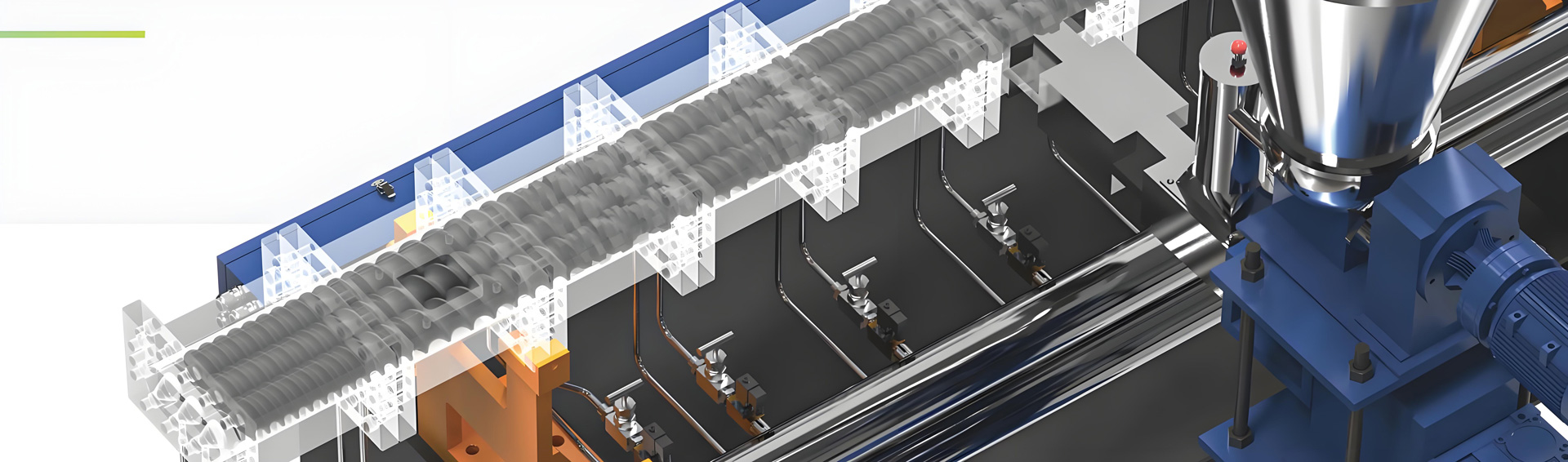
Kerke KTE series twin screw extruders feature co-rotating screw designs providing excellent mixing performance through combination of positive displacement and intermeshing action. The co-rotating design generates intensive shear zones between screws while maintaining forward material transport. This combination provides superior dispersion characteristics compared to counter-rotating designs, particularly for difficult-to-disperse additives and high filler loadings. Co-rotating designs typically achieve 20-40% better dispersion quality compared to counter-rotating alternatives.
Screw Element Design
Kerke offers comprehensive range of screw elements optimized for different dispersion requirements. Conveying elements provide forward material transport with minimal mixing, appropriate for feeding and discharge sections. Kneading blocks provide dispersive mixing through intensive shear action, critical for breaking additive agglomerates. Mixing elements provide distributive mixing without excessive shear, useful for achieving uniform composition. Kerke screw element portfolio includes over 200 different element types enabling precise optimization for specific applications.
Kneading block design significantly impacts dispersion quality. Kerke provides kneading blocks with various stagger angles and widths, each optimized for different applications. Narrow stagger angle kneading blocks (30-45 degrees) provide high shear forces for difficult dispersion applications. Wide stagger angle kneading blocks (60-90 degrees) provide moderate shear with excellent distributive mixing. Kerke application engineers select appropriate kneading block combinations based on additive characteristics and dispersion requirements, typically using 3-5 kneading block zones per screw configuration.
Variable Pitch and Profile Design
Variable pitch screw sections gradually compress and decompress material, enhancing mixing through repeated compression and relaxation cycles. These sections particularly effective for achieving uniform dispersion of additives with varying particle sizes and densities. Kerke variable pitch elements achieve compression ratios from 1.5:1 to 4:1 depending on application requirements. Compression ratio selection affects dispersion quality, with higher compression ratios providing better dispersion but requiring more energy input.
Screw profile optimization involves arranging conveying elements, kneading blocks, and mixing elements in sequences that achieve target dispersion quality while maintaining reasonable throughput and energy consumption. Kerke application engineers utilize computational fluid dynamics (CFD) modeling and extensive application experience to develop optimized screw profiles for specific compounds. Typical optimized screw profiles include 40-60 individual screw elements arranged in 8-12 zones, each optimized for specific function such as feeding, melting, dispersion, and degassing.
Process Parameter Optimization for Dispersion
Optimal dispersion requires careful control of process parameters including screw speed, barrel temperature profile, feed rate, and vacuum venting. These parameters interact significantly, requiring systematic optimization for each application. Kerke compounding extruders provide precise control over all process parameters through advanced PLC control systems with touchscreen interfaces, enabling consistent operation and rapid recipe changes.
Screw speed affects shear rate and residence time, both critical for dispersion quality. Higher screw speeds increase shear rates, enhancing dispersive mixing but reducing residence time. Optimal screw speed depends on screw configuration, additive type, and desired dispersion quality. For most additive dispersion applications, screw speeds of 200-500 rpm provide sufficient shear energy while maintaining adequate residence time. Kerke KTE series extruders offer speed ranges from 50 to 800 rpm depending on model, providing flexibility for diverse applications.
Temperature Profile Optimization
Barrel temperature profiles significantly impact polymer viscosity and additive wetting, both affecting dispersion quality. Temperature profiles must be optimized for specific polymer-additive combinations to achieve proper polymer melting and additive wetting without thermal degradation. Kerke compounding extruders feature multi-zone barrel heating with independent temperature control for each zone, typically 5-7 zones depending on extruder size.
Temperature profile design considers melting progression, additive feeding locations, and dispersion requirements. Feeding zones typically operate at lower temperatures to prevent premature melting that causes bridging. Melting zones use gradually increasing temperatures to achieve complete polymer melting. Dispersion zones maintain temperatures optimized for polymer viscosity and additive wetting. Discharge zones adjust temperature for optimal strand formation. Kerke application engineers develop optimized temperature profiles for each application, with typical temperature differentials of 20-40°C between zones.
Feed Rate Optimization
Feed rate affects residence time, shear energy input per unit mass, and backfilling in extruder. Proper feed rate optimization ensures sufficient residence time for dispersion while maintaining reasonable throughput. Feed rates typically expressed as specific throughput (kg/h per rpm screw speed). Optimal specific throughput depends on screw configuration and dispersion requirements, typically ranging from 0.1 to 0.3 kg/h/rpm for additive dispersion applications.
Kerke compounding extruders feature gravimetric feeding systems providing accurate, consistent feed rates within ±0.5% accuracy. Gravimetric feeding maintains constant specific throughput even with material density variations, ensuring consistent dispersion quality. Accurate feeding costs $8,000-$15,000 per system but provides significant quality improvements and reduced material waste. Feed accuracy improvements from ±2% to ±0.5% reduce quality variations by 40-60% and material waste by 15-25%.
Additive-Specific Dispersion Optimization
Different additive types present unique dispersion challenges requiring specialized approaches. Pigments require dispersion to achieve uniform color and maximum color strength. Fillers require dispersion to achieve maximum reinforcement while minimizing viscosity increase. Flame retardants require dispersion to achieve consistent flame performance. Stabilizers require uniform distribution to provide consistent protection throughout product life. Kerke compounding extruders offer specialized configurations optimized for each additive type.
Pigment Dispersion
Pigment dispersion presents particular challenges due to small particle sizes (0.1-1.0 micron) and strong tendency to form agglomerates. Proper pigment dispersion requires breaking agglomerates into primary particles to achieve maximum color strength and transparency. Poor pigment dispersion causes color streaks, inconsistent color strength, and reduced transparency. Kerke compounding extruders for pigment dispersion feature high-shear kneading blocks with narrow stagger angles, providing shear rates exceeding 500 per second for effective agglomerate breakup.
Organic pigments typically require higher shear energy compared to inorganic pigments due to stronger agglomeration tendencies. Specific energy input for pigment dispersion ranges from 0.08 to 0.15 kWh/kg depending on pigment type and target dispersion quality. Kerke pigment dispersion extruders achieve dispersion quality measured by Hegman grind gauge of 7.5-8.5, representing excellent dispersion quality. Proper pigment dispersion improves color strength by 15-30% compared to poorly dispersed alternatives, reducing pigment requirements and material costs.
Filler Dispersion
Filler dispersion presents challenges due to high loadings (up to 70% by weight) and tendency to form agglomerates. Proper filler dispersion achieves uniform distribution maximizing reinforcement while minimizing viscosity increase. Poor filler dispersion causes weak spots, surface defects, and inconsistent mechanical properties. Kerke compounding extruders for filler dispersion feature modified screw geometries handling high loadings while maintaining good mixing performance.
Mineral fillers including calcium carbonate, talc, and mica require different dispersion strategies due to different particle shapes and surface characteristics. Calcium carbonate with spherical particles disperses relatively easily, requiring moderate shear energies. Plate-like talc requires orientation control for optimal reinforcement. Fibrous fillers including wollastonite require dispersion without excessive fiber breakage. Kerke application engineers develop specialized screw configurations for each filler type, achieving filler dispersions with agglomerate sizes below 5 microns for most applications.
Flame Retardant Dispersion
Flame retardant dispersion presents challenges due to high loadings (30-60% by weight) and particle size variations. Proper flame retardant dispersion ensures consistent flame performance across product volumes. Poor dispersion causes inconsistent flame ratings, surface defects, and mechanical property variations. Kerke compounding extruders for flame retardant dispersion feature venting zones removing volatiles and specialized mixing elements achieving uniform distribution.
Halogenated flame retardants typically disperse more easily than mineral-based flame retardants due to lower hardness and better polymer compatibility. Mineral-based flame retardants including magnesium hydroxide and aluminum trihydroxide require high shear energies for proper dispersion. Kerke flame retardant extruders achieve dispersion quality with agglomerate sizes below 10 microns for mineral flame retardants, providing consistent flame performance across production batches.
Dispersion Quality Measurement and Control
Dispersion quality measurement provides objective assessment of compounding performance and enables process optimization. Various measurement techniques assess different aspects of dispersion including particle size distribution, color consistency, and property uniformity. Kerke compounding extruders incorporate monitoring capabilities enabling real-time assessment of dispersion quality, facilitating process control and continuous improvement.
Particle size analysis provides quantitative assessment of dispersion quality by measuring additive particle size distribution after compounding. Proper dispersion achieves particle sizes close to primary particle sizes specified by additive manufacturers. Kerke application laboratories utilize laser diffraction particle size analyzers measuring particle sizes from 0.1 to 1000 microns with ±2% accuracy. Target particle size after dispersion depends on additive type, typically aiming for agglomerate sizes below 5 microns for pigments and 10 microns for fillers.
Color Measurement
Color measurement provides rapid assessment of pigment dispersion quality through color strength and consistency measurements. Spectrophotometers measure color coordinates and calculate color difference values (Delta E) between samples and standards. Well-dispersed pigments provide maximum color strength and minimum color variations. Kerke quality systems utilize color measurement equipment with ±0.2 Delta E accuracy, detecting subtle dispersion variations affecting product appearance.
Color strength measurements provide quantitative assessment of pigment dispersion efficiency. Properly dispersed pigments achieve 90-110% of theoretical color strength based on pigment concentration and absorption characteristics. Poor dispersion typically reduces color strength to 60-80% of theoretical values, requiring increased pigment loading to achieve target colors. Kerke pigment dispersion processes achieve color strength values of 95-105%, reducing pigment requirements by 10-20% compared to poorly dispersed alternatives.
Mechanical Property Testing
Mechanical property testing provides indirect assessment of dispersion quality through measurement of tensile strength, impact resistance, and modulus. Well-dispersed additives provide consistent reinforcement and property enhancement. Poor dispersion causes property variations between samples and reduced average properties. Kerke quality systems perform mechanical testing on production samples, monitoring dispersion quality through property consistency.
Tensile strength coefficient of variation provides sensitive indicator of dispersion quality. Well-dispersed compounds typically exhibit coefficient of variation below 5% across production batches. Poorly dispersed compounds exhibit variations exceeding 10%, indicating dispersion non-uniformity. Kerke compounding processes achieve tensile strength variations of 2-4%, representing excellent dispersion quality and process consistency.
Cost Analysis of Dispersion Optimization
Dispersion optimization requires investment in specialized equipment and process development but delivers significant returns through improved product quality, reduced material costs, and enhanced competitiveness. A typical Kerke KTE-75D compounding extruder with initial cost of $180,000-$220,000 requires additional investment of $15,000-$30,000 for optimized screw configuration and process development for specific applications. This investment represents 8-14% premium over standard configuration but delivers substantial returns through improved dispersion quality.
Dispersion optimization returns manifest through multiple channels including reduced additive requirements (10-20% reduction), improved product quality enabling premium pricing (5-15% premium), reduced material waste (15-25% reduction), and expanded product capabilities (20-40% broader product range). When quantified over typical equipment life of 10-15 years, dispersion optimization provides ROI of 200-400% depending on application and market conditions.
Additive Cost Reduction
Improved dispersion reduces additive requirements by achieving better utilization of additive functionality. Pigment dispersion improvements can reduce pigment loading by 10-20% while maintaining color strength, providing significant cost savings given pigment prices of $5-$15 per kilogram. For typical masterbatch production with 20% pigment loading, 15% pigment reduction saves $0.30-$0.90 per kilogram of masterbatch, representing $30,000-$90,000 annually for facilities producing 100,000 kg/year.
Filler dispersion improvements enable higher filler loadings without excessive viscosity increase, reducing polymer content and material costs. Calcium carbonate filler costs $0.30-$0.50 per kilogram compared to polymer costs of $1.50-$2.50 per kilogram. Increasing filler loading from 30% to 40% through improved dispersion reduces material costs by $0.12-$0.20 per kilogram, representing $12,000-$20,000 annually for facilities producing 100,000 kg/year.
Quality Improvement and Premium Pricing
Superior dispersion quality enables premium pricing in markets valuing consistency and performance. Color critical applications including consumer goods and packaging typically pay 5-15% premium for consistent color and appearance. Mechanical property critical applications including automotive and construction typically pay 5-10% premium for consistent mechanical performance. For facilities producing 1,000,000 kg/year of compound valued at $2.00-$3.00 per kilogram, 10% premium pricing generates $200,000-$300,000 in additional revenue.
Quality improvements also reduce customer complaints and returns, saving costs associated with quality investigations and corrective actions. Industry studies indicate that poor dispersion causes 15-25% of quality complaints in compound production. Improved dispersion reduces complaints by 60-80%, saving $5,000-$15,000 annually in complaint handling and corrective action costs.
Kerke Extruder Models for Additive Dispersion
Kerke offers comprehensive range of compounding extruder models optimized for additive dispersion across different scales and applications. Model selection depends on throughput requirements, dispersion quality targets, and budget considerations. Kerke application engineers assist customers in selecting optimal models based on specific application requirements.
Kerke KTE-36B laboratory extruder provides small-scale platform for additive dispersion testing and recipe development. With screw diameter of 36mm and throughput of 10-50 kg/h, this model enables cost-effective experimentation before scale-up to production equipment. Pricing for KTE-36B ranges from $35,000-$45,000 depending on configuration. Laboratory testing costs $2,000-$5,000 per recipe but prevents expensive mistakes during scale-up, saving $20,000-$50,000 per production recipe.
Mid-Range Production Models
Kerke KTE-65B and KTE-75D models provide mid-range production capacity for facilities producing 500-2,000 kg/h of compound. These models feature screw diameters of 65mm and 75mm respectively, providing sufficient size for most additive dispersion applications. Pricing for KTE-65B ranges from $120,000-$150,000 depending on configuration. Pricing for KTE-75D ranges from $180,000-$220,000 depending on configuration.
Kerke KTE-75D particularly optimized for demanding additive dispersion applications including pigments, fillers, and flame retardants. This model features high-torque gearbox enabling operation at high screw speeds with high loadings, providing shear rates exceeding 800 per second for difficult dispersion applications. Throughput ranges from 500 to 1500 kg/h depending on application, suitable for most medium-sized compound production facilities.
High-Capacity Production Models
Kerke KTE-95D and KTE-135D models provide high-capacity production for large facilities producing 2,000-5,000 kg/h of compound. These models feature screw diameters of 95mm and 135mm respectively, enabling high throughput with excellent mixing performance. Pricing for KTE-95D ranges from $280,000-$350,000 depending on configuration. Pricing for KTE-135D ranges from $450,000-$600,000 depending on configuration.
Kerke KTE-135D particularly suited for high-volume commodity compound production requiring consistent quality at high throughput. This model features dual-drive configuration providing torque capacity exceeding 10,000 Nm, enabling operation with very high loadings while maintaining good dispersion quality. Throughput ranges from 2,000 to 5,000 kg/h depending on application, suitable for large-scale compound production.
Case Studies: Dispersion Optimization Results
Kerke’s extensive experience in additive dispersion includes numerous successful case studies demonstrating process optimization results. These case studies provide quantified evidence of dispersion quality improvements and associated economic benefits across diverse applications and additive types.
Pigment Masterbatch Production
European pigment masterbatch producer upgrading from competitor extruder to Kerke KTE-75D achieved 25% improvement in dispersion quality as measured by color strength. The improvement enabled reduction of pigment loading from 25% to 20% while maintaining color strength, saving $0.50 per kilogram of masterbatch. With annual production of 500,000 kg, this improvement generated $250,000 annual savings, paying for equipment upgrade within 18 months.
Additional benefits included 40% reduction in color variation between production batches, reducing customer complaints by 60% and enabling premium pricing of 8% in color-critical markets. Total economic benefits exceeded $400,000 annually, providing ROI of 150% on equipment investment of $280,000.
Mineral Filled Polypropylene
Asian automotive parts producer implementing Kerke KTE-95D for mineral filled polypropylene achieved 30% increase in allowable filler loading while maintaining viscosity limits. The increase from 30% to 39% calcium carbonate loading reduced material costs by $0.18 per kilogram. With annual production of 2,000,000 kg, this improvement generated $360,000 annual savings.
Improved dispersion also enhanced tensile strength consistency, reducing coefficient of variation from 8% to 3%, enabling 5% reduction in safety factor and associated material savings of $0.07 per kilogram. Combined material savings totaled $500,000 annually, paying for equipment investment of $320,000 within 8 months.
Flame Retardant Compounds
North American wire and cable manufacturer implementing Kerke KTE-75D for flame retardant compounds achieved 20% improvement in flame test consistency. The improvement reduced flame test failure rate from 5% to less than 1%, saving $25,000 annually in rework and scrap costs. Improved dispersion also enabled 5% reduction in flame retardant loading while maintaining flame performance, saving $0.15 per kilogram.
With annual production of 800,000 kg, material savings totaled $120,000 annually. Combined benefits of reduced rework and material savings totaled $145,000 annually, providing ROI of 75% on equipment investment of $190,000 within first year of operation.
Advanced Dispersion Technologies
Kerke continuously invests in advanced dispersion technologies to improve performance and expand capabilities. These technologies include triple-screw designs, ultrasonic dispersion assistance, and real-time dispersion monitoring. Advanced technologies typically cost 15-30% more than standard configurations but deliver significant performance improvements for demanding applications.
Triple-screw extruders incorporate central screw rotating in same direction as outer screws, creating additional shear zones and improving mixing efficiency. Kerke KTE-T series triple-screw extruders achieve 30-50% better dispersion quality compared to twin-screw designs for difficult-to-disperse additives. Pricing for triple-screw models runs 25-40% higher than equivalent twin-screw models, with KTE-T75D priced at $250,000-$300,000 compared to KTE-75D at $180,000-$220,000.
Ultrasonic Dispersion Assistance
Ultrasonic dispersion assistance applies high-frequency acoustic energy to breakup additive agglomerates, complementing mechanical shear from screws. Kerke ultrasonic systems operate at 20-40 kHz frequencies, providing additional dispersion energy particularly effective for nano-sized additives. Ultrasonic systems cost $20,000-$40,000 depending on power level and configuration but enable dispersion of nanoparticles that cannot be effectively dispersed by mechanical means alone.
Ultrasonic-assisted dispersion achieves particle sizes 40-60% smaller than mechanical-only dispersion for nano-additives. This enables utilization of nanomaterials achieving property enhancements not possible with conventional additives. Return on investment for ultrasonic systems depends on application value, typically ranging from 100% to 300% for high-value nanocomposite applications.
Real-Time Dispersion Monitoring
Real-time dispersion monitoring systems utilize optical or acoustic sensors to measure dispersion quality during processing, enabling immediate process adjustments. Kerke offers inline dispersion monitoring systems using laser backscattering or acoustic emission techniques. These systems cost $30,000-$60,000 depending on technology and configuration but enable closed-loop control of dispersion quality, reducing batch-to-batch variation by 50-70%.
Real-time monitoring enables immediate detection of dispersion problems, reducing scrap generation by 30-50% compared to end-of-line testing only. For facilities producing 500,000 kg annually with scrap cost of $1.00 per kilogram, 40% scrap reduction saves $200,000 annually. Monitoring systems typically pay for themselves within 12-18 months through scrap reduction and quality improvement.
Process Integration and Automation
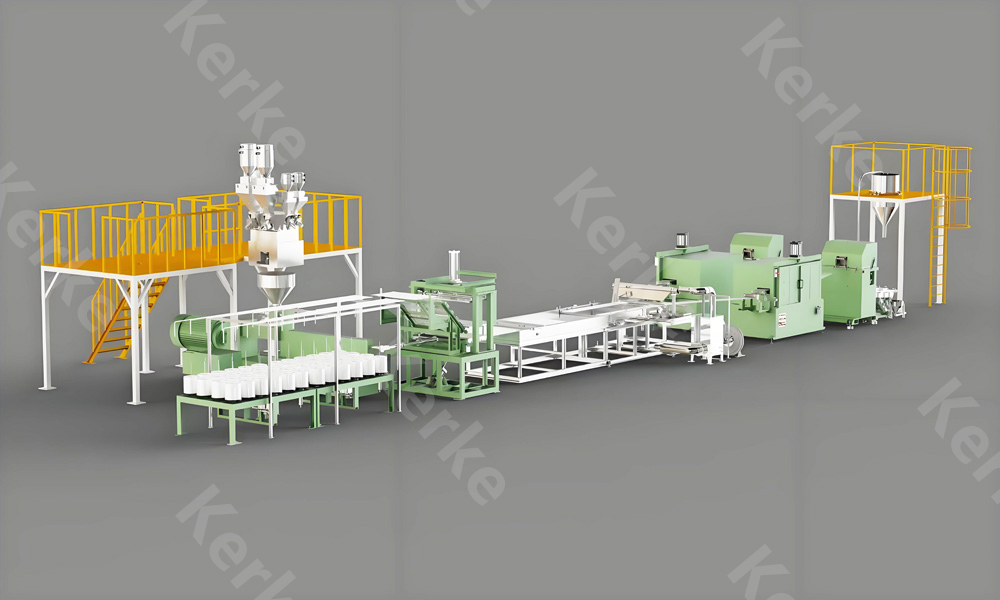
Modern compounding operations increasingly integrate multiple process steps into continuous automated lines including feeding, extrusion, strand formation, pelletizing, and packaging. Integration improves consistency, reduces labor requirements, and enables high throughput operation. Kerke compounding extruders integrate seamlessly with auxiliary equipment from leading manufacturers, providing turnkey solutions for complete compounding lines.
Automated feeding systems accurately dispense multiple additives including powders, pellets, and liquids into extruder gravimetrically. Multi-component feeding systems cost $25,000-$75,000 depending on number of components and accuracy requirements. Gravimetric feeding accuracy of ±0.5% ensures consistent additive levels, reducing quality variations by 40-60% compared to volumetric feeding with ±2% accuracy.
Downstream Equipment Integration
Strand formation equipment including water bath, strand guide, and pelletizer converts extruded compound into pellets suitable for further processing. Automatic strand pelletizers cost $40,000-$80,000 depending on throughput capacity and cutting precision. Precision pelletizing reduces pellet size variation to ±5%, improving downstream processing consistency and reducing material waste by 15-25%.
Packaging equipment including bagging systems and palletizers automates final product handling. Automatic bagging systems cost $30,000-$60,000 depending on bag size and capacity. Automated packaging reduces labor requirements by 60-80% compared to manual packaging, saving $30,000-$50,000 annually in labor costs for typical facilities.
Maintenance and Reliability Considerations
Dispersion optimization must balance performance with equipment reliability and maintenance requirements. High-shear screw configurations improve dispersion but increase wear rates on screw elements and barrels. Kerke compounding extruders incorporate wear-resistant materials and coatings extending component life while maintaining dispersion performance. Material selection significantly impacts maintenance costs and equipment uptime.
Wear-resistant screw elements manufactured from tool steels with surface treatments including nitriding, carbide coating, or tungsten carbide hardfacing provide service life 2-4 times longer than untreated elements. Premium wear-resistant elements cost 30-50% more than standard elements but reduce replacement frequency, providing net savings of 20-40% on screw element lifecycle costs. For typical operation with screw element replacement every 12-18 months, extended service life to 36-48 months saves $15,000-$25,000 annually on screw element replacement costs.
Barrel Wear Protection
Barrel liners provide wear protection in high-wear zones, particularly when processing abrasive fillers. Bimetallic liners combine steel backing with wear-resistant inner layer typically made from hardened tool steel or cast alloys. Bimetallic barrels cost 50-100% more than standard barrels but provide service life 3-5 times longer. For typical barrel replacement cost of $20,000-$40,000, extended service life saves $10,000-$20,000 annually on barrel replacement costs.
Regular maintenance including lubrication, alignment checks, and wear monitoring prevents premature failures and extends component life. Kerke provides comprehensive maintenance guidelines and service support to maximize equipment uptime and minimize lifecycle costs. Proper maintenance reduces total lifecycle costs by 20-30% compared to reactive maintenance approaches.
Environmental and Energy Efficiency Considerations
Energy efficiency represents increasingly important consideration for compounding operations due to rising energy costs and environmental regulations. Kerke compounding extruders incorporate energy-efficient designs reducing power consumption while maintaining dispersion quality. Energy efficiency improvements deliver both economic and environmental benefits.
Kerke compounding extruders achieve specific energy consumption (SEC) of 0.10-0.15 kWh/kg for typical dispersion applications, 15-25% lower than industry average of 0.13-0.18 kWh/kg. For facilities producing 1,000,000 kg annually with electricity cost of $0.12/kWh, 20% energy reduction saves $24,000 annually. Energy-efficient designs typically cost 10-15% more than standard designs but provide ROI of 150-200% through energy savings.
Thermal Management
Efficient thermal management minimizes energy consumption for heating and cooling. Kerke compounding extruders feature optimized barrel insulation reducing heat loss by 40-60% compared to uninsulated barrels. Insulation costs $5,000-$10,000 per extruder but saves $8,000-$15,000 annually in heating energy costs. Combined with energy-efficient screw designs, thermal management reduces total energy consumption by 25-35% compared to unoptimized designs.
Heat recovery systems capture thermal energy from cooling water and exhaust for reuse in other processes. Kerke offers heat recovery options including air-to-water heat exchangers for hot water generation and thermal oil systems for process heating. Heat recovery systems cost $15,000-$30,000 but recover 30-50% of thermal energy otherwise lost, saving $10,000-$20,000 annually depending on application and energy costs.
Future Trends in Additive Dispersion Technology
Additive dispersion technology continues evolving with advances in extruder design, process control, and measurement technologies. Future trends include increased use of triple-screw designs, greater integration of real-time monitoring, expanded application of nanomaterials, and enhanced process automation. Kerke invests continuously in research and development to incorporate emerging technologies into product offerings.
Triple-screw extruders will see increased adoption for demanding dispersion applications, particularly for nanomaterials and high-performance compounds. Kerke expects triple-screw models to capture 20-30% of market for high-performance compounding by 2030, up from less than 5% currently. Adoption will be driven by need for superior dispersion quality in applications including nanocomposites, high-performance polymers, and specialty compounds.
Digital Transformation
Digital transformation will enhance process control and optimization through integration of IoT sensors, machine learning algorithms, and cloud-based analytics. Kerke compounding extruders will increasingly feature smart capabilities including predictive maintenance, automated recipe optimization, and remote monitoring. Digital capabilities typically add 10-20% to equipment costs but provide returns of 50-100% through improved efficiency, reduced downtime, and enhanced quality.
Machine learning algorithms will optimize process parameters in real-time based on dispersion quality measurements, continuously improving performance without human intervention. Kerke development efforts focus on algorithms adapting to material variations, equipment changes, and process drifts. Predictive optimization will reduce batch-to-batch variation by 30-50% and energy consumption by 10-15% compared to manual control approaches.
Conclusion
Additive dispersion represents critical factor determining quality and performance of plastic compounds. Kerke compounding extruders provide superior dispersion capabilities through advanced mixing technologies, optimized screw designs, and precise process control. Investment in dispersion optimization delivers substantial returns through improved product quality, reduced material costs, and enhanced competitiveness. Kerke’s 13+ years of experience and comprehensive product portfolio enable delivery of optimal solutions for diverse dispersion applications.
Future developments will further enhance dispersion capabilities through triple-screw designs, digital transformation, and advanced materials. Kerke remains committed to innovation in dispersion technology, continuously improving performance while maintaining energy efficiency and environmental responsibility. By partnering with Kerke for compounding extruder needs, manufacturers ensure superior dispersion quality, competitive positioning, and sustainable growth in evolving global markets.