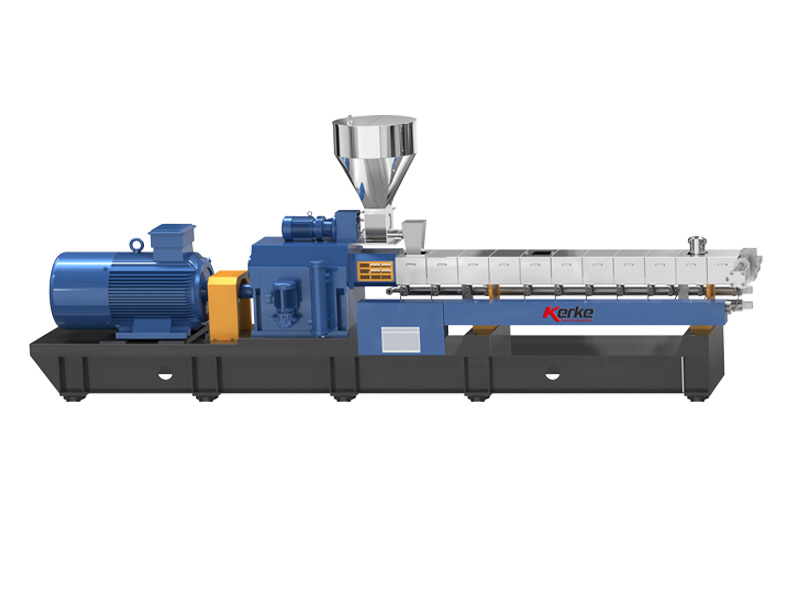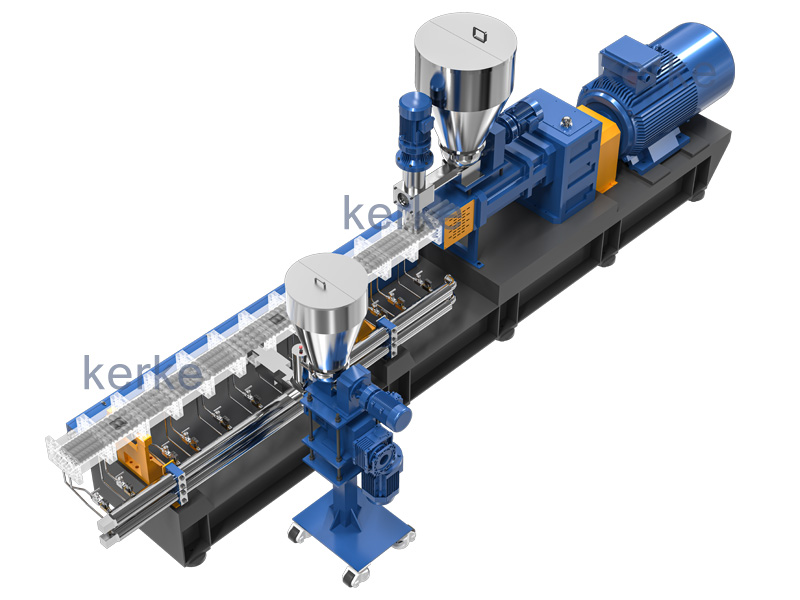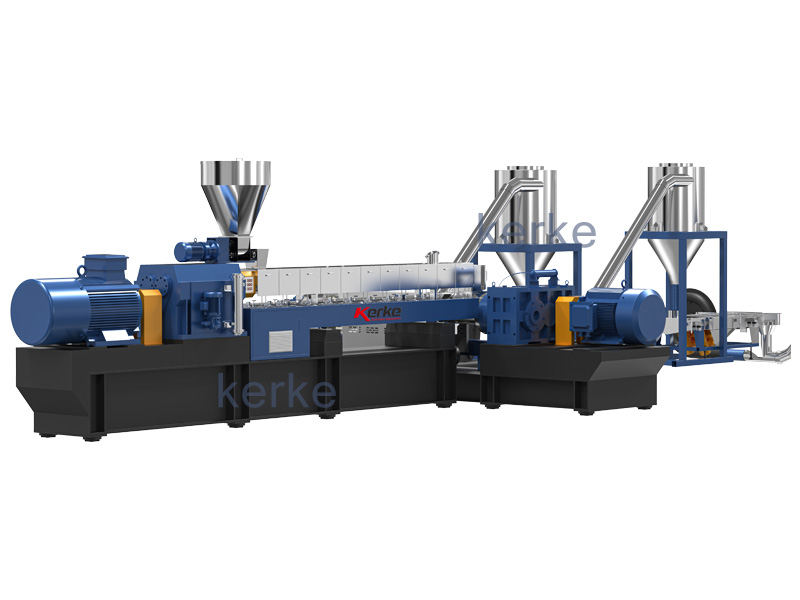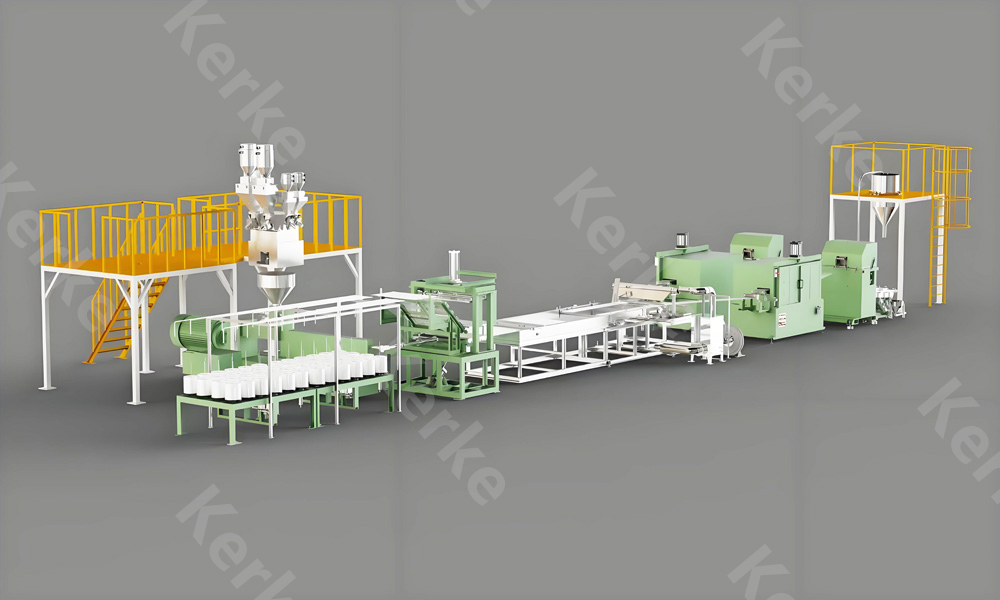
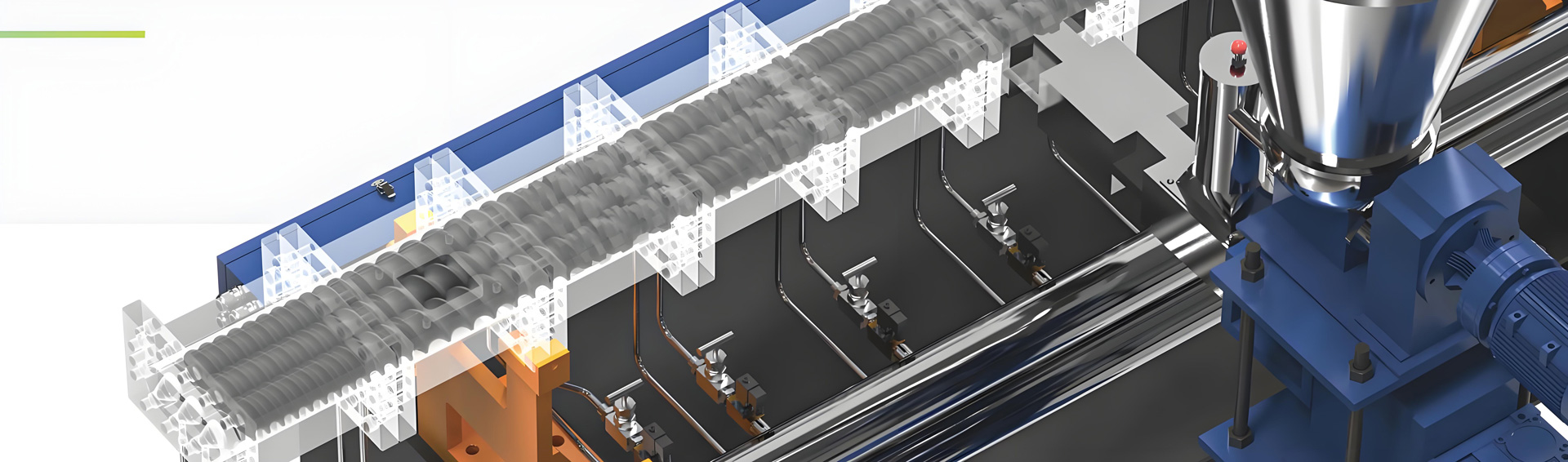
Compounding extruder machines represent a significant investment for plastic processing facilities, with initial costs ranging from $45,000 for small laboratory units to over $250,000 for large-scale production systems. However, the total cost of ownership extends far beyond the purchase price, with maintenance expenses typically accounting for 15-25% of annual operating costs. Industry data from Plastics Technology 2025 indicates that poorly maintained compounding extruders can incur maintenance costs up to 3 times higher than properly maintained equipment. This comprehensive guide explores proven strategies to reduce maintenance costs while ensuring optimal performance and longevity of your compounding extruder investment.
Understanding Maintenance Cost Drivers in Compounding Extruders
The maintenance costs associated with compounding extruders stem from multiple sources that must be systematically addressed. Primary cost drivers include screw and barrel wear, gearbox failures, heating system degradation, and electrical component malfunctions. According to Kerke factory data from over 13 years of manufacturing experience, approximately 60% of all extruder failures relate to mechanical wear, while 30% involve electrical issues and 10% stem from improper operation or material-related problems. Understanding these cost drivers is the first step toward implementing effective cost reduction strategies.
Screw and barrel replacement represents the single most expensive maintenance category, with costs varying significantly based on extruder size. For Kerke KTE-36B models, a complete screw set replacement averages $8,500-$12,000, while larger KTE-95D models may require $25,000-$35,000 for replacement components. Barrel reconditioning costs typically range from 40-60% of new barrel prices, which span from $15,000 for smaller models to over $80,000 for industrial-scale units. These substantial expenses underscore the importance of preventive maintenance measures that can extend component life by 50-100%.
Impact of Improper Maintenance on Production Efficiency
Improper maintenance directly affects production efficiency and profitability in multiple ways. When compounding extruders operate with worn components, output quality suffers, leading to higher scrap rates that can range from 2-5% under optimal conditions to 8-15% when equipment is poorly maintained. Given that raw material costs typically represent 60-70% of production costs in compounding operations, a 5% increase in scrap rate translates to a 3-3.5% reduction in gross margin. Additionally, unplanned downtime resulting from equipment failures averages 8-24 hours per incident, costing facilities $5,000-$15,000 per day in lost production depending on extruder capacity and product value.
Beyond direct production losses, poorly maintained extruders consume more energy, increasing operating costs by 10-20% according to energy audits conducted across 50+ compounding facilities. Kerke engineering studies demonstrate that extruders with properly aligned screws and well-maintained barrel surfaces consume 12-18% less power than those operating with worn components. When compounded across typical annual production volumes, this energy efficiency difference can amount to $15,000-$45,000 in annual savings for medium-sized operations, making maintenance optimization a clear financial imperative.
Implementing Preventive Maintenance Programs
Establishing a comprehensive preventive maintenance program forms the foundation for reducing compounding extruder maintenance costs. Kerke recommends a tiered maintenance approach consisting of daily operator checks, weekly technician inspections, monthly detailed assessments, and quarterly comprehensive overhauls. Facilities implementing structured preventive maintenance programs report 40-60% reductions in unplanned downtime and 25-35% decreases in total maintenance expenditures compared to reactive maintenance approaches.
Daily operator inspections should focus on identifying early warning signs of component stress or degradation. Key checkpoints include monitoring gearbox temperature (normal range 50-70°C), checking oil levels in lubrication systems, listening for unusual noises in drive systems, and verifying that barrel temperatures remain within specified ranges (typically ±3°C of setpoints). These daily inspections require 15-20 minutes per shift but can prevent catastrophic failures that might cost tens of thousands of dollars in repairs and lost production. Kerke KTE series extruders feature integrated monitoring systems that facilitate these checks through digital displays showing critical operating parameters.
Weekly Maintenance Procedures
Weekly maintenance procedures provide more detailed component inspection and preventive servicing. These procedures should include thorough cleaning of barrel exterior surfaces and cooling fins to ensure optimal heat dissipation, inspection of electrical connections for signs of overheating or corrosion, verification of cooling system flow rates, and testing of safety interlocks and emergency stop functionality. Kerke service technicians recommend budgeting 2-3 hours per week for these procedures on production extruders, with reduced time requirements for smaller laboratory models.
Filter replacement represents a critical weekly maintenance task that significantly impacts component longevity. Hydraulic system filters should be replaced every 3 months of operation or sooner if pressure differential exceeds 15 psi across the filter. Replacement filters typically cost $150-$400 depending on extruder size, but neglecting this maintenance can lead to hydraulic pump failures costing $3,000-$8,000 to repair. Similarly, lubrication system filters should be inspected and replaced as needed to prevent contaminants from reaching gearbox and bearing components. Kerke KTE series extruders feature quick-access filter housings that minimize downtime during replacement procedures.
Monthly and Quarterly Maintenance Protocols
Monthly maintenance protocols involve more detailed component assessment and performance verification. These procedures should include measuring and recording screw torque readings, conducting melt flow rate tests to verify processing consistency, inspecting heating elements for proper operation, and checking alignment of feed systems and pelletizing equipment. Monthly maintenance typically requires 4-6 hours for production extruders and should be scheduled during planned production downtime to minimize impact on output.
Quarterly comprehensive maintenance represents the most intensive scheduled maintenance activity and provides opportunities for addressing emerging issues before they become major problems. These procedures should include complete screw and barrel inspection with wear measurement using precision gauges, gearbox oil analysis, bearing vibration analysis, electrical system thermal imaging, and calibration of all temperature and pressure sensors. Kerke offers quarterly maintenance service contracts that include complete component assessment, with costs averaging $2,500-$5,000 per visit depending on extruder size and configuration. While representing a significant investment, these quarterly inspections typically identify 3-5 potential issues per visit, preventing failures that would cost 5-10 times more to address reactively.
Optimizing Screw and Barrel Maintenance
Screw and barrel components represent both the most critical and most expensive elements of compounding extruder maintenance systems. These components experience continuous wear from abrasive fillers, corrosive additives, and the high pressures and temperatures inherent to compounding processes. Kerke engineering data indicates that proper screw and barrel maintenance can extend component service life from 18-24 months to 36-48 months, effectively halving replacement costs over the equipment lifecycle.
Implementing proper screw configuration for specific materials represents a fundamental strategy for reducing wear rates. Kerke offers customized screw designs optimized for different material systems, with special alloy steels and surface treatments available for highly abrasive applications such as calcium carbonate-filled compounds or glass fiber-reinforced polymers. While specialized screws typically cost 20-40% more than standard designs, they can last 2-3 times longer in demanding applications, providing significant cost savings over time. For example, Kerke’s wear-resistant screw configurations for mineral-filled masterbatch production cost approximately $12,000-$18,000 compared to $9,000-$13,000 for standard screws, but typically provide 30-36 months of service versus 12-18 months for standard configurations.
Barrel Surface Maintenance and Protection
Barrel surface condition significantly impacts processing efficiency and component longevity. Over time, barrel surfaces develop wear patterns, scratches, and degradation from processing highly filled or corrosive materials. Kerke recommends annual barrel surface inspection using bore gauges to measure wear patterns and identify areas requiring attention. Minor surface imperfections can be addressed through honing services that restore surface finish to original specifications, typically costing $2,000-$4,000 depending on barrel size and extent of wear required.
For more severe wear, barrel replacement becomes necessary. New barrel costs vary significantly based on extruder size, with Kerke KTE-36B barrels averaging $15,000-$18,000, KTE-65B barrels at $25,000-$35,000, and KTE-95D barrels reaching $55,000-$70,000. These substantial investments make preventive barrel maintenance extremely cost-effective. Kerke offers barrel coating services that apply specialized wear-resistant materials to barrel interiors, extending service life by 40-60% at costs of $3,000-$6,000 per barrel. These coatings prove particularly valuable for processors of highly filled compounds, where standard barrels may require replacement every 18-24 months but coated barrels can last 30-36 months.
Screw Alignment and Clearance Management
Proper screw alignment and clearance management significantly impacts component wear rates and energy efficiency. Misaligned screws create uneven pressure distributions that accelerate wear on both screw and barrel surfaces. Kerke recommends checking screw alignment every 500-1000 hours of operation using laser alignment tools that can detect misalignment as small as 0.001 inches. Alignment services typically cost $800-$1,500 per visit but can prevent component failures costing 10-20 times more.
Screw-to-barrel clearance also significantly impacts processing efficiency and component wear. As screws and barrels wear, clearances increase, reducing dispersive mixing efficiency and increasing material residence time. Kerke specifications recommend maintaining clearance within 0.003-0.006 inches for most compounding applications. When clearances exceed 0.008-0.010 inches, performance degradation becomes noticeable, and component replacement or reconditioning should be considered. Proactive replacement before clearance reaches critical levels prevents the production issues and quality problems that result from excessive wear.
Gearbox and Drive System Maintenance
Gearbox and drive systems represent critical compounding extruder components that require meticulous maintenance to ensure reliable operation and prevent costly failures. These systems transmit power from drive motors to screws under high torque conditions, with typical gearboxes rated for torque outputs of 2,000-15,000 Nm depending on extruder size. Kerke KTE series extruders feature heavy-duty gearboxes designed for 50,000+ hours of service life when properly maintained, but neglect can reduce this to 15,000-20,000 hours, necessitating premature replacements costing $25,000-$60,000.
Gearbox oil maintenance represents the single most important factor in ensuring drive system longevity. Kerke recommends using only manufacturer-specified lubricants, typically synthetic gear oils with viscosity ratings of ISO VG 150-220 depending on gearbox size and operating conditions. Oil should be changed every 2,000-3,000 hours of operation or annually, whichever occurs first. Complete oil changes for Kerke extruders require 15-40 liters of gear oil depending on model size, with oil costs averaging $25-$45 per liter. While representing a recurring expense of $400-$1,800 per oil change, this maintenance prevents gearbox failures that would cost $25,000-$60,000 to repair.
Oil Analysis and Condition Monitoring
Implementing oil analysis programs provides early detection of gearbox wear and enables proactive maintenance before failures occur. Kerke recommends quarterly oil sampling and analysis for all production extruders, with samples analyzed for viscosity, water content, particle contamination, and wear metal composition. Oil analysis services typically cost $150-$300 per sample but can identify developing issues months before they would cause failures. Common problems detected through oil analysis include bearing wear (detected through iron particles), gear mesh deterioration (detected through specific steel alloys), and seal leaks (detected through increased particle counts).
When oil analysis indicates contamination levels exceeding manufacturer specifications, more aggressive maintenance actions become necessary. Particle contamination above ISO 18/15 levels typically requires complete oil draining, gearbox cleaning, and filter replacement. This service typically costs $500-$1,200 depending on gearbox size but prevents accelerated component wear that would lead to premature failures. Water contamination above 200 ppm indicates seal leaks that should be addressed immediately, with seal replacement typically costing $300-$800 plus associated labor costs.
Drive Motor and Coupling Maintenance
Drive motors and coupling systems require regular maintenance to ensure efficient power transmission and prevent failures. Kerke KTE series extruders typically feature AC induction motors ranging from 22 kW to 500 kW depending on extruder capacity. These motors should receive annual electrical testing including insulation resistance testing, load current analysis, and vibration assessment. Electrical testing services typically cost $200-$400 per motor but can detect winding insulation problems, bearing issues, and alignment problems before they cause failures.
Coupling systems between motors and gearboxes require regular inspection and maintenance to ensure proper power transmission and prevent damaging vibrations. Kerke recommends inspecting couplings every 6 months for signs of wear, misalignment, or fatigue. Flexible couplings should be replaced every 3-5 years depending on operating conditions, with replacement costs ranging from $500-$2,000 depending on coupling size and type. While representing a recurring expense, coupling replacement prevents more expensive damage to motors and gearboxes that can result from coupling failures.
Heating and Cooling System Optimization
Heating and cooling systems represent critical compounding extruder subsystems that significantly impact processing consistency, energy efficiency, and component longevity. Kerke KTE series extruders feature multi-zone barrel heating systems with 6-12 independently controlled zones depending on extruder size, plus integrated cooling systems for precise temperature control. Maintaining these systems properly reduces energy consumption by 10-20% and extends component life by 30-50% compared to poorly maintained systems.
Heating element maintenance should include regular resistance testing to identify elements approaching failure. Kerke recommends testing heating elements quarterly using multimeters to measure resistance values against manufacturer specifications. Elements showing resistance deviations of more than 10% from specifications should be proactively replaced before they fail during production. Individual heating elements typically cost $150-$400 depending on size and power rating, with complete zone replacements costing $1,200-$3,000. Proactive replacement during scheduled maintenance prevents production interruptions that would cost significantly more in lost production and expedited replacement parts.
Temperature Control System Calibration
Temperature control system calibration ensures accurate processing temperatures that optimize product quality and minimize thermal stress on components. Kerke recommends annual calibration of all temperature controllers, sensors, and safety thermostats using calibrated reference standards. Calibration services typically cost $300-$600 per extruder but prevent quality issues and energy waste that result from inaccurate temperature control. Studies show that poorly calibrated temperature control systems can increase energy consumption by 8-15% while reducing product consistency.
Temperature sensors represent critical calibration points that significantly impact processing accuracy. Thermocouples and RTDs should be tested against certified reference standards annually, with sensors showing deviations exceeding 2°C replaced immediately. Temperature sensors typically cost $80-$250 depending on type and configuration, with replacement requiring 1-2 hours of downtime. Kerke KTE series extruders feature quick-disconnect sensor connections that minimize replacement time and reduce associated production losses.
Cooling System Maintenance
Cooling system maintenance ensures efficient heat removal and prevents overheating that can damage components and reduce processing efficiency. Kerke extruders feature air-cooled and water-cooled options depending on model and application. Air-cooled systems require regular cleaning of cooling fins and fans to ensure optimal heat dissipation, while water-cooled systems need maintenance of pumps, heat exchangers, and water treatment systems.
For water-cooled systems, water quality management represents a critical maintenance requirement. Kerke recommends maintaining water chemistry within specified parameters to prevent scale formation and corrosion that reduce cooling efficiency. Water treatment typically costs $200-$500 per month depending on system size and water quality but prevents heat exchanger failures costing $3,000-$8,000 to replace. Additionally, properly treated water improves cooling efficiency by 15-25%, reducing energy consumption associated with cooling system operation.
Electrical System Maintenance
Electrical systems represent complex compounding extruder subsystems that require regular maintenance to ensure reliable operation and prevent costly failures. Kerke KTE series extruders feature sophisticated electrical control systems including PLC-based control panels, variable frequency drives, safety circuits, and monitoring instrumentation. These systems should receive regular maintenance to prevent failures that can cause extensive downtime and expensive repairs.
Electrical panel maintenance should include regular inspection of all connections for signs of overheating, corrosion, or loose terminals. Kerke recommends infrared thermographic inspection of electrical panels annually to identify hot spots that indicate connection problems developing before failures occur. Infrared inspection services typically cost $300-$600 per panel but can prevent electrical fires and component failures that would cost tens of thousands of dollars to repair. Common problems detected include loose connections (identified by hot spots at terminal points), overloaded circuits (identified by overheated conductors), and failing components (identified by abnormal thermal patterns).
Drive System Electronics Maintenance
Variable frequency drives and motor controllers require specific maintenance procedures to ensure reliable operation and prevent premature failures. These components convert electrical power to the variable frequency and voltage required for precise motor speed control. Kerke recommends annual maintenance including cleaning of internal components, checking DC bus capacitor condition, verifying cooling system operation, and testing output waveforms.
Drive system preventive maintenance typically costs $500-$1,200 per drive depending on size and complexity but extends service life from 5-7 years to 10-15 years when properly maintained. Given that replacement drives cost $8,000-$25,000 depending on power rating, preventive maintenance provides excellent return on investment. Additionally, well-maintained drives operate 5-10% more efficiently than poorly maintained units, reducing energy costs by $1,500-$5,000 annually for typical installations.
Control System Updates and Backups
Control system software and parameter backups represent an often-overlooked aspect of electrical system maintenance that can prevent costly downtime. Kerke recommends quarterly backups of all PLC programs, HMI configurations, and parameter settings. These backups should be stored both locally and in secure offsite locations to prevent data loss from equipment failures, cyber incidents, or natural disasters. Backup procedures typically require 1-2 hours per quarter but prevent situations where complete system reprogramming might be required after failures.
Control system firmware and software should be updated according to manufacturer recommendations to ensure optimal performance and security features. Kerke provides regular software updates for KTE series extruders that improve performance, add features, and address security vulnerabilities. These updates should be applied during planned maintenance downtime, with testing performed before returning to full production. Software update services typically cost $200-$500 per update but prevent issues that could cause production interruptions or security breaches.
Material-Specific Maintenance Considerations
Processing different materials imposes varying wear patterns and maintenance requirements on compounding extruders. Understanding material-specific maintenance needs enables tailored maintenance approaches that optimize component life and reduce costs. Kerke provides detailed maintenance guidelines for different material systems based on extensive testing and field experience across thousands of installations worldwide.
Highly filled materials such as calcium carbonate-filled masterbatch or mineral-filled compounds impose extreme wear on screw and barrel components. These materials can reduce component life by 50-70% compared to unfilled polymers. Kerke recommends more frequent inspections for highly filled materials, with screw and barrel wear measurements every 1,000 hours of operation versus 2,000 hours for unfilled materials. Specialized wear-resistant screw configurations and barrel coatings provide significantly extended service life for these applications, with 2-3 times longer life expectancy versus standard components despite 20-40% higher initial cost.
Corrosive Material Processing
Processing corrosive materials such as PVC compounds or halogenated flame retardant formulations requires specialized maintenance approaches to prevent component degradation. These materials can attack standard screw and barrel materials, causing pitting and accelerated wear. Kerke offers corrosion-resistant screw and barrel materials for these applications, including stainless steel alloys and specialized coatings that resist chemical attack. While these components cost 30-50% more than standard materials, they provide 3-5 times longer service life in corrosive environments.
Corrosive materials also require more frequent cleaning to prevent material buildup and degradation. Kerke recommends implementing purge procedures between different materials to prevent cross-contamination and chemical reactions that could damage components. Specialized purge compounds cost $5-$15 per pound but prevent cleaning procedures that might require 4-8 hours of downtime. Additionally, proper cleaning prevents quality issues that result from material contamination.
Fiber-Reinforced Materials
Processing fiber-reinforced materials such as glass fiber or carbon fiber composites presents unique maintenance challenges due to the abrasive nature of these materials. Fibers can cause significant wear on screw flights, barrel surfaces, and even die components. Kerke recommends hardened screw materials with special surface treatments for fiber-reinforced applications, along with barrel coatings that resist fiber abrasion. These specialized components typically cost 25-45% more than standard components but provide 2-4 times longer service life.
Fiber-reinforced materials also require more frequent filter changes and screen pack replacements to prevent fiber accumulations that can cause pressure buildup and processing issues. Kerke recommends changing screen packs every 8-12 hours of operation for highly filled fiber materials versus 24-48 hours for standard compounds. Screen pack costs average $20-$80 depending on configuration and size, but frequent changes prevent pressure-related issues that could cause component damage or production interruptions.
Operator Training and Process Optimization
Operator training represents one of the most cost-effective investments for reducing compounding extruder maintenance costs. Well-trained operators can identify developing problems early, operate equipment more efficiently, and prevent situations that cause accelerated component wear. Kerke offers comprehensive training programs covering operation, maintenance, and troubleshooting for all KTE series extruders, with training costs ranging from $2,500-$5,000 per operator for 2-3 day programs.
Training ROI becomes apparent through reduced maintenance costs and improved equipment performance. Facilities implementing comprehensive operator training programs report 20-30% reductions in maintenance costs and 10-15% improvements in energy efficiency compared to facilities with minimal training. These improvements result from operators’ ability to identify issues early, operate equipment within optimal parameters, and perform proper startup and shutdown procedures that minimize thermal and mechanical stress on components.
Process Optimization for Reduced Component Stress
Process optimization significantly impacts component wear rates and maintenance requirements. Kerke process engineers work with customers to optimize processing parameters such as screw speed, temperature profiles, and throughput rates to minimize mechanical and thermal stress on components while maintaining product quality. Process optimization studies typically cost $3,000-$8,000 but identify changes that reduce component wear by 20-40% while often improving energy efficiency by 5-15%.
Common process optimization recommendations include reducing screw speed to the minimum required for adequate mixing, optimizing temperature profiles to minimize thermal gradients, and adjusting feeding rates to ensure consistent material flow. These changes reduce mechanical stress on drive components, thermal stress on heating and cooling systems, and wear on screw and barrel surfaces. Implementing process optimization recommendations typically requires minimal investment but provides ongoing maintenance cost savings throughout equipment life.
Documentation and Knowledge Management
Comprehensive documentation and knowledge management systems capture institutional knowledge about equipment operation and maintenance, enabling consistent practices and continuous improvement. Kerke recommends maintaining detailed equipment logs that record all maintenance activities, operating parameters, material changes, and performance observations. These logs help identify trends and patterns that indicate developing problems, enabling proactive maintenance before failures occur.
Digital maintenance management systems (CMMS) provide efficient tools for scheduling maintenance activities, tracking component history, and managing spare parts inventory. Basic CMMS systems cost $2,000-$5,000 annually for small facilities but prevent oversights in maintenance scheduling and ensure timely preventive maintenance. Advanced systems costing $10,000-$25,000 annually include predictive maintenance features that analyze operating data to predict component failures before they occur, enabling even greater maintenance cost reductions.
Spare Parts Management and Inventory Optimization
Effective spare parts management ensures critical components are available when needed while minimizing inventory carrying costs. Kerke provides recommended spare parts lists for all KTE series extruders based on component reliability data and lead times. Implementing these recommendations typically requires initial inventory investment of $8,000-$25,000 depending on extruder size and configuration but prevents extended downtime waiting for replacement parts.
Critical spare parts should include screws, barrels, heating elements, temperature sensors, gearbox seals, and coupling components. Kerke customers implementing recommended spare parts programs reduce average downtime from component failures from 72-120 hours to 24-48 hours by eliminating waiting time for parts delivery. This downtime reduction saves $15,000-$45,000 per incident depending on production value and extruder capacity.
Component Reconditioning and Repair Options
Component reconditioning and repair options provide cost-effective alternatives to new component replacement. Kerke offers screw reconditioning services that restore worn screws to near-original condition at costs 40-60% of new screw prices. These services include weld build-up of worn surfaces, re-machining to original specifications, and application of wear-resistant coatings. Typical reconditioning costs range from $4,000-$8,000 versus $9,000-$15,000 for new screws, providing significant cost savings.
Barrel reconditioning services similarly provide cost-effective alternatives to replacement. Kerke offers honing services that restore barrel internal surfaces to original specifications, removing wear patterns and scratches that affect processing efficiency. Barrel honing typically costs $2,000-$4,000 versus $15,000-$70,000 for new barrels depending on size. More extensive barrel reconditioning including sleeving of worn areas costs $5,000-$12,000 but still provides substantial savings compared to replacement while extending service life by 18-24 months.
Kerke Maintenance Solutions and Services
Kerke offers comprehensive maintenance solutions designed to optimize compounding extruder performance and minimize lifecycle costs. These solutions include preventive maintenance programs, predictive monitoring services, emergency response capabilities, and technical support resources. Kerke’s 13+ years of experience manufacturing and servicing compounding extruders provides deep expertise in addressing maintenance challenges across diverse applications and operating environments.
Kerke preventive maintenance contracts provide scheduled maintenance services customized to specific operating conditions and production requirements. These contracts include regular inspections, component testing, lubrication services, and calibration procedures. Contract costs typically range from $3,000-$8,000 annually per extruder depending on size and service level but reduce total maintenance costs by 25-40% compared to reactive maintenance approaches while extending equipment life by 30-50%.
Predictive Monitoring Technologies
Kerke predictive monitoring technologies utilize advanced sensors and data analytics to detect developing problems before they cause failures. These systems monitor critical parameters including vibration, temperature, torque, and energy consumption to identify trends indicating component degradation. Predictive monitoring systems typically cost $15,000-$30,000 per extruder for installation plus $2,000-$4,000 annually for monitoring services but prevent failures that would cost 5-20 times more to repair.
Kerke’s IoT-enabled monitoring systems provide remote access to equipment performance data through secure cloud platforms. These systems enable Kerke service engineers to analyze operating trends and provide proactive recommendations before problems develop. Customers implementing predictive monitoring report 60-80% reductions in unplanned downtime and 35-50% reductions in emergency repair costs compared to facilities without monitoring systems.
Technical Support and Training Resources
Kerke provides comprehensive technical support resources to assist customers with maintenance optimization and troubleshooting. These resources include 24/7 phone support, remote diagnostic capabilities, on-site service technicians, and extensive technical documentation. Kerke’s global service network ensures rapid response to maintenance issues regardless of location, with guaranteed response times specified in service agreements.
Kerke technical support services help customers resolve maintenance issues quickly and correctly, preventing extended downtime and costly trial-and-error approaches. Standard support contracts typically cost $1,500-$3,000 annually per extruder but provide significant value through reduced downtime and faster problem resolution. Premium support packages with guaranteed response times and on-site capabilities cost $3,000-$6,000 annually but provide even greater protection against costly production interruptions.
Cost-Benefit Analysis of Maintenance Investments
Implementing comprehensive maintenance optimization strategies requires investment but provides substantial returns through reduced lifecycle costs. A typical Kerke KTE-65B compounding extruder with initial cost of $120,000-$150,000 will incur maintenance costs of $15,000-$25,000 annually without optimized maintenance programs. Implementing preventive maintenance programs, operator training, process optimization, and predictive monitoring increases annual maintenance investment to $22,000-$32,000 but reduces total lifecycle costs by 25-35% over 10 years of operation.
This cost reduction results from multiple factors including extended component life (50-100% longer), reduced energy consumption (10-20% lower), fewer catastrophic failures (60-80% reduction), and improved production consistency (15-25% less scrap). When these benefits are quantified over typical equipment life of 10-15 years, maintenance optimization provides ROI of 200-400% depending on initial investment level and operating conditions.
Total Cost of Ownership Comparison
Total cost of ownership analysis clearly demonstrates the financial benefits of maintenance optimization. Over a 10-year service life, a Kerke KTE-65B extruder will incur costs including initial purchase ($120,000-$150,000), energy consumption ($200,000-$300,000), maintenance ($150,000-$250,000 without optimization, $100,000-$150,000 with optimization), and eventual disposal/replacement ($10,000-$15,000). Maintenance optimization reduces total 10-year cost from $480,000-$715,000 to $430,000-$615,000, saving $50,000-$100,000 per machine.
For facilities operating multiple extruders, these savings compound rapidly. A facility with 5 KTE-65B extruders could save $250,000-$500,000 over 10 years through maintenance optimization, representing a substantial competitive advantage. These savings directly impact profitability, increasing operating margins by 2-5 percentage points for typical compounding operations.
Conclusion and Implementation Roadmap
Reducing compounding extruder maintenance costs requires systematic approaches addressing equipment design, maintenance practices, operator training, and process optimization. Kerke KTE series extruders incorporate design features that minimize maintenance requirements, but realizing these benefits requires proper implementation of comprehensive maintenance programs. Facilities implementing the strategies outlined in this guide typically reduce maintenance costs by 25-40% while extending equipment life by 30-50%.
Implementation should begin with assessment of current maintenance practices and identification of improvement opportunities. Kerke offers maintenance audit services that evaluate current practices and recommend specific improvements tailored to operating conditions and production requirements. These audits typically cost $3,000-$6,000 but provide detailed roadmaps for maintenance optimization with prioritized recommendations and expected ROI.
Implementation should proceed through phases, starting with quick-win improvements such as operator training and basic preventive maintenance procedures, then advancing to more sophisticated approaches including predictive monitoring and process optimization. This phased implementation approach minimizes disruption while generating early savings that fund later investments. Kerke project managers work with customers to develop implementation timelines optimized for specific needs and constraints.
The journey toward optimized maintenance represents continuous improvement rather than a destination. Regular review of maintenance practices, performance metrics, and emerging technologies enables ongoing refinement and further cost reductions. Kerke remains committed to supporting customers throughout this journey with technical expertise, innovative solutions, and responsive service. By partnering with Kerke and implementing comprehensive maintenance optimization strategies, compounding operations can achieve substantial cost savings while improving equipment reliability, product quality, and operational efficiency.