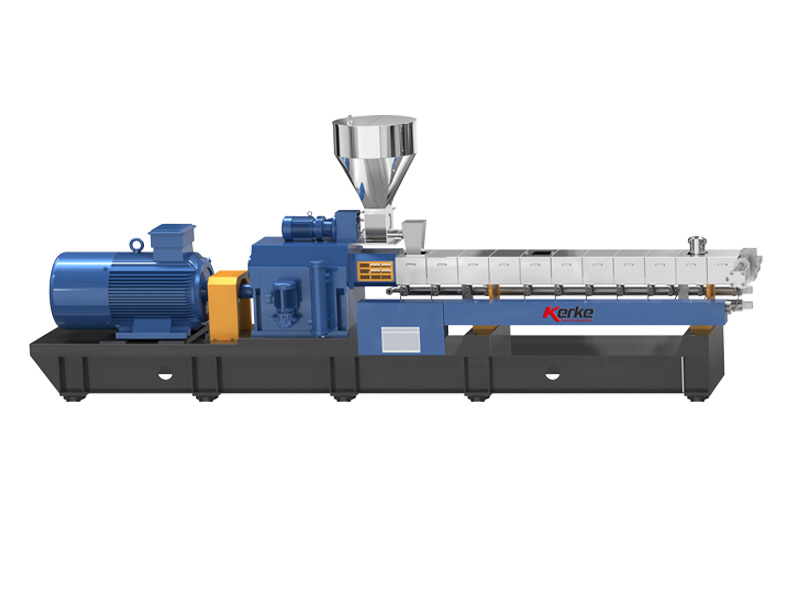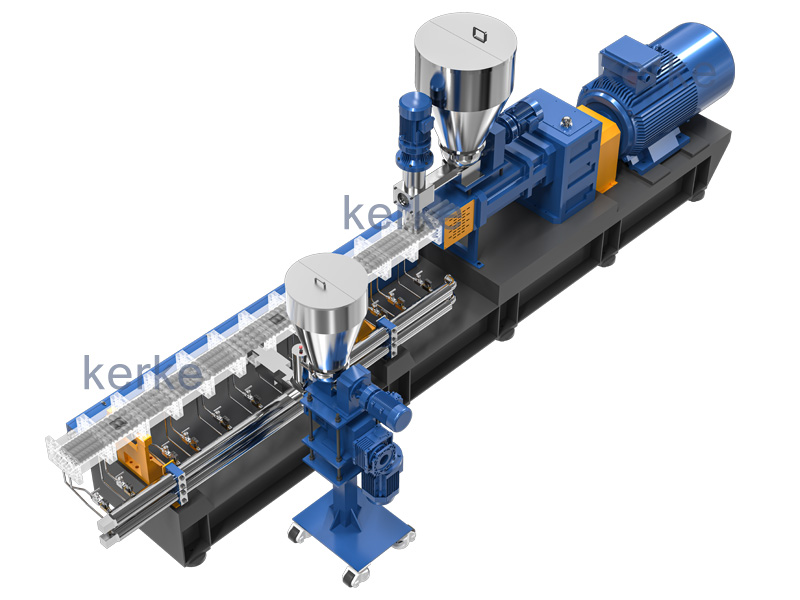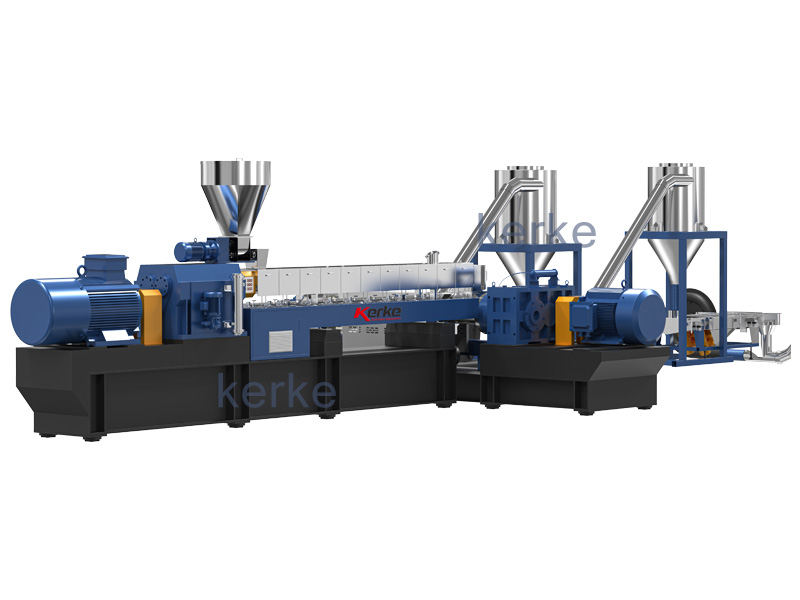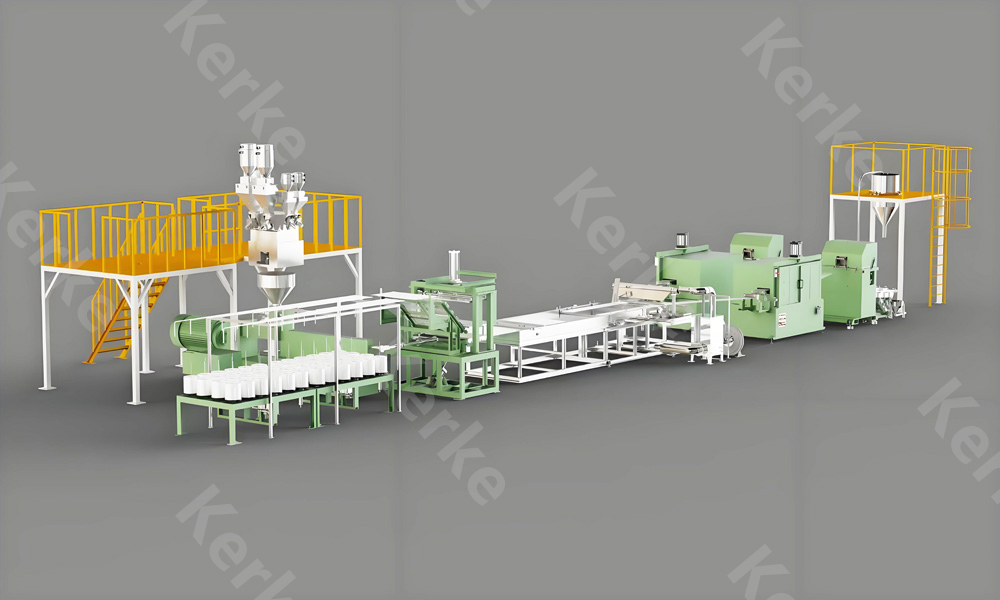
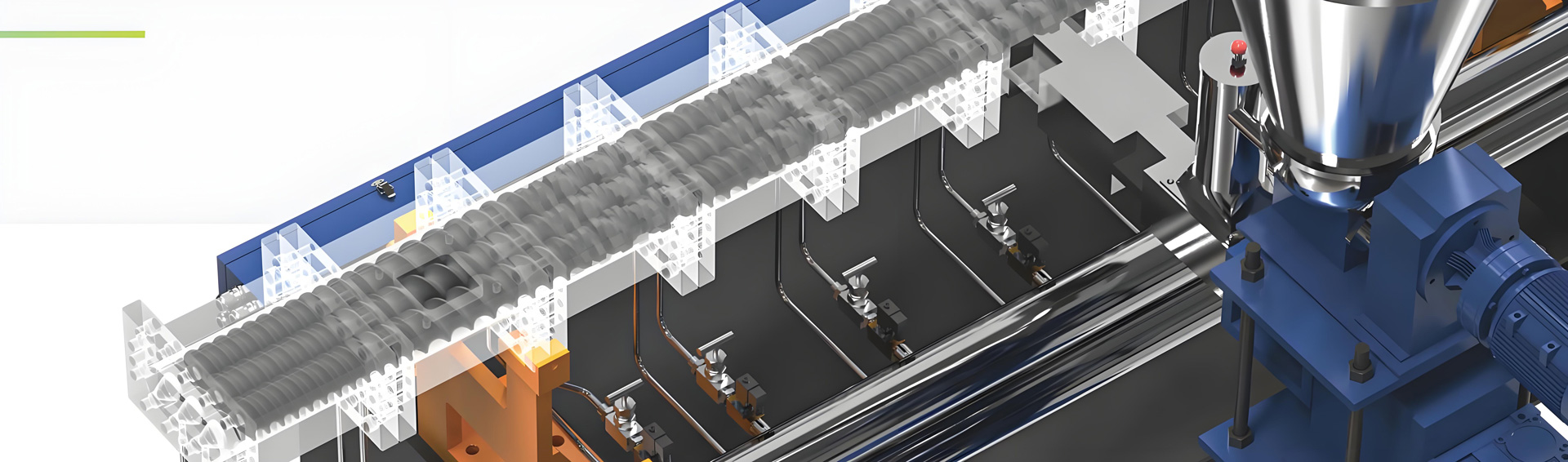
In the competitive plastics industry, material cost often accounts for 70-80% of the total production cost. Even a 1% improvement in material utilization rate can translate to significant annual savings, often amounting to hundreds of thousands of dollars. The masterbatch extruder is a specialized machine designed not just for color matching, but for maximizing the efficiency of raw material usage. Through precise compounding, continuous processing, and the ability to handle regrind, modern masterbatch extruders—like those manufactured by Kerke Extruder—are pivotal in driving down waste and improving the bottom line. This article explores the mechanisms by which these machines optimize material utilization, including technical details on process control, recycling integration, and a comprehensive cost-benefit analysis.
The Concept of Material Utilization in Extrusion
Material utilization rate is the ratio of good product output to the total material input. Losses occur in several forms: start-up waste, off-spec product, sprues/runners (in injection molding), and process waste (dust, degraded material). A masterbatch extruder primarily targets the reduction of process waste and the optimization of the compounding recipe itself. By creating a highly concentrated dispersion of pigments or additives, it allows the final processor (e.g., a film blower or injection molder) to use less additive overall, which is a form of chemical utilization optimization. However, this article focuses on the physical utilization during the extrusion process itself—how to get the most good pellets out of the raw material fed in.
Precision Dosing and Feeding Systems: The Foundation of Efficiency
The foundation of high utilization is accuracy. Traditional batch mixing or simple single-screw extrusion often suffers from dosage errors. If too much pigment is added, the batch is off-spec and must be discarded or down-gauged (used in a lower-quality product). If too little is added, it must be re-extruded. Both scenarios waste material and energy. Modern masterbatch extruders, particularly twin screw models, utilize loss-in-weight (LIW) gravimetric feeders. These systems control the feed rate of the carrier resin, pigment, and additives to within ±0.1%. This precision ensures that every kilogram of output meets the exact formulation specifications.
Gravimetric Blending Technology
Kerke Extruder integrates these feeders with the extruder’s control system, allowing for real-time adjustments. If the bulk density of the pigment changes due to humidity or particle size distribution, the feeder automatically adjusts the screw speed to maintain the correct mass flow. This eliminates “giveaway” (adding extra expensive pigment to be safe) and reduces off-spec material to near zero. For a line running 1000 kg/hr, reducing giveaway by 1% saves 10 kg/hr of pigment. If the pigment costs $10/kg, that is a $100/hr saving, or $800,000/year (8000 hours). This alone can justify the cost of the gravimetric system.
Liquid Additive Injection: Zero Waste
For liquid colorants, plasticizers, or coupling agents, precision gear pumps are used. Unlike manual pouring, which leads to spillage and inconsistent mixing, gear pumps deliver exact micro-liter amounts directly into the melt. This ensures 100% of the expensive liquid additive is utilized in the product, with zero waste. The positive displacement nature of gear pumps means there is no slip, ensuring accuracy even at low flow rates. This is critical for additives that are effective at very low concentrations (e.g., 0.1% antioxidants).
Continuous vs. Batch Processing: The Efficiency Gap
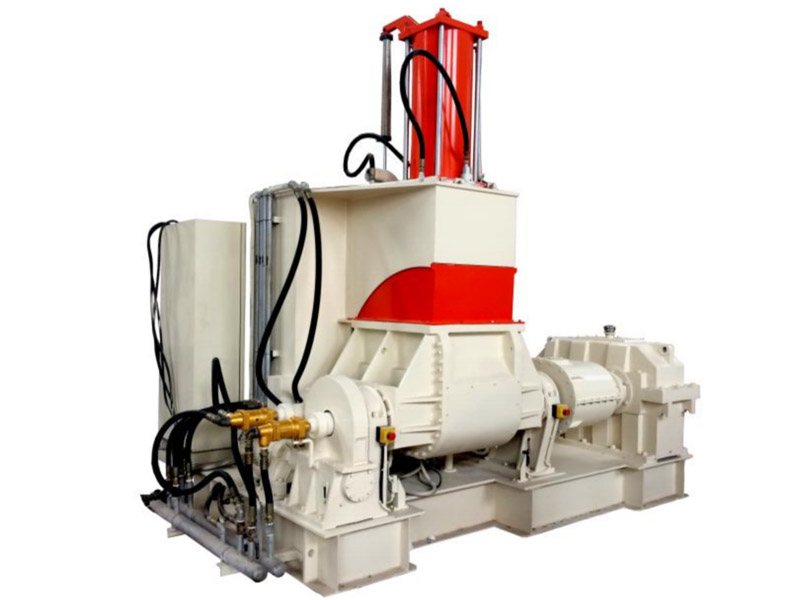
Older methods of producing masterbatches often involved batch mixers (Banbury) or kneaders. These processes have significant start-up and shut-down losses. Cleaning the mixer between color changes can result in 50-100 kg of waste. In contrast, a twin screw masterbatch extruder is a continuous process. Once stabilized, it can run for days or weeks with minimal waste. Color changes are faster due to self-cleaning screw designs. Kerke’s screws are designed to minimize hold-up volume, meaning less material is trapped in the barrel during purging. A purging cycle might use only 20-30 kg of transition material compared to 100+ kg in a batch mixer. This dramatically improves the utilization rate for frequent color changeovers (e.g., in custom compounding houses).
Handling Regrind and Recycled Materials: The Circular Economy
One of the biggest boosts to material utilization is the ability to recycle in-house waste. A masterbatch extruder can be fed with regrind (sprues, edge trim, start-up waste) directly. However, regrind often contains dust, moisture, or inconsistent particle sizes. A robust extruder can handle this variability. The twin screw extruder’s intensive mixing devolatilizes the moisture and homogenizes the melt, allowing high percentages of regrind (up to 30-50% in some cases) to be incorporated without degrading quality. This creates a closed-loop system where waste is immediately turned back into valuable product, effectively achieving near-100% material utilization for the carrier resin. The extruder acts as a “recycling engine,” turning liability (waste) into asset (masterbatch).
Energy Efficiency and Shear Optimization: Reducing Degradation
Optimizing shear is key to utilization. Excessive shear generates heat, which can degrade heat-sensitive pigments or carriers, leading to discolored product that must be scrapped. Insufficient shear leads to poor dispersion, causing “specks” or “fish eyes” in the final plastic product, which also results in rejection. Kerke masterbatch extruders use modular screw elements that can be configured to provide “just enough” shear for dispersion without over-processing. This is often called “gentle mixing.” By minimizing degradation, the yield of usable product increases. Furthermore, energy-efficient motors and heaters reduce the carbon footprint and utility costs, which is part of the broader “resource utilization” metric. Efficient melting means less energy per kg of output.
Cost Analysis: The Economics of Utilization
Let’s look at a detailed cost scenario. Assume a masterbatch plant processes 1,000 kg/hr of material at a material cost of $2.00/kg (resin + additives). The product sells for $3.50/kg. The plant operates 8,000 hours per year.
Scenario A: Standard Extruder (Volumetric Feeding, Non-Vented)
– Waste/Off-spec rate: 5% (due to inconsistent feeding and moisture)
– Waste cost: 1,000 kg/hr * 5% * 8,000 hr * $2.00/kg = $800,000 per year
– Revenue loss from wasted capacity: 40,000 kg/yr * $3.50/kg = $140,000
– Total Loss: $940,000 per year
Scenario B: Kerke High-Precision Extruder (Gravimetric, Vented, Regrind Capable)
– Waste/Off-spec rate: 1% (due to precision feeding and devolatilization)
– Waste cost: 1,000 kg/hr * 1% * 8,000 hr * $2.00/kg = $160,000 per year
– Regrind utilization: 30% of output is regrind (recycled in-house), saving $480,000 in raw material (1,000 kg/hr * 30% * 8,000 hr * $2.00/kg).
– Total Savings: $940,000 – $160,000 + $480,000 = $1,260,000 per year.
The price difference between a standard extruder and a high-precision Kerke line might be $100,000. The ROI on utilization improvement alone is less than 1 month. Additionally, the ability to run higher pigment concentrations (e.g., 50% TiO2 instead of 40%) means the customer uses less masterbatch to achieve the same color, further optimizing material use at the end-user level. This “down-gauging” effect is a major selling point for masterbatch producers.
Advanced Features for Utilization Optimization
In-Line Viscosity Monitoring and Closed-Loop Control
Some Kerke extruders are equipped with in-line viscometers or melt pressure sensors. If the viscosity drifts (indicating a change in molecular weight or filler content), the system can automatically adjust the screw speed or temperature to bring the process back on target before off-spec material is produced. This real-time quality control is a massive utilization booster, preventing the production of tons of scrap. The cost of an in-line viscometer is around $15,000, but it can save $100,000/year in scrap reduction.
Automatic Pelletizing Synchronization
The pelletizer must match the extruder output perfectly. If the pelletizer is too slow, strands pile up and break; if too fast, it pulls air into the die. Modern systems use laser scanners or current-monitoring on the pelletizer motor to synchronize speeds automatically, preventing strand breakage and the resulting “fines” (small unusable pellets) that often account for 2-3% of production loss. Kerke’s underwater pelletizing systems are designed to handle surge flows without losing cut quality, further reducing waste.
Digital Twin and Process Simulation
Kerke offers advanced process control systems that can simulate the extrusion process (a “digital twin”). Before running a new recipe, the system can predict the torque, pressure, and temperature profiles. This allows operators to optimize the screw configuration and process parameters virtually, reducing the number of physical trials (and the waste associated with them) by 50%. This is a cutting-edge feature that significantly improves first-time-right production rates.
Case Study: Reducing Waste in a High-Volume Plant
A large masterbatch producer in Europe was struggling with a 4% scrap rate due to moisture in their titanium dioxide pigment. They were using a non-vented extruder. The moisture caused bubbles in the pellets, leading to rejection by their customers (film blowers). They installed a Kerke masterbatch extruder with a double-stage vacuum system. The scrap rate dropped to 0.5%. The energy consumption dropped by 15% due to better melting efficiency. The total savings were calculated at €500,000 per year. The machine paid for itself in 18 months. The plant manager stated, “The vacuum system didn’t just remove moisture; it removed our waste problem.”
Conclusion
The masterbatch extruder is more than a mixing machine; it is a precision instrument for material efficiency. By combining gravimetric feeding, continuous processing, regrind handling capabilities, and advanced process control, modern extruders like those from Kerke can push material utilization rates to 98-99%. In an industry where margins are tight, this efficiency is not just a technical metric—it is a competitive necessity. When evaluating equipment, look beyond the purchase price and calculate the total cost of ownership, factoring in waste reduction and yield improvement. The right extruder will pay for itself many times over through the sheer savings of not throwing material away. For masterbatch producers, the goal is “zero waste,” and modern twin screw technology is the key to achieving it. Kerke Extruder’s focus on precision and efficiency makes them the ideal partner for manufacturers looking to maximize their material utilization and profitability.