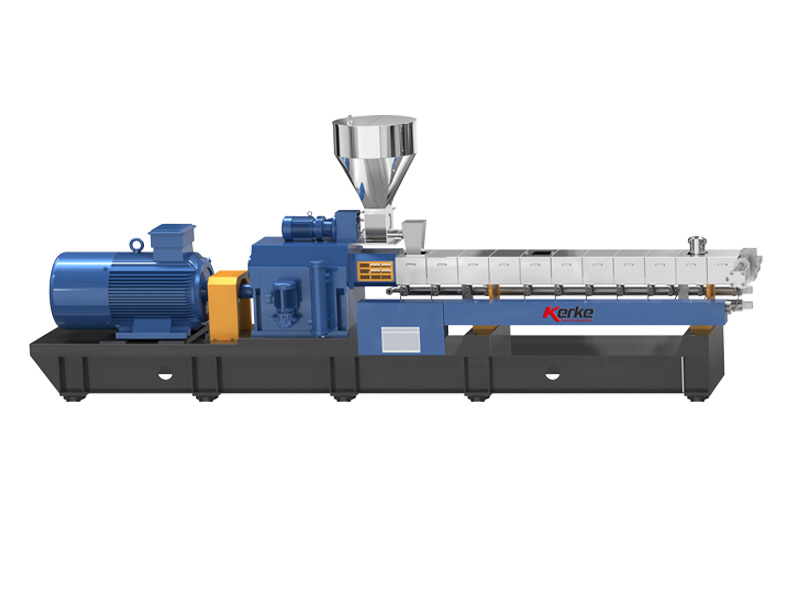
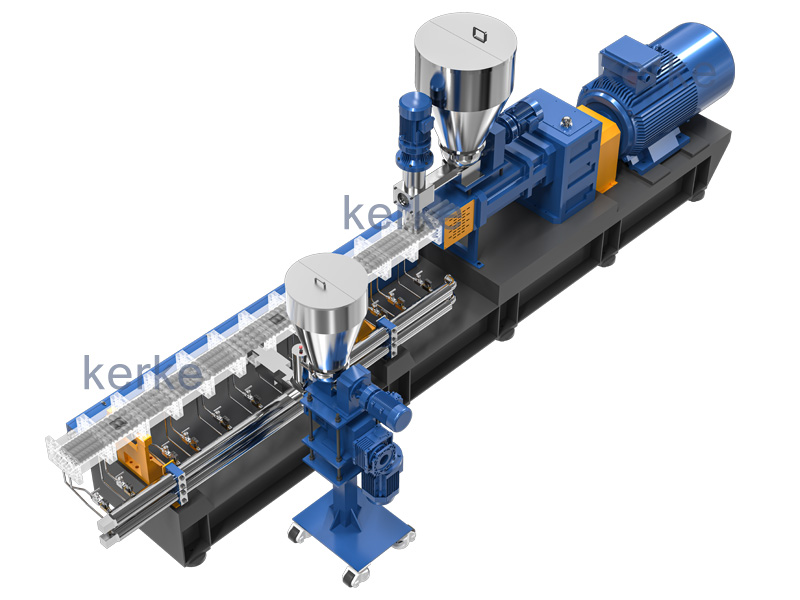
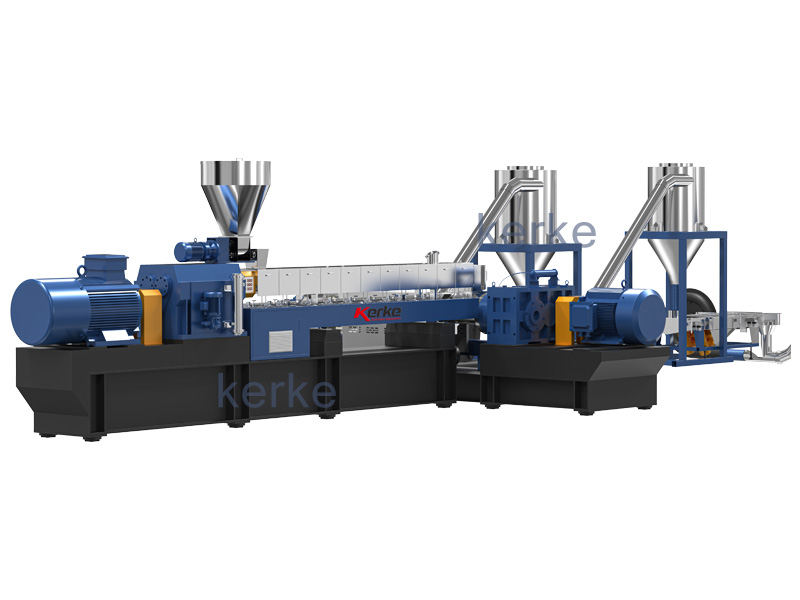
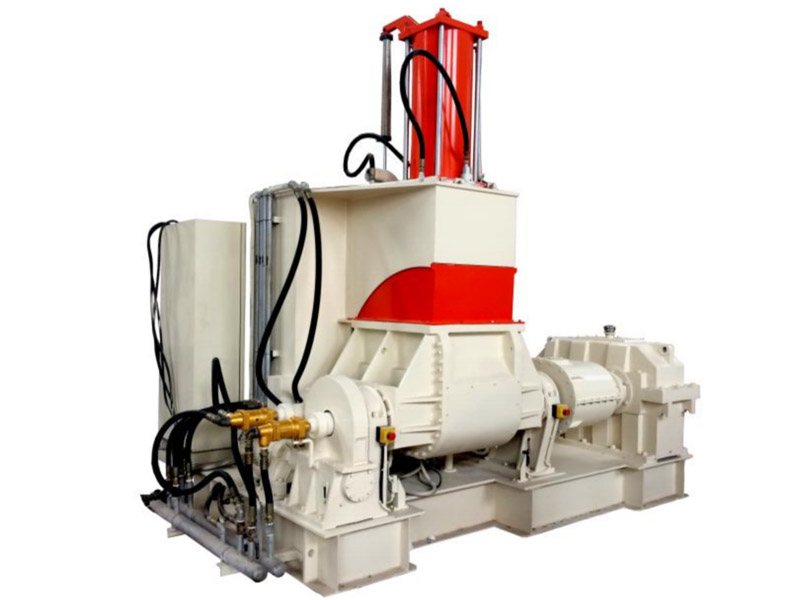
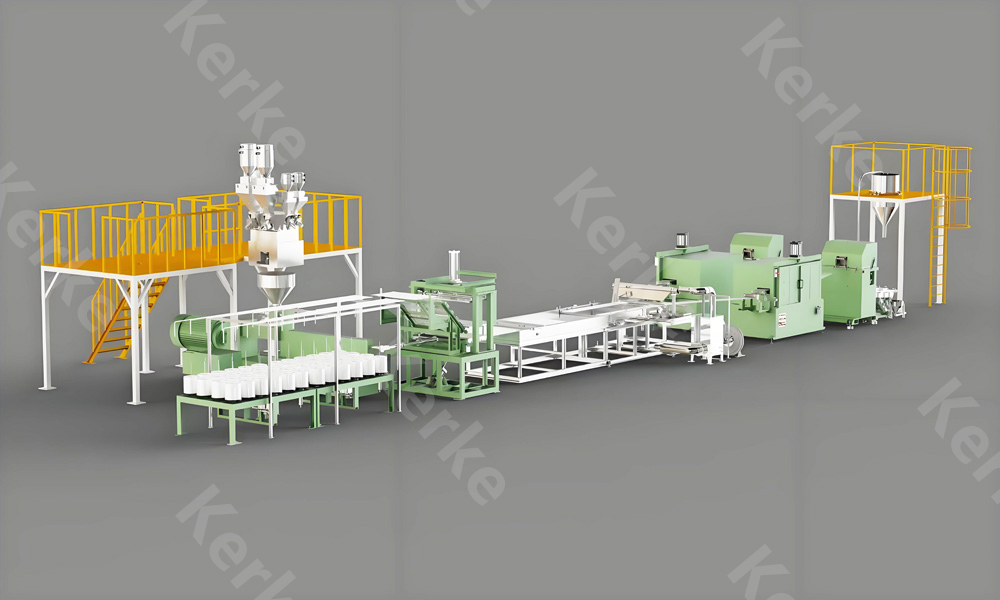
When processing high-viscosity polymers, heavily filled compounds, or reactive materials, a standard extruder simply will not suffice. These “heavy-duty” applications demand a machine capable of delivering immense mechanical energy without stalling or overheating. This is where a high torque compounding extruder comes into play. Characterized by robust gearboxes, specialized screw designs, and enhanced cooling, these machines are the workhorses of the compounding industry. This article provides a technical guide on selecting the right high-torque extruder, with a focus on the capabilities of Kerke Extruder’s heavy-duty series, including detailed specifications, cost analysis, and application examples.
Understanding Torque in Extrusion
Torque is the rotational force applied by the screws to the polymer. It is the primary driver of mixing and melting. In compounding, torque is directly related to the viscosity of the material and the degree of fill. The specific torque (torque per unit of screw volume, usually expressed in Nm/cm³ or lb-in/in³) is the key metric. Standard extruders might offer 8-10 Nm/cm³. High-torque machines for heavy-duty work typically range from 12 to 18 Nm/cm³, with specialized reactive extrusion machines reaching even higher (20+ Nm/cm³). Choosing an extruder with insufficient torque leads to “screw slippage,” where the screws rotate but the material does not move forward, causing poor mixing and potential degradation due to prolonged residence time. The torque rating also determines the maximum filler loading; higher torque allows for higher filler content (e.g., 60% glass fiber vs 30%).
Key Applications Requiring High Torque
1. Highly Filled Compounds (Glass Fiber, Minerals, Flame Retardants)
Adding 30-60% glass fiber or mineral fillers (calcium carbonate, talc, wollastonite) drastically increases melt viscosity. The filler network creates high internal friction. The screws must overcome this resistance to convey the material forward. A high-torque extruder maintains screw speed even under this heavy load, ensuring consistent residence time and preventing the “bogging down” of the motor. For example, compounding 50% glass-filled PBT requires significantly more torque than unfilled PBT. If the torque is insufficient, the motor will trip on overload, and the fibers will break, reducing reinforcement efficiency.
2. High-Viscosity Engineering Plastics (PEEK, PPS, LCP, PSU)
Polymers like PEEK (Polyetheretherketone) or PPS (Polyphenylene Sulfide) have inherently high melt viscosities even without fillers. Processing them requires high shear and pressure, which only a high-torque gearbox can sustain. These materials are often processed at high temperatures (350-400°C), putting additional stress on the drive system. Kerke Extruder offers machines with specialized heating/cooling jackets and high-strength screws to manage the high thermal load of these materials. The specific torque requirement for PEEK is often 15-18 Nm/cm³.
3. Reactive Extrusion and Polymerization
In processes like polymerization or grafting (e.g., maleic anhydride grafted PP), the viscosity can change dramatically during the reaction. As molecular weight builds, torque spikes. High-torque machines with fast-response control systems are essential here to prevent motor overload trips. The gearbox must have a high service factor (e.g., 2.0 or higher) to handle these intermittent torque peaks. The control system should be able to automatically reduce feed rate or increase screw speed to manage the torque spike.
4. Recycling and Devolatilization
Recycling mixed or contaminated plastics often involves high-viscosity melts with inconsistent flow. High-torque extruders can handle the surging and higher viscosity of regrind. Furthermore, the intense shear is beneficial for devolatilization (removing contaminants), but this requires a robust machine to handle the associated pressure fluctuations.
Critical Design Features of High-Torque Extruders
Gearbox and Drive System: The Heart of the Machine
The gearbox is the most critical component. It must be heavy-duty, often using case-hardened and ground gears made of high-quality alloy steel (like 18CrNiMo7-6 or AISI 4340). The gearbox usually features a dual-input/dual-output design to distribute the load across two motors, or a single massive motor with a high-service-factor drive. Look for gearboxes with forced lubrication and cooling systems (oil coolers). The torque rating should be continuous, not just peak. Kerke utilizes gearboxes from reputable manufacturers (like David Brown or Bonfiglioli) or their own proprietary high-torque designs, rated for continuous operation at 100% torque (not just intermittent peaks). The gearbox cost alone can be $30,000-$50,000 for a large machine.
Screw and Barrel Design: Built for Stress
Screws for heavy-duty work have deeper flights and stronger flight roots to prevent twisting or shearing under high load. The core diameter is often larger to increase strength. The screws are typically made of high-speed steel (HSS) or bimetallic materials. The barrels are usually bimetallic (nitrided steel with a wear-resistant alloy liner like Colmonoy or Stellite) because high torque generates high shear heat, which accelerates wear. For extremely abrasive fills (glass fiber, silica), through-hardened tool steel barrels are an option, though more expensive. The L/D ratio is typically longer (48:1 to 60:1) to provide enough residence time for the difficult-to-mix materials and to allow for intensive cooling. The screw elements are often made of powder metallurgy steel for maximum wear resistance.
Intensive Cooling System: Managing the Heat
High torque generates significant viscous dissipation (shear heat). If not removed, this heat can degrade the polymer. High-torque extruders require an intensive barrel cooling system. This isn’t just a few water jackets; it is a high-flow, chilled water system with dynamic control valves that respond to melt temperature sensors. Some machines use liquid nitrogen injection for ultra-high heat removal (e.g., for UHMWPE), though this adds operational cost. The barrel cooling capacity for a high-torque line can be 3-4 times that of a standard extruder. The cooling system must be designed to handle heat loads of 50-100 kW or more. Kerke machines feature a “jacketed barrel” design with spiral cooling channels for maximum heat transfer efficiency.
Motor and Electrical System
High-torque extruders require large motors (e.g., 160kW, 200kW, or even dual 160kW). These motors must be inverter-duty rated to handle the high starting currents and variable speeds. The electrical panel must be robust, with soft starters or VFDs (Variable Frequency Drives) to manage the torque ramp-up. The cost of the motor and VFD can be $20,000-$40,000 per unit.
Cost and Price Analysis of High-Torque Extruders
High-torque compounding extruders are premium machines with a corresponding price tag. The price varies significantly based on size and torque rating. A 75mm high-torque lab extruder might start at $60,000. A full-scale 200mm industrial line capable of 1500 kg/h with 14 Nm/cm³ torque can range from $250,000 to $450,000. Specialized reactive extrusion lines with corrosion-resistant alloys can exceed $700,000. A complete turnkey line (extruder + feeder + pelletizer) can easily reach $1 million.
Cost Drivers Detailed:
1. Gearbox: As mentioned, this is the biggest cost driver. A high-precision, high-torque unit can account for 30-40% of the machine cost ($80,000-$150,000).
2. Screw and Barrel: Special materials (HSS, bimetallic) and precision machining add 20% to the cost ($40,000-$80,000).
3. Control System: Advanced PLCs capable of monitoring torque, pressure, and temperature with millisecond response times, plus torque control algorithms, are costly ($20,000-$30,000).
4. Manufacturing Precision: The machining of screws and barrels for high-torque applications requires tighter tolerances (e.g., concentricity within 0.01mm), increasing labor costs.
5. Auxiliaries: The intensive cooling system (chillers, pumps) adds $15,000-$25,000.
ROI Calculation: While the CAPEX is high, the OPEX savings and product value increase justify it.
Example: A standard extruder costs $200,000. A high-torque extruder costs $350,000. The price difference is $150,000.
Benefit 1: The high-torque machine can run 40% glass fiber, while the standard machine is limited to 20%. Glass fiber costs $1.50/kg, resin $2.00/kg.
Standard compound: 80% resin + 20% GF = $1.90/kg material cost. Sells for $2.50/kg. Profit = $0.60/kg.
High-torque compound: 60% resin + 40% GF = $1.80/kg material cost. Sells for $3.00/kg (higher performance). Profit = $1.20/kg.
For 1000 kg/hr, 8000 hr/year:
Standard profit: 8,000,000 kg * $0.60 = $4,800,000
High-torque profit: 8,000,000 kg * $1.20 = $9,600,000
Incremental profit: $4,800,000/year.
The $150,000 investment is paid back in less than a month.
Benefit 2: Reduced downtime. A standard machine might have a screw life of 3 months with heavy fillers. A high-torque screw (better material, lower RPM) might last 12 months. Savings on screw replacement: $10,000 * 3 = $30,000/year.
Benefit 3: Energy efficiency. Running at lower RPM to achieve the same output reduces energy consumption. Savings: $20,000/year.
Total ROI is massive. The cost of *not* buying a high-torque machine is losing the ability to produce high-value compounds.
How to Specify Your High-Torque Extruder
When requesting a quote from Kerke Extruder or other suppliers, provide the following data to get an accurate price and specification:
1. Material: Specific polymer and exact filler type/percentage (e.g., PA66 + 30% GF).
2. Bulk Density: Especially important for feeding.
3. Target Output: kg/hr.
4. Melt Temperature Range: Critical for cooling system design.
5. Torque Requirement: If known, specify Nm/cm³. If not, ask the supplier to calculate based on viscosity data. A good rule of thumb for heavy fillers is 12-15 Nm/cm³.
6. Space and Utilities: High-torque lines require large motors (high amperage, 480V/3-phase) and significant water flow for cooling. Ensure your facility has adequate power and chillers.
7. Application: Is it for pelletizing or direct shaping? This affects the die design.
Maintenance and Longevity of Heavy-Duty Systems
Heavy-duty work puts immense stress on components. Preventive maintenance is non-negotiable and must be more rigorous than for standard extruders.
– Daily: Monitor torque trends. A rising torque indicates wear or a blockage. Check gearbox oil temperature and pressure.
– Weekly: Inspect screw elements for fatigue cracks (especially in the kneading blocks). Check motor brushes or cooling fans.
– Monthly: Oil analysis of the gearbox to detect metal wear particles early. This is the single most important maintenance task. Vibration monitoring of the motor and gearbox is also crucial.
– Annually: Open the gearbox for inspection. Replace oil filters. Inspect the barrel for wear (measure ID).
Kerke Extruder offers condition monitoring systems (IoT sensors) that can predict failures before they happen, a feature highly recommended for high-torque lines where downtime is extremely costly (e.g., $1,000/hour). The cost of a monitoring system ($5,000) is trivial compared to the cost of a catastrophic gearbox failure ($50,000+ repair + weeks of downtime).
Case Study: Automotive Lightweighting
An automotive supplier needed to replace metal brackets with long-glass-fiber reinforced nylon. They initially tried a standard twin screw extruder but could only achieve 20% fiber loading and experienced frequent motor trips. The fibers were also broken, resulting in insufficient stiffness. They upgraded to a Kerke high-torque extruder (18 Nm/cm³) with a specialized screw design for long fibers. They were able to process 40% long glass fiber at high throughput. The resulting composite had a flexural modulus of 10 GPa, comparable to the metal it replaced. The part cost was reduced by 30%, and the extruder paid for itself in 8 months through material savings and increased sales of the lightweight components. This demonstrates that for structural applications, high torque is not a luxury; it is a necessity.
Conclusion
Choosing a high torque compounding extruder is a strategic decision that balances upfront capital expenditure against long-term operational efficiency and product capability. For heavy-duty applications involving high fillers, viscous polymers, or reactive materials, a standard machine is a false economy. It will lead to quality issues, frequent downtime, and high maintenance costs. By selecting a robust machine from a specialized manufacturer like Kerke Extruder, with a proven high-torque gearbox and optimized screw design, you ensure that your production line can handle the toughest compounds reliably and profitably. The key is to base your selection on specific torque requirements and realistic cooling needs, rather than just barrel diameter or price. Investing in high-torque technology is investing in the future capability of your manufacturing facility, allowing you to enter high-value markets like automotive, aerospace, and medical devices.