Understanding Corrosion Challenges in Polymer Compounding
Corrosion represents significant challenge in polymer compounding operations particularly when processing aggressive materials including halogen-containing polymers, acidic additives, flame-retardant compounds, and materials requiring acidic processing conditions. These corrosive environments rapidly degrade standard steel components causing reduced equipment life, compromised product quality, and increased maintenance costs. Selecting appropriate corrosion resistant compounding extruder requires comprehensive understanding of corrosion mechanisms, material compatibility, and construction options available for demanding applications.
The economic impact of corrosion extends beyond direct equipment replacement costs to include production downtime, quality issues, maintenance labor, and lost opportunity costs. Facilities processing corrosive materials report equipment life reductions from 8-10 years for standard construction to 2-3 years without appropriate corrosion protection, representing substantial financial impact. Proper corrosion resistant extruder selection provides economic benefits through extended equipment life, reduced maintenance requirements, and consistent product quality.
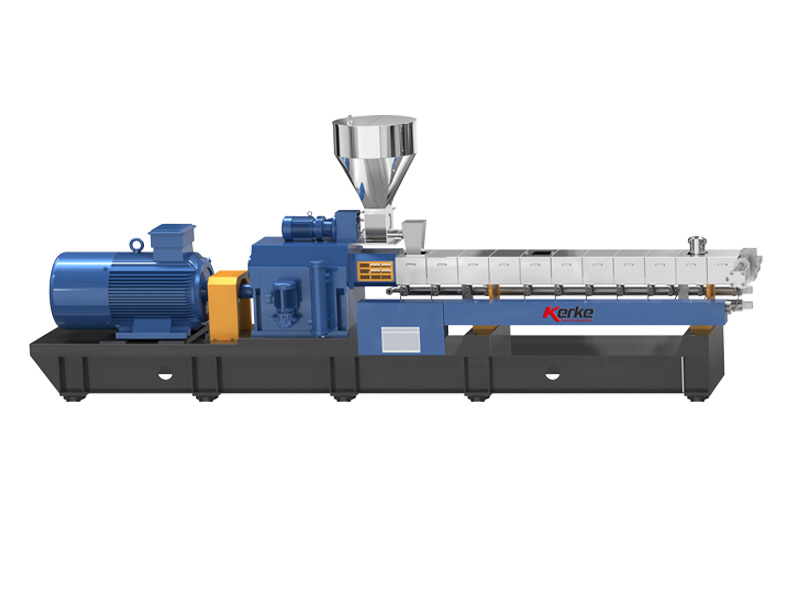
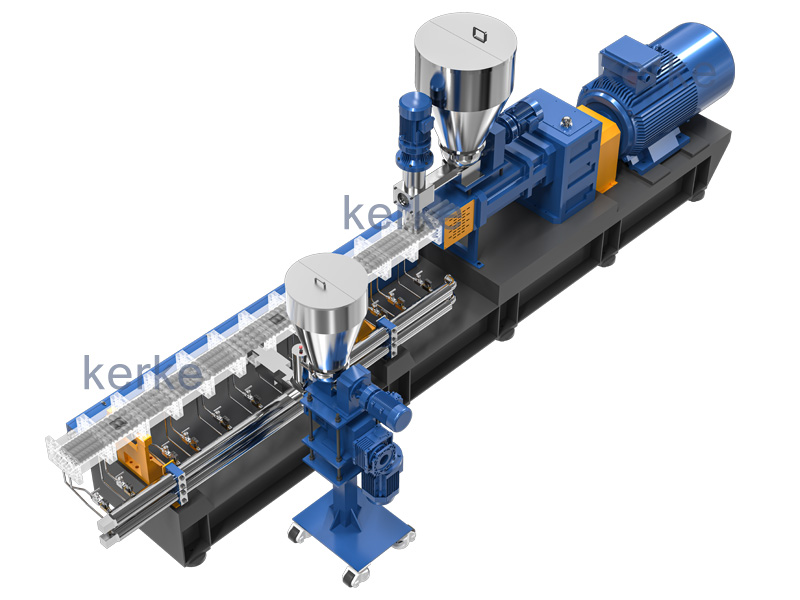
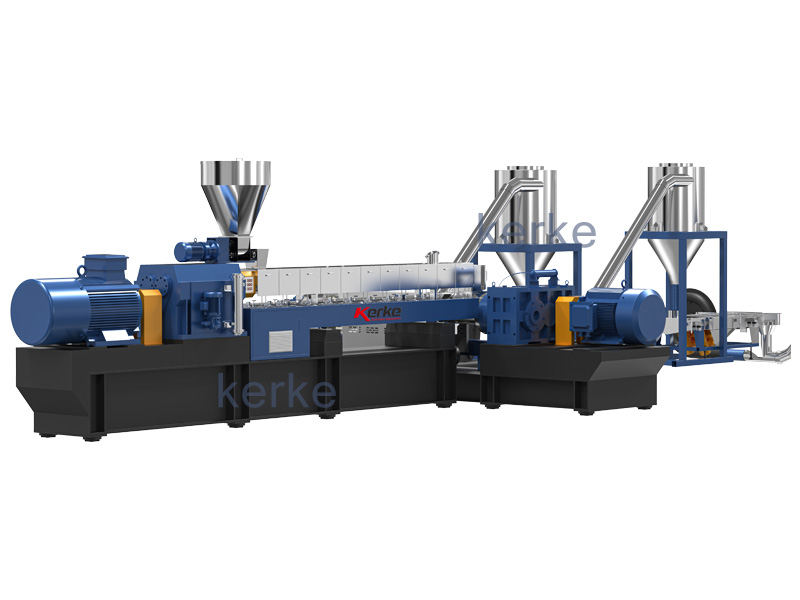
Kerke over 12 years of specialization in twin screw extruder manufacturing provides unique expertise addressing corrosion challenges across diverse applications. Kerke offers comprehensive corrosion resistant solutions including specialized material options, protective coatings, and system design considerations ensuring customers achieve reliable performance and extended equipment life when processing aggressive materials.
Identifying Corrosive Processing Conditions
Proper selection of corrosion resistant compounding extruder begins with accurate identification of corrosive processing conditions. Various materials and additives create corrosion challenges requiring different protection strategies and material selections.
Halogen-Containing Polymers
Polyvinyl chloride (PVC) and other halogen-containing polymers generate corrosive hydrogen chloride gas during processing causing rapid corrosion of steel components at elevated temperatures. PVC compounding represents primary application requiring corrosion resistant construction. Other halogen-containing materials including chlorinated polyethylene, chlorosulfonated polyethylene, and certain flame-retardant compounds present similar corrosion challenges.
The corrosive environment intensifies at processing temperatures exceeding 180 degrees Celsius where hydrogen chloride generation rates increase significantly. Moisture presence accelerates corrosion through hydrochloric acid formation on metal surfaces. Continuous processing operations face accelerated corrosion compared to batch operations due to prolonged exposure to corrosive conditions.
Acidic Additives and Processing Aids
Various additives used in compounding create acidic environments causing corrosion challenges. Acidic coupling agents used in filled compounds, certain flame-retardant additives containing phosphorus or bromine, and processing aids requiring acidic conditions all contribute to corrosive processing environments. These additives may generate acidic decomposition products during processing accelerating corrosion rates.
Applications including flame-retardant compounds for electrical applications require specific acidic additives creating particularly aggressive corrosion conditions. Biodegradable polymer processing often requires acidic catalysts or processing aids contributing to corrosion challenges. Proper material selection and protective measures essential for these applications.
Moisture-Sensitive Materials
Materials absorbing moisture including polyamides (nylon), polyesters (PET, PBT), and polycarbonate require drying prior to processing but may still introduce moisture during processing causing hydrolysis and acidic conditions. These moisture-sensitive materials create corrosion challenges particularly at processing temperatures where hydrolysis accelerates.
Repetitive processing of recycled materials containing moisture, contaminants, and unknown additives presents unpredictable corrosion challenges. Recycling operations require robust corrosion protection strategies addressing variable material conditions and aggressive contaminants.
Corrosion Resistant Material Options
Selecting appropriate corrosion resistant materials for compounding extruder components requires understanding material compatibility, performance characteristics, and cost implications. Various material options provide different levels of protection at different cost points.
Stainless Steel Options
Stainless steel represents primary corrosion resistant material option for compounding extruder construction. Various stainless steel grades provide different corrosion resistance levels and cost considerations. 304 stainless steel provides basic corrosion resistance for mild conditions at approximately 2-3 times standard carbon steel cost. 316 stainless steel provides superior corrosion resistance particularly against chloride attack at approximately 3-4 times standard steel cost.
Duplex stainless steels including 2205 provide exceptional corrosion resistance combined with high strength suitable for demanding applications at approximately 4-5 times standard steel cost. Super austenitic and super duplex stainless steels provide maximum corrosion resistance for extremely aggressive conditions at 6-8 times standard steel cost. Kerke offers various stainless steel construction options enabling appropriate material selection for specific application requirements.
High-Alloy Materials
Nickel-based alloys including Hastelloy and Monel provide exceptional corrosion resistance particularly against acidic conditions and halogen-containing environments. These materials offer corrosion resistance far exceeding stainless steel options but at significantly higher cost approximately 8-12 times standard steel cost. Nickel alloys particularly valuable for extreme corrosion conditions including concentrated acid processing.
Titanium alloys provide exceptional corrosion resistance particularly against chloride environments at approximately 10-15 times standard steel cost. Titanium particularly valuable for applications involving saltwater exposure or marine environments where chloride corrosion represents primary concern. Kerke provides high-alloy options for specialized applications requiring maximum corrosion protection.
Protective Coatings
Protective coatings provide cost-effective corrosion protection option for less aggressive conditions or as supplementary protection for high-alloy materials. Various coating options provide different protection levels and application considerations. Nickel plating provides moderate corrosion protection at approximately 50-75 percent of stainless steel cost. Chrome plating provides harder surfaces with moderate corrosion resistance suitable for components experiencing wear.
Tungsten carbide coatings provide exceptional wear resistance with good corrosion protection suitable for screw components experiencing abrasion and corrosion simultaneously. Ceramic coatings including aluminum oxide provide excellent chemical resistance particularly against acidic environments. Kerke offers various coating options enabling optimized protection strategies balancing performance and cost requirements.
Component-Specific Corrosion Protection
Different extruder components experience varying corrosion exposure levels requiring different protection strategies and material selections. Effective corrosion protection strategy addresses each component appropriately based on exposure conditions.
Barrel Construction
The barrel represents primary corrosion-exposed component requiring appropriate material selection and construction approach. Kerke offers various barrel construction options for corrosive applications. Solid stainless steel barrels provide maximum corrosion protection suitable for most corrosive applications. Liner construction with stainless or high-alloy liner over steel base provides cost-effective protection for moderate conditions at approximately 60-70 percent of solid stainless steel cost.
Bimetallic barrels combining corrosion-resistant liner with wear-resistant backing provide both corrosion and abrasion protection for filled compounds and abrasive materials. This construction particularly valuable for filled compounds where both corrosion and abrasion represent significant concerns. Kerke segmented barrel design enables different material selection for different zones based on localized corrosion exposure.
Screw Construction
Screw components experience complex corrosion conditions including chemical attack, wear, and thermal cycling requiring specialized material selection and construction approaches. Kerke offers various screw construction options optimized for corrosive applications. Solid stainless steel screw construction provides excellent corrosion resistance for mild corrosive conditions. Hardened stainless steel provides additional wear resistance for abrasive corrosive materials.
Coated screw elements provide cost-effective protection particularly for screw elements requiring frequent replacement due to wear. Modular construction enables targeted material selection for high-wear elements while using less expensive materials for low-wear sections. Kerke modular screw design facilitates appropriate material selection optimizing cost-effectiveness while ensuring corrosion protection where required.
Feeding System Components
Feeding system components including hoppers, feed throats, and feeders experience significant corrosion exposure particularly when processing acidic or moisture-containing materials. Kerke offers corrosion-resistant options for feeding system components including stainless steel hoppers, coated feed throats, and corrosion-resistant feeder components.
Loss-in-weight feeding systems for liquid acids or corrosive additives require specialized construction including acid-resistant seals and corrosion-resistant wetted parts. Kerke provides comprehensive feeding system solutions addressing corrosion challenges throughout material handling system.
Cost Analysis and Economic Considerations
Investment in corrosion resistant construction represents significant cost increase over standard construction requiring economic justification. Understanding cost implications and economic benefits enables informed investment decisions.
Initial Investment Costs
Corrosion resistant compounding extruder costs vary significantly based on material selection and construction approach. Kerke KTE series extruders with 316 stainless steel barrel and screw construction represent approximately 250-300 percent of standard carbon steel equipment cost. For KTE-65B model with 200-450 kg/h capacity, standard construction costs approximately $70,000-$95,000, while 316 stainless construction costs approximately $175,000-$285,000.
Partial stainless construction using corrosion-resistant barrels with standard steel screw represents approximately 180-200 percent of standard cost providing significant cost savings while protecting critical components. Lined barrel construction using stainless liner represents approximately 150-170 percent of standard cost providing cost-effective protection for moderate conditions.
Operating Cost Benefits
Corrosion resistant construction provides significant operating cost benefits through reduced maintenance and extended equipment life. Standard construction equipment processing corrosive materials typically requires barrel replacement every 2-3 years with screw replacement annually. Maintenance costs for corrosion-resistant construction reduced by 70-90 percent with barrel life extended to 8-10 years and screw life extended to 4-5 years.
For facilities processing corrosive materials 24 hours per day, maintenance cost savings typically exceed $50,000-$100,000 annually offsetting increased initial investment within 2-3 years. Reduced downtime associated with maintenance activities provides additional economic benefit through increased production capacity.
Quality and Reliability Benefits
Corrosion-resistant construction provides quality benefits through consistent product quality and reduced contamination. Corrosion products from deteriorating steel components cause product contamination leading to scrap and customer returns. Corrosion-resistant construction eliminates this quality issue reducing scrap rates by 50-80 percent.
Production reliability improves significantly with corrosion-resistant construction reducing unplanned downtime by 60-80 percent. Consistent operation enables better production planning and customer service. These reliability benefits provide substantial economic value particularly for high-value products or time-sensitive production schedules.
Application-Specific Solutions
Different corrosive processing applications require tailored solutions addressing specific corrosion challenges and processing requirements. Kerke provides application-specific solutions optimized for various corrosive processing applications.
PVC Compounding
PVC compounding represents primary application requiring corrosion resistant construction. Kerke provides specialized PVC compounding extruders with 316 stainless steel barrel construction for main processing zones. Screw construction uses hardened 316 stainless providing both corrosion and wear resistance. Feeding system components use stainless construction preventing acid corrosion from resin additives.
Temperature control optimized for PVC processing preventing excessive temperature reducing hydrogen chloride generation. Venting systems effectively remove corrosive gases protecting downstream components. Kerke PVC compounding systems achieve barrel life exceeding 8 years even with continuous 24-hour operation providing excellent return on investment.
Flame-Retardant Compounds
Flame-retardant compounds containing halogenated additives create aggressive corrosion environments requiring specialized protection. Kerke provides corrosion-resistant solutions including super austenitic stainless steel for most aggressive conditions. Additional venting capacity removes corrosive decomposition products effectively protecting equipment surfaces.
For flame-retardant compounds requiring acidic processing aids, Kerke provides complete system corrosion protection including all wetted parts in contact with acidic materials. This comprehensive approach ensures extended equipment life even with extremely aggressive flame-retardant formulations.
Recycled Material Processing
Recycled material processing presents unpredictable corrosion challenges due to variable contamination levels. Kerke provides corrosion-resistant solutions designed for variable conditions including robust stainless steel construction providing protection against unidentified contaminants. Modular design enables component replacement focusing replacement cost where wear occurs rather than complete barrel replacement.
For recycled material processing operations with unknown feedstock composition, Kerke recommends higher corrosion resistance levels ensuring equipment protection under worst-case conditions. This conservative approach prevents unexpected equipment failures and production interruptions.
Maintenance and Inspection Practices
Appropriate maintenance and inspection practices maximize corrosion-resistant equipment life and performance. Regular inspection identifies potential problems before equipment failure while proper maintenance prevents accelerated corrosion.
Regular Inspection Protocols
Regular inspection protocols should include visual inspection for corrosion signs including discoloration, pitting, and surface irregularities. Thickness measurements using ultrasonic gauges monitor material loss and identify accelerated corrosion areas. Chemical analysis of process streams identifies corrosive byproducts affecting equipment life.
Kerke recommends monthly inspection for continuous operations processing corrosive materials. Quarterly comprehensive inspection including detailed measurements provides trend data enabling predictive maintenance planning. Annual detailed inspection with potential maintenance intervals ensures appropriate maintenance timing.
Preventive Maintenance Practices
Preventive maintenance practices for corrosion-resistant equipment include regular cleaning removing corrosive residue from surfaces. Proper lubrication of moving components prevents corrosive wear. Calibration of temperature and pressure sensors ensures accurate process control preventing conditions accelerating corrosion.
For equipment processing acidic materials, periodic neutralization cleaning removes acid residues preventing accelerated corrosion. Water treatment for cooling systems prevents mineral deposits creating crevices promoting corrosion. Kerke provides detailed maintenance recommendations for each equipment configuration ensuring optimal life extension.
Repair and Replacement Strategies
Repair and replacement strategies for corrosion-resistant equipment consider component replacement timing and replacement material selection. Kerke modular design enables component-level replacement reducing replacement cost compared to complete unit replacement. For barrels showing localized corrosion, segmented design allows replacement of only affected zones rather than complete barrel.
Replacement material selection considers performance requirements and cost-effectiveness. For components showing accelerated corrosion beyond original expectations, upgrade to more corrosion-resistant material provides extended life. Kerke application engineering support provides recommendations optimizing replacement strategies for specific applications.
Case Studies Demonstrating Corrosion Resistance Excellence
Kerke has implemented numerous corrosion-resistant compounding systems demonstrating exceptional performance across diverse applications.
PVC Compounding Facility
A major PVC compounding facility implemented Kerke KTE-95D system with full 316 stainless steel construction for continuous PVC compound production. The system has operated continuously for 9 years without barrel replacement and only one screw replacement at year 6. Equipment cost of $290,000 representing 300 percent of standard construction achieved payback in 32 months through reduced maintenance costs and eliminated downtime.
The system processes various PVC compounds including rigid, flexible, and flame-retardant formulations all with excellent corrosion resistance. Maintenance costs reduced from $85,000 annually with previous equipment to $12,000 annually with Kerke system. Production reliability improved from 94 percent to 99.5 percent uptime providing significant economic benefit.
Flame-Retardant Compound Production
A flame-retardant compound producer implemented Kerke KTE-75D system with super austenitic stainless steel construction for halogenated flame-retardant compounds. The aggressive environment corroded previous equipment in less than 2 years requiring complete replacement. Kerke system has operated for 6 years with minimal corrosion showing expected life exceeding 10 years.
Investment of $350,000 representing approximately 400 percent of standard construction achieved payback in 38 months through eliminated equipment replacement costs and dramatically reduced maintenance. System reliability improved from 85 percent to 98 percent uptime providing additional economic benefit through consistent production capacity.
Recycled Material Processing
A recycled material processor implemented Kerke KTE-65D system with 316 stainless steel construction for mixed post-consumer recycled materials. The variable feedstock composition included unidentified corrosive contaminants causing previous equipment failures within 18 months. Kerke system has operated for 4 years with expected life exceeding 8 years.
Investment of $210,000 representing 280 percent of standard construction achieved payback in 28 months through reduced equipment replacement costs and increased production reliability. The corrosion-resistant construction provides protection against unknown contaminants ensuring consistent operation regardless of feedstock variations.
Decision Framework for Corrosion Resistant Extruder Selection
Selecting appropriate corrosion resistant compounding extruder requires systematic decision framework considering multiple factors and balancing performance requirements with economic considerations.
Material Compatibility Assessment
Material compatibility assessment begins with detailed chemical analysis of processed materials including polymers, additives, and processing aids. Understanding material decomposition products at processing temperatures identifies potential corrosive species. Consideration of moisture content and potential contaminants provides complete picture of corrosive environment.
Kerke application engineering support provides material compatibility analysis using extensive database of material performance in various construction materials. This analysis identifies appropriate material selection for specific application conditions.
Performance Requirement Evaluation
Performance requirement evaluation includes production capacity targets, product quality specifications, and operational requirements. High-value products requiring consistent quality justify higher corrosion resistance investment. Continuous operation requirements demand maximum reliability justifying premium construction options.
Understanding performance requirements enables appropriate material selection balancing protection level with cost. For applications where product contamination represents critical quality concern, maximum corrosion protection provides economic benefit through quality improvement.
Economic Analysis
Economic analysis considers total cost of ownership including initial investment, maintenance costs, downtime costs, quality costs, and replacement costs. Life cycle cost analysis over 5-10 year planning horizon provides comprehensive economic comparison between construction options.
Kerke provides detailed economic analysis tools enabling customers to make informed investment decisions. Analysis typically shows that for continuous operations processing corrosive materials, higher initial investment in corrosion-resistant construction provides significant economic return over equipment lifetime.
Conclusion: Making the Right Corrosion Resistant Extruder Choice
Selecting appropriate corrosion resistant compounding extruder requires comprehensive understanding of corrosion mechanisms, material options, and economic considerations. Kerke extensive experience with corrosive applications provides unique expertise helping customers make optimal equipment selections.
Key success factors include accurate identification of corrosive processing conditions, appropriate material selection for specific exposure levels, consideration of total cost of ownership rather than initial cost alone, and implementation of appropriate maintenance practices. Following these principles ensures equipment reliability and extended life while optimizing economic return on investment.
Investment in proper corrosion resistant construction provides substantial economic benefits through reduced maintenance costs, extended equipment life, improved product quality, and enhanced production reliability. Kerke specialized corrosion-resistant solutions provide performance excellence across diverse corrosive processing applications helping customers achieve operational success and competitive advantage.