Introduction
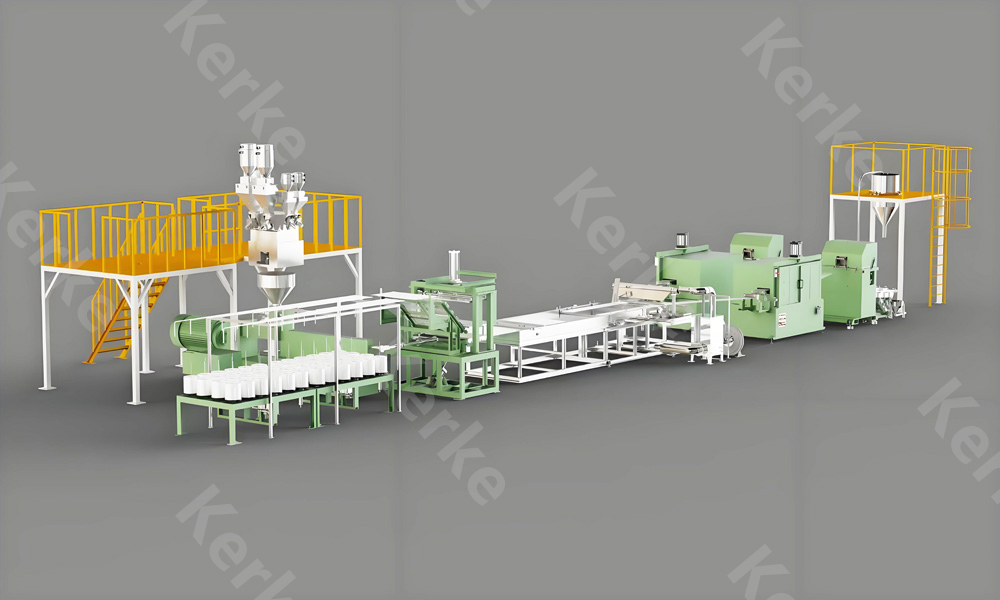
Masterbatch production is a critical process in the plastics industry, requiring precise control and efficient equipment. A high efficiency twin screw extruder is essential for achieving consistent quality, high output rates, and cost-effective production. This guide will help you understand the key factors to consider when choosing the right twin screw extruder for your masterbatch production needs.
Understanding Twin Screw Extruders
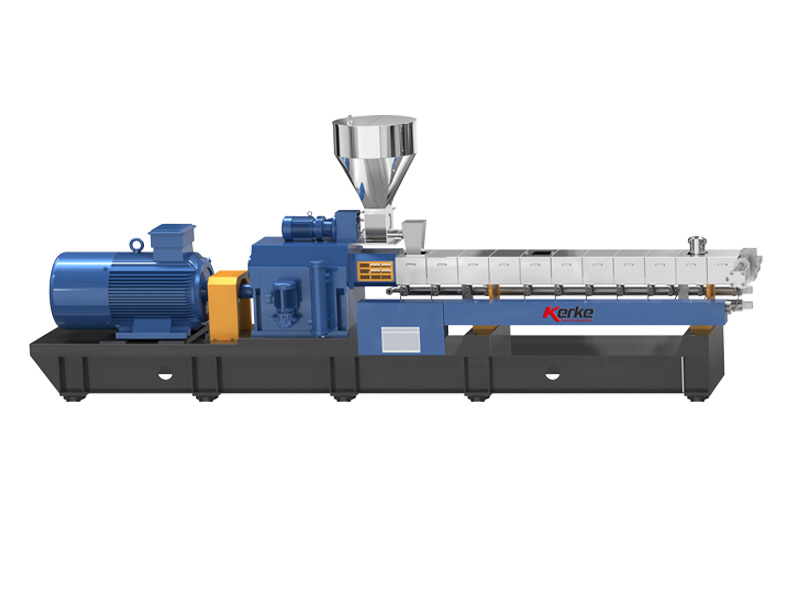
Twin screw extruders are versatile machines used in various plastic processing applications, including masterbatch production. They consist of two intermeshing screws that rotate within a heated barrel, providing superior mixing, conveying, and plasticizing capabilities. The screws can be co-rotating (both rotating in the same direction) or counter-rotating (rotating in opposite directions), each offering unique advantages for different materials and processes.
Co-rotating vs. Counter-rotating Twin Screw Extruders
Co-rotating twin screw extruders are the most common type used in masterbatch production. They offer excellent self-wiping action, which ensures efficient mixing and prevents material buildup. This design is ideal for processing heat-sensitive materials and achieving high dispersion of pigments and additives. Counter-rotating twin screw extruders, on the other hand, provide higher pressure generation and are often used for processing high-viscosity materials or for applications requiring precise control of the melt temperature.
Key Factors to Consider When Choosing a Twin Screw Extruder for Masterbatch Production
1. Screw Design and Configuration
The screw design is one of the most critical factors in determining the performance of a twin screw extruder. The screw elements, such as conveying flights, kneading blocks, and reverse elements, play a crucial role in material processing. For masterbatch production, a screw configuration that provides intensive mixing and dispersion is essential. Look for extruders with modular screw designs that allow for easy customization to meet specific processing requirements.
2. Barrel Design and Temperature Control
The barrel design and temperature control system are also important considerations. The barrel should be divided into multiple heating zones to ensure precise temperature control along the length of the extruder. This is particularly important for processing heat-sensitive materials, as it helps prevent overheating and degradation. Additionally, the barrel should be made of high-quality materials to resist wear and corrosion, especially when processing abrasive or filled compounds.
3. Drive System and Torque Capacity
The drive system provides the power to rotate the screws, and the torque capacity determines the extruder’s ability to handle high-viscosity materials and maintain consistent processing conditions. For masterbatch production, which often involves processing highly filled or reinforced compounds, a high-torque drive system is essential. Look for extruders with robust drive systems that can deliver consistent torque even under heavy loads.
4. Feeding System
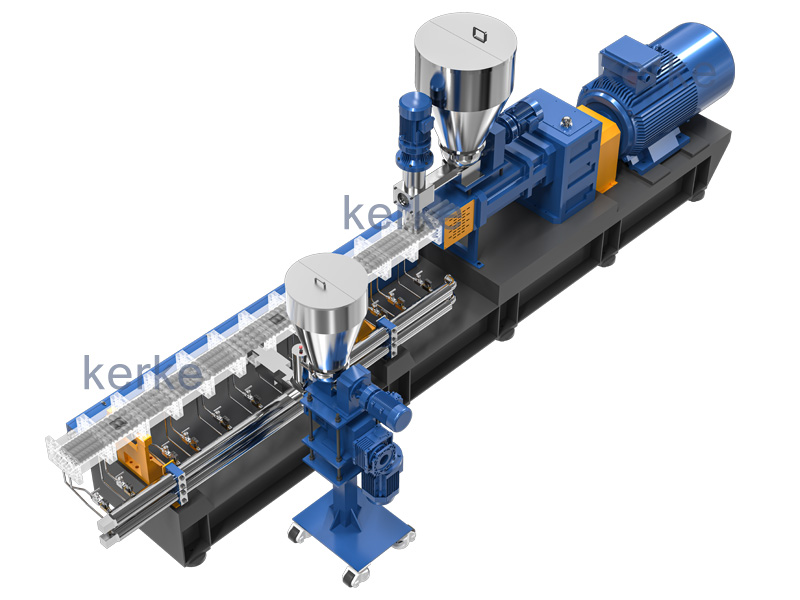
The feeding system is responsible for delivering the raw materials to the extruder. A reliable feeding system ensures consistent material flow and prevents fluctuations in the processing conditions. For masterbatch production, a loss-in-weight feeding system is often preferred, as it provides precise control over the material dosage and can handle a wide range of material types, including powders, pellets, and liquids.
5. Venting and Degassing Capabilities
Venting and degassing are important processes in masterbatch production, as they help remove volatile components, moisture, and trapped air from the melt. This improves the quality and consistency of the final product and reduces the risk of defects. Look for extruders with efficient venting systems that can handle the specific degassing requirements of your materials.
6. Pelletizing System
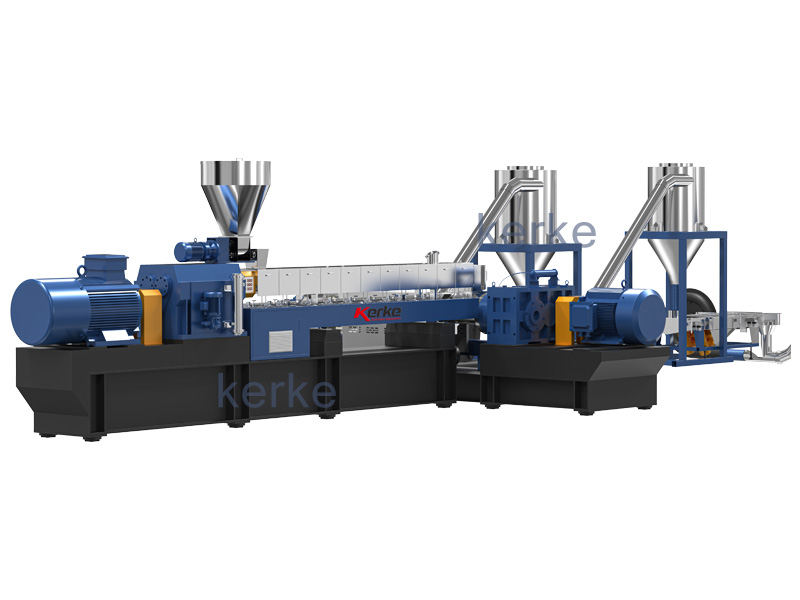
The pelletizing system is responsible for cutting the extruded material into uniform pellets. There are several types of pelletizing systems available, including strand pelletizing, underwater pelletizing, and die-face hot cutting. The choice of pelletizing system depends on the material properties, production requirements, and desired pellet characteristics. For masterbatch production, underwater pelletizing is often preferred, as it provides high-quality pellets with minimal dust and fines.
7. Automation and Control System
An advanced automation and control system can significantly improve the efficiency and consistency of your masterbatch production process. Look for extruders with user-friendly control interfaces that allow for easy adjustment of processing parameters, real-time monitoring of the process, and data logging for quality control purposes. Some extruders also offer advanced features such as predictive maintenance and remote monitoring, which can help reduce downtime and improve overall productivity.
8. After-Sales Support and Service
Choosing a reliable manufacturer that offers comprehensive after-sales support and service is essential for ensuring the long-term performance and reliability of your twin screw extruder. Look for manufacturers that provide training, spare parts availability, and technical assistance to help you maximize the uptime and efficiency of your equipment.
Why Choose Kerke Twin Screw Extruders for Masterbatch Production
Kerke is a leading manufacturer of twin screw extruders, with over 12 years of experience in the industry. Our extruders are designed to meet the specific needs of masterbatch production, offering superior performance, reliability, and cost-effectiveness. Here are some of the key advantages of choosing Kerke twin screw extruders:
1. High Efficiency and Productivity
Kerke twin screw extruders are designed to deliver high output rates and consistent processing conditions, ensuring maximum productivity. Our extruders feature advanced screw designs and high-torque drive systems that can handle even the most challenging materials and formulations.
2. Superior Mixing and Dispersion
Our extruders are equipped with state-of-the-art screw elements and barrel designs that provide intensive mixing and dispersion, ensuring uniform distribution of pigments and additives in the polymer matrix. This results in high-quality masterbatches with consistent color and performance.
3. Customizable Solutions
We understand that every masterbatch production process is unique, which is why we offer customizable extruder solutions to meet your specific requirements. Our team of experienced engineers can work with you to design and configure an extruder that is tailored to your material properties, production volume, and quality standards.
4. Advanced Automation and Control
Kerke twin screw extruders are equipped with advanced automation and control systems that allow for easy operation and precise control of the processing parameters. Our user-friendly interfaces and real-time monitoring capabilities help ensure consistent product quality and reduce the risk of human error.
5. Comprehensive After-Sales Support
We are committed to providing our customers with the highest level of after-sales support and service. Our team of experienced technicians is available to provide training, technical assistance, and spare parts support to help you keep your extruder running at peak performance.
Conclusion
Choosing the right twin screw extruder for masterbatch production is a critical decision that can have a significant impact on the quality, efficiency, and cost-effectiveness of your production process. By considering the key factors outlined in this guide and choosing a reliable manufacturer like Kerke, you can ensure that you select an extruder that meets your specific needs and delivers consistent, high-quality results.