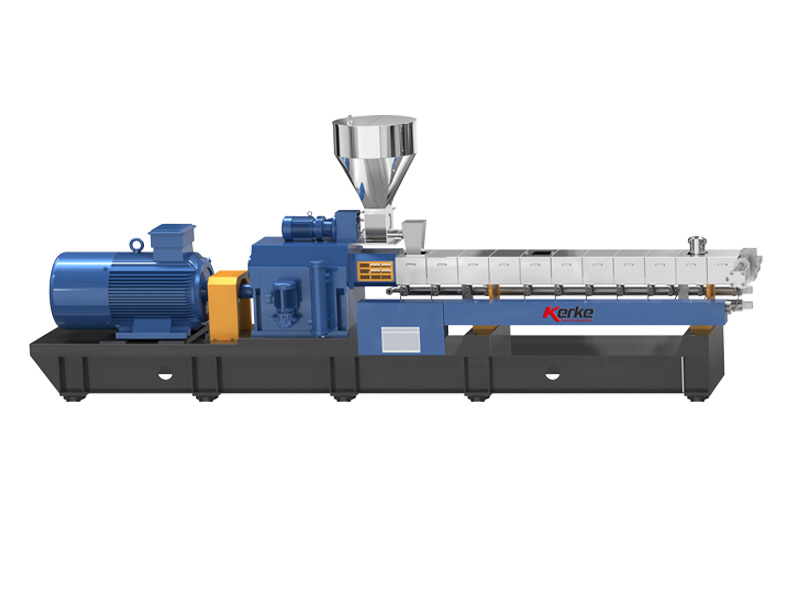
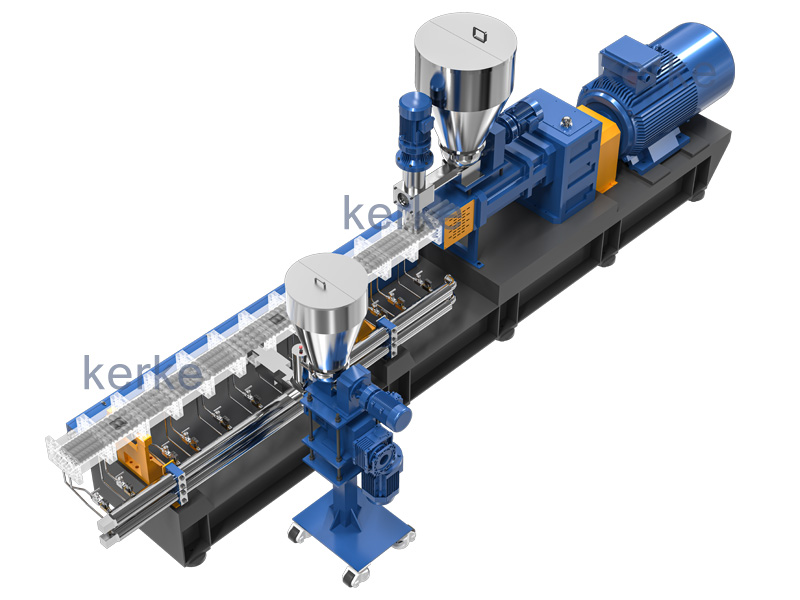
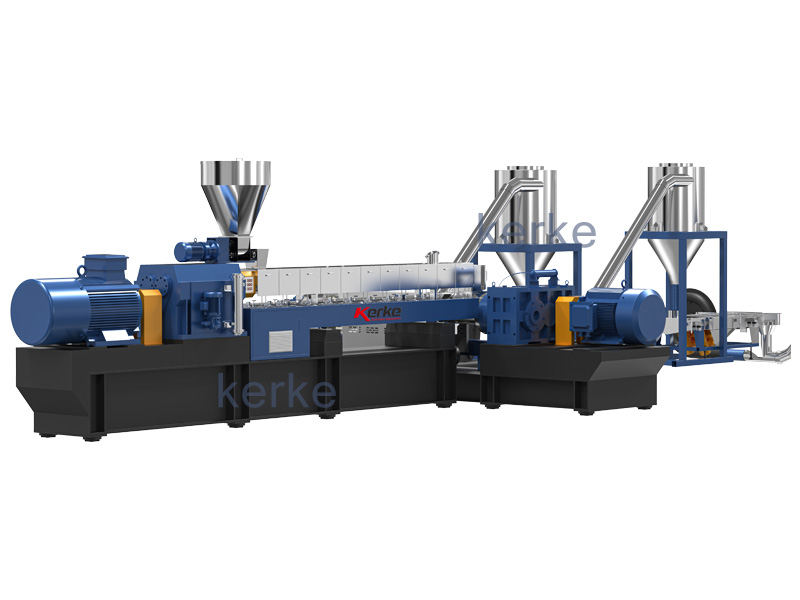
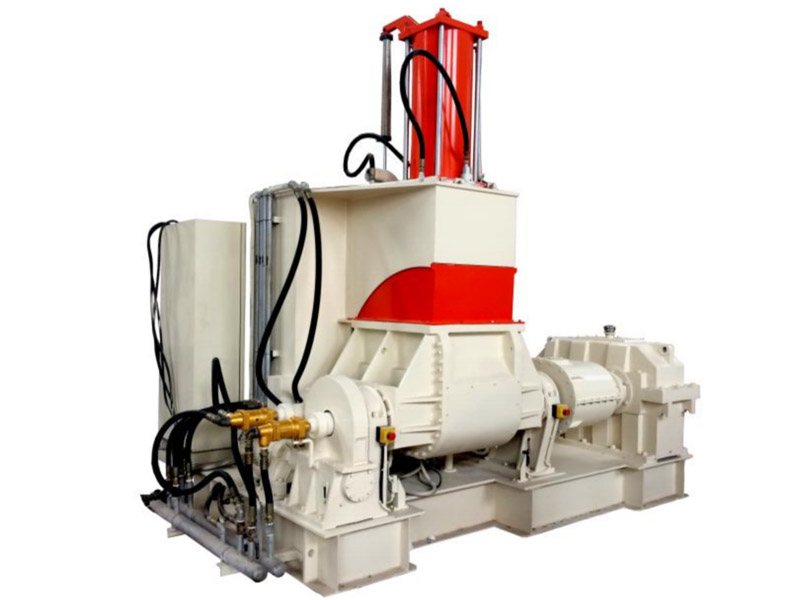
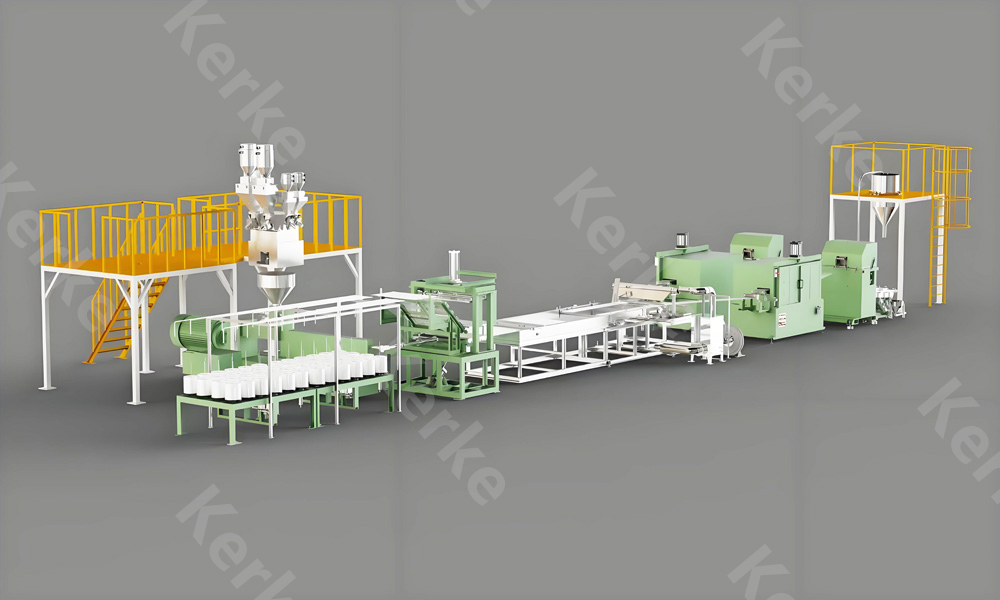
Importing industrial equipment from China has become an increasingly attractive option for manufacturers worldwide seeking cost-effective solutions without compromising on quality. Twin screw extruders, essential equipment for polymer compounding and masterbatch production, represent one of the most commonly imported categories of plastic processing machinery from China. This comprehensive guide provides manufacturers with detailed insights into the entire import process, from supplier selection to equipment installation, with specific focus on ensuring quality and reliability while maximizing cost benefits.
Understanding the Chinese Twin Screw Extruder Market
China has emerged as a global manufacturing hub for twin screw extruders, offering a diverse range of equipment from entry-level machines to advanced high-performance systems. The Chinese extruder market combines state-of-the-art manufacturing capabilities with competitive pricing, making it an attractive source for manufacturers across the globe. Understanding the market structure, manufacturing capabilities, and quality standards is essential for making informed import decisions.
The Chinese twin screw extruder industry has evolved significantly over the past two decades, transitioning from primarily producing low-cost, basic equipment to developing sophisticated machines that compete with established international brands. Leading Chinese manufacturers like Kerke Extruder (Nanjing Kerke Extrusion Equipment Co., Ltd.) have invested heavily in R&D, precision machining capabilities, and quality control systems, resulting in equipment that meets international standards while maintaining significant cost advantages.
Market Segmentation and Manufacturer Types
The Chinese twin screw extruder market can be broadly segmented into three categories based on equipment quality, technological sophistication, and target markets. Understanding these segments helps importers identify suppliers that align with their quality requirements and application needs.
Premium segment manufacturers produce high-end extruders with specifications comparable to international brands such as Coperion, Leistritz, or Thermo Fisher. These companies typically invest in advanced CNC machining equipment, implement rigorous quality control systems, and offer comprehensive technical support. Kerke Extruder represents this premium segment, with the KTE series twin screw extruders featuring high-torque designs, modular screw configurations, and sophisticated control systems that meet or exceed international standards.
Mid-range segment manufacturers offer equipment with good quality at more moderate price points. These companies may not have the same level of technological sophistication as premium manufacturers but provide reliable equipment suitable for many standard applications. Mid-range options often represent excellent value for manufacturers with standard compounding requirements and limited budgets.
Entry-level segment manufacturers focus on basic equipment at the lowest possible prices, often cutting corners on materials, components, and manufacturing quality. While these machines may perform adequately for simple applications, they typically lack the reliability, precision, and longevity required for demanding compounding operations or continuous industrial use. Importers should carefully evaluate the trade-offs between initial cost savings and long-term operational considerations.
Quality Variations and Reliability Considerations
Quality variations among Chinese twin screw extruders can be substantial, reflecting differences in manufacturing capabilities, component sourcing, and quality control standards. Understanding these variations helps importers select equipment that provides appropriate performance, reliability, and return on investment for their specific applications.
Component quality represents one of the most significant sources of variation. Premium manufacturers like Kerke source high-quality components from reputable suppliers, including gearboxes from specialized gearbox manufacturers, bearings from brands like SKF or NSK, control systems from Siemens or Omron, and heating elements from established suppliers. Lower-priced equipment may utilize lower-quality components that reduce performance and reliability.
Manufacturing precision also varies significantly among suppliers. Premium manufacturers invest in advanced CNC machining equipment and employ skilled machinists to ensure precise alignment and tight tolerances. Kerke extruders feature precision-machined screws and barrels with tolerances within 0.02mm, ensuring optimal performance and extended component life. Lower-quality equipment may have looser tolerances that reduce performance and accelerate wear.
Selecting the Right Supplier
Selecting the right supplier represents the most critical factor in successful twin screw extruder import from China. A thorough supplier evaluation process helps identify manufacturers that can deliver quality equipment, provide reliable support, and ensure a smooth import experience. This evaluation should consider multiple dimensions beyond just equipment price.
Comprehensive Supplier Assessment Criteria
Effective supplier assessment requires evaluation of multiple factors including manufacturing capabilities, quality systems, technical expertise, financial stability, and export experience. A systematic approach to supplier assessment reduces risks and increases the likelihood of successful import outcomes.
Manufacturing capabilities assessment should include facility visits or virtual tours to examine production equipment, quality control systems, and manufacturing processes. Kerke operates a modern manufacturing facility equipped with advanced CNC machining centers, precision measuring equipment, and assembly areas designed for efficient production. Look for evidence of investments in manufacturing technology that ensure consistent quality and precision.
Quality control systems evaluation should examine certification status, testing procedures, and quality documentation. Premium manufacturers like Kerke typically hold ISO 9001 quality management certification and implement comprehensive testing protocols including dimensional verification, material certification, and performance testing. Requesting copies of quality certificates and sample test reports provides valuable insights into quality management practices.
Technical expertise assessment involves evaluating the manufacturer’s engineering capabilities, R&D investment, and technical support capacity. Kerke maintains an experienced engineering team focused on continuous product improvement and technical innovation. Manufacturers with strong technical capabilities can provide valuable support for application development, process optimization, and troubleshooting throughout the equipment lifecycle.
Reputation and Track Record Verification
Verifying supplier reputation and track record through multiple sources helps ensure selection of reliable partners. This verification should include checking references, reviewing industry recognition, and examining export history.
Customer reference verification represents one of the most valuable assessment methods. Request references from customers in similar industries or with similar applications. When contacting references, ask about equipment performance, reliability issues, supplier responsiveness, and overall satisfaction. Kerke can provide references from customers in 70+ countries where KTE series extruders are operating, providing evidence of global acceptance and performance.
Industry recognition and participation in trade shows provide additional insights into manufacturer reputation. Kerke regularly participates in major international plastics exhibitions including Chinaplas, K Show in Germany, and NPE in the USA, demonstrating commitment to the global market. Industry awards or technical publications also indicate recognition of quality and innovation.
Export history examination reveals experience with international markets and familiarity with export procedures. Kerke has extensive export experience, with equipment operating in over 70 countries worldwide. This experience ensures familiarity with international standards, shipping requirements, and documentation procedures specific to various destination countries.
Financial Stability and Long-term Viability
Evaluating supplier financial stability ensures capability to honor warranties, provide spare parts, and offer long-term technical support. Financial assessment should include business longevity, ownership structure, and financial indicators if available.
Business longevity often correlates with stability and experience. Kerke was established in 2004 and has operated continuously for nearly two decades, demonstrating stability and resilience through various market conditions. Long-established manufacturers typically have proven processes, experienced personnel, and established supply chains that contribute to consistent quality and reliable support.
Ownership structure and corporate organization provide insights into business stability. Kerke is part of Wanplas Group, a well-established conglomerate in the plastics machinery industry. This corporate structure provides financial strength, technical resources, and stability that supports long-term customer relationships and product development.
Communication and Language Capabilities
Effective communication throughout the import process requires assessment of language capabilities, responsiveness, and communication protocols. Language barriers can create misunderstandings about specifications, requirements, or schedules, potentially leading to costly mistakes.
English language capability assessment should include evaluation of technical documentation quality, email communication clarity, and availability of English-speaking personnel. Kerke employs English-speaking engineers and sales representatives, providing clear communication throughout technical discussions, contract negotiations, and post-sale support. Review sample technical documentation to ensure clarity and completeness.
Responsiveness evaluation involves monitoring communication speed and quality during initial inquiries. Prompt, thorough responses to technical questions, requests for information, or proposals indicate professionalism and customer focus. Kerke typically responds to inquiries within 24 hours, providing detailed technical information and commercial proposals.
Equipment Specifications and Technical Requirements
Defining clear technical requirements and ensuring that proposed equipment meets specifications is essential for successful twin screw extruder import. Technical specification development should align with processing requirements, production objectives, and quality standards.
Core Extruder Specifications
Core extruder specifications define the fundamental performance characteristics and should be clearly specified in purchase agreements. Key specifications include screw diameter, L/D ratio, speed range, torque rating, and heating capacity.
Screw diameter selection depends on desired throughput and material characteristics. Common diameters range from 16mm for laboratory extruders to 135mm for high-production machines. Kerke offers the KTE series with diameters including 25mm, 36mm, 65mm, 75mm, 95mm, and 135mm, covering applications from pilot plants to high-volume production. Verify that the selected diameter provides adequate throughput for production requirements.
L/D ratio (length to diameter ratio) influences residence time, mixing capability, and thermal processing. Longer L/D ratios provide extended residence time and more mixing zones but require more power and floor space. Kerke extruders offer L/D ratios from 40:1 to 52:1, enabling selection based on specific application requirements. For masterbatch production requiring intensive mixing, longer L/D ratios (48:1 to 52:1) are typically preferred.
Screw and Barrel Construction
Screw and barrel construction quality significantly impacts extruder performance and longevity. Specify material quality, surface treatments, and dimensional accuracy to ensure equipment meets performance expectations.
Screw material should be specified to withstand processing conditions and expected wear. Kerke uses W6Mo5Cr4V2 high-speed tool steel for screw elements, providing excellent wear resistance and toughness. For abrasive applications, special coatings or hardened materials may be required. Verify that proposed materials match processing requirements for the materials you will be compounding.
Barrel construction should include material specifications and wear protection. Kerke barrels feature bi-metallic construction with Cr26MoV alloy liners that provide excellent wear resistance and extended service life. For particularly abrasive applications, Kerke offers specialized barrel materials and coatings that extend component life even further.
Dimensional accuracy specifications should include tolerances for screw diameter, barrel internal diameter, and alignment. Kerke maintains tolerances within 0.02mm for critical dimensions, ensuring optimal performance and minimized wear. Request tolerance documentation and dimensional inspection reports for major components.
Drive System and Gearbox
The drive system and gearbox represent critical components that significantly impact extruder performance and reliability. Specify motor power, gearbox type, torque rating, and drive system components to ensure adequate capacity and durability.
Motor power should be specified to provide adequate torque at operating speeds while accounting for processing variations. Kerke extruders feature high-efficiency motors sized appropriately for each model, with power ranging from 7.5 kW for the KTE-25D to over 400 kW for large KTE-135 models. Verify that motor power matches application requirements and provides adequate safety margin.
Gearbox specifications should include manufacturer, torque rating, and service factor. Kerke uses heavy-duty gearboxes with forced lubrication systems designed for continuous operation. The KTE-D series offers torque ratings up to T/A³ = 9, providing exceptional capacity for demanding applications. Request gearbox manufacturer specifications and service factor information.
Control System and Automation
Control system specifications determine operational capabilities and process control precision. Specify control system type, component brands, and automation features to ensure equipment meets operational requirements.
Control system type and brand should be specified for reliability and component availability. Kerke extruders feature PLC-based control systems using components from reputable manufacturers including Siemens, Omron, or ABB. These systems provide reliable operation and ensure availability of spare parts. Specify preferred component brands if necessary for integration with existing plant systems.
Automation features should include temperature control precision, drive control capability, and data logging functions. Kerke control systems provide temperature control within ±1°C, precise speed control with 0.1 RPM resolution, and comprehensive data logging capabilities. Specify required automation features including recipe storage, data export, or communication protocols.
Quality Assurance and Inspection Procedures
Implementing comprehensive quality assurance procedures ensures that imported equipment meets specifications and quality standards. Effective inspection protocols should cover pre-production inspection, in-process verification, and final acceptance testing.
Pre-Production Inspection
Pre-production inspection verifies that components and materials meet specifications before assembly begins, preventing costly rework or quality issues later in the process. This inspection should include material certification verification, dimensional inspection of critical components, and examination of purchased parts.
Material certification verification should include review of material test certificates for major components including screws, barrels, and structural parts. Kerke provides full material certification for critical components, documenting chemical composition, mechanical properties, and heat treatment. Verify that materials meet specified requirements and are traceable to specific production batches.
Dimensional inspection of critical components should include verification of screw geometry, barrel dimensions, and alignment features. Kerke utilizes precision measuring equipment including CMM (coordinate measuring machines) to verify component accuracy. Request dimensional inspection reports for major components to ensure they meet specified tolerances.
In-Process Inspection
In-process inspection monitors equipment during assembly to ensure proper construction and functionality. This inspection may include assembly verification, sub-assembly testing, and alignment checks.
Assembly verification involves examination of assembly quality including proper fastening, alignment, and component integration. Kerke implements comprehensive assembly procedures with inspection checkpoints throughout the process. Request assembly documentation including torque records, alignment measurements, and inspection checklists.
Sub-assembly testing may include functional testing of components before final assembly. For instance, Kerke performs preliminary testing of drive systems, temperature control systems, and control panel functionality before final assembly. Request test records for major sub-assemblies to verify proper operation.
Final Acceptance Testing
Final acceptance testing verifies complete equipment functionality and performance against specifications. Comprehensive testing should include mechanical operation, temperature control performance, drive system operation, and control system functionality.
Mechanical operation testing should verify smooth rotation, proper alignment, and absence of unusual noises or vibrations. Kerke performs extended run-in testing to ensure mechanical systems operate properly. Request test reports documenting run-in hours, temperature monitoring, and mechanical performance measurements.
Temperature control performance testing should verify heating capacity, control precision, and temperature uniformity across barrel zones. Kerke performs comprehensive temperature testing including ramp rate verification, steady-state accuracy assessment, and uniformity evaluation. Request temperature test reports documenting performance in each control zone.
Drive system testing should verify motor operation, speed control accuracy, and torque delivery. Kerke tests drive systems across the full speed range and documents performance characteristics. Request drive system test reports including speed accuracy, motor current, and vibration measurements.
Price Analysis and Cost Considerations
Understanding price structures and total cost considerations enables accurate budgeting and comparison of competing proposals. Price analysis should consider equipment cost, shipping expenses, customs duties, and lifetime operating costs.
Equipment Pricing Structure
Twin screw extruder pricing varies significantly based on size, configuration, and quality level. Understanding typical price ranges for different equipment categories helps assess proposal competitiveness.
Premium segment pricing for high-quality Chinese extruders typically ranges from approximately US$80,000 for medium-sized machines (65mm screw diameter) to over US$300,000 for large high-production models (95mm+ screw diameter). Kerke KTE-65D extruders typically range from US$80,000 to US$120,000 depending on configuration, while KTE-95D models range from US$180,000 to US$280,000. These prices typically include the extruder, standard control system, and basic pelletizing equipment.
Mid-range segment pricing for equipment of comparable size may be 30-50% lower than premium pricing, reflecting compromises in component quality, manufacturing precision, or features. Entry-level equipment may be priced 50-70% below premium equipment but may have significantly shorter service life and higher maintenance requirements.
Configuration Options and Additional Costs
Configuration options and additional equipment represent significant cost elements beyond the base extruder price. Understanding these costs enables accurate total cost estimation and appropriate budgeting.
Feeding system options vary from basic volumetric feeders to sophisticated gravimetric systems with loss-in-weight accuracy. Kerke offers various feeding configurations including main feeders, side feeders, and liquid dosing systems. Gravimetric feeding systems may add US$15,000 to US$40,000 depending on complexity and number of feeders.
Pelletizing systems vary from simple strand pelletizers to advanced underwater pelletizers. Basic strand pelletizers typically add US$10,000 to US$20,000, while underwater pelletizers may add US$40,000 to US$80,000. Kerke offers pelletizing options matched to material characteristics and production requirements.
Automation options including advanced process control, data logging, or recipe systems may add US$10,000 to US$30,000 depending on complexity. Determine necessary automation features based on operational requirements and integration with existing plant systems.
Shipping and Logistics Costs
Shipping and logistics represent significant additional costs beyond equipment purchase price. Understanding shipping options, documentation requirements, and associated costs enables comprehensive budgeting.
Sea freight costs vary based on destination, equipment size, and shipping method. For a typical medium-sized extruder (KTE-65D) shipped in a 40-foot container to European ports, sea freight typically costs US$2,000 to US$4,000. To North American ports, costs may range from US$3,000 to US$6,000. Kerke provides comprehensive shipping services including documentation, insurance, and logistics coordination.
Land transportation costs from port to final destination vary based on distance and local conditions. Budget US$500 to US$2,000 for local transportation depending on distance and equipment size.
Documentation and handling costs including bills of lading, customs documentation, and port handling fees typically total US$500 to US$1,500. Kerke’s export department assists with documentation preparation to ensure smooth customs clearance.
Customs Duties and Import Taxes
Customs duties and import taxes vary significantly by destination country and must be calculated accurately for comprehensive cost estimation. Research specific duty rates and requirements for your destination country.
Import duty rates for plastic processing equipment vary from 0% to over 10% depending on destination country and specific equipment classification. Many countries have free trade agreements with China that may reduce or eliminate duties. For example, ASEAN countries may have duty rates of 0-5% under preferential trade agreements. European Union duties for plastic extrusion equipment are typically around 2.7%, while US duties may vary from 0% to over 5% depending on specific classifications and trade policies.
Value Added Tax (VAT) or Goods and Services Tax (GST) typically applies to imported equipment and must be paid at import. VAT rates vary from 5% to 25% depending on destination country. These taxes are typically recoverable for business operations but represent cash flow considerations. Research specific VAT/GST requirements and rates for your country.
Total Cost of Ownership Considerations
Total cost of ownership analysis should consider not only initial purchase and import costs but also operating costs, maintenance expenses, and expected service life. Premium equipment like Kerke extruders may have higher initial costs but lower lifetime operating costs due to better energy efficiency, reduced maintenance requirements, and longer service life.
Energy efficiency varies significantly among extruder designs. Premium extruders like Kerke KTE series with high-efficiency drives and optimized screw designs may consume 15-25% less energy than lower-quality equipment. For continuous operation, this represents substantial savings that can offset initial price differences over 3-5 years.
Maintenance costs vary based on component quality and construction. Premium extruders with high-quality components typically require less frequent maintenance and have longer service intervals. Screw and barrel life may be 2-3 times longer for premium equipment, significantly reducing replacement costs over equipment lifetime.
Import Procedures and Documentation
Navigating import procedures and documentation requirements represents a critical aspect of importing twin screw extruders from China. Understanding the process, required documents, and potential challenges helps ensure smooth customs clearance and timely equipment delivery.
Import Process Overview
The import process involves multiple steps from initial purchase order to equipment delivery. Understanding each step and associated requirements helps manage expectations and avoid delays.
Proforma invoice and contract phase defines equipment specifications, pricing, delivery terms, and payment schedule. Kerke provides detailed proforma invoices with clear specifications, pricing breakdown, and delivery terms. Carefully review all specifications and terms before proceeding to avoid misunderstandings.
Production phase involves manufacturing, assembly, and testing of equipment according to specifications. Kerke provides regular progress updates including photos and videos during production. This phase typically requires 4-8 weeks depending on equipment complexity and order backlog.
Pre-shipment inspection phase involves verification that equipment meets specifications before shipment. Arrange for third-party inspection or visit the manufacturer facility for final inspection. Kerke welcomes customer visits and facilitates third-party inspection arrangements.
Shipping and documentation phase involves packing, loading, and preparation of shipping documents. Kerke handles export documentation including commercial invoices, packing lists, bills of lading, and certificates of origin. Verify that documents match import requirements for your destination country.
Required Documentation
Complete and accurate documentation is essential for smooth customs clearance. Required documents vary by destination country but typically include several standard documents.
Commercial invoice must detail equipment description, specifications, value, and payment terms. Ensure that invoice values match actual transaction values and that equipment descriptions are detailed enough for customs classification. Kerke provides comprehensive commercial invoices with detailed technical specifications.
Packing list must list all shipped items including weights and dimensions. The packing list should match the commercial invoice and actual shipment contents. Kerke provides detailed packing lists with itemized contents for each package.
Bill of lading or air waybill serves as shipping contract and receipt. This document is essential for taking delivery and should be reviewed for accuracy. Kerke arranges shipping and provides bills of lading for ocean freight shipments.
Certificate of origin may provide duty benefits under free trade agreements. Request certificate of origin if your country has preferential trade agreements with China. Kerke can provide certificates of origin upon request.
Other potential documentation requirements may include import licenses, pre-shipment inspection certificates, or technical documentation. Research specific requirements for your destination country and communicate requirements to Kerke’s export department.
Customs Clearance Process
Customs clearance involves presenting documentation to customs authorities, paying applicable duties and taxes, and obtaining clearance for equipment entry. Engaging experienced customs brokers significantly facilitates this process.
Customs broker selection should consider experience with industrial equipment imports from China. Experienced brokers understand documentation requirements, tariff classifications, and clearance procedures. Kerke can recommend customs brokers in various countries or work with your preferred broker.
Tariff classification determines duty rates and must be accurately determined for correct duty calculation. Twin screw extruders typically fall under HS Code 8477.20.00 (Extrusion machinery). Confirm correct classification with customs authorities or brokers to avoid classification disputes.
Duty and tax payment must be completed before equipment release. Payment methods vary by country but typically require electronic funds transfer to customs accounts. Budget for these payments in cash flow planning, as VAT may be substantial though often recoverable.
Kerke Extruder Export Services and Support
Kerke Extruder provides comprehensive export services designed to facilitate smooth equipment acquisition and reliable long-term operation. Understanding these services helps importers leverage available support throughout the import process and equipment lifecycle.
Comprehensive Export Package
Kerke provides turnkey export services that address all aspects of international equipment acquisition, simplifying the import process for customers worldwide.
Technical consultation services help customers select appropriate equipment specifications for their applications. Kerke’s engineering team reviews customer requirements and recommends optimal configurations considering material properties, production objectives, and budget constraints. This consultation helps ensure that selected equipment meets application requirements and provides expected performance.
Documentation preparation services include generation of all export documentation required for international shipment. Kerke’s export department prepares commercial invoices, packing lists, bills of lading, certificates of origin, and any special documentation required by destination countries. The department stays current with changing import requirements for various destination countries.
Shipping coordination services manage logistics from factory to destination port or inland location. Kerke arranges appropriate shipping methods, handles container loading and securing, and coordinates with shipping carriers. For sensitive equipment, Kerke can arrange specialized packaging and shipping methods to ensure equipment arrives in optimal condition.
Installation and Commissioning Support
Kerke provides comprehensive installation and commissioning services to ensure equipment performs according to specifications and operator expectations. These services range from remote support to on-site installation depending on customer requirements and budget.
Installation supervision services provide on-site guidance from Kerke technicians during equipment installation. Supervision includes verification of foundation requirements, equipment positioning, utility connections, and initial startup. Supervision services ensure proper installation and identify potential issues before they cause problems.
Commissioning services include equipment testing, process optimization, and operator training. Kerke technicians verify equipment performance against specifications, optimize process parameters for customer materials, and train operators on proper equipment operation and maintenance. Commissioning typically includes production of customer materials to demonstrate equipment capabilities.
After-Sales Support and Spare Parts
Kerke provides comprehensive after-sales support throughout equipment lifetime, ensuring reliable operation and addressing technical issues as they arise.
Technical support services provide remote assistance for troubleshooting, process optimization, and operational questions. Kerke’s technical team is available via email, phone, and video conferencing to address technical issues. Many problems can be resolved remotely, minimizing downtime and support costs.
Spare parts services maintain inventory of critical components for rapid shipment worldwide. Kerke stocks common spare parts including screw elements, barrel sections, wear parts, electrical components, and control system parts. Express shipping options ensure rapid delivery to minimize downtime. The parts department maintains detailed records of equipment configurations to ensure correct part identification.
Training Programs
Kerke offers training programs designed to ensure that operators and maintenance personnel have the knowledge and skills necessary for effective equipment operation and maintenance.
Operator training covers equipment start-up and shutdown procedures, parameter adjustment, process monitoring, and basic troubleshooting. Training can be conducted at Kerke’s facility prior to equipment shipment or at customer facilities after installation. Training programs can be customized based on operator experience and specific applications.
Maintenance training covers preventive maintenance procedures, component replacement techniques, and troubleshooting methods. Maintenance training helps customers develop in-house capability for routine maintenance and minor repairs, reducing reliance on external service and minimizing downtime.
Common Pitfalls and How to Avoid Them
Importing twin screw extruders from China presents potential pitfalls that can cause delays, unexpected costs, or disappointment with equipment quality. Understanding these common issues and implementing preventive measures helps ensure successful import outcomes.
Insufficient Technical Specification
Inadequate technical specification represents one of the most common causes of import problems. Vague specifications allow suppliers to interpret requirements differently than intended, potentially resulting in equipment that does not meet expectations.
Prevention strategy: Develop detailed technical specifications including material properties, production requirements, quality standards, and performance expectations. Specify measurable criteria for all critical parameters. Kerke provides technical specification templates and consultation to help customers develop comprehensive specifications.
Price-Only Decision Making
Focusing exclusively on price without considering quality, features, or total cost of ownership often results in disappointment. The lowest-priced equipment frequently compromises on component quality, manufacturing precision, or support capabilities.
Prevention strategy: Evaluate proposals based on total cost of ownership including purchase price, shipping, operating costs, maintenance expenses, and expected service life. Kerke equipment may have higher initial cost but typically offers lower lifetime costs due to superior quality and efficiency. Request detailed cost comparisons including operating cost projections.
Inadequate Supplier Due Diligence
Failing to thoroughly evaluate supplier capabilities, quality systems, and track record increases risk of quality issues or support problems. Chinese manufacturers vary significantly in capabilities and reliability.
Prevention strategy: Conduct comprehensive supplier evaluation including facility visits, reference checks, and quality system assessment. Kerke welcomes customer visits and provides comprehensive information about manufacturing capabilities and quality systems. Request references from customers in similar industries with similar applications.
Insufficient Pre-Shipment Inspection
Skipping or limiting pre-shipment inspection increases risk of receiving equipment that does not meet specifications or quality expectations. Discovering problems after equipment arrival complicates resolution and increases costs.
Prevention strategy: Arrange comprehensive pre-shipment inspection including functional testing, dimensional verification, and quality documentation review. Kerke facilitates customer inspections and third-party inspection arrangements. For critical equipment, consider retaining independent inspection services to verify equipment quality.
Incomplete Documentation
Inaccurate or incomplete documentation causes customs clearance delays and additional costs. Import regulations vary by country and change frequently, making documentation preparation challenging.
Prevention strategy: Work with experienced suppliers like Kerke who understand international documentation requirements. Kerke’s export department stays current with import requirements for various countries and prepares complete documentation sets. Engage experienced customs brokers familiar with equipment imports from China.
Underestimating Installation and Startup Complexity
Underestimating the complexity of equipment installation, utility requirements, and process development can cause delays and unexpected costs. Twin screw extruders require proper foundations, power supplies, cooling water, and process development to achieve optimal performance.
Prevention strategy: Include installation and startup planning in project budgets and schedules. Kerke provides detailed installation requirements including foundation drawings, utility specifications, and space requirements. Consider Kerke’s installation and commissioning services to ensure proper setup and rapid achievement of production targets.
Conclusion
Importing quality twin screw extruders from China offers manufacturers excellent opportunities for cost savings while obtaining capable equipment for polymer compounding and masterbatch production. Success requires systematic supplier evaluation, clear technical specifications, comprehensive quality assurance, and careful attention to import procedures. Kerke Extruder represents an outstanding choice for importers seeking premium quality Chinese equipment, combining advanced technology, reliable quality, comprehensive support, and competitive pricing.
By implementing the strategies and best practices outlined in this guide, manufacturers can navigate the import process successfully, avoiding common pitfalls and ensuring acquisition of equipment that meets quality standards and production requirements. Kerke’s extensive export experience, commitment to quality, and comprehensive support services provide importers with confidence and assistance throughout the process. With proper planning and partner selection, importing from China can provide substantial economic benefits while delivering equipment that meets international quality standards.