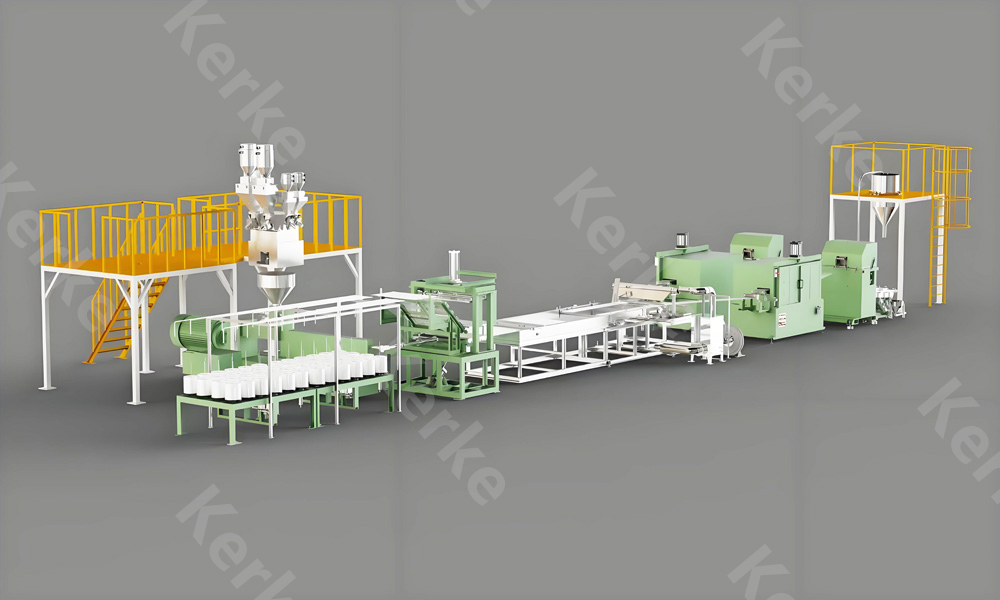
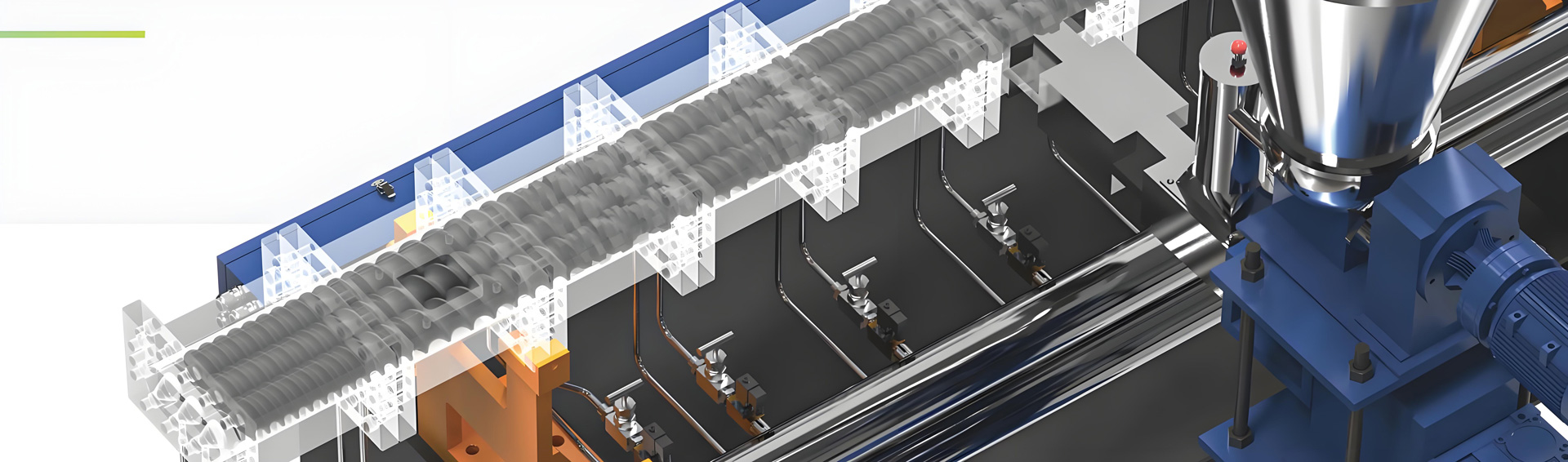
Introduction to Compounding Extruder Performance Testing
Performance testing of new compounding extruders represents a critical phase in equipment acquisition, installation, and operational optimization. Comprehensive testing ensures that the extruder meets specified performance requirements, operates reliably under expected conditions, and delivers the quality and productivity necessary for commercial operations. Proper testing methodology provides confidence in equipment performance, identifies potential issues requiring adjustment, and establishes baseline performance metrics for future comparison and optimization.
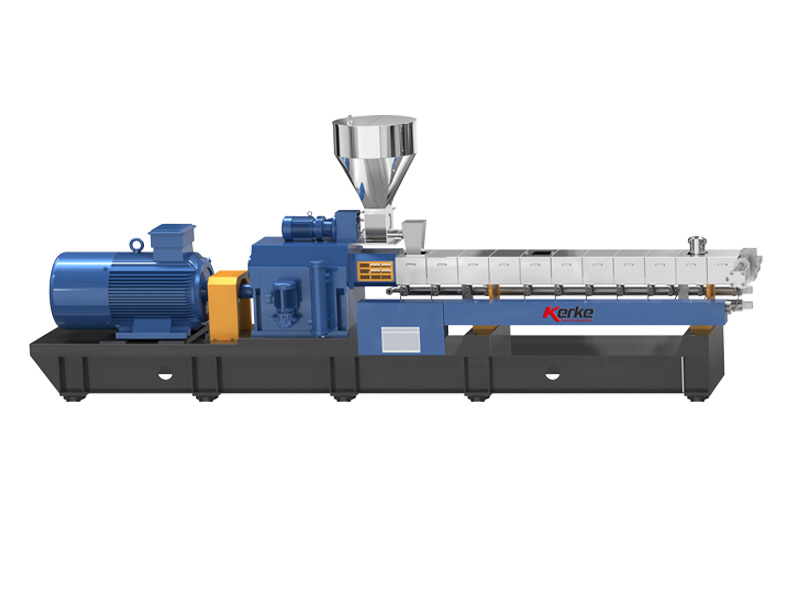
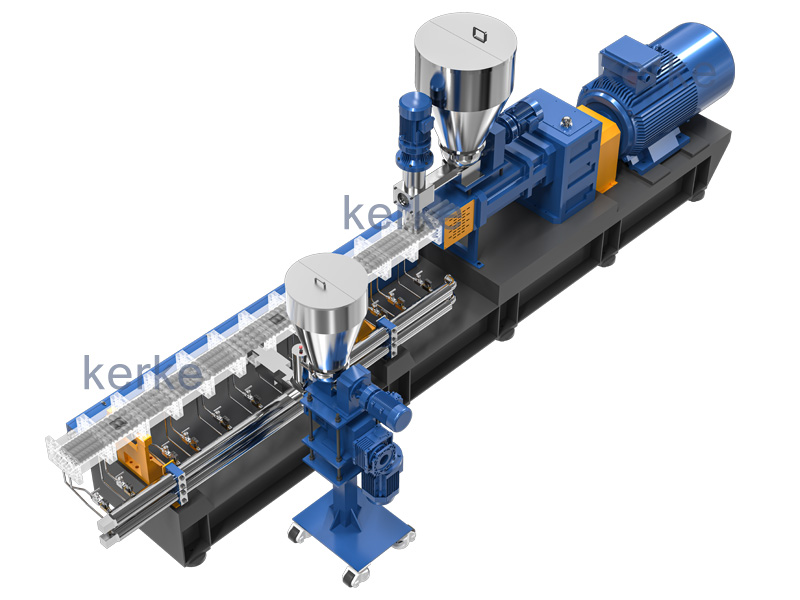
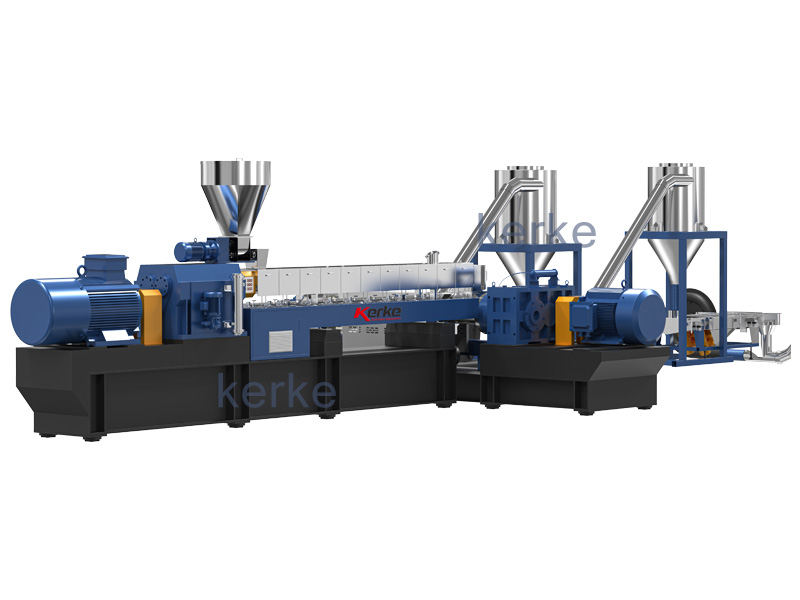
Kerke compounding extruders, with over 12 years of manufacturing experience and installations in over 70 countries worldwide, require systematic performance testing to verify proper operation and achieve optimal results. The KTE series twin screw extruders, ranging from laboratory scale KTE-20B to industrial production KTE-135D, must undergo comprehensive testing covering throughput capacity, mixing efficiency, energy consumption, product quality, and operational reliability. Testing protocols vary based on extruder size, application requirements, and material characteristics but share fundamental principles of systematic data collection, analysis, and verification.
Performance testing should occur at multiple stages including factory acceptance testing before shipment, site acceptance testing after installation, production testing with intended materials, and periodic performance verification during operation. Each testing stage serves specific purposes and requires appropriate methodology to achieve meaningful results. Understanding testing objectives, appropriate methods, and acceptance criteria enables effective performance evaluation and optimization of compounding extruder systems.
Pre-Test Preparation and Planning
Effective performance testing requires thorough preparation and planning to ensure meaningful results and efficient test execution. Proper preparation prevents wasted time, incomplete testing, and inconclusive results that could delay equipment acceptance and operational startup.
Test Objectives Definition
Clear definition of test objectives provides direction for testing activities and establishes criteria for evaluating results. Test objectives should include specific performance metrics, acceptable ranges, testing conditions, and documentation requirements. Common performance testing objectives include verifying specified throughput capacity, confirming mixing efficiency and product homogeneity, measuring energy consumption efficiency, evaluating temperature control accuracy, testing material handling capabilities, and assessing operational reliability and consistency.
For Kerke KTE series extruders, typical test objectives include achieving specified throughput ranges (KTE-20B: 3-15 kg/h, KTE-65B: 200-500 kg/h, KTE-95B: 750-1400 kg/h), maintaining product quality within specified tolerances (melt index variation within plus/minus 10%, additive dispersion meeting specifications), operating within specified energy consumption parameters, demonstrating stable operation over extended periods (minimum 8-24 hours continuous operation), and meeting safety and environmental requirements.
Test Materials Preparation
Appropriate test material selection and preparation is essential for meaningful performance evaluation. Test materials should represent intended production materials in terms of polymer type, viscosity, filler loading, additive content, and moisture content. Materials must be properly prepared including drying when required, sieving to remove oversized particles, and blending to ensure uniformity before testing.
Material characteristics affecting extruder performance include melt flow index or melt viscosity, molecular weight distribution, moisture content, filler type and loading, additive type and concentration, and thermal stability. Test materials should be quantified for these characteristics and documented to enable interpretation of test results and comparison with specified performance requirements. For new material applications, preliminary testing may be required to determine appropriate processing conditions before performance testing.
Test Equipment and Instrumentation
Appropriate test equipment and instrumentation must be available to collect accurate performance data. Required instrumentation includes throughput measurement scales or flow meters, temperature sensors and recorders for multiple barrel zones and die, torque or amperage measurement on main motor, power consumption meters for total system energy use, pressure transducers for die and barrel pressures, melt pressure and temperature sensors, product sampling equipment, and quality testing instrumentation for sample analysis.
All instrumentation must be calibrated and verified before testing to ensure measurement accuracy. Data acquisition systems should be configured to record measurements at appropriate intervals to capture performance variations and trends. For Kerke extruders, the Siemens PLC touch screen operating system provides real-time process monitoring and data logging capabilities that facilitate performance data collection and analysis.
Safety and Operational Preparations
Safety preparation and operational readiness are essential before commencing performance testing. All safety systems including emergency stops, guards, and interlocks must be verified functional. Operators must be trained on equipment operation and safety procedures. Personal protective equipment including heat-resistant gloves, eye protection, and hearing protection must be available and used appropriately. Fire suppression equipment must be accessible and operational.
Operational preparation includes verifying all utilities including electrical power, cooling water, compressed air, and instrument air are available and meet specifications. Material handling systems including hoppers, feeders, and conveyors must be connected and operational. Pelletizing and collection systems must be ready to receive product. Ventilation and exhaust systems must be operational to manage any emissions. All control systems must be checked and calibrated before testing.
Throughput and Production Rate Testing
Throughput and production rate testing verifies that the extruder achieves specified capacity under intended operating conditions. Throughput represents a fundamental performance parameter affecting economic viability and production capability. Testing must measure actual throughput under various operating conditions and material types to verify capacity and determine optimal operating parameters.
Theoretical Throughput Calculation
Theoretical throughput calculation based on screw geometry and operating speed provides expected capacity for comparison with actual measured throughput. Theoretical capacity depends on screw displacement volume, screw speed, filling efficiency, and material compressibility. Kerke KTE series extruders have specified throughput ranges based on screw diameter and speed (KTE-65B: 62.4mm diameter, 400-600 rpm, 200-500 kg/h capacity; KTE-75D: 71mm diameter, 800 rpm, 500-1000 kg/h capacity).
Theoretical throughput calculation considers channel volume in the feed section, screw speed in revolutions per minute, material bulk density in the feed section, and fill factor accounting for material slip and incomplete filling. Comparison of theoretical with actual throughput identifies potential issues with feeding efficiency, screw configuration, or material characteristics affecting capacity achievement.
Actual Throughput Measurement
Actual throughput measurement involves collecting output over a measured time interval and weighing the collected product. Measurement should be conducted under stable operating conditions after reaching thermal and process equilibrium. Multiple measurements at different operating conditions provide comprehensive capacity characterization across the operating range.
Throughput testing should include measurements at multiple screw speeds covering the specified range, different feed rates, various material formulations, and different die configurations and pressures. This comprehensive testing identifies capacity limitations and optimal operating points. Measurement accuracy requires appropriate scale capacity and calibration, consistent measurement intervals (typically 10-30 minutes per measurement), and elimination of material handling losses in measurement.
Throughput Variation Analysis
Throughput variation analysis evaluates consistency and stability of production rate. Consistent throughput is essential for downstream process integration and product quality. Variation analysis includes statistical evaluation of multiple throughput measurements, short-term variation monitoring during continuous operation, and long-term variation assessment over extended production runs.
Acceptable throughput variation typically remains within plus/minus 5% of target under stable operating conditions. Variations exceeding this range may indicate feeding issues, material consistency problems, or control system instability. Kerke extruders with advanced control systems and volumetric or gravimetric feeding achieve consistent throughput within these tolerances under normal operating conditions.
Maximum Throughput Determination
Maximum throughput determination identifies the practical capacity limit where quality or operational constraints prevent further capacity increase. Maximum throughput may be limited by motor power capacity, torque limits, thermal capacity, die pressure limits, or quality deterioration. Testing progressively increases throughput until constraints appear, defining practical maximum capacity.
Testing methodology involves increasing feed rate while monitoring process parameters including motor amperage, torque, temperature, pressure, and product quality. The point where any parameter approaches limit values or quality deteriorates defines maximum practical throughput. This information is valuable for understanding true capacity limits and avoiding conditions that could cause equipment damage or quality problems.
Mixing Efficiency and Product Quality Testing
Mixing efficiency and product quality testing evaluates the fundamental purpose of compounding extruders to achieve uniform dispersion and distribution of components. Effective mixing is critical for product performance, appearance, and consistency. Testing methods assess various aspects of mixing quality including additive dispersion, color uniformity, and property consistency.
Additive Dispersion Testing
Additive dispersion testing evaluates how effectively additives are distributed and dispersed throughout the polymer matrix. Good dispersion is essential for additive effectiveness and product performance. Testing methods include visual inspection for agglomerates, microscopy analysis for particle size distribution, and spectroscopic analysis for concentration uniformity.
For pigment and color masterbatch applications, dispersion quality assessment includes visual evaluation of color uniformity in extruded strands or pellets, color difference measurement (Delta E) between samples, and microscopic examination for pigment agglomerates. Kerke twin screw extruders with kneading block screw elements provide excellent dispersive mixing capability for pigments and additives, typically achieving dispersion quality meeting industry standards for most applications.
Filler Distribution Testing
Filler distribution testing evaluates uniformity of filler dispersion in filled compounds. Uneven filler distribution causes property variation, surface defects, and processing difficulties. Testing methods include ash content analysis to determine filler concentration uniformity, density measurement for uniformity assessment, and microscopic analysis for filler agglomerate identification.
For mineral-filled compounds including calcium carbonate or talc-filled masterbatch, typical acceptance criteria include filler concentration variation less than plus/minus 2% across samples, absence of visible agglomerates above specified size (typically less than 50 microns), and consistent density within plus/minus 1% across samples. Kerke extruders with modular screw configuration allow optimization of mixing elements for specific filler types and loading levels.
Melt Homogeneity Testing
Melt homogeneity testing evaluates uniformity of melt characteristics including temperature, viscosity, and composition across the melt stream. Melt homogeneity affects product consistency and processing performance. Testing methods include melt temperature profiling across the die exit, melt flow index variation analysis, and rheological characterization of samples from different locations.
Acceptable melt homogeneity typically requires temperature variation less than plus/minus 2°C across the die exit, melt flow index variation less than plus/minus 10% across samples, and consistent rheological behavior within specified tolerances. Kerke extruders with multiple temperature control zones and efficient mixing elements achieve melt homogeneity meeting these requirements for most applications.
Property Consistency Testing
Property consistency testing evaluates uniformity of final product properties critical to end-use performance. Properties requiring evaluation include mechanical properties (tensile strength, impact resistance, elongation), thermal properties (heat deflection temperature, melting point), and physical properties (density, color, appearance). Consistent properties ensure reliable product performance and customer satisfaction.
Testing methodology includes sampling from multiple time points during continuous operation, testing samples using standardized test methods, and statistical analysis of property variation. Acceptable property variation depends on application requirements but typically remains within plus/minus 5-10% for critical mechanical properties, depending on material and application specifications.
Energy Consumption and Efficiency Testing
Energy consumption and efficiency testing evaluates the economic and environmental performance of the extruder system. Energy costs represent a significant portion of operating costs, making energy efficiency important for economic viability. Testing measures total energy consumption and calculates efficiency metrics for comparison and optimization.
Total Energy Consumption Measurement
Total energy consumption measurement quantifies electrical energy used by the complete extrusion system during operation. Measurement includes main motor energy, heater energy, cooling system energy, and auxiliary equipment energy. Total energy measurement provides basis for operating cost calculation and efficiency assessment.
Measurement methodology uses power meters monitoring total electrical consumption over defined production periods. Measurements should be conducted at various throughput levels to establish energy consumption profiles and identify optimal operating points for efficiency. Kerke KTE-65B with 90-110 kW motor power typically consumes 100-130 kW total depending on operating conditions and configuration. KTE-95B with 250-315 kW motor power typically consumes 280-350 kW total.
Specific Energy Consumption
Specific energy consumption represents energy used per unit of production, providing efficiency metric independent of production scale. Calculation divides total energy consumption by throughput achieved, typically expressed as kWh per kg of product. Lower specific energy consumption indicates higher efficiency and lower operating costs.
Specific energy consumption varies based on material type, formulation, throughput, and operating conditions. Typical values range from 0.08 to 0.15 kWh per kg for commodity polyolefins, 0.12 to 0.20 kWh per kg for engineering plastics, and 0.15 to 0.25 kWh per kg for highly filled compounds. Kerke extruders with high torque design and efficient drive systems achieve specific energy consumption in the lower range of these typical values.
Motor Efficiency Analysis
Motor efficiency analysis evaluates how effectively electrical energy is converted to mechanical energy for driving the screws. Motor efficiency depends on load level and motor design. Testing measures input electrical power and output mechanical power to calculate efficiency across the operating range.
Efficient operation requires motors operating near their optimal load range, typically 70-90% of rated capacity. Kerke extruders feature high-efficiency motors and properly matched drives to optimize motor efficiency across the operating range. Motor efficiency typically exceeds 90% at optimal load conditions, but may decrease significantly at very low or high loads.
Thermal Efficiency Evaluation
Thermal efficiency evaluation examines how effectively thermal energy is used to heat and maintain material temperature. Inefficient thermal systems waste energy through excessive heat loss, inadequate heat transfer, or excessive cooling requirements. Testing measures heater energy input, heat loss from the barrel, and thermal uniformity.
Thermal efficiency improvements include barrel insulation to reduce heat loss, optimized heater configuration for efficient heat transfer, and efficient cooling systems that minimize energy consumption. Kerke extruders feature optimized thermal design with effective insulation and precise temperature control, typically achieving thermal efficiency that minimizes energy waste while maintaining uniform temperature.
Temperature Control and Thermal Performance Testing
Temperature control and thermal performance testing evaluates the extruder ability to maintain specified temperatures and achieve appropriate thermal profiles. Precise temperature control is essential for material processing, product quality, and operational stability. Testing verifies control system performance and thermal design effectiveness.
Temperature Control Accuracy
Temperature control accuracy testing measures how closely actual barrel temperatures match setpoint values. Accurate control ensures consistent processing conditions and product quality. Testing involves setting various temperature setpoints, measuring actual temperatures under steady-state conditions, and calculating deviation from setpoint.
Acceptable temperature control accuracy typically remains within plus/minus 1-2°C of setpoint under steady conditions. Kerke extruders with advanced PID temperature control systems and appropriately sized heaters achieve this level of accuracy across operating conditions. Control accuracy may vary depending on ambient conditions, cooling requirements, and thermal load.
Temperature Uniformity
Temperature uniformity testing evaluates consistency of temperature around the barrel circumference and along the barrel length. Non-uniform temperatures cause inconsistent processing and quality variations. Testing uses multiple temperature sensors at various positions to assess uniformity under operating conditions.
Acceptable temperature uniformity typically requires variation less than plus/minus 2°C around barrel circumference and less than plus/minus 3-5°C along barrel length within each control zone. Kerke barrel design with optimized heater layout and effective cooling achieves uniform temperatures meeting these requirements for most applications.
Temperature Response Time
Temperature response time testing measures how quickly the system responds to setpoint changes and disturbances. Fast response enables quick adjustment when material characteristics change or when startup and shutdown occur. Testing involves changing setpoints and measuring time required to achieve new stable temperatures.
Response time varies based on thermal mass, heater capacity, and cooling system capacity. Kerke extruders with appropriately sized heaters and efficient cooling typically achieve response times allowing temperature stabilization within 5-15 minutes of setpoint changes, depending on zone size and operating conditions.
Thermal Stability
Thermal stability testing evaluates maintenance of stable temperatures during extended operation without operator intervention. Stable temperatures ensure consistent processing and product quality. Testing involves operating at set conditions for extended periods (typically 8-24 hours) and monitoring temperature variations over time.
Acceptable thermal stability typically maintains temperatures within plus/minus 1-2°C of setpoint during extended operation under constant operating conditions. Kerke control systems with properly tuned control parameters achieve this level of stability, minimizing process variation and operator intervention requirements.
Operational Reliability and Durability Testing
Operational reliability and durability testing evaluates extruder performance over extended operation and under various conditions. Reliable operation is essential for production continuity and economic viability. Testing assesses equipment capability to maintain consistent performance over time without failure or significant degradation.
Continuous Operation Testing
Continuous operation testing verifies extruder capability to operate continuously for extended periods without interruption or performance degradation. Testing typically involves 24 to 72 hours of continuous operation at specified throughput with material and product quality monitoring throughout the test period.
Performance parameters monitored during continuous operation testing include throughput consistency, power consumption stability, temperature stability, product quality consistency, and equipment condition including vibration, noise, and temperature of mechanical components. Kerke extruders with robust design and high-quality components typically demonstrate reliable continuous operation meeting production requirements.
Start-Up and Shutdown Testing
Start-up and shutdown testing evaluates extruder performance during transition periods between operation and non-operation. Proper start-up and shutdown procedures are essential for equipment protection and product quality. Testing verifies procedures and identifies potential issues during these critical transition periods.
Start-up testing includes evaluation of heating time to reach operating temperatures, stability during ramp-up to full production, and product quality during initial production period until stable conditions are achieved. Shutdown testing includes evaluation of cooling procedures, material purging effectiveness, and equipment condition after shutdown. Kerke systems with appropriate control features and procedures enable reliable start-up and shutdown operations.
Variable Load Testing
Variable load testing evaluates extruder performance across the complete operating range from minimum to maximum throughput. Equipment must perform reliably across this range while maintaining product quality. Testing involves operation at multiple throughput levels and evaluation of performance at each condition.
Testing across the operating range identifies any conditions where performance, quality, or reliability issues occur. This information is valuable for defining acceptable operating ranges and avoiding conditions that could cause problems. Kerke KTE series extruders are designed for reliable performance across their specified operating ranges (KTE-65B: 200-500 kg/h, KTE-95B: 750-1400 kg/h).
Wear and Durability Assessment
Wear and durability assessment evaluates equipment resistance to wear and degradation during operation. Wear affects performance, product quality, and maintenance requirements. Testing involves monitoring component condition over time and measuring performance changes that may indicate wear.
Components subject to wear include screw elements, barrel surfaces, thrust bearings, and seals. Monitoring includes measuring screw diameter and profile changes, barrel bore changes, and performance changes indicating component wear. Kerke extruders use wear-resistant materials including W6Mo5Cr4V2 for screw elements and bimetal alloy barrel liners for extended service life and consistent performance.
Data Analysis and Performance Evaluation
Data analysis and performance evaluation convert collected test data into meaningful information for decision making. Proper analysis methods identify performance strengths, weaknesses, and optimization opportunities. Systematic evaluation provides basis for equipment acceptance and operational improvements.
Statistical Analysis Methods
Statistical analysis methods enable objective evaluation of performance data and identification of significant trends or variations. Statistical tools include mean and standard deviation calculation for performance parameter characterization, control charts for process stability monitoring, regression analysis for parameter relationships, and hypothesis testing for significance determination.
Statistical analysis helps identify normal process variation versus significant deviations requiring attention. Control charts displaying performance parameters over time reveal trends and shifts indicating process changes. This analysis approach provides objective basis for performance evaluation and acceptance decisions.
Performance Comparison with Specifications
Performance comparison with specifications evaluates whether measured performance meets agreed requirements. Specification comparison should be systematic, comparing each specified parameter with measured results and documenting compliance or non-compliance. Parameters typically specified include throughput range, energy consumption, product quality requirements, temperature control accuracy, and operational reliability.
For Kerke extruders, typical specification compliance criteria include achieving specified throughput range within specified power consumption limits, maintaining product quality within specified tolerances, operating within specified temperature ranges, and demonstrating reliable operation without significant issues. Clear criteria and documented evidence support acceptance decisions and any necessary corrective actions.
Cost-Benefit Analysis
Cost-benefit analysis evaluates economic performance based on test results and estimated operating costs. Analysis includes investment cost recovery period, operating cost per unit of production, and comparison with alternative equipment or processes. This analysis provides economic justification for investment and identifies optimization opportunities.
For Kerke KTE-65B with approximately USD 50,000-70,000 investment, operating at 400 kg/h with USD 0.10 per kWh energy cost and USD 0.70 per kg total variable cost, annual production at 6000 hours yields 2,400,000 kg per year. With USD 1.20 per kg selling price, annual gross profit equals USD 1,200,000, providing approximately 6-12 month payback period depending on operating efficiency achieved through performance optimization.
Optimization Opportunity Identification
Performance testing data reveals opportunities for optimization and improvement. Analysis identifies areas where performance falls short of potential and suggests modifications to operating conditions, equipment configuration, or material formulation to improve results. Optimization opportunities may include throughput increases through parameter adjustment, energy consumption reduction through process modification, quality improvements through screw configuration changes, or reliability improvements through maintenance procedure development.
Kerke modular extruder design enables many optimization approaches without major equipment replacement. Screw element configuration changes can improve mixing efficiency for specific materials. Temperature profile optimization can reduce energy consumption while maintaining quality. Feeding system improvements can increase throughput and consistency. Systematic optimization based on test data enables continuous performance improvement.
Documentation and Reporting
Documentation and reporting capture test results and provide basis for acceptance decisions and future reference. Comprehensive documentation ensures test results are properly recorded, analyzed, and communicated to relevant stakeholders. Documentation provides baseline for future performance comparison and supports continuous improvement efforts.
Test Data Recording
Test data recording involves systematic collection and documentation of all measurements and observations during testing. Data recording includes process parameter measurements (temperatures, pressures, throughput, power consumption), quality test results (material properties, dispersion, homogeneity), operational observations (equipment behavior, issues encountered), and environmental conditions (ambient temperature, humidity).
Automated data logging systems facilitate comprehensive data recording with minimal manual effort. Kerke control systems provide data logging capabilities capturing process parameters at appropriate intervals. Manual recording of observations and quality test results complements automated data capture, providing complete documentation of testing activities and results.
Test Report Preparation
Test report preparation compiles and presents test results in clear, organized format for review and decision making. Report structure typically includes executive summary of key findings, test methodology description, detailed results presentation, analysis and interpretation, conclusions regarding specification compliance, and recommendations for optimization or corrective actions.
Test reports should include graphical presentation of data for easy understanding, statistical analysis results, comparison with specifications, and clear conclusions. Reports provide basis for equipment acceptance, operational optimization, and future performance comparison. Comprehensive documentation supports knowledge transfer and continuous improvement.
Acceptance Criteria Documentation
Acceptance criteria documentation defines the requirements used for evaluating test results and making acceptance decisions. Criteria should be established before testing and clearly documented to enable objective evaluation. Criteria include quantitative requirements for each specified parameter and qualitative requirements for subjective evaluation.
For Kerke extruder acceptance, typical criteria include throughput within specified range at specified power consumption, product quality within specified tolerances, temperature control accuracy within specified limits, and demonstration of reliable operation without significant issues. Clear, documented criteria enable objective acceptance decisions and prevent disputes.
Baseline Performance Documentation
Baseline performance documentation captures initial performance characteristics for future comparison. Baseline data enables detection of performance degradation over time, evaluation of optimization effectiveness, and comparison with alternative operating conditions. Documentation should include performance at various operating conditions, material-specific performance data, and operational characteristic curves.
Baseline documentation provides reference for ongoing performance monitoring and optimization. Future performance can be compared to baseline to identify changes indicating maintenance needs or optimization opportunities. This supports proactive maintenance and continuous improvement efforts throughout equipment service life.
Conclusion and Best Practices
Comprehensive performance testing of new compounding extruders ensures equipment meets requirements and establishes foundation for optimal operation. Kerke KTE series extruders with over 12 years of manufacturing experience require systematic testing covering all performance aspects to verify capabilities and identify optimization opportunities.
Best practices for extruder performance testing include thorough preparation and planning, comprehensive testing across operating ranges, use of appropriate measurement equipment, systematic data analysis, and detailed documentation. Testing should involve collaboration between equipment suppliers, installation teams, and operations personnel to ensure all perspectives and requirements are addressed.
Investment in comprehensive performance testing pays dividends through optimized operation, reduced downtime, improved quality, and better economic performance. Kerke provides technical support for testing activities, helping customers achieve optimal performance from their extrusion equipment investment. With proper testing and optimization, Kerke twin screw extruders deliver reliable, efficient performance supporting successful compounding operations.