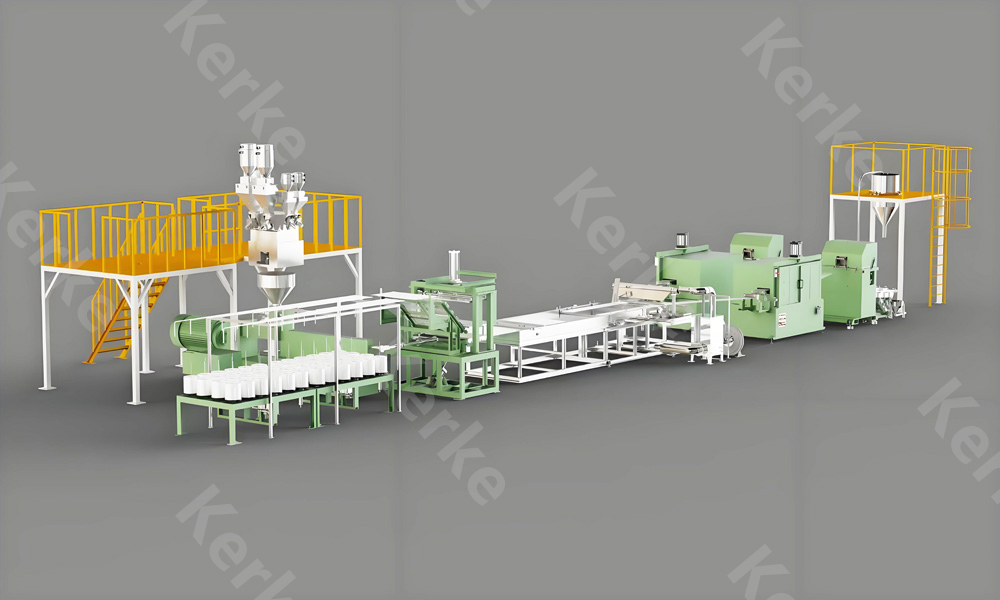
Introduction to Recycled Plastic Compounding with Twin Screw Extruders
The recycling industry has experienced tremendous growth over the past decade, with plastic waste becoming a critical global challenge and opportunity. Twin screw extruders have emerged as the cornerstone technology for processing recycled plastics into valuable compounded materials, enabling the transformation of waste into high-quality products for various industries. The unique design and capabilities of modern twin screw extruders make them ideal for handling the complex challenges associated with recycled plastic materials, including variable quality, contamination, and inconsistent properties.
Recycled plastic compounding involves the processing of post-consumer or post-industrial plastic waste into uniform, high-quality pellets that can be used in manufacturing new products. This process requires specialized equipment capable of handling materials with varying degrees of degradation, contamination, and inconsistent molecular weight distributions. Twin screw extruders excel in this application due to their superior mixing capabilities, efficient heat transfer, and ability to process materials with varying viscosity and composition.
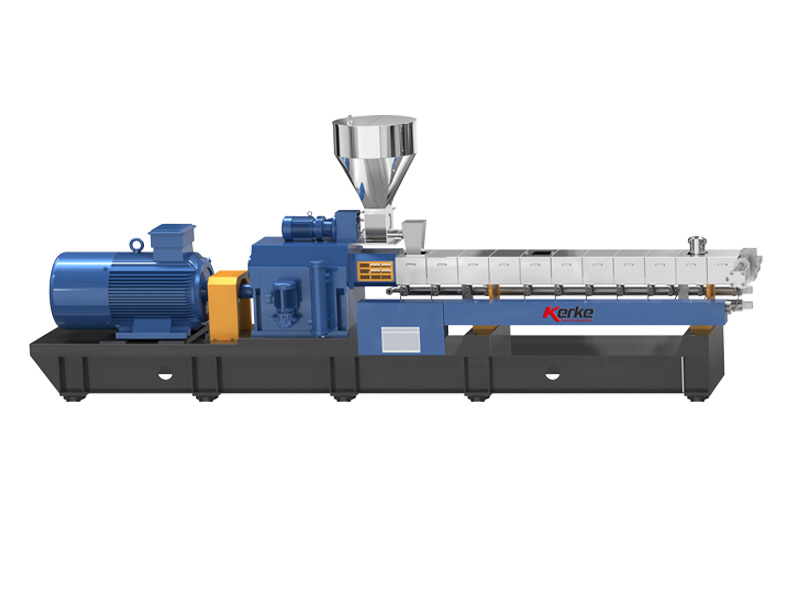
Kerke, with over 12 years of experience in parallel co-rotating compounding extruder manufacturing, has developed the KTE series twin screw extruders specifically designed to meet the demanding requirements of recycled plastic processing. The KTE series ranges from KTE-20B for laboratory and small-scale production to KTE-135D for industrial-scale operations, offering high torque, high speed, and high production capabilities that make recycled plastic compounding efficient and cost-effective.
Challenges in Processing Recycled Plastic Materials
Processing recycled plastics presents numerous challenges that require specialized equipment design and operational expertise. Understanding these challenges is essential for selecting appropriate twin screw extruder configurations and optimizing processing conditions to achieve consistent product quality and operational efficiency.
Inconsistent Material Properties
Recycled plastic materials exhibit significant variations in molecular weight distribution, melt flow index, and mechanical properties due to their prior use history, degradation, and potential blending of different polymer types. Post-consumer plastics often contain mixed polymer types, different degrees of degradation, and varying additive compositions that can dramatically affect processing behavior and final product quality. This variability presents challenges for consistent processing and requires equipment with flexible operating parameters and robust mixing capabilities.
Material property variations in recycled plastics include differences in melt viscosity, thermal stability, color, and additive content. For example, recycled PET from beverage bottles may have varying intrinsic viscosity depending on the number of processing cycles and environmental exposure. Similarly, recycled HDPE may contain different grades with varying density and melt flow characteristics. These inconsistencies require twin screw extruders with adjustable screw configurations, multiple feeding zones, and precise temperature control systems to accommodate material variations and maintain consistent output quality.
Contamination Issues
Contamination represents one of the most significant challenges in recycled plastic processing. Post-consumer plastic waste contains various contaminants including paper labels, adhesives, metals, moisture, organic matter, and other non-polymer materials. These contaminants can cause processing problems, equipment damage, product defects, and quality issues. Effective removal and management of contaminants is essential for successful recycled plastic compounding operations.
Common contaminants found in recycled plastics include paper and cardboard from labels and packaging, aluminum and steel caps, adhesives from label residues, food residues and organic matter, moisture from product contents or environmental exposure, and mixed plastic types that cannot be processed together. Twin screw extruders for recycled plastic applications must be equipped with appropriate filtration systems, venting capabilities, and screw configurations that can handle contaminated materials while protecting sensitive components from damage and wear.
Molecular Weight Degradation
Plastic materials undergo molecular weight degradation during their service life and recycling process due to thermal, mechanical, and environmental exposure. This degradation results in reduced molecular weight, lower viscosity, and diminished mechanical properties. The extent of degradation varies depending on the original material, processing history, and number of recycling cycles. Managing molecular weight and restoring polymer properties requires careful processing control and appropriate additive addition.
Molecular weight degradation affects processing behavior and final product quality in several ways. Lower molecular weight results in reduced melt viscosity, potentially causing processing difficulties and lower mechanical properties in finished products. Degraded materials may require addition of chain extenders or fresh polymer to restore molecular weight and achieve desired properties. Twin screw extruders must provide sufficient mixing and residence time for effective additive incorporation and property restoration while preventing excessive shear and thermal degradation during processing.
Mixed Polymer Streams
Recycled plastic streams often contain mixtures of different polymer types, particularly from post-consumer collection systems where separation is incomplete. These mixed polymer streams present compatibility challenges due to differences in melting points, rheology, and chemical structure. Processing mixed polymers requires specialized twin screw extruder configurations with appropriate screw designs, temperature profiles, and possibly compatibilizer addition to achieve acceptable material properties.
Common mixed polymer issues include phase separation, poor interfacial adhesion, inconsistent melt behavior, and variable product quality. Twin screw extruders for mixed polymer processing must provide high shear mixing for improved dispersion, appropriate temperature control for different melting points, and the ability to incorporate compatibilizers effectively. The modular screw design of Kerke KTE series allows configuration optimization for specific mixed polymer applications.
Kerke Twin Screw Extruder Design Features for Recycled Plastic Processing
Kerke KTE series twin screw extruders incorporate numerous design features specifically optimized for handling recycled plastic materials. These features address the unique challenges of recycled plastic processing while providing flexibility, efficiency, and reliability required for commercial operations.
Modular Building Block Design
The barrel and screw of Kerke co-rotating parallel twin screw extruders are designed and manufactured based on the building block principle. This modular design allows optimization according to processing material system and process formula requirements, including length diameter ratio, barrel structure, screw arrangement, exhaust quantity and position, feeding method, and electrical control mode. The modular approach enables configuration flexibility essential for handling diverse recycled plastic materials and processing requirements.
The building block design principle provides several advantages for recycled plastic processing. Length diameter ratio can be adjusted from 28:1 to 60:1 depending on material requirements and processing complexity. Barrel structure can be configured with multiple feeding zones, vent ports, and temperature control zones. Screw arrangement can be customized with various mixing elements for specific material requirements. This flexibility allows optimization for different recycled plastic types and quality levels without requiring complete equipment replacement.
Computer-Aided Screw Assembly Design
Kerke twin screw extruders feature computer-aided designed screw assemblies with kneading co-type configurations offering excellent self-cleaning function and good interchangeability. The screw assembly can realize material transportation, plasticization, shearing, dispersion, homogenization, exhaust, and pressure building through appropriate and reasonable combination of elements. This advanced design is particularly beneficial for recycled plastic processing where material characteristics vary widely and comprehensive mixing and purification are essential.
The kneading block design provides intense distributive and dispersive mixing essential for incorporating additives, dispersing contaminants, and achieving uniform material quality. The self-cleaning function reduces material residence time and prevents material buildup that can cause degradation and contamination. Good interchangeability allows rapid configuration changes for different materials and processing requirements, enabling flexible operation in facilities processing multiple recycled plastic types.
High Torque Gearbox Design
Kerke twin screw extruders feature newly designed gearboxes and transmission systems specifically engineered for high torque operation. High torque capability is essential for recycled plastic processing due to the variable viscosity and processing resistance of contaminated materials. The high torque design enables processing of high filler loadings, high viscosity materials, and challenging recycled plastic streams that would exceed the capabilities of standard extruders.
The high torque gearbox design provides several benefits for recycled plastic applications. Increased torque capacity enables processing of highly filled materials including mineral-filled recycled plastics and composites. Enhanced processing power allows handling of materials with high contamination levels that increase processing resistance. Improved torque transmission efficiency reduces energy consumption per unit of output. The robust design ensures reliable operation under demanding conditions typical of recycled plastic processing.
Precision Temperature Control System
Kerke twin screw extruders feature advanced temperature control systems with multiple independent heating zones along the barrel length. Precise temperature control is critical for recycled plastic processing due to the variable thermal stability and processing requirements of degraded materials. The system allows independent temperature setpoints for each zone, enabling optimization of temperature profiles for specific materials and processing requirements.
The precision temperature control system provides several advantages for recycled plastic processing. Independent zone control allows establishment of appropriate temperature gradients for different material types and processing stages. Precise temperature regulation prevents thermal degradation of sensitive materials while ensuring adequate melting and mixing. Fast temperature response capabilities enable quick adjustment when material characteristics change. The system supports processing of materials with widely different melting points and thermal sensitivities.
Multiple Feeding Systems
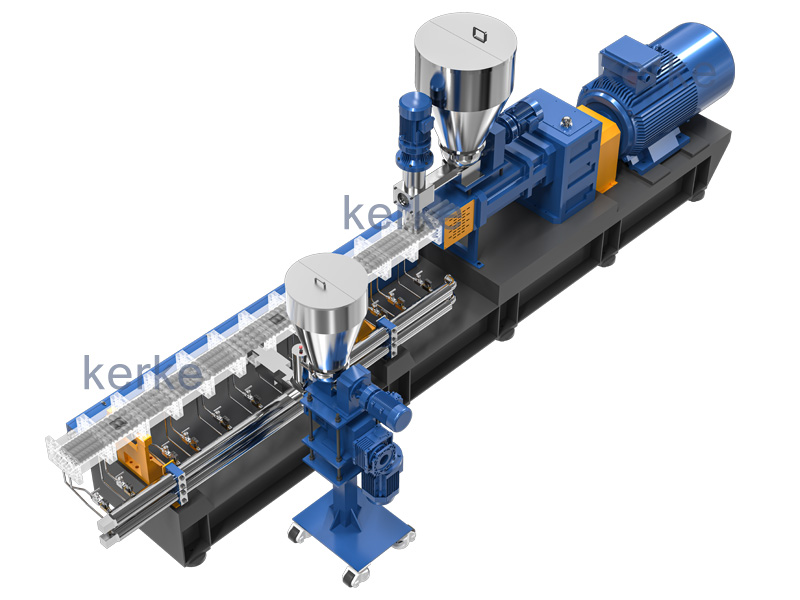
Kerke offers various metering and feeding technologies to accommodate different material states and feeding requirements. According to different states of materials, the feeding system can adopt various structural forms including single screw, twin screw, twin screw non-meshing type, hollow spring type, two-stage type, and metering pump for volumetric metering feeding. The system can also be equipped with loss-in-weight metering for higher precision requirements. Multiple feeding capability is essential for recycled plastic processing where main polymer, additives, and contaminants must be introduced at different locations for optimal processing.
The multiple feeding system options provide flexibility for various recycled plastic processing applications. Volumetric metering systems provide cost-effective feeding for bulk materials. Loss-in-weight feeders enable precise additive and filler feeding for accurate composition control. Side feeders allow introduction of additives at appropriate processing zones where mixing and dispersion are optimal. Liquid feeders enable addition of liquid additives and processing aids. This feeding system flexibility supports complex recycled plastic formulations requiring multiple component addition at different locations.
Processing Strategies for Different Recycled Plastic Types
Different recycled plastic types require specific processing strategies to achieve optimal results. Understanding the characteristics of each material type and appropriate processing approaches enables effective twin screw extruder configuration and operation for successful compounding operations.
Recycled PET Processing
Recycled PET from bottles and packaging requires careful processing due to moisture sensitivity and thermal degradation tendencies. PET is hygroscopic and absorbs moisture from the environment, with moisture content potentially causing hydrolysis and molecular weight degradation at processing temperatures. Proper drying prior to processing and careful temperature control during extrusion are essential for maintaining material quality and achieving acceptable properties.
Kerke KTE series twin screw extruders process recycled PET with appropriate screw configuration and temperature profile. Long length diameter ratios (40:1 to 60:1) provide sufficient residence time for effective drying and solid-state polycondensation when required. Multiple vent ports enable removal of moisture and volatile byproducts generated during processing. Temperature profiles are carefully controlled to prevent thermal degradation while ensuring adequate melting and mixing. Typical processing temperatures range from 240 to 280°C depending on material quality and desired output properties.
Additive addition is often required for recycled PET to restore properties lost during degradation. Chain extenders can increase molecular weight and improve mechanical properties. Stabilizers prevent further degradation during processing. Impact modifiers improve toughness that may be reduced from prior processing and use. The modular screw design of Kerke extruders allows configuration of appropriate mixing zones for effective additive incorporation and dispersion.
Equipment costs for recycled PET processing range from approximately USD 30,000 for KTE-50B suitable for 120-280 kg/h capacity up to USD 115,000 for KTE-95B capable of 750-1400 kg/h. Operating costs include energy consumption (45-75 kW for KTE-50B, 250-315 kW for KTE-95B), labor, maintenance, and additive costs. Total production cost typically ranges from USD 0.80 to USD 1.50 per kg depending on material quality, additive requirements, and scale of operation.
Recycled HDPE Processing
Recycled HDPE from containers, pipes, and other applications presents different processing challenges compared to PET. HDPE is less sensitive to moisture but more susceptible to oxidation degradation. The material often contains mixed grades with varying melt flow indices and densities that must be processed together effectively. Additionally, HDPE waste often contains mixed polymers including PP, which requires appropriate compatibilization.
Kerke twin screw extruders process recycled HDPE with screw configurations optimized for mixing and homogenization. Moderate length diameter ratios (32:1 to 48:1) provide adequate mixing without excessive residence time that could cause degradation. Kneading blocks provide dispersive mixing for effective pigment and additive dispersion. Multiple venting zones remove volatiles and moisture from contaminated materials. Temperature profiles typically range from 160 to 220°C depending on material grade and processing requirements.
Recycled HDPE processing often requires addition of antioxidants to prevent oxidation degradation during processing and product use. Compatibilizers may be needed when mixed polyolefins are present. Fillers can be added to modify properties and reduce material cost. The flexibility of Kerke screw configurations enables appropriate processing for these various formulations and requirements.
Equipment investment for recycled HDPE processing ranges from approximately USD 18,000 for KTE-20B suitable for 3-15 kg/h laboratory scale to USD 75,000 for KTE-75B capable of 300-800 kg/h production scale. Operating costs include energy consumption (4-5 kW for KTE-20B, 110-160 kW for KTE-75B), maintenance, and additive costs. Total production cost typically ranges from USD 0.50 to USD 0.90 per kg depending on material quality, formulation, and scale of operation.
Recycled PP Processing
Recycled polypropylene from automotive parts, packaging, and consumer products requires careful processing due to sensitivity to shear and thermal degradation. PP has a relatively narrow processing window and can degrade rapidly if exposed to excessive shear or temperature. The material often contains fillers, reinforcements, and mixed grades that must be processed effectively. Additionally, PP waste may contain mixed polymers including PE and other materials.
Kerke twin screw extruders process recycled PP with screw configurations that balance mixing efficiency with shear minimization. Appropriate screw element selection provides adequate mixing while preventing excessive shear that could cause degradation. Temperature control is critical with profiles typically ranging from 180 to 230°C depending on material grade and additives. Venting removes volatiles and prevents pressure buildup that could cause degradation.
Recycled PP processing frequently requires addition of stabilizers to prevent degradation. Impact modifiers may be needed to restore toughness lost from prior processing and use. Fillers and reinforcements can be added for property modification. The modular screw configuration allows optimization for these various requirements while maintaining appropriate processing conditions to prevent material degradation.
Mixed Plastic Stream Processing
Mixed plastic streams containing multiple polymer types present significant challenges requiring specialized processing approaches. Incompatible polymers will phase separate without appropriate compatibilization. Different melting points require careful temperature control to ensure complete melting of all components without degrading temperature-sensitive polymers. Different rheological characteristics can cause processing difficulties and uneven mixing.
Kerke twin screw extruders process mixed plastic streams using specialized screw configurations with high shear mixing zones for improved dispersion and compatibility. Temperature profiles are carefully controlled to accommodate different polymer melting points. Compatibilizers are added to improve interfacial adhesion between incompatible polymer phases. Multiple feeding zones allow introduction of different components at appropriate locations for optimal mixing and dispersion.
Mixed plastic processing often requires extensive testing and optimization to achieve acceptable product quality. Trial runs are necessary to determine appropriate screw configuration, temperature profile, feeding strategy, and additive requirements. The flexibility of Kerke modular screw design allows rapid configuration changes and optimization for specific mixed plastic streams and desired output properties.
Quality Control and Optimization for Recycled Plastic Compounding
Quality control and process optimization are essential for successful recycled plastic compounding operations. Consistent product quality requires monitoring and control of numerous process parameters and material characteristics. Implementation of appropriate quality control measures and continuous optimization enables reliable production of high-quality recycled plastic compounds.
Material Quality Assessment
Comprehensive material quality assessment before processing enables appropriate process parameter selection and predicts potential processing challenges. Material characteristics requiring assessment include melt flow index or melt viscosity, molecular weight distribution, moisture content, contamination level and type, color, and additive content. This information guides equipment configuration, process parameter selection, and additive requirements for optimal processing results.
Material testing typically includes melt flow rate measurement to assess flow characteristics, FTIR spectroscopy to identify polymer type and potential contaminants, moisture content analysis using Karl Fischer titration or other methods, thermogravimetric analysis to assess degradation and inorganic content, and visual inspection to identify visible contamination and material condition. This comprehensive assessment enables prediction of processing behavior and selection of appropriate processing conditions.
Process Parameter Optimization
Process parameter optimization is critical for achieving consistent product quality and operational efficiency. Key parameters requiring optimization include screw speed, temperature profile, feed rate, vent vacuum level, and screw configuration. These parameters interact significantly, requiring systematic optimization to achieve desired results without excessive trial and error.
Screw speed affects residence time, shear rate, and energy input. Higher screw speeds increase throughput and shear but reduce residence time and may increase material degradation. Temperature profile must ensure adequate melting without causing thermal degradation of sensitive components. Feed rate affects residence time and filling degree, influencing mixing and dispersion. Vent vacuum level removes volatiles and moisture but must be balanced against material entrainment. Systematic optimization using design of experiments approaches enables efficient parameter determination for specific materials and quality requirements.
Additive Selection and Incorporation
Additive selection and proper incorporation are essential for achieving desired properties in recycled plastic compounds. Common additives for recycled plastics include chain extenders to increase molecular weight, stabilizers to prevent degradation, compatibilizers for mixed polymers, impact modifiers to improve toughness, fillers to modify properties and reduce cost, and pigments for color control. Each additive requires appropriate selection and incorporation strategy for effectiveness.
Additive incorporation requires appropriate feeding strategy, mixing intensity, and residence time for effective dispersion. Some additives are sensitive to shear or temperature and require careful processing to maintain effectiveness. Additive compatibility with the polymer matrix and other additives must be considered to prevent adverse interactions. Kerke twin screw extruders with multiple feeding zones and configurable screw configurations enable appropriate additive incorporation strategies for various formulations.
Product Quality Testing
Comprehensive product quality testing ensures compounds meet specifications and customer requirements. Testing typically includes mechanical properties including tensile strength, impact resistance, and elongation at break. Thermal properties including melt flow index, heat deflection temperature, and thermal stability. Rheological properties including viscosity and melt strength. Physical properties including density, color, and appearance. These tests provide comprehensive quality assessment and enable process adjustment when required.
Statistical process control using product quality testing results enables continuous process optimization and early detection of quality issues. Trend analysis of quality parameters helps identify gradual changes requiring process adjustment. Control charts establish acceptable variation limits and identify when processes require intervention. This systematic quality control approach ensures consistent product quality and customer satisfaction.
Cost Analysis and Economic Considerations
Economic considerations play a critical role in recycled plastic compounding operations. Understanding cost structure and factors affecting profitability enables informed investment decisions and operational optimization for sustainable business operations. Recycled plastic processing economics involve capital investment, operating costs, and revenue considerations.
Equipment Investment Costs
Equipment investment for twin screw extruder systems varies significantly based on capacity and configuration. Kerke offers KTE series models ranging from laboratory scale to industrial production capacity. KTE-20B laboratory unit costs approximately USD 18,000 with 3-15 kg/h capacity and 4-5 kW power consumption. KTE-36B for small-scale production costs approximately USD 30,000 with 20-100 kg/h capacity and 18.5-22 kW power. KTE-65B for medium-scale production costs approximately USD 50,000-70,000 with 200-500 kg/h capacity and 90-110 kW power. KTE-75B for larger production scale costs approximately USD 75,000-95,000 with 300-800 kg/h capacity and 110-160 kW power. KTE-95B for industrial-scale production costs approximately USD 100,000-115,000 with 750-1400 kg/h capacity and 250-315 kW power.
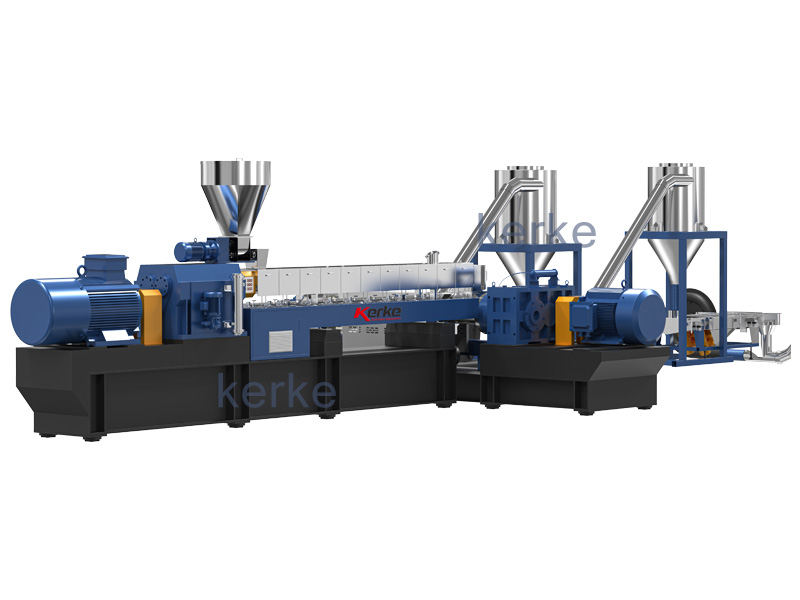
Additional investment beyond the extruder includes auxiliary equipment such as feeding systems, pelletizing systems, material handling equipment, and quality control equipment. Complete production line investment typically ranges from 1.5 to 2.5 times the base extruder cost depending on configuration and automation level. This investment provides the foundation for recycled plastic compounding operations with appropriate capacity and capabilities for commercial production.
Operating Cost Analysis
Operating costs for recycled plastic compounding include energy consumption, labor, maintenance, raw materials, additives, and overhead. Energy consumption represents a significant cost component, typically ranging from 0.08 to 0.15 kWh per kg of output depending on material and processing conditions. For KTE-65B operating at 300 kg/h with 90 kW power, energy cost at USD 0.10 per kWh is approximately USD 27 per hour or USD 0.09 per kg.
Labor costs vary based on automation level and operational configuration. Automated systems with gravimetric feeding and advanced control may require 1-2 operators per shift while manual systems may require 3-4 operators. At USD 20 per hour average labor cost, labor cost per kg ranges from approximately USD 0.03 to USD 0.15 depending on capacity and automation level. Maintenance costs typically range from 2-4% of equipment value annually, representing approximately USD 0.01 to USD 0.03 per kg of production.
Raw material costs for recycled plastics vary significantly based on material type, quality, and market conditions. Post-consumer PET may range from USD 0.30 to USD 0.70 per kg depending on quality and market conditions. Post-industrial materials typically cost more due to higher quality and consistency. Additive costs vary based on formulation requirements, typically ranging from USD 0.05 to USD 0.20 per kg depending on material and additive types. Total variable production cost typically ranges from USD 0.50 to USD 1.20 per kg depending on material, formulation, and scale of operation.
Revenue and Profitability Considerations
Revenue from recycled plastic compounds depends on material quality, formulation, and market demand. Commodity recycled polyolefins typically sell for USD 0.70 to USD 1.20 per kg. Engineering plastic compounds command higher prices, typically USD 1.50 to USD 3.00 per kg depending on properties and performance. Specialized compounds with specific properties or certifications can command premium prices up to USD 5.00 per kg or more.
Profitability analysis considering equipment depreciation, operating costs, and revenue provides return on investment assessment. For KTE-65B operating 6000 hours annually at 300 kg/h throughput with USD 0.80 per kg variable production cost and USD 1.30 per kg selling price, annual gross profit equals USD 900,000. After accounting for equipment depreciation over 10 years (USD 5,000 annually), maintenance, and other fixed costs, net profit typically ranges from USD 600,000 to USD 750,000 annually, providing approximately 2-3 year payback period for equipment investment.
Cost Reduction Strategies
Cost reduction strategies improve profitability and competitiveness in recycled plastic compounding operations. Energy efficiency measures including variable frequency drives, optimized heating systems, and improved insulation reduce energy consumption by 15-25%. Process optimization increases throughput and quality while reducing scrap and rework. Material cost reduction through efficient sourcing, formulation optimization, and yield improvement directly impacts profitability. Automation reduces labor costs and improves consistency. These strategies collectively improve operating efficiency and reduce production costs.
Future Trends and Technology Developments
Recycled plastic compounding technology continues evolving with innovations addressing processing challenges, improving efficiency, and expanding capabilities. Future trends include advanced material characterization, process control improvements, and equipment design innovations that enhance recycled plastic processing capabilities and economics.
Advanced Process Control Systems
Advanced process control systems incorporating real-time monitoring, predictive analytics, and automated adjustment improve process consistency and reduce quality variations. These systems monitor numerous process parameters including temperature, pressure, torque, and melt viscosity, providing comprehensive process visibility. Predictive analytics anticipate process deviations before they affect product quality, enabling preventive adjustments. Automated parameter optimization reduces dependence on operator expertise while improving consistency and reducing variability.
Enhanced Material Compatibility
New compatibilizer technologies and processing approaches enable improved processing of mixed plastic streams that previously were considered non-recyclable. Advanced compatibilizers provide better interfacial adhesion between incompatible polymers, enabling utilization of mixed streams previously limited to low-value applications. Reactive compounding approaches chemically modify polymer interfaces during processing, improving compatibility without separate compatibilizer addition. These technologies expand the range of materials that can be effectively recycled, increasing raw material availability and reducing sorting requirements.
Energy Efficiency Improvements
Energy efficiency improvements reduce operating costs and environmental impact of recycled plastic compounding. Advanced screw designs reduce energy consumption while maintaining mixing efficiency. Improved thermal insulation and heating systems reduce heat loss and improve temperature uniformity. Energy recovery systems capture and reuse thermal energy from hot product and exhaust streams. These improvements reduce energy consumption by 20-30% compared to conventional extruders, significantly impacting operating costs and environmental footprint.
Digitalization and Industry 4.0
Digitalization and Industry 4.0 technologies transform recycled plastic compounding operations through improved connectivity, data analytics, and automation. Internet of Things sensors provide comprehensive process and equipment monitoring. Cloud-based data analytics enable performance optimization and predictive maintenance. Digital twins simulate process changes before implementation, reducing trial and error. These technologies improve operational efficiency, reduce downtime, and enable continuous optimization of recycled plastic processing operations.
Conclusion and Recommendations
Twin screw extruders represent essential technology for successful recycled plastic compounding operations, providing the capabilities necessary to handle the complex challenges associated with recycled materials. Kerke KTE series twin screw extruders with modular design, high torque capability, and flexible configuration offer optimal solutions for recycled plastic processing across various material types and quality levels.
Successful recycled plastic compounding requires comprehensive material assessment, appropriate equipment configuration, process parameter optimization, and rigorous quality control. Investment in appropriate equipment and operational optimization enables reliable production of high-quality recycled compounds while maintaining economic viability. Kerke provides extensive experience and technical support for recycled plastic processing applications, from equipment selection through process optimization and ongoing technical assistance.
The future of recycled plastic compounding lies in advanced technologies that improve processing efficiency, expand material compatibility, and enable utilization of increasingly diverse material streams. Investing in advanced twin screw extruder technology today positions operations to benefit from these developments while contributing to sustainability objectives and circular economy implementation. Recycled plastic compounding with twin screw extruders represents both environmental necessity and economic opportunity in the evolving materials landscape.