Understanding Polymer Blending Fundamentals
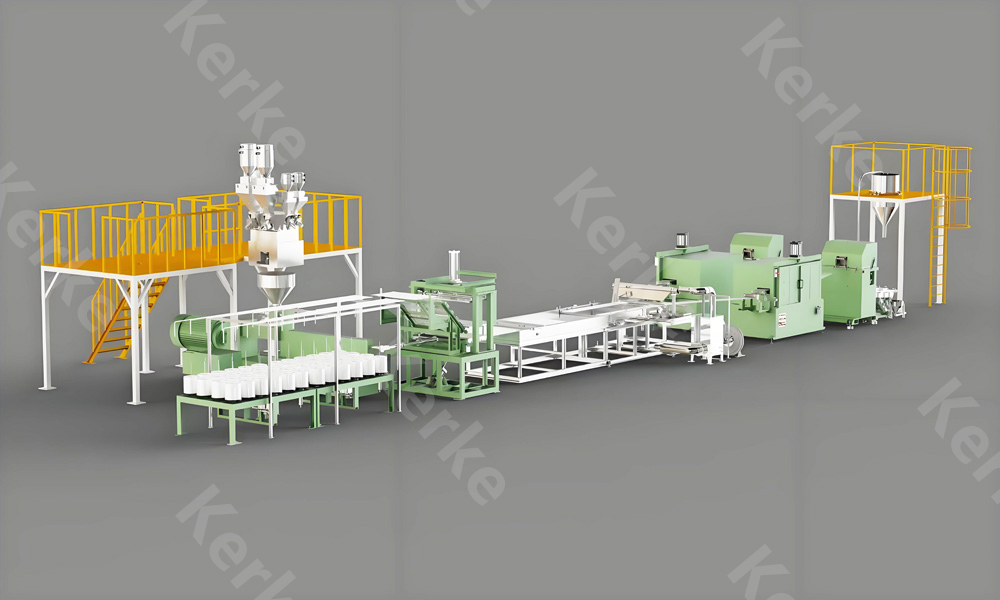
Polymer blending represents critical technology enabling development of materials with optimized properties not achievable through individual polymers alone. Polymer blends combine two or more polymers or combine polymers with additives, fillers, and reinforcements to achieve targeted performance characteristics including improved mechanical properties, enhanced processability, reduced cost, or specialized functionality. Compounding extruders provide essential equipment for polymer blending through intensive mixing, controlled melting, and precise formulation control.
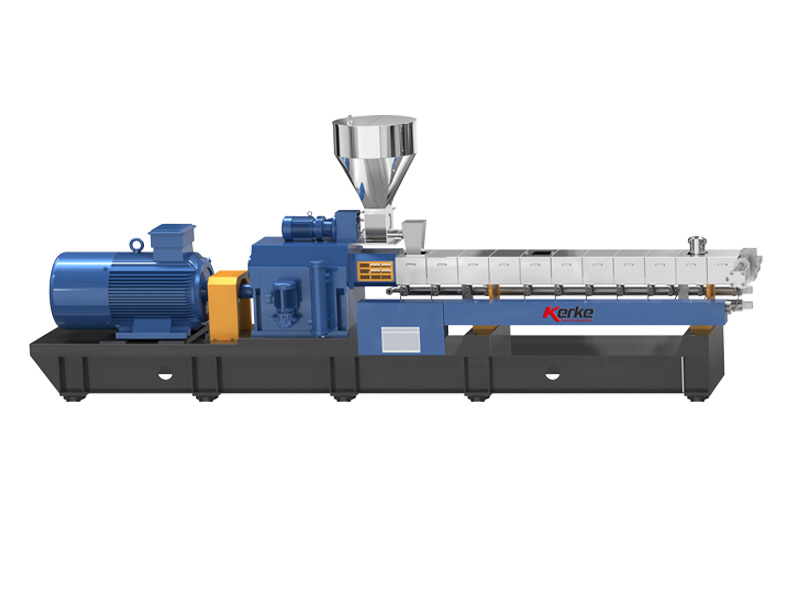
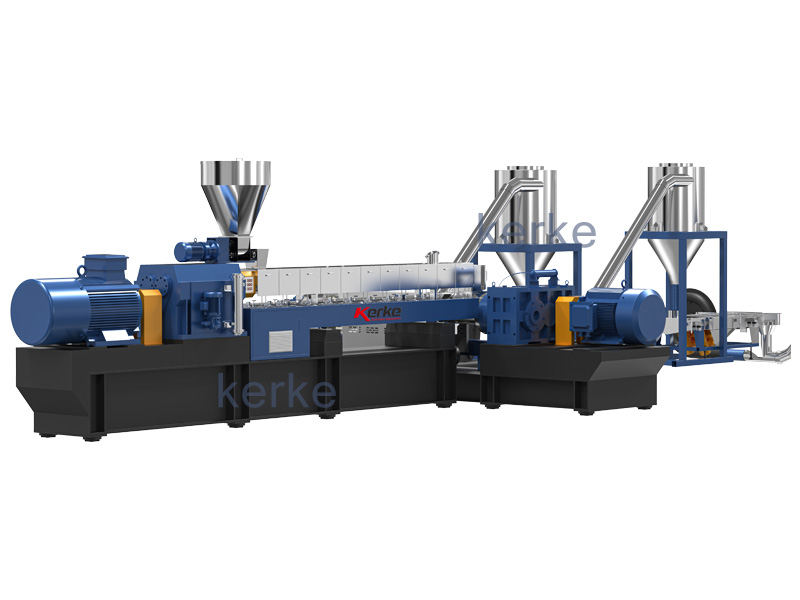
The significance of polymer blending extends across virtually all polymer processing sectors including automotive, packaging, construction, consumer goods, and industrial applications. Blended materials account for approximately 40 percent of total polymer consumption globally as manufacturers increasingly seek materials providing optimized property combinations at competitive costs. Kerke parallel co-rotating twin screw extruders provide the foundation for successful polymer blending through advanced mixing technology, precise temperature control, and sophisticated feeding capabilities.
Over 12 years of specialization in twin screw extruder manufacturing provides Kerke unique understanding of polymer blending requirements and challenges. Equipment design specifically addresses blend homogeneity, component distribution, thermal stability, and processing characteristics enabling customers to develop innovative materials with superior performance properties.
Twin Screw Extruder Blending Mechanisms
Twin screw extruders provide superior blending capability compared to single screw alternatives through multiple synergistic mechanisms operating simultaneously during material processing. Understanding these fundamental blending mechanisms enables proper equipment selection and process optimization for specific blending applications.
Melt Compounding
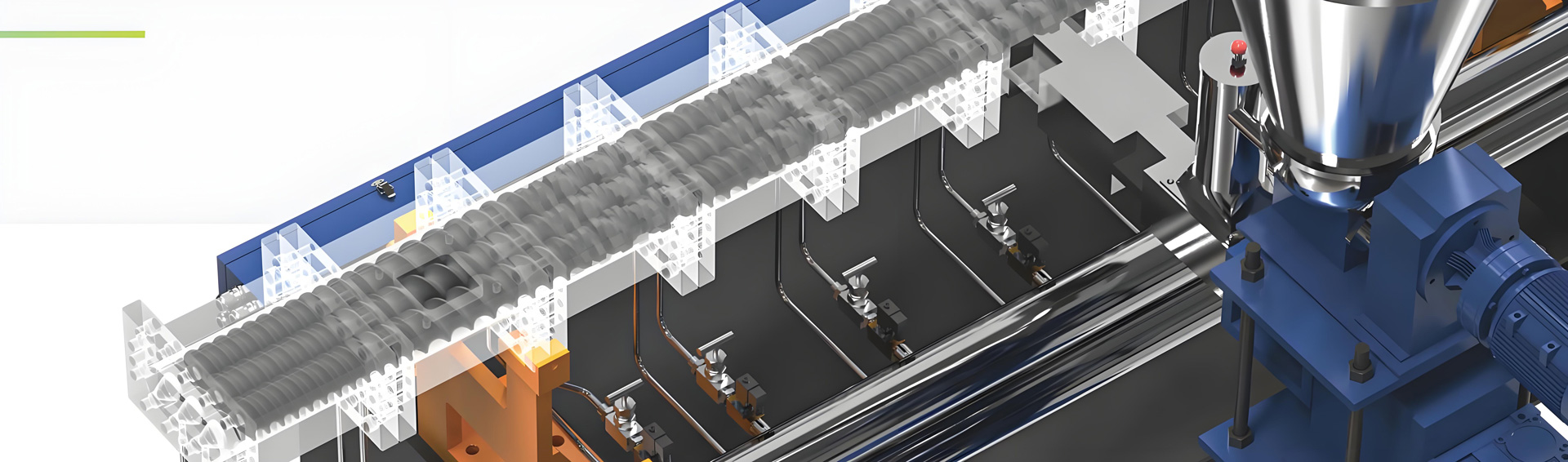
Melt compounding represents primary blending mechanism for polymer blends requiring complete melting of all polymer components followed by intensive mixing to achieve homogeneity. Kerke twin screw extruders provide excellent melt blending through optimized barrel temperature profiles, efficient conveying elements, and intensive mixing zones. The intermeshing screw design provides continuous material exchange between screws ensuring uniform melting and mixing.
For blends containing polymers with significantly different melting temperatures, Kerke extruders offer staged temperature profiles enabling sequential melting of higher melting components followed by incorporation of lower melting components. This staged approach prevents thermal degradation of low-melting polymers while ensuring complete melting of high-melting components.
Solid-State Blending
Solid-state blending enables mixing of polymers without complete melting, particularly useful for polymers with high thermal sensitivity or for blends requiring retention of crystalline structure. Kerke offers solid-state blending screw configurations with low shear mixing elements enabling thorough solid polymer mixing while maintaining temperature below melting point.
Solid-state blending particularly valuable for recycling applications where thermal degradation represents significant concern. The process enables effective mixing of recycled polymers with virgin polymers or additives while preserving polymer properties and minimizing degradation. Kerke solid-state blending systems achieve excellent component distribution while maintaining polymer integrity.
Reactive Blending
Reactive blending involves chemical reactions between blend components during processing creating new polymer structures or achieving compatibilization between immiscible polymers. Kerke provides reactive blending systems with specialized screw configurations, precise temperature control, and catalyst injection capabilities enabling controlled reactions during processing.
Reactive blending enables development of compatibilized polymer blends combining immiscible polymers that would otherwise phase separate. Kerke systems achieve homogeneous blends of polymers with poor natural compatibility including polypropylene with polyamide or polystyrene with polyethylene. These compatibilized blends provide property combinations enabling applications not possible with individual polymers.
Equipment Design for Polymer Blending
Successful polymer blending requires equipment specifically designed to address blending challenges including component compatibility, viscosity differences, thermal sensitivity, and residence time requirements. Kerke extruders incorporate multiple design features optimized for polymer blending applications.
Extended L/D Ratio Design
Length-to-diameter (L/D) ratio significantly affects blending capability and achievable homogeneity. Kerke KTE series extruders offer L/D ratios from 24:1 to 48:1 enabling appropriate selection based on blending complexity. Extended L/D ratios provide sufficient processing length for multiple mixing passes ensuring complete component treatment throughout entire material volume.
For complex blends requiring multiple additive incorporation stages, Kerke recommends L/D ratios of 36:1 to 48:1 providing adequate length for sequential feeding and mixing zones. For simpler blends, shorter L/D ratios of 24:1 to 32:1 provide adequate blending capability with reduced equipment cost.
Multiple Feeding Capabilities
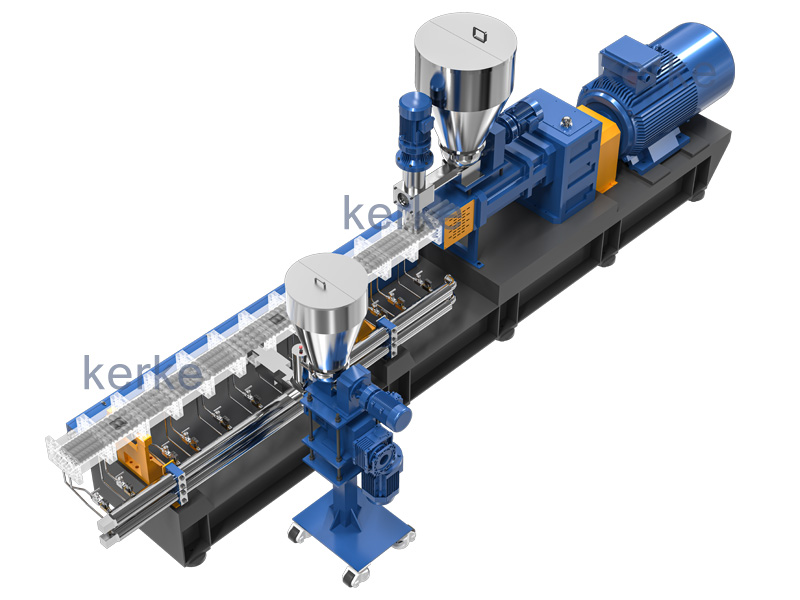
Polymer blending often requires sequential addition of components at different processing stages. Kerke extruders feature multiple feeding ports enabling addition of base polymers, additives, fillers, reinforcements, and reactive agents at optimal positions along extruder length. This staged feeding approach enables optimal processing conditions for each component type.
Main polymer components fed through primary hopper at extruder start. Additives with temperature sensitivity fed downstream after initial melting. Reactive agents including catalysts and crosslinkers fed near die head to minimize reaction time. Kerke offers various feeding options including volumetric feeders, loss-in-weight feeders, crammer feeders, and liquid injection systems enabling appropriate feeding method for each component type.
Advanced Mixing Zones
Kerke extruders incorporate specialized mixing zones providing intensive blending action for achieving homogeneous blends. These zones utilize optimized kneading block configurations, reverse flow elements, and special mixing elements providing dispersive and distributive mixing appropriate for specific blending applications.
For blends requiring high shear for component dispersion, Kerke provides high-intensity mixing zones with narrow clearances and high shear kneading blocks. For blends requiring gentle mixing to prevent thermal degradation, Kerke provides low-shear mixing zones with wider clearances and lower shear elements. This mixing zone flexibility enables optimization for diverse blending applications.
Blending Process Types and Applications
Different polymer blending applications present unique challenges requiring specific equipment configurations and processing approaches. Kerke provides application-specific solutions addressing diverse blending requirements across various polymer systems.
Polymer Alloy Blends
Polymer alloy blends combine multiple polymers to achieve optimized property combinations exceeding individual polymer capabilities. Common polymer alloys include polycarbonate with ABS, polyamide with polypropylene, and polystyrene with polyolefins. Kerke provides alloy blending systems achieving homogeneous blends through optimized screw design and appropriate compatibilization strategies.
For immiscible polymer pairs requiring compatibilization, Kerke offers reactive blending systems with catalyst injection enabling in-situ compatibilizer formation. The systems achieve homogeneous morphology with dispersed phase sizes below 1 micron ensuring consistent properties. Kerke alloy blending systems produce materials with property combinations including improved impact strength, enhanced heat resistance, and balanced processing characteristics.
Filled Polymer Blends
Filled polymer blends incorporate inorganic fillers including calcium carbonate, talc, glass fibers, and minerals to improve mechanical properties, reduce cost, or modify processing characteristics. Kerke provides filled blending systems optimized for various filler types and loading levels. Specialized screw designs ensure uniform filler distribution while preventing agglomeration and maintaining acceptable processing properties.
For highly filled blends exceeding 50 percent filler loading, Kerke offers specialized screw configurations with dedicated filler incorporation zones and venting systems removing entrapped air. The systems handle abrasive fillers with wear-resistant construction providing extended component life. Kerke filled blending systems achieve excellent filler distribution with property variation coefficient below 3 percent.
Nanocomposite Blends
Nanocomposite blends incorporate nanofillers including nanoclay, carbon nanotubes, and nano silica providing exceptional property enhancements at very low loading levels. These advanced blends require specialized equipment achieving nanofiller dispersion and exfoliation. Kerke provides nanocomposite blending systems with ultrasonic enhancement and high-shear mixing zones enabling complete nanofiller exfoliation.
For clay nanocomposites, Kerke systems achieve exfoliation degrees exceeding 90 percent providing property improvements including 30 percent increase in modulus and 50 percent improvement in barrier properties. For carbon nanotube nanocomposites, systems achieve uniform nanotube dispersion enabling electrical conductivity at percolation thresholds below 2 percent loading.
Biodegradable Blends
Biodegradable polymer blends combine various biodegradable polymers including polylactic acid, polyhydroxyalkanoates, and thermoplastic starch to achieve optimized properties for sustainable applications. Kerke provides biodegradable blending systems specifically designed for moisture-sensitive and thermally sensitive biodegradable polymers.
For blends containing thermoplastic starch requiring plasticization, Kerke offers specialized screw configurations with starch gelatinization zones and plasticizer injection. For polylactic acid blends requiring moisture removal, systems provide vacuum venting removing decomposition water preventing hydrolysis. Kerke biodegradable blending systems maintain polymer integrity while achieving homogeneous blends with superior properties.
Process Parameter Optimization for Blending
Optimizing process parameters enables achievement of target blend properties while maintaining efficient operation and economic viability. Multiple parameters interact affecting blend homogeneity and final properties.
Screw Speed and Shear Rate
Screw speed significantly affects blending intensity and component dispersion. Higher screw speeds increase shear rates improving dispersive mixing for filler dispersion and component breakdown. However, excessive shear may cause thermal degradation for sensitive polymers. Kerke variable frequency drives enable precise screw speed optimization finding optimal balance between mixing intensity and thermal protection.
For blends requiring high shear for nanofiller exfoliation or component dispersion, screw speeds of 300-600 rpm typically provide optimal results. For blends requiring gentle mixing to prevent degradation, screw speeds of 100-200 rpm provide adequate mixing while protecting sensitive components. Kerke application engineering support provides screw speed recommendations for specific blend types.
Temperature Profile Optimization
Temperature profile optimization ensures proper melting of all blend components while preventing thermal degradation. Kerke segmented barrel design with multiple independent heating zones enables precise temperature control across processing stages. Different blend components require different temperature considerations based on melting points, thermal stability, and processing requirements.
For blends containing components with significantly different melting temperatures, Kerke recommends staged temperature profiles with higher temperatures in early melting zones for high-melting components and reduced temperatures downstream for low-melting components. This staged approach prevents degradation of low-melting components while ensuring complete melting of high-melting components.
Residence Time Distribution
Residence time distribution affects blend homogeneity and thermal exposure time. Extended residence times provide more thorough mixing but increase thermal degradation risk. Kerke extruders provide optimized residence time distribution through appropriate screw configuration and processing conditions. The modular screw design enables residence time optimization for specific blend requirements.
For blends requiring extensive mixing for component dispersion, Kerke provides reverse flow elements and mixing zones extending residence time and providing multiple mixing passes. For thermally sensitive blends, Kerke provides screw configurations minimizing residence time while maintaining adequate mixing. This residence time flexibility enables optimization for diverse blending applications.
Cost Analysis for Polymer Blending
Investment in polymer blending equipment represents significant capital expenditure requiring careful economic analysis. Understanding cost components and economic benefits enables informed investment decisions.
Equipment Investment Costs
Kerke compounding extruders available in various sizes providing appropriate blending capability for different production scales and investment levels. Laboratory scale KTE-20 model with 2-15 kg/h capacity represents entry level investment approximately $18,000-$25,000 suitable for small batch blending and development applications.
Pilot scale KTE-36B model with 20-100 kg/h capacity requires investment approximately $40,000-$55,000. This size suits development and initial production of specialty blends. Production scale KTE-65B model with 200-450 kg/h capacity requires investment approximately $70,000-$95,000 suitable for established blending operations.
Large scale KTE-75D model with 500-1000 kg/h capacity requires investment approximately $120,000-$160,000. This size serves major blending operations requiring high volume output. Maximum capacity KTE-135D model with 1500-4000 kg/h capacity represents investment approximately $250,000-$350,000 for industrial scale blending facilities.
Operating Cost Considerations
Operating costs for polymer blending include energy consumption, raw materials, labor, and maintenance. Energy costs typically range $0.025-$0.04 per kg depending on formulation and processing conditions. Complex blends with high filler loading or multiple processing steps require higher energy inputs.
Raw material costs represent major cost component particularly for blends containing expensive polymers or specialty additives. Blending enables material cost reduction through incorporation of lower-cost fillers or recycled materials while maintaining performance properties. Kerke systems achieve consistent blend quality enabling reliable material cost reduction strategies.
Economic Benefits of Blending
Polymer blending provides substantial economic benefits through material cost reduction, property enhancement enabling premium pricing, and development of unique materials creating market differentiation. Material cost reduction through filler incorporation typically ranges 20-40 percent depending on filler loading and type.
Property enhancement enables premium pricing of 10-30 percent for specialty blends offering superior performance. Unique material development creates market differentiation providing competitive advantages and higher margins. These economic benefits typically provide return on investment within 18-36 months depending on application and market conditions.
Quality Control for Polymer Blends
Comprehensive quality control ensures polymer blends meet specifications and perform reliably in end-use applications. Kerke provides integrated quality control solutions for blend production.
Component Distribution Analysis
Component distribution analysis confirms uniform blending and absence of agglomerates or phase separation. Microscopic analysis including optical microscopy and scanning electron microscopy provides direct visualization of component distribution. Image analysis software enables quantitative assessment of homogeneity providing statistical metrics for quality control.
For filled blends, analysis confirms filler distribution uniformity and absence of large agglomerates affecting properties. For nanocomposites, analysis confirms nanofiller dispersion and exfoliation degree affecting property enhancements. Kerke systems achieve component distribution variation below 5 percent coefficient ensuring consistent blend quality.
Mechanical Property Testing
Mechanical property testing provides indirect assessment of blend homogeneity and quality. Consistent properties across samples from different production times indicate homogeneous blending. Tensile strength, impact resistance, and flexural modulus measurements demonstrate achieved homogeneity through property consistency.
Kerke systems achieve property variation coefficient below 3 percent for mechanical properties demonstrating excellent blend homogeneity. This consistency enables reliable end-use performance and customer satisfaction.
Rheological Characterization
Rheological characterization including melt flow rate and viscosity measurements provides insight into blend consistency and processing characteristics. Consistent rheological properties across production runs indicate stable blending performance. Kerke PLC systems with rheological monitoring capabilities enable real-time process control maintaining consistent properties.
Case Studies Demonstrating Blending Excellence
Kerke has implemented numerous polymer blending systems demonstrating exceptional capability across diverse applications.
Automotive Polymer Alloy Production
An automotive component manufacturer implemented Kerke KTE-75D system for polycarbonate with ABS alloy production. The system processes 800 kg/h achieving homogeneous blend with impact strength 30 percent higher than base polymers. The blend meets automotive specifications requiring exceptional impact resistance and heat deflection temperature. Investment of $145,000 achieved payback in 16 months through premium pricing and material cost reduction.
The system includes compatibilizer injection achieving homogeneous morphology with dispersed phase size below 0.8 micron. Reactive blending capability enables in-situ compatibilizer formation reducing additive costs. Consistent quality enabled major automotive supplier certification.
Nanocomposite Production
A specialty materials producer implemented Kerke KTE-65D system with ultrasonic enhancement for nanoclay-reinforced polypropylene nanocomposite. The system processes 350 kg/h achieving nanoclay exfoliation degree exceeding 90 percent. The nanocomposite provides 40 percent increase in modulus and 60 percent improvement in barrier properties enabling food packaging applications. Investment of $135,000 achieved payback in 22 months through premium product pricing and unique market position.
Ultrasonic enhancement provides exceptional nanoclay dispersion without increasing processing temperature protecting polymer properties. The system maintains consistent exfoliation across production runs ensuring reliable product performance.
Filled Engineering Plastic Blend
An engineering plastic producer implemented Kerke KTE-95D system for 60 percent glass-filled nylon 66 blend. The system processes 1200 kg/h achieving uniform glass fiber distribution with property variation coefficient below 2.5 percent. Wear-resistant construction provides extended equipment life exceeding 18 months despite abrasive glass fiber loading. Investment of $240,000 achieved payback in 18 months through material cost reduction and improved product consistency.
Specialized screw configuration ensures uniform fiber distribution without excessive fiber breakage maintaining reinforcing effectiveness. Venting system removes entrapped air preventing defects. The system produces high-quality filled compound for demanding automotive applications.
Future Trends in Polymer Blending
Polymer blending technology continues evolving with new materials, processes, and applications driving innovation. Kerke incorporates emerging technologies providing leading-edge blending solutions.
Advanced Compatibilization
Advanced compatibilization technologies including novel compatibilizers, reactive extrusion, and supramolecular chemistry enable blending of previously incompatible polymer pairs. Kerke systems incorporate these technologies enabling new blend combinations with unique properties. These advanced blends open new application possibilities and market opportunities.
Smart Blending Systems
Smart blending systems incorporating advanced sensors, artificial intelligence, and process modeling enable real-time optimization of blend properties. Kerke systems integrate smart technologies providing automatic adjustment of processing conditions maintaining target blend properties despite raw material variations. These intelligent systems reduce operator requirements and improve consistency.
Sustainable Blending
Sustainable blending incorporating recycled materials, biodegradable polymers, and renewable feedstocks addresses environmental concerns. Kerke provides sustainable blending solutions optimized for recycled content, biodegradable polymers, and bio-based materials. These solutions enable environmental sustainability while maintaining performance and economic viability.
Conclusion: Achieving Polymer Blending Excellence
Polymer blending represents powerful technology enabling development of materials with optimized properties and economic advantages. Kerke twin screw extruders provide the foundation for successful blending through advanced mixing technology, precise control systems, and application-specific expertise.
Key success factors include selecting appropriate equipment configuration for specific blend requirements, optimizing process parameters for target properties, implementing comprehensive quality control systems, and maintaining equipment in optimal condition. Following these principles enables consistent production of high-quality blends meeting demanding specifications across diverse applications.
Investment in polymer blending capability provides substantial economic benefits through material cost reduction, premium product pricing, and market differentiation opportunities. Kerke extensive experience and specialized blending solutions provide unique advantages helping customers achieve material innovation and business success in competitive polymer markets.