Understanding High Speed Continuous Production Requirements
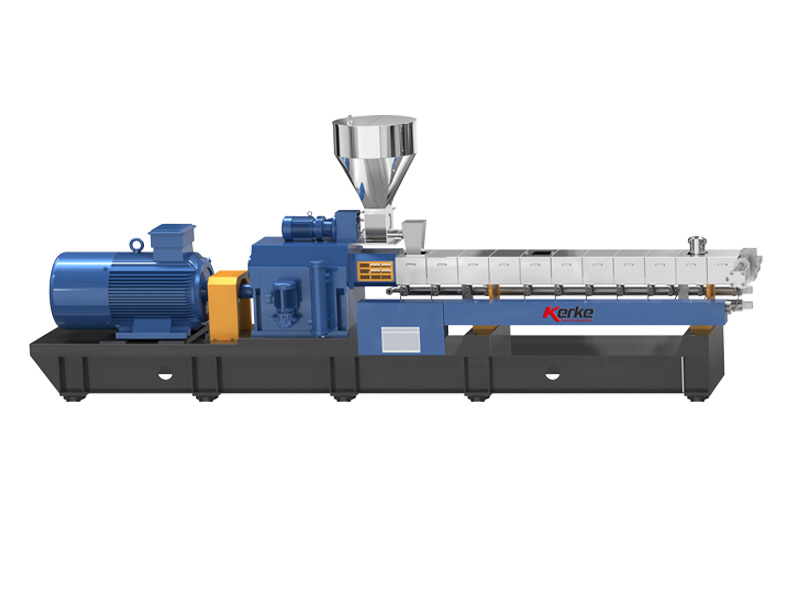
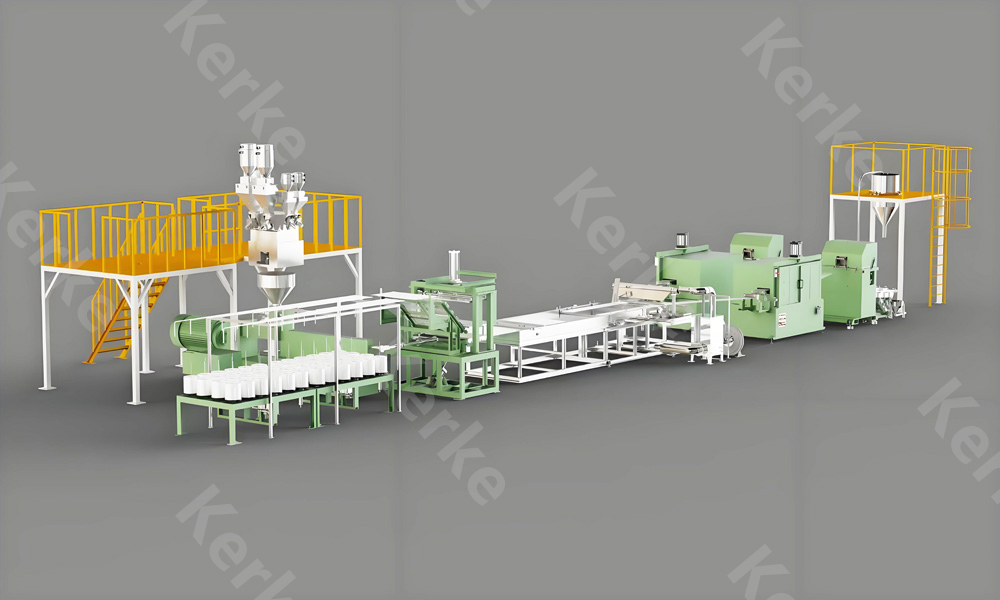
High speed continuous production represents the cornerstone of modern masterbatch manufacturing, requiring specialized equipment capable of maintaining consistent product quality while operating at elevated throughput rates. Masterbatch extruder systems must effectively balance increased production demands with precise color distribution, additive dispersion, and thermal stability requirements. Kerke parallel co-rotating twin screw extruders exemplify advanced engineering specifically designed to meet these demanding operational challenges through innovative design features and sophisticated control systems.
Continuous production environments demand equipment reliability and consistency across extended operational periods. Masterbatch manufacturers seeking to maximize productivity require extruders capable of sustained high-speed operation without compromising output quality or experiencing frequent downtime. The economic benefits of continuous production including reduced labor requirements per unit output, improved equipment utilization rates, and enhanced operational efficiency justify investment in specialized equipment capable of meeting these rigorous operational standards.
Adapting masterbatch extruders to high speed continuous operation requires comprehensive understanding of material behavior under varying processing conditions, thermal management requirements, and mechanical system capabilities. Kerke over 12 years of specialization in twin screw extruder manufacturing provides unique insights into equipment design and operational optimization enabling customers to achieve maximum production efficiency while maintaining superior product quality standards.
Kerke KTE Series Design Features for High Speed Operation
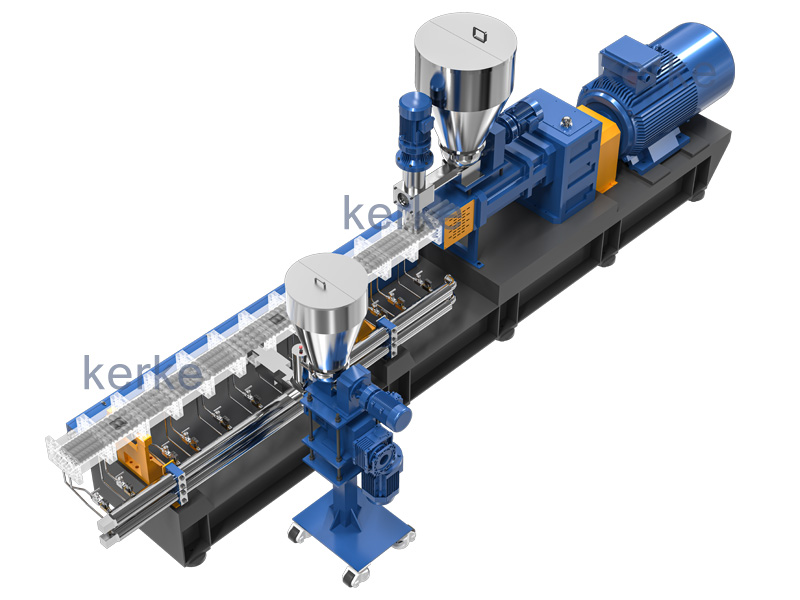
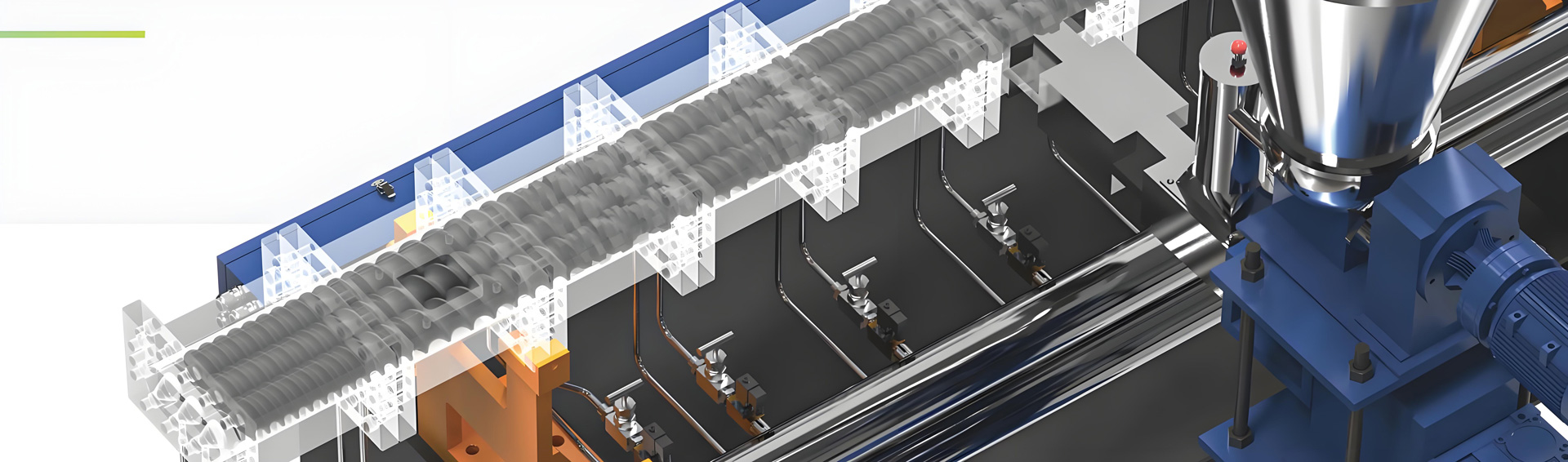
Kerke KTE series parallel co-rotating twin screw extruders incorporate multiple design features specifically engineered to enable high speed continuous production. The modular design of screw elements and barrel segments enables optimized configuration for specific masterbatch formulations and production requirements. Computer-aided designed screw assemblies provide kneading co-type configurations with excellent self-cleaning function and good interchangeability, essential for maintaining consistent operation at elevated speeds.
Advanced Gearbox and Transmission Systems
The gearbox and transmission system represents critical components determining achievable operational speeds and torque capabilities. Kerke KTE series extruders feature newly designed gearbox and transmission systems specifically developed for high torque applications. High precision gears, imported bearings, and forced lubricating units guarantee high performance and reliable running under demanding continuous operation conditions.
High torque capacity enables effective material processing at reduced screw speeds, minimizing thermal degradation while maintaining throughput targets. This design approach balances production speed with product quality requirements, particularly important for thermally sensitive color masterbatch formulations. The robust transmission system provides reliable operation over extended periods reducing maintenance requirements and unexpected downtime.
Barrel Design and Temperature Control
Advanced barrel design and precise temperature control systems are essential for maintaining consistent product quality during high speed continuous production. Kerke KTE series extruders feature segmented barrel construction enabling independent temperature control across multiple heating zones. This capability allows optimized temperature profiles for different masterbatch formulations and processing requirements.
The barrel structure can be optimized based on processing material system and process formula requirements. Aspect ratio, barrel structure, screw arrangement, exhaust quantity and position, feeding method, and electrical control method can all be optimized and reasonably configured. This flexibility enables adaptation to various masterbatch types including color masterbatch, filler masterbatch, additive masterbatch, black masterbatch, and textile masterbatch.
Screw Configuration and Mixing Technology
The screw configuration directly influences mixing efficiency, residence time distribution, and achievable production rates. Kerke modular screw design enables appropriate element combination for specific masterbatch applications. Through appropriate and reasonable combination of screw elements, the system can realize material transportation, plasticization, shearing, dispersion, homogenization, exhaust, and pressure building functions essential for high quality masterbatch production.
For high speed continuous masterbatch production, screw configurations emphasize efficient material transport and adequate mixing within reduced residence times. Advanced kneading block designs provide intensive mixing without excessive shear generation, protecting color pigments and sensitive additives from thermal degradation. The excellent self-cleaning function reduces material carryover between color changes, reducing cleaning downtime and enabling faster product transitions.
Process Optimization for High Speed Continuous Production
Optimizing masterbatch production processes for high speed continuous operation requires systematic approach addressing multiple operational parameters. Process optimization activities must consider material characteristics, equipment capabilities, and product quality requirements simultaneously.
Feeding System Optimization
Consistent and accurate material feeding represents fundamental requirement for high speed continuous production. Kerke provides multiple metering and feeding technologies specifically designed for different material states and production requirements. Available systems include volumetric metering systems with single screw, twin screw, twin screw non-meshing type, hollow spring type, two-stage type, and metering pump configurations.
Loss-in-weight metering feeding systems meet higher metering requirements for precision applications. These systems enable accurate dosing of carrier resins, color pigments, additives, and fillers ensuring consistent formulation under varying production rates. For high speed production, automatic feeding systems with multiple feed stations enable complex formulation changes without manual intervention, maintaining continuous operation while ensuring product consistency.
Temperature Profile Optimization
Optimized temperature profiles ensure adequate plasticization and mixing while preventing thermal degradation during high speed operation. Different masterbatch formulations require specific temperature considerations based on carrier resin melting characteristics, pigment thermal stability, and additive sensitivity.
Color masterbatch formulations typically require precise temperature control to prevent pigment thermal degradation and color variation. Filler masterbatch production with high calcium carbonate loading demands adequate heating energy to ensure complete plasticization of carrier resin while maintaining acceptable residence times. Kerke segmented barrel design with multiple independent heating zones enables precise temperature profile optimization for various masterbatch types.
Vacuum Venting and Degassing
Effective venting and degassing systems remove volatiles and entrapped air from the melt, essential for maintaining product quality during high speed production. Kerke extruders feature configurable venting options including atmospheric and vacuum venting depending on application requirements.
For masterbatch applications incorporating volatile additives or processing materials requiring moisture removal, vacuum venting provides superior degassing capability. The number and position of exhaust ports can be optimized based on processing requirements. Effective venting prevents defects including porosity, surface imperfections, and property variations that would otherwise occur during high speed operation.
Cost Analysis and Investment Considerations
Investment in high speed continuous production masterbatch extrusion systems represents substantial capital expenditure requiring careful economic analysis. Understanding cost components and return potential enables informed investment decisions.
Equipment Investment Costs
Kerke KTE series twin screw extruders available in multiple sizes matching various production requirements and investment levels. Laboratory scale KTE-20 model with 2-15 kg/h capacity represents entry level investment approximately $18,000-$25,000 suitable for small batch production and research and development applications.
Production scale KTE-36B model with 20-100 kg/h capacity requires investment approximately $40,000-$55,000. This size suits growing production operations requiring moderate throughput with future expansion potential. Medium production KTE-65B model with 200-450 kg/h capacity represents investment approximately $70,000-$95,000 suitable for established production facilities.
Large scale KTE-75D model with 500-1000 kg/h capacity requires investment approximately $120,000-$160,000. This size serves major production operations requiring high volume output. Maximum capacity KTE-135D model with 1500-4000 kg/h capacity represents investment approximately $250,000-$350,000 for industrial scale production facilities.
Operational Cost Considerations
Operational costs for high speed continuous production include energy consumption, labor, maintenance, and material handling. High speed operation increases energy consumption per hour but reduces energy consumption per kilogram of output through improved efficiency. Energy costs typically range $0.02-$0.04 per kg depending on formulation and processing conditions.
Labor costs for high speed continuous production are significantly reduced compared to batch processing. Automated systems including feeding, cutting, and packaging require minimal operator intervention, primarily for monitoring and quality control. Labor savings represent significant economic benefit justifying investment in automation systems.
Return on Investment Analysis
Return on investment for high speed continuous production masterbatch extruders typically ranges from 18-36 months depending on production volume, product value, and operational efficiency. Factors affecting payback period include equipment utilization rate, production yield, product pricing, and operational costs.
For facilities operating at high utilization rates with premium products, payback periods can be as short as 12-18 months. For facilities with lower utilization or standard products, payback periods typically range 24-36 months. Over equipment lifetime of 10-15 years, total return on investment typically exceeds 300-500% of initial investment.
Application-Specific Adaptations
Different masterbatch applications require specific adaptations for optimal high speed continuous production. Understanding these application-specific requirements enables proper equipment selection and process optimization.
Color Masterbatch Production
Color masterbatch production demands precise color consistency and pigment dispersion quality. Kerke twin screw extruders provide superior mixing capability ensuring uniform pigment distribution even at high production speeds. Excellent self-cleaning function reduces color carryover between product changes, reducing cleaning time and material waste.
For color masterbatch requiring high pigment loading or difficult-to-disperse pigments, Kerke offers specialized screw configurations with enhanced mixing elements. These configurations achieve superior dispersion without increasing residence time, maintaining production speed while ensuring product quality. Temperature control is critical for color masterbatch to prevent thermal degradation of organic pigments.
Filler Masterbatch Production
Filler masterbatch production, particularly calcium carbonate filled formulations, requires high loading levels and excellent dispersion quality. Kerke extruders handle high filler loadings while maintaining acceptable throughput rates through optimized screw design and barrel construction.
The high torque capability of Kerke KTE series extruders enables processing of highly filled formulations without sacrificing production speed. Segmented barrel design with appropriate venting removes entrapped air and volatiles from filled formulations, preventing defects during high speed operation. Abrasion-resistant barrel and screw construction extends equipment life when processing abrasive fillers.
Additive Masterbatch Production
Additive masterbatch production requires precise dosing of active ingredients and uniform distribution in carrier resin. Kerke loss-in-weight feeding systems enable accurate additive dosing during high speed continuous operation. Multiple feed stations enable incorporation of various additives at different points along the extruder length.
For thermally sensitive additives, Kerke extruders offer gentle processing conditions including reduced screw speeds, precise temperature control, and appropriate venting. These features enable additive protection while maintaining production efficiency. Modular design enables screw configuration optimization for specific additive types and dispersion requirements.
Automation and Control Systems
Advanced automation and control systems enable reliable high speed continuous production while maintaining product quality and operational safety. Kerke extruders incorporate sophisticated control technologies designed for continuous production environments.
PLC Control Systems
Kerke PLC control systems provide comprehensive monitoring and control of extruder operation including temperature control, screw speed, feeding systems, and cutting systems. Touchscreen interfaces enable intuitive operation and parameter adjustment. Recipe storage enables rapid changeover between different formulations minimizing downtime.
Advanced control features include automatic parameter adjustment based on recipe selection, alarm systems for abnormal conditions, data logging for quality tracking and process optimization. Remote monitoring capabilities enable off-site supervision and troubleshooting reducing response time for operational issues.
Pelletizing System Integration
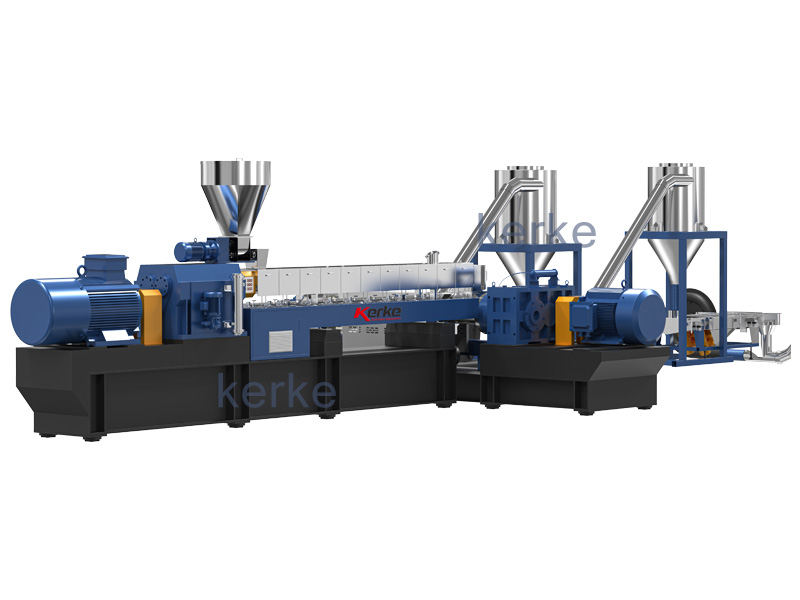
Pelletizing system selection significantly affects achievable production rates and product quality. Kerke offers various pelletizing system options optimized for high speed continuous production including water-cooled strand pelletizing, air-cooled strand pelletizing, air-cooled die face hot cutting, water ring die face hot cutting, eccentric water mist hot cutting, and underwater granulation systems.
For color masterbatch production requiring excellent pellet quality, water ring pelletizing systems provide uniform spherical pellets with minimal flash. Underwater pelletizing systems provide highest quality pellets for premium applications. Air-cooled strand pelletizing represents cost-effective solution for applications where pellet appearance is less critical.
Quality Control Integration
Integrated quality control systems enable real-time monitoring of product quality during high speed continuous production. In-line color measurement systems detect color variations enabling immediate process adjustment. Pellet size monitoring ensures consistent pellet dimensions. Melt pressure and temperature monitoring provide insight into process stability.
Automated quality control systems enable rapid detection of quality deviations, reducing scrap production and improving overall yield. These systems particularly valuable for high speed production where manual inspection frequency would be insufficient to detect problems before significant scrap generation.
Maintenance and Reliability Considerations
Equipment reliability and maintenance requirements directly affect continuous production capability. Kerke extruder design emphasizes reliability and ease of maintenance to maximize operational uptime.
Preventive Maintenance Programs
Comprehensive preventive maintenance programs prevent unexpected downtime and extend equipment life. Kerke provides recommended maintenance schedules for each extruder model including daily, weekly, monthly, and quarterly maintenance tasks. Following these schedules typically maintains equipment availability above 95 percent.
Key maintenance activities include lubrication of gearbox and bearings, inspection of screw and barrel wear, verification of heating element functionality, and testing of safety systems. Kerke modular design facilitates component replacement minimizing downtime for maintenance activities.
Wear Parts Management
Effective wear parts management ensures critical components are available when needed without extended downtime. Kerke provides recommended spare parts lists based on component wear characteristics. Maintaining inventory of critical wear parts including screw elements, barrel segments, and cutting blades enables rapid replacement.
For high filler loading applications, wear rates increase significantly affecting maintenance intervals and component life. Kerke offers wear-resistant construction options including hardened barrel surfaces and wear-resistant screw materials extending service life in abrasive applications.
Case Studies and Performance Examples
Kerke has implemented numerous high speed continuous production masterbatch systems demonstrating proven performance across various applications and production scales.
Color Masterbatch Production Line
A leading color masterbatch manufacturer implemented Kerke KTE-75D system with water ring pelletizing for high-quality color masterbatch production. Operating at 800 kg/h throughput, the system maintains color variation below delta E 1.0 ensuring consistent product quality. Investment of $145,000 achieved payback in 14 months through increased production capacity and improved product quality enabling premium pricing.
The system processes over 20 different color formulations with changeover times under 30 minutes. Excellent self-cleaning function reduces material waste during color changes to under 10 kg per changeover, significantly lower than previous equipment. Continuous operation capability enables 24/7 production when required, maximizing equipment utilization.
Filler Masterbatch Production Line
A filler masterbatch producer implemented Kerke KTE-95D system for calcium carbonate filler masterbatch production. Operating at 1200 kg/h with 70 percent calcium carbonate loading, the system achieves superior dispersion quality with particle size distribution D50 under 5 microns. Investment of $240,000 achieved payback in 18 months through increased throughput and improved product quality.
The high torque capability of the KTE-95D enables processing of high filler loadings without reducing screw speed, maintaining production efficiency. Abrasion-resistant barrel construction extends maintenance intervals to 12 months, significantly longer than previous equipment. Automated feeding system handles multiple raw materials with precision dosing ensuring consistent formulation.
Automotive Additive Masterbatch Line
An automotive industry supplier implemented Kerke KTE-65D system for high-performance additive masterbatch production. Operating at 450 kg/h, the system processes thermally sensitive additives requiring precise temperature control and gentle processing conditions. Investment of $110,000 achieved payback in 16 months through improved product quality and reduced scrap rates.
The system incorporates vacuum venting for volatile removal and low-shear screw configuration protecting sensitive additives. Integrated quality control systems including in-line color measurement and pellet size monitoring ensure consistent product quality during high speed operation. Automated feeding system with multiple additive dosing stations enables complex formulation changes without manual intervention.
Future Trends and Technology Developments
Continuous evolution of masterbatch production technology drives ongoing development of equipment and processes for improved performance and efficiency.
Industry 4.0 Integration
Industry 4.0 technologies including Internet of Things sensors, artificial intelligence, and advanced data analytics enable smart factory implementation. Kerke extruders incorporate connectivity enabling remote monitoring, predictive maintenance, and process optimization. These technologies improve operational efficiency and reduce unplanned downtime through predictive maintenance capabilities.
Artificial intelligence algorithms analyze process data identifying optimization opportunities and detecting quality issues before they cause significant scrap. Connected systems enable automatic parameter adjustment based on real-time process conditions, maintaining optimal operation with minimal operator intervention.
Energy Efficiency Improvements
Ongoing energy efficiency improvements reduce operational costs and environmental impact. High-efficiency motors with power factors above 0.9 reduce electrical losses. Advanced barrel insulation reduces heat loss improving energy efficiency by 10-15 percent. Variable frequency drives optimize energy consumption based on actual load requirements.
Energy recovery systems capture and reuse heat from cooling systems and motor operation, reducing overall energy consumption. These improvements significantly reduce operational costs while improving environmental sustainability credentials.
Advanced Material Handling
Advanced material handling systems reduce labor requirements and improve operational efficiency. Automated raw material storage and retrieval systems minimize material handling labor. Robotic packaging systems reduce labor requirements for finished product handling. Integrated warehouse management systems optimize inventory management and material flow.
These automation improvements enable continuous operation with minimal manual intervention, reducing labor costs and improving operational consistency. The systems particularly valuable for large-scale production facilities where labor represents significant operational cost.
Conclusion: Achieving High Speed Continuous Production Excellence
High speed continuous production represents achievable objective with proper equipment selection, process optimization, and operational excellence. Kerke KTE series twin screw extruders provide the foundation for successful high speed continuous masterbatch production through advanced design features, robust construction, and comprehensive support services.
Key success factors include selecting appropriately sized equipment for production requirements, optimizing process parameters for specific formulations, implementing comprehensive preventive maintenance programs, and integrating appropriate automation and control systems. Following these principles enables achievement of maximum production efficiency while maintaining superior product quality standards.
Investment in high speed continuous production capability provides substantial economic benefits including reduced per-unit production costs, improved equipment utilization, and enhanced competitiveness. Kerke over 12 years of specialization in twin screw extruder manufacturing provides unique capabilities helping customers achieve production excellence and business success in competitive masterbatch markets.