Introduction
Upgrading old extrusion lines with new twin screw compounding extruders represents a strategic investment for plastic processing facilities seeking improved productivity, enhanced product quality, and competitive advantage. Aging equipment gradually loses efficiency through wear, technological obsolescence, and increased maintenance requirements, creating opportunities for substantial improvements through modern twin screw extruder technology. Kerke extruder systems offer advanced compounding capabilities that transform production capabilities while leveraging existing downstream equipment and facility infrastructure. Understanding upgrade options, cost considerations, installation processes, and return on investment enables informed decision making about extrusion line modernization investments.
The global twin screw extruder market has evolved dramatically over the past two decades, with modern equipment offering significantly improved efficiency, control capabilities, and processing flexibility compared to equipment manufactured even ten years ago. Contemporary twin screw compounding extruders typically deliver 20 to 40 percent higher throughput rates, 30 to 50 percent energy savings, and dramatically improved product consistency compared to older generation equipment. These performance improvements translate directly into competitive advantages through reduced production costs, enhanced product quality, and increased production flexibility. Kerke extruder incorporates the latest technological advances in screw design, temperature control, and automation, providing upgrade solutions that deliver immediate and measurable benefits.
Economic justification for extrusion line upgrades typically focuses on total cost of ownership improvements rather than simply new equipment purchase price. While new twin screw compounding extruders represent significant capital investment, the total cost savings through reduced energy consumption, improved material utilization, decreased maintenance requirements, and enhanced productivity typically provide payback periods of 18 to 36 months for facilities operating at reasonable capacity utilization. Facilities with energy prices above USD 0.15 per kilowatt hour or operating multiple shifts achieve even faster payback periods. Kerke extruder upgrade solutions demonstrate proven economic performance across numerous installations, with documented savings supporting investment justification.
Evaluating Your Current Extrusion Line Performance
Comprehensive evaluation of existing extrusion line performance provides essential baseline data for upgrade justification and equipment specification. Performance analysis identifies specific areas where modern equipment can deliver substantial improvements and quantifies potential benefits.
Throughput analysis establishes current production capabilities and efficiency levels. Measured throughput should be compared to original equipment specifications and industry benchmarks for similar material types and product configurations. Typical aging extrusion lines operate at 70 to 85 percent of original throughput capacity due to component wear, screw and barrel degradation, and suboptimal operating conditions. Throughput limitations caused by equipment aging typically reduce annual production capacity by 15 to 30 percent compared to new equipment potential. For a line originally rated at 500 kilograms per hour operating 24 hours daily, this represents annual production losses of 65,700 to 131,400 kilograms annually, representing substantial revenue loss. Kerke extruder upgrade assessments include detailed throughput analysis to quantify potential capacity improvements.
Energy consumption analysis identifies efficiency losses and potential savings. Modern twin screw compounding extruders typically require 0.25 to 0.35 kilowatt hours per kilogram of processed material for many applications, while older equipment often consumes 0.35 to 0.55 kilowatt hours per kilogram. Energy efficiency improvements of 30 to 45 percent are achievable through modern motor designs, improved screw geometry, advanced temperature control, and optimized drive systems. For a line consuming 200 kilowatts operating continuously, this represents potential annual energy cost savings of USD 52,560 to USD 131,400 assuming electricity costs of USD 0.20 per kilowatt hour. Kerke extruder energy analysis provides detailed quantification of potential savings through equipment upgrades.
Product quality analysis identifies consistency issues and quality variations caused by equipment limitations. Aging extrusion lines often experience temperature variations exceeding plus or minus 5 degrees Celsius compared to modern equipment maintaining plus or minus 1 degree Celsius accuracy. Screw wear reduces mixing effectiveness causing color variations, additive dispersion problems, and property inconsistencies. Production scrap rates for aging lines typically range from 3 to 8 percent compared to 1 to 3 percent for modern equipment. For production valued at USD 2.00 per kilogram, this represents quality-related costs of USD 0.06 to USD 0.16 per kilogram of production. Kerke extruder quality analysis identifies specific improvements achievable through equipment upgrades and quantifies associated cost savings.
Maintenance analysis establishes current maintenance requirements and reliability characteristics. Older extrusion lines typically require 40 to 80 hours of scheduled maintenance annually plus 10 to 20 hours of unscheduled maintenance for repairs. Modern equipment with improved component life and predictive maintenance capabilities typically requires 20 to 40 hours of scheduled maintenance and less than 5 hours of unscheduled maintenance annually. Maintenance labor costs for aging lines range from USD 15,000 to USD 35,000 annually for mid-size lines. Spare parts costs typically range from USD 10,000 to USD 25,000 annually as components wear more rapidly than new equipment. Kerke extruder maintenance analysis quantifies potential savings through reduced maintenance requirements.
Twin Screw Compounding Extruder Upgrade Options
Multiple upgrade approaches exist for modernizing extrusion lines, ranging from component replacement to complete extruder replacement. Understanding available options enables selection of appropriate approach balancing performance improvement requirements with investment constraints.
Complete extruder replacement provides maximum performance improvement through installation of entirely new twin screw compounding extruder. This approach eliminates all aging components and installs equipment incorporating latest technology across all systems including screws, barrels, drives, heating systems, and controls. Complete replacement typically achieves 25 to 50 percent throughput improvement, 35 to 55 percent energy reduction, and significant quality improvements. Installation typically requires 2 to 4 weeks including removal of old equipment, preparation, installation of new equipment, and commissioning. Investment costs for complete replacement range from USD 80,000 to USD 300,000 depending on capacity and configuration. Kerke extruder offers complete replacement solutions with equipment specifically engineered to integrate with existing downstream equipment and facility infrastructure.
Core component replacement focuses on upgrading critical components while retaining certain existing systems. Common core component upgrades include new screws and barrels, new drive systems, or new heating and control systems. This approach provides substantial performance improvements at lower investment than complete replacement. Screw and barrel replacement typically achieves 15 to 30 percent throughput improvement and 20 to 35 percent energy reduction. Drive system replacement provides 10 to 25 percent energy savings and improved speed control. Heating and control system replacement improves temperature accuracy and provides automation capabilities. Investment for core component replacement ranges from USD 40,000 to USD 180,000 depending on scope. Kerke extruder component replacement solutions are designed for compatibility with existing equipment, enabling cost-effective performance improvements.
Control system upgrade provides enhanced automation, monitoring, and quality control capabilities while retaining mechanical equipment. Modern control systems with touchscreen interfaces, advanced PLC control, recipe management, and data logging capabilities dramatically improve operational control and quality consistency. Control system upgrades typically reduce scrap by 30 to 50 percent and improve production efficiency by 10 to 20 percent. Installation typically requires 1 to 2 weeks including installation, programming, and training. Investment costs range from USD 15,000 to USD 60,000 depending on system sophistication. Kerke extruder control system upgrades deliver significant operational benefits while leveraging existing mechanical equipment.
Drive system upgrade replaces older electric motors and drive systems with modern energy-efficient alternatives. Modern AC vector drives and high-efficiency motors reduce energy consumption by 15 to 30 percent compared to older DC drives or standard AC motors. Variable speed drives provide improved speed control and torque characteristics benefiting process control. Installation typically requires 1 to 2 weeks including electrical work and commissioning. Investment costs range from USD 20,000 to USD 80,000 depending on drive capacity. Kerke extruder drive system upgrades deliver substantial energy savings with relatively fast payback periods.
Kerke Twin Screw Extruder Upgrade Solutions
Kerke extruder offers comprehensive upgrade solutions designed to maximize performance improvement while minimizing installation complexity and investment requirements. Understanding Kerke upgrade capabilities enables selection of appropriate solution for specific application requirements.
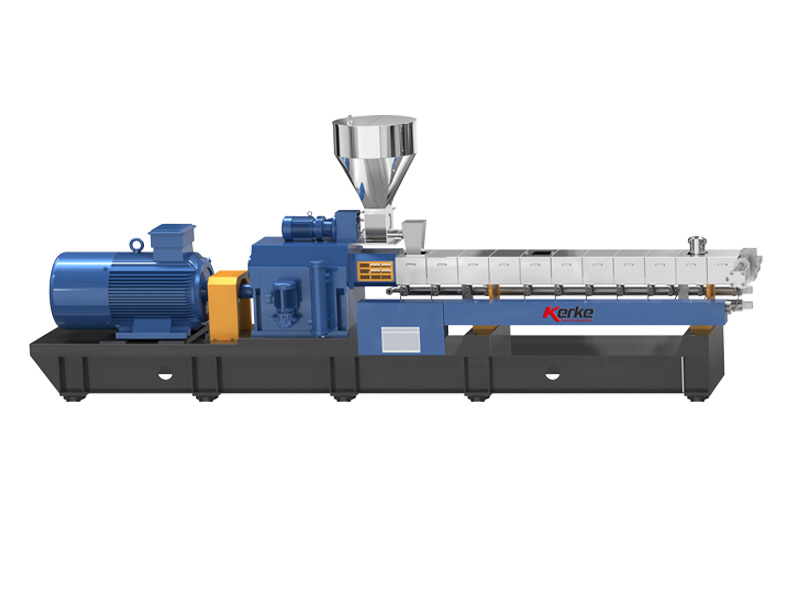
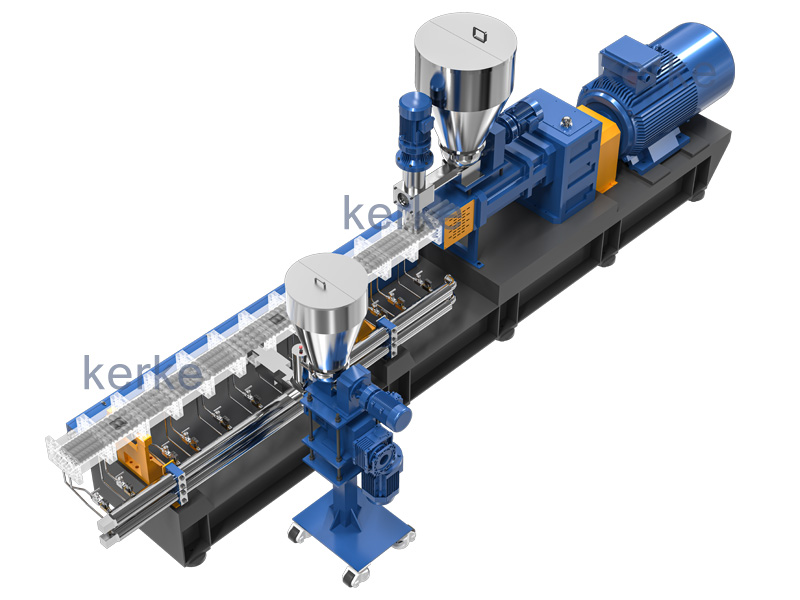
Kerke co-rotating twin screw extruders provide excellent mixing and compounding capabilities suitable for wide range of materials. Co-rotating designs excel at dispersive mixing making them ideal for masterbatch production, additive compounding, and polymer blends. Screw diameters range from 20 to 150 millimeters with length-to-diameter ratios from 25:1 to 40:1 optimized for various applications. Throughput capacities range from 50 to 3,000 kilograms per hour depending on material and application. Kerke co-rotating extruders incorporate advanced screw geometries with modular screw elements enabling customization for specific processing requirements. Equipment is designed for easy integration into existing extrusion lines with minimal downstream equipment modifications.
Kerke counter-rotating twin screw extruders provide superior pumping characteristics ideal for applications requiring positive displacement and excellent melting efficiency. Counter-rotating designs excel at processing filled materials, rigid PVC, and applications requiring high pressure development. Screw diameters range from 25 to 180 millimeters with length-to-diameter ratios from 20:1 to 35:1. Throughput capacities range from 100 to 5,000 kilograms per hour depending on application. Kerke counter-rotating extruders are particularly effective for processing materials requiring high shear energy or involving substantial filler loading. Equipment incorporates intermeshing screw designs providing excellent material transport characteristics.
Kerke twin screw extruder drive systems incorporate advanced motor and drive technologies providing energy efficiency and precise control. AC vector drives with high-efficiency IE3 or IE4 motors reduce energy consumption by 20 to 35 percent compared to older drive technologies. Drive systems provide precise speed control with accuracy better than 0.1 percent of setpoint. Torque delivery is smooth across full speed range providing consistent processing conditions. Drive capacities range from 15 to 500 kilowatts to match various extruder sizes. Kerke drive systems are designed for long service life with minimal maintenance requirements.
Kerke temperature control systems provide precise thermal management essential for quality compounding. Multi-zone electric heating systems with cartridge or band heaters provide uniform heating across barrel length. Cooling systems incorporating air or water cooling maintain precise temperature control during exothermic reactions or when processing temperature-sensitive materials. Control accuracy better than plus or minus 1 degree Celsius ensures consistent product quality. Kerke temperature control systems incorporate advanced PID control algorithms with autotuning capabilities, ensuring optimal performance across different operating conditions.
Upgrade Installation Process and Timeline
Successful extrusion line upgrades require careful planning and execution to minimize production disruption while ensuring proper installation and commissioning. Understanding installation process and timeline requirements enables effective project planning and scheduling.
Pre-installation planning establishes scope of work, identifies required modifications, and develops detailed project schedule. Planning should include evaluation of existing foundation and structural requirements to ensure they can support new equipment weight and vibration characteristics. Electrical service requirements should be verified to ensure adequate capacity for new equipment. Pneumatic and cooling water systems should be evaluated to determine if modifications or upgrades are required. Pre-installation planning typically requires 2 to 4 weeks and involves collaboration between facility engineers and Kerke extruder project managers. Proper planning prevents delays and cost overruns during installation phase.
Equipment removal and site preparation typically requires 1 to 2 weeks depending on scope of work. Old equipment removal involves disconnecting utilities, mechanical disconnection, and physical removal from facility. Structural modifications may be required to accommodate new equipment dimensions or weight. Electrical upgrades may include new transformers, switchgear, or conduit runs. Foundation modifications may be required if new equipment has different requirements than old equipment. Site preparation ensures clean, properly configured installation area ready for new equipment placement. Kerke extruder provides detailed installation drawings and specifications to guide site preparation work.
New equipment installation typically requires 1 to 3 weeks depending on equipment size and complexity. Equipment placement involves positioning extruder on prepared foundation or support structure with proper alignment. Utility connections including electrical, cooling water, and compressed air are connected and verified. Mechanical connections to downstream equipment including melt pipes, water baths, and pelletizing equipment are installed. Installation must verify proper alignment to prevent stress or vibration issues. Kerke extruder installation technicians supervise installation activities ensuring proper installation according to engineering specifications.
Commissioning and startup typically requires 1 to 2 weeks including system verification, operator training, and performance testing. Commissioning includes verification of all safety interlocks, calibration of instruments and sensors, testing of control systems, and performance validation with actual materials. Operator training covers system operation, troubleshooting, maintenance procedures, and quality optimization. Performance testing confirms equipment meets specifications for throughput, energy consumption, and product quality. Commissioning concludes when operators demonstrate competence and equipment meets performance specifications. Kerke extruder commissioning includes comprehensive documentation and training to ensure successful long-term operation.
Economic Analysis and Return on Investment
Comprehensive economic analysis justifies upgrade investment through quantification of benefits compared to costs. Understanding economic factors enables informed investment decisions and facilitates financing approval when required.
Investment costs for twin screw compounding extruder upgrades vary widely based on scope and capacity. Complete extruder replacement for mid-size lines typically costs USD 120,000 to USD 250,000 including new equipment, installation, and commissioning. Core component replacement typically costs USD 60,000 to USD 180,000 depending on scope. Control system upgrades typically cost USD 20,000 to USD 50,000. Drive system upgrades typically cost USD 30,000 to USD 70,000. Ancillary costs including site preparation, utility modifications, and operator training typically add 15 to 25 percent to equipment costs. Kerke extruder provides detailed quotations including all required costs, eliminating surprises during project execution.
Annual savings from equipment upgrades accumulate from multiple sources. Energy savings typically range from USD 30,000 to USD 150,000 annually depending on equipment size and local energy costs. Improved throughput generating additional production revenue typically ranges from USD 50,000 to USD 300,000 annually depending on capacity utilization and product margins. Quality improvements reducing scrap typically save USD 10,000 to USD 80,000 annually. Maintenance cost reductions typically save USD 15,000 to USD 50,000 annually. Total annual benefits typically range from USD 105,000 to USD 580,000 depending on equipment size and operating conditions. Kerke extruder provides detailed savings calculations specific to each application.
Payback period calculation determines how long savings require to recover investment costs. Payback periods for complete extruder replacement typically range from 18 to 36 months depending on operating conditions and capacity utilization. Core component upgrades typically have payback periods of 12 to 30 months. Control system upgrades typically achieve payback in 8 to 18 months. Drive system upgrades typically achieve payback in 12 to 24 months. Facilities with higher energy costs, higher product margins, or higher capacity utilization achieve faster payback. Kerke extruder economic analysis provides payback calculations specific to each application, facilitating informed investment decisions.
Net present value analysis considers time value of money over equipment life. Assuming 10-year equipment life and discount rate of 8 percent, net present value of savings typically exceeds investment cost by factor of 2.5 to 4.5 for successful upgrades. This means for every dollar invested, facilities achieve USD 2.50 to USD 4.50 of present value benefits over equipment life. Net present value analysis provides longer-term perspective than payback period alone, considering savings over complete equipment life rather than just investment recovery period. Kerke extruder economic analysis includes net present value calculations demonstrating substantial long-term value.
Technical Considerations for Upgrades
Technical factors significantly influence upgrade success and long-term performance. Understanding technical considerations enables proper specification and selection of upgrade solutions.
Material compatibility between new extruder and existing processes must be verified. New equipment must process materials used in facility with appropriate screw design, temperature range, and throughput characteristics. Screw geometries must be suitable for material types including filled materials, heat-sensitive materials, or materials requiring specific mixing characteristics. Temperature control must accommodate material thermal properties and processing requirements. Venting capabilities must be adequate for materials releasing volatiles. Kerke extruder technical specialists analyze material requirements and recommend appropriate equipment configurations.
Throughput requirements must balance increased capacity with downstream equipment capabilities. While new twin screw extruders may be capable of significantly higher throughput, downstream equipment including water baths, pelletizers, and dryers may limit achievable increase. Options include upgrading downstream equipment simultaneously, or selecting extruder capacity matching existing downstream capabilities while providing improved efficiency and quality. Kerke extruder throughput analysis considers entire line capabilities to recommend appropriate capacity balancing performance improvement with practical limitations.
Space requirements for new equipment must be evaluated to ensure facility can accommodate physical dimensions. New equipment may have different footprint height than existing equipment requiring structural modifications. Access for installation and future maintenance must be provided. Operator access for routine operations must be considered. Space requirements also include access for maintenance personnel and service vehicles. Kerke extruder provides detailed equipment drawings including space requirements during planning phase to ensure facility compatibility.
Utility requirements including electrical, cooling water, and compressed air must be adequate for new equipment. Electrical requirements typically increase for modern equipment due to higher motor efficiency and additional control systems. Cooling water requirements vary based on material processing and cooling system design. Compressed air requirements typically increase for modern equipment with advanced pneumatic systems. Utility capacity should be evaluated early in planning to identify required upgrades. Kerke extruder provides detailed utility specifications to facilitate utility planning and upgrades.
Integration with Existing Downstream Equipment
Successful extrusion line upgrades require proper integration with existing downstream equipment. Understanding integration considerations ensures smooth material flow and overall line performance.
Melt pipe and adapter design must properly connect new extruder to existing downstream equipment. Melt pipes must have appropriate diameter and wall thickness for operating pressure and flow requirements. Adapter design must properly align extruder die with downstream equipment inlet. Heating of melt pipes prevents material solidification and ensures proper temperature profile through transition. Proper alignment prevents stress on equipment and ensures material flows smoothly. Kerke extruder provides melt pipe design and fabrication services ensuring proper integration.
Water bath and cooling system integration must accommodate potentially increased throughput from new extruder. Cooling capacity must be adequate to solidify material at increased throughput rates. Water flow rates and temperature control must accommodate higher thermal loads. Tank capacity must provide adequate residence time for complete cooling. Take-up speed must synchronize with increased throughput. Kerke extruder evaluates cooling system requirements and recommends necessary modifications or upgrades.
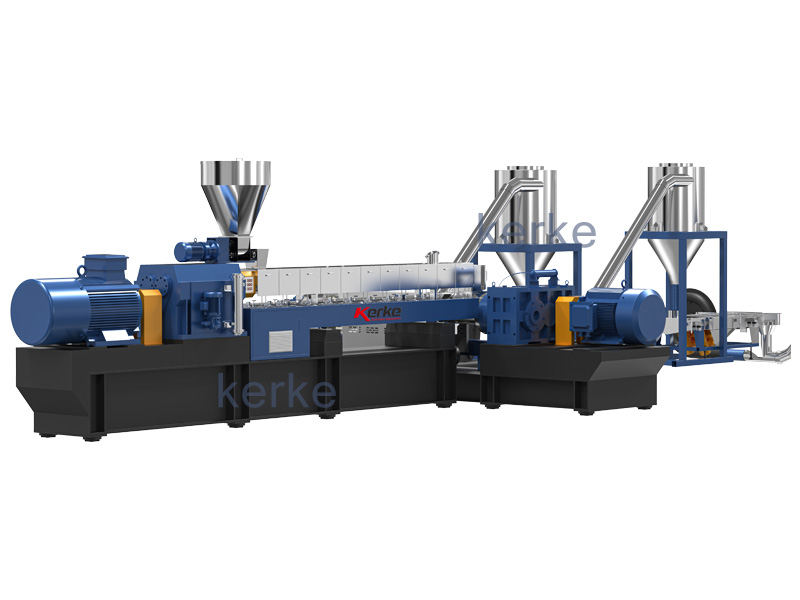
Pelletizing system capacity must match increased throughput from new extruder. Strand pelletizers must have sufficient cutting stations and speed capability. Water ring pelletizers must have adequate cutting head size and cutter speed. Die face pelletizers must have appropriate capacity and cutter configuration. Pellet handling systems including conveyors and dryers must handle increased production. Kerke extruder evaluates pelletizing system requirements and recommends necessary modifications to accommodate increased throughput.
Control system integration may require networking between new extruder controls and existing line controls. Communication protocols must be compatible to enable coordinated operation. Operator interface should provide consistent presentation across line segments. Recipe management may need to synchronize across multiple control systems. Data collection should enable comprehensive line performance monitoring. Kerke extruder provides control system integration services ensuring coordinated operation across complete line.
Operator Training and Skill Development
Equipment upgrades require operator training to ensure optimal utilization and prevent operational problems. Comprehensive training enables operators to leverage new equipment capabilities and maximize return on investment.
Basic operation training covers fundamental equipment operation including startup, shutdown, and routine operations. Training includes HMI operation, recipe selection, parameter adjustment, and alarm response. Operators learn to start equipment properly, adjust for different materials, and respond to normal operating conditions. Basic training typically requires 8 to 16 hours for operators with extrusion experience. Kerke extruder provides comprehensive basic operation training tailored to specific equipment and facility requirements.
Advanced operation training covers optimization techniques and problem-solving capabilities. Operators learn to optimize parameters for different materials and products, identify developing problems through process monitoring, and implement corrective actions. Training includes understanding process relationships between temperature profile, screw speed, throughput, and product quality. Advanced training typically requires additional 8 to 16 hours beyond basic training. Kerke extruder provides advanced training enabling operators to achieve optimal performance from new equipment.
Maintenance training covers routine maintenance procedures and troubleshooting techniques. Maintenance personnel learn to perform lubrication, inspections, minor repairs, and preventive maintenance activities. Training includes understanding component functions, wear indicators, and replacement procedures. Maintenance training typically requires 16 to 32 hours depending on maintenance personnel experience. Kerke extruder provides comprehensive maintenance training ensuring proper care of new equipment.
Ongoing skill development ensures operators maintain and improve capabilities over time. Refresher training reinforces knowledge and addresses skill gaps. New feature training covers upgrades or enhancements to equipment capabilities. Cross-training enables personnel to handle different equipment models or applications. Knowledge sharing sessions enable experienced personnel to share insights with newer personnel. Kerke extruder provides ongoing training support and knowledge sharing resources enabling continuous skill development.
Risk Management and Mitigation Strategies
Equipment upgrades involve various risks that must be managed to ensure project success. Understanding potential risks and implementing mitigation strategies prevents problems and ensures project success.
Installation schedule risks include delays from unexpected complications, material delivery delays, or resource unavailability. Mitigation strategies include detailed planning with contingency time, early material procurement, and having backup resources available. Schedule delays increase project costs through extended downtime and additional labor. Kerke extruder project management includes schedule risk assessment and contingency planning to minimize delay impacts.
Performance risks include new equipment not meeting expected throughput, quality, or efficiency improvements. Mitigation strategies include thorough equipment testing at manufacturer facility before shipment, performance guarantees in purchase agreements, and phased implementation with fallback capabilities. Performance risks can significantly impact return on investment calculations. Kerke extruder provides performance guarantees and comprehensive testing to ensure equipment meets specifications before delivery.
Operational risks include operator errors, material compatibility issues, or integration problems causing production disruptions. Mitigation strategies include comprehensive operator training, gradual ramp-up to full production, and technical support availability during startup period. Operational risks can cause temporary production losses and customer dissatisfaction. Kerke extruder provides comprehensive startup support including technician presence for critical period.
Financial risks include cost overruns, extended payback periods, or reduced savings compared to projections. Mitigation strategies include detailed project budgets with contingencies, conservative savings projections, and financing arrangements protecting cash flow. Financial risks can strain company resources and delay other projects. Kerke extruder provides detailed economic analysis with conservative assumptions ensuring realistic projections.
Environmental and Regulatory Considerations
Equipment upgrades provide opportunities to improve environmental performance and ensure regulatory compliance. Understanding environmental and regulatory factors enables selection of equipment delivering environmental benefits alongside operational improvements.
Energy efficiency improvements directly reduce environmental impact through reduced fossil fuel consumption for electricity generation. Energy savings of 100,000 kilowatt hours annually reduce carbon dioxide emissions by approximately 50 to 100 metric tons annually depending on electricity generation mix. Modern twin screw extruders typically achieve 20 to 45 percent energy reduction compared to older equipment. These environmental benefits often qualify for utility rebates or energy efficiency incentives in many regions. Kerke extruder energy efficiency improvements provide substantial environmental benefits and may qualify for financial incentives.
Material waste reduction through improved quality consistency reduces environmental impact from scrap generation. Scrap rate reductions from 5 to 2 percent through improved equipment performance represent substantial material savings. For production of 1 million kilograms annually, this represents 30,000 kilograms of additional usable product. Material conservation reduces raw material extraction, processing, and transportation environmental impacts. Kerke extruder quality improvements directly reduce environmental impact through material conservation.
Emissions reductions may be achievable through improved process control and venting systems. Older equipment may vent more volatiles to atmosphere due to inadequate venting or poor process control. Modern equipment with improved venting and process control can reduce volatile organic compound emissions by 30 to 60 percent for appropriate applications. These reductions improve worker safety and environmental compliance. Kerke extruder venting systems provide effective volatile removal while maintaining process conditions.
Noise reduction through improved equipment design benefits worker health and community relations. Modern equipment typically operates 5 to 15 decibels quieter than older equipment due to improved motor designs, better isolation, and reduced mechanical noise. Noise reduction benefits worker health and reduces noise complaints from surrounding community. Kerke extruder designs incorporate noise reduction features including improved motor mounting, insulation, and mechanical design.
Case Studies and Success Stories
Examining actual upgrade installations provides insight into achievable benefits and implementation approaches. Case studies demonstrate real-world results and validate economic projections.
Case study 1: Masterbatch production facility upgrade. A masterbatch producer in Germany replaced 15-year-old twin screw extruder with new Kerke co-rotating extruder. Original equipment produced 600 kilograms per hour consuming 220 kilowatts. New equipment produces 850 kilograms per hour consuming 200 kilowatts representing 42 percent throughput increase and 9 percent energy reduction. Investment cost was USD 220,000 including installation. Annual energy savings total USD 105,000 based on EUR 0.30 per kilowatt hour electricity costs. Additional production revenue from increased throughput totals USD 250,000 annually based on product margin of USD 0.50 per kilogram. Total annual benefits exceed USD 355,000 providing payback period of approximately 7.5 months. Quality improvements reduced scrap from 4 percent to 1.5 percent saving additional USD 75,000 annually.
Case study 2: PVC pipe compound production upgrade. A pipe compound manufacturer in United States upgraded twin screw extruder replacing 12-year-old equipment. Original throughput was 800 kilograms per hour with energy consumption of 280 kilowatts. New Kerke counter-rotating extruder achieves 1,100 kilograms per hour consuming 240 kilowatts. Throughput increase of 38 percent and energy reduction of 14 percent achieved. Investment total was USD 280,000 including foundation modifications and electrical upgrades. Annual energy savings total USD 84,000 based on USD 0.20 per kilowatt hour electricity costs. Increased production revenue totals USD 225,000 annually based on USD 0.75 per kilogram margin. Total annual benefits of USD 309,000 provide payback period of approximately 11 months. Maintenance savings totaling USD 35,000 annually achieved through reduced component replacement frequency.
Case study 3: Engineering plastic compounding upgrade. A compounding facility in China upgraded drive system and controls for existing twin screw extruder. Original throughput was 500 kilograms per hour consuming 180 kilowatts. Drive system upgrade and control system improvements increased throughput to 650 kilograms per hour consuming 140 kilowatts. Throughput increased 30 percent while energy consumption decreased 22 percent. Investment total was USD 85,000 for drive replacement and control system upgrade. Annual energy savings total USD 49,000 based on CNY 2.0 per kilowatt hour electricity costs. Increased production revenue totals USD 112,500 annually based on CNY 0.75 per kilogram margin. Total annual benefits of USD 161,500 provide payback period of approximately 6.3 months. Quality improvements reduced scrap from 6 percent to 2.5 percent saving additional USD 52,500 annually.
Future-Proofing Through Upgrades
Equipment upgrades provide opportunities to install capabilities supporting future requirements and technological advances. Future-proofing investments ensure equipment remains relevant and capable as requirements evolve.
Industry 4.0 and digital capabilities can be incorporated during upgrades providing data collection, monitoring, and optimization capabilities. IoT sensors installed throughout equipment collect operational data for analysis. Cloud-based platforms enable remote monitoring and analysis. Digital twins create virtual equipment models for simulation and optimization. These capabilities enable continuous improvement and predictive maintenance. Kerke extruder offers Industry 4.0 capabilities including IoT sensors, cloud monitoring, and data analytics platforms.
Enhanced automation capabilities reduce labor requirements and improve consistency. Automated recipe management eliminates operator variation. Automated parameter adjustment based on material characteristics optimizes performance. Automated quality monitoring and adjustment reduces scrap. Integration with higher-level manufacturing execution systems enables coordinated production. Kerke extruder automation capabilities provide substantial labor savings and consistency improvements.
Material compatibility expansion enables processing of new materials and applications as markets evolve. Modular screw designs enable rapid reconfiguration for different material families. Extended temperature ranges accommodate materials requiring higher or lower processing temperatures. Enhanced venting capabilities handle materials with higher volatile content. These capabilities provide flexibility to adapt to changing customer requirements. Kerke extruder modular design enables material compatibility expansion without complete equipment replacement.
Conclusion
Upgrading old extrusion lines with new twin screw compounding extruders represents strategic investment delivering substantial operational, economic, and competitive benefits. Kerke extruder upgrade solutions provide comprehensive capabilities tailored to specific application requirements while integrating efficiently with existing facility infrastructure. Thorough evaluation, careful planning, and proper implementation ensure upgrade success and maximize return on investment.
Performance improvements through modern twin screw extruder technology include 20 to 50 percent throughput increases, 20 to 45 percent energy reductions, and substantial quality consistency improvements. Economic benefits typically provide payback periods of 12 to 36 months with net present value exceeding investment by factor of 2.5 to 4.5 over equipment life. Environmental benefits include reduced energy consumption, lower material waste, and decreased emissions. These combined benefits justify upgrade investments for facilities seeking competitive advantages and operational excellence.
Kerke extruder upgrade capabilities incorporate latest twin screw technology, modular design for flexibility, comprehensive support services, and proven installation expertise. By leveraging Kerke extruder upgrade solutions, facilities transform aging extrusion lines into modern production capabilities delivering superior performance, efficiency, and profitability.