Introduction
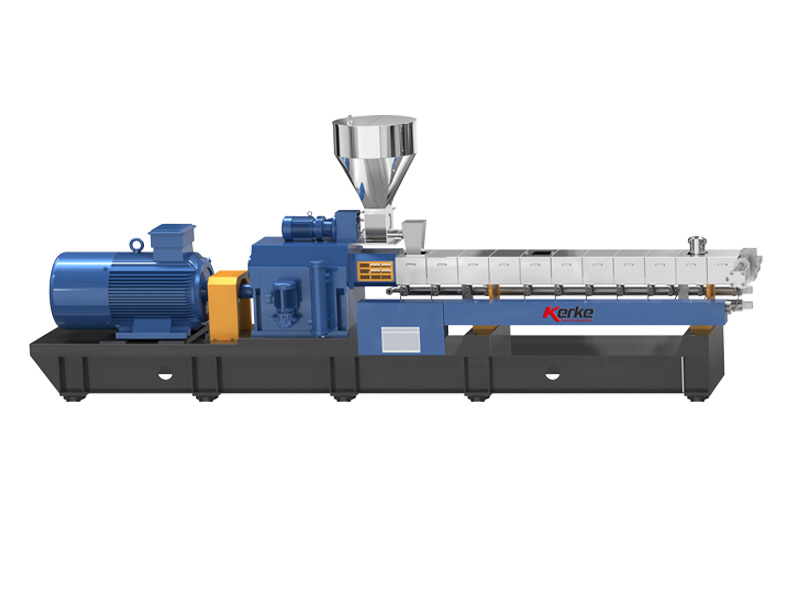
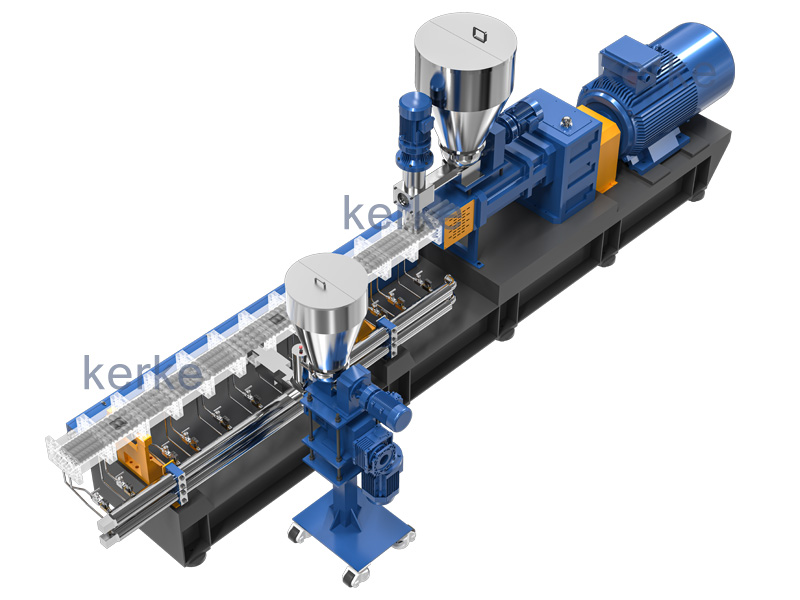
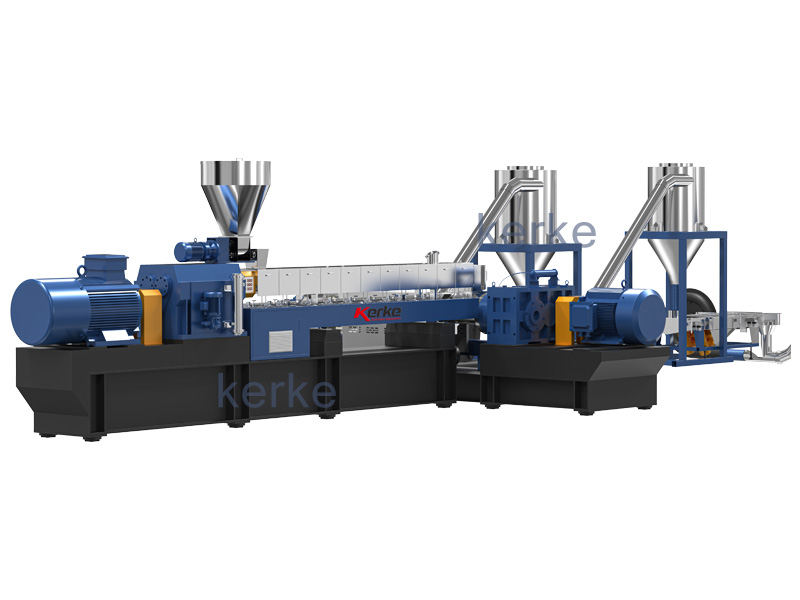
Engineering plastic compounding represents sophisticated segment of plastic processing requiring specialized equipment capabilities. Selecting appropriate twin screw extruder for engineering plastic applications demands comprehensive understanding of material characteristics, processing requirements, performance specifications, and economic considerations. Kerke twin screw extruder offers extensive product range specifically engineered for engineering plastic compounding including ABS, polycarbonate, nylon, polyamide, PBT, PET, POM, and other engineering polymers. Proper equipment selection ensures optimal processing performance, product quality, and economic returns.
Engineering plastics present unique processing challenges compared to commodity plastics due to higher melting temperatures, greater thermal sensitivity, more stringent property requirements, and higher material costs. These characteristics require extruders with enhanced capabilities including precise temperature control, superior mixing performance, advanced venting systems, and specialized screw configurations. Selecting appropriate extruder involves balancing multiple factors including material types, processing requirements, throughput targets, quality specifications, and budget constraints. Kerke provides comprehensive selection support ensuring customers choose optimal equipment for their specific engineering plastic compounding requirements.
Market demand for engineering plastics continues growing driven by automotive, electronics, consumer goods, and industrial applications requiring superior mechanical properties, thermal stability, and chemical resistance. Engineering plastic compounding operations must meet increasingly demanding quality standards while maintaining cost competitiveness. Kerke twin screw extruders provide advanced capabilities enabling production of high-quality engineering plastic compounds meeting these demanding requirements. Understanding selection criteria enables informed decisions balancing performance, quality, and economics.
Understanding Engineering Plastic Characteristics
Engineering plastics exhibit distinct characteristics affecting extruder selection and processing requirements. Understanding these characteristics is fundamental for proper equipment selection.
Temperature requirements vary significantly among engineering plastics. ABS typically processes between 220 to 260 degrees Celsius. Polycarbonate requires 280 to 320 degrees Celsius processing temperatures. Nylon 6 processes at 230 to 260 degrees Celsius while Nylon 66 requires 270 to 300 degrees Celsius. PBT processes at 240 to 270 degrees Celsius. These high temperature requirements demand extruders with robust heating systems, temperature capabilities exceeding 350 degrees Celsius, and precise temperature control. Kerke twin screw extruders for engineering plastics feature heating capabilities up to 400 degrees Celsius ensuring adequate temperature margins.
Thermal stability and degradation sensitivity affect processing requirements. Engineering plastics vary significantly in thermal stability. Polycarbonate exhibits moderate thermal sensitivity requiring careful temperature control to prevent degradation and yellowing. Nylon is susceptible to hydrolysis requiring effective drying and minimal moisture exposure. ABS is relatively thermally stable but can degrade at excessive temperatures or residence times. Extruders must provide precise temperature control, appropriate residence time distribution, and effective venting for volatiles. Kerke twin screw extruders incorporate precise temperature control with accuracy better than plus or minus1 degree Celsius and optimized residence time distribution minimizing degradation risks.
Viscosity characteristics affect processing requirements and screw configuration. Engineering plastics exhibit various melt viscosities affecting processing energy requirements and mixing needs. Polycarbonate has relatively high melt viscosity requiring significant processing energy. Nylon typically has lower melt viscosity but is shear-sensitive requiring careful shear control. ABS has moderate melt viscosity with good processability. Screw configuration must match viscosity characteristics for optimal performance. Kerke provides screw configuration expertise matching screw geometry to specific engineering plastic viscosity characteristics.
Additive and filler requirements affect extruder selection and configuration. Engineering plastic compounds often incorporate additives and fillers including glass fibers, impact modifiers, flame retardants, heat stabilizers, and reinforcing agents. These additions affect processing requirements, screw configuration, and wear characteristics. Glass-filled compounds require special screw materials and configurations to handle abrasive fibers. Flame retardant compounds may require special venting for volatile components. Impact modifiers affect viscosity and processing energy requirements. Kerke application expertise ensures extruder configuration matches specific additive and filler requirements.
Throughput and Capacity Considerations
Throughput requirements significantly affect extruder selection and sizing. Proper capacity selection ensures optimal operating efficiency without over or under-sizing.
Annual production volume determines required throughput capacity. Calculate annual volume based on market demand, production schedules, and growth projections. Consider seasonal variations and potential market expansion. Throughput requirements should include adequate margin for future growth, typically 20 to 30 percent above current requirements. Kerke provides throughput analysis matching extruder capacity to production requirements and growth projections.
Continuous versus batch operation affects sizing considerations. Continuous operation typically requires larger capacity extruders running at optimal throughput rates. Batch operations may require flexibility to handle various batch sizes and material changes. Engineering plastic compounding often operates in continuous mode for consistent product quality but may require batch capability for specialty formulations. Kerke twin screw extruders provide flexibility for both continuous and batch operations.
Multi-product considerations affect extruder selection. Production of multiple engineering plastic compounds requires equipment flexibility to handle various materials and formulations. Quick changeover capabilities reduce transition time between different compounds. Versatile screw configurations adapt to different material requirements. Kerke twin screw extruders feature modular screw designs and quick changeover capabilities supporting multi-product operations.
Cost efficiency optimization balances capital investment and operating costs. Larger extruders typically offer lower per-kilogram processing costs due to economy of scale but require higher initial investment and may have utilization challenges. Smaller extruders have lower initial investment but higher per-kilogram processing costs. Optimal sizing balances capital costs with operating costs and utilization rates. Kerke provides economic analysis comparing various extruder sizes for specific applications.
Screw Configuration and Design
Screw configuration represents most critical factor affecting engineering plastic compounding performance. Proper screw design ensures optimal mixing, melting, and material handling.
Screw diameter affects throughput capacity and mixing capabilities. Larger diameter screws provide higher throughput capacity for given length-to-diameter ratio. Screw diameter ranges from 20 to 150 millimeters for engineering plastic applications with throughput capacities from 50 to 3,000 kilograms per hour depending on material and configuration. Larger screws provide greater processing capacity but require larger drive systems and higher investment. Kerke application analysis determines optimal screw diameter based on throughput requirements and material characteristics.
Length-to-diameter ratio affects residence time and processing capabilities. Engineering plastic compounding typically requires longer length-to-diameter ratios ranging from 30:1 to 40:1 providing adequate residence time for melting, mixing, and additive incorporation. Longer ratios provide additional processing zones for complex compounds but increase equipment cost and floor space requirements. Optimal ratio depends on material complexity and processing requirements. Kerke offers various length-to-diameter ratios optimized for specific applications.
Mixing element configuration determines mixing effectiveness. Engineering plastic compounds often require intensive mixing for proper additive and filler dispersion. Kneading blocks provide dispersive mixing essential for breaking down agglomerates and achieving uniform dispersion. Distributive mixing elements ensure uniform distribution of additives throughout compound. Reverse mixing elements create material backflow enhancing distributive mixing. Kerke provides screw configuration expertise optimizing mixing elements for each engineering plastic application.
Screw materials affect wear resistance and service life. Engineering plastic compounds, especially glass-filled formulations, create abrasive wear on screw components. Specialized screw materials including hardened steels, wear-resistant coatings, and special alloys provide extended service life. Kerke offers various screw material options matching specific wear characteristics of different engineering plastic compounds.
Drive System Specifications
Drive system selection affects processing capability, energy efficiency, and operating costs. Engineering plastic compounding requires robust drive systems with adequate power and control capabilities.
Drive power requirements depend on material characteristics and throughput. Engineering plastics typically require specific power consumption of 0.30 to 0.50 kilowatt hours per kilogram. For throughput of 500 kilograms per hour, drive power of 150 to 250 kilowatts provides adequate capacity. Higher viscosity materials like polycarbonate require higher power capacity. Kerke provides drive system sizing based on material requirements and throughput targets.
Drive technology affects energy efficiency and control. AC vector drives with high-efficiency motors provide 15 to 30 percent energy savings compared to older DC drive technology. Variable speed drives enable precise speed control optimizing processing for different materials. Torque control capabilities ensure consistent power delivery across operating conditions. Kerke twin screw extruders incorporate advanced AC vector drives providing energy efficiency and precise control.
Screw speed range affects processing flexibility. Engineering plastic compounding typically requires screw speeds from 50 to 500 rpm depending on material and throughput requirements. Wider speed ranges provide flexibility for various materials and formulations. Lower speeds benefit temperature-sensitive materials requiring longer residence time. Higher speeds benefit materials requiring high throughput or intensive mixing. Kerke drive systems provide wide speed ranges enabling processing flexibility.
Control capabilities affect process optimization and quality consistency. Advanced drive controls enable precise speed regulation with accuracy better than 0.1 percent of setpoint. Torque monitoring provides feedback on material conditions and processing status. Integrated control with temperature and feeding systems enables coordinated optimization. Kerke drive controls provide advanced capabilities supporting process optimization.
Temperature Control System
Precise temperature control is critical for engineering plastic compounding due to high processing temperatures and thermal sensitivity. Temperature control system capabilities significantly affect product quality and processing efficiency.
Heating capacity must meet material temperature requirements. Engineering plastics require heating up to 350 degrees Celsius with some materials requiring capability to 400 degrees Celsius for safety margin. Heating power typically ranges from 5 to 15 kilowatts per meter of barrel length depending on insulation and heat loss. Kerke twin screw extruders feature robust heating systems providing adequate capacity for engineering plastic temperatures.
Cooling capacity ensures precise temperature control during processing. Engineering plastics often require cooling control to maintain precise temperatures and prevent thermal runaway. Cooling systems incorporate both air and water cooling with appropriate capacity. Cooling capacity typically matches heating capacity to maintain temperature control. Kerke cooling systems provide effective temperature control across operating conditions.
Temperature zones enable optimized thermal profiles. Engineering plastic compounding typically requires 8 to 12 heating zones enabling precise temperature control across barrel length. Each zone can be individually set for optimal thermal profile matching material requirements. Multi-zone control enables specialized profiles including temperature ramps, holds, and specific zones for melting, mixing, and devolatilization. Kerke temperature control systems provide multiple zones with individual control.
Control accuracy affects product quality and consistency. Engineering plastic compounding typically requires temperature control accuracy better than plus or minus1 degree Celsius to prevent material degradation and ensure consistent properties. Advanced PID control with autotuning capabilities maintains precise control across operating conditions. Kerke temperature control systems achieve control accuracy better than plus or minus1 degree Celsius ensuring consistent processing.
Venting and Devolatilization
Effective venting removes volatiles, moisture, and degradation products critical for engineering plastic compounding quality. Venting system design affects product quality and processing efficiency.
Vent placement along barrel enables removal of volatiles at appropriate processing stages. Engineering plastic compounds may contain moisture, solvents, monomers, or degradation byproducts requiring removal. Multiple vent ports positioned along barrel length enable staged removal of different volatiles. Early vents remove moisture and low boiling point components. Later vents remove higher boiling point components and degradation byproducts. Kerke twin screw extruders feature multiple vent positions optimized for various engineering plastic compounds.
Vent zone designs prevent material carryover between vents. Specialized vent zone geometries create pressure differentials preventing material flow between vent ports. This isolation enables each vent to remove specific volatiles without interference. Kerke vent zone designs optimize isolation while maintaining material flow and processing efficiency.
Vacuum venting capabilities enhance volatile removal. Engineering plastic compounds often require vacuum venting for effective removal of low concentration volatiles or moisture. Vacuum systems capable of 50 to 760 millimeters mercury absolute provide effective volatile removal. Kerke venting systems incorporate vacuum capabilities for demanding applications requiring thorough devolatilization.
Vent filter systems prevent particulate loss. Filters on vent ports prevent small particles from escaping with vented volatiles. Filters must be accessible for cleaning or replacement to prevent clogging. Kerke vent filter systems provide effective particle containment while maintaining venting efficiency and ease of maintenance.
Material Handling and Feeding
Consistent material feeding and handling ensures uniform processing and product quality. Material handling systems must handle engineering plastics safely and accurately.
Feeder accuracy ensures consistent material composition. Engineering plastic compounds often require precise addition of additives, fillers, and colorants requiring feeder accuracy better than 0.5 percent of setpoint. Gravimetric feeders provide superior accuracy compared to volumetric feeders. Multiple feeders enable addition of various components at controlled rates. Kerke offers comprehensive feeding systems with gravimetric accuracy for precise material control.
Material drying requirements vary among engineering plastics. Nylon requires thorough drying to 0.02 percent moisture content before processing to prevent hydrolysis. Polycarbonate requires drying to 0.01 percent moisture content to prevent degradation and bubble formation. Other engineering plastics have varying drying requirements. Drying systems must provide consistent drying with appropriate capacity. Kerke provides drying recommendations and systems for various engineering plastics.
Material handling systems prevent contamination and degradation. Engineering plastics must be protected from contamination, moisture absorption, and thermal degradation during handling. Closed conveying systems prevent contamination. Desiccant dryers maintain moisture control. Temperature-controlled storage prevents premature degradation. Kerke provides material handling recommendations ensuring material quality throughout processing.
Automated material handling reduces labor and contamination risk. Automated systems from storage silos through feeders to extruder reduce manual handling and contamination risk. Automated systems also improve consistency and reduce material loss. Kerke provides integrated material handling solutions optimizing material flow and quality.
Kerke Engineering Plastic Extruder Models
Kerke offers comprehensive range of twin screw extruders specifically designed for engineering plastic compounding. Model selection depends on throughput requirements, material types, and processing complexity.
Kerke E series twin screw extruders provide standard performance for general engineering plastic compounding. E series models handle ABS, nylon, PBT, and other engineering plastics with moderate filler loadings. Throughput capacities range from 50 to 1,500 kilograms per hour. Length-to-diameter ratios from 30:1 to 36:1 provide adequate processing zones. Temperature capabilities to 400 degrees Celsius handle engineering plastic temperatures. Kerke E series provides cost-effective solutions for standard engineering plastic applications.
Kerke EP series twin screw extruders provide enhanced performance for demanding engineering plastic applications. EP series models handle polycarbonate, high-temperature nylons, glass-filled compounds, and other challenging materials. Enhanced mixing elements provide superior dispersion of additives and fillers. Specialized barrel designs improve thermal management and reduce degradation. Throughput capacities range from 100 to 2,500 kilograms per hour. Kerke EP series provides premium performance for demanding applications.
Kerke EG series twin screw extruders provide glass-filled compound capabilities for highly abrasive materials. EG series models incorporate wear-resistant materials and specialized screw designs for glass fiber, mineral fillers, and other abrasive additives. Enhanced barrel materials extend service life with abrasive materials. Throughput capacities range from 100 to 2,000 kilograms per hour. Kerke EG series provides durability and performance for abrasive compound applications.
Kerke ES series twin screw extruders provide special compound capabilities for unique engineering plastic formulations. ES series models handle specialty compounds including conductive materials, flame retardant formulations, and other specialty compounds. Enhanced venting systems handle volatile components from specialty additives. Specialized screw configurations address unique processing requirements. Throughput capacities range from 50 to 1,500 kilograms per hour. Kerke ES series provides flexibility for specialty compound applications.
Cost Analysis and Economic Considerations
Economic analysis balances capital investment with operating costs and production requirements. Understanding cost factors enables informed decisions maximizing return on investment.
Capital investment varies with extruder size and capabilities. Kerke E series twin screw extruders cost USD 60,000 to USD 250,000 depending on size and configuration. EP series enhanced models cost USD 80,000 to USD 350,000. EG series glass-filled models cost USD 100,000 to USD 400,000. ES series specialty models cost USD 90,000 to USD 380,000. Larger extruders with advanced features require higher investment but provide greater capacity and capabilities. Kerke provides detailed quotations matching specific application requirements.
Operating costs include energy, maintenance, and component replacement. Energy consumption for engineering plastic compounding typically ranges from 0.30 to 0.50 kilowatt hours per kilogram. For a 500 kilogram per hour extruder with electricity costs of USD 0.20 per kilowatt hour, annual energy costs would be approximately USD 175,200 to USD 292,000 assuming 5,000 annual operating hours. Maintenance costs typically range from 5 to 10 percent of initial investment annually depending on material abrasiveness and operating intensity. Component replacement including screws and barrels represents periodic costs every 3 to 5 years.
Material cost savings from efficient processing improve economics. Efficient processing reduces material waste and off-specification production reducing material cost per kilogram of acceptable product. Twin screw extruders typically achieve scrap rates of 2 to 5 percent compared to 5 to 10 percent for older technologies. Material cost savings of USD 0.10 to USD 0.30 per kilogram achievable through improved efficiency. For engineering plastics costing USD 3.00 to USD 6.00 per kilogram, these savings represent significant economic benefit.
Productivity improvements enhance economic returns. Higher throughput per extruder reduces required equipment count and capital investment. Reliable operation reduces downtime and maintenance requirements. Quick changeover capabilities increase effective production time. Kerke twin screw extruders typically achieve availability exceeding 98 percent reducing downtime costs and improving effective throughput.
Quality Considerations
Quality requirements significantly affect extruder selection and configuration. Engineering plastic compounds must meet stringent property specifications requiring consistent processing and control.
Property consistency requires precise process control. Engineering plastic compounds require consistent mechanical properties including tensile strength, impact resistance, and heat distortion temperature. These properties depend on consistent material composition, thermal history, and mixing. Precise temperature control, accurate feeding, and consistent processing conditions ensure property consistency. Kerke twin screw extruders provide advanced control capabilities ensuring consistent processing and property uniformity.
Additive dispersion quality affects compound properties. Uniform dispersion of additives, fillers, and colorants is critical for consistent properties and appearance. Inadequate dispersion causes property variation, streaks, specks, and surface defects. Twin screw extruders provide superior mixing capabilities ensuring uniform dispersion. Kerke screw configuration expertise ensures optimal mixing for each compound formulation.
Moisture control prevents degradation and defects. Moisture in engineering plastics causes hydrolysis, bubble formation, and property degradation especially in nylon and polycarbonate. Effective drying and moisture prevention during processing prevents these defects. Kerke provides drying systems and moisture control recommendations for various engineering plastics.
Volatile removal prevents bubbles and defects. Volatiles from monomers, solvents, or degradation byproducts cause bubbles, surface defects, and property variations. Effective venting and devolatilization removes these volatiles preventing defects. Kerke venting systems provide thorough volatile removal ensuring defect-free compounds.
Installation and Facility Requirements
Installation and facility requirements affect extruder selection and project planning. Proper facility preparation ensures smooth installation and operation.
Floor space requirements vary with extruder size and configuration. Twin screw extruders require space for extruder, drive system, control panel, and ancillary equipment. Extruders with 20 to 40 length-to-diameter ratios require floor space from 5 to 15 meters in length depending on screw diameter. Width requirements typically range from 1.5 to 3 meters. Additional space for feeders, dryers, cooling systems, and take-up equipment increases total floor space requirements. Kerke provides detailed layout drawings for facility planning.
Foundation requirements depend on equipment weight and dynamic loads. Twin screw extruders weigh 3 to 30 metric tons depending on size and configuration. Dynamic loads from rotating screws require reinforced foundations minimizing vibration. Foundation specifications provided by Kerke ensure proper support and vibration isolation. Foundations typically include concrete pads with appropriate thickness and reinforcement.
Utility requirements include electrical power, cooling water, and compressed air. Electrical power requirements depend on drive motor size and heating capacity. Typical electrical requirements range from 50 to 400 kilowatts depending on extruder size and configuration. Cooling water requirements for barrel cooling and vent condensers range from 5 to 30 cubic meters per hour. Compressed air requirements for controls and actuators typically range from 0.5 to 2 cubic meters per minute at 6 to 8 bar pressure.
Environmental considerations affect installation planning. Engineering plastic compounding generates heat, potential emissions, and noise requiring appropriate environmental controls. Ventilation systems remove heat from equipment area. Emission controls may be required depending on compound components and local regulations. Noise control measures ensure compliance with workplace noise limits. Kerke provides environmental recommendations for installation planning.
Maintenance and Service
Maintenance requirements affect operating costs and equipment availability. Understanding maintenance needs enables proper planning and budgeting.
Routine maintenance includes lubrication, inspection, and calibration. Regular lubrication of drive systems, bearings, and moving components ensures reliable operation and prevents premature wear. Routine inspection identifies potential problems before they cause downtime. Regular calibration of temperature, speed, and feeder controls ensures accurate processing. Kerke provides detailed maintenance schedules and procedures for each extruder model.
Preventive maintenance includes periodic component replacement and servicing. Components including seals, wear plates, and bearings require periodic replacement based on operating hours or performance degradation. Screw and barrel inspection identifies wear patterns requiring refurbishment or replacement. Drive system maintenance including motor bearings and coupling inspection prevents unexpected failures. Kerke provides preventive maintenance recommendations based on specific operating conditions.
Corrective maintenance addresses unexpected failures or performance issues. Despite preventive maintenance, unexpected failures may occur requiring prompt corrective action. Kerke provides spare parts lists recommended for various operating scenarios to minimize downtime. Technical support services assist with troubleshooting and problem resolution. Kerke service engineers provide on-site support when needed for complex issues.
Component life varies based on material and operating conditions. Screw and barrel life ranges from 8,000 to 20,000 operating hours depending on material abrasiveness and operating conditions. Drive system components typically last 20,000 to 40,000 operating hours with proper maintenance. Seals and wear components require replacement every 3,000 to 6,000 operating hours. Kerke provides component life estimates based on specific applications and materials.
Support and Training
Comprehensive support and training ensure successful extruder implementation and operation. Kerke provides extensive support services and training programs.
Installation and commissioning services ensure proper setup and initial operation. Kerke installation supervisors coordinate installation activities ensuring proper foundation, utilities, and equipment positioning. Commissioning technicians perform system checks, calibration, and initial optimization ensuring proper operation. Comprehensive testing verifies performance meets specifications before handover. Kerke installation and commissioning services ensure smooth startup and optimal initial performance.
Operator training ensures proper operation and maintenance. Kerke training programs cover equipment operation, control system use, routine maintenance, problem identification, and basic troubleshooting. Training programs are customized to specific equipment models and applications. Training can be provided at Kerke facilities or customer sites depending on preference. Well-trained operators maximize equipment performance and minimize downtime.
Technical support services provide ongoing assistance. Kerke technical support team provides phone and email support addressing operation questions, processing problems, and maintenance issues. Support specialists have extensive experience with engineering plastic compounding and Kerke equipment. Remote diagnostic capabilities enable detailed analysis of operational issues. Kerke technical support ensures customers receive ongoing assistance throughout equipment life.
Process optimization services improve performance and efficiency. Kerke process engineers provide optimization services analyzing current operation and identifying improvement opportunities. Screw configuration review and optimization improves mixing and dispersion. Process parameter optimization enhances throughput and quality. Kerke process optimization services help customers achieve maximum performance from their equipment.
Selection Checklist and Decision Process
Systematic selection process ensures optimal extruder selection for specific requirements. Decision checklist covers critical factors affecting selection.
Material analysis defines processing requirements. Identify engineering plastic types to be processed including ABS, polycarbonate, nylon, PBT, or other materials. Document material characteristics including melting temperature, thermal sensitivity, viscosity, and additives or fillers. Material characteristics drive requirements for temperature capability, mixing intensity, venting capacity, and screw configuration. Kerke application specialists assist with material analysis and requirement definition.
Throughput requirements determine equipment sizing. Calculate annual production volume based on market demand and growth projections. Convert annual volume to hourly throughput considering operating hours and efficiency factors. Include margin for future growth, typically 20 to 30 percent above current requirements. Kerke throughput analysis determines appropriate extruder capacity and sizing.
Quality requirements define performance specifications. Document critical quality parameters including property tolerances, dispersion requirements, moisture content limits, and visual quality standards. Quality requirements drive need for precise process control, mixing capabilities, venting capacity, and monitoring systems. Kerke application analysis matches equipment capabilities to quality requirements.
Economic analysis evaluates capital and operating costs. Compare various extruder models and sizes based on capital investment, operating costs, and productivity. Consider total cost of ownership including initial investment, operating costs, maintenance, and component replacement. Kerke economic analysis provides comprehensive comparison of options considering total cost of ownership.
Conclusion
Selecting appropriate twin screw extruder for engineering plastic compounding requires comprehensive analysis of material characteristics, processing requirements, throughput needs, quality specifications, and economic factors. Kerke twin screw extruders provide extensive capabilities specifically designed for engineering plastic applications including advanced temperature control, superior mixing, effective venting, and specialized screw configurations. Proper equipment selection ensures optimal processing performance, product quality, and economic returns.
Engineering plastic compounding demands specialized equipment capabilities due to high processing temperatures, thermal sensitivity, stringent property requirements, and additive complexity. Kerke understands these requirements and designs extrusion systems specifically engineered for engineering plastic applications. Through comprehensive product range including E, EP, EG, and ES series, Kerke provides optimal solutions for various engineering plastic compounds and processing requirements.
Successful equipment selection requires systematic analysis considering material requirements, throughput needs, quality specifications, and economic factors. Kerke provides comprehensive support across all aspects of selection including material analysis, throughput calculation, quality assessment, economic evaluation, and configuration optimization. By partnering with Kerke, engineering plastic compounders select optimal equipment ensuring processing success and business profitability.
Future developments in engineering plastics, processing technologies, and market requirements continue evolving equipment needs. Kerke remains committed to advancing twin screw extrusion technology for engineering plastic applications through continuous innovation, application expertise, and customer partnership. By investing in Kerke twin screw extruders, compounders access cutting-edge technology and support enabling current success and future growth in competitive engineering plastic markets.