Introduction
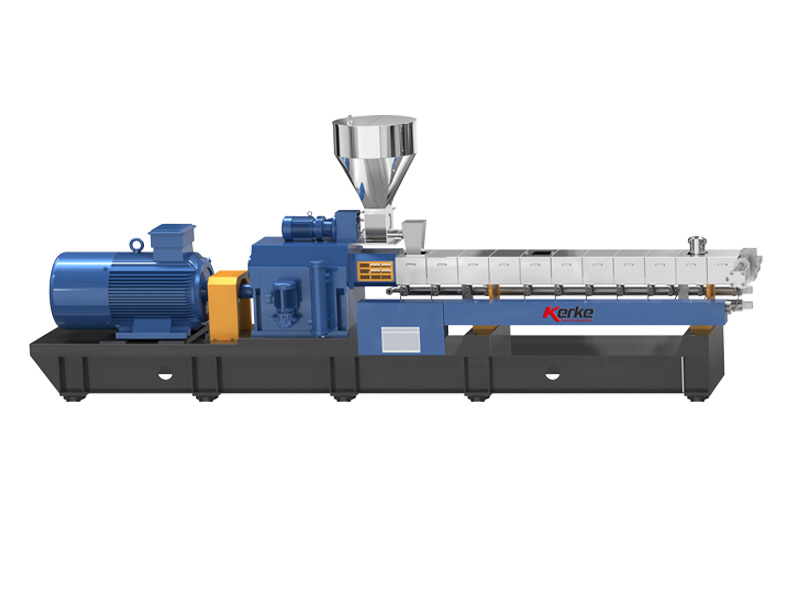
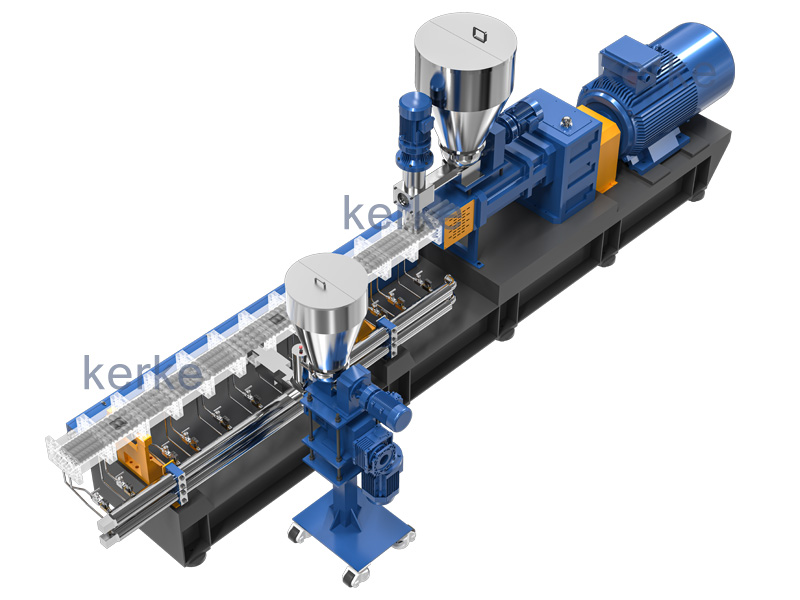
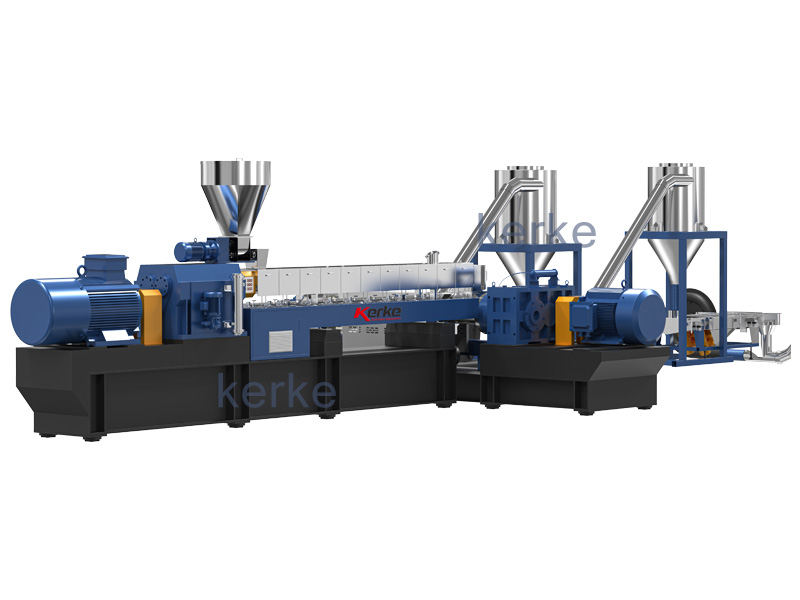
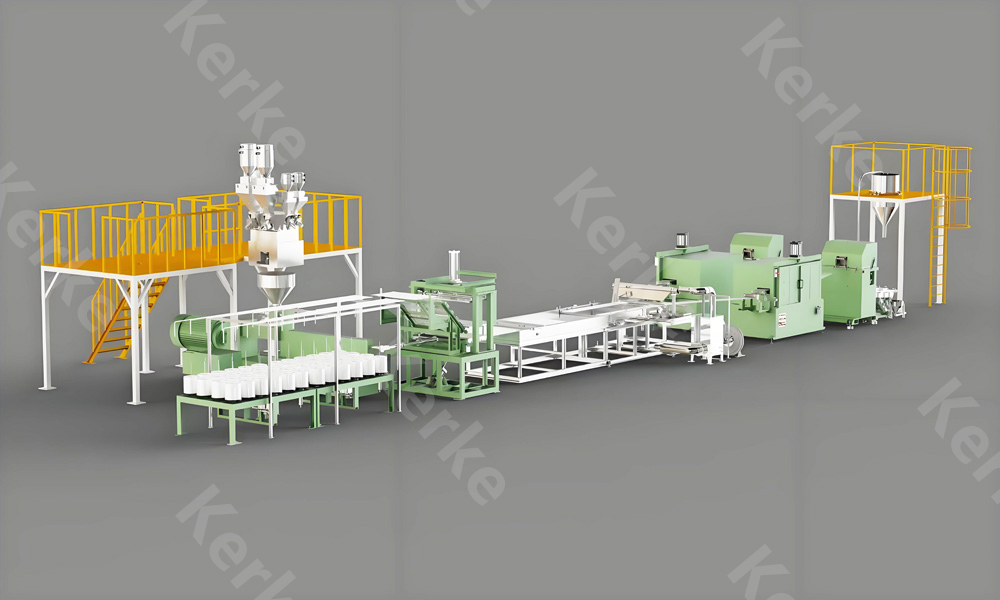
Achieving high dispersion quality in masterbatch extrusion is critical for producing masterbatches with consistent color, uniform additive distribution, and excellent downstream performance. Dispersion quality directly affects product appearance, mechanical properties, processing characteristics, and customer satisfaction. Kerke twin screw extruder provides advanced mixing capabilities designed specifically for achieving superior dispersion quality in masterbatch applications. Understanding dispersion principles, equipment selection, process optimization, and quality control methods enables consistent production of high-quality masterbatches meeting demanding specifications.
Dispersion in masterbatch production involves multiple processes including deagglomeration of pigment particles, distribution of particles throughout carrier polymer, and stabilization of dispersion to prevent reagglomeration. Each process requires specific mixing characteristics and processing conditions. Poor dispersion results in streaks, specks, inconsistent color strength, processing defects, and customer complaints. High dispersion quality ensures uniform color appearance, consistent additive performance, excellent processability, and satisfied customers. Kerke masterbatch extruders incorporate optimized screw designs and process controls specifically engineered for achieving high dispersion quality across various pigment and additive types.
Market demands for high dispersion quality continue increasing across industries including automotive, packaging, consumer goods, and industrial applications. End users require masterbatches delivering consistent color, precise additive performance, and reliable processing characteristics. Achieving these requirements demands rigorous attention to dispersion quality throughout masterbatch production process. Kerke understands these market demands and designs extrusion systems specifically optimized for achieving superior dispersion quality, enabling customers to produce masterbatches meeting highest industry standards.
Understanding Dispersion Fundamentals
Dispersion fundamentals provide essential understanding for achieving high dispersion quality in masterbatch extrusion. Dispersion involves complex interactions between pigments, additives, carrier polymers, and processing conditions.
Pigment and additive characteristics significantly affect dispersion requirements. Pigments vary in particle size, hardness, surface energy, and tendency to agglomerate. Inorganic pigments including titanium dioxide, iron oxides, and carbon black typically require intensive mixing due to strong agglomeration tendencies. Organic pigments may be easier to disperse but may require different processing approaches due to thermal sensitivity. Additives including UV stabilizers, antioxidants, and flame retardants present unique dispersion challenges based on their physical form, particle size, and compatibility with carrier polymer. Understanding material characteristics enables appropriate selection of processing parameters and equipment configuration.
Deagglomeration processes break down pigment agglomerates into primary particles through mechanical energy application. Effective deagglomeration requires sufficient shear energy, appropriate shear rates, and adequate residence time. Insufficient energy fails to break agglomerates completely, while excessive energy may damage pigment particles or degrade polymer. Optimal deagglomeration requires precise control of mixing intensity and thermal conditions. Kerke masterbatch extruders provide precisely controlled mixing through modular screw configurations and optimized mixing zones, achieving effective deagglomeration without damaging sensitive materials.
Distributive mixing ensures uniform distribution of dispersed particles throughout carrier polymer. While deagglomeration breaks agglomerates into primary particles, distributive mixing ensures these particles are evenly distributed throughout batch without local concentrations or voids. Effective distributive mixing requires material exchange across multiple flow paths and material layers. Kerke twin screw extruders achieve excellent distributive mixing through material exchange between screws and multiple mixing zones, ensuring uniform dispersion throughout batch.
Stabilization processes prevent dispersed particles from reagglomerating after deagglomeration. Particle surfaces treated with dispersants or surface modifiers reduce surface energy and prevent particle reagglomeration. Processing conditions including temperature profile and residence time affect stabilization effectiveness. Proper stabilization ensures dispersion quality remains stable during storage and downstream processing. Kerke masterbatch extruders incorporate optimized venting and thermal management supporting effective dispersion stabilization.
Kerke Masterbatch Extruder Design Features
Kerke masterbatch extruders incorporate specialized design features specifically optimized for achieving high dispersion quality across various masterbatch applications. Understanding these features enables proper equipment selection and configuration.
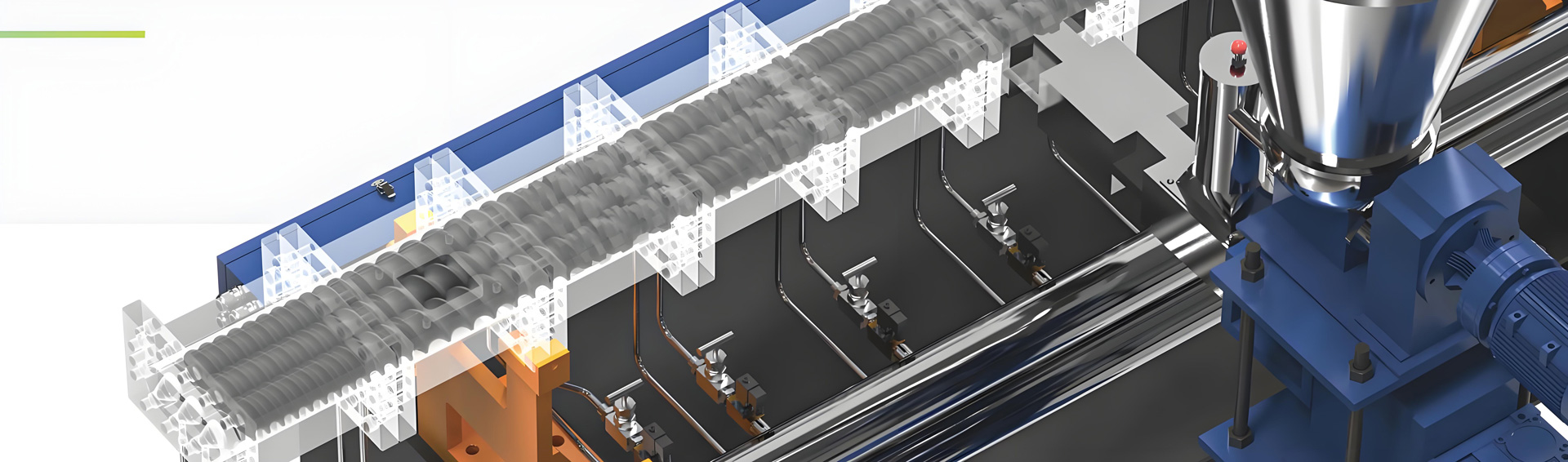
Modular screw configuration provides flexibility for different dispersion requirements. Kerke masterbatch extruders feature modular screw elements enabling customization for specific pigment and additive types. Various kneading block angles provide different dispersive mixing intensities from gentle mixing for sensitive organic pigments to intensive mixing for difficult-to-disperse inorganic pigments. Reverse mixing elements create material backflow enhancing distributive mixing. Special mixing elements including Maddock mixers, pineapple mixers, and other designs provide additional mixing capabilities for challenging applications. Kerke application specialists assist with screw configuration optimization for each specific application.
Twin screw co-rotating design provides excellent dispersive and distributive mixing characteristics. Co-rotating twin screw extruders excel at dispersive mixing due to material passing through narrow gaps between screws, creating high shear rates essential for deagglomeration. The design also provides excellent distributive mixing through material exchange between screws multiple times per revolution. Kerke co-rotating masterbatch extruders feature optimized intermeshing characteristics balancing dispersive and distributive mixing effectiveness while maintaining efficient material conveying.
Length-to-diameter ratios optimized for masterbatch processing ensure sufficient residence time for complete dispersion. Kerke masterbatch extruders offer various length-to-diameter ratios from 30:1 to 40:1 providing appropriate residence time for different dispersion requirements. Longer lengths enable multiple dedicated mixing zones for staged dispersion processes, including initial deagglomeration, intermediate distributive mixing, and final homogenization. Kerke application analysis determines optimal length-to-diameter ratio for each specific application.
Barrel heating and cooling systems provide precise thermal control essential for dispersion quality. Kerke masterbatch extruders feature multi-zone electric heating systems providing uniform heating across barrel length. Advanced cooling systems incorporate both air and water cooling capabilities enabling precise temperature control during processing. Temperature control accuracy better than plus or minus1 degree Celsius ensures consistent processing conditions critical for dispersion quality. Kerke thermal management systems support optimal dispersion across various materials and processing conditions.
Venting capabilities remove volatiles and moisture that can affect dispersion quality. Kerke masterbatch extruders incorporate multiple vent ports positioned along barrel length enabling removal of volatiles at appropriate processing stages. Vacuum venting systems provide effective removal of moisture, solvents, or other volatiles that could interfere with dispersion processes. Venting zone designs prevent material carryover between vent ports and maintain proper pressure profile. Kerke venting systems are particularly effective for materials requiring volatile removal during compounding.
Process Parameter Optimization
Process parameter optimization is essential for achieving high dispersion quality consistently. Multiple processing parameters interact and affect dispersion quality, requiring systematic optimization.
Temperature profile optimization significantly affects dispersion quality. Different material zones require specific temperatures for optimal dispersion. Feed zone temperature must be high enough to initiate polymer melting but not so high as to cause premature melting causing feeding problems. Melting zone temperature must ensure complete polymer melting without degradation. Mixing zones should maintain temperature high enough to maintain polymer fluidity but not so high as to cause degradation of sensitive pigments or additives. Kerke temperature profile analysis determines optimal temperature settings for each material and application.
Screw speed optimization balances mixing intensity and residence time. Higher screw speeds increase mixing intensity and shear energy, potentially improving deagglomeration. However, higher speeds also reduce residence time and increase shear heating, potentially causing material degradation or inadequate dispersion time. Lower speeds provide longer residence time but may provide insufficient mixing intensity for effective deagglomeration. Optimal screw speed balances these factors for each specific material and dispersion requirement. Kerke application analysis determines optimal screw speed range for each application.
Feed rate optimization affects residence time and dispersion quality. Higher feed rates reduce residence time and increase throughput but may reduce dispersion quality if residence time becomes insufficient. Lower feed rates increase residence time and dispersion quality but reduce productivity. Optimal feed rate balances productivity requirements with dispersion quality requirements. Kerke process optimization considers both dispersion quality requirements and productivity targets to determine optimal feed rates.
Back pressure optimization affects mixing intensity and material compression. Appropriate back pressure enhances dispersive mixing by forcing material through narrow gaps creating higher shear rates. Excessive back pressure may cause overcompression, material degradation, or excessive wear on equipment. Insufficient back pressure may reduce mixing intensity and dispersion quality. Kerke process analysis determines optimal back pressure settings for each specific material and application.
Material Selection and Preparation
Material selection and preparation significantly affect dispersion quality and processing performance. Proper material management ensures optimal processing conditions and consistent dispersion quality.
Carrier polymer selection affects dispersion quality and processing characteristics. Different carrier polymers provide different compatibilities with pigments and additives. Polyolefins including polyethylene and polypropylene are common carriers for many masterbatch applications. PVC carriers require specific processing conditions due to thermal sensitivity. Engineering polymer carriers including ABS, polycarbonate, and nylon require careful temperature control and specialized processing approaches. Kerke application analysis considers carrier polymer characteristics to recommend optimal processing conditions and equipment configuration.
Pigment and additive selection should consider dispersion requirements. Different pigments vary significantly in dispersion difficulty. Inorganic pigments including titanium dioxide typically require intensive mixing. Organic pigments may be easier to disperse but may require temperature control to prevent degradation. Carbon black requires specific processing approaches due to strong agglomeration tendency and potential for affecting polymer properties. Kerke dispersion expertise enables optimized processing conditions for various pigment and additive types.
Masterbatch concentration affects processing requirements. Higher pigment and additive concentrations require more intensive mixing due to greater particle interaction and increased viscosity. Typical masterbatch concentrations range from 10 to 50 percent pigment or additive loading. Processing requirements increase significantly at higher loadings. Kerke extruder configurations can be optimized for various concentration levels, with screw configurations adjusted for specific loading requirements.
Pigment and additive preparation ensures consistent feeding and dispersion. Proper drying removes moisture that could interfere with dispersion. Pre-mixing of multiple components ensures uniform feed composition. Material handling prevents contamination and maintains material quality. Kerke provides recommendations for material preparation procedures ensuring optimal processing conditions.
Advanced Mixing Technologies
Advanced mixing technologies enhance dispersion quality beyond conventional approaches. Kerke incorporates cutting-edge mixing technologies to achieve superior dispersion in challenging applications.
Advanced screw geometries provide enhanced mixing capabilities. Specialized mixing elements create more complex flow patterns improving both dispersive and distributive mixing. Dispersive mixing elements create high shear zones specifically designed for deagglomeration. Distributive mixing elements enhance material exchange across different flow layers ensuring uniform distribution. Kerke advanced screw geometries provide optimized mixing for various material types and dispersion requirements.
Process intensification technologies increase mixing effectiveness without increasing residence time. High shear mixing zones create intense local mixing conditions breaking agglomerates more effectively. Multiple mixing zones in series provide staged dispersion processes optimizing each dispersion step. Kerke process intensification technologies achieve superior dispersion quality while maintaining throughput and efficiency.
Dynamic mixing elements provide adjustable mixing during operation. Elements with adjustable configurations enable on-the-fly optimization of mixing intensity based on processing conditions and material variations. Dynamic capabilities compensate for material batch-to-batch variations ensuring consistent dispersion quality. Kerke advanced mixing technologies incorporate some dynamic capabilities enhancing process flexibility.
Nano-dispersion technologies enable dispersion of nanoparticles and nanomaterials. Nanoparticles present unique dispersion challenges due to extremely strong agglomeration tendencies and high surface energy. Specialized processing approaches including high shear mixing, surface treatments, and processing aids enable effective nano-dispersion. Kerke nano-dispersion expertise enables processing of advanced materials requiring nano-scale dispersion.
Quality Control and Testing
Quality control and testing ensure consistent dispersion quality and identify processing issues before they affect customers. Systematic quality control procedures are essential for maintaining high dispersion quality standards.
Visual inspection provides initial assessment of dispersion quality. Visual inspection can identify gross dispersion problems including streaks, specks, color variation, or surface defects. Trained operators inspect samples from regular production runs identifying potential problems. Visual inspection is subjective but provides quick initial assessment. Kerke provides visual inspection guidelines and training for operator assessment of dispersion quality.
Microscopic analysis provides detailed evaluation of particle dispersion. Microscopy enables observation of individual pigment particles and agglomerates providing quantitative assessment of dispersion quality. Optical microscopy with appropriate magnification provides sufficient resolution for most applications. Electron microscopy provides higher resolution for nano-scale dispersion evaluation. Microscopic analysis provides objective quantitative data for dispersion quality assessment. Kerke provides microscopic analysis capabilities and interpretation guidelines.
Color measurement provides objective assessment of color consistency and strength. Spectrophotometers measure color parameters including L value, a value, b value, and delta E values providing quantitative color data. Color strength measurement compares color intensity to standards identifying dispersion effectiveness. Color measurement provides objective data for batch-to-batch consistency assessment. Kerke color measurement guidelines ensure proper measurement techniques and interpretation.
Processing tests evaluate dispersion quality through actual processing. Downstream processing tests evaluate how masterbatch processes in actual application conditions. Melt flow index testing identifies viscosity changes indicating dispersion problems. Extrusion tests identify processing problems including die buildup, melt fracture, or surface defects. Processing tests provide practical assessment of dispersion quality in real-world conditions. Kerke provides processing test methodologies and interpretation guidelines.
Troubleshooting Dispersion Problems
Systematic troubleshooting approach identifies and resolves dispersion problems effectively. Understanding common dispersion problems and their causes enables quick resolution and minimal production disruption.
Streaks and lines indicate insufficient dispersion or pigment accumulation. Streaks running in machine direction typically indicate inadequate distributive mixing causing pigment accumulation along flow paths. Streaks in transverse direction indicate inadequate feed mixing or material bridging. Solutions include adjusting screw configuration, modifying temperature profile, adjusting feed rate, or improving material preparation. Kerke troubleshooting expertise identifies root causes and recommends specific adjustments.
Specks and spots indicate undispersed agglomerates or contamination. Specks with specific pigment colors indicate pigment agglomerates not adequately broken down during processing. Specks with different colors indicate contamination from previous runs, material handling, or equipment. Solutions include increasing mixing intensity, adjusting temperature profile, improving material preparation, or improving cleaning procedures. Kerke troubleshooting identifies specific speck sources and appropriate corrective actions.
Color variation indicates inconsistent dispersion or feed composition. Color variation between batches typically indicates process parameter variations or material batch variations. Color variation within batches typically indicates inadequate distributive mixing or feed variation. Solutions include stabilizing process parameters, implementing process controls, improving material preparation, or adjusting screw configuration. Kerke process control systems help minimize color variation through consistent processing conditions.
Processing problems including high viscosity, die buildup, or melt fracture indicate dispersion issues affecting material properties. Poor dispersion can increase viscosity due to agglomerate interference or reduce viscosity due to particle damage. Processing problems can indicate over-dispersion or under-dispersion depending on specific symptoms. Solutions include adjusting mixing intensity, modifying temperature profile, or selecting more appropriate materials. Kerke troubleshooting identifies specific dispersion-related processing problems and appropriate solutions.
Economic Considerations
Economic factors significantly influence masterbatch production and dispersion quality optimization. Understanding cost trade-offs enables informed decisions balancing quality requirements with production costs.
Equipment investment costs affect total cost structure. Kerke masterbatch extruders typically cost USD 60,000 to USD 350,000 depending on size, configuration, and capabilities. Larger equipment with advanced mixing capabilities and longer length-to-diameter ratios cost more but provide better dispersion quality and higher throughput. Equipment selection should balance initial investment with quality requirements and production targets. Kerke provides economic analysis comparing various equipment options for specific applications.
Operating costs include energy, maintenance, and component replacement. Energy consumption for masterbatch extrusion typically ranges from 0.25 to 0.45 kilowatt hours per kilogram depending on material and processing requirements. For an extruder operating at 500 kilograms per hour with electricity costs of USD 0.20 per kilowatt hour, annual energy costs would be approximately USD 131,400 to USD 236,520. Maintenance costs typically range from 5 to 10 percent of initial investment annually for masterbatch extruders due to more complex designs and additional wear on mixing elements. Component replacement including screw elements and barrel sections represents significant periodic costs.
Quality costs include scrap, rework, and customer returns. Poor dispersion quality causes significant quality costs including off-specification material requiring reprocessing, customer returns, and lost business. High dispersion quality minimizes these quality costs but may require higher processing costs. Optimizing total cost requires balancing quality costs with processing costs. Kerke quality control systems and process expertise help minimize total cost through optimal dispersion quality management.
Value proposition of high dispersion quality includes premium pricing and customer loyalty. Masterbatches with superior dispersion quality can command premium prices due to better performance and consistency. High quality also builds customer loyalty and reduces marketing costs for customer acquisition. Total economic analysis should consider value proposition in addition to direct costs. Kerke helps customers quantify value proposition and justify investment in quality improvement.
Best Practices and Recommendations
Best practices and recommendations based on Kerke experience ensure consistent achievement of high dispersion quality in masterbatch production. Implementing these practices improves quality, reduces problems, and enhances profitability.
Implement systematic quality control procedures for consistent dispersion quality. Regular microscopic analysis of production samples identifies dispersion trends before they cause problems. Color measurement provides objective data for batch-to-batch consistency assessment. Visual inspection by trained operators provides quick initial assessment of potential problems. Comprehensive quality control procedures including all methods ensure comprehensive assessment. Kerke recommends establishing quality control protocols based on specific application requirements.
Establish preventive maintenance procedures ensuring consistent equipment performance. Regular inspection and replacement of worn screw elements prevents performance degradation. Barrel inspection identifies wear patterns affecting dispersion. Drive system maintenance ensures consistent screw speed and mixing intensity. Preventive maintenance minimizes unexpected downtime and maintains consistent dispersion quality. Kerke provides detailed maintenance schedules and recommendations based on equipment type and operating conditions.
Implement process control systems maintaining consistent processing conditions. Automated controls maintain temperature profiles, screw speeds, and feed rates within narrow tolerances ensuring consistent dispersion quality. Real-time monitoring identifies processing variations before they affect product quality. Data logging provides historical records enabling trend analysis and continuous improvement. Kerke process control systems provide advanced capabilities for maintaining consistent processing conditions.
Provide comprehensive operator training ensuring proper operation and troubleshooting capabilities. Training should cover equipment operation, quality assessment, problem identification, and corrective actions. Well-trained operators identify problems early, make appropriate adjustments, and minimize quality issues. Kerke provides comprehensive training programs for operators, maintenance personnel, and quality assurance personnel.
Implement material management procedures ensuring consistent material quality. Proper drying, storage, and handling procedures prevent material degradation and contamination. Material testing before use identifies potential problems before production runs. Material specifications establish quality requirements ensuring consistent incoming material quality. Kerke provides material management recommendations for various material types.
Future Developments and Trends
Future developments in masterbatch dispersion technology continue enhancing capabilities and quality. Understanding emerging trends enables preparation for future opportunities and challenges.
Advanced materials including nanomaterials and functional additives present new dispersion challenges. Nanoparticles, nanofibers, and nano-clays require specialized dispersion approaches due to extremely small particle size and strong agglomeration tendency. Functional additives including conductive materials, flame retardants, and barrier materials present unique dispersion requirements. Kerke continuously develops processing capabilities for advanced materials ensuring customers can process emerging materials requiring advanced dispersion.
Digital technologies enhance dispersion quality control and process optimization. Inline quality monitoring systems provide real-time assessment of dispersion quality enabling immediate process adjustments. Digital twins simulate processing enabling optimization before actual production. Advanced control algorithms optimize process parameters automatically based on quality feedback. Kerke incorporates digital technologies across product lines enabling enhanced control and optimization capabilities.
Sustainability requirements affect material selection and processing approaches. Biodegradable polymers, recycled materials, and bio-based materials present unique dispersion challenges and opportunities. Processing these materials may require modified approaches due to different thermal characteristics and sensitivities. Kerke develops specialized processing capabilities for sustainable materials meeting emerging environmental requirements.
Regulatory changes affect masterbatch formulation and processing requirements. Regulations affecting materials, emissions, and safety continue evolving requiring adaptation of formulations and processing approaches. Kerke monitors regulatory developments and ensures equipment and processing approaches maintain compliance with current and emerging regulations.
Conclusion
Achieving high dispersion quality in masterbatch extrusion requires comprehensive understanding of dispersion principles, proper equipment selection, optimized processing parameters, and systematic quality control. Kerke twin screw extruders provide advanced mixing capabilities specifically designed for achieving superior dispersion quality across various masterbatch applications. Through modular screw configurations, optimized processing zones, advanced mixing technologies, and comprehensive process control, Kerke extruders deliver consistent high-quality dispersion.
Successful masterbatch production requires attention to multiple factors including material selection and preparation, process parameter optimization, equipment configuration, and quality control. Kerke provides comprehensive expertise across all aspects of masterbatch production, from initial material analysis through process optimization and ongoing quality improvement. By leveraging Kerke equipment, expertise, and support services, customers achieve superior dispersion quality meeting demanding industry requirements.
Future developments in materials, digital technologies, sustainability, and regulations continue shaping masterbatch industry requirements. Kerke remains committed to advancing dispersion technology and providing equipment and services enabling customers to meet current and future challenges. By partnering with Kerke, customers access cutting-edge technology, expert application support, and reliable performance ensuring continued success in competitive masterbatch markets.