Introduction
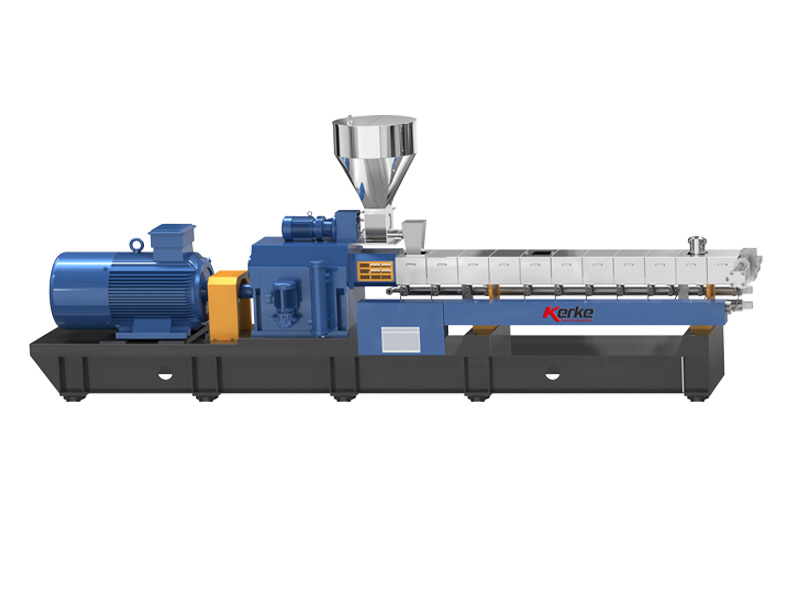
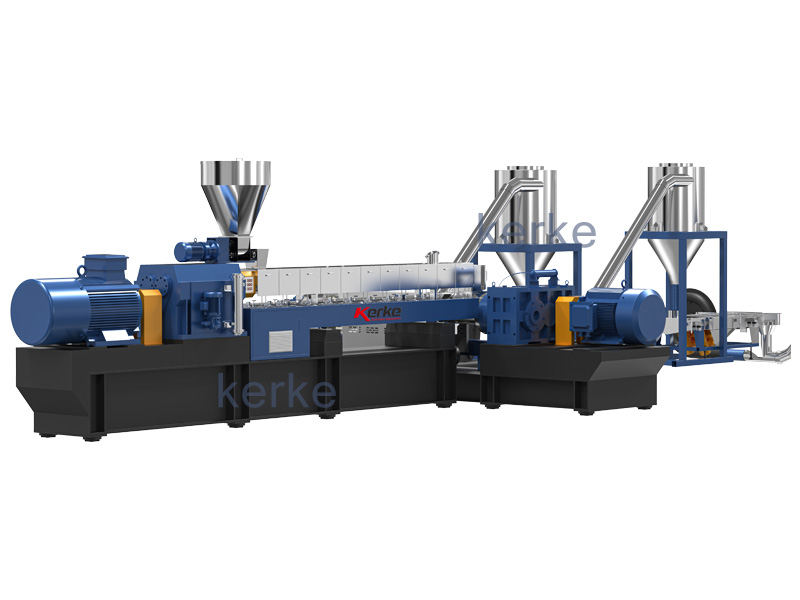
Continuous production capability represents one of the most critical requirements for modern plastic manufacturing operations seeking maximum productivity and efficiency. Twin screw extruders from leading manufacturers like Kerke have evolved specifically to meet the demanding requirements of 24-hour continuous operation while maintaining consistent product quality and minimal downtime. This comprehensive guide examines the engineering principles, design features, and operational strategies that enable twin screw extruders to maintain stable performance through extended production cycles.
The ability to operate continuously for 24 hours per day provides substantial economic advantages through maximized equipment utilization, reduced labor costs per unit, and consistent product quality. However, achieving this level of operational stability requires equipment specifically designed for continuous duty cycles, comprehensive control systems, and sophisticated material handling capabilities. Twin screw extruders, particularly from Kerke’s KTE Series, incorporate advanced engineering features that make them ideally suited for continuous operation across various applications including masterbatch production, compounding, and polymer modification.
This guide explores the technical aspects that contribute to stable continuous operation, including robust mechanical design, advanced thermal management, intelligent control systems, and comprehensive monitoring capabilities. Understanding these factors enables equipment selection decisions that support continuous production goals and maximize return on investment. Additionally, we examine the economic considerations of continuous operation, including cost analyses and productivity benefits that justify the investment in equipment designed for 24-hour operation.
Engineering Design for Continuous Operation
The fundamental engineering design of twin screw extruders provides inherent advantages for continuous operation compared to alternative equipment types. The co-rotating parallel screw configuration, particularly as implemented in Kerke’s KTE Series, creates stable material transport and consistent mixing characteristics that support extended production cycles without degradation in performance or quality.
Robust Mechanical Construction
Mechanical robustness represents the foundation for continuous operation capability. Twin screw extruders designed for 24-hour operation incorporate heavy-duty construction throughout the machine, from the main gearbox and drive systems to the screw and barrel assemblies. The gearbox, which transmits power from the main motor to the rotating screws, represents a critical component that must withstand continuous operation without fatigue or wear-related failures.
Kerke’s KTE Series extruders feature high-precision gearboxes with hardened gear teeth and improved tooth profiles designed for extended service life. The KTE-75D model, for example, incorporates a gearbox rated for 200-315 kW motor power with torque capacity of 2X2100 Nm, providing substantial mechanical reserve for continuous operation under varying load conditions. This gearbox design incorporates specialized bearing arrangements and lubrication systems that maintain performance through extended operating periods.
The main drive system typically uses a large AC motor coupled to the gearbox through a robust coupling system. For continuous operation applications, Kerke recommends variable frequency drives (VFDs) that provide smooth starting, speed control, and energy efficiency. The VFD system reduces mechanical stress during startup by gradually ramping motor speed, and enables precise speed control during operation to maintain optimal processing conditions. The motor for KTE-75D models typically costs approximately $15,000-20,000 as a separate component, representing a significant investment that justifies its selection through improved reliability and energy efficiency.
Advanced Bearing and Lubrication Systems
Bearing systems in twin screw extruders must support substantial radial and axial loads while maintaining precise alignment of rotating components through extended operation periods. The thrust bearing, which handles the axial forces generated by the screw configuration, represents a particularly critical component for continuous operation. Kerke’s KTE Series extruders incorporate high-capacity thrust bearings with specialized lubrication systems designed for continuous duty cycles.
The lubrication system uses a combination of splash lubrication for the gearbox internals and forced lubrication for critical bearing locations. This dual approach ensures adequate lubrication throughout extended operating periods while maintaining appropriate oil temperature through heat exchange systems. The KTE Series features an integrated oil cooling system that maintains gearbox oil temperature within optimal ranges even during 24-hour operation, preventing thermal degradation of lubricants and ensuring consistent bearing lubrication.
Bearing selection considers the specific load characteristics of continuous operation. Thrust bearings are sized with substantial safety margins to accommodate peak loads generated during material transitions and processing variations. Radial bearings are selected with appropriate clearance specifications to accommodate thermal expansion while maintaining precise alignment. These engineering details contribute significantly to extended equipment life and reduced maintenance requirements during continuous operation.
Screw and Barrel Design
The screw and barrel assemblies in twin screw extruders experience continuous wear during operation, requiring careful material selection and design optimization for extended service life. Kerke’s KTE Series extruders utilize high-quality tool steel for screw elements and barrels, with specialized heat treatment to optimize wear resistance while maintaining toughness required for continuous operation.
Screw elements are manufactured from W6Mo5Cr4V2 high-speed steel, a material known for excellent wear resistance and high-temperature properties. The modular design of KTE screws allows individual element replacement as they wear, rather than requiring complete screw replacement. This modular approach reduces maintenance costs during continuous operation, as individual worn elements can be replaced without disrupting the entire screw configuration. Typical screw element replacement costs range from $300-800 per element depending on size and complexity.
Barrel construction incorporates bi-metallic linings that provide wear resistance on the internal surface while maintaining structural integrity of the barrel body. This bi-metallic construction extends barrel life significantly compared to monolithic barrels, reducing replacement frequency during continuous operation. The KTE-75D model, with its 71mm screw diameter, incorporates barrel sections that can be individually replaced if wear occurs, rather than requiring complete barrel replacement. Individual barrel section replacement typically costs $8,000-15,000, compared to $40,000-60,000 for complete barrel replacement.
Thermal Management and Temperature Control
Consistent temperature control represents a critical factor for maintaining stable production quality during 24-hour operation. Twin screw extruders require precise temperature management across multiple zones, from feed section to die, to ensure consistent melting, mixing, and quality. Kerke’s KTE Series extruders incorporate advanced thermal management systems designed specifically for continuous operation.
Multi-Zone Heating Systems
The barrel heating system in twin screw extruders typically consists of multiple independent heating zones, each with its own temperature sensor and control system. KTE Series extruders feature from 6 to 12 heating zones depending on the barrel length and application requirements. Each zone includes resistance heating elements and cooling capabilities, typically through air cooling fans or water cooling jackets depending on the zone and application.
Heating element selection considers the heat requirements of each zone and the duty cycle for continuous operation. Ceramic heating elements are commonly used in KTE extruders for their durability and fast response characteristics. These elements have typical service lives of 3-5 years in continuous operation applications, with replacement costs of $500-1500 per zone depending on size and power rating.
The heating system design incorporates thermal insulation to minimize heat loss and improve energy efficiency during continuous operation. This insulation reduces energy consumption and helps maintain consistent temperature profiles throughout extended operating periods. The KTE Series uses high-temperature insulation materials rated for continuous exposure to barrel temperatures up to 300°C, ensuring long service life.
Precise Temperature Control
Temperature control systems in modern twin screw extruders use PID (Proportional-Integral-Derivative) controllers that provide precise temperature regulation within tight tolerances. For continuous operation applications, these controllers typically maintain temperatures within ±1-2°C of setpoint, ensuring consistent processing conditions throughout extended production runs.
Kerke’s KTE Series extruders feature advanced PLC-based temperature control systems that provide sophisticated control algorithms beyond standard PID control. These systems may include adaptive control features that automatically adjust tuning parameters based on process conditions, feedforward control that anticipates temperature changes before they occur, and multi-variable control that coordinates multiple zones to maintain optimal temperature profiles.
The control system includes comprehensive temperature monitoring and alarm functions that detect abnormal temperature conditions before they cause quality problems or equipment damage. High-temperature alarms, low-temperature alarms, and zone deviation alarms all contribute to stable continuous operation by enabling rapid response to developing conditions. The KTE-75D typically includes a PLC control system costing $12,000-18,000, representing a significant investment justified by its contribution to stable continuous operation.
Cooling Systems
Barrel cooling capability represents a critical aspect of thermal management during continuous operation, particularly when processing materials that generate substantial shear heat or when precise temperature control is required. Twin screw extruders typically incorporate both air cooling and liquid cooling capabilities for different zones and applications.
Air cooling fans provide rapid response for zones requiring quick temperature adjustments. These fans are typically controlled through the PLC system to provide variable cooling intensity based on actual temperature conditions. KTE Series extruders use high-capacity fans sized for continuous duty operation, with typical service lives of 5-8 years before bearing replacement is required.
Liquid cooling systems, typically using water or water-glycol mixtures, provide higher cooling capacity for zones with substantial heat generation requirements. These systems include circulation pumps, heat exchangers, and flow control valves integrated with the PLC control system. For continuous operation, the liquid cooling system typically operates continuously, removing heat generated during processing and maintaining stable temperature conditions. A complete liquid cooling system for a KTE-75D extruder costs approximately $15,000-25,000, including pumps, heat exchangers, and control systems.
Material Handling and Feeding Systems
Consistent material feeding represents a critical factor for stable continuous production. Irregular feeding conditions cause production instability, quality variations, and equipment stress that can disrupt 24-hour operation. Twin screw extruders designed for continuous operation incorporate sophisticated material handling and feeding systems that maintain consistent material supply throughout extended production cycles.
Main Feeder Systems
The main feeder on a twin screw extruder delivers the primary polymer carrier material to the extruder at a controlled rate. For continuous operation, gravimetric (weight-based) feeders are preferred over volumetric feeders due to their higher accuracy and ability to compensate for material density variations. Kerke’s KTE Series extruders typically include gravimetric feeders for the main material stream as standard equipment for continuous operation applications.
Gravimetric feeders incorporate load cells that measure the actual mass of material being delivered, providing direct measurement and control of feed rate. These feeders typically achieve accuracy of ±0.25-0.5% of setpoint, ensuring consistent material delivery throughout extended operation. The feeders are designed for continuous duty operation with robust construction and sealed bearing systems that prevent contamination from plastic dust or processing materials.
Cost of gravimetric feeding systems varies based on capacity and features. A mid-range gravimetric feeder for a KTE-75D extruder, with capacity up to 1000 kg/h, typically costs $18,000-28,000 including hoppers, weighing systems, and integration with the extruder control system. This investment provides significant benefits for continuous operation through improved consistency and reduced material waste.
Side Feeder Systems
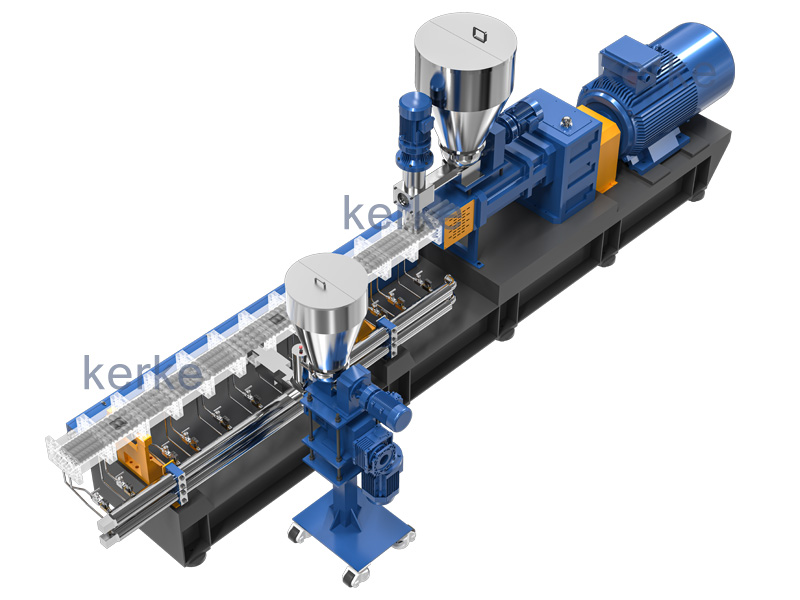
Many applications, particularly masterbatch production, require introduction of additives or fillers downstream from the main feed point. These materials are typically introduced through side feeders located at specific positions along the barrel. For continuous operation, these side feeders must provide consistent, reliable material addition without disrupting the primary process stability.
Kerke’s KTE Series extruders incorporate multiple side feeding positions, typically 2-4 depending on the barrel length and application requirements. Each side feeding port includes a dedicated feeder, often a gravimetric feeder for precise additive dosing. The side feeders are integrated with the main PLC control system to coordinate material additions and maintain the overall material balance.
Side feeder systems typically cost less than main feeders due to their smaller capacity requirements. A side feeder for a KTE-75D extruder, with capacity up to 300 kg/h, typically costs $12,000-18,000. The total investment in feeding systems for a continuous operation extruder can reach $50,000-80,000 including main feeder, multiple side feeders, and integration costs.
Material Preparation and Conditioning
Consistent material properties represent a prerequisite for stable continuous operation. Raw material variations in moisture content, temperature, or particle size distribution can cause processing instability that disrupts 24-hour production. Kerke’s KTE Series extruders include optional material preparation and conditioning systems that standardize material properties before they enter the extruder.
Drying systems are particularly important for hygroscopic materials such as polycarbonate, nylon, and PET. These systems remove moisture that would otherwise cause processing problems and quality defects during continuous operation. Dehumidifying dryers provide precise moisture control, typically achieving moisture content below 0.02% for demanding applications. A dehumidifying dryer with capacity matching a KTE-75D extruder (1000 kg/h) typically costs $25,000-40,000 depending on the specific material requirements and control specifications.
Material preheating systems can also contribute to stable continuous operation by reducing the thermal load on the extruder. Preheating materials to near processing temperature reduces energy consumption and improves processing consistency. Preheating systems typically use hot air circulation with precise temperature control, and cost approximately $8,000-15,000 depending on capacity and control features.
Control Systems and Automation
Advanced control systems and automation represent critical enabling technologies for stable 24-hour continuous operation. These systems monitor process conditions, maintain optimal operating parameters, detect developing problems before they cause disruptions, and enable automated operation with minimal operator intervention. Kerke’s KTE Series extruders incorporate sophisticated control systems specifically designed for continuous operation applications.
PLC Control Architecture
The foundation of the control system is a programmable logic controller (PLC) that coordinates all machine functions and maintains optimal processing conditions. KTE Series extruders use industrial PLCs from leading manufacturers including Siemens, Allen-Bradley, or Mitsubishi, providing reliability and performance suited for continuous operation. These PLCs feature redundant power supplies and hot standby capabilities for critical applications, ensuring control system availability throughout 24-hour operation.
The PLC architecture typically includes distributed I/O systems that reduce wiring complexity and improve reliability. Remote I/O racks located near the processing equipment reduce cable runs and improve signal integrity. The control network uses industrial communication protocols such as PROFINET or EtherNet/IP for reliable data transmission throughout the system.
PLC software development represents a significant investment, with typical costs of $15,000-25,000 for the control logic and operator interface programming for a KTE-75D extruder. This software development investment provides substantial value for continuous operation through improved stability, reduced operator requirements, and automated problem detection.
HMI and Operator Interfaces
Human-machine interface (HMI) systems provide operators with real-time process information and control capabilities. For continuous operation applications, HMIs must present comprehensive process information in an easily understood format that enables rapid problem identification and response. Kerke’s KTE Series extruders feature large touch-screen HMIs (typically 12-15 inches) with intuitive graphical interfaces designed for 24-hour operation.
The HMI displays real-time process data including temperatures, pressures, motor loads, and production rates. Historical trending functions show process data over time, enabling identification of developing trends and conditions. Alarm displays highlight abnormal conditions requiring operator attention, with detailed information and recommended corrective actions.
For continuous operation applications, remote monitoring capabilities are increasingly important. Modern KTE extruders can be integrated with plant-wide monitoring systems, enabling remote observation of process conditions and remote intervention when necessary. These capabilities reduce operator requirements and enable rapid response to problems regardless of operator location.
Automated Control Functions
Advanced control systems incorporate automated functions that maintain optimal process conditions without requiring constant operator attention. These functions contribute significantly to stable continuous operation by automatically adjusting process parameters in response to changing conditions.
Automatic start-up procedures enable consistent machine start-up regardless of operator experience. These procedures systematically bring the machine to operating conditions, ramping temperatures, starting motors at appropriate times, and establishing material flow. The PLC controls the entire start-up sequence, ensuring reproducible results and reducing start-up time compared to manual operation.
Automatic speed control functions adjust screw speed to maintain consistent production rates despite variations in material properties or ambient conditions. The control system monitors actual production output and automatically adjusts screw speed to maintain target production rates. This capability compensates for material batch variations and maintains consistent output quality throughout extended operation.
Automatic quality control functions use in-line sensors to monitor product properties and adjust process parameters accordingly. For masterbatch production, color sensors can monitor color consistency and automatically adjust additive feed rates or processing conditions to maintain target specifications. These capabilities reduce scrap rates and improve quality consistency during continuous operation.
Monitoring and Predictive Maintenance
Comprehensive monitoring and predictive maintenance capabilities represent critical enablers for reliable 24-hour continuous operation. These systems monitor equipment condition, detect developing problems before they cause failures, and enable scheduled maintenance during planned production breaks rather than unexpected failures disrupting continuous operation. Kerke’s KTE Series extruders incorporate advanced monitoring capabilities designed for continuous operation.
Vibration and Condition Monitoring
Vibration monitoring systems detect developing mechanical problems in rotating components including motors, gearboxes, and pumps. These systems use accelerometers to measure vibration characteristics, with advanced algorithms analyzing vibration patterns to identify specific problems such as bearing wear, gear mesh issues, or imbalance. For continuous operation, vibration monitoring enables early detection of developing problems before they cause failures that disrupt production.
Kerke’s KTE Series extruders can be equipped with comprehensive vibration monitoring systems covering all major rotating components. The system typically includes sensors on the main motor, gearbox, and pump drives, with the PLC continuously monitoring vibration levels and trends. Vibration monitoring systems typically add $8,000-15,000 to equipment cost, but provide substantial value by preventing unexpected failures and enabling scheduled maintenance.
Temperature and Load Monitoring
Motor and drive system monitoring detects developing electrical and mechanical problems before they cause failures. The PLC continuously monitors motor current, voltage, and power factor, comparing these values to expected baselines for current operating conditions. Deviations from expected values indicate developing problems that require attention before they cause equipment failures.
The drive system includes thermal monitoring of motor windings and drive components, detecting overheating conditions before damage occurs. Bearings in the gearbox and drive system include temperature sensors that detect elevated bearing temperatures indicating lubrication problems or wear. These monitoring capabilities enable proactive maintenance interventions during planned shutdowns rather than unexpected failures disrupting continuous operation.
Load monitoring on the main drive provides insight into processing conditions and equipment performance. The PLC continuously monitors motor torque and compares it to expected values for current processing conditions. Significant deviations from expected torque indicate processing problems or developing equipment issues that require investigation.
Lubrication Monitoring
Lubrication condition represents a critical factor for continuous operation reliability. Kerke’s KTE Series extruders include lubrication monitoring systems that track lubricant levels, temperatures, and conditions. The gearbox includes oil level sensors that detect low lubricant levels before they cause inadequate lubrication. Temperature sensors monitor oil temperature, with high-temperature alarms indicating developing lubrication problems.
Advanced lubrication monitoring may include oil condition sensors that detect contamination or degradation of the lubricant. These sensors can detect water contamination, particle contamination, or thermal degradation of the oil, indicating the need for oil analysis or replacement before lubrication failure causes equipment damage.
Automatic lubrication systems reduce maintenance requirements and ensure consistent lubrication throughout extended operation. These systems deliver precise quantities of lubricant to critical bearing locations at appropriate intervals, eliminating the need for manual lubrication and ensuring consistent lubrication quality. Automatic lubrication systems typically add $5,000-10,000 to equipment cost but provide significant value for continuous operation applications.
Economic Analysis of Continuous Operation
Continuous 24-hour operation provides substantial economic benefits that justify the investment in equipment designed for such operation. However, the economic analysis must consider not only the increased production capacity but also the capital investment, operating costs, and maintenance requirements associated with continuous operation. This section provides economic analysis specific to Kerke’s KTE Series twin screw extruders in continuous operation applications.
Equipment Investment
Initial equipment investment represents a significant consideration when evaluating continuous operation. Twin screw extruders designed for 24-hour continuous operation incorporate advanced features that increase equipment cost compared to machines designed for intermittent operation. However, the additional investment provides substantial economic benefits through improved reliability, reduced downtime, and increased production capacity.
Kerke’s KTE-75D twin screw extruder represents a typical mid-range machine suitable for continuous operation. The base machine price, including extruder, drive system, and basic control system, typically ranges from $80,000 to $120,000 depending on specific configuration and options. This base investment includes the mechanical systems required for continuous operation, including robust gearbox, heavy-duty barrel and screw construction, and temperature control systems.
Additional investments for continuous operation include advanced control systems, monitoring capabilities, and auxiliary equipment. A complete installation for 24-hour operation might include the following additional investments: Gravimetric feeder systems: $25,000-40,000 Material drying system: $20,000-35,000 Liquid cooling system: $15,000-25,000 Advanced monitoring systems: $10,000-20,000 Installation and integration: $15,000-25,000 Total additional investment: $85,000-145,000
The total investment for a KTE-75D continuous operation installation typically ranges from $165,000 to $265,000 depending on specific application requirements and configuration. This investment provides the foundation for reliable 24-hour operation with maximum production capacity and minimum downtime.
Operating Cost Analysis
Operating costs for continuous operation differ significantly from intermittent operation due to extended running hours and different energy consumption patterns. Energy costs represent the largest operating expense for twin screw extruders, with electric power consumption ranging from 150-300 kW depending on machine size and processing conditions. For a KTE-75D operating 24 hours per day, annual energy consumption would be approximately 1,300-2,600 MWh, corresponding to annual energy costs of $130,000-260,000 at typical industrial electricity rates of $0.10/kWh.
Material costs vary based on the specific application and production rates. For masterbatch production at 500-1000 kg/h, annual material consumption at 24-hour operation would be 4,380-8,760 tons. At typical masterbatch material costs of $1.50-3.00/kg, annual material costs would range from $6.6 million to $26.3 million depending on production rate and material type.
Labor costs for continuous operation can be significantly lower per unit of production compared to intermittent operation due to the need for fewer equipment operators per unit of output. However, continuous operation may require additional maintenance personnel to maintain equipment reliability. A typical continuous operation installation might require 2-3 operators per shift plus 1-2 maintenance technicians, compared to 4-5 operators per shift for intermittent operation with equivalent production capacity.
Productivity Benefits
Continuous operation provides substantial productivity benefits through maximized equipment utilization. While intermittent operation might achieve 50-65% equipment utilization due to start-up and shutdown procedures, maintenance downtime, and operator breaks, continuous operation can achieve 85-95% utilization through improved efficiency and reduced downtime.
For a KTE-75D extruder with maximum capacity of 1000 kg/h, annual production capacity varies significantly between intermittent and continuous operation: Intermittent operation (50% utilization, 8 hours/day, 5 days/week): 600 tons/year Continuous operation (85% utilization, 24 hours/day, 7 days/week): 4,440 tons/year This represents a 7.4x increase in annual production capacity from the same equipment, justifying the additional investment in equipment designed for continuous operation.
The improved productivity reduces unit costs through better allocation of fixed costs over larger production volumes. Fixed costs including equipment depreciation, facility overhead, and administrative costs are spread across larger production volumes in continuous operation, reducing these costs per unit of output. Additionally, continuous operation typically improves material efficiency and reduces scrap rates, providing additional cost savings.
Return on Investment Analysis
Return on investment for continuous operation depends on the specific application, product value, and market conditions. However, for most applications, the investment in equipment and systems designed for 24-hour operation provides attractive returns within 2-4 years based on productivity improvements and cost savings.
A simplified ROI analysis for a KTE-75D installation illustrates the potential benefits: Initial investment: $200,000 Annual production increase: 3,840 tons (from 600 to 4,440 tons) Per ton profit improvement: $150 (reduced fixed costs, improved efficiency) Annual profit increase: $576,000 Payback period: 0.35 years (approximately 4 months) While this simplified analysis ignores many factors, it demonstrates the substantial economic benefits possible from continuous operation. Actual ROI varies based on specific application details, but for most manufacturers, the investment in equipment designed for continuous operation provides excellent returns within reasonable timeframes.
Maintenance Strategies for Continuous Operation
Effective maintenance strategies represent a critical factor for successful 24-hour continuous operation. Traditional breakdown maintenance approaches are inadequate for continuous operation, where unplanned downtime is extremely costly. Instead, predictive and preventive maintenance strategies must be implemented to maintain equipment reliability and maximize uptime. Kerke’s KTE Series extruders are designed to support these advanced maintenance strategies.
Preventive Maintenance Programs
Preventive maintenance programs involve scheduled maintenance activities performed at predetermined intervals based on equipment manufacturer recommendations and operating experience. These programs aim to prevent failures by replacing components before they fail and performing maintenance activities to maintain equipment in optimal condition.
For a KTE-75D operating continuously, a typical preventive maintenance program might include the following activities: Daily: Visual inspection, lubrication checks, monitoring review Weekly: Temperature sensor calibration, safety system checks Monthly: Bearing lubrication, vibration readings, alignment checks Quarterly: Oil analysis, detailed vibration analysis, belt inspection Annually: Major inspection, gearbox service, motor testing
Preventive maintenance costs represent a significant operating expense for continuous operation. A comprehensive preventive maintenance program for a KTE-75D typically costs $15,000-25,000 annually, including labor for maintenance personnel and replacement parts. However, this investment provides substantial value by preventing failures that would cause costly downtime during continuous operation.
Predictive Maintenance Technologies
Predictive maintenance uses advanced monitoring technologies to detect developing problems before they cause failures, enabling maintenance interventions at optimal times. Rather than replacing components on a fixed schedule, predictive maintenance replaces components based on actual condition, extending service life of components while preventing failures.
Kerke’s KTE Series extruders incorporate various predictive maintenance technologies as standard or optional equipment. Vibration monitoring detects developing bearing and gear problems. Oil analysis detects lubricant contamination and degradation. Thermal monitoring detects overheating conditions in motors, bearings, and electrical components. Motor current analysis detects developing mechanical and electrical problems in drive systems.
Implementing comprehensive predictive maintenance typically adds $20,000-40,000 to initial equipment cost for sensors, monitoring systems, and integration with the control system. However, this investment provides substantial returns through reduced maintenance costs, extended component service life, and prevention of unexpected failures that disrupt continuous operation.
Spare Parts Management
Effective spare parts management represents a critical aspect of continuous operation maintenance strategy. Having the right spare parts available when needed minimizes downtime when maintenance is required. However, carrying excessive inventory ties up capital and may result in obsolete parts that never get used.
For a KTE-75D operating continuously, recommended spare parts inventory includes critical components with long lead times or high risk of failure. This inventory might include: Complete spare screw assembly: $25,000-35,000 Spare barrel section: $8,000-15,000 each Thrust bearing assembly: $12,000-18,000 Heating elements (multiple zones): $500-1500 each Motor and drive components: $20,000-30,000 Control system components: $10,000-15,000
Total investment in spare parts inventory for continuous operation typically ranges from $100,000 to $150,000 for a KTE-75D installation. This investment represents significant capital but provides assurance that critical components are available when needed, minimizing downtime during maintenance activities or unexpected failures.
Safety Considerations for Continuous Operation
Safety considerations become particularly important during 24-hour continuous operation due to extended operating periods and potential operator fatigue. Twin screw extruders incorporate comprehensive safety systems to protect operators and equipment during continuous operation. Kerke’s KTE Series extruders meet international safety standards including CE marking and ISO requirements.
Machine Guarding Systems
Comprehensive machine guarding protects operators from rotating components, hot surfaces, and other hazards. KTE Series extruders include interlocked guards that prevent access to hazardous areas during operation. The control system monitors guard status and prevents machine operation unless all guards are properly closed and secured.
Thermal guards protect operators from hot surfaces including barrels, die heaters, and downstream equipment. These guards incorporate insulation to reduce surface temperature to safe levels while allowing necessary access for operation and maintenance. The guarding system is designed for continuous operation with robust construction that withstands the rigors of 24-hour operation.
Sound insulation enclosures reduce operator exposure to high noise levels generated during extruder operation. These enclosures provide access doors for operation and maintenance while maintaining sound attenuation. For continuous operation applications where operators are present for extended periods, sound insulation contributes to workplace safety and comfort.
Emergency Stop Systems
Emergency stop systems provide rapid shutdown capabilities in emergency situations. KTE Series extruders include multiple emergency stop stations located at strategic positions around the machine. Pressing any emergency stop button immediately stops machine motion and disables machine restart until the emergency stop condition is cleared through proper procedures.
The emergency stop system is integrated with the machine control system and follows safety standards for functional safety. The system includes redundant circuits and monitoring to ensure reliable operation when needed. For continuous operation, regular testing of emergency stop systems is essential to verify proper functionality.
Additionally, the control system includes programmable safety functions that detect abnormal conditions and automatically initiate safe shutdown procedures. These functions include high-temperature shutdown, over-current protection, and pressure relief systems that protect equipment and operators from hazardous conditions.
Operator Safety Training
Comprehensive operator training represents a critical safety component for continuous operation. Operators must understand machine hazards, proper operating procedures, emergency response procedures, and maintenance requirements. Training should cover normal operation, abnormal condition identification and response, and proper shutdown and start-up procedures.
Kerke provides comprehensive training programs for KTE Series extruders, including classroom instruction and hands-on machine operation. Training costs are typically included in the machine price or available for an additional fee of $2,000-5,000 per operator depending on the depth and duration of training.
For continuous operation, operator fatigue management represents an important safety consideration. Proper shift scheduling, adequate breaks, and ergonomic workstation design help maintain operator alertness and safety during extended work periods. Monitoring systems may include operator alertness monitoring that identifies potentially fatigued operators and suggests appropriate intervention.
Conclusion
Continuous 24-hour operation capability represents a significant competitive advantage in plastic manufacturing, enabling maximized productivity, reduced unit costs, and consistent product quality. Twin screw extruders from Kerke, particularly the KTE Series, incorporate the engineering features, control systems, and support capabilities that make them ideally suited for continuous operation across various applications.
Successful continuous operation requires investment in equipment specifically designed for extended operation cycles. The additional capital cost for robust mechanical design, advanced control systems, and comprehensive monitoring capabilities provides substantial returns through improved reliability, reduced downtime, and increased production capacity. Economic analysis demonstrates that the investment in continuous operation capability typically pays for itself within 2-4 years through productivity improvements.
However, continuous operation also requires comprehensive support strategies including preventive maintenance programs, spare parts management, and operator training to maximize equipment availability and safety. The monitoring and predictive maintenance capabilities of modern twin screw extruders enable these support strategies by providing early warning of developing problems and enabling proactive maintenance interventions.
As plastic manufacturing continues to evolve toward higher efficiency and productivity, continuous operation capabilities will become increasingly important. Kerke’s KTE Series twin screw extruders provide the foundation for successful continuous operation, with comprehensive features and support that enable manufacturers to achieve their productivity goals while maintaining product quality and operational safety.