Introduction to Masterbatch Production Quality Requirements
Masterbatch production represents a critical sector in the plastics industry, demanding exceptional quality control and precise processing capabilities to achieve superior pellet characteristics. Quality masterbatch pellets must exhibit uniform color dispersion, consistent additive distribution, precise size and shape, and reliable thermal stability to ensure optimal performance in final plastic products. The production of high-quality masterbatch requires advanced equipment capable of intensive mixing, precise temperature control, and consistent processing parameters. Twin screw extruders have emerged as the preferred technology for masterbatch production due to their superior mixing capabilities, consistent processing characteristics, and ability to handle complex formulations with multiple components.
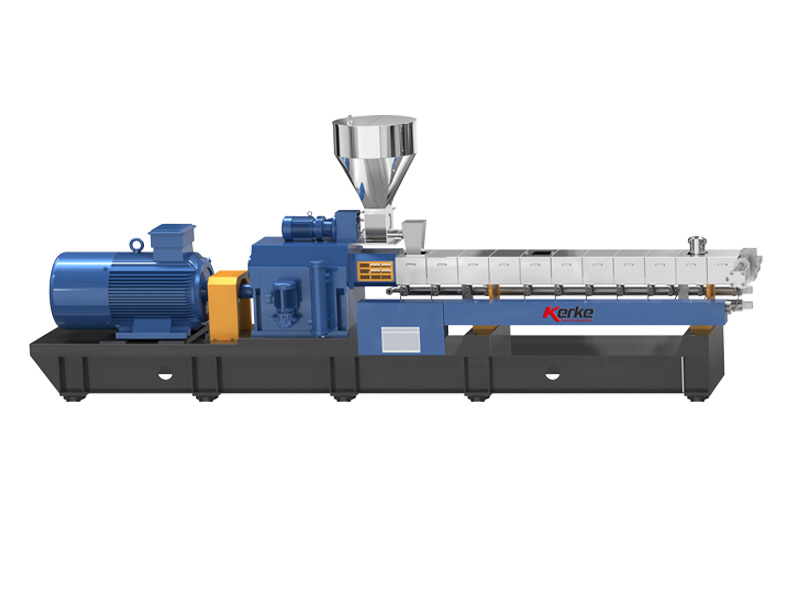
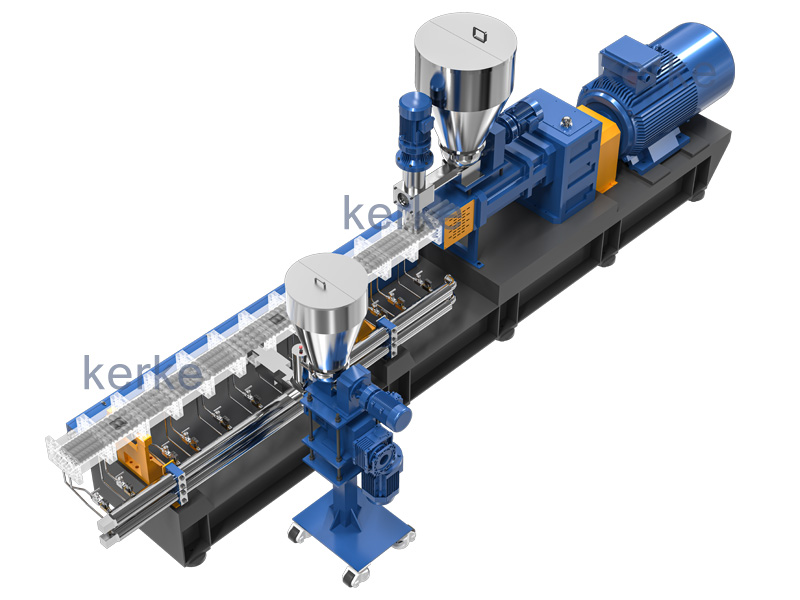
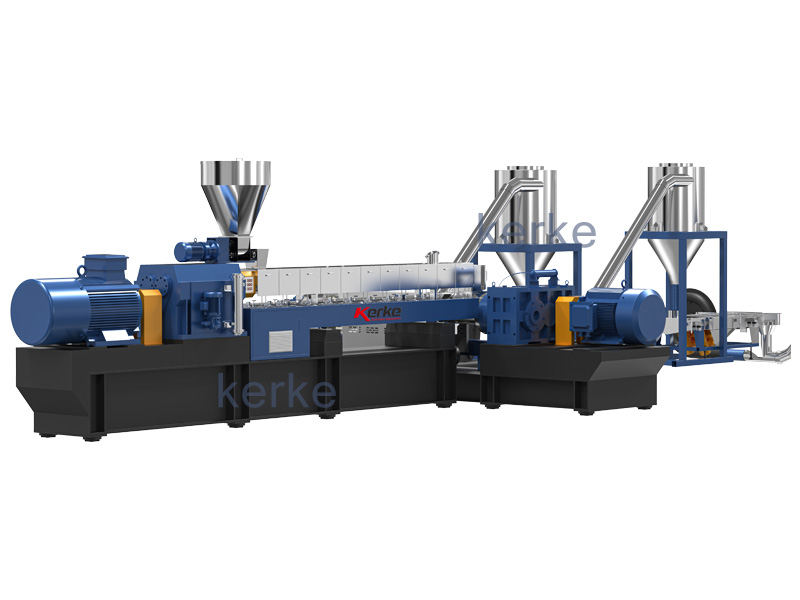
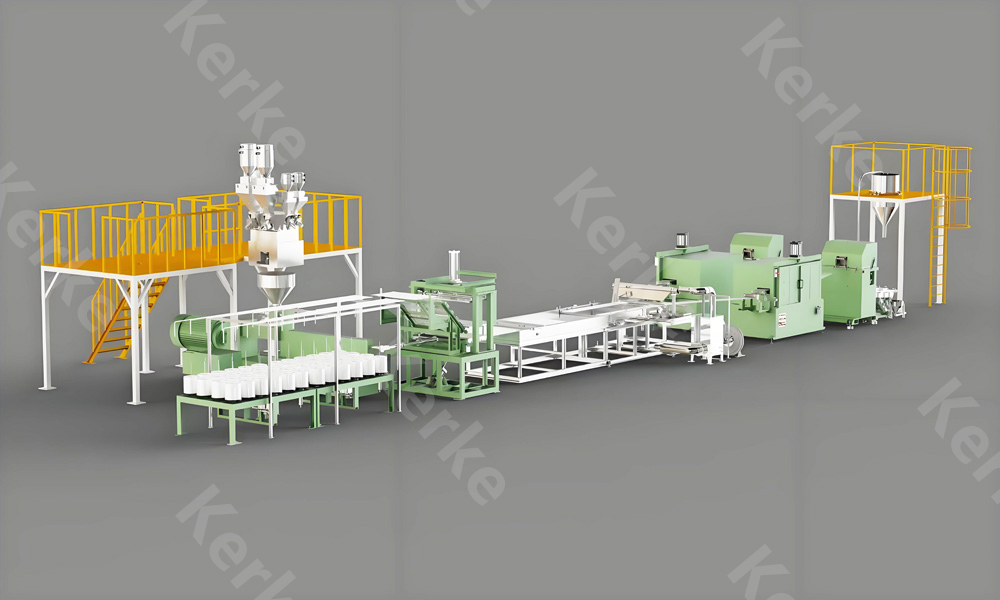
Nanjing Kerke Extrusion Equipment Co., Ltd has established itself as a leading manufacturer of twin screw extruders specifically engineered for masterbatch production applications. With over 13 years of dedicated focus on masterbatch processing technology, Kerke has developed the KTE series of co-rotating twin screw extruders that embody the most advanced features for achieving exceptional pellet quality. The company equipment serves masterbatch producers in over 100 countries, demonstrating global acceptance of Kerke technology for quality-critical applications. The comprehensive product range from laboratory KTE-20 units to high-capacity KTE-95D production machines enables manufacturers to select appropriate equipment for specific quality requirements and production scales.
Understanding Pellet Quality Criteria in Masterbatch Production
Achieving superior pellet quality requires comprehensive understanding of multiple quality criteria and how processing parameters influence final product characteristics. Masterbatch pellet quality encompasses multiple dimensions including dispersion quality, color consistency, size uniformity, thermal stability, and flow characteristics. Each quality criterion requires specific processing capabilities and careful parameter optimization to achieve consistent results.
Dispersion Quality and Uniformity
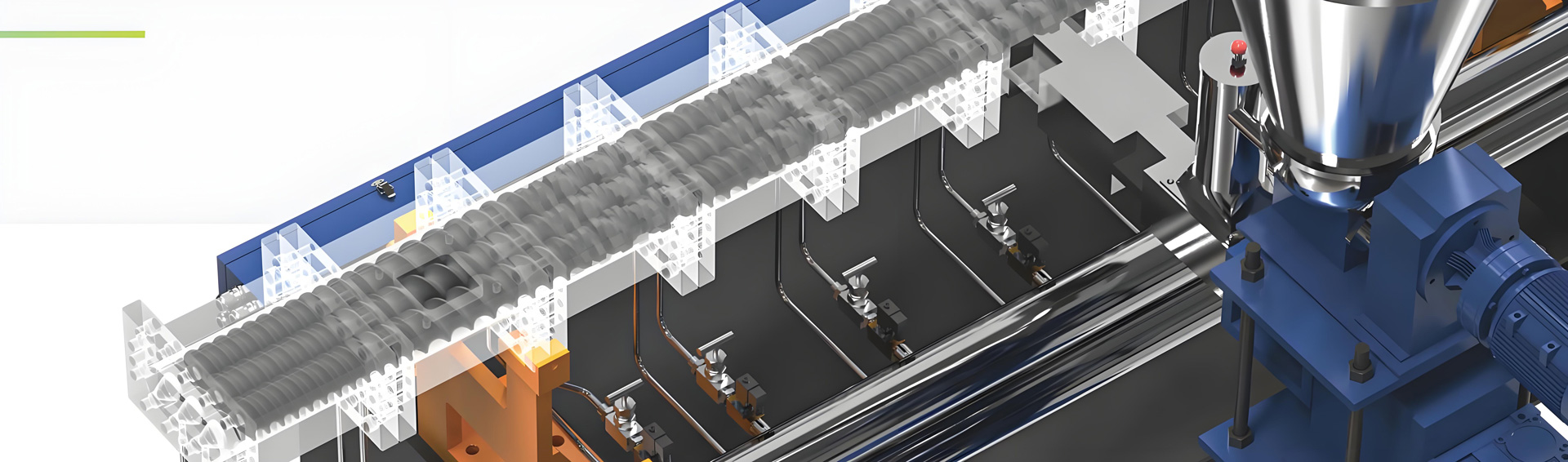
Dispersion quality represents the most critical quality criterion for masterbatch pellets, directly determining color strength, additive effectiveness, and final product performance. Superior dispersion ensures uniform distribution of pigments, fillers, and additives throughout the carrier polymer matrix without agglomeration or particle clustering. Twin screw extruders achieve exceptional dispersion quality through intensive mixing action combining distributive mixing for uniform component distribution and dispersive mixing for breaking down agglomerates. The intermeshing screw design creates multiple high-intensity mixing zones that apply sufficient shear energy to break down pigment agglomerates while preventing particle damage or degradation. Kerke KTE series screw configurations can be optimized for specific dispersion requirements, with different kneading block arrangements and shear zone designs available to address particular pigment and filler characteristics.
Color Consistency and Reproducibility
Color consistency represents essential quality requirement for color masterbatch production, demanding precise control over pigment distribution and processing conditions. Inconsistent color across production batches creates customer complaints, product returns, and reprocessing expenses that significantly impact profitability. Twin screw extruders provide superior color consistency through stable material transport, consistent thermal profiles, and repeatable mixing energy input. The self-cleaning screw design prevents color carryover between batches, enabling fast color changes without cross-contamination. Kerke KTE series extruders with PLC control systems demonstrate exceptional color consistency, maintaining color specifications within tight tolerances across extended production runs. The combination of precise temperature control, consistent screw speed, and repeatable feeding ensures uniform color strength and shade accuracy batch after batch.
Pellet Size and Shape Uniformity
Pellet size and shape uniformity significantly influence handling characteristics, feeding performance, and final product quality in downstream processing. Inconsistent pellet dimensions cause feeding problems in injection molding machines and extrusion equipment, leading to processing issues and product defects. Twin screw extruders provide the consistent melt quality and pressure required for uniform pellet formation through die cutting systems. The stable melt quality provided by twin screw technology ensures consistent die flow and uniform cutting performance. Kerke KTE series extruders integrate seamlessly with various pelletizing systems including strand pelletizers, water ring pelletizers, and underwater pelletizing systems, enabling selection of appropriate pelletizing technology for specific quality requirements and production scales. The consistent melt quality and pressure stability provided by KTE series extruders enable production of uniform pellets with precise dimensional control.
Thermal Stability and Degradation Prevention
Thermal stability represents critical quality requirement for masterbatch, particularly for heat-sensitive pigments and additives. Excessive thermal history can cause pigment degradation, additive decomposition, or polymer chain scission, compromising masterbatch performance and causing color shifts or additive effectiveness loss. Twin screw extruders provide superior thermal management through multiple independent temperature zones, precise temperature control, and adjustable processing parameters. The modular barrel design enables establishment of appropriate thermal profiles for specific material requirements while maintaining the mixing advantages of twin screw technology. Kerke KTE series extruders feature temperature control systems with multiple zones enabling precise management of thermal profiles for sensitive materials, with temperature accuracy of plus or minus 1 degree Celsius ensuring minimal thermal degradation during processing.
Twin Screw Extruder Mixing Technology for Quality Enhancement
The mixing technology inherent in twin screw extruders provides fundamental advantages for achieving superior masterbatch pellet quality. The combination of distributive and dispersive mixing capabilities, adjustable shear intensity, and positive material transport creates ideal conditions for producing high-quality masterbatch pellets with consistent characteristics.
Distributive Mixing Mechanisms
Distributive mixing in twin screw extruders occurs through complex material flow patterns created by the intermeshing screw geometry and rotation. As material progresses through the barrel, it experiences multiple divisions, recombinations, and reorientations that systematically distribute components throughout the melt. The computer-aided designed screw assembly, featuring kneading blocks with excellent self-cleaning function and good interchangeability, enables precise control over distributive mixing intensity. Kerke KTE series screw configurations can be optimized through appropriate and reasonable combination of elements to achieve specific distributive mixing requirements for different masterbatch formulations. The intensive distributive mixing ensures uniform pigment distribution throughout the carrier resin, eliminating color striations or localized concentration variations that compromise final product quality.
Dispersive Mixing Technology
Dispersive mixing in twin screw extruders addresses the critical requirement of breaking down pigment agglomerates into individual particles for maximum color strength and uniformity. The intermeshing screw design creates localized high-shear zones that apply sufficient energy to break apart pigment agglomerates while the positive displacement action prevents particle damage from excessive shear. This balance between sufficient dispersion energy and gentle particle handling enables production of masterbatches with exceptional color strength, optimal pigment dispersion, and consistent color development. Kerke KTE series screw configurations incorporate specialized kneading block arrangements with varying stagger angles and widths to optimize dispersive mixing for different pigment types and particle sizes. The result is masterbatch with uniform color development, maximum pigment efficiency, and consistent performance across production runs.
Self-Cleaning and Material Transport
The self-wiping characteristic of twin screw extruders represents a significant advantage for masterbatch production quality. As the intermeshing screws rotate, each screw continuously cleans the mating screw surface, preventing material buildup and stagnation that could lead to degradation or contamination. This self-cleaning action enables fast and efficient color changes, reduces cleaning time between product changes, and minimizes cross-contamination risks. The excellent self-cleaning function of Kerke KTE series screw assemblies significantly reduces downtime during product transitions while ensuring consistent product quality without color carryover. The positive displacement action of co-rotating screws provides stable material transport without the risk of bridging or stalling, ensuring consistent feed to die systems and uniform pellet formation.
Adjustable Mixing Intensity
The modular screw design of twin screw extruders enables adjustable mixing intensity to optimize processing for specific masterbatch formulations. Different applications require different levels of shear and mixing energy depending on pigment characteristics, additive requirements, and quality specifications. Kerke KTE series screw configurations can be customized with various kneading block combinations, mixing elements, and shear zone configurations to achieve appropriate mixing intensity for specific applications. This flexibility enables optimization for diverse masterbatch types including color masterbatches, filler masterbatches, additive masterbatches, and functional masterbatches. The ability to adjust mixing intensity without changing equipment enables manufacturers to produce multiple masterbatch types on the same extruder platform, reducing capital investment requirements while maintaining quality flexibility.
Screw Configuration Optimization for Masterbatch Quality
Screw configuration optimization represents one of the most critical factors for achieving superior masterbatch pellet quality. The arrangement and specification of screw elements directly influence dispersion quality, color consistency, and overall pellet characteristics. Proper screw configuration tailored to specific masterbatch requirements provides foundation for quality production.
Feeding Zone Configuration
The feeding zone configuration must accommodate masterbatch formulations with effective material intake and transport. Masterbatch formulations often include multiple components including carrier resin, pigments, additives, and processing aids, requiring effective component handling and initial mixing. Kerke screw configurations for masterbatch production typically feature feeding zones designed to handle multiple feed streams while initiating melt formation. Conical feeding zone designs provide progressive compression that ensures reliable material intake while beginning the melting process. For color masterbatch production, separate feeding of carrier resin and pigments through multi-feeding systems enables optimal dispersion control while preventing pigment agglomeration during feeding. The feeding zone length typically represents 8-12 L/D for masterbatch applications, providing sufficient length for material compression and melt initiation before entering intensive mixing zones.
Mixing Zone Design
Mixing zone configuration determines dispersion quality and color consistency for masterbatch production. Kerke offers specialized screw configurations optimized for different masterbatch types and quality requirements. For color masterbatches requiring intense dispersion of fine pigment particles, configurations featuring multiple kneading block sections with alternating stagger angles (30, 60, and 90 degrees) provide enhanced dispersion capability. For filler masterbatches with high mineral content, configurations incorporating special mixing elements including齿轮 mixing elements provide maximum dispersion performance while maintaining appropriate residence time. The mixing zone length and intensity depend on masterbatch type and quality requirements, with high-quality color masterbatches typically requiring 15-25 L/D mixing zone length for complete pigment dispersion and uniform color development.
Vent Zone Implementation
Vent zone design becomes increasingly important for masterbatch production due to moisture content in pigments and potential volatile components in additives. Multiple vent zones with appropriate vacuum capability enable removal of undesirable components that could cause pellet defects or processing problems. Kerke screw configurations for masterbatch typically incorporate one or more vent zones positioned after mixing zones to remove entrapped air, moisture, and volatile components. The vent zone operates under vacuum to effectively remove moisture from pigments and additives that could cause porosity or surface defects in final pellets. Proper vent zone design prevents pellet defects including porosity, surface imperfections, and internal voids that compromise masterbatch quality and downstream processing performance.
Pumping and Metering Zone
The pumping zone design must provide adequate pressure development for die operation while maintaining melt temperature and quality consistency. Masterbatch formulations require stable melt pressure to ensure consistent die flow and uniform pellet formation. Kerke screw configurations for masterbatch production typically feature metering screw elements with progressively reducing flight depth to build pressure gradually while maintaining melt homogeneity. The pumping zone length typically represents 6-10 L/D for masterbatch applications, providing sufficient length for pressure development and final melt homogenization before extrusion and pelletizing. The stable melt pressure provided by optimized pumping zones ensures consistent pellet size and shape uniformity across production runs.
Temperature Control and Thermal Management for Quality
Precise temperature control and thermal management represent essential requirements for achieving superior masterbatch pellet quality. Different masterbatch types require specific thermal profiles to optimize processing while preventing pigment degradation or additive decomposition. Twin screw extruders provide the temperature control capabilities necessary for quality-critical masterbatch production.
Temperature Profile Optimization
Temperature profile optimization requires understanding thermal requirements of specific masterbatch formulations and processing objectives. Carrier polymers require appropriate thermal profiles for melting and flow, while pigments and additives may have specific temperature limitations to prevent degradation. Kerke KTE series extruders feature modular barrel design with multiple independent heating zones enabling precise thermal profile management. For color masterbatch production, temperature profiles typically establish gradually increasing temperatures through feeding and mixing zones to ensure complete melting and optimal pigment wetting, followed by controlled temperature through pumping zones to prevent thermal degradation. The ability to independently control multiple temperature zones enables optimization for diverse masterbatch types while maintaining consistent thermal conditions across production runs.
Heating and Cooling Balance
The balance between heating and cooling capacity becomes critical for masterbatch production, particularly for formulations with significant shear heating from mixing elements. The high shear rates in twin screw extruders generate considerable frictional heat that must be dissipated through cooling systems to maintain appropriate processing temperatures. Kerke KTE series extruders feature heating and cooling systems with adequate capacity for both heating and cooling requirements typical of masterbatch processing. Each temperature zone incorporates both electric heating elements and cooling capability to handle both heating requirements during startup and cooling requirements during operation. The balanced heating and cooling capability enables precise temperature control despite varying shear heating from different screw configurations and masterbatch formulations.
Temperature Control Accuracy
Temperature control accuracy directly influences masterbatch quality, particularly for color masterbatches and heat-sensitive formulations. Temperature variations cause inconsistent melt viscosity, varying pigment wetting, and potential thermal degradation of sensitive components. Kerke KTE series extruders feature advanced temperature control systems with PID controllers and precise thermocouple placement achieving temperature accuracy of plus or minus 1 degree Celsius. This high level of temperature control accuracy ensures consistent processing conditions across production runs, resulting in uniform color development, consistent additive performance, and reproducible pellet quality. The precise temperature control capability is particularly valuable for high-quality color masterbatches where even small temperature variations can cause perceptible color differences.
Thermal Stability Features
Thermal stability features in twin screw extruders contribute to consistent masterbatch quality by minimizing temperature fluctuations during operation. Factors including screw speed variations, feed rate changes, and ambient temperature variations can cause temperature fluctuations that compromise quality. Kerke KTE series extruders incorporate thermal stability features including well-insulated barrel sections, efficient heating and cooling systems, and responsive control algorithms that minimize temperature fluctuations. The robust thermal design ensures stable processing conditions even during production disturbances, maintaining masterbatch quality during feed interruptions, speed changes, and other operating variations. The thermal stability features provide insurance against quality issues caused by temperature fluctuations during production.
Feeding System Integration for Quality Control
Accurate feeding and component ratio control represent fundamental requirements for consistent masterbatch quality. Inaccurate component ratios cause variations in color strength, additive effectiveness, and overall masterbatch performance. Twin screw extruders integrated with advanced feeding systems provide the precision necessary for quality-critical masterbatch production.
Gravimetric Feeding Systems
Gravimetric feeding systems provide essential accuracy for masterbatch production by directly measuring and controlling mass flow rates of individual components. Volumetric feeding systems cannot account for density variations in pigments and additives, leading to component ratio variations and quality inconsistencies. Kerke offers comprehensive gravimetric feeding system integration with PLC-based control managing multiple feeders simultaneously. For color masterbatch production, separate gravimetric feeders for carrier resin and pigments enable precise control over pigment content, ensuring consistent color strength across production runs. Gravimetric feeding accuracy of plus or minus 0.5% for each individual component provides the precision necessary for high-quality masterbatch production.
Multi-Component Feeding Capabilities
Masterbatch formulations often include multiple components requiring individual feeding control to achieve proper component ratios. Multi-component feeding systems enable independent control of carrier resin, pigments, additives, processing aids, and other formulation components. Kerke feeding system integration supports multiple feeders with centralized control enabling precise management of complex formulations. For color masterbatch production, separate feeding of carrier resin and multiple pigments enables optimal color control while allowing flexible color formulation changes. Multi-feeding systems also enable masterbatch production with multiple additive types requiring individual feed rate control to achieve precise additive content.
Feeding System Automation
Automated feeding systems enhance quality consistency while reducing operator requirements and potential human error. Kerke feeding system integration features automated recipe management, automatic component ratio adjustment, and feeding system interlocks that ensure proper feeding conditions. Automated feeding systems enable production schedule automation with automatic feeding rate adjustments for production start-up and shutdown. The automated systems reduce quality variations caused by operator errors, feeding mistakes, and inconsistent manual procedures. The automation also enables data logging and traceability of feeding parameters, supporting quality documentation and process improvement initiatives.
Feeding System Monitoring
Comprehensive feeding system monitoring provides essential quality assurance by detecting feeding deviations that could compromise masterbatch quality. Kerke feeding system integration includes real-time monitoring of feed rates, material levels in hoppers, and feeder status. Advanced monitoring capabilities include feed rate deviation alarms, material shortage warnings, and feeding system performance tracking. The monitoring systems provide early detection of feeding problems before quality issues occur, enabling proactive correction and prevention of off-spec production. Feeding system monitoring data supports continuous process improvement by identifying feeding system variations that affect quality.
Pelletizing System Selection for Quality Enhancement
Pelletizing system selection significantly influences final pellet quality, affecting pellet size uniformity, shape consistency, and surface characteristics. Different pelletizing technologies provide distinct advantages for specific masterbatch types and quality requirements. Integration of appropriate pelletizing systems with twin screw extruders enables optimization for quality objectives.
Strand Pelletizing Systems
Strand pelletizing systems represent traditional technology for masterbatch production, involving extrusion of polymer strands through a strand die followed by strand cooling and pellet cutting. Strand pelletizing provides advantages of simplicity, versatility, and ability to handle diverse material types. Kerke KTE series extruders integrate seamlessly with strand pelletizing systems, providing stable melt quality for consistent strand formation. Strand pelletizing typically produces cylindrical pellets with length-to-diameter ratios of approximately 2:1 to 3:1. The simplicity of strand pelletizing systems makes them cost-effective options for many masterbatch applications while providing adequate pellet quality for most uses. However, strand pelletizing may produce pellets with less dimensional consistency compared to other technologies, particularly for materials with varying melt viscosity.
Water Ring Pelletizing Systems
Water ring pelletizing systems provide improved pellet quality through die-face cutting in a water ring environment. Polymer melt extrudes through a die face into a rotating water ring where rotating knives cut pellets directly from the melt. Water ring pelletizing produces spherical pellets with superior dimensional consistency compared to strand pelletizing. Kerke KTE series extruders integrate with water ring pelletizing systems for applications requiring spherical pellets with precise dimensions. Water ring pelletizing provides excellent pellet quality with uniform size and shape, improving feeding characteristics in downstream processing. The system is particularly suitable for color masterbatches and other applications where pellet appearance and consistency are important.
Underwater Pelletizing Systems
Underwater pelletizing systems provide the highest level of pellet quality through die-face cutting in a water-filled cutting chamber. Polymer melt extrudes through a multi-hole die into water, where rotating knives cut pellets immediately upon exiting the die. Underwater pelletizing produces highly spherical pellets with exceptional dimensional consistency and smooth surfaces. Kerke KTE series extruders integrate with underwater pelletizing systems for premium quality masterbatch production. Underwater pelletizing provides superior pellet quality with uniform size distribution, excellent surface finish, and consistent shape. The system is particularly suitable for high-quality color masterbatches and specialty masterbatches where pellet quality significantly influences market acceptance. However, underwater pelletizing systems represent higher capital investment compared to other technologies, typically costing $150,000-300,000 depending on capacity and features.
Quality Testing and Process Control Methods
Comprehensive quality testing and process control methods ensure consistent masterbatch pellet quality while enabling continuous process improvement. Implementing appropriate testing procedures and control systems provides confidence in product quality while supporting market competitiveness through consistent performance.
Color Quality Testing Methods
Color quality testing represents essential requirement for color masterbatch production to ensure consistent color strength and shade accuracy. Spectrophotometric analysis provides quantitative color measurement with high accuracy and reproducibility, enabling color specification definition and conformance verification. Colorimeter measurements provide rapid color assessment for production control, enabling real-time color monitoring during production. Kerke twin screw extruder systems can integrate with color quality testing systems for automated color monitoring and control. Color difference measurements between production samples and reference standards typically target Delta E values below 1.0 for high-quality color masterbatches, ensuring consistent color appearance across production batches and meeting customer requirements.
Dispersion Quality Assessment
Dispersion quality assessment provides critical evaluation of pigment and filler distribution throughout masterbatch pellets. Microscopic examination using optical or electron microscopy reveals agglomerate presence and dispersion uniformity, providing qualitative assessment of mixing effectiveness. Image analysis software enables quantitative measurement of agglomerate size distribution and dispersion uniformity, providing numerical assessment of dispersion quality. Dispersion quality assessment typically targets agglomerate sizes below 10-20 microns for high-quality color masterbatches, ensuring maximum color strength and uniform color development. Kerke KTE series screw configurations optimized for dispersive mixing enable achievement of these dispersion quality requirements consistently.
Pellet Size and Shape Measurement
Pellet size and shape measurement ensures pellet uniformity for consistent feeding and processing performance. Sieve analysis provides measurement of pellet size distribution, enabling quantification of dimensional consistency. Dimensional measurement using calipers or optical measurement systems provides precise determination of pellet dimensions including length, diameter, and shape factors. Pellet size consistency typically targets variation below 5% for length and diameter to ensure consistent feeding performance. Kerke KTE series extruders with stable melt pressure and quality enable production of pellets meeting these dimensional consistency requirements consistently across production runs.
Thermal Analysis Testing
Thermal analysis testing provides assessment of thermal stability and processing characteristics of masterbatch pellets. Differential Scanning Calorimetry (DSC) analysis measures melting behavior and thermal transitions, providing insight into thermal history and potential degradation. Thermogravimetric Analysis (TGA) measures weight loss as function of temperature, assessing thermal stability and volatile content. Melt Flow Index (MFI) testing provides assessment of melt viscosity and processing characteristics. Kerke KTE series extruders with precise temperature control enable production of masterbatch with consistent thermal properties and minimal thermal degradation. Thermal analysis testing confirms that masterbatch meets thermal stability requirements for downstream processing applications.
Cost Analysis and Quality Optimization Economics
Quality optimization in masterbatch production requires appropriate investment in equipment and technology, but provides compelling economic returns through improved market positioning, reduced quality issues, and customer satisfaction. Understanding the economics of quality optimization enables informed investment decisions.
Equipment Investment for Quality
Equipment investment for quality-critical masterbatch production varies based on production requirements and quality specifications. Kerke KTE series twin screw extruders provide appropriate technology for quality masterbatch production with investment levels ranging from laboratory scale to production capacity. Laboratory models including KTE-20 represent investment of $18,000-25,000, providing cost-effective quality development capability. Medium capacity production models including KTE-50B require $220,000-280,000 investment, offering appropriate capacity for quality-conscious production. High capacity production models including KTE-75D require $350,000-420,000 investment, providing maximum productivity for quality-critical applications. Specialized options including advanced feeding systems, underwater pelletizing, and enhanced control capabilities add $50,000-150,000 to base equipment cost depending on selected features. The investment in quality-focused equipment provides competitive advantages through superior product quality and market differentiation.
Quality-Related Cost Benefits
Quality improvements provide significant cost benefits through reduced quality issues, customer complaints, and material waste. Superior pellet quality reduces reprocessing requirements, typically saving 2-5% of production costs through reduced off-spec material. Consistent color quality eliminates color-related customer returns, potentially saving $10,000-50,000 annually depending on production volume and market conditions. Enhanced dispersion quality improves pigment efficiency, potentially reducing pigment usage by 5-10% while maintaining color strength, providing material cost savings of $20,000-100,000 annually depending on formulation costs. Pellet uniformity improvements reduce feeding problems in downstream processing, increasing customer satisfaction and reducing technical support costs. The cumulative quality-related cost benefits typically exceed equipment investment within 2-3 years for quality-focused production operations.
Market Positioning Benefits
Quality enhancements enable superior market positioning through premium product positioning and customer loyalty. High-quality masterbatch commands premium pricing typically 5-15% above standard products, providing additional gross margin of $0.05-0.15 per kilogram. For production volumes of 500,000 kg annually, premium pricing provides additional gross profit of $25,000-75,000. Quality-focused positioning also enables entry into demanding market segments including automotive, medical, and electronics applications that require premium quality standards. Access to these premium markets provides additional business opportunities and revenue growth potential. The market positioning benefits provide strategic value beyond direct cost savings, supporting long-term business growth and profitability.
Return on Quality Investment
Return on quality investment analysis demonstrates compelling economic justification for quality-enhancing investments. A KTE-50B investment of $220,000-280,000 with advanced feeding and quality control options totaling $300,000-350,000 providing quality improvements reducing reprocessing by 3% and enabling 10% premium pricing achieves annual savings and additional gross profit of approximately $40,000-60,000. Based on these benefits, payback period ranges from 5-8 years, with quality benefits continuing throughout equipment lifetime. More importantly, quality improvements support business growth and market expansion opportunities that provide returns exceeding initial investment many times over. Quality investment should be viewed as strategic business investment rather than cost center, providing long-term competitive advantages.
Case Studies and Quality Improvement Examples
Real-world application examples provide valuable insights into quality improvement implementation and benefits. Kerke equipment serves diverse masterbatch production applications with proven performance in quality-critical markets.
High-Quality Color Masterbatch Production
A leading color masterbatch manufacturer implemented a Kerke KTE-65D extruder with advanced gravimetric feeding system and underwater pelletizing for production of premium color masterbatches for automotive applications. The application demanded exceptional color consistency, dispersion quality, and pellet uniformity for critical automotive interior components. The selected equipment featured high torque D series configuration with 40:1 L/D ratio, advanced screw configuration optimized for pigment dispersion, and comprehensive quality control systems including spectrophotometric color monitoring. The system achieved Delta E values below 0.5 compared to reference standards, exceeding automotive industry requirements. Dispersion quality assessment showed agglomerate sizes consistently below 10 microns. Pellet size uniformity achieved variation below 3% for length and diameter. Investment of $400,000 provided premium market positioning with pricing 12% above market average. The system has maintained consistent quality performance over 4 years, supporting company growth in demanding automotive market segment.
White Masterbatch Quality Optimization
A white masterbatch producer upgraded existing single screw extruders to Kerke KTE-50B twin screw extruders for improved dispersion quality and pellet uniformity. The production challenges included achieving consistent whiteness levels, eliminating titanium dioxide agglomerates, and improving pellet consistency for better feeding performance. The selected equipment featured standard torque B series configuration with 36:1 L/D ratio and specialized screw configuration for titanium dioxide dispersion. The upgrade achieved whiteness consistency improvement of 50% reduction in whiteness variation across production runs. Titanium dioxide dispersion showed elimination of agglomerates above 20 microns compared to frequent 50-100 micron agglomerates with previous equipment. Pellet consistency improvements reduced customer feeding complaints by 80%. Investment of $250,000 achieved payback in 3 years through quality improvements, reduced reprocessing, and enhanced customer satisfaction. The upgrade also enabled entry into higher-margin markets requiring superior white masterbatch quality.
Additive Masterbatch Production Enhancement
An additive masterbatch manufacturer implemented Kerke KTE-36B extruders for production of complex additive masterbatches containing multiple functional additives. The production challenges included achieving uniform distribution of multiple additives with varying characteristics, preventing additive degradation during processing, and maintaining consistent additive concentration. The selected equipment featured standard torque B series configuration with 32:1 L/D ratio and optimized screw configuration for multi-additive dispersion. The system achieved uniform additive distribution across production runs with concentration variation below 2% for all additives. Temperature optimization enabled processing without additive degradation, maintaining additive effectiveness consistent with fresh materials. Production consistency enabled reduction of testing requirements from every batch to every fifth batch, saving testing costs and enabling faster turnaround. Investment of $180,000 provided rapid payback in 18 months through production efficiency improvements and quality consistency benefits.
Maintenance and Quality Sustainability
Maintenance practices and equipment sustainability significantly impact long-term quality consistency. Proper maintenance ensures that quality capabilities provided by twin screw extruders are maintained throughout equipment lifetime, supporting ongoing quality excellence and customer satisfaction.
Screw and Barrel Maintenance
Screw and barrel condition directly influences mixing performance and dispersion quality, making regular maintenance essential for quality consistency. For masterbatch production, typical screw wear of 0.01-0.02 mm per 1000 operating hours gradually reduces mixing effectiveness and dispersion quality. Kerke KTE series extruders feature quality materials providing extended service life, with typical screw and barrel service life of 6,000-8,000 hours for standard applications. Regular inspection programs monitoring screw wear enable planned replacement before quality degradation occurs. Replacement costs for worn screws and barrels typically range from $30,000-60,000 depending on size, representing 10-20% of initial equipment cost. Planned replacement scheduling prevents unexpected quality issues while maximizing component service life and cost efficiency.
Control System Calibration
Control system calibration ensures that processing parameters maintain accuracy for consistent quality. Temperature sensors require periodic calibration to maintain accuracy of plus or minus 1 degree Celsius necessary for quality-critical applications. Feed rate sensors require calibration to maintain gravimetric feeding accuracy of plus or minus 0.5% for precise component ratio control. Screw speed sensors require calibration to ensure consistent mixing energy input across production runs. Kerke recommends annual calibration of critical control system sensors, with calibration costs typically $5,000-10,000 per year depending on system complexity. Regular calibration ensures that quality capabilities built into equipment are maintained throughout equipment lifetime, supporting consistent quality production.
Preventive Maintenance Programs
Comprehensive preventive maintenance programs prevent quality issues through proactive equipment care. Daily maintenance includes checking temperature control system operation, verifying feeding system accuracy, and monitoring process parameters. Weekly maintenance includes lubricating drive components, checking electrical connections, and cleaning vent zones. Monthly maintenance includes detailed inspection of screw and barrel condition, checking bearing wear, and verifying alignment of drive system. Annual maintenance includes comprehensive disassembly inspection, replacement of worn components, and calibration of control systems. Preventive maintenance costs typically represent 3-5% of equipment value annually, providing excellent return through maintained quality capabilities and reduced unscheduled downtime that could compromise quality consistency.
Quality System Integration
Quality system integration with maintenance activities provides structured approach to quality sustainability. Integration of quality testing data with maintenance scheduling enables predictive maintenance based on quality trends rather than arbitrary time schedules. Quality system documentation provides traceability of maintenance activities and their impact on quality performance. Kerke KTE series extruders with advanced control systems provide data logging capabilities that support quality system integration through historical process parameter recording. The integration of maintenance with quality systems ensures that equipment capabilities align with quality requirements throughout equipment lifetime, supporting sustained quality excellence.
Conclusion and Quality Strategy Recommendations
Achieving superior masterbatch pellet quality requires comprehensive approach encompassing equipment selection, process optimization, quality testing, and maintenance practices. Twin screw extruders provide the fundamental mixing and processing capabilities necessary for quality-critical masterbatch production. Kerke KTE series twin screw extruders embody advanced technology optimized for masterbatch quality requirements with proven performance across global markets.
Key quality considerations for masterbatch production include dispersion quality optimization, color consistency assurance, pellet uniformity control, and thermal stability management. Equipment selection should focus on mixing capabilities, temperature control accuracy, feeding system precision, and pelletizing system selection to match specific quality requirements. Process optimization through screw configuration, thermal profiles, and processing parameters fine-tuning enables achievement of quality objectives.
Investment in quality-enhancing technology provides compelling economic returns through reduced quality costs, premium market positioning, and customer satisfaction gains. While quality-enhancing investments may increase initial equipment cost, the long-term economic benefits typically exceed additional costs within 2-3 years while providing ongoing competitive advantages throughout equipment lifetime.
Kerke comprehensive product range from laboratory KTE-20 units to high-capacity KTE-95D production machines enables selection of appropriate equipment for specific quality requirements and production scales. The company 13-year focus on masterbatch production technology combined with global experience across over 100 countries provides confidence in equipment capability and reliability for quality-critical applications.