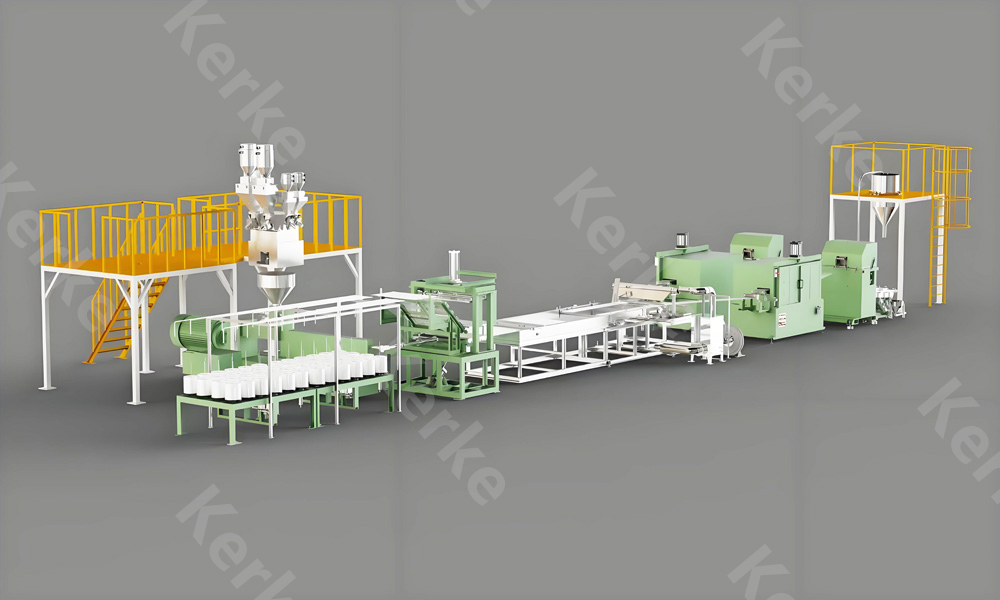
Introduction to Energy Efficiency in Modern Extrusion
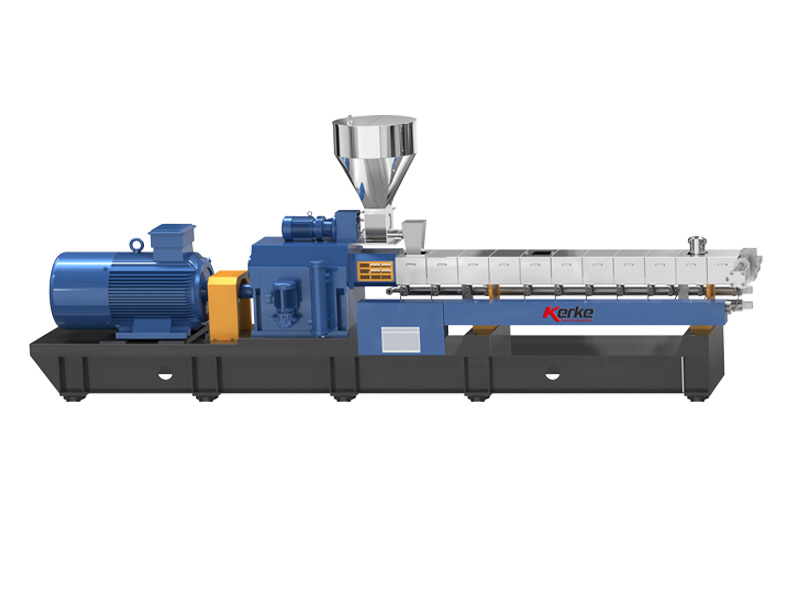
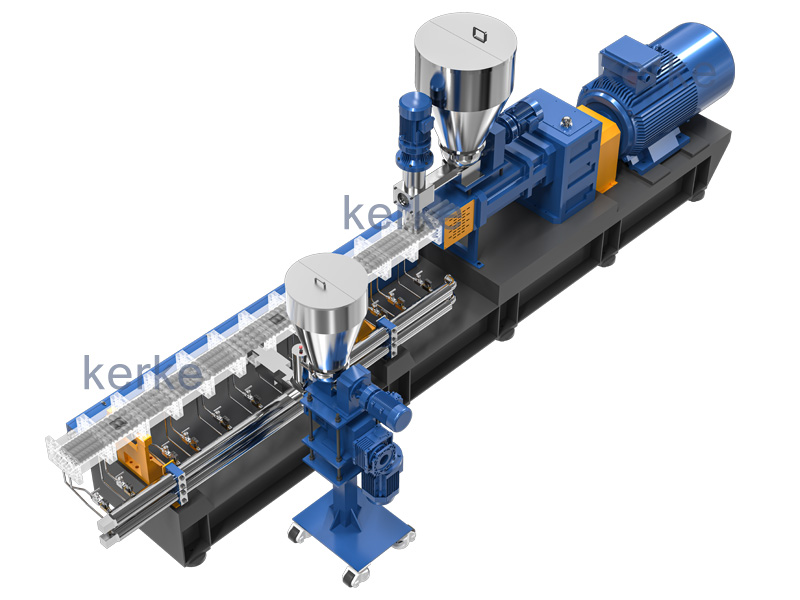
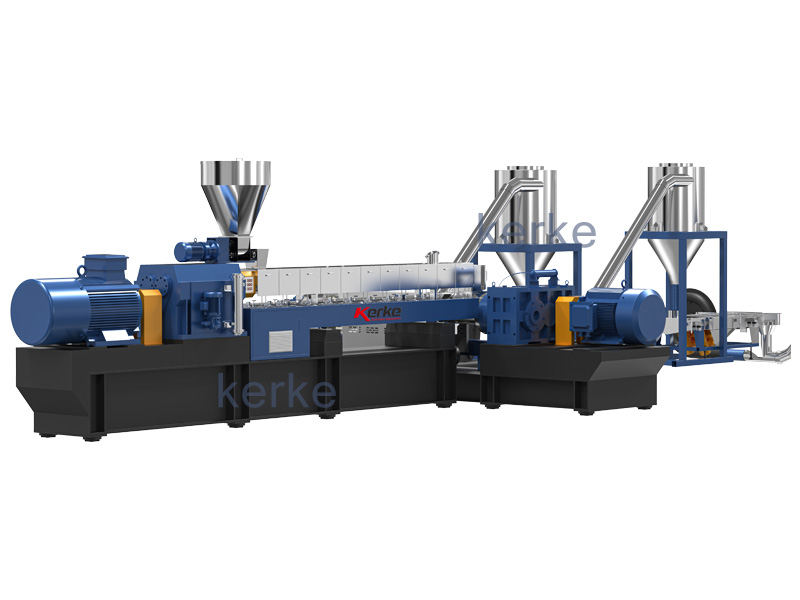
Energy is one of the largest operational costs in plastic extrusion, often accounting for 15% to 25% of the total production cost, second only to raw materials. With rising global energy prices and increasing pressure to reduce carbon footprints for ESG (Environmental, Social, and Governance) compliance, manufacturers are aggressively seeking equipment that offers high throughput with low power consumption. The co-rotating twin screw extruder has evolved significantly over the last decade to become a highly energy-efficient machine. Through advanced mechanical design, intelligent control systems, and optimized thermal management, modern extruders from companies like Kerke Extrusion can significantly reduce the Specific Energy Consumption (SEC), measured in kWh per kilogram of output. This article details the specific mechanisms by which these machines achieve energy savings and provides a detailed cost-benefit analysis.
High-Efficiency Gearboxes and Drive Train Design
The heart of the extruder’s energy efficiency is the drive system, consisting of the electric motor and the gearbox. Older or poorly designed extruders often use spur gear gearboxes with mechanical efficiencies as low as 90% to 92%, meaning 8-10% of the input energy is lost as waste heat and friction noise. Modern twin screw extruders, such as those from Kerke, utilize high-precision helical and spiral bevel gears that are case-hardened and ground to micron-level tolerances. These gearboxes achieve mechanical efficiencies of 96% to 98%.
For a 110kW main motor, a 6% efficiency gain translates to saving 6.6kW of power continuously. Over a year of 24/7 operation (8,760 hours), this saves approximately 57,800 kWh of electricity. At an industrial electricity rate of $0.12 per kWh (a conservative average), the annual savings are nearly $7,000 just from the gearbox improvement. Additionally, the use of IE3 or IE4 premium efficiency motors (as mandated in many regions) further reduces electrical losses in the stator and rotor. While a premium motor costs 15-20% more upfront (approx. $3,000 extra for a 100kW motor), the payback period is typically under 18 months due to energy savings alone. The total drive system cost for a new line might be $30,000, but the savings accumulate year after year.
Viscous Dissipation and Self-Heating Management
In extrusion, a significant portion of the heat required to melt the plastic comes from “viscous dissipation” or “frictional heat” generated by the shearing of the polymer melt between the screws and the barrel. This is essentially “free” energy derived from the mechanical work of the screws. An efficient twin screw extruder is designed to maximize this self-heating effect to reduce the reliance on external electric heaters, which are less efficient (converting electricity to heat at ~95% efficiency, but with distribution losses).
By optimizing the screw profile—specifically the angle and width of the kneading blocks—the machine can generate enough internal friction to melt the polymer without fully energizing the barrel heaters. In some high-speed compounding applications (like compounding at 600 RPM), the heaters may only be needed to maintain temperature or compensate for heat loss, not to raise the temperature from ambient. This can reduce heater power consumption by 30% to 50%. However, this requires precise control. If the screws are too aggressive, the material may overheat and degrade (burning). Kerke extruders use multiple temperature zones and real-time torque sensors to balance mechanical shear with external heating, ensuring the most energy-efficient melting process. The cost savings here are substantial; reducing heater load by 20kW saves 480 kWh per day, or roughly $17,000 per year at $0.12/kWh.
Advanced Inverter and Vector Control Technology
The use of Variable Frequency Drives (VFDs) or inverters is standard, but the sophistication of the control algorithm makes a massive difference. Basic V/f (Voltage/Frequency) control maintains a constant speed but is inefficient at partial loads. Advanced vector control inverters (like those from Siemens or ABB) adjust the motor’s magnetic flux to maintain optimal torque at varying speeds, ensuring the motor always runs at its highest efficiency point. Furthermore, modern PLCs can implement “eco-modes” specifically for extrusion.
For example, during material changeovers, cleaning cycles, or planned pauses, the system can automatically reduce the screw speed and barrel temperatures to a “standby” mode, consuming minimal power (idling at 5-10% load). Some systems also feature “on-demand” power usage logic. If the feed rate drops unexpectedly (e.g., due to a hopper bridging or feeder jam), the torque decreases.10%. The control system detects this instantly and reduces the motor speed to match the actual throughput, rather than running at a fixed setpoint and wasting energy idling. This prevents “idling” at high power. The integration of the main drive with the feeder motors allows for a master-slave configuration where the feed rate automatically tracks the amperage of the main motor, keeping the extruder at its most efficient load point (usually 70-80% of max torque). This optimization alone can reduce specific energy consumption by 10-15%, saving another $10,000+ annually on a medium-sized line.
Thermal Insulation and Nano-Heater Technology
Traditional extruder barrels often have significant heat loss to the ambient environment via convection and radiation. Standard cast-iron band heaters radiate heat inward but also outward, heating the steel barrel casing and the surrounding air. Ceramic heaters are more efficient because they radiate primarily inward, but they still lose heat. High-end extruders, like those from Kerke, use vacuum-insulated or ceramic-fiber insulated heater bands that minimize the surface temperature of the barrel casing, keeping the heat inside where it belongs.
Kerke Extruder employs advanced nano-insulation materials on the barrel cover and heater bands. This reduces the surface temperature of the barrel from 60-80 degrees Celsius (typical for old machines) to near ambient temperature (30-35 degrees Celsius). This has two major benefits: First, it saves energy by reducing heat loss (approx. 5-8% energy saving on heater duty cycles). Second, it dramatically improves the working environment in the factory by reducing ambient heat, which can lower air conditioning costs for the facility (a hidden saving). The cost of upgrading to insulated heaters and nano-jackets is relatively low (approx. $500-$1,000 per heating zone) but offers a quick return on investment through reduced heater duty cycles and improved operator comfort/safety.
Optimized Screw Design for Lower Torque and Pressure
The design of the screw elements directly impacts the torque required to turn the screws. Poorly designed screws with abrupt transitions, excessive kneading blocks, or incorrect flight clearance create high resistance, forcing the motor to work harder and consume more amps. Computational Fluid Dynamics (CFD) and Finite Element Analysis (FEA) are used by Kerke engineers to simulate polymer flow and design screws that convey material with minimal pressure build-up until the mixing section is reached.
For example, using a “low-pressure” conveying element in the feed zone allows the material to fill the screws easily without generating backpressure. This reduces the load on the motor during start-up (inrush current). For the same output, a well-designed screw might run at 300 RPM while a poor design requires 350 RPM to achieve the same pressure. Since power consumption is roughly proportional to speed cubed (in turbulent flow regimes) or linearly (in viscous flow), even a small reduction in speed for the same output yields significant energy savings. The cost of custom screw design is included in the machine price, but it results in a machine that is cheaper to operate for its entire lifespan (10-15 years), potentially saving $50,000+ in electricity costs over the machine’s life.
Water Cooling and Chiller Optimization
Cooling systems also consume energy. If the barrel is over-cooled, the heaters have to work harder to reheat it, creating a wasteful cycle. Precise water temperature control is essential. Using a central factory water tower is often inefficient because the water is too cold in winter (causing condensation and thermal shock to the barrel) and too warm in summer (causing poor cooling and temperature instability). A dedicated water chiller with variable speed pumps is the optimal solution. A chiller with an inverter compressor adjusts its cooling capacity to match the actual heat load of the extruder, rather than running at 100% constantly.
Kerke systems can interface with the chiller to only run the compressor when the melt temperature exceeds the setpoint. This can reduce chiller energy consumption by 20-30% compared to fixed-speed chillers. The initial capital cost of a chiller is high ($5,000 for a small unit, $20,000 for a large central system), but it stabilizes the process (reducing scrap) and saves energy compared to open-loop city water systems. Furthermore, using a closed-loop system prevents scale buildup in the barrel cooling channels, maintaining optimal heat transfer efficiency over time. The energy savings from efficient cooling contribute directly to the bottom line.
Detailed Cost Analysis of Energy-Efficient Extruders
Let us compare a standard, older extruder with a modern energy-efficient Kerke model. Assume a machine processing 500 kg/hr of HDPE masterbatch. A standard machine might consume 0.14 kWh/kg, resulting in 70 kW average power draw. An energy-efficient Kerke model might consume 0.10 kWh/kg, resulting in 50 kW. The difference is 20 kW. Running 24 hours a day, 350 days a year (allowing for maintenance downtime), the energy saving is 20 kW * 24 * 350 = 168,000 kWh per year. At an electricity rate of $0.12/kWh, the saving is $20,160 per year. If the energy-efficient machine costs $15,000 more to purchase (due to premium motor, gearbox, and controls), the payback period is less than 9 months. Over a 10-year life, the total energy saving is over $200,000, dwarfing the initial purchase price difference. This demonstrates that focusing solely on the purchase price is a false economy; the Total Cost of Ownership (TCO), heavily influenced by energy costs, is the correct metric for investment.
Conclusion
Reducing energy consumption in plastic extrusion is achieved through a combination of superior mechanical engineering (high-efficiency gearboxes and screws), thermal efficiency (insulation and self-heating), and intelligent control systems (vector drives and eco-modes). Twin screw extruders have inherent advantages in energy efficiency due to their positive conveying and self-heating capabilities. By investing in modern, energy-optimized machines like those from Kerke Extruder, manufacturers can drastically cut their operational costs, reduce their carbon footprint, and improve their competitiveness in a market with rising energy prices. The savings in electricity bills alone often justify the premium price of high-efficiency equipment within the first year of operation, making energy efficiency a critical selling point and a strategic factor in modern extrusion investment decisions. For any factory looking to improve margins, upgrading to an energy-efficient twin screw extruder is one of the most impactful steps they can take.