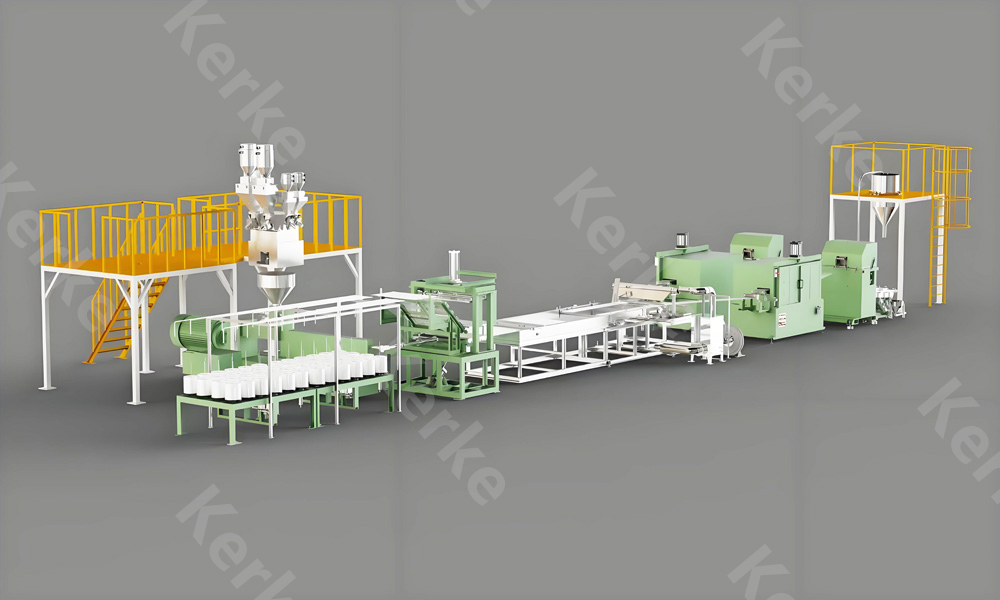
The modern plastics industry demands versatility. Manufacturers are no longer satisfied with machines that perform a single task. They need equipment that can mix, react, devolatilize, and even polymerize—all in a single pass. The co-rotating twin screw extruder is uniquely suited for this multi-functional role. Its modular design allows it to function as a reactor, a mixer, and a pump simultaneously. This article delves into how the twin screw extruder supports complex, multi-functional compounding processes, highlighting the engineering behind this versatility and showcasing how Kerke Extruder leverages this flexibility to provide comprehensive solutions for high-value applications.
The Modular Advantage of Twin Screw Extruders
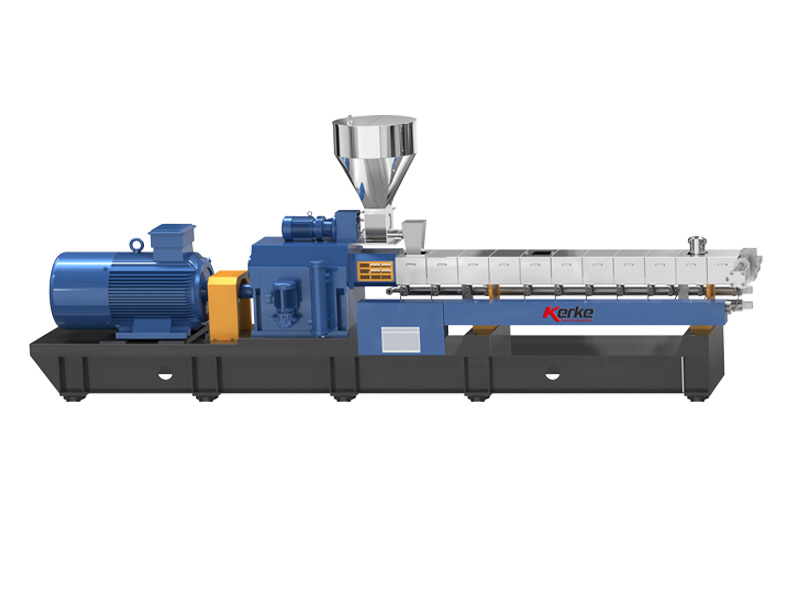
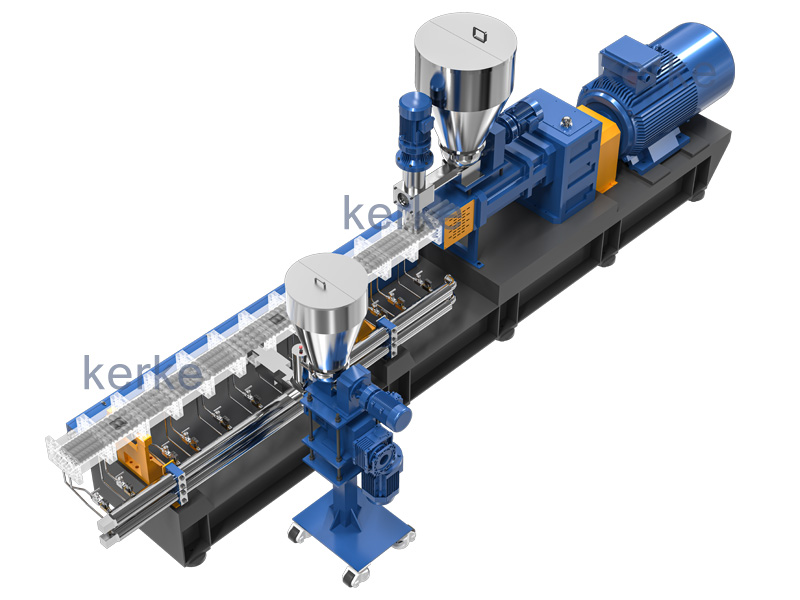
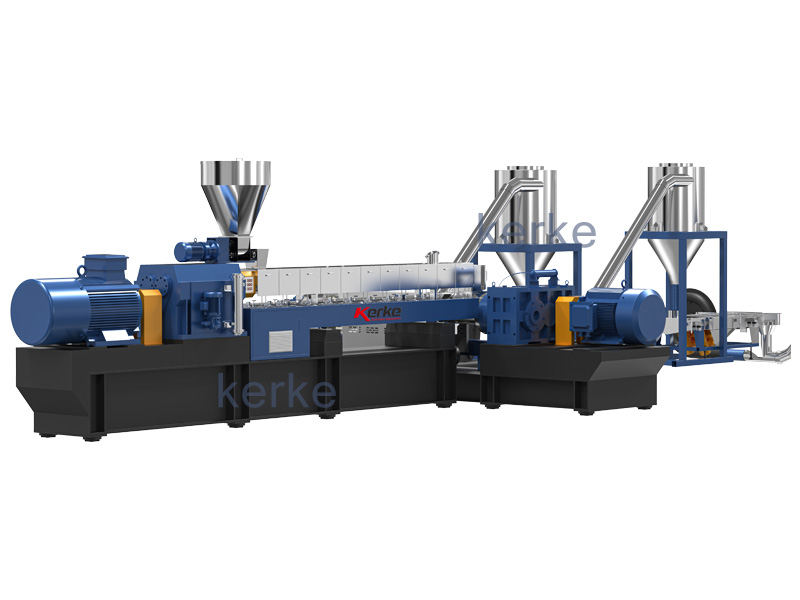
Unlike single screw extruders, which are limited by their drag flow mechanism, twin screw extruders use positive displacement. The screws are composed of individual elements (flights, kneading blocks, mixing heads, reverse elements) mounted on a splined shaft. This means you can customize the screw configuration for a specific process. For multi-functional compounding, this is critical. You can have a conveying section, followed by a melting section, a reaction zone, a venting port, and a metering section—all on the same shaft. This “process-in-a-barrel” capability allows a single machine to replace a batch reactor and a mixer, saving space, labor, and energy. The ability to change screw elements without changing the entire machine makes the twin screw extruder a “Swiss Army Knife” of polymer processing.
Key Multi-Functional Capabilities
1. Reactive Extrusion (In-Situ Polymerization and Grafting)
Reactive extrusion involves chemical reactions during the melt phase. Common examples include grafting maleic anhydride onto polypropylene (PP-g-MA) to improve adhesion in multi-layer films or composites, or synthesizing thermoplastic polyurethane (TPU) by reacting diisocyanates with diols. Twin screw extruders are ideal reactors because they offer excellent heat transfer, rapid mixing of reactants, and efficient removal of by-products (like water or methanol) through vacuum vents. The high surface-to-volume renewal rate ensures the catalyst and monomers are mixed intimately. Kerke offers extruders with specialized corrosion-resistant barrels (often using bimetallic or stainless steel 316L liners) to handle acidic catalysts, and precise liquid injection ports for adding initiators directly into the melt. The screw design includes kneading blocks to control residence time distribution (RTD), ensuring the reaction goes to completion without side reactions. This allows for the production of specialty polymers that cannot be made in batch reactors due to heat transfer limitations.
2. Devolatilization and Stripping: Removing the Unwanted
As discussed in previous articles, vacuum venting is a core function. In a multi-functional context, this allows the extruder to act as a stripper. For example, in recycling PET bottles, the extruder melts the flakes and strips out the moisture, acetaldehyde, and other volatiles that cause odor and brittleness. This is done in-line, meaning the dried, degassed melt goes directly to pelletizing. This eliminates the need for a separate pre-drying hopper, which is a major energy consumer in traditional recycling lines (drying PET requires 4-6 hours at 160°C). A twin screw extruder can do it in 2-3 minutes. The stripping efficiency depends on the vacuum level, melt temperature, and the surface area created by the venting screw elements. Multi-stage venting can achieve moisture levels below 50 ppm, which is essential for engineering plastics like PBT or Nylon.
3. Reactive Compounding of Elastomers and TPVs (Thermoplastic Vulcanizates)
Thermoplastic Vulcanizates (TPV) are a blend of a rubber phase and a thermoplastic phase, where the rubber is cross-linked (vulcanized) dynamically. This requires precise control of temperature and shear to cross-link the rubber without degrading the thermoplastic. Twin screw extruders achieve this by controlling the residence time distribution. The mixing intensity can be adjusted to disperse the curatives and maintain the temperature in the narrow window required for vulcanization. Kerke’s TSE series is widely used for TPV production (e.g., Santoprene alternatives), demonstrating the machine’s ability to handle complex rheological changes during processing. The screws are designed with specific shear zones to break down the rubber particles to the right size before cross-linking, ensuring a fine morphology that gives TPV its rubber-like elasticity and thermoplastic processability.
4. Reactive Blending and Compatibilization
When blending immiscible polymers (like PP and Nylon, or ABS and PC), the result is often a weak, phase-separated material. By adding a compatibilizer (often a reactive graft copolymer) in the extruder, the interface between the two phases can be strengthened. The twin screw extruder provides the shear needed to create a fine morphology (micro- or nano-dispersion) and the residence time for the compatibilizer to react at the interface. This in-situ compatibilization transforms waste blends into high-value engineering alloys. For example, recycling multi-layer films (PE/PA/EVOH) is difficult because the layers don’t mix. A reactive extruder with a compatibilizer can create a usable blend with good mechanical properties, opening up new recycling streams. This is a high-value application that commands premium pricing.
5. Direct Compounding of LFT (Long Fiber Thermoplastics)
Long Fiber Thermoplastics (LFT) are increasingly used in automotive to replace metal. Producing LFT requires impregnating long glass fibers (12-25mm) into a thermoplastic melt. This is challenging because the fibers must be wetted out without being broken. Twin screw extruders with special low-shear screw elements and side-stuffing feeders for the roving are used. The extruder must have high torque to handle the viscous compound. Kerke offers LFT lines where the fibers are fed directly into the melt, coated, and then either pelletized or fed directly into an injection molding machine (in-line compounding). This eliminates the need for a separate pelletizing step, saving energy and reducing fiber length degradation.
Process Intensification: Doing More with Less
Multi-functional extrusion is a form of “process intensification.” Instead of using a separate mixer, a batch reactor, and a devolatilizer, one extruder does it all. This reduces the “hold-up volume” (the amount of material in the system at any time). Lower hold-up means faster recipe changes and less material degradation. For high-value specialty polymers, this is crucial. A traditional batch process might take 4-6 hours for a reactive compound. A twin screw extruder can do it in 2-3 minutes. This massive increase in throughput per unit volume is a key economic driver. It allows manufacturers to be agile, switching between products quickly to meet market demand. The space savings are also significant; a single extruder line might replace three separate machines, freeing up floor space for other production.
Control Systems for Multi-Functional Operations
Running a multi-functional extruder requires sophisticated control. The operator must manage multiple zones of temperature, screw speed, feeder rates, vacuum pressure, and liquid injection rates simultaneously. Kerke Extruder employs advanced PLC/HMI systems with recipe management. The system can store hundreds of recipes. More importantly, it features “cascade control.” For example, if the melt temperature rises, the system can automatically increase the feed rate (to absorb heat) or increase barrel cooling, rather than just slowing down the screws. This maintains production rate while protecting the material. Some systems also include torque monitoring to detect gelation or cross-linking spikes in real-time, adjusting the screw speed to prevent motor overload. Data logging and remote access allow process engineers to optimize the process from their office, reducing the need for on-site trial and error.
Cost and Value of Multi-Functional Extruders
A multi-functional twin screw compounding extruder is a premium asset. The price reflects the complexity. A standard compounding line might cost $200,000. A line configured for reactive extrusion with multiple injection ports, corrosion-resistant alloys, and advanced vacuum systems can cost $400,000 to $600,000. The price premium is roughly 50-100% over a standard mixing extruder. However, the value proposition is strong. Consider a company needing to produce a compatibilized alloy. The traditional method involves mixing in a high-speed mixer, then reacting in a batch reactor, then extruding. This requires three pieces of equipment and significant labor. A twin screw extruder does it in one pass. The labor savings alone can justify the premium. Furthermore, the quality is often superior because the reaction is better controlled in the continuous melt phase than in a viscous batch. The ability to produce “one-step” compounds opens up new product lines (e.g., reactive adhesives, specialty TPEs) that command higher margins.
Cost Breakdown Example:
– Base Extruder (200mm): $250,000
– Reactive Kit (Corrosion resistant barrels, extra injection ports): $50,000
– Vacuum System (Double stage with condensers): $40,000
– Control System Upgrade (Advanced PLC, Recipe Management): $30,000
– Auxiliaries (LFT feeder, underwater pelletizer): $80,000
Total: $450,000
ROI Analysis: If the new line allows the production of a compound that sells for $4.00/kg instead of $2.50/kg, and the output is 500 kg/hr, the incremental revenue is $750/hr. Over 8000 hours, that is $6,000,000. The machine cost is recovered in less than 2 months. Even if the premium is only $1.00/kg, the ROI is still under 6 months. The flexibility to switch between standard compounding and reactive processing without changing machines is a massive operational advantage.
Maintenance for Multi-Functional Lines
Because these machines work harder and handle corrosive chemistries, maintenance is critical. Corrosion-resistant liners must be inspected for pitting. Liquid injection lines must be flushed daily to prevent clogging. Screw elements in the reaction zone may experience higher wear due to abrasive fillers or chemical attack. Kerke recommends using high-chrome or stellite-coated elements in these zones. The cost of replacing a specialized reaction screw can be high ($15,000+), but it is a necessary maintenance item for reactive processes. Implementing a predictive maintenance program (vibration analysis, oil checks) is essential to protect this investment. The control system software should be updated regularly to patch security vulnerabilities and add new features. Kerke offers annual maintenance contracts that include a full inspection of the screw, barrel, and control system, ensuring peak performance and minimizing downtime.
Application Examples: The Power of Versatility
1. Bio-plastics Compounding: Twin screw extruders are used to compound PLA with plasticizers and nucleating agents to improve heat resistance, while simultaneously devolatilizing moisture from the bio-polymer. The result is a high-performance bio-plastic that can withstand hot-fill applications.
2. Cable Compounds: PVC or TPE cable compounds require mixing of PVC resin, plasticizers (DOTP/DINP), stabilizers, and fillers. The extruder must handle high viscosity and shear-sensitive stabilizers. Multi-functional screws ensure the stabilizer is dispersed before the high-shear zone to prevent degradation. The vacuum system removes moisture from the stabilizers, preventing corrosion of the equipment.
3. Masterbatch for High-Speed Spinning: For fiber applications, the masterbatch must have extremely low gel content and perfect dispersion. The extruder acts as a fine filter (via the melt pump and screen pack) and a mixer, ensuring the polymer is clean and homogeneous before spinning. This prevents fiber breaks, which are costly in high-speed spinning lines.
4. Recycling of Multi-Layer Films: Using a reactive extruder with a compatibilizer, multi-layer waste films (PE/PA/EVOH) are turned into a single-phase alloy. This material can be used in injection molding or extrusion, diverting waste from landfills and creating a circular economy product. The value of the recycled compound is significantly higher than the waste cost.
Conclusion
The twin screw extruder is the ultimate multi-tool in the polymer processing industry. Its ability to integrate mixing, reacting, devolatilizing, and pumping into a single continuous process offers unmatched efficiency and product quality. For companies looking to innovate with reactive polymers, recycled alloys, or high-performance compounds, investing in a multi-functional twin screw extruder from a specialist like Kerke Extruder is a strategic move. While the initial cost is higher than single-function equipment, the flexibility to produce a wide range of products on a single line provides a significant competitive advantage in a fast-changing market. The future of compounding is continuous, reactive, and versatile—and the twin screw extruder is leading the way. By choosing Kerke, you are not just buying a machine; you are investing in a platform for future innovation and profitability. The ability to adapt to new materials and processes without major capital expenditure is the hallmark of a truly modern extrusion line.