The medical device industry operates under some of the most demanding requirements in the plastics sector, where product performance directly impacts patient safety and health outcomes. Medical devices manufactured through plastic processing methods must meet stringent regulatory requirements, withstand repeated sterilization procedures, maintain biocompatibility, and deliver consistent performance throughout their intended service life. Masterbatch formulations serving this critical industry must be engineered to exacting standards that ensure safe, effective, and reliable medical products.
Sterilization resistance represents a particularly challenging requirement for medical device masterbatches. The various sterilization methods employed in healthcare settings, including steam sterilization, ethylene oxide treatment, and radiation processes, each impose different stresses on plastic materials and their colorant or additive packages. A masterbatch that performs excellently in one sterilization method may degrade or fail in another, making formulation optimization for specific sterilization requirements essential for medical device applications.
This comprehensive guide examines the technical considerations, formulation requirements, and production capabilities essential for producing high-quality masterbatch for medical device applications. We explore the sterilization methods, regulatory framework, and performance requirements that define this demanding application area. Special attention focuses on the equipment capabilities and quality systems necessary for producing medical-grade masterbatches that meet the expectations of healthcare industry customers.
What is Masterbatch for Medical Devices?
Masterbatch for medical devices is a specially formulated concentrated additive composition designed for incorporation into polymers used in healthcare applications. Unlike standard masterbatches serving general industrial purposes, medical device masterbatches must satisfy comprehensive regulatory requirements governing material safety, biocompatibility, and performance under sterilization conditions.
The formulation of medical device masterbatch begins with careful selection of raw materials that meet established purity and safety standards. Pigments, carriers, and additives must originate from approved sources with documented quality systems and traceability capabilities. Many raw materials used in standard masterbatch production cannot meet the documentation and testing requirements for medical applications, necessitating sourcing from specialized suppliers with appropriate certifications.
Biocompatibility testing verifies that masterbatch formulations do not release harmful substances that could affect patient safety. Extractables and leachables studies identify potential contaminants that might migrate from the plastic into patient contact situations. These testing requirements add time and cost to medical device masterbatch development but ensure that finished products meet the safety standards healthcare providers and regulators require.
Role of Twin Screw Extruder in Medical Device Masterbatch Production
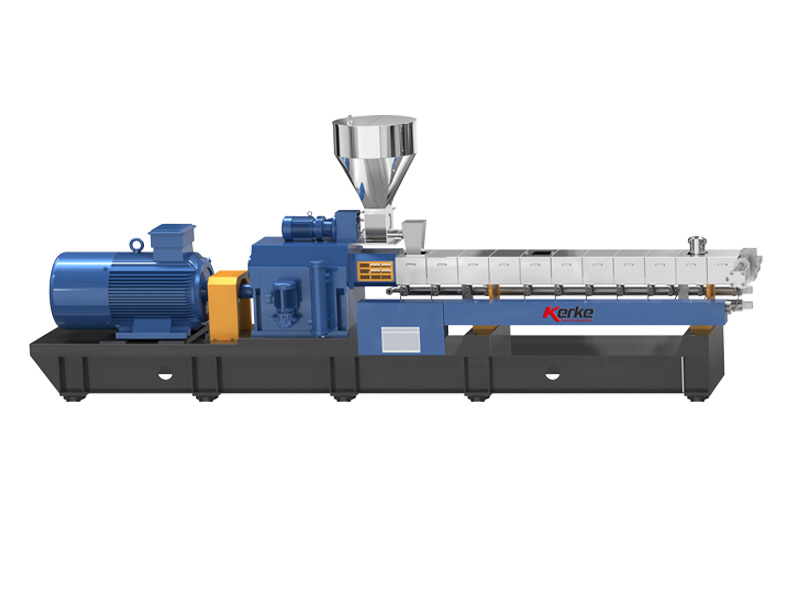
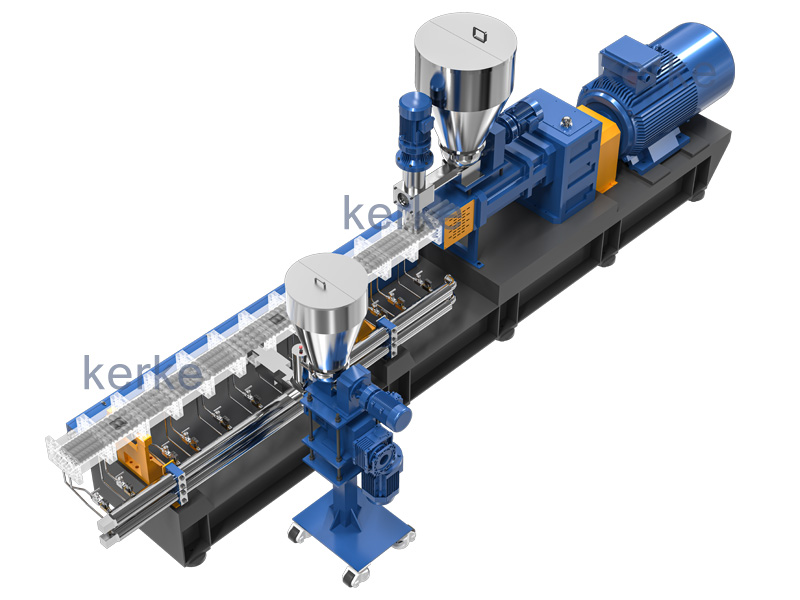
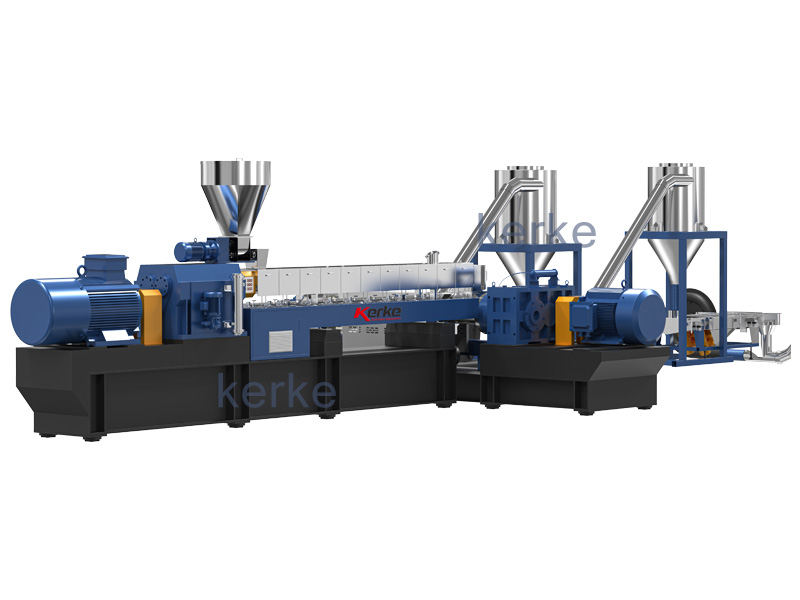
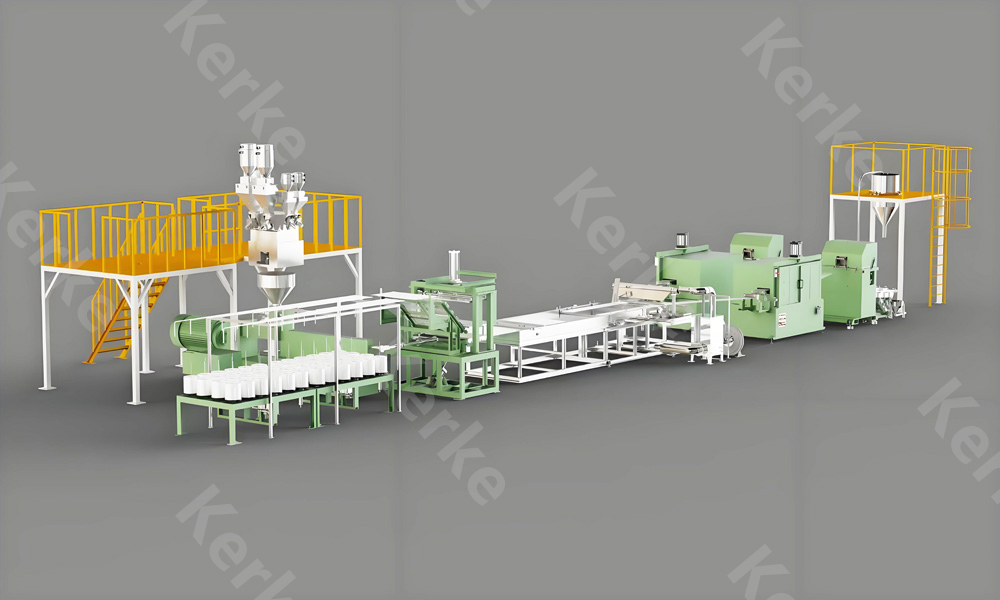
The production of medical device masterbatch demands exceptional process control and quality assurance that advanced twin screw extrusion technology provides. Nanjing Kerke Extrusion Equipment Co., Ltd has developed the KTE series compounding extruders with capabilities specifically suited to the rigorous requirements of pharmaceutical and medical-grade masterbatch production.
Clean production environments distinguish medical device masterbatch manufacturing from standard industrial operations. The KTE series extruders can be configured for installation in cleanroom environments that prevent contamination of sensitive formulations. Specialized material handling systems, enclosed conveying equipment, and dedicated production areas ensure that masterbatch products maintain the purity levels medical applications require.
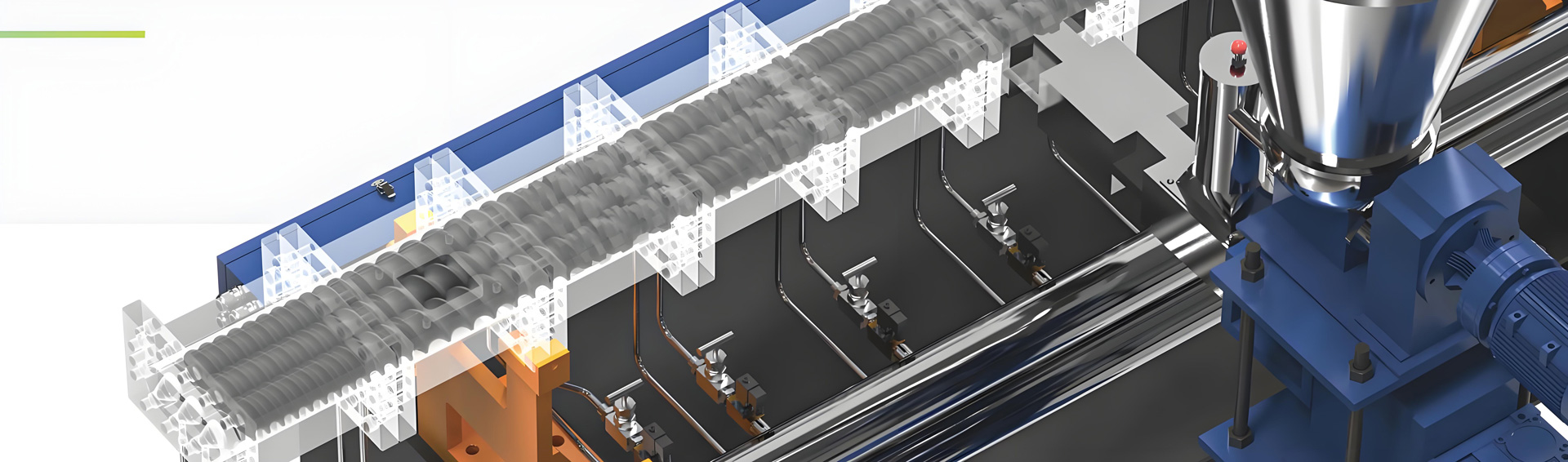
Precise process control enables production of masterbatches with consistent composition and performance. The multiple heating zones, pressure monitoring, and throughput control capabilities of the KTE series ensure that each production batch meets specifications for nucleating agent concentration, pigment dispersion, and physical characteristics. This consistency proves essential for medical device manufacturers who depend on stable material performance to meet their own quality requirements.
Working Principle of Compounding Extruder
The compounding extruder integrates the functions of melting, mixing, and homogenization necessary for transforming raw materials into finished masterbatch. For medical device applications, understanding these processing principles helps appreciate how equipment capabilities translate into product quality characteristics that medical customers require.
Material introduction in medical masterbatch production follows strict protocols that prevent contamination and ensure accurate addition rates. Gravimetric feeding systems provide precise control over nucleating agent and additive addition, ensuring that each batch achieves the target composition. Dedicated feeding equipment for each formulation component prevents cross-contamination between different masterbatch products.
The melting and mixing section of the compounding extruder brings materials to the processing temperature required for complete melting and thorough dispersion. For medical masterbatch formulations, processing temperatures must be optimized to achieve adequate mixing without degrading temperature-sensitive components. The precise temperature control capabilities of Kerke extruders enable processors to maintain optimal conditions throughout the production run.
Pelletization and subsequent handling operations maintain the purity and consistency achieved during extrusion. Underwater pelletization systems provide rapid cooling that minimizes thermal exposure. Finished pellets undergo inspection and testing before packaging in containers designed to maintain product purity during storage and shipment.
Kerke KTE Series Extruder Features
Nanjing Kerke Extrusion Equipment Co., Ltd combines engineering expertise with manufacturing capability to deliver compounding equipment meeting the demanding requirements of medical device masterbatch production. The KTE series embodies features and capabilities that address the specific needs of this critical application area.
The comprehensive range of KTE series models provides scalability from laboratory development through commercial production. The KTE-16B laboratory extruder enables formulation development and small-batch production for product qualification, while larger models including the KTE-52, KTE-65, KTE-90, and KTE-135 series address the volume requirements of commercial medical masterbatch supply. This range ensures that manufacturers can develop products in laboratory settings and scale to production volumes using consistent equipment platforms.
Material compatibility options address the requirements of medical polymers including polycarbonate, polyurethane, polypropylene, and other materials commonly used in healthcare applications. Barrel and screw materials can be selected to minimize metal contamination that could affect biocompatibility testing. Specialized coatings and surface treatments ensure that processing equipment meets the purity standards medical applications require.
Documentation and traceability capabilities support the comprehensive quality records that medical device regulations require. The KTE series control systems record processing parameters for each production batch, enabling complete traceability from raw materials through finished product. These records prove essential for medical masterbatch customers who must document material provenance and processing history for regulatory submissions.
Applications in Medical Device Industry
The medical device industry encompasses diverse product categories, each with specific requirements for masterbatch performance under sterilization conditions and throughout product service life. Understanding these application areas helps masterbatch producers develop formulations optimized for the particular requirements of each medical device category.
Surgical Instruments and Handles
Surgical instruments manufactured from engineering plastics require color coding for identification during procedures and sterilization resistance that maintains appearance through repeated processing cycles. Masterbatch formulations for surgical instruments must withstand multiple steam sterilization cycles without color shift, chalking, or surface degradation that would compromise either appearance or functionality.
The high processing temperatures required for many engineering plastics used in surgical instruments place additional demands on masterbatch thermal stability. Pigments and additives must maintain their integrity through processing temperatures that may exceed 300 degrees Celsius while also surviving the sterilization conditions the finished instruments will encounter. This dual thermal resistance requirement necessitates careful formulation and testing to verify long-term performance.
Diagnostic Equipment Components
Diagnostic equipment including analyzers, monitors, and sample handling systems incorporate numerous plastic components that benefit from color coding, UV protection, and enhanced durability. Masterbatch formulations for diagnostic equipment must maintain appearance and performance characteristics throughout extended service lives that may span many years of continuous operation.
Chemical resistance requirements in diagnostic applications often exceed those of other medical device categories. Components may be exposed to disinfectants, cleaning agents, and specimen materials that could affect poorly formulated colorants. Masterbatch selections must consider these exposure conditions and verify resistance through appropriate testing protocols.
Implantable Device Components
Certain implantable device components utilize plastic materials that benefit from masterbatch incorporation, though the requirements for these applications exceed those for most other medical categories. Implantable applications require extensive biocompatibility testing and regulatory approval that may span years of development and testing before commercial introduction.
The long-term nature of implantable device exposure places unique demands on masterbatch stability. Colorants and additives must maintain their characteristics throughout implant service lives that may extend to decades. The regulatory pathway for these applications requires comprehensive documentation of all material components, making masterbatch supplier qualification an extensive process that evaluates quality systems, documentation practices, and long-term supply commitment.
Sterilization Resistance and Testing
Sterilization resistance represents a defining characteristic for medical device masterbatches, determining their suitability for specific healthcare applications. Understanding the different sterilization methods and their effects on plastic materials enables appropriate masterbatch formulation and selection.
Steam Sterilization
Steam sterilization, also known as autoclaving, subjects materials to saturated steam at temperatures typically ranging from 121 to 134 degrees Celsius under elevated pressure. This method imposes thermal and hydrolytic stresses that can degrade pigments, cause color shifts, and affect polymer properties. Masterbatch formulations for steam sterilization applications must include stabilizers that protect against these degradation mechanisms.
The humid conditions of steam sterilization accelerate hydrolysis reactions that can degrade both polymers and certain additives. Heat stabilizers incorporated in masterbatch formulations protect against thermal degradation during the sterilization cycle. Antioxidant systems provide protection against oxidative degradation that may occur in combination with the thermal and hydrolytic stresses of steam processing.
Ethylene Oxide Sterilization
Ethylene oxide sterilization operates at lower temperatures than steam methods, making it suitable for heat-sensitive materials. However, ethylene oxide residuals and byproducts can interact with certain colorants and additives, potentially causing discoloration or property changes. Masterbatch formulations for ethylene oxide applications must be tested to verify compatibility with this sterilization method.
The gas penetration requirements of ethylene oxide sterilization necessitate open, porous part geometries that may complicate color consistency in complex shapes. Masterbatch pigments must achieve adequate dispersion to prevent color variation across thick and thin sections of parts undergoing ethylene oxide processing. Testing protocols should simulate the actual sterilization conditions parts will encounter to verify acceptable performance.
Radiation Sterilization
Gamma radiation and electron beam sterilization provide rapid, effective sterilization suitable for batch processing of manufactured products. These methods can cause significant degradation in certain polymers and colorants, including chain scission that reduces molecular weight and color changes that alter appearance. Radiation-resistant masterbatch formulations must be selected for applications employing these sterilization methods.
Stabilizer systems for radiation resistance differ from those effective for thermal sterilization. Hindered amine light stabilizers provide radiation protection in some polymer systems, while specialized radiation stabilizers may be required for specific applications. The radiation dose requirements vary by product and application, making testing at actual or simulated radiation doses essential for verification.
Formulation and Composition
Medical device masterbatch formulations require careful attention to raw material selection, compatibility, and regulatory compliance. The formulation scientist must balance performance requirements against regulatory constraints and cost considerations to develop products meeting customer needs.
Pigment selection for medical applications prioritizes stability under sterilization conditions and documented safety records. Inorganic pigments generally provide excellent lightfastness and chemical resistance, while certain organic pigments may offer advantages in specific applications. Each pigment must be evaluated for toxicity and regulatory compliance, with documentation supporting material safety evaluations required for medical applications.
Carrier resin selection ensures compatibility with the base polymers medical device manufacturers employ. Common medical polymers including polycarbonate, polypropylene, and polyether ether ketone require carrier resins that blend without creating compatibility issues. The carrier should not affect the mechanical properties, processing characteristics, or regulatory status of the final compound.
Additive packages for medical masterbatches may include stabilizers, processing aids, and functional additives selected for their documented safety and compatibility. Antioxidant systems protect against thermal and oxidative degradation. UV absorbers provide protection against environmental exposure that may occur during product service life. Each additive must be evaluated for extractables and leachables that might affect biocompatibility.
Production Process and Quality Systems
Medical device masterbatch production requires comprehensive quality systems that ensure compliance with regulatory requirements and consistency across production batches. These systems exceed those employed for standard industrial masterbatch production, reflecting the critical nature of medical applications.
Raw material qualification establishes the supplier base capable of meeting medical application requirements. Approved supplier lists document qualified sources for each raw material category. Incoming inspection verifies that materials meet specifications for identity, purity, and documentation. Certificates of analysis from suppliers provide starting documentation, with additional testing as required by internal quality specifications.
Production operations follow validated processes that ensure consistent product quality batch after batch. Critical process parameters are identified and controlled within validated ranges. In-process monitoring provides ongoing verification of processing conditions. Documentation practices capture all relevant information for traceability and regulatory compliance.
Finished product testing verifies that each batch meets specifications before release for shipment. Physical testing confirms melt flow characteristics, particle size distribution, and other properties. Chemical analysis verifies composition and additive levels. Sterilization challenge testing on representative samples confirms resistance to the sterilization methods the masterbatch will encounter in use.
Regulatory Framework and Documentation
The regulatory framework governing medical devices varies by jurisdiction but generally requires comprehensive documentation of materials, manufacturing processes, and quality systems. Masterbatch suppliers serving medical device manufacturers must provide documentation supporting their customers regulatory submissions.
United States Food and Drug Administration regulations establish requirements for materials used in medical devices regulated under the Federal Food, Drug, and Cosmetic Act. Masterbatch formulations may be considered components or accessories to finished devices, requiring documentation sufficient to support device regulatory submissions. Drug Master Files and Device Master Files provide mechanisms for confidential submission of detailed material information.
European Union Medical Device Regulation establishes requirements for materials used in devices marketed within the EU. Compliance with REACH and RoHS regulations ensures that materials do not contain restricted substances. Technical documentation must demonstrate that material specifications support intended device applications and sterilization methods.
Quality management system certification, particularly ISO 13485, provides frameworks for consistent quality practices in medical device masterbatch production. Certification demonstrates that suppliers maintain appropriate quality systems, documentation practices, and traceability capabilities. Medical device manufacturers increasingly require ISO 13485 certification from material suppliers as part of their vendor qualification processes.
Technical Parameters and Specifications
Medical device masterbatch specifications encompass parameters addressing both performance under sterilization conditions and compliance with regulatory requirements. Understanding these specifications enables medical device manufacturers to evaluate masterbatch options appropriately.
Sterilization resistance specifications define the conditions each masterbatch formulation can withstand without unacceptable degradation. These specifications should reference specific sterilization methods, exposure temperatures, and the number of cycles the masterbatch can survive. Testing protocols should reflect actual sterilization conditions the finished product will encounter.
Biocompatibility documentation verifies material safety in patient contact applications. Extractables studies identify potential contaminants that might migrate from the plastic into biological systems. Test results should document the testing performed, methods employed, and conclusions regarding material safety for intended applications.
Traceability documentation enables medical device manufacturers to reconstruct the complete history of any masterbatch lot. Records should document raw material sources, lot numbers, and processing conditions for each production batch. This documentation proves essential for investigating any quality issues that may arise during product service life.
Cost and Price Analysis
Medical device masterbatches command premium pricing reflecting the additional costs of raw material qualification, quality systems, documentation, and testing. Understanding these cost factors enables medical device manufacturers to evaluate quotations appropriately and recognize the value proposition of qualified suppliers.
Raw material costs for medical-grade components exceed those of standard industrial materials due to the additional qualification, testing, and documentation required. Pigments from qualified sources with medical application documentation may cost two to five times more than equivalent industrial grades. Carrier resins and additives with biocompatibility documentation carry similar premiums.
Quality system costs include personnel, documentation systems, and external audit expenses required to maintain certifications such as ISO 13485. These costs are amortized across production volumes, influencing pricing for different order sizes and product categories. Specialty or low-volume products carry higher per-unit quality costs than high-volume standard items.
Commercial medical device masterbatches typically price from $15 to $80 per kilogram depending on complexity, volume, and regulatory requirements. Standard color masterbatches for non-critical applications may price in the $15 to $30 range, while specialty formulations for implantable devices or demanding sterilization conditions may exceed $50 per kilogram. These prices reflect the comprehensive qualification and documentation requirements medical applications demand.
Equipment Selection Guide
Selecting compounding equipment for medical device masterbatch production requires evaluation of capabilities beyond those considered for standard industrial applications. Quality systems, documentation practices, and cleanroom compatibility influence equipment selection for medical masterbatch production.
Production capacity requirements should align with current and anticipated business volumes while providing flexibility for development work and customer qualification activities. Kerke offers the KTE series in sizes suitable for laboratory development through commercial production, enabling consistent technology transfer from development to commercial scale.
Cleanroom compatibility may be required depending on the specific medical applications being served. Equipment selection should consider the cleanroom classification requirements and ensure that selected equipment can operate within those constraints. Material handling systems, dust collection, and operator interface considerations all influence cleanroom equipment suitability.
Documentation and control capabilities determine the ability to meet traceability and quality record requirements. Control systems should record critical process parameters for each batch and enable retrieval of historical data for investigation and regulatory purposes. Equipment selection should consider both current requirements and anticipated future needs as regulatory expectations continue to evolve.
Production Quality Control
Quality control for medical device masterbatch production encompasses comprehensive testing and documentation practices that exceed those employed for standard industrial products. These enhanced practices ensure that medical customers receive products meeting their stringent requirements.
Incoming material verification confirms that raw materials meet specifications before release for production use. Identity testing, purity verification, and documentation review ensure that only qualified materials enter manufacturing. Any deviations from specifications require investigation and disposition decisions by qualified quality personnel.
In-process monitoring verifies that processing conditions remain within validated ranges throughout production. Temperature profiles, pressures, and throughput rates are monitored and recorded. Periodic sampling enables visual inspection and preliminary testing that identifies developing problems before large quantities of material are affected.
Finished product testing provides final verification that each batch meets specifications before release. Physical testing, chemical analysis, and sterilization challenge testing confirm product fitness for intended use. Certificate of analysis documentation summarizes test results and confirms batch release for shipment to medical customers.
Common Issues and Solutions
Medical device masterbatch applications may encounter challenges related to sterilization compatibility, regulatory compliance, or supplier qualification. Understanding common issues and their solutions enables medical device manufacturers to address problems effectively while maintaining quality and regulatory compliance.
Color shift after sterilization indicates insufficient stabilization for the specific sterilization method employed. Solutions include reformulation with appropriate stabilizers, testing at increased sterilization doses to verify margin, or selection of alternative sterilization methods compatible with current formulations. Root cause investigation should identify whether the problem originates in the masterbatch or in the base polymer system.
Regulatory submission delays may result from incomplete documentation from masterbatch suppliers. Early engagement with suppliers regarding documentation requirements prevents delays during the critical submission phase. Masterbatch suppliers experienced with medical applications understand documentation requirements and can provide appropriate support for regulatory submissions.
Supplier qualification failures may occur when masterbatch producers lack the quality systems and documentation practices medical customers require. Establishing supplier qualification requirements early in the vendor selection process enables identification of qualified suppliers capable of meeting medical industry expectations.
Maintenance and Regulatory Compliance
Maintaining equipment and quality systems for medical masterbatch production requires ongoing attention to detail and regulatory awareness. Changes in regulations, standards, and customer requirements necessitate continuous improvement and adaptation of practices.
Equipment maintenance follows documented schedules that ensure consistent performance while maintaining validation status. Calibration of temperature controllers, pressure transducers, and feeding systems ensures accurate process control. Documentation practices capture maintenance activities for quality records and regulatory compliance.
Quality system maintenance includes internal audits, management review, and continuous improvement activities that maintain system effectiveness. Changes to processes, equipment, or raw materials require evaluation and appropriate documentation updates. Supplier monitoring ensures that approved vendors continue to meet quality expectations.
Regulatory compliance monitoring tracks changes in applicable regulations and standards that may affect production practices or documentation requirements. Participation in industry associations and regulatory affairs activities provides awareness of emerging requirements. Proactive adaptation to regulatory changes demonstrates commitment to compliance and positions the supplier as a capable partner for medical customers.
Market Trends and Industry Development
The medical device masterbatch market continues to evolve in response to changing healthcare requirements, technological advances, and regulatory developments. Understanding these trends helps manufacturers anticipate future requirements and position their operations competitively.
Combination products integrating drug delivery and device functions create new requirements for masterbatch formulations that must accommodate both medical device and pharmaceutical regulatory frameworks. These hybrid products may require additional testing and documentation beyond traditional medical device requirements, challenging masterbatch suppliers to expand their capabilities and documentation practices.
Point-of-care diagnostics and wearable medical devices expand the application range for medical plastics while introducing new requirements for miniaturization, connectivity, and patient comfort. Masterbatch formulations must support these evolving product designs while maintaining the sterilization resistance and biocompatibility healthcare applications demand.
Sustainability initiatives influence medical device manufacturing practices, creating interest in recycled content, bio-based polymers, and reduced environmental impact. These materials present unique challenges for medical applications where performance requirements may conflict with sustainability objectives. Masterbatch formulations supporting sustainable medical devices require careful development and testing to verify performance in healthcare applications.
Why Choose Kerke Extruder
Nanjing Kerke Extrusion Equipment Co., Ltd provides the compounding capabilities and quality systems necessary for producing medical device masterbatches that meet demanding healthcare industry requirements. Engineering excellence, manufacturing capability, and global support establish Kerke as a capable partner for medical masterbatch production.
The KTE series twin screw extruders provide the processing capabilities required for medical masterbatch production, including precise temperature control, intensive mixing, and consistent throughput. These capabilities ensure that medical customers receive products with the quality and consistency their applications require.
Kerke manufacturing facilities enable production of compounding equipment meeting medical industry quality expectations. Modern manufacturing equipment ensures precision fabrication of components affecting product quality. Quality management systems support documentation and traceability requirements medical customers demand.
Global presence enables Kerke to support medical masterbatch producers regardless of location. Factory-trained distributors and Kerke technical specialists provide responsive support for equipment selection, installation, and optimization. This global network supports long-term partnership and supply continuity that medical customers require.
Frequently Asked Questions
What regulatory documentation should medical device masterbatch suppliers provide?
Medical device masterbatch suppliers should provide comprehensive documentation including certificates of analysis, material safety data sheets, REACH and RoHS compliance statements, extractables study reports, and quality management system certifications. Additional documentation may be required for specific applications or regulatory submissions.
How do I select appropriate masterbatch for specific sterilization methods?
Selection should begin with identification of the sterilization method your products will employ. Request sterilization compatibility data from potential suppliers, including test protocols, results, and the number of cycles verified. Consider both the sterilization method and the number of cycles expected during product service life.
What is the typical lead time for medical device masterbatch qualification?
Medical device masterbatch qualification typically requires 6 to 18 months depending on the complexity of requirements and the testing protocols required. This timeline includes formulation development, biocompatibility testing, stability studies, and regulatory documentation preparation.
Are masterbatches approved for food and drug administration regulated products?
Masterbatches themselves are not typically regulated as medical devices, but they are considered components used in regulated devices. The masterbatch supplier should provide documentation supporting customers device regulatory submissions. Specific regulatory strategies depend on the device classification and intended use.
What testing protocols verify sterilization resistance?
Sterilization resistance testing typically involves exposing masterbatch samples to specified sterilization conditions and evaluating subsequent color change, physical property changes, and appearance. Test protocols should reference applicable standards and reflect actual sterilization conditions products will encounter.
How should masterbatch be stored for medical applications?
Medical masterbatch should be stored according to supplier recommendations, typically in original containers in clean, dry conditions protected from contamination. Temperature and humidity control may be required for sensitive formulations. Documentation should verify storage conditions have been maintained throughout the product shelf life.
What quality certifications should medical masterbatch suppliers maintain?
ISO 13485 certification demonstrates quality management system capabilities appropriate for medical device applications. Additional certifications or audits may be required depending on specific customer requirements or the target regulatory markets.
Can masterbatch formulations be customized for specific medical applications?
Yes, masterbatch suppliers can develop custom formulations addressing specific sterilization requirements, color targets, or performance characteristics. Custom development requires collaboration to define requirements, followed by formulation work, testing, and qualification activities.
What support does Kerke provide for medical masterbatch production equipment?
Kerke provides comprehensive support including equipment selection consultation, installation guidance, process optimization recommendations, and troubleshooting assistance. Technical specialists work with customers to ensure equipment meets their specific medical masterbatch production requirements.
Conclusion
Masterbatch for medical devices operates under requirements that far exceed those of standard industrial applications, demanding rigorous attention to raw material selection, formulation optimization, production quality systems, and regulatory documentation. The sterilization resistance characteristics that define medical device masterbatch performance require careful formulation with appropriate stabilizers and thorough testing to verify fitness for intended use.
Production of medical device masterbatch requires compounding equipment capable of precise process control and comprehensive documentation. The KTE series twin screw extruders from Nanjing Kerke Extrusion Equipment Co., Ltd provide the capabilities medical masterbatch producers need, combining advanced technology with the reliability and support that critical healthcare applications demand.
Medical device manufacturers selecting masterbatch suppliers should evaluate not only product performance but also quality systems, documentation practices, and regulatory experience. Partnership with capable suppliers enables medical device manufacturers to access the material expertise and documentation support necessary for successful product development and regulatory approval. As healthcare requirements continue to evolve toward higher performance and greater patient safety assurance, the importance of qualified masterbatch suppliers will only increase.