The plastic manufacturing industry increasingly recognizes that crystalline morphology fundamentally determines the mechanical properties, thermal resistance, and processing performance of semi-crystalline polymers. Polypropylene, polyethylene terephthalate, and other semi-crystalline materials derive their structural characteristics from the formation and growth of crystalline regions during cooling from the melt state. Controlling this crystallization process enables manufacturers to tailor product properties for specific applications while improving production efficiency through reduced cycle times and enhanced processing stability. Nucleating agent masterbatch provides the technology to achieve this crystallization control, offering a pathway to products with superior performance characteristics that meet demanding application requirements.
Nucleating agents function by providing sites where polymer crystals can initiate formation, effectively increasing the number of crystals formed during cooling and reducing the size of individual crystalline regions. This modification of crystalline morphology influences multiple product properties simultaneously, including stiffness, clarity, heat deflection temperature, and dimensional stability. For manufacturers seeking to enhance their competitive position through improved product performance, understanding nucleating agent technology and its proper application represents a strategic priority that can yield significant commercial benefits.
This comprehensive guide examines the science and practice of nucleating agent masterbatch production and application. We explore the mechanisms by which nucleating agents modify polymer crystallization, the characteristics of different nucleating agent types, and the production methods that enable effective incorporation of these additives into polymer systems. Special attention focuses on the role of twin screw extrusion equipment from manufacturers like Nanjing Kerke Extrusion Equipment Co., Ltd in producing high-quality nucleating agent masterbatches that deliver consistent performance in commercial applications.
What is Nucleating Agent Masterbatch?
Nucleating agent masterbatch is a concentrated formulation containing crystalline agents dispersed in a carrier resin, designed for incorporation into semi-crystalline polymer systems to modify their crystallization behavior. Unlike conventional color masterbatches that primarily serve aesthetic purposes, nucleating agent masterbatches provide functional performance improvements that extend beyond visual characteristics to influence the structural and thermal properties of the finished product.
The active ingredients in nucleating agent masterbatches comprise various chemical compounds capable of providing heterogeneous nucleation sites for polymer crystals. These compounds exhibit crystalline structures with lattice parameters matching or closely approximating those of the polymer, enabling polymer chains to begin crystallization on the nucleating agent surface with minimal energetic barrier. Common nucleating agent types include sorbitol derivatives, metal phosphates, carboxylic acid salts, and various organic heterocyclic compounds, each offering different performance characteristics and compatibility with specific polymer systems.
The concentration of nucleating agents in masterbatch formulations typically ranges from 1 to 10 percent by weight, depending on the specific nucleating agent type, the polymer system, and the desired level of property modification. Effective dispersion of nucleating agents throughout the polymer matrix proves essential for achieving uniform crystallization behavior, as agglomerated nucleating agents cannot provide their full effectiveness and may create processing problems. This dispersion requirement makes the manufacturing process for nucleating agent masterbatch critically dependent on high-quality compounding equipment capable of achieving thorough mixing without degrading the sensitive nucleating agent compounds.
Role of Twin Screw Extruder in Nucleating Agent Masterbatch Production
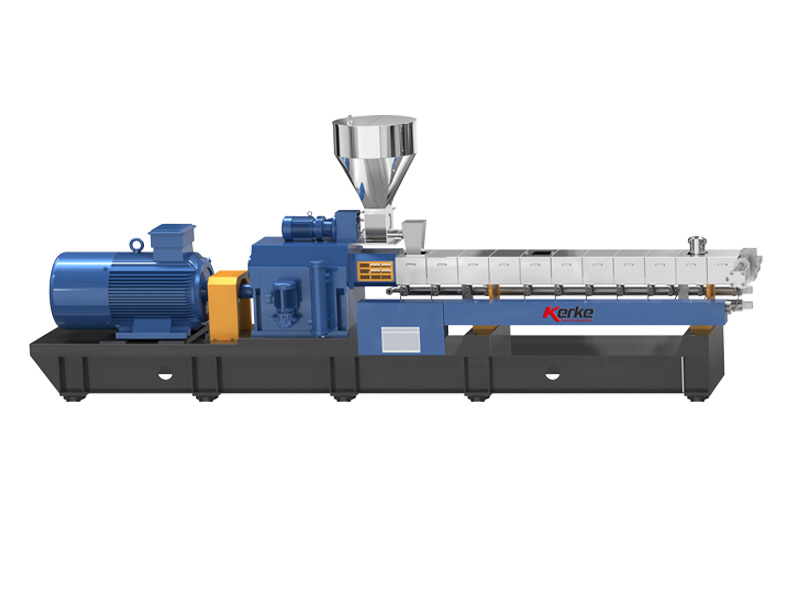
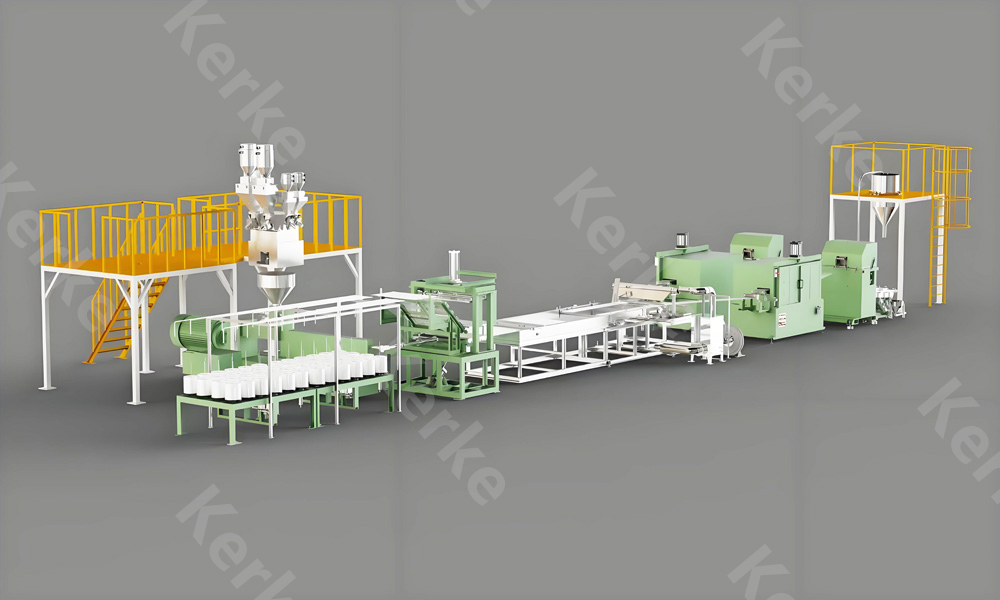
The production of effective nucleating agent masterbatch demands exceptional mixing performance that only advanced twin screw extrusion technology can reliably provide. Nanjing Kerke Extrusion Equipment Co., Ltd has developed the KTE series compounding extruder specifically optimized for the requirements of functional masterbatch production, offering the capabilities necessary to achieve superior dispersion of nucleating agents while preserving the crystalline structure and activity of these sensitive additives.
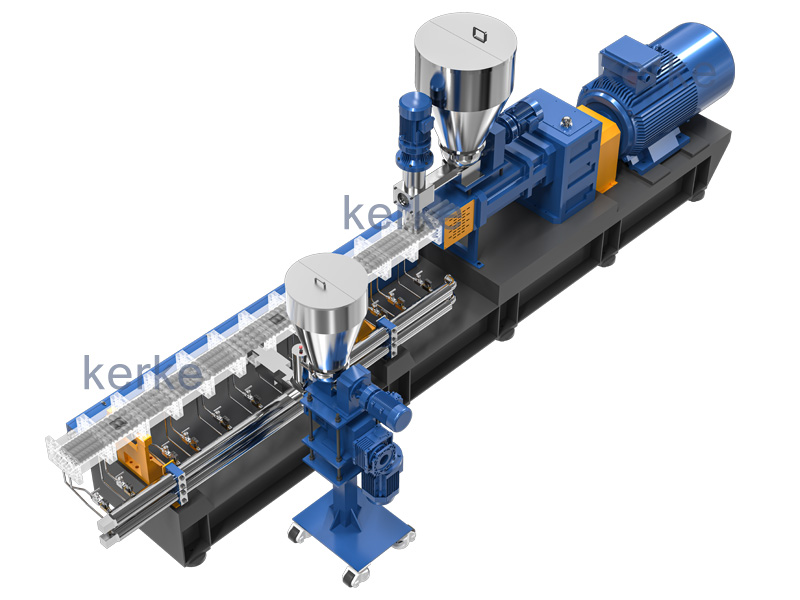
The twin screw extruder creates mixing conditions through the interaction of two intermeshing, co-rotating screws that convey material forward through a precision-engineered barrel while subjecting it to intensive mixing action. The kneading blocks and rotor elements incorporated in the screw configuration generate shear forces that break apart agglomerates and distribute nucleating agent particles throughout the polymer matrix. This combination of distributive and dispersive mixing ensures that even low concentrations of nucleating agents achieve the uniform distribution essential for consistent crystallization modification throughout the finished product.
Temperature control represents a particularly critical factor in nucleating agent masterbatch production. Many nucleating agents exhibit sensitivity to elevated temperatures, potentially degrading or losing their crystalline structure when exposed to excessive heat. The KTE series extruders incorporate advanced barrel temperature control systems with multiple independent heating and cooling zones that enable precise thermal management throughout the processing length. This capability allows processors to maintain the nucleating agent in its active crystalline form while still achieving complete melting and thorough mixing of the polymer matrix.
Working Principle of Compounding Extruder
Understanding the operational principles of the compounding extruder provides essential context for appreciating how nucleating agent masterbatch achieves its performance characteristics. The compounding extruder integrates multiple processing functions into a continuous, efficient operation that transforms raw materials into finished masterbatch with precisely controlled composition and dispersion quality.
Material feeding systems introduce nucleating agents, carrier resin, and any additional additives into the extruder barrel where the screws initiate the compounding process. Gravimetric or volumetric feeders provide accurate addition rates that ensure consistent nucleating agent concentration in the finished masterbatch. For nucleating agent masterbatch production, the precise control over addition rates proves particularly important given the narrow concentration range over which optimal performance is achieved.
The melting and mixing section of the compounding extruder subjects the material formulation to the conditions necessary for thorough incorporation of nucleating agents. As material progresses through the barrel, combination of conductive heating from barrel surfaces and viscous dissipation of mechanical energy brings it to the molten state while screw elements provide intensive mixing action. The geometry of screw elements, including conveying flights, kneading blocks, and specialty mixing elements, determines the intensity and uniformity of mixing achieved at each point along the processing length.
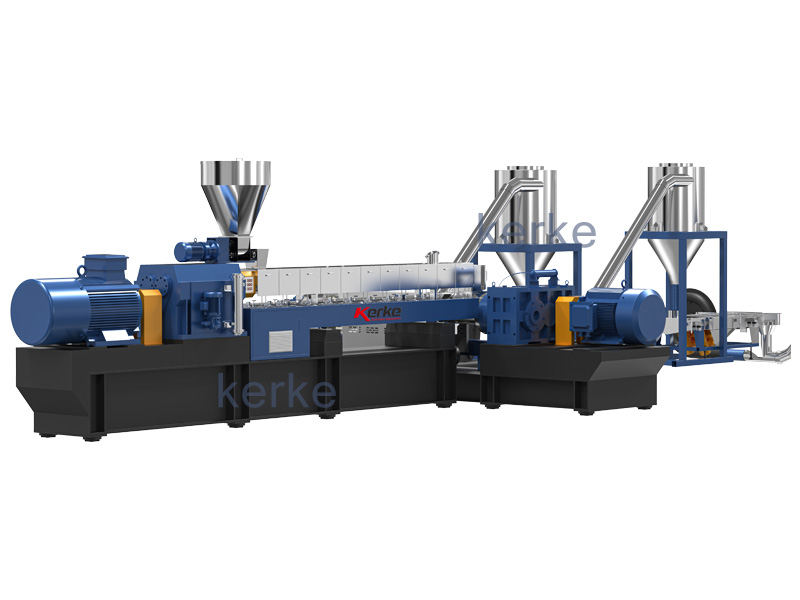
Discharge and pelletization systems convert the compounded melt into the finished masterbatch pellets suitable for storage, handling, and subsequent incorporation into polymer processing operations. Underwater pelletization provides rapid cooling that minimizes exposure to elevated temperatures and preserves nucleating agent activity. The resulting pellets exhibit the uniform size and shape characteristics necessary for consistent feeding behavior in downstream polymer processing operations.
Kerke KTE Series Extruder Features
Nanjing Kerke Extrusion Equipment Co., Ltd has established its reputation as a leading manufacturer of compounding equipment through decades of engineering development and customer collaboration. The KTE series twin screw extruders embody the accumulated expertise in masterbatch production technology, offering features specifically designed to address the requirements of nucleating agent masterbatch and other functional additive formulations.
The KTE series encompasses a comprehensive range of machine sizes serving applications from laboratory development through high-volume commercial production. The KTE-16B laboratory extruder enables formulation optimization and small-batch production for product development, while larger models including the KTE-52, KTE-65, KTE-90, and KTE-135 series address the throughput requirements of commercial manufacturing operations. This comprehensive range ensures that customers can access equipment scaled appropriately for their production volumes without sacrificing the performance characteristics necessary for quality nucleating agent masterbatch production.
Advanced barrel configurations support the specialized processing requirements of nucleating agent formulations. Modular barrel designs enable positioning of feeding ports, venting zones, and specialized processing sections according to specific formulation requirements. Vacuum devolatilization sections remove moisture and volatiles that could cause problems in finished products. Side-feeder configurations enable addition of temperature-sensitive nucleating agents at positions where processing temperatures remain moderate, preserving their crystalline structure and activity.
The KTE series drive systems feature variable frequency motors providing precise speed control and energy-efficient operation. High torque capacity ensures adequate mixing intensity even when processing difficult-to-mix formulations or when operating at high throughput rates. Comprehensive instrumentation including temperature sensors, pressure transducers, and motor load monitors provides the data necessary for process monitoring and quality verification.
Applications in Crystallization Enhancement
Nucleating agent masterbatch serves diverse applications across the plastics industry, with each application area benefiting from the crystallization modification effects in ways specific to its requirements. Understanding these application areas helps manufacturers identify opportunities for nucleating agent technology to enhance their products and manufacturing operations.
Polypropylene Crystallization Control
Polypropylene represents one of the most important application areas for nucleating agent technology. The relatively slow crystallization rate of polypropylene causes problems including warpage, poor dimensional stability, and extended cycle times in injection molding operations. Nucleating agents accelerate polypropylene crystallization, enabling faster mold ejection, reduced warpage, and improved surface appearance in finished products.
The enhancement of mechanical properties through polypropylene nucleation proves particularly valuable in applications requiring stiffness and heat resistance. Nucleated polypropylene exhibits higher flexural modulus and improved heat deflection temperature compared to unnucleated material, enabling downgauging and material reduction while maintaining performance requirements. These property improvements translate directly to cost savings and sustainability benefits through reduced material consumption.
PET Crystallization for Packaging
Polyethylene terephthalate crystallization behavior significantly influences its processing and end-use performance in packaging applications. Nucleating agents enable controlled crystallization of PET during processing, preventing problems such as whitening, embrittlement, and poor clarity that can occur with uncontrolled crystallization. In sheet extrusion and thermoforming applications, nucleated PET exhibits improved processing stability and enhanced product consistency.
The bottle manufacturing industry benefits from nucleating agent technology through improved preform production and enhanced bottle properties. Nucleated PET preforms demonstrate faster crystallization that enables shorter cycle times without sacrificing mechanical properties. Finished bottles exhibit improved gas barrier characteristics and enhanced resistance to environmental stress cracking that extends product shelf life and improves consumer satisfaction.
High-Performance Engineering Plastics
Engineering plastics including polyamides, polybutylene terephthalate, and polyoxymethylene require careful crystallization control to achieve their expected performance characteristics. Nucleating agent masterbatch formulations tailored for these polymer systems enable manufacturers to optimize crystallization for specific applications, whether prioritizing dimensional stability, impact resistance, or surface appearance.
The high processing temperatures required for engineering plastics place additional demands on nucleating agent stability and dispersion quality. Nucleating agent masterbatches for engineering plastics must survive processing temperatures that may exceed 300 degrees Celsius while maintaining their crystalline structure and nucleation effectiveness. The KTE series extruders, with their precise temperature control and intensive mixing capabilities, provide the processing conditions necessary for successful production of these demanding formulations.
Formulation and Composition
Developing effective nucleating agent masterbatch formulations requires understanding of the chemistry, physics, and processing characteristics of both nucleating agents and the polymer systems they modify. Formulation scientists must balance multiple considerations including nucleating agent selection, carrier resin compatibility, and additive package design to achieve optimal performance in specific applications.
Nucleating agent selection depends on the polymer system being modified and the specific property improvements required. Sorbitol derivatives provide excellent clarification effects in polypropylene while also improving stiffness and heat resistance. Metal phosphate nucleating agents offer superior thermal stability and are preferred for high-temperature processing applications. Carboxylic acid salts provide cost-effective nucleation for general-purpose applications. The formulation scientist must match nucleating agent chemistry to the polymer morphology and processing conditions of the target application.
Carrier resin selection ensures compatibility between the masterbatch and the base polymer while providing appropriate processing characteristics during masterbatch production. The carrier should exhibit good miscibility with the base polymer to prevent phase separation or migration problems in finished products. Melt flow characteristics of the carrier should approximate those of the base polymer to ensure consistent blending behavior during processing. Common carrier resins for nucleating agent masterbatch include polypropylene homopolymer, polypropylene impact copolymer, and polyethylene materials selected for specific application requirements.
Secondary additives often complement nucleating agents in masterbatch formulations designed for specific applications. Antioxidants protect nucleating agents from thermal degradation during processing while also providing polymer stabilization benefits. Processing aids improve dispersion and blending behavior. Compatibilizers enhance interactions between nucleating agents and the polymer matrix. The complete formulation must be evaluated as an integrated system to ensure all components contribute to the desired performance characteristics.
Production Process for Nucleating Agent Masterbatch
The production of nucleating agent masterbatch follows a systematic process that transforms raw materials into finished products meeting stringent quality specifications. Careful attention to process parameters ensures that nucleating agents achieve the dispersion quality and structural integrity necessary for effective performance in end-use applications.
Material preparation includes verification of raw material quality and appropriate pre-blending of nucleating agents with carrier resin components. Nucleating agents in powder form may require pre-drying to remove moisture that could cause processing problems or quality defects. Pre-blending operations combine nucleating agents with portions of the carrier resin to facilitate uniform distribution before the main extrusion process.
The extrusion compounding process subjects the nucleating agent formulation to the conditions necessary for thorough mixing and dispersion. Processing temperatures must be carefully controlled to prevent thermal degradation of nucleating agents while ensuring complete melting and adequate mixing of the polymer matrix. Screw speed and throughput rate determine residence time and shear intensity, requiring optimization for specific formulations to achieve the best balance between dispersion quality and nucleating agent preservation.
Pelletization and packaging complete the production process, converting the compounded melt into finished masterbatch suitable for customer delivery. Underwater pelletization provides rapid cooling that minimizes thermal exposure and preserves nucleating agent activity. Finished pellets undergo quality testing to verify nucleating agent concentration, dispersion quality, and physical characteristics before release for shipment.
Technical Parameters and Specifications
Nucleating agent masterbatch specifications encompass parameters that determine both processing performance and the crystallization modification effects achieved in finished products. Understanding these specifications enables customers to select products appropriate for their specific application requirements.
Nucleating agent concentration in masterbatch typically ranges from 2 to 10 percent depending on the nucleating agent type and the effectiveness of dispersion achieved during production. Higher concentrations enable lower addition rates to achieve target nucleation levels but may create dispersion challenges. The optimal concentration balances effectiveness, dispersion quality, and production economics for each specific application.
Melting point and thermal stability characteristics determine the processing conditions compatible with each nucleating agent masterbatch. The thermal stability temperature specifies the maximum processing temperature that can be employed without unacceptable degradation of nucleating agent effectiveness. Formulations must be selected to match the processing temperatures required for the target polymer system.
Particle size distribution and dispersion quality influence the effectiveness of nucleating agents in finished products. Poorly dispersed nucleating agents form agglomerates that cannot provide nucleation sites throughout the polymer matrix, resulting in inconsistent crystallization behavior. Quality testing methods including microscopy examination and property testing verify that nucleating agents achieve the distribution quality necessary for consistent performance.
Cost and Price Analysis
Understanding the economics of nucleating agent masterbatch enables manufacturers to evaluate the cost-effectiveness of these products in their specific applications. The total value proposition extends beyond the purchase price to include performance benefits that may reduce material consumption, improve production efficiency, or enable product improvements.
Nucleating agent raw material costs vary significantly depending on the specific chemistry and performance characteristics. Commodity nucleating agents such as certain sorbitol derivatives range from $5 to $15 per kilogram, while specialty high-performance nucleating agents may cost $30 to $80 per kilogram. The formulation scientist must evaluate whether the additional cost of premium nucleating agents provides proportionate benefits in specific applications.
Masterbatch production costs include equipment depreciation, energy consumption, labor, and quality control expenses that contribute to the final product pricing. Equipment investment for nucleating agent masterbatch production ranges from approximately $150,000 for laboratory-scale systems to over $1 million for high-volume production installations. These investments influence the pricing structures available to customers with different order volumes and the minimum production runs required for economic viability.
Commercial nucleating agent masterbatches typically price from $5 to $25 per kilogram depending on nucleating agent type, concentration, and performance requirements. Standard formulations for polypropylene nucleation may price in the $5 to $10 range, while specialty products for engineering plastics or high-performance applications may exceed $20 per kilogram. When evaluating nucleating agent masterbatch costs, manufacturers should calculate the total cost impact including material addition rates, processing efficiency improvements, and property enhancement benefits.
Equipment Selection Guide
Selecting appropriate equipment for nucleating agent masterbatch production requires evaluation of multiple factors that determine both production capability and product quality. The choice of compounding extruder significantly influences the dispersion quality achievable and the formulation flexibility available for different nucleating agent types.
Throughput capacity requirements should match the anticipated production volumes while providing flexibility for development work and small-batch specialty products. Kerke offers the KTE series in sizes ranging from compact laboratory units producing 30 kilograms per hour to production-scale machines exceeding 2000 kilograms per hour. This range enables selection of appropriately scaled equipment for operations ranging from specialty formulation development to high-volume commodity production.
Screw configuration flexibility proves particularly important for nucleating agent masterbatch production given the variety of nucleating agent chemistries and the need to balance dispersion intensity against thermal preservation. Modular screw designs enable processors to configure mixing sections, kneading zones, and conveying elements according to the specific requirements of each formulation. The ability to modify screw configurations for different nucleating agent types provides versatility that supports broad product portfolios.
Temperature control capabilities determine the precision with which processing conditions can be maintained throughout the extrusion process. Multiple independent heating and cooling zones enable creation of temperature profiles that optimize nucleating agent preservation while achieving complete melting and adequate dispersion. Advanced temperature control systems also respond quickly to disturbances, maintaining stable conditions despite variations in material feed rates or composition.
Production Quality Control
Quality control systems for nucleating agent masterbatch production must address the unique challenges presented by these functional additive formulations. Verification of nucleating agent integrity and dispersion quality ensures that finished products deliver the crystallization modification effects expected by customers.
Incoming material testing verifies that nucleating agents meet specifications for chemical purity, particle size, and activity before use in production. Different nucleating agent types require different testing methods, including melting point determination, thermal analysis, and activity testing against reference polymer samples. Only nucleating agents passing these quality checks enter production use.
Process monitoring during extrusion provides real-time indication of production stability and potential quality issues. Motor load, melt pressure, and temperature measurements reveal deviations from established processing conditions that might indicate problems with nucleating agent dispersion or degradation. Regular sampling enables visual inspection and preliminary testing that identifies issues before large quantities of material accumulate.
Finished product testing includes nucleating agent concentration verification, dispersion quality assessment, and performance testing in representative polymer systems. Differential scanning calorimetry measures crystallization temperature and other thermal properties that indicate nucleating agent effectiveness. Injection molding test plaques enable visual assessment of surface appearance, warpage, and mechanical properties that reflect nucleating agent performance in practical processing conditions.
Common Issues and Solutions
Despite careful formulation and production control, nucleating agent masterbatch applications may encounter problems related to dispersion, compatibility, or processing behavior. Understanding common issues and their solutions enables manufacturers to address problems effectively and prevent recurrence.
Inadequate crystallization enhancement in finished products typically indicates insufficient nucleating agent dispersion or degradation during processing. Verify that the masterbatch addition rate matches formulation specifications and that feeding equipment delivers consistent rates throughout production. If dispersion quality is suspect, request demonstration of dispersion testing results from the masterbatch supplier or evaluate alternative formulations with proven effectiveness.
Surface defects including sink marks, warpage, or poor surface appearance may result from improper nucleation causing non-uniform crystallization. Nucleating agents should accelerate crystallization uniformly throughout the part cross-section; if this does not occur, the resulting differential shrinkage creates internal stresses and dimensional problems. Solutions include optimizing nucleating agent concentration, adjusting processing temperatures, or selecting alternative nucleating agent types better suited to the specific part geometry and polymer system.
Processing instabilities including surging, pressure fluctuations, or equipment overload may indicate compatibility problems between the nucleating agent masterbatch and the base polymer system. Verify that the carrier resin in the masterbatch is compatible with the base polymer and that nucleating agent concentrations are within recommended ranges. If problems persist, consult with the masterbatch supplier regarding formulation adjustments or processing recommendations.
Maintenance and Operation
Proper equipment maintenance and operational practices ensure consistent quality and reliable performance from nucleating agent masterbatch production systems. Preventive maintenance programs minimize equipment downtime while maintaining the processing precision necessary for consistent product quality.
Daily operational procedures include verification of material supplies, inspection of feeding equipment, and monitoring of processing parameters throughout production runs. Operators should maintain logs of processing conditions including temperatures, pressures, and motor loads that enable identification of trends or deviations. Regular sampling provides ongoing verification of product quality and enables early detection of developing problems.
Preventive maintenance schedules address wear components and calibration requirements that affect processing precision and product quality. Screw elements and barrel liners experience wear during operation, particularly when processing formulations containing fillers or abrasive additives. Periodic inspection and replacement of worn components maintains mixing performance and prevents quality degradation. Temperature controller calibration and pressure transducer verification ensure accurate process monitoring.
Troubleshooting procedures for quality problems should follow systematic approaches that identify root causes efficiently. Document symptoms carefully, including when problems first appeared and what changes occurred around that time. Review recent changes in formulations, raw materials, or processing conditions. Test hypotheses systematically and verify corrective actions through controlled experiments before implementing changes in production.
Market Trends and Industry Development
The nucleating agent market continues to evolve in response to changing polymer industry requirements, regulatory pressures, and technological developments. Understanding these trends helps manufacturers anticipate future requirements and position their products competitively.
Sustainability requirements drive increasing interest in nucleating agent technology as manufacturers seek to reduce material consumption and improve production efficiency. Nucleating agents enable downgauging of parts while maintaining performance requirements, directly reducing material usage and associated environmental impacts. Processing efficiency improvements through faster cycle times and reduced scrap rates provide additional sustainability benefits that align with industry environmental goals.
Bio-based and biodegradable polymers represent an emerging application area for nucleating agent technology. These materials often exhibit challenging crystallization behaviors that limit their commercial viability for applications requiring dimensional stability or rapid production rates. Nucleating agent formulations tailored for bio-based polymers can enable improved processing and enhanced product performance that expands the application range for these sustainable materials.
Advanced nucleating agent chemistries continue to expand the capabilities of crystallization control technology. Heterogeneous nucleating agents with improved thermal stability enable application in engineering polymers processed at higher temperatures. Clarifying nucleating agents provide transparency improvements that expand the application range for nucleated polymers in packaging and consumer products. Specialty nucleating agents for specific polymer systems enable optimization for applications with unique requirements.
Why Choose Kerke Extruder
Nanjing Kerke Extrusion Equipment Co., Ltd provides the compounding equipment capabilities necessary for producing high-quality nucleating agent masterbatch that meets demanding application requirements. The combination of advanced technology, manufacturing capability, and global support establishes Kerke as a preferred partner for masterbatch producers seeking reliable equipment and technical expertise.
The KTE series twin screw extruders offer mixing performance essential for achieving the dispersion quality required for effective nucleating agent masterbatch. Advanced screw configurations provide intensive mixing that breaks apart nucleating agent agglomerates and distributes particles uniformly throughout the polymer matrix. Precise temperature control systems preserve nucleating agent structure and activity while ensuring complete melting and thorough compounding.
Kerke manufacturing facilities spanning nearly 20,000 square meters enable production of compounding equipment meeting the most demanding quality standards. Modern manufacturing equipment ensures precision fabrication of barrels, screws, and drive components. Comprehensive quality management systems verify that every machine meets specifications for performance, reliability, and consistency.
Global presence in over 70 countries ensures that Kerke customers receive responsive support regardless of location. Factory-trained distributors provide local sales and service capabilities, while Kerke technical specialists offer advanced support for complex applications. This global network, combined with more than 2000 machines operating worldwide, provides confidence in long-term support and partnership.
Frequently Asked Questions
What concentration of nucleating agent is typically used in masterbatch?
Nucleating agent concentrations in masterbatch typically range from 2 to 10 percent by weight depending on the nucleating agent type and the desired nucleation intensity. The specific concentration required depends on the polymer system, processing conditions, and performance requirements of the target application. Technical data sheets provide guidance on recommended concentrations for specific products.
How do nucleating agents improve polymer properties?
Nucleating agents provide sites where polymer crystals can initiate formation during cooling from the melt. This increases the number of crystals formed while reducing their individual size, creating a more uniform crystalline morphology. The modified crystalline structure improves stiffness, heat resistance, dimensional stability, and in some cases clarity and impact resistance.
Can nucleating agents be used with recycled polymers?
Yes, nucleating agents can improve the properties of recycled polymers that may have degraded crystallization behavior compared to virgin materials. However, the effectiveness may vary depending on the contamination levels and processing history of the recycled material. Testing is recommended to verify nucleating agent performance in specific recycled polymer applications.
What is the shelf life of nucleating agent masterbatch?
Properly stored nucleating agent masterbatch typically maintains effectiveness for 12 to 24 months depending on storage conditions and the specific nucleating agent chemistry. Storage in a cool, dry environment protected from direct sunlight and contamination helps preserve nucleating agent activity. Technical data sheets provide specific shelf life recommendations for individual products.
How does nucleating agent affect processing cycle time?
Nucleating agents accelerate polymer crystallization, allowing faster ejection from molds in injection molding applications and shorter cooling times in extrusion processes. The specific cycle time reduction depends on the polymer system, nucleating agent type and concentration, and part geometry. Typical improvements range from 10 to 30 percent reduction in cycle time.
What is the difference between nucleating agents and clarifying agents?
Nucleating agents increase the number of crystals formed during polymer crystallization and are used primarily to improve mechanical properties and processing characteristics. Clarifying agents are a specialized type of nucleating agent that also provide optical clarity by reducing crystal size below the wavelength of visible light. Clarifying agents are typically used in applications where transparency is important.
Are nucleating agents approved for food contact applications?
Many nucleating agents are approved for food contact use under regulations such as FDA requirements in the United States and European Union food contact regulations. However, specific approvals vary by nucleating agent type and application. Manufacturers should verify compliance with relevant regulations for their specific product applications.
How should nucleating agent masterbatch be incorporated into polymer processing?
Nucleating agent masterbatch is typically added to the base polymer at the extruder feed throat or in a side-feeder arrangement depending on the processing equipment and formulation. Addition rates typically range from 0.5 to 5 percent depending on the masterbatch concentration and the desired nucleation level. Proper mixing after addition ensures uniform distribution throughout the polymer melt.
What technical support does Kerke provide for nucleating agent masterbatch production?
Kerke technical specialists assist customers with equipment selection, process optimization, and troubleshooting for nucleating agent masterbatch production applications. This support includes formulation review, processing recommendations, and assistance with equipment startup and optimization. Contact Kerke or authorized distributors to initiate technical consultation.
Conclusion
Nucleating agent masterbatch represents a powerful technology for modifying polymer crystallization and achieving enhanced product properties across diverse plastic manufacturing applications. The controlled crystalline morphology enabled by nucleating agents improves mechanical performance, processing efficiency, and product consistency while enabling material reduction and sustainability benefits that align with contemporary industry priorities.
Producing effective nucleating agent masterbatch requires advanced compounding equipment capable of achieving superior dispersion while preserving the sensitive crystalline structure of nucleating agents. The KTE series twin screw extruders from Nanjing Kerke Extrusion Equipment Co., Ltd provide these capabilities through optimized screw configurations, precise temperature control, and proven reliability that enables consistent production of high-quality nucleating agent masterbatches.
Understanding nucleating agent technology empowers manufacturers to evaluate and specify appropriate products for their specific applications while enabling informed collaboration with suppliers and equipment partners. As polymer industry requirements continue to evolve toward higher performance and greater sustainability, nucleating agent masterbatch technology will play an increasingly important role in enabling manufacturers to meet these demanding objectives while maintaining competitive manufacturing operations.