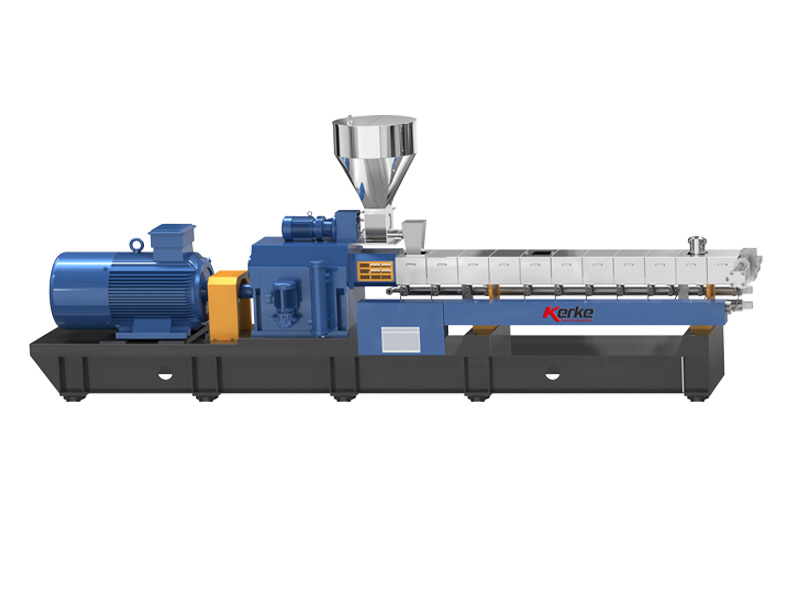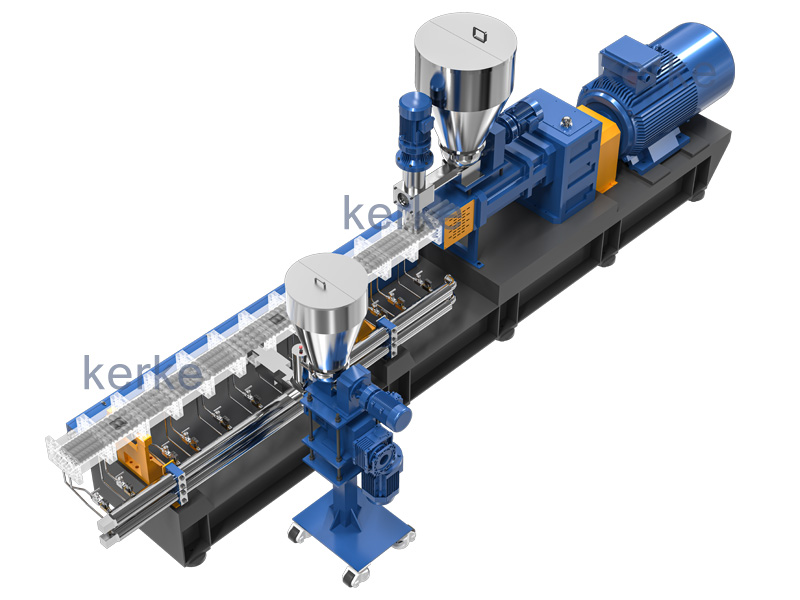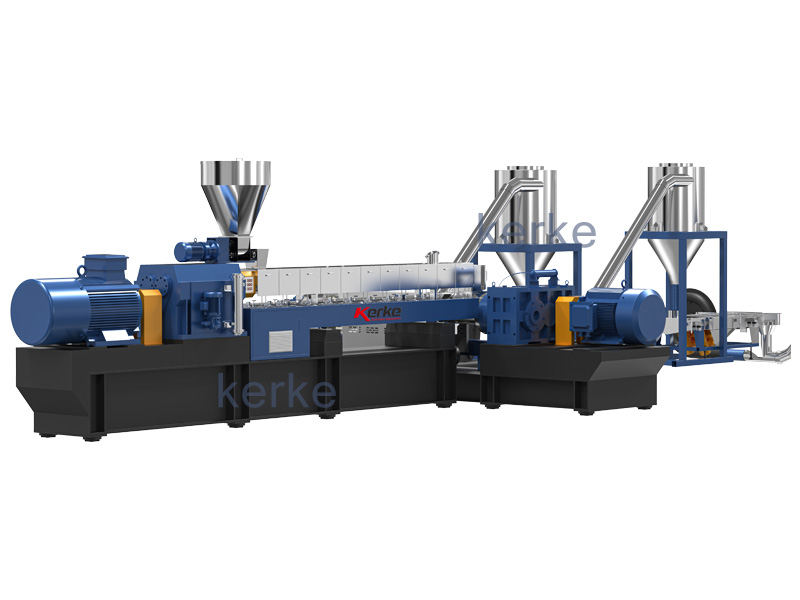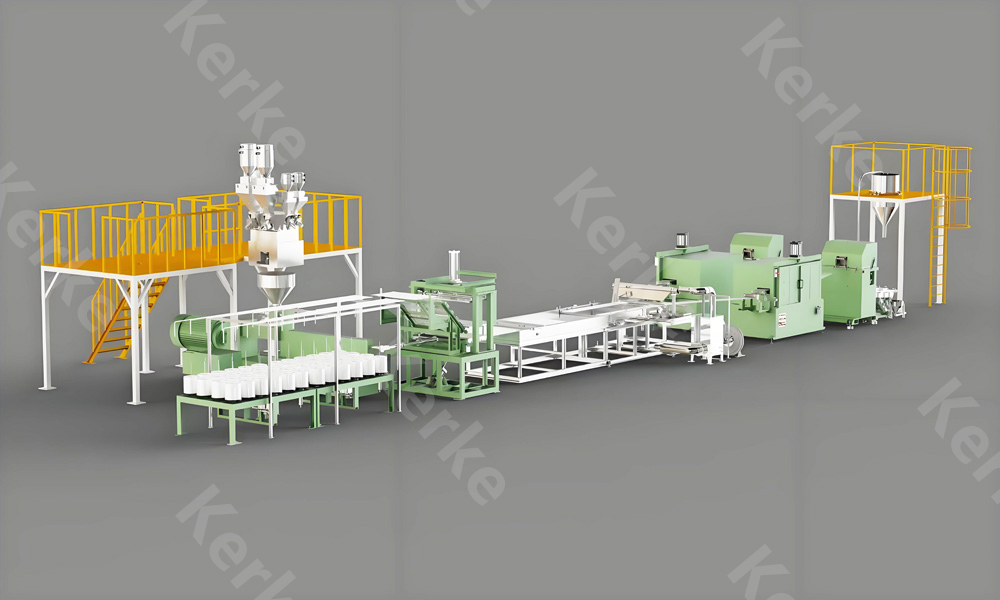
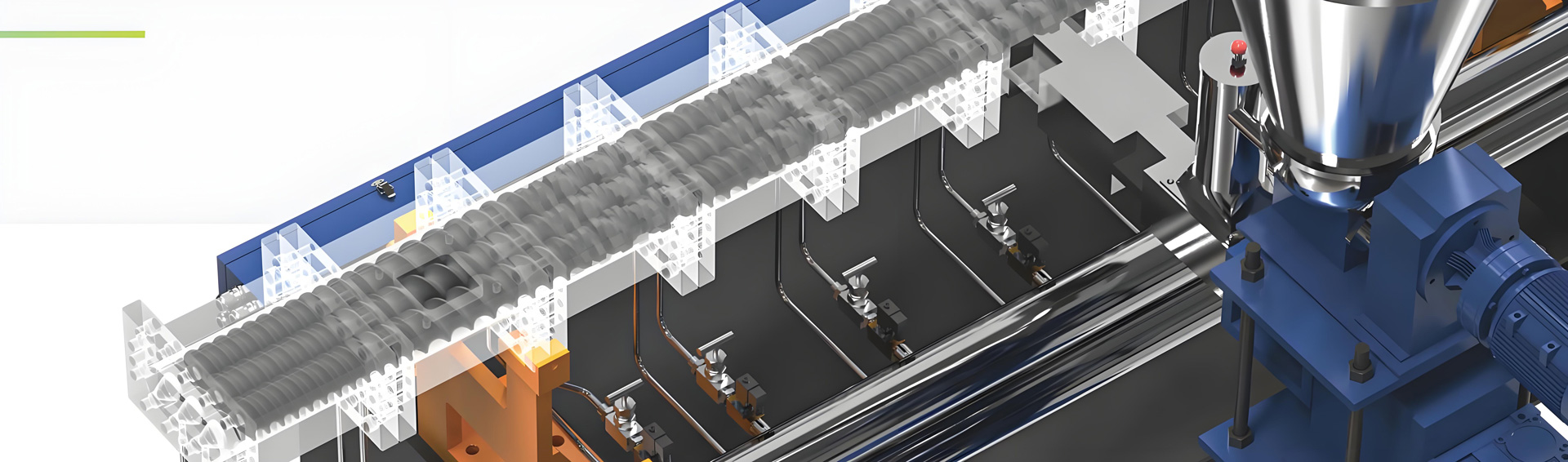
In the competitive landscape of plastic manufacturing and polymer processing, achieving consistent high output remains a critical priority for production facilities worldwide. A compounding extruder serves as the backbone of modern plastic production lines, transforming raw materials into premium compounds that meet stringent industry standards. As global demand for plastic compounds continues to surge across applications ranging from automotive components to packaging materials, manufacturers must optimize their production capacity to remain competitive and profitable. This comprehensive guide explores the technical specifications, design considerations, and operational strategies that enable a high-performance compounding extruder to deliver exceptional throughput while maintaining product quality consistency. Understanding these principles empowers procurement managers, production engineers, and facility operators to make informed decisions when selecting equipment for mass production operations.
Understanding Compounding Extruder Production Capacity
Production capacity represents the foundation of any large-scale manufacturing operation, directly influencing facility profitability and market competitiveness. The ability to measure, analyze, and optimize this capacity determines whether a production line operates as a cost center or a profit generator. Modern compounding extruders offer sophisticated monitoring systems that provide real-time data on operational parameters, enabling operators to identify optimization opportunities and maintain peak performance levels. Understanding the nuanced relationship between equipment design, operational parameters, and output quality separates successful production facilities from those struggling with inefficiency and waste.
Defining Output Metrics and Performance Indicators
The primary output metric for any compounding extruder system is measured in kilograms per hour, representing the volumetric rate at which processed material exits the production line. Industry-standard production capacity calculations consider both continuous operation rates and peak performance capabilities, providing manufacturers with realistic expectations for daily output volumes. Advanced monitoring systems track these metrics with precision, displaying real-time throughput data alongside historical trends that reveal equipment performance patterns over time. Production managers utilize these indicators to schedule operations, plan maintenance intervals, and optimize shift assignments for maximum efficiency. Understanding how environmental factors such as ambient temperature and humidity influence output measurements ensures accurate capacity planning across seasonal variations.
The Role of L/D Ratio in Throughput Optimization
The length-to-diameter ratio of a compounding extruder barrel fundamentally determines processing capability and output potential for various material formulations. Higher L/D ratios, typically ranging from 32:1 to 52:1 in modern high-performance equipment, provide extended mixing zones that improve compound homogeneity without sacrificing throughput rates. This extended processing length enables superior distributive and dispersive mixing, critical for achieving consistent product quality at elevated production speeds. The relationship between L/D ratio and production capacity follows a predictable curve, with throughput optimization opportunities existing at each configuration level. Diminishing returns occur beyond certain thresholds depending on material characteristics and processing requirements. Selecting the optimal L/D ratio requires careful analysis of product specifications, material properties, and production volume targets to achieve the best balance between equipment investment and operational performance. Throughput optimization at high L/D ratios requires corresponding advances in drive power and cooling capacity to realize the full potential of extended processing length.
Specific Energy Consumption Standards
Specific energy consumption measured in kilowatt-hours per kilogram represents a critical efficiency metric that directly impacts production costs and environmental sustainability. A well-designed compounding extruder achieves lower energy consumption values by maximizing mechanical efficiency while minimizing heat generation from shear forces. Industry benchmarks suggest that modern twin-screw compounding extruders should achieve specific energy consumption values between 0.15 and 0.35 kWh/kg for standard applications, with premium equipment reaching values below 0.20 kWh/kg. Tracking this metric over time reveals equipment degradation, formulation changes, or operational inefficiencies that may impact production costs. Facilities committed to sustainability initiatives prioritize equipment with superior energy efficiency ratings, reducing both operating costs and carbon footprint simultaneously.
Critical Factors Influencing Compounding Extruder Throughput
The throughput optimization potential of a compounding extruder depends on multiple interconnected variables that require systematic analysis and coordinated adjustment. Production capacity maximization demands attention to mechanical design, process parameters, and operational practices that collectively determine achievable output rates. Engineers specializing in compounding extruder optimization apply established principles combined with empirical tuning to identify optimal operating configurations for specific applications. Continuous improvement programs focused on throughput optimization yield substantial returns through enhanced productivity and improved cost competitiveness.
Screw Design Engineering and Configuration
Screw design represents the most influential factor affecting compounding extruder throughput, directly determining material transport efficiency, mixing quality, and maximum achievable processing rates. A high yield compounding extruder achieves superior results through optimized screw geometry that balances throughput requirements against mixing quality specifications. Modern screw elements utilize advanced metallurgy and precision manufacturing techniques to deliver superior wear resistance and consistent performance over extended production runs. The modular design approach employed in contemporary twin-screw extruders enables customized screw configurations optimized for specific product requirements and throughput targets. Specialized elements including conveying screws, kneading blocks, and mixing elements work together to accomplish feeding, compression, melting, mixing, and devolatilization within the barrel assembly. Proper screw combination design balances throughput requirements against mixing quality specifications, with experienced engineers adjusting element sequence and geometry based on material characteristics and product demands.
Motor Power and Drive System Capabilities
The main drive motor provides mechanical energy for material processing, with power ratings typically ranging from 50 kW for laboratory-scale equipment to over 1000 kW for large-scale industrial production systems. Motor power selection must account for maximum throughput requirements, material viscosity characteristics, and anticipated operating conditions across product changeovers. Modern drive systems incorporate variable frequency drive technology enabling precise speed control and soft-start capabilities that protect mechanical components from sudden load changes. High-torque motor designs provide the reserve power necessary to maintain throughput during processing challenges such as material variations or environmental factors. Investment in premium drive components yields long-term returns through improved reliability, reduced maintenance costs, and enhanced capacity utilization over equipment lifespan.
Temperature Control and Cooling Systems
Precise temperature management throughout the barrel and die assembly ensures optimal material processing conditions while preventing degradation that compromises product quality. Multi-zone barrel temperature control enables independent adjustment of processing conditions along the material flow path, accommodating the varying thermal requirements of different processing stages. Advanced cooling systems utilize efficient heat exchangers and precisely controlled flow rates to maintain stable temperatures even during high-throughput operation. Insufficient cooling capacity creates temperature drift that manifests as output variations, product quality fluctuations, and eventual equipment damage from thermal overload. The thermal balance between heating elements, cooling systems, and shear-generated heat requires careful tuning during commissioning and ongoing adjustment as formulations change.
Feeding System Efficiency and Precision
The feeding system introduces raw materials into the compounding extruder, with feeding efficiency directly impacting achievable throughput rates and product quality consistency. Gravimetric feeding systems provide precise material introduction rates essential for maintaining formulation accuracy at high production speeds, utilizing loss-in-weight technology to measure and control feed rates with superior accuracy. Multiple feeding ports enable sequential addition of components at optimized locations along the barrel, improving distribution efficiency for masterbatch and additive incorporation. Twin-screw side feeders handle high-additive-load formulations by introducing fillers or fibers at controlled rates without overwhelming the main extrusion screws. The coordination between feeding systems and main extruder speed requires sophisticated control algorithms that maintain proper fill ratio and prevent starve feeding conditions.
Die and Pelletizing System Performance
The die assembly shapes molten material into the desired cross-section before pelletizing converts it into the final product form for storage and downstream processing. Strand pelletizing systems remain popular for high-throughput applications, producing uniform pellets suitable for most compound applications through straightforward mechanical operation. Underwater pelletizing technology achieves higher throughput rates with superior pellet quality, particularly beneficial for thermally sensitive materials requiring rapid cooling. Die plate design influences pressure drop, flow distribution, and maintenance requirements, with modern designs optimizing flow channels to minimize residence time variations. Proper die alignment and temperature uniformity prevent product defects including stringing, clustering, and inconsistent pellet dimensions that affect customer acceptance.
Kerke Compounding Extruder High Output Design Features
Nanjing Kerke Extrusion Equipment Co., Ltd, operating under the WANPLAS Group banner, has established itself as a leading manufacturer of high-performance compounding extruders serving customers across more than 70 countries worldwide. With over 12 years of industry experience and more than 2000 units operating globally, Kerke combines engineering expertise with manufacturing excellence to deliver equipment optimized for mass production requirements. The extensive KTE Series encompasses models ranging from compact laboratory-scale units to large industrial systems capable of producing several thousand kilograms per hour. Manufacturing facilities spanning nearly 20,000 square meters house advanced production equipment staffed by over 100 professional team members committed to quality and innovation.
KTE Series Large Capacity Models Overview
The KTE Series represents Kerke’s comprehensive product range designed to address diverse production capacity requirements across multiple industry sectors. The KTE-65 and KTE-75 models target mid-scale production applications requiring throughput rates between 300 and 800 kg/h, offering excellent flexibility for product changeovers and formulation variations. Large capacity models including the KTE-95 and KTE-110 deliver throughput rates from 1000 to 2500 kg/h, addressing the demanding requirements of large-scale compound manufacturers. The flagship KTE-135 series achieves maximum throughput rates exceeding 4000 kg/h for the most demanding mass production applications, representing the pinnacle of Kerke’s engineering capabilities. Each model incorporates standardized components and control interfaces that simplify operator training and maintenance procedures across the product range.
Advanced Screw Design Technology
Kerke compounding extruders feature proprietary screw design technologies developed through extensive research and field validation with real production materials. The modular screw element system enables precise configuration optimization for specific applications including color masterbatch, filler compounds, and engineering resin formulations. High-wear-resistance materials including nitrogen-hardened steels and specialized coatings extend service intervals while maintaining dimensional precision critical for consistent product quality. Computer-aided design and finite element analysis ensure optimal stress distribution throughout the screw assembly, enabling higher torque ratings without compromising reliability. The standardized interface dimensions across element types enable flexible reconfiguration as production requirements evolve over equipment lifecycle.
Efficient Cooling System Integration
Thermal management optimization enables Kerke compounding extruders to maintain stable processing conditions even during sustained high-throughput operation. The barrel cooling system utilizes independently controlled zones with efficient heat exchanger technology that responds rapidly to temperature variations. Closed-loop cooling water systems maintain consistent supply temperatures regardless of process demands, preventing the temperature drift that compromises product quality in lesser equipment. High-capacity oil cooling systems for the main gearbox and motor ensure component longevity under demanding operating conditions. The integrated temperature control architecture coordinates heating and cooling functions to achieve stable processing conditions within tight tolerances throughout production runs.
Optimized Feeding System Solutions
Kerke offers comprehensive feeding system solutions designed to integrate seamlessly with main extruder equipment for complete production line packages. Gravimetric feeding stations provide formulation accuracy essential for compound consistency, with multi-component systems enabling complex recipes with automatic proportioning control. Variable-speed feeder drives enable precise adjustment of introduction rates to match varying material flow characteristics during product transitions. The integrated control architecture enables coordinated operation between feeders and main extruder, maintaining optimal fill ratio regardless of feed rate variations. Optional features including nitrogen purging systems and vacuum deaeration attachments address specialized processing requirements for sensitive formulations.
Technical Strategies for Maximizing Compounding Extruder Production Capacity
Achieving maximum production capacity requires systematic optimization of operational parameters within the constraints defined by equipment capabilities and product specifications. Production engineers apply established principles combined with empirical tuning to identify optimal operating points that balance throughput against quality requirements. The continuous pursuit of capacity improvement distinguishes leading production facilities from competitors, generating competitive advantages through superior cost structures and supply capabilities. Throughput optimization remains a continuous journey rather than a destination, requiring ongoing attention to process variables and equipment performance. Investment in operator training and process optimization expertise yields substantial returns through enhanced capacity utilization over equipment operational life.
Speed and Torque Optimization Techniques
Screw speed directly influences throughput capacity, with higher speeds enabling increased material transport rates up to mechanical and thermal limits of the system. Throughput optimization through speed adjustment requires balancing the competing demands of output rate and product quality that shift depending on formulation requirements. However, speed increases also elevate shear heating, requiring corresponding adjustments to temperature settings and cooling system parameters to maintain product quality. Torque utilization optimization identifies the maximum sustainable torque level that enables peak throughput without triggering protective shutdowns during processing variations. Modern control systems provide real-time torque monitoring with automatic speed adjustment capabilities that protect equipment while maximizing throughput under varying conditions. The relationship between speed and throughput follows predictable curves that enable engineering teams to establish optimal operating ranges for each product category. High yield production results from sustained operation at these optimized conditions over extended production campaigns.
Multi-Component Feeding Technologies
Advanced multi-component feeding strategies enable production capacity maximization by optimizing introduction rates and locations for each formulation ingredient. Side feeding technology allows high-load additive incorporation without creating bottlenecks in the main extrusion process, enabling throughput rates impossible with purely primary feeding approaches. Controlled feeding sequencing coordinates ingredient introduction to match optimal processing locations within the barrel assembly, improving distribution efficiency and reducing mixing requirements. Gravimetric feeding systems maintain formulation accuracy even at elevated throughput rates, ensuring product consistency regardless of production speed. The coordination between multiple feeders and main extruder speed requires sophisticated control algorithms that adapt to changing material characteristics during product transitions.
Online Mixing Enhancement Methods
Inline mixing technology enhances throughput capacity by improving mixing efficiency, enabling higher screw speeds without compromising compound quality. Static mixers installed between the extruder and die assembly provide additional distributive mixing without requiring screw speed increases or screw modification. High-shear mixer attachments enable rapid incorporation of additives at controlled locations, reducing the processing burden on the main screw assembly. Liquid injection systems enable precise addition of colorants, lubricants, or processing aids directly into the melt stream for rapid dispersion. These enhancement technologies extend the effective capacity of existing equipment without requiring major capital investment in larger production lines.
Continuous Production Stability Management
Achieving consistent high output requires robust process control systems that maintain stable operation despite material variations and environmental factors. Statistical process control techniques monitor key parameters and alert operators to deviations before they impact product quality or throughput. Predictive maintenance algorithms analyze equipment performance data to identify components approaching failure, enabling scheduled replacements that prevent unexpected downtime. Energy monitoring systems track consumption patterns to identify operational improvements that reduce costs without impacting throughput. The integration of these technologies enables true continuous production operation with minimal interruption and maximum capacity utilization throughout production campaigns.
Cost-Benefit Analysis for Mass Production Operations
Economic analysis of compounding extruder investments requires comprehensive evaluation of capital costs, operating expenses, and revenue implications across the equipment lifecycle. Production capacity decisions fundamentally impact facility economics, influencing unit production costs, capital efficiency, and competitive positioning within target markets. Understanding the financial implications of capacity choices enables informed investment decisions that optimize return on capital employed while managing operational risks. Rigorous economic analysis separates sound investments from costly mistakes that may not become apparent until after equipment installation and commissioning.
Equipment Investment and Capacity Matching
Capital investment for compounding extruder systems scales with capacity ratings, requiring careful analysis to match equipment specifications with production requirements. Oversized equipment incurs unnecessary capital costs along with elevated operating expenses including energy consumption, maintenance requirements, and floor space allocation. Undersized equipment creates production bottlenecks, requires expensive future upgrades, and may prevent pursuit of market opportunities requiring higher output volumes. Capacity matching analysis considers not only current requirements but also anticipated growth, product development trajectories, and market evolution patterns. Multi-stage investment strategies enable capacity growth aligned with business development, avoiding the binary choice between massive upfront investment and chronic undercapacity.
Unit Production Cost Calculation Methods
Unit production cost represents the total cost of producing one kilogram of compound, calculated by dividing total production costs by total output volume. Major cost components include raw material costs, energy consumption, labor expenses, maintenance allocation, and capital depreciation charges. Energy costs for compounding extrusion typically represent 15-25% of total production costs, making energy efficiency a critical consideration for high-throughput operations. Labor costs per unit decrease with increasing throughput due to fixed labor requirements regardless of production volume within equipment capacity limits. The relationship between throughput and unit costs typically exhibits diminishing returns as capacity utilization approaches maximum levels, with optimal operating points balancing throughput against quality and reliability considerations.
Impact of Capacity Utilization on Profitability
Capacity utilization rate directly influences production economics, with higher utilization rates enabling reduced unit costs and improved competitive positioning. Full-capacity operation distributes fixed costs across maximum output volumes, achieving the lowest possible unit production costs for competitive pricing strategies. Low utilization rates create financial pressure through high unit costs that may exceed product pricing in competitive markets, generating losses on every kilogram produced. Capacity planning must account for demand variability, product changeover requirements, and seasonal patterns that create periods of reduced utilization regardless of average demand levels. Strategic approaches including contract manufacturing, flexible workforce arrangements, and diversified product portfolios help maintain healthy utilization rates despite market fluctuations.
Economic Comparison of Different Capacity Solutions
Comparative economic analysis evaluates multiple capacity scenarios including single-unit operation, multi-unit configurations, and phased expansion approaches. Production capacity planning must consider not only equipment specifications but also the full lifecycle costs including maintenance, energy consumption, and eventual replacement. Single high-capacity units offer simplicity advantages but create vulnerability to equipment downtime and may exceed optimal production scales for specific product categories. Multiple smaller units provide flexibility advantages, enabling independent production campaigns and maintenance scheduling without complete production shutdown. Phased expansion strategies balance capital efficiency against capacity requirements, adding equipment as demand growth validates investment decisions. Total cost of ownership analysis extending over equipment lifespan typically reveals that initially cheaper solutions may prove more expensive when considering maintenance, energy efficiency, and upgrade potential over time. The compounding extruder selection process should prioritize solutions that deliver optimal lifecycle economics rather than simply minimizing initial capital expenditure.
Industry Application Case Studies
Real-world applications demonstrate how high-output compounding extruders deliver value across diverse industry sectors and product categories. Each application presents unique processing challenges requiring specialized equipment configurations and operational expertise to achieve optimal results. Examining these case studies provides practical insights applicable to production planning and equipment selection decisions across the compounding industry.
Color Masterbatch High-Volume Production
Color masterbatch production represents one of the highest volume applications for compounding extruders, with global demand requiring production facilities capable of thousands of tons annually. High-pigment-load formulations challenge mixing efficiency, requiring optimized screw configurations and high-shear mixing elements to achieve uniform dispersion at acceptable throughput rates. The KTE-95 series has proven particularly effective for masterbatch production, delivering throughput rates exceeding 1500 kg/h while maintaining excellent color consistency measured by colorimetric analysis. Energy consumption values below 0.22 kWh/kg demonstrate the efficiency advantages of properly configured high-capacity equipment for color concentrate production. Product changeover optimization reduces setup times between colors, enabling more production runs per shift and improved capacity utilization rates.
Engineering Plastics Compounding
Engineering plastics including polycarbonate, nylon, and polyethylene terephthalate require precise temperature control and careful processing to maintain mechanical properties during compounding. High-viscosity materials challenge throughput capacity, requiring robust drive systems and optimized screw configurations to achieve acceptable production rates. Kerke compounding extruders equipped with high-torque motors and precision temperature control achieve throughput rates of 800-1200 kg/h for engineering resin applications while preserving impact strength and thermal resistance properties. The extended L/D ratio options available across the KTE Series provide additional mixing capability essential for achieving proper dispersion of reinforcement additives including glass fibers and impact modifiers. These capabilities enable production of high-performance compounds serving demanding automotive, electronics, and industrial applications.
Recycled Material Modification
Recycling operations present unique processing challenges including material contamination, inconsistent quality, and气味 emissions that require specialized equipment configurations for optimal throughput. High-output compounding systems enable recycled material processors to achieve the volumes necessary for economic viability in competitive commodity markets. Kerke compounding extruders configured with enhanced devolatilization capability remove moisture and volatile contaminants that compromise final product quality. Throughput rates of 1000-2000 kg/h for recycled material applications enable processors to achieve the scale economies necessary to compete with virgin material pricing. The robustness and reliability of Kerke equipment proves particularly valuable in recycling applications where material variability creates demanding operating conditions.
Filler Masterbatch Production
Filler masterbatch production utilizing calcium carbonate, talc, or barium sulfate requires high throughput rates to achieve competitive pricing in commodity markets serving plastic conversion industries. Extreme filler loadings up to 80% by weight challenge equipment capacity, requiring optimized screw configurations that maintain effective mixing while preventing excessive pressure buildup. A high yield compounding extruder configured with side feeding technology enables introduction of high filler loadings at controlled rates that prevent processing bottlenecks common with primary feeding approaches. Throughput rates of 2000-3500 kg/h have been achieved in commercial filler masterbatch production using KTE-110 and KTE-135 configurations. The energy efficiency of these high-throughput configurations enables favorable production economics even at the thin margins characteristic of commodity filler compounds. Production capacity in filler applications depends heavily on feeder capabilities and screw configuration optimization for high-solids formulations.
Common Problems and Solutions for Throughput Optimization
Production challenges frequently limit achievable throughput below equipment specifications, requiring systematic diagnosis and targeted solutions to restore capacity potential. Understanding common problems and their root causes enables production teams to implement effective countermeasures that recover lost capacity and prevent recurrence. Continuous monitoring and proactive maintenance identify issues before they impact production, maximizing equipment utilization throughout operational campaigns.
Material Feeding Difficulties
Feeding difficulties manifest as inconsistent output rates, formulation variations, and equipment surging that prevents sustained high-throughput operation. Poor flowing materials require feeder modifications including specialized screws, agitated hoppers, or vibratory assist systems to achieve consistent introduction rates. Bridging and ratholing in hopper design create unpredictable feeding behavior that challenges process stability, requiring hopper geometry modifications and proper hopper level management. Twin-screw feeder selection must match screw characteristics to material flow properties, with extensive options available to address diverse material handling challenges. Gravimetric calibration verification ensures feeding accuracy remains within specification throughout production campaigns.
Temperature Control Issues
Temperature control problems create quality variations and throughput limitations when processing conditions deviate from optimal specifications. Insufficient cooling capacity manifests as temperature drift during sustained high-throughput operation, requiring cooling system evaluation and potential upgrades. Hot spots within the barrel assembly create localized material degradation that manifests as product quality variations and eventual equipment damage. Temperature sensor calibration drift creates inaccurate process control that may not become apparent until product quality problems emerge downstream. Regular calibration verification and sensor replacement protocols prevent control issues from impacting production quality and capacity.
Screw Wear and Performance Degradation
Screw wear progressively reduces mixing efficiency and throughput capacity as processing capability diminishes over extended operating periods. Abrasive fillers including calcium carbonate and glass fibers accelerate wear rates, requiring more frequent inspection intervals and component replacement scheduling. Wear patterns reveal processing issues including excessive temperatures, improper screw configurations, or material contamination that should be addressed to extend component life. Kerke offers high-wear-resistance screw coatings and materials optimized for demanding applications that extend service intervals and reduce maintenance costs. Regular wear monitoring enables predictive replacement scheduling that prevents unexpected failures and production interruptions.
Product Quality vs Throughput Conflicts
Quality requirements frequently conflict with throughput optimization objectives, creating challenges that require balanced approaches addressing both priorities. Higher throughput typically increases shear heating and reduces mixing residence time, potentially compromising compound homogeneity and physical properties. Establishing quality specifications that are achievable at target throughput rates prevents the specification creep that unnecessarily limits production capacity. Statistical process control enables objective assessment of quality margins, identifying opportunities to safely increase throughput when quality measurements demonstrate adequate margins. Collaborative relationships between production and quality teams enable optimization approaches that satisfy both objectives rather than treating them as conflicting requirements.
Capacity Expansion Strategies: From Small Scale to Large Scale
Growth-oriented production facilities must develop capacity expansion strategies that scale with business development while managing capital allocation efficiently. The transition from laboratory-scale development through pilot production to full-scale commercial manufacturing presents distinct challenges requiring appropriate equipment and operational approaches at each stage. Strategic capacity planning ensures that equipment investments support growth objectives without creating excessive fixed costs that burden operations during slower growth periods.
Laboratory to Pilot Transition Planning
Successful technology commercialization requires smooth transition from laboratory development to pilot-scale production that validates process feasibility before full commercial commitment. Pilot equipment must reproduce commercial processing conditions with sufficient accuracy to enable scale-up predictions, requiring careful equipment specification and configuration. The KTE-16 series provides ideal pilot-scale capabilities with processing conditions directly scalable to commercial KTE Series equipment. Process development during pilot phases establishes operating parameters that maximize throughput while maintaining quality specifications, creating foundation for commercial-scale optimization. Investment in thorough pilot testing reduces commercial-scale risk by identifying and resolving processing challenges before major capital commitment.
Pilot to Commercial Scale-Up Approaches
Commercial scale-up requires systematic translation of pilot processing conditions to larger equipment configurations while maintaining product quality and processing efficiency. Geometric similarity principles provide starting points for scale-up calculations, with empirical adjustments based on pilot results addressing differences in heat transfer and mixing efficiency. Throughput scaling typically follows power law relationships with equipment size, enabling prediction of commercial throughput rates from pilot observations. Kerke’s application engineering team supports customers through scale-up processes, providing technical recommendations based on extensive experience across similar applications. Iterative optimization during initial commercial production refines operating parameters established from pilot work, achieving full throughput potential within quality constraints.
Multi-Line Production Strategies
Multi-line production configurations offer advantages in flexibility, reliability, and capacity management that may outweigh single-line simplicity for certain production scenarios. Multiple smaller lines enable independent production campaigns that reduce changeover costs and enable just-in-time production for diverse product portfolios. Line redundancy provides protection against single-equipment failures that would halt production entirely on single-line configurations. Capacity expansion through line additions enables growth-aligned investment that matches capital expenditure to market development. The operational complexity of multi-line configurations requires appropriate planning including workforce training, maintenance scheduling, and quality management systems that maintain consistency across production lines.
Future-Proofing Capacity Investments
Sustainable capacity planning considers not only immediate requirements but also technology evolution, market trends, and competitive dynamics that influence future needs. Equipment with modular capabilities enables capacity upgrades without complete replacement, protecting capital investment while enabling growth-aligned expansion. Digitalization capabilities including remote monitoring, predictive maintenance, and process optimization software create opportunities for capacity enhancement through operational improvements rather than physical equipment changes. Partnership relationships with equipment suppliers that extend beyond transactional engagement provide access to technical expertise and technology developments that support long-term competitive positioning. Investment in operator training and process development capability creates organizational capacity that amplifies equipment capabilities beyond specification limits.
Conclusion: Investment Value of High-Output Compounding Extruders
High-output compounding extruders represent critical production assets that fundamentally determine manufacturing cost structures, supply capabilities, and competitive positioning within global polymer processing markets. Production capacity optimization through proper equipment selection delivers returns that compound over equipment lifespan through superior cost efficiency and market responsiveness. The substantial investment required for production-scale equipment demands rigorous analysis of capacity requirements, economic implications, and strategic considerations that extend far beyond simple equipment specifications. Facilities that optimize this critical asset class achieve sustainable competitive advantages through superior cost efficiency, reliable supply capabilities, and flexibility to address diverse market opportunities. Nanjing Kerke Extrusion Equipment Co., Ltd combines extensive engineering expertise, manufacturing excellence, and global service capabilities to support customers throughout equipment lifecycle. With proven performance across thousands of installations serving more than 70 countries, Kerke delivers the reliability and performance that mass production operations demand. The KTE Series comprehensive product range addresses capacity requirements from pilot-scale development through full commercial production, enabling growth-aligned investment strategies that minimize risk while maximizing competitive potential. Selecting a high-output compounding extruder from Kerke represents a strategic investment in production capability that supports business growth objectives for years to come.