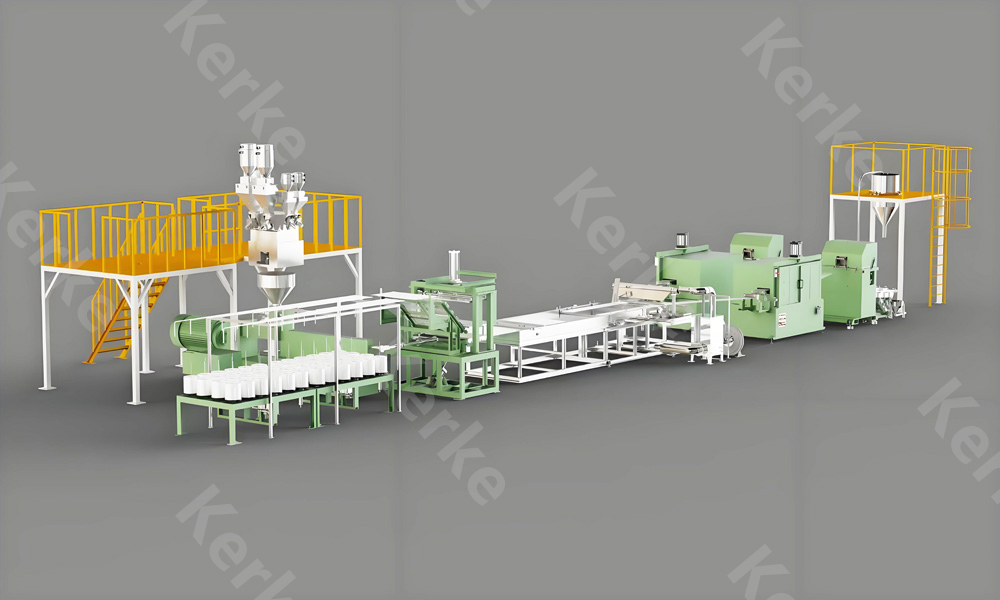
The masterbatch manufacturing industry faces unprecedented pressure in managing production expenses. Labor costs represent one of the most significant operational burdens for companies producing color masterbatch, additive masterbatch, and filler masterbatch. Factory owners across Asia, Europe, and North America consistently report that workforce expenses consume between 15% and 30% of total production costs. This reality has pushed manufacturers to seek technological solutions that maintain product quality while reducing dependence on manual labor. Modern masterbatch extruder equipment offers compelling answers to these challenges through advanced automation features and intelligent control systems. Investing in a quality masterbatch extruder transforms the labor cost equation for production facilities.
A high-quality masterbatch extruder from established manufacturers like Nanjing Kerke Extrusion Equipment Co., Ltd (WANPLAS Group) can fundamentally transform production economics. With over 12 years of experience producing industrial extrusion equipment and more than 2,000 machines operating globally across 70 countries, Kerke has accumulated extensive knowledge about optimizing production efficiency. Understanding how automation integrated into contemporary masterbatch extruder systems translates into tangible labor cost savings requires examining multiple aspects of manufacturing operations. Every masterbatch extruder in the Kerke lineup incorporates these automation principles.
Understanding Masterbatch Extruder Functions and Types
Modern extrusion technology serves diverse masterbatch production requirements. Each application demands specific equipment configurations that optimize processing parameters while minimizing operational complexity. The masterbatch extruder market offers specialized solutions for different production needs, enabling manufacturers to select equipment that matches their specific requirements.
Color Masterbatch Extruder Systems
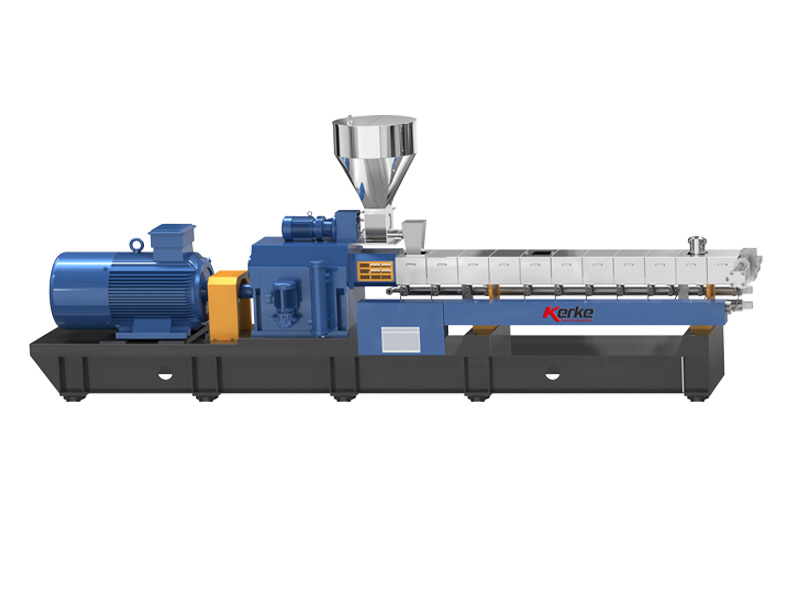
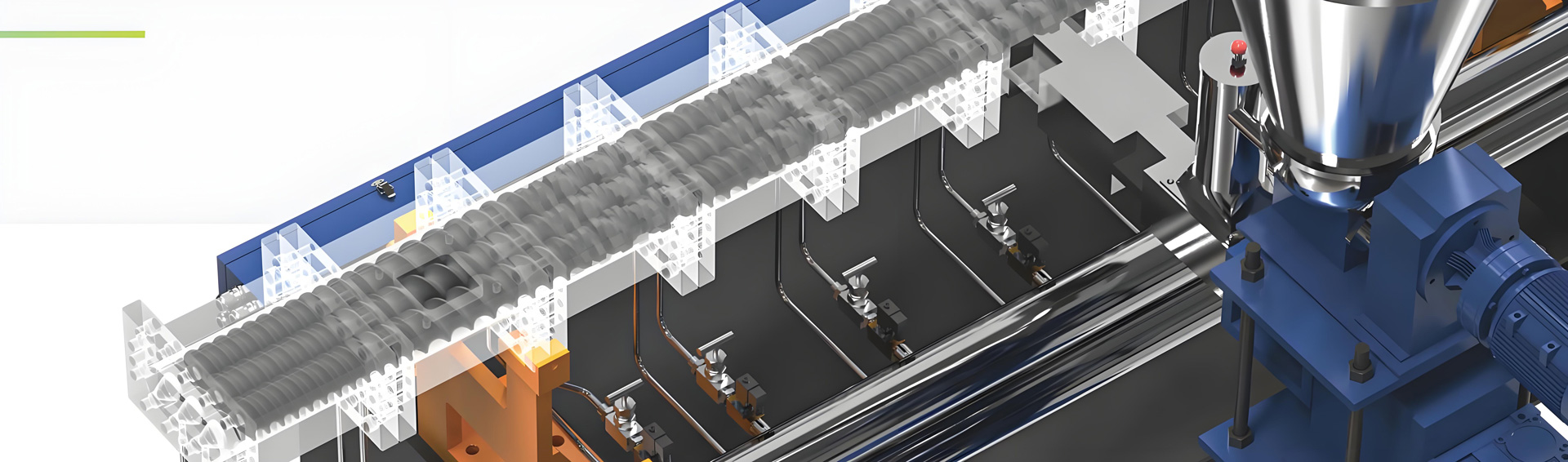
Color masterbatch production represents one of the largest segments of the masterbatch industry. A color masterbatch extruder must achieve precise pigment dispersion while maintaining consistent output quality. These systems typically employ twin-screw configurations that provide superior mixing capabilities compared to single-screw alternatives. The intensive mixing required for color masterbatch applications demands equipment with sophisticated control mechanisms that can adjust processing parameters in real-time. Modern color masterbatch extruder units from Kerke incorporate advanced feeding systems that automatically regulate material proportions, reducing the need for constant operator supervision.
Equipment like the Kerke KTE Series demonstrates how automation enhances color masterbatch production efficiency. The KTE-16B through KTE-135D models offer production capacities ranging from small laboratory batches to industrial-scale output exceeding 2,000 kilograms per hour. Each model features programmable logic controllers that manage temperature zones, screw speeds, and feeding rates according to pre-configured recipes. This automation level significantly reduces the skilled labor traditionally required for color masterbatch production.
Filler Masterbatch Extruder Technology
Filler masterbatch production involves incorporating mineral fillers such as calcium carbonate, talc, or barium sulfate into polymer matrices. A filler masterbatch extruder must handle high filler loadings while maintaining compound properties and extrusion stability. The abrasive nature of mineral fillers places additional demands on equipment durability and wear resistance. Modern filler masterbatch extruder designs address these challenges through hardened screw elements, specialized barrel configurations, and optimized screw geometry.
The automation capabilities built into contemporary filler masterbatch extruder equipment prove particularly valuable given the demanding processing conditions. Continuous monitoring of torque, pressure, and temperature allows systems to automatically adjust operating parameters when processing conditions shift due to filler variations or equipment wear. This self-regulating capability reduces the frequency of operator interventions and enables consistent production quality with fewer trained personnel.
Additive Masterbatch Extruder Applications
Additive masterbatch production covers a wide range of functional additives including flame retardants, UV stabilizers, antioxidants, and antimicrobial agents. An additive masterbatch extruder must achieve uniform additive distribution while preserving the activity of often heat-sensitive chemical compounds. The precision requirements for additive masterbatch production make automation particularly valuable for ensuring consistent dosing and mixing.
Modern additive masterbatch extruder systems incorporate gravimetric feeding technology that precisely measures additive quantities before introduction into the extrusion process. This gravimetric control eliminates the variability associated with manual dosing and reduces quality control requirements. Processing sensitive additives also benefits from advanced temperature management systems that minimize thermal degradation while maintaining necessary melt temperatures for proper dispersion.
Black Masterbatch Extruder Considerations
Black masterbatch production using carbon black presents unique challenges due to the extremely fine particle size and high pigment loading requirements. A black masterbatch extruder must achieve deep color development and excellent dispersion while handling materials that increase melt viscosity significantly. The equipment demands robust motor power and torque capacity to process these challenging formulations.
Automation plays an essential role in black masterbatch extrusion by managing the high viscosities involved and ensuring consistent carbon black dispersion. Advanced control systems monitor die pressure and motor load to detect any processing abnormalities that might indicate dispersion problems. This automated quality monitoring reduces dependence on manual sampling and laboratory analysis, contributing to overall labor cost reduction.
Labor Cost Components in Traditional Masterbatch Production
Understanding where labor expenses accumulate in conventional masterbatch manufacturing reveals the specific areas where automation delivers the greatest impact. Traditional production facilities typically allocate personnel across multiple operational areas, each requiring distinct skill sets and generating ongoing employment costs.
Raw Material Handling Labor Requirements
Material preparation represents one of the most labor-intensive aspects of traditional masterbatch production. Workers must manually transport raw materials including polymer pellets, pigments, additives, and fillers from storage areas to processing equipment. This handling involves physical effort, exposure to dusty conditions when processing powders, and repetitive motions that increase injury risk. Small and medium-sized masterbatch facilities often dedicate two to four workers per shift exclusively to material handling tasks. The masterbatch extruder feeding system in modern facilities significantly reduces these manual requirements.
Beyond basic transportation, material preparation includes weighing and proportioning ingredients according to formulations. Even when scales and measurement equipment are available, operators must carefully measure each component and verify quantities before introducing materials into the extrusion system. The precision required for consistent masterbatch quality makes this manual weighing process both critical and time-consuming. Quality issues stemming from weighing errors can result in costly production waste and customer complaints.
Equipment Operation and Monitoring Labor
Traditional masterbatch extruder operation requires constant operator attention throughout production runs. Workers must monitor gauges and indicators to track temperatures across multiple heating zones, observe pressure readings at critical points, and listen for unusual sounds that might indicate problems. Adjustments to screw speed, feed rates, and temperature settings require trained judgment developed through experience with specific equipment and formulations. Modern masterbatch extruder automation reduces these intensive monitoring requirements significantly.
Shift transitions in traditional production facilities demand detailed handover procedures where outgoing operators communicate current processing status to incoming personnel. This communication ensures continuity but consumes productive time and creates opportunities for information loss. Additionally, traditional equipment often lacks the documentation capabilities that enable automated tracking of processing parameters across shifts.
Quality Control and Testing Labor
Maintaining consistent masterbatch quality in traditional production requires extensive sampling and laboratory testing. Operators collect samples at regular intervals throughout production runs, marking samples with batch information and forwarding them to laboratory personnel for analysis. Testing typically includes color measurement, melt flow assessment, and dispersion evaluation through methods like filter pressure value testing. A modern masterbatch extruder with inline monitoring reduces these sampling requirements substantially.
Laboratory technicians require specialized training and analytical skills that command premium compensation. The repetitive nature of routine testing creates opportunities for human error while potentially causing delays between quality problems and their detection. Traditional quality assurance approaches also involve physical sample preparation, instrument calibration, and documentation that add to labor requirements.
Packaging and Logistics Labor
Final product handling from extrusion to customer delivery involves substantial labor input in traditional facilities. Masterbatch exiting the extrusion system requires cooling, often through water troughs or air cooling systems, before packaging. Workers manually fill packaging containers, often using scoops or funnels to transfer material while minimizing dust generation. Sealing, labeling, and palletizing operations typically involve manual labor with potential for repetitive strain issues. Automated packaging connected to the masterbatch extruder output dramatically reduces these labor requirements.
Warehouse operations including inventory management, order picking, and loading for shipment also consume significant labor hours. Tracking inventory levels, coordinating with production schedules, and managing customer orders requires administrative personnel beyond production floor workers. These support functions, while essential, add to overall employment costs that automation can help reduce.
How Modern Masterbatch Extruder Systems Reduce Labor Costs
Contemporary extrusion equipment incorporates automation technologies that address each major labor cost component in masterbatch production. These advances transform production economics by shifting from labor-intensive operations to technology-enhanced manufacturing processes. The production efficiency gains from modern masterbatch extruder systems directly translate to lower labor costs per unit of output.
Automated Feeding Systems Minimize Manual Intervention
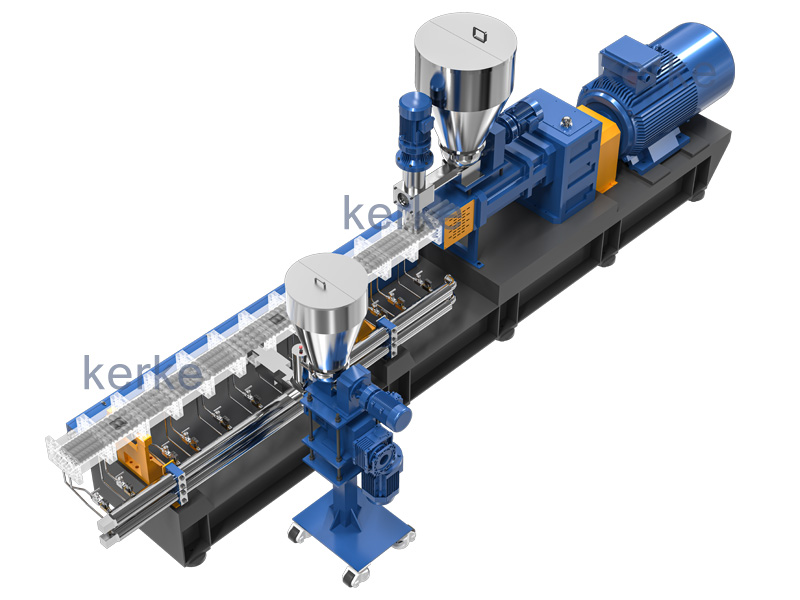
Modern masterbatch extruder equipment features sophisticated feeding systems that eliminate most manual material handling requirements. Gravimetric feeders automatically meter polymer pellets and powdered additives according to programmed formulations, eliminating the need for manual weighing. Loss-in-weight technology continuously measures material flow and adjusts dosing rates to maintain precise proportions throughout production runs. This automated feeding capability forms the foundation of the labor savings that masterbatch extruder systems deliver.
Integrated material conveyance systems transport ingredients directly from storage silos or bags to feeding hoppers without manual intervention. Pneumatic conveying systems move powders through enclosed pipelines, reducing dust exposure while improving workplace safety. These automated material handling solutions typically require only periodic monitoring rather than continuous operator attention, enabling staff to focus on higher-value activities.
Intelligent Control Systems Simplify Operations
Advanced control systems represent one of the most significant labor-saving features of modern masterbatch extruder equipment. Programmable logic controllers manage complex processing sequences automatically, from startup through production and shutdown phases. Touch-screen interfaces present operating parameters clearly and enable intuitive recipe selection and parameter adjustment. The masterbatch extruder control system reduces operator skill requirements while improving consistency.
Modern masterbatch extruder controls incorporate adaptive algorithms that automatically optimize processing conditions based on feedback from sensors throughout the system. When die pressure increases or motor load changes, control systems respond appropriately without requiring operator intervention. This automation enables consistent production quality with operators who need less specialized training compared to traditional equipment requirements.
Online Quality Monitoring Reduces Testing Requirements
Integration of inline quality monitoring sensors allows modern masterbatch extruder systems to track product characteristics continuously during production. Optical sensors monitor color consistency in real-time, detecting variations that would require laboratory analysis with traditional approaches. Pressure and torque monitoring provide indirect but reliable indicators of formulation consistency and dispersion quality. The production efficiency improvements from continuous monitoring complement the labor cost reduction benefits.
Automated sampling systems collect representative samples at programmed intervals for optional laboratory verification, reducing but not eliminating manual sampling requirements. The combination of inline monitoring and automated sampling significantly reduces quality control labor while improving detection of problems between scheduled tests. Some facilities report quality control headcount reductions of 50% or more after implementing modern extrusion equipment with integrated monitoring capabilities.
Automatic Packaging Systems Lower Packing Costs
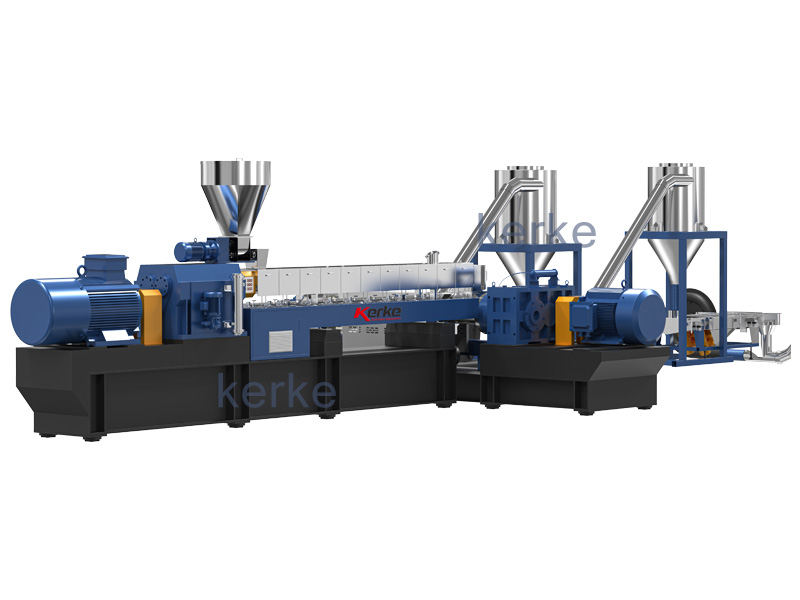
Modern production facilities increasingly integrate automatic packaging equipment with masterbatch extruder output streams. Automatic bagging machines fill, seal, and label packaging without manual operation, achieving throughput rates difficult to match through manual labor. Conveyor systems transport packaged product to palletizing stations where automatic or semi-automatic equipment completes the final packaging phase.
These packaging automation solutions prove particularly valuable for high-volume production where manual packaging would require numerous operators. The capital investment in automatic packaging equipment typically generates return through reduced labor costs within 18 to 36 months depending on production volumes and local labor rates. Additionally, automated packaging improves consistency and reduces product damage during handling.
Kerke Masterbatch Extruder Automation Advantages
Nanjing Kerke Extrusion Equipment Co., Ltd (WANPLAS Group) has developed comprehensive automation solutions integrated into their masterbatch extruder product line. These features reflect the company’s 12 years of industry experience and understanding of customer requirements for labor-efficient production. Every Kerke masterbatch extruder incorporates automation designed to minimize labor requirements while maximizing output quality.
KTE Series Performance in Masterbatch Applications
The Kerke KTE Series encompasses models from compact KTE-16B units for development and small-scale production through large KTE-135D machines capable of industrial-scale output. Each model incorporates automation features designed to minimize labor requirements while maximizing production efficiency. The modular design allows customers to select configurations appropriate for their specific masterbatch applications and production volumes. Every masterbatch extruder in the KTE lineup delivers the automation benefits that reduce labor costs.
Performance data from Kerke installations demonstrates the labor efficiency advantages of their equipment. Production facilities operating KTE Series machines report operator-to-output ratios significantly better than industry averages for comparable traditional equipment. This efficiency advantage reflects both the inherent automation of Kerke equipment and the reliability that reduces unplanned downtime requiring operator intervention.
Detailed Automation Features of KTE Series
Kerke KTE Series masterbatch extruder units incorporate multiple automation systems that work together to minimize labor requirements. The standard feeding system includes loss-in-weight hoppers with automatic refill capability from integral storage bins. This configuration allows extended production runs without operator attention to material replenishment.
Temperature control systems feature independent zone management with automatic tuning capabilities that optimize heating and cooling without manual adjustment. The control interface supports recipe storage and recall, enabling operators to switch between different masterbatch formulations without reprogramming parameters. Recipe management reduces setup time and ensures consistent processing conditions across production runs.
Data logging capabilities record all operating parameters automatically, creating comprehensive production records without manual documentation. This automatic record-keeping supports quality assurance requirements while eliminating the labor associated with manual logging. Production managers can review historical data to identify efficiency improvement opportunities and troubleshoot any quality issues that arise.
Production Capacity and Labor Ratio Analysis
Comparing production capacity to labor input reveals the efficiency advantages of modern Kerke masterbatch extruder equipment. A single KTE-52B operator can manage production exceeding 400 kilograms per hour of standard masterbatch formulations. This operator typically monitors multiple auxiliary systems and handles packaging, but the overall labor-to-output ratio reflects the automation advantages of modern equipment.
Facilities with multiple KTE Series machines report that one experienced supervisor can oversee two to three extrusion lines simultaneously, with operators at each line handling routine monitoring and minor adjustments. This supervision structure reflects the reliability and automation integration that reduce the constant attention traditional equipment requires. The reduced staffing requirements translate directly to lower labor costs per unit of production.
Cost Comparison Analysis
Quantifying the labor cost advantages of modern masterbatch extruder equipment requires systematic comparison between traditional and automated production approaches. This analysis demonstrates the economic justification for investment in advanced equipment like the Kerke KTE Series.
Traditional vs. Automated Production Line Staffing
A traditional masterbatch production line with 500 kilograms per hour capacity typically requires the following personnel during a single shift. Material handling requires two workers to manage ingredient storage, transport, and preparation. One to two machine operators monitor the extruder and auxiliary equipment. One quality control technician performs sampling and testing throughout the production run. Two workers handle packaging, palletizing, and warehouse operations. This staffing totals seven to eight workers per shift for traditional production.
A modern automated facility with comparable capacity utilizing Kerke KTE Series equipment operates with significantly reduced staffing. One material handler manages automated feeding systems and occasional ingredient replenishment. One operator monitors the extrusion line through the control interface, handling recipe changes and addressing exceptions. One quality technician verifies product from automated sampling systems rather than performing continuous manual testing. One packaging worker oversees automated packaging equipment and handles pallet wrapping and staging. This staffing totals four workers per shift, representing a 50% or greater reduction in labor requirements.
Annual Labor Cost Savings Calculations
Calculating annual savings requires estimating labor costs including wages, benefits, and associated overhead. For analysis purposes, assume average fully-loaded labor cost of $25,000 per year for production workers in typical manufacturing regions. A shift staffed with seven workers generates annual labor costs of $175,000, while a four-worker automated shift costs $100,000. The difference of $75,000 represents annual savings from reduced staffing alone.
Additional savings arise from improved efficiency and reduced waste in automated production. Operators of modern equipment make fewer errors that lead to formulation mistakes and production scrap. Automated quality monitoring detects problems faster than traditional sampling approaches, limiting the quantity of out-of-specification product. These quality improvements translate to raw material savings that complement the direct labor cost reductions.
Return on Investment Analysis
The return on investment for automation-equipped masterbatch extruder equipment depends on production volume, labor costs, and the specific equipment configuration selected. Consider a representative analysis comparing traditional KTE-52B equivalent equipment to modern automated equipment including feeding systems, control upgrades, and inline monitoring.
Equipment cost premium for automation features typically ranges from $50,000 to $100,000 depending on configuration. If this investment generates $75,000 in annual labor savings, simple payback occurs within 14 to 16 months. Factoring in efficiency improvements and quality gains that reduce material waste typically improves this payback period. Most facilities achieve full return on automation investment within two to three years, after which the ongoing labor cost advantages continue to benefit operations.
Automation Solutions for Different Business Sizes
Optimal automation approaches vary based on production scale and operational complexity. Equipment selection should match specific requirements rather than simply selecting the most advanced available options.
Small Masterbatch Facilities (500-2,000 Tons Per Year)
Small production facilities face unique challenges balancing capital investment against production volume and labor requirements. For operations producing 500 to 2,000 tons annually, a compact masterbatch extruder like the Kerke KTE-27B or KTE-36B offers appropriate capacity with manageable investment. These smaller models incorporate essential automation features without requiring large-scale infrastructure investments.
Recommended automation focus for small facilities includes gravimetric feeding to ensure formulation accuracy despite limited quality control resources. Simple recipe management systems reduce operator training requirements and minimize formulation errors during product changes. Basic data logging capabilities provide production records without requiring manual documentation. These targeted automation investments typically cost between $20,000 and $40,000 while generating meaningful labor savings and quality improvements.
Medium Masterbatch Facilities (2,000-5,000 Tons Per Year)
Medium-scale production facilities benefit from more comprehensive automation investments that leverage economies of scale. Operations in the 2,000 to 5,000 ton annual range typically justify equipment with advanced control systems, comprehensive monitoring capabilities, and integrated packaging automation. The Kerke KTE-52B or KTE-65B models provide appropriate capacity ranges for these facilities.
Recommended automation investments for medium facilities include full feeding automation with automatic refill systems to minimize material handling labor. Inline quality monitoring provides real-time product verification without requiring extensive laboratory resources. Automatic packaging systems handle the higher production volumes efficiently without proportional labor increases. These investments typically total $50,000 to $100,000 and generate labor savings of three to five workers annually.
Large Masterbatch Facilities (5,000+ Tons Per Year)
Large-scale production facilities with annual output exceeding 5,000 tons achieve the most significant labor cost advantages through comprehensive automation. Equipment like the Kerke KTE-95B or KTE-135D handles high production volumes that would require prohibitive labor input without automation. These facilities typically operate multiple production lines requiring coordination and supervision efficiency.
Full automation for large facilities includes complete material handling systems from storage through feeding with minimal manual intervention. Advanced process control with adaptive optimization maintains consistent quality across extended production runs with reduced operator attention. Comprehensive data integration connects extrusion equipment with quality systems, inventory management, and enterprise resource planning for complete operational visibility. These extensive automation investments typically total $150,000 to $300,000 or more but generate proportional labor savings and operational improvements.
Case Studies: Real Labor Cost Reduction Results
Documented examples from actual Kerke installations demonstrate the practical labor cost advantages of modern masterbatch extruder equipment. These cases illustrate how different facilities have achieved measurable improvements through strategic automation investments.
Case Study: Color Masterbatch Producer in Southeast Asia
A color masterbatch manufacturer in Thailand operated three traditional twin-screw extrusion lines with combined capacity of approximately 1,500 kilograms per hour. Staffing of 24 workers across three shifts managed production including material handling, extrusion operation, quality control, and packaging. Annual labor costs totaled approximately $480,000 including benefits and overhead.
The facility replaced one traditional line with a Kerke KTE-52B equipped with comprehensive automation including gravimetric feeding, advanced process control, inline color monitoring, and automatic packaging. Production from the new line reached 450 kilograms per hour with staffing of only two workers per shift. The improved efficiency enabled consolidation of operations, reducing overall staffing to 15 workers while maintaining total production volume. Annual labor costs decreased to approximately $300,000, generating savings of $180,000 per year. The equipment investment of $85,000 achieved payback within six months based on labor savings alone.
Case Study: Additive Masterbatch Producer in Eastern Europe
A Polish additive masterbatch manufacturer focused on flame retardant and UV stabilizer compounds employed 18 workers across two production shifts. Production volume of approximately 3,000 tons annually required significant quality control resources due to the demanding specifications of additive masterbatch applications. Labor costs totaled approximately $360,000 annually.
The company invested in two Kerke KTE-65B machines with focus on process control and quality monitoring automation. Gravimetric feeding systems ensured accurate additive dosing for expensive flame retardant compounds. Inline monitoring reduced quality control requirements by enabling rapid detection of processing deviations. Automatic packaging reduced packaging labor despite increased production volume. Total staffing decreased to 11 workers while production increased to 3,500 tons annually. Annual labor costs of $220,000 represented savings of $140,000, and the $120,000 equipment investment achieved payback within 12 months.
Case Study: Filler Masterbatch Producer in North America
A United States filler masterbatch manufacturer producing calcium carbonate and talc compounds for plastic compounding customers faced increasing pressure from competitors with lower labor costs. The facility employed 32 workers managing two traditional extrusion lines with combined capacity of 2,000 kilograms per hour. Annual labor costs of $720,000 created competitive challenges.
The company implemented a phased automation program beginning with material handling improvements. Kerke supplied equipment including upgraded feeders, control system enhancements, and inline process monitoring. Rather than complete replacement, the program optimized existing equipment with automation components. Staffing reduced to 20 workers while production capacity increased to 2,400 kilograms per hour through improved efficiency. Annual labor costs decreased to $450,000, generating savings of $270,000. The $200,000 automation investment achieved payback within 11 months.
Implementation Considerations for Automation Projects
Successful automation of masterbatch production requires attention to planning, training, and integration aspects. Organizations should consider several factors when implementing automation improvements to maximize benefits and minimize disruption.
Equipment Selection and Configuration
Choosing appropriate equipment requires honest assessment of current and anticipated production requirements. Over-specifying equipment wastes capital while under-specifying creates operational constraints. Kerke offers consultation services to help customers select appropriate models and configurations based on their specific applications and production volumes. This consultation typically includes process analysis to identify automation opportunities and estimate benefits.
Configuration flexibility allows customers to implement automation in stages if full investment initially proves impractical. Starting with essential automation features and adding capabilities as benefits accumulate helps manage capital allocation while building toward optimal operations. This phased approach also allows time for operators to adapt to increasingly automated processes.
Training and Skill Development
Automation changes skill requirements for production personnel. While manual dexterity and physical strength become less important, operators need stronger understanding of process parameters and control system operation. Effective training programs prepare existing workers for evolved roles while ensuring they can operate automated equipment effectively.
Kerke provides comprehensive training with equipment installation, including operator instruction, maintenance procedures, and troubleshooting guidance. Documentation including operation manuals and maintenance guides supports ongoing training needs. Many facilities establish internal training programs using Kerke materials to develop additional skilled operators as needed.
Integration with Existing Operations
Integrating new equipment with existing operations requires attention to material handling, utility requirements, and production scheduling. Automated feeding systems need adequate space and may require modifications to material storage and conveying infrastructure. Control system integration with existing quality and production management systems requires coordination and testing.
Kerke technical services support integration planning and implementation, helping customers identify potential challenges and develop solutions. Standard communication protocols facilitate integration with common quality and production management systems. Installation planning includes utility requirements assessment and coordination with existing facility infrastructure.
Maintenance and Support Considerations
Automation equipment requires appropriate maintenance practices to ensure reliable operation. Preventive maintenance schedules should account for automated components in addition to traditional mechanical systems. Spare parts programs ensure critical components remain available to minimize unplanned downtime.
Kerke provides global support through regional service centers and authorized distributors. Remote diagnostics capabilities allow Kerke technicians to assist troubleshooting without site visits in many cases. Spare parts supply chains ensure rapid delivery of replacement components worldwide, supporting reliability for customers across 70 countries served by Kerke equipment.
Conclusion: Long-Term Value of Automated Masterbatch Extruder Investment
Investment in automated masterbatch extruder equipment delivers sustained competitive advantages through reduced labor costs, improved quality consistency, and enhanced production flexibility. The analysis presented throughout this article demonstrates that modern equipment like the Kerke KTE Series generates measurable financial returns while positioning facilities for long-term success. Choosing a masterbatch extruder with comprehensive automation capabilities ensures producers capture these labor cost advantages.
The labor cost reduction potential of 40% to 60% compared to traditional production represents transformative improvement for most masterbatch manufacturers. These savings compound over time, particularly as labor costs increase due to wage inflation and regulatory requirements. Automated production also provides more consistent quality that strengthens customer relationships and supports premium pricing for reliable suppliers. The masterbatch extruder becomes a strategic asset that generates ongoing labor savings throughout its operational life.
Beyond direct labor savings, automation enables operational improvements that create additional value. Reduced dependence on manual processes improves consistency and repeatability. Automated data collection supports continuous improvement initiatives and regulatory compliance. Flexible automation capabilities accommodate production diversification that opens market opportunities.
Nanjing Kerke Extrusion Equipment Co., Ltd (WANPLAS Group) combines equipment quality, automation expertise, and global support to help masterbatch producers capture these benefits. With over 2,000 machines operating worldwide and a 12-year track record of industry leadership, Kerke provides the experience and resources that successful automation projects require. Facilities investing in Kerke equipment join a global community of producers achieving sustainable competitive advantage through manufacturing excellence.
The masterbatch industry continues evolving toward increased automation as labor costs rise and quality expectations intensify. Producers who invest in automated equipment position themselves for success in this demanding environment. The demonstrated returns on investment, combined with the operational improvements automation enables, make modern masterbatch extruder equipment a sound strategic investment for facilities of all sizes seeking to reduce labor costs while improving competitive position.