The global high performance plastics (HPP) market is experiencing unprecedented growth, driven by the urgent need for lightweight, durable materials that can replace traditional metals in demanding applications. Valued at $80.46 billion in 2026, the market is projected to grow at a compound annual growth rate (CAGR) of 4.95% through 2032, reaching $107.66 billion . This growth is fueled by rapid expansion in electric vehicles (EVs), aerospace, electronics, and medical devices, where materials must withstand extreme temperatures, corrosive environments, and high mechanical stresses.
High performance plastics, including engineering plastics like PA66, PC, and PBT, as well as super engineering plastics such as PEEK, PEI, PPS, and LCP, offer exceptional mechanical properties, thermal stability, and chemical resistance. However, these materials present significant processing challenges that cannot be met by conventional extrusion equipment. Their high melting points, extreme viscosity, thermal sensitivity, and complex formulation requirements demand specialized compounding extruders that can deliver precise control over temperature, shear, and residence time.
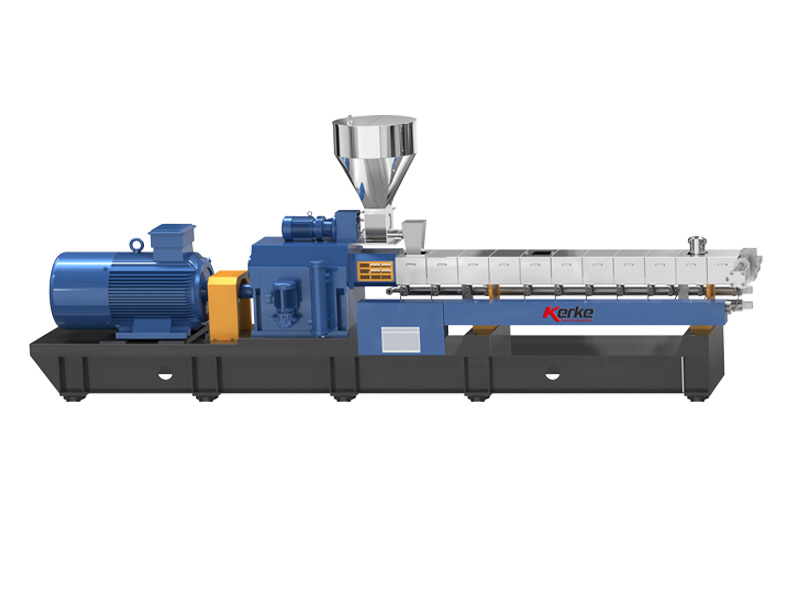
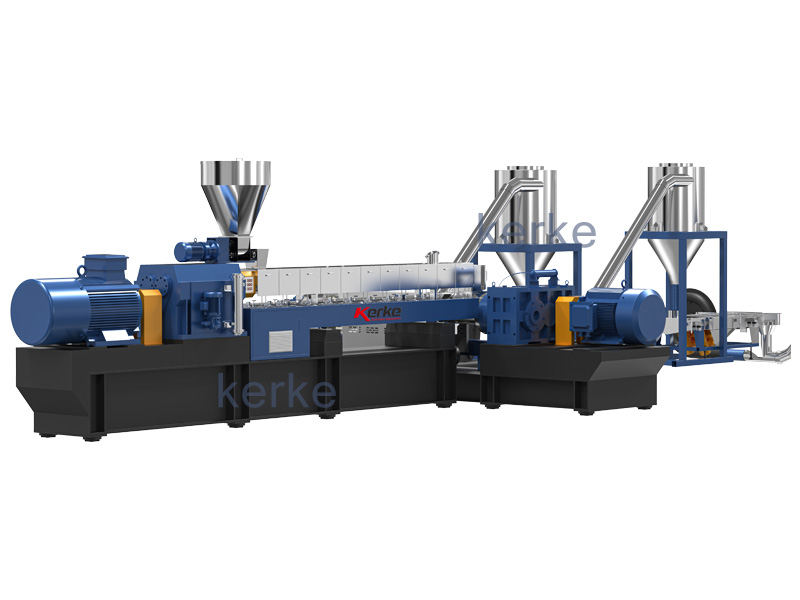
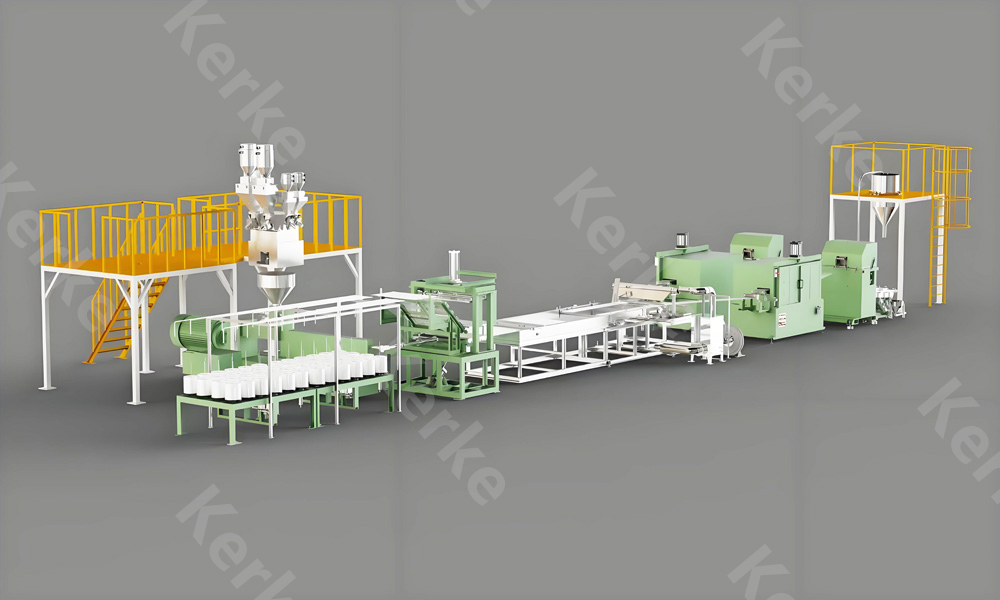
As a leading global manufacturer of twin screw compounding extruders with over 18 years of experience, Kerke has developed advanced extrusion systems specifically engineered to address the unique challenges of high performance plastics processing. Kerke KTE Series compounding extruders integrate high-torque drive systems, precision temperature control, modular screw design, and advanced process automation to deliver consistent, high-quality compounds while maintaining maximum production efficiency. With a proven track record in over 50 countries worldwide, Kerke extruders have become the preferred choice for manufacturers producing high-value HPP compounds.
This comprehensive guide explores how modern compounding extruders meet the demanding requirements of high performance plastics production. It examines the unique characteristics of different HPP materials, the technical challenges associated with their processing, and the advanced technologies that enable efficient and reliable compounding. The guide also provides a detailed analysis of Kerke’s specialized solutions, real-world application case studies, and a thorough cost-benefit analysis comparing purpose-built HPP extruders to conventional equipment. Whether you are producing glass-fiber reinforced PA for automotive components or carbon-fiber filled PEEK for aerospace applications, this guide will help you understand how investing in the right compounding extruder can transform your production capabilities and profitability.
1. The Growing Demand for High Performance Plastics
High performance plastics have revolutionized manufacturing across virtually every industry, offering a unique combination of properties that cannot be achieved with traditional materials. Their ability to replace metal components while reducing weight by 30-50% has made them indispensable in applications where performance, efficiency, and durability are critical.
1.1 Key Market Drivers
The automotive industry is the largest consumer of high performance plastics, accounting for approximately 35% of total demand. The transition to electric vehicles has accelerated this trend, as automakers strive to reduce vehicle weight to extend battery range. High performance plastics are used in battery enclosures, powertrain components, interior parts, and structural components, offering excellent thermal management, electrical insulation, and impact resistance. The global EV market is projected to grow at a CAGR of 25% through 2030, driving continued demand for advanced plastic compounds .
The electrical and electronics industry is the second largest consumer, representing 36.1% of the market in 2025 . High performance plastics are essential for manufacturing connectors, circuit boards, housings, and insulation materials that must withstand high temperatures, electrical currents, and mechanical stresses. The growth of 5G technology, artificial intelligence, and consumer electronics has created unprecedented demand for materials with excellent dielectric properties and dimensional stability.
The aerospace and defense industry is another major driver of HPP demand. These materials are used in aircraft interiors, structural components, engine parts, and defense systems, offering exceptional strength-to-weight ratio, flame resistance, and chemical resistance. The global aerospace industry is projected to grow at a CAGR of 6% through 2030, as airlines replace older aircraft with more fuel-efficient models that incorporate advanced composite materials.
The medical device industry is also experiencing rapid growth in HPP usage. These materials are used in surgical instruments, implantable devices, drug delivery systems, and diagnostic equipment, offering biocompatibility, sterilization resistance, and precision manufacturing capabilities. The global medical device market is projected to grow at a CAGR of 7% through 2030, driven by aging populations and advances in medical technology.
1.2 Types of High Performance Plastics
High performance plastics can be broadly categorized into two groups: engineering plastics and super engineering plastics, each with its own unique properties and processing requirements.
Engineering plastics, including polyamides (PA6, PA66, PA12), polycarbonate (PC), polybutylene terephthalate (PBT), and acrylonitrile butadiene styrene (ABS), offer a balance of mechanical properties, thermal stability, and processability. They typically have continuous use temperatures ranging from 100°C to 150°C and are widely used in automotive, electronics, and consumer goods applications.
Super engineering plastics, including polyether ether ketone (PEEK), polyetherimide (PEI), polyphenylene sulfide (PPS), liquid crystal polymer (LCP), and polysulfone (PSU), offer exceptional thermal stability, chemical resistance, and mechanical strength. They have continuous use temperatures ranging from 150°C to 260°C and are used in the most demanding applications, including aerospace, medical implants, and high-temperature electronics. PEEK, in particular, is experiencing the fastest growth among super engineering plastics, with a CAGR of 11.5% .
Within these categories, there are numerous specialized formulations tailored to specific applications. These include glass-fiber reinforced compounds, carbon-fiber reinforced compounds, flame-retardant compounds, conductive compounds, and impact-modified compounds. Each formulation presents unique processing challenges that require specialized extrusion equipment and process control.
1.3 Performance Requirements for HPP Compounds
High performance plastic compounds must meet extremely strict performance specifications to ensure reliable operation in demanding applications. These requirements include:
Mechanical properties: High tensile strength, flexural modulus, impact resistance, and fatigue resistance are essential for structural applications. Reinforced compounds with glass or carbon fibers can increase strength by 200-300% compared to unfilled resins, but require careful processing to avoid fiber breakage and maintain mechanical performance.
Thermal stability: HPP compounds must maintain their mechanical properties at elevated temperatures. This requires precise control over processing temperatures to prevent thermal degradation while ensuring complete melting and homogenization of the resin and additives.
Chemical resistance: Many HPP applications require resistance to oils, fuels, solvents, and other chemicals. This depends on the base resin and the proper dispersion of additives that enhance chemical resistance.
Dimensional stability: Components made from HPP compounds must maintain their dimensions and shape under varying temperature and humidity conditions. This requires uniform dispersion of fillers and additives and consistent processing conditions.
Electrical properties: For electrical and electronics applications, HPP compounds must provide excellent electrical insulation, dielectric strength, and arc resistance. Conductive compounds may also be required for electromagnetic interference (EMI) shielding or static dissipation.
Meeting these stringent performance requirements demands compounding extruders that can deliver precise control over every aspect of the extrusion process, from raw material feeding to finished pellet production.
2. Technical Challenges in High Performance Plastics Compounding
Compounding high performance plastics presents unique technical challenges that require specialized equipment and process expertise. These challenges stem from the inherent properties of HPP materials and the complex formulations used to achieve desired performance characteristics.
2.1 High Melting Points and Processing Temperatures
High performance plastics have significantly higher melting points than commodity plastics, requiring processing temperatures ranging from 220°C for PA6 to over 400°C for PEEK and PEI . These elevated temperatures place extreme demands on the extruder’s heating system, barrel, and screw components.
Traditional extruders with standard resistance heating systems often struggle to reach and maintain the high temperatures required for super engineering plastics. Inadequate heating can result in incomplete melting, poor dispersion of additives, and high torque loads that can damage the drive system. Conversely, excessive heating can cause thermal degradation of the resin, leading to reduced mechanical properties, discoloration, and product failure.
The high processing temperatures also require materials of construction that can withstand thermal cycling and prevent corrosion. Standard carbon steel components are not suitable for HPP processing, as they can deform or corrode at high temperatures, leading to reduced equipment lifespan and product contamination.
2.2 High Viscosity and Torque Requirements
High performance plastics, especially when reinforced with glass or carbon fibers, have extremely high melt viscosities. This requires extruders with high torque capacity to rotate the screws and generate sufficient shear to melt and mix the material.
Conventional extruders with low torque drive systems often cannot process high-viscosity HPP compounds at reasonable production rates. They may operate at reduced screw speeds or experience frequent overloads and shutdowns, leading to low productivity and high operating costs. In severe cases, insufficient torque can cause screw breakage or gearbox failure, resulting in costly repairs and downtime.
The high viscosity of HPP melts also generates significant shear heat during processing. While some shear heat is beneficial for melting the material, excessive shear can cause thermal degradation, especially for heat-sensitive resins. This requires precise control over screw speed and shear rate to balance melting efficiency with thermal stability.
2.3 Thermal Sensitivity and Degradation Risks
Despite their high temperature resistance, many high performance plastics are thermally sensitive and can degrade if exposed to excessive temperatures or prolonged residence times. Degradation can lead to reduced molecular weight, loss of mechanical properties, discoloration, and the release of volatile organic compounds (VOCs).
Polycarbonate, for example, is susceptible to hydrolysis if exposed to moisture at high temperatures, leading to chain scission and reduced impact strength. Nylon resins are also hygroscopic and require thorough drying before processing to prevent degradation. Super engineering plastics like PEEK and PEI are more thermally stable but can still degrade if processed at temperatures above their recommended limits or held in the extruder for extended periods.
Preventing thermal degradation requires precise temperature control, optimized residence time distribution, and effective venting to remove moisture and volatile degradation products. Conventional extruders with poor temperature control or inadequate venting often produce compounds with inconsistent properties and high defect rates.
2.4 Reinforcement Fiber Breakage
Reinforced HPP compounds with glass or carbon fibers offer exceptional mechanical properties, but the compounding process can cause significant fiber breakage, reducing the final strength and stiffness of the product. Fiber length retention is critical for achieving optimal mechanical performance, as longer fibers provide better load transfer and higher strength.
Conventional extruders with aggressive screw designs and high shear rates can reduce fiber length by 50-70% during compounding . This results in compounds with lower tensile strength, flexural modulus, and impact resistance than expected. To maintain fiber length, extruders must be designed with optimized screw configurations that provide sufficient mixing for dispersion while minimizing excessive shear that causes fiber breakage.
The abrasive nature of glass and carbon fibers also accelerates wear on screw and barrel components. Standard materials of construction may wear out quickly when processing reinforced compounds, leading to reduced processing efficiency, inconsistent product quality, and frequent component replacement.
2.5 Complex Formulation Requirements
High performance plastic compounds often contain complex formulations with multiple additives, including fillers, reinforcements, flame retardants, stabilizers, lubricants, and impact modifiers. Each additive must be uniformly dispersed throughout the resin matrix to ensure consistent product performance.
Achieving uniform dispersion of these additives requires precise control over feeding rates, mixing intensity, and residence time. Even minor variations in additive concentration can have a significant impact on the final properties of the compound. For example, a 1% variation in glass fiber content can change the tensile strength of a PA66 compound by 5-10%.
Many additives used in HPP compounds are also difficult to process. Flame retardants, for example, can be corrosive or release toxic gases during processing. Conductive additives like carbon black or carbon nanotubes require high shear to achieve uniform dispersion but can cause excessive wear on equipment components.
3. Core Technologies for HPP Compounding Extruders
Modern compounding extruders designed for high performance plastics integrate a range of advanced technologies that address the specific challenges of HPP processing. These technologies work together to provide precise control over temperature, shear, and residence time, ensuring consistent product quality and maximum production efficiency.
3.1 High-Torque Drive Systems
The drive system is the heart of any compounding extruder, and for HPP processing, a high-torque drive system is essential. Modern high-torque extruders use permanent magnet servo motors or high-efficiency AC motors with variable frequency drives to deliver the high torque required for processing high-viscosity materials.
Kerke KTE Series extruders feature high-torque gearboxes capable of delivering specific torque values up to 18 Nm/cm³, which is 30-50% higher than conventional extruders . This high torque capacity allows the extruder to process even the most viscous HPP compounds at higher screw speeds and production rates without overloading. The gearboxes are designed for continuous operation, with efficient lubrication and cooling systems to ensure long service life even under heavy load conditions.
The advanced drive systems also provide precise speed control with accuracy better than ±0.1%, ensuring consistent process conditions and product quality. They feature regenerative braking capabilities that recover energy during deceleration, reducing overall energy consumption by 5-10%.
3.2 Precision Temperature Control Systems
Precise temperature control is critical for processing high performance plastics, as even minor temperature variations can affect material properties and product quality. Modern HPP compounding extruders use segmented heating and cooling systems with independent control for each barrel zone.
Kerke extruders feature ceramic band heaters or optional induction heating systems that provide fast, efficient heating with temperature accuracy of ±1°C . The barrel is divided into 8 to 12 independent heating zones, allowing for precise temperature profiling along the length of the extruder. This ensures that the material is heated gradually and uniformly, preventing thermal degradation while ensuring complete melting.
The cooling systems use water circulation through optimized cooling channels to remove excess heat generated by shear. Advanced PID temperature controllers with auto-tuning functionality continuously monitor and adjust the heating and cooling outputs to maintain the desired temperature profile. This closed-loop control system compensates for variations in feed rate, ambient temperature, and material properties, ensuring consistent processing conditions.
For processing super engineering plastics like PEEK and PEI, Kerke offers high-temperature barrel configurations capable of reaching temperatures up to 450°C. These systems feature specialized heating elements and insulation materials designed to withstand extreme temperatures while minimizing heat loss to the environment.
3.3 Modular Screw and Barrel Design
The modular screw and barrel design is a key feature of modern twin screw compounding extruders, allowing for flexible configuration to meet the specific processing requirements of different HPP materials and formulations.
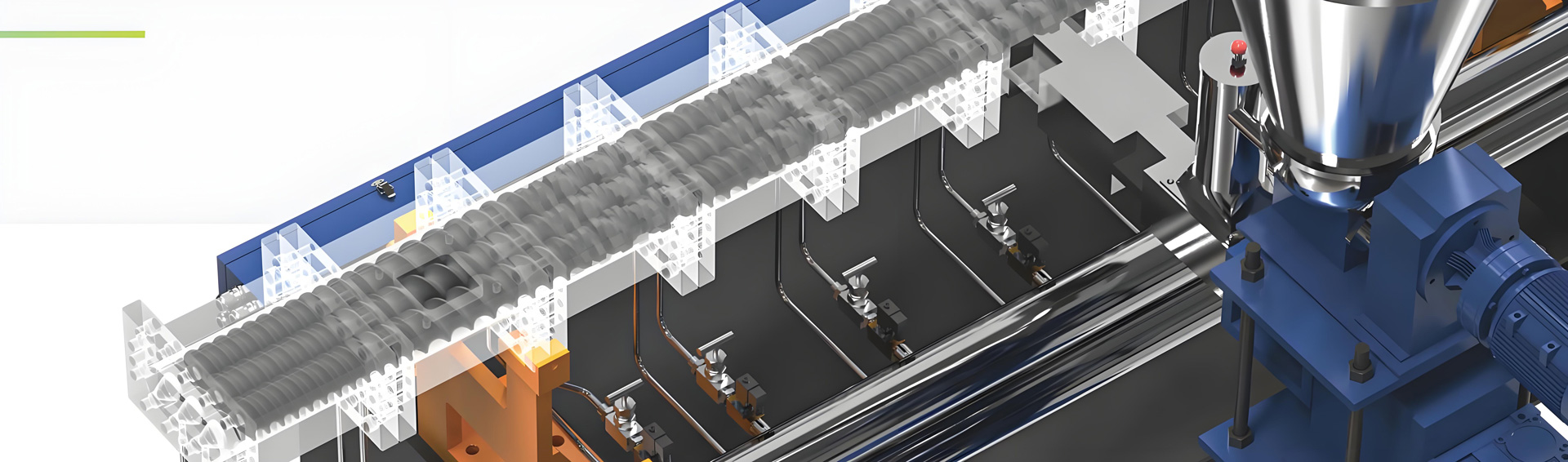
Kerke extruders feature fully modular screw design with interchangeable elements, including conveying blocks, kneading blocks, reverse flight elements, and mixing elements . This allows operators to configure the screw for specific mixing requirements, optimizing shear intensity and residence time for each material. For example, a screw configuration for glass-fiber reinforced PA would include gentle kneading blocks to minimize fiber breakage, while a configuration for carbon black masterbatch would include high-shear elements to achieve good dispersion.
The barrels are also modular, with each section designed for specific functions such as feeding, melting, mixing, venting, or metering. Barrel sections can be easily added or removed to adjust the length-to-diameter (L/D) ratio of the extruder. Kerke offers L/D ratios ranging from 36:1 to 60:1, with 40:1 to 44:1 being standard for most HPP compounding applications . Longer L/D ratios of 52:1 or 60:1 are available for reactive extrusion or difficult-to-mix materials.
All screw and barrel components are made from high-quality materials to withstand the abrasive and corrosive nature of HPP compounds. Standard components are made from bimetallic alloys with a wear-resistant layer centrifugally cast onto a steel base. For highly abrasive applications, Kerke offers components with tungsten carbide coatings or made from powder metallurgy high-speed steels, which provide 2-3 times the wear resistance of standard materials .
3.4 Advanced Feeding Systems
Accurate feeding of raw materials is essential for producing consistent HPP compounds with uniform properties. Modern compounding extruders use a combination of main feeders and side feeders to introduce different ingredients at optimal points along the extruder length.
Kerke offers a range of feeding solutions, including loss-in-weight (LIW) feeders, volumetric feeders, and liquid feeders. Loss-in-weight feeders provide the highest level of feeding accuracy, with dosing precision of ±0.1% or better. They continuously measure the weight of material being fed to the extruder and automatically adjust the feed rate to maintain the desired output. This ensures that the correct ratio of resin, fillers, and additives is maintained throughout the production run.
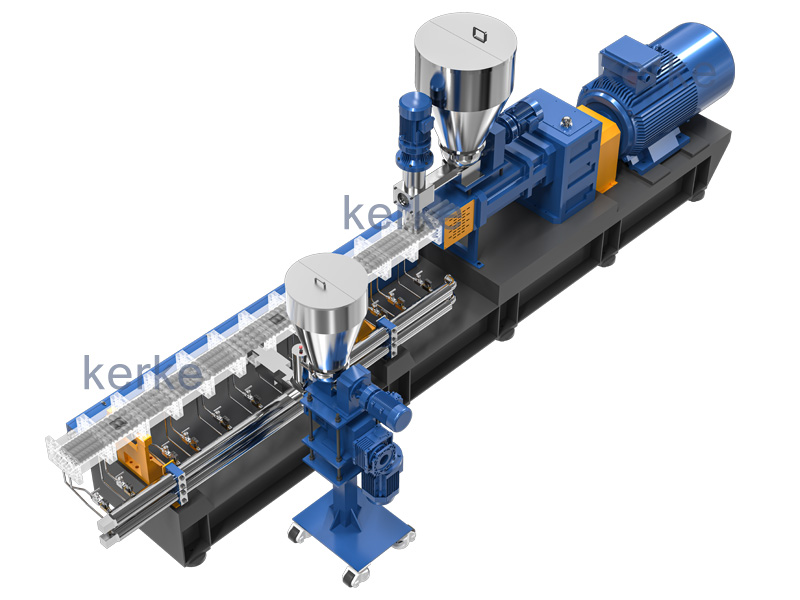
Side feeders are used to introduce fillers, reinforcements, and heat-sensitive additives downstream in the process, after the resin has melted. This reduces the residence time of these materials in the extruder, minimizing thermal degradation and fiber breakage. Kerke extruders can be configured with up to four side feeders, allowing for the production of complex formulations with multiple ingredients.
All feeding systems are fully integrated with the extruder control system, allowing for automatic recipe management and process control. When a new product is selected from the recipe library, the control system automatically adjusts the feed rates of all ingredients to match the recipe requirements. This eliminates manual calculation errors and ensures consistent product quality between batches.
3.5 Efficient Venting and Devolatilization
Efficient venting and devolatilization are essential for removing moisture, air, and volatile organic compounds (VOCs) from the HPP melt. These volatiles can cause defects such as bubbles, voids, or surface imperfections in the final product, and can also lead to thermal degradation if not removed.
Kerke extruders feature multiple venting ports located along the barrel to allow volatiles to escape. The venting sections are designed with optimized screw configurations that create a thin melt film, maximizing the surface area available for devolatilization. Vacuum systems are used to enhance the removal of volatiles, with vacuum levels up to 29.9 inHg.
For materials that release large amounts of volatiles or are particularly sensitive to thermal degradation, Kerke offers multi-stage venting systems with separate vacuum pumps for each stage. These systems provide more efficient devolatilization and prevent cross-contamination between different vent stages. Advanced condenser systems are also available to capture and treat volatile emissions, ensuring compliance with environmental regulations.
3.6 Integrated Process Control and Automation
Integrated process control and automation systems are essential for managing the complex HPP compounding process and ensuring consistent product quality. Modern extruders feature advanced PLC control systems with intuitive touchscreen interfaces that provide operators with complete control and visibility over all aspects of the production process.
Kerke’s control system continuously monitors all critical process parameters, including temperature, pressure, torque, screw speed, and feed rates. It uses advanced PID algorithms with auto-tuning functionality to maintain precise control over these parameters, automatically adjusting them as needed to compensate for variations in raw material properties or environmental conditions.
The system includes an unlimited recipe storage capability, allowing operators to store and recall process parameters for hundreds of different products. This ensures that the same process parameters are used every time a product is run, eliminating variability between batches. The recipe system also includes security features that prevent unauthorized changes to process parameters, ensuring consistent product quality.
Data logging and traceability features record all process parameters and production data for every batch, creating a complete digital record that can be used for quality control, regulatory compliance, and process improvement. The system can generate detailed reports on production output, scrap rates, energy consumption, and other key performance indicators (KPIs), providing managers with valuable insights into production performance.
4. Kerke KTE Series Extruders: Engineered for High Performance Plastics
Kerke KTE Series twin screw compounding extruders are specifically designed and built to meet the demanding requirements of high performance plastics processing. Every aspect of the extruder, from the drive system to the control system, is engineered to deliver exceptional performance, reliability, and product quality.
4.1 KTE-35 High-Torque Compounding Extruder
The KTE-35 is Kerke’s most popular model for small to medium-scale production of high performance plastic compounds. With a screw diameter of 35.6mm and a production capacity of 20-120kg/h, it is ideal for producing specialty compounds, pilot-scale production, and small batch manufacturing.
The KTE-35 features a high-torque gearbox with a specific torque of 13 Nm/cm³, providing sufficient power to process even the most viscous HPP compounds. It is available with L/D ratios of 40:1, 44:1, or 52:1, allowing for flexible configuration to meet different processing requirements. The extruder includes 8 independent heating and cooling zones, providing precise temperature control for processing a wide range of materials from PA6 to PEEK.
The KTE-35 can be configured with up to two side feeders for introducing fillers, reinforcements, and additives downstream. It features a split barrel design that allows for fast and easy cleaning between batches, reducing changeover time and material waste. The extruder is compatible with a range of downstream equipment, including water strand pelletizers, underwater pelletizers, and hot face pelletizers.
The price of the Kerke KTE-35 high-torque compounding extruder ranges from $45,000 to $75,000, depending on configuration and optional features. A typical turnkey system including feeding system, extruder, pelletizer, and classifier costs approximately $65,000.
4.2 KTE-50 Medium-Scale Production Extruder
The KTE-50 is a medium-scale production extruder designed for higher volume production of high performance plastic compounds. With a screw diameter of 51.4mm and a production capacity of 50-350kg/h, it is ideal for manufacturers with a mix of small batch custom orders and larger volume production runs.
The KTE-50 features a high-torque gearbox with a specific torque of 15 Nm/cm³, providing the power needed to process highly filled compounds with up to 80% glass fiber or mineral filler. It is available with L/D ratios of 40:1, 44:1, or 52:1, and includes 10 independent heating and cooling zones for precise temperature profiling.
The KTE-50 can be configured with up to four side feeders and multiple liquid feeders, allowing for the production of complex formulations with multiple ingredients. It features advanced venting systems with up to three vacuum stages for efficient devolatilization. The extruder also includes Kerke’s advanced control system with recipe management, data logging, and remote monitoring capabilities.
The price of the Kerke KTE-50 medium-scale production extruder ranges from $95,000 to $165,000, depending on configuration. A complete turnkey system costs approximately $130,000.
4.3 KTE-65 Large-Scale Production Extruder
The KTE-65 is a large-scale production extruder designed for high-volume manufacturing of high performance plastic compounds. With a screw diameter of 62.4mm and a production capacity of 150-700kg/h, it is ideal for large compounding facilities producing commodity engineering plastics and high-volume specialty compounds.
The KTE-65 features a heavy-duty high-torque gearbox with a specific torque of 16 Nm/cm³, capable of processing the most demanding formulations including highly filled compounds and super engineering plastics. It is available with L/D ratios of 40:1, 44:1, 52:1, or 60:1, and includes 12 independent heating and cooling zones.
The KTE-65 can be configured with up to six side feeders and multiple liquid feeders, providing maximum flexibility for complex formulations. It features advanced multi-stage venting systems and optional nitrogen inerting for processing oxygen-sensitive materials. The extruder is designed for 24/7 continuous operation, with robust construction and reliable components to ensure maximum uptime.
The price of the Kerke KTE-65 large-scale production extruder ranges from $180,000 to $320,000, depending on configuration. A complete turnkey system with full automation costs approximately $250,000.
4.4 Specialized Configurations for Super Engineering Plastics
For processing super engineering plastics such as PEEK, PEI, PPS, and LCP, Kerke offers specialized extruder configurations designed to meet the unique requirements of these materials.
These configurations feature high-temperature barrel systems capable of reaching temperatures up to 450°C, with specialized heating elements and insulation materials. The screw and barrel components are made from premium alloys that can withstand the high temperatures and corrosive nature of these materials. The drive systems are upgraded to provide additional torque for processing the high-viscosity melts.
Specialized venting systems with multiple vacuum stages are included to remove moisture and volatile degradation products. Nitrogen inerting systems are also available to prevent oxidation of the material during processing. The control system includes specialized temperature control algorithms and process monitoring features designed specifically for super engineering plastics.
The price of Kerke’s specialized super engineering plastic extruders ranges from $120,000 for a 35mm model to over $500,000 for a large 75mm production model with full automation .
5. Application-Specific Solutions for High Performance Plastics
Different types of high performance plastics have unique processing requirements, and Kerke offers application-specific solutions tailored to each material and formulation.
5.1 Glass-Fiber Reinforced Polyamides
Glass-fiber reinforced polyamides (PA6, PA66, PA12) are the most widely used engineering plastics, offering excellent mechanical properties, thermal stability, and chemical resistance. They are used in automotive components, electrical connectors, and industrial parts.
The primary challenge in compounding glass-fiber reinforced polyamides is maintaining fiber length while achieving uniform dispersion. Excessive shear can break the glass fibers, reducing the mechanical properties of the final compound.
Kerke’s solution for glass-fiber reinforced polyamides includes a screw configuration with gentle kneading blocks and optimized shear intensity. The glass fibers are introduced downstream through a side feeder, after the polyamide resin has melted, minimizing fiber breakage. The extruder’s precise temperature control ensures that the resin is fully melted without causing thermal degradation.
With Kerke’s optimized process, fiber length retention of over 80% can be achieved, compared to less than 50% with conventional extruders . This results in compounds with higher tensile strength, flexural modulus, and impact resistance. The production rate is also increased by 20-30% compared to conventional equipment.
5.2 Carbon-Fiber Reinforced Compounds
Carbon-fiber reinforced compounds offer exceptional strength-to-weight ratio, stiffness, and electrical conductivity. They are used in aerospace components, automotive structural parts, and sporting goods.
Compounding carbon-fiber reinforced compounds presents similar challenges to glass-fiber compounds, but carbon fibers are more brittle and prone to breakage. Carbon fibers are also highly abrasive, causing accelerated wear on screw and barrel components.
Kerke’s solution for carbon-fiber reinforced compounds includes screw elements made from powder metallurgy high-speed steel or with tungsten carbide coatings to resist wear. The screw configuration is designed to provide gentle mixing that achieves uniform dispersion while minimizing fiber breakage. The extruder’s high-torque drive system provides sufficient power to process the high-viscosity melts at reasonable production rates.
Kerke’s carbon-fiber compounding lines can achieve fiber length retention of over 75%, resulting in compounds with excellent mechanical properties. The wear-resistant components extend service life by 2-3 times compared to standard components, reducing maintenance costs and downtime.
5.3 Flame-Retardant Compounds
Flame-retardant compounds are essential for electrical and electronics applications, where fire safety is critical. They contain flame retardant additives that prevent or slow the spread of fire.
The primary challenges in compounding flame-retardant compounds are achieving uniform dispersion of the flame retardant additives and preventing thermal degradation. Many flame retardants are heat-sensitive and can decompose at processing temperatures, releasing toxic gases and reducing their effectiveness.
Kerke’s solution for flame-retardant compounds includes precise temperature control to maintain processing temperatures within the narrow window between the melting point of the resin and the decomposition temperature of the flame retardant. The screw configuration provides efficient mixing for uniform dispersion while minimizing residence time to prevent thermal degradation. Advanced venting systems remove any volatile decomposition products.
For halogenated flame retardants, which are corrosive, Kerke offers special corrosion-resistant screw and barrel components made from Hastelloy or Inconel alloys. These components resist corrosion and extend equipment lifespan, reducing maintenance costs and downtime.
5.4 Super Engineering Plastics (PEEK, PEI, PPS)
Super engineering plastics such as PEEK, PEI, and PPS offer exceptional thermal stability, chemical resistance, and mechanical properties. They are used in the most demanding applications, including aerospace components, medical implants, and high-temperature electronics.
Processing super engineering plastics requires extruders capable of reaching very high temperatures (350-450°C) and providing precise control over temperature and residence time. These materials are expensive, so minimizing waste and maximizing yield is critical.
Kerke’s specialized super engineering plastic extruders feature high-temperature barrel systems with precise temperature control of ±1°C. The screw and barrel components are made from premium alloys that can withstand the high temperatures and corrosive nature of these materials. The extruders include advanced venting systems to remove moisture and volatile degradation products, and nitrogen inerting systems to prevent oxidation.
Kerke’s extruders have been successfully used to process a wide range of super engineering plastics, producing compounds with consistent properties and minimal waste. The precise process control ensures that the material properties are preserved, resulting in high-quality compounds that meet the strict requirements of aerospace and medical applications.
6. Cost-Benefit Analysis and Return on Investment
Investing in a purpose-built compounding extruder for high performance plastics requires a significant capital expenditure, but the long-term benefits far outweigh the initial cost. The following analysis compares the costs and returns of a Kerke KTE-50 extruder versus a conventional 50mm twin screw extruder for producing glass-fiber reinforced PA66 compounds.
6.1 Initial Investment Comparison
The initial purchase price of a conventional 50mm twin screw extruder with basic features is approximately $85,000. In contrast, the initial purchase price of a Kerke KTE-50 extruder with high-torque drive system, precision temperature control, and advanced feeding and venting systems is approximately $130,000. This represents an initial investment premium of $45,000 for the Kerke machine.
However, this initial premium is quickly offset by significant operating cost savings, increased productivity, and improved product quality, as we will demonstrate in the following sections.
6.2 Annual Operating Cost Savings
We will base our analysis on a production facility operating 20 days per month, 12 months per year, 8 hours per day, producing 500 tons of glass-fiber reinforced PA66 compounds per year. The electricity cost is $0.15 per kWh, and the material cost is $2.50 per kg.
Energy cost savings: The Kerke KTE-50 with servo drive system consumes approximately 30% less energy than a conventional extruder. The conventional extruder consumes approximately 55 kW of electricity, resulting in an annual energy cost of $15,840. The Kerke extruder consumes approximately 38.5 kW, resulting in an annual energy cost of $11,088. This represents an annual energy cost savings of $4,752.
Maintenance cost savings: The Kerke extruder uses high-quality components and features a robust design that requires less maintenance than a conventional extruder. The annual maintenance cost for the conventional extruder is approximately $12,000, while the annual maintenance cost for the Kerke extruder is approximately $6,000. This represents an annual maintenance cost savings of $6,000.
Material waste savings: The Kerke extruder’s precise process control and efficient changeover capabilities result in lower scrap rates and less purge material waste. The conventional extruder has a scrap rate of 4% and requires 15kg of purge material per changeover, while the Kerke extruder has a scrap rate of 1% and requires 5kg of purge material per changeover. Assuming 100 changeovers per year, this results in annual material savings of:
(500,000kg × (4% – 1%)) + ((15kg – 5kg) × 100) = 15,000kg + 1,000kg = 16,000kg × $2.50/kg = $40,000 per year.
Productivity gains: The Kerke extruder’s higher torque capacity and more efficient process result in higher production rates. The conventional extruder has an average production rate of 130 kg/h, while the Kerke extruder has an average production rate of 156 kg/h, a 20% increase. This allows the facility to produce an additional 100 tons of product per year, which at a profit margin of $1.00 per kg, generates additional annual profit of $100,000.
6.3 Total Return on Investment Calculation
Adding up all the annual savings and benefits:
Energy cost savings: $4,752
Maintenance cost savings: $6,000
Material waste savings: $40,000
Additional profit from increased productivity: $100,000
Total annual benefit: $150,752
With an initial investment premium of $45,000, the payback period for the Kerke KTE-50 extruder is less than 3.6 months. This is an exceptional return on investment that demonstrates the significant financial benefits of investing in a purpose-built compounding extruder for high performance plastics.
Even if we exclude the additional profit from increased productivity and only consider the direct cost savings (energy, maintenance, and material waste), the total annual direct savings are $50,752, resulting in a payback period of less than 11 months.
Over the 15-year service life of the extruder, the total savings will be over $2.2 million, making the Kerke extruder one of the most profitable investments a compounding manufacturer can make.
7. Best Practices for HPP Compounding
While investing in high-quality equipment is essential, implementing best practices in your production process will further improve efficiency, product quality, and profitability.
7.1 Proper Raw Material Preparation
Proper raw material preparation is critical for producing high-quality HPP compounds. Most engineering plastics are hygroscopic and absorb moisture from the air, which can cause hydrolysis and degradation during processing.
All hygroscopic materials should be thoroughly dried before processing using dehumidifying dryers. The drying temperature and time should be optimized for each material to ensure that moisture levels are reduced to acceptable levels (typically less than 0.02% for most engineering plastics). Over-drying should also be avoided, as it can cause thermal degradation or discoloration.
Raw materials should also be properly stored in sealed containers in a cool, dry environment to prevent moisture absorption and contamination. Different materials should be clearly labeled and stored separately to prevent cross-contamination.
7.2 Optimized Screw Configuration
The screw configuration has a significant impact on the quality of the compound and the efficiency of the extrusion process. The optimal screw configuration depends on the specific material and formulation being processed.
For filled and reinforced compounds, the screw should provide sufficient mixing to achieve uniform dispersion of fillers and additives while minimizing excessive shear that causes fiber breakage or thermal degradation. This typically includes a combination of conveying elements, kneading blocks with different angles, and mixing elements.
It is important to regularly inspect the screw and barrel for wear, as worn components can affect processing efficiency and product quality. Worn screw elements should be replaced promptly to maintain optimal performance.
7.3 Precise Process Control
Precise process control is essential for producing consistent HPP compounds. All process parameters, including temperature profile, screw speed, feed rate, and vacuum level, should be carefully monitored and controlled.
Develop optimized process parameters for each product and store them in the extruder’s recipe management system. This ensures that the same parameters are used every time the product is run, eliminating variability between batches.
Regularly calibrate temperature sensors, pressure transducers, and feeders to ensure accurate measurements. This helps maintain consistent process conditions and product quality.
7.4 Comprehensive Quality Control
Implement a comprehensive quality control program to ensure that all compounds meet the required specifications. This should include testing of raw materials upon receipt, in-process testing during production, and final testing of finished products.
Key quality tests for HPP compounds include melt flow rate (MFR), tensile strength, flexural modulus, impact resistance, and heat deflection temperature (HDT). For filled compounds, fiber length distribution and filler content should also be measured.
Use the data from quality control testing to continuously improve your process. If quality issues are identified, investigate the root cause and implement corrective actions to prevent recurrence.
7.5 Preventive Maintenance
Establish a comprehensive preventive maintenance program to keep your extruder operating at peak performance and minimize unplanned downtime. This should include regular inspection, lubrication, and replacement of worn components.
Develop a detailed maintenance schedule based on the manufacturer’s recommendations and your operating conditions. Keep detailed maintenance records to track the performance of your equipment and identify recurring issues.
Train your maintenance personnel properly to ensure that they can perform maintenance tasks correctly and safely. Keep an inventory of critical spare parts to minimize downtime in the event of a component failure.
8. Future Trends in HPP Compounding Technology
The high performance plastics compounding industry is continuously evolving, driven by technological advancements and changing market demands. Several key trends are shaping the future of HPP compounding technology.
8.1 Digitalization and Industry 4.0
Digitalization and Industry 4.0 technologies are transforming the compounding industry, enabling greater automation, efficiency, and quality control. Smart extruders equipped with sensors, IoT connectivity, and artificial intelligence (AI) can monitor their own performance, predict maintenance needs, and optimize process parameters in real-time.
Kerke is actively developing advanced digital solutions for its extruders, including remote monitoring, predictive maintenance, and AI-powered process optimization. These technologies will help manufacturers improve productivity, reduce downtime, and produce more consistent products.
8.2 Sustainable and Circular Economy
Sustainability is becoming increasingly important in the plastics industry, driven by regulatory pressures and consumer demand for eco-friendly products. The circular economy approach, which focuses on reducing waste and recycling materials, is gaining traction in the HPP sector.
Compounding extruders will play a critical role in the circular economy by enabling the recycling of high performance plastics. Kerke is developing specialized extruder designs for processing recycled HPP materials, including systems for removing contaminants and restoring material properties.
8.3 Advanced Materials and Formulations
The development of new high performance materials and formulations will continue to drive innovation in compounding technology. Bio-based high performance plastics, biodegradable polymers, and advanced composite materials are expected to see significant growth in the coming years.
These new materials will present new processing challenges, requiring extruders with enhanced capabilities. Kerke is committed to staying at the forefront of these developments, continuously improving its extruder designs to meet the evolving needs of the industry.
8.4 Energy Efficiency and Carbon Footprint Reduction
Energy efficiency and carbon footprint reduction will remain key priorities for compounding manufacturers. As energy costs continue to rise and carbon regulations become stricter, manufacturers will increasingly seek energy-efficient extrusion equipment.
Kerke will continue to invest in energy-saving technologies, such as servo drive systems, induction heating, and energy recovery systems, to help manufacturers reduce their energy consumption and carbon emissions.
9. Conclusion
High performance plastics are transforming manufacturing across virtually every industry, offering exceptional properties that enable the development of innovative products and technologies. However, these materials present significant processing challenges that require specialized compounding extruders capable of delivering precise control over temperature, shear, and residence time.
Modern compounding extruders such as the Kerke KTE Series integrate advanced technologies including high-torque drive systems, precision temperature control, modular screw design, advanced feeding and venting systems, and intelligent process automation. These technologies enable manufacturers to produce high-quality HPP compounds with consistent properties while maximizing production efficiency and minimizing waste.
The financial benefits of investing in a purpose-built HPP compounding extruder are substantial. While the initial purchase price may be higher than conventional equipment, the significant savings in energy costs, maintenance costs, and material waste, combined with increased productivity and improved product quality, result in a rapid return on investment, often measured in months rather than years.
By implementing best practices in raw material preparation, process control, quality control, and preventive maintenance, manufacturers can further optimize their HPP compounding operations and achieve even greater efficiency and profitability.
As the demand for high performance plastics continues to grow, driven by the expansion of electric vehicles, aerospace, electronics, and medical devices, the need for advanced compounding technology will only increase. Kerke is committed to staying at the forefront of this technology, continuously innovating to provide its customers with the most advanced, reliable, and efficient compounding extruders available.
Whether you are producing glass-fiber reinforced polyamides for automotive components, carbon-fiber filled PEEK for aerospace applications, or flame-retardant compounds for electronics, Kerke has the expertise and technology to provide a customized solution that meets your specific production needs. With over 18 years of experience and a global presence, Kerke is your trusted partner for high performance plastics compounding.
If you are looking to upgrade your compounding capabilities or enter the high performance plastics market, contact Kerke today to learn more about our innovative extrusion solutions. Our team of experienced engineers will work with you to design a customized system that delivers the performance, reliability, and return on investment you need to succeed in today’s competitive marketplace.