The global masterbatch industry is undergoing a fundamental shift towards high-mix, low-volume production, driven by the demand for customized colors, functional additives, and fast turnaround times. Today, over 65% of masterbatch orders are for batches smaller than 500kg, and manufacturers are under increasing pressure to deliver consistent quality while reducing lead times and operating costs. However, traditional masterbatch production systems are notoriously complex to operate and manage, relying heavily on highly skilled technicians and manual processes that are prone to error and inefficiency.
Traditional masterbatch extruders require operators with 5-10 years of experience to manually adjust dozens of interdependent process parameters, including temperature profiles, screw speed, feed rates, and torque levels. Even minor mistakes in parameter adjustment can result in off-color products, poor dispersion, or equipment damage. Frequent product changeovers, which are essential for small-batch production, further compound these challenges, with conventional machines requiring 1-2 hours of downtime and 10-20kg of purge material per changeover. These inefficiencies not only increase production costs but also make it difficult to maintain consistent quality across batches.
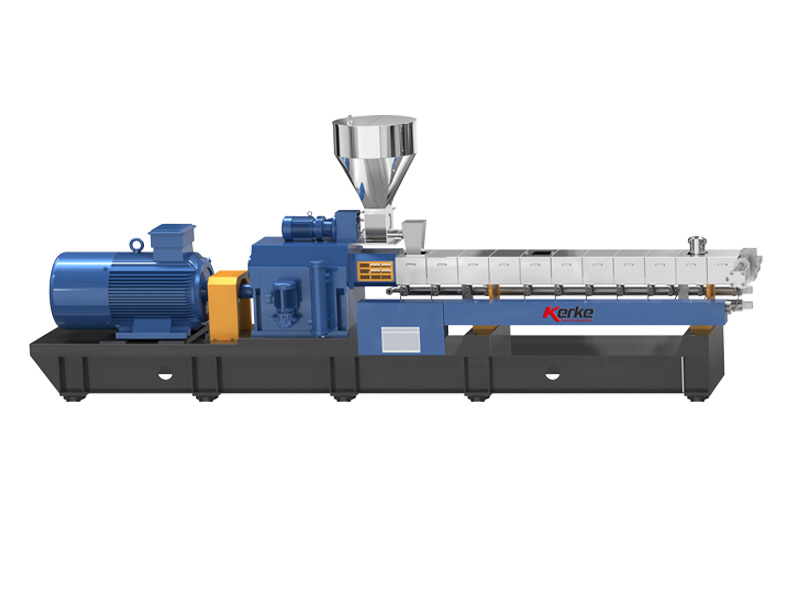
As a leading global manufacturer of twin screw extruders with over 18 years of experience, Kerke has revolutionized masterbatch production by developing advanced extrusion systems that significantly simplify operation and management. Kerke masterbatch extruders integrate intelligent control technology, automated material handling, and modular design to eliminate manual intervention, reduce human error, and streamline production processes. With these innovations, Kerke has transformed masterbatch production from a skill-intensive craft into a standardized, manageable operation that can be efficiently run by operators with minimal training.
This comprehensive guide explores how modern masterbatch extruders simplify every aspect of production operations and management. It examines the limitations of traditional equipment, details the advanced technologies that enable simplified operation, and provides a thorough analysis of Kerke’s innovative solutions. The guide also includes a detailed cost-benefit analysis, real-world case studies, and best practices for maximizing the efficiency of your masterbatch production facility. Whether you are a small startup or a large multinational manufacturer, this guide will help you understand how investing in a modern masterbatch extruder can transform your operations and improve your bottom line.
1. Operational and Management Challenges of Traditional Masterbatch Production
Traditional masterbatch production systems present numerous operational and management challenges that limit productivity, increase costs, and hinder growth. These challenges stem from the complexity of the extrusion process, the limitations of legacy equipment, and the reliance on manual labor and experience-based decision-making.
1.1 Extreme Dependence on Skilled Operators
The most significant challenge in traditional masterbatch production is the extreme dependence on highly skilled operators. The extrusion process involves dozens of interdependent parameters that must be precisely balanced to achieve the desired product quality. Even experienced operators must constantly monitor and adjust these parameters in response to variations in raw material properties, environmental conditions, and equipment wear.
Finding and retaining skilled extrusion operators has become increasingly difficult in recent years, as the aging workforce retires and fewer young people enter the field. The shortage of skilled operators has led to higher labor costs, increased overtime, and production bottlenecks. In many facilities, production schedules are dictated by the availability of skilled operators, rather than market demand.
Furthermore, the knowledge and experience of skilled operators are often not documented or standardized, creating a “knowledge silo” that leaves the facility vulnerable if the operator leaves. When a key operator departs, the facility may experience significant disruptions in production and quality until a replacement can be trained, which can take months or even years.
1.2 Complex and Time-Consuming Product Changeovers
Product changeovers are one of the most time-consuming and wasteful processes in traditional masterbatch production. Each changeover requires stopping production, purging the extruder of the previous material, cleaning the screw and barrel, changing the die and screen pack, and setting up new process parameters.
Conventional extruders require 1-2 hours to complete a color change, with purge material consumption ranging from 10-20kg per changeover. For a facility running 200 changeovers per month, this can result in over 2,000kg of wasted material and 200+ hours of lost production time annually. This waste directly impacts profitability, as purge material is often discarded or sold at a significant discount.
In addition to the time and material waste, changeovers are also a common source of quality issues. Incomplete cleaning between batches can lead to cross-contamination, resulting in off-color products and customer rejects. Manual parameter setup during changeovers is also prone to error, leading to inconsistent product quality between batches.
1.3 Difficulties in Maintaining Consistent Quality
Maintaining consistent product quality is essential in the masterbatch industry, where even minor variations in color or dispersion can result in rejected orders and damaged customer relationships. However, traditional production systems make it difficult to achieve consistent quality across batches.
Manual process control is inherently variable, as different operators may adjust parameters differently even when producing the same product. Variations in raw material properties, environmental conditions, and equipment wear further complicate quality control. Without real-time monitoring and automatic process adjustment, these variations can lead to inconsistent product quality and high scrap rates.
Quality control in traditional facilities is also often a reactive process, with products tested only after production is complete. This means that quality issues may not be detected until after an entire batch has been produced, resulting in significant material waste and production delays.
1.4 Lack of Real-Time Data and Visibility
Traditional masterbatch production facilities often lack real-time data and visibility into their operations. Production data is typically recorded manually on paper or spreadsheets, making it difficult to track key performance indicators (KPIs) such as production output, scrap rates, and equipment utilization.
This lack of data visibility makes it difficult for managers to identify bottlenecks, optimize production processes, or make informed decisions. Without accurate, real-time data, managers are forced to rely on guesswork and intuition, leading to inefficient resource allocation and missed opportunities for improvement.
Furthermore, manual data recording is prone to error, leading to inaccurate or incomplete records. This can make it difficult to comply with regulatory requirements or customer demands for traceability and quality documentation.
1.5 Reactive Maintenance and Unplanned Downtime
Traditional maintenance practices in masterbatch production are typically reactive, with equipment repaired only after it breaks down. This approach leads to frequent unplanned downtime, which is extremely costly for manufacturers. The average cost of unplanned downtime in the plastics industry is $50,000 per hour, with some high-volume lines losing over $100,000 per hour.
Reactive maintenance also leads to higher repair costs, as equipment failures often cause more extensive damage than would have occurred with preventive maintenance. Additionally, unplanned downtime disrupts production schedules, leading to missed delivery deadlines and dissatisfied customers.
Without a proactive maintenance program, equipment lifespan is also reduced, as minor issues are allowed to develop into major problems. This results in higher capital expenditures over time, as equipment must be replaced more frequently.
1.6 Safety and Environmental Risks
Traditional masterbatch production facilities also face significant safety and environmental risks. Manual material handling exposes workers to the risk of injury from lifting heavy bags or coming into contact with hazardous materials. The extrusion process also generates heat, noise, and dust, which can create additional safety hazards if not properly managed.
Environmental regulations are becoming increasingly strict, and facilities that fail to comply can face significant fines and penalties. Traditional production systems often lack the monitoring and control capabilities needed to ensure compliance with environmental regulations, such as emissions limits and waste disposal requirements.
2. How Modern Masterbatch Extruders Simplify Daily Operations
Modern masterbatch extruders integrate a range of advanced technologies that address the operational challenges of traditional equipment. These technologies automate manual processes, reduce human error, and simplify complex tasks, making production operations more efficient and less dependent on skilled labor.
2.1 Integrated Intelligent Control System
The integrated intelligent control system is the heart of modern masterbatch extruders, serving as the central nervous system that coordinates all aspects of the production process. Kerke KTE Series extruders feature advanced PLC control systems with intuitive touchscreen interfaces that provide operators with complete control and visibility over the extrusion process.
The control system continuously monitors all critical process parameters, including temperature, pressure, torque, screw speed, and feed rates. It uses advanced PID algorithms with auto-tuning functionality to maintain precise control over these parameters, automatically adjusting them as needed to compensate for variations in raw material properties or environmental conditions. This closed-loop control ensures consistent product quality and eliminates the need for constant manual adjustment by operators.
Kerke’s control system also features an unlimited recipe storage capability, allowing operators to store and recall process parameters for hundreds of different products with a single touch. This eliminates the need for manual parameter setup during changeovers, ensuring that the same process parameters are used every time a product is run. The recipe system also includes security features that prevent unauthorized changes to process parameters, further ensuring consistent product quality.
2.2 One-Click Changeover and Fast Cleaning Technology
One of the most significant advancements in modern masterbatch extruders is the development of one-click changeover and fast cleaning technology, which dramatically reduces changeover time and material waste.
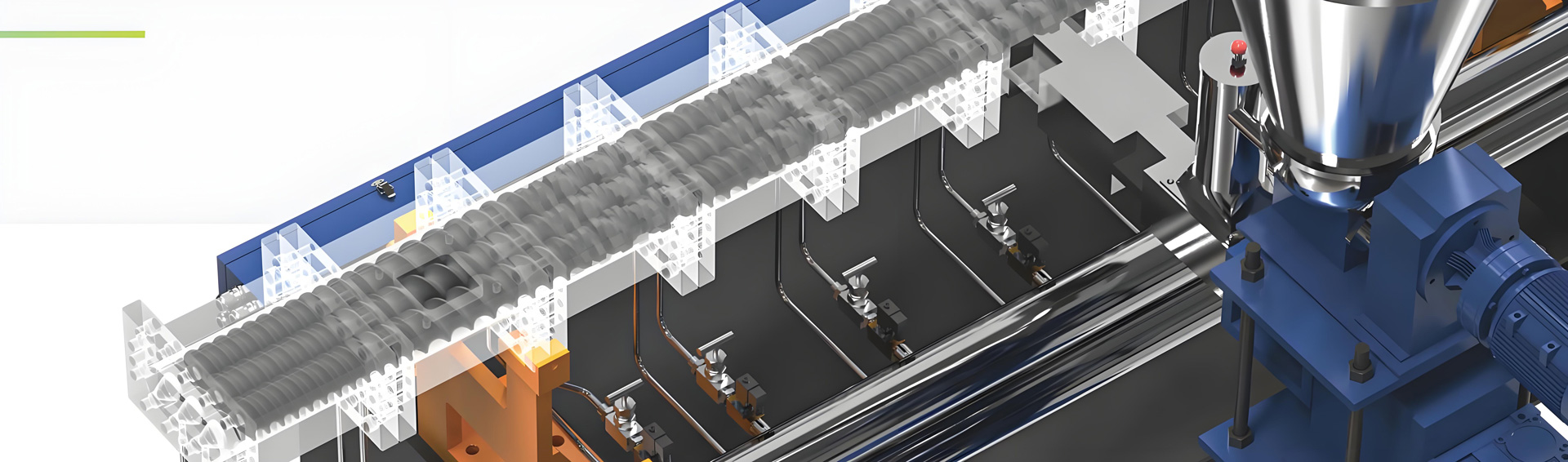
Kerke extruders feature a split barrel design that can be opened in minutes, providing complete access to the screw and barrel interior for thorough cleaning. This eliminates the need for extensive purging between batches, reducing purge material consumption by up to 80% compared to conventional extruders. For color changes between very different colors, such as black to white, the split barrel design allows for complete manual cleaning in less than 30 minutes, compared to 2-3 hours for conventional extruders.
The one-click changeover feature automates the entire changeover process with a single command from the operator. When a new product is selected from the recipe library, the control system automatically adjusts all process parameters, including temperature profiles, screw speed, and feed rates. It also coordinates the operation of downstream equipment such as pelletizers and classifiers, ensuring a seamless transition between products.
Kerke also offers quick-change die heads and screen changers that can be replaced in minutes without tools, further reducing changeover time. These innovations have transformed product changeovers from a complex, time-consuming process into a simple, automated task that can be performed by operators with minimal training.
2.3 Automated Material Handling and Feeding Systems
Automated material handling and feeding systems eliminate the need for manual material handling, reducing labor costs, improving safety, and ensuring consistent feeding accuracy.
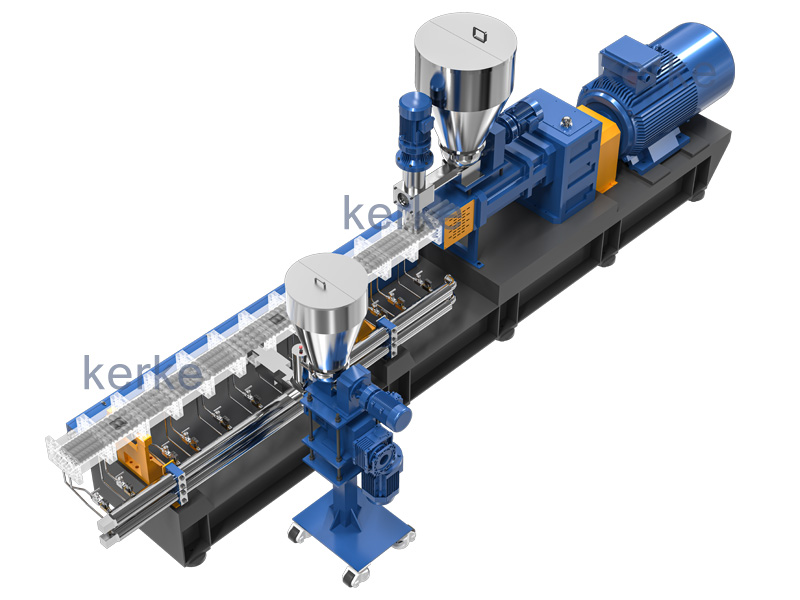
Kerke offers a complete range of automated feeding solutions, including loss-in-weight feeders, volumetric feeders, and side feeders. Loss-in-weight feeders provide the highest level of feeding accuracy, with dosing precision of ±0.1% or better. They continuously measure the weight of material being fed to the extruder and automatically adjust the feed rate to maintain the desired output. This ensures that the correct ratio of raw materials is maintained throughout the production run, resulting in consistent product quality.
The feeding systems are fully integrated with the extruder control system, allowing for automatic recipe management and process control. When a new product is selected, the control system automatically adjusts the feed rates of all ingredients to match the recipe requirements. This eliminates the need for manual weighing and feeding, reducing human error and improving production efficiency.
Kerke also offers automated material handling systems, including vacuum conveyors, bulk bag unloaders, and storage silos. These systems transport raw materials from storage to the feeders automatically, eliminating the need for manual lifting and carrying of heavy bags. This not only reduces labor costs but also improves workplace safety and reduces the risk of material contamination.
2.4 Self-Diagnostic and Intelligent Alarm System
Modern masterbatch extruders feature advanced self-diagnostic and intelligent alarm systems that help operators identify and resolve issues quickly, minimizing downtime and production losses.
Kerke’s control system continuously monitors the performance of all critical components, including motors, gearboxes, heaters, and sensors. It uses advanced algorithms to detect early signs of malfunction or abnormal operation, such as excessive vibration, temperature deviations, or pressure fluctuations. When an issue is detected, the system triggers an alarm and provides the operator with a clear description of the problem and recommended corrective actions.
The alarm system is prioritized based on the severity of the issue, ensuring that operators focus on the most critical problems first. It also includes a historical log of all alarms and events, which can be used for troubleshooting and process improvement.
In addition to real-time monitoring and alarming, Kerke’s control system also features predictive maintenance capabilities. It uses machine learning algorithms to analyze historical performance data and predict when components are likely to fail. This allows maintenance to be scheduled during planned downtime, rather than waiting for a breakdown to occur.
2.5 Intuitive Human-Machine Interface
The human-machine interface (HMI) is the primary point of interaction between the operator and the extruder, and its design has a significant impact on the ease of operation. Modern HMIs are designed to be intuitive and user-friendly, making it easy for operators with minimal training to operate the equipment effectively.
Kerke’s touchscreen HMI features a graphical interface that displays all critical process parameters in real-time on a single screen. The interface is organized into logical sections, making it easy for operators to navigate and find the information they need. It also features multi-language support, allowing it to be used by operators in different countries.
The HMI includes built-in help and troubleshooting guides that provide operators with step-by-step instructions for common tasks and issues. This reduces the need for extensive training and allows operators to resolve problems quickly without assistance from maintenance personnel or technical support.
For more advanced users, the HMI provides access to detailed process data, trend graphs, and historical records. This allows experienced operators and process engineers to analyze process performance and identify opportunities for improvement.
3. How Masterbatch Extruders Simplify Production Management
In addition to simplifying daily operations, modern masterbatch extruders also provide powerful tools that simplify production management. These tools provide managers with real-time visibility into operations, automate administrative tasks, and enable data-driven decision-making.
3.1 Full Process Data Traceability and Recording
Full process data traceability and recording are essential for quality control, regulatory compliance, and process improvement. Modern masterbatch extruders automatically record all process parameters and production data, creating a complete digital record of every batch produced.
Kerke’s control system records all critical process parameters in real-time, including temperature, pressure, torque, screw speed, feed rates, and energy consumption. It also records production data such as batch number, production date, operator name, raw material batch numbers, and finished product quantity. This data is stored securely in the control system and can be easily retrieved and exported for quality control purposes or regulatory compliance.
The data logging system provides complete traceability from raw material to finished product. If a quality issue is detected, managers can quickly trace the problem back to the specific production run, raw material batch, or process conditions. This allows for targeted corrective actions and minimizes the impact of quality issues on customers.
The recorded data can also be used for process optimization and continuous improvement. By analyzing historical process data, managers can identify trends, patterns, and bottlenecks in the production process. This information can be used to optimize process parameters, reduce waste, and improve overall production efficiency.
3.2 Production Performance Management and Analysis
Modern masterbatch extruders provide powerful production performance management and analysis tools that help managers track KPIs, identify areas for improvement, and make informed decisions.
Kerke’s control system includes a comprehensive production reporting module that generates detailed reports on key performance indicators such as production output, scrap rates, equipment utilization, energy consumption, and changeover time. These reports can be generated on a daily, weekly, or monthly basis, providing managers with a clear overview of production performance.
The reporting module also includes graphical dashboards that display real-time production data, allowing managers to monitor performance at a glance. The dashboards can be customized to display the specific KPIs that are most important to the facility, such as OEE (Overall Equipment Effectiveness), production yield, or energy consumption per kilogram.
By analyzing these performance metrics, managers can identify bottlenecks in the production process and implement targeted improvements. For example, if changeover time is identified as a bottleneck, managers can implement additional training or process improvements to reduce changeover time. If scrap rates are high, managers can investigate the root cause and implement corrective actions to reduce waste.
3.3 Remote Monitoring and Centralized Management
Remote monitoring and centralized management capabilities allow managers to monitor and control production operations from anywhere, at any time. This is particularly valuable for multi-site facilities or for managers who are frequently away from the plant.
Kerke offers optional remote monitoring capabilities that allow managers to access the extruder control system from any computer or mobile device with an internet connection. This allows them to monitor real-time production data, view alarms and events, and even adjust process parameters remotely.
Remote monitoring also enables Kerke’s technical support team to provide faster and more effective support. If an issue arises, Kerke technicians can remotely access the extruder control system to diagnose the problem and provide guidance to the on-site team. In many cases, issues can be resolved remotely without the need for an on-site service visit, reducing downtime and service costs.
For multi-site facilities, Kerke offers centralized management solutions that allow managers to monitor and control all extruders from a single location. This provides a unified view of production across all sites, making it easier to allocate resources, standardize processes, and ensure consistent quality across the organization.
3.4 Standardized Operating Procedures
Modern masterbatch extruders facilitate the implementation of standardized operating procedures (SOPs), which are essential for ensuring consistent product quality, reducing human error, and simplifying training.
Kerke’s recipe management system ensures that the same process parameters are used every time a product is run, eliminating the variability associated with manual parameter adjustment. The system also includes security features that prevent unauthorized changes to process parameters, ensuring that SOPs are followed consistently.
The control system can also be programmed to guide operators through standard operating procedures step-by-step. For example, when starting a new batch, the system can prompt the operator to perform pre-start checks, load the correct raw materials, and verify process parameters before starting production. This ensures that all operators follow the same procedures, regardless of their experience level.
Standardized operating procedures also simplify training for new operators. Instead of having to learn complex, experience-based techniques, new operators can follow the step-by-step instructions provided by the control system. This reduces training time and allows new operators to become productive more quickly.
3.5 Predictive Maintenance Management
Predictive maintenance management transforms maintenance from a reactive to a proactive process, reducing unplanned downtime, extending equipment lifespan, and lowering maintenance costs.
Kerke’s predictive maintenance system uses advanced sensors and machine learning algorithms to monitor the condition of critical components in real-time. The system continuously collects data on parameters such as vibration, temperature, pressure, and energy consumption, and uses this data to detect early signs of wear or malfunction.
When the system detects that a component is likely to fail, it generates a maintenance alert with a recommended time frame for replacement. This allows maintenance to be scheduled during planned downtime, rather than waiting for a breakdown to occur. This approach reduces unplanned downtime by 30-50% and extends equipment lifespan by ensuring that components are replaced before they cause damage to other parts of the machine.
The predictive maintenance system also helps optimize maintenance costs by ensuring that components are replaced only when necessary, rather than on a fixed schedule. This reduces unnecessary maintenance and extends the service life of components, resulting in significant cost savings over time.
4. Kerke KTE Series Masterbatch Extruders: Designed for Simplified Operation and Management
Kerke KTE Series twin screw extruders are specifically designed to simplify operation and management in masterbatch production. Every aspect of the extruder, from the mechanical design to the control system, is engineered to reduce complexity, automate manual processes, and provide powerful management tools.
4.1 KTE-20 Laboratory and Pilot Scale Extruder
The KTE-20 is a compact laboratory and pilot scale extruder ideal for formula development, small sample production, and very small batch manufacturing. Despite its small size, it incorporates all the advanced features of Kerke’s larger production machines, making it easy to scale up from laboratory to production.
The KTE-20 features a 20mm screw diameter and a production capacity of 5-15kg/h. It includes a fully integrated control system with a 10-inch touchscreen HMI, unlimited recipe storage, and complete data logging capabilities. The split barrel design allows for fast and easy cleaning between batches, with typical changeover times of less than 15 minutes.
The KTE-20 is also designed for ease of use and maintenance. It features a modular design that allows for easy access to all components, and all wear parts are interchangeable with Kerke’s larger production machines. This ensures that operators and maintenance personnel can gain valuable experience on the laboratory machine that directly translates to production equipment.
The price of the Kerke KTE-20 laboratory extruder ranges from $18,000 to $28,000, depending on configuration and optional features. This includes the base extruder, main feeder, control system, and basic downstream equipment.
4.2 KTE-35 Small Batch Production Extruder
The KTE-35 is Kerke’s most popular model for small batch custom masterbatch production. With a screw diameter of 35.6mm and a production capacity of 20-80kg/h, it strikes the perfect balance between production capacity and flexibility.
The KTE-35 features a 44:1 L/D ratio, which provides excellent mixing performance for a wide range of masterbatch formulations. It includes all of Kerke’s advanced features, including the split barrel design for fast cleaning, one-click changeover capability, integrated loss-in-weight feeding system, and advanced control system with recipe management and data logging.
The KTE-35 is designed for ease of operation and maintenance. It features a user-friendly touchscreen interface that guides operators through all production processes, and all maintenance points are easily accessible. The modular design allows for easy upgrade and expansion as production needs grow.
The price of the Kerke KTE-35 small batch production extruder ranges from $38,000 to $62,000, depending on configuration. A typical turnkey system including feeding system, extruder, pelletizer, and classifier costs approximately $55,000.
4.3 KTE-50 Flexible Production Extruder
The KTE-50 is a flexible production extruder that bridges the gap between small batch and medium volume production. With a screw diameter of 51.4mm and a production capacity of 50-220kg/h, it is ideal for manufacturers who have a mix of small batch custom orders and larger volume production runs.
The KTE-50 features a 44:1 L/D ratio and a high-torque drive system, providing excellent mixing performance for even the most demanding formulations. It retains all the fast changeover features of Kerke’s smaller machines, including the split barrel design, quick-change die head, and one-click changeover capability. This allows it to efficiently handle both small batch custom orders and larger production runs, maximizing equipment utilization.
The KTE-50 can be configured with up to four side feeders and multiple liquid feeders, making it suitable for complex formulations with multiple ingredients. It also features an advanced control system with remote monitoring and predictive maintenance capabilities, providing powerful management tools for larger production facilities.
The price of the Kerke KTE-50 flexible production extruder ranges from $82,000 to $135,000, depending on configuration. A complete turnkey system costs approximately $110,000.
4.4 Integrated Turnkey Solutions
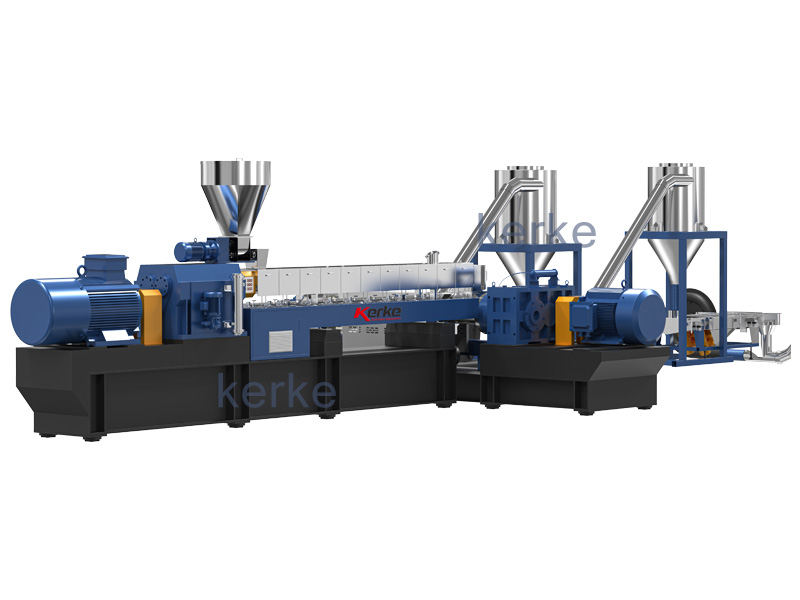
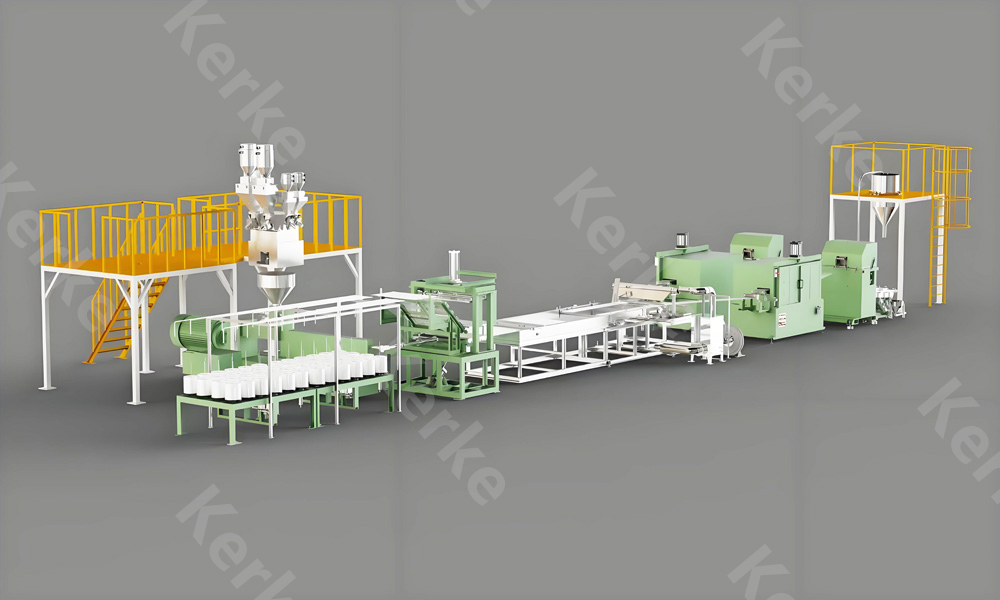
In addition to individual extruders, Kerke offers complete turnkey masterbatch production lines tailored to the specific needs of each customer. These turnkey solutions include all the equipment necessary to start production, from raw material handling and pre-mixing to finished product packaging and storage.
Kerke’s turnkey lines are designed to be fully integrated and automated, with a centralized control system that allows operators to monitor and control the entire production process from a single interface. This reduces the number of operators required and improves overall production efficiency.
The company also provides complete project management services, including facility layout design, equipment installation and commissioning, operator training, and ongoing technical support. This ensures that your production line is up and running quickly and operates at peak performance from day one.
The price of a complete Kerke turnkey masterbatch production line ranges from $65,000 for a basic KTE-35 system to $180,000 for a fully automated KTE-50 system with advanced downstream equipment.
5. Cost-Benefit Analysis and Return on Investment
Investing in a modern masterbatch extruder designed for simplified operation and management provides a significant return on investment through reduced labor costs, lower material waste, increased productivity, and improved product quality.
5.1 Initial Investment Comparison
To demonstrate the financial benefits of investing in a Kerke masterbatch extruder, we will compare the costs and returns of a Kerke KTE-35 extruder versus a conventional 35mm twin screw extruder for small batch masterbatch production.
The initial purchase price of a conventional 35mm twin screw extruder is approximately $32,000. In contrast, the initial purchase price of a Kerke KTE-35 extruder with advanced control system, automated feeding, and fast changeover features is approximately $52,000. This represents an initial investment premium of $20,000 for the Kerke machine.
However, this initial premium is quickly offset by significant operating cost savings and increased productivity, as we will demonstrate in the following sections.
5.2 Annual Operating Cost Savings
We will base our analysis on a typical small batch masterbatch operation running 20 days per month, 12 months per year, with an average of 6 changeovers per day. The production volume is approximately 30,000kg per year.
Labor cost savings are one of the most significant benefits of the Kerke extruder. The conventional extruder requires 2 skilled operators per shift due to its complex operation and manual processes. At a labor cost of $3,000 per operator per month, this results in an annual labor cost of $72,000. In contrast, the Kerke extruder can be operated by 1 operator per shift due to its automated features and simplified operation. This results in an annual labor cost of $36,000, representing an annual labor cost savings of $36,000.
Purge material savings are another major benefit. The conventional extruder requires approximately 12kg of purge material per changeover, while the Kerke extruder requires only 3kg per changeover due to its split barrel design and fast cleaning technology. At a material cost of $2.50 per kg, this results in annual savings of:
(12kg – 3kg) × 6 changeovers/day × 20 days/month × 12 months/year × $2.50/kg = $32,400 per year.
Productivity gains from reduced changeover time also contribute to cost savings. The conventional extruder requires approximately 1.5 hours per changeover, while the Kerke extruder requires only 0.5 hours per changeover. This results in an additional 6 hours of production time per day, which can be used to increase production volume or reduce overtime costs. Assuming a production rate of 50kg/h and a profit margin of $1.50 per kg, this results in additional annual profit of:
6 hours/day × 20 days/month × 12 months/year × 50kg/hour × $1.50/kg = $108,000 per year.
Reduced reject rates also contribute to savings. The Kerke extruder’s precise process control results in a reject rate of approximately 0.5%, compared to 3% for the conventional extruder. This results in annual material savings of:
30,000kg/year × (3% – 0.5%) × $2.50/kg = $1,875 per year.
Adding these savings together, the total annual operating cost savings and additional profit from the Kerke extruder is approximately $178,275 per year.
5.3 Return on Investment Calculation
With an initial investment premium of $20,000 and annual savings of over $178,000, the payback period for the Kerke KTE-35 extruder is less than 1.5 months. This is an exceptional return on investment that demonstrates the significant financial benefits of investing in a modern masterbatch extruder designed for simplified operation and management.
Even if we exclude the additional profit from increased production volume and only consider the direct cost savings (labor, purge material, and rejects), the total annual direct savings are $70,275, resulting in a payback period of approximately 3.4 months.
Over the 10-15 year service life of the extruder, the total savings will be well over $1 million, making the Kerke extruder one of the most profitable investments a masterbatch manufacturer can make.
6. Real-World Case Study: Masterbatch Manufacturer Transforms Operations with Kerke Extruders
A medium-sized masterbatch manufacturer in Europe was experiencing significant challenges with their traditional production equipment, including high labor costs, frequent quality issues, and long changeover times. The company operated three conventional twin screw extruders, requiring 6 skilled operators per shift to run the equipment.
The manufacturer was struggling to meet customer demand for fast turnaround times on small batch orders, as changeovers between products were taking 2-3 hours each. The high reject rate of 4% was also eating into profit margins, and the company was having difficulty finding and retaining skilled operators.
In 2024, the company replaced their three conventional extruders with two Kerke KTE-35 extruders. The results were transformative:
Labor costs reduced by 50%: The two Kerke extruders could be operated by 3 operators per shift, compared to 6 operators for the three conventional extruders. This resulted in annual labor cost savings of over $200,000.
Changeover time reduced by 75%: Changeover time was reduced from 2-3 hours to 30-45 minutes per changeover, allowing the company to handle more small batch orders and reduce lead times from 2 weeks to 3-5 days.
Purge material waste reduced by 80%: Purge material consumption was reduced from 15kg per changeover to 3kg per changeover, resulting in annual material savings of over $50,000.
Reject rate reduced from 4% to 0.8%: The precise process control of the Kerke extruders resulted in significantly improved product quality, reducing scrap rates and material waste.
Production output increased by 30%: The increased uptime and productivity allowed the company to increase production output by 30% without adding additional equipment or labor.
The total annual savings from the investment in Kerke extruders exceeded $500,000, resulting in a payback period of less than 6 months. The company has since expanded their production capacity with additional Kerke extruders and has become a leading supplier of custom masterbatch in their region.
7. Best Practices for Maximizing Operational and Management Efficiency
While investing in a modern masterbatch extruder is the most effective way to simplify operation and management, implementing best practices in your production processes will further improve efficiency and productivity.
7.1 Invest in Comprehensive Operator Training
Even the most advanced equipment will not perform optimally without well-trained operators. Invest in comprehensive training for all operators on proper machine operation, maintenance, and troubleshooting procedures.
Kerke provides comprehensive operator training as part of the equipment delivery, including classroom instruction and hands-on training on the actual equipment. The company also offers advanced training courses to help operators develop their skills and get the most out of their equipment.
Cross-training operators on multiple machines and processes will also improve flexibility and reduce the impact of absences or turnover. This ensures that production can continue uninterrupted even if key personnel are unavailable.
7.2 Standardize All Production Processes
Standardizing all production processes is essential for ensuring consistent product quality, reducing human error, and simplifying training. Develop detailed standard operating procedures (SOPs) for all aspects of production, from raw material receiving to finished product shipping.
Use the recipe management system in your Kerke extruder to standardize process parameters for all products. This ensures that the same parameters are used every time a product is run, regardless of who is operating the machine.
Regularly review and update your SOPs to reflect changes in equipment, processes, or customer requirements. Ensure that all employees are trained on the latest procedures and have easy access to the most current documentation.
7.3 Implement a Data-Driven Management Approach
Use the data logging and reporting capabilities of your Kerke extruder to implement a data-driven management approach. Regularly review production performance data to identify trends, patterns, and areas for improvement.
Establish clear KPIs for your production facility, such as OEE, scrap rate, changeover time, and energy consumption. Track these KPIs regularly and communicate the results to your team. Use the data to set goals and measure progress towards those goals.
Encourage your team to use the data to identify and implement process improvements. Create a culture of continuous improvement where employees are empowered to suggest and implement changes that will improve efficiency, quality, or safety.
7.4 Establish a Proactive Maintenance Program
Establish a comprehensive proactive maintenance program to keep your equipment operating at peak performance and minimize unplanned downtime. Use the predictive maintenance capabilities of your Kerke extruder to schedule maintenance based on actual equipment condition, rather than on a fixed schedule.
Develop a detailed maintenance schedule that includes daily, weekly, monthly, and annual maintenance tasks. Ensure that all maintenance personnel are properly trained and have access to the necessary tools and spare parts.
Keep detailed maintenance records for all equipment, including service dates, parts replaced, and any issues encountered. This information can be used to identify recurring problems and optimize maintenance intervals.
7.5 Continuously Improve Your Processes
Continuous improvement is essential for maintaining a competitive advantage in the masterbatch industry. Regularly review your production processes and look for ways to improve efficiency, reduce waste, and enhance quality.
Encourage feedback from your employees, as they are often the best source of ideas for improvement. Implement a suggestion program and reward employees for ideas that result in measurable improvements.
Stay informed about new technologies and best practices in the masterbatch industry. Attend industry conferences, trade shows, and training events to learn about the latest developments and network with other professionals.
8. Conclusion
The masterbatch industry is evolving rapidly, with increasing demand for customized products, fast turnaround times, and consistent quality. Traditional production systems are no longer sufficient to meet these demands, as they are too complex, labor-intensive, and prone to error.
Modern masterbatch extruders such as the Kerke KTE Series have revolutionized the industry by simplifying every aspect of operation and management. These advanced machines integrate intelligent control technology, automated material handling, and fast changeover capabilities to eliminate manual intervention, reduce human error, and streamline production processes.
The financial benefits of investing in a modern masterbatch extruder are substantial. The significant savings in labor costs, material waste, and downtime result in a rapid return on investment, often measured in months rather than years. Over the service life of the equipment, the total savings can be millions of dollars.
In addition to the financial benefits, modern masterbatch extruders also improve product quality, reduce lead times, and enhance workplace safety. They allow manufacturers to be more agile and responsive to customer needs, providing a significant competitive advantage in the global marketplace.
By implementing best practices in operator training, process standardization, data-driven management, and proactive maintenance, you can further maximize the efficiency and productivity of your masterbatch production facility.
Kerke is committed to providing masterbatch manufacturers with the most advanced, reliable, and user-friendly extrusion equipment available. With over 18 years of experience and a global presence, Kerke has the expertise and technology to help you transform your operations and achieve your business goals.
If you are looking to simplify your masterbatch production operations and improve your bottom line, contact Kerke today to learn more about our innovative extrusion solutions. Our team of experienced engineers will work with you to develop a customized solution that meets your specific production needs and budget.