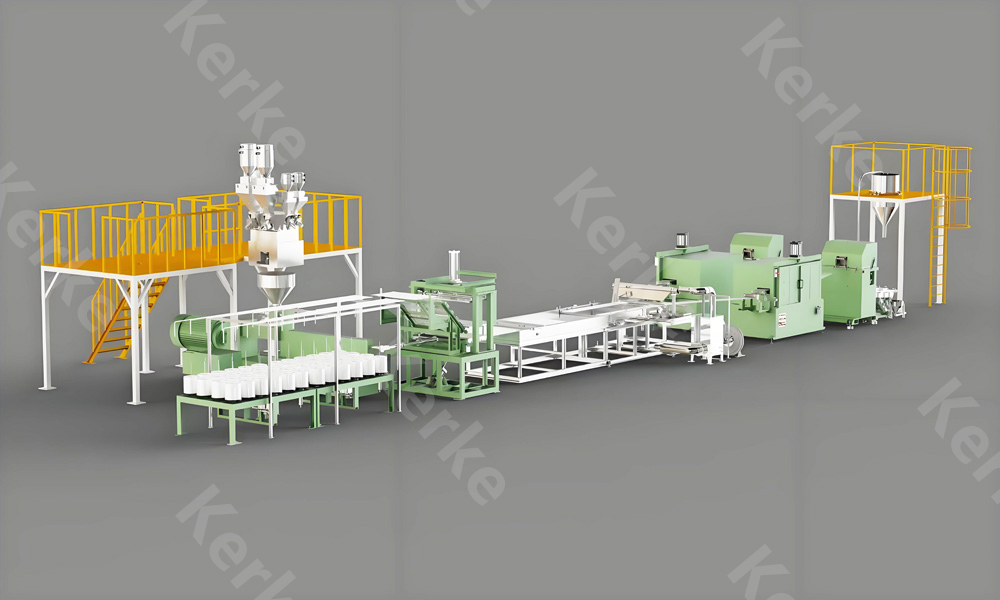
The global plastics compounding industry operates in increasingly demanding environments, with manufacturers pushing production limits to meet growing market demands. Today, more than 65% of compounding operations process materials that fall into the “harsh conditions” category, including highly filled formulations, corrosive additives, recycled plastics with contaminants, and 24/7 continuous production schedules. Under these extreme conditions, standard twin screw extruders often struggle to maintain consistent performance, leading to frequent breakdowns, unplanned downtime, and significant production losses.
Industry research shows that unplanned downtime costs compounding manufacturers an average of $50,000 per hour in lost production, with some high-volume lines losing over $100,000 per hour. For facilities operating in harsh conditions, downtime rates can be 2-3 times higher than those processing standard materials. This not only erodes profit margins but also damages customer relationships and brand reputation. The ability to maintain stable performance under harsh conditions has become a critical competitive advantage in the global plastics industry.
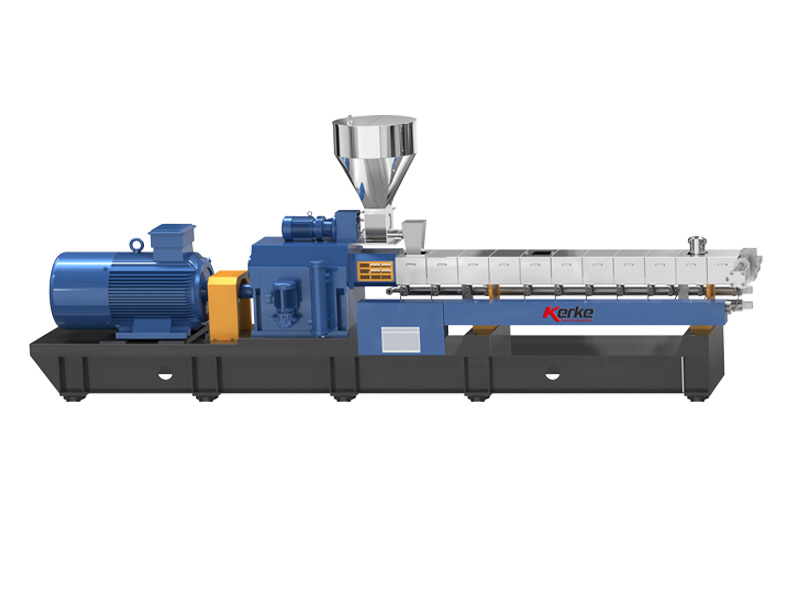
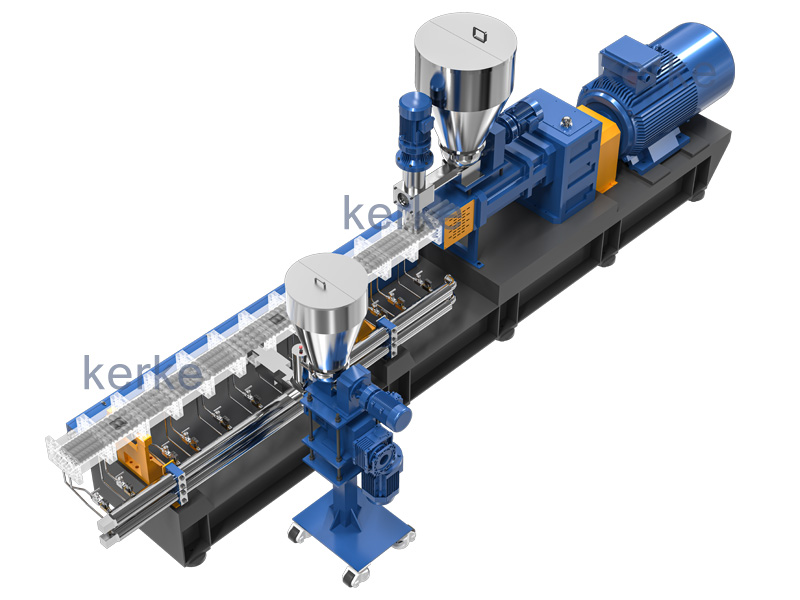
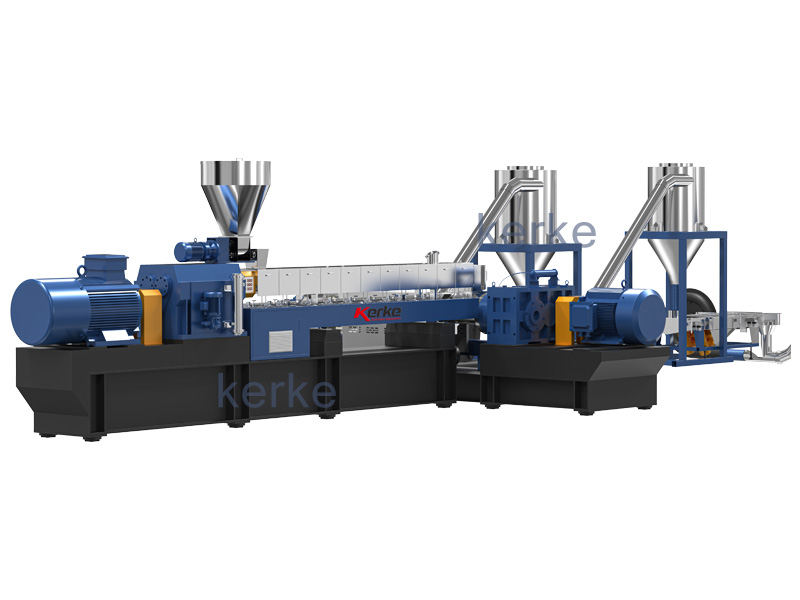
As a leading global manufacturer of twin screw extruders with over 18 years of experience, Kerke has developed specialized compounding extruders specifically engineered to deliver reliable, consistent performance in the most demanding operating environments. Kerke KTE Series twin screw extruders integrate advanced materials science, precision engineering, and intelligent control systems to withstand the rigors of harsh processing conditions. With a proven track record in over 50 countries worldwide, Kerke extruders have demonstrated exceptional durability and stability in applications that would quickly disable standard equipment.
This comprehensive guide explores the various harsh conditions encountered in plastics compounding, the impact of these conditions on traditional extruders, and the advanced technologies that enable modern twin screw extruders to maintain stable performance. It provides a detailed analysis of Kerke’s proprietary design features, real-world performance data from harsh environment applications, and a thorough cost-benefit analysis comparing Kerke extruders to conventional equipment. Whether you are processing highly filled masterbatches, corrosive flame retardant compounds, or contaminated recycled plastics, this guide will help you understand how investing in a purpose-built twin screw extruder can transform your production efficiency and profitability.
1. Common Harsh Conditions in Plastics Compounding
Plastics compounding involves a wide range of materials and processes, many of which create extremely harsh operating conditions for extrusion equipment. These conditions challenge every component of the extruder, from the screw and barrel to the drive system and electrical controls.
1.1 High Filler and High Viscosity Formulations
Highly filled formulations represent one of the most common and challenging harsh conditions in plastics compounding. These formulations typically contain 40-80% mineral fillers such as calcium carbonate, talc, glass fiber, or carbon black. The addition of these fillers significantly increases the viscosity of the melt, often by 5-10 times compared to unfilled polymers{insert_element_0_}. This increased viscosity creates elevated processing pressures throughout the extruder barrel, requiring robust construction and high torque capacity from the drive system.
The abrasive nature of mineral fillers also accelerates component wear. Hard particles such as glass fiber and calcium carbonate act like sandpaper, wearing down screw elements and barrel liners at an accelerated rate. Standard screw and barrel materials may only last 2,000-3,000 hours when processing high filler formulations with 60-80% mineral content{insert_element_1_}. This frequent component replacement leads to increased maintenance costs and production downtime.
High viscosity materials also generate significant shear heat during processing, which can cause thermal degradation of the polymer matrix if not properly controlled. This requires precise temperature management systems that can maintain consistent temperatures even under varying load conditions.
1.2 Corrosive and Chemically Aggressive Materials
Many plastic compounds contain additives that are highly corrosive to standard extruder components. These include halogenated flame retardants, acidic pigments, stabilizers, and certain types of recycled plastics that may contain residual chemicals. During processing, these additives can release corrosive gases or liquids that attack the metal surfaces of the screw and barrel.
Corrosion causes pitting and erosion of component surfaces, leading to reduced performance, increased leakage, and eventual component failure. In severe cases, corrosion can cause catastrophic equipment failure, resulting in extensive downtime and costly repairs. Standard carbon steel and even some stainless steel materials are not resistant to these corrosive environments, requiring specialized alloys and surface treatments.
Recycled plastics present an additional corrosion challenge, as they often contain contaminants such as residual chemicals, moisture, and metal particles. These contaminants can accelerate corrosion and wear, further reducing equipment lifespan.
1.3 24/7 Continuous Production Operations
Many compounding facilities operate 24 hours a day, 7 days a week to maximize production output and meet customer demand. This continuous operation places extreme stress on extruder components, which must withstand constant mechanical and thermal cycling without failure.
Under continuous operation, even minor design flaws or material weaknesses can lead to premature component failure. The drive system, in particular, is subjected to constant load, requiring heavy-duty construction and reliable lubrication systems to prevent overheating and wear. Bearings, gears, and seals are all critical components that must be designed for extended service life under continuous operation.
Continuous production also means that maintenance opportunities are limited, making reliability even more critical. Unplanned downtime during continuous operations can be extremely costly, as it disrupts production schedules and may require overtime to meet delivery deadlines.
1.4 Extreme Environmental Temperatures
Extrusion facilities are often located in regions with extreme environmental temperatures, ranging from tropical climates with high heat and humidity to cold regions with sub-zero temperatures. These extreme conditions can significantly impact extruder performance and reliability.
In hot climates, high ambient temperatures can cause overheating of electrical components, hydraulic systems, and drive motors. This can lead to reduced performance, increased energy consumption, and premature component failure. High humidity can also cause corrosion of electrical components and create safety hazards.
In cold climates, low temperatures can cause lubricants to thicken, increasing friction and wear in mechanical components. Cold temperatures can also make plastic materials more brittle, leading to processing difficulties and increased risk of equipment damage during startup.
1.5 High Dust and Contamination Environments
Plastics compounding facilities generate significant amounts of dust and particulate matter from raw material handling, processing, and finishing operations. This dust can infiltrate electrical cabinets, control systems, and mechanical components, causing malfunctions, short circuits, and increased wear.
Dust accumulation on electrical components can cause overheating and increase the risk of electrical fires. In mechanical systems, dust can contaminate lubricants, leading to increased friction and wear in bearings, gears, and other moving parts. Fine dust particles can also clog filters and ventilation systems, reducing their effectiveness and increasing maintenance requirements.
Facilities processing carbon black, talc, or other fine powders are particularly susceptible to dust-related issues. These materials are highly abrasive and can cause significant damage to equipment if not properly contained.
1.6 Frequent Product and Color Changeovers
While not a traditional “harsh condition,” frequent product and color changeovers place significant demands on extruder performance and reliability. Each changeover requires stopping production, cleaning the extruder and downstream equipment, and setting up new process parameters. This frequent cycling between different materials and operating conditions can accelerate component wear and increase the risk of cross-contamination.
Changeovers also require the extruder to be flexible enough to process a wide range of materials with different properties. This includes materials with varying viscosities, melting points, and additive contents. The extruder must be able to quickly adapt to these changing conditions while maintaining consistent product quality.
2. Impact of Harsh Conditions on Traditional Twin Screw Extruders
Traditional twin screw extruders are designed for standard processing conditions and often struggle to maintain reliable performance in harsh environments. The cumulative effect of these harsh conditions leads to a range of problems that significantly impact production efficiency and profitability.
2.1 Accelerated Component Wear and Corrosion
The most obvious impact of harsh conditions is accelerated wear and corrosion of critical components. As mentioned earlier, abrasive fillers can reduce the service life of standard screws and barrels to just 2,000-3,000 hours{insert_element_2_}. Corrosive additives can cause even faster degradation, with some components failing in as little as 1,000 hours.
Worn screws and barrels lead to reduced processing efficiency, as material slips back through the increased clearances between the screw and barrel. This reduces throughput, increases energy consumption, and results in inconsistent product quality. As wear progresses, the extruder may no longer be able to generate sufficient pressure to push the material through the die, requiring complete replacement of the screw and barrel.
Corrosion not only reduces component lifespan but also creates safety hazards. Pitting and erosion of the barrel wall can lead to material leakage, which can cause fires, injuries, and environmental contamination.
2.2 Frequent Breakdowns and Unplanned Downtime
Harsh conditions significantly increase the frequency of equipment breakdowns and unplanned downtime. Worn components, overheated motors, electrical failures, and drive system malfunctions are all common issues in extruders operating in harsh environments.
Unplanned downtime is extremely costly for compounding manufacturers. As mentioned earlier, the average cost of downtime is $50,000 per hour, with some high-volume lines losing over $100,000 per hour. In addition to lost production, unplanned downtime also leads to increased maintenance costs, overtime expenses, and missed delivery deadlines.
Frequent breakdowns also create a reactive maintenance culture, where maintenance personnel spend most of their time fixing problems rather than performing preventive maintenance. This leads to a vicious cycle of increasing breakdowns and decreasing reliability.
2.3 Inconsistent Product Quality
Harsh conditions can also lead to inconsistent product quality, which can damage customer relationships and result in rejected orders. Worn screws and barrels cause variations in melt temperature, pressure, and residence time, leading to inconsistent dispersion of additives and fillers. This results in products with varying color, mechanical properties, and performance characteristics.
Corrosion can also contaminate the product with metal particles, leading to quality issues and potential safety hazards. In applications such as food packaging and medical devices, even minor contamination can result in product recalls and significant financial losses.
Inconsistent product quality also increases scrap rates, as more products fail to meet specifications. This not only wastes raw materials but also reduces overall production efficiency and profitability.
2.4 Increased Maintenance and Operating Costs
Extruders operating in harsh conditions require significantly more maintenance than those processing standard materials. Frequent component replacement, increased lubrication requirements, and more frequent cleaning all contribute to higher maintenance costs.
The cost of replacement parts can be substantial, especially for specialized components such as screws, barrels, and gearboxes. A complete screw and barrel set for a mid-size twin screw extruder can cost $25,000-$40,000{insert_element_3_}, and gearbox replacements can cost $15,000-$25,000. For facilities processing highly abrasive or corrosive materials, these components may need to be replaced every 1-2 years, resulting in significant ongoing expenses.
Energy costs are also higher for extruders operating in harsh conditions. Worn components increase energy consumption by reducing processing efficiency, and overheating systems require additional cooling. In some cases, energy consumption can increase by 20-30% due to component wear and process inefficiencies.
2.5 Reduced Equipment Lifespan
Perhaps the most significant long-term impact of harsh conditions is reduced equipment lifespan. A well-maintained twin screw extruder processing standard materials can last 15-20 years. However, in harsh conditions, the lifespan of a traditional extruder can be reduced to 5-7 years, or even less in extreme cases.
This reduced lifespan means that manufacturers must replace their equipment more frequently, resulting in higher capital expenditures over time. It also creates uncertainty in long-term production planning, as equipment may fail unexpectedly before it can be replaced.
3. Core Technologies for Stable Performance in Harsh Conditions
Modern twin screw extruders designed for harsh conditions integrate a range of advanced technologies that address the specific challenges presented by these environments. These technologies work together to provide exceptional durability, reliability, and consistent performance.
3.1 Advanced Wear and Corrosion Resistant Materials
The foundation of stable performance in harsh conditions is the use of advanced materials that can withstand abrasion and corrosion. Modern extruders use a variety of specialized materials and surface treatments to extend component lifespan.
For screw elements, high-speed tool steels such as W6Mo5Cr4V2 are commonly used as base materials. This material provides excellent wear resistance and toughness, with a hardness of 58-62 HRC after heat treatment{insert_element_4_}. For more demanding applications, powder metallurgy high-speed steels such as ASP 2052 offer 2-3 times the wear resistance of conventional high-speed steels{insert_element_5_}.
Barrel liners are typically made from bimetallic alloys, which consist of a hard, wear-resistant alloy layer bonded to a steel base. These bimetallic liners provide excellent wear resistance while maintaining the structural integrity of the barrel. For highly corrosive applications, special alloys such as Hastelloy or Inconel may be used, or ceramic coatings such as tungsten carbide can be applied to component surfaces.
3.2 High-Torque Drive Systems
High-torque drive systems are essential for processing high-viscosity and highly filled materials. These systems must be able to deliver sufficient torque to rotate the screws under high load conditions while maintaining precise speed control.
Modern high-torque extruders use permanent magnet servo motors or high-efficiency AC motors with variable frequency drives. These motors provide high torque at low speeds and offer excellent energy efficiency. The gearbox is a critical component of the drive system, and modern gearboxes use hardened, ground gears and heavy-duty bearings to handle the high torque loads.
Kerke KTE Series extruders feature high-torque gearboxes capable of delivering specific torque values up to 18 Nm/cm³. This high torque capacity allows the extruder to process even the most viscous materials without stalling or overloading. The gearboxes are designed for continuous operation, with efficient lubrication and cooling systems to ensure long service life.
3.3 Robust Mechanical Construction
In addition to advanced materials and high-torque drive systems, extruders designed for harsh conditions feature robust mechanical construction that can withstand the rigors of continuous operation.
The frame and base of the extruder are constructed from heavy-duty steel to provide stability and reduce vibration. The barrel sections are reinforced to withstand high internal pressures, and the screw shafts are made from high-strength alloy steel to prevent deflection under load.
All mechanical components are designed with safety factors that exceed normal operating requirements, ensuring that the extruder can handle occasional overloads without damage. Bearings and seals are oversized to handle the increased loads and provide longer service life.
3.4 Advanced Thermal Management Systems
Precise thermal management is essential for maintaining consistent product quality and preventing thermal degradation of sensitive materials. Modern extruders use segmented heating and cooling systems that allow independent temperature control of each barrel zone.
Advanced PID temperature controllers with auto-tuning functionality maintain temperature control accuracy of ±1°C{insert_element_6_}. This precise temperature control ensures that the material is heated uniformly throughout the barrel, preventing hotspots and cold spots that can lead to inconsistent product quality.
Efficient cooling systems are also essential for removing excess heat generated by mechanical shear. Modern extruders use water cooling systems with optimized cooling channel designs that provide efficient heat transfer. Some extruders also feature air cooling systems for additional temperature control.
3.5 Sealed and Protected Electrical Systems
Electrical systems are particularly vulnerable to damage from dust, moisture, and corrosive atmospheres. Extruders designed for harsh conditions feature sealed electrical cabinets with filtered ventilation systems to prevent dust and moisture from entering.
All electrical components are rated for industrial use and are protected against dust and water ingress according to IP standards. Wiring is properly routed and protected to prevent damage from mechanical stress or chemical exposure.
Some extruders also feature explosion-proof electrical systems for use in hazardous environments where flammable materials are present. These systems are designed to prevent ignition of flammable gases or dusts, ensuring safe operation in these challenging environments.
3.6 Intelligent Process Control and Monitoring
Intelligent process control and monitoring systems play a critical role in maintaining stable performance in harsh conditions. These systems continuously monitor all process parameters and automatically adjust settings to maintain consistent product quality.
Modern PLC control systems with touch screen interfaces provide operators with real-time visibility into all aspects of the extrusion process. The systems store recipes for different products, ensuring that the same process parameters are used every time a product is run.
Advanced monitoring systems track the performance of critical components such as motors, gearboxes, and bearings. These systems can detect early signs of wear or malfunction and alert operators before a breakdown occurs. Some systems also feature remote monitoring capabilities, allowing technicians to diagnose and resolve issues from off-site locations.
4. Kerke KTE Series Extruders: Engineered for Harsh Conditions
Kerke KTE Series twin screw extruders are specifically designed and built to deliver reliable, stable performance in the most demanding processing environments. Every aspect of the extruder is engineered to withstand the rigors of harsh conditions, from the materials used in construction to the advanced control systems.
4.1 Premium Wear and Corrosion Resistant Components
Kerke uses only the highest quality materials for its screw and barrel components, ensuring exceptional durability and long service life in harsh conditions.
Standard screw elements are made from W6Mo5Cr4V2 high-speed steel, which provides excellent wear resistance and toughness{insert_element_7_}. For highly abrasive applications, Kerke offers screw elements with tungsten carbide coatings, which provide 2-3 times the wear resistance of standard materials. For corrosive applications, Kerke offers special alloy screws and barrels made from Hastelloy or Inconel, which provide excellent resistance to chemical attack.
Kerke barrels feature bimetallic liners with a wear-resistant alloy layer that is centrifugally cast onto a steel base. This construction provides excellent bonding between the liner and the base, preventing delamination and ensuring long service life. The bimetallic liners have a typical service life of 8,000-12,000 hours for moderate filling applications and 12,000-18,000 hours with upgraded materials.
4.2 High-Torque Gearbox with Overload Protection
The gearbox is the heart of any twin screw extruder, and Kerke has invested heavily in developing gearboxes that can handle the high torque demands of harsh processing conditions.
Kerke KTE Series extruders feature high-torque gearboxes with specific torque values ranging from 11 Nm/cm³ to 18 Nm/cm³{insert_element_8_}. These gearboxes use hardened, ground helical gears for smooth, quiet operation and high efficiency. The gears are made from high-quality alloy steel and undergo rigorous heat treatment to ensure maximum strength and durability.
The gearboxes feature heavy-duty thrust bearings that can handle the high axial loads generated during processing. They also include an efficient lubrication and cooling system that maintains proper oil temperature and pressure, even during continuous operation. An integrated overload protection system prevents damage to the gearbox and drive system in the event of a process upset or overload.
4.3 Reinforced Barrel and Screw Design
Kerke extruders feature reinforced barrel and screw designs that can withstand the high pressures and mechanical stresses of harsh processing conditions.
The barrel sections are made from thick-walled steel tubing with reinforced flanges to prevent deflection under high pressure. The barrel segments are precisely machined to ensure perfect alignment, preventing leaks and reducing wear. The barrel also features optimized cooling channels that provide efficient heat transfer and uniform temperature distribution.
The screw shafts are made from high-strength alloy steel and are precision machined to ensure concentricity and balance. The modular screw design allows for easy replacement of individual elements, reducing maintenance time and costs. The screw elements are designed with optimized geometries that provide efficient melting and mixing while minimizing wear.
4.4 Advanced Thermal Management with PID Control
Kerke extruders feature advanced thermal management systems that provide precise temperature control and efficient heat transfer.
Each barrel zone is equipped with independent heating and cooling systems, allowing for precise temperature profiling along the length of the extruder. The heating systems use ceramic band heaters or optional induction heating for fast, efficient heating. The cooling systems use water circulation through optimized cooling channels to remove excess heat generated by shear.
The temperature control system uses advanced PID controllers with auto-tuning functionality, maintaining temperature accuracy of ±1°C{insert_element_9_}. The controllers continuously monitor the temperature in each zone and adjust the heating and cooling outputs as needed to maintain the set temperature. This precise temperature control ensures consistent product quality and prevents thermal degradation of sensitive materials.
4.5 Sealed Electrical Cabinets with Dust Filtration
Kerke extruders feature sealed electrical cabinets with high-efficiency dust filtration systems to protect electrical components from dust, moisture, and corrosive atmospheres.
The electrical cabinets are constructed from heavy-gauge steel and feature sealed doors with gaskets to prevent dust and moisture from entering. Positive pressure ventilation systems with HEPA filters ensure that only clean, filtered air enters the cabinet. This prevents dust accumulation on electrical components, reducing the risk of overheating and electrical failure.
All electrical components are industrial-grade and are rated for use in harsh environments. Wiring is properly routed and protected with conduit, and all connections are sealed to prevent corrosion. The electrical system also includes surge protection and ground fault protection to ensure safe operation.
4.6 Intelligent Control System with Predictive Maintenance
Kerke extruders are equipped with an advanced intelligent control system that provides comprehensive process monitoring, control, and predictive maintenance capabilities.
The control system features a user-friendly touch screen interface that allows operators to easily monitor and adjust all process parameters. The system stores an unlimited number of recipes, ensuring consistent production between batches. It also includes data logging capabilities that record all process parameters for quality control and traceability purposes.
The predictive maintenance system continuously monitors the performance of critical components such as motors, gearboxes, and bearings. It uses advanced algorithms to detect early signs of wear or malfunction and alerts operators before a breakdown occurs. This allows for planned maintenance during scheduled downtime, reducing unplanned downtime and increasing overall equipment effectiveness.
5. Real-World Applications and Performance Results
Kerke KTE Series extruders have been successfully deployed in a wide range of harsh environment applications around the world. The following case studies demonstrate the exceptional performance and reliability of Kerke extruders in these demanding conditions.
5.1 High-Filled Calcium Carbonate Masterbatch Production
A masterbatch manufacturer in Southeast Asia was experiencing frequent breakdowns and short component life with their existing extruders when producing 80% calcium carbonate filled masterbatch. The standard screws and barrels were lasting only 2,500 hours, and the extruders were experiencing unplanned downtime every 2-3 months.
The manufacturer replaced their existing extruders with Kerke KTE-50 extruders equipped with tungsten carbide coated screws and bimetallic barrels. The results were dramatic:
– Screw and barrel service life increased to 12,000 hours, a 380% improvement
– Unplanned downtime reduced by 85%
– Overall production costs reduced by 25%
The Kerke extruders have now been in operation for over 5 years, providing stable, reliable performance with minimal maintenance.
5.2 Flame Retardant Compound Production
A compounder in Europe was processing halogenated flame retardant compounds, which are highly corrosive to standard extruder components. Their existing extruders were experiencing severe corrosion, with screw and barrel replacement required every 1,500 hours. The corrosion was also causing product contamination, leading to high scrap rates.
The compounder installed a Kerke KTE-36 extruder with special Hastelloy alloy screws and barrels. The results were:
– Screw and barrel service life increased to 7,500 hours, a 400% improvement
– Scrap rates reduced from 8% to less than 1%
– Product quality improved significantly, eliminating customer complaints
– Maintenance costs reduced by 70%
– The extruder has been operating reliably for over 3 years with no signs of corrosion
5.3 Post-Consumer Recycled Plastic Processing
A recycling company in North America was processing post-consumer plastic waste, which contains a variety of contaminants including metal, paper, and residual chemicals. Their existing extruders were experiencing frequent breakdowns due to contamination and wear, with an average of 10 unplanned downtime events per month.
The company installed a Kerke KTE-65 extruder with reinforced construction, wear-resistant components, and advanced contamination detection systems. The results were:
– Unplanned downtime reduced by 90%
– Component service life increased by 300%
– Throughput increased by 35%
– Product quality improved, allowing the company to sell their recycled plastic at a premium price
– The extruder has been operating 24/7 for over 2 years with minimal maintenance
5.4 24/7 Continuous Production Facility
A large compounding facility in the Middle East operates 24 hours a day, 7 days a week producing a wide range of engineering plastic compounds. Their existing extruders were experiencing frequent breakdowns due to the continuous operation, with an average availability of only 75%.
The facility replaced their existing extruders with Kerke KTE-75 extruders designed for continuous operation. The results were:
– Equipment availability increased to 95%
– Maintenance costs reduced by 50%
– Production output increased by 25%
– Energy consumption reduced by 20%
– The extruders have been operating continuously for over 4 years with no major breakdowns
6. Total Cost of Ownership and Return on Investment
While Kerke extruders may have a higher initial purchase price than conventional extruders, they provide a significantly lower total cost of ownership (TCO) over their service life. The following analysis compares the TCO of a Kerke KTE-35 extruder versus a conventional 35mm twin screw extruder for high-filled masterbatch production.
6.1 Initial Investment Comparison
The initial purchase price of a conventional 35mm twin screw extruder is approximately $32,000. In contrast, the initial purchase price of a Kerke KTE-35 extruder with wear-resistant components and advanced control system is approximately $52,000. This represents an initial investment premium of $20,000 for the Kerke extruder.
However, this initial premium is quickly offset by significant savings in maintenance costs, downtime losses, and increased productivity, as we will demonstrate in the following sections.
6.2 Maintenance Cost Comparison
Maintenance costs are significantly lower for the Kerke extruder due to its longer component life and higher reliability.
For the conventional extruder processing 80% calcium carbonate masterbatch:
– Screw and barrel replacement every 2,500 hours: $30,000 per replacement
– Gearbox maintenance and repairs: $5,000 per year
– Other maintenance and repairs: $3,000 per year
– Total annual maintenance cost: $44,000 (based on 6,000 operating hours per year)
For the Kerke KTE-35 extruder:
– Screw and barrel replacement every 12,000 hours: $40,000 per replacement
– Gearbox maintenance and repairs: $2,000 per year
– Other maintenance and repairs: $1,000 per year
– Total annual maintenance cost: $13,000
This represents an annual maintenance cost savings of $31,000 for the Kerke extruder.
6.3 Downtime Loss Comparison
Unplanned downtime is a major cost for compounding manufacturers, and the Kerke extruder experiences significantly less downtime than the conventional extruder.
For the conventional extruder:
– Unplanned downtime: 10 days per year
– Production rate: 50 kg/hour
– Operating hours: 24 hours per day
– Lost production: 12,000 kg per year
– Profit margin: $1.50 per kg
– Annual downtime loss: $18,000
For the Kerke KTE-35 extruder:
– Unplanned downtime: 1 day per year
– Lost production: 1,200 kg per year
– Annual downtime loss: $1,800
This represents an annual downtime loss savings of $16,200 for the Kerke extruder.
6.4 Productivity and Quality Improvements
The Kerke extruder also provides higher productivity and better product quality than the conventional extruder.
– Throughput increase: 20% (from 50 kg/hour to 60 kg/hour)
– Additional annual production: 14,400 kg
– Additional annual profit: $21,600
– Scrap rate reduction: from 5% to 1%
– Annual material savings: 11,520 kg
– Material cost: $2.50 per kg
– Annual material savings: $28,800
Total annual productivity and quality benefits: $50,400
6.5 Total Return on Investment Calculation
Adding up all the annual savings and benefits:
– Maintenance cost savings: $31,000
– Downtime loss savings: $16,200
– Productivity and quality benefits: $50,400
– Total annual benefit: $97,600
With an initial investment premium of $20,000, the payback period for the Kerke KTE-35 extruder is less than 2.5 months. This is an exceptional return on investment that demonstrates the significant financial benefits of investing in a purpose-built extruder for harsh conditions.
Over the 15-year service life of the Kerke extruder, the total savings will be over $1.4 million, representing a return on investment of more than 7,000%.
7. Best Practices for Maximizing Extruder Performance in Harsh Conditions
While investing in a high-quality extruder designed for harsh conditions is essential, implementing best practices in operation and maintenance will further maximize performance and extend equipment life.
7.1 Proper Equipment Selection and Configuration
The first step in maximizing extruder performance in harsh conditions is to select the right equipment for your specific application. Work closely with your equipment supplier to ensure that the extruder is properly configured for the materials you will be processing and the operating conditions in your facility.
This includes selecting the appropriate materials for screw and barrel components, specifying the correct torque capacity for the drive system, and choosing the right options for heating, cooling, and control. Customizing the extruder to your specific needs will ensure optimal performance and reliability.
7.2 Implement a Comprehensive Preventive Maintenance Program
A comprehensive preventive maintenance program is essential for maintaining optimal extruder performance and extending equipment life. The program should include regular inspections, lubrication, and component replacement based on operating hours and condition.
Key maintenance tasks include:
– Regular inspection of screw and barrel for wear
– Lubrication of bearings and other moving parts
– Oil changes for gearboxes and hydraulic systems
– Inspection and cleaning of electrical components
– Calibration of temperature and pressure sensors
– Inspection of safety systems
Kerke provides detailed maintenance manuals and can help you develop a customized maintenance program based on your specific operating conditions.
7.3 Train Operators and Maintenance Personnel
Well-trained operators and maintenance personnel are essential for maximizing extruder performance and minimizing downtime. Provide comprehensive training for all personnel on proper operation, maintenance, and troubleshooting procedures.
Operators should be trained to recognize early signs of equipment problems and to follow proper operating procedures to prevent damage. Maintenance personnel should be trained to perform preventive maintenance tasks and to diagnose and repair equipment problems quickly and efficiently.
Kerke offers comprehensive training programs for operators and maintenance personnel as part of the equipment delivery. The company also provides ongoing training and support to ensure that your personnel have the knowledge and skills to keep your extruder operating at peak performance.
7.4 Monitor Process Parameters and Equipment Performance
Continuous monitoring of process parameters and equipment performance is essential for identifying potential problems before they lead to breakdowns. Use the extruder’s control system to track key parameters such as temperature, pressure, torque, and motor load.
Establish baseline performance values for each product and monitor for deviations from these baselines. Deviations can indicate potential problems such as component wear, material variations, or process inefficiencies.
Regularly analyze performance data to identify trends and opportunities for improvement. This data can also be used to optimize process parameters for increased efficiency and product quality.
7.5 Maintain a Proper Spare Parts Inventory
Maintaining a proper spare parts inventory is essential for minimizing downtime in the event of a component failure. Keep critical spare parts such as screw elements, barrel liners, bearings, seals, and electrical components on hand to ensure that repairs can be made quickly.
Work with your equipment supplier to develop a recommended spare parts list based on your specific extruder model and operating conditions. The supplier can also provide fast delivery of emergency parts to minimize downtime.
8. Conclusion
Maintaining stable performance in harsh processing conditions is one of the greatest challenges facing plastics compounders today. Traditional twin screw extruders are not designed to withstand the rigors of highly filled formulations, corrosive additives, continuous operation, and other harsh conditions, leading to frequent breakdowns, high maintenance costs, and reduced productivity.
Modern twin screw extruders such as the Kerke KTE Series integrate advanced materials science, precision engineering, and intelligent control systems to deliver exceptional durability and reliability in even the most demanding environments. These extruders feature wear and corrosion resistant components, high-torque drive systems, robust mechanical construction, and advanced thermal management and control systems that enable them to maintain consistent performance over long service lives.
The financial benefits of investing in a purpose-built extruder for harsh conditions are substantial. While the initial purchase price may be higher, the significant savings in maintenance costs, downtime losses, and increased productivity result in a rapid return on investment, often measured in months rather than years. Over the service life of the equipment, the total savings can be millions of dollars.
By following best practices in equipment selection, preventive maintenance, operator training, and process monitoring, you can further maximize the performance and lifespan of your extruder. This will ensure that your production operations remain efficient, profitable, and competitive in the global plastics industry.
Kerke is committed to providing compounders with the highest quality twin screw extruders and support services to meet their most challenging processing needs. With over 18 years of experience and a global presence, Kerke has the expertise and technology to deliver reliable, high-performance extrusion solutions for any application. Whether you are processing highly filled masterbatches, corrosive flame retardant compounds, or contaminated recycled plastics, Kerke has the right extruder for your needs.
If you are experiencing performance or reliability issues with your current extruders in harsh conditions, contact Kerke today to learn how our KTE Series twin screw extruders can transform your production operations. Our team of experienced engineers will work with you to develop a customized solution that meets your specific requirements and delivers the performance and reliability you need to succeed.