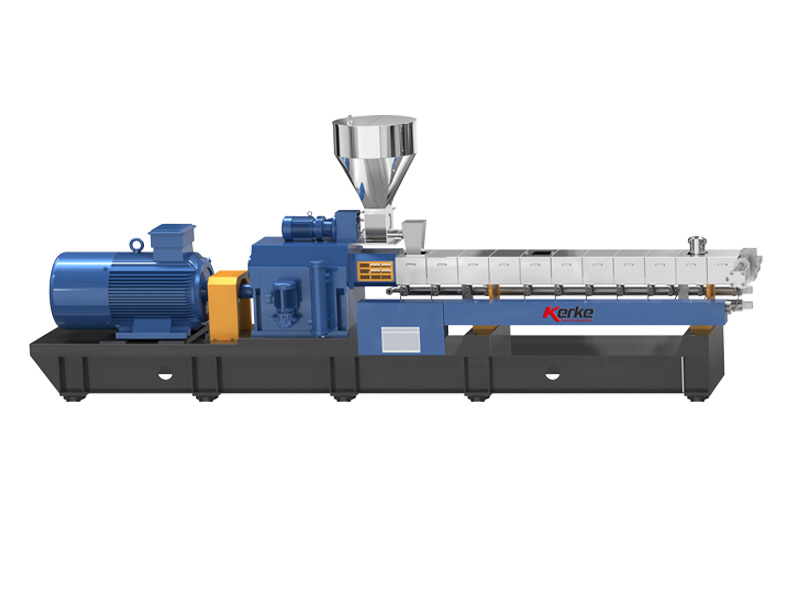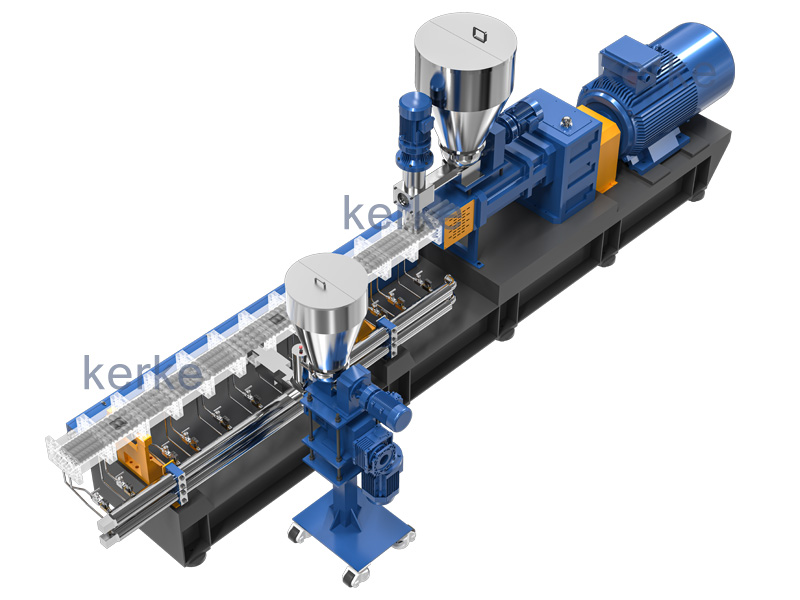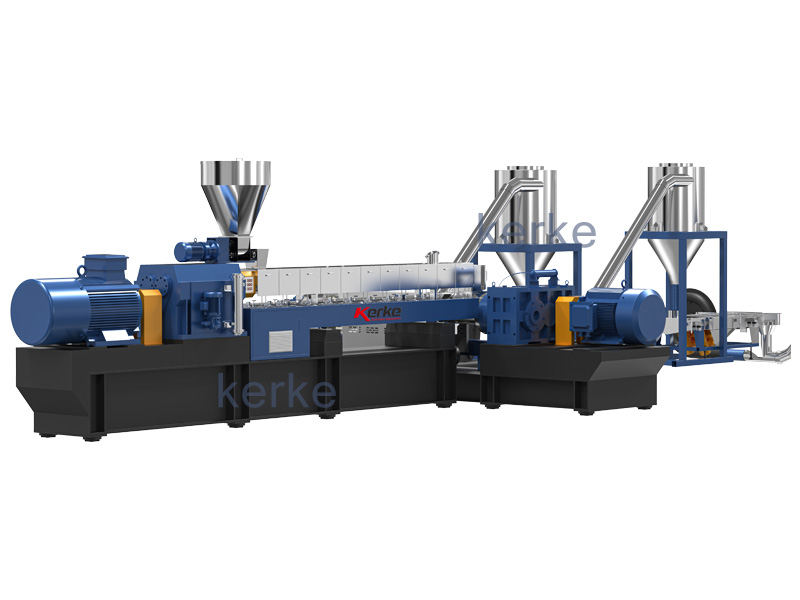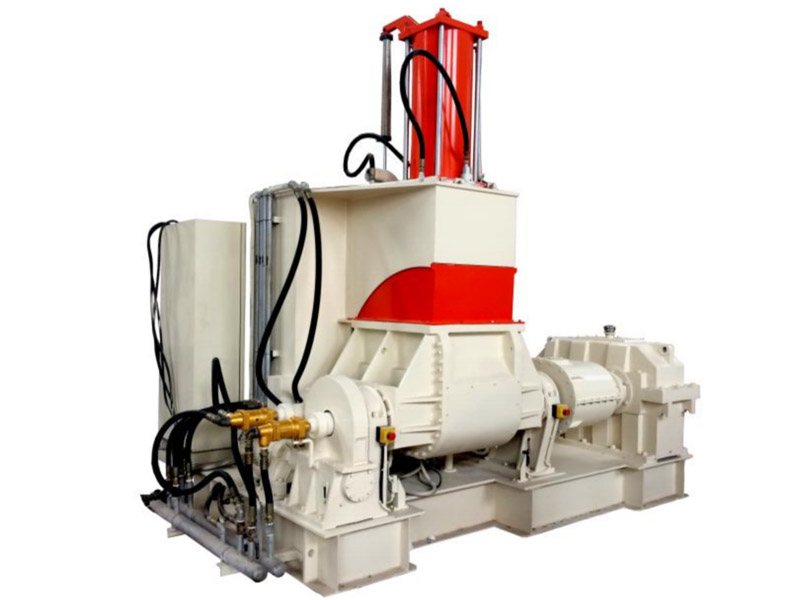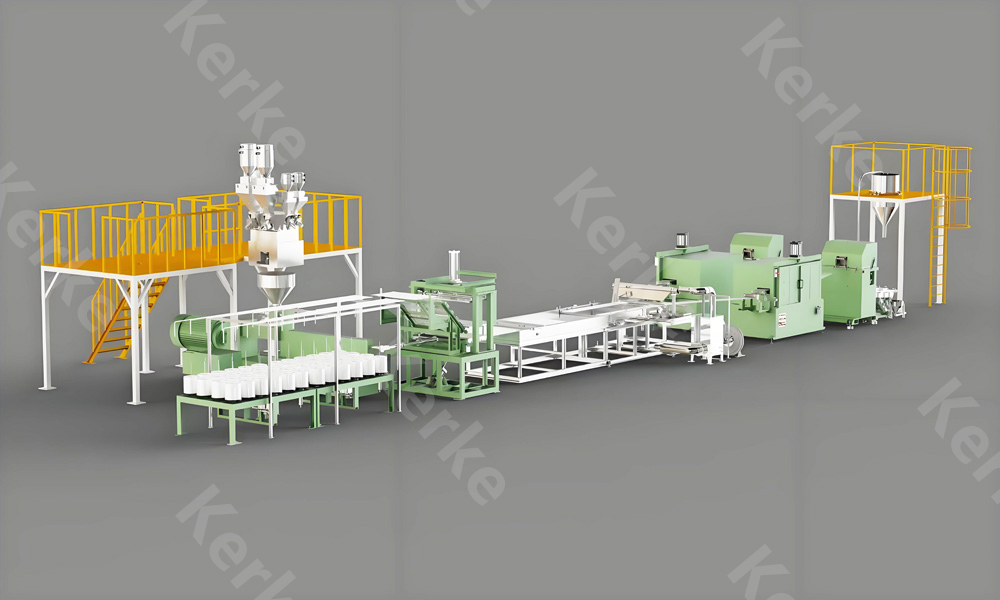
Masterbatch production is a critical segment of the global plastics industry, serving as the backbone for coloration, functional modification, and performance enhancement of plastic products. At the core of high-quality masterbatch manufacturing lies precise control over pellet particle size and distribution. The particle size of masterbatch pellets directly impacts downstream processing efficiency, final product quality, color uniformity, and functional performance. Among all production equipment, the twin screw extruder has emerged as the gold standard for masterbatch compounding, offering unmatched capabilities in mixing, dispersion, and particle size regulation. As a leading manufacturer of twin screw extruders, Kerke has developed specialized masterbatch extruder systems that deliver exceptional particle size consistency and production efficiency for color masterbatch, filler masterbatch, additive masterbatch, and engineering plastic compounding applications.
This comprehensive article explores the fundamental mechanisms by which masterbatch extruders control the particle size of final pellets. It examines the key factors influencing particle size distribution, the advanced technologies integrated into Kerke compounding extruders, cost and price analysis of different equipment configurations, best practices for industrial production, and solutions to common particle size-related issues. Whether you are a masterbatch producer looking to upgrade your production line or a plastic processor seeking to understand masterbatch quality control, this article provides detailed, actionable insights into the critical role of twin screw extruders in particle size management.
1. The Critical Importance of Particle Size Control in Masterbatch Production
Particle size and its distribution are among the most important quality parameters for masterbatch products. Even minor variations in particle size can lead to significant differences in the performance of masterbatch during downstream processing and in the final plastic products. Understanding the impact of particle size control is essential for masterbatch manufacturers to meet the stringent quality requirements of global customers.
1.1 Impact on Color Uniformity and Dispersion Performance
Color uniformity is the primary requirement for color masterbatch. When masterbatch pellets have inconsistent particle sizes, they will melt at different rates during the downstream extrusion or injection molding process. Larger pellets take longer to melt completely, leading to the formation of color streaks, spots, or uneven color distribution in the final plastic products. Conversely, excessively small pellets may cause dusting, agglomeration, and inaccurate feeding, also resulting in color inconsistencies. Precise particle size control ensures that all masterbatch pellets melt uniformly and disperse evenly throughout the plastic matrix, delivering consistent color quality across every production run.
For high-end applications such as automotive interior parts, electronic housings, and food packaging, even the slightest color deviation is unacceptable. Kerke masterbatch extruders are engineered to produce pellets with a narrow particle size distribution, typically within ±0.2mm of the target size, ensuring that color masterbatch meets the strictest color uniformity standards required by these industries.
1.2 Influence on Downstream Processing Efficiency
Particle size directly affects the flowability and feeding accuracy of masterbatch in downstream processing equipment. Pellets with uniform size and shape flow smoothly through hoppers, feeders, and conveying systems, preventing bridging, clogging, and feeding interruptions. In contrast, pellets with a wide size distribution can cause uneven feeding rates, leading to fluctuations in the concentration of colorants or additives in the final product. This not only reduces production efficiency but also increases scrap rates and material waste.
Additionally, consistent particle size improves the efficiency of drying, packaging, and transportation processes. Uniform pellets pack more efficiently, reducing packaging volume and transportation costs. They also dry more evenly, eliminating the risk of moisture-related defects during processing.
1.3 Effect on Final Product Mechanical Properties
For functional masterbatches such as filler masterbatch, flame retardant masterbatch, and anti-static masterbatch, particle size control is critical for maintaining the mechanical properties of the final plastic products. Poorly dispersed large particles can act as stress concentration points, reducing the impact strength, tensile strength, and elongation at break of the plastic. In contrast, properly sized and dispersed masterbatch particles enhance the mechanical performance of the final product by ensuring uniform distribution of functional additives throughout the polymer matrix.
For example, in calcium carbonate filler masterbatch production, Kerke compounding extruders ensure that calcium carbonate particles are uniformly dispersed and encapsulated in the polymer carrier, resulting in filler masterbatch that improves the rigidity and dimensional stability of plastic products without compromising their impact resistance.
1.4 Compliance with Industry Quality Standards
Global industries have established strict quality standards for masterbatch products, including specific requirements for particle size distribution. For example, the food packaging industry requires masterbatch pellets to be free from fine particles that could contaminate food products. The automotive industry demands masterbatch with consistent particle size to ensure the quality and performance of automotive components. Non-compliance with these standards can result in rejected orders, lost customers, and damage to a company’s reputation.
By investing in a high-quality Kerke masterbatch extruder, manufacturers can consistently produce masterbatch that meets or exceeds international quality standards, opening up access to global markets and high-value customers.
2. Key Factors Influencing Masterbatch Pellet Particle Size
The particle size of masterbatch pellets is determined by a complex interaction of multiple factors throughout the extrusion process. Understanding these factors is essential for optimizing production parameters and achieving consistent particle size control. The following are the most critical factors that influence masterbatch pellet size and distribution.
2.1 Raw Material Characteristics
The properties of the raw materials used in masterbatch production have a significant impact on the final pellet size. The melt flow rate (MFR) of the polymer carrier resin determines its viscosity and flow behavior during extrusion. Resins with higher MFR have lower viscosity and flow more easily, resulting in smaller pellets under the same processing conditions. Conversely, resins with lower MFR have higher viscosity and produce larger pellets.
The type, concentration, and particle size of additives such as pigments, fillers, and flame retardants also affect pellet size. High concentrations of fillers or pigments can increase the viscosity of the melt, leading to larger pellets. Additionally, additives that affect the melt strength of the polymer can influence the pelletizing process and final pellet size.
Kerke’s technical team works closely with customers to analyze their raw material characteristics and recommend the optimal extruder configuration and processing parameters to achieve the desired particle size for their specific masterbatch formulations.
2.2 Extrusion Process Parameters
Extrusion process parameters are the most adjustable factors in controlling masterbatch pellet size. The key parameters include screw speed, feed rate, melt temperature, melt pressure, and die head temperature.
Screw speed directly affects the output rate and the shear force applied to the melt. Higher screw speeds increase the output rate and the shear force, which reduces the melt viscosity and produces smaller pellets. However, excessively high screw speeds can cause overheating of the melt, leading to thermal degradation of the polymer and additives.
Feed rate determines the amount of material processed by the extruder per unit time. Increasing the feed rate increases the load on the extruder and the melt pressure, resulting in larger pellets. It is important to maintain a balanced ratio between screw speed and feed rate to ensure stable extrusion and consistent pellet size.
Melt temperature affects the viscosity and flow properties of the polymer melt. Higher temperatures reduce the melt viscosity, allowing the melt to flow more easily through the die holes and produce smaller pellets. However, too high temperatures can cause thermal degradation of the raw materials, affecting the quality of the masterbatch.
Melt pressure is a critical indicator of the stability of the extrusion process. Stable melt pressure ensures uniform flow of the melt through the die head, resulting in consistent pellet size. Fluctuations in melt pressure can lead to variations in pellet size and shape.
2.3 Screw Configuration and Design
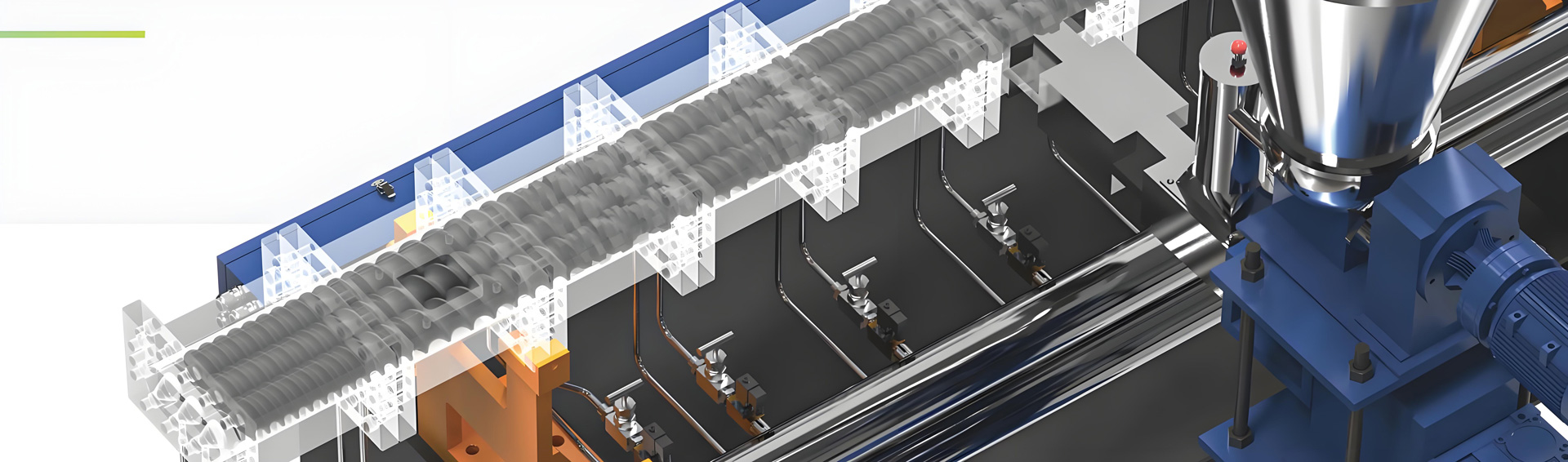
The screw configuration is the heart of the twin screw extruder and plays a decisive role in compounding quality and pellet size control. The screw consists of various modular elements, including conveying elements, kneading elements, and mixing elements, which can be combined in different ways to achieve the desired level of mixing, dispersion, and shear.
The length-to-diameter (L/D) ratio of the screw is an important design parameter. Longer screws provide more residence time for the material, allowing for better mixing and dispersion of additives. Kerke masterbatch extruders typically feature L/D ratios ranging from 32:1 to 48:1, depending on the type of masterbatch being produced. For color masterbatch, a higher L/D ratio is often used to achieve excellent pigment dispersion, while for filler masterbatch, a moderate L/D ratio is sufficient to ensure good mixing without causing excessive shear.
The design and arrangement of kneading and mixing elements determine the shear force applied to the melt. Properly designed screw configurations provide the optimal balance between shear and mixing, ensuring that additives are uniformly dispersed in the polymer matrix while avoiding over-shearing that could lead to thermal degradation. Kerke’s engineering team has developed specialized screw configurations for different types of masterbatch, optimized to deliver superior dispersion performance and consistent particle size control.
2.4 Pelletizing System Technology
The pelletizing system is the final stage in the extrusion process and directly determines the size and shape of the masterbatch pellets. There are three main types of pelletizing systems used in masterbatch production: strand pelletizing, underwater pelletizing, and air-cooled die face pelletizing.
Strand pelletizing is the most common and cost-effective method for masterbatch production. In this process, the molten polymer is extruded through a die head to form continuous strands, which are then cooled in a water bath and cut into pellets by a rotating cutter. The pellet size is controlled by the speed of the cutter and the speed at which the strands are pulled through the cutter. Faster cutter speeds produce smaller pellets, while slower speeds produce larger pellets.
Underwater pelletizing is a more advanced method that cuts the molten polymer directly as it exits the die head, while the pellets are immediately cooled and transported by water. This method produces spherical pellets with a narrow size distribution and is ideal for high-viscosity materials and high-capacity production. The pellet size is controlled by the die hole size, cutter speed, and water flow rate.
Air-cooled die face pelletizing is similar to underwater pelletizing but uses air instead of water for cooling. This method is suitable for materials that are sensitive to moisture or have low melting points. The pellet size is controlled by the die hole size and cutter speed.
Kerke offers all three types of pelletizing systems, customized to meet the specific requirements of different masterbatch products and production capacities. Each system is designed to deliver precise control over pellet size and shape, ensuring consistent quality.
2.5 Cooling and Solidification Conditions
The cooling and solidification process has a significant impact on the final pellet size and quality. In strand pelletizing, the temperature of the water bath and the length of the cooling section determine how quickly the strands solidify. If the strands are not sufficiently cooled, they will be too soft when they reach the cutter, resulting in irregularly shaped pellets and excessive fine powder. If the strands are over-cooled, they will become brittle and may break during cutting, also producing fine powder.
In underwater pelletizing, the water temperature and flow rate are critical parameters. The water temperature must be low enough to solidify the pellets quickly but not so low that it causes thermal shock and cracking. The water flow rate must be sufficient to transport the pellets away from the die head and prevent them from sticking together.
Kerke’s pelletizing systems feature precise temperature and flow control, ensuring optimal cooling conditions for different materials and producing pellets with consistent size, shape, and quality.
3. Core Mechanisms of Twin Screw Extruder in Particle Size Regulation
Twin screw extruders have become the preferred equipment for masterbatch production due to their superior mixing capabilities, process flexibility, and ability to control particle size with high precision. Unlike single screw extruders, which rely primarily on drag flow for conveying and mixing, twin screw extruders use intermeshing screws to provide positive conveying, intense mixing, and uniform shear, resulting in consistent melt quality and pellet size. The following are the core mechanisms by which twin screw extruders regulate masterbatch pellet size.
3.1 Homogeneous Compounding and Dispersion
The first step in achieving consistent pellet size is homogeneous compounding and dispersion of the raw materials. Twin screw extruders use intermeshing screws to generate intense shear and mixing forces, breaking down agglomerates of pigments, fillers, and additives and dispersing them uniformly throughout the polymer matrix. This uniform dispersion ensures that the melt has consistent viscosity and flow properties throughout the extrusion process.
When the melt is homogeneous, it flows uniformly through the die head, resulting in strands or extrudates with consistent diameter and flow rate. This consistency is essential for producing pellets with uniform size. In contrast, poor dispersion leads to variations in melt viscosity, causing uneven flow through the die head and resulting in pellets with inconsistent size and shape.
Kerke twin screw extruders feature high-torque gearboxes and optimized screw designs that provide the necessary shear and mixing energy to achieve excellent dispersion of even the most difficult-to-disperse additives, ensuring homogeneous melt quality and consistent pellet size.
3.2 Precise Melt Temperature Control
Melt temperature is a critical parameter that affects the viscosity and flow behavior of the polymer melt. Twin screw extruders are equipped with multiple heating and cooling zones along the barrel, allowing for precise control of the melt temperature profile throughout the extrusion process. Each zone can be independently adjusted to optimize the melting, mixing, and conveying of the material.
By maintaining a consistent melt temperature, the extruder ensures that the melt has uniform viscosity, which is essential for consistent flow through the die head and uniform pellet size. Fluctuations in melt temperature can cause changes in melt viscosity, leading to variations in the flow rate through the die holes and resulting in pellets of different sizes.
Kerke masterbatch extruders use advanced PID temperature controllers with an accuracy of ±1°C, ensuring precise and stable temperature control throughout the extrusion process. This level of temperature control is essential for producing masterbatch pellets with consistent size and quality.
3.3 Stable Melt Pressure and Flow Rate
Stable melt pressure at the die head is crucial for maintaining a consistent flow rate of the melt, which directly affects pellet size. Twin screw extruders provide positive conveying of the material, meaning that the output rate is primarily determined by the screw speed and feed rate, rather than the die head pressure. This positive conveying action results in much more stable melt pressure and flow rate compared to single screw extruders.
When the melt pressure is stable, the melt flows through the die holes at a constant rate, producing strands or extrudates with consistent diameter. This consistency allows the pelletizing system to cut the melt into pellets of uniform size. Fluctuations in melt pressure can cause the flow rate to vary, leading to pellets that are either too large or too small.
Kerke extruders are equipped with high-precision pressure sensors that continuously monitor the melt pressure at the die head. The control system automatically adjusts the screw speed and feed rate to maintain a constant melt pressure, ensuring stable flow rate and consistent pellet size.
3.4 Uniform Melt Viscosity Management
Melt viscosity is a measure of the resistance of the polymer melt to flow. It is influenced by temperature, shear rate, and the composition of the material. Uniform melt viscosity is essential for consistent pellet size, as it determines how easily the melt flows through the die holes and how it behaves during the pelletizing process.
Twin screw extruders achieve uniform melt viscosity through a combination of precise temperature control, optimal screw design, and consistent shear rate. The intermeshing screws provide a uniform shear rate across the entire cross-section of the barrel, ensuring that all parts of the melt are subjected to the same level of shear and heating. This results in a melt with uniform viscosity throughout, which flows uniformly through the die head and produces pellets with consistent size.
Kerke’s advanced screw designs and process control systems ensure that the melt viscosity remains stable throughout the extrusion process, even when processing complex masterbatch formulations with high additive loadings.
4. Kerke Masterbatch Extruder: Advanced Technologies for Precision Particle Size Control
As a top 5 supplier of twin screw extruders in China, Kerke has over 10 years of experience in designing and manufacturing high-performance compounding extruders for masterbatch production. Kerke masterbatch extruders integrate a range of advanced technologies that deliver exceptional precision in particle size control, high production efficiency, and reliable operation. The following are the key technologies that set Kerke extruders apart from the competition.
4.1 High-Precision Modular Screw Design
Kerke has developed a series of modular screw elements specifically optimized for masterbatch compounding. These elements are made from high-quality alloy steel with a nitrided surface treatment, providing excellent wear resistance and long service life. The modular design allows for easy customization of the screw configuration to meet the specific requirements of different masterbatch types, including color masterbatch, filler masterbatch, additive masterbatch, and engineering plastic compounding.
Each screw configuration is carefully designed to provide the optimal balance between shear, mixing, and residence time, ensuring excellent dispersion of additives while avoiding thermal degradation. Kerke’s engineering team uses advanced computer simulation software to optimize the screw design for each customer’s specific formulation, resulting in superior compounding quality and consistent particle size control.
For example, for high-concentration color masterbatch, Kerke recommends a screw configuration with multiple kneading blocks and mixing elements to achieve excellent pigment dispersion. For filler masterbatch with high calcium carbonate loading, a screw configuration with moderate shear and good conveying performance is used to ensure uniform mixing without excessive wear on the screw and barrel.
4.2 Gravimetric Feeding System with ±0.1% Accuracy
Accurate feeding of raw materials is essential for maintaining consistent melt composition and viscosity, which directly affects pellet size. Kerke masterbatch extruders are equipped with high-precision gravimetric feeding systems that deliver an accuracy of ±0.1% for both the polymer carrier and additives. These feeding systems continuously weigh the material being fed into the extruder and automatically adjust the feed rate to maintain the desired formulation ratio.
Unlike volumetric feeders, which are affected by changes in material bulk density, gravimetric feeders provide consistent and accurate feeding regardless of material properties. This ensures that the melt composition remains stable throughout the production run, resulting in consistent melt viscosity, flow rate, and pellet size.
Kerke offers a range of gravimetric feeders to meet different production requirements, including loss-in-weight feeders for main raw materials and micro-feeders for additives with low addition rates. All feeders are integrated with the extruder’s control system, allowing for centralized monitoring and control of the entire feeding process.
4.3 Intelligent Temperature Control System
Kerke masterbatch extruders feature an advanced intelligent temperature control system that uses PID (Proportional-Integral-Derivative) control technology to maintain precise and stable temperature in each barrel zone. The system has a temperature control accuracy of ±1°C and can quickly respond to changes in process conditions to maintain the desired temperature profile.
The temperature control system also includes over-temperature protection and automatic cooling functions to prevent overheating of the melt and thermal degradation of raw materials. Each barrel zone is equipped with both heating and cooling capabilities, allowing for precise control of the melt temperature throughout the extrusion process.
For temperature-sensitive materials such as biodegradable polymers and some additives, Kerke offers optional liquid cooling systems that provide even more precise temperature control and faster cooling response, ensuring that the material is processed at the optimal temperature without degradation.
4.4 Integrated Pelletizing Modules with Adjustable Parameters
Kerke offers a complete range of integrated pelletizing modules, including strand pelletizing, underwater pelletizing, and air-cooled die face pelletizing, all designed to work seamlessly with Kerke twin screw extruders. Each pelletizing module features adjustable parameters that allow for precise control over pellet size and shape.
The strand pelletizing system includes a variable-speed puller and cutter, allowing for easy adjustment of pellet size by changing the cutter speed or puller speed. The system also features a water bath with precise temperature control and an air dryer to remove excess water from the pellets, ensuring that the pellets are dry and free from moisture.
The underwater pelletizing system features a high-speed cutter with adjustable speed and a water circulation system with precise temperature and flow control. The pellet size can be adjusted by changing the die hole size, cutter speed, or water flow rate. The system produces spherical pellets with a narrow size distribution and is ideal for high-capacity production and high-viscosity materials.
The air-cooled die face pelletizing system uses a high-speed cutter and forced air cooling to produce pellets without the use of water. This system is suitable for moisture-sensitive materials and produces pellets with a smooth surface and uniform size.
All Kerke pelletizing modules are controlled from the extruder’s main control panel, allowing for centralized operation and monitoring of the entire extrusion and pelletizing process.
4.5 Real-Time Process Monitoring and Automation
Kerke masterbatch extruders are equipped with a state-of-the-art PLC (Programmable Logic Controller) control system with a touch screen HMI (Human-Machine Interface). The system provides real-time monitoring of all critical process parameters, including screw speed, feed rate, barrel temperatures, melt pressure, melt temperature, and pelletizer speed.
The control system can store multiple production recipes, allowing for quick and easy switching between different masterbatch products. Each recipe includes all the necessary process parameters, ensuring consistent production quality every time. The system also features alarm functions that alert operators to any abnormal conditions, such as over-temperature, over-pressure, or feeder errors, helping to prevent equipment damage and product defects.
For customers requiring higher levels of automation, Kerke offers optional remote monitoring and control capabilities, allowing operators to monitor and control the extruder from a central control room or even from a remote location. This improves production efficiency and reduces the need for on-site personnel.
4.6 Specialized Extruder Models for Different Masterbatch Types
Kerke offers a comprehensive range of twin screw extruder models specifically designed for different types of masterbatch production, each optimized for the unique requirements of that application.
The Kerke lab twin screw extruder is ideal for research and development, small-batch production, and formulation testing. With a capacity ranging from 5kg/h to 50kg/h, these small extruders allow customers to test new formulations and optimize process parameters before investing in a large-scale production line. Lab extruders are available with all the same features as production models, including modular screw design, gravimetric feeding, and multiple pelletizing options.
The Kerke parallel twin screw extruder is the workhorse of masterbatch production, with capacities ranging from 50kg/h to 1000kg/h. These extruders feature high-torque gearboxes, optimized screw designs, and advanced control systems, delivering excellent performance and reliability for medium to large-scale masterbatch production.
The Kerke triple screw extruder is a revolutionary design that offers superior mixing and dispersion capabilities compared to traditional twin screw extruders. With three intermeshing screws, this extruder provides more intense shear and mixing, making it ideal for high-concentration masterbatch and difficult-to-disperse additives. The triple screw extruder also has a higher self-cleaning ability, reducing material waste and changeover time between different products.
The Kerke double-stage extrusion system is designed for masterbatch production with high moisture or volatile content. The system consists of a first-stage twin screw extruder for compounding and a second-stage single screw extruder for devolatilization and pressure build-up. This configuration allows for efficient removal of moisture and volatiles, resulting in high-quality masterbatch with excellent physical properties.
5. Cost and Price Analysis of Kerke Masterbatch Extrusion Lines
Investing in a masterbatch extrusion line is a significant capital expenditure, and it is important for manufacturers to understand the costs involved and the potential return on investment. The total cost of a Kerke masterbatch extrusion line depends on several factors, including the extruder model, capacity, configuration, and optional features. The following is a detailed cost and price analysis of Kerke masterbatch extrusion lines, including initial investment, operational costs, and return on investment estimation.
5.1 Initial Equipment Investment by Capacity and Configuration
The initial equipment investment is the largest component of the total cost of a masterbatch extrusion line. Kerke offers masterbatch extruders in a range of capacities and configurations to meet the needs of different customers, from small R&D labs to large industrial production facilities. The following are the approximate price ranges for different Kerke masterbatch extruder models and configurations.
Lab-scale masterbatch extruders with a capacity of 5kg/h to 50kg/h are the most affordable option, with prices ranging from $25,000 to $60,000. These extruders typically include a small parallel twin screw extruder, volumetric or gravimetric feeding system, strand pelletizing system, and basic control system. Optional features such as underwater pelletizing, advanced temperature control, and remote monitoring can increase the price by $10,000 to $20,000.
Medium-scale production extruders with a capacity of 50kg/h to 200kg/h are the most popular choice for small to medium-sized masterbatch manufacturers. Prices for these extruders range from $80,000 to $250,000, depending on the configuration. A standard medium-scale line includes a parallel twin screw extruder with an L/D ratio of 36:1 or 40:1, gravimetric feeding system, strand pelletizing system with water bath and dryer, and advanced PLC control system with touch screen HMI. Optional features such as triple screw design, double-stage extrusion, underwater pelletizing, and automated material handling can increase the price by $30,000 to $100,000.
Large-scale industrial extruders with a capacity of 300kg/h to 1000kg/h are designed for high-volume masterbatch production. Prices for these extruders range from $300,000 to $800,000, depending on the capacity and configuration. These extruders feature high-torque gearboxes, large-diameter screws, multiple gravimetric feeders, high-capacity pelletizing systems, and fully automated control systems. Optional features such as integrated material handling systems, in-line quality monitoring, and advanced automation can increase the price by $50,000 to $200,000.
It is important to note that these are approximate price ranges, and the actual price of a Kerke masterbatch extrusion line will depend on the specific requirements of the customer. Kerke’s sales team works closely with customers to develop customized solutions that meet their production needs and budget constraints.
5.2 Operational Cost Breakdown
In addition to the initial equipment investment, manufacturers must also consider the ongoing operational costs of running a masterbatch extrusion line. The main operational costs include energy consumption, raw materials, labor, maintenance, and overhead.
Energy consumption is one of the largest operational costs for masterbatch production. Kerke twin screw extruders are designed to be energy-efficient, with specific energy consumption ranging from 0.3kWh/kg to 0.6kWh/kg, depending on the type of masterbatch and production capacity. For a medium-scale extruder with a capacity of 100kg/h, the energy consumption is approximately 30kWh to 60kWh per hour. At an electricity cost of $0.10 per kWh, this translates to an energy cost of $3 to $6 per hour, or $24 to $48 per day for an 8-hour production run.
Raw materials account for the largest portion of the total production cost, typically representing 60% to 80% of the cost of the final masterbatch product. The cost of raw materials varies depending on the type of polymer carrier, pigments, fillers, and additives used. For example, color masterbatch using high-quality organic pigments will have a higher raw material cost than filler masterbatch using calcium carbonate.
Labor costs depend on the level of automation of the production line and the local labor market. A semi-automated medium-scale extrusion line typically requires 2 to 3 operators per shift, while a fully automated large-scale line may only require 1 operator per shift. At an average labor cost of $15 per hour, the labor cost for a medium-scale line is approximately $30 to $45 per hour.
Maintenance costs are relatively low for Kerke masterbatch extruders, thanks to their high-quality construction and durable components. Annual maintenance costs typically range from 3% to 5% of the initial equipment investment. This includes the cost of spare parts, lubricants, and regular maintenance services.
Overhead costs such as factory rent, utilities, insurance, and administrative expenses also contribute to the total operational cost. These costs vary depending on the location and size of the production facility.
5.3 Return on Investment (ROI) Estimation
The return on investment for a Kerke masterbatch extrusion line depends on several factors, including the production capacity, selling price of the masterbatch, raw material costs, and operational efficiency. In general, masterbatch production offers attractive profit margins, especially for high-value products such as color masterbatch and functional masterbatch.
For a medium-scale Kerke masterbatch extrusion line with a capacity of 100kg/h, operating 8 hours per day, 250 days per year, the annual production capacity is 200,000kg. Assuming an average selling price of $2.50 per kg for color masterbatch and a production cost of $1.80 per kg, the annual profit would be $140,000. With an initial investment of $150,000, the payback period would be approximately 1.1 years.
For a large-scale extrusion line with a capacity of 500kg/h, operating 24 hours per day, 300 days per year, the annual production capacity is 3,600,000kg. Assuming an average selling price of $2.00 per kg and a production cost of $1.50 per kg, the annual profit would be $1,800,000. With an initial investment of $500,000, the payback period would be less than 0.3 years.
These are conservative estimates, and actual ROI can be higher for manufacturers who produce high-value masterbatch products or operate with higher efficiency. Kerke’s high-performance extruders help manufacturers improve production efficiency, reduce scrap rates, and produce high-quality masterbatch that commands premium prices in the market, further enhancing the return on investment.
5.4 Cost Comparison with Competing Solutions
When comparing the cost of Kerke masterbatch extruders with competing solutions, it is important to consider not only the initial purchase price but also the total cost of ownership over the life of the equipment. While some competitors may offer lower initial prices, their equipment may have higher energy consumption, higher maintenance costs, and shorter service life, resulting in higher total costs over time.
Kerke masterbatch extruders are built to last, with a service life of 10 to 15 years or more with proper maintenance. They are also designed to be energy-efficient, reducing ongoing energy costs. Additionally, Kerke’s excellent after-sales service and technical support help minimize downtime and ensure that the equipment operates at peak efficiency throughout its life.
In the long run, investing in a high-quality Kerke masterbatch extruder is a more cost-effective solution than purchasing a cheaper, lower-quality alternative. Kerke’s extruders deliver higher production efficiency, better product quality, and lower total cost of ownership, providing manufacturers with a competitive advantage in the global masterbatch market.
6. Best Practices for Consistent Particle Size Control in Industrial Production
Achieving consistent particle size control in masterbatch production requires a systematic approach that encompasses raw material management, process optimization, equipment maintenance, and quality control. The following best practices, when implemented in conjunction with a high-quality Kerke masterbatch extruder, will help manufacturers produce masterbatch pellets with uniform size and quality consistently.
6.1 Proper Raw Material Pretreatment
Proper pretreatment of raw materials is essential for ensuring consistent melt quality and pellet size. All raw materials should be dried to remove moisture before processing, as moisture can cause bubbles, voids, and uneven melt flow. The drying temperature and time should be optimized for each type of material to ensure complete drying without causing thermal degradation.
Raw materials should also be screened to remove any foreign particles or agglomerates that could affect the compounding process or damage the extruder. Additives such as pigments and fillers should be properly dispersed and premixed with the polymer carrier to ensure uniform feeding and compounding.
Kerke offers optional raw material pretreatment equipment, including dryers, mixers, and screening machines, to help customers prepare their raw materials properly for extrusion.
6.2 Systematic Process Parameter Optimization
Process parameter optimization is critical for achieving consistent particle size control. Each masterbatch formulation requires specific process parameters, including screw speed, feed rate, barrel temperatures, melt pressure, and pelletizer speed. These parameters should be systematically tested and optimized to determine the optimal settings for each product.
Once the optimal parameters have been determined, they should be recorded and stored in the extruder’s control system as a production recipe. This allows for quick and easy setup of the extruder for each product, ensuring consistent production quality every time.
It is important to monitor process parameters continuously during production and make adjustments as needed to maintain stable conditions. Kerke’s advanced control system makes this easy by providing real-time monitoring and automatic adjustment of critical parameters.
6.3 Regular Equipment Maintenance and Calibration
Regular equipment maintenance and calibration are essential for ensuring the long-term performance and accuracy of the masterbatch extruder. A preventive maintenance program should be established to schedule regular inspections, cleaning, lubrication, and replacement of worn parts.
Key components such as the screw, barrel, gearbox, and pelletizer should be inspected regularly for wear and damage. Worn screw elements or barrel liners can affect the mixing and conveying performance of the extruder, leading to variations in melt quality and pellet size. These components should be replaced as needed to maintain optimal performance.
Feeding systems, temperature sensors, pressure sensors, and other instrumentation should be calibrated regularly to ensure their accuracy. Kerke provides detailed maintenance manuals and technical support to help customers maintain their extruders in top condition.
6.4 In-Line Particle Size Monitoring
In-line particle size monitoring is a valuable tool for ensuring consistent pellet quality during production. Advanced particle size analyzers can be integrated into the production line to continuously measure the size and distribution of the masterbatch pellets. Any deviations from the target particle size can be detected immediately, allowing operators to make adjustments to the process parameters before defective products are produced.
Kerke can integrate third-party in-line particle size monitoring systems into its extrusion lines, providing customers with real-time quality control and reducing the risk of producing out-of-specification products.
6.5 Standardized Operating Procedures
Standardized operating procedures (SOPs) should be developed for all aspects of masterbatch production, including raw material handling, equipment setup, production operation, quality control, and equipment maintenance. SOPs ensure that all operators follow the same procedures, resulting in consistent production quality and reducing the risk of human error.
All operators should be properly trained in the operation and maintenance of the extruder and in following the SOPs. Kerke provides comprehensive training for customers’ operators and maintenance personnel, ensuring that they have the knowledge and skills to operate the equipment safely and efficiently.
7. Common Particle Size Issues and Targeted Solutions
Even with the best equipment and practices, masterbatch manufacturers may occasionally encounter particle size-related issues. The following are the most common particle size issues, their causes, and targeted solutions based on Kerke’s extensive experience in masterbatch production.
7.1 Uneven Particle Size Distribution
Uneven particle size distribution is the most common particle size issue in masterbatch production. It is characterized by a wide range of pellet sizes, with some pellets being significantly larger or smaller than the target size.
The main causes of uneven particle size distribution include unstable melt flow, inconsistent feeding, worn screw or barrel, improper die hole design, and incorrect pelletizer speed.
Solutions: – Check and adjust the process parameters to ensure stable melt temperature and pressure – Calibrate the feeding system to ensure consistent and accurate feeding – Inspect the screw and barrel for wear and replace worn components if necessary – Check the die head for clogged or damaged die holes and clean or replace them as needed – Adjust the pelletizer speed to match the melt flow rate – Ensure that the strands are pulled at a constant speed in strand pelletizing systems
7.2 Excessive Fine Powder Generation
Excessive fine powder generation is a common problem that can lead to material waste, dusting, and quality issues. Fine powder is typically produced when the pellets are cut too small, when the strands are brittle and break during cutting, or when the pellets collide with each other or with the equipment during handling.
The main causes of excessive fine powder include over-cooling of the strands, too high cutter speed, brittle material, and worn cutter blades.
Solutions: – Increase the temperature of the water bath in strand pelletizing systems to reduce the brittleness of the strands – Reduce the cutter speed to produce larger pellets – Adjust the formulation to improve the toughness of the masterbatch – Replace worn cutter blades with sharp new blades – Use gentle handling and conveying systems to reduce pellet breakage – Install a powder removal system to separate fine powder from the finished pellets
7.3 Pellet Agglomeration and Sticking
Pellet agglomeration and sticking occur when pellets stick together to form clumps. This is most common with materials that have low melting points or high tackiness.
The main causes of pellet agglomeration include insufficient cooling, too high melt temperature, too low cutter speed, and high humidity in the production environment.
Solutions: – Increase the cooling rate and cooling time to ensure that the pellets are fully solidified before handling – Reduce the melt temperature to reduce the tackiness of the material – Increase the cutter speed to produce smaller pellets that cool more quickly – Use an anti-blocking agent in the formulation if necessary – Control the humidity in the production environment – Use a pellet classifier to separate agglomerated pellets from the finished product
7.4 Irregular Pellet Shape
Irregular pellet shape can affect the flowability and feeding accuracy of the masterbatch. Common irregular shapes include tails, chips, and oval or flat pellets.
The main causes of irregular pellet shape include improper die hole design, worn cutter blades, incorrect cutter alignment, and unstable melt flow.
Solutions: – Check the die head for damaged or improperly designed die holes and replace them if necessary – Replace worn cutter blades and ensure that they are properly aligned with the die face – Adjust the process parameters to ensure stable melt flow and pressure – In strand pelletizing systems, ensure that the strands are properly aligned with the cutter – In underwater pelletizing systems, adjust the water flow rate and cutter speed to ensure uniform pellet formation
8. Conclusion
Precise control over particle size is essential for producing high-quality masterbatch that meets the stringent requirements of the global plastics industry. The twin screw extruder is the most effective tool for achieving this control, offering unmatched capabilities in compounding, dispersion, and process regulation. As a leading manufacturer of twin screw extruders, Kerke has developed advanced masterbatch extruder systems that integrate cutting-edge technologies to deliver exceptional particle size consistency, high production efficiency, and reliable operation.
Kerke masterbatch extruders feature high-precision modular screw designs, gravimetric feeding systems with ±0.1% accuracy, intelligent temperature control, integrated pelletizing modules, and real-time process monitoring and automation. These technologies work together to ensure that the melt is homogeneous, the process parameters are stable, and the final pellets have a narrow size distribution and consistent quality. Kerke offers a comprehensive range of extruder models, from lab-scale R&D machines to large-scale industrial production lines, customized to meet the specific requirements of different masterbatch types and production capacities.
Investing in a Kerke masterbatch extruder offers significant benefits for manufacturers, including improved product quality, increased production efficiency, reduced scrap rates, and attractive return on investment. With initial equipment prices ranging from $25,000 for lab-scale extruders to $800,000 for large-scale industrial lines, Kerke provides cost-effective solutions for manufacturers of all sizes. The operational costs of Kerke extruders are also competitive, thanks to their energy-efficient design and low maintenance requirements.
By following best practices such as proper raw material pretreatment, systematic process parameter optimization, regular equipment maintenance, in-line particle size monitoring, and standardized operating procedures, manufacturers can achieve consistent particle size control and produce high-quality masterbatch that meets the needs of global customers. Kerke’s experienced technical team provides comprehensive support, from equipment selection and process optimization to training and after-sales service, ensuring that customers get the most out of their investment.
In conclusion, Kerke masterbatch extruders are the ideal choice for manufacturers looking to improve their particle size control capabilities and gain a competitive advantage in the global masterbatch market. With their advanced technologies, reliable performance, and excellent value, Kerke twin screw extruders, masterbatch extruders, and compounding extruders continue to set the standard for masterbatch production equipment worldwide.