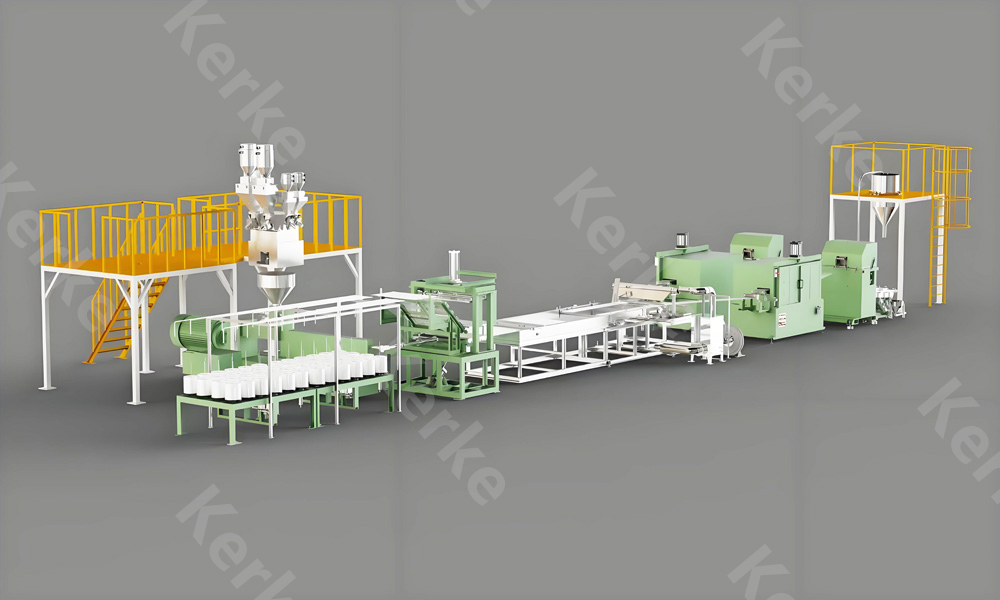
Polymer blending has become the most cost-effective and versatile method for developing high-performance plastic materials in the modern plastics industry. By combining two or more distinct polymers, manufacturers can create materials with tailored properties that no single polymer can achieve, such as a balance of stiffness and toughness, chemical resistance and processability, or thermal stability and flexibility. However, the vast majority of polymer pairs are thermodynamically immiscible at the molecular level due to differences in chemical structure, polarity, solubility parameters, and melt viscosity. This inherent incompatibility leads to phase separation, poor interfacial adhesion, and significantly degraded mechanical properties in the final blend. The compounding extruder, particularly the twin screw extruder, has emerged as the only industrial-scale equipment capable of overcoming these compatibility challenges and producing stable, high-performance polymer blends.
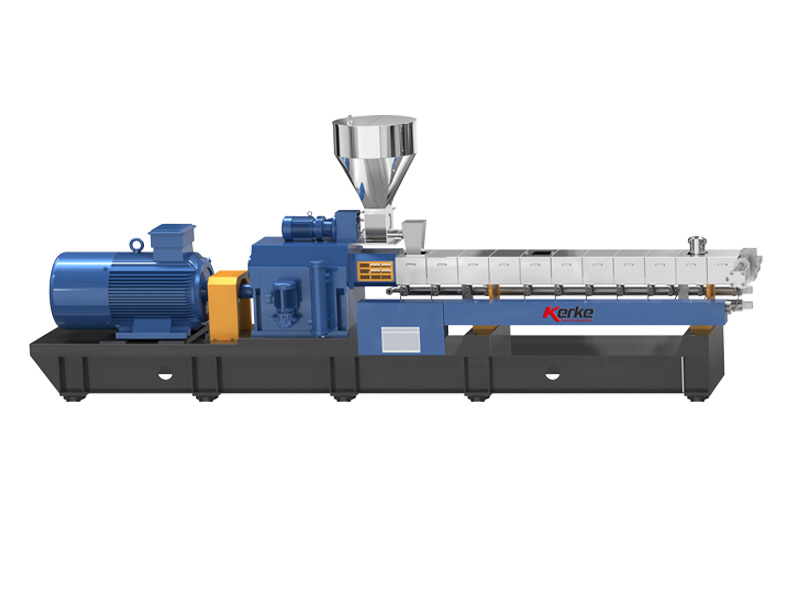
As a top 5 supplier of twin screw extruders in China, Kerke has over 10 years of specialized experience in designing and manufacturing high-performance compounding extruders for polymer blending applications. Kerke compounding extruders integrate advanced technologies such as modular screw design, high-torque transmission systems, precise temperature control, and reactive extrusion capabilities to deliver exceptional compatibility improvement for even the most challenging polymer pairs. From common blends like PP/PE and PC/ABS to high-performance engineering plastic blends and biodegradable polymer composites, Kerke twin screw extruders provide reliable solutions that enable manufacturers to produce consistent, high-quality polymer blends with optimized properties.
This comprehensive article explores the fundamental science of polymer compatibility, the core mechanisms by which compounding extruders improve polymer compatibility, the advanced technologies integrated into Kerke compounding extruders, detailed cost and price analysis of different equipment configurations, best practices for industrial polymer blending, and solutions to common compatibility-related issues. Whether you are a plastic compounder looking to upgrade your production line, a materials engineer developing new polymer blends, or a manufacturer seeking to improve the performance of your plastic products, this article provides detailed, actionable insights into the critical role of compounding extruders in polymer compatibility enhancement.
1. The Science of Polymer Compatibility and Industrial Challenges
Understanding the fundamental principles of polymer compatibility is essential for appreciating the unique capabilities of compounding extruders in addressing this complex challenge. Polymer compatibility refers to the ability of two or more polymers to form a stable, homogeneous mixture with desirable properties. Unlike small molecule mixtures, which often mix spontaneously due to high entropy gain, polymer mixing results in very little entropy increase because of the large molecular size of polymers. This means that most polymer pairs are inherently immiscible and will tend to separate into distinct phases unless specific measures are taken to improve their compatibility.
1.1 Fundamental Principles of Polymer Compatibility
Polymer compatibility is governed by several key thermodynamic and physical principles that determine whether two polymers can form a stable blend. The most important principle is the solubility parameter theory, which states that polymers with similar solubility parameters will have better compatibility. The solubility parameter is a measure of the intermolecular forces within a polymer, and polymers with solubility parameters differing by more than 0.5 (cal/cm³)^0.5 are generally considered immiscible.
Other important factors affecting polymer compatibility include polarity, chemical structure, molecular weight, and crystallization behavior. Polymers with similar polarities tend to have better compatibility, as do polymers with similar chemical structures. For example, polyamide 6 (PA6) and polyamide 66 (PA66) have excellent compatibility due to their nearly identical chemical structures. In contrast, non-polar polymers like polyethylene (PE) and polar polymers like polyamide (PA) have very poor compatibility and require significant compatibilization efforts.
Crystallization behavior also plays a critical role in polymer compatibility. Blends of two crystalline polymers often exhibit poor compatibility because each polymer tends to crystallize separately, leading to phase separation. Blends of a crystalline polymer and an amorphous polymer generally have better compatibility, although phase separation can still occur if the intermolecular interactions are weak.
1.2 Consequences of Poor Polymer Compatibility
Poor polymer compatibility leads to a range of serious issues that significantly degrade the performance and quality of polymer blends. The most common consequence is phase separation, where the blend forms two distinct phases with a sharp interface between them. This phase separation results in poor stress transfer between the phases, leading to significantly reduced mechanical properties such as tensile strength, impact strength, and elongation at break.
Another major consequence of poor compatibility is poor surface quality and appearance. Phase-separated blends often exhibit surface defects such as delamination, peeling, and uneven texture. These defects not only affect the aesthetic appearance of the product but also reduce its durability and functional performance.
Poor compatibility also leads to inconsistent product quality and processing difficulties. Phase-separated blends often have variable properties from batch to batch, making it difficult to maintain consistent production quality. They also tend to have poor processability, with issues such as melt fracture, die buildup, and uneven flow during extrusion or injection molding.
In addition to these performance issues, poor compatibility also increases production costs. Manufacturers often have to use higher amounts of expensive additives or raw materials to compensate for the reduced properties of incompatible blends. They also experience higher scrap rates and longer production downtime due to processing difficulties.
1.3 Common Industrial Polymer Blends and Their Compatibility Challenges
There are numerous polymer blends used in industrial applications, each with its own unique compatibility challenges. Some of the most common and commercially important polymer blends include:
PP/PE blends are among the most widely used polymer blends, particularly in the packaging and recycling industries. Polypropylene (PP) and polyethylene (PE) are both non-polar polyolefins with very similar chemical structures, yet they are surprisingly immiscible. This immiscibility leads to poor interfacial adhesion and reduced mechanical properties in PP/PE blends. Improving the compatibility of PP/PE blends is particularly important for the recycling of mixed polyolefin waste, which is a major environmental challenge.
PC/ABS blends are high-performance engineering plastic blends that combine the excellent impact strength and heat resistance of polycarbonate (PC) with the good processability and chemical resistance of acrylonitrile-butadiene-styrene (ABS). PC and ABS have moderate compatibility due to the presence of polar groups in both polymers, but they still require compatibilization to achieve optimal properties. PC/ABS blends are widely used in automotive parts, electronic housings, and consumer goods.
PA/PP blends combine the excellent mechanical properties, heat resistance, and chemical resistance of polyamide (PA) with the low density, good processability, and low moisture absorption of polypropylene (PP). However, PA is a highly polar polymer while PP is non-polar, resulting in extremely poor compatibility between the two. PA/PP blends require significant compatibilization to achieve useful properties, making them one of the most challenging polymer blends to produce.
Other important polymer blends include PBT/PC, PVC/ABS, TPO (thermoplastic olefin), and biodegradable polymer blends such as PLA/PBAT. Each of these blends presents unique compatibility challenges that require specialized compounding equipment and process technologies to overcome.
2. Core Mechanisms of Compounding Extruder in Improving Polymer Compatibility
The compounding extruder, particularly the co-rotating twin screw extruder, is uniquely capable of improving polymer compatibility through a combination of mechanical, thermal, and chemical mechanisms. Unlike single screw extruders, which are primarily designed for conveying and melting, twin screw compounding extruders are specifically engineered to provide intense mixing, precise process control, and flexible configuration to address the complex challenges of polymer blending. The following are the core mechanisms by which compounding extruders improve polymer compatibility.
2.1 Intensive Shear and Elongational Mixing
The most important mechanism by which compounding extruders improve polymer compatibility is through the application of intensive shear and elongational forces to the polymer melt. These forces break down the large phase domains of the dispersed polymer into much smaller, more uniform domains, significantly increasing the interfacial area between the two polymer phases. This increased interfacial area allows for better intermolecular interactions between the polymers and improves stress transfer between the phases, resulting in enhanced mechanical properties.
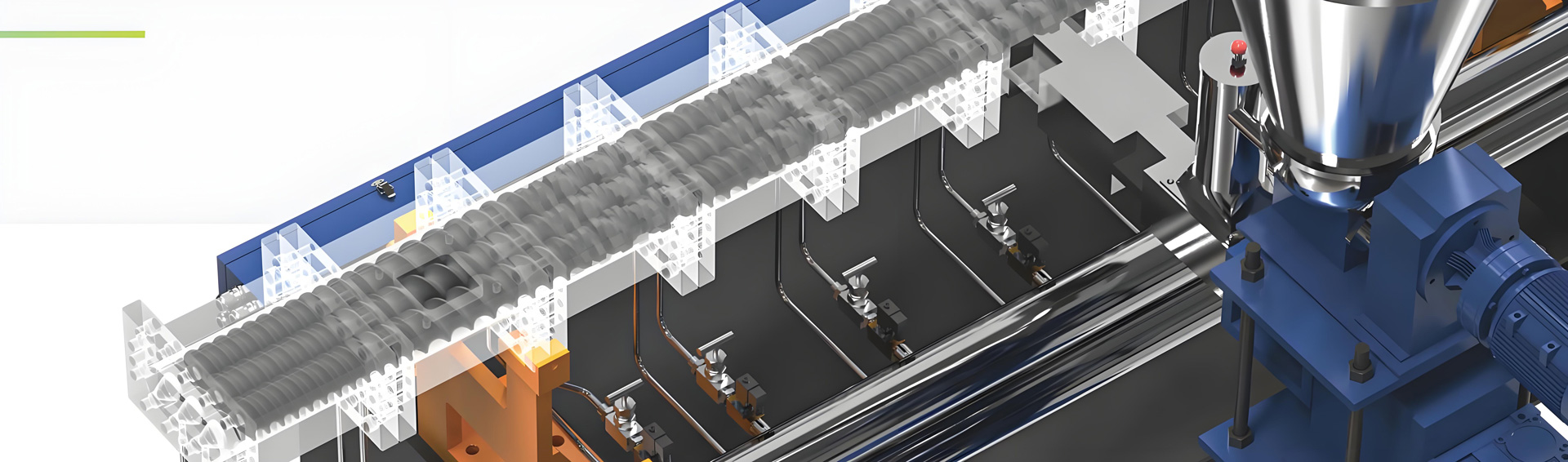
Co-rotating twin screw extruders generate both shear and elongational mixing through the interaction of the intermeshing screws and the barrel wall. The screw elements, particularly kneading blocks and mixing elements, create regions of high shear and elongational flow that effectively break down polymer agglomerates and phase domains. The intensity of mixing can be precisely controlled by adjusting the screw configuration, screw speed, and feed rate, allowing manufacturers to optimize the mixing process for different polymer pairs and formulations.
Kerke compounding extruders feature specially designed kneading blocks and mixing elements that provide an optimal balance of shear and elongational mixing. These elements are available in different angles and configurations, allowing for precise customization of the mixing profile to meet the specific requirements of each polymer blend. For example, 90-degree kneading blocks provide maximum shear for breaking down tough phase domains, while 30-degree kneading blocks provide more distributive mixing with less shear, making them ideal for shear-sensitive polymers.
2.2 Distributive Mixing for Uniform Phase Distribution
In addition to dispersive mixing, which breaks down large phase domains into smaller ones, compounding extruders also provide excellent distributive mixing, which ensures that the small phase domains are uniformly distributed throughout the polymer matrix. Uniform phase distribution is essential for achieving consistent properties throughout the entire blend and preventing localized regions of poor compatibility.
Distributive mixing in twin screw extruders is achieved through the repeated division, reorientation, and recombination of the polymer melt as it flows through the screw elements. The intermeshing screws create a complex flow pattern that continuously mixes and redistributes the melt, ensuring that every part of the blend is subjected to the same processing conditions. This results in a highly uniform blend with consistent phase distribution and properties.
Kerke twin screw extruders feature optimized screw designs that maximize distributive mixing while minimizing shear degradation. The modular screw design allows manufacturers to place mixing elements exactly where they are needed in the barrel, ensuring that the blend receives the appropriate amount of distributive mixing at each stage of the compounding process.
2.3 Precise Melt Temperature Control
Melt temperature is a critical parameter that significantly affects polymer compatibility. The viscosity of a polymer melt is highly temperature-dependent, and the viscosity ratio between the two polymer phases has a major impact on the morphology and properties of the blend. If the viscosity ratio is too high, it becomes difficult to break down the dispersed phase into small domains, resulting in poor compatibility and reduced properties.
Compounding extruders provide precise control over the melt temperature profile throughout the entire extrusion process. The barrel is divided into multiple independent heating and cooling zones, each of which can be individually adjusted to maintain the optimal temperature for each stage of the compounding process. This allows manufacturers to precisely control the viscosity of each polymer phase, ensuring that the viscosity ratio is within the optimal range for good mixing and compatibility.
Kerke compounding extruders use advanced PID temperature controllers with an accuracy of ±1°C to maintain precise temperature control in each barrel zone. The extruders also feature efficient cooling systems that allow for rapid temperature adjustment, preventing overheating and thermal degradation of the polymers. This precise temperature control is essential for processing temperature-sensitive polymers and achieving consistent blend morphology and properties.
2.4 Controlled Residence Time and Residence Time Distribution
Residence time is another critical parameter that affects polymer compatibility. The polymers must be given sufficient time to mix and interact at the molecular level, but excessive residence time can lead to thermal degradation, particularly for heat-sensitive polymers. The residence time distribution (RTD) is also important, as a narrow RTD ensures that all parts of the blend are subjected to the same processing conditions, resulting in consistent product quality.
Twin screw compounding extruders provide excellent control over both residence time and residence time distribution. The residence time can be adjusted by changing the screw speed, feed rate, and screw configuration. Longer residence times can be achieved by using reverse elements or increasing the length-to-diameter (L/D) ratio of the extruder, while shorter residence times can be achieved by increasing the screw speed or feed rate.
Kerke compounding extruders are available with L/D ratios ranging from 24:1 to 48:1, allowing manufacturers to select the optimal length for their specific application. The modular screw design also allows for easy adjustment of the residence time by adding or removing screw elements. Kerke extruders feature a narrow residence time distribution, ensuring that all parts of the blend receive the same amount of mixing and thermal history, resulting in consistent blend quality and properties.
2.5 Reactive Extrusion for In-Situ Compatibilization
Reactive extrusion is a powerful technique that allows for in-situ compatibilization of polymer blends during the compounding process. In reactive extrusion, compatibilizing agents or monomers are added to the extruder, where they react with the polymer chains at the interface between the two phases, forming graft or block copolymers that act as compatibilizers. These copolymers reduce the interfacial tension between the phases, improve interfacial adhesion, and stabilize the blend morphology, resulting in significantly improved compatibility and properties.
Twin screw compounding extruders are ideal for reactive extrusion because they provide the intense mixing, precise temperature control, and controlled residence time required for efficient chemical reactions. The modular design of the extruder allows for the addition of multiple feed ports along the barrel, enabling manufacturers to add reactants at the optimal point in the process.
Kerke compounding extruders are specifically designed to handle reactive extrusion processes. They feature high-torque gearboxes that can handle the high viscosity of reactive polymer melts, precise temperature control systems that maintain the optimal reaction temperature, and multiple feed ports for adding reactants and additives. Kerke also offers specialized screw configurations optimized for reactive extrusion, ensuring efficient mixing and reaction while minimizing thermal degradation.
3. Kerke Compounding Extruder: Advanced Technologies for Polymer Compatibility Enhancement
Kerke has developed a range of advanced compounding extruder technologies specifically designed to address the unique challenges of polymer blending and compatibility improvement. These technologies, combined with Kerke’s extensive experience in polymer compounding, enable manufacturers to produce high-quality polymer blends with exceptional compatibility and performance. The following are the key technologies that set Kerke compounding extruders apart from the competition.
3.1 High-Precision Modular Screw Design
The screw is the heart of any compounding extruder, and Kerke’s high-precision modular screw design is the foundation of its exceptional performance in polymer blending. Kerke screws are made from high-quality alloy steel with a nitrided surface treatment or bimetallic coating, providing excellent wear resistance and long service life even when processing abrasive fillers and additives.
The modular design allows for complete customization of the screw configuration to meet the specific requirements of each polymer blend. Kerke offers a wide range of screw elements, including conveying elements, kneading blocks of different angles, reverse elements, mixing pins, and special mixing elements. These elements can be combined in countless ways to create the optimal mixing profile for any polymer pair, from low-shear blends of sensitive polymers to high-shear blends of tough engineering plastics.
Kerke’s engineering team uses advanced computer simulation software to optimize the screw design for each customer’s specific formulation. This simulation allows them to predict the flow behavior, shear rate, temperature profile, and residence time of the polymer melt, ensuring that the screw configuration provides the optimal balance of mixing, dispersion, and thermal stability for maximum compatibility improvement.
3.2 High-Torque, High-Speed Transmission System
High torque and high speed are essential for achieving the intensive mixing required to improve polymer compatibility. Kerke compounding extruders feature state-of-the-art high-torque gearboxes that deliver exceptional power and torque density. The gearboxes are designed to operate at high speeds while maintaining smooth, quiet operation and long service life.
The high-torque transmission system allows Kerke extruders to process even the most viscous polymer blends and high-fill formulations with ease. The high screw speeds generate the intense shear and elongational forces needed to break down large phase domains and achieve fine dispersion of the dispersed phase. This results in significantly improved compatibility and mechanical properties in the final blend.
Kerke’s gearboxes are manufactured to the highest quality standards using precision-machined components and high-quality bearings. They feature a forced lubrication system with oil cooling to ensure optimal operating temperature and prevent overheating, even during continuous 24/7 operation. This robust construction ensures reliable performance and long service life, minimizing downtime and maintenance costs for manufacturers.
3.3 Multi-Zone Precision Temperature Control System
Precise temperature control is critical for achieving optimal polymer compatibility, as it directly affects the viscosity of the polymer melts and the viscosity ratio between the phases. Kerke compounding extruders feature an advanced multi-zone temperature control system that provides precise and stable temperature control throughout the entire extrusion process.
The barrel is divided into multiple independent heating and cooling zones, each equipped with its own temperature sensor and controller. The system uses advanced PID control technology with an accuracy of ±1°C to maintain the desired temperature in each zone. The heating elements are designed for fast heat-up and uniform heat distribution, while the cooling system provides efficient and rapid cooling to prevent overheating and thermal degradation.
For temperature-sensitive polymers and reactive extrusion processes, Kerke offers optional liquid cooling systems that provide even more precise temperature control and faster cooling response. These systems use circulating water or oil to maintain the exact temperature required for optimal processing, ensuring that the polymers are processed at the ideal temperature for maximum compatibility and minimum degradation.
3.4 Multi-Stage Devolatilization System
Volatiles such as moisture, residual monomers, solvents, and decomposition products can have a significant negative impact on polymer compatibility and blend quality. These volatiles can cause bubbles, voids, and surface defects in the blend, and they can also interfere with the interfacial adhesion between the polymer phases. Effective devolatilization is therefore essential for producing high-quality polymer blends with good compatibility.
Kerke compounding extruders feature a multi-stage devolatilization system that efficiently removes volatiles from the polymer melt. The system includes multiple vent ports along the barrel, each connected to a vacuum system that draws out the volatiles. The screw configuration is optimized to create a thin, constantly renewing melt film at each vent port, maximizing the surface area available for devolatilization and ensuring efficient removal of volatiles.
Kerke offers both atmospheric and vacuum venting options, as well as optional devolatilization aids such as water injection, which can significantly improve the removal of stubborn volatiles. The multi-stage devolatilization system ensures that the polymer melt is free from volatiles, resulting in a dense, bubble-free blend with excellent interfacial adhesion and mechanical properties.
3.5 Integrated Gravimetric Feeding System
Accurate and consistent feeding of raw materials is essential for achieving uniform blend composition and consistent compatibility. Even small variations in the ratio of the two polymer phases or the amount of compatibilizer can have a significant impact on the blend morphology and properties.
Kerke compounding extruders are equipped with high-precision gravimetric feeding systems that deliver an accuracy of ±0.1% for all raw materials. These feeding systems continuously weigh the material being fed into the extruder and automatically adjust the feed rate to maintain the desired formulation ratio. Unlike volumetric feeders, which are affected by changes in material bulk density, gravimetric feeders provide consistent and accurate feeding regardless of material properties.
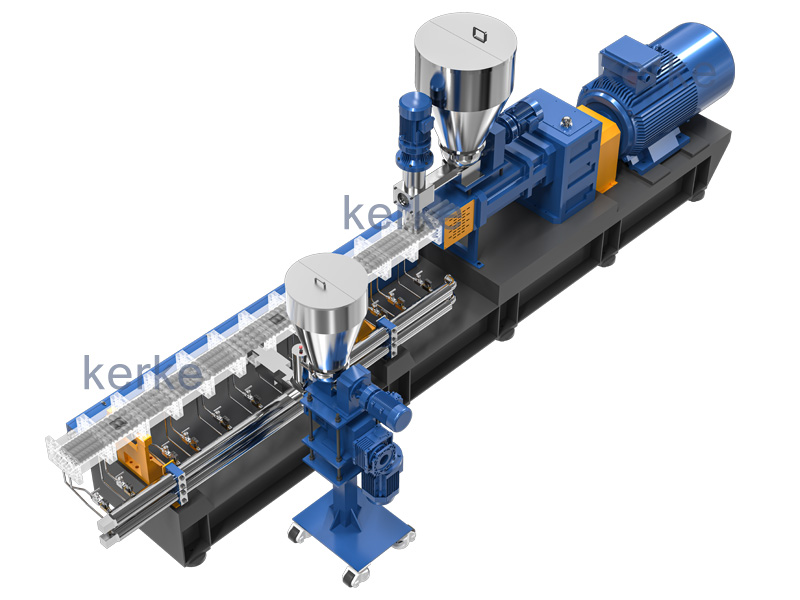
Kerke offers a range of gravimetric feeders to meet different production requirements, including loss-in-weight feeders for main raw materials, micro-feeders for additives and compatibilizers with low addition rates, and side feeders for adding fillers and reinforcements. All feeders are integrated with the extruder’s control system, allowing for centralized monitoring and control of the entire feeding process.
3.6 Specialized Extruder Models for Different Blending Applications
Kerke offers a comprehensive range of compounding extruder models specifically designed for different polymer blending applications, each optimized for the unique requirements of that application.
The Kerke lab twin screw extruder is ideal for research and development, formulation testing, and small-batch production. With a capacity ranging from 5kg/h to 50kg/h, these small extruders allow manufacturers to test new polymer blends and optimize process parameters before investing in a large-scale production line. Lab extruders are available with all the same features as production models, including modular screw design, gravimetric feeding, and multiple pelletizing options.
The Kerke parallel twin screw extruder is the workhorse of industrial polymer blending, with capacities ranging from 50kg/h to 2000kg/h. These extruders feature high-torque gearboxes, optimized screw designs, and advanced control systems, delivering excellent performance and reliability for medium to large-scale production of all types of polymer blends.
The Kerke triple screw extruder is a revolutionary design that offers superior mixing and dispersion capabilities compared to traditional twin screw extruders. With three intermeshing screws, this extruder provides more intense shear and mixing, making it ideal for highly incompatible polymer pairs and difficult-to-disperse additives. The triple screw extruder also has a higher self-cleaning ability, reducing material waste and changeover time between different products.
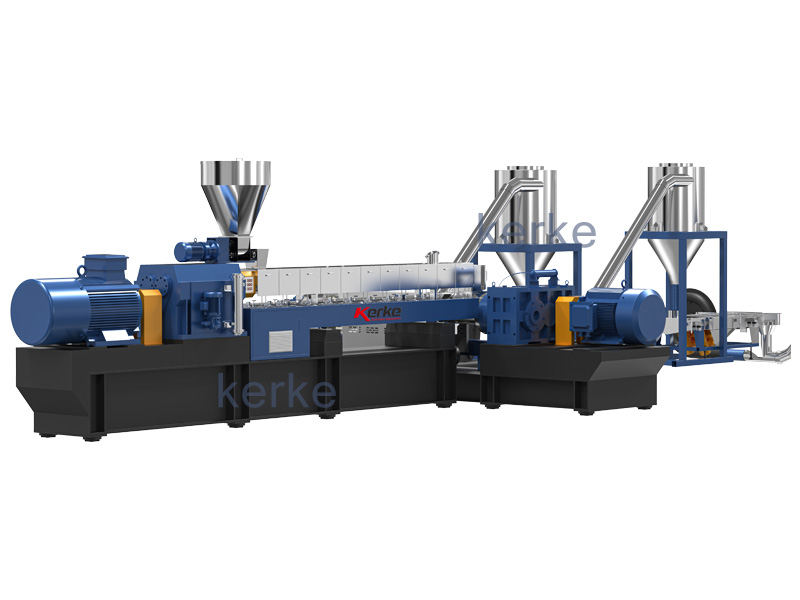
The Kerke double-stage extrusion system is designed for polymer blends with high moisture or volatile content, as well as for reactive extrusion processes. The system consists of a first-stage twin screw extruder for compounding and a second-stage single screw extruder for devolatilization and pressure build-up. This configuration allows for efficient removal of moisture and volatiles, resulting in high-quality polymer blends with excellent physical properties.
4. Cost and Price Analysis of Kerke Polymer Blending Compounding Lines
Investing in a polymer blending compounding line is a significant capital expenditure, and it is important for manufacturers to understand the costs involved and the potential return on investment. The total cost of a Kerke compounding line depends on several factors, including the extruder model, capacity, configuration, and optional features. The following is a detailed cost and price analysis of Kerke compounding lines for polymer blending, including initial investment, operational costs, and return on investment estimation.
4.1 Initial Equipment Investment by Capacity and Configuration
The initial equipment investment is the largest component of the total cost of a polymer blending compounding line. Kerke offers compounding extruders in a range of capacities and configurations to meet the needs of different customers, from small R&D labs to large industrial production facilities. The following are the approximate price ranges for different Kerke compounding extruder models and configurations for polymer blending applications.
Lab-scale compounding extruders with a capacity of 5kg/h to 50kg/h are the most affordable option, with prices ranging from $28,000 to $75,000. These extruders typically include a small parallel twin screw extruder with an L/D ratio of 32:1 or 40:1, volumetric or gravimetric feeding system, strand pelletizing system, and basic control system. Optional features such as underwater pelletizing, advanced temperature control, reactive extrusion capabilities, and remote monitoring can increase the price by $15,000 to $30,000.
Medium-scale production extruders with a capacity of 50kg/h to 300kg/h are the most popular choice for small to medium-sized compounders. Prices for these extruders range from $90,000 to $320,000, depending on the configuration. A standard medium-scale line includes a parallel twin screw extruder with an L/D ratio of 40:1 or 44:1, multiple gravimetric feeding systems, strand pelletizing system with water bath and dryer, and advanced PLC control system with touch screen HMI. Optional features such as triple screw design, double-stage extrusion, underwater pelletizing, side feeders, and automated material handling can increase the price by $40,000 to $150,000.
Large-scale industrial extruders with a capacity of 300kg/h to 2000kg/h are designed for high-volume polymer blending production. Prices for these extruders range from $350,000 to $950,000, depending on the capacity and configuration. These extruders feature high-torque gearboxes, large-diameter screws, multiple gravimetric feeders and side feeders, high-capacity pelletizing systems, and fully automated control systems. Optional features such as integrated material handling systems, in-line quality monitoring, advanced devolatilization systems, and reactive extrusion capabilities can increase the price by $60,000 to $250,000.
It is important to note that these are approximate price ranges, and the actual price of a Kerke compounding line will depend on the specific requirements of the customer. Kerke’s sales team works closely with customers to develop customized solutions that meet their production needs and budget constraints.
4.2 Operational Cost Breakdown
In addition to the initial equipment investment, manufacturers must also consider the ongoing operational costs of running a polymer blending compounding line. The main operational costs include energy consumption, raw materials, labor, maintenance, and overhead.
Energy consumption is one of the largest operational costs for polymer compounding. Kerke twin screw extruders are designed to be energy-efficient, with specific energy consumption ranging from 0.25kWh/kg to 0.55kWh/kg, depending on the type of polymer blend and production capacity. For a medium-scale extruder with a capacity of 150kg/h, the energy consumption is approximately 37.5kWh to 82.5kWh per hour. At an electricity cost of $0.12 per kWh, this translates to an energy cost of $4.50 to $9.90 per hour, or $36 to $79.20 per day for an 8-hour production run.
Raw materials account for the largest portion of the total production cost, typically representing 70% to 85% of the cost of the final polymer blend. The cost of raw materials varies depending on the type of polymers, compatibilizers, and additives used. For example, engineering plastic blends such as PC/ABS will have a higher raw material cost than polyolefin blends such as PP/PE.
Labor costs depend on the level of automation of the production line and the local labor market. A semi-automated medium-scale compounding line typically requires 2 to 3 operators per shift, while a fully automated large-scale line may only require 1 operator per shift. At an average labor cost of $18 per hour, the labor cost for a medium-scale line is approximately $36 to $54 per hour.
Maintenance costs are relatively low for Kerke compounding extruders, thanks to their high-quality construction and durable components. Annual maintenance costs typically range from 2% to 4% of the initial equipment investment. This includes the cost of spare parts, lubricants, and regular maintenance services.
Overhead costs such as factory rent, utilities, insurance, and administrative expenses also contribute to the total operational cost. These costs vary depending on the location and size of the production facility.
4.3 Return on Investment (ROI) Estimation
The return on investment for a Kerke polymer blending compounding line depends on several factors, including the production capacity, selling price of the polymer blend, raw material costs, and operational efficiency. In general, polymer blending offers attractive profit margins, especially for high-performance engineering plastic blends and specialty compounds.
For a medium-scale Kerke compounding line with a capacity of 150kg/h, operating 8 hours per day, 250 days per year, the annual production capacity is 300,000kg. Assuming an average selling price of $3.00 per kg for a general-purpose polymer blend and a production cost of $2.20 per kg, the annual profit would be $240,000. With an initial investment of $200,000, the payback period would be approximately 10 months.
For a large-scale extrusion line with a capacity of 1000kg/h, operating 24 hours per day, 300 days per year, the annual production capacity is 7,200,000kg. Assuming an average selling price of $2.50 per kg and a production cost of $1.90 per kg, the annual profit would be $4,320,000. With an initial investment of $600,000, the payback period would be less than 2 months.
These are conservative estimates, and actual ROI can be significantly higher for manufacturers who produce high-value specialty polymer blends or operate with higher efficiency. Kerke’s high-performance extruders help manufacturers improve production efficiency, reduce scrap rates, and produce high-quality polymer blends that command premium prices in the market, further enhancing the return on investment.
4.4 Cost Comparison with Competing Solutions
When comparing the cost of Kerke compounding extruders with competing solutions, it is important to consider not only the initial purchase price but also the total cost of ownership over the life of the equipment. While some competitors may offer lower initial prices, their equipment may have higher energy consumption, higher maintenance costs, and shorter service life, resulting in higher total costs over time.
Kerke compounding extruders are built to last, with a service life of 12 to 18 years or more with proper maintenance. They are also designed to be energy-efficient, reducing ongoing energy costs by 20% to 40% compared to many competing models. Additionally, Kerke’s excellent after-sales service and technical support help minimize downtime and ensure that the equipment operates at peak efficiency throughout its life.
In the long run, investing in a high-quality Kerke compounding extruder is a more cost-effective solution than purchasing a cheaper, lower-quality alternative. Kerke’s extruders deliver higher production efficiency, better product quality, and lower total cost of ownership, providing manufacturers with a competitive advantage in the global polymer compounding market.
5. Best Practices for Achieving Optimal Polymer Compatibility in Industrial Production
Achieving optimal polymer compatibility in industrial production requires a systematic approach that encompasses raw material selection, equipment configuration, process optimization, and quality control. The following best practices, when implemented in conjunction with a high-quality Kerke compounding extruder, will help manufacturers produce polymer blends with exceptional compatibility and consistent performance.
5.1 Proper Raw Material Selection and Pretreatment
Proper selection and pretreatment of raw materials are the foundation of achieving good polymer compatibility. The raw materials should be selected based on their chemical properties, solubility parameters, and melt viscosity to ensure that they are as compatible as possible. When selecting polymers for blending, it is important to consider not only their individual properties but also how they will interact with each other in the blend.
All raw materials should be properly dried to remove moisture before processing, as moisture can cause hydrolysis, bubble formation, and degradation of the polymers. The drying temperature and time should be optimized for each type of polymer to ensure complete drying without causing thermal degradation. For hygroscopic polymers such as polyamides and polycarbonates, proper drying is particularly critical to prevent degradation and ensure good compatibility.
Raw materials should also be screened to remove any foreign particles, contaminants, or agglomerates that could affect the compounding process or damage the extruder. Additives such as compatibilizers, stabilizers, and processing aids should be properly dispersed and premixed with the base polymers to ensure uniform feeding and compounding.
5.2 Optimal Screw Configuration Design
The screw configuration is the most important factor in determining the mixing performance and compatibility improvement of a compounding extruder. The optimal screw configuration will depend on the specific polymer pair, formulation, and desired properties of the blend. It should provide the appropriate balance of dispersive mixing, distributive mixing, and residence time to achieve the desired blend morphology and compatibility.
For highly incompatible polymer pairs that require intensive mixing to break down large phase domains, a screw configuration with multiple kneading blocks and mixing elements should be used. For shear-sensitive polymers that are prone to thermal degradation, a screw configuration with fewer kneading blocks and more conveying elements should be used to minimize shear and residence time.
Kerke’s engineering team has extensive experience in designing optimal screw configurations for all types of polymer blends. They work closely with customers to understand their specific requirements and develop customized screw designs that deliver the best possible compatibility and performance for their particular application.
5.3 Systematic Process Parameter Optimization
Process parameter optimization is critical for achieving consistent polymer compatibility and blend quality. Each polymer blend requires specific process parameters, including screw speed, feed rate, barrel temperatures, melt pressure, and throughput. These parameters should be systematically tested and optimized to determine the optimal settings for each product.
The screw speed and feed rate should be balanced to provide the optimal shear rate and residence time for good mixing and compatibility. The barrel temperature profile should be optimized to control the viscosity of each polymer phase and ensure that the viscosity ratio is within the optimal range for good dispersion. The melt pressure should be monitored and maintained at a stable level to ensure consistent flow and mixing.
Once the optimal parameters have been determined, they should be recorded and stored in the extruder’s control system as a production recipe. This allows for quick and easy setup of the extruder for each product, ensuring consistent production quality every time. Kerke’s advanced control system makes it easy to store and recall multiple production recipes, simplifying product changeovers and reducing setup time.
5.4 Effective Use of Compatibilizers
Compatibilizers are chemical additives that improve the compatibility of immiscible polymer blends by reducing the interfacial tension between the phases and improving interfacial adhesion. The effective use of compatibilizers is essential for achieving good properties in most polymer blends, particularly for highly incompatible pairs such as PA/PP.
There are two main types of compatibilizers: pre-made compatibilizers and in-situ formed compatibilizers. Pre-made compatibilizers are graft or block copolymers that are added to the blend before or during compounding. In-situ compatibilizers are monomers or reactive polymers that react with the base polymers during compounding to form compatibilizing copolymers at the interface.
The type and amount of compatibilizer used will depend on the specific polymer pair and the desired properties of the blend. It is important to use the correct amount of compatibilizer, as too little will not provide sufficient compatibilization, while too much can be costly and may negatively affect the properties of the blend.
Kerke compounding extruders are ideal for both pre-made and in-situ compatibilization processes. The multiple feed ports allow compatibilizers to be added at the optimal point in the process, and the precise temperature and residence time control ensure efficient reaction and dispersion of the compatibilizer.
5.5 Comprehensive Quality Control and Monitoring
Comprehensive quality control and monitoring are essential for ensuring consistent polymer compatibility and blend quality. The quality control program should include regular testing of raw materials, in-process monitoring of critical process parameters, and final testing of the finished blend properties.
Raw materials should be tested upon receipt to ensure that they meet the required specifications. In-process monitoring should include continuous measurement of critical parameters such as melt temperature, melt pressure, screw speed, and feed rate. Any deviations from the target parameters should be immediately addressed to prevent product quality issues.
Finished blends should be tested for key properties such as tensile strength, impact strength, elongation at break, melt flow rate, and morphology. Morphological analysis using techniques such as scanning electron microscopy (SEM) is particularly important for evaluating the phase structure and compatibility of the blend. Kerke can integrate third-party in-line quality monitoring systems into its extrusion lines, providing customers with real-time quality control and reducing the risk of producing out-of-specification products.
6. Common Polymer Compatibility Issues and Targeted Solutions
Even with the best equipment and practices, manufacturers may occasionally encounter compatibility-related issues during polymer blending production. The following are the most common polymer compatibility issues, their causes, and targeted solutions based on Kerke’s extensive experience in polymer compounding.
6.1 Severe Phase Separation
Severe phase separation is the most common compatibility issue in polymer blends. It is characterized by the formation of large, distinct phase domains that are clearly visible to the naked eye or under a microscope. Severe phase separation leads to significantly reduced mechanical properties, poor surface quality, and delamination.
The main causes of severe phase separation include insufficient mixing, improper viscosity ratio between the phases, lack of compatibilizer, and incorrect processing parameters.
Solutions: – Increase the intensity of mixing by adding more kneading blocks or mixing elements to the screw configuration – Adjust the barrel temperature profile to optimize the viscosity ratio between the two polymer phases – Increase the amount of compatibilizer or switch to a more effective compatibilizer – Adjust the screw speed and feed rate to provide the optimal shear rate and residence time – Ensure that the raw materials are properly dried and free from contaminants
6.2 Poor Interfacial Adhesion
Poor interfacial adhesion occurs when there is weak bonding between the two polymer phases. This leads to poor stress transfer between the phases, resulting in reduced mechanical properties, particularly impact strength and elongation at break. Poor interfacial adhesion can also cause delamination and surface defects in the final product.
The main causes of poor interfacial adhesion include insufficient compatibilization, poor dispersion of the compatibilizer, and thermal degradation of the polymers at the interface.
Solutions: – Increase the amount of compatibilizer or use a reactive compatibilizer that forms covalent bonds at the interface – Improve the dispersion of the compatibilizer by optimizing the screw configuration and mixing intensity – Reduce the processing temperature and residence time to prevent thermal degradation – Ensure that the raw materials are properly dried to prevent hydrolysis and degradation
6.3 Uneven Phase Distribution
Uneven phase distribution occurs when the dispersed phase domains are not uniformly distributed throughout the polymer matrix. This leads to inconsistent properties throughout the blend, with some regions having good properties and others having poor properties. Uneven phase distribution can also cause processing difficulties and product quality variations.
The main causes of uneven phase distribution include poor distributive mixing, inconsistent feeding of raw materials, and unstable process parameters.
Solutions: – Improve distributive mixing by adding more distributive mixing elements to the screw configuration – Upgrade to a gravimetric feeding system to ensure consistent and accurate feeding of all raw materials – Optimize the process parameters to ensure stable melt flow and pressure – Ensure that the extruder is operating at a stable throughput and that there are no fluctuations in the feed rate
6.4 Thermal Degradation
Thermal degradation occurs when the polymers are exposed to excessive heat or shear during the compounding process. This leads to chain scission, cross-linking, and the formation of volatile decomposition products. Thermal degradation can significantly reduce the mechanical properties of the blend and cause discoloration, odor, and surface defects.
The main causes of thermal degradation include excessive processing temperature, too long residence time, excessive shear, and insufficient stabilization.
Solutions: – Reduce the barrel temperature profile to the minimum required for good melting and mixing – Reduce the residence time by increasing the screw speed or feed rate, or by modifying the screw configuration – Optimize the screw configuration to reduce excessive shear – Increase the amount of thermal stabilizer in the formulation – Improve the devolatilization system to remove decomposition products
6.5 Melt Instability and Processing Difficulties
Melt instability and processing difficulties such as melt fracture, die buildup, and uneven flow are common issues in polymer blending. These issues can lead to poor product quality, increased scrap rates, and production downtime.
The main causes of melt instability and processing difficulties include poor compatibility between the polymers, uneven melt viscosity, and improper processing parameters.
Solutions: – Improve the compatibility of the blend by adding a compatibilizer and optimizing the mixing process – Adjust the barrel temperature profile to achieve a more uniform melt viscosity – Optimize the die design to ensure smooth flow of the melt – Adjust the screw speed and feed rate to achieve a stable extrusion rate – Add a processing aid to the formulation to improve melt flow and reduce die buildup
7. Conclusion
Improving the compatibility of different polymers is one of the most important and challenging tasks in the modern plastics industry. Polymer blending allows manufacturers to create customized materials with tailored properties, but the inherent immiscibility of most polymer pairs presents significant technical challenges. The compounding extruder, particularly the twin screw extruder, has emerged as the only industrial-scale equipment capable of overcoming these challenges and producing stable, high-performance polymer blends.
Compounding extruders improve polymer compatibility through a combination of intensive shear and elongational mixing, uniform distributive mixing, precise temperature control, controlled residence time, and reactive extrusion capabilities. These mechanisms work together to break down large phase domains, create a uniform phase distribution, reduce interfacial tension, and improve interfacial adhesion, resulting in polymer blends with exceptional properties and performance.
As a leading manufacturer of twin screw extruders, Kerke has developed advanced compounding extruder technologies specifically designed to address the unique challenges of polymer blending. Kerke compounding extruders feature high-precision modular screw designs, high-torque transmission systems, multi-zone precision temperature control, multi-stage devolatilization systems, and integrated gravimetric feeding systems. These technologies work together to deliver exceptional compatibility improvement for even the most challenging polymer pairs, from common polyolefin blends to high-performance engineering plastic blends.
Investing in a Kerke compounding extruder offers significant benefits for manufacturers, including improved product quality, increased production efficiency, reduced