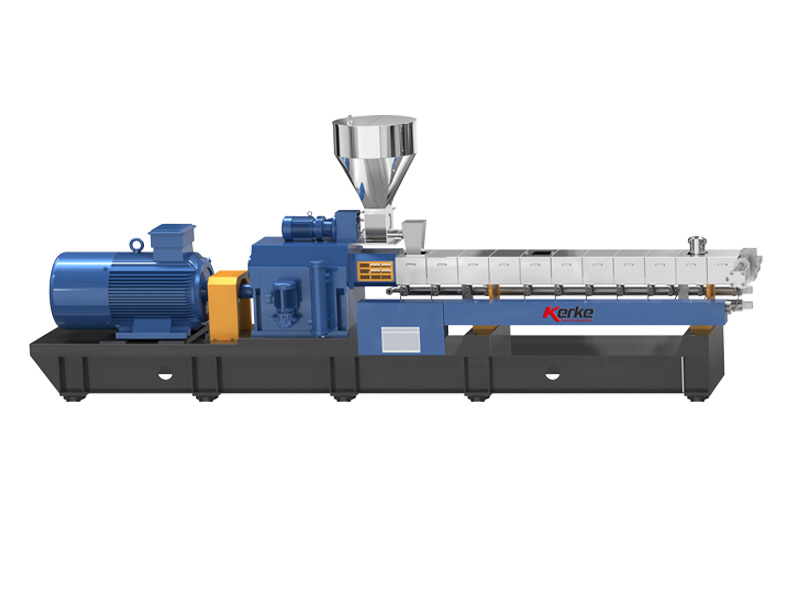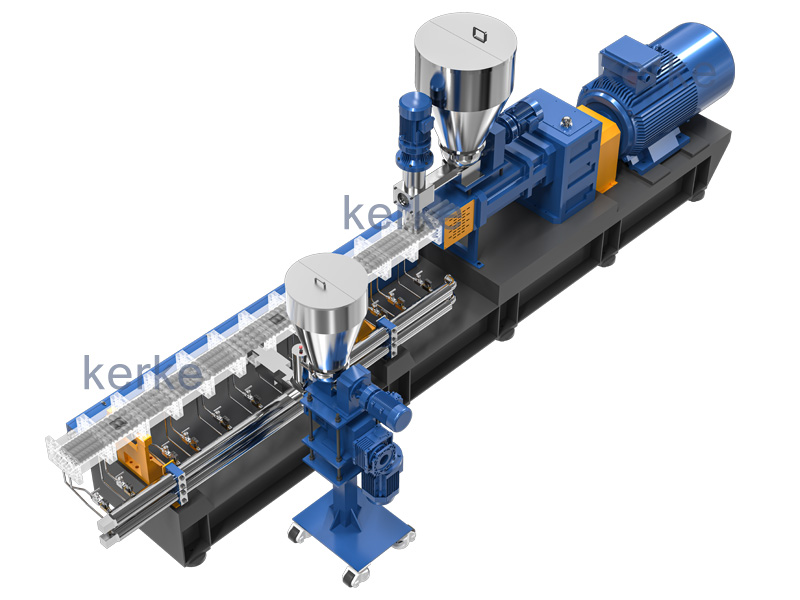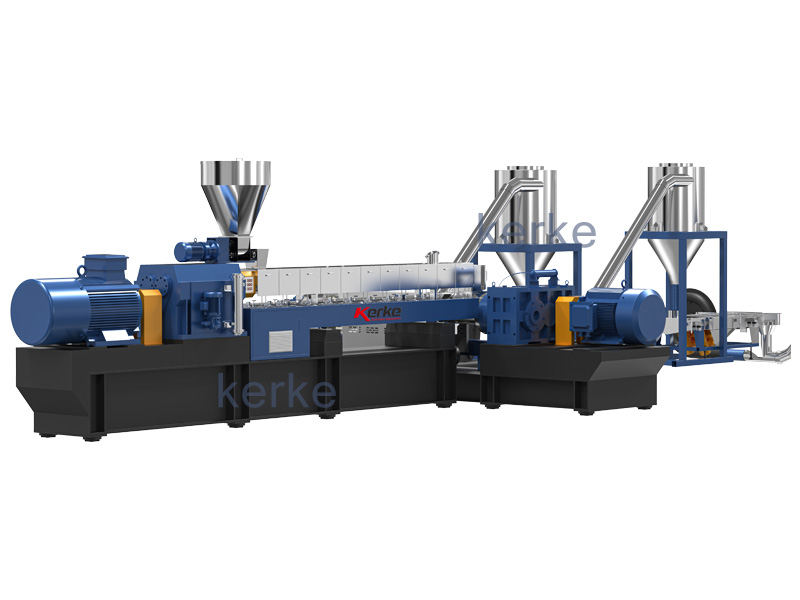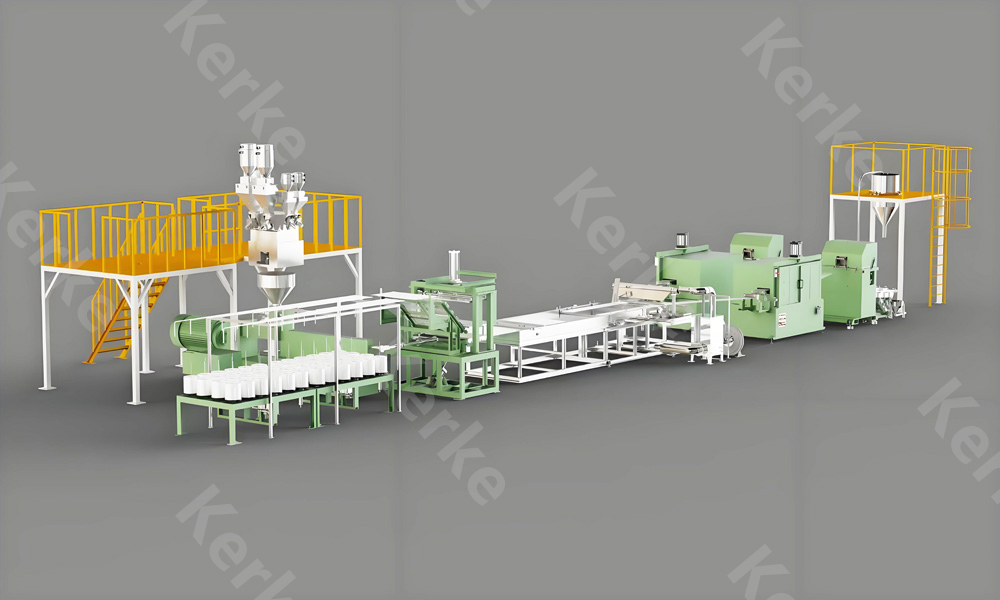
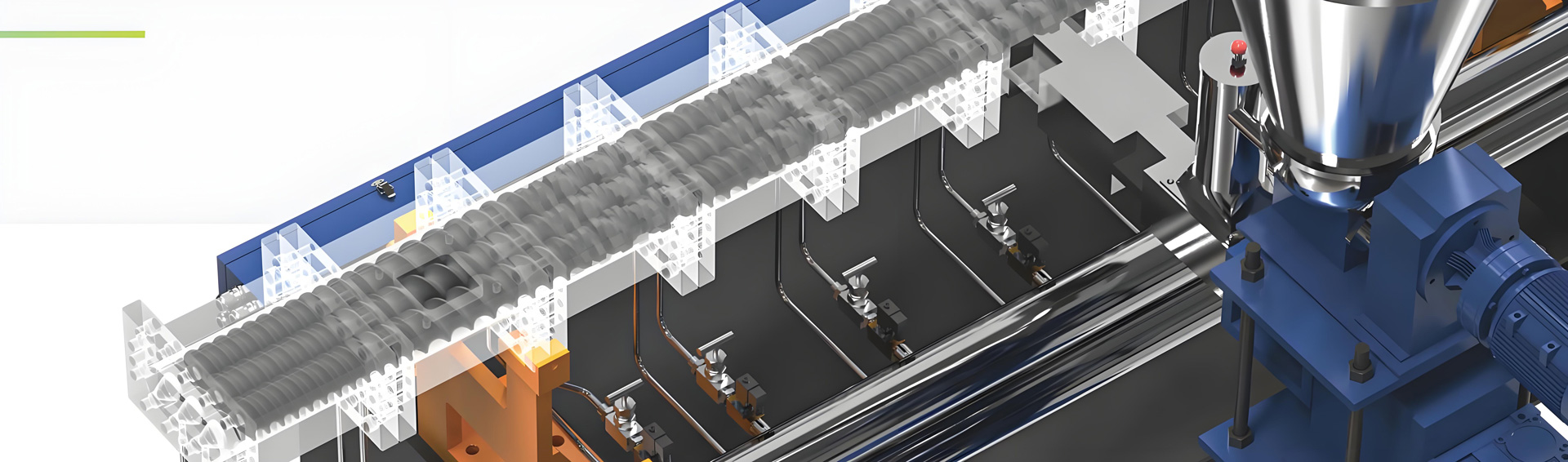
Wear on barrel and screw components represents the single largest maintenance cost and source of downtime for twin screw extruder operations worldwide. In high-volume production environments such as masterbatch manufacturing, plastic compounding, and polymer recycling, premature wear can lead to reduced processing efficiency, inconsistent product quality, increased energy consumption, and costly unplanned downtime. For a typical masterbatch extruder processing 30% calcium carbonate filler, screw and barrel replacement can cost $15,000 to $50,000 per year, with additional losses of $20,000 to $100,000 from production downtime and scrap material. As a leading manufacturer of twin screw extruders, Kerke has developed advanced design technologies, material innovations, and process control systems that significantly extend the service life of barrel and screw components, reducing total cost of ownership by 40% to 60% compared to conventional extruders.
This comprehensive article explores the fundamental mechanisms of wear in twin screw extruders, the advanced technologies integrated into Kerke twin screw extruders, masterbatch extruders, and compounding extruders to minimize component wear, detailed cost and return on investment analysis, best practices for extending component life, and solutions to common wear-related issues. Whether you operate a masterbatch production facility, a plastic compounding plant, or a recycling operation, this article provides actionable insights that will help you reduce maintenance costs, increase production uptime, and improve the profitability of your extrusion operations.
1. The Economic Impact of Barrel and Screw Wear in Extrusion Operations
Understanding the true cost of barrel and screw wear is essential for appreciating the value of investing in wear-resistant extrusion technology. Many manufacturers only consider the direct cost of replacement parts, but the indirect costs of wear are often significantly higher and can have a dramatic impact on the overall profitability of the operation.
1.1 Direct Costs of Component Replacement
The most obvious cost of wear is the direct cost of replacing worn barrel and screw components. For a typical medium-sized twin screw extruder with a 65mm screw diameter, a complete set of nitrided steel screw elements costs approximately $15,000 to $25,000, while a set of bimetallic screw elements costs $25,000 to $40,000. Barrel segments cost approximately $1,000 to $3,000 per segment, with a complete barrel assembly costing $10,000 to $30,000 for nitrided steel and $20,000 to $50,000 for bimetallic construction.
For operations processing highly abrasive materials such as glass fiber-reinforced plastics or high-filler masterbatches, conventional nitrided steel components may need replacement every 3 to 6 months, resulting in annual replacement costs of $50,000 to $150,000. Even for operations processing less abrasive materials, component replacement typically costs $20,000 to $50,000 per year.
1.2 Indirect Costs of Wear
The indirect costs of wear are often much higher than the direct replacement costs and include:
- Production downtime: Unplanned downtime for component replacement can cost $5,000 to $20,000 per day in lost production revenue. For a 24/7 operation, a single 3-day shutdown can result in losses of $15,000 to $60,000.
- Reduced processing efficiency: As wear increases and the clearance between the screw flight and barrel wall grows, the extruder loses pressure generation capability and mixing efficiency. This leads to reduced throughput, increased energy consumption, and inconsistent product quality. Studies have shown that excessive wear can reduce throughput by 10% to 30% and increase energy consumption by 15% to 40%.
- Increased scrap rates: Poor mixing and inconsistent melt quality caused by worn components result in higher scrap rates. Scrap rates can increase from less than 1% to 5% or more as components wear, leading to significant material waste and lost revenue.
- Product quality issues: Worn components can cause variations in product properties such as color, mechanical strength, and melt flow rate. These quality issues can lead to customer complaints, returned products, and damage to the company’s reputation.
1.3 Total Cost of Wear for Different Applications
The total cost of wear varies significantly depending on the type of material being processed and the operating conditions. The following are typical total annual wear costs for different extrusion applications:
- General purpose compounding (unfilled or lightly filled polymers): $20,000 to $50,000 per year
- Masterbatch production (20-40% filler content): $50,000 to $120,000 per year
- High-filler masterbatch production (40-80% filler content): $100,000 to $250,000 per year
- Glass fiber-reinforced plastic compounding: $80,000 to $200,000 per year
- Plastic recycling (contaminated materials): $120,000 to $300,000 per year
These figures clearly demonstrate that wear represents a significant cost for extrusion operations and that investing in wear-resistant technology can provide substantial financial benefits.
2. Fundamental Mechanisms of Barrel and Screw Wear
To effectively reduce wear, it is essential to understand the different mechanisms that cause wear in twin screw extruders. Wear is a complex process that involves the interaction of mechanical, thermal, and chemical factors. The four primary wear mechanisms in twin screw extruders are abrasive wear, adhesive wear, corrosive wear, and fatigue wear.
2.1 Abrasive Wear
Abrasive wear is the most common and most destructive wear mechanism in twin screw extruders, accounting for approximately 80% of all component wear. It occurs when hard particles such as fillers, reinforcements, pigments, or contaminants slide or roll against the surface of the screw and barrel. These hard particles act like tiny cutting tools, removing material from the surface of the components through a micro-cutting or micro-plowing action.
The severity of abrasive wear depends on several factors, including the hardness and size of the abrasive particles, the concentration of particles in the polymer matrix, the contact pressure between the particles and the component surface, and the relative velocity between the particles and the surface. Materials such as glass fiber, calcium carbonate, talc, and titanium dioxide are particularly abrasive and can cause rapid wear of conventional components.
Abrasive wear is most severe in the feeding and melting zones of the extruder, where the solid particles are still present and the contact pressures are highest. It is also more severe in kneading zones and other high-shear regions of the screw.
2.2 Adhesive Wear
Adhesive wear, also known as galling or seizing, occurs when two metal surfaces come into direct contact under high pressure and temperature. Under these conditions, microscopic welds can form between the surfaces, and material is transferred from one surface to the other as the surfaces move relative to each other. This can lead to surface damage, increased friction, and in severe cases, complete seizure of the extruder.
Adhesive wear is most common during startup and shutdown operations when the extruder is not properly heated or cooled. It can also occur if the extruder is operated at too low a temperature or too high a load, causing the polymer melt to become too viscous and increasing the contact pressure between the screw and barrel.
2.3 Corrosive Wear
Corrosive wear occurs when the surface of the screw or barrel is chemically attacked by the polymer or additives being processed. Many polymers and additives can release corrosive substances such as acids, bases, or halogens when heated to processing temperatures. These substances can react with the metal surface, causing pitting, etching, and material loss.
Corrosive wear is particularly common in applications involving halogenated polymers such as PVC, as well as applications involving acidic or alkaline additives. It is also more severe at higher temperatures and longer residence times, as these conditions accelerate the chemical reactions.
2.4 Fatigue Wear
Fatigue wear occurs when a component is subjected to repeated cycles of stress and pressure over time. These repeated stress cycles cause microscopic cracks to form on the surface of the component, which gradually grow and eventually lead to material loss or component failure.
Fatigue wear is most common in high-torque applications and in regions of the screw that are subjected to high cyclic loads, such as kneading blocks and reverse elements. It can also be accelerated by improper screw alignment, excessive vibration, or thermal cycling.
3. Kerke Advanced Technologies for Wear Reduction
Kerke has developed a comprehensive range of advanced technologies specifically designed to minimize barrel and screw wear in twin screw extruders. These technologies address all four primary wear mechanisms and have been proven to extend component service life by 2 to 5 times compared to conventional extruders. The following are the key technologies that set Kerke twin screw extruders, masterbatch extruders, and compounding extruders apart from the competition.
3.1 Advanced Material Science and Surface Engineering
Material selection is the foundation of wear resistance, and Kerke offers a comprehensive range of high-performance materials and surface treatments optimized for different wear conditions.
- Standard nitrided steel: Kerke uses high-quality 38CrMoAlA nitrided steel as the standard material for screw elements and barrel segments. This material is vacuum nitrided to achieve a surface hardness of 900-1100 HV with a case depth of 0.5-0.8 mm. Nitrided steel provides good wear resistance for general purpose compounding and unfilled polymer processing, with a typical service life of 6-12 months for normal applications.
- Bimetallic construction: For more demanding applications, Kerke offers bimetallic screw elements and barrel liners. Bimetallic components consist of a tough steel base with a thick layer of wear-resistant alloy metallurgically bonded to the surface. Kerke uses a centrifugal casting process to apply the alloy layer, ensuring uniform thickness and excellent bonding strength. The alloy layer is typically 2-4 mm thick and has a hardness of 58-65 HRC. Bimetallic components provide 2-3 times the wear resistance of nitrided steel and are ideal for applications involving moderate to high filler content.
- Tungsten carbide coatings: For the most severe wear applications, Kerke offers tungsten carbide coatings applied using high-velocity oxy-fuel (HVOF) spraying technology. Tungsten carbide coatings have a hardness of 70-75 HRC and provide exceptional resistance to abrasive wear. They are ideal for applications involving high concentrations of glass fiber, silicon carbide, or other highly abrasive materials. Tungsten carbide coatings can extend component service life by 3-5 times compared to nitrided steel.
- Powder metallurgy high-speed steel: Kerke also offers screw elements made from powder metallurgy high-speed steel such as ASP 2052. This material has a uniform microstructure with exceptionally fine carbide distribution, providing excellent wear resistance and toughness. Powder metallurgy high-speed steel offers 2-3 times the wear resistance of conventional high-speed steel and is ideal for high-temperature, high-shear applications.
3.2 Precision Manufacturing and Tight Tolerance Control
Precision manufacturing is essential for minimizing wear in twin screw extruders. Even small deviations from the design specifications can lead to increased contact pressures, uneven loading, and accelerated wear. Kerke uses state-of-the-art CNC machining equipment and strict quality control processes to ensure that all components are manufactured to the highest precision.
All Kerke screw elements are machined to a tolerance of ±0.01 mm, and barrel segments are honed to a surface roughness of Ra ≤ 0.8 µm. The clearance between the screw flight and barrel wall is precisely controlled to 0.1-0.2 mm, depending on the screw diameter. This tight tolerance control ensures uniform contact pressure, efficient material conveying, and minimal wear.
Kerke also uses advanced alignment technology to ensure that the screw shafts are perfectly aligned within the barrel. Proper alignment eliminates uneven loading and reduces the risk of contact between the screw and barrel, which can cause severe adhesive wear and component damage.
3.3 Modular Design for Targeted Wear Protection
Kerke twin screw extruders feature a fully modular design that allows for targeted wear protection and cost-effective maintenance. Instead of using a one-piece screw and barrel, Kerke uses individual screw elements and barrel segments that can be replaced independently as they wear.
This modular design offers several significant advantages for wear reduction:
- Targeted material selection: Different regions of the extruder experience different levels of wear. The feeding and melting zones typically experience the highest wear, while the metering zone experiences lower wear. With modular design, manufacturers can use more expensive wear-resistant materials only in the high-wear zones and less expensive materials in the low-wear zones, reducing the overall cost of the system.
- Cost-effective maintenance: When components wear, only the worn segments need to be replaced, rather than the entire screw or barrel. This can reduce maintenance costs by 30-40% compared to one-piece designs.
- Flexible configuration: The modular design allows manufacturers to easily change the screw configuration to optimize processing for different materials and applications. This flexibility also makes it easy to upgrade to more wear-resistant materials as needed.
3.4 Optimized Screw Geometry and Process Design
The design of the screw geometry has a significant impact on wear rates. Kerke’s engineering team uses advanced computer simulation software to optimize screw geometry for minimum wear while maintaining excellent processing performance.
Kerke screw elements feature optimized flight profiles, channel depths, and lead angles that reduce contact pressures and shear stresses while maintaining efficient conveying and mixing. The company also offers specialized screw configurations for different applications that are designed to minimize wear. For example, Kerke’s masterbatch extruder screws feature a gentle melting profile that reduces the exposure of solid filler particles to the screw and barrel surfaces, minimizing abrasive wear.
Kerke also optimizes the overall process design to reduce wear. This includes optimizing the temperature profile, screw speed, feed rate, and other process parameters to ensure that the polymer melts smoothly and uniformly, reducing the contact between hard solid particles and the component surfaces.
3.5 Intelligent Process Monitoring and Control
Kerke twin screw extruders are equipped with advanced intelligent process monitoring and control systems that help prevent excessive wear and extend component life. These systems continuously monitor critical process parameters such as melt temperature, melt pressure, screw torque, and motor load, and automatically adjust the process to maintain optimal operating conditions.
The control system features alarm functions that alert operators to any abnormal conditions that could lead to increased wear, such as over-temperature, over-pressure, or excessive torque. The system can also automatically reduce the screw speed or shut down the extruder if necessary to prevent damage to the components.
For customers requiring higher levels of automation, Kerke offers optional predictive maintenance systems that use advanced algorithms to analyze process data and predict when components will need replacement. This allows manufacturers to schedule maintenance during planned downtime, eliminating unplanned shutdowns and reducing the total cost of ownership.
4. Cost and Price Analysis of Kerke Wear-Resistant Extrusion Systems
Investing in wear-resistant extrusion technology requires a higher initial investment, but it provides significant long-term cost savings through reduced maintenance costs, increased production uptime, and improved processing efficiency. The following is a detailed cost and price analysis of Kerke wear-resistant extrusion systems, including initial investment, operational costs, and return on investment estimation.
4.1 Initial Equipment Investment by Capacity and Configuration
The initial cost of a Kerke twin screw extruder depends on several factors, including the extruder model, capacity, configuration, and material options. The following are the approximate price ranges for different Kerke extruder models with standard and wear-resistant configurations.
Lab-scale twin screw extruders (5-50 kg/h capacity):
- Standard nitrided steel configuration: $25,000 to $70,000
- Bimetallic configuration: $35,000 to $90,000
- Tungsten carbide configuration: $45,000 to $110,000
Medium-scale production extruders (50-300 kg/h capacity):
- Standard nitrided steel configuration: $80,000 to $300,000
- Bimetallic configuration: $100,000 to $380,000
- Tungsten carbide configuration: $130,000 to $450,000
Large-scale industrial extruders (300-2000 kg/h capacity):
- Standard nitrided steel configuration: $320,000 to $900,000
- Bimetallic configuration: $380,000 to $1,100,000
- Tungsten carbide configuration: $450,000 to $1,300,000
The cost of individual wear components is as follows:
- Nitrided steel screw elements: $0.8 to $1.5 per millimeter of length
- Bimetallic screw elements: $1.1 to $2.0 per millimeter of length
- Tungsten carbide coated screw elements: $1.8 to $3.0 per millimeter of length
- Nitrided steel barrel segments: $800 to $2,500 per segment
- Bimetallic barrel segments: $1,500 to $4,000 per segment
- Complete screw and barrel set for 65mm extruder: $15,000 to $50,000 depending on material
4.2 Total Cost of Ownership Comparison
To understand the true value of Kerke’s wear-resistant technology, it is important to compare the total cost of ownership (TCO) of a Kerke extruder with that of a conventional extruder over a 5-year period. The following comparison is for a medium-sized 65mm twin screw extruder processing 30% calcium carbonate masterbatch at a rate of 150 kg/h, operating 24 hours per day, 300 days per year.
Conventional extruder with nitrided steel components:
- Initial equipment investment: $150,000
- Annual screw and barrel replacement cost: $60,000 (replacement every 6 months)
- Annual downtime cost: $30,000 (4 days per year)
- Annual energy cost: $72,000 (0.6 kWh/kg)
- Annual scrap cost: $36,000 (3% scrap rate)
- Total 5-year cost: $1,090,000
Kerke extruder with bimetallic components:
- Initial equipment investment: $200,000
- Annual screw and barrel replacement cost: $20,000 (replacement every 18 months)
- Annual downtime cost: $7,500 (1 day per year)
- Annual energy cost: $54,000 (0.45 kWh/kg)
- Annual scrap cost: $12,000 (1% scrap rate)
- Total 5-year cost: $667,500
Kerke extruder with tungsten carbide components:
- Initial equipment investment: $250,000
- Annual screw and barrel replacement cost: $10,000 (replacement every 3 years)
- Annual downtime cost: $3,750 (0.5 days per year)
- Annual energy cost: $48,000 (0.4 kWh/kg)
- Annual scrap cost: $6,000 (0.5% scrap rate)
- Total 5-year cost: $588,750
This comparison clearly demonstrates that while Kerke extruders have a higher initial investment, they provide significant long-term cost savings. The Kerke extruder with bimetallic components saves $422,500 over 5 years compared to the conventional extruder, while the tungsten carbide configuration saves $501,250 over the same period.
4.3 Return on Investment (ROI) Estimation
The return on investment for Kerke’s wear-resistant technology is typically very short, often less than 1 year for high-wear applications. Using the same example as above:
For the Kerke extruder with bimetallic components:
- Additional initial investment: $50,000
- Annual cost savings: $104,500
- Payback period: 0.48 years (approximately 6 months)
For the Kerke extruder with tungsten carbide components:
- Additional initial investment: $100,000
- Annual cost savings: $130,250
- Payback period: 0.77 years (approximately 9 months)
These are conservative estimates, and actual ROI can be even higher for operations processing more abrasive materials or operating at higher production volumes. Kerke’s wear-resistant technology not only reduces costs but also improves product quality and production consistency, leading to increased customer satisfaction and higher sales revenue.
5. Best Practices for Extending Barrel and Screw Life
While Kerke’s advanced technologies provide excellent inherent wear resistance, proper operation and maintenance are essential for maximizing the service life of barrel and screw components. The following best practices, when implemented in conjunction with a Kerke twin screw extruder, will help you achieve the longest possible component life and the lowest total cost of ownership.
5.1 Proper Raw Material Pretreatment
Proper pretreatment of raw materials is one of the most effective ways to reduce abrasive wear. All raw materials should be screened to remove any foreign particles such as metal fragments, stones, or dirt that could cause severe damage to the screw and barrel. Magnetic separators should be installed in the feeding system to remove any ferrous contaminants.
Raw materials should also be properly dried to remove moisture before processing. Moisture can cause hydrolysis and degradation of the polymer, leading to the formation of corrosive byproducts that can accelerate corrosive wear. The drying temperature and time should be optimized for each type of polymer to ensure complete drying without causing thermal degradation.
5.2 Optimal Process Parameter Settings
Optimizing the process parameters is essential for minimizing wear. The following parameters should be carefully adjusted to achieve the best balance between processing performance and component wear:
- Temperature profile: The barrel temperature profile should be optimized to ensure that the polymer melts smoothly and uniformly. Too low a temperature will result in high melt viscosity and increased contact pressure, leading to higher wear. Too high a temperature can cause thermal degradation of the polymer, leading to corrosive wear.
- Screw speed: The screw speed should be set to provide the desired throughput while avoiding excessive shear and contact pressure. Higher screw speeds increase the relative velocity between the material and the component surfaces, leading to higher abrasive wear. However, too low a screw speed can result in longer residence times and increased thermal degradation.
- Feed rate: The feed rate should be balanced with the screw speed to ensure that the extruder is operating at the optimal fill level. Overfeeding can cause excessive torque and pressure, leading to increased wear. Underfeeding can result in unstable processing and increased wear due to poor material conveying.
5.3 Proper Startup and Shutdown Procedures
Improper startup and shutdown procedures are a common cause of premature wear and component damage. During startup, the extruder should be thoroughly heated to the operating temperature before starting the screw. Starting the screw before the extruder is fully heated can cause severe adhesive wear and even screw breakage.
During shutdown, the extruder should be thoroughly purged with a clean purging compound to remove all residual material from the screw and barrel. Residual material can degrade and carbonize during the shutdown period, forming hard particles that can cause severe abrasive wear when the extruder is restarted. The extruder should be purged until the purging compound comes out clean and free of any residual material.
5.4 Regular Maintenance and Inspection
Regular maintenance and inspection are essential for detecting early signs of wear and preventing catastrophic component failure. The following maintenance tasks should be performed on a regular basis:
- Daily inspection: Check for any abnormal noise, vibration, or temperature during operation. Monitor the process parameters such as melt pressure, torque, and energy consumption for any signs of increasing wear.
- Monthly inspection: Measure the clearance between the screw flight and barrel wall using feeler gauges. The clearance should be measured at several points along the length of the extruder. If the clearance exceeds 0.3-0.5 mm (depending on the screw diameter), the components should be replaced or refurbished.
- Quarterly inspection: Disassemble the extruder and inspect the screw elements and barrel segments for signs of wear, damage, or corrosion. Replace any worn or damaged components as needed. Clean and lubricate all moving parts.
- Annual inspection: Perform a complete overhaul of the extruder, including inspection of the gearbox, bearings, and drive system. Replace any worn or damaged components and perform any necessary adjustments or calibrations.
5.5 Proper Component Storage and Handling
Proper storage and handling of spare components are also important for ensuring their long service life. Screw elements and barrel segments should be stored in a clean, dry environment to prevent corrosion. They should be protected from damage during storage and handling, and should be properly cleaned and lubricated before installation.
When replacing components, it is important to use only genuine Kerke spare parts. Generic or counterfeit parts may not meet the same quality standards and can lead to increased wear, reduced performance, and even component failure.
6. Common Wear-Related Issues and Targeted Solutions
Even with the best equipment and practices, manufacturers may occasionally encounter wear-related issues. The following are the most common wear-related issues in twin screw extruders, their causes, and targeted solutions based on Kerke’s extensive experience in extrusion technology.
6.1 Rapid Wear in the Feeding Zone
Rapid wear in the feeding zone is a common issue, particularly in applications involving high filler content or abrasive materials. The feeding zone is where the solid material first enters the extruder, and the hard, sharp particles can cause severe abrasive wear to the screw and barrel surfaces.
Causes:
- High concentration of abrasive fillers or reinforcements
- Large particle size of fillers or additives
- Poor feeding efficiency leading to material slippage
- Insufficient cooling in the feeding zone
- Improper screw design for the specific material
Solutions:
- Upgrade to bimetallic or tungsten carbide components in the feeding zone
- Reduce the particle size of the fillers or additives
- Optimize the feeding system to improve feeding efficiency
- Increase cooling in the feeding zone to keep the material solid longer
- Modify the screw design to include more aggressive conveying elements in the feeding zone
6.2 Uneven Wear Along the Screw Length
Uneven wear along the screw length is another common issue, with some segments wearing much faster than others. This is typically caused by uneven loading or processing conditions along the length of the extruder.
Causes:
- Improper screw configuration leading to localized high shear or pressure
- Uneven temperature distribution along the barrel
- Poor material distribution or mixing
- Improper feed rate or screw speed
- Contamination in specific regions of the extruder
Solutions:
- Optimize the screw configuration to distribute shear and pressure more evenly
- Adjust the barrel temperature profile to ensure uniform melting and processing
- Improve material distribution by adding distributive mixing elements
- Optimize the feed rate and screw speed to achieve stable processing
- Improve raw material pretreatment to remove contaminants
6.3 Corrosive Wear and Pitting
Corrosive wear and pitting are common issues in applications involving corrosive polymers or additives. This type of wear appears as small pits or holes on the surface of the screw and barrel components.
Causes:
- Processing of corrosive polymers such as PVC or fluoropolymers
- Use of acidic or alkaline additives
- Thermal degradation of polymers leading to the formation of corrosive byproducts
- Moisture in the raw materials leading to hydrolysis
- Use of materials with poor corrosion resistance
Solutions:
- Upgrade to corrosion-resistant materials such as stainless steel or special alloys
- Apply protective coatings such as hard chrome plating or nickel-based alloys
- Optimize the process parameters to minimize thermal degradation
- Improve raw material drying to remove moisture
- Use a purging compound specifically designed for corrosive materials during shutdown
6.4 Adhesive Wear and Galling
Adhesive wear and galling occur when the screw and barrel surfaces come into direct contact and weld together. This can cause severe damage to the components and may even result in complete seizure of the extruder.
Causes:
- Starting the extruder before it is fully heated
- Operating the extruder at too low a temperature
- Overloading the extruder with too high a feed rate
- Improper screw alignment
- Excessive vibration or mechanical imbalance
Solutions:
- Ensure that the extruder is fully heated to the operating temperature before starting the screw
- Optimize the temperature profile to maintain proper melt viscosity
- Adjust the feed rate to avoid overloading the extruder
- Check and adjust the screw alignment regularly
- Balance the screw and drive system to reduce vibration
6.5 Reduced Throughput and Mixing Efficiency
As components wear and the clearance between the screw flight and barrel wall increases, the extruder will experience reduced throughput and mixing efficiency. This is one of the first signs that components are becoming worn and need replacement.
Causes:
- Increased clearance between screw flight and barrel wall
- Reduced pressure generation capability
- Poor material conveying efficiency
- Reduced shear and mixing intensity
- Inconsistent melt quality
Solutions:
- Measure the clearance between the screw flight and barrel wall
- Replace any worn screw elements or barrel segments
- Optimize the process parameters to compensate for the increased clearance
- Consider upgrading to more wear-resistant materials when replacing components
- Implement a predictive maintenance program to schedule component replacement before performance is significantly affected
7. Conclusion
Wear on barrel and screw components is a significant challenge for twin screw extruder operations, representing a major cost and source of downtime. However, with the right technology, materials, and practices, it is possible to significantly reduce wear and extend component service life by 2 to 5 times.
Kerke twin screw extruders, masterbatch extruders, and compounding extruders integrate advanced material science, precision manufacturing, modular design, optimized screw geometry, and intelligent process control to deliver exceptional wear resistance. These technologies address all four primary wear mechanisms and have been proven to reduce total cost of ownership by 40% to 60% compared to conventional extruders.
Investing in Kerke’s wear-resistant technology provides a very attractive return on investment, with payback periods typically less than 1 year for high-wear applications. The higher initial investment is quickly offset by reduced maintenance costs, increased production uptime, improved energy efficiency, and lower scrap rates.
To maximize the service life of barrel and screw components, it is essential to implement proper operation and maintenance practices, including proper raw material pretreatment, optimal process parameter settings, proper startup and shutdown procedures, regular maintenance and inspection, and proper component storage and handling.
In conclusion, Kerke’s advanced wear reduction technologies and comprehensive support services make Kerke the ideal partner for manufacturers looking to reduce maintenance costs, increase production uptime, and improve the profitability of their extrusion operations. Whether you are processing masterbatch, engineering plastics, or recycled materials, Kerke has the expertise and solutions to meet your specific needs and help you achieve the lowest total cost of ownership.