Long-term production stability is the cornerstone of profitability and competitiveness in the global masterbatch manufacturing industry. Masterbatch producers typically operate 24 hours a day, 7 days a week to meet the high demand for color, filler, and additive masterbatches from the plastics industry. Even minor production interruptions or quality inconsistencies can result in significant financial losses, damaged customer relationships, and lost market share. According to industry data, over 67% of quality defects in masterbatch production stem from unstable processing conditions or equipment performance issues. For a typical medium-sized masterbatch production line, a single 8-hour unplanned shutdown can cost $5,000 to $20,000 in lost production revenue, not including the cost of scrap material and expedited shipping to meet customer deadlines.
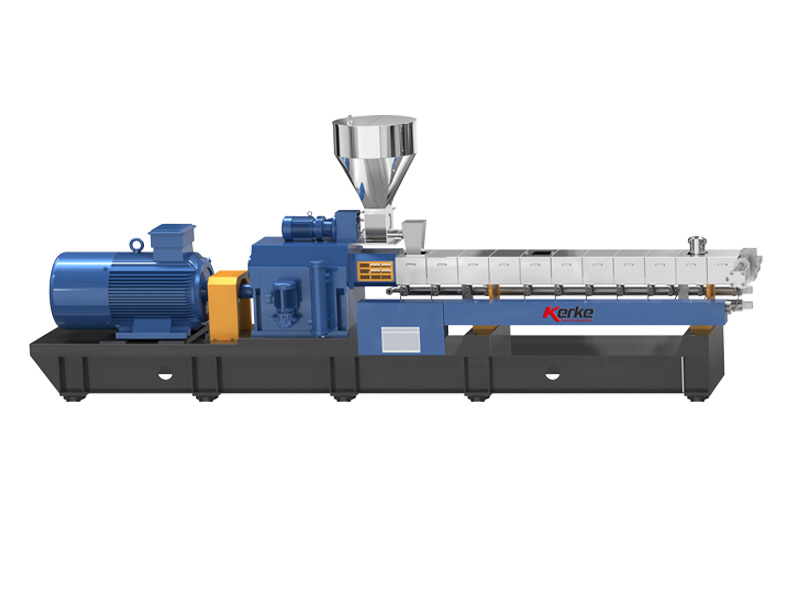
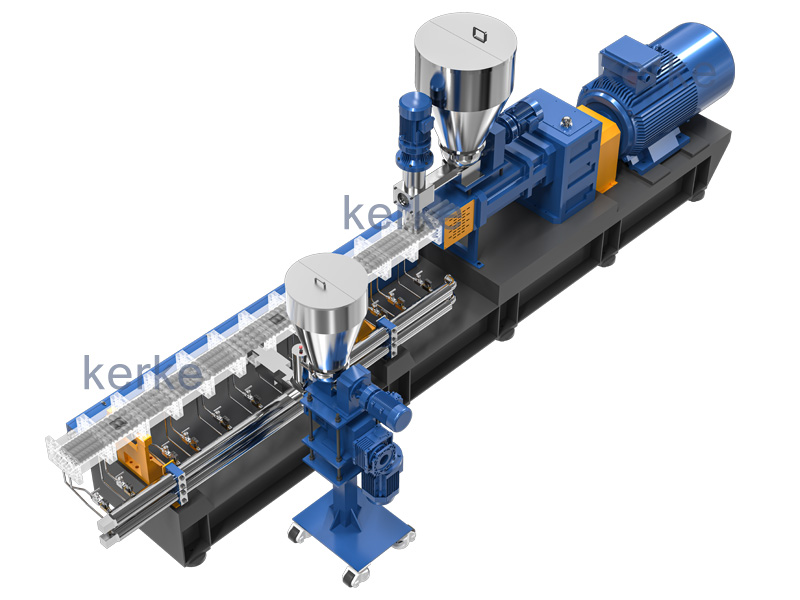
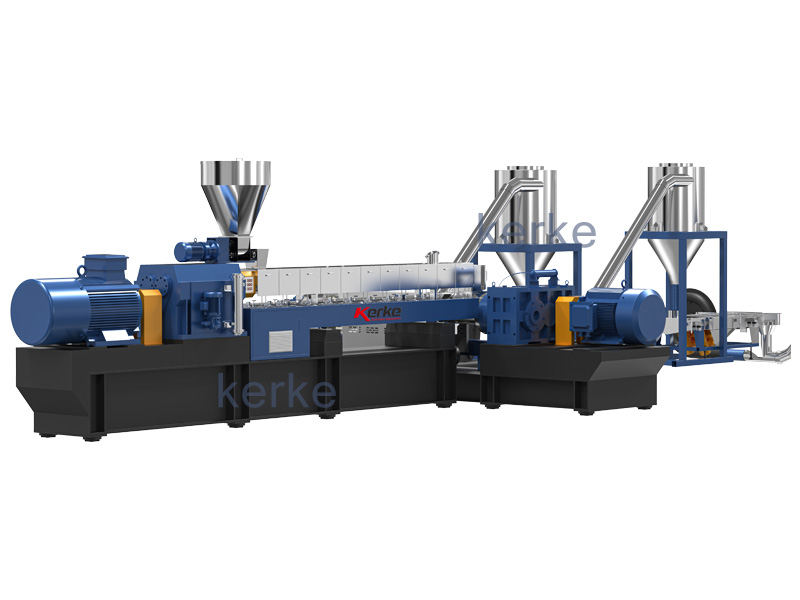
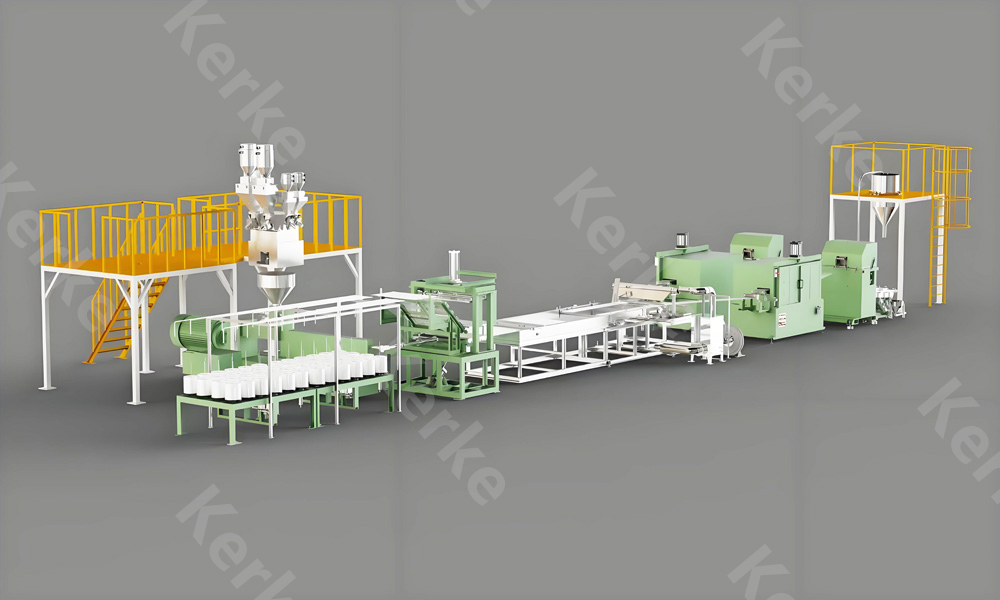
As a leading manufacturer of twin screw extruders, masterbatch extruders, and compounding extruders, Kerke has over 10 years of specialized experience in designing and manufacturing high-performance extrusion systems specifically optimized for long-term continuous production. Kerke masterbatch extruders integrate advanced engineering, premium materials, and intelligent control technologies to deliver exceptional stability and reliability even under the most demanding operating conditions. These extruders are capable of running continuously for months with minimal maintenance, ensuring consistent product quality, maximum production uptime, and the lowest total cost of ownership for masterbatch producers worldwide.
This comprehensive article explores the critical importance of long-term production stability in masterbatch manufacturing, the key factors that affect stability, the advanced technologies integrated into Kerke masterbatch extruders to ensure continuous reliable operation, detailed cost and return on investment analysis, best practices for maintaining long-term stability, and solutions to common stability-related issues. Whether you are a small masterbatch producer looking to upgrade your equipment or a large multinational company seeking to expand your production capacity, this article provides detailed, actionable insights into how the right masterbatch extruder can transform your production operations.
1. The Critical Importance of Long-Term Production Stability
Long-term production stability is not just a desirable feature in masterbatch manufacturing—it is an essential requirement for business success. The impact of unstable production extends far beyond simple downtime costs, affecting every aspect of the business from product quality to customer satisfaction to overall profitability.
1.1 Financial Impact of Production Instability
Production instability has a significant financial impact on masterbatch manufacturers, with both direct and indirect costs that can quickly erode profit margins. The direct costs include:
- Unplanned downtime costs: As mentioned earlier, a single 8-hour shutdown can cost $5,000 to $20,000 in lost production revenue. For a 24/7 operation, just 10 days of unplanned downtime per year can result in losses of $150,000 to $600,000.
- Scrap material costs: Unstable production conditions often result in off-specification product that must be scrapped or reprocessed. A 1% increase in scrap rate for a line producing 150 kg/hour can cost over $50,000 per year in wasted raw materials.
- Maintenance and repair costs: Frequent breakdowns and repairs increase maintenance costs and require additional spare parts inventory. Poorly designed extruders can have annual maintenance costs equal to 10-15% of the initial equipment investment.
- Labor costs: Unplanned downtime and production issues often require overtime labor to resolve, increasing labor costs by 10-20%.
The indirect costs of production instability are often even more significant and include:
- Customer penalties and lost business: Late deliveries or quality issues can result in customer penalties and lost future business. In today’s competitive market, customers have many options and will quickly switch suppliers if they cannot rely on consistent quality and delivery.
- Damage to brand reputation: Consistent quality problems can damage a company’s reputation and make it difficult to attract new customers or retain existing ones.
- Reduced equipment lifespan: Frequent breakdowns and improper operation can significantly reduce the lifespan of the extruder, requiring premature replacement and additional capital expenditure.
1.2 Impact on Product Quality and Consistency
Long-term production stability is directly linked to product quality and consistency. Masterbatch products must meet strict quality standards for color uniformity, dispersion, and performance properties. Even minor variations in processing conditions can result in significant changes in these properties, leading to rejected batches and customer complaints.
Color consistency is particularly critical for color masterbatch. A slight variation in melt temperature, screw speed, or feed rate can cause a noticeable color shift between batches. This is especially problematic for customers who require exact color matching for their products, such as automotive manufacturers and consumer goods companies. Inconsistent color can result in entire production runs being rejected, costing both the masterbatch producer and the customer significant amounts of money.
Dispersion quality is another important property that depends on stable production conditions. Poor dispersion of pigments or additives can result in defects such as specks, streaks, or reduced mechanical properties in the final plastic product. Consistent shear and mixing conditions are essential for achieving uniform dispersion throughout the entire production run.
1.3 Competitive Advantage of Stable Production
In today’s highly competitive masterbatch market, producers who can deliver consistent quality and reliable delivery have a significant competitive advantage. Customers are willing to pay a premium for masterbatch products that consistently meet their specifications and are delivered on time. Stable production also allows manufacturers to operate more efficiently, reducing costs and improving profit margins.
Additionally, stable production enables manufacturers to take on larger orders and expand their customer base. Customers prefer to work with suppliers who have the capacity and reliability to meet their growing needs. By investing in high-quality masterbatch extruders that ensure long-term production stability, manufacturers can position themselves as reliable partners and grow their business.
2. Key Factors Affecting Long-Term Production Stability
Long-term production stability in masterbatch manufacturing is influenced by a complex interaction of multiple factors, ranging from equipment design and construction to process control and maintenance practices. Understanding these factors is essential for selecting the right masterbatch extruder and implementing effective production practices.
2.1 Equipment Design and Construction Quality
The design and construction quality of the masterbatch extruder are the most important factors affecting long-term production stability. A poorly designed or constructed extruder will inevitably experience frequent breakdowns and performance issues, regardless of how well it is operated or maintained.
The gearbox is the heart of the twin screw extruder and is responsible for transmitting power from the motor to the screws. A high-quality gearbox should be designed to handle the high torque and axial loads encountered in masterbatch production. It should feature precision-machined gears made from high-strength alloy steel, heavy-duty bearings, and an effective lubrication and cooling system. Low-quality gearboxes often suffer from premature wear, gear failure, and oil leaks, leading to frequent breakdowns and costly repairs.
The screw and barrel are also critical components that directly affect production stability. They must be made from wear-resistant materials to withstand the abrasive action of pigments, fillers, and additives. The screw design should be optimized for the specific type of masterbatch being produced, providing the right balance of shear and mixing to achieve consistent dispersion and melt quality. Poorly designed screws can result in inconsistent melting, poor dispersion, and uneven product quality.
The heating and cooling system is another important component that affects production stability. It must be capable of maintaining precise and consistent temperatures throughout the barrel to ensure uniform melting and processing of the material. Inaccurate temperature control can lead to variations in melt viscosity, which affect both the processing conditions and the final product quality.
2.2 Process Control and Monitoring Capabilities
Advanced process control and monitoring capabilities are essential for maintaining long-term production stability. The control system must be able to precisely regulate all critical process parameters, including screw speed, feed rate, barrel temperatures, melt pressure, and melt temperature. It should also provide real-time monitoring of these parameters and alert operators to any deviations from the set points.
Manual control systems are prone to human error and cannot respond quickly enough to process variations, leading to unstable production conditions. Modern masterbatch extruders use computerized control systems with PID (Proportional-Integral-Derivative) control algorithms that can automatically adjust process parameters to maintain stable conditions. These systems can also store multiple production recipes, allowing for quick and easy product changeovers with minimal disruption to production.
2.3 Raw Material Variability
Raw material variability is a common challenge in masterbatch production that can affect long-term production stability. Variations in the properties of the polymer carrier, pigments, fillers, and additives can lead to changes in the processing characteristics of the material, requiring adjustments to the process parameters to maintain consistent product quality.
For example, variations in the melt flow rate (MFR) of the polymer carrier can affect the viscosity of the melt, which in turn affects the mixing and dispersion of the additives. Variations in the particle size or surface treatment of pigments and fillers can also affect their dispersion characteristics and the final color of the masterbatch.
While raw material variability cannot be completely eliminated, it can be managed through proper raw material testing and quality control, as well as through the use of advanced process control systems that can automatically adjust to changes in material properties.
2.4 Maintenance and Operating Practices
Proper maintenance and operating practices are essential for ensuring long-term production stability. Even the best-designed extruder will experience performance issues and breakdowns if it is not properly maintained or operated incorrectly.
Preventive maintenance is particularly important for identifying and addressing potential issues before they result in unplanned downtime. A comprehensive preventive maintenance program should include regular inspection, cleaning, lubrication, and replacement of worn components. It should also include regular calibration of sensors and control systems to ensure accurate process control.
Proper operator training is also critical for maintaining production stability. Operators should be trained in the correct operation and maintenance of the extruder, as well as in how to identify and troubleshoot common production issues. Well-trained operators can detect early signs of potential problems and take corrective action before they result in downtime or quality issues.
3. Kerke Masterbatch Extruder: Advanced Technologies for Long-Term Stability
Kerke has developed a range of advanced technologies specifically designed to ensure long-term production stability in masterbatch manufacturing. These technologies address all the key factors affecting stability, from equipment design and construction to process control and maintenance. The following are the core technologies that set Kerke masterbatch extruders apart from the competition.
3.1 High-Torque, High-Reliability Gearbox Design
Kerke masterbatch extruders feature state-of-the-art high-torque gearboxes specifically engineered for the demanding requirements of masterbatch production. These gearboxes are designed to deliver a specific torque of 11-13 Nm/cm³, which is comparable to the world’s leading extruder manufacturers. This high torque capability allows the extruder to process high-fill formulations and high-viscosity materials with ease, ensuring stable operation even under the most demanding conditions.
The gearboxes are constructed with precision-machined gears made from high-quality 17CrNiMo6 alloy steel, which is case-hardened and ground to achieve exceptional strength and durability. The gears are designed with optimized tooth profiles to minimize noise and vibration, ensuring smooth and quiet operation. The gearboxes also feature heavy-duty spherical roller thrust bearings that can handle the high axial loads generated during extrusion, providing long service life and reliable performance.
An advanced forced lubrication and cooling system is integrated into the gearbox to ensure proper lubrication and temperature control of all moving parts. The system continuously circulates clean, cooled oil throughout the gearbox, reducing friction and wear and preventing overheating. Oil filters remove contaminants from the oil, extending the life of the gears and bearings. The system also includes oil level and temperature sensors that alert operators to any potential issues, allowing for preventive maintenance before problems occur.
Kerke gearboxes are designed for a service life of 10 years or more with proper maintenance, significantly reducing the total cost of ownership compared to lower-quality gearboxes that may need replacement after only 3-5 years.
3.2 Precision Modular Screw and Barrel System
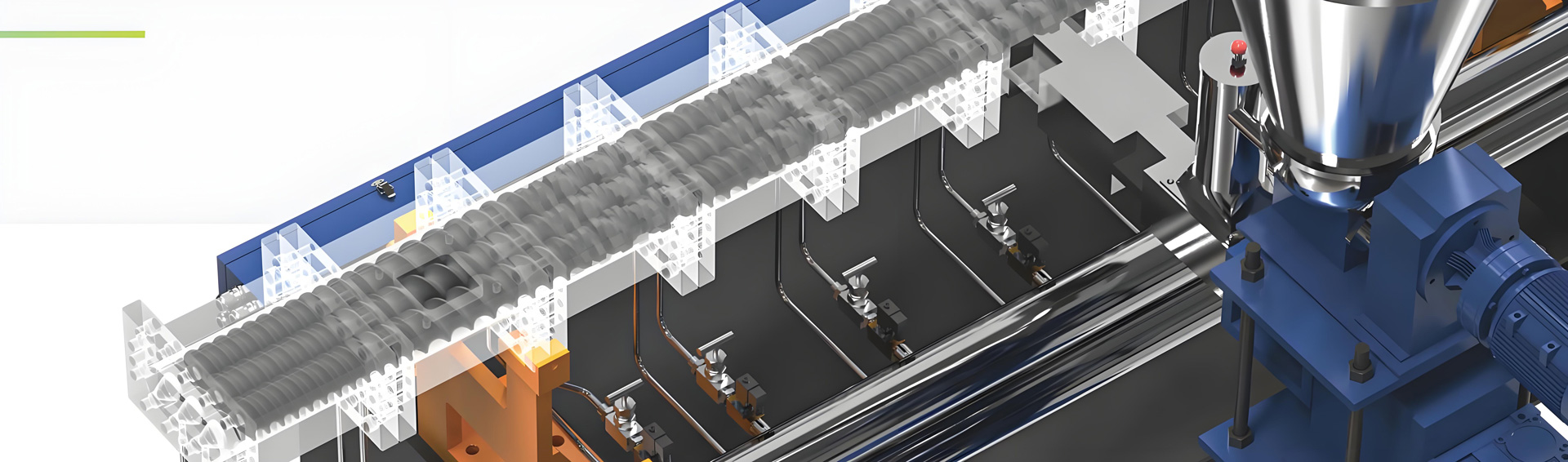
Kerke masterbatch extruders feature a precision modular screw and barrel system that provides exceptional flexibility and long-term performance. The modular design allows for easy customization of the screw configuration to meet the specific requirements of different masterbatch formulations, from color masterbatch to high-fill filler masterbatch to functional additive masterbatch.
The screw elements are made from high-quality 38CrMoAlA nitrided steel as standard, with optional bimetallic or tungsten carbide coatings available for highly abrasive applications. The elements are precision-machined to tight tolerances to ensure perfect intermeshing and consistent performance. The barrel segments are also made from nitrided steel with optional bimetallic liners for enhanced wear resistance.
Kerke’s engineering team uses advanced computer simulation software to optimize the screw design for each customer’s specific application. The screw configuration is carefully designed to provide the optimal balance of shear, mixing, and residence time to achieve consistent dispersion and melt quality. This ensures that the masterbatch product meets the required specifications batch after batch, even during long continuous production runs.
The modular design also makes maintenance and replacement of worn components quick and easy. Instead of replacing the entire screw or barrel, only the worn segments need to be replaced, reducing maintenance costs and downtime.
3.3 Intelligent Process Control System
Kerke masterbatch extruders are equipped with an advanced intelligent process control system that provides precise and stable control of all critical process parameters. The system features a user-friendly touch screen HMI (Human-Machine Interface) that allows operators to easily monitor and adjust all process parameters in real time.
The control system uses advanced PID control algorithms with auto-tuning capabilities to maintain precise control of barrel temperatures, screw speed, feed rate, and other parameters. The temperature control system has an accuracy of ±1°C, ensuring uniform melting and processing of the material. The system also features closed-loop control of melt pressure and melt temperature, automatically adjusting process parameters to maintain stable conditions.
The control system can store up to 1000 production recipes, allowing for quick and easy product changeovers. Each recipe includes all the necessary process parameters, ensuring consistent production quality every time. The system also features a data logging function that records all process parameters during production, providing a complete production history for quality control and traceability purposes.
For customers requiring higher levels of automation, Kerke offers optional remote monitoring and control capabilities. This allows operators to monitor and control the extruder from a central control room or even from a remote location, improving production efficiency and reducing the need for on-site personnel.
3.4 High-Precision Gravimetric Feeding System
Accurate and consistent feeding of raw materials is essential for maintaining long-term production stability and product quality. Kerke masterbatch extruders are equipped with high-precision gravimetric feeding systems that deliver an accuracy of ±0.1% for all raw materials.
Unlike volumetric feeders, which are affected by changes in material bulk density, gravimetric feeders continuously weigh the material being fed into the extruder and automatically adjust the feed rate to maintain the desired formulation ratio. This ensures that the concentration of pigments, fillers, and additives remains consistent throughout the production run, resulting in uniform color and performance properties in the final masterbatch product.
Kerke offers a range of gravimetric feeders to meet different production requirements, including loss-in-weight feeders for main raw materials, micro-feeders for additives with low addition rates, and side feeders for adding fillers and reinforcements. All feeders are integrated with the extruder’s main control system, allowing for centralized monitoring and control of the entire feeding process.
The feeding system also features automatic material level detection and alarm functions, alerting operators when material levels are low to prevent production interruptions. Optional automatic material handling systems are available for fully automated production, further reducing the risk of human error and improving production stability.
3.5 Advanced Heating and Cooling System
Kerke masterbatch extruders feature an advanced heating and cooling system that provides precise and consistent temperature control throughout the barrel. The barrel is divided into multiple independent heating and cooling zones, each equipped with its own temperature sensor and controller.
The heating elements are made from high-quality ceramic or cast aluminum, providing fast and uniform heating. The cooling system uses forced air or water cooling to quickly remove excess heat from the barrel, allowing for precise temperature regulation. The system is designed to maintain the desired temperature profile even during long continuous production runs, ensuring consistent melt quality and product properties.
For temperature-sensitive materials, Kerke offers optional liquid cooling systems that provide even more precise temperature control and faster cooling response. These systems use circulating water or oil to maintain the exact temperature required for optimal processing, preventing thermal degradation of the material and ensuring consistent product quality.
3.6 Comprehensive Safety Protection System
Safety is a top priority in industrial production, and Kerke masterbatch extruders are equipped with a comprehensive safety protection system to ensure the safety of operators and prevent equipment damage. The system includes multiple layers of protection, including:
- Safety light curtains and interlocks that prevent access to dangerous areas during operation
- Emergency stop buttons located at multiple points around the machine
- Over-temperature and over-pressure protection that automatically shuts down the extruder if limits are exceeded
- Overload protection for the motor and gearbox to prevent damage from excessive loads
- Leak detection sensors that alert operators to oil or water leaks
All safety systems are designed and tested to meet international safety standards, ensuring a safe working environment for operators and minimizing the risk of accidents that could result in downtime or injury.
4. Cost and Price Analysis of Kerke Stable Production Masterbatch Extrusion Lines
Investing in a high-quality masterbatch extruder that ensures long-term production stability requires a higher initial investment, but it provides significant long-term cost savings through reduced downtime, lower maintenance costs, improved product quality, and higher production efficiency. The following is a detailed cost and price analysis of Kerke masterbatch extrusion lines, including initial investment, operational costs, and return on investment estimation.
4.1 Initial Equipment Investment by Capacity and Configuration
The initial cost of a Kerke masterbatch extruder depends on several factors, including the extruder model, capacity, configuration, and optional features. The following are the approximate price ranges for different Kerke masterbatch extruder models with standard and high-stability configurations.
Lab-scale masterbatch extruders (5-50 kg/h capacity):
- Standard configuration: $25,000 to $70,000
- High-stability configuration with advanced control and feeding systems: $35,000 to $90,000
Medium-scale production extruders (50-300 kg/h capacity):
- Standard configuration: $80,000 to $300,000
- High-stability configuration with high-torque gearbox, gravimetric feeding, and advanced control: $100,000 to $380,000
Large-scale industrial extruders (300-2000 kg/h capacity):
- Standard configuration: $320,000 to $900,000
- High-stability configuration with high-torque gearbox, multiple feeders, and fully automated control: $380,000 to $1,100,000
While the high-stability configuration has a higher initial investment, it provides significant long-term benefits that more than offset the additional cost. These benefits include reduced downtime, lower maintenance costs, improved product quality, and higher production efficiency.
4.2 Total Cost of Ownership Comparison
To understand the true value of Kerke’s stable production technology, it is important to compare the total cost of ownership (TCO) of a Kerke high-stability extruder with that of a conventional extruder over a 5-year period. The following comparison is for a medium-sized 65mm twin screw extruder producing 30% calcium carbonate filler masterbatch at a rate of 150 kg/h, operating 24 hours per day, 300 days per year.
Conventional masterbatch extruder:
- Initial equipment investment: $150,000
- Annual maintenance and repair costs: $30,000
- Annual downtime cost: $60,000 (12 days per year)
- Annual scrap cost: $36,000 (3% scrap rate)
- Annual energy cost: $72,000 (0.6 kWh/kg)
- Total 5-year cost: $150,000 + ($30,000 + $60,000 + $36,000 + $72,000) × 5 = $990,000
Kerke high-stability masterbatch extruder:
- Initial equipment investment: $200,000
- Annual maintenance and repair costs: $10,000
- Annual downtime cost: $10,000 (2 days per year)
- Annual scrap cost: $12,000 (1% scrap rate)
- Annual energy cost: $54,000 (0.45 kWh/kg)
- Total 5-year cost: $200,000 + ($10,000 + $10,000 + $12,000 + $54,000) × 5 = $680,000
This comparison clearly demonstrates that while the Kerke extruder has a higher initial investment, it provides significant long-term cost savings. The Kerke extruder saves $310,000 over 5 years compared to the conventional extruder, representing a 31% reduction in total cost of ownership.
4.3 Return on Investment (ROI) Estimation
The return on investment for Kerke’s high-stability masterbatch extruder technology is typically very short, often less than 1 year for high-volume production operations. Using the same example as above:
- Additional initial investment: $50,000
- Annual cost savings: $30,000 + $60,000 + $36,000 + $72,000 – ($10,000 + $10,000 + $12,000 + $54,000) = $112,000
- Payback period: $50,000 / $112,000 = 0.45 years (approximately 5.5 months)
These are conservative estimates, and actual ROI can be even higher for operations producing high-value color masterbatch or operating at higher production volumes. In addition to the direct cost savings, the Kerke extruder also provides indirect benefits such as improved product quality, increased customer satisfaction, and higher sales revenue, further enhancing the return on investment.
5. Best Practices for Maintaining Long-Term Production Stability
While Kerke masterbatch extruders are designed for exceptional long-term stability, proper operation and maintenance are essential for maximizing performance and reliability. The following best practices, when implemented in conjunction with a Kerke masterbatch extruder, will help you achieve the highest levels of production stability and the lowest total cost of ownership.
5.1 Implement a Comprehensive Preventive Maintenance Program
A comprehensive preventive maintenance program is the foundation of long-term production stability. Kerke recommends the following maintenance schedule based on decades of industry experience:
Daily maintenance:
- Clean the hopper, feeder, and feed throat to prevent material bridging and contamination
- Check all process parameters (temperature, pressure, motor load, screw speed) for stable operation
- Inspect for material or oil leaks around the barrel, die, and gearbox
- Monitor strand quality and pellet appearance for early warning signs of issues
- Check the cutter blades and replace if dull
Weekly maintenance:
- Clean the die plate, screen changer, and melt passages
- Check feeder calibration and feeding stability
- Verify cooling water flow and temperature control systems
- Check the gearbox oil level and condition
- Inspect all safety systems to ensure they are functioning properly
Monthly maintenance:
- Inspect screw elements and barrel for wear
- Check screw alignment and shaft stability
- Calibrate temperature sensors and pressure transducers
- Tighten mechanical fasteners and flanges
- Clean the electrical control cabinet and check for loose connections
Quarterly and annual maintenance:
- Perform a full gearbox inspection, including lubricant replacement and bearing check
- Conduct a comprehensive screw and barrel wear measurement
- Inspect the electrical system and control panel
- Have Kerke service engineers perform a professional alignment and performance testing
- Replace any worn or damaged components as needed
It is important to keep detailed maintenance records, including the date of service, the work performed, and any parts replaced. This helps track component wear and predict replacement needs, allowing for planned maintenance during scheduled downtime rather than unplanned shutdowns.
5.2 Establish Strict Raw Material Quality Control
Raw material variability is a common cause of production instability, so it is essential to establish strict raw material quality control procedures. All incoming raw materials should be tested to ensure they meet the required specifications before being used in production. Key tests include:
- Melt flow rate (MFR) testing for polymer carriers
- Particle size analysis for pigments and fillers
- Moisture content testing for all materials
- Color measurement for pigments
- Purity testing for additives
Raw materials should be stored in a clean, dry environment to prevent contamination and moisture absorption. Proper labeling and inventory management are also important to ensure that the correct materials are used in each production run.
5.3 Provide Comprehensive Operator Training
Well-trained operators are essential for maintaining long-term production stability. Operators should receive comprehensive training on the operation and maintenance of the Kerke masterbatch extruder, including:
- Proper startup and shutdown procedures
- Process parameter adjustment and optimization
- Basic troubleshooting of common production issues
- Preventive maintenance procedures
- Safety procedures and emergency response
Kerke provides comprehensive training for customers’ operators and maintenance personnel as part of the equipment delivery. The training is conducted by experienced Kerke engineers and includes both classroom instruction and hands-on operation of the extruder. Refresher training should be provided periodically to ensure that operators remain up-to-date on the latest procedures and technologies.
5.4 Implement Real-Time Process Monitoring and Data Analysis
Real-time process monitoring and data analysis are powerful tools for maintaining long-term production stability. Kerke’s intelligent control system provides real-time monitoring of all critical process parameters and records data for later analysis. By analyzing this data, you can identify trends and patterns that may indicate potential issues before they result in downtime or quality problems.
For example, a gradual increase in motor load or melt pressure may indicate wear of the screw or barrel, allowing you to schedule replacement during planned downtime. Similarly, variations in temperature or feed rate may indicate issues with the heating or feeding system that need to be addressed.
Implementing statistical process control (SPC) techniques can also help identify and eliminate sources of process variation, further improving production stability and product quality.
5.5 Use Genuine Kerke Spare Parts
When replacing worn or damaged components, it is important to use only genuine Kerke spare parts. Generic or counterfeit parts may not meet the same quality standards as genuine Kerke parts and can lead to increased wear, reduced performance, and even equipment failure.
Genuine Kerke spare parts are manufactured to the same exacting standards as the original components, ensuring perfect fit and optimal performance. Kerke maintains a large inventory of spare parts at its facilities worldwide, ensuring fast delivery and minimizing downtime. Kerke also offers spare parts kits for common maintenance tasks, making it easy to keep the necessary parts on hand.
6. Common Long-Term Production Stability Issues and Solutions
Even with the best equipment and practices, masterbatch producers may occasionally encounter stability-related issues during long-term production. The following are the most common issues, their causes, and targeted solutions based on Kerke’s extensive experience in masterbatch production.
6.1 Gradual Reduction in Production Output
A gradual reduction in production output over time is a common issue in masterbatch production, particularly when processing abrasive materials. This is typically caused by wear of the screw and barrel components, which increases the clearance between the screw flight and barrel wall and reduces the conveying efficiency of the extruder.
Causes:
- Normal wear of screw and barrel components due to abrasive fillers and pigments
- Improper screw design for the specific material being processed
- Excessive screw speed or feed rate leading to accelerated wear
- Contamination of raw materials with foreign particles
Solutions:
- Regularly measure the clearance between the screw flight and barrel wall and replace worn components as needed
- Upgrade to bimetallic or tungsten carbide coated screw elements and barrel liners for improved wear resistance
- Optimize the screw design for the specific material being processed to reduce wear
- Adjust process parameters to reduce excessive shear and wear
- Improve raw material pretreatment to remove contaminants
6.2 Batch-to-Batch Color Variation
Batch-to-batch color variation is one of the most common quality issues in color masterbatch production. It can result in customer complaints and rejected batches, leading to significant financial losses.
Causes:
- Inconsistent feeding of pigments or polymer carrier
- Variations in raw material properties
- Unstable process parameters (temperature, screw speed, pressure)
- Poor dispersion of pigments
- Residual material from previous production runs
Solutions:
- Use high-precision gravimetric feeders to ensure consistent feeding of all raw materials
- Implement strict raw material quality control procedures
- Optimize process parameters and use closed-loop control to maintain stable conditions
- Optimize the screw configuration to improve pigment dispersion
- Thoroughly clean the extruder between production runs using appropriate purging compounds
6.3 Melt Pressure Fluctuations
Melt pressure fluctuations are a sign of unstable processing conditions and can lead to variations in product quality and pellet size. Severe pressure fluctuations can also cause damage to the extruder and downstream equipment.
Causes:
- Inconsistent feeding of raw materials
- Variations in raw material properties
- Worn screw or barrel components
- Blockages in the die or screen changer
- Unstable temperature control
Solutions:
- Check and calibrate the feeding system to ensure consistent feeding
- Implement raw material quality control to reduce variability
- Inspect and replace worn screw or barrel components
- Clean the die and screen changer to remove any blockages
- Check and calibrate the temperature control system
6.4 Gearbox Noise and Vibration
Excessive gearbox noise and vibration are early warning signs of potential gearbox problems. If not addressed promptly, these issues can lead to catastrophic gearbox failure and significant downtime.
Causes:
- Low or contaminated gearbox oil
- Worn gears or bearings
- Improper gearbox alignment
- Excessive torque or overload
- Loose mounting bolts
Solutions:
- Check the gearbox oil level and condition, and replace if necessary
- Inspect the gears and bearings for wear and replace as needed
- Check and adjust the gearbox alignment
- Reduce the load on the extruder or upgrade to a higher-torque gearbox
- Tighten all mounting bolts and ensure the extruder is properly leveled
6.5 Thermal Degradation of Material
Thermal degradation of the polymer or additives can result in discoloration, reduced mechanical properties, and the formation of volatile byproducts. This is particularly problematic for heat-sensitive materials such as some organic pigments and biodegradable polymers.
Causes:
- Excessive processing temperature
- Too long residence time in the extruder
- Excessive shear leading to localized hot spots
- Insufficient stabilization in the formulation
- Poor temperature control
Solutions:
- Reduce the barrel temperature profile to the minimum required for good melting and mixing
- Optimize the screw configuration to reduce residence time
- Adjust the screw speed and feed rate to reduce excessive shear
- Increase the amount of thermal stabilizer in the formulation
- Calibrate the temperature control system to ensure accurate temperature measurement
7. Conclusion
Long-term production stability is essential for success in the competitive masterbatch manufacturing industry. Unstable production leads to high costs, poor product quality, and lost customers, while stable production enables manufacturers to operate efficiently, deliver consistent quality, and build strong customer relationships.
Kerke masterbatch extruders are specifically designed to ensure exceptional long-term production stability even under the most demanding operating conditions. They integrate advanced technologies such as high-torque gearboxes, precision modular screw systems, intelligent process control, high-precision gravimetric feeding, and advanced heating and cooling systems to deliver reliable performance and consistent product quality batch after batch.
While Kerke extruders have a higher initial investment than conventional extruders, they provide significant long-term cost savings through reduced downtime, lower maintenance costs, improved energy efficiency, and lower scrap rates. The return on investment is typically less than 1 year for high-volume production operations, making Kerke extruders a smart investment for masterbatch producers of all sizes.
By implementing best practices such as comprehensive preventive maintenance, strict raw material quality control, comprehensive operator training, real-time process monitoring, and the use of genuine Kerke spare parts, manufacturers can maximize the stability and reliability of their Kerke masterbatch extruders and achieve the lowest total cost of ownership.
In conclusion, Kerke twin screw extruders, masterbatch extruders, and compounding extruders are the ideal choice for masterbatch producers looking to improve their long-term production stability and gain a competitive advantage in the global market. With their advanced technologies, reliable performance, and comprehensive support services, Kerke extruders provide the foundation for successful and profitable masterbatch production operations.