The global masterbatch industry is maintaining steady growth driven by rising demand from downstream sectors including food packaging, automotive manufacturing, consumer electronics, agricultural films, and medical supplies. As product quality standards continue to improve and market competition intensifies, large-scale masterbatch manufacturers are increasingly focusing on 24-hour continuous production as a core strategy to reduce costs, improve efficiency, and stabilize product quality. The co-rotating twin screw extruder, as the core equipment for masterbatch compounding production, directly determines the stability, efficiency, and product qualification rate of the entire production line. A high-performance masterbatch extruder can support long-term uninterrupted operation, while low-quality equipment often faces frequent failures, high scrap rates, and short service life, leading to huge economic losses for manufacturers.
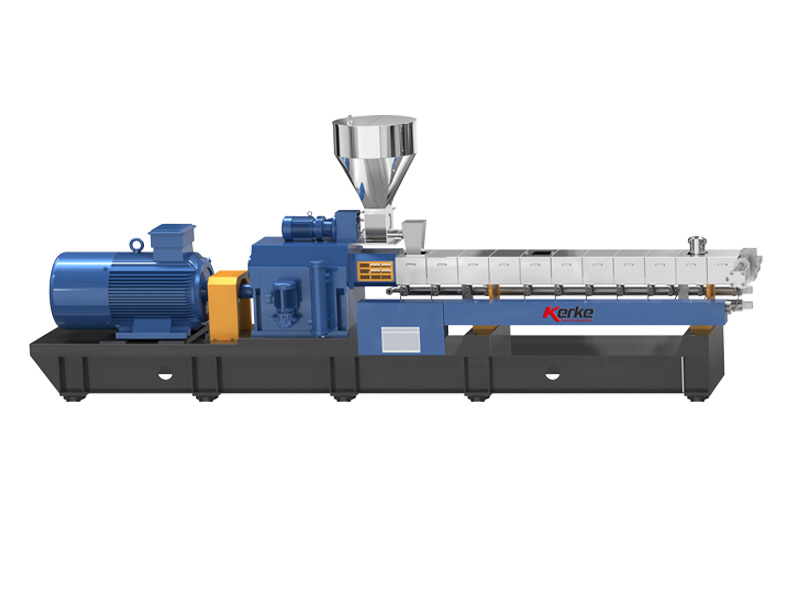
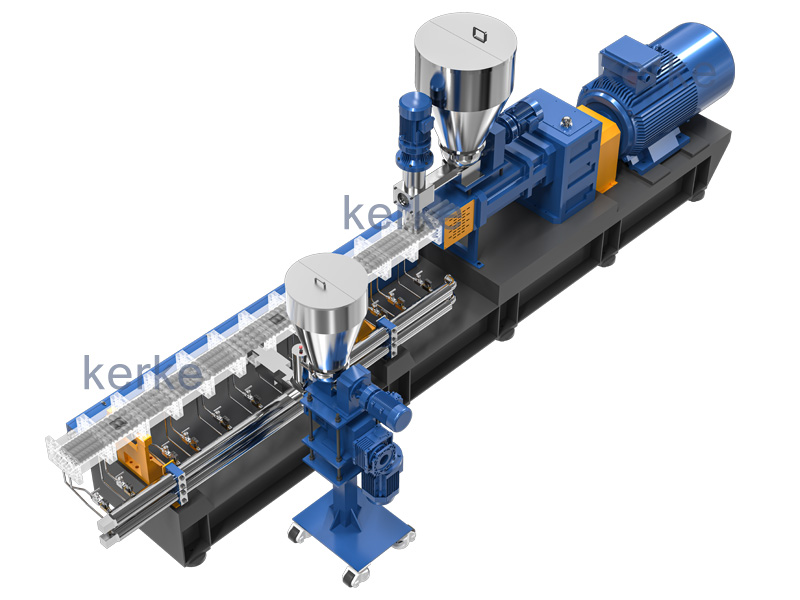
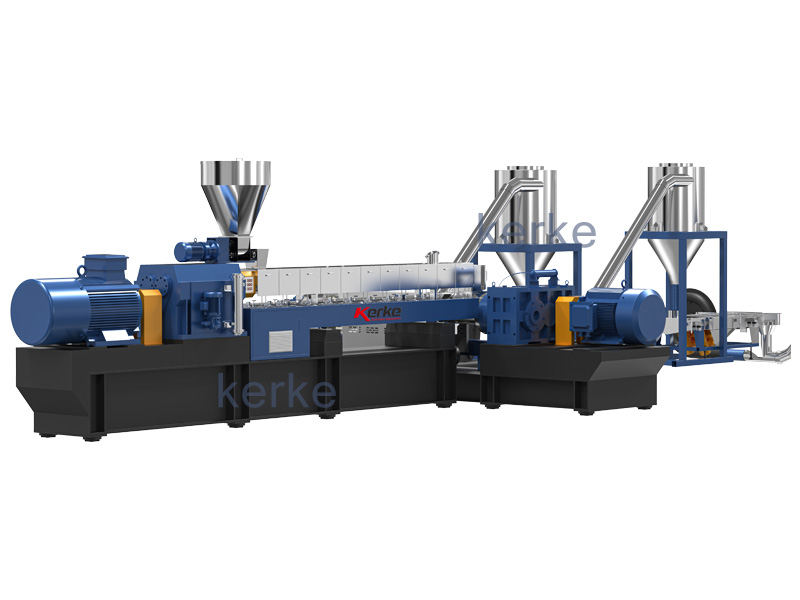
As a professional manufacturer focusing on R&D and manufacturing of compounding extruders, Kerke has been deeply engaged in the twin screw extruder field for many years. Its SHJ series masterbatch extruders are optimized for the process characteristics of various color masterbatches, filler masterbatches, and functional masterbatches, and have been verified by long-term practical application in hundreds of production lines around the world. From core wear-resistant design, stable transmission system, intelligent control system to full lifecycle after-sales service, Kerke provides comprehensive support for 24-hour continuous production of masterbatch enterprises, helping customers maximize production efficiency and return on investment. This article will systematically analyze the value of continuous production for the masterbatch industry, the core challenges faced by extruders in long-term operation, the technical design of Kerke twin screw extruders to support continuous operation, supporting auxiliary systems, cost-benefit analysis, and practical operation suggestions, providing a complete reference for masterbatch manufacturers to select and operate production equipment.
1. The Core Value of 24-Hour Continuous Production for Masterbatch Manufacturing
For medium and large masterbatch manufacturers, realizing 24-hour uninterrupted continuous production is not only a way to increase capacity, but also a comprehensive improvement of production efficiency, quality level, and cost control ability, which is of great strategic significance for enhancing the core competitiveness of enterprises.
1.1 Maximize Production Capacity and Reduce Unit Fixed Cost
The most direct value of continuous production is to maximize the utilization rate of equipment and plant resources. For masterbatch production lines with high fixed investment, the longer the effective operation time per day, the more products are produced, and the lower the fixed costs such as equipment depreciation and plant rent shared by each ton of products. According to industry statistics, a production line that runs 8 hours a day has a unit product fixed cost 2.5 times higher than a 24-hour continuous operation line under the same equipment investment. For masterbatch products with relatively low gross profit margin, reducing unit cost is crucial to maintaining price competitiveness in the market. In addition, continuous production can avoid the waste of preheating and preparation time before each startup, and the actual effective production time is significantly increased, which can better meet the delivery demand of large orders and help enterprises undertake more large-scale customer cooperation.
1.2 Improve Batch Consistency to Meet High-End Quality Requirements
Frequent start-stop of the extruder will lead to repeated changes in process parameters such as temperature, pressure, and shear strength, resulting in large fluctuations in product quality between different batches, and even a large number of unqualified products in the startup and shutdown stages. In contrast, 24-hour continuous production can maintain stable operating parameters for a long time after the process is stable, and the melt plasticization state, mixing effect, and pelletizing quality are kept at a consistent level, which greatly improves the uniformity of product performance between batches. For high-end application scenarios such as food contact packaging, automotive interior parts, and optical-grade films, customers have extremely strict requirements on color difference, dispersion stability, and impurity content of masterbatch. Stable continuous production can control the color difference ΔE of products within 0.3, and the dispersion grade reaches the international advanced level, which helps enterprises enter the supply chain of high-end brands and obtain higher product added value.
1.3 Reduce Raw Material Waste from Frequent Start-Stop Cycles
Each startup and shutdown of the twin screw extruder will generate a large amount of waste materials. During the startup phase, the equipment needs to go through preheating, parameter debugging, and stable operation process, and the materials produced in this process are usually unqualified due to unstable quality and can only be treated as waste or reworked. During the shutdown phase, the residual materials in the screw, barrel, and die head need to be cleaned out with cleaning materials or pure resin, which also produces a lot of waste. For masterbatch enterprises with frequent product changes and multiple start-stops per day, the waste material generated can account for 5% to 8% of the total output, which greatly erodes the profit space. 24-hour continuous production can significantly reduce the number of start-stops, control the comprehensive scrap rate within 1% to 1.5%, and save a lot of raw material costs every year. Especially for high-value functional masterbatches and engineering plastic modified materials, the cost saved by reducing waste is even more considerable.
1.4 Optimize Labor Efficiency and Production Scheduling Flexibility
Continuous production with three-shift system can maximize the labor efficiency of operators. Under the same production capacity target, the number of equipment and operators required for 24-hour continuous production is much less than that of multi-lines with single-shift operation, which reduces management costs and labor costs. At the same time, continuous production makes production scheduling more flexible. For urgent orders, production capacity can be released quickly without additional equipment investment, which improves the market response speed of enterprises. In addition, standardized shift handover system can also standardize production management, reduce the probability of operational errors caused by personnel changes, and maintain the stability of production quality.
2. Key Challenges for Masterbatch Extruders in Long-Term Continuous Operation
Although 24-hour continuous production has significant value, not all twin screw extruders can support long-term uninterrupted operation. Masterbatch production usually involves high filler content, high shear strength, and long-term high-temperature operation, which puts forward high requirements for the stability, wear resistance, and reliability of the extruder. In actual production, many low-quality extruders will face various problems after short-term continuous operation, which eventually lead to forced shutdown and bring huge losses to enterprises.
2.1 Accelerated Wear of Core Plasticizing Components
The screw and barrel are the core plasticizing components of the twin screw extruder, and they bear long-term friction and corrosion during operation. Especially in the production of filler masterbatch with high calcium carbonate content, glass fiber reinforced masterbatch, and other high-wear formulations, the screw flight and barrel inner wall are subject to strong abrasive wear for a long time. Low-quality extruders usually use ordinary nitriding treatment with low surface hardness and poor wear resistance. After 2000 to 3000 hours of continuous operation, obvious wear will occur, resulting in increased gap between screw and barrel, decreased conveying efficiency, reduced mixing effect, and unstable product quality. In severe cases, the screw will even be stuck and damaged, requiring expensive replacement costs and long shutdown time. For enterprises that pursue 24-hour continuous production, the service life of core plasticizing components directly determines the long-term stability of production.
2.2 Material Degradation and Carbon Buildup in Flow Channels
During long-term continuous high-temperature operation, heat-sensitive materials or residual materials in dead corners of the flow channel are prone to thermal degradation and carbonization, forming carbon deposits attached to the inner wall of the barrel, screw surface, and die head flow channel. On the one hand, these carbon deposits will fall off into the product and form black spots and impurities, which seriously affect the appearance quality of the masterbatch and lead to a large number of unqualified products. On the other hand, more and more carbon deposits will narrow the flow channel, increase extrusion pressure, reduce production efficiency, and even cause blockage in severe cases, forcing production to stop for thorough cleaning. Poor flow channel design with dead corners will greatly accelerate the formation of carbon deposits. Some extruders need to stop to clean the die head and screw every 3 to 5 days of continuous operation, which seriously affects production efficiency. For color masterbatch production, carbon buildup will also cause color difference and pollution between different colors, increasing the difficulty of color change cleaning.
2.3 Overload and Failure Risk of Transmission System
The gearbox is the power core of the twin screw extruder, which bears huge torque and load during long-term continuous operation. Low-quality gearboxes have problems such as low gear machining accuracy, poor heat dissipation design, and unreasonable lubrication system. After long-term high-load continuous operation, they are prone to gear wear, bearing damage, oil leakage, and even gear tooth breakage and other serious failures. Once the gearbox fails, it usually takes several days or even weeks to repair or replace, resulting in huge production losses. In addition, the drive motor and frequency conversion system will also face the risk of performance degradation and component aging under long-term continuous operation. If the heat dissipation design is unreasonable, it is easy to cause overheating protection shutdown or even component burnout, which interrupts the production process.
2.4 Drift of Temperature Control and Exhaust System Performance
Stable temperature control is the premise to ensure uniform plasticization of materials and stable product quality. After long-term continuous operation, the heating ring of ordinary extruders will gradually age, the heating efficiency will decrease, and the temperature sensor will also have measurement drift, resulting in larger and larger temperature control errors, which will affect the melt plasticization state and product performance. In severe cases, local overheating will cause material degradation. At the same time, the exhaust system is also prone to problems during long-term operation. Volatile substances in the material will gradually accumulate in the exhaust port and vacuum pipeline, causing blockage of the exhaust system, reducing vacuum degree, and leading to defects such as bubbles and silver streaks in the product. For masterbatch products with high appearance requirements, these defects will directly lead to product scrapping.
2.5 Stability Risks of Electrical and Control Systems Under Long-Term Operation
The electrical control system is equivalent to the brain of the extruder, and its stability directly determines whether the entire production line can operate normally. Low-quality extruders use low-end electrical components, which are prone to aging, failure, and parameter drift after long-term continuous operation, leading to control system disorder and production interruption. In addition, many simple control systems do not have fault warning and data recording functions. When abnormal conditions occur, they cannot be found and handled in time, and often can only be shut down for maintenance after the fault is fully expanded, which increases the severity of the fault and the time required for repair. For 24-hour continuous production lines, the reliability of the control system is directly related to the safety and stability of the entire production process.
3. Core Design of Kerke Twin Screw Extruder for 24-Hour Continuous Production
Focusing on the pain points of masterbatch enterprises in long-term continuous production, Kerke has carried out targeted optimization design for SHJ series masterbatch extruders from multiple dimensions such as core components, structural design, control system, and safety protection, ensuring that the equipment can maintain stable, efficient, and safe operation under 24-hour long-term continuous working conditions.
3.1 High Wear-Resistant Plasticizing System with Extended Service Life
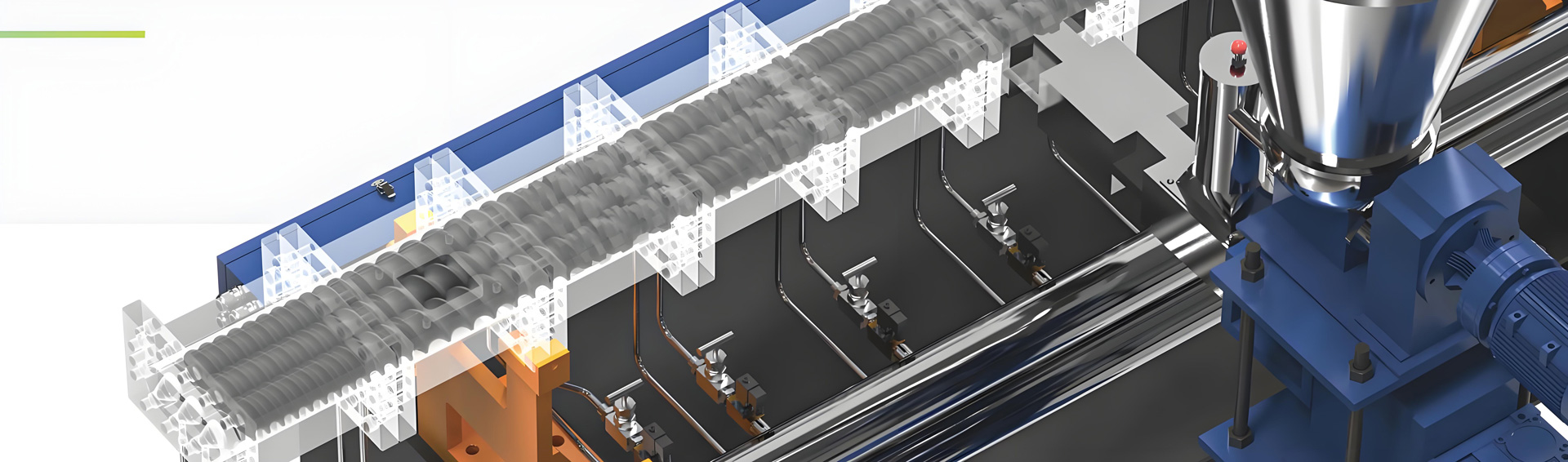
Kerke attaches great importance to the quality of the core plasticizing system. All screw and barrel components are made of high-quality alloy structural steel as the base material, and undergo strict overall nitriding treatment. The nitriding depth reaches 0.5mm to 0.8mm, and the surface hardness reaches HRC58 to HRC62, which has good wear resistance and corrosion resistance. For production scenarios with high filler content such as calcium carbonate masterbatch and glass fiber reinforced masterbatch, Kerke also provides a bimetallic screw and barrel upgrade scheme. The inner wall of the barrel and the surface of the screw flight are spray-welded with high wear-resistant alloy, and the hardness can reach HRC62 to HRC66, which increases the service life by 3 to 5 times compared with ordinary nitriding treatment, and can maintain stable performance after long-term continuous operation.
In terms of screw configuration design, Kerke’s technical team will customize the combination of screw elements according to the customer’s product formula characteristics. On the premise of ensuring sufficient dispersion and mixing effect, they reasonably control the shear strength, avoid excessive shear leading to material degradation and accelerated screw wear, and achieve a balance between mixing quality and equipment durability. At the same time, the flow channel design of the screw and barrel adopts a streamlined structure without dead corners, which reduces the retention time of materials in the equipment, avoids long-term high-temperature degradation of materials and the formation of carbon deposits, and greatly extends the continuous operation cycle of the equipment. Under normal production conditions, the SHJ-65 type masterbatch extruder can operate continuously for more than 30 days without stopping to clean the die head, which significantly reduces the number of shutdowns and maintenance time.
3.2 High-Rigidity Gear Transmission System with Stable Heavy-Load Operation
The gearbox is the key component to ensure the long-term stable operation of the twin screw extruder. Kerke SHJ series extruders are equipped with high-precision hard tooth surface gearboxes independently developed and optimized. All gears are made of high-quality alloy steel, subjected to carburizing, quenching and grinding processes, with gear accuracy reaching GB grade 6, high transmission efficiency, low noise and long service life. The gearbox adopts a forced lubrication and cooling system, which is equipped with a dedicated oil pump, cooler and filter to ensure that all transmission components are fully lubricated and cooled during high-load operation, and the oil temperature is stably controlled within the range of 40°C to 60°C, avoiding performance degradation and seal aging caused by high oil temperature. The sealing system adopts a multi-stage combined sealing structure, which effectively solves the problem of oil leakage common in low-quality gearboxes and reduces the risk of operation failure.
The transmission system is also equipped with a comprehensive safety protection mechanism, including overload protection, overpressure protection, over-temperature protection and other functions. When the torque or pressure exceeds the safety threshold, the system will automatically alarm and stop in time to protect the core components such as gears and screws from damage. After strict testing and verification, the design life of Kerke gearbox can reach more than 100,000 hours, and it can maintain stable operation under long-term full-load continuous working conditions, providing reliable power support for 24-hour continuous production.
3.3 High-Precision Temperature Control System for Stable Melt Quality
Kerke twin screw extruders adopt multi-stage independent PID temperature control system, and each heating zone is equipped with independent temperature sensors and heating elements to achieve precise control of each section of the barrel and die head, with temperature control accuracy up to ±0.5°C. The heating element adopts high-quality ceramic heating ring or cast aluminum heater, which has uniform heating, high thermal efficiency and long service life. After continuous operation for 12,000 hours, the heating efficiency attenuation is less than 5%, which is far better than ordinary heating elements with 30% attenuation after 3000 hours of use. The cooling system adopts a combination of forced air cooling and water cooling, with fast response speed, which can quickly correct temperature deviation and avoid local overheating caused by shear heat accumulation, ensuring stable melt temperature and avoiding material thermal degradation.
The equipment is also equipped with high-precision melt temperature and pressure sensors at the die head position, which can monitor the melt state in real time and feed back data to the control system. When the melt temperature or pressure fluctuates beyond the set range, the system will automatically adjust the screw speed, feeding speed and temperature parameters to ensure the stability of the extrusion process. This closed-loop control method can effectively eliminate the influence of raw material performance fluctuation, ambient temperature change and other factors on product quality, and maintain stable product quality during long-term continuous production.
3.4 Multi-Stage Continuous Exhaust System to Avoid Volatile Accumulation
Aiming at the problem that volatile matter and moisture are easy to cause product defects and exhaust port blockage during long-term production, Kerke has designed an efficient multi-stage exhaust system. According to different formula requirements, 2 to 3 exhaust zones can be set, including natural exhaust and vacuum exhaust. The vacuum degree of the vacuum exhaust zone can reach above -0.09MPa, which can fully remove moisture, oligomers and other volatile components in the melt, and avoid defects such as bubbles, pores and silver streaks in the masterbatch particles. The screw configuration of the exhaust section is specially optimized, using large lead conveying elements to reduce the material filling degree, increase the surface area of the melt exposed to the vacuum environment, and improve the devolatilization efficiency.
The exhaust port adopts an anti-overflow structural design, which can effectively avoid the problem of material overflow blocking the exhaust port during long-term continuous operation. The supporting vacuum pipeline is equipped with a condensation collection device, which can regularly clean the condensed volatile matter without stopping the main engine for treatment, ensuring the long-term stable operation of the exhaust system. For masterbatch products with high volatile content such as flame retardant masterbatch, Kerke can also customize a more efficient exhaust scheme to ensure that the product performance meets the standard during long-term continuous production.
3.5 Intelligent Control and Real-Time Monitoring for Predictive Maintenance
Kerke SHJ series masterbatch extruders are equipped with industrial-grade PLC control system and large-size color touch screen human-machine interface, which has strong anti-interference ability and can operate stably for a long time in complex industrial environments. The system can monitor all operating parameters of the production line in real time, including temperature of each zone, screw speed, torque, melt pressure, melt temperature, feeding speed, vacuum degree, etc., and store historical data for a long time, which is convenient for quality traceability and process optimization. The system supports storage of more than 200 sets of production formulas. When changing products, you only need to call the corresponding formula with one key, and the system will automatically set all parameters, reducing the operation error caused by manual setting and shortening the product change adjustment time.
More importantly, the control system has an intelligent early warning function, which can set alarm thresholds for key parameters such as temperature, pressure, torque, and gearbox oil temperature. When the parameters are abnormal, the system will automatically send out sound and light alarms, and can even automatically adjust the operating state according to the severity of the abnormality, so as to avoid greater failures. For example, when the screen changer detects that the pressure difference exceeds the set value, the system will automatically remind the operator to replace the filter screen in time, so as to avoid the problem of excessive pressure leading to equipment damage or product quality degradation. This predictive maintenance mode can find hidden dangers in advance and deal with them in the spare time of production as much as possible, reducing unplanned shutdowns and greatly improving the stability of continuous production.
The equipment also supports remote diagnosis function. Kerke’s technical engineers can remotely connect to the equipment control system through the network to view operating parameters, troubleshoot and even adjust process parameters. For many minor faults, remote guidance can solve the problem, eliminating the need for engineers to visit the site, greatly shortening the fault handling time and reducing the impact on production.
3.6 Quick-Maintenance Structure to Minimize Downtime
Even with stable performance, the extruder still needs regular maintenance and consumable replacement. Kerke has fully considered the convenience of maintenance in the design, and adopted a number of quick maintenance structures to minimize the shutdown time required for maintenance. The hydraulic screen changer is a standard configuration for medium and large models. It can complete the screen replacement action in a few minutes without stopping the machine, which greatly reduces the production interruption time caused by screen replacement compared with the ordinary manual screen changer that takes more than 1 hour to replace. The die head adopts a quick-opening structure, which can be quickly disassembled without complex tools, facilitating regular cleaning of carbon deposits inside the die head and greatly shortening the cleaning time.
The screw and barrel adopt a modular design, which can be extracted as a whole for maintenance or replacement of local elements. For customers with multiple product types, they can also be equipped with a spare set of screw components. When changing products with large differences in formula, they can directly replace the screw combination, which not only improves the speed of product change, but also reduces cross-contamination between different materials. These designs ensure that even if maintenance is required, the shutdown time can be controlled to the minimum, and the effective operation time of the equipment can be improved as much as possible.
4. Supporting Auxiliary Systems for Synergistic Continuous Operation
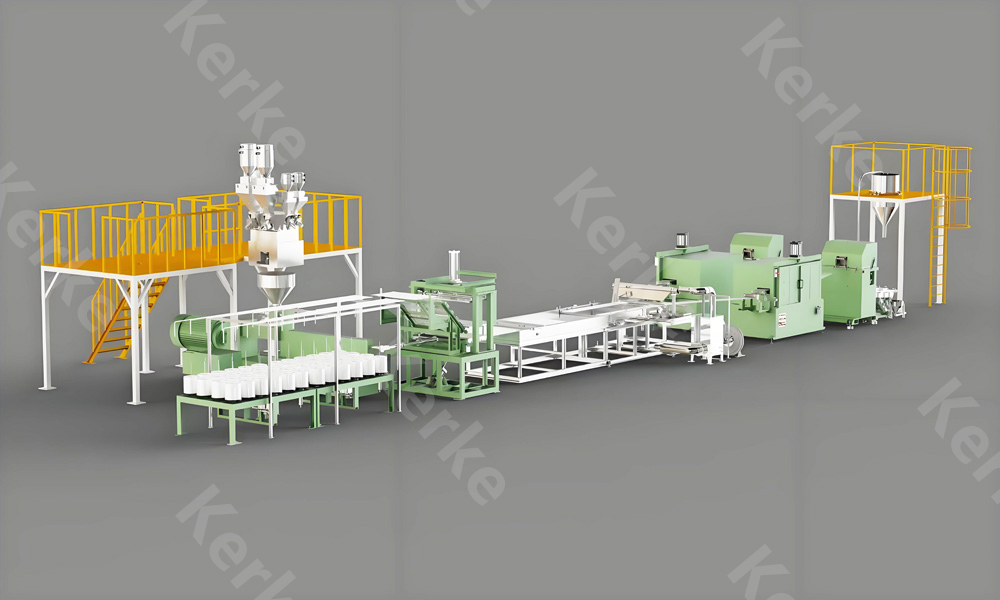
To realize 24-hour stable operation of the entire production line, in addition to the high performance of the twin screw host, it also needs the cooperation of supporting auxiliary systems. Kerke can provide a complete set of masterbatch production line solutions from raw material handling to finished product packaging, and all links are optimized for continuous operation to ensure the overall stability of the production line.
4.1 High-Precision Loss-in-Weight Feeding System for Stable Material Supply
Stable and accurate feeding is the premise of stable extrusion production. Kerke is equipped with a high-precision loss-in-weight feeding system for the masterbatch production line, which adopts a high-precision weighing sensor with a feeding accuracy of ±0.2%, ensuring that the proportion of each component of the formula is always accurate during long-term continuous operation, and avoiding product quality fluctuations caused by changes in feeding ratio. The feeding system is equipped with a material level early warning function. When the material in the hopper is lower than the set value, it will automatically send a reminder to the operator to add materials in time to avoid production interruption caused by material cutoff. For multi-component formula production, multiple feeding systems can be configured to add main resin, pigment, filler, additive and other materials from different positions respectively, realizing precise proportional control and ensuring stable product performance.
For large-scale continuous production lines, Kerke can also provide a centralized feeding system, which automatically transports raw materials from the storage silo to each feeding port through a pneumatic conveying system, reducing the workload of manual feeding and avoiding the risk of material cutoff caused by manual negligence. The entire conveying system is fully enclosed to avoid dust pollution and material moisture absorption, ensuring stable raw material quality during long-term production.
4.2 Continuous Pelletizing System Adapted to Long-Term Operation
The pelletizing system is the link that shapes the molten material into finished masterbatch particles, and its stability directly affects the appearance quality and production continuity of the product. Kerke provides a variety of pelletizing schemes to choose from, including strand pelletizing, air-cooled die-face pelletizing and underwater pelletizing, all of which are optimized for long-term continuous operation. The underwater pelletizing system is the preferred scheme for large-scale high-yield masterbatch production. It cuts the molten material directly into particles in the water, with high production efficiency, uniform particle size, smooth particle surface and no dust. The cutting blade adopts high wear-resistant alloy material, which has a long service life and can maintain stable cutting quality during long-term operation. The circulating water system is equipped with temperature control and filtration devices to ensure stable water temperature and clean water quality, avoiding product quality problems caused by water pollution during long-term operation.
The pelletizing system is interlocked with the host control system. When the host speed changes, the pelletizing speed will automatically follow the adjustment to ensure stable particle size. The system is also equipped with abnormal protection functions such as cutter overload protection and blockage alarm, which can shut down in time and give an alarm when a fault occurs, avoiding greater damage to the equipment.
4.3 Automatic Material Handling and Packaging System for Uninterrupted Workflow
After pelletizing, the finished particles need to go through cooling, screening, drying and packaging processes. To achieve 24-hour uninterrupted production, Kerke can configure an automatic material conveying and packaging system. The cooled and dried particles are automatically transported to the finished product silo through a pneumatic conveying system, and then automatically weighed and packaged by an automatic packaging machine. The packaging speed automatically matches the production output, avoiding material accumulation or packaging delay. The entire process is fully automated without manual intervention, which reduces labor demand and avoids production interruption caused by manual links.
For production lines that need to produce multiple varieties at the same time, a multi-station switching packaging system can also be configured to automatically switch packaging containers according to product types, reducing the time and labor cost of product switching. The automatic system can also record production data such as output and packaging quantity in real time, which is convenient for production statistics and management.
5. Full Lifecycle Service System to Guarantee Long-Term Stable Operation
Stable continuous production not only depends on high-quality hardware equipment, but also requires professional and perfect after-sales service and technical support as a guarantee. Kerke has built a comprehensive service system covering the entire lifecycle of equipment from installation and commissioning to later maintenance and upgrading, providing all-round support for customers’ 24-hour continuous production.
5.1 Preventive Maintenance Scheme Customized for Continuous Production
Kerke will formulate a targeted preventive maintenance plan according to the customer’s production intensity and product formula characteristics, and guide customers to carry out regular maintenance of the equipment. The maintenance plan is divided into daily inspection, weekly maintenance, monthly maintenance and annual overhaul. The daily inspection is completed by the on-site operator, focusing on checking whether there are abnormal sounds, oil leakage, temperature and pressure changes during the operation of the equipment, and making operation records. Regular maintenance of different cycles includes lubricating oil replacement, wearing parts inspection, electrical system tightening, etc., to eliminate potential faults in advance.
For customers who implement 24-hour continuous production, Kerke will arrange professional engineers to conduct on-site comprehensive inspection every year to comprehensively evaluate the wear of screw and barrel, the operation status of gearbox, the performance of electrical system, etc., put forward maintenance and optimization suggestions, and replace severely worn parts in time before failure, so as to avoid unplanned shutdown caused by sudden failure. This preventive maintenance mode can greatly extend the service life of the equipment and reduce the total cost of ownership of the equipment.
5.2 Global Spare Parts Supply Network with Fast Response
Adequate spare parts supply is an important guarantee to reduce downtime when equipment fails. Kerke has built a multi-level spare parts storage system, with a large number of commonly used wearing parts and core components in stock at the headquarters, and has set up regional spare parts warehouses and service centers in many regions around the world. For conventional wearing parts such as heating rings, seals, filters and cutting blades, they can be delivered to customers within 48 hours in most regions. For core components such as screw elements and gearbox parts, they can also be delivered quickly through the global logistics network, minimizing the downtime loss of customers.
Kerke recommends that customers prepare a set of commonly used spare parts according to their own production conditions, so that they can replace them at the first time when failures occur, without waiting for spare parts transportation and delaying production. When customers purchase equipment, they can choose a matching spare parts package, which includes all kinds of wearing parts and vulnerable electrical components that may be needed within 1 to 2 years of normal operation, ensuring that daily maintenance and minor faults can be handled in time.
5.3 Systematic Operator Training to Standardize Daily Operation
Standardized operation by operators is the basis for ensuring long-term stable operation of equipment. Many equipment failures are caused by irregular operation. Kerke attaches great importance to operator training. When each production line is delivered, professional engineers will conduct systematic on-site training for customers’ operators and maintenance personnel, covering equipment working principle, standard operation process, parameter adjustment methods, daily maintenance points, common fault judgment and treatment, safety operation specifications, etc. After the training, assessment will be conducted, and the post can be held only after passing the assessment, ensuring that the operator can master the operation skills proficiently.
For customers with long-term cooperation needs, Kerke can also provide regular advanced training to help operators master more process optimization and fault diagnosis skills, improve the operation and management level of the entire production team, and better support 24-hour continuous stable production. Standardized operation can not only reduce the failure rate of equipment, but also ensure the stability of product quality and reduce the scrap rate.
5.4 Remote Diagnosis and On-Site Technical Support
When the equipment fails, rapid response and solution are the key to reducing losses. Kerke has established a 24-hour technical support hotline, and customers can contact the after-sales team at any time when they encounter problems. For general process problems and minor faults, technical personnel can guide customers to solve them through remote communication. For equipment with remote diagnosis function, engineers can remotely connect to the equipment control system, view operating parameters and fault information, quickly locate the cause of the fault, and give a solution, which greatly improves the efficiency of fault handling.
For faults that cannot be solved remotely, Kerke will arrange on-site service engineers to visit the customer’s factory as soon as possible to carry out maintenance work. The global service network can ensure that engineers arrive at the site in the shortest time to help customers restore production as soon as possible. In addition, Kerke also provides regular return visit services to understand the operation of the equipment, answer customers’ questions in production, and put forward optimization suggestions to help customers better use the equipment to create value.
6. Cost-Benefit Analysis of 24-Hour Continuous Production with Kerke Masterbatch Extruder
Investing in high-quality masterbatch extruders to achieve 24-hour continuous production can bring rich economic returns to enterprises. Taking the widely used Kerke SHJ-65 type masterbatch extruder production line as an example, we conduct a detailed cost-benefit analysis to intuitively show the return on investment of continuous production.
6.1 Breakdown of Initial Equipment Investment
The initial investment of a complete SHJ-65 masterbatch extrusion production line mainly includes the main engine, auxiliary equipment, installation and commissioning services, and initial spare parts. The main engine part includes twin screw host, gearbox, drive motor, control system, etc., which accounts for about 45% to 50% of the total investment. The standard configuration of SHJ-65 host with 37kW power and L/D 40:1 is priced at about 55,000 to 70,000 US dollars FOB Shanghai. If you choose bimetallic screw barrel, high torque gearbox and other upgraded configurations, the price of the host will increase accordingly.
Auxiliary equipment mainly includes loss-in-weight feeding system, vacuum exhaust system, water cooling system, pelletizing system, finished product conveying and packaging system, etc. The standard strand pelletizing production line is equipped with auxiliary equipment priced at about 35,000 to 45,000 US dollars. If you choose a higher configuration underwater pelletizing system and automatic packaging system, the price of auxiliary equipment is about 55,000 to 75,000 US dollars. Installation, commissioning and operator training services are included in the overall quotation, usually accounting for about 7% to 10% of the total equipment price. The initial spare parts package is about 2% to 3% of the total price, including commonly used wearing parts.
Overall, the total investment of the standard configuration SHJ-65 strand pelletizing production line is about 90,000 to 115,000 US dollars. The total investment of the high configuration underwater pelletizing production line is about 140,000 to 180,000 US dollars. Customers can choose the appropriate configuration according to their own product positioning, budget and production needs.
6.2 Annual Operating Cost Calculation for Continuous Production
Calculated on the basis of 24-hour operation per day, 300 working days per year, and 7200 hours of annual operation time, the comprehensive OEE (Overall Equipment Effectiveness) of Kerke extruder can reach more than 85%, and the actual effective operation time is about 6120 hours. The SHJ-65 production line produces ordinary PE color masterbatch with an average output of 350kg/h, and the annual output is about 2142 tons.
Electricity cost is the main energy cost of extrusion production. The total installed power of the standard SHJ-65 production line is about 180kW, and the actual average operating power is about 120kW. Calculated at the industrial electricity price of 0.1 US dollars per kWh, the annual electricity cost is about 120 × 6120 × 0.1 = 73,440 US dollars. Thanks to the energy-saving optimization design of Kerke equipment, the unit product energy consumption is 15% to 20% lower than that of ordinary extruders of the same specification, saving about 10,000 to 15,000 US dollars in electricity costs every year.
Labor cost: The production line adopts three-shift operation, each shift is equipped with 2 operators, a total of 6 operators. Calculated on the basis of an average annual salary of 12,000 US dollars per person, the annual labor cost is about 72,000 US dollars. The high degree of automation of the equipment reduces the demand for labor, and one operator can also manage multiple production lines at the same time, further reducing labor costs.
Maintenance and spare parts cost: Under normal standardized operation and preventive maintenance, the annual maintenance cost of the equipment is about 3% to 5% of the total equipment investment, that is, about 3,000 to 6,000 US dollars. The main expenses are replacement of wearing parts such as filter screens, seals and cutting blades, and regular lubricating oil replacement. Compared with low-quality equipment with annual maintenance cost of more than 10% of investment, Kerke equipment has lower later operation cost.
Raw material loss cost: Due to the high stability of continuous production and low scrap rate, the comprehensive raw material loss rate is controlled at about 1.2%. Calculated on the basis of raw material price of 1200 US dollars per ton, the annual raw material loss cost is about 2142 × 1200 × 1.2% ≈ 30,845 US dollars. In contrast, the loss rate of intermittent production with frequent start and stop is about 6%, and the annual raw material loss cost is as high as 154,224 US dollars. Only one item of reducing raw material loss can save more than 120,000 US dollars every year.
In addition, there are plant rent, management expenses and other expenses, which are about 25,000 US dollars per year. Excluding raw material costs, the total annual operating cost is about 204,285 US dollars.
6.3 Revenue Projection and Static Payback Period
In terms of product revenue, the gross profit per ton of ordinary PE color masterbatch is about 180 US dollars. With an annual output of 2142 tons, the annual gross profit is about 2142 × 180 = 385,560 US dollars. After deducting operating costs other than raw materials, the annual net profit is about 181,275 US dollars. Calculated on the basis of a total investment of 110,000 US dollars in the standard production line, the static investment payback period is about 7.3 months.
If producing high value-added functional masterbatches such as flame retardant masterbatch, anti-aging masterbatch and transparent masterbatch, the gross profit per ton can reach 300 to 500 US dollars, and the return on investment is higher. Taking 350 US dollars per ton of gross profit as an example, the annual gross profit can reach 749,700 US dollars, and the investment payback period can be shortened to about 2 to 3 months. Even considering factors such as market fluctuations and underemployment of production capacity, the investment can be recovered within 10 to 12 months under normal operating conditions.
It should be emphasized that the above calculation only considers the direct economic benefits of production. In fact, stable product quality brought by continuous production, improved customer satisfaction, enhanced brand reputation and other intangible benefits will bring more long-term value to enterprises, helping enterprises to enter the high-end market and obtain more high-quality customer resources.
6.4 Comparison with Low-Grade Intermittent Production Equipment
Many enterprises choose low-cost extruders in order to save initial investment, but the actual total cost of ownership is higher. Low-priced equipment usually has problems such as fast wear, high failure rate, high energy consumption and high scrap rate. According to statistics, the annual failure shutdown time of low-quality extruders is usually more than 30 days, and the OEE is only about 50%. Under the same production time, the actual output is only 60% of Kerke equipment. At the same time, the scrap rate is as high as 6% to 8%, and the maintenance cost accounts for more than 10% of the equipment investment every year. After 2 to 3 years of use, the performance of the equipment decreases significantly, and the screw and barrel need to be replaced, which increases additional investment.
Comprehensive calculation shows that although the initial investment of low-quality equipment is 30% to 40% lower, the actual annual profit is less than half of that of Kerke high-quality equipment, and the service life is only 1/3 to 1/2 of that of Kerke equipment. From the perspective of 5 to 10 years of long-term operation, choosing high-quality masterbatch extruders can bring much higher returns. Especially for enterprises that aim at large-scale continuous production, investing in reliable equipment is the basis for ensuring long-term stable profitability.
7. Practical Guidelines to Maximize Continuous Production Efficiency
With high-quality equipment, scientific production management and standardized operation are also needed to maximize the efficiency of 24-hour continuous production. Combined with years of industry experience, Kerke summarizes the following practical operation suggestions for masterbatch production enterprises.
7.1 Establish Standardized Daily Inspection and Shift Handover System
Standardized daily management is the basis to ensure long-term stable operation of equipment. Enterprises should formulate detailed equipment operation procedures and inspection systems, and clarify the inspection items and standards for each shift. Operators should conduct a comprehensive inspection of the equipment according to the specified items before starting work, check whether the temperature, pressure, lubricating oil level, cooling water system, etc. are normal, and make operation records. During the shift handover, the two shifts of operators should hand over face to face, clarify the operation status of the equipment, existing problems, precautions, etc., and make handover records to ensure that the problems are not missed and the production is smoothly connected.
Through daily inspection, minor abnormal conditions such as small leakage and slight temperature deviation can be found and handled in time to avoid minor problems developing into major faults. At the same time, complete operation records can also provide data support for later fault analysis and process optimization, helping enterprises continuously improve production management level.
7.2 Optimize Production Scheduling to Reduce Frequent Material Change
Each material and color change will bring a certain amount of downtime and raw material waste. Therefore, optimizing production scheduling and reasonably arranging the production order of different products can effectively reduce the number of material changes and improve the effective operation time of the equipment. In production scheduling, products of the same color system and similar formulas should be arranged for continuous production as much as time, and the transition from light color to dark color should be followed when changing colors, so as to reduce the difficulty of cleaning and the amount of cleaning materials used. For products with large differences in formulas, reasonable transition materials should be set to avoid cross-contamination and reduce cleaning time.
At the same time, centralized production of orders of the same specification can reduce the number of die and process parameter adjustments, maintain the stable operation state of the equipment, and help improve product qualification rate.