Calcium carbonate (CaCO3) is the most widely used inorganic filler in the global plastics industry, valued for its low cost, high whiteness, good rigidity, and environmental friendliness. Filler masterbatch, a concentrated carrier of CaCO3 uniformly dispersed in polymer resin, has become the mainstream form of filler application for downstream processing, covering packaging films, injection molded products, pipe extrusion, sheet production, and automotive components. As downstream industries put forward higher requirements for product appearance, mechanical properties and processing stability, high dispersion has become the core indicator to measure the quality of calcium carbonate filler masterbatch. Poor dispersion will lead to white spots, fish eyes, uneven surface finish, and reduced mechanical strength of final products, directly limiting the application scope and profit margin of masterbatch products.
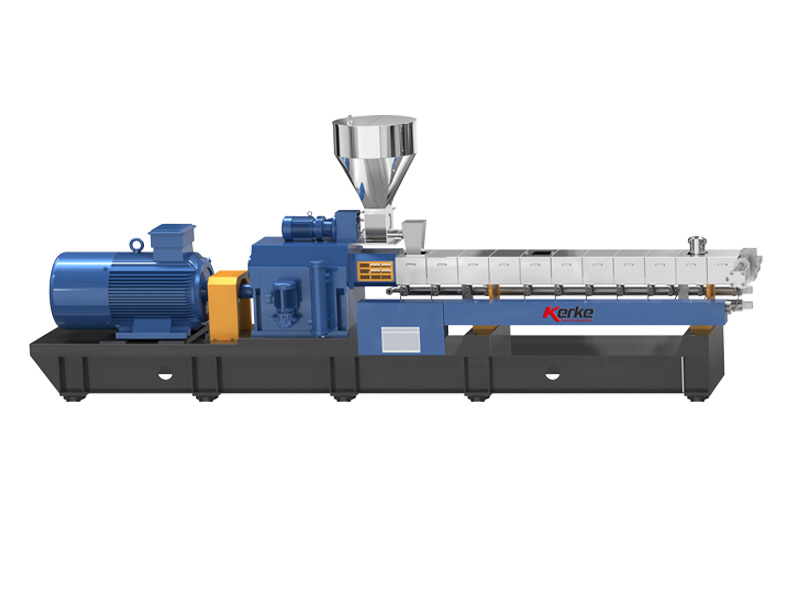
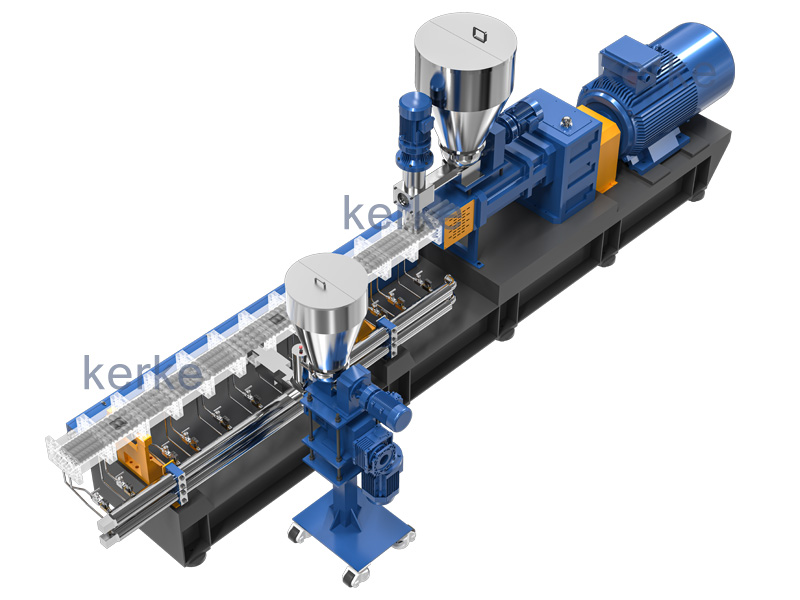
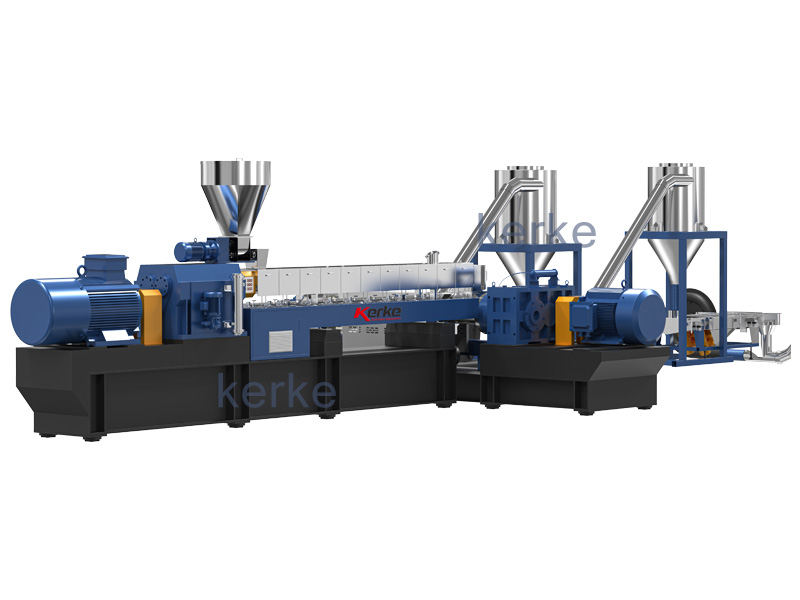
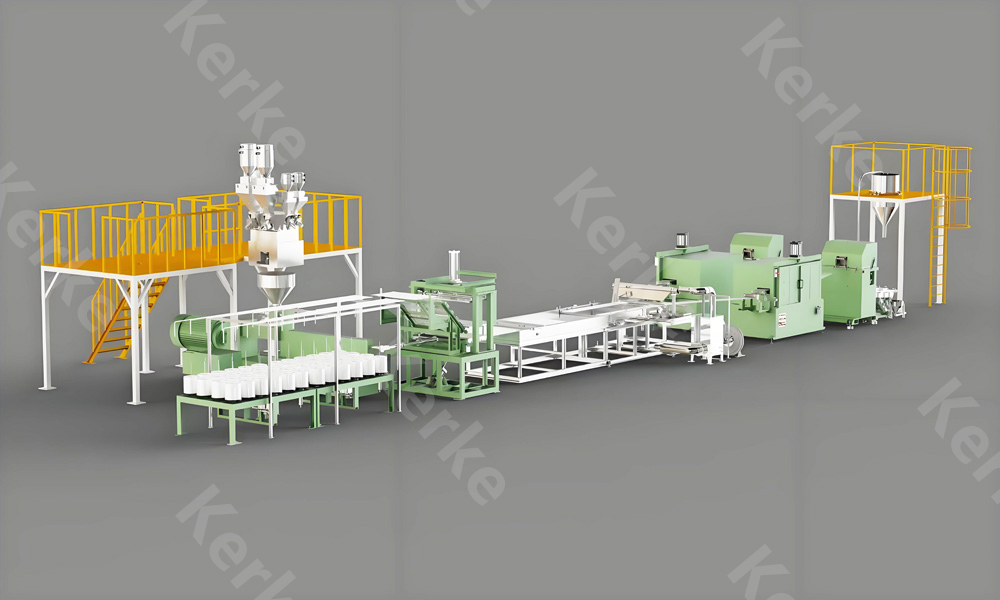
The core equipment to achieve high dispersion of calcium carbonate filler masterbatch is the twin screw extruder, also known as a masterbatch extruder or compounding extruder in the industry. Compared with single screw extruders, co-rotating parallel twin screw extruders have stronger shear mixing capacity, more uniform material residence time distribution, and better self-cleaning performance, making them the standard configuration for high-quality filler masterbatch production. However, not all twin screw extruders can achieve ideal dispersion effect. The screw configuration, feeding accuracy, temperature control system, exhaust design and process parameter matching of the equipment will directly affect the dispersion quality of calcium carbonate in the resin carrier.
As a professional manufacturer focusing on R&D and production of twin screw extrusion equipment for many years, Kerke has launched a series of high-performance masterbatch extruders and compounding extruders tailored for calcium carbonate filler masterbatch production, with optimized screw elements, high-torque transmission systems and precision control systems to help customers achieve nano-level uniform dispersion of calcium carbonate fillers. This guide will systematically explain the value of high dispersion for calcium carbonate filler masterbatch, analyze the core factors affecting dispersion quality, introduce how twin screw extruders achieve efficient dispersion, provide detailed product recommendations and cost-benefit analysis of Kerke equipment, and summarize practical process optimization schemes and common problem troubleshooting solutions, covering all the information that manufacturers and R&D personnel need to know about high-dispersion filler masterbatch production.
1. The Value of High Dispersion for Calcium Carbonate Filler Masterbatch
Dispersion refers to the degree to which calcium carbonate filler particles are uniformly separated and distributed in the polymer carrier without agglomeration. For masterbatch manufacturers and downstream users, high dispersion is not only a quality requirement, but also directly related to production cost, product performance and market competitiveness.
1.1 Improvement of Mechanical Properties of Final Products
When calcium carbonate particles are uniformly dispersed at the primary particle level, they can act as a reinforcing phase in the resin matrix, effectively improving the tensile strength, bending modulus, impact resistance and hardness of the product. On the contrary, if there are agglomerated particles in the masterbatch, these agglomerates will become stress concentration points inside the product. Under the action of external force, cracks will first initiate and expand from the agglomeration positions, resulting in a significant decline in the mechanical properties of the product. Industry data shows that for 80% high-filling calcium carbonate masterbatch, poor dispersion can reduce the impact strength of final injection molded products by more than 30%, and even cause brittle fracture of products in low-temperature environments. High-dispersion masterbatch can maintain more than 90% of the theoretical mechanical properties of the formula, helping downstream products meet higher quality standards.
1.2 Optimization of Product Appearance and Surface Quality
For high-end application scenarios such as packaging films, hollow containers and surface decorative parts, product appearance is a core quality indicator. Poorly dispersed masterbatch will produce white spots, fish eyes, chromatic aberration and rough surface on the final product, which seriously affects the appearance quality and even leads to batch scrapping of products. For example, in film production, agglomerated calcium carbonate particles larger than 10μm will form obvious fish eyes on the film surface, making the product unable to be used for high-end packaging. High-dispersion masterbatch can ensure that all calcium carbonate particles are below 5μm in the finished product, with no visible white spots or fish eyes on the surface, and the product has high gloss and uniform color, which can meet the quality requirements of high-end applications.
1.3 Reduction of Production Cost and Material Waste
High dispersion can give full play to the functional role of calcium carbonate filler, so that the same filling amount can achieve better performance effect. Under the premise of meeting the same performance requirements, high-dispersion masterbatch can increase the filling amount by 10-15% compared with ordinary masterbatch, further reducing the raw material cost of downstream products. At the same time, good dispersion can reduce the scrap rate in the production process. For masterbatch manufacturers, poor dispersion will lead to a large number of unqualified products that need to be reworked or scrapped, increasing raw material loss and labor costs. For high-filling formula products, the scrap rate of ordinary extruder production is usually 6-10%, while the scrap rate of high-performance twin screw extruder production can be controlled below 1.5%, saving a lot of raw material costs every year.
1.4 Expansion of Product Application Scenarios and Profit Margin
Masterbatch with different dispersion quality has great differences in market price and application scope. Ordinary low-dispersion filler masterbatch can only be used for low-end injection molding, garbage bags and other scenarios with low quality requirements, with thin profit margins and fierce market competition. High-dispersion masterbatch can be used in high value-added fields such as food packaging films, breathable films, automotive interior parts, household appliance shells and building materials, with product prices 20-40% higher than ordinary products, bringing richer profit margins for manufacturers. With the continuous upgrading of downstream industry quality requirements, the market demand for high-dispersion filler masterbatch is growing rapidly, and mastering high dispersion production technology has become the key for masterbatch enterprises to gain competitive advantage.
2. Core Factors Affecting Dispersion Quality of Calcium Carbonate Filler Masterbatch
The dispersion process of calcium carbonate in polymer resin includes three stages: wetting of filler particles by polymer melt, destruction of agglomerated particles under shear action, and uniform distribution of dispersed particles in the matrix. Each stage is affected by many factors. To achieve high dispersion, it is necessary to systematically control all links from raw material pretreatment to extrusion processing.
2.1 Raw Material Pretreatment and Formula Design
The characteristics of raw materials are the basis affecting dispersion effect. Calcium carbonate with different particle sizes, surface treatment states and oil absorption values have great differences in dispersion difficulty. Nano calcium carbonate with smaller particle size has better reinforcing effect, but it is easier to agglomerate and more difficult to disperse. Ordinary light calcium carbonate has larger particle size and relatively easier dispersion. The surface treatment of calcium carbonate is also very critical. Calcium carbonate treated with coupling agents such as stearic acid, titanate and aluminate has better compatibility with resin matrix, is easier to be wetted by melt, and is not easy to re-agglomerate during processing.
In terms of formula design, the proportion of filler, carrier resin and additives will directly affect dispersion difficulty. Too high filling amount will increase the viscosity of the system, increase the difficulty of mixing, and easily lead to uneven dispersion. The selection of carrier resin should match the processing temperature and melt viscosity of calcium carbonate, so as to ensure that the resin can fully wet the filler particles in the extrusion process. The addition of appropriate dispersants and lubricants can reduce the friction between particles and promote the separation of agglomerates, but excessive addition will affect the mechanical properties of products. In actual production, sufficient pre-mixing of raw materials before entering the extruder can significantly improve the final dispersion effect. High-speed mixer can pre-disperse calcium carbonate and resin evenly, and complete the coating of coupling agent at a certain temperature, reducing the dispersion pressure of the extruder.
2.2 Screw Element Configuration and Shear Field Distribution
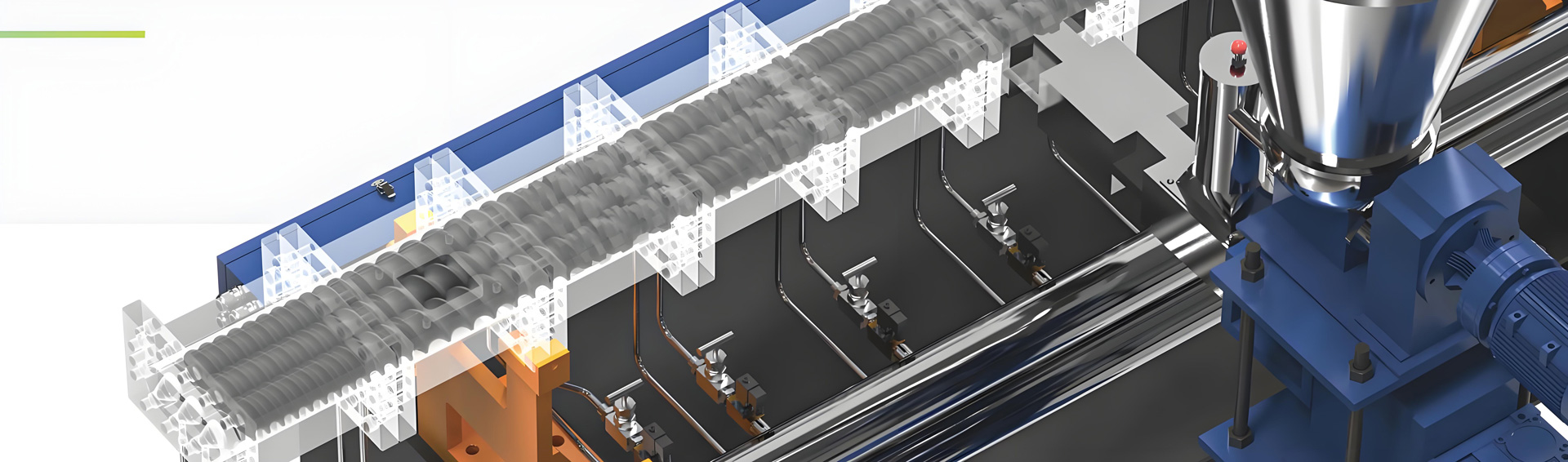
As the core component of the twin screw extruder, the screw directly determines the mixing and dispersion capacity of the equipment. The screw of co-rotating twin screw extruder is composed of different types of elements, including conveying elements, kneading block elements, toothed mixing elements and reverse conveying elements. Different elements have different functions and form different shear and flow fields inside the screw.
Conveying elements are mainly responsible for forward conveying of materials, and their lead size affects the filling degree and residence time of materials. Kneading block elements are the core components to achieve shear dispersion. The shear strength and mixing effect vary with the stagger angle of kneading discs. Kneading blocks with 30° stagger angle mainly play the role of distributive mixing with weak shear; 45° stagger angle takes into account both dispersion and distribution, which is the most commonly used configuration; 60° stagger angle has strong shear force, which can effectively destroy agglomerated particles, but too much will easily lead to material degradation. The number and arrangement position of kneading blocks also need to be reasonably designed according to the characteristics of calcium carbonate formula. Too few shear elements can not achieve sufficient dispersion, while too many will cause excessive shear, leading to resin degradation and yellowing of masterbatch. For high-filling calcium carbonate masterbatch, it is also necessary to set up a reasonable number of mixing elements to ensure uniform distribution of fillers in the whole matrix.
2.3 Extrusion Process Parameter Control
Even with the same equipment and formula, different process parameters will lead to great differences in dispersion effect. The key process parameters affecting dispersion include temperature curve, screw speed, feed rate and vacuum degree.
Temperature directly affects the melt viscosity of resin and the shear force of the system. Too low temperature will lead to insufficient plasticization of resin, high melt viscosity, and difficulty in wetting filler particles; too high temperature will reduce melt viscosity, weaken shear effect, and even cause resin degradation and performance decline. For calcium carbonate filler masterbatch, the temperature curve should be set reasonably according to the type of carrier resin, so as to ensure complete plasticization of resin and maintain appropriate shear viscosity. Screw speed and feed rate together determine the residence time and filling degree of materials in the screw. Higher screw speed can provide stronger shear force, but too short residence time will lead to insufficient mixing. Too high feed rate will increase the load of the extruder, reduce the filling degree of materials in the screw, and weaken the shear mixing effect. Only by matching screw speed and feed rate reasonably can we achieve the best balance between dispersion effect and production capacity.
2.4 Degassing and Volatile Removal System
Calcium carbonate fillers usually contain a certain amount of moisture and low molecular volatile matter, especially nano calcium carbonate with large specific surface area is more likely to absorb moisture. If these moisture and volatile matter cannot be effectively removed during extrusion, they will form bubbles inside the masterbatch, resulting in pores and voids on the surface of the product, and also affect the uniformity of dispersion. At the same time, the presence of moisture will also accelerate the degradation of some resins at high temperature, affecting the performance of masterbatch.
High-quality twin screw extruders are usually equipped with multi-stage vacuum venting systems, which remove moisture and volatile matter from the melt through negative pressure in the venting section. The position, number and vacuum degree of venting ports will affect the degassing effect. For calcium carbonate masterbatch with high moisture content, at least two-stage venting is required, one for natural exhaust and one for vacuum exhaust, to ensure thorough removal of volatile matter. The design of the venting section screw also needs to be matched. Usually, large lead conveying elements are used to reduce the material filling degree, so that the melt can fully expose the surface in the venting area, which is conducive to the escape of volatile matter.
3. Advantages of Twin Screw Extruders in High-Dispersion Filler Masterbatch Production
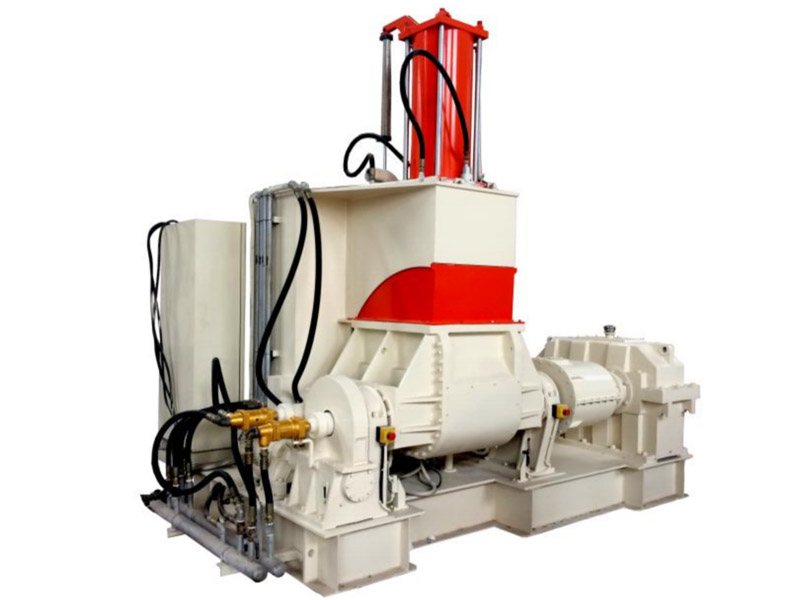
At present, the equipment for producing calcium carbonate filler masterbatch in the market mainly includes single screw extruders, internal mixers matched with single screw extruders, and co-rotating parallel twin screw extruders. Among them, twin screw extruders, as professional compounding extruders and masterbatch extruders, have become the first choice for high-quality masterbatch production with their unique technical advantages.
3.1 Strong Shear Dispersion Capacity
The intermeshing co-rotating twin screw can produce strong and uniform shear force during operation. When the material passes through the meshing area of the two screws, it is subjected to continuous shearing, stretching and folding actions, which can effectively break the agglomerated calcium carbonate particles and disperse them into primary particles. Compared with the single screw extruder, which mainly relies on the friction between the material and the barrel for plasticization and has very limited mixing capacity, the twin screw extruder has several times higher shear strength and mixing uniformity, which can easily handle high-filling calcium carbonate formulas that are difficult to process by single screw. Even for nano calcium carbonate with strong agglomeration tendency, twin screw extruders with appropriate screw configuration can achieve good dispersion effect, which is impossible for single screw equipment.
3.2 Positive Conveying and Stable Processing Performance
The co-rotating intermeshing twin screw has positive conveying characteristics, that is, the conveying capacity of the screw depends on the geometric shape of the screw elements, and is less affected by the viscosity of the material and the pressure fluctuation of the head. This makes the twin screw extruder have very stable feeding and conveying capacity when processing high-filling calcium carbonate masterbatch with large viscosity change, and will not cause discharge fluctuation due to the change of material viscosity, ensuring the uniformity of product quality. In contrast, the conveying of single screw extruder depends on the friction between the material and the barrel wall. When processing high-filling materials, the friction coefficient changes greatly, which is easy to cause unstable discharge, resulting in fluctuations in product quality and dispersion effect.
3.3 Modular Design and High Process Flexibility
Modern twin screw extruders generally adopt modular screw and barrel design. Users can adjust the screw element combination and barrel structure according to different formula types and product performance requirements, so as to change the shear strength, mixing mode and material residence time inside the extruder. For calcium carbonate filler masterbatch production, manufacturers can produce both ordinary 30% low-filling masterbatch and 80% high-filling masterbatch by replacing part of the screw elements and adjusting process parameters. One equipment can be compatible with multiple products and formulas, which greatly improves the flexibility of production and reduces the investment cost of equipment. The modular design is also convenient for later maintenance and upgrade. When producing new formula products, only corresponding functional modules need to be added, without replacing the whole equipment.
3.4 Efficient Self-cleaning and Low Material Waste
The intermeshing twin screw has good self-cleaning function. In the process of high-speed rotation, the screw flights of the two screws scrape each other, which can clean up the residual materials on the screw surface in time, avoiding the long-term retention of materials in the high-temperature barrel leading to degradation and yellowing. This feature is very important for multi variety and small batch production. When changing product formulas or colors, the cleaning time and material consumption of twin screw extruders are much less than those of single screw extruders, which can quickly complete product switching and reduce material waste caused by cleaning. For masterbatch enterprises with many product types and frequent replacement, this can save a lot of raw material costs and time costs every year.
4. Kerke High-Performance Masterbatch Extruder Series for High-Dispersion CaCO3 Masterbatch
With years of technical accumulation in the field of twin screw extrusion, Kerke has launched a full range of compounding extruder products tailored for calcium carbonate filler masterbatch production, covering laboratory R&D, medium-sized trial production and large-scale mass production scenarios. All equipment adopts high-torque gearbox design, precision machined screw elements and intelligent control system, which can achieve excellent dispersion effect while ensuring high yield and stable operation.
4.1 Kerke SHJ-35 Lab Twin Screw Extruder for Formula R&D and Small Batch Production
The SHJ-35 is a laboratory-scale masterbatch extruder launched by Kerke for formula research and development, small batch sample preparation and new product trial production. It is suitable for university laboratories, R&D departments of material enterprises and small masterbatch manufacturers. The equipment adopts a desktop integrated design with a small footprint, which can be placed directly in the laboratory without special plant transformation.
Technical Specifications: The screw diameter is 35mm, the standard length-diameter ratio is 40:1, and the maximum length-diameter ratio can be customized to 48:1. It is equipped with a high-precision servo drive system with a maximum speed of 600rpm and a torque grade of 8N·m/cm³. The production capacity ranges from 10kg/h to 50kg/h. It is equipped with a weight loss feeding system with feeding accuracy of ±0.3%. It is equipped with two-stage vacuum exhaust ports to ensure sufficient degassing effect. The standard configuration is water strand pelletizing system, and air-cooled die face pelletizing and underwater pelletizing systems can also be selected according to needs. The control system adopts PLC + touch screen, which can store more than 100 groups of process formulas, and supports data export and production record storage.
Price and Cost Analysis: The FOB Shanghai price of Kerke SHJ-35 standard laboratory twin screw extruder ranges from $38,000 to $52,000. The specific price varies according to the configuration of feeding system, pelletizing method and automation degree. In terms of operating cost, the total installed power of the equipment is about 18kW, and the actual operating power is about 10kW. Calculated by 2000 hours of operation per year, the annual electricity cost is about $2,000. The equipment only needs 1 operator, and the annual labor cost is low. The annual maintenance cost including wearing parts replacement is about $1,500. For R&D scenarios, using SHJ-35 for formula testing only consumes a few kilograms of raw materials per test, which saves more than 90% of raw material costs compared with using production-scale equipment for testing. For small batch production of high value-added customized masterbatch, calculated by annual output of 30 tons and net profit of $800 per ton, the annual net profit can reach $24,000, and the investment payback period is about 1.5-2 years. If the saving of outsourcing testing and R&D costs is included, the return cycle is shorter.
4.2 Kerke SHJ-65 Medium-Scale Compounding Extruder for Mass Production
The SHJ-65 is the best-selling model of Kerke, which is suitable for medium-sized masterbatch manufacturers to carry out mass production of calcium carbonate filler masterbatch. This model balances production capacity, dispersion effect and investment cost, and is the most cost-effective choice for conventional masterbatch production.
Technical Specifications: The screw diameter is 65mm, the standard length-diameter ratio is 44:1, and it can be customized to 52:1 for high-filling formulas. It is equipped with a high-torque hardened gear reducer with a torque grade of 10N·m/cm³, which can stably process high-filling calcium carbonate formulas with a filling amount of up to 85%. The production capacity ranges from 300kg/h to 800kg/h. It is equipped with a main weight loss feeder + side feeder, which can realize the addition of fillers and additives in sections. It is equipped with two-stage vacuum exhaust system with vacuum degree up to -0.095MPa, which can effectively remove moisture and volatile matter. The pelletizing system can choose water strand pelletizing, air-cooled die face pelletizing or underwater pelletizing according to material characteristics. The control system adopts industrial-grade PLC with high-precision PID temperature control, and the temperature control accuracy is within ±1℃. It supports remote diagnosis and automatic production formula calling.
Price and Cost Analysis: The FOB Shanghai price of Kerke SHJ-65 standard configuration masterbatch extruder ranges from $85,000 to $120,000. If equipped with underwater pelletizing system, multi-component feeding system and automatic weighing and packaging system, the price can reach $150,000. In terms of operating cost, the average operating power of the equipment is about 75kW. Calculated by 6000 hours of annual operation and industrial electricity price of $0.1 per kWh, the annual electricity cost is about $45,000. In terms of labor, each production line only needs 2 operators per shift, and the annual labor cost is about $60,000 for three-shift production. The annual maintenance cost including screw barrel wear repair and wearing parts replacement is about $8,000. Taking the production of 80% high-filling HDPE calcium carbonate masterbatch as an example, the annual output is about 3000 tons, the raw material cost is about $1,500,000, the ex-factory price of masterbatch is $700 per ton, and the annual sales revenue is $2,100,000. After deducting various operating costs, the annual net profit is about $450,000, and the investment payback period is only 4-6 months. In addition, due to the good dispersion effect of the equipment, the product can be sold to the high-end market with a 15% price premium, and the profit space will be larger.
4.3 Kerke SHJ-75 High-Capacity Twin Screw Extruder for Large-Scale Manufacturing
The SHJ-75 is a large-scale compounding extruder launched by Kerke for large masterbatch manufacturers with stable large orders. It has higher production capacity and stronger torque output, and is suitable for large-scale continuous production of conventional filler masterbatch.
Technical Specifications: The screw diameter is 75mm, the standard length-diameter ratio is 48:1, and it is equipped with a high-torque gearbox with a torque grade of 12N·m/cm³, which can easily handle various high-filling and high-viscosity formulas. The production capacity ranges from 800kg/h to 1500kg/h. It is equipped with multi-point feeding system, which can add resin, filler and various additives from different positions respectively to optimize the mixing effect. It is equipped with multi-stage vacuum exhaust and natural exhaust to ensure thorough degassing. It can be matched with various pelletizing systems and automatic packaging lines to realize fully automatic production from raw materials to finished products. The control system supports MES system connection, which can realize production data monitoring, quality traceability and production management.
Price and Cost Analysis: The FOB Shanghai price of Kerke SHJ-75 standard configuration high-capacity twin screw extruder ranges from $160,000 to $220,000. The price of fully automatic configuration including underwater pelletizing and automatic packaging system can reach $280,000. In terms of operating cost, due to the scale effect, the unit energy consumption of SHJ-75 is 15% lower than that of SHJ-65 per ton of product, and the labor efficiency is higher. Calculated by annual output of 8000 tons, the annual sales revenue is about $5,600,000, and the annual net profit is about $1,200,000 after deducting various costs. The investment payback period is about 5-7 months. For large enterprises with stable customer orders, SHJ-75 can achieve higher production efficiency and lower unit product cost, bringing more considerable economic benefits.
It should be noted that Kerke can provide customized services for all models of twin screw extruders. According to the customer’s formula characteristics, product quality requirements, plant conditions and budget, engineers can customize the appropriate screw configuration, barrel structure, auxiliary machine configuration and automation scheme for each customer to ensure that the equipment can maximize its performance and economic benefits after delivery.
5. Process Optimization Scheme for High-Dispersion Calcium Carbonate Masterbatch with Kerke Extruders
With high-quality twin screw extruder equipment, it is also necessary to match reasonable process parameters and operation methods to achieve the best dispersion effect. Kerke’s technical team has summarized a set of practical process optimization schemes for calcium carbonate filler masterbatch production based on years of process experience, which can help customers quickly adjust to the best production state.
5.1 Optimize Raw Material Pretreatment and Pre-mixing Process
Adequate pre-mixing is the premise to ensure good dispersion. Before extrusion, calcium carbonate, carrier resin and various additives should be fully mixed in a high-speed mixer. For formulas that need surface modification of calcium carbonate, in-situ modification can be carried out in the high-speed mixer: first add calcium carbonate to the mixer and heat it to 100-110℃ to remove surface moisture, then add the metered coupling agent, continue high-speed mixing for 5-10 minutes, so that the coupling agent can be evenly coated on the surface of calcium carbonate particles, and finally add carrier resin and other additives to mix evenly. This pre-treatment method can significantly improve the interface compatibility between calcium carbonate and resin, reduce the difficulty of dispersion in the extruder, and improve the final dispersion effect.
It should be noted that the mixed materials should be used as soon as possible to avoid moisture absorption again. For materials with high moisture content, they should be dried by a dryer before entering the extruder to reduce the degassing pressure of the extruder and avoid bubbles in the product.
5.2 Customize Screw Configuration for Formula Characteristics
Reasonable screw configuration is the key to achieve high dispersion. Kerke engineers will design targeted screw combinations according to the customer’s formula filling amount, particle size of calcium carbonate and performance requirements. For conventional calcium carbonate filler masterbatch with 50-70% filling amount, the screw usually adopts the combination of “conveying section + first kneading section + second kneading section + exhaust section + metering section”. The kneading sections are mainly 45° stagger angle kneading blocks, with appropriate number of 60° kneading blocks to provide appropriate shear force, which can not only break agglomerates, but also avoid excessive shear leading to resin degradation.
For 80% high-filling masterbatch or nano calcium carbonate masterbatch, it is necessary to appropriately increase the number of kneading blocks and mixing elements, and set up multiple shear zones to ensure that materials are fully sheared and mixed. At the same time, side feeding is used to add calcium carbonate filler after the resin is completely plasticized, so as to avoid excessive wear of the screw in the feeding section and uneven material mixing. For heat-sensitive resin systems, the number of strong shear elements should be appropriately reduced, and the residence time of materials in the barrel should be shortened to avoid material degradation and yellowing.
3.3 Set Appropriate Process Parameters
The setting of process parameters should be adjusted according to the type of carrier resin and filling amount. Taking HDPE calcium carbonate masterbatch as an example, the temperature of each zone of the barrel should be set between 160℃ and 200℃, gradually increasing from the feeding section to the plasticizing section, and slightly decreasing at the head to ensure stable discharge. The screw speed should be adjusted according to the output requirements and dispersion effect. Usually, the speed of 300-450rpm is appropriate. Too low speed will lead to insufficient shear, and too high speed will easily cause material degradation and increase equipment load.
The feed rate should match the screw speed to maintain a reasonable material filling degree in the screw. Usually, the filling degree of 0.4-0.6 is the best. Too high filling degree will lead to insufficient exhaust and poor plasticization, while too low filling degree will reduce production efficiency and weaken shear effect. The vacuum degree of the exhaust port should be maintained above -0.09MPa to ensure that moisture and volatile matter can be fully removed. If there are many bubbles in the product, it is necessary to check whether the vacuum pipeline is blocked and whether the sealing of the exhaust port is good.
In actual production, the process parameters should be adjusted according to the actual product quality. If the dispersion is not good and there are white spots, the temperature can be appropriately increased or the screw speed can be increased to strengthen the shear; if the product turns yellow and has degraded odor, it is necessary to reduce the processing temperature, reduce the residence time, or increase the vacuum degree to remove small molecular substances.
6. Common Dispersion Defects and Troubleshooting Solutions
In the actual production of calcium carbonate filler masterbatch, various dispersion defects may occur due to changes in raw materials, equipment wear or improper parameter setting. The following summarizes the common problems and corresponding solutions.
6.1 White Spots and Agglomerates in Masterbatch
White spots and agglomerates are the most common dispersion defects, which are manifested as visible white particles in the masterbatch section or pressed sheet, which are unbroken calcium carbonate agglomerates. Common causes include: insufficient shear strength of screw configuration, which can not break hard agglomerates; too low processing temperature, insufficient resin plasticization, which can not fully wet the filler; too fast feed rate, too short material residence time, insufficient mixing; damage to the filter screen, allowing large particle impurities to pass through; poor pre-mixing effect, local filler concentration is too high.
Solutions: First, check whether the screw configuration matches the formula. If the shear is insufficient, appropriately increase the number of 60° kneading blocks or increase the length of the mixing section. Second, appropriately increase the processing temperature to ensure complete plasticization of the resin and reduce melt viscosity, which is conducive to the infiltration of the resin into the interior of the agglomerates. Third, reduce the feed rate appropriately, extend the material residence time, and make the material fully sheared and mixed. Fourth, check and replace the filter screen, and use a filter with higher mesh number to filter out undispersed agglomerates. Fifth, optimize the pre-mixing process to ensure uniform mixing of raw materials before entering the extruder.
6.2 Uneven Dispersion and Large Performance Fluctuation between Batches
This problem is manifested in the large fluctuation of product color and performance between different production batches, or uneven dispersion in the same batch of products. The main reasons include: unstable feeding accuracy, large fluctuation of filler addition ratio; unstable screw speed or temperature control, resulting in changes in processing conditions; serious wear of screw and barrel, resulting in decreased mixing performance; different batches of raw materials with large performance differences, such as different melt index of resin and different surface treatment effect of calcium carbonate.
Solutions: First, use a high-precision weight loss feeding system to ensure the accuracy and stability of the feeding ratio of each component, and regularly calibrate the feeding scale. Second, check the temperature control system and drive system of the equipment to ensure the stability of process parameters. Third, regularly detect the wear of screw and barrel. If the wear is serious, repair or replace them in time. Fourth, strengthen the incoming inspection of raw materials. For raw materials of different batches, make small test adjustments first, and then carry out mass production after confirming that the quality is stable.
6.3 Yellowing of Masterbatch and Decline in Mechanical Properties
Yellowing of masterbatch is usually caused by thermal degradation of resin or additives during processing, which is often accompanied by decline in mechanical properties such as tensile strength and impact strength. Common causes include: too high processing temperature or too long residence time of materials in the barrel; too many strong shear elements in the screw configuration, resulting in excessive shear heat; poor exhaust effect, residual volatile matter leads to material degradation; poor thermal stability of raw materials, or insufficient addition of antioxidants.
Solutions: First, appropriately reduce the processing temperature, especially the temperature of the head and metering section, and avoid long-term high-temperature residence of materials. Second, adjust the screw configuration, appropriately reduce the number of high-strength shear elements, and replace them with distributive mixing elements to reduce shear heat generation. Third, improve the vacuum degree of the exhaust system to remove small molecular substances generated by degradation in time. Fourth, add an appropriate amount of antioxidant and heat stabilizer to the formula to improve the thermal stability of the material. Fifth, for production lines with long shutdown time, the materials in the barrel should be cleaned with cleaning materials before shutdown to avoid long-term high-temperature degradation of residual materials.
7. Real Customer Case: Kerke Extruder Helps Southeast Asian Manufacturer Improve Dispersion Quality
A well-known filler masterbatch manufacturer in Southeast Asia has been using ordinary domestic twin screw extruders to produce calcium carbonate filler masterbatch for many years. With the increasingly fierce market competition, the company’s products have been facing the problem of low price and thin profit due to average dispersion quality, which can only be supplied to low-end injection molding customers. In order to expand the high-end film packaging market, the company decided to upgrade its production equipment and improve product dispersion quality. After comparing multiple equipment suppliers, the company finally chose two sets of Kerke SHJ-65 high-torque twin screw extruders.
After receiving the order, Kerke’s technical team communicated with the customer in detail about the formula system and product quality requirements, and customized the special screw configuration for high-filling calcium carbonate masterbatch for the customer. After the equipment arrived at the factory, Kerke’s on-site engineers completed installation, commissioning and personnel training within 10 days, and helped the customer adjust the optimal process parameters.
After the equipment was officially put into production, the effect exceeded the customer’s expectations. First, the dispersion quality was significantly improved. The 80% high-filling HDPE masterbatch produced had no visible white spots after being pressed into thin slices, and the dispersion grade reached the international advanced level. When used in film production, there were no fish eyes, and the surface gloss of the product was high, which fully met the requirements of food packaging film customers. Second, the production capacity was increased by 35% compared with the original old equipment, and the scrap rate was reduced from 7.2% to 1.1%, saving a lot of raw material costs every year. Third, the product grade was improved. The company successfully entered the supply chain of many large packaging enterprises in Southeast Asia, and the product price increased by 23% compared with the original ordinary products, greatly improving the profit space.
According to the customer’s financial statistics, the investment cost of the two production lines was fully recovered in less than 5 months. One year later, the customer ordered another set of larger SHJ-75 twin screw extruder from Kerke to expand production capacity, further expanding market share. This case fully proves that high-quality masterbatch extruder equipment can bring tangible economic benefits and competitive advantages to enterprises.
8. Conclusion
Achieving high dispersion of calcium carbonate filler masterbatch is a systematic project involving raw material formula, equipment performance and process control. Among them, the twin screw extruder, as the core production equipment, directly determines the upper limit of dispersion quality and production efficiency. Choosing a professional and high-performance masterbatch extruder or compounding extruder is the key for enterprises to produce high-quality filler masterbatch and gain market competitive advantage.
Kerke’s series of twin screw extruders rely on excellent screw design, high-torque transmission system and precise process control, which can achieve efficient and uniform dispersion of calcium carbonate fillers in the resin matrix, helping customers produce high-quality filler masterbatch products with excellent dispersion, stable performance and high whiteness. At the same time, the equipment has the advantages of high cost performance, low operating cost and fast investment return, which can bring considerable economic benefits to enterprises. Whether it is laboratory R&D, medium-sized trial production or large-scale mass production, Kerke can provide targeted solutions and perfect after-sales technical services.
With the continuous development of the global plastics industry and the continuous upgrading of downstream product quality requirements, the market demand for high-dispersion filler masterbatch will continue to grow. Mastering high dispersion production technology and matching advanced twin screw extrusion equipment will help masterbatch manufacturers stand out in the fierce market competition and achieve long-term stable development.