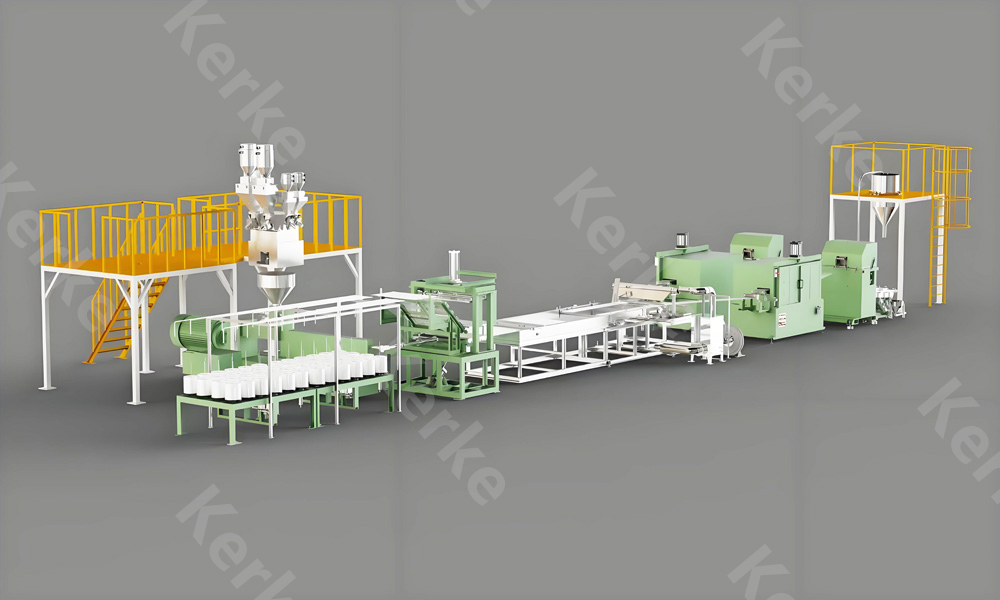
Temperature control stands as one of the most critical factors determining quality outcomes in masterbatch extrusion. The thermal conditions throughout the extrusion system directly influence pigment dispersion, carrier resin properties, and ultimately the color consistency and performance of finished products. Professional compounding extruders incorporate sophisticated temperature management systems that enable precise control across all processing zones. Understanding temperature control principles and practices equips manufacturers to optimize their production processes for superior quality results.
The complexity of thermal management in extrusion arises from the interaction of multiple heat sources and sinks within the processing system. Mechanical energy from screw rotation generates heat through viscous dissipation. Barrel heating elements add thermal energy to maintain target temperatures. Material introduction and melting absorb thermal energy. Cooling systems remove heat as needed to prevent excessive temperatures. Balancing these factors requires control systems that respond dynamically to changing conditions.
Fundamentals of Thermal Management in Compounding Extrusion
Understanding the fundamental principles underlying thermal management in extrusion provides essential context for control optimization. Heat generation, transfer, and removal mechanisms determine the thermal environment that materials experience during processing.
Heat Generation from Mechanical Energy
Viscous dissipation generates heat as material flows through the extrusion system. Polymer melts resist flow, converting mechanical energy into thermal energy. Shear rate determines the magnitude of this energy conversion, with higher shear producing more heat. This self-heating effect varies throughout the barrel depending on local shear conditions.
Mixing zones with intensive shear elements generate significant heat that raises local temperatures above setpoint. High-viscosity materials generate more heat than low-viscosity alternatives at equivalent shear rates. Screw speed affects heat generation through its influence on shear rate. Understanding heat generation enables anticipation of temperature variations and appropriate control response.
Heat Transfer Through Barrel and Material
Conduction transfers heat between material, barrel surfaces, and heating or cooling media. Barrel heating elements transfer thermal energy to material through conduction at the barrel surface. Cooling channels remove heat through similar mechanisms. Material internal conduction distributes thermal energy throughout the processing volume.
Material thermal conductivity determines how effectively heat spreads through the polymer melt. Different polymers exhibit different thermal properties that affect temperature uniformity. Barrel material and design influence heat transfer efficiency between heating elements and material. Understanding heat transfer enables configuration of temperature control systems that maintain appropriate conditions throughout processing.
Thermal Effects on Material Properties
Temperature directly affects polymer viscosity, with higher temperatures reducing melt viscosity. Viscosity changes influence shear rates, mixing efficiency, and motor load. Excessive temperature may degrade heat-sensitive polymers or pigments, causing discoloration or property changes. Insufficient temperature creates high viscosity that increases motor load and may prevent adequate mixing.
Pigment stability varies with temperature exposure. Some pigments degrade at temperatures that might otherwise be optimal for processing. Carrier resin thermal stability limits maximum processing temperatures. Understanding material thermal characteristics guides temperature profile development that balances processing requirements against thermal sensitivity.
Multi-Zone Temperature Control Architecture
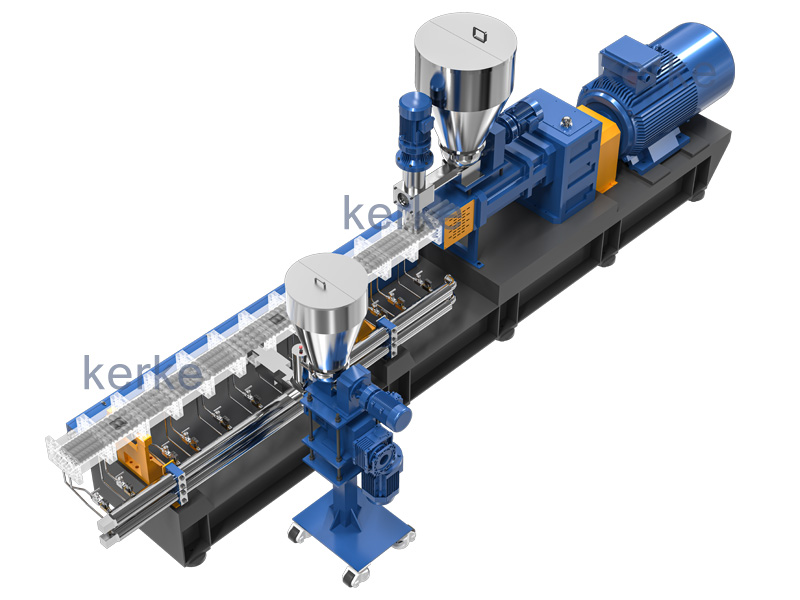
Modern compounding extruders employ multi-zone temperature control that enables independent thermal management of different barrel regions. This architecture supports the diverse temperature requirements that exist along the extrusion system.
Feed Zone Temperature Management
The feed zone accepts material introduction and initiates the melting process. Lower temperatures in this zone facilitate material flow from the hopper and prevent bridging or arching that disrupts feeding. Material begins heating from contact with barrel surfaces and from shear-generated heat as melting progresses.
Feed zone temperature should be low enough to maintain solid material handling but high enough to initiate melting appropriately. Excessive feed zone temperatures cause premature softening that clogs feeding and disrupts compression. Insufficient temperatures may require excessive melting zone length to achieve complete melting. Temperature optimization ensures smooth material introduction and controlled melting initiation.
Melting and Compression Zone Temperature Control
The melting zone experiences significant thermal changes as material transitions from solid to melt state. Phase change absorbs thermal energy, moderating temperature rise during melting. Shear heating from compression and initial mixing adds thermal energy that must be controlled.
Temperature profiles in the melting zone should facilitate controlled, progressive melting without excessive thermal exposure. Gradual temperature increases support smooth melting progression. Temperature overshoot during melting creates local hot spots that may degrade material. Careful temperature control in this zone prevents processing instability and ensures consistent melting.
Mixing Zone Temperature Optimization
The mixing zone requires careful temperature management to achieve dispersion objectives while avoiding thermal degradation. High temperatures reduce viscosity and improve mixing efficiency but increase degradation risk. Lower temperatures increase viscosity and improve shear transfer but may overload motors or cause processing instability.
Mixing zone temperature should match formulation requirements and mixing intensity. Intensive mixing configurations may require reduced temperatures to compensate for shear heating. Less intensive mixing may benefit from elevated temperatures that improve fluidity. Temperature optimization considers the interaction between configuration, speed, and temperature to achieve mixing objectives efficiently.
Discharge and Die Zone Temperature Control
The discharge zone prepares melt for extrusion through the die while maintaining homogeneity achieved through mixing. Temperature in this zone affects viscosity for pressure development and extrusion stability. Uniform temperature ensures consistent flow through die geometry that produces uniform product.
Die temperature should match discharge zone temperature to prevent flow disturbances at the transition. Temperature gradients along the die create flow variations that affect product uniformity. Die temperature affects surface appearance and properties in extruded products. Careful die temperature control ensures consistent quality from startup through shutdown.
Temperature Control System Components and Technology
Professional temperature control depends on integrated system components that measure, control, and adjust thermal conditions throughout the extrusion system.
Temperature Sensing and Measurement
Thermocouples provide temperature measurement through the thermoelectric effect that generates voltage proportional to temperature. Different thermocouple types suit different temperature ranges and environments. Proper thermocouple installation and protection ensures accurate measurement that supports effective control.
Thermocouple placement affects control accuracy and response. Direct insertion into the barrel provides material temperature measurement but risks damage from material flow or screw contact. Indirect measurement through barrel wall temperature requires calibration to estimate material temperature. Multiple thermocouples at different depths provide enhanced measurement capability in advanced systems.
Heating System Design and Performance
Barrel heating typically employs electric resistance heating elements arranged around the barrel circumference. These elements provide controlled thermal energy input that maintains processing temperatures. Element power density affects heating speed and temperature uniformity. Multiple elements per zone enable more uniform heating than single-element designs.
Heating system capacity should match processing requirements with appropriate margin. Insufficient heating capacity cannot maintain temperature during high-throughput production. Excessive capacity creates rapid temperature changes that challenge control stability. Balance between heating and cooling capacity determines system responsiveness to thermal disturbances.
Cooling System Technology
Barrel cooling removes thermal energy to prevent excessive temperatures during processing. Water cooling provides efficient heat removal for most applications. Cooling channel design determines heat transfer efficiency and pressure drop. Flow rate affects cooling capacity and temperature uniformity along the barrel.
Cooling system control may employ simple on-off valves or more sophisticated flow control valves. Proportional control provides smoother temperature regulation than simple on-off operation. Cooling water temperature and pressure affect cooling capacity. Water treatment prevents scale buildup that reduces heat transfer efficiency over time.
Control Algorithms and System Integration
Temperature controllers employ algorithms that calculate appropriate heating or cooling response based on measured temperature and setpoint. Proportional-integral-derivative (PID) control remains common due to its effectiveness and simplicity. Advanced controllers may incorporate adaptive algorithms that adjust control parameters based on process behavior.
System integration connects temperature controllers with data acquisition and supervisory systems. Recipe storage enables automatic temperature profile selection for different formulations. Alarm functions alert operators to temperature excursions that might affect product quality. Modern control systems provide comprehensive visibility and adjustment capability for effective temperature management.
Temperature Profile Development and Optimization
Developing optimal temperature profiles requires systematic understanding of how thermal conditions affect processing outcomes. Profile optimization balances processing efficiency against quality requirements for each formulation.
Initial Profile Selection Guidelines
Temperature profile development typically begins with equipment manufacturer recommendations based on general experience. Material supplier recommendations provide additional guidance for specific polymers. Starting profiles should represent reasonable compromises that enable initial processing for refinement.
Initial profiles should follow general principles of thermal management in extrusion. Feed zones run cooler, mixing zones may run warmer or cooler depending on requirements, and discharge zones maintain temperatures appropriate for extrusion. Standard profiles for common formulation types provide starting points for most applications. Documentation of initial profiles and performance observations supports systematic optimization.
Systematic Profile Refinement Process
Profile refinement proceeds through systematic experimentation that correlates temperature settings with product quality outcomes. Variable temperature studies evaluate the effects of specific zone temperature changes on processing and quality. Each study should maintain other parameters constant to isolate temperature effects clearly.
Refinement typically begins with major temperature zones before fine-tuning individual barrel sections. Overall profile adjustments establish the appropriate temperature range for the formulation. Subsequent refinement optimizes temperature distribution along the barrel. Documentation of refinement steps and results builds knowledge that supports future optimization efforts.
Profile Optimization for Different Formulations
Different formulations typically require different temperature profiles to achieve optimal results. Carrier resin characteristics significantly influence temperature requirements. High-melting-point resins require higher temperatures throughout processing. Low-melting-point materials may require reduced temperatures to prevent degradation.
Pigment systems with thermal sensitivity require temperature profiles that minimize thermal exposure. Intensive mixing formulations may benefit from reduced temperatures that compensate for shear heating. Filled formulations may require higher temperatures to manage viscosity at high filler loadings. Profile flexibility enables optimization for each formulation type processed.
Kerke KTE Series Temperature Control Capabilities
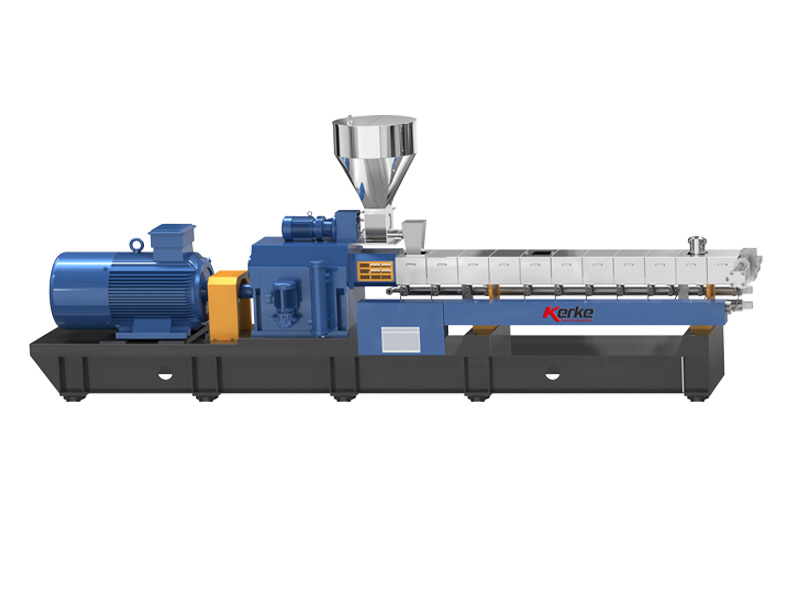
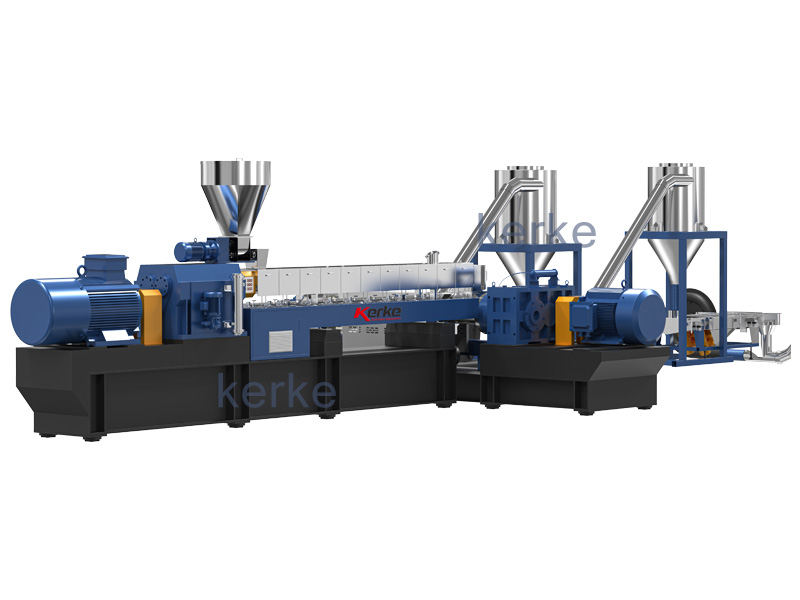
The Kerke KTE series incorporates professional temperature control systems appropriate for demanding masterbatch applications. Each model provides temperature management capability suited to its production scale.
KTE-36B Temperature Management Features
The KTE-36B compact extruder includes multi-zone temperature control for its 35.6mm diameter barrel. Smaller barrel volume relative to heat transfer area enables rapid temperature response. This responsiveness supports development applications where testing various temperature conditions efficiently.
The KTE-36B priced at $25,000 to $35,000 provides temperature control capability appropriate for its production capacity of 20 to 100 kg per hour. Multiple heating zones enable profile development that optimizes processing for diverse formulations. Cooling system integration provides the balanced heating and cooling capacity needed for stable temperature control.
KTE-50B Mid-Scale Temperature Control
The KTE-50B with 50.5mm screw diameter provides enhanced temperature control capacity compared to smaller models. Larger barrel volume requires proportionally more heating and cooling capacity for equivalent temperature response. Multi-zone control architecture enables independent management of different barrel regions.
The $40,000 to $60,000 investment in KTE-50B equipment delivers professional temperature control suitable for commercial production. Temperature profile optimization for this model enables efficient processing across the 80 to 200 kg per hour capacity range. Stable temperature control supports consistent product quality batch after batch.
KTE-65B High-Volume Temperature Management
The KTE-65B with 62.4mm screw diameter and 200 to 450 kg per hour capacity requires robust temperature control systems. Larger processing volume generates more shear heat that must be managed through appropriate cooling capacity. Temperature control must accommodate the thermal dynamics of high-volume production.
At $50,000 to $80,000, the KTE-65B provides temperature management capability suited to commercial masterbatch production. Professional control systems maintain temperature stability despite throughput variations and material changes. Temperature profile optimization maximizes quality and efficiency at production scale.
KTE-75B Industrial Temperature Control Excellence
The KTE-75B with 71mm screw diameter serves industrial-scale production at 300 to 800 kg per hour. This production scale demands exceptional temperature control capability to maintain quality consistently. High thermal mass requires control systems with sufficient capacity and responsiveness.
The $70,000 to $100,000 investment provides temperature control infrastructure appropriate for continuous industrial operation. Multiple heating zones enable fine control of temperature distribution throughout the larger barrel volume. Cooling system capacity matches heating capacity to provide balanced thermal management. Temperature stability at this scale supports production economics that enable competitive pricing.
KTE-95D Ultra-High Volume Temperature Systems
The KTE-95D with 93mm screw diameter achieves the highest production capacity in the KTE series at 1000 to 2000 kg per hour. Ultra-high volume processing generates substantial shear heat that requires sophisticated cooling management. Temperature control at this scale demands advanced systems and careful optimization.
Priced at $120,000 to $200,000, the KTE-95D incorporates the most advanced temperature control capabilities in the series. High-capacity heating and cooling systems provide the response needed for large-volume processing. Multi-zone control architecture enables precise temperature optimization across the extended barrel length. Temperature stability at maximum throughput enables quality achievement at production scales that create significant competitive advantages.
Startup and Shutdown Temperature Management
Temperature management during startup and shutdown significantly affects both equipment condition and product quality. Proper procedures during these transitions prevent equipment damage and ensure quality from the first production material.
Startup Temperature Procedures
Proper startup begins with pre-heating the barrel to appropriate temperatures before material introduction. Insufficient pre-heating allows material to contact cold surfaces that may damage equipment or create flow problems. Excessive pre-heating wastes energy and time. Manufacturer recommendations for pre-heat temperatures and durations provide appropriate starting guidance.
Material introduction should wait until barrel temperatures stabilize at target values. Temperature stability verification ensures that heating systems have reached equilibrium before processing begins. Initial throughput should be low while temperatures stabilize further. Gradual throughput increase as temperatures settle enables smooth transition to normal production. Startup procedures should be documented and followed consistently to ensure repeatable results.
Shutdown Temperature Procedures
Proper shutdown procedures protect equipment and enable efficient subsequent startups. Material remaining in the barrel should be purged with appropriate cleaning compounds before final shutdown. Incomplete purging allows material to solidify in barrel or screw passages, creating cleaning difficulties.
Shutdown temperatures should reduce gradually rather than abruptly to prevent thermal shock to equipment. Some operators reduce temperature while continuing slow screw rotation to maintain material flow. Others purge then cool with screws stopped. Appropriate procedures depend on equipment design and production requirements. Documentation of shutdown procedures ensures consistent practice across operating personnel.
Troubleshooting Temperature Control Problems
Temperature control problems affect product quality and production efficiency. Understanding common problems and their solutions enables efficient troubleshooting that minimizes production disruption.
Temperature Overshoot and Undershoot Issues
Temperature overshoot occurs when heating systems cause temperature to exceed setpoint significantly. This may damage temperature sensors, degrade materials, or create safety hazards. Undershoot during cooling creates similar problems when temperatures fall below acceptable levels. These issues often indicate control parameter misadjustment or insufficient system tuning.
Proportional and derivative control parameters affect response to temperature errors. Excessive proportional gain causes overshoot by applying excessive heating when temperatures are below setpoint. Insufficient derivative action allows overshoot from system lag. PID parameter tuning addresses most overshoot and undershoot problems. Control system documentation and manufacturer support assist with parameter optimization.
Temperature Drift and Instability
Temperature drift occurs when temperatures gradually move away from setpoint during production. Instability creates oscillating temperatures that never stabilize properly. Both issues indicate control system problems or changing thermal conditions that exceed control capability.
Drift may indicate heating or cooling system degradation, sensor drift, or changing material thermal properties. Investigation should assess each potential cause systematically. Instability may result from inadequate control parameters, excessive disturbances, or equipment problems. Control loop tuning, sensor replacement, or equipment repairs address various instability causes. Documented troubleshooting procedures support efficient problem resolution.
Zone-to-Zone Temperature Variation Problems
Excessive temperature variation between adjacent zones creates processing problems. Temperature gradients affect material flow and mixing in the transition regions. This variation may indicate inadequate heating or cooling capacity, control problems, or sensor issues.
Investigation of zone temperature variation should assess heating and cooling system performance for affected zones. Temperature sensor accuracy should be verified through comparison with reference measurements. Control parameters for affected zones may require adjustment. Equipment inspection may identify physical problems affecting thermal management. Resolution should restore appropriate temperature uniformity for stable processing.
Advanced Temperature Control Strategies
Advanced control strategies enable enhanced temperature management beyond basic PID control. These approaches leverage technology developments to improve control performance and processing outcomes.
Adaptive Temperature Control Approaches
Adaptive control algorithms automatically adjust control parameters based on observed process behavior. These systems learn how the extrusion process responds to control actions and modify parameters accordingly. Adaptive control handles process variations that would require manual parameter adjustment with conventional approaches.
Implementing adaptive control requires control systems with sufficient computational capability. Advanced temperature controllers may include adaptive features that can be enabled for appropriate applications. Benefits include improved disturbance rejection and reduced tuning requirements. Adaptive control represents investment in control technology that supports quality objectives.
Predictive Temperature Control Models
Predictive control uses process models to anticipate temperature behavior and optimize control actions. These approaches calculate control moves based on predicted future states rather than just responding to current errors. Predictive control handles constraints and multivariable interactions that simpler approaches cannot address.
Model predictive control for extrusion requires accurate process models that relate control actions to temperature outcomes. Development of these models requires process testing and system identification. Implementation requires control systems with sufficient computational capability for real-time optimization. The investment in predictive control development returns through improved temperature performance.
Integrated Process and Temperature Control
Integrated control systems coordinate temperature management with other process variables including throughput, screw speed, and motor load. These systems recognize interactions between variables and adjust controls to maintain overall objectives rather than optimizing individual variables independently.
Throughput changes affect temperature through altered residence time and shear heating. Integrated control anticipates these effects and adjusts temperature setpoints proactively. Motor load limits may constrain available screw speed, affecting heat generation. Integrated control coordinates these adjustments to maintain quality despite changing conditions. This approach requires sophisticated control architecture but delivers superior performance compared to independent control of individual variables.
Temperature Control Impact on Product Quality
Temperature directly affects product quality through its influence on processing conditions. Understanding these relationships guides temperature optimization that improves quality outcomes.
Temperature Effects on Color Development
Color development in masterbatch depends on temperature conditions during processing. Sufficient temperature enables complete pigment dispersion and proper carrier resin wetting. Excessive temperature may cause pigment degradation that changes color characteristics. Temperature profile optimization ensures appropriate thermal exposure for the specific pigment systems used.
Color strength measurements at different temperature conditions reveal the temperature sensitivity of specific formulations. Color consistency depends on temperature stability throughout production. Temperature variations cause color variations that manifest as batch-to-batch differences or within-batch inconsistencies. Temperature control directly enables the color consistency that customers require.
Temperature Impact on Carrier Resin Properties
Temperature affects carrier resin molecular weight, color, and performance properties. Excessive thermal exposure causes molecular chain scission that reduces viscosity and mechanical properties. Thermal oxidation degrades polymers through reactions with atmospheric oxygen. Temperature profile optimization minimizes unnecessary thermal exposure while achieving processing requirements.
Melt flow index testing detects changes in resin molecular weight that indicate thermal degradation. Color testing identifies thermal oxidation that causes yellowing or other discoloration. Mechanical property testing verifies that processing conditions preserve intended resin performance. Temperature profiles should maintain processing quality while protecting resin properties.
Temperature Uniformity Effects on Product Consistency
Temperature uniformity throughout the barrel affects product consistency from startup through production. Temperature gradients create processing variations that manifest as product quality variations. Uniform temperature enables consistent processing that produces uniform product throughout production runs.
Product sampling at different times during production reveals temperature-related consistency issues. Startup material may differ from steady-state production if temperatures have not stabilized.Shutdown material may degrade if temperatures remain high without proper purge. Temperature control procedures should address consistency throughout the entire production cycle.
Economic Considerations for Temperature Control
Temperature control affects production economics through energy consumption, throughput capacity, and quality costs. Understanding these relationships guides investments and operating decisions that optimize overall economics.
Energy Consumption Optimization
Temperature control consumes significant energy in extrusion production. Heating elements convert electrical energy to thermal energy. Cooling systems pump water and remove heat. Optimization that reduces unnecessary heating or cooling improves energy efficiency without sacrificing quality.
Temperature profile optimization identifies minimum temperatures that achieve quality objectives while reducing energy consumption. Startup and shutdown procedures can be streamlined to reduce unnecessary heating time. Insulation improvements reduce heat loss that requires continuous energy input to maintain temperatures. Energy monitoring identifies opportunities for efficiency improvement.
Throughput and Temperature Relationship
Temperature affects throughput capacity through its influence on viscosity and motor load. Higher temperatures reduce viscosity, potentially enabling increased throughput without motor overload. However, temperature increases that degrade quality require reduced throughput to maintain specifications.
Throughput optimization considers the temperature-throughput relationship to maximize production value. Maximum throughput may be limited by temperature constraints rather than motor power. Operating at temperatures that enable maximum throughput improves production economics. Temperature optimization should be integrated with throughput planning for overall production efficiency.
Quality Costs and Temperature Control Investment
Poor temperature control creates quality costs through off-specification production, rework, and customer complaints. Investment in temperature control capability reduces these quality costs. Control system upgrades, maintenance programs, and operator training may all reduce temperature-related quality problems.
Quality cost analysis quantifies the impact of temperature control performance on business results. These analyses support investment decisions for temperature control improvements. Cost-benefit analysis compares improvement investments against expected quality cost reductions. Professional temperature control delivers returns through improved quality that supports customer satisfaction and business success.
Conclusion
Temperature control fundamentally determines quality outcomes in masterbatch extrusion processing. The multi-zone temperature control architecture of professional compounding extruders enables thermal optimization throughout the barrel. Understanding heat generation, transfer, and control enables systematic approach to temperature management that improves product quality.
The Kerke KTE series provides professional temperature control capability across production scales from compact KTE-36B models at $25,000 to $35,000 through ultra-high volume KTE-95D systems at $120,000 to $200,000. Temperature profile development and optimization ensures that this capability translates into quality improvement for each formulation and production scale. Investment in temperature control technology and expertise delivers returns through consistent quality, efficient production, and satisfied customers. Masterbatch manufacturers that achieve temperature control excellence establish foundations for long-term competitive success.