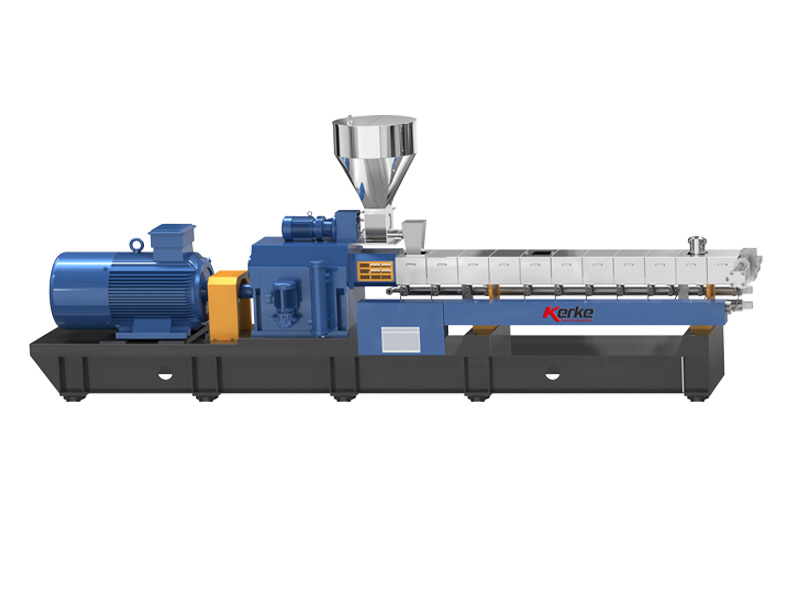
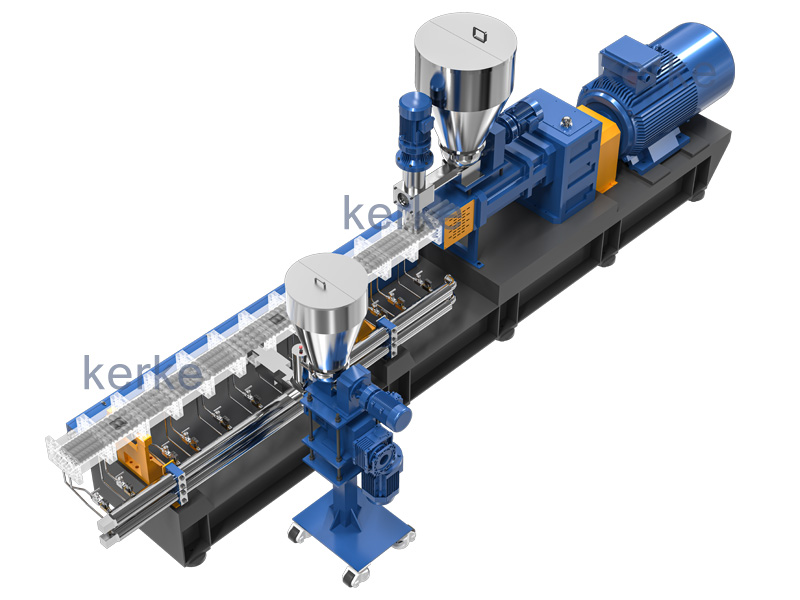
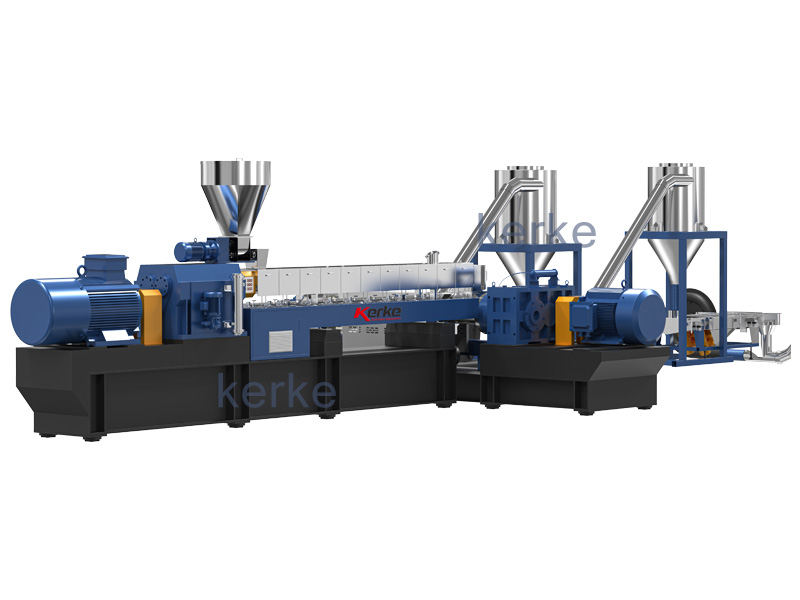
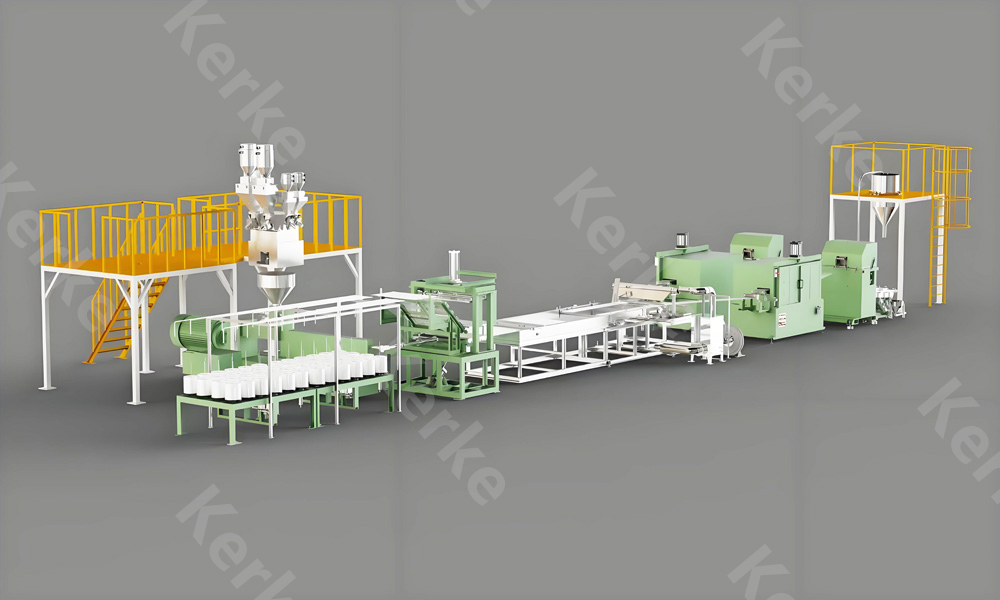
Driven by the rapid development of global plastics modification, packaging, automotive, electronics and new energy industries, the market demand for masterbatch and compounded plastic materials maintains a strong growth momentum. As the core equipment for masterbatch production and polymer compounding, twin screw extruders play an irreplaceable role in material mixing, dispersion and granulation. While pursuing production efficiency and product quality, production safety has always been the bottom line for the stable operation of every manufacturing enterprise. The masterbatch extrusion production process involves multiple risk factors such as high temperature, high pressure, mechanical rotation, plastic dust, chemical additives and high-power electrical systems. If safety management is not in place, it may lead to personal injury, equipment damage, production interruption and even serious safety accidents, bringing huge economic losses and legal risks to enterprises.
Essential safety design of equipment is the foundation of production safety, and scientific on-site management is the guarantee of safe operation. Only by building a full-dimensional safety protection system combining equipment hardware and management system can we effectively prevent safety accidents and achieve long-term stable production. As a professional manufacturer focusing on R&D and manufacturing of twin screw extruders, masterbatch extruders and compounding extruders, Kerke has always integrated intrinsic safety concepts into the whole process of equipment design, manufacturing and commissioning. Its full series of extrusion equipment is equipped with complete safety protection devices and intelligent safety monitoring systems, which can effectively reduce various safety risks in the production process. At the same time, Kerke can also provide targeted safety configuration schemes and safety production guidance according to customers’ different raw material characteristics and production scenarios, helping customers build a comprehensive safety production system.
This article will systematically sort out the main safety risk sources in the masterbatch extrusion production process, explain the intrinsic safety design details of Kerke twin screw extruders from multiple dimensions, introduce the on-site safety management system and standardized operation specifications, summarize the prevention and emergency treatment methods of common safety accidents, conduct detailed cost-benefit analysis for safety investment, and share daily maintenance strategies to maintain long-term safety performance. Through comprehensive and in-depth interpretation, this paper aims to help masterbatch and compound material production enterprises master scientific safety management methods, avoid safety risks, and achieve safe, efficient and sustainable production.
1. Core Safety Hazards in Masterbatch Extrusion Production Lines
Masterbatch production is a typical polymer processing process, which involves multiple links such as raw material weighing, mixing, feeding, melting extrusion, die head extrusion, pelletizing and finished product packaging. Each link has corresponding safety risks. Only by clarifying the distribution and characteristics of risk sources can we take targeted preventive measures.
1.1 High Temperature Thermal Hazards
The extrusion process needs to heat solid plastic raw materials to a molten state. The processing temperature of most plastic materials is between 150℃ and 300℃, and some engineering plastics even exceed 350℃. The barrel, die head, screen changer and other parts of the extruder are in a high temperature state for a long time, which is the most direct source of thermal danger in the production site. If the operator accidentally touches the high-temperature surface without protection, it will cause severe scalding. When replacing the filter screen, cleaning the die head or handling material blockage, the high-temperature molten material may splash out under pressure, causing more serious scalding accidents.
In addition to direct contact scalding, long-term thermal radiation from high-temperature equipment will also increase the ambient temperature of the workshop, affecting the working comfort of operators and even leading to heat stroke in high-temperature seasons. Local high temperature may also bake nearby cables and plastic pipes, accelerating aging and increasing the risk of electrical failure and fire.
1.2 Mechanical Injury Risks
The extrusion production line has a large number of rotating and moving parts, which are potential sources of mechanical injury. The transmission system of the main engine, including motor, coupling, gearbox and distribution box, runs at high speed during operation. If there is no effective protective cover, clothes, hair or limbs of operators may be involved, causing serious extrusion and twisting injuries. The feeding system, screw shaft, pelletizer cutter roller and other parts also have similar shearing and winding risks.
The hydraulic system of the screen changer and die head has huge thrust. If the operation is improper or the hydraulic system fails, the moving parts may move unexpectedly, causing extrusion injury. In the process of equipment cleaning, maintenance and repair, if the power is not cut off and locked in strict accordance with the procedures, accidental startup of the equipment may lead to mechanical injury accidents. Many casualty accidents in the plastics processing industry are caused by illegal operation and failure of mechanical protection devices.
1.3 Electrical Safety Risks
Twin screw extruders usually have large installed power. Medium-sized production lines range from dozens to hundreds of kilowatts, and large production lines can even reach hundreds of kilowatts. High-voltage and high-current electrical systems have inherent electric shock risks. If the insulation of electrical components is aged and damaged, or the grounding is bad, it may cause electric shock accidents to personnel. Short circuit and overload of electrical lines may also cause fire, especially in workshops with flammable dust and solvents, which is more likely to cause serious fire and explosion accidents.
In addition, static electricity is easily generated during the conveying and mixing of plastic powder and granular materials. If static electricity accumulates and cannot be released in time, it will produce discharge sparks. In an environment where flammable gas or dust reaches a certain concentration, it may trigger combustion or explosion. The harm of electrical safety accidents is usually great, which is one of the key risk points that must be prevented in extrusion production.
1.4 Dust and Fume Health and Safety Risks
Masterbatch production requires a large number of color powders, fillers, functional additives and other powdery raw materials. In the links of batching, mixing and feeding, dust is easy to overflow into the air of the workshop. Long-term inhalation of plastic dust and additive dust will cause damage to the respiratory system of operators, and even lead to occupational diseases such as pneumoconiosis. Some special additives have certain toxicity and irritation, which will do more harm to human body.
At high temperature, plastics and additives will decompose and release volatile organic compounds and oily fumes, which have pungent smell and certain toxicity. Long-term inhalation will damage the respiratory tract and nervous system. More importantly, when the concentration of plastic dust in the air reaches the explosion limit, encountering open fire, static spark or high-temperature heat source may cause dust explosion, which is extremely destructive and will cause heavy casualties and property losses. Dust explosion is a major hidden danger that must be highly vigilant in powder processing scenarios such as masterbatch production.
1.5 Melt Pressure Hazards
The twin screw extruder is a closed pressure system. The molten plastic is pushed forward under the action of the screw, and forms high pressure at the die head and filter screen. Under normal circumstances, the melt pressure is between 10MPa and 30MPa, and some high-viscosity materials can even be higher. If the screen is seriously blocked, the die head is blocked by carbonized materials, or the process parameters are improperly adjusted, the melt pressure will rise sharply. If there is no effective pressure relief measure, it may cause melt injection, equipment damage and even explosion accidents.
The pressure hazard is particularly prominent in the process of screen replacement and die head disassembly. If the internal residual pressure is not fully released before operation, the high-temperature melt will spray out instantly when the die head is opened, which is very easy to cause scalding accidents. The pressure-bearing parts such as barrel and die head work under high pressure and high temperature for a long time. If there are material defects or fatigue cracks, there is also a risk of structural rupture.
1.6 Chemical and Raw Material Hazards
Masterbatch production involves a variety of chemical additives, such as coupling agents, dispersants, antioxidants, flame retardants, light stabilizers and organic pigments. Some of these additives have certain toxicity, irritation or corrosiveness. Direct contact with skin may cause chemical burns, and inhalation of dust or vapor may cause poisoning. Some liquid additives are flammable and explosive, and there is a risk of combustion and explosion if they are not properly stored and used.
Some special formula systems need to add solvent-based additives or liquid materials, which will increase the concentration of flammable gas in the workshop. If ventilation is poor, it is easy to form an explosive gas environment. If waste materials and waste packaging are not properly treated, they may also cause chemical pollution and safety risks. Standardized management of chemical raw materials is an important part of safety production in masterbatch factories.
1.7 Human Factor Risks
Statistics show that more than 80% of industrial safety accidents are related to human unsafe behaviors. Illegal operation, fluke mentality, weak safety awareness and fatigue operation are important causes of accidents. For example, removing the safety shield for convenience, directly touching the running parts by hand, operating the equipment without training, not wearing personal protective equipment as required, and carrying out maintenance without power cut off and listing, all of which may lead to safety accidents.
In addition, unreasonable production arrangement, long-time overtime work leading to personnel fatigue, and inadequate safety training will also increase the probability of human errors. To prevent safety accidents, we should not only improve the safety performance of equipment, but also strengthen personnel management and safety education to reduce unsafe behaviors from the source.
2. Intrinsic Safety Design of Kerke Twin Screw Extruders
Intrinsic safety is the most effective safety strategy. By optimizing the equipment design, risks are eliminated or reduced from the source, which is far more reliable than relying solely on protective devices and personnel compliance. As a professional extrusion equipment manufacturer, Kerke runs the safety concept through the whole R&D and manufacturing process of each twin screw extruder, masterbatch extruder and compounding extruder, and builds a multi-level safety protection system from hardware structure to intelligent control.
2.1 High Temperature System Safety Protection
All Kerke extrusion equipment is equipped with fully wrapped high-efficiency thermal insulation layer on the surface of the barrel. On the one hand, it reduces heat loss and saves heating energy consumption. On the other hand, it greatly reduces the surface temperature of the barrel, avoiding direct contact with high-temperature surfaces and scalding operators. The thermal insulation layer is made of high-temperature resistant and non-combustible materials, with compact structure and long service life.
High-temperature parts such as die head and screen changer are equipped with special high-temperature resistant protective covers, which completely wrap the high-temperature surface. Operators cannot directly touch the high-temperature area without special tools, effectively preventing accidental scalding. The protective cover is designed with quick opening structure, which does not affect normal maintenance and die replacement operations. For the operation surface of the die head area, the equipment reserves sufficient safe operation space to avoid operators being too close to the high-temperature surface during normal production. All heating junction boxes are insulated and isolated to prevent high temperature from being transmitted to electrical components and causing circuit aging.
2.2 Mechanical Safety Protection Mechanisms
Kerke has designed a complete mechanical protection system for all rotating and moving parts of the equipment. All transmission parts such as coupling, gearbox output end and pelletizer cutter roller are equipped with fully enclosed metal protective covers, which have sufficient structural strength and cannot be opened without special tools. Each protective cover is equipped with a safety interlock switch. When the protective cover is opened, the system will immediately cut off the power of the corresponding moving parts and trigger an audible and visual alarm to prevent misoperation from causing injury.
The whole production line is equipped with multiple emergency stop buttons, which are distributed at the main operation position, feeding end, discharging end, electrical cabinet and other positions. In case of any emergency, pressing any emergency stop button can quickly stop the whole line. The hydraulic system is equipped with safety overflow valve and position locking device to prevent accidental movement of hydraulic actuators caused by system pressure fluctuation or pipeline rupture, and avoid extrusion injury. The pelletizer is a high-incidence area of mechanical injury. Kerke pelletizer is designed with door opening power-off interlock. When the pelletizing chamber door is opened, the cutter roller power is cut off immediately and the brake is activated to stop the cutter roller quickly, so as to prevent injury caused by inertial rotation.
2.3 Melt Pressure Safety Protection System
Pressure safety is the top priority of extrusion production safety. Kerke twin screw extruders are equipped with high-precision melt pressure sensors at the die head position as standard, which can detect the melt pressure in real time with high accuracy and fast response. The pressure data is transmitted to the PLC control system, which continuously monitors the pressure change.
The system is preset with multi-level pressure thresholds. When the pressure reaches the early warning value, it will send out an audible and visual alarm to remind operators to check and handle. When the pressure continues to rise to the safety upper limit, the system will automatically reduce the screw speed and feeding speed, and actively reduce the system pressure. When the pressure exceeds the limit value, the main engine will stop urgently to prevent pressure from continuing to rise and cause danger. For high-pressure compounding extruder models, an automatic hydraulic pressure relief device can be optionally installed. When the pressure exceeds the safety range, the pressure relief channel will be opened automatically to release the excess pressure stably and avoid safety accidents caused by overpressure.
All pressure-bearing parts such as barrel, die head and screen changer have undergone strict strength calculation and pressure test before leaving the factory to ensure that the structural strength has sufficient safety margin and will not break under rated pressure. The hydraulic screen changer adopts a pressure-balanced structure, so the pressure fluctuation is small during screen replacement, which reduces the risk of melt splashing.
2.4 Electrical Safety Design Standard
The electrical system of Kerke extrusion equipment strictly follows international electrical safety standards. The main circuit is equipped with complete overload protection, short circuit protection and leakage protection devices. In case of electrical failure, it can automatically cut off the power supply to protect equipment and personal safety. The driving motor is equipped with overheating protection. When the winding temperature exceeds the safety range, it will automatically reduce load or stop to prevent motor burnout and fire caused by overheating.
The electrical control cabinet adopts IP54 protection grade, which has good dustproof and waterproof performance, and adapts to the complex environment of the production workshop. All electrical components adopt well-known brands at home and abroad, with stable and reliable performance and long service life. The whole equipment is designed with a perfect grounding system, and all metal shells and components are reliably grounded to avoid static electricity accumulation and induced electric shock. For production scenarios involving flammable and explosive raw materials or solvents, Kerke can provide a full set of explosion-proof electrical configuration, and select electrical components and motors that meet the corresponding explosion-proof grade, so as to avoid electrical sparks igniting flammable gases or dust.
2.5 Dust and Fume Control Design
Aiming at the dust problem in masterbatch production, Kerke has optimized the sealing design of the feeding system. The weightlessness feeder and screw feeder adopt a fully enclosed structure, and the connection with the barrel is tightly sealed to reduce dust overflow from the source. The equipment reserves a standard dust removal interface at the feeding port and pelletizing outlet, which can be connected with the customer’s central dust removal system to collect dust at the point where dust is generated, so as to avoid dust spreading into the workshop.
For the high-temperature flue gas generated at the exhaust port and die head, the equipment is designed with a closed collection hood, which can be connected to the waste gas treatment system to collect and treat the volatile gas and oil fume in a centralized manner, so as to prevent unorganized emission and protect the health of operators. For production lines with high dust control requirements, Kerke can provide a fully enclosed dust-free production scheme. From raw material conveying, batching mixing, feeding extrusion to finished product packaging, the whole process is closed, which minimizes dust overflow and greatly reduces the risk of dust explosion.
2.6 Intelligent Safety Monitoring and Interlock System
Kerke extrusion production line adopts PLC + touch screen intelligent control system, which integrates comprehensive safety monitoring logic. The system monitors all key parameters such as temperature, pressure, current, rotating speed, cooling water flow and lubricating oil level in real time. Once any parameter is abnormal, it will give an alarm immediately and take corresponding protective measures automatically to avoid the expansion of the fault.
The system has built-in rich safety interlock logic. For example, when the lubrication system fails, the main engine will stop automatically to prevent gearbox and bearing damage caused by lack of oil. When the cooling water is interrupted, the system will automatically reduce the speed and give an alarm to prevent the equipment from overheating. When the feeding is interrupted, the screw will automatically reduce the speed to avoid material shortage and idling. When the pelletizer fails, the main engine will slow down synchronously to avoid material accumulation and blockage. Through the linkage control of the whole line, single fault will not evolve into a larger safety accident.
The optional remote monitoring module can realize remote viewing of equipment operation status and safety parameters. Managers can know the operation of the equipment at any time through mobile phones or computers, and find hidden dangers in time. The system automatically records all alarm information and operation data, which is convenient for accident traceability and safety management optimization, and helps enterprises continuously improve their safety management level.
3. On-Site Production Safety Management System
Intrinsic safety design of equipment is the foundation of safety production, and scientific on-site management is the guarantee to give full play to the safety performance of equipment. Advanced equipment must be matched with standardized management system to truly achieve safe production.
3.1 Personnel Training and Qualification Management
Personnel are the core of safety management. All operators must receive systematic safety training and operation training before taking up their posts, and can only take up their posts after passing the assessment. The training content includes equipment working principle, standard operation process, identification of risk points, correct use of protective equipment, emergency treatment methods, etc., to ensure that each operator fully understands the safety risks of the post and masters the corresponding prevention and response methods.
Special operation personnel such as electricians and welders must hold corresponding special operation certificates and work with certificates. It is strictly forbidden for untrained personnel to operate equipment and engage in special operations. Regular safety re-training and emergency drills should be carried out, usually once a quarter for safety training and once every six months for emergency drill, so as to continuously strengthen the safety awareness of employees and improve their emergency response ability. When new equipment, new process and new raw materials are introduced, special safety training must be carried out again to ensure that personnel master the corresponding safety knowledge.
Establish a clear safety responsibility system, clarify the safety responsibilities of personnel at all levels, integrate safety indicators into performance assessment, and implement the reward and punishment mechanism for safety production, so as to improve the attention of all employees to safety.
3.2 Standardized Operating Procedures
Formulate detailed standard operating procedures for all links of production, including pre-start inspection, temperature rise and preheating, formal feeding production, material and color change, screen replacement, cleaning and shutdown, equipment maintenance, etc., and clarify the operation steps, safety precautions and confirmation standards for each link.
For high-risk operations such as screen replacement and die head disassembly, special operation specifications must be formulated. It is strictly required to fully reduce pressure and temperature before operation. Operators must wear protective face shields and high-temperature resistant gloves, stand on the side of the die head for operation, and are strictly prohibited from facing the die head directly. It is strictly forbidden to forcibly open the die head with pressure. For equipment cleaning and maintenance operations, the power cut-off and listing system must be strictly implemented. After cutting off the main power supply, a warning sign of “under maintenance, do not switch on” shall be hung, and a special person shall be assigned to take care of the power supply, so as to prevent others from switching on the power supply by mistake.
All operating procedures shall be posted at the eye-catching position beside the equipment for operators to check at any time. Strengthen the on-site supervision of the production process, timely stop and correct illegal operations, and ensure that every employee operates in strict accordance with the procedures.
3.3 Personal Protective Equipment Requirements
Personal protective equipment is the last line of defense to protect the safety of operators. Enterprises shall configure corresponding protective articles according to the risk characteristics of different positions, and supervise employees to wear them correctly.
Operators on the extrusion production line must wear high-temperature resistant protective gloves, protective glasses and anti-scald work shoes during normal production to prevent high-temperature scalding and debris splashing. For posts with more dust, dust masks or respirators that meet the protection level must be worn to prevent inhalation of harmful dust and fumes. Personnel engaged in chemical raw material batching shall also be equipped with goggles and protective clothing to prevent chemical splashing injury. Electrical maintenance personnel must be equipped with insulating gloves, insulating shoes and other insulating protective equipment.
Anyone entering the production area must wear work clothes and work shoes. It is strictly forbidden to wear accessories such as necklaces and bracelets, and long hair must be tied up and placed in the work cap to prevent being involved in rotating parts. For special operations such as confined space operation and high-altitude operation, corresponding special protective equipment must be equipped. The enterprise shall regularly check the integrity of protective articles and replace invalid articles in time to ensure the protective effect.
3.4 Workplace Environment Safety Management
The production site shall keep the passages unobstructed. No materials and sundries shall be piled up in the safety passages and fire exits to ensure personnel evacuation and rescue in case of emergency. Raw materials, finished products and waste materials shall be stacked in different areas, and the stacking height shall meet the safety requirements to prevent collapse and injury.
Keep good ventilation in the workshop, reasonably set up air inlet and outlet, and configure ventilation equipment if necessary to reduce the concentration of dust and harmful gas in the workshop. Equip sufficient fire-fighting equipment, including fire extinguishers, fire hydrants and fire sand, and check the effectiveness regularly to ensure that the fire-fighting equipment is in good condition and available at any time. Clear safety warning signs shall be set in dangerous areas such as high temperature, high pressure, electricity and dust to remind personnel to pay attention to safety.
Smoking and open fire use are strictly prohibited in the production area. Hot work such as welding and cutting must go through hot work approval, and fire prevention measures shall be implemented before operation. Keep the ground of the workshop clean and tidy, clean up the spilled materials and dust in time, and reduce the dust accumulation on the ground and equipment surface.
3.5 Hazardous Chemicals and Raw Material Storage Management
Hazardous chemicals and toxic and harmful additives must be stored in special chemical warehouses, which shall meet the requirements of fire prevention, explosion protection and leakage prevention. Different types of dangerous goods shall be stored in separate categories with clear marks. The storage quantity shall be controlled within the specified range, and excessive storage is strictly prohibited.
Establish a chemical receiving and registration system, receive materials according to demand, and only keep appropriate amount of materials on the post for the current shift. It is forbidden to store a large number of dangerous chemicals in the production site. Containers for chemicals must have clear labels indicating the name, hazard and emergency treatment method. Powdery raw materials that are easy to produce dust shall be sealed during storage and handling to reduce dust flying.
Waste materials, waste packaging and waste liquid shall be collected and disposed of in accordance with environmental protection and safety requirements, and shall not be discarded at will to avoid secondary pollution and potential safety hazards. The chemical warehouse shall be managed by specially assigned personnel, and the access registration system shall be strictly implemented.
3.6 Regular Safety Inspection and Hidden Danger Rectification
Establish a three-level safety inspection system of daily inspection, weekly inspection and monthly inspection. The daily inspection is carried out by operators and team leaders, focusing on the operation of equipment, the integrity of protective devices and on-site operation norms. The weekly and monthly inspections are organized by the safety management department to conduct a comprehensive investigation of all safety links.
The inspection contents include whether the safety protection devices of the equipment are in good condition, whether the electrical lines are normal, whether the fire-fighting facilities are effective, whether the on-site operation is standardized, whether the chemical storage is compliant, etc. Establish a hidden danger account for the problems found in the inspection, clarify the rectification responsible person, rectification period and rectification measures, and recheck and accept after rectification to form a closed-loop management.
Regularly carry out special safety inspections such as dust explosion protection, electrical safety and special equipment, and deeply investigate the hidden dangers in key areas. Encourage employees to report safety hidden dangers, set up reward mechanisms, and create a good safety atmosphere for everyone to participate.
4. Prevention and Emergency Response for Common Safety Accidents
Even with perfect preventive measures, we should be prepared for possible accidents. Mastering scientific emergency response methods can minimize the losses caused by accidents.
4.1 Melt Splash Burn Accident
To prevent melt scalding, the most important thing is to strictly control the melt pressure and clean the filter screen and die head regularly to avoid blockage and overpressure. The pressure protection system of the equipment shall be checked regularly to ensure its normal operation. When replacing the filter screen and disassembling the die head, the pressure must be fully released and the temperature must be properly reduced. Operators must wear protective face shields and high-temperature gloves and stand on the side for operation. It is strictly prohibited to directly face the die head outlet.
In case of scalding accident, immediately flush the scalded part with a large amount of cold water for more than 15 minutes. For mild scalding, apply scald ointment after washing. For severe scalding, send to hospital immediately after simple treatment. If there is melt adhering to the skin, do not peel it off forcibly. Cool it with cold water and then send it to the hospital for professional treatment. At the same time, stop the machine and cut off the power supply, check the cause of the accident, and resume production after confirming that the equipment is safe and the hidden danger is eliminated.
4.2 Mechanical Injury Accident
To prevent mechanical injury, it is necessary to ensure that all safety shields and interlock devices are intact and effective. It is strictly prohibited to remove or shield the safety interlock. When the equipment is running, it is forbidden to reach into the protective area by hand. All cleaning and maintenance work must be carried out after power failure and locking. Tools and sundries are not allowed to be placed near the rotating parts to prevent them from being involved and flying out.
In case of mechanical injury, stop the machine and cut off the power immediately to prevent secondary injury. For bleeding wounds, press to stop bleeding first and bandage them. If there is limb severance, wrap the severed limb with clean gauze, store it at low temperature and send it to the hospital together with the injured. For seriously injured persons, dial the emergency number immediately. Protect the accident site, conduct accident investigation afterwards, find out the cause, and implement corrective measures to prevent similar accidents from happening again.
4.3 Electrical Fire Accident
To prevent electrical fires, regularly check the electrical lines and replace the aged and damaged lines in time. It is strictly forbidden to overload the power grid and connect wires without permission. Keep the inside of the electrical cabinet clean, regularly clean the dust inside, and avoid dust accumulation affecting heat dissipation. Equip appropriate fire extinguishing equipment and regularly check whether it is valid.
In case of electrical fire, cut off the main power supply first, and use dry powder fire extinguisher or carbon dioxide fire extinguisher to put out the fire. Water is strictly prohibited to put out electrical fires to avoid electric shock accidents. If the fire is large, evacuate personnel immediately and call the fire alarm number. Priority shall be given to ensuring the safety of personnel, and personnel shall be organized to evacuate orderly to avoid casualties caused by smoke and fire spread.
4.4 Dust Explosion Risk
Prevention of dust explosion should start from controlling dust concentration, eliminating ignition sources and improving explosion-proof measures. Strengthen ventilation and dust removal, control the dust concentration in the workshop below the explosion limit. Clean the dust on the ground and equipment surface regularly to avoid dust accumulation. Strictly control open fire and static spark, and electrical equipment shall adopt explosion-proof type when necessary. Control the material conveying speed and reduce static electricity generation.
If abnormal dust concentration is found, stop the machine immediately, stop material conveying, strengthen ventilation, and do not switch electrical equipment at will. Personnel shall evacuate to a safe area in an orderly manner. In case of explosion, start the emergency plan immediately, organize personnel to evacuate along the safe route, and prevent secondary explosion and secondary disasters. After the accident, fully investigate the hidden dangers before considering resuming production.
4.5 Toxic Fume Poisoning
To prevent toxic gas poisoning, ensure the normal operation of waste gas collection and treatment system, and maintain good ventilation in the workshop. Operators shall wear appropriate gas masks and reduce the residence time in the polluted area. Avoid overheating degradation of materials, reduce the generation of harmful flue gas, and control the processing temperature within the normal range of materials.
In case of poisoning, immediately transfer the poisoned person to a well-ventilated place with fresh air, untie the collar and keep the respiratory tract unobstructed. In severe cases, send to hospital immediately. At the same time, stop the machine, check the cause of flue gas leakage, strengthen ventilation, and resume production after confirming that the environment is safe.
4.6 Emergency Plan and Emergency Material Allocation
Enterprises shall formulate a complete work safety emergency plan, covering all kinds of common accidents, clarifying the emergency organization, division of responsibilities, disposal procedures, evacuation routes and contact information. The emergency plan shall be publicized to all employees to ensure that everyone knows the evacuation route and their own responsibilities.
Organize emergency drills regularly to test the feasibility of the plan and improve the emergency response ability of employees. Equip sufficient emergency materials at the production site, including first-aid kits, scald medicines, hemostatic supplies, fire extinguishers, fire sand, emergency lighting, gas masks, eye wash devices, etc., placed in eye-catching and accessible positions, and checked and supplemented regularly to ensure they are in good condition.
5. Kerke Equipment Safety Configuration Options and Cost-Benefit Analysis
Safety investment is not a pure cost, but an investment with high return. Choosing appropriate safety configuration according to actual production needs can effectively reduce the risk of accidents and bring rich economic and management benefits.
5.1 Safety Configuration for Different Types of Extruders
Kerke provides different levels of safety configuration for different types of twin screw extruders, masterbatch extruders and compounding extruders to meet the needs of different application scenarios.
Small laboratory twin screw extruders are mainly used for formula research and development and small batch trial production. They are equipped with basic safety configurations as standard, including protective covers for transmission parts, emergency stop buttons, basic pressure alarm and electrical protection systems, which meet the safety requirements of laboratory scenarios and have high cost performance.
Medium-sized production masterbatch extruders are the mainstream models in the industry. They are equipped with a complete safety protection system as standard, including fully insulated barrel, safety interlock protective cover, high-precision pressure monitoring and protection device, complete electrical protection, dust removal and waste gas interface, and intelligent safety interlock logic, which can meet the safety needs of most industrial mass production scenarios.
Large industrial compounding extrusion lines are oriented to large-scale production with large output and high power. In addition to the standard safety configuration, they are also equipped with more perfect pressure protection system, automatic screen changer, centralized dust removal and waste gas treatment system, whole line safety interlock and remote monitoring function, which have higher safety and reliability, and are suitable for large chemical and new material enterprises.
5.2 Optional Safety Upgrade Configurations
Customers can choose targeted safety upgrade configurations according to their own raw material characteristics and safety requirements.
Explosion-proof upgrade package: for the production scenarios of flammable and explosive raw materials and solvent additives, the whole set of electrical system, motor and sensors adopt explosion-proof type, equipped with anti-static devices, which meet the corresponding explosion-proof grade requirements and effectively reduce the risk of combustion and explosion.
Automatic screen changer system: it can realize non-stop automatic screen replacement, reduce the chance of manual contact with high-temperature melt, fundamentally reduce the scald risk in the screen replacement process, and improve production continuity and efficiency at the same time.
Fully enclosed dust-free production system: the whole process from feeding to finished product packaging is enclosed, equipped with centralized dust removal and waste gas treatment, which controls dust and flue gas at a very low level, greatly improves the workshop environment and eliminates the hidden danger of dust explosion.
Remote safety monitoring system: it realizes real-time remote monitoring, fault early warning and data recording of equipment safety parameters, helps enterprises realize intelligent safety management, improves hidden danger investigation efficiency, and supports multi-terminal viewing.
Fire linkage system: the equipment control system is linked with the workshop fire protection system. In case of fire and other emergencies, the equipment will automatically stop and cut off the power supply to cooperate with the fire protection system.
5.3 Cost Analysis of Safety Investment
Taking the mainstream medium-sized masterbatch twin screw extrusion production line with a capacity of 300 to 500 kg per hour as an example, the cost related to safety configuration is analyzed in detail. All prices are for reference only, and the actual quotation shall be subject to the specific configuration scheme.
The total price of Kerke medium-sized twin screw extruder production line with standard safety configuration is about 85,000 to 120,000 US dollars. The cost of safety-related design and configuration accounts for about 10% to 15% of the total equipment price, that is, about 8,500 to 18,000 US dollars. This part is the basic safety investment of the equipment, which can meet the basic safety production needs of conventional masterbatch production.
If the explosion-proof configuration is upgraded, an additional 15% to 25% of the equipment cost is required, that is, about 12,750 to 30,000 US dollars, which is suitable for production scenarios involving flammable and explosive materials. If the fully enclosed dust-free system and waste gas treatment are upgraded, an additional 8,000 to 15,000 US dollars is required. If the automatic screen changer system is added, an additional 10,000 to 18,000 US dollars is required.
Although the safety upgrade increases the initial investment, it brings a substantial reduction in safety risks and long-term operating benefits. For high-risk production scenarios, the necessary safety upgrade is very cost-effective.
5.4 Return on Investment of Safety Investment
Many enterprises only regard safety investment as a cost, but in fact, safety investment has a very high rate of return, which is reflected in many aspects.
First of all, safety investment can avoid huge accident losses. A moderate safety accident, such as melt splash scald and equipment damage, will cost 50,000 to 200,000 US dollars in direct losses including medical compensation, equipment maintenance and production shutdown. In case of major accidents such as fire and dust explosion, the loss may reach millions of dollars, and enterprises will also face high fines from regulatory authorities and even criminal liability. Perfect safety configuration can greatly reduce the probability of accidents and avoid these huge losses.
Secondly, compliance benefits. Safety production supervision around the world is becoming more and more strict. Enterprises that do not meet safety standards will face production suspension for rectification, high fines and even revocation of business licenses. Equipment meeting safety standards can help enterprises successfully pass safety inspections, avoid compliance risks and maintain normal production and operation.
Third, efficiency improvement. Safety configurations such as automatic screen changer not only reduce operation risks, but also reduce downtime and improve production efficiency, which can increase tens of thousands of dollars in revenue every year. A good working environment can also improve employee satisfaction, reduce staff turnover and save recruitment and training costs.
Comprehensive calculation shows that for a medium-sized masterbatch production line, the static investment return period of safety upgrade investment is usually 6 to 12 months, which is far lower than the service life of the equipment, and it is a very high return investment. In the long run, the brand reputation, employee trust and sustainable development value brought by safe production are immeasurable.