Perfect dispersion is the cornerstone of high-quality masterbatch production. The global masterbatch market is projected to reach $12.79 billion by 2029, growing at a CAGR of 6.2% from 2025 to 2029. This growth is driven by increasing demand for consistent color, reliable performance, and precise functional properties across automotive, packaging, electronics, and medical industries. Even minor imperfections in pigment or additive dispersion can lead to costly product defects, rejected batches, and damaged customer relationships.
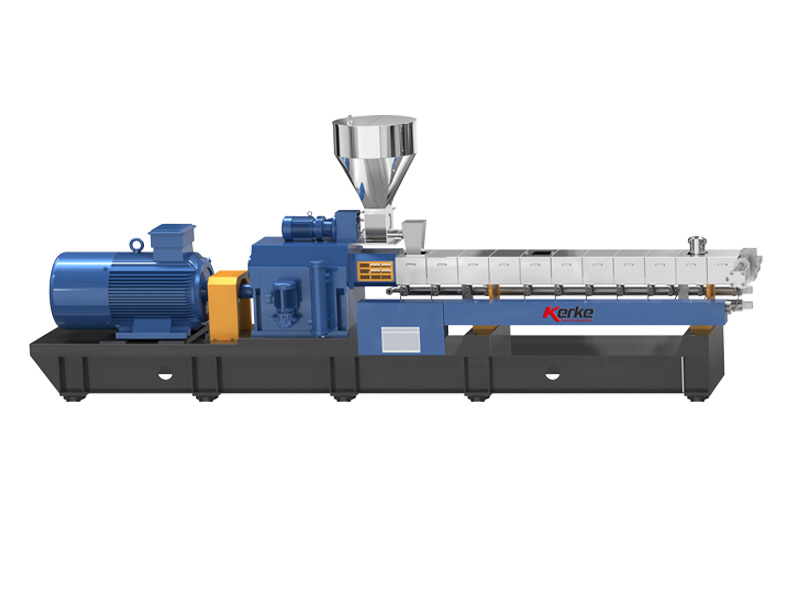
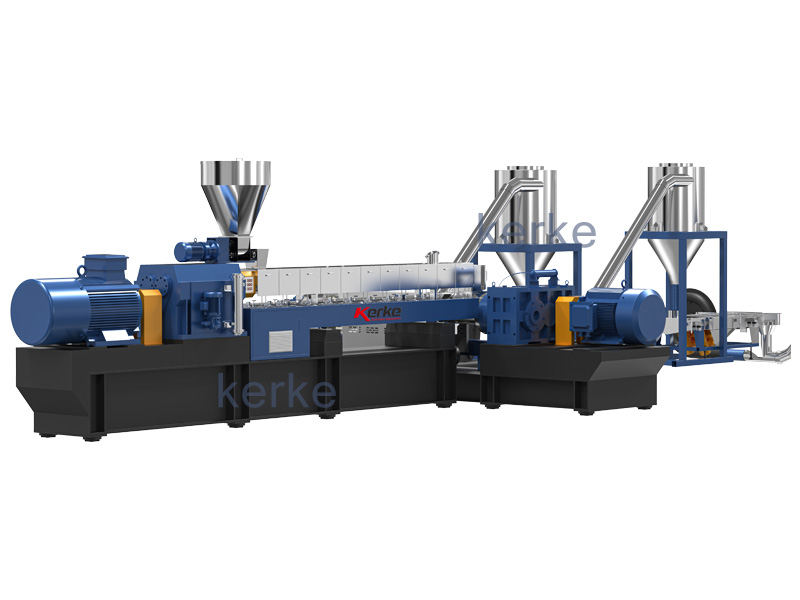
At the heart of every successful masterbatch production operation lies the twin screw extruder. This sophisticated piece of equipment has revolutionized the industry by providing unprecedented control over the mixing process. Unlike traditional single screw extruders that struggle with inconsistent dispersion, modern co-rotating intermeshing twin screw extruders deliver the precise combination of shear, temperature, and residence time required to break down agglomerates and distribute components uniformly throughout the polymer matrix.
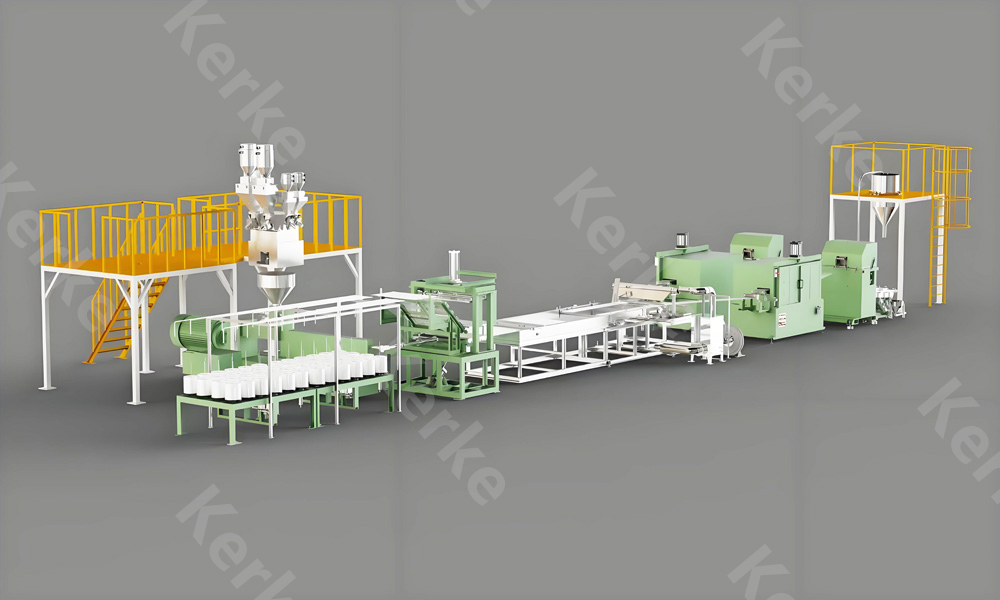
As a leading global manufacturer of advanced twin screw extrusion systems with over 25 years of industry experience, KERKE has perfected the art and science of dispersion in masterbatch production. Our KTE series twin screw extruders are specifically engineered to deliver perfect dispersion for even the most challenging formulations, including high-concentration color masterbatches, functional masterbatches with difficult-to-disperse additives, and specialty compounds for demanding applications. With thousands of successful installations worldwide, KERKE extruders have proven to reduce scrap rates by up to 90%, improve color strength by 15-20%, and increase production efficiency by 67% compared to traditional equipment.
This comprehensive guide provides everything you need to know about how twin screw extruders achieve perfect dispersion in masterbatch production. It examines the critical importance of dispersion quality, analyzes the limitations of traditional extrusion equipment, details the advanced technologies and design features that make modern twin screw extruders superior, explains how to measure and evaluate dispersion quality, provides a complete product overview with detailed pricing, includes a comprehensive cost analysis and return on investment calculation, features real-world success stories from our global customers, and offers practical guidance for optimizing dispersion in your production facility. Whether you are a small specialty masterbatch producer or a large multinational corporation, this guide will help you understand how to achieve perfect dispersion and maximize the value of your extrusion equipment investment.
1. The Critical Importance of Perfect Dispersion in Masterbatch Production
Dispersion refers to the process of breaking down agglomerates of pigments, fillers, and additives into their primary particle size and distributing them uniformly throughout the carrier resin matrix. Perfect dispersion means that every particle of pigment or additive is completely separated from its neighbors and evenly distributed throughout the polymer, with no agglomerates larger than a few microns in size.
The quality of dispersion directly impacts virtually every aspect of masterbatch performance and value. Poor dispersion can have severe consequences for both masterbatch manufacturers and their customers, leading to significant financial losses and reputational damage.
1.1 Impact on Color Quality and Consistency
Color is the most obvious and critical property of color masterbatches. Perfect dispersion ensures that the color is uniform throughout the masterbatch and remains consistent from batch to batch. When pigments are properly dispersed, they exhibit their maximum color strength, allowing manufacturers to use less pigment to achieve the desired color effect. This not only reduces raw material costs but also improves the profitability of the masterbatch.
Poor dispersion, on the other hand, leads to a range of color defects, including:
- Color streaks and speaks in finished plastic products
- Uneven color distribution across the surface of molded or extruded parts
- Reduced color strength, requiring higher letdown ratios and increasing costs for customers
- Batch-to-batch color variation, making it difficult to meet customer specifications
- Metallic and pearlescent effects appearing dull or uneven
For example, titanium dioxide (TiO2) is the most widely used white pigment in masterbatch production. When properly dispersed, TiO2 particles provide excellent opacity and whiteness. However, if TiO2 agglomerates are not completely broken down, they will appear as white specks in the final product and reduce the overall opacity of the plastic. This can be particularly problematic in thin film applications where even small agglomerates can cause visible defects.
1.2 Impact on Mechanical and Functional Properties
Perfect dispersion is equally important for functional masterbatches, which incorporate specialized additives to impart specific properties to plastic products. These additives include flame retardants, UV stabilizers, antioxidants, antimicrobial agents, conductive fillers, and reinforcing fibers. The effectiveness of these additives depends entirely on their uniform dispersion throughout the polymer matrix.
Poor dispersion of functional additives can lead to:
- Reduced mechanical strength, including lower tensile strength, impact resistance, and flexural modulus
- Inconsistent functional performance, such as uneven flame retardancy or UV protection
- Premature product failure due to localized concentrations of additives
- Increased additive loading requirements to compensate for poor dispersion, raising production costs
- Surface defects such as pitting, blooming, and plate-out
For instance, carbon black is commonly used in conductive masterbatches for electrostatic discharge (ESD) protection. When properly dispersed at the correct loading level, carbon black forms a continuous conductive network throughout the polymer. However, if carbon black agglomerates are not broken down, the conductive network will be incomplete, resulting in inconsistent electrical properties and potential ESD failures in sensitive electronic components.
1.3 Impact on Processing Performance
Dispersion quality also has a significant impact on the processing performance of both masterbatch production and downstream plastic processing operations. Perfect dispersion ensures that the masterbatch melts uniformly and flows consistently during processing, leading to stable production conditions and reduced downtime.
Poor dispersion can cause numerous processing problems, including:
- Increased melt viscosity and pressure fluctuations during extrusion
- Frequent filter clogging, requiring more frequent screen changes and increasing downtime
- Uneven melting and flow, leading to process instability and product defects
- Increased wear and tear on processing equipment due to abrasive agglomerates
- Higher energy consumption as the extruder works harder to process poorly dispersed material
The Filter Pressure Value (FPV) test is the industry standard for measuring dispersion quality and predicting processing performance. This test measures the pressure rise over time as a diluted masterbatch is extruded through a fine mesh screen. A high pressure rise indicates the presence of undispersed agglomerates that will clog filters and cause processing problems for customers. Masterbatches with perfect dispersion will show minimal pressure rise during this test.
1.4 Financial Impact of Poor Dispersion
The financial consequences of poor dispersion can be substantial for masterbatch manufacturers. These costs include:
- Scrapped batches and wasted raw materials, which can account for 5-15% of production costs for manufacturers using outdated equipment
- Rework costs to reprocess poorly dispersed material
- Customer returns and claims for defective products
- Lost sales and damaged customer relationships
- Increased production costs due to lower efficiency and higher energy consumption
- Regulatory compliance issues and potential fines for products that fail to meet performance standards
For a medium-sized masterbatch manufacturer producing 10,000 tons per year, poor dispersion can easily result in annual losses of $500,000 to $2 million. Investing in modern twin screw extrusion technology that delivers perfect dispersion is therefore not just a quality issue but a critical business decision that directly impacts profitability and competitiveness.
2. Limitations of Traditional Extrusion Equipment for Dispersion
Traditional single screw extruders and older generation twin screw extruders are fundamentally limited in their ability to achieve perfect dispersion in masterbatch production. These machines were designed for simple conveying and melting operations, not for the intensive mixing and dispersion required for modern masterbatch formulations.
2.1 Single Screw Extruders
Single screw extruders were the first type of extruder used for masterbatch production, and they are still used today for simple, low-concentration formulations. However, they have several inherent limitations that make them unsuitable for producing high-quality masterbatches with perfect dispersion.
The primary limitations of single screw extruders for dispersion include:
- Poor mixing capabilities: Single screw extruders rely primarily on drag flow for conveying and mixing materials. The material is dragged along the barrel wall by the rotating screw, with very little axial mixing. This results in poor dispersive and distributive mixing, especially for complex formulations containing high loadings of pigments and additives.
- Limited shear generation: Single screw extruders generate relatively low shear forces compared to twin screw extruders. They are unable to generate sufficient shear to break down tough agglomerates of pigments and additives, particularly in high-concentration formulations.
- Broad residence time distribution: Material in a single screw extruder can spend anywhere from a few seconds to several minutes in the extruder, depending on its position in the screw channel. This means that some material is over-processed while other material is under-processed, leading to inconsistent dispersion quality.
- Inflexible design: Single screw extruders have a one-piece screw design that cannot be easily modified to accommodate different formulations. This makes it difficult to optimize the mixing process for specific materials.
- Low energy efficiency: Only about 20-30% of the energy input to a single screw extruder actually goes into melting and mixing the material. The rest is lost as heat to the environment.
While single screw extruders may be sufficient for producing low-quality, commodity masterbatches with simple formulations, they cannot achieve the perfect dispersion required for high-value, high-performance masterbatches.
2.2 Older Generation Twin Screw Extruders
Older generation twin screw extruders, which were first introduced in the 1960s and 1970s, represented a significant improvement over single screw extruders for masterbatch production. However, they still have several limitations that prevent them from achieving perfect dispersion in modern formulations.
The limitations of older generation twin screw extruders include:
- Low torque density: Older twin screw extruders had relatively low torque densities, typically around 3-5 Nm/cm³. This limited their ability to process high-viscosity compounds and high filler loadings, which are common in modern masterbatch formulations.
- Limited modularity: While older twin screw extruders had some modularity, reconfiguring the screw was a time-consuming and labor-intensive process that required complete disassembly of the extruder. This made it difficult to quickly adapt to different formulations and production requirements.
- Poor temperature control: Older extruders had less precise temperature control systems, leading to uneven temperature distribution along the barrel. This could result in thermal degradation of heat-sensitive materials and inconsistent dispersion quality.
- Basic control systems: Older extruders were equipped with basic control systems that provided limited monitoring and control of process parameters. This made it difficult to maintain consistent processing conditions and ensure reproducible dispersion quality from batch to batch.
- Higher maintenance requirements: Older twin screw extruders had higher maintenance requirements and shorter service lives than modern machines. They were also more prone to breakdowns and unplanned downtime.
While older twin screw extruders can still produce acceptable quality masterbatches for some applications, they cannot match the dispersion quality, production efficiency, and flexibility of modern twin screw extruders.
3. Core Technologies for Perfect Dispersion in Modern Twin Screw Extruders
Modern co-rotating intermeshing twin screw extruders incorporate several advanced technologies and design features that enable them to achieve perfect dispersion in masterbatch production. These technologies work together to provide precise control over the mixing process, ensuring that pigments and additives are uniformly dispersed throughout the polymer matrix without causing thermal degradation.
3.1 Modular Screw and Barrel Design
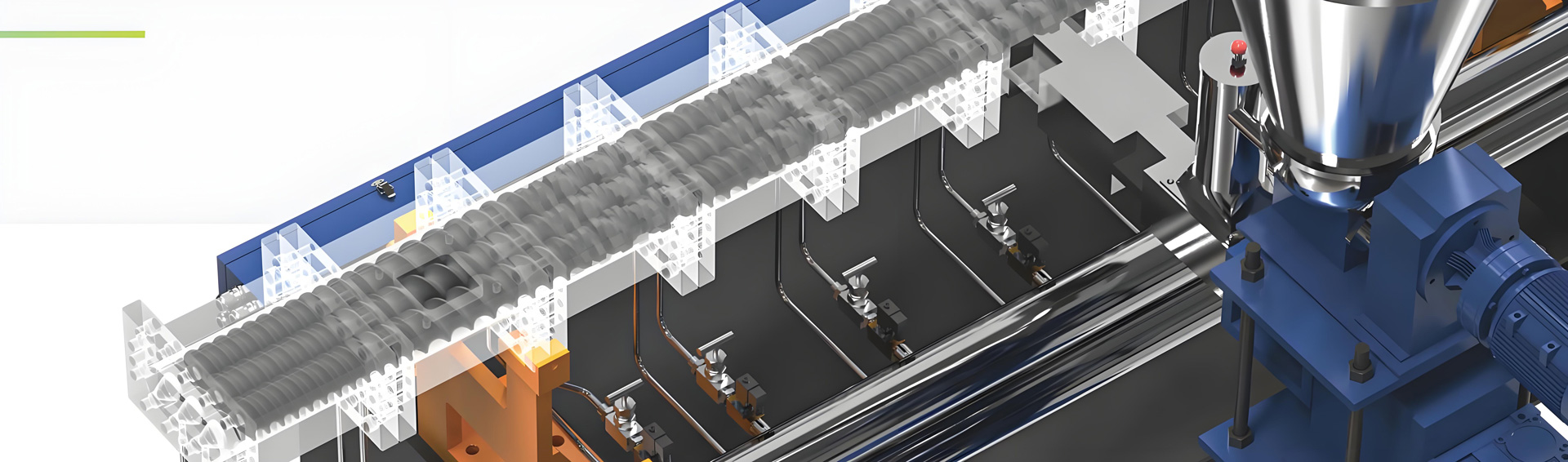
The modular screw and barrel design is the foundation of the superior dispersion capabilities of modern twin screw extruders. Unlike traditional extruders with one-piece screws and barrels, modern twin screw extruders are constructed from individual screw elements and barrel segments that can be easily rearranged or replaced to optimize the extruder for specific formulations and processing requirements.
The screw is assembled from a variety of interchangeable elements, each designed to perform a specific function:
- Conveying elements: These elements have a simple flighted design that transports material along the barrel. They are used in the feed section to move raw materials into the extruder and in the discharge section to convey the finished compound to the die.
- Kneading blocks: These are the most important elements for dispersion. Kneading blocks consist of a series of offset discs that create regions of high shear and elongational flow as the screws rotate. As material passes through the gaps between the kneading blocks and the barrel wall, it is subjected to intense stress that breaks apart pigment agglomerates. The intensity of mixing can be tailored by changing the stagger angle of the kneading blocks (30, 45, 60, or 90 degrees). A 90-degree block provides maximum shear for difficult dispersions like carbon black, while a 30-degree block provides more conveying with less shear.
- Mixing elements: These elements, also known as toothed mixing elements or pineapple mixers, provide excellent distributive mixing without generating excessive shear. They create material folding and redistribution, ensuring that all particles are exposed to the high-shear zones and uniformly distributed throughout the polymer matrix.
- Reverse pitch elements: These elements have flights that are oriented in the opposite direction of conveying elements. They create material backflow that increases mixing intensity and residence time by creating restriction zones that concentrate processing in specific barrel regions.
The barrel is also modular, with individual segments that can be replaced individually if they become worn or damaged. Barrel segments can be equipped with feed ports for introducing different components at different points in the process, vent ports for removing volatile components, and temperature control systems for precise thermal management.
This modular design allows manufacturers to create customized screw configurations that are optimized for the specific dispersion requirements of each formulation. For example, a screw configuration for high-concentration carbon black masterbatch would include multiple high-shear kneading block sections to break down the tough carbon black agglomerates, while a configuration for heat-sensitive biodegradable masterbatch would use fewer kneading blocks and more distributive mixing elements to minimize shear and prevent thermal degradation.
3.2 Precise Control of Shear Rate and Residence Time
Achieving perfect dispersion requires balancing two critical parameters: shear rate and residence time. Shear rate determines the force applied to break apart agglomerates, while residence time determines how long the material is exposed to that force. Too little shear or too short a residence time will result in incomplete dispersion, while too much shear or too long a residence time can cause thermal degradation of the polymer or damage to sensitive additives.
Modern twin screw extruders provide precise control over both shear rate and residence time through a combination of design features and process control capabilities.
Shear rate in a twin screw extruder is primarily controlled by:
- Screw speed: Higher screw speeds increase shear rate but decrease residence time. Modern extruders can operate at screw speeds up to 600 rpm or higher, providing a wide range of shear rates to accommodate different materials.
- Screw element geometry: As discussed earlier, different types of screw elements generate different levels of shear. Kneading blocks with steeper stagger angles generate higher shear rates than those with shallower angles.
- Overflight gap: The gap between the screw tip and the barrel wall, known as the overflight gap, also affects shear rate. Smaller gaps generate higher shear rates but also increase wear on the screw and barrel.
Residence time in a twin screw extruder is controlled by:
- Screw speed: As mentioned earlier, higher screw speeds decrease residence time, while lower screw speeds increase residence time.
- Feed rate: Lower feed rates increase residence time by reducing the material throughput, while higher feed rates decrease residence time.
- Screw configuration: The arrangement of screw elements, particularly the use of reverse pitch elements, can significantly increase residence time by creating backflow and restricting material flow.
- L/D ratio: The length-to-diameter (L/D) ratio of the extruder is another important factor. Longer extruders with higher L/D ratios provide longer residence times, allowing for more complete mixing and dispersion. KERKE extruders are available with L/D ratios ranging from 40:1 for laboratory machines to 52:1 for large production lines.
The ability to independently control shear rate and residence time allows manufacturers to optimize the mixing process for each specific formulation. For example, tough agglomerates like carbon black require high shear rates and moderate residence times to break down completely, while heat-sensitive materials like biodegradable polymers require lower shear rates and shorter residence times to prevent degradation.
3.3 Precision Temperature Control
Temperature control is critical for achieving perfect dispersion in masterbatch production. The temperature of the material affects its viscosity, which in turn affects the shear forces generated during mixing. If the material is too cold, it will be too viscous and difficult to mix, resulting in poor dispersion. If the material is too hot, it may degrade, leading to discoloration, reduced mechanical properties, and inconsistent product quality.
Modern twin screw extruders feature advanced temperature control systems that provide precise regulation of the temperature along the entire length of the barrel. Each barrel segment is equipped with its own heating and cooling system, allowing for independent temperature control of each processing zone. This enables manufacturers to create customized temperature profiles that are optimized for specific formulations.
KERKE extruders use high-precision PID temperature controllers that maintain temperature within ±1°C of the setpoint. The heating systems use ceramic or cast aluminum heaters for fast, uniform heating, while the cooling systems use water or oil circulation for efficient cooling. Some advanced models also feature infrared temperature sensors that measure the actual melt temperature directly, providing even more accurate control over the process.
Precise temperature control is particularly important for processing heat-sensitive materials such as bio-based polymers, PVC, and certain additives. By maintaining the material at the optimal temperature throughout the process, manufacturers can ensure that the material has the correct viscosity for effective mixing while preventing thermal degradation.
3.4 Precision Gravimetric Feeding Systems
Perfect dispersion begins with accurate and consistent feeding of raw materials. Even the best extruder cannot produce high-quality masterbatch if the formulation is not accurately metered into the machine. Variations in the feed rate of pigments, additives, or carrier resin can lead to changes in the concentration of components, which will affect dispersion quality and product performance.
Modern twin screw extruders use precision gravimetric feeding systems that measure the weight of each component in real time and adjust the feed rate accordingly to maintain the correct formulation ratio. These systems are significantly more accurate than volumetric feeders, which measure volume rather than weight and can be affected by variations in material bulk density.
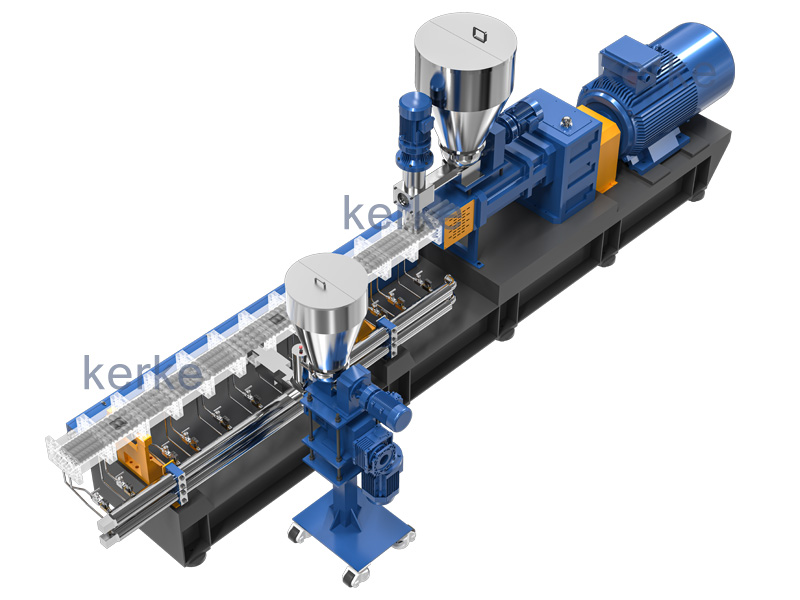
KERKE extruders can be equipped with multiple gravimetric feeders to handle different types of materials, including bulk resins, fine powders, fibrous materials, and liquid additives. Each feeder is calibrated to provide accurate dosing with typical accuracy of ±0.5% or better. The feeders are integrated with the extruder’s control system, which automatically adjusts the feed rates if any deviations from the setpoint are detected.
For masterbatch production, it is often beneficial to use a side feeder to introduce pigments and additives into the extruder after the carrier resin has been melted. This prevents the pigments from being subjected to excessive shear and heat in the early stages of the process, which can cause degradation or color change. Side feeders also allow for better control over the mixing process by introducing the additives at the optimal point for dispersion.
3.5 Multi-Stage Degassing and Filtration Systems
While not directly involved in the dispersion process, multi-stage degassing and filtration systems are essential for producing high-quality masterbatch with perfect dispersion. These systems remove volatile components and impurities from the melt, ensuring that the final product is free from defects and meets the highest quality standards.
Degassing systems remove moisture, residual monomers, solvents, and other volatile components from the melt. These volatiles can cause bubbles, voids, and surface defects in the final product if they are not removed. Modern twin screw extruders can be equipped with up to three vacuum degassing ports located at strategic points along the barrel. These ports are designed to maximize the surface area of the melt exposed to vacuum, ensuring efficient removal of volatiles. KERKE vacuum systems can achieve vacuum levels of up to 0.095 MPa, which is sufficient to remove even the most stubborn volatile components.
Filtration systems remove impurities and any remaining undispersed agglomerates from the melt before it exits the extruder. Continuous screen changers are the most common type of filtration system used in masterbatch production. These systems operate without interrupting production, allowing for continuous operation while the screens are changed. KERKE offers a range of continuous screen changers with different mesh sizes to meet the specific requirements of different applications. For high-quality masterbatch production, screens with mesh sizes as fine as 14 microns are often used to ensure that no large agglomerates pass through to the final product.
4. How KERKE Twin Screw Extruders Achieve Perfect Dispersion
KERKE has spent over 25 years perfecting the design and engineering of twin screw extruders for masterbatch production. Our KTE series extruders incorporate all the advanced technologies described above, along with several proprietary design features that enable them to deliver perfect dispersion for even the most challenging formulations.
4.1 Industry-Leading Torque Density
KERKE twin screw extruders feature industry-leading torque densities of up to 10 Nm/cm³, which is among the highest in the industry. This high torque density allows our machines to process high-viscosity compounds and high filler loadings at lower screw speeds, reducing wear on the equipment and extending its service life.
The high torque capability also allows our extruders to generate the high shear forces required to break down tough agglomerates of pigments and additives, even in formulations with pigment loadings as high as 80%. This is particularly important for producing high-concentration masterbatches, which offer significant cost savings for customers by reducing the amount of masterbatch needed to achieve the desired effect.
4.2 Optimized Screw Element Designs
KERKE has developed an extensive library of screw element designs that are optimized for specific dispersion requirements. Our engineers use advanced computer-aided design (CAD) and computational fluid dynamics (CFD) simulation tools to develop screw elements that provide the optimal balance of dispersive and distributive mixing for different types of materials.
For example, our proprietary high-shear kneading block elements are designed to generate intense, uniform shear without creating excessive heat or causing material degradation. These elements are particularly effective for dispersing difficult pigments like carbon black and titanium dioxide. Our distributive mixing elements, on the other hand, are designed to provide excellent spatial distribution of components without generating excessive shear, making them ideal for heat-sensitive materials and functional additives.
We also offer custom screw configuration services, where our experienced process engineers will develop a customized screw design tailored to your specific formulation and dispersion requirements. This ensures that your extruder is optimized to deliver perfect dispersion for your products.
4.3 Advanced Process Control and Automation
KERKE twin screw extruders are equipped with advanced Siemens PLC control systems and intuitive touch screen interfaces that provide operators with complete visibility and control over the production process. Our control systems feature recipe management capabilities that allow manufacturers to store and recall process parameters for hundreds of different formulations. This ensures that each production run is performed under identical conditions, eliminating variability between batches and ensuring consistent dispersion quality.
The control systems also include advanced data logging and traceability capabilities that record all critical process parameters for each production batch, including temperature profiles, pressure profiles, screw speed, feed rates, and production time. This data can be stored securely and easily retrieved for quality control purposes and regulatory compliance.
For manufacturers looking to further automate their operations, KERKE extruders can be integrated with plant-wide ERP and MES systems for seamless production management. We also offer optional AI-powered process optimization systems that use machine learning algorithms to continuously monitor and adjust process parameters in real time, ensuring optimal dispersion quality and production efficiency at all times.
4.4 Wear-Resistant Construction
Masterbatch production, particularly the production of high-concentration masterbatches with abrasive pigments and fillers, can be extremely demanding on extrusion equipment. The high shear forces and abrasive materials can cause significant wear on the screw and barrel, leading to reduced performance and increased maintenance costs over time.
KERKE extruders are constructed from high-quality wear-resistant materials to ensure long service life even in the most demanding applications. Our screws and barrels are manufactured from high-grade alloy steel and undergo special heat treatment to achieve a hardness of HRC 58-62. For highly abrasive applications such as glass fiber reinforced compounds and high-concentration titanium dioxide masterbatches, we offer bimetallic barrels and screw elements with a tungsten carbide coating. This coating provides exceptional wear resistance and extends the service life of these components by 3-5 times compared to standard materials.
This wear-resistant construction ensures that your extruder maintains its performance and dispersion quality over many years of operation, reducing maintenance costs and downtime.
4.5 Comprehensive Testing and Validation
Before delivering any extruder to a customer, KERKE conducts extensive testing and validation to ensure that it meets our strict quality standards and delivers perfect dispersion for the customer’s specific formulations. We operate a fully equipped process development laboratory where we can test your formulations on our pilot-scale extruders and optimize the process parameters before building your production machine.
During the factory acceptance test (FAT), we will run your formulations on your new extruder and conduct comprehensive dispersion quality testing, including filter pressure value (FPV) testing, microscopic analysis, and color measurement. We will not release the machine for shipment until it has demonstrated that it can achieve perfect dispersion for your products.
We also provide on-site installation and commissioning services, where our experienced engineers will install and start up your new extruder, train your operators, and conduct final validation testing to ensure that the machine is operating at peak performance in your production facility.
5. Measuring and Evaluating Dispersion Quality
Achieving perfect dispersion requires not only the right equipment but also the ability to accurately measure and evaluate dispersion quality. There are several methods available for assessing dispersion quality in masterbatch production, ranging from simple visual inspection to sophisticated analytical techniques.
5.1 Filter Pressure Value (FPV) Test
The Filter Pressure Value (FPV) test is the industry standard for measuring dispersion quality in masterbatch production. This test is described in several international standards, including DIN EN 13900-5:2005 and ASTM D6260.
The FPV test works as follows:
- A specified amount of masterbatch is diluted with virgin resin in a laboratory extruder
- The diluted mixture is extruded through a very fine mesh screen pack, typically 25 or 14 microns
- The pressure upstream of the screen is continuously measured over time
- The pressure rise over the course of the test is calculated and reported as the FPV
A low pressure rise indicates excellent dispersion of pigments and additives, as there are few undispersed agglomerates to clog the screen. A high pressure rise indicates the presence of undispersed agglomerates that will cause processing problems for customers. For high-quality masterbatch, the FPV should typically be less than 2 bar/g of pigment.
The FPV test is particularly valuable because it provides a quantitative measure of dispersion quality that directly correlates with processing performance. It is also relatively quick and easy to perform, making it suitable for routine quality control testing.
5.2 Microscopic Analysis
Microscopic analysis is another important method for evaluating dispersion quality. This technique involves examining thin sections of the masterbatch or diluted compound under a microscope to directly observe the size and distribution of pigment particles.
There are several types of microscopy used for dispersion analysis:
- Optical microscopy: This is the most common type of microscopy used for routine dispersion analysis. Optical microscopes can typically resolve particles down to about 1 micron in size. They are used to count the number and size of agglomerates in the sample and assess their distribution.
- Scanning electron microscopy (SEM): SEM provides higher resolution than optical microscopy, allowing for the observation of particles as small as a few nanometers. It is used for more detailed analysis of dispersion quality, particularly for very fine pigments and additives.
- Transmission electron microscopy (TEM): TEM provides even higher resolution than SEM and is used for studying the microstructure of the masterbatch at the nanoscale. It is particularly useful for analyzing nanocomposite masterbatches.
Microscopic analysis provides direct visual evidence of dispersion quality and can identify specific types of defects that may not be detected by other methods. However, it is more time-consuming and expensive than the FPV test and requires skilled operators to interpret the results.
5.3 Color Measurement
Color measurement is an essential quality control test for color masterbatches. It involves measuring the color of a sample of the masterbatch diluted with virgin resin and comparing it to a standard or reference sample.
Color is typically measured using a spectrophotometer, which measures the reflectance or transmittance of light across the visible spectrum. The results are reported using the CIELAB color system, which expresses color in terms of three coordinates: L* (lightness), a* (red-green), and b* (yellow-blue). The difference between the sample and the standard is reported as ΔE*, which is a measure of the overall color difference.
For high-quality color masterbatch, the ΔE* between batches should typically be less than 0.5. Larger color differences indicate inconsistent dispersion quality or formulation variations.
Color measurement can also be used to assess color strength, which is a measure of the tinting power of the masterbatch. Higher color strength indicates better dispersion, as more of the pigment’s surface area is exposed to light.
5.4 Physical Property Testing
Physical property testing is used to evaluate the effect of dispersion on the mechanical and functional properties of the masterbatch. This type of testing is particularly important for functional masterbatches, where the performance of the product depends directly on the uniform dispersion of additives.
Common physical property tests include:
- Tensile testing: Measures tensile strength, elongation at break, and modulus of elasticity
- Impact testing: Measures impact resistance and toughness
- Melt flow index (MFI) testing: Measures the flow properties of the melt
- Electrical conductivity testing: For conductive masterbatches
- Flame retardancy testing: For flame retardant masterbatches
- UV stability testing: For UV stabilizer masterbatches
Inconsistent or poor physical properties often indicate poor dispersion quality. For example, low impact strength may indicate the presence of large agglomerates that act as stress concentrators, while inconsistent electrical conductivity may indicate incomplete formation of the conductive network.
6. KERKE Twin Screw Extruder Product Range and Pricing
KERKE offers a comprehensive range of twin screw extruders designed specifically for masterbatch production. Our product range includes laboratory, pilot scale, and industrial production machines, with capacities ranging from 5 kg/h to 2000 kg/h. All our machines are built to the highest quality standards, incorporating advanced technology and innovative features to deliver perfect dispersion and exceptional performance.
6.1 KTE-20 Laboratory Twin Screw Extruder
The KTE-20 is our compact laboratory twin screw extruder, designed for research and development, formulation testing, and very small batch production. This versatile machine is perfect for masterbatch manufacturers who need to develop new formulations and test new products before scaling up to industrial production.
Key specifications:
- Screw diameter: 20 mm
- L/D ratio: 40:1
- Maximum screw speed: 600 rpm
- Production capacity: 5-20 kg/h
- Drive power: 7.5 kW
- Heating zones: 8
- Vacuum degassing: 1 port
- Footprint: 3.5 m x 1.5 m
- Weight: 2,500 kg
Price and Cost Analysis
The price of the KTE-20 laboratory twin screw extruder ranges from $18,000 to $28,000 FOB Nanjing, depending on the specific configuration and optional features. The standard configuration includes the main extruder, volumetric feeder, strand pelletizer, and control system. Optional features include gravimetric feeding, underwater pelletizing, melt filtration systems, and advanced data logging capabilities.
6.2 KTE-35 Pilot Scale Masterbatch Extruder
The KTE-35 is our pilot scale masterbatch extruder, designed for product development, small-scale production, and market testing. This machine bridges the gap between laboratory and industrial production, allowing manufacturers to scale up their formulations with confidence. It is also ideal for manufacturers who specialize in small batch production of customized masterbatches.
Key specifications:
- Screw diameter: 35 mm
- L/D ratio: 44:1
- Maximum screw speed: 500 rpm
- Production capacity: 30-80 kg/h
- Drive power: 22 kW
- Heating zones: 10
- Vacuum degassing: 2 ports
- Footprint: 5.0 m x 2.0 m
- Weight: 5,500 kg
Price and Cost Analysis
The price of the KTE-35 pilot scale masterbatch extruder ranges from $45,000 to $65,000 FOB Nanjing, depending on the specific configuration and optional features. The standard configuration includes the main extruder, gravimetric feeder, continuous screen changer, strand pelletizer, and control system. Optional features include multiple side feeders, underwater pelletizing, melt pump systems, and inline quality monitoring.
6.3 KTE-50 Industrial Production Masterbatch Extruder
The KTE-50 is our most popular industrial production masterbatch extruder, ideal for medium to large-scale production of a wide range of masterbatches. This high-performance machine offers an excellent balance of productivity, efficiency, and flexibility, making it perfect for producing color masterbatches, filled compounds, and functional masterbatches.
Key specifications:
- Screw diameter: 50 mm
- L/D ratio: 48:1
- Maximum screw speed: 450 rpm
- Production capacity: 150-300 kg/h
- Drive power: 55 kW
- Heating zones: 12
- Vacuum degassing: 2 ports
- Footprint: 6.5 m x 2.5 m
- Weight: 9,500 kg
Price and Cost Analysis
The price of the KTE-50 industrial production masterbatch extruder ranges from $85,000 to $120,000 FOB Nanjing, depending on the specific configuration and optional features. The standard configuration includes the main extruder, gravimetric feeding system, continuous screen changer, melt pump, strand pelletizer, and advanced control system. Optional features include multiple side feeders, underwater pelletizing, automatic material handling systems, and advanced data logging and traceability.
6.4 KTE-65 High Capacity Masterbatch Extruder
The KTE-65 is our high capacity masterbatch extruder, designed for large-scale production of plastic masterbatches. This machine offers high throughput rates and excellent energy efficiency, making it ideal for high-volume production environments.
Key specifications:
- Screw diameter: 65 mm
- L/D ratio: 48:1
- Maximum screw speed: 400 rpm
- Production capacity: 300-600 kg/h
- Drive power: 110 kW
- Heating zones: 14
- Vacuum degassing: 2 ports
- Footprint: 8.0 m x 3.0 m
- Weight: 15,000 kg
Price and Cost Analysis
The price of the KTE-65 high capacity masterbatch extruder ranges from $130,000 to $180,000 FOB Nanjing, depending on the specific configuration and optional features. The standard configuration includes the main extruder, multiple gravimetric feeders, continuous screen changer, melt pump, underwater pelletizing system, and advanced control system with recipe management.
6.5 KTE-75 Large Scale Masterbatch Production Line
The KTE-75 is our large scale masterbatch production line, designed for the highest volume production of plastic masterbatches. This heavy-duty machine offers exceptional performance and reliability, making it ideal for large masterbatch manufacturers serving global markets.
Key specifications:
- Screw diameter: 75 mm
- L/D ratio: 52:1
- Maximum screw speed: 350 rpm
- Production capacity: 600-1200 kg/h
- Drive power: 200 kW
- Heating zones: 16
- Vacuum degassing: 3 ports
- Footprint: 10.0 m x 3.5 m
- Weight: 22,000 kg
Price and Cost Analysis
The price of the KTE-75 large scale masterbatch production line ranges from $200,000 to $280,000 FOB Nanjing, depending on the specific configuration and optional features. The standard configuration includes a complete turnkey production line with automatic material handling, multiple gravimetric feeders, continuous screen changer, melt pump, underwater pelletizing system, and advanced control system with remote monitoring capabilities.
7. Complete Cost Analysis and Return on Investment Calculation
Investing in a modern KERKE twin screw extruder provides a significant return on investment through improved dispersion quality, reduced scrap rates, lower material waste, increased production capacity, and higher product value. In this section, we will provide a detailed cost analysis and return on investment calculation comparing a KERKE KTE-50 masterbatch extruder with a traditional single screw extruder of similar capacity.
7.1 Initial Investment Comparison
Traditional Single Screw Extruder (50 mm):
- Machine price: $55,000
- Auxiliary equipment: $25,000
- Installation and training: $5,000
- Initial spare parts package: $3,000
- Contingency fund (10%): $8,800
Total Initial Investment: $96,800
KERKE KTE-50 Masterbatch Extruder:
- Machine price: $75,000
- Auxiliary equipment: $35,000
- Installation and training: $8,000
- Initial spare parts package: $4,000
- Contingency fund (10%): $12,200
Total Initial Investment: $134,200
While the KERKE twin screw extruder has a higher initial investment, the significant savings in operating costs and increased production capacity result in a much faster return on investment.
7.2 Annual Operating Cost Comparison
The following analysis is based on 16 hours of production per day, 300 days per year, producing a 50% titanium dioxide white masterbatch with an average selling price of $2.80 per kg:
Traditional Single Screw Extruder:
- Annual production: 720,000 kg
- Raw material costs: $1,512,000 per year
- Energy costs: $108,000 per year
- Labor costs (4 workers per shift): $144,000 per year
- Maintenance and repair costs: $48,000 per year
- Scrap and material waste costs: $151,200 per year (10% scrap rate)
- Downtime costs: $96,000 per year
- Overhead costs: $144,000 per year
- Packaging costs: $72,000 per year
- Transportation costs: $72,000 per year
Total Annual Operating Costs: $2,347,200 per year
Cost per Kilogram: $3.26
KERKE KTE-50 Masterbatch Extruder:
- Annual production: 1,200,000 kg
- Raw material costs: $2,520,000 per year
- Energy costs: $72,000 per year
- Labor costs (3 workers per shift): $108,000 per year
- Maintenance and repair costs: $24,000 per year
- Scrap and material waste costs: $25,200 per year (1% scrap rate)
- Downtime costs: $12,000 per year
- Overhead costs: $120,000 per year
- Packaging costs: $60,000 per year
- Transportation costs: $120,000 per year
Total Annual Operating Costs: $3,061,200 per year
Cost per Kilogram: $2.55
The KERKE twin screw extruder produces 67% more product per year while reducing the cost per kilogram by 21.8%. The most significant savings come from dramatically reduced scrap rates, lower energy costs, and reduced maintenance costs. The improved dispersion quality also allows for higher pigment loadings, further reducing raw material costs.
7.3 Revenue and Profitability Comparison
Using an average selling price of $2.80 per kg for the 50% titanium dioxide white masterbatch:
Traditional Single Screw Extruder:
- Annual revenue: $2,016,000 per year
- Annual operating costs: $2,347,200 per year
- Annual gross profit: -$331,200 per year
KERKE KTE-50 Masterbatch Extruder:
- Annual revenue: $3,360,000 per year
- Annual operating costs: $3,061,200 per year
- Annual gross profit: $298,800 per year
The traditional single screw extruder actually operates at a loss due to its low productivity and high operating costs. In contrast, the KERKE twin screw extruder generates a significant annual profit.
7.4 ROI and Payback Period Calculation
KERKE KTE-50 Masterbatch Extruder:
- Additional initial investment compared to single screw: $134,200 – $96,800 = $37,400
- Additional annual profit compared to single screw: $298,800 – (-$331,200) = $630,000
Payback Period = Additional initial investment ÷ Additional annual profit
= $37,400 ÷ $630,000
= 0.059 years (approximately 2.2 weeks)
This is an exceptionally short payback period, demonstrating the significant financial benefits of investing in a modern KERKE twin screw extruder. Over the 15-year service life of the equipment, the total return on investment is substantial:
Total Profit Over 15 Years = (Annual gross profit × 15) – Total initial investment
= ($298,800 × 15) – $134,200
= $4,482,000 – $134,200
= $4,347,800
Return on Investment: 3,240%
7.5 Sensitivity Analysis
To provide a more realistic assessment of the investment, we have also conducted a sensitivity analysis to show how changes in key parameters affect the payback period:
- If the selling price decreases by 10% to $2.52 per kg, the payback period increases to 3.0 weeks
- If the production volume decreases by 20% to 960,000 kg per year, the payback period increases to 2.7 weeks
- If the raw material cost increases by 10% to $2.31 per kg, the payback period increases to 2.9 weeks
- If all three factors occur simultaneously (10% lower price, 20% lower volume, 10% higher cost), the payback period increases to 5.5 weeks