The global plastic manufacturing industry is facing unprecedented pressure to improve operational efficiency amid rising energy costs, labor shortages, and increasingly stringent quality requirements. According to industry research, the average plastic factory operates at only 65% of its theoretical production capacity, losing up to 23% of its potential productivity to invisible waste. A typical plastic processing factory’s cost structure breaks down as follows: raw materials (30-50%), energy (15-20%), labor (10-15%), maintenance (5-10%), scrap/waste (5-10%), and unplanned downtime (5-10%). Even a 10% improvement in overall efficiency can boost annual profits by $50,000-$150,000 for a medium-sized factory producing 500 kg of extruded products daily.
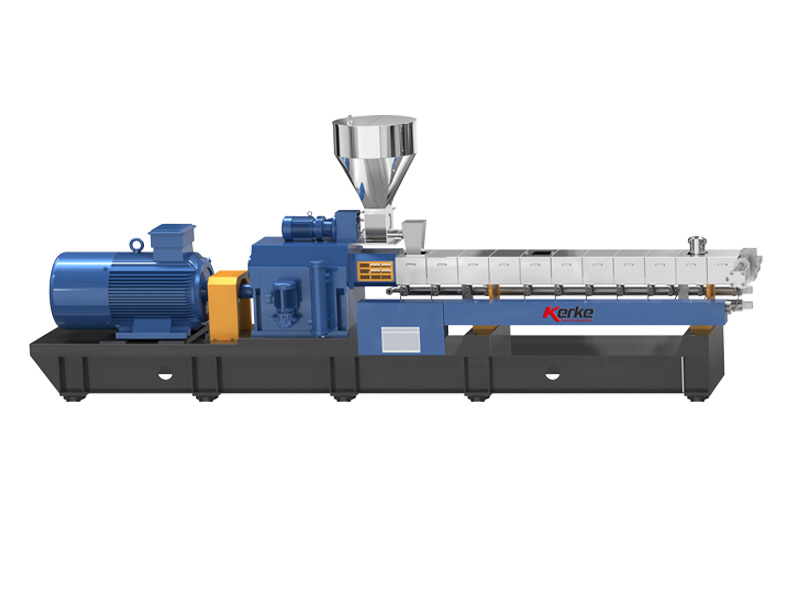
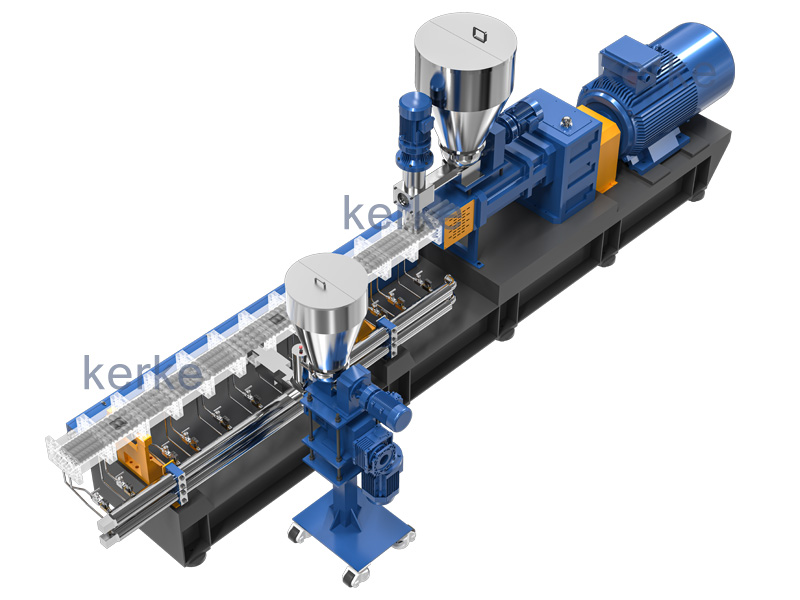
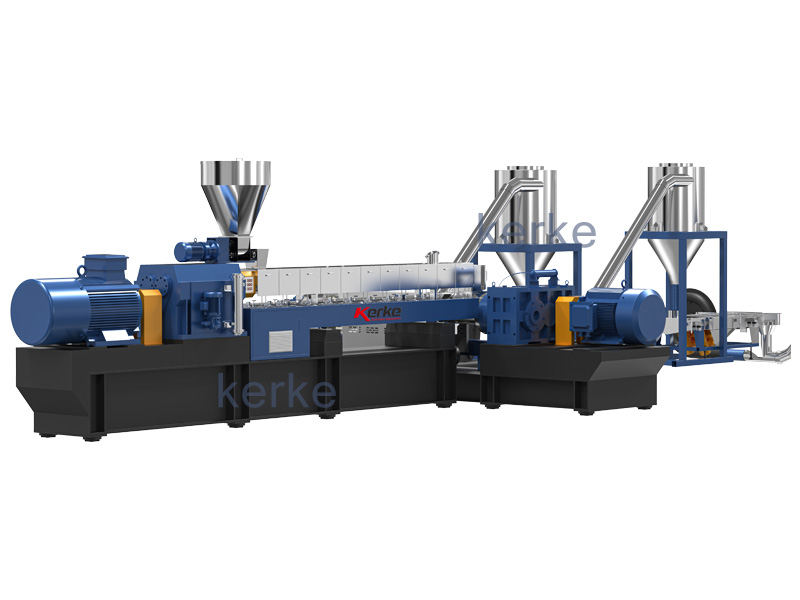
Co-rotating twin screw extruders have emerged as the most transformative technology for improving efficiency in plastic manufacturing. Unlike traditional single screw extruders that rely on friction and drag flow for material transport, twin screw extruders use positive displacement conveying to deliver superior mixing, precise process control, and higher throughput. As a leading global manufacturer of twin screw extruders, masterbatch extruders, and compounding extruders, Kerke has been at the forefront of extrusion technology innovation for over 10 years. Kerke twin screw extruders integrate advanced high-torque transmission systems, precision modular designs, intelligent control systems, and energy-saving technologies to deliver comprehensive efficiency improvements across all aspects of plastic factory operations.
This comprehensive article explores how twin screw extruders address the key efficiency challenges facing plastic factories, the advanced technologies that make these improvements possible, and the measurable financial benefits of upgrading to modern twin screw extrusion equipment. The article also provides detailed cost and return on investment analysis, best practices for maximizing efficiency, and real-world case studies demonstrating the performance of Kerke twin screw extruders. Whether you operate a masterbatch production facility, a plastic compounding plant, or a recycling operation, this article will help you understand how twin screw extrusion technology can transform your business performance.
1. Key Efficiency Challenges Facing Modern Plastic Factories
Before examining how twin screw extruders improve efficiency, it is essential to understand the specific challenges that limit productivity and profitability in plastic manufacturing. These challenges are interconnected and often compound each other, creating a cycle of inefficiency that is difficult to break with traditional equipment.
1.1 Excessive Energy Consumption
Energy is one of the largest operational costs for plastic factories, accounting for 15-20% of total production expenses. Traditional single screw extruders are notoriously energy-inefficient, relying on friction between the material and the barrel wall to generate heat and transport the material. This approach results in significant energy waste, with much of the energy consumed being lost as heat to the environment rather than being used to process the material.
Additionally, single screw extruders often require oversized motors to handle peak load conditions, leading to further energy waste during normal operation. Poor temperature control systems also contribute to energy inefficiency, with excessive heating and cooling cycles wasting valuable energy.
1.2 Low Production Capacity and Throughput
Most plastic factories operate well below their theoretical production capacity due to equipment limitations and process inefficiencies. Single screw extruders have limited throughput capabilities, especially when processing high-viscosity materials or high-fill formulations. The drag flow conveying mechanism of single screw extruders means that throughput is highly dependent on die head pressure and material viscosity, leading to inconsistent production rates.
Furthermore, single screw extruders have limited ability to handle multiple components simultaneously, requiring pre-blending of materials that adds additional processing steps and reduces overall production efficiency. This limited capacity often forces factories to operate multiple shifts or invest in additional equipment to meet production demands, increasing capital and operational costs.
1.3 High Scrap Rates and Material Waste
Scrap and material waste represent a significant financial burden for plastic factories. The industry average scrap rate is 5-10%, with some factories experiencing rates as high as 15% or more. The true cost of scrap is much higher than just the value of the wasted raw material, as it also includes the labor, energy, and machine time consumed producing the defective product. For a mid-size plastics operation processing 2 million pounds of resin annually at an average material cost of $1.50/lb, a 5% scrap rate represents $150,000 in raw material waste alone, with the total real cost approaching $300,000-450,000 per year.
High scrap rates in plastic manufacturing are primarily caused by inconsistent process conditions, poor mixing, and human error. Traditional single screw extruders provide limited control over process parameters, making it difficult to maintain consistent product quality, especially when processing complex formulations or changing production runs.
1.4 Frequent Unplanned Downtime
Unplanned downtime is one of the most costly issues facing plastic factories. Industry data shows that unplanned downtime costs plastics manufacturers between $5,000 and $20,000 per hour depending on the size of the operation and the value of the product being produced. For a mid-sized factory running 24/7, even 2% unplanned downtime represents over $400,000 in annual lost revenue.
The main causes of unplanned downtime in plastic extrusion include equipment failure, process problems, and inadequate maintenance. Traditional single screw extruders have fewer monitoring and diagnostic capabilities, making it difficult to detect potential problems before they result in downtime. Additionally, the non-modular design of many single screw extruders makes maintenance and repairs more time-consuming and expensive.
1.5 Labor Inefficiency and High Labor Costs
Labor costs account for 10-15% of total production costs in plastic manufacturing. Traditional extrusion lines require significant manual labor for material handling, process monitoring, quality control, and equipment maintenance. This not only increases labor costs but also introduces the potential for human error, which can lead to quality issues and production delays.
Furthermore, the plastic manufacturing industry is facing a growing labor shortage, making it increasingly difficult to find and retain skilled workers. This labor shortage is driving up wages and putting additional pressure on factories to improve labor efficiency and automate as many processes as possible.
1.6 Limited Formulation Flexibility
In today’s competitive market, plastic manufacturers need to be able to quickly adapt to changing customer demands and produce a wide range of products with different formulations. However, traditional single screw extruders have limited formulation flexibility, making it difficult and time-consuming to switch between different products.
Changing formulations on a single screw extruder typically requires extensive purging to remove residual material from the previous production run, resulting in significant material waste and production downtime. This limited flexibility makes it difficult for factories to efficiently produce small batches of specialized products, forcing them to either turn down these orders or produce them at a loss.
2. How Twin Screw Extruders Address These Efficiency Challenges
Twin screw extruders address all the key efficiency challenges facing plastic factories through their unique design and operating principles. The following sections detail the specific ways in which twin screw extruders improve overall factory efficiency.
2.1 Superior Energy Efficiency
Twin screw extruders are significantly more energy-efficient than single screw extruders, particularly when productivity gains are considered on a per-unit production basis. The positive displacement conveying mechanism of twin screw extruders requires less energy to transport material through the extruder compared to the friction-based drag flow of single screw extruders. This results in lower specific energy consumption (SEC), measured in kilowatt-hours per kilogram of production.
Research has shown that twin screw extruders typically have 10-20% lower specific energy consumption than single screw extruders when producing similar products at optimal throughput. For example, a single screw extruder might consume 150 kW to produce 500 kg per hour, resulting in a specific energy consumption of 0.30 kWh per kilogram. A twin screw extruder might consume 200 kW to produce 750 kg per hour, resulting in a specific energy consumption of 0.267 kWh per kilogram, an 11% improvement in energy efficiency.
Kerke twin screw extruders incorporate additional energy-saving technologies that further reduce energy consumption by 15-20% compared to the industry average. These technologies include high-efficiency permanent magnet motors, optimized screw designs that minimize shear heating, intelligent temperature control systems that reduce unnecessary heating and cooling, and energy recovery systems that capture waste heat from the process.
2.2 Dramatically Increased Production Throughput
One of the most significant advantages of twin screw extruders is their ability to deliver much higher production throughput than single screw extruders of the same diameter. The positive displacement conveying mechanism of twin screw extruders allows them to process material at much higher rates, with throughput being primarily determined by screw speed and feed rate rather than die head pressure or material viscosity.
For the same screw diameter, twin screw extruders can typically produce 2-3 times more output than single screw extruders. This increased throughput is particularly pronounced when processing high-viscosity materials or high-fill formulations, which are difficult for single screw extruders to handle efficiently.
Kerke twin screw extruders feature advanced high-torque gearboxes that deliver specific torque values of up to 13 Nm/cm³, allowing them to process even the most challenging formulations at high throughput rates. This high torque capability enables Kerke extruders to operate at lower screw speeds while still maintaining high production rates, reducing energy consumption and equipment wear.
2.3 Significantly Reduced Scrap Rates
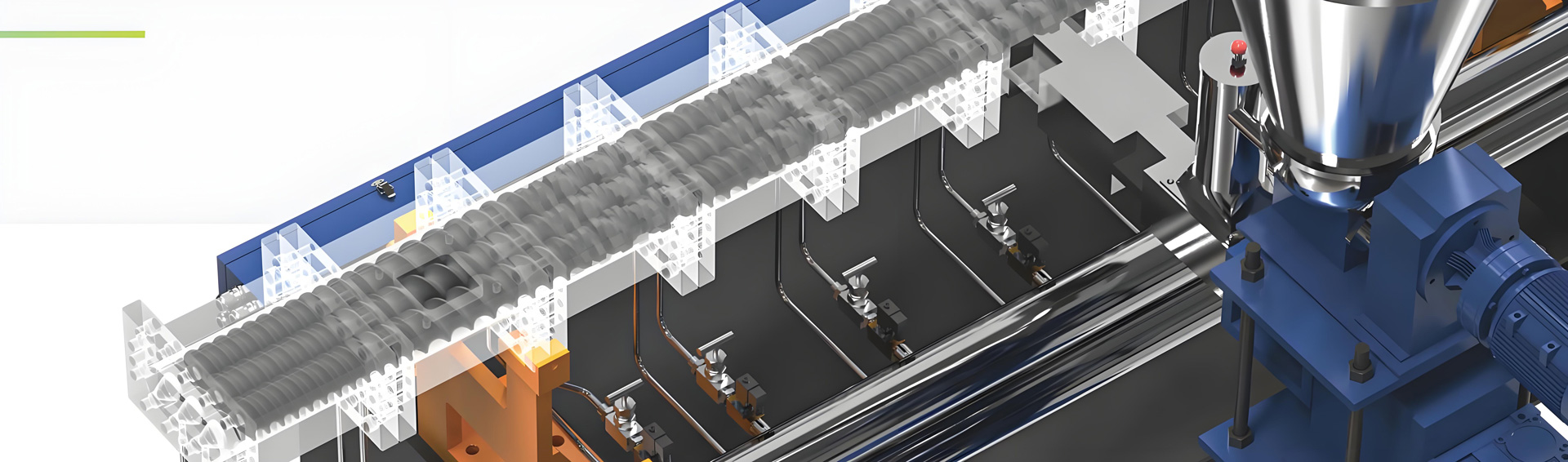
Twin screw extruders dramatically reduce scrap rates by providing precise control over all aspects of the extrusion process and delivering superior mixing performance. The intermeshing screws create a complex flow pattern that subjects the material to repeated cycles of stretching, folding, and shearing, ensuring uniform mixing and dispersion of all components.
This superior mixing performance eliminates the quality issues caused by poor dispersion, such as color streaks, inconsistent mechanical properties, and surface defects. Additionally, twin screw extruders provide precise control over temperature, pressure, and residence time, ensuring that the material is processed under optimal conditions and reducing the risk of thermal degradation or under-processing.
As a result, factories using twin screw extruders typically achieve scrap rates of less than 2%, compared to 5-10% for factories using traditional single screw extruders. For a medium-sized factory producing 1,000 tons per year, this reduction in scrap rate can save over $100,000 annually in raw material costs alone, with additional savings from reduced labor, energy, and machine time.
2.4 Minimized Unplanned Downtime
Twin screw extruders minimize unplanned downtime through their robust design, advanced monitoring capabilities, and modular construction. Kerke twin screw extruders are built with high-quality components and feature a heavy-duty construction that ensures reliable operation even under the most demanding conditions.
The advanced intelligent control systems integrated into Kerke extruders continuously monitor all critical process and equipment parameters, including motor current, temperature, pressure, and vibration. By analyzing this data in real-time, the system can detect early signs of potential equipment problems before they result in unplanned downtime. This predictive maintenance capability allows maintenance to be scheduled during planned downtime, rather than responding to unexpected breakdowns.
Additionally, the modular design of Kerke twin screw extruders makes maintenance and repairs much faster and easier. Individual screw elements and barrel segments can be easily removed and replaced without having to disassemble the entire extruder, reducing maintenance time by up to 60% compared to non-modular designs.
In a real-world case study, a plastic compounder upgraded to a Kerke KTE-75 twin screw extruder and reduced unscheduled downtime by 80%, from 10 hours per week to just 2 hours per week. This improvement alone resulted in over $400,000 in additional annual revenue for the company.
2.5 Improved Labor Efficiency
Twin screw extruders improve labor efficiency by automating many of the tasks that would otherwise require manual intervention. Modern twin screw extrusion lines feature fully automated material handling systems, precision gravimetric feeding systems, and intelligent process control systems that require minimal operator intervention.
A single operator can easily monitor and control multiple twin screw extrusion lines simultaneously, reducing the number of operators required by 30-50% compared to traditional single screw lines. This not only reduces labor costs but also minimizes the potential for human error, which is a major cause of quality issues and production delays.
Additionally, the advanced control systems integrated into twin screw extruders provide operators with real-time information about process conditions and product quality, allowing them to quickly identify and address any issues before they result in scrap or downtime.
2.6 Enhanced Formulation Flexibility
Twin screw extruders offer unparalleled formulation flexibility, allowing plastic factories to efficiently produce a wide range of products with different formulations. The modular screw design of twin screw extruders allows manufacturers to easily reconfigure the screw elements to meet the specific processing requirements of different materials and formulations.
Furthermore, twin screw extruders feature multiple feeding ports along the length of the barrel, allowing different components of the formulation to be added at different stages of the process. This eliminates the need for pre-blending and allows for more precise control over the formulation.
The excellent self-cleaning capability of intermeshing twin screws also significantly reduces changeover time between different products. The wiping action of the screws removes residual material from the screw surfaces and barrel wall, minimizing the amount of purging material required and reducing changeover time from hours to minutes. This allows factories to efficiently produce small batches of specialized products, opening up new market opportunities and increasing revenue.
2.7 Higher Raw Material Utilization
Twin screw extruders improve raw material utilization by reducing waste and allowing manufacturers to use a wider range of raw materials, including recycled materials and lower-cost fillers. The superior mixing performance of twin screw extruders ensures that even small amounts of additives are uniformly dispersed throughout the polymer matrix, allowing manufacturers to optimize their formulations and reduce the amount of expensive additives required.
Additionally, twin screw extruders can effectively process recycled plastic materials that would be difficult or impossible to process with single screw extruders. This allows manufacturers to incorporate higher percentages of recycled material into their products, reducing raw material costs and supporting sustainability goals.
The precise process control provided by twin screw extruders also minimizes material waste during startup, shutdown, and product changeovers. The ability to quickly and accurately adjust process parameters reduces the amount of off-spec material produced during these transitions, further improving raw material utilization.
3. Kerke Advanced Technologies for Maximum Efficiency
Kerke has developed a range of advanced technologies specifically designed to maximize the efficiency of twin screw extrusion operations. These technologies are integrated into all Kerke twin screw extruders, masterbatch extruders, and compounding extruders, delivering exceptional performance and reliability.
3.1 High-Torque Gearbox Transmission System
The foundation of Kerke’s high-efficiency extrusion technology is its advanced high-torque gearbox transmission system. Kerke gearboxes are designed to deliver a specific torque of up to 13 Nm/cm³, which is among the highest in the industry. This high torque capability allows Kerke extruders to process high-viscosity materials and high-fill formulations at high throughput rates while operating at lower screw speeds, reducing energy consumption and equipment wear.
The gearboxes are constructed with precision-machined gears made from high-quality 17CrNiMo6 alloy steel, which is case-hardened and ground to achieve exceptional strength and durability. They feature heavy-duty spherical roller thrust bearings that can handle the high axial loads generated during extrusion, and an advanced forced lubrication and cooling system that ensures optimal operating temperature and extends gearbox service life to 10 years or more with proper maintenance.
3.2 Precision Modular Screw and Barrel System
Kerke twin screw extruders feature a precision modular screw and barrel system that provides maximum flexibility and efficiency. The screw elements and barrel segments are made from high-quality materials and are precision-machined to tight tolerances to ensure perfect intermeshing and consistent performance.
Kerke offers a wide range of screw elements, including conveying elements, kneading blocks, reverse elements, and blister rings, allowing manufacturers to create customized screw configurations for specific applications and formulations. The barrel segments are available in a variety of wear-resistant materials, including standard nitrided steel, bimetallic construction with a wear-resistant alloy layer, and tungsten carbide coatings applied using high-velocity oxy-fuel (HVOF) spraying technology.
For highly abrasive applications such as reinforced plastic compounding or high-fill masterbatch production, Kerke recommends tungsten carbide coated screw elements and bimetallic barrel segments. These materials can extend component service life by 3-5 times compared to standard nitrided steel, reducing maintenance costs and downtime.
3.3 Intelligent Process Control System
Kerke twin screw extruders are equipped with an advanced intelligent process control system specifically optimized for plastic extrusion applications. The system features a high-performance Siemens S7 PLC and a large, high-resolution touch screen HMI that provides intuitive operation and comprehensive process monitoring.
The control system provides closed-loop control of all critical process parameters, including barrel temperatures, melt temperature, melt pressure, screw speed, and feed rates. It uses advanced PID control algorithms with auto-tuning capabilities to maintain precise, stable process conditions even when processing challenging formulations.
The system also includes a comprehensive recipe management system that can store up to 1000 production recipes. Each recipe includes all process parameters, feeder settings, and alarm limits, ensuring that the same process conditions are used for every batch of the same product. The system provides real-time data logging and reporting, allowing manufacturers to track production performance, maintain complete batch traceability, and identify opportunities for process improvement.
For larger manufacturing operations, Kerke’s control system supports integration with factory automation systems such as Manufacturing Execution Systems (MES) and Enterprise Resource Planning (ERP) systems, enabling centralized monitoring and control of the entire production facility.
3.4 High-Precision Gravimetric Feeding System
Accurate and consistent feeding of raw materials is essential for maintaining consistent product quality and maximizing efficiency. Kerke extruders are equipped with high-precision loss-in-weight gravimetric feeding systems that deliver an accuracy of ±0.1% for all raw materials.
Unlike volumetric feeders, which are affected by changes in material bulk density, gravimetric feeders continuously weigh the material being fed into the extruder and automatically adjust the feed rate to maintain the desired set point. This ensures that the formulation ratio remains consistent throughout the entire production run, resulting in uniform product quality and reduced scrap.
Kerke offers a range of gravimetric feeders to meet different production requirements, including main feeders for polymer resins, side feeders for reinforcing fibers and fillers, and micro-feeders for additives with addition rates as low as 0.01%. All feeders are fully integrated with the extruder’s main control system, allowing for centralized monitoring and control of the entire feeding process.
3.5 Advanced Heating and Cooling System
Kerke twin screw extruders feature an advanced multi-zone heating and cooling system that ensures precise and uniform temperature distribution along the barrel. Each barrel zone is independently controlled with a dedicated temperature sensor and heating/cooling system, allowing for precise regulation of the melt temperature at each stage of the process.
The temperature control system uses advanced PID algorithms with adaptive tuning to maintain temperature accuracy within ±1°C. This ensures that the polymer melts uniformly and that heat-sensitive materials are not subjected to excessive temperatures that could cause thermal degradation.
For heat-sensitive materials, Kerke offers optional liquid cooling systems that provide faster and more precise temperature control than traditional air cooling systems. These systems use circulating water or oil to maintain the exact temperature required for optimal processing, preventing thermal degradation and ensuring consistent product quality.
4. Cost and Return on Investment Analysis
While twin screw extruders have a higher initial investment than single screw extruders, they provide significant long-term cost savings and a very attractive return on investment. The following analysis details the costs and financial benefits of upgrading to a Kerke twin screw extruder.
4.1 Initial Equipment Investment
The initial cost of a Kerke twin screw extruder depends on several factors, including the extruder model, production capacity, level of automation, and optional features. The following are approximate price ranges for different Kerke twin screw extruder models:
Laboratory and pilot scale extruders (5-50 kg/h capacity):
- Standard configuration for R&D and small-batch production: $35,000 to $90,000
- Premium configuration with advanced control and wear-resistant components: $50,000 to $130,000
Medium-scale production extruders (50-300 kg/h capacity):
- Standard configuration for general compounding and masterbatch production: $120,000 to $400,000
- Premium configuration with high-torque gearbox, tungsten carbide components, and advanced control: $180,000 to $550,000
Large-scale industrial extruders (300-1500 kg/h capacity):
- Standard configuration for high-volume production: $450,000 to $1,100,000
- Premium configuration with full automation, multiple feeders, and advanced devolatilization: $600,000 to $1,600,000
While the premium configurations have a higher initial investment, they provide significantly better performance, longer service life, and lower operational costs, resulting in a higher return on investment over the life of the equipment.
4.2 Annual Cost Savings from Efficiency Improvements
Upgrading to a Kerke twin screw extruder provides significant annual cost savings through improved energy efficiency, higher production throughput, reduced scrap rates, minimized downtime, and lower labor costs. The following are typical annual cost savings for a medium-sized factory upgrading from a single screw extruder to a Kerke KTE-65 twin screw extruder with a capacity of 150 kg/h:
- Energy savings (15-20% reduction): $18,000 to $24,000 per year
- Increased production throughput (30-50% increase): $150,000 to $250,000 per year in additional revenue
- Reduced scrap rates (from 5% to 2%): $60,000 to $90,000 per year in raw material savings
- Reduced unplanned downtime (80% reduction): $80,000 to $120,000 per year in recovered revenue
- Labor savings (30-50% reduction): $40,000 to $60,000 per year
- Total annual financial benefit: $348,000 to $544,000 per year
These are conservative estimates, and actual savings can be even higher for factories that were previously experiencing significant efficiency issues or that produce high-value products such as specialty masterbatches or engineering plastic compounds.
4.3 Return on Investment Calculation
The return on investment for a Kerke twin screw extruder is typically very attractive, with payback periods ranging from 1 to 2.5 years depending on the production capacity and market conditions. The following is an example ROI calculation for a medium-scale Kerke KTE-65 twin screw extruder producing 30% glass fiber reinforced polypropylene at a rate of 150 kg/h:
- Initial equipment investment: $320,000
- Annual production capacity: 1,080 tons (operating 24 hours a day, 300 days a year)
- Raw material cost: $650 per ton
- Total annual raw material cost: $702,000
- Total annual operational cost (energy, labor, maintenance, etc.): $240,000
- Total annual production cost: $942,000
- Selling price of 30% glass fiber reinforced polypropylene: $1,100 per ton
- Total annual revenue: $1,188,000
- Annual net profit: $1,188,000 – $942,000 = $246,000
- Payback period: $320,000 / $246,000 = 1.3 years (approximately 15.6 months)
In another real-world case study, a plastic compounder upgraded to a Kerke KTE-75 twin screw extruder and achieved a 40% increase in throughput, a 10% reduction in scrap rates, and a 12% reduction in energy consumption. The total return on investment for the upgrade was achieved in just 18 months.
4.4 Total Cost of Ownership Comparison
When considering the total cost of ownership over the life of the equipment, twin screw extruders are significantly more cost-effective than single screw extruders. The following comparison highlights the key differences between a basic single screw extruder and a Kerke twin screw extruder over a 5-year period:
Basic single screw extruder:
- Initial investment: $150,000
- Annual operational costs: $850,000
- Total 5-year cost: $150,000 + ($850,000 × 5) = $4,400,000
Kerke advanced twin screw extruder:
- Initial investment: $230,000
- Annual operational costs: $600,000
- Total 5-year cost: $230,000 + ($600,000 × 5) = $3,230,000
Total savings over 5 years: $4,400,000 – $3,230,000 = $1,170,000
This comparison clearly demonstrates that while the twin screw extruder has a higher initial investment, it provides substantial long-term cost savings. The additional $80,000 investment results in a total savings of $1,170,000 over 5 years, representing a 1462% return on investment.
5. Best Practices for Maximizing Twin Screw Extruder Efficiency
While Kerke twin screw extruders are designed to deliver exceptional efficiency, following these best practices will help you achieve the best possible results and maximize the return on your investment.
5.1 Proper Equipment Selection
The first step in maximizing efficiency is selecting the right equipment for your specific application. Kerke’s experienced engineering team will work with you to understand your production requirements, including the types of materials you will be processing, your desired production capacity, and your quality requirements. Based on this information, they will recommend the optimal extruder model, screw configuration, and optional features to meet your needs.
It is important to select an extruder with sufficient capacity to meet your current production needs while also providing room for future growth. However, it is equally important not to oversize the extruder, as operating an extruder well below its rated capacity can reduce efficiency and increase energy consumption.
5.2 Process Parameter Optimization
Optimizing the process parameters is essential for achieving maximum efficiency and product quality. The key process parameters to optimize include barrel temperature profile, screw speed, feed rate, and melt pressure.
Kerke’s technical team will work with you to develop optimized process parameters for your specific products. They will conduct trial runs on your materials at Kerke’s state-of-the-art testing facility to determine the optimal screw configuration and process conditions for your application. Once the optimal parameters have been determined, they should be stored in the control system’s recipe library to ensure consistent production quality for every batch.
Regularly reviewing and optimizing process parameters is also important, as material properties and production requirements can change over time. The data logging and reporting capabilities of Kerke’s control system make it easy to analyze production performance and identify opportunities for further optimization.
5.3 Implement a Preventive Maintenance Program
Implementing a comprehensive preventive maintenance program is essential for keeping your Kerke extruder operating at peak performance and extending its service life. Kerke provides detailed maintenance schedules for all its extruders, including daily, weekly, monthly, and annual maintenance tasks.
Regular maintenance tasks include inspecting and cleaning the feeders, barrel, screws, and die; checking and replacing worn components; calibrating sensors and instrumentation; and servicing the gearbox and motor. By performing these tasks regularly, you can prevent unexpected breakdowns, reduce unplanned downtime, and ensure that your extruder operates at maximum efficiency.
Kerke also offers preventive maintenance programs performed by their experienced service engineers. These programs include regular on-site inspections, performance testing, and preventive maintenance to ensure that your extruder operates reliably and efficiently for many years.
5.4 Invest in Operator Training
Well-trained operators are essential for maximizing the efficiency and performance of your twin screw extruder. Kerke provides comprehensive training for your operators and maintenance personnel as part of the equipment delivery. The training includes both classroom instruction and hands-on operation of the extruder, covering all aspects of equipment operation, maintenance, and troubleshooting.
It is important to provide ongoing training for your operators to ensure that they remain up-to-date on the latest operating procedures and technologies. Kerke offers refresher training courses and advanced training programs to help your operators develop the skills and knowledge needed to operate your extruder at maximum efficiency.
5.5 Use Data to Drive Continuous Improvement
The advanced control systems integrated into Kerke twin screw extruders collect a wealth of data about the production process. This data can be used to identify inefficiencies, optimize process parameters, and drive continuous improvement in your operations.
Regularly review the production data collected by the control system to identify trends and patterns. Look for areas where process parameters are drifting, where scrap rates are higher than normal, or where downtime is occurring. Use this information to implement targeted improvements that will increase efficiency and reduce costs.
Implementing a continuous improvement program based on data analysis will help you get the most out of your Kerke twin screw extruder and ensure that your operation remains competitive in the global market.
6. Conclusion
In today’s highly competitive plastic manufacturing industry, improving operational efficiency is no longer optional—it is essential for survival and growth. Twin screw extruders have emerged as the most effective technology for addressing the key efficiency challenges facing plastic factories, delivering significant improvements in energy efficiency, production throughput, scrap rates, downtime, labor efficiency, and formulation flexibility.
Kerke twin screw extruders, masterbatch extruders, and compounding extruders are specifically designed to maximize efficiency and profitability. They integrate advanced technologies such as high-torque gearboxes, precision modular screw systems, intelligent process control, high-precision gravimetric feeding, and energy-saving designs to deliver exceptional performance and reliability.
While twin screw extruders have a higher initial investment than traditional single screw extruders, they provide a very attractive return on investment, with payback periods typically ranging from 1 to 2.5 years. The savings from reduced energy consumption, lower scrap rates, minimized downtime, and increased production throughput quickly offset the additional initial investment, resulting in significant long-term cost savings.
By following best practices such as proper equipment selection, process parameter optimization, preventive maintenance, operator training, and data-driven continuous improvement, you can maximize the efficiency of your Kerke twin screw extruder and achieve sustainable growth and profitability.
In conclusion, investing in a Kerke twin screw extruder is one of the most effective ways to improve the overall efficiency of your plastic factory. With their advanced technology, reliable performance, and comprehensive technical support, Kerke extruders provide the foundation for a successful and profitable plastic manufacturing operation in the 21st century.