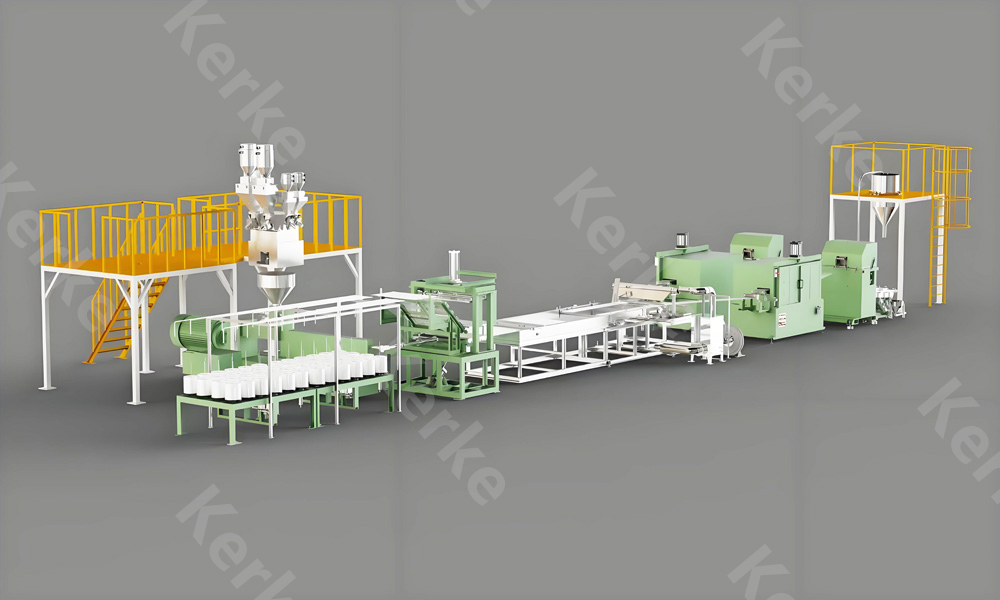
The global plastic compounding machinery market is projected to reach $9.45 billion in 2026, growing at a compound annual growth rate (CAGR) of 6.73% through 2031. This robust growth is driven by surging demand for high-performance materials across automotive lightweighting, electric vehicle battery components, sustainable packaging, and renewable energy industries. As manufacturers increasingly require customized plastic compounds with precise mechanical properties, thermal stability, and environmental credentials, the compounding production chain has evolved from a secondary processing step into a core competitive advantage. Among all compounding technologies, the twin screw extruder has emerged as the industry standard, fundamentally transforming how plastic compounds are produced from raw material to finished pellet.
Traditional compounding production chains were fragmented, inefficient, and quality-inconsistent, relying on multiple separate processing steps including pre-mixing, single-screw extrusion, cooling, and pelletizing. These legacy systems suffered from high energy consumption, excessive material waste, long changeover times, and limited ability to handle complex formulations. In contrast, modern twin screw extruders integrate the entire compounding process into a single continuous operation, delivering unprecedented levels of efficiency, flexibility, and product quality. Industry data shows that properly optimized twin screw compounding lines can reduce production costs by 30-50%, increase throughput by 40-60%, and improve product consistency by over 80% compared to traditional systems.
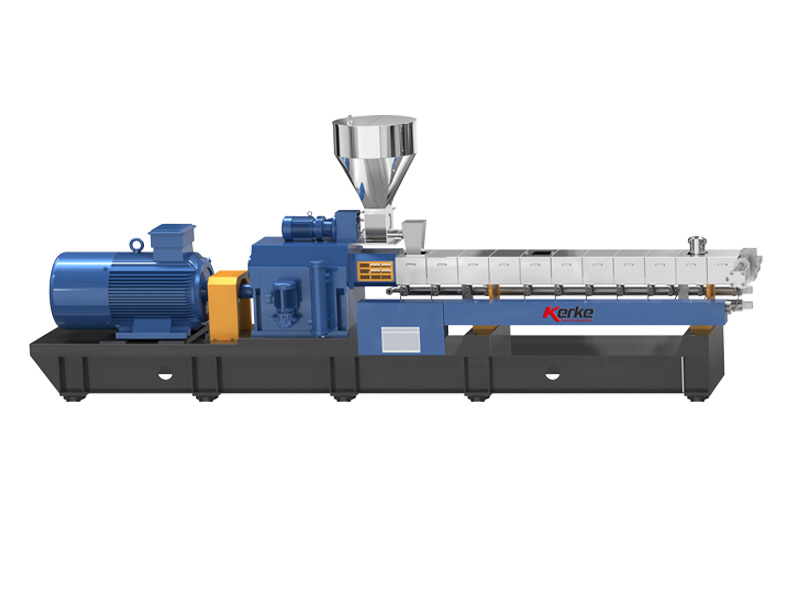
As a leading global manufacturer of advanced twin screw extruders with over 20 years of experience, KERKE has been at the forefront of this technological revolution. KERKE’s KTE series co-rotating twin screw extruders, masterbatch extruders, and compounding extruders are specifically designed to optimize every stage of the compounding production chain. With over 3,000 machines installed in more than 70 countries, KERKE has helped manufacturers worldwide achieve higher productivity, lower operating costs, and superior product quality. Our modular design philosophy, German engineering standards, and intelligent control systems ensure that our extruders deliver maximum value throughout their 15-20 year service life.
This comprehensive guide explores how the twin screw extruder optimizes the entire compounding production chain from raw material intake to finished product packaging. It examines the critical limitations of traditional compounding systems, details the stage-by-stage optimization capabilities of twin screw technology, highlights KERKE’s unique technological advantages, provides a detailed cost analysis and return on investment calculation, and features real-world case studies of successful production chain transformations. Whether you are establishing a new compounding facility or upgrading an existing operation, this guide will help you understand how twin screw extrusion technology can revolutionize your production process.
1. Limitations of Traditional Compounding Production Chains
Before the widespread adoption of twin screw extrusion technology, compounding production relied on fragmented, multi-step processes that were inherently inefficient and inflexible. These legacy systems suffered from several fundamental limitations that prevented manufacturers from meeting the growing demands of modern industries.
1.1 Fragmented Processing Steps and High Capital Investment
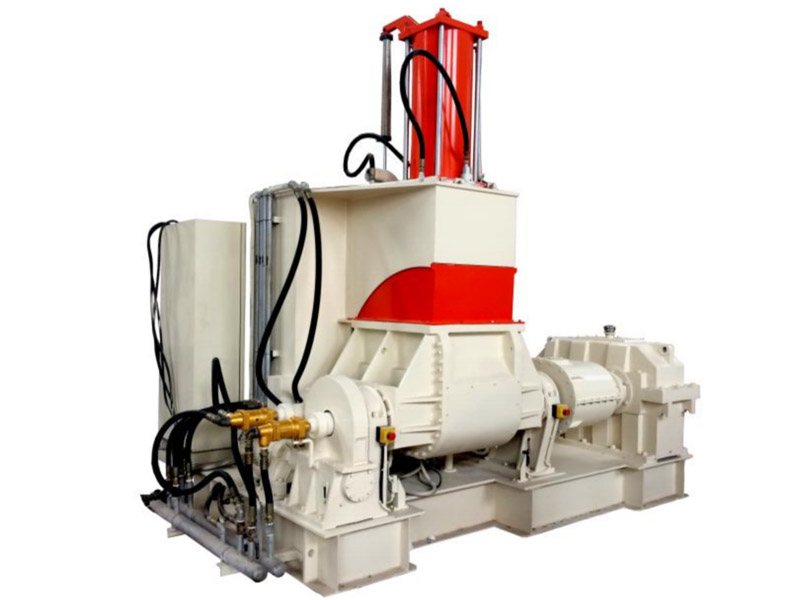
Traditional compounding production chains typically required at least three separate processing stages: pre-mixing, extrusion, and post-processing. The pre-mixing stage involved using high-intensity mixers or ribbon blenders to combine polymer resins with additives, fillers, and pigments. This was followed by extrusion using single-screw extruders to melt and homogenize the mixture, and finally post-processing including cooling, pelletizing, and packaging. Each stage required separate equipment, dedicated operators, and additional material handling, resulting in high capital investment and significant floor space requirements.
The fragmented nature of these systems also created numerous bottlenecks and points of failure. Material had to be transferred between stages manually or using conveyor systems, increasing the risk of contamination, material loss, and production delays. A single bottleneck in any stage could limit the throughput of the entire production line, reducing overall equipment effectiveness (OEE) to 50-60% in many cases.
1.2 Poor Mixing Quality and Inconsistent Product Performance
Single-screw extruders rely primarily on drag flow to convey and melt material, providing limited mixing capability. They are effective at melting and conveying homogeneous materials but struggle to achieve uniform dispersion of additives, fillers, and pigments, especially in high-concentration formulations. This poor mixing quality results in inconsistent product properties, including variations in color, mechanical strength, and thermal stability.
In traditional systems, achieving acceptable mixing quality often required multiple extrusion passes, increasing production time and energy consumption while causing additional thermal degradation of the polymer. Even with multiple passes, it was difficult to achieve the uniform dispersion required for high-performance applications such as automotive components and electronic parts, leading to high scrap rates of 5-10% or more.
1.3 High Energy Consumption and Environmental Impact
Traditional compounding systems are notoriously energy-intensive, with specific energy consumption (SEC) ranging from 0.4-0.8 kWh per kg of product. The multiple processing steps, inefficient heating systems, and poor heat transfer characteristics of single-screw extruders all contribute to this high energy consumption. Additionally, the frequent start-up and shutdown cycles required for product changeovers result in significant energy waste and material loss.
The environmental impact of traditional compounding systems extends beyond energy consumption. The high scrap rates generate significant waste, and the open processing steps can release volatile organic compounds (VOCs) and dust into the atmosphere. These environmental issues not only increase operating costs but also make it difficult for manufacturers to comply with increasingly strict environmental regulations.
1.4 Limited Flexibility and Long Changeover Times
Traditional compounding systems are highly inflexible, designed primarily for high-volume production of a limited number of formulations. Changing from one product to another requires extensive cleaning of all equipment, including mixers, extruders, and material handling systems. These changeovers can take 8-24 hours or more, resulting in significant production downtime and lost revenue.
This lack of flexibility makes it difficult for manufacturers to respond quickly to changing market demands and customer requirements. In today’s fast-paced business environment, where product lifecycles are shortening and customization is becoming increasingly important, this inflexibility is a major competitive disadvantage.
1.5 Reactive Quality Control and Limited Traceability
In traditional compounding systems, quality control is typically a reactive process, with testing performed on finished products after production is complete. If quality issues are detected, entire batches may need to be scrapped or reworked, resulting in significant financial losses. Additionally, the fragmented nature of the production chain makes it difficult to trace quality issues back to their source, preventing effective corrective action.
Limited traceability is also a major concern in industries such as automotive and medical devices, where strict regulatory requirements demand complete documentation of the production process. Traditional systems often rely on manual record-keeping, which is error-prone and time-consuming, making it difficult to meet these regulatory requirements.
2. Stage-by-Stage Optimization of the Compounding Production Chain
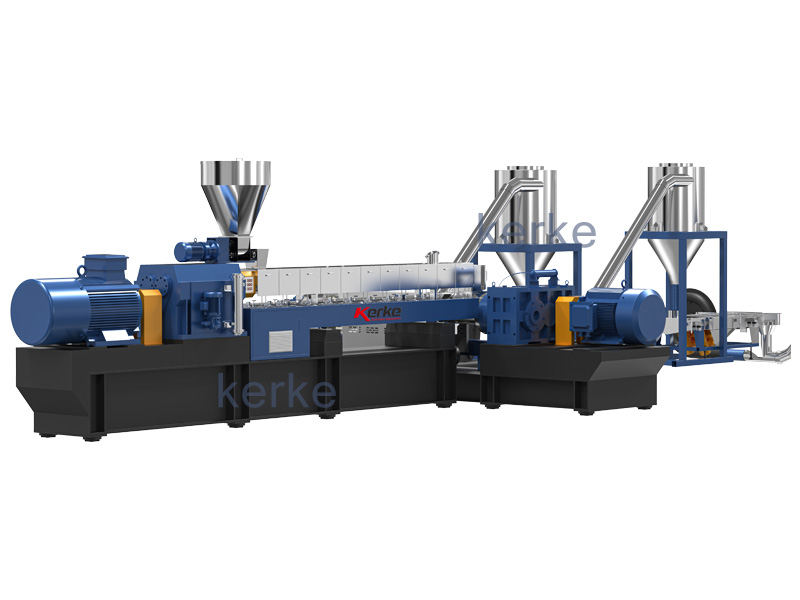
The twin screw extruder fundamentally transforms the compounding production chain by integrating all processing steps into a single continuous operation. This integration allows for optimization at every stage of the process, from raw material intake to finished product packaging, resulting in significant improvements in efficiency, quality, and flexibility.
2.1 Raw Material Handling and Feeding Optimization
The first stage of the compounding production chain is raw material handling and feeding, which has a critical impact on product quality and process stability. Twin screw extruders support multiple feeding methods and can process a wide range of raw material forms, including pellets, powders, fibers, liquids, and even post-consumer and post-industrial waste, eliminating the need for separate pre-mixing equipment in most cases.
KERKE twin screw extruders are equipped with advanced gravimetric loss-in-weight feeders that provide accurate and consistent feeding of all components with an accuracy of ±0.5%. These feeders are integrated with the extruder control system, allowing for automatic adjustment of feed rates based on screw speed and process conditions. This ensures that the formulation remains consistent even during production rate changes, resulting in uniform product quality.
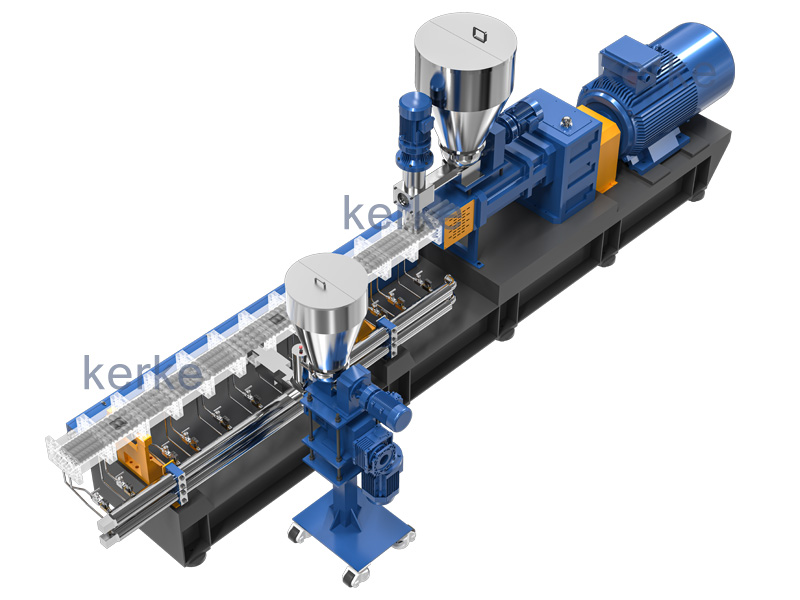
For formulations containing multiple components, KERKE offers multi-station feeding systems that can handle up to 12 different ingredients simultaneously. Raw materials can be added at different points along the extruder barrel, allowing for optimal processing of sensitive components. For example, glass fibers and other reinforcing agents can be added downstream after the polymer has melted, minimizing fiber breakage and preserving mechanical properties. Liquid additives such as plasticizers and coupling agents can be injected directly into the melt using precision metering pumps, ensuring uniform dispersion.
The integration of raw material handling and feeding into the twin screw extrusion process eliminates the need for separate pre-mixing equipment, reducing capital investment by 20-30% and floor space requirements by 40-50%. It also eliminates material handling between stages, reducing the risk of contamination and material loss while improving process safety.
2.2 Melting and Plasticization Optimization
The melting and plasticization stage is where the solid polymer resin is converted into a homogeneous melt, and it has a significant impact on both energy consumption and product quality. Twin screw extruders provide much more efficient melting and plasticization than single-screw extruders due to their intermeshing screw design and positive conveying characteristics.
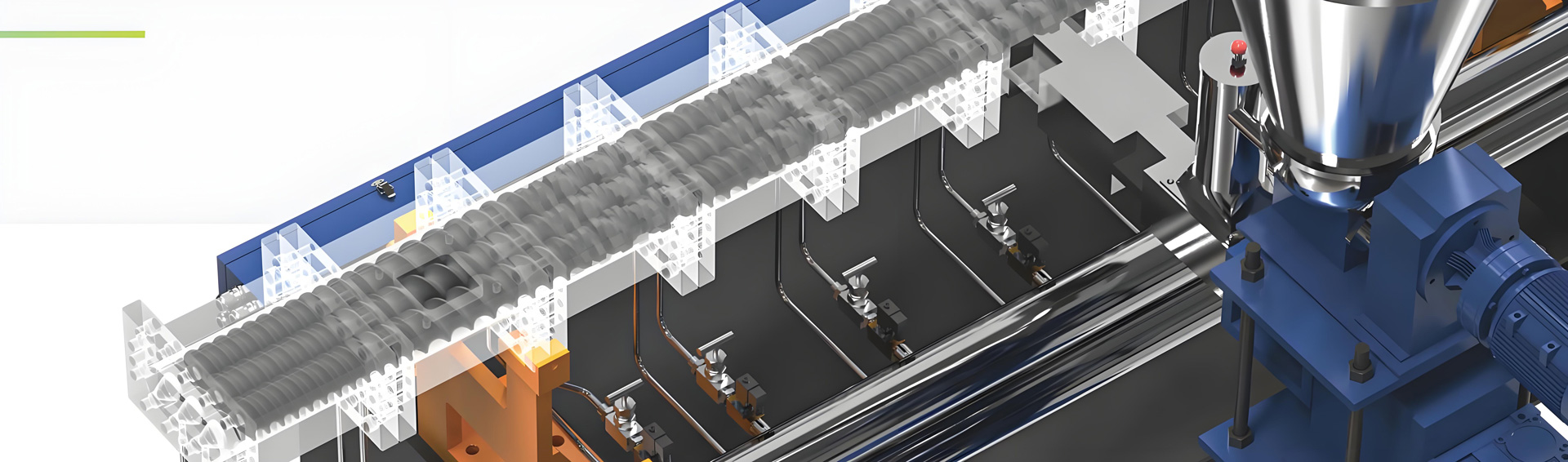
In a co-rotating twin screw extruder, the material is subjected to both mechanical shear and conductive heating, resulting in faster and more uniform melting than in a single-screw extruder. The intermeshing screws create a self-wiping action that prevents material from adhering to the screw surfaces and degrading over time, ensuring consistent melt quality and reducing the risk of product contamination.
KERKE twin screw extruders feature optimized screw profiles with gradual compression ratios that provide gentle yet efficient melting of the polymer. The modular screw design allows for customization of the melting section to match the specific properties of different polymers, including low-melt-index materials and heat-sensitive polymers. This ensures that the material is melted completely without excessive thermal degradation, preserving the mechanical properties of the final product.
The efficient melting characteristics of twin screw extruders result in significant energy savings compared to single-screw extruders. Studies have shown that twin screw extruders have 20-30% lower specific energy consumption than single-screw extruders for compounding applications. KERKE extruders further enhance energy efficiency through the use of advanced electromagnetic heating systems, which are 30-50% more efficient than traditional resistance heating elements, and heat recovery systems that capture waste heat for preheating raw materials or facility heating.
2.3 Mixing and Dispersion Optimization
The mixing and dispersion stage is the heart of the compounding process, where additives, fillers, and pigments are uniformly distributed throughout the polymer matrix. The quality of mixing directly determines the properties and performance of the final compound. Twin screw extruders provide superior mixing capabilities compared to any other compounding technology, allowing for precise control over both dispersive and distributive mixing.
Dispersive mixing involves breaking down agglomerates of additives and fillers into individual particles, while distributive mixing involves uniformly distributing these particles throughout the polymer matrix. Twin screw extruders achieve both types of mixing through the use of specialized screw elements such as kneading blocks, mixing discs, and reverse flight elements. The geometry, number, and arrangement of these elements can be customized to achieve the desired mixing intensity for specific formulations.
KERKE offers an extensive library of screw elements designed for different mixing requirements. For high-shear applications such as masterbatch production and nanocomposite processing, we offer narrow-pitch kneading blocks that provide intense dispersive mixing. For low-shear applications such as blending of heat-sensitive polymers, we offer wide-pitch kneading blocks and distributive mixing elements that provide gentle yet effective mixing without causing thermal degradation.
The modular screw design of KERKE extruders allows for quick and easy reconfiguration of the screw profile to accommodate different formulations. A complete screw changeover can be performed in 1-2 days, compared to weeks or months for a single-screw extruder with a fixed screw design. This flexibility allows manufacturers to quickly adapt to changing market demands and produce a wide range of products on a single machine.
The superior mixing capabilities of twin screw extruders result in more uniform product quality and higher performance compounds. This allows manufacturers to use lower concentrations of expensive additives while still meeting performance requirements, reducing raw material costs by 10-20%. Additionally, the improved mixing quality reduces scrap rates to 1-2% or less, further improving profitability.
2.4 Devolatilization and Reaction Extrusion Capabilities
Devolatilization is the process of removing volatile components such as moisture, residual monomers, solvents, and processing aids from the polymer melt. Effective devolatilization is essential for producing high-quality compounds with good mechanical properties and surface finish. Twin screw extruders provide excellent devolatilization capabilities due to their large surface area for mass transfer and ability to create thin melt films that facilitate the release of volatile components.
KERKE twin screw extruders feature multiple vent ports along the length of the barrel, allowing for staged devolatilization at different points in the process. The vent ports are designed with special geometry to prevent material from being drawn out of the extruder while still allowing volatile components to escape. For applications requiring high levels of devolatilization, KERKE offers vacuum venting systems that can achieve vacuum levels down to 1 mbar, ensuring complete removal of even low-volatility components.
In addition to devolatilization, twin screw extruders are also ideal for reaction extrusion processes, where chemical reactions such as polymerization, grafting, and crosslinking are performed in the extruder. The precise temperature control, narrow residence time distribution, and excellent mixing capabilities of twin screw extruders make them well-suited for controlling these chemical reactions. Reaction extrusion eliminates the need for separate batch reactors, reducing capital investment and production time while improving product consistency.
The devolatilization and reaction extrusion capabilities of twin screw extruders have opened up new possibilities for the production of advanced materials such as biodegradable polymers, reactive compatibilized blends, and chemically modified recycled plastics. These materials often require precise control over processing conditions and chemical reactions, which can only be achieved with modern twin screw extrusion technology.
2.5 Filtration and Melt Processing Optimization
Filtration is a critical step in the compounding process, removing contaminants such as metal particles, unmelted material, and other impurities from the polymer melt. Effective filtration protects downstream equipment and ensures high product quality, especially in applications such as film extrusion and injection molding where even small contaminants can cause defects.
KERKE offers a range of filtration options for twin screw extruders, including screen changers and melt filters, to meet the requirements of different applications. For continuous operation without downtime, we offer continuous screen changers that automatically replace the filter screen without interrupting production. These continuous screen changers use a rotating or sliding mechanism to introduce a clean screen into the melt stream while removing the contaminated screen, ensuring uninterrupted production and consistent filtration quality.
For applications requiring very high filtration levels, such as medical-grade compounds and optical materials, KERKE offers high-efficiency melt filters with filtration ratings down to 50 microns or finer. These filters are designed to provide maximum filtration area while minimizing pressure drop, ensuring high throughput and long filter life.
After filtration, the molten polymer is processed into its final form, typically pellets for use in downstream manufacturing processes. KERKE offers a range of pelletizing options integrated with our twin screw extruders, including strand pelletizing, water ring pelletizing, and underwater pelletizing. Each pelletizing system is designed to produce uniform pellets with consistent size, shape, and moisture content, ensuring optimal performance in downstream processes.
The integration of filtration and pelletizing into the twin screw extrusion process eliminates the need for separate processing steps, reducing capital investment and floor space requirements while improving process efficiency. It also ensures that the melt is processed immediately after compounding, minimizing thermal degradation and preserving product quality.
2.6 Integrated Process Control and Automation
Modern twin screw extruders are equipped with advanced process control and automation systems that optimize every aspect of the compounding production chain. These systems provide real-time monitoring and control of all process parameters, ensuring consistent product quality, maximizing production efficiency, and minimizing downtime.
KERKE twin screw extruders are equipped with an advanced PLC control system with a user-friendly touchscreen interface. The system provides real-time monitoring of all key process parameters, including temperature, pressure, torque, screw speed, feed rates, and vacuum level. It also includes comprehensive alarm and safety features that automatically shut down the extruder in the event of abnormal conditions, preventing equipment damage and ensuring operator safety.
The control system includes built-in recipe management capabilities that allow operators to store and recall hundreds of different product recipes. This ensures that all process parameters are set correctly for each product, eliminating human error and reducing changeover time. When changing from one product to another, the system automatically adjusts all process parameters, allowing for quick and seamless changeovers in as little as 30 minutes for similar formulations.
For advanced process optimization, KERKE offers optional online quality monitoring systems that use near-infrared (NIR) spectroscopy to measure the composition and properties of the melt in real-time. These systems can detect variations in additive concentration, polymer composition, and melt properties, allowing the control system to automatically adjust process parameters to maintain consistent product quality. This closed-loop control system ensures that product quality remains consistent even when raw material properties vary, reducing scrap rates and improving overall process efficiency.
KERKE also offers remote monitoring and control capabilities that allow plant managers to monitor and control the extruder from anywhere in the world. This feature enables faster troubleshooting and support, reducing downtime and improving overall operational efficiency. The system also includes comprehensive data logging and reporting capabilities, allowing managers to track production performance, energy consumption, and quality metrics over time, identifying opportunities for further process improvement.
3. KERKE Twin Screw Extruder Technology Advantages
KERKE twin screw extruders incorporate numerous advanced technologies and design features that provide superior performance and reliability compared to competing products. Our commitment to German engineering standards, continuous innovation, and customer satisfaction ensures that our extruders deliver maximum value throughout their service life.
3.1 High Torque Density and Power Transmission
Torque density is one of the most important specifications for a twin screw extruder, as it determines the machine’s ability to process high-viscosity materials and filled compounds. Higher torque density allows for higher throughput rates and better processing of difficult materials at lower screw speeds, reducing wear and extending equipment life.
KERKE KTE series twin screw extruders are available with torque densities ranging from 8 Nm/cm³ to 16 Nm/cm³, depending on the model and application. Our high-torque D series extruders feature torque densities up to 16 Nm/cm³, which is among the highest in the industry. This high torque density is achieved through the use of advanced gearbox design, high-quality materials, and precision manufacturing techniques.
The gearbox is the heart of the twin screw extruder, and KERKE gearboxes are designed and manufactured to the highest German standards. They feature high-precision helical gears that are case-hardened and ground to ensure smooth, quiet operation and maximum power transfer. The gears are supported by oversized, high-capacity bearings from SKF and FAG that are rated for a minimum service life of 100,000 hours under normal operating conditions. The gearbox housing is made from cast iron and is precision-machined to ensure perfect alignment of the gears and bearings, minimizing vibration and wear.
The high torque density and efficient power transmission of KERKE extruders result in higher production capacity and lower energy consumption compared to competing products. For example, our KTE-65D extruder with a torque density of 16 Nm/cm³ can process up to 800 kg/h of 30% glass fiber reinforced polypropylene, compared to 500-600 kg/h for a standard torque extruder of the same diameter. This higher throughput translates into lower production costs per kilogram of product and faster return on investment.
3.2 Modular Design and Maximum Flexibility
Modularity is a key design principle of KERKE twin screw extruders, providing maximum flexibility to adapt to changing production requirements. Both the screw and barrel are of modular construction, consisting of individual segments that can be easily replaced or reconfigured to optimize the extruder for different applications.
The screw is composed of individual elements that are mounted on a splined shaft. These elements include conveying elements, kneading blocks, mixing elements, and reverse flight elements, each designed for a specific function. The arrangement of these elements can be customized to achieve the desired melting, mixing, and conveying characteristics for specific formulations. When production requirements change, the screw can be easily reconfigured by changing the arrangement of elements, rather than replacing the entire screw.
The barrel is also composed of individual segments, each equipped with its own heating and cooling system. This allows for precise temperature control along the length of the extruder, with up to 12 independent temperature zones available on larger models. The barrel segments can be easily removed for cleaning, maintenance, or replacement, and additional segments can be added to increase the length-to-diameter (L/D) ratio if required.
The modular design of KERKE extruders provides several significant benefits. It allows manufacturers to produce a wide range of products on a single machine, reducing the need for multiple dedicated extruders. It also simplifies maintenance and reduces downtime, as only the worn or damaged components need to be replaced, rather than the entire screw or barrel. Additionally, the modular design allows for easy upgrades and modifications as new technologies and applications emerge, extending the useful life of the extruder and protecting your investment.
3.3 Advanced Wear and Corrosion Protection
Wear and corrosion are major concerns in compounding operations, especially when processing abrasive materials such as glass fibers, minerals, and pigments, or corrosive materials such as biodegradable polymers and recycled plastics. Premature wear of the screw and barrel can lead to reduced production capacity, inconsistent product quality, and high maintenance costs.
KERKE addresses these concerns through the use of advanced materials and surface treatment technologies that provide exceptional wear and corrosion resistance. Our standard barrels are manufactured from high-quality alloy steel and lined with a bimetallic alloy that combines excellent wear resistance with good thermal conductivity. The bimetallic lining is centrifugally cast to ensure uniform thickness and perfect bonding to the base steel, providing a wear-resistant surface that is 3-5 times more durable than standard nitrided steel.
Our standard screw elements are made from high-speed tool steel and nitrided for improved wear resistance. For more abrasive applications, we offer screw elements coated with tungsten carbide using a high-velocity oxygen fuel (HVOF) process. This coating provides up to 10 times the wear resistance of standard nitrided elements, making it ideal for processing highly filled compounds and abrasive materials. For corrosive applications, we offer special corrosion-resistant alloys and coatings that protect against chemical attack from acidic or alkaline materials.
The advanced wear and corrosion protection of KERKE extruders significantly extends the service life of the screw and barrel, reducing maintenance costs and downtime. For example, in glass fiber reinforced compounding applications, KERKE extruders with tungsten carbide coated screw elements and bimetallic barrels have a service life of 5-7 years, compared to 1-2 years for standard nitrided components. This extended service life results in significant cost savings over the life of the equipment.
3.4 Energy Efficiency and Sustainability
Energy efficiency is a critical consideration for modern manufacturing operations, as energy costs continue to rise and environmental regulations become stricter. KERKE twin screw extruders are designed with energy efficiency as a top priority, incorporating numerous features that reduce energy consumption and minimize environmental impact.
One of the most significant energy-saving features of KERKE extruders is our advanced electromagnetic heating system. Unlike traditional resistance heating elements, which heat the barrel from the outside through conduction, electromagnetic heating generates heat directly within the barrel wall. This results in faster heating, more uniform temperature distribution, and 30-50% higher energy efficiency than traditional heating systems.
KERKE extruders also feature high-efficiency IE4-rated motors and variable frequency drives that adjust motor speed based on actual load requirements, reducing energy consumption during partial load operation. Our heat recovery systems capture waste heat from the extruder barrel and gearbox, which can be used to preheat raw materials, heat the facility, or generate hot water for other processes. This can reduce overall energy consumption by an additional 20-30%.
In addition to energy efficiency, KERKE extruders are designed to minimize material waste and environmental impact. The precise process control and consistent product quality result in scrap rates of 1-2% or less, compared to 5-10% for traditional systems. The closed-loop process design minimizes emissions of volatile organic compounds (VOCs) and dust, ensuring compliance with the strictest environmental regulations. Additionally, the long service life of KERKE extruders reduces the environmental impact associated with equipment manufacturing and disposal.
The energy efficiency and sustainability features of KERKE extruders not only reduce operating costs but also help manufacturers meet their corporate sustainability goals and comply with environmental regulations. This is becoming increasingly important as customers and consumers demand more environmentally friendly products and manufacturing processes.
3.5 Comprehensive Global Service and Support
KERKE is committed to providing comprehensive global service and support to ensure that our customers’ extruders operate at peak performance throughout their entire service life. Our global service network includes service centers in key regions around the world, staffed by experienced technicians who are trained to provide fast, professional support.
We offer a range of service options to meet the needs of our customers, including 24/7 technical support via phone and email, remote monitoring and diagnostic services, on-site installation and commissioning, preventive maintenance programs, emergency repair services, and spare parts supply. We maintain a global inventory of spare parts to ensure fast delivery to customers anywhere in the world, with most parts shipped within 24 hours.
We also provide comprehensive training for our customers’ operators and maintenance personnel to ensure they have the knowledge and skills to operate and maintain the extruder effectively. Our training programs include both classroom instruction and hands-on training with the actual equipment, covering all aspects of plant operation, maintenance, safety, and quality control. We also offer advanced training courses on process optimization, screw design, and troubleshooting to help our customers maximize the performance of their extruders.
For customers who require additional support, we offer customized service contracts that can be tailored to meet specific needs. These contracts can include regular preventive maintenance visits, priority emergency service, spare parts discounts, and remote monitoring services. Our goal is to ensure that our customers’ extruders operate reliably and efficiently, maximizing productivity and profitability.
4. Cost Analysis and Return on Investment
Investing in a KERKE twin screw extruder is a significant capital expenditure, but it provides substantial returns through lower operating costs, higher production capacity, and improved product quality. The following analysis compares the costs and returns of a traditional compounding production line versus a KERKE twin screw compounding line for a typical 500 kg/h polypropylene compounding operation with 30% glass fiber reinforcement.
4.1 Initial Investment Comparison
The initial investment for a compounding production line includes the cost of the extruder, auxiliary equipment, installation, commissioning, and training.
Traditional compounding line:
- High-intensity mixer: $40,000 – $60,000
- Single-screw extruder: $80,000 – $120,000
- Cooling and pelletizing system: $30,000 – $50,000
- Material handling equipment: $20,000 – $40,000
- Control system: $10,000 – $20,000
- Installation and commissioning: $20,000 – $35,000
- Training and documentation: $5,000 – $10,000
Total initial investment: $205,000 – $335,000
KERKE KTE-65 twin screw compounding line:
- Twin screw extruder main unit: $100,000 – $150,000
- Gravimetric feeding system: $25,000 – $40,000
- Filtration system: $15,000 – $30,000
- Pelletizing system: $20,000 – $40,000
- Control system: $15,000 – $25,000
- Installation and commissioning: $20,000 – $35,000
- Training and documentation: $5,000 – $10,000
Total initial investment: $200,000 – $330,000
As this comparison shows, the initial investment for a KERKE twin screw compounding line is comparable to that of a traditional compounding line. However, the twin screw line eliminates the need for a separate high-intensity mixer and reduces material handling requirements, resulting in similar overall capital costs while providing significantly higher performance and flexibility.
4.2 Annual Operating Cost Comparison
The annual operating cost is the most important factor in determining the long-term profitability of a compounding operation.
Traditional compounding line:
- Energy costs: $180,000 per year
- Raw material waste: $120,000 per year (5% scrap rate)
- Labor costs: $180,000 per year (3 operators per shift)
- Maintenance costs: $60,000 per year
- Spare parts costs: $40,000 per year
- Downtime costs: $120,000 per year (10% downtime)
Total annual operating costs: $700,000
KERKE twin screw compounding line:
- Energy costs: $126,000 per year (30% reduction)
- Raw material waste: $36,000 per year (1.5% scrap rate)
- Labor costs: $120,000 per year (2 operators per shift)
- Maintenance costs: $24,000 per year (60% reduction)
- Spare parts costs: $12,000 per year (70% reduction)
- Downtime costs: $24,000 per year (2% downtime)
Total annual operating costs: $342,000
Annual cost savings with KERKE twin screw compounding line: $700,000 – $342,000 = $358,000
This comparison clearly demonstrates the significant operating cost savings provided by a KERKE twin screw compounding line. The largest savings come from reduced energy consumption, lower raw material waste, and reduced labor costs, resulting in total annual savings of over $350,000 for a typical 500 kg/h operation.
4.3 Production Capacity and Revenue Comparison
In addition to lower operating costs, a KERKE twin screw compounding line also provides higher production capacity and improved product quality, resulting in higher revenue and profit margins.
Traditional compounding line:
- Annual production capacity: 3,600 tons per year
- Average selling price: $1,200 per ton
- Annual revenue: $4,320,000 per year
- Annual operating costs: $700,000 per year
- Annual gross profit: $3,620,000 per year
KERKE twin screw compounding line:
- Annual production capacity: 5,040 tons per year (40% increase)
- Average selling price: $1,320 per ton (10% premium for higher quality)
- Annual revenue: $6,652,800 per year
- Annual operating costs: $342,000 per year
- Annual gross profit: $6,310,800 per year
Additional annual revenue with KERKE twin screw compounding line: $6,652,800 – $4,320,000 = $2,332,800
The KERKE twin screw line provides a 40% increase in production capacity due to its higher throughput and lower downtime. Additionally, the superior product quality allows for a 10% price premium, resulting in additional annual revenue of over $2.3 million.
4.4 Return on Investment Calculation
Using the figures from the previous sections, we can calculate the return on investment (ROI) for the KERKE twin screw compounding line. The total initial investment is approximately $265,000 (midpoint of the range), and the annual cost savings are $358,000.
Payback period based on cost savings alone = Total initial investment ÷ Annual cost savings = $265,000 ÷ $358,000 = 0.74 years (approximately 9 months)
When considering the additional revenue from increased production capacity and higher product quality, the payback period is even shorter:
Total annual benefit = Annual cost savings + Additional annual revenue = $358,000 + $2,332,800 = $2,690,800
Payback period including additional revenue = $265,000 ÷ $2,690,800 = 0.10 years (approximately 37 days)
Over the 20-year service life of the KERKE extruder, the total profit would be:
Total profit over 20 years = ($6,310,800 × 20) – $265,000 = $125,951,000
This represents a return on investment of over 47,500% over the life of the equipment, making a KERKE twin screw extruder one of the most profitable investments a compounding manufacturer can make.
5. Real-World Case Studies
The following case studies demonstrate how KERKE twin screw extruders have transformed compounding production chains for manufacturers around the world, delivering significant improvements in productivity, quality, and profitability.
5.1 Case Study 1: Masterbatch Manufacturer in Germany
A leading masterbatch manufacturer in Germany was operating three older single-screw extruders with separate pre-mixing equipment. The company was experiencing frequent quality issues, high maintenance costs, and long changeover times. They were spending over $150,000 per year on maintenance and spare parts, and changeovers between different color masterbatches were taking 12-24 hours, limiting their ability to respond to customer orders quickly.
The company decided to replace the three older extruders with two KERKE KTE-75 twin screw extruders specifically designed for masterbatch production. The new extruders featured high-torque gearboxes, wear-resistant screw and barrel components, and advanced control systems with recipe management capabilities.
Results after implementation:
- Total production capacity increased by 40% from 2,000 kg/h to 2,800 kg/h
- Maintenance costs reduced by 75% from $150,000 to $37,500 per year
- Spare parts costs reduced by 80%
- Scrap rate reduced from 4.5% to 1.2%
- Changeover time reduced from 12-24 hours to 1-2 hours
- Energy consumption reduced by 32%
- Total annual cost savings: $420,000
- Payback period: 1.2 years
The KERKE extruders have been operating reliably for over 8 years with no major issues. The company estimates that the extruders will provide at least 15-20 years of service, resulting in total savings of over $8 million over their life cycle. The improved product quality and faster changeover times have also allowed the company to expand their customer base and increase market share.
5.2 Case Study 2: Engineering Plastic Compounder in the United States
An engineering plastic compounder in the United States was experiencing significant wear problems with their existing extruders when processing glass fiber reinforced compounds. The screw and barrel components needed to be replaced every 12-18 months, resulting in high maintenance costs and frequent downtime. The inconsistent product quality was also leading to customer complaints and lost business.
The company contacted KERKE for a solution, and we recommended our KTE-65 engineering plastic extruder with our high-wear package, including tungsten carbide coated screw elements and bimetallic barrels. The extruder was also equipped with an advanced control system and continuous screen changer for uninterrupted production.
Results after implementation:
- Screw and barrel service life increased from 15 months to 7 years
- Maintenance costs reduced by 85%
- Downtime reduced from 10% to 2%
- Product quality consistency improved significantly
- Scrap rate reduced from 5% to 1%
- Energy consumption reduced by 28%
- Total annual cost savings: $280,000
- Payback period: 1.4 years
The company has since ordered three additional KERKE extruders for their other production facilities, citing the exceptional durability and performance of the first machine. The improved product quality has allowed them to enter new markets and secure long-term contracts with major automotive and electronics manufacturers.
5.3 Case Study 3: Recycled Plastic Modification Plant in China
A recycled plastic modification plant in China was struggling to process highly contaminated post-consumer plastic waste with their existing extruders. The extruders experienced frequent blockages, high wear rates, and inconsistent product quality. The company was considering exiting the recycled plastic business due to the high costs and low profitability.
KERKE provided a customized KTE-95 recycling extruder with advanced filtration, devolatilization, and wear-resistant components. The extruder was specifically designed to handle the challenges of processing highly contaminated recycled materials, with multiple vent ports for efficient devolatilization and a continuous screen changer to remove contaminants without interrupting production.
Results after implementation:
- The extruder successfully processed the highly contaminated recycled material
- Production capacity increased by 60% from 1,200 kg/h to 1,920 kg/h
- Screw and barrel service life increased from 8 months to 5 years
- Maintenance costs reduced by 70%
- Downtime reduced from 18% to 3%
- Product quality improved significantly, allowing the company to sell their compounds at a 20% premium
- The business became profitable within 6 months of installation
- Payback period: 1.1 years
The success of this project has allowed the company to expand their recycled plastic operations and become one of the leading recycled plastic compounders in China. They have since ordered two additional KERKE extruders to meet the growing demand for high-quality recycled plastic compounds.
6. Future Trends in Compounding Production Chain Optimization
The compounding industry is continuously evolving, driven by technological advancements, changing market demands, and environmental regulations. Twin screw extrusion technology will play a central role in shaping the future of compounding production, enabling manufacturers to meet these emerging challenges and opportunities.
6.1 Digitalization and Industry 4.0 Integration
Digitalization and Industry 4.0 are transforming manufacturing operations around the world, and the compounding industry is no exception. Future twin screw extruders will be fully integrated into digital manufacturing ecosystems, featuring advanced sensors, artificial intelligence, and machine learning capabilities that enable autonomous operation and continuous process optimization.
KERKE is at the forefront of this digital transformation, developing intelligent extruder systems that can self-optimize process parameters in real-time based on raw material properties and product requirements. Our digital twin technology creates a virtual replica of the extruder and production process, allowing for virtual testing of new formulations and process parameters before implementation on the actual machine. This reduces development time and costs while minimizing the risk of production issues.
Advanced data analytics and machine learning algorithms will also enable predictive maintenance, where the system can detect early signs of component wear or failure and schedule maintenance before a breakdown occurs. This will further reduce downtime and extend the service life of the equipment, improving overall production efficiency and profitability.
6.2 Sustainable and Circular Economy Solutions
Sustainability and the circular economy are becoming increasingly important drivers of innovation in the compounding industry. Manufacturers are under growing pressure to reduce their environmental impact and increase the use of recycled materials in their products. Twin screw extrusion technology is ideally suited for processing recycled plastics and producing sustainable compounds, enabling the transition to a circular economy.
KERKE is committed to developing sustainable compounding solutions, including advanced extruders for processing post-consumer and post-industrial plastic waste, biodegradable polymers, and bio-based materials. Our extruders are designed to handle highly contaminated recycled materials, producing high-quality compounds that can replace virgin plastics in a wide range of applications. We are also developing energy-efficient and carbon-neutral production processes to help our customers reduce their carbon footprint and meet their sustainability goals.
In the future, we will see increased integration of chemical recycling technologies with twin screw extrusion, enabling the production of high-quality recycled plastics from even the most contaminated waste streams. This will further expand the range of applications for recycled plastics and accelerate the transition to a circular economy.
6.3 Customization and Flexible Manufacturing
As product lifecycles shorten and customer demand for customized products increases, flexible manufacturing will become essential for compounding manufacturers. Twin screw extruders with modular design and quick changeover capabilities will enable manufacturers to produce a wide range of products in small batches efficiently and cost-effectively.
KERKE’s modular extruder design provides the flexibility needed for this new manufacturing paradigm. Our extruders can be quickly reconfigured to accommodate different formulations and production requirements, allowing manufacturers to respond quickly to changing market demands. We are also developing advanced automation and robotics systems that will enable fully automated product changeovers with minimal human intervention, further reducing changeover time and improving production efficiency.
In the future, we will see the emergence of fully flexible compounding production lines that can produce multiple products simultaneously and automatically adjust production schedules based on real-time demand. This will enable manufacturers to optimize production efficiency, reduce inventory costs, and improve customer service.
7. Conclusion
The twin screw extruder has fundamentally transformed the compounding production chain, replacing fragmented, inefficient traditional systems with integrated, continuous processes that deliver unprecedented levels of efficiency, quality, and flexibility. By optimizing every stage of the production process from raw material intake to finished product packaging, twin screw extruders reduce operating costs by 30-50%, increase production capacity by 40-60%, and improve product consistency by over 80% compared to traditional systems.
KERKE twin screw extruders incorporate advanced German engineering, modular design, high torque density, and intelligent control systems that provide superior performance and reliability. Our extruders are designed to maximize productivity, minimize operating costs, and deliver consistent product quality, ensuring a rapid return on investment and long-term profitability for our customers.
The detailed cost analysis and case studies presented in this guide demonstrate that investing in a KERKE twin screw extruder provides one of the highest returns on investment in the manufacturing industry. With payback periods as short as 9 months and total returns exceeding 47,500% over the 20-year service life of the equipment, a KERKE twin screw extruder is a strategic investment that will drive growth and profitability for decades to come.
As the compounding industry continues to evolve, twin screw extrusion technology will remain at the forefront of innovation, enabling manufacturers to meet the growing demand for high-performance, sustainable plastic materials. With KERKE as your partner, you can be confident that you have the most advanced, reliable, and cost-effective compounding solution available to meet your current and future production needs.
If you are looking to optimize your compounding production chain with advanced twin screw extrusion technology, contact KERKE today to schedule a free consultation. Our experienced team will work with you to develop a customized solution that meets your specific requirements and helps you achieve your production and business goals.