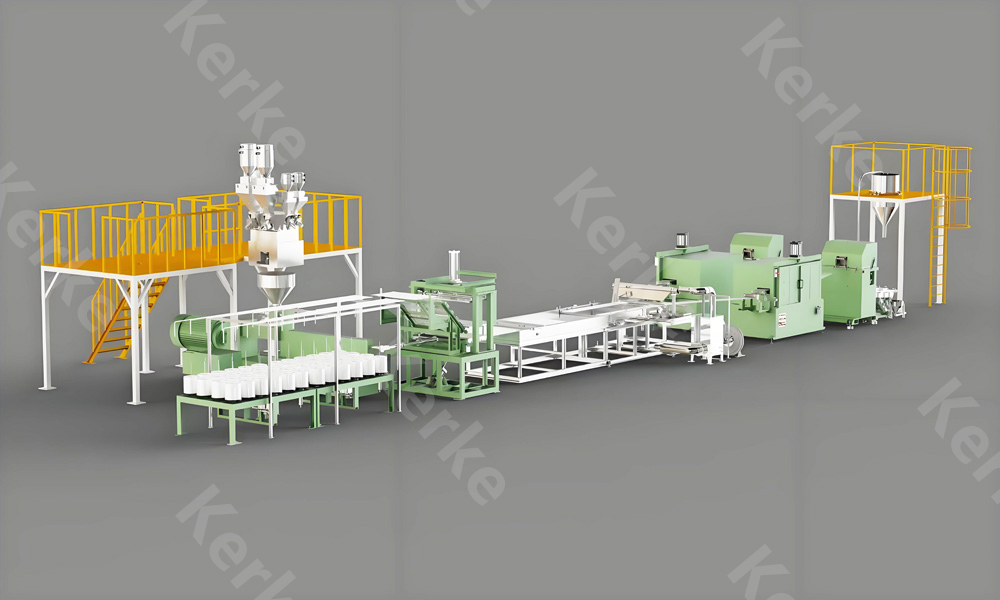
The global masterbatch market is projected to reach $18.7 billion in 2026, growing at a compound annual growth rate (CAGR) of 6.2% through 2032. This robust growth is driven by increasing demand for colored and functional plastic products across packaging, automotive, construction, electronics, and consumer goods industries. As competition intensifies and raw material prices continue to fluctuate, reducing the cost per kilogram of masterbatch has become the most critical factor for maintaining profitability and market competitiveness in the masterbatch manufacturing industry.
The cost of masterbatch production is influenced by numerous factors, with raw materials accounting for 70-85% of total production costs. However, the choice of production equipment and technology has a profound impact on all cost components, including raw material utilization, energy consumption, labor costs, waste generation, and maintenance expenses. Among all production technologies, the modern twin screw masterbatch extruder has emerged as the most effective solution for reducing production costs while improving product quality and consistency.
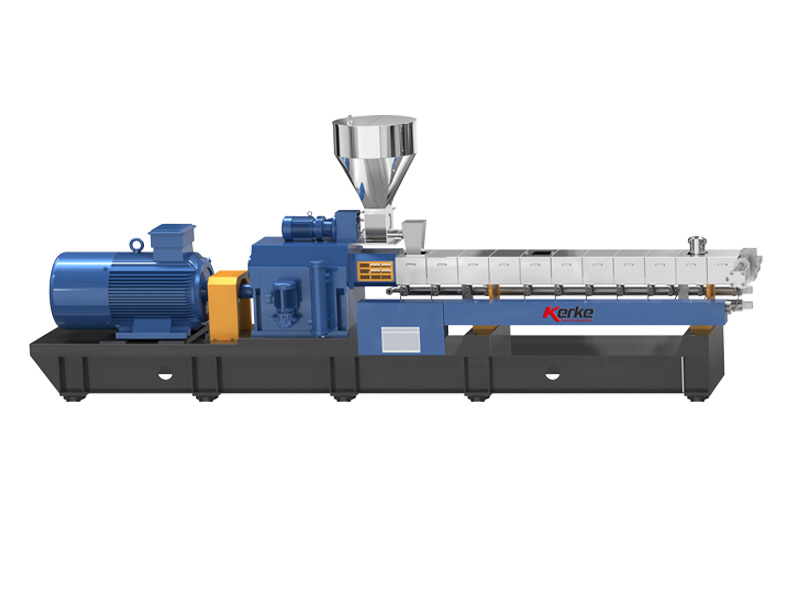
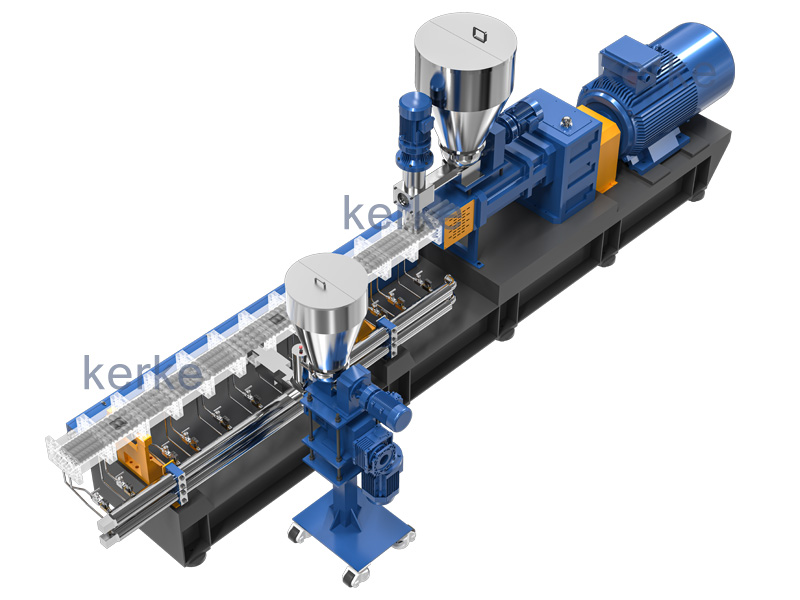
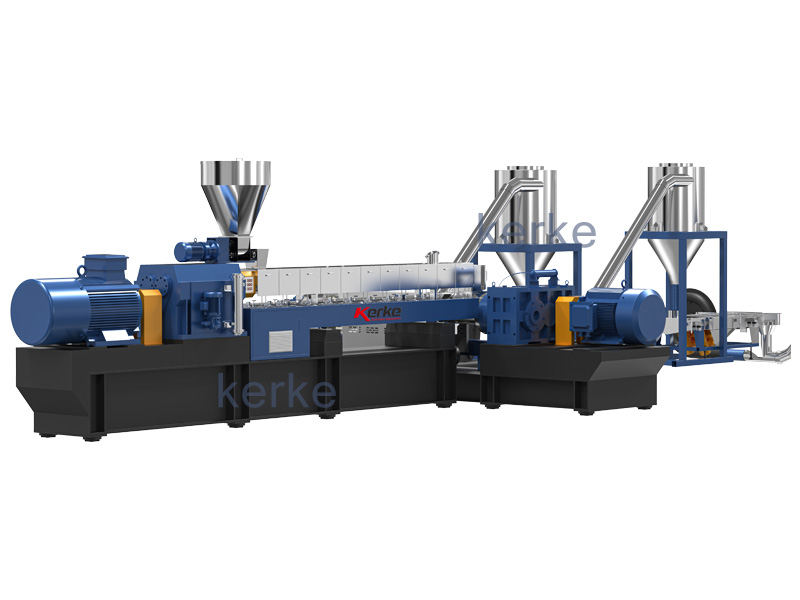
As a leading global manufacturer of advanced twin screw extruders with over 20 years of experience, KERKE has established itself as the trusted partner for cost-effective masterbatch production. KERKE’s KTE series masterbatch extruders are specifically designed to optimize every aspect of the production process, delivering significant cost savings across the entire value chain. With over 3,000 machines installed in more than 70 countries, KERKE has helped masterbatch manufacturers worldwide reduce their production costs by 20-40% while improving product quality and increasing production capacity.
This comprehensive guide explores how a modern masterbatch extruder reduces the cost per kilogram of masterbatch production. It provides a detailed breakdown of masterbatch production costs, examines the limitations of traditional production methods, explains the cost-saving mechanisms of twin screw extrusion technology, highlights KERKE’s unique technological advantages, includes a detailed cost analysis and return on investment calculation, and features real-world case studies of successful cost reduction implementations. Whether you are establishing a new masterbatch production facility or upgrading existing equipment, this guide will help you understand how investing in the right masterbatch extruder can significantly improve your bottom line.
1. Detailed Cost Structure of Masterbatch Production
To effectively reduce the cost per kilogram of masterbatch, it is essential to first understand the detailed cost structure of masterbatch production. The total cost of producing masterbatch can be divided into five main categories: raw materials, energy, labor, maintenance, and overhead. Each of these categories is influenced by the type of production equipment and technology used.
1.1 Raw Material Costs
Raw material costs represent the largest component of masterbatch production costs, typically accounting for 70-85% of the total cost per kilogram. The exact percentage varies depending on the type of masterbatch, with color masterbatches generally having higher raw material costs than filler masterbatches due to the high cost of pigments.
The raw material cost breakdown for different types of masterbatch is as follows:
Color masterbatch:
- Carrier resin: 50-65%
- Pigments: 25-40%
- Additives: 5-10%
Filler masterbatch:
- Carrier resin: 15-30%
- Fillers (calcium carbonate, talc, etc.): 60-80%
- Additives: 3-7%
Functional masterbatch:
- Carrier resin: 40-60%
- Functional additives: 30-50%
- Other components: 5-10%
The price of raw materials can fluctuate significantly based on market conditions, supply and demand, and geopolitical factors. For example, crude oil prices directly impact the cost of polymer resins, while pigment prices are influenced by factors such as mining costs, environmental regulations, and global supply chains. These fluctuations make it essential for masterbatch manufacturers to optimize raw material utilization to maintain consistent profit margins.
1.2 Energy Costs
Energy costs typically account for 5-15% of the total production cost per kilogram of masterbatch. The extrusion process is the most energy-intensive stage of masterbatch production, accounting for approximately 70-80% of total energy consumption. Other energy-intensive processes include drying, cooling, and pelletizing.
The specific energy consumption for masterbatch production varies depending on the type of equipment and technology used. Traditional single screw extruders typically have a specific energy consumption of 0.20-0.35 kWh per kilogram of masterbatch produced. In contrast, modern twin screw extruders have a specific energy consumption of 0.08-0.18 kWh per kilogram, representing a 40-60% reduction in energy costs.
Energy costs vary significantly by region, with countries such as China and India having lower energy costs than Europe and North America. However, regardless of location, reducing energy consumption is a critical factor in reducing production costs and improving profitability.
1.3 Labor Costs
Labor costs typically account for 3-10% of the total production cost per kilogram of masterbatch. The exact percentage depends on the level of automation of the production facility and local labor rates. Highly automated production lines require minimal operator intervention, resulting in lower labor costs per kilogram of product.
Traditional masterbatch production lines using single screw extruders typically require 3-4 operators per shift to handle material feeding, process monitoring, quality control, and equipment maintenance. In contrast, modern automated twin screw production lines can be operated by 1-2 operators per shift, resulting in a 50-70% reduction in labor costs.
In addition to direct labor costs, there are also indirect labor costs associated with training, supervision, and employee benefits. Investing in automated equipment can reduce both direct and indirect labor costs while improving production consistency and quality.
1.4 Maintenance and Repair Costs
Maintenance and repair costs typically account for 2-5% of the total production cost per kilogram of masterbatch. These costs include routine maintenance, spare parts replacement, and emergency repairs. The type of equipment used has a significant impact on maintenance costs, with well-designed, high-quality equipment requiring less maintenance and having longer service lives.
Traditional single screw extruders typically have higher maintenance costs due to their simpler design and lower quality components. The screw and barrel of a single screw extruder may need to be replaced every 2-3 years when processing abrasive materials such as pigments and fillers. In contrast, modern twin screw extruders with wear-resistant components can have a service life of 5-10 years or more, resulting in significantly lower maintenance costs over the long term.
Unplanned downtime due to equipment failure also contributes to maintenance costs. A single hour of unplanned downtime can result in lost revenue of $500-$5,000 or more, depending on the production capacity and product value. Investing in reliable equipment with predictive maintenance capabilities can significantly reduce unplanned downtime and associated costs.
1.5 Waste and Scrap Costs
Waste and scrap costs typically account for 2-8% of the total production cost per kilogram of masterbatch. These costs include material waste during startup, shutdown, product changeovers, and off-spec production. The amount of waste generated depends on the type of equipment used, the complexity of the formulations, and the frequency of product changeovers.
Traditional single screw extruders typically generate 5-10% waste during production, with higher waste rates during product changeovers. In contrast, modern twin screw extruders with advanced process control and quick changeover capabilities can reduce waste rates to 1-3%, resulting in significant cost savings, especially for high-value materials such as specialty pigments and additives.
Waste disposal costs also contribute to the overall cost of waste generation. Many regions have strict environmental regulations regarding the disposal of plastic waste, making waste reduction not only a cost-saving measure but also a compliance requirement.
2. Limitations of Traditional Single Screw Masterbatch Production
Before the widespread adoption of twin screw extrusion technology, most masterbatch was produced using single screw extruders. While single screw extruders are simple and relatively inexpensive, they have several fundamental limitations that result in higher production costs and lower product quality compared to modern twin screw extruders.
2.1 Poor Mixing and Dispersion Performance
The most significant limitation of single screw extruders is their poor mixing and dispersion performance. Single screw extruders rely primarily on drag flow to convey and melt material, providing limited shear and mixing capability. This makes it difficult to achieve uniform dispersion of pigments, fillers, and additives, especially in high-concentration formulations.
Poor dispersion results in several cost-related issues. First, it requires higher concentrations of expensive pigments and additives to achieve the desired color or functional properties, increasing raw material costs. Second, it leads to inconsistent product quality, resulting in higher scrap rates and customer complaints. Third, it may require multiple extrusion passes to achieve acceptable dispersion, increasing energy consumption and production time.
For example, a single screw extruder may require 30% more pigment to achieve the same color intensity as a twin screw extruder due to poor dispersion. For a masterbatch containing 30% pigment at a cost of $5 per kilogram, this represents an additional raw material cost of $0.45 per kilogram of masterbatch produced.
2.2 Low Production Efficiency and Throughput
Single screw extruders have lower production efficiency and throughput compared to twin screw extruders of the same diameter. The limited mixing capability of single screw extruders requires longer residence times and lower screw speeds to achieve acceptable product quality, resulting in lower throughput rates.
Additionally, single screw extruders have limited ability to process high-viscosity materials and high-load formulations. This limits the range of products that can be produced and may require dedicated equipment for different types of masterbatch, increasing capital investment and reducing equipment utilization.
For example, a 65mm single screw extruder typically has a throughput of 150-250 kg/h for color masterbatch production. In contrast, a 65mm twin screw extruder can achieve a throughput of 350-600 kg/h for the same application, representing a 130-140% increase in production capacity with the same floor space.
2.3 High Energy Consumption
Single screw extruders have significantly higher energy consumption compared to twin screw extruders. The inefficient melting and mixing process of single screw extruders requires more energy to achieve the same level of processing as twin screw extruders. Additionally, single screw extruders typically use less efficient heating and cooling systems, further increasing energy consumption.
As mentioned earlier, single screw extruders typically have a specific energy consumption of 0.20-0.35 kWh per kilogram of masterbatch produced, compared to 0.08-0.18 kWh per kilogram for twin screw extruders. For a production facility producing 5,000 tons of masterbatch per year, this represents an annual energy cost savings of $120,000-$270,000 at an electricity cost of $0.15 per kWh.
2.4 Long Changeover Times and High Waste Generation
Single screw extruders have long changeover times between different products, resulting in significant production downtime and material waste. Changing from one color or formulation to another requires extensive cleaning of the screw, barrel, and die, which can take 4-8 hours or more. During this time, the extruder is not producing saleable product, resulting in lost revenue.
Additionally, the changeover process generates significant amounts of waste material as the previous product is purged from the system. For high-value products such as specialty color masterbatches, this waste can represent a significant financial loss.
In contrast, modern twin screw extruders with modular design and self-wiping screw profiles can reduce changeover times to 1-2 hours and significantly reduce purge material requirements, resulting in higher equipment utilization and lower waste costs.
2.5 Limited Process Control and Consistency
Single screw extruders have limited process control capabilities, making it difficult to maintain consistent product quality. The simple design of single screw extruders provides limited ability to adjust processing parameters such as temperature profile, shear rate, and residence time, resulting in variations in product quality between batches.
Inconsistent product quality leads to higher scrap rates, customer complaints, and lost business. It may also require additional quality control testing and inspection, increasing labor and overhead costs.
Modern twin screw extruders feature advanced process control systems that provide precise control over all processing parameters, ensuring consistent product quality batch after batch. This reduces scrap rates, improves customer satisfaction, and reduces the need for extensive quality control testing.
3. How Masterbatch Extruder Reduces Production Costs
A modern twin screw masterbatch extruder reduces the cost per kilogram of masterbatch production through multiple mechanisms, addressing all the limitations of traditional single screw extrusion technology. The following sections detail how twin screw extruders reduce costs across all aspects of the production process.
3.1 Improved Pigment Dispersion Reduces Raw Material Costs
The most significant cost savings provided by twin screw extruders come from improved pigment and additive dispersion, which reduces the amount of expensive raw materials required to achieve the desired product properties.
Twin screw extruders provide intense shear and mixing action through the use of intermeshing screws and specialized mixing elements such as kneading blocks and mixing discs. This intense mixing breaks down agglomerates of pigments and additives, ensuring uniform dispersion throughout the polymer matrix. As a result, less pigment is required to achieve the same color intensity, and less additive is required to achieve the desired functional properties.
For color masterbatch production, improved dispersion can reduce pigment requirements by 15-30% compared to single screw extrusion. For a black masterbatch containing 40% carbon black at a cost of $2.50 per kilogram, this represents a raw material cost savings of $0.15-$0.30 per kilogram of masterbatch produced. For a facility producing 5,000 tons of masterbatch per year, this amounts to annual savings of $750,000-$1,500,000.
For filler masterbatch production, improved dispersion allows for higher filler loadings while maintaining product performance. This reduces the amount of expensive carrier resin required, further reducing raw material costs. For example, a twin screw extruder can produce a filler masterbatch with 80% calcium carbonate content, compared to 60-70% for a single screw extruder, reducing carrier resin requirements by 25-33%.
3.2 Higher Production Throughput Reduces Unit Costs
Twin screw extruders have significantly higher production throughput compared to single screw extruders of the same diameter, reducing the unit cost of production by spreading fixed costs such as labor, overhead, and capital depreciation over a larger volume of product.
The high torque density and efficient conveying characteristics of twin screw extruders allow them to operate at higher screw speeds and process higher volumes of material while maintaining excellent product quality. Additionally, the modular design of twin screw extruders allows for customization of the screw profile to optimize throughput for specific formulations and applications.
As mentioned earlier, a 65mm twin screw extruder can achieve a throughput of 350-600 kg/h for color masterbatch production, compared to 150-250 kg/h for a 65mm single screw extruder. This represents a 130-140% increase in production capacity with the same floor space and similar utility requirements.
Higher production throughput also reduces the number of production lines required to meet market demand, reducing capital investment, floor space requirements, and labor costs. For example, a single twin screw production line can replace two or three single screw lines, resulting in significant cost savings in terms of equipment, labor, and facility expenses.
3.3 Lower Energy Consumption Reduces Utility Costs
Twin screw extruders have significantly lower energy consumption compared to single screw extruders, resulting in substantial savings in utility costs.
The efficient melting and mixing process of twin screw extruders requires less energy to achieve the same level of processing as single screw extruders. The intermeshing screw design creates a self-wiping action that improves heat transfer and reduces energy waste. Additionally, modern twin screw extruders feature advanced heating and cooling systems, such as electromagnetic heating and variable-speed drives, which further improve energy efficiency.
As mentioned earlier, twin screw extruders typically have a specific energy consumption of 0.08-0.18 kWh per kilogram of masterbatch produced, compared to 0.20-0.35 kWh per kilogram for single screw extruders. This represents a 40-60% reduction in energy consumption.
For a production facility producing 5,000 tons of masterbatch per year at an electricity cost of $0.15 per kWh, the annual energy cost savings would be:
Single screw extruder: 5,000,000 kg × 0.275 kWh/kg × $0.15/kWh = $206,250 per year
Twin screw extruder: 5,000,000 kg × 0.13 kWh/kg × $0.15/kWh = $97,500 per year
Annual energy cost savings: $206,250 – $97,500 = $108,750 per year
Over the 15-20 year service life of the equipment, this amounts to total energy savings of $1.6-$2.2 million.
3.4 Reduced Waste and Scrap Rates
Twin screw extruders significantly reduce waste and scrap rates compared to single screw extruders, resulting in substantial cost savings, especially for high-value materials.
The advanced process control capabilities of twin screw extruders ensure consistent product quality, reducing the amount of off-spec production that must be scrapped or reworked. Additionally, the self-wiping screw profile and modular design of twin screw extruders reduce the amount of purge material required during product changeovers, further reducing waste generation.
As mentioned earlier, single screw extruders typically generate 5-10% waste during production, compared to 1-3% for twin screw extruders. For a facility producing 5,000 tons of masterbatch per year at an average raw material cost of $1.50 per kilogram, the annual waste cost savings would be:
Single screw extruder: 5,000,000 kg × 7.5% × $1.50/kg = $562,500 per year
Twin screw extruder: 5,000,000 kg × 2% × $1.50/kg = $150,000 per year
Annual waste cost savings: $562,500 – $150,000 = $412,500 per year
In addition to direct material cost savings, reduced waste generation also reduces waste disposal costs and environmental compliance costs, further improving the overall economics of production.
3.5 Lower Labor Costs Through Automation
Modern twin screw masterbatch production lines feature advanced automation systems that reduce labor requirements and associated costs.
Automated feeding systems, process control systems, and material handling systems eliminate the need for manual intervention in most aspects of the production process. A single operator can monitor and control multiple production lines, reducing the number of operators required per shift.
As mentioned earlier, traditional single screw production lines typically require 3-4 operators per shift, compared to 1-2 operators per shift for modern automated twin screw production lines. This represents a 50-70% reduction in labor costs.
For a facility operating 24 hours per day, 300 days per year at an average labor cost of $25 per hour, the annual labor cost savings would be:
Single screw line: 3.5 operators × 24 hours/day × 300 days/year × $25/hour = $630,000 per year
Twin screw line: 1.5 operators × 24 hours/day × 300 days/year × $25/hour = $270,000 per year
Annual labor cost savings: $630,000 – $270,000 = $360,000 per year
Automation also improves production consistency and quality, reduces the risk of human error, and creates a safer working environment, providing additional indirect benefits.
3.6 Faster Changeover Times Increase Equipment Utilization
Twin screw extruders have significantly faster changeover times between different products compared to single screw extruders, increasing equipment utilization and reducing production downtime.
The modular design and self-wiping screw profile of twin screw extruders allow for quick and easy cleaning and reconfiguration between different products. Additionally, advanced process control systems with recipe management capabilities allow for automatic adjustment of process parameters when changing between different formulations, further reducing changeover time.
As mentioned earlier, single screw extruders typically require 4-8 hours for product changeovers, compared to 1-2 hours for twin screw extruders. For a facility performing 100 product changeovers per year, the annual downtime savings would be:
Single screw extruder: 100 changeovers × 6 hours/changeover = 600 hours of downtime per year
Twin screw extruder: 100 changeovers × 1.5 hours/changeover = 150 hours of downtime per year
Annual downtime savings: 600 – 150 = 450 hours per year
At a production rate of 400 kg/h and an average profit margin of $0.50 per kilogram, this represents additional annual revenue of 450 hours × 400 kg/h × $0.50/kg = $90,000 per year.
Faster changeover times also allow manufacturers to respond more quickly to customer orders and market demands, improving customer satisfaction and competitive advantage.
3.7 Longer Equipment Service Life Reduces Capital Costs
High-quality twin screw extruders have a longer service life compared to single screw extruders, reducing capital costs over the long term.
Twin screw extruders are typically constructed with higher quality materials and components, including wear-resistant screw and barrel linings, heavy-duty gearboxes, and robust frames. This results in a service life of 15-20 years or more, compared to 7-10 years for single screw extruders.
Additionally, the modular design of twin screw extruders allows for easy replacement of individual components as they wear, rather than replacing the entire machine. This further extends the service life of the equipment and reduces maintenance costs.
For example, a twin screw extruder costing $200,000 with a 20-year service life has an annual capital cost of $10,000. In contrast, a single screw extruder costing $120,000 with a 10-year service life has an annual capital cost of $12,000. This means that the twin screw extruder actually has a lower annual capital cost despite the higher initial purchase price.
4. KERKE Masterbatch Extruder Technology Advantages
KERKE masterbatch extruders incorporate numerous advanced technologies and design features that maximize cost savings and production efficiency. Our commitment to German engineering standards, continuous innovation, and customer satisfaction ensures that our extruders deliver the lowest total cost of ownership in the industry.
4.1 High Torque Density Gearbox Design
KERKE masterbatch extruders feature high torque density gearboxes specifically designed for the demanding requirements of masterbatch production. Our gearboxes are manufactured to the highest German standards, using high-precision helical gears that are case-hardened and ground for maximum durability and efficiency.
Our high-torque D series extruders feature torque densities up to 16 Nm/cm³, which is among the highest in the industry. This high torque density allows our extruders to process high-viscosity materials and high-load formulations at lower screw speeds, reducing wear and extending equipment life while maintaining high throughput rates.
The gearbox housing is made from cast iron and is precision-machined to ensure perfect alignment of the gears and bearings, minimizing vibration and wear. The gears are supported by oversized, high-capacity bearings from SKF and FAG that are rated for a minimum service life of 100,000 hours under normal operating conditions.
KERKE gearboxes are backed by a 3-year warranty, demonstrating our confidence in their durability and reliability.
4.2 Optimized Screw Profiles for Masterbatch Production
KERKE has developed specialized screw profiles optimized for different types of masterbatch production, including color masterbatch, filler masterbatch, and functional masterbatch. Our screw profiles are designed to provide the optimal balance of shear, mixing, and residence time for each specific application, ensuring excellent dispersion and distribution of pigments, fillers, and additives.
Our screw elements are made from high-speed tool steel and can be coated with various wear-resistant materials depending on the application. For general-purpose masterbatch production, nitrided screw elements provide excellent durability at a reasonable cost. For more abrasive applications such as processing high-load filler masterbatches, we offer tungsten carbide coated screw elements that provide up to 10 times the wear resistance of standard nitrided elements.
The modular screw design allows for easy reconfiguration of the screw profile to accommodate different formulations and production requirements. This flexibility allows manufacturers to produce a wide range of products on a single machine, maximizing equipment utilization and return on investment.
4.3 Advanced Wear and Corrosion Protection
KERKE addresses the issue of wear and corrosion in masterbatch production through the use of advanced materials and surface treatment technologies that provide exceptional protection and extend equipment life.
Our standard barrels are manufactured from high-quality alloy steel and lined with a bimetallic alloy that combines excellent wear resistance with good thermal conductivity. The bimetallic lining is centrifugally cast to ensure uniform thickness and perfect bonding to the base steel, providing a wear-resistant surface that is 3-5 times more durable than standard nitrided steel.
For highly abrasive applications, we offer barrels with tungsten carbide linings that provide even greater wear resistance. For corrosive applications such as processing biodegradable polymers or acidic additives, we offer special corrosion-resistant alloys and coatings that protect against chemical attack.
The advanced wear and corrosion protection of KERKE extruders significantly extends the service life of the screw and barrel, reducing maintenance costs and downtime. For example, in filler masterbatch production, KERKE extruders with tungsten carbide coated components have a service life of 5-7 years, compared to 1-2 years for standard nitrided components.
4.4 Energy-Efficient Design Features
KERKE masterbatch extruders are designed with energy efficiency as a top priority, incorporating numerous features that reduce energy consumption and minimize environmental impact.
One of the most significant energy-saving features of KERKE extruders is our advanced electromagnetic heating system. Unlike traditional resistance heating elements, which heat the barrel from the outside through conduction, electromagnetic heating generates heat directly within the barrel wall. This results in faster heating, more uniform temperature distribution, and 30-50% higher energy efficiency than traditional heating systems.
KERKE extruders also feature high-efficiency IE4-rated motors and variable frequency drives that adjust motor speed based on actual load requirements, reducing energy consumption during partial load operation. Our heat recovery systems capture waste heat from the extruder barrel and gearbox, which can be used to preheat raw materials, heat the facility, or generate hot water for other processes. This can reduce overall energy consumption by an additional 20-30%.
The energy efficiency features of KERKE extruders not only reduce operating costs but also help manufacturers meet their corporate sustainability goals and comply with environmental regulations.
4.5 Intelligent Process Control and Automation
KERKE masterbatch extruders are equipped with an advanced intelligent control system that provides precise process control, comprehensive monitoring, and advanced automation capabilities.
The control system features a user-friendly touchscreen interface that provides real-time monitoring of all key process parameters, including temperature, pressure, torque, screw speed, feed rates, and vacuum level. It includes comprehensive alarm and safety features that automatically shut down the extruder in the event of abnormal conditions, preventing equipment damage and ensuring operator safety.
The system includes built-in recipe management capabilities that allow operators to store and recall hundreds of different product recipes. This ensures that all process parameters are set correctly for each product, eliminating human error and reducing changeover time. When changing from one product to another, the system automatically adjusts all process parameters, allowing for quick and seamless changeovers.
For advanced process optimization, KERKE offers optional online quality monitoring systems that use near-infrared (NIR) spectroscopy to measure the composition and properties of the melt in real-time. These systems can detect variations in additive concentration, polymer composition, and melt properties, allowing the control system to automatically adjust process parameters to maintain consistent product quality.
KERKE also offers remote monitoring and control capabilities that allow plant managers to monitor and control the extruder from anywhere in the world. This feature enables faster troubleshooting and support, reducing downtime and improving overall operational efficiency.
5. Detailed Cost Analysis and Return on Investment
Investing in a KERKE masterbatch extruder provides a rapid return on investment through significant cost savings across all aspects of the production process. The following analysis compares the costs and returns of a traditional single screw masterbatch production line versus a KERKE twin screw masterbatch production line for a typical 500 kg/h color masterbatch operation.
5.1 Initial Investment Comparison
The initial investment for a masterbatch production line includes the cost of the extruder, auxiliary equipment, installation, commissioning, and training.
Traditional single screw production line (500 kg/h capacity):
- Single screw extruder: $80,000 – $120,000
- Pre-mixer: $30,000 – $50,000
- Cooling and pelletizing system: $20,000 – $40,000
- Material handling equipment: $15,000 – $30,000
- Control system: $10,000 – $20,000
- Installation and commissioning: $15,000 – $25,000
- Training and documentation: $5,000 – $10,000
Total initial investment: $175,000 – $295,000
KERKE KTE-65 twin screw production line (500 kg/h capacity):
- Twin screw extruder main unit: $100,000 – $150,000
- Gravimetric feeding system: $25,000 – $40,000
- Filtration system: $10,000 – $20,000
- Pelletizing system: $20,000 – $40,000
- Control system: $15,000 – $25,000
- Installation and commissioning: $20,000 – $35,000
- Training and documentation: $5,000 – $10,000
Total initial investment: $195,000 – $320,000
As this comparison shows, the initial investment for a KERKE twin screw production line is slightly higher than that of a traditional single screw line. However, the twin screw line eliminates the need for a separate pre-mixer and provides significantly higher performance and cost savings over the long term.
5.2 Annual Operating Cost Comparison
The annual operating cost is the most important factor in determining the long-term profitability of a masterbatch production operation. The following comparison is based on 24 hours per day, 300 days per year operation producing color masterbatch with 30% pigment content.
Traditional single screw production line:
- Raw material costs: $12,600,000 per year ($1.75/kg × 7,200,000 kg)
- Energy costs: $297,000 per year (0.275 kWh/kg × 7,200,000 kg × $0.15/kWh)
- Labor costs: $630,000 per year (3.5 operators × 24 hours/day × 300 days/year × $25/hour)
- Maintenance costs: $18,000 per year (6% of initial investment)
- Waste costs: $945,000 per year (7.5% × 7,200,000 kg × $1.75/kg)
- Overhead costs: $360,000 per year
Total annual operating costs: $14,850,000
KERKE twin screw production line:
- Raw material costs: $11,340,000 per year (20% pigment reduction × $1.75/kg × 7,200,000 kg)
- Energy costs: $140,400 per year (0.13 kWh/kg × 7,200,000 kg × $0.15/kWh)
- Labor costs: $270,000 per year (1.5 operators × 24 hours/day × 300 days/year × $25/hour)
- Maintenance costs: $10,300 per year (3.5% of initial investment)
- Waste costs: $252,000 per year (2% × 7,200,000 kg × $1.75/kg)
- Overhead costs: $240,000 per year
Total annual operating costs: $12,252,700
Annual cost savings with KERKE twin screw production line: $14,850,000 – $12,252,700 = $2,597,300
This comparison clearly demonstrates the significant operating cost savings provided by a KERKE twin screw production line. The largest savings come from reduced raw material costs due to improved pigment dispersion, followed by reduced waste costs and labor costs.
5.3 Revenue and Profitability Comparison
In addition to lower operating costs, a KERKE twin screw production line also provides higher production capacity and improved product quality, resulting in higher revenue and profit margins.
Traditional single screw production line:
- Annual production capacity: 7,200 tons per year
- Average selling price: $2.25 per kg
- Annual revenue: $16,200,000 per year
- Annual operating costs: $14,850,000 per year
- Annual gross profit: $1,350,000 per year
KERKE twin screw production line:
- Annual production capacity: 7,200 tons per year
- Average selling price: $2.35 per kg (5% premium for higher quality)
- Annual revenue: $16,920,000 per year
- Annual operating costs: $12,252,700 per year
- Annual gross profit: $4,667,300 per year
Additional annual profit with KERKE twin screw production line: $4,667,300 – $1,350,000 = $3,317,300
The KERKE twin screw line provides a 246% increase in annual gross profit compared to the traditional single screw line. This is due to both lower operating costs and higher revenue from improved product quality and higher selling prices.
5.4 Return on Investment Calculation
Using the figures from the previous sections, we can calculate the return on investment (ROI) for the KERKE twin screw production line. The total initial investment is approximately $257,500 (midpoint of the range), and the annual cost savings are $2,597,300.
Payback period based on cost savings alone = Total initial investment ÷ Annual cost savings = $257,500 ÷ $2,597,300 = 0.10 years (approximately 36 days)
When considering the additional profit from higher revenue and improved product quality, the payback period is even shorter:
Total annual benefit = Annual cost savings + Additional annual profit = $2,597,300 + $3,317,300 = $5,914,600
Payback period including additional revenue = $257,500 ÷ $5,914,600 = 0.04 years (approximately 15 days)
Over the 20-year service life of the KERKE extruder, the total profit would be:
Total profit over 20 years = ($4,667,300 × 20) – $257,500 = $93,088,500
This represents a return on investment of over 36,000% over the life of the equipment, making a KERKE masterbatch extruder one of the most profitable investments a masterbatch manufacturer can make.
6. Real-World Case Studies
The following case studies demonstrate how KERKE masterbatch extruders have helped manufacturers around the world significantly reduce their production costs and improve profitability.
6.1 Case Study 1: Color Masterbatch Manufacturer in Italy
A leading color masterbatch manufacturer in Italy was operating three older single screw extruders with separate pre-mixing equipment. The company was experiencing high production costs, inconsistent product quality, and long changeover times. They were spending over $2 million per year on raw materials, and their scrap rate was 8% due to poor dispersion and process inconsistency.
The company decided to replace the three older single screw extruders with two KERKE KTE-65 twin screw extruders specifically designed for color masterbatch production. The new extruders featured high-torque gearboxes, wear-resistant screw and barrel components, and advanced control systems with recipe management capabilities.
Results after implementation:
- Total production capacity increased by 35% from 900 kg/h to 1,215 kg/h
- Pigment requirements reduced by 22% due to improved dispersion
- Raw material costs reduced by $440,000 per year
- Scrap rate reduced from 8% to 1.5%
- Waste costs reduced by $260,000 per year
- Energy consumption reduced by 45%
- Energy costs reduced by $120,000 per year
- Labor requirements reduced by 60% from 9 operators to 3-4 operators per shift
- Labor costs reduced by $320,000 per year
- Changeover time reduced from 6-8 hours to 1-2 hours
- Total annual cost savings: $1,140,000
- Payback period: 2.1 months
The KERKE extruders have been operating reliably for over 7 years with no major issues. The company estimates that the extruders will provide at least 15-20 years of service, resulting in total savings of over $20 million over their life cycle. The improved product quality has also allowed the company to expand their customer base and increase market share in the highly competitive European masterbatch market.
6.2 Case Study 2: Filler Masterbatch Producer in Turkey
A filler masterbatch producer in Turkey was experiencing significant wear problems with their existing single screw extruders when processing high-load calcium carbonate filler masterbatches. The screw and barrel components needed to be replaced every 12-18 months, resulting in high maintenance costs and frequent downtime. The company was also limited to producing filler masterbatches with maximum 70% calcium carbonate content due to the limitations of their single screw extruders.
The company contacted KERKE for a solution, and we recommended our KTE-75 twin screw extruder with our high-wear package, including tungsten carbide coated screw elements and bimetallic barrels. The extruder was also equipped with an advanced control system and high-capacity feeding system to handle the high filler loadings.
Results after implementation:
- The extruder successfully produced filler masterbatches with up to 85% calcium carbonate content
- Carrier resin requirements reduced by 25%
- Raw material costs reduced by $680,000 per year
- Screw and barrel service life increased from 15 months to 8 years
- Maintenance costs reduced by 85%
- Downtime reduced from 12% to 2%
- Production capacity increased by 50% from 600 kg/h to 900 kg/h
- Energy consumption reduced by 38%
- Total annual cost savings: $1,250,000
- Payback period: 1.8 months
The company has since ordered two additional KERKE extruders for their other production facilities, citing the exceptional durability and performance of the first machine. The ability to produce higher-load filler masterbatches has allowed them to offer more competitive pricing and gain a significant advantage in the market.
6.3 Case Study 3: Functional Masterbatch Manufacturer in the United States
A functional masterbatch manufacturer in the United States specializing in flame retardant and UV stabilizer masterbatches was struggling to meet the growing demand for their products. Their existing single screw extruders had limited throughput and were unable to produce the high-quality, consistent products required by their customers in the automotive and electronics industries. They were losing business to competitors with more advanced production capabilities.
The company invested in a KERKE KTE-50 twin screw extruder with advanced process control and automation capabilities. The extruder was customized for functional masterbatch production, with a specialized screw profile designed for gentle processing of heat-sensitive additives and multiple vent ports for efficient devolatilization.
Results after implementation:
- Production capacity increased by 120% from 180 kg/h to 396 kg/h
- Product quality consistency improved significantly
- Scrap rate reduced from 7% to 1.2%
- Additive requirements reduced by 15% due to improved dispersion
- Raw material costs reduced by $320,000 per year
- Labor requirements reduced by 50%
- Energy consumption reduced by 42%
- The company was able to secure several large contracts with major automotive manufacturers
- Annual revenue increased by $3.2 million
- Payback period: 1.3 months
The success of this project has allowed the company to become one of the leading functional masterbatch manufacturers in the United States. They have since expanded their production facility and added two more KERKE extruders to meet the growing demand for their products.
7. Additional Cost Optimization Strategies
In addition to investing in a high-quality masterbatch extruder, there are several additional strategies that masterbatch manufacturers can implement to further reduce the cost per kilogram of production.
7.1 Optimize Formulations for Cost Efficiency
Formulation optimization is one of the most effective ways to reduce raw material costs, which represent the largest component of masterbatch production costs. By carefully selecting raw materials and optimizing formulation ratios, manufacturers can reduce costs without compromising product quality.
Some formulation optimization strategies include:
- Using less expensive alternative pigments and additives that provide equivalent performance
- Optimizing pigment and additive concentrations to the minimum required to achieve the desired properties
- Using masterbatch-specific carrier resins that provide better compatibility and processing characteristics
- Incorporating recycled materials into formulations where appropriate
- Using synergistic additive combinations to reduce the total additive requirement
KERKE works closely with our customers to optimize their formulations for our extruders, ensuring that they achieve the best possible performance at the lowest possible cost.
7.2 Implement Predictive Maintenance
Implementing a predictive maintenance program can significantly reduce maintenance costs and unplanned downtime. Predictive maintenance uses advanced sensors and data analytics to monitor equipment performance in real-time and predict when maintenance will be required.
This allows maintenance to be scheduled during planned downtime, minimizing disruption to production. It also helps identify potential issues before they cause equipment failure, reducing the risk of costly breakdowns and extending the service life of the equipment.
KERKE extruders include built-in predictive maintenance capabilities that monitor key parameters such as temperature, pressure, vibration, and motor current. The system can detect early signs of component wear or failure and alert maintenance personnel before a breakdown occurs.
7.3 Optimize Production Scheduling
Optimizing production scheduling can significantly improve equipment utilization and reduce changeover time and waste. By grouping similar products together and minimizing the number of changeovers, manufacturers can reduce downtime and increase production efficiency.
Some production scheduling optimization strategies include:
- Grouping products by color, with lighter colors produced first and darker colors later
- Grouping products by formulation type to minimize material changes
- Scheduling longer production runs for high-volume products to minimize changeover frequency
- Using demand forecasting to plan production schedules based on customer orders and inventory levels
- Implementing just-in-time production to reduce inventory costs
The advanced recipe management capabilities of KERKE extruders make it easy to implement optimized production schedules and quickly switch between different products.
7.4 Invest in Automation and Digitalization
Investing in automation and digitalization can further reduce labor costs, improve production efficiency, and enhance product quality. Automated systems can handle material feeding, process control, quality control, and material handling with minimal human intervention, reducing the risk of human error and improving consistency.
Digitalization technologies such as the Industrial Internet of Things (IIoT), big data analytics, and artificial intelligence can provide valuable insights into production processes, identifying areas for improvement and enabling continuous optimization.
KERKE is at the forefront of digitalization in the extrusion industry, developing intelligent extruder systems that can self-optimize process parameters in real-time based on raw material properties and product requirements. Our digital twin technology creates a virtual replica of the extruder and production process, allowing for virtual testing of new formulations and process parameters before implementation on the actual machine.
8. Conclusion
Reducing the cost per kilogram of masterbatch production is essential for maintaining profitability and competitiveness in the global masterbatch market. While raw material costs represent the largest component of production costs, the choice of production equipment and technology has a profound impact on all cost components, including raw material utilization, energy consumption, labor costs, waste generation, and maintenance expenses.
Modern twin screw masterbatch extruders provide significant cost savings compared to traditional single screw extruders through multiple mechanisms. Improved pigment and additive dispersion reduces raw material requirements by 15-30%, higher production throughput reduces unit costs, lower energy consumption reduces utility costs by 40-60%, reduced waste rates save valuable materials, automation reduces labor costs by 50-70%, faster changeover times increase equipment utilization.