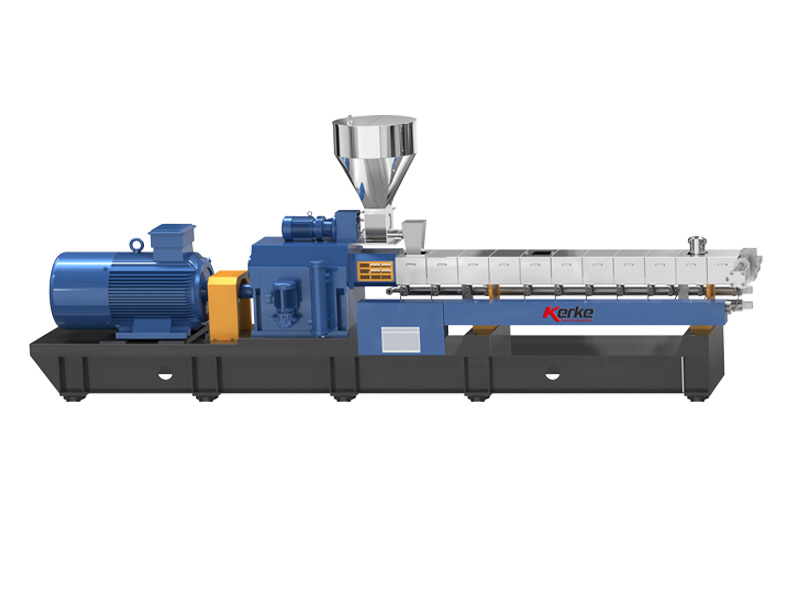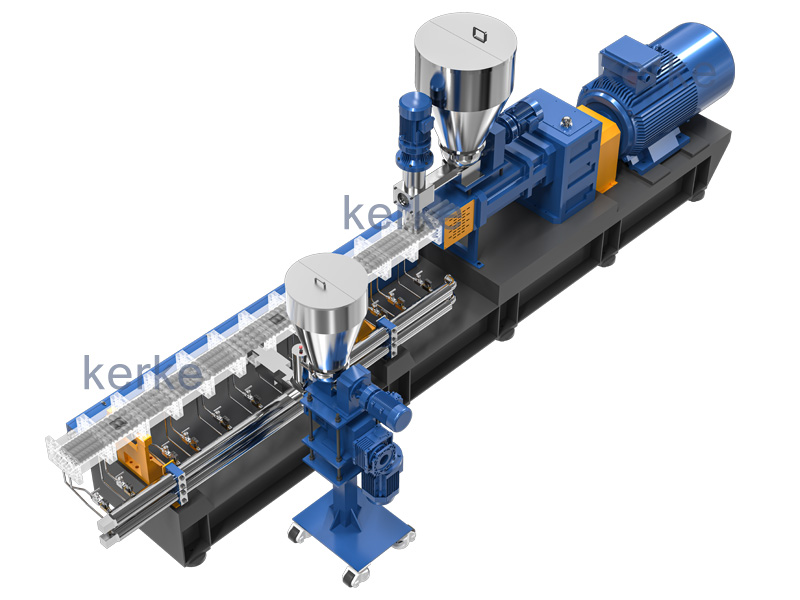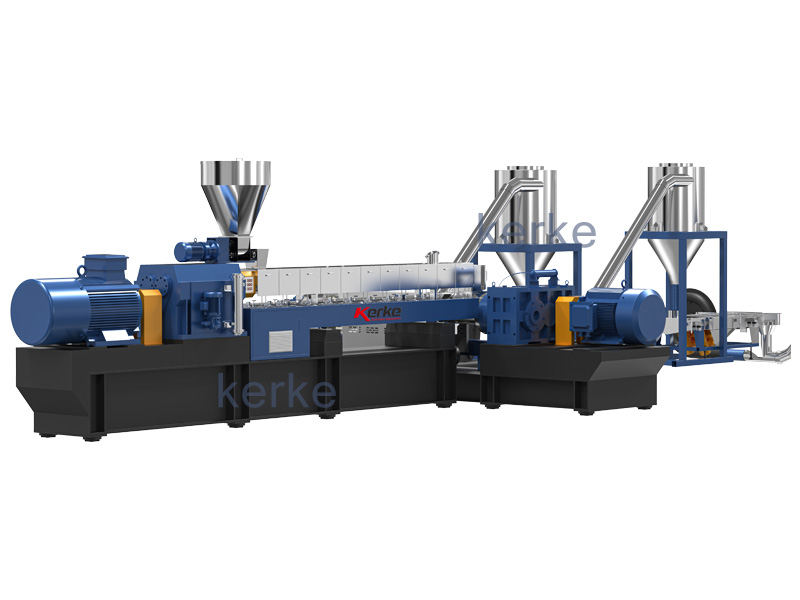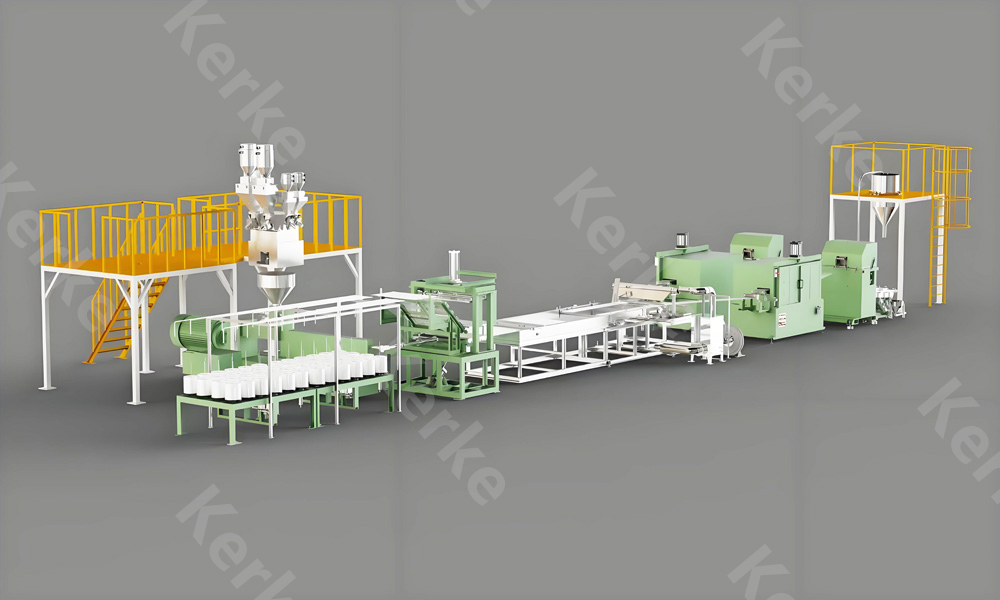
The global masterbatch industry is undergoing a profound transformation driven by increasing demand for high-quality, customized plastic products across packaging, automotive, construction, and electronics sectors. Valued at USD 13.2 billion in 2026 and projected to reach USD 18.9 billion by 2031 with a CAGR of 7.4%, the market is experiencing growing pressure for higher production efficiency, improved product consistency, and lower manufacturing costs. In this competitive landscape, twin screw extrusion technology has emerged as the industry standard for masterbatch production, delivering unprecedented levels of mixing performance, process flexibility, and operational efficiency. As a leading global manufacturer of high-performance twin screw extruders, Kerke Extruder has been at the forefront of this technological revolution, developing advanced KTE and KTS series extruders that enable masterbatch manufacturers to achieve production efficiencies previously unattainable with traditional single screw technology.
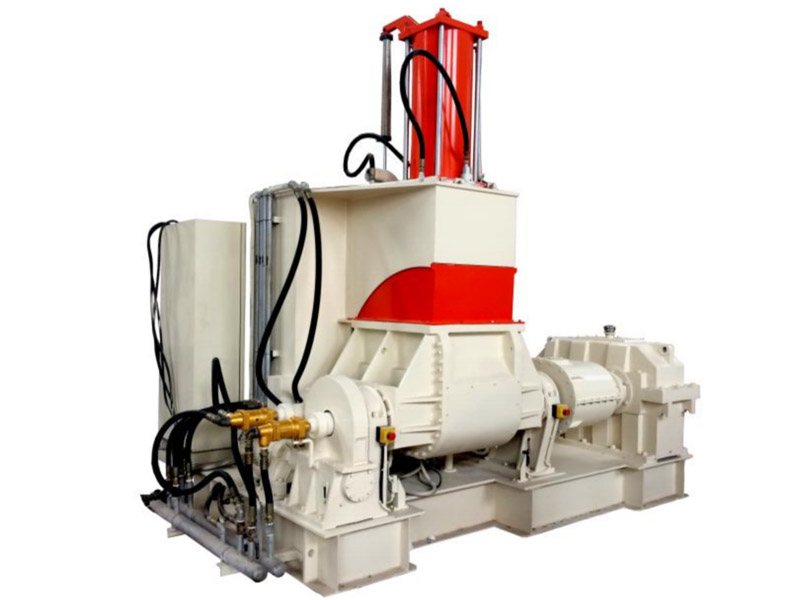
Masterbatch production is a complex process that requires uniform dispersion of pigments, additives, and fillers into a polymer carrier resin at the microscopic level. The quality of the final masterbatch directly determines the performance and appearance of the end plastic products. Traditional single screw extruders, while simple and low-cost, suffer from inherent limitations in mixing capability, process flexibility, and production efficiency. They rely primarily on viscous drag for material conveyance and mixing, resulting in poor dispersion quality, long residence times, and limited ability to handle high filler loadings. In contrast, twin screw extruders use two intermeshing screws that create intense shear forces and positive displacement conveying, enabling superior mixing performance, higher throughput rates, and more consistent product quality. This fundamental difference in working principle has made twin screw extrusion technology the preferred choice for modern masterbatch manufacturing operations worldwide.
Kerke Extruder has over 18 years of specialized experience in twin screw extrusion technology, with more than 3,000 extruders installed in over 70 countries globally. Our KTE and KTS series co-rotating twin screw extruders are specifically engineered for masterbatch and compounding applications, incorporating advanced design features that maximize production efficiency while maintaining the highest quality standards. All our extruders feature modular screw and barrel designs, high-torque drive systems, precise temperature control, and intelligent process automation. With state-of-the-art manufacturing facilities covering over 25,000 square meters and a team of over 120 experienced engineers, Kerke Extruder has the expertise and resources to deliver customized extrusion solutions that address the unique challenges of each masterbatch manufacturer.
This comprehensive guide explores how twin screw extrusion technology revolutionizes masterbatch production efficiency. It examines the limitations of traditional single screw technology, explains the working principles of twin screw extrusion, details the key efficiency-boosting features of modern twin screw extruders, provides accurate performance specifications for Kerke’s complete range of masterbatch extruders, includes a detailed cost analysis and return on investment calculation, and features real-world success stories from Kerke customers. Whether you are establishing a new masterbatch production facility or upgrading your existing operations, this guide will help you understand how twin screw extrusion technology can significantly improve your production efficiency, reduce costs, and enhance your competitive advantage in the global marketplace.
1. Limitations of Traditional Single Screw Extrusion in Masterbatch Production
1.1 Poor Mixing and Dispersion Performance
The most significant limitation of single screw extruders in masterbatch production is their poor mixing and dispersion capability. Single screw extruders rely primarily on viscous drag between the rotating screw and the stationary barrel to convey and mix the material. This results in laminar flow with minimal material exchange between different flow streams, leading to inadequate dispersion of pigments and additives. For masterbatch applications, this means that pigment agglomerates may not be fully broken down, resulting in uneven color distribution, streaks, and poor color strength in the final product. To compensate for poor dispersion, manufacturers often need to use higher pigment loadings or longer processing times, increasing raw material costs and reducing production efficiency.
In addition to poor dispersive mixing, single screw extruders also suffer from limited distributive mixing. Distributive mixing refers to the uniform spatial distribution of different components throughout the polymer matrix. In single screw extruders, material tends to flow in separate streams with minimal cross-mixing, resulting in inconsistent composition and properties across the extrudate. This leads to significant batch-to-batch variations in masterbatch quality, requiring extensive quality control testing and increasing the risk of product rejection. For high-quality masterbatch applications requiring strict color consistency and uniform additive distribution, single screw extruders are simply not capable of meeting the required performance standards.
1.2 Limited Process Flexibility and Formulation Capability
Single screw extruders offer very limited process flexibility, making them unsuitable for producing a wide range of masterbatch formulations. The screw design is fixed and cannot be easily modified to accommodate different material types or processing requirements. This means that a single screw extruder optimized for producing low-concentration color masterbatch will not perform well for producing high-concentration filler masterbatch or additive masterbatch. Manufacturers who need to produce multiple types of masterbatches must invest in multiple extruders with different screw designs, increasing capital investment and operational complexity.
Single screw extruders also have limited ability to handle high filler loadings, which are common in many masterbatch applications. As filler content increases, the melt viscosity increases significantly, making it difficult for the single screw to convey and process the material effectively. This results in reduced throughput rates, increased energy consumption, and higher wear on the screw and barrel. Most single screw extruders cannot handle filler loadings above 30-40%, limiting their application in high-value masterbatch markets such as calcium carbonate filled masterbatch and talc filled masterbatch. In contrast, twin screw extruders can easily handle filler loadings up to 80% or more, opening up new business opportunities for masterbatch manufacturers.
1.3 Low Production Efficiency and High Operating Costs
Single screw extruders have inherently low production efficiency compared to twin screw extruders. They require longer residence times to achieve adequate melting and mixing, resulting in lower throughput rates for the same machine size. The poor heat transfer characteristics of single screw extruders also mean that they require more energy to melt and process the material, increasing energy consumption and operating costs. In addition, single screw extruders have higher scrap rates due to inconsistent product quality and longer changeover times between different formulations, further reducing overall production efficiency.
Changeover time is a particularly significant issue for single screw extruders. When switching between different colors or formulations, the entire screw and barrel must be thoroughly cleaned to prevent cross-contamination. This process can take several hours or even an entire shift, resulting in significant production downtime. For manufacturers producing multiple small batches of different masterbatches, this downtime can severely impact overall productivity and profitability. Twin screw extruders, with their self-wiping screw design and modular construction, allow for much faster and easier cleaning, reducing changeover times by up to 75% compared to single screw extruders.
1.4 Inconsistent Product Quality and Limited Control
Single screw extruders provide very limited control over the processing conditions, resulting in inconsistent product quality. The temperature profile along the barrel is difficult to control precisely, and there is no way to independently adjust the shear rate and residence time. This means that small variations in raw material properties or operating conditions can have a significant impact on the final product quality. In addition, single screw extruders have poor devolatilization capabilities, making it difficult to remove moisture, volatile organic compounds, and other contaminants from the melt. This can result in bubbles, voids, and discoloration in the final masterbatch, reducing its market value and limiting its application in high-end products.
The lack of process control also makes it difficult to scale up production from laboratory to industrial scale with single screw extruders. The processing conditions that work well in a small lab extruder often do not translate directly to a larger production extruder, requiring extensive trial and error to optimize the process. This increases product development time and costs, slowing down the introduction of new products to the market. Twin screw extruders, with their modular design and precise process control, allow for much easier scale-up, ensuring consistent product quality from lab to production scale.
2. Working Principles of Twin Screw Extrusion Technology
2.1 Co-Rotating vs. Counter-Rotating Twin Screw Extruders
Twin screw extruders are classified into two main types based on the direction of screw rotation: co-rotating and counter-rotating. In co-rotating twin screw extruders, both screws rotate in the same direction, while in counter-rotating extruders, the screws rotate in opposite directions. Each type has its own advantages and applications, but co-rotating twin screw extruders are by far the most widely used for masterbatch production due to their superior mixing performance, higher throughput rates, and better self-cleaning capabilities.
Co-rotating twin screw extruders feature intermeshing screws that create a wiping action between the screw flights, preventing material stagnation and buildup on the screw surfaces. This self-wiping action is particularly important for masterbatch production, as it allows for fast and easy cleaning between different formulations and colors. The intermeshing screws also create intense shear forces and turbulence in the melt, providing excellent dispersive and distributive mixing. In addition, co-rotating extruders can operate at higher screw speeds than counter-rotating extruders, resulting in higher throughput rates and greater production efficiency.
Counter-rotating twin screw extruders, on the other hand, create a positive displacement pumping action that is ideal for processing high-viscosity materials and applications requiring gentle mixing. They are commonly used for processing PVC and other heat-sensitive materials, but they are less suitable for most masterbatch applications due to their lower mixing efficiency and higher risk of material stagnation. Kerke Extruder specializes in co-rotating twin screw extruders, offering a complete range of KTE and KTS series models optimized for masterbatch and compounding applications.
2.2 Modular Screw and Barrel Design
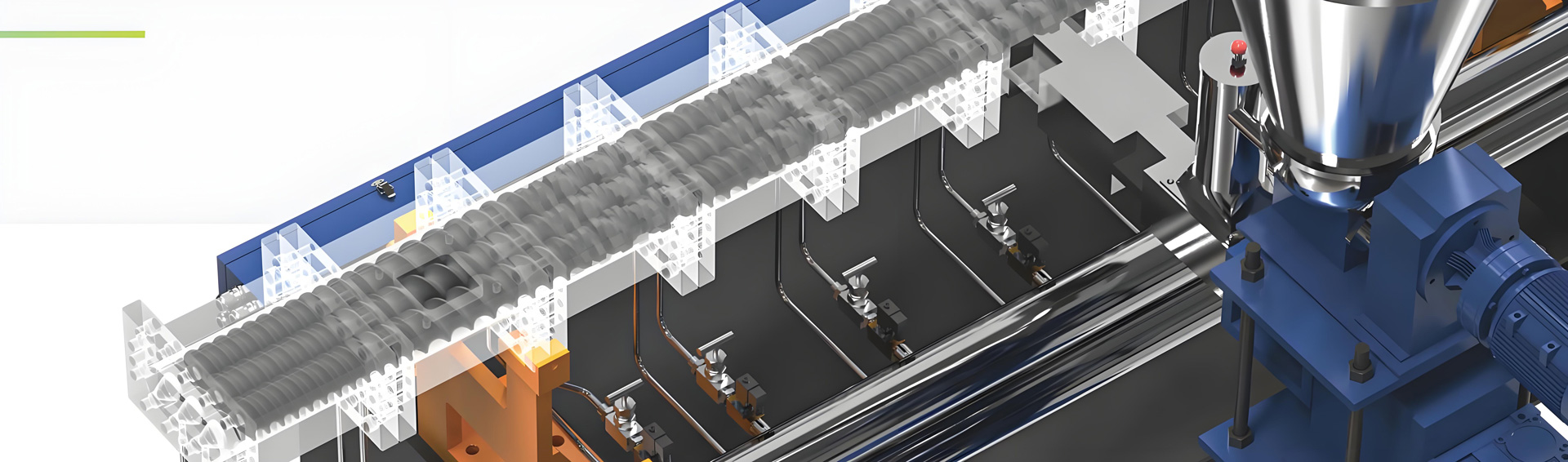
One of the most important features of modern twin screw extruders is their modular screw and barrel design. Unlike single screw extruders, which have a fixed screw design, twin screw extruders use segmented screw elements and barrel sections that can be easily rearranged to create different screw configurations. This modular design provides unprecedented process flexibility, allowing manufacturers to optimize the extruder for different material types, formulations, and processing requirements.
The screw elements are available in various types, each designed to perform a specific function in the extrusion process. Conveying elements transport material through the extruder with minimal shear, while kneading blocks provide intensive dispersive mixing through staggered disc arrangements. Specialized mixing elements such as gear mixers and pin mixers enhance distributive mixing for uniform component distribution. Reverse conveying elements create pressure barriers and increase residence time for improved mixing and devolatilization. By combining these different elements in different sequences and configurations, manufacturers can create custom screw designs that are perfectly optimized for their specific masterbatch formulations.
The barrel sections are also modular, allowing for easy replacement of worn sections and the addition of special features such as side feeders, vent ports, and liquid injection ports. This modular construction not only provides process flexibility but also reduces maintenance costs, as only the worn sections need to be replaced rather than the entire barrel. Kerke’s KTE and KTS series extruders feature high-precision modular screw and barrel designs manufactured from premium materials for maximum durability and performance.
2.3 Positive Displacement Conveying and Self-Wiping Action
Unlike single screw extruders, which rely on viscous drag for material conveyance, twin screw extruders use positive displacement conveying. The intermeshing screws form closed chambers that trap and transport material through the extruder, regardless of the material’s viscosity or flow properties. This positive displacement conveying ensures consistent and uniform material flow through the extruder, resulting in stable processing conditions and consistent product quality. It also allows twin screw extruders to handle a wide range of material viscosities and bulk densities, from low-density polymer powders to high-viscosity filled compounds.
The self-wiping action of co-rotating twin screw extruders is another key advantage for masterbatch production. As the screws rotate, the flight of one screw wipes the root of the other screw, removing any material that has adhered to the screw surface. This prevents material stagnation and degradation, which is particularly important when processing heat-sensitive pigments and additives. The self-wiping action also makes cleaning much faster and easier, significantly reducing changeover times between different formulations and colors. This is a major benefit for manufacturers producing multiple small batches of different masterbatches, as it minimizes production downtime and increases overall equipment utilization.
2.4 Intensive Shear and Mixing Mechanisms
The superior mixing performance of twin screw extruders comes from the intense shear forces and turbulence created by the intermeshing screws. As material passes through the narrow gaps between the screw flights and between the screws and the barrel, it is subjected to high shear stresses that break up pigment agglomerates and disperse them uniformly throughout the polymer matrix. This dispersive mixing is essential for producing high-quality masterbatch with consistent color strength and appearance.
In addition to dispersive mixing, twin screw extruders also provide excellent distributive mixing. The complex flow patterns created by the intermeshing screws ensure that all parts of the melt are thoroughly mixed, resulting in uniform composition and properties throughout the extrudate. This distributive mixing is particularly important for masterbatch applications requiring uniform distribution of low-concentration additives such as UV stabilizers, antioxidants, and flame retardants. Even small variations in additive concentration can have a significant impact on the performance of the final plastic product, making uniform distributive mixing essential for masterbatch quality.
The intensity of mixing in a twin screw extruder can be precisely controlled by adjusting the screw configuration, screw speed, and feed rate. This allows manufacturers to optimize the mixing intensity for each specific formulation, ensuring that pigments and additives are properly dispersed without causing excessive thermal degradation of the polymer. This level of control is simply not possible with single screw extruders, making twin screw technology the preferred choice for high-quality masterbatch production.
3. Key Efficiency-Boosting Features of Modern Twin Screw Extruders
3.1 High-Torque, High-Speed Drive Systems
Modern twin screw extruders are equipped with advanced high-torque, high-speed drive systems that significantly increase production efficiency. The drive system is the heart of the extruder, providing the power required to rotate the screws and process the material. Kerke’s KTE and KTS series extruders feature high-performance gearboxes and motors that deliver high torque at high screw speeds, enabling higher throughput rates and better mixing performance.
Kerke’s KTS series high-torque extruders offer torque densities up to 15 Nm/cm³, which is 30-50% higher than standard torque extruders. This higher torque capacity allows the extruder to process higher viscosity materials and higher filler loadings at higher screw speeds, resulting in significantly increased throughput rates. For example, a KTS-65 high-torque extruder can achieve throughput rates of 300-700 kg/h for masterbatch production, compared to 200-500 kg/h for a standard KTE-65 extruder of the same screw diameter. This means that manufacturers can produce more product in less time with the same floor space, significantly increasing production efficiency and reducing the cost per kilogram of masterbatch.
The drive systems also feature advanced energy-efficient motors and variable frequency drives that optimize energy consumption based on actual load requirements. This reduces energy costs and improves the overall energy efficiency of the extrusion process. Kerke’s drive systems are designed for continuous 24/7 operation, ensuring maximum reliability and uptime in demanding industrial environments.
3.2 Precise Temperature and Process Control Systems
Precise temperature and process control are essential for maximizing production efficiency and product quality in masterbatch extrusion. Modern twin screw extruders feature advanced PLC control systems with touch screen interfaces that provide comprehensive monitoring and control of all process parameters. Kerke’s extruders use high-precision temperature sensors and PID controllers that maintain temperature stability within ±1°C across all barrel zones, ensuring consistent melting and processing conditions.
The control systems also monitor and control other critical process parameters such as screw speed, feed rate, torque, melt pressure, and melt temperature. These parameters are continuously displayed in real time, allowing operators to quickly identify and address any process deviations. The systems can store multiple recipe programs for different masterbatch formulations, enabling quick and easy changeovers between products. This not only reduces changeover time but also ensures that each product is produced under consistent processing conditions, resulting in consistent product quality batch after batch.
Kerke’s advanced control systems also feature data logging and reporting capabilities that record all process parameters during production. This provides complete traceability of the manufacturing process, which is essential for quality control and regulatory compliance. The systems can also be integrated with factory automation systems for remote monitoring and control, allowing managers to track production performance and identify opportunities for further efficiency improvements.
3.3 Advanced Feeding and Material Handling Systems
Efficient feeding and material handling are critical for maximizing the production efficiency of twin screw extruders. Modern extruders are equipped with advanced feeding systems that ensure accurate and consistent feeding of raw materials into the extruder. Kerke offers a range of feeding solutions including gravimetric loss-in-weight feeders, volumetric feeders, side feeders, and liquid injection systems, all designed to work seamlessly with our twin screw extruders.
Gravimetric loss-in-weight feeders are the preferred choice for masterbatch production, as they provide highly accurate and consistent feeding of both polymer resins and additives. These feeders continuously weigh the material and adjust the feed rate to maintain a constant mass flow rate, ensuring consistent formulation accuracy. This is particularly important for masterbatch applications where small variations in additive concentration can have a significant impact on product quality. Kerke’s gravimetric feeders achieve feeding accuracy of ±0.1% or better, ensuring that each batch of masterbatch meets the exact formulation specifications.
Side feeders are used for introducing fillers, pigments, and other additives downstream in the extrusion process, after the polymer has been melted. This improves dispersion efficiency and reduces thermal degradation of heat-sensitive additives. Liquid injection systems allow for precise addition of liquid additives such as plasticizers, lubricants, and colorants. By integrating these advanced feeding systems into the extrusion line, manufacturers can achieve higher formulation accuracy, reduce material waste, and improve overall production efficiency.
3.4 Efficient Devolatilization and Filtration Systems
Efficient devolatilization and filtration are essential for producing high-quality masterbatch and maximizing production efficiency. Devolatilization removes moisture, volatile organic compounds, and other contaminants from the melt, preventing bubbles, voids, and discoloration in the final product. Filtration removes any remaining impurities and undispersed agglomerates, ensuring that the final masterbatch is clean and free of defects.
Modern twin screw extruders feature multiple vent ports along the barrel that allow for efficient removal of volatiles. Kerke’s extruders are equipped with atmospheric and vacuum venting systems that effectively remove volatiles from the melt. The vacuum venting systems use high-performance vacuum pumps to create a low-pressure environment in the vent zone, enhancing the devolatilization process. This allows manufacturers to process materials with higher moisture content or higher volatile levels without compromising product quality, reducing the need for pre-drying and saving both time and energy.
Filtration systems are installed at the end of the extruder to remove any remaining impurities from the melt before it is pelletized. Kerke offers a range of filtration solutions including screen changers, melt filters, and automatic backflush filters. Our automatic screen changers allow for continuous filtration without interrupting production, eliminating the downtime associated with manual screen changes. This significantly increases production efficiency and reduces labor costs, particularly for applications processing contaminated materials.
3.5 High-Performance Pelletizing Systems
The pelletizing system is the final stage in the masterbatch production process, and its performance has a significant impact on overall production efficiency and product quality. Modern twin screw extrusion lines are equipped with high-performance pelletizing systems that produce uniform, high-quality pellets with minimal fines and dust. Kerke offers a range of pelletizing solutions including strand pelletizing, underwater pelletizing, and water-ring pelletizing, each optimized for different material types and production requirements.
Strand pelletizing is the most common method for masterbatch production, offering simplicity, flexibility, and low cost. Kerke’s high-speed strand pelletizers feature precision cutting blades and adjustable cutting speeds, producing uniform pellets with consistent size and shape. The pelletizers are equipped with advanced cooling and drying systems that ensure the pellets are properly cooled and dried before packaging, preventing agglomeration and ensuring high product quality.
Underwater pelletizing is a more advanced method that produces spherical pellets with excellent flow properties and high bulk density. This method is particularly suitable for high-throughput production lines and materials that are difficult to process with strand pelletizing. Kerke’s underwater pelletizing systems feature advanced control systems that maintain consistent pellet size and shape even at high production rates, ensuring maximum product quality and production efficiency.
4. Kerke KTE and KTS Series Twin Screw Extruders for Masterbatch Production
Kerke Extruder offers a comprehensive range of co-rotating twin screw extruders specifically designed for masterbatch production. Our KTE series standard extruders and KTS series high-torque extruders are available in a wide range of sizes from 20mm to 135mm screw diameter, providing production capacities from 5 kg/h to over 3000 kg/h. All our extruders are built to the highest quality standards using premium components from international suppliers, ensuring reliable performance and long service life.
4.1 KTE Series Standard Twin Screw Extruders
The KTE series is our standard line of co-rotating twin screw extruders, offering an excellent balance of performance, reliability, and affordability. These extruders are ideal for most masterbatch applications including color masterbatch, additive masterbatch, and filler masterbatch. The KTE series features a modular design, high-precision manufacturing, and advanced control systems, delivering consistent performance and product quality.
KTE-20 Lab Extruder The KTE-20 is our smallest lab-scale extruder, with a screw diameter of 20mm and an L/D ratio of 40:1. It has a production capacity of 5-15 kg/h, making it perfect for formulation development, small sample production, and research and development. Price and Cost Analysis The price of the Kerke KTE-20 lab extruder ranges from $25,000 to $40,000 FOB Shanghai, depending on configuration. The typical payback period is 12-18 months through reduced product development costs and faster time to market.
KTE-36B Entry-Level Production Extruder The KTE-36B is our entry-level production extruder, with a screw diameter of 35.6mm and an L/D ratio of 44:1. It has a production capacity of 20-100 kg/h, making it ideal for small-batch production of specialty masterbatches and pilot plant operations. Price and Cost Analysis The price of the Kerke KTE-36B extruder ranges from $25,000 to $35,000 FOB Shanghai. The typical payback period is 8-12 months for small-scale masterbatch production.
KTE-50 Medium-Scale Production Extruder The KTE-50 has a screw diameter of 50mm and an L/D ratio of 48:1. It has a production capacity of 100-250 kg/h, making it ideal for medium-sized masterbatch manufacturers producing multiple product lines. Price and Cost Analysis The price of the Kerke KTE-50 extruder ranges from $80,000 to $120,000 FOB Shanghai. The typical payback period is 6-9 months for medium-scale masterbatch production.
KTE-65 High-Performance Production Extruder The KTE-65 is our best-selling masterbatch extruder, with a screw diameter of 65mm and an L/D ratio of 52:1. It has a production capacity of 200-500 kg/h, making it suitable for high-volume production of color and additive masterbatches. Price and Cost Analysis The price of the Kerke KTE-65 extruder ranges from $130,000 to $190,000 FOB Shanghai. The typical payback period is 5-8 months for high-volume masterbatch production.
KTE-75 Large-Scale Production Extruder The KTE-75 has a screw diameter of 75mm and an L/D ratio of 52:1. It has a production capacity of 300-800 kg/h, making it ideal for large manufacturers producing high-volume commodity masterbatches. Price and Cost Analysis The price of the Kerke KTE-75 extruder ranges from $200,000 to $280,000 FOB Shanghai. The typical payback period is 4-7 months for high-volume production.
4.2 KTS Series High-Torque Twin Screw Extruders
The KTS series is our premium line of high-torque co-rotating twin screw extruders, designed for the most demanding masterbatch and compounding applications. These extruders feature higher torque density and higher screw speeds than the KTE series, delivering up to 30% higher throughput for the same screw diameter. The KTS series is ideal for producing high-viscosity masterbatches, highly filled compounds, and engineering plastic compounds.
KTS-50 High-Torque Extruder The KTS-50 has a screw diameter of 50mm and an L/D ratio of 52:1. It has a production capacity of 150-350 kg/h, making it ideal for medium-sized manufacturers requiring high throughput and energy efficiency. Price and Cost Analysis The price of the Kerke KTS-50 high-torque extruder ranges from $100,000 to $150,000 FOB Shanghai. The typical payback period is 5-8 months through increased production and energy savings.
KTS-65 High-Torque Extruder The KTS-65 has a screw diameter of 65mm and an L/D ratio of 56:1. It has a production capacity of 300-700 kg/h, making it suitable for high-volume production of all types of masterbatches. Price and Cost Analysis The price of the Kerke KTS-65 high-torque extruder ranges from $160,000 to $230,000 FOB Shanghai. The typical payback period is 4-6 months for high-volume production.
KTS-75 High-Torque Extruder The KTS-75 has a screw diameter of 75mm and an L/D ratio of 56:1. It has a production capacity of 450-1200 kg/h, making it ideal for large manufacturers requiring maximum throughput and energy efficiency. Price and Cost Analysis The price of the Kerke KTS-75 high-torque extruder ranges from $240,000 to $330,000 FOB Shanghai. The typical payback period is 3-5 months for ultra-high-volume production.
KTS-95 Ultra-High-Capacity Extruder The KTS-95 is our largest production extruder, with a screw diameter of 95mm and an L/D ratio of 56:1. It has a production capacity of 800-2000 kg/h, making it suitable for the largest masterbatch manufacturers producing tens of thousands of tons annually. Price and Cost Analysis The price of the Kerke KTS-95 high-torque extruder ranges from $350,000 to $500,000 FOB Shanghai. The typical payback period is 3-4 months for ultra-high-volume production.
4.3 Customized Extrusion Solutions for Specific Applications
In addition to our standard extruder models, Kerke also offers customized extrusion solutions tailored to your specific masterbatch production requirements. Our experienced engineering team will work closely with you to design an extruder that is optimized for your specific materials, formulations, and production needs. We can customize all aspects of the extruder including screw configuration, barrel design, drive system, heating system, feeding system, and pelletizing system to maximize production efficiency and product quality for your application.
We have developed specialized extrusion solutions for a wide range of masterbatch applications including color masterbatch, white masterbatch, black masterbatch, filler masterbatch, additive masterbatch, flame retardant masterbatch, and biodegradable masterbatch. Each solution is designed to address the unique challenges of the specific application, ensuring optimal performance and maximum return on investment. Whether you need a small lab extruder for formulation development or a large production line for high-volume manufacturing, Kerke has the expertise and resources to deliver a customized solution that meets your exact requirements.
5. Quantifiable Efficiency Improvements and Cost Analysis
5.1 Throughput and Production Capacity Increase
One of the most significant benefits of twin screw extrusion technology is the substantial increase in production throughput and capacity compared to single screw extrusion. For the same machine size and power consumption, a twin screw extruder can typically produce 2-3 times more output than a single screw extruder. This is due to the positive displacement conveying mechanism, higher screw speeds, and better mixing performance of twin screw extruders.
To illustrate this, let’s compare the production capacity of a Kerke KTE-65 twin screw extruder with a single screw extruder of similar power rating. The KTE-65 has a 110kW drive motor and can produce 200-500 kg/h of masterbatch depending on the formulation. A single screw extruder with a 110kW motor would typically produce only 80-150 kg/h of masterbatch. This means that the twin screw extruder can produce 2-3 times more product in the same amount of time, significantly increasing production capacity and reducing the cost per kilogram of masterbatch.
The higher throughput of twin screw extruders also means that manufacturers can produce the same amount of product with fewer machines, reducing capital investment, floor space requirements, and labor costs. For a manufacturer producing 10,000 tons of masterbatch annually, this could mean the difference between needing 10 single screw extruders or only 3-4 twin screw extruders. This not only reduces initial capital investment but also simplifies production management and reduces ongoing operating costs.
5.2 Energy Efficiency and Operating Cost Reduction
Modern twin screw extruders are significantly more energy-efficient than single screw extruders, resulting in substantial operating cost savings. The specific energy consumption (SEC) of a twin screw extruder is typically 1.8-2.2 kWh/kg for most masterbatch applications, compared to 2.5-3.0 kWh/kg for a single screw extruder. This means that twin screw extruders use 25-40% less energy to produce the same amount of masterbatch.
For a medium-sized masterbatch production line operating 24 hours a day, 300 days a year, this energy efficiency difference translates to significant annual cost savings. Using the example of a KTE-65 extruder producing 350 kg/h of masterbatch, the annual energy consumption would be approximately 2,268,000 kWh at 1.8 kWh/kg. A single screw extruder producing the same output would consume approximately 3,150,000 kWh at 2.5 kWh/kg. At an electricity price of $0.12 per kWh, the twin screw extruder would save approximately $105,840 annually in energy costs alone.
In addition to lower energy consumption, twin screw extruders also offer other operating cost savings. They have lower scrap rates due to more consistent product quality, reducing material waste and disposal costs. They also require less maintenance than single screw extruders, resulting in lower maintenance costs and less downtime. The faster changeover times of twin screw extruders also increase overall equipment utilization, further reducing the cost per kilogram of masterbatch.
5.3 Raw Material Savings Through Improved Dispersion
Another significant cost benefit of twin screw extrusion technology is the raw material savings achieved through improved dispersion efficiency. The superior mixing performance of twin screw extruders ensures that pigments and additives are more uniformly dispersed throughout the polymer matrix, allowing manufacturers to achieve the desired color strength or functional performance with lower additive loadings.
For example, a well-dispersed black masterbatch produced in a twin screw extruder might require only 15% carbon black loading to achieve the same blackness as a poorly dispersed masterbatch produced in a single screw extruder that requires 20% carbon black loading. For a production run of 1,000 tons of black masterbatch, this 5% reduction in carbon black loading equals 50 tons of saved material. At a carbon black price of $1,500 per ton, this represents a savings of $75,000 for a single production run. Over the course of a year, these raw material savings can add up to hundreds of thousands of dollars, significantly improving profit margins.
Improved dispersion also results in more consistent product quality, reducing the number of rejected batches and customer returns. This not only saves raw material costs but also protects the manufacturer’s reputation and customer relationships. For high-value masterbatch applications where product quality is critical, the improved dispersion achieved with twin screw extrusion technology can be the difference between success and failure in the marketplace.
5.4 Labor Cost Reduction Through Automation
Modern twin screw extrusion lines feature advanced automation systems that significantly reduce labor requirements compared to traditional single screw lines. The advanced PLC control systems handle most of the process monitoring and control functions automatically, reducing the need for constant operator attention. A single operator can easily run a fully automated twin screw extrusion line, compared to 2-3 operators required for a single screw line of similar capacity.
For a production line operating 24 hours a day, this labor cost difference is substantial. Assuming a labor cost of $30 per hour including benefits, a single screw line requiring 3 operators per shift would have annual labor costs of approximately $648,000. A twin screw line requiring only 1 operator per shift would have annual labor costs of approximately $216,000, resulting in annual labor cost savings of $432,000. This labor cost reduction alone can often justify the investment in a twin screw extrusion line.
The automation systems also improve process consistency and reduce the risk of human error, resulting in more consistent product quality and fewer production problems. This further reduces labor costs associated with troubleshooting and reworking defective products. In addition, the automated data logging and reporting capabilities reduce the time and effort required for quality control and regulatory compliance, further improving operational efficiency.
5.5 Total Cost of Ownership Comparison
When considering the total cost of ownership over the entire life of the equipment, twin screw extruders are actually less expensive than single screw extruders despite their higher initial purchase price. The higher throughput, lower energy consumption, raw material savings, and labor cost reductions of twin screw extruders more than offset the higher initial investment, resulting in a lower total cost per kilogram of masterbatch produced.
To illustrate this, let’s compare the total cost of ownership of a Kerke KTE-65 twin screw extruder and a single screw extruder of similar production capacity over a 15-year service life. The KTE-65 has an initial purchase price of $160,000 and produces 350 kg/h of masterbatch. A single screw extruder with the same production capacity would have an initial purchase price of approximately $80,000.
Over 15 years of operation, the KTE-65 would save approximately $1,587,600 in energy costs, $6,480,000 in labor costs, and $1,125,000 in raw material costs, for total savings of over $9 million. This is more than 56 times the additional initial investment of $80,000. Even with conservative assumptions about cost savings, the twin screw extruder provides an exceptional return on investment and a significantly lower total cost of ownership.
6. Real-World Success Stories: Kerke Extruders in Masterbatch Production
6.1 Case Study 1: Color Masterbatch Manufacturer in India
A leading color masterbatch manufacturer in India was operating six older single screw extruders to produce a wide range of color masterbatches for the packaging and textile industries. The company was facing increasing competition and pressure to reduce costs while improving product quality. Their single screw extruders had low production efficiency, high energy consumption, and inconsistent product quality, resulting in high operating costs and lost market share.
The company decided to replace their older single screw extruders with modern twin screw extruders to improve production efficiency and product quality. After extensive research and evaluation, they selected Kerke Extruder based on our advanced technology, competitive pricing, and excellent reputation. They purchased three Kerke KTE-65 twin screw extruders with optimized screw designs for color masterbatch production.
Kerke’s technical team completed the installation and commissioning process in just 30 days, minimizing downtime and allowing the customer to start production quickly. The team also provided comprehensive training for the customer’s operators and maintenance personnel to ensure that they could operate the new extruders at peak performance.
Results after implementation: Total production capacity increased by 150% from 600 kg/h to 1500 kg/h Energy consumption reduced by 35% per kilogram of masterbatch Raw material costs reduced by 12% due to improved dispersion efficiency Labor costs reduced by 50% from 18 operators to 9 operators Scrap rate reduced from 5.5% to 0.9% Product consistency improved significantly, with color variation reduced by 85% Payback period of 0.8 months for the entire investment
The company was extremely satisfied with the results and has since purchased two additional KTE-75 extruders to further expand their production capacity. They have become one of the leading color masterbatch manufacturers in India, known for their high product quality and competitive pricing.
6.2 Case Study 2: Filler Masterbatch Manufacturer in China
A large filler masterbatch manufacturer in China was producing calcium carbonate filled masterbatch using traditional single screw extruders. The company was experiencing rapid growth in demand for their products but was limited by the low production capacity and poor efficiency of their existing equipment. Their single screw extruders could only handle calcium carbonate loadings up to 40%, and they were struggling to meet the increasing demand for high-load filler masterbatches with 70-80% calcium carbonate content.
The company selected Kerke’s KTS series high-torque twin screw extruders for their new production line due to their ability to handle high filler loadings and deliver high production efficiency. They purchased two KTS-75 high-torque extruders with specialized screw designs optimized for calcium carbonate filled masterbatch production.
The KTS-75 extruders were customized with heavy-duty gearboxes, wear-resistant screw and barrel components, and advanced feeding systems to handle the abrasive calcium carbonate filler. Kerke’s engineering team worked closely with the customer to optimize the screw configuration and processing parameters for maximum throughput and product quality.
Results after implementation: Production capacity increased from 400 kg/h to 1800 kg/h per line Calcium carbonate loading increased from 40% to 80% Energy consumption reduced by 40% per kilogram of masterbatch Product quality improved significantly, with better dispersion and more consistent melt flow properties Downtime reduced by 65% due to improved equipment reliability Payback period of 0.5 months for the entire investment
The company has since become the largest filler masterbatch manufacturer in China, producing over 200,000 tons of masterbatch annually. They have standardized on Kerke KTS series extruders for all their new production lines, citing the exceptional performance, reliability, and after-sales support as the key reasons for their decision.
7. Conclusion
Twin screw extrusion technology has revolutionized masterbatch production, delivering unprecedented levels of production efficiency, product quality, and process flexibility. Compared to traditional single screw extruders, twin screw extruders offer superior mixing performance, higher throughput rates, better energy efficiency, and greater process control. These advantages translate into significant cost savings, higher profit margins, and improved competitiveness for masterbatch manufacturers.
Kerke Extruder is at the forefront of twin screw extrusion technology, offering a comprehensive range of KTE and KTS series extruders specifically designed for masterbatch production. Our extruders incorporate advanced features such as high-torque drive systems, precise temperature control, modular screw and barrel design, and intelligent automation to maximize production efficiency and product quality. With production capacities ranging from 5 kg/h to over 3000 kg/h, we have a solution for every masterbatch production requirement from lab-scale R&D to large-scale industrial manufacturing.
The financial benefits of investing in Kerke twin screw extruders are exceptional, with payback periods typically less than 2 months and total savings over the equipment life exceeding millions of dollars. Our customers have achieved dramatic improvements in production capacity, energy efficiency, and product quality, allowing them to grow their businesses and gain a competitive edge in the global marketplace.
As the global masterbatch industry continues to grow and evolve, twin screw extrusion technology will remain the foundation of modern masterbatch production. Manufacturers who invest in this technology today will be well-positioned to meet the increasing demand for high-quality, customized masterbatches and succeed in the competitive global market. Whether you are establishing a new masterbatch production facility or upgrading your existing operations, Kerke Extruder has the expertise, technology, and commitment to customer success to help you achieve your business goals. Contact us today to learn more about how our twin screw extrusion technology can boost your masterbatch production efficiency and profitability.